Tag: defense contract

  • Mayflower awarded defense MGUE contract for GPS receiver modernization

    Mayflower awarded defense MGUE contract for GPS receiver modernization

    Mayflower Communications Company Inc. will develop a small security-certifiable GPS module for the United States Air Force’s Modernized GPS User Equipment (MGUE) Program.

    The Mayflower NavAssure 125a GPS receiver.
    The Mayflower NavAssure 125a GPS receiver.

    Mayflower was awarded a Phase III SGUE (Small GPS User Equipment) contract with the U.S. Air Force Research Laboratory sponsored by the Space and Missile Systems Center/GPS Directorate (SMC/GPSD).

    Under the contract, the company will develop a small SWaP (Size, Weight, and Power) security certifiable Common GPS Module (CGM).

    Mayflowers’ small SWaP GPS receiver technology will allow the Department of Defense (DoD) and its agencies to benefit from increased competition, enhanced capability and reduction in overall program costs to DoD program managers and prime contractors in upgrading their navigation systems to the modernized M-code receiver.

    Mayflower’s SGUE program is aimed at the development of advanced GPS receiver technology to support future military GPS requirements.  The goal of the program is to develop a NAVWAR (Navigation Warfare) compatible CGM form factor that will support SWaP-constrained military users.

    The SGUE CGM development effort will expand Mayflower’s military GPS receiver product line to include modernized NavAssure-M product offerings so that current customers will have a form-fit-function upgrade path from SAASM to MGUE.

    “Mayflower is a leader in small SWaP and miniaturized military GPS receiver and anti-jam products,” said Triveni Upadhyay, Mayflower founder and CEO. “I am confident in the quality and innovation expertise of our GPS engineering team to successfully develop the SGUE CGM. The development of small SWaP MGUE form factors, enabled by SGUE CGM, will have a significant impact in the M-Code market, providing secure modernized GPS signals to the warfighters and lowering total ownership costs on many military programs.”

    “The Air Force is very pleased to see innovative GPS technology developed under its SBIR Program to find commercialization opportunity in the MGUE market. Mayflower has performed well and we are confident of the SGUE program success,” said Dana Howell, Air Force Research Laboratory (AFRL) program manager.

    “The AFRL/GPSD objective in the SGUE Program is to advance MGUE technology and make it affordable to the warfighter,” said Eddy Emile, chief of the Advanced Technology and International Branch, GPS Directorate. ”

    The SGUE Program fits the need and will lower the cost to the user by increased competition enabled by the SGUE Program.”

    According to Mayflower, the NavAssure-M MGUE receiver form factors, focused toward small SWaP GPS receiver applications, will be backward compatible to SAASM, therefore, lowering the platform integration cost and total life-cycle cost.

  • DARPA hosts Proposers Day on new atomic clock

    The Defense Advanced Research Projects Agency (DARPA) is holding a Proposers Day on Feb. 1 to inform potential contractors about the Atomic Clock with Enhanced Stability (ACES) program.

    ACES is a potential $50 million program that seeks to develop battery-powered atomic clocks that work to provide warfighters with synchronization and precision timing capabilities during navigation, communications, electronic warfare and reconnaissance missions in the event of a GPS shutdown.

    The registration deadline for the Proposers Day is 5 p.m. EST on Jan. 25. The Proposers Day will be held Feb. 1 from 9:30 a.m. to 5 p.m. EST at the DARPA Conference Center, 675 N. Randolph Street, Arlington, Virginia 22203.

    The host is Robert Lutwak, ACES program manager at DARPA. In 2012, GPS World awarded Lutwak its Leadership Award for Products. 

    The meeting will provide information and promote additional discussion on the ACES program, address questions from potential proposers, and provide an opportunity for potential proposers to share their capabilities and ideas for teaming arrangements.

    The ACES Proposers Day will include overview presentations by government personnel, technical presentations by potential proposers and collaborators, and an open poster session to facilitate interaction and teaming.

    According to the Department of Defense (DoD), “Precision timing and synchronization is essential to DoD communications, navigation, reconnaissance, and electronic warfare systems. The requirements for timing precision and stability have grown increasingly demanding as DoD systems have evolved towards distributed engagement and surveillance architectures, and this trend is expected to continue for the foreseeable future.

    “The ACES program aims to develop portable, battery‐powered atomic clocks with stability, repeatability, and environmental sensitivity approaching that of laboratory‐grade cesium beam frequency standards. This will be accomplished through research, development and integration of reduced SWaP components and technologies for advanced atomic physics interrogation techniques. These include, but are not limited to, laser‐cooled and magneto‐optically trapped atomic samples, and RF‐trapped ion samples, as well as interrogation of less environmentally‐sensitive microwave and optical transitions.”

  • KVH Receives $1.5M Order for TACNAV Systems

    KVH Receives $1.5M Order for TACNAV Systems

    Credit: U.S. Armed Services.
    Credit: U.S. Armed Services.

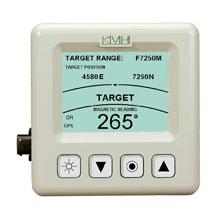
    KVH Industries Inc. has received a $1.5 million contract for the delivery of tactical navigation systems for use by an international military customer in an armored vehicle application. A variant of KVH’s TACNAV TLS and TACNAV Light, the system is designed to help military vehicle crews maintain 100% situational awareness. The hardware shipments for this order are expected to be made in 2015. Program management and engineering services will be provided as part of this order.

    “KVH’s TACNAV navigation solution is an important tool for U.S. and allied warfighters, providing precision navigation as well as coordination of vehicles in critical situations,” said Dan Conway, executive vice president of KVH’s guidance and stabilization group. “The system serves as a crucial resource for navigation and battle management, keeping soldiers safe and out of harm’s way wherever they travel. This new order reaffirms the value of KVH’s TACNAV products for international militaries, and adds to our backlog for the year.”

    The TACNAV TLS by KVH Industries.
    The TACNAV TLS by KVH Industries.

    All of KVH’s TACNAV military vehicle navigation systems provide unjammable precision navigation, heading, and pointing data for vehicle drivers, crews and commanders, KVH Industries said. TACNAV can also serve as a heading and position source for situational awareness.

    The TACNAV system ordered combines characteristics of TACNAV TLS and TACNAV Light, and features a compact design, continuous heading and pointing data output, and a flexible architecture that allows it to function as either a standalone navigation module or as the heart of an expanded, multifunctional TACNAV system. The system is designed to integrate with battle management systems and is a vital component for effective battlefield management, KVH Industries said.

    TACNAV systems are in use by the U.S. Army and Marine Corps, as well as many allied customers including Canada, Sweden, Great Britain, France, Germany, Spain, Egypt, Botswana, Australia, New Zealand, Saudi Arabia, Taiwan, Romania, Poland, Turkey, Malaysia, Switzerland, South Korea, Singapore, Brazil and Italy.

  • L-3 Communications Awarded $8.5M MGUE Contract Modification

    L-3 Communications has been awarded an $8.5 million modification to the Military GPS User Equipment (MGUE) contract to accelerate the MGUE program. The goal is to speed delivery of upgraded, more powerful GPS receivers to warfighters.

    L-3 Communications has been providing hardware for the Air Force in related contracts since 2012 for the GPS user equipment program, reports Defense Systems. The next phase of L-3’s project includes procurement of pre-prototype receiver card deliveries as well as test support activities. The receiver card deliveries will greatly increase the fielding of Military Code (M-code) capable GPS receivers to soldiers.

    MGUE is a joint service program to develop a modernized set of military GPS receivers delivering improved capabilities to allow for accurate and reliable positioning, navigation, and timing service where current receiver performance might be compromised or unavailable.

    Work will be performed in L-3 Communications’ Anaheim, California, location, with an expected completion date of Sept. 30, 2016. Fiscal 2015 research, development, test and evaluation funds in the amount of $1,814,560 are being obligated at the time of award.

    The Space and Missile Systems Center, Los Angeles Air Force Base, California, is the contracting activity.


  • Raytheon Awarded Next-Generation Control Segment Contract (OCX)

    The next-generation GPS ground-control system, known as OCX.
    The next-generation GPS ground-control system, known as OCX.

    Officials from the Space and Missile Systems Center’s Global Positioning Systems Wing announced today the award of the Next-Generation GPS Control Segment (OCX) contract to Raytheon Company, Intelligence and Information Systems, Aurora, Colorado.

    The OCX development contract will be 73 months in duration and with option years for sustainment worth $1,535,147,916. The contract will include development and installation of hardware and software at GPS control stations at Schriever Air Force Base in Colorado and Vandenberg AFB in California, deployment of advanced monitor stations at remote sites, and initial contractor support with sustainment options for five years.


    Defense PNT Editor Don Jewell provides commentary and additional information on the  award.


    OCX will replace the current GPS Operational Control System, maintaining backwards compatibility with the Block IIR and IIR-M constellation, providing command and control of the new GPS IIF and GPS III families of satellites, and enabling new modernized signal capabilities.

    “OCX is urgently needed not only to enable new warfighter capabilities but also to put the new GPS III space vehicles into mission operations,” said Col. Dave Madden, commander, GPSW. “OCX will have a flexible architecture that can rapidly adapt to the changing needs of today’s warfighter and will connect to the Global Information Grid so that warfighters around the globe have immediate access to GPS data and constellation status.”

    “OCX will allow AFSPC to effectively and efficiently plan and control full-spectrum precision position, navigation and timing information for all GPS user communities,” Madden said. “OCX will achieve this vision by implementing an incremental development approach that supports the evolving military operational environment, while enabling civil and international users who are employing GPS in innovative applications like transportation.”

    The Air Force Space Command’s Space and Missile Systems Center, located at Los Angeles Air Force Base, California, is the U.S. Air Force’s center of acquisition excellence for acquiring and developing military space systems including six wings and three groups responsible for GPS, military satellite communications, defense meteorological satellites, space launch and range systems, satellite control network, space-based infrared systems, intercontinental ballistic missile systems, and space situational awareness capabilities.

  • Raytheon Scores GPS Modernized User Equipment Contract

    Raytheon Co. has won a $61 million U.S. Air Force contract from the GPS Wing to complete the development and certification of next-generation GPS receivers.

    Under the Modernized User Equipment (MUE) program, circuit card technology will connect military users with new GPS navigation signals used in forthcoming enhanced GPS satellites. The receivers, which will be able to read the new M-code military signal, also will work effectively with legacy signal systems, Raytheon said.

    “The MUE program is raising the capability of military GPS equipment while lowering the cost for the warfighter,” said Phil Kelton, MUE program manager for Raytheon’s GPS and navigation systems business. “Raytheon’s approach to MUE takes advantage of breakthroughs in microelectronics technology, coupled with advanced security solutions to enable higher performance and greater integrity at less cost than today’s systems.”

    Kelton sees potential to achieve “true force-enhancing status” for military GPS capability though the proliferation of low-cost GPS modernized user equipment, according to the company. Raytheon is teamed on the program with General Dynamics and Trimble Navigation Systems.

    “The award of this second phase of the systems design and development contract allows us to complete the custom building-blocks being developed for the next-generation M-code GPS receivers,” said Michael Crisp, director of Raytheon GPS and navigation systems. It is developing two different form factors for receiver cards; this will allow modular upgrades of Raytheon’s avionics, weapons and integrated sensor systems ahead of the full deployment of the GPS III satellite constellation, Crisp said.

    In December of last year the U.S. Air Force also exercised a $50.7 million contract option with another contractor, Rockwell Collins, to complete part of the next phase of the MUE program. That work consists of receiver card development for ground and airborne applications, including test and security certification for next-generation GPS technology.

    The Air Force awarded the initial MUE contract of $27.9 million to Rockwell Collins in 2006 to develop and demonstrate user segment receiver cards, establishing the first proof of design for the future GPS architecture. That contract, executed through October 2007, supported preliminary design of the modernized receiver cards.