Tag: drone delivery

  • Flirtey ready for drone deliveries to U.S. homes

    Flirtey, a pioneer of the commercial drone delivery, has unveiled the Flirtey Eagle, along with a video of the next-generation delivery drone performing consumer and automated external defibrillator (AED) deliveries to homes.

    Flirtey’s system is designed to safely get packages to customers with the delivery goal of less than 10 minutes using drones.

    Along with the Flirtey Eagle, the aircraft designer and manufacturer unveiled the Flirtey Portal, a sophisticated takeoff and landing platform that enables scalable store-to-door operations. Also part of the system is an autonomous software platform that enables drones to deliver safely to American homes.

    Flirtey said it is on course to conduct drone deliveries to U.S. homes as early as 2019.

    Here are highlights of the UAV’s technology.

    • Flirtey’s aircraft is designed to operate in 95% of wind and weather conditions, making it highly reliable for flight.
    • The Flirtey Eagle is designed to fit 75% of packages that get delivered to its customers’ homes during last-mile deliveries.
    • The Flirtey Eagle safely and precisely delivers its contents by lowering a tether, while the drone is suspended in air, and once the package is delivered, it then retracts the tether.
    • Flirtey’s aircraft is controlled by its autonomous software platform, which has received Federal Aviation Administration (FAA) approval for the first multi-drone delivery operation in the United States, enabling a single remote pilot to simultaneously oversee ten Flirtey drones.
    • Flirtey’s Portal is a sophisticated takeoff and landing platform that fits into one parking space, making its infrastructure easily scalable to the company’s partners for store-to-door delivery.

    Flirtey’s drone delivery technology has been developed from the ground up, originating from NASA’s drone program. Flirtey Founder and CEO Matthew Sweeny has brought together a team of aviation industry veterans from NASA, Raytheon, Lockheed Martin, and SpaceX, as well as military veterans from the army, navy, and air force.

    “We expect Flirtey’s advanced drone delivery system will become the industry standard in America,” said Matthew Sweeny, Flirtey founder and CEO. “Flirtey’s latest technology makes life-saving and commercial drone delivery to homes in the United States an imminent reality.”

    The Flirtey Eagle builds upon the advanced technologies developed for Flirtey’s previous generation aircraft that conducted the first Federal Aviation Administration (FAA)-approved drone delivery in the United States, which is going on display alongside the Wright Flyer in the Smithsonian National Air and Space Museum in Washington, D.C. Flirtey’s goal is to not only meet, but to surpass the rigorous safety standards of the FAA. Flirtey’s regulatory approvals include:

    • Approval to conduct multi-drone delivery operations, enabling a single remote pilot to simultaneously oversee 10 Flirtey drones
    • Approval to conduct drone delivery flights beyond visual line of sight (BVLOS), enabling Flirtey to conduct drone delivery operations with a pilot controlling the flights from a remote location
    • Approval to conduct drone delivery flights at night, making drone delivery accessible at any time

    Flirtey and the City of Reno were chosen for the FAA and Department of Transportation’s Unmanned Aircraft System (UAS) Integration Pilot Program (IPP). Within the IPP, Flirtey and the City of Reno have partnered with REMSA, local emergency medical services provider, to deliver AEDs to those in need. Flirtey’s AED delivery technology has the potential to save 150,000 lives per year, the company said.

    Based on demand from customers, Flirtey expects demand initially to outstrip supply. Flirtey’s drone delivery system was designed from the outset to meet the anticipated high demand.


  • Drone Delivery Canada achieves BVLOS in test flights

    Drone Delivery Canada Corp. (DDC) reports the success of a pivotal milestone towards commercializing its drone logistics platform after successfully achieving beyond visual line of sight (BVLOS) in test flights.

    The success of these flights, which took place in Foremost, Alberta, after DDC received a Special Flight Operating Certificate from Transport Canada, prove that DDC’s BVLOS technical capability has now passed the most important landmark that enables the DDC platform to run commercially.

    The systems tested predominantly include DDC’s proprietary FLYTE management system, its avoidance technology and communications platform. During the flights, DDC’s Mission Control Centre in Toronto, 2,500 kilometers away, successfully monitored and record telemetry in real time for each flight.

    DDC is set to become the first and only drone logistics compliant operator approved by Transport Canada, which is expected to occur in the fourth quarter of 2017, followed by commercial operations in the first quarter of 2018.

    Commercial operations are forecast to be based on a revenue model that comprises of integration fees, set-up fees, and on going reoccurring revenue. DDC’s revenue is based on a traditional software as a service
    (SaaS) model format.

    Below is a video of DDC in Foremost, Alberta, performing Beyond Visual Line of Sight (BVLOS) testing.

    “We are the only pure play drone delivery company that has ever successfully achieved BVLOS flights under Transport Canada’s oversight,” claimed Richard Buzbuzian, president of Drone Delivery Canada. “This is a major milestone for our company. With this success in hand, we now have greater visibility than ever before to operate commercially. Additionally, more than ever, we are also seeing international inquiry for our platform. This win has been a major step forward for us, both domestically and internationally.”

    “The success of these flights now allows us to expand our testing with both new and existing clients that include large corporations and government organizations in Canada and abroad,” said Tony Di Benedetto, CEO of Drone Delivery Canada. “Given Canada’s geography and some of the obvious and social opportunities in Northern Canada, we believe the best place to start commercializing this platform is in our own backyard, then internationally as we prove out our systems.”

  • Unmanned update: Government and industry join to resolve issues

    Unmanned update: Government and industry join to resolve issues

    The White House has joined in to support continued growth of the emerging unmanned aerial vehicle (UAV) industry. Unmanned aircraft systems (UAS) technologies are powering a revolution in unmanned flight.

    Already used by government, by research organizations, and by industry for more efficient and safe applications, drones are now becoming a developing part of the United States economy. A new initiative by the Office of Science and Technology Policy (OSTP) brought together 150 UAS community leaders for a recent workshop at the White House. The event was held to find out more about the UAS industry, where it’s headed, and to seek ideas for how government might contribute.

    Given that the current administration has only limited time remaining, the group proposed some significant issues that could be launched, or at least where there should be focus. The only short-term goal that could be achieved by the end of the year is the release by the Federal Aviation Administration (FAA) of a Notice of Proposed Rulemaking for UAV operations over people.

    One principle objective should be for the Federal Communications Commission (FCC) to develop rules in concert with industry for licensing allocated frequency spectrum. While the FAA has yet to develop rules for higher altitude, larger-UAV operations, the UAS industry requires spectrum for command and control of aircraft at high altitudes and for beyond visual line of sight operations. The FAA and FCC regulations should be developed in parallel.

    The group felt another problem that should be tackled is UAS Traffic Management (UTM). While NASA has been investigating prototype UTM options and various industry leaders have been advocating a number of different approaches, the group seemed to indicate that unless government took some form of leadership role, a number of different, incompatible solutions might be developed.

    Finally, there was discussion about how a number of states are implementing local UAS regulations, while the FAA believes it has responsibility for all U.S. airspace. However, large numbers of small UAS (sUAS) are expected to operate at lower altitudes, so local authorities believe they should assert more control, even though they were comfortable in the past ceding control of manned aviation to the FAA. However, nationwide, uniform safety regulations appear to be just as critical for UAS as for manned aircraft, which seems to imply that the FAA should lead the effort.

    So, some good issues were identified that need serious work to enable UAS operations, but it’s always a problem when someone else gets stuck with the responsibility to find solutions — which will be the case when the administration changes. Hopefully the new guys will also believe how beneficial UAS will be for the economy and will chase down and help overcome these barriers.

    Package Delivery

    Meanwhile, on the package delivery front, Google’s Project Wing has been approved by FAA to begin testing, albeit within the confines of Northern Plains UAS test site in North Dakota. The heavier Google delivery drones will be tested from the ground up to 29,000 feet with external loads, and efforts will be made to fly them beyond line of sight without chase aircraft. Google will also prototype a low-altitude airspace management system for the tests that uses inexpensive comms and data technologies.

    While authorization in the U.S. was still pending, Google went looking for somewhere to test its prototype drone delivery system, and in August 2014 undertook testing in Queensland, Australia. At that time Google was using a vertical take-off UAV system — they delivered portable radios and water bottles to farmers.

    Google tests delivery drones in Australia.
    Google tests delivery drones in Australia.

    Word is that Google is now looking at fixed-wing UAVs and cargo slung from them — maybe for transporting heavier packages.

    Google’s new delivery drone?
    Google’s new delivery drone?

    And further North in Ontario, Canada, Drone Delivery Canada (DDC) is moving forward with the development and implementation of a commercial drone delivery platform for retailers, service organizations and government agencies. In remote parts of Canada, access to some communities can be difficult to impossible for conventional means. DDC expects to add additional sites later this year for beyond visual line of sight (BVLOS) testing, working with the Canadian government towards obtaining its operator status. DDC also just announced an agreement with a Canadian retailer to test and integrate its drone system with the retailer’s existing depot-to-depot delivery logistics.

    DDC prototype drone delivery system.
    DDC prototype drone delivery system.

    And not to be left out of this picture, 7-Eleven has been working with drone manufacturer Flirtey to test autonomous delivery of convenience store items. Dispatched from a Nevada 7 Eleven store, two deliveries were completed to a local customer’s house using precision GPS, where the Flirtey drone hovered and gently lowered each package of goodies.


    Flirtey drone delivers 7-Eleven goodies.
    Flirtey drone delivers 7-Eleven goodies.

    So, while the White House now seems to be actively engaged in supporting the introduction of UAS into commercial operations in the U.S., we still have many significant obstacles to overcome  not least are access to control frequencies, the development and introduction of drone traffic-control systems, and the coordination of federal and state rule-making. But this apparently has not deterred several organizations, including Google, DDC, Flirtey/7-Eleven, Amazon, Walmart and others, to trial drone package delivery. U.S. states have also recognized the promise of everything connected with UAVs and their operations, and are collaborating with the FAA to establish large swaths of the airspace for UAV testing.

    What with the White House and states already on the UAV bandwagon, surely it won’t be long before we crack the nut and get significant commercial operations approved and underway.

    Tony Murfin
    GNSS Aerospace

  • 7-Eleven, Flirtey make first FAA-approved drone delivery to home

    Convenience retailer 7-Eleven and Flirtey, an independent drone delivery service, completed the first fully autonomous drone delivery to a customer’s residence to advance research toward integrating drones into the National Airspace System.

    The July 22 delivery to a Reno, Nevada, home is the first time a U.S. customer has received a package to a residence via drone — a historic milestone in both U.S. and global commerce. The delivery was conducted in celebration of the convenience store chain’s 89th birthday.

    The goal of advancing drone deliveries as well as further refining Flirtey’s delivery technology and packaging were highlighted when Flirtey teamed with the Nevada Institute for Autonomous Systems (NIAS) for the delivery.

    “This delivery required special flight planning, risk analysis, and detailed flight procedures ensuring residential safety and privacy were equally integrated,” said Chris Walach, director of operations for NIAS.

    From a Reno 7-Eleven store, two deliveries were successfully completed. 7-Eleven merchandise — including hot and cold food items — were loaded into a unique Flirtey drone delivery container and flown autonomously using precision GPS to a local customer’s house.

    Once at the family’s backyard, the Flirtey drone hovered in place and gently lowered each package. The purchases were delivered to the family in the span of a few minutes.

    Products included Slurpee drinks, a chicken sandwich, donuts, hot coffee and 7-Select candy. In the future, both companies expect drone packages to include “everyday essentials” such as batteries and sunscreen.

    “My wife and I both work and have three small children ages 7, 6 and 1. The convenience of having access to instant, 24/7 drone delivery is priceless,” said Reno resident Michael, who received the Flirtey delivery. “It’s amazing that a flying robot just delivered us food and drinks in a matter of minutes.”

    The deliveries also mark Flirtey’s largest commercial relationship to date and bring the drone delivery startup even closer to its vision of reinventing the delivery process for humanitarian, online retail and food delivery industries.

    “We’re absolutely thrilled to have 7-Eleven, the largest convenience chain in the world, embracing new technologies and working with us at Flirtey to make drone delivery a reality for customers all over the world,” said Flirtey CEO Matt Sweeny. “This is just the first step in our collaboration with 7-Eleven. Flirtey’s historic drone deliveries to date have been stepping stones to store-to-home drone delivery, and today is a giant leap toward a not-too-distant future where we are delivering you convenience on demand.”

    Building on this initial collaboration, the two companies have plans to expand drone delivery tests and work closely together, according to 7-Eleven EVP and Chief Merchandising Officer Jesus H. Delgado-Jenkins.

    “Drone delivery is the ultimate convenience for our customers and these efforts create enormous opportunities to redefine convenience,” said Delgado-Jenkins. “This delivery marks the first time a retailer has worked with a drone delivery company to transport immediate consumables from store to home. In the future, we plan to make the entire assortment in our stores available for delivery to customers in minutes. Our customers have demanding schedules, are on-the-go 24/7 and turn to us to help navigate the challenges of their daily lives. We look forward to working with Flirtey to deliver to our customers exactly what they need, whenever and wherever they need it.”

    “I congratulate Nevada-based company Flirtey on making history yet again – this time by collaborating with the world’s largest convenience retailer to complete the first store-to-home drone delivery in Reno, Nevada,” said Nevada Governor Brian Sandoval. “Through our FAA Test Site designation, Flirtey has cemented Nevada’s position as the leader in the commercial Unmanned Aerial Vehicles (UAV) industry and I look forward to seeing them continue to grow and bring jobs to our region.”

  • Q&A at CTIA 2015 with Nick Papadopoulos, President of u-blox America

    Carrier-independent LTE modules, the autonomous vehicle and delivery drones all factor into future plans for the Swiss wireless company


    Nick Papadopoulos
    Nick Papadopoulos

    What’s new from u-blox?

    There’s a ton of new things. One is that we are now expanding our portfolio into short-range radio, meaning we have now products that are Bluetooth- and Wi-Fi-capable, which is useful especially in the automotive industries.

    And on another note, on the cellular side which we have been shipping since 2010, we have now introduced one a high-speed LTE module that is carrier independent in the United States so it can do both AT&T and Verizon at the same time so customers have the option as part of their logistics chain to build their product and not have to worry if this is an AT&T module now or a Verizon module. It simplifies logistics, simplifies the entire manufacturing chain and reduces cost.

    What are some use cases for the carrier-independent module?

    One of our customers builds devices—whether for alarm panels, tracking devices, telematics devices—where at the time of manufacture in the past they would actually have to determine for which carrier this particular device is going to made. So imagine the warehouse where they have to have one shelf for AT&T devices and another shelf for Verizon devices. It duplicates the effort. It costs money to have this kind of inventory, and you don’t know when you manufacture how many AT&T devices am I going to sell how many Verizon devices am I going to sell. That goes away. The same goes with tablets.

    This is for the automotive market as well?

    Imagine a carmaker who actually has a telematics control unit and they have an agreement say with one of the carriers—I’m not saying which—and two years down the road they have 8 million vehicles with telematics unit and then after two years decides the rates I’m getting with Carrier A, I could get better rates from Carrier B, so going forward they now sell vehicles car with telematics units with Carrier B. But everything they’ve sold in the past two years is still relying on Carrier A and, with the data buckets they have to pay still with that carrier, they don’t have any cost advantage there only moving forward. Now with our modem they can actually switch the entire base to Carrier B and save on the cost.

    Can you tell us with whom you are working on this?

    We are working with several customers on this and have a designed product, but I cannot tell you at this point until they allow us to—we’re working with them so it’s probably going to be the beginning of next year (before an announcement is made).

    What do you think it is that is giving your automotive innovations longevity?

    One of the things we have been working on is the development of our own LTE chipset and that has advantages–for one cost advantages—because LTE-only technology does not compete with our partners and so far that actually allows us to develop new products, new modules based on our own LTE chipset and expands our portfolio especially in North America where we hope in the next few years LTE will be so prevalent you won’t need any 2G or 3G, so that’s one of the things.

    We have also announced we are working very closely on the positioning side with several carmakers toward technology for autonomous vehicles. We’ve revolutionized positioning technology to the point you can identify which altitude you’re at in a parking garage. That is expanding to allow additional accuracy in very adverse environments for preparation of so called ADAS systems toward autonomous vehicles.

    What can we expect from this technology in the next few years?

    You have already today cars that park themselves. You have already today cars that are autonomous, but there are still passengers there just to monitor. A lot of the technology that already there is actually based on our dead reckoning technology. We are expanding around that in order to eventually truly allow autonomous vehicles to the point where those vehicles can actually park themselves in a valet scenario.

    Imagine driving up to a hotel and telling your car to go park yourself and it does it. It knows where to go and it eventually finds a spot and it parks itself without endangering anyone, and it can do that due to our technology, even underground. I do see in the next three-to-four years several carmakers launching vehicles that can drive autonomously on the highway. And they will need our technology for it.

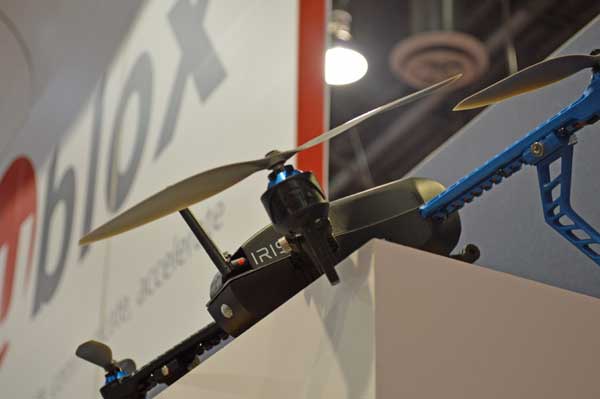
    ublox-drone-ctia-15
    The IRIS+ drone utilizes the u-blox GPS module.

    What about usage in UAVs?

    We are the leader in positioning technology for drones. We’re developing the technology to further improve position accuracy for delivery drones. So not just for recreational use but truly for professional utilization either for delivery, package delivery, agricultural delivery, pesticide/herbicide delivery. You need very, very accurate positioning technology.

    Where do you see the UAV industry going?

    I see consolidation eventually but at the same time, I see more and more proliferation of companies developing new types of drones.

    What’s the key to u-blox’s success?

    We have been phenomenally lucky that we have such good customers, who are not only loyal to us, but they spread the word and they bring more customers. I am very thankful and grateful to our customers and colleagues.

  • Google Reorganizes with New Parent Company — Alphabet

    Google Reorganizes with New Parent Company — Alphabet

    google-logo-TGoogle is reorganizing under a new name, Alphabet, separating its moneymaking businesses from its cutting-edge ventures such as the self-driving car and drone delivery service. The move is being made because Google’s penchant for experimentation made traditional investors nervous, according to the New  York Times.

    Alphabet would be the parent entity, housing several companies, with Google the biggest among them. Alphabet Inc. will replace Google Inc. as the publicly traded entity and all shares of Google will automatically convert into the same number of shares of Alphabet, with all of the same rights. Google will become a wholly-owned subsidiary of Alphabet.

    “For Sergey and me this is a very exciting new chapter in the life of Google — the birth of Alphabet,” Larry Page, the chief executive of Google, wrote in a blog post on Monday. “We liked the name Alphabet because it means a collection of letters that represent language, one of humanity’s most important innovations, and is the core of how we index with Google search. We also like that it means alpha‑bet (Alpha is investment return above benchmark), which we strive for!””

    “Sergey and I are seriously in the business of starting new things.” Page writes in the blog. “Alphabet will also include our X lab, which incubates new efforts like Wing, our drone delivery effort. We are also stoked about growing our investment arms, Ventures and Capital, as part of this new structure.”


  • Double-Edged Sword: Drone Delivery Helps Clinic, but Drones Prevent Firefighting


    In a striking contrast, the positive and negative sides of unmanned aerial vehicles were highlighted in a single day, July 17. First, in a government-approved demonstration, drones were used to deliver prescription medicine to patients at a temporary health clinic in rural Virginia, reports the Wall Street JournalThe event, reported previously by GPS World, aimed to show how UAVs can alleviate the problem of health-care access while creating economic opportunity for communities.

    A manned aircraft carried the packages most of the way, and the flight plan originally called for the drone to make six round trips to carry a total of 10 pounds. But after two successful deliveries, officials decided to send the rest of the payload in one flight.

    In stark contrast to that beneficial use of drones, efforts by firefighters to battle a fierce wildfire in California on July 17 were hampered by hobbyists flying consumer drones to capture video of the flames. Planes attempting to deliver water drops found their flights delayed or blocked by the presence of the drones, with private drones flying over the wildfire grounding firefighting aircraft for almost half an hour.

    In the past month, drones have gotten in the way of firefighters in San Bernadino County, the Plumas National Forest and, most recently, Interstate 15, which connects Los Angeles and Las Vegas, reports PBS.

    State lawmakers in California are drafting a bill that would impose heavy fines and potential jail time on anyone whose personal drone interferes with firefighting efforts.

    GPS World professional OEM editor Tony Murfin discusses regulatory issues for both commercial and hobby drone use in his July newsletter column, New Frontiers in Unmanned Flight — Your Questions Answered.