Tag: editorial

  • Out in Front: Feds Playing Footsie

    I’ll be the first to say that I don’t know how Washington works.

    I don’t know if Washington works, but that’s another story.

    Lacking that knowledge, and a competent lawyer to pepper my filings with the requisite “Vaughn v. Rosen, 484 F.2d 820 (D.C. Cir. 1973), cert. denied, 415 U.S. 977 (1972) . . . claims of nonsegregability must be made with the same degree of detail” language, all my Freedom of Information Act (FOIA) requests for agency communications to the National Telecommunications Administration (NTIA) failed. My FOIA won-lost record stands at 0–7.

    The reason cited by the Department of Transportation for withholding 11 documents and blacking out in their entirety the two pages that it thoughtfully provided was that being any more forthcoming might “cause harm to the government’s deliberative process.” If government told the people what it was up to behind closed doors, the people might object. Shades of Tammany Hall. “I’ll decide what is in the best interest of the electorate.”

    Several government agencies, responding to a tasking by the National PNT Executive Committee, sent their thoughts on LightSquared and GPS to the NTIA, which shares responsibility for spectrum with the Federal Communications Commission. At last notice, the NTIA had not forwarded these communiques to the FCC, and it sure does not want to share them with anyone on the outside. The NTIA was first to rebuff my FOIA, followed by others. Only Interior and NASA provided substance, but in both cases the documents had already been released by a House committee.

    The Citizens for Responsibility and Ethics in Washington (CREW) knows the system a lot better than I do. Its well (or at least copiously) worded FOIA to the White House Office of Science and Technology Policy for documents related to LightSquared elicited several boxloads of same.

    A nonprofit organization, CREW uses research, media outreach, and litigation to force officials to act ethically and lawfully, and to bring unethical conduct to public attention.

    CREW is combing through the voluminous documents, as you may now also do. So far, I’ve seen effusive emails from White House staffers to corporate folks they may or may not already know, fawning all over themselves about economic benefits and job creation that a new generation of wireless technology might bring.

    Not a word yet about downside or job loss that undermining an infrastructure cornerstone will produce. In an election year, point to new or hypothetical blooms and hide the detritus.

    This just in: LightSquared formally notified the FCC that any determination must not be based on “the subjective views of the federal agencies involved.”

    Now I wonder what kind of thrall the company thinks it holds the FCC in, to instruct it so?

  • Out in Front: Catch a Wave

    Expecting guidance from FCC regulators by year’s end? LightSquared purports to do so, but a more measured evaluation finds a December decision unlikely.

    The current test cycle — hopefully not the final one — just reached its end on November 4 at White Sands Missile Range, under the Air Force’s watchful eye. That testing focused only on “cellular and personal/general navigation” receivers as specified in a September letter from the National Telecommunication and Information Agency. According to unconfirmed reports, this round of testing did not include the JAVAD GNSS precision receiver with a new filter prototype, although LightSquared lobbied strongly to have the potentially bacon-rescuing device included.

    Even if allowed, that move would have been highly premature, and ultimately misguided and misguiding. The 33 other high-precision and network GPS receivers that underwent May testing would all have to be retested, with the new filter incorporated somehow in each one, before any meaningful conclusion about technical feasibility could be drawn. Then retrofit cost issues would have to be addressed. Months of work remain before any fair and complete evaluation can occur.

    A National PNT Engineering Forum summary of the cellular and personal/general navigation testing at White Sands is expected by November 30. A complete report may not appear until December. An FCC decision that same month, or the next, or the next, would be speedy and premature beyond any precedent that even the trigger-happy commission has yet set for itself.

    As a basis for a decision on the waiver, the cellular and personal nav testing is still insufficient. At least one, probably two more rounds of testing — at bare minimum — involving the recent proposed filter fixes and a complete range of high-precision receivers should take place before putting national security, infrastructure, hundreds of thousands of jobs, and hundreds of billions of dollars of public and private-sector investments at risk.

    This doesn’t mean everyone not directly involved in testing can chill.

    This is a political and very high-stakes financial struggle, not just a series of complex technical issues. Decisions when they are made will reflect political  considerations and financial motives as well as technical test results.

    Everyone who cares about the outcome should sit down today and write letters or e-mails to their three congresspeople — two senators and one representative — stating strongly and clearly their views and reasons. Even if you have written before. Congress is the only place currently that any form of leverage can be exerted.

    We are riding a wave of change, and precariously at that. While keeping our balance, we must continually gauge the water, the wind, our own stamina — and warily watch the great white sharks that are circling.

  • Out in Front: C’mon, People Now

    In this hour of crisis, in this hour of need, I would recall for you the immortal words of the Brotherhood of Man, as reprised here by their disciples, Sonny and Cher:

    For united we stand,
    Divided we fall,
    And if our backs should
    ever be against the wall,
    We’ll be together,
    Together, you and I.

    Or will we?

    The LightSquared crisis has been and continues to be the most perplexing and fascinating episode I have followed in 11 years of covering the GNSS community. Fascinating because it has so many political and societal implications, as well as tangled-up technical, application, and business issues. In the end, it’s all about money. Money and power.

    It further fascinates me from a sociological point of view. The way the unfolding of this process has affected the GNSS community, in particular the subset of that community that is the GPS industry in the United States, strikes many reverberating chords.

    At first glance, we can say that the crisis has pulled a diverse community together, united it against a common foe. Witness the work of the Coalition, the agreement among the TWG sub-groups, the NPEF, the chorus of supporting letters and comments in the FCC docket, and so on. This is true — but only to an extent.

    I believe the opposite is also true: it has exposed cracks or fissures within the community, driven wedges into those cracks, and widened the cracks into gaps. It has exploited natural divisions that exist because GNSS technology is so widespread in applications and variegated in types of users. The process threatens to fracture the industry, and the community, further. That’s alarming.

    In the early going, response was fairly uniform: how can LightSquared and the FCC do this? How can we stop them? Thus the Coalition to Save Our GPS was formed. The Coalition has functioned very ably, but in fact it represents only one segment of the community: the high-precision segment. It is staffed and directed, to my knowledge, largely by Trimble and John Deere with some help and assistance from the off-shore and aviation segments. There is participation and membership from other areas, but generally, high precision drives it.

    This is also largely true of the GPS Industry Council. I am making broad generalizations that are surely inaccurate, to a degree. The GPS Industry Council earlier served the community in the pre-LightSquared negotiations of 2002 and continues to do so today alongside the Coalition It is similarly oriented towards the interests of its principal members.

    The high-precision bias, if you will, of the scenario became apparent to me when I tried to recruit webinar speakers and contributed editorial pieces from the other end of the GPS community: consumer and handheld receiver and cell-phone chip manufacturers. These companies, among whom I number Qualcomm (which long ago snapped up SnapTrack), Broadcom (acquired Global Locate a few years ago), and CSR (now owns the company formerly known as SiRF), declined to participate, speak out, or become involved in any public way. They seemed content to stand on the sidelines, watching. A newly appointed Qualcomm board member of the PNT Excomm Advisory Committee recused himself from participation in LightSquared-related activities.

    Why? Money. These companies are much closer to, in many cases are business partners with, the wireless carriers and the cell-phone manufacturers who have stock in seeing 4G happen and broadband roll out across the land. The L1 GPS companies feel they have to be fairly careful about how they proceed.

    As one person from such a company told me, “I think we tend to have a positive view, which is contrary to everyone else. This was a political issue, not a technical one, and the political wheels were in motion for a long time. Now, it’s up to us to decide how to deal with it. Whine and cry that we were cheated and duped, or seize the day and do what we are good at: engineer our way out.

    “It’s interesting how much this industry likes staring at its own navel, rather than looking (or listening) to other points of view. It is what I call ‘violent agreement’.”

    No matter how violently you may disagree with this view, it is vital that you be aware that it exists within the same group that you are part of.

    So we have the beginnings of a split, of something that could become a gulf, between the high-precision and the consumer segments of the industry.

    On the second hand, we have the military, many of whom — now these are the oldtimers — are secretly pleased by the travail the industry and civil users are going through. Because they never really liked sharing GPS with the civils anyway. However shortsighted, impractical, and shoot-yourself-in-the-foot this attitude may seem, it also exists, and is held by powerful, influential people.

    Third, some people within and without the GNSS community accept some or all of the LightSquared claims: that there’s no problem, or if there is a problem then filters can solve it, that alternative solutions are ready-to-hand or can be found through diligence. You may disagree, violently or non-violently, with these believers; you must still take them into serious account.

    Finally, JAVAD GNSS has announced a partnership with LightSquared and declared that “LightSquared not only can coexist with GPS, it complements it.” The company has always set an independent course, but this breaks new ground.

    What to do?

    My colleague Eric Gakstatter perceived the need for a more broad-based organization, an all-inclusive industry and users association, which the GPS Industry Council patently is not, however earnestly it has tried to serve that purpose in the absence of anyone else to do so.

    Almost simultaneously, Glen Gibbons wrote a column in his magazine proposing just such an association. “The need for more effective, continuing organization and representation of the GNSS community — manufacturers, service providers, and users — seems clear. . . . Common interests abound, and I’m not just referring to the RF issues that fuel the present furor,” he stated.

    We have an assortment of forums already: the Civil Global Positioning System Service Interface Committee, industry councils in the United States, Europe, and Japan, the Institute of Navigation. But these bodies cannot represent nor accomplish — it is not in their respective charters to do so — all that must be represented and accomplished.

    Building and maintaining a new entity will not be easy, because the GNSS community is more diverse, and I venture to say more divided, than we may like to admit. A consensus-driven organization of divergent interests is a very ornery thing; just ask the European Union about its efforts to mount Galileo.

    A coalition of like-minded folks united around one issue differs greatly from a broad organization assembling diverse points of view. The GPS community may never speak with one voice, even in the matter of its own survival. But other courses of action lie open to us.

    Test Till You Drop. The new phase of Lower 10 testing extends into November. After that, the JAVAD filter technology must be widely distributed, as soon as it is available, to all interested parties and rigorously tested to determine its validity and, equally important, its extrapolability to other proprietary receiver technologies well established in the field. I dare say there are many further aspects that must be thoroughly investigated and analyzed before anybody asserts that “We’re not [doing] anything that creates problems for GPS safety and service.” Because Julius Genachowski said we can’t.

    Long after the unfounded claims and the tortured analogies have lapsed into dust, the laws of electromagnetic
    behavior will go on working, as they have always done. And very admirably at that.

    C’mon, people now,
    Call on your physics.
    Everybody get together,
    Try to use your analytics,
    Right now.

  • Out in Front: The Good, the Bad, the Incompetent

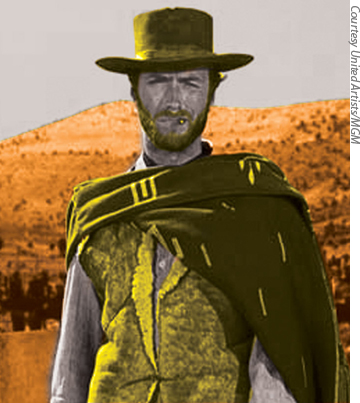
    Good-the-bad-and-the-ugly-WThe most efficient use of spectrum the world has ever seen benefits more than a billion people today. Two billion tomorrow, when modernized and interoperable GNSS gets real. This massive installed base constitutes a source of innovative advantage and invaluable good will for the United States.The latter arises from the high degree of trust and confidence in the United States and its stewardship of GPS, one of the most successful — and perhaps only — simultaneous foreign aid and domestic economic stimulus programs ever created.

    Smooth dealers operating inside a hedge, playing with other people’s money, want to make billions by raiding this national resource to provide video on cell phones to young audiences.

    The Federal Communications Commission has acted in ways inconsistent with reasonable public expectations of a federal rule-making agency. Early on, it gave the appearance of buying into the LightSquared agenda, issuing a ruling with undue speed.

    It has waived, explained, and proclaimed in ways that show an abject ignorance of radio frequency (there are conflicting reports as to whether agency technical staff was ever consulted by leadership prior to acceding to the LightSquared request) — and too clever by half. The chairman, rumored to be in line for the China ambassadorship, was careful not to sign the waiver himself, but have the deed done by a subordinate.

    In this act, they ignored the inherent conflict in two competing national policy objectives: the National Space Policy and the Broadband Memorandum. Rather than taking time to reconcile crucial guiding principles, the waiver plots its own course.

    The ruckus has gotten the president out on a limb, and now the agency must find a solution allowing him to crawl back before the election. Either that, or he and his advisors, including the FCC chair, will knuckle down and carry on regardless, saving political face in the short run while weakening national infrastructure and defensive capabilities.

    Never underestimate politicians’ desire to save face. In many ways, it’s all they’ve got.

    The best thing the GPS community can do during this quiet reloading period is to keep the letters and calls flowing to Congress: the safest and most fact-based action for the FCC is to conclude that the terms of the LightSquared conditional waiver have not been met and withdraw the license to deploy a terrestrial network in the 1525–1559 MHz band. This is the only approach fully consistent with both the National Space Policy and the Broadband Memorandum, as well as the FCC’s own regulations.

    At this point, any actions taken by the FCC are subject to unpredictable political considerations.

    Shootout at the cantina.

  • Out in Front: A Pawn in Their Game

    Maybe we got played. But we put up a good fight. We really had no option to do anything but fight. So we did, and we’re still fighting the LightSquared attack on the GPS signal. It’s not over yet, not by a long shot.

    Suspicions now creep in that the attack may have been a feint, that the company never really intended to do what it threatened: broadcast a very powerful signal from ground towers, on a frequency immediately adjacent to the GPS signal. LightSquared had its eye on another prize instead.

    Here’s what I have heard, independently from two people who follow the telecommunications industry for a living. Party number one:

    “These guys have b..ls.

    Off the record, their business plan is a 100 percent swap.

    So the more GPS gets irritated by their b..ls..t and says get out of the L-band, the more LS like it.

    Tell your friends to recommend that LS use their other [lower] spectrum.

    Now that’s what they don’t want.

    The trade is 40 MHz of new terrestrial spectrum.”

    Party number two, a Wall Street contact, said the same, implying a direct interaction with top-level LightSquared personnel as its source.

    Somewhere in the very early going, back in December of last year, I read a similar speculation, but gave it little credence because it seemed too good to be true. I’m still wary.

    But such deceit seems consistent with the sly and manipulative behavior that LightSquared has evidenced to date, on top of the near-total lack of any engineering or scientific case for its power play on spectrum. Time and again, company spokespersons made their case on legalistic and rule-making grounds, abetted by no less a person than the FCC chair. Any technical language or justification they used was transparently, almost laughably, unfounded.

    That’s the way government works, unfortunately. The laws of man are held above the laws of physics — even when it comes to rewriting the previous laws of man, which, it turns out, had some logic. The MSS spectrum, about which all this furor has raged, turns out to stand for Mobile Satellite Service spectrum. If the LightSquared signal were held to its license, it would broadcast from satellites, with a small provision for ancillary ground broadcast.

    Even with the Technical Working Group’s strong repudiation of both the LightSquared proposal and the FCC’s conditional waiver, and the stern-jawed joint letter from the Departments of Defense and Transportation, we are far from safe. I have seen too many government boards — local, state, and federal — fly in the face of evidence, to believe that facts rule.

    It ain’t over till the statuesque lady sings.

  • Out in Front: The Daughter of Time

    “Truth,” wrote Sir Francis Bacon, “is the daughter of time.”

    He meant that any account, repeated often enough by different people in different places, at different junctures, eventually becomes accepted as historical fact, or truth, by those with no direct knowledge of the matter.

    That’s why it is so important to repudiate and expose lies at every encounter. Never, ever let one pass. Even when it’s the same one that you dispelled yesterday — or thought you had taken care of. One thing about liars, they keep coming back. They don’t give up.

    Would you give up, if you had $20 billion at stake?

    I wrote an online column on this topic recently: “LightSquared, FCC Rebuttals Distort Record.” These distortions were so blandly crafted that they were picked up and passed on by a number of other parties who should have known better, including at least one colleague of the press who writes for a wireless industry publication.

    Come to think of it, you do have $20 billion at stake — and much more. We all do. To the tune of more than $67.6 billion in direct economic benefits in the United States alone, provided by GPS. Or $96 billion per year in direct economic costs should GPS be disrupted. See the System news in this issue, “The Economics of Disruption,” for what you stand to lose.

    If you think the recent amendment to the 2012 Budget, cutting off FCC funds in this matter, should settle LightSquared hash, think again. The company is back with a new solution. Same as the old solution. Just with the pieces moved around. And it has taken its game up a notch, signaling intent to apply to the International Telecommunication Union for authority to broadcast powerful terrestrial signals all over the world.

    All over the world. Calculate the costs of that. For our international readers, this may mean trouble for GLONASS and Galileo too.

    Written to your congresspeople about this? Bravo if you have. Write again. They are not tired of hearing from you. There’s a lot they don’t know, that you do, particularly if you read the news accounts here and online. Forward links freely; they are information-laden and they are there for you to use.

    Not written to anyone yet? The headline of this column also served as the title of a novel by Josephine Tey, concerning Richard III, King of England. You know the evil hunchback murderer of Shakespeare’s play? We recall him as such because someone (his rival Henry VII) was particularly adept at lying and getting others, including Shakespeare, to repeat the lie — with none to dispute.

    GPS could become a forgotten hunchback of history. Act now.

  • Out in Front: Business Hand at the Helm

    I met Chris Litton (right) at my first European Navigation Conference in Sevilla, Spain, May 2001. I recall a long conversation over a dinner of Moorish and Andalusian dishes, attended by the staffs of NavCom Technology and GPS World, in the Mesón Don Raimundo.

    Over the years we met again and again at conferences hither and yon. “Great cities of the world!” became our greeting. As sales manager for NavCom, then for the NavCom division of John Deere & Co., from 1995 to 2007, Chris saw many more of those cities than I did. A GPS road warrior.

    I’m very happy to announce that we now play on the same team — to your ultimate benefit. Meet J. Christopher Litton, international account executive and ad manager for GPS World magazine, website, e-newsletters, webinars, and the whole enterprise.

    Add to his decade-plus at Navcom the subsequent years, up to present date, doing similar things for Septentrio Satellite Navigation, earlier experience as co-founder of Litton Consulting Group, where he helped establish NavCom, and deep background as U.S. Navy gunner’s mate missile system specialist.

    As a result, your business partner here knows more about GNSS markets and technology than the editor. That not only distinguishes us from the crowd — it’s got to be worth something. To you.

    For the 6.7 percent of our subscribers who are actual or potential advertising decision-makers, this is worth a great deal. Give him a ring or shoot him an e-mail query about reaching your business development goals. He’ll have something concrete, knowledgeable, and effective to suggest. He can implement your message, simultaneously and synergistically, across many platforms: print, electronic, social media, exhibits, and more. He’ll visit you for an in-depth skull session. A GNSS road warrior, traveling to all cities of the world, great and small.

    The balance of 93.3 percent — or really, all our readers — will benefit from Chris’ knowledge and marketplace vision, helping me shape and steer this vast starship across the far reaches of positioning, navigation, and timing.

  • Out in Front: Blinded by the Light

    To illustrate the fix we’re in, Logan Scott offered this analogy for out-of-band interference during the April webinar, “LightSquared and GPS: Our Story So Far.” We’re driving at night and come upon a bicylist with one of those little flashing lights. That’s the GPS signal. So far, so safe. We know the bicyclist’s position.

    Then around the bend comes a truck with its headlights on high-beam, in the adjacent lane, but brights set at our eye level. That’s the LightSquared signal.

    Where’s the bicyclist? Uh oh.

    That is not the only light off which we are fending. Some of it we generated ourselves — with help from neighbors and children and friends and employers and, well, just about anyone with a 
mobile online connection.

    Every time you:

    • download a map and driving directions to your cell phone or wireless-connected PND;
    • stream a movie to your cell phone (all right, so only youngersomethings of your acquaintance actually do this. They still have the eyesight for it);
    • while on the road, tap wirelessly into your company’s complex database of whatever kind that has been moved to “the cloud” in a cost-saving and efficiency-ramping measure;
    • download a Zen meditatation app to your mobile, one with scientifically designed binaural rhythms using embedded beats to induce a trance-like state through brainwave entrainment for ultimate relaxation, stress reduction, pain management, improved sleep quality, super learning, enhanced creativity, out-of-body experience, and lucid dreaming (I kid you not); or
    • get sports updates and video highlights direct to your phone —

    Every time you do any one of these or myriad other activities on your handy pocket communications device, you, sir or madam, are contibuting to the problem that the GNSS community now struggles with.

    Society has developed a ravenous appetite for huge volumes of virtual data, and we are not at all content to wait until getting home or to the office for a wired connection to access it. We want it now! On the road or sidewalk, in the coffeeshop, in the mall, in the stadium, along the running path, yea, even unto in the wilderness.

    This appetite will only grow. LightSquared — mark my words, it will have plenty of company following — wants wider bandwidth to help you access online data faster. Sooner than you can say “traffic congestion,” even more data will be on offer, with even greater demand for wider bandwidth.

    As one webinar attendee e-mailed (he wrote in all caps to emphasize his feelings, but they are downsized here),
    “Do y’all think this has anything to do with the fact that mobile phone companies can make significantly more money streaming TV to cell phones than with GPS applications?”

    Technology is never a single-edged sword.

  • Out in Front: Dual Use, Single Front

    As it was in the beginning, now and always, and to the ages of ages — or at least into the conceivable near future: GPS was, is, and shall be a dual-use system.

    Why, then, reading through the March 15 report of the Technical Working Group (TWG) to the FCC on LightSquared/GPS interference, do we find no mention at all of military receivers?

    Presumably DoD and the GPS Directorate are both concerned and active on a separate front vis à vis the FCC, but what/how/when? Would it not be beneficial for the dual uses to present a united front in some way, or at least to collaborate to some extent? To observe, if nothing else, each other’s testing?

    It turns out there are separate LightSquared/GPS Industry Council and government testing structures, the latter under under the National Space-Based PNT Systems Engineering Forum (NPEF), which will include military receiver tests. Several government members of the TWG are also members of the NPEF. The Executive Secretariat to the NPEF is also a core member of the TWG.

    The two testing groups collaborate and try to be on the same page as to technical assumptions, test methodology, measures of effectiveness, and so on. They will observe and participate in each other’s tests as much as they can — with the exception of national security issues.

    Testing of the military receivers is not a part of the TWG primarily because of classification. Any discussion of vulnerabilities of military equipment is generally classified at least at the Secret level.

    Outside of the TWG, there have been direct meetings between LightSquared and the military officers leading the military receiver testing. The military have asked technical questions and LightSquared has answered them and provided examples of its hardware. LightSquared has flown technical experts to Colorado Springs to meet with HQ Air Force Space Command test leads.

    “To the maximum extent possible,” said Anthony Russo, director of the U.S. National Coordination Office for Space-Based Positioning, Navigation, and Timing, “we’ll invite LightSquared to review test plans and make inputs on test methodology, but we do anticipate that some of the end results will be classified and therefore have to be conveyed separately to the FCC.”

    “There is certainly good collaboration between the LightSquared-led TWG and the independent federal testing activities I directed under the NPEF charter. LightSquared has been extremely cooperative in supporting this,” he added.

    In addition to classification issues, there are other reasons to do independent federal testing. LightSquared is focusing on the potential in-band overload issue, while the GPS community is concerned about any potential interference scenario — including out-of-band emission issues that LightSquared is not looking at.

    Russo anticipates at least two reports will go to the FCC in June: “One from LightSquared where we make inputs, but have no official say on what they conclude; and one from me, based on NPEF results, submitted through the PNT EXCOM to the FCC. I expect the latter report to be at the Secret level, although we may be able to do a redacted version for LightSquared and the general public.”

  • Out in Front: Act Now to Protect GPS Signal

    This guest editorial addresses a subject of paramount importance to the GNSS industry, to the U.S. national infrastructure, and to the global GNSS community. I urge you to take immediate action by contacting U.S. government representatives, indicated at the end of this article.

    — Alan Cameron, editor-in-chief


    Guest Editorial by Joe Paiva

    GPS has become a key component of the U.S. national infrastructure, the driver of a significant part of the civilian economies of the world, and the enabler of millions of professional precision uses and consumer benefits.The viability of the GPS signal is now threatened — ironically by what appears to be a misguided attempt to increase accessibility to broadband by creating a needless zero-sum result for customers who want both services.

    The threat is real and immediate. The U.S. Federal Communications Commission (FCC) has issued a conditional waiver to LightSquared, a company engaged in developing 4G-LTE (long-term evolution) cellular networks for wholesale-only basis commerce with its business partners.

    LightSquared Scheme. LightSquared acquired a company providing a combined space-based and ancillary land-based service using the L-band radiofrequency. The FCC conditional waiver, granted to LightSquared on January 26 of this year, allows it to broadcast a new terrestrial broadband service from 1,500-watt terrestrial transmitters — 40,000 of which will eventually be installed by LightSquared — in the portion of L Band (1525 MHz–1559 MHz) immediately adjacent to the 1559–1610 MHz band used by GPS.

    Instead of offering dual-mode handsets exclusively as required by their FCC license, retailers purchasing this combined service can choose to offer terrestrial mobile phones only, which was the change in license terms that LightSquared was seeking via waiver. This change amounts to a de facto reallocation of Lightsquared’s spectrum use from space to terrestrial wireless. In fact, the new broadband service is planned to operate in urban areas, and the space service will operate outside these areas.

    The LightSquared terrestrial broadband signal is about 1 billion times the received power of the GPS signal on Earth. Members of the GPS industry have been conducting experiments and analyses, and these figures come from those very early studies. Soon, we may experience GPS interference — jamming — on an almost unimaginable scale and to a geographical extent that could create widespread havoc.

    Threats. The GPS system works so well that we often forget the complexity behind it and take for granted the service we use daily. One reason GPS works so well and is seldom defeated is that the signals broadcast by the satellites can be received under a wide variety of conditions on Earth. Historically, the FCC and the International Telecommunications Union, understanding potential interference issues, intentionally planned uses of adjacent swaths of the L-band so that satellite-based transmissions, relatively low-power, would be natural neighbors, so as to cause as little disturbance as possible to radio-navigation uses. This dedicated purposing of the bands and the resulting environment of negligible interference is one reason that GPS has become reliable and its use ubiquitous.

    Long-time observers of the GPS scene will remember how civilians, and especially potential international users, initially had uncertainty about the U.S. Department of Defense’s statements that the service would be free and not subject to any restrictions in one’s ability to receive and use the broadcast signals. This uncertainty was due primarily to the implementation of Selective Availability (SA), which intentionally degraded the available accuracy of the GPS signal. SA was permanently removed in 2000 by President Clinton’s 1996 Presidential Decision Directive.

    Many factors have enabled users and potential users to see GPS as a reliable, consistent technology that provides significant increases in productivity, efficiency, precision, continuing innovation, and many other benefits. These factors include the reliability of the overall GPS technology, improvements in receivers and in successive next-generation satellites, advances in differential and relative positioning, dynamic applications, and real-time kinematic solutions. And, just as importantly: stable, predictable U.S. policy.

    Investments. Now, by virtue of this unusual FCC action, uncertainty has been thrown into the viability of the hundreds of millions of GPS receivers in use today. Much research and development work is being done on improving receiver performance and taking advantage of improvements planned for the satellites. The most dollars go towards devising new applications, products, and services that improve the quality life of millions of Americans, create new companies, markets, and jobs. These dollars are also being spent by government agencies, not just the Department of Defense, but very visibly by Agriculture, Commerce, Interior, Energy, Homeland Security and Transportation. More than likely, the remaining departments either have active programs that are using or considering using GPS or are positively affected by others’ use of GPS.

    That’s just the executive branch. Other parts of the federal government, as well as state and local governments, do research on GPS technology and applications and actively use GPS to improve the lives of citizens, increasing work and recreation, efficiency, and safety. In many local government settings, there is active cooperation to improve delivery of services by having governmental and non-governmental organizations collaborate around the simple fact of accurate position being available through GPS, with significant cost savings in current lean budgets.

    It is inexplicable that another part of the government would be so cavalier in rapidly and uncharacteristically granting a waiver that clearly endangers the whole system. And only after granting the waiver, which must act at least as a yellow light for LightSquared’s mobilization plans, comes the requirement for a study — to be headed by LightSquared — to determine impacts and mitigation of interference with the GPS signals.

    Why Fast Track? The FCC grant of a reallocation of spectrum use from space to terrestrial on a fast-track waiver did not follow the standard FCC rule-making process for reallocation of spectrum use. The standard regulatory approach allows sufficient time for robust public comment by all potentially affected parties, including the conduct of interference studies and the introduction of comments on interference results in the public record. Instead, the FCC order granting the waiver to LightSquared has mandated what appears to be fast-track GPS interference research.

    Currently, the proposed LightSquared terrestrial broadband service does not have an installed user base. In contrast, the installed GPS user base represents a broad and diverse range of use representing hundreds of millions of users established over 30 years.

    The final Working Group report is due to the FCC on June 15, 2011. The FCC order requires the GPS community to participate “in good faith” in this study effort. In response, the U.S. GPS Industry Council and others are working on this interference study to protect GPS operations under these extraordinary regulatory conditions.

    A further problem created by the FCC conditional waiver is that LightSquared is able to move ahead with its infrastructure development, assuming that viable solutions to the jamming issue will be found. For many GPS users, theoretical fixes are not likely to prove viable.

    Negative Impacts. Preliminary research done by member companies of the USGIC already has been reported in GPS World. The research indicates that LightSquared’s 1,500-watt terrest
    rial transmitters will result in a signal 90 dB stronger than GPS over the coverage area; this amounts to signal strength 1 billion times stronger than GPS. There is more to the research, all done with GPS simulators and signal generators (see env-gpsworld-integration.kinsta.cloud/data for test results).

    Clearly the jamming level will vary with geography. We don’t yet know LightSquared’s broadcast-tower siting plan. But it is clear that if LightSquared is allowed to broadcast terrestrially on the mobile satellite system (MSS) band, dedicated until now to signals compatible with satellite transmissions, there is a substantial danger that millions of GPS receivers will be adversely affected.

    Some obvious impacts are loss of operational viability of businesses involved in aviation, surveying, agriculture, engineering and construction, vehicle navigation, mariners, transportation, public safety and homeland security, disaster management, utilities, mapping, and scientific research. Several of these involve safety-of-life issues, which are at risk of being jammed.

    Keep in mind that GPS was envisioned as a system for space and time. Its longest life as a useful contributor to society has been as a time standard. Countless networks, whether for computing, broadcasting, power generation — even, ironically, cell phones — are synchronized using the most precise signal practically available. Fixed GPS receiving stations for time reference may be able to be designed to withstand some interference from high-power broadcasting on adjacent frequencies, but nobody has tried so far.

    Any hypothetical fixes for GPS beg a more fundamental question: Why should Lightsquared, a new entrant with no existing business, be allowed to shift the burden of mitigating interference created by its operations to millions of consumers, government agencies, and businesses who have invested in GPS over the last 30 years?

    Keep in mind that other users of the MSS band will also be affected. Many commercial and governmental uses of the very band that LightSquared will occupy with its terrestrial transmitters may also be jeopardized.

    We must also remember that the FCC has its own agenda, to implement its National Broadband Plan. What is truly difficult to comprehend is that broadband and GPS will serve the same mobile user.

    Action Needed. Please act now.

    • Write to your representatives in Congress, and to your professional and trade associations.
    • If you are an expert on radio or spectrum or GPS or whatever else is pertinent, make your comments, do your research if possible, and publish your results with all due speed.
    • Petition the FCC to turn the yellow light to red, while other paths to achieving LightSquared’s and the FCC’s goals are investigated.
    • Do not forget the Administration: the National Telecommunications Information Administration (NTIA) represents the president and the Administration as official co-regulator with the FCC of the spectrum where GPS operates. In the recent FCC Order, NTIA must review the report on results of the FCC-mandated interference study.
    • Specifically, ask Congress to demand that the FCC include specific language to protect GPS use in the final FCC Order to LightSquared after the interference study is completed.
    • Ask the Secretary of Commerce and the White House Office of Science and Technology Policy (OSTP) to inform the NTIA Administrator to urge the FCC chairman to take this same action to protect GPS in the final FCC Order.
    • Contact the FCC chairman directly and urge this same action.
    • Finally, help develop user and beneficiary awareness of the grave danger being posed to GPS and make your elected and congressional representatives aware of the impact that interference with GPS would have on your work.

    The large-scale disruption of the GPS service mustn’t be on our hands due to inaction.

    Points of Contact

    Send messages to FCC chairman, commissioners, and NTIA:

    • Edward.Lazarus at fcc.gov (Chairman Genachowski’s office
    • John.Giusti at fcc.gov (Comm. Copps’ office)
    • Angela.Giancarlo at fcc.gov (Comm. McDowell’s office)
    • Louis.Peraertz at fcc.gov (Comm. Clyburn’s office)
    • Charles.Mathias at fcc.gov (Comm. Baker’s office)
    • lstrickling at ntia.doc.gov (asst. secretary for communications and information, NTIA)

    International readers may contact the U.S. State Department, clorere at state.gov. For further contacts, see env-gpsworld-integration.kinsta.cloud/actnow.


    Joseph Paiva is a consultant to the geomatics industry, with background in private engineering, surveying and mapping consulting, and as developer and general manager for two geomatics products corporations.


    High-Precision Users

    High-performance L1 receivers (sub-meter) have a wide-bandwidth RF front-end to improve performance, about 20 MHz, compared to a consumer receiver that typically has a front-end bandwidth of 2 MHz. GPS World contributing editor for survey and GIS Eric Gakstatter discusses this aspect of the issue in his recent e-mail newsletter column at env-gpsworld-integration.kinsta.cloud/l2high.
  • Out in Front: Tech and Techer

    Can the development and use of smart technologies actually render us dumber? Have we already lost a mental step or two, as we equip ourselves fearlessly for the future?

    Marshall McLuhan, the “medium is the message” guy from back when, preached that tools numb whatever part of the body they amplify. By extrapolation, location-enabling tools render us less aware of our actual place.

    It causes me some discomfort to float this topic in the standard bearer for an extremely advanced high-tech industry. Yet I also felt acute and nearly continuous discomfort while reading a book over the winter holidays; a poke here, a prick there, until I was sitting on pins and needles. I had selected the volume with an eye to finding out why my adult and near-adult children, actively engaged online, have little patience with the printed page anymore, and find books practically abhorrent.

    Of course, every generation has its preferences, but this trend troubles me because it seems associated with a reluctance to truly explore, to think critically, at length, and in some depth. Also, it’s not limited to twentysomethings. I find plenty of affected folks at every age.

    booksThe book is The Shallows: What the Internet Is Doing to Our Brains, by Nicholas Carr. It provided grist galore in the online/print dichotomy — the changes in how we look for, absorb, process, and store information. And as said, it generated no little discomfort as I realized how much I, too, have changed in a decade and a half of increasing online activity, at work and in leisure.

    I began to wonder, as I read, where that other game-changing modern technology, global satellite navigation, enters the picture. Sure enough, it surfaced on page 212.

    A neuroscientist engaged in studying the brains of London taxi drivers found that their hippocampal area increased in gray matter volume because of the huge amount of street names and traffic-flow data they must memorize. She worries that when cabbies use GPS, that knowledge base will shrink, and possibly that area of the brain will atrophy or fail to develop.

    This is perhaps a trivial example that has little to do with you and me. But consider your experience and your awareness as you follow, head down, your PND or a cell-phone screen to your next destination. Do you register the environment en route, possibly including hazard factors? Do you notice other points of interest that might enrich your experience, occasion a stop, detour, or return trip — or even constitute a better destination? Once arrived, could you find your own way there again, or have you become dependent on silicon and signals?

    GNSS brings undeniable benefits in areas where it creates capabilities that did not exist before, such as measuring millimetric sway of tall buildings or changes in sea level; that is, largely in professional areas. But where it offers convenience or shortcuts in everyday life, that can be a more double-edged sword. The Internet has proved so; recall also canned, frozen, and processed pre-prepared foods, once embraced as modern timesavers. We now find they stripped essential nutrients out of our diet, undermining health and helping create an obesity epidemic.

    In some savage ironic twist, particularly since Carr has plenty to say about how Google contributes to the general online process of mental debilitation, the full 276-page text of The Shallows is currently available via Google Books.

  • Out in Front: Ten Big Ones in Five

    At the opposite end of this book, my esteemed colleague Eric Gakstatter gives you his Top Five news stories of the recently passed year, from a system point of view. Spend five minutes here in this column, and I’ll toss up the Top Ten for GNSS business, as reported in this magazine.

    Not the biggest money deals or revenue generators, at least not in the short term. But the most significant in terms of breaking new ground, pushing out frontiers, integrating with other technologies — the modes through which industry grows and prospers.

    I’m leafing through my back copies in reverse order. This listing goes not by prominence, but by reverse chronology.

    PNDs Up, Then Down By 2015. When you are doing well, rest assured that someone is gaining on you. Smartphones will gradually take over the personal nav market. Stay flexible, innovate, and be prepared to change horses in midstream.

    Rockwell Delivers New MUE. While military user equipment gave this industry its start, the receivers themselves have always lagged behind product available to civil users. Still, security features in the GB-GRAM-M foreshadow what all receivers may eventually require.

    Triumph V.S. from JAVAD. Supercharged with capabilities, a veritable surveyor’s arsenal, and probably a gamechanger — whether or not it makes it in the marketplace. A visionary product.

    NovAtel OEMV-1DF. Almost every month, another smallest-yet consumer-grade GPS receiver emerges. But when high-precision, dual-frequency receivers grind down their footprint and power requirement, you know this is a future wave that will sweep everything along. Not the only tiny high-performance OEM receiver, mind you, just the latest.

    LLC Rusnavgeoset. The joint venture between Trimble and a Russian company will help drive the commercialization of GLONASS, an aspect that system has not yet truly seen. We all talk about the second GNSS of choice, but the second commercialized GNSS is what we really want.

    Smartphone Explosion. The flipside to the first story. This year’s models from Apple iPhone, Google Android, Blackberry, Windows Phone 7, and all their kin, if not built around location as Apple claimed, certainly have it as core feature. The flip of the flipside: pricing for the GPS component is cut-throat. Absolutely the worst you’ve ever seen.

    GPS-Enabled USB Drive. That’s all it takes — well, download some software and buy a contract — to make a laptop location-aware.
    Spirent Assisted-GLONASS Testing. One more sign that the Russian system, against betmakers’ odds, may yet become the trusty sidekick. Soon, if your mobile doesn’t have it, it’s not 
top-of-class.

    One-Chip Receivers-Plus. Hardly breaking news, since it’s been talked about and even done, sort of, for years. TI, Broadcom, Qualcomm, CSR, and silent runners like Sony and Panasonic are all adding some communication transceiver(s) to GPS and squeezing them onto a single piece of silicon.

    No News Is Big News. Actually not reported here or anywhere, because neither party wants to reveal anything, but some of the biggest deals are cut by chip manufacturers (such as STMicroelectronics, to name just one), with automobile makers around the world. Like it or not, the car/truck is the dominant mechanical paradigm of our age. And if location is in it . . .

    We are indeed fortunate to be part of, and partners in, such a vital scene. Best wishes for this New Year.