Tag: education

  • First Fix: The key to unlocking GPS World

    First Fix: The key to unlocking GPS World

    Your subscription to GPS World unlocks relevant and timely coverage with unmatched print and digital design.

    GPS World strives to captivate, educate and continuously inform readers like you by focusing on technical, practical and ever-changing applications.

    For the past 36 years, our market-segmented topic areas, deep-dives, as well as broad bird’s-eye-view industry coverage is what makes it a valuable resource for professionals in every tech field.

    Your GPS World subscription offers:

    ■ The long-standing monthly print GPS World magazine

    ■ The regularly updated GPSWorld.com website, with plenty of free content and unlimited access, plus premium features available free to account holders

    ■ An interactive, downloadable and browser-based flip-through GPS World digital edition format

    ■ The breaking news and industry overview weekly Navigate! e-newsletter, conveniently delivered regularly to the email inboxes of professionals worldwide

    ■ Several market-sector e-newsletters focusing on specific topic areas such as autonomous, defense and surveying technologies

    You can update your subscription anytime. Whether you want to change your address, sign up for e-newsletters or update your contact information, all you need is your subscription account number. Rest assured, when you subscribe to GPS World, your information will never be shared or sold.

    Subscribe here

    Update your information here

    Keeping your information up to date will ensure you won’t miss an issue.

    Our editorial team reports on current, relevant industry topics — including the latest disruptive tech and current events affecting the industry — in print and online.

    They also cover positioning, navigation and timing (PNT) technology and developments, which work with GNSS to achieve greater accuracy, availability, integrity and robustness. These include inertial sensors, eLoran, lidar, electronic compasses, cellular signal positioning, video signal positioning, odometers, wheel-speed sensors, ultra-wideband, RFID, Bluetooth and more. Coverage not only includes the U.S. Global Positioning System, but it also chronicles the development of GLONASS, BeiDou and Galileo, as well as regional sysems, including QZSS and NavIC.

    In this current era of heightened GNSS interference, we are also staying on top of the numerous groundbreaking projects to complement GNSS or provide alternative PNT methodologies. From new ways to process signals to additional constellations in low-Earth orbit, we are your companion to sharing this critical information (see Converging on the Jammer).

    Uses of GPS have spread across the landscape, the seas, into air space, into outer space, driven by designers and engineers crafting new solutions for challenging problems. Wherever the industry is heading, GPS World will be there to cover it.

  • Crafting a GNSS curriculum for the future geospatial workforce

    Crafting a GNSS curriculum for the future geospatial workforce

    The Spatial Sciences Institute (SSI), part of the Dornsife College of Letters, Arts and Sciences at the University of Southern California (USC), is a national leader in geospatial research and education. Founded on July 1, 2010, SSI has been educating students and professionals with both the theoretical foundation and hands-on technical training to advance spatial thinking and geospatial technologies. 

    Graduates solve complex problems across diverse industries and domains such as environmental sustainability, geodesign, public health, human security and geospatial intelligence. Education and training with GNSS are integral to SSI’s mission.

    Addressing the Generation Gap 

    Despite its fundamental importance, the GNSS workforce is facing a growing generational gap as many experienced professionals near retirement, and fewer young individuals enter the field.  This decline in incoming talent poses a critical challenge for industries that rely on high-precision positioning, from infrastructure development and environmental monitoring to national security and disaster response. 

    Part of the challenge stems from a lack of early exposure and awareness among younger generations about the relevance and applications of GNSS technology. Many students encounter the topic only indirectly, if at all, in traditional STEM or Geography curricula. 

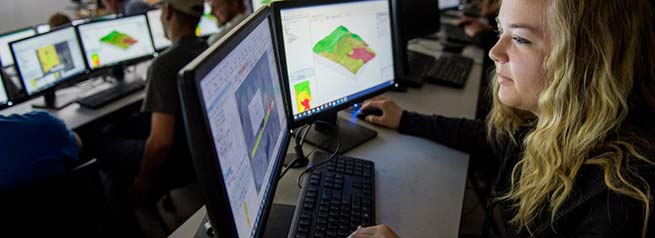
    To preempt this generic approach, SSI has invested in high-accuracy GNSS receivers, RTK-enabled UAVs and immersive virtual/augmented reality visualization equipment to provide students the capability to translate the theoretical lessons in geodesy, spatial data acquisition, data analysis and integration into technical skills that result in actionable information. 

    Additionally, SSI has developed a range of experiential learning opportunities in GNSS to bridge the gap between classroom instruction and real-world GIS applications. While completing their coursework, students often solve the same real-world challenges as many industry professionals. 

    Engagement Through Experimental Learning

    One such example is the undergraduate course SSCI 220L: Spatial Data Collection Using Drones, taught by Yi Qi, Ph.D., an associate professor with expertise in remote sensing and geospatial artificial intelligence. “When young students are introduced to imagery and geospatial technologies, one of the first questions they often ask is how the positions of real-world features are measured — and how accurate those measurements need to be for applications like building construction or urban tree mapping,” Qi explained. “This presents a great opportunity to introduce students to more advanced industry practices such as real-time kinematic (RTK) correction.” 

    Qi added, “We use the RTK-enabled DJI Mavic 3M drone for field data collections, which is often a highlight of the class.” One memorable field activity took place at the historic Los Angeles Memorial Coliseum, where students participated in drone flights alongside faculty. Before takeoff, they helped establish communication between the drone’s RTK system and the California Real-Time Network (CRTN), learning how to configure the system for centimeter-level accuracy. Later, they processed the imagery into high-resolution 2D orthophotos and 3D models. “This class benefits undergraduates by providing early exposure to GNSS,” Qi said. “This foundation is important for students to imagine their pathways in the geospatial industry and choose other advanced courses.” 

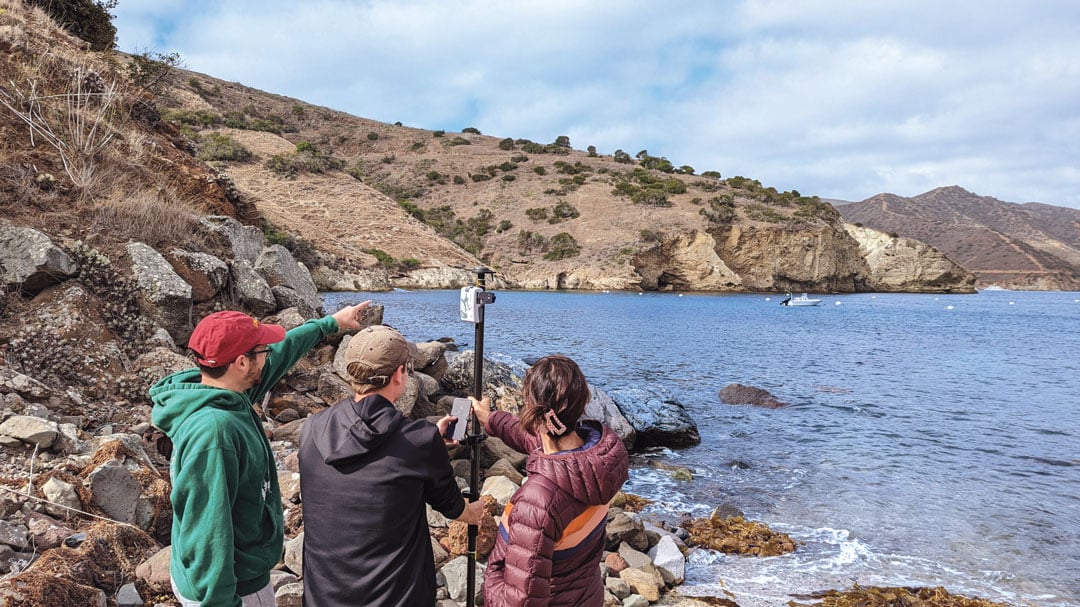
    At the graduate level, as part of the SSCI 587: Spatial Data Acquisition course, students are required to participate in a week-long intensive-learning field experience at the USC Wrigley Institute for the Environment and Sustainability campus on Catalina Island. Laura Loyola, Ph.D., assistant professor in SSI with specialties in ecological physiology and field data collection, has led this course for many years and acknowledges that, “Catalina offers the ideal location for rugged terrain data collection, practice with online or offline mapping, and incorporates spatial data collection utilizing the RTK-enable UAV and high-accuracy GNSS receivers, with spatial analysis and visualization methods.” 

    While on Catalina Island, students meet with industry partners, such as Isaiah Mack, the owner of Eclipse Mapping and GIS, and an alumnus of USC, who bring professional experiences and the latest technology from industry. “The question now facing industry is whether the added investment in both hardware and training of personnel on high-accuracy GNSS receivers for spatial data collection is viable and needed for everyday uses, especially with RTK and satellite-based augmentation systems (SBAS) available,” Mack said. “The answer is overwhelmingly yes, with many mapping and GIS professionals utilizing centimeter-level RTK accuracy, so I feel it is important to share with students the growing market for these careers.” 

    Students quickly learn that without a viable connection, such as Wi-Fi or Starlink in remote areas, RTK capabilities in the UAV are limited. This requires the ability to incorporate high-accuracy ground control points into their collection workflows for georeferencing the drone imagery. As students work through the image processing and integration workflow, they gain firsthand experience in how GPS accuracy influences final image quality. Loyola noted, “In remote environments where WiFi connectivity is limited or non-existent, smartphone positional accuracy is decreased even more from the standard 30 cm to 50 cm, forcing students to work offline and with external GNSS receivers.” 

    Lastly, in certain field scenarios where students are unable to physically reach the survey target, they have learned to apply alternative methods to ensure accurate data collection. One effective technique involves using a laser rangefinder to measure the distance to the remote object. By combining this distance measurement with GNSS-derived position and bearing data, students can use in-app tools to calculate the location of otherwise inaccessible features. These experiences not only demonstrate their problem-solving abilities in challenging environments but also reflect a practical understanding of integrating complementary technologies to achieve high-precision geospatial results.

    GNSS also has been integrated into the geodesign programs at SSI. Guoping Huang, Ph.D., is an associate professor with specialties in landscape planning and geodesign. “High-accuracy GNSS has become increasingly important in the architecture, engineering and construction sector due to the growing adoption of geospatial workflows,” he said. “These workflows span the entire project lifecycle — from spatially-enabled design tools that help create context-aware and environmentally responsive plans, to precision construction, where GNSS-integrated technologies such as sensor networks are used to monitor construction activities in real time.” 

    This integration ensures that construction adheres closely to the original design intent, minimizes costly deviations, and helps avoid damage to critical infrastructure. As a result, high-accuracy GNSS supports not only greater efficiency and accuracy but also enhances safety and sustainability in complex construction environments.

    Empowering the Next Generation  

    By integrating GNSS into education programs and engaging students through practical fieldwork, faculty in the spatial sciences spark interest and develop the next generation of geospatial professionals. These efforts are essential to sustain the workforce and fuel innovation in a field increasingly critical to smart cities, climate science, autonomous systems  and beyond. The experiential learning has inspired young generations to enter the geospatial workforce and make immediate, transformative impacts on existing practices. 

    Student Evelyn Vega commented, “The concepts and hands-on experience from course SSCI 220L helped me understand and appreciate GPS technology.” Recent graduate Yimiao Wang, who now works with the County of Riverside, California, has directly applied the GNSS data collection and processing techniques learned in course SSCI 587 to her work in roadway deterioration detection with RTK-enabled drone imagery. Her ability to leverage high-accuracy GNSS not only enhanced the quality and efficiency of her team’s outputs but also led to her career development success. These examples illustrate how GNSS education can empower students to drive innovation and advancement in the public sector and beyond. 

  • ISRO offers free online course on GNSS

    ISRO offers free online course on GNSS

    Logo: Indian Space Research OrganisationA free 12-day online course on GNSS will be offered by the Indian Institute of Remote Sensing (IIRS), part of the Indian Space Research Organization (ISRO).

    “Overview of Global Navigation Satellite System” (Course-ID: 107) will be held Sept. 19-30. The course is designed to help with the urgent demand for trained manpower in remote sensing, geographic information systems (GIS), GNSS and associated geospatial technologies. The course will introduce GPS and GNSS, receivers, processing methods, errors and accuracy.

    The course will cover the following topics:

    • GPS receivers, processing methods, errors and accuracy
    • satellite-based augmentation systems and GPS-aided and GEO-augmented navigation (GAGAN)
    • GPS signal characteristics and data formats (broadcast and precise ephemeris)
    • Indian Regional Navigation Satellite System (IRNSS)
    • DGPS demonstration
    • advanced GNSS processing
    • development of satellite navigation technology, TRANSIT, TSKLON, GNSS (GPS, GLONASS, Galileo and BeiDou), principles of GNSS, segments and applications
    • satellite navigation.

    The course is open to undergraduate and postgraduate students; technical or scientific staff of central or state government; and faculty or researchers at university or institutions.

    Course study materials — lecture slides, recorded video lectures, open-source software and handouts of demonstrations — will be made available through the IIRS learning management system E-CLASS.

    Visit the IRSS website for details.

  • SBG Systems supports education with inertial navigation technology

    SBG Systems supports education with inertial navigation technology

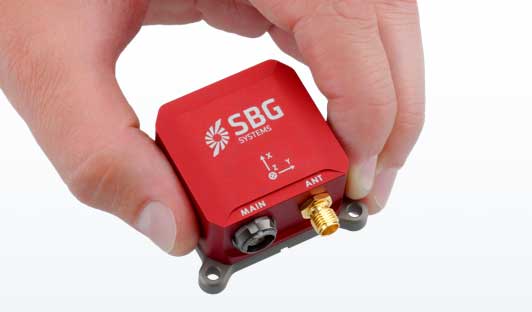
    The Ellipse-N INS/GNSS (Photo: SBG Systems)
    The Ellipse-N INS/GNSS (Photo: SBG Systems)

    SBG Systems has built a program designed to sponsor student teams participating in competitions, as well as offer discounts for universities and research centers on inertial sensors and post-processing software.

    Through the program, the company sponsors students participating in competitions in various fields, such as robotics, autonomous vehicles, UAV, rockets, unmanned and solar boats and more. This includes support during the competition, as well as during the installation of SBG’s latest inertial navigation systems in the teams’ vehicle prototype, the company said.

    SBG’s Ellipse series is also eligible through its education program. The series is composed of SBG’s miniature inertial measurement units, attitude and heading reference systems and inertial navigation systems. In addition, the entire product line has been renewed. The new Ellipse INS/GNSS embeds a quad constellation, dual frequency, and dual Antenna RTK GNSS receiver to bring centimetric position and higher accuracy orientation in the smallest package, SBG added.

    In addition to being compatible with CAN and ROS, the Ellipse Series’ sensors are compatible with SBG’s Qinertia Post-Processing Software, the SBG Systems’ in-house INS/GNSS post-processing software. Qinertia allows users to replay, analyze, improve their trajectories and access RTK corrections worldwide to bring their project to the centimetric accuracy.

    SBG Systems designs and manufactures MEMS-based inertial motion sensing solutions. According to SBG, its products are ideal solutions for industrial and research projects such as unmanned vehicle control, antenna tracking, camera stabilization and surveying applications.

  • Plans to reopen after COVID-19 vary widely

    Plans to reopen after COVID-19 vary widely

    Around the world, countries are cautiously beginning to reopen businesses and activities they had shut down to limit the spread of the coronavirus.

    Countries

    Austria will reopen some smaller shops, hardware and garden stores but people will have to wear masks to supermarkets and on public transport. From May 1, all stores, shopping centers and hairdressers will open; restaurants and hotels will open from mid-May at the earliest.

    China has largely removed restrictions on mobility while tightening policy to contain the virus transmission of asymptomatic cases.

    The Czech Republic on April 6 allowed shops such as hardware and bicycle stores to re-open. Outdoor sports facilities have also reopened. Starting on April 20, students will begin a phased return to colleges and schools, but high schools are not expected to fully open until September 1. From June 8, all retail stores, including those in shopping centers, all restaurants, hotels and other accommodation will be allowed to reopen.

    Denmark will reopen daycares, kindergartens and schools (up to 5th grade) on April 22, while other bans, such as on gatherings of more than 10 people, will remain in place until May 10. Churches, cinemas and shopping centers will remain closed. All festivals and large gatherings are banned until August.

    Germany will allow stores with a sales area of less than 800m2 to reopen on April 20 if they maintain hygiene and prevent lines from forming. Schools with hygiene plans in place will gradually reopen from May 4, with priority given to primary and secondary pupils in final years, while daycare centers will remain shut. Other social distancing measures, along with bans on large public events, will remain in place.

    India has extended what is currently the world’s biggest lockdown through May 3.

    Italy allowed bookstores, laundries, stationery stores and children’s clothing stores to reopen on April 14. “Phase 2” of the three-phase reopening plan will start sometime after May 3. Businesses that reopen will be required to make hand sanitizer available, enforce the use of masks in enclosed spaces, and use disposable gloves to handle food and drink.

    Japan has tightened its approach, declaring a state of emergency in Tokyo, Yokohama and Osaka, the country’s three biggest cities.

    Norway is prioritizing reopening schools and will begin to scale back its lockdown measures from April 20, when kindergartens will start to reopen. A week later, schools will reopen for pupils in grades one to four.

    Spain allowed many non-essential employees to return to work after the Easter weekend. Construction and other industries have been allowed to restart, but non-essential stores, bars, and restaurants remain closed. Spanish police are distributing more than 10 million masks to commuters at metro, bus, and train stations.

    Switzerland has extended social distancing restrictions to April 26, but might relax other measures later this month, including border controls, school closures and bans on gatherings, if the virus’ spread is kept in check.

    United States reopenings vary by state

    If you cannot resist the urge to eat at a restaurant or have a drink at a bar during this pandemic without leaving the United States, head for South Dakota, the only state that has not banned these activities except for take-out.

    However, unless you live in neighboring Iowa, Nebraska, or North Dakota, you will be most likely breaking the law of one of the 39 states that have banned travel that is not deemed essential or to get to work (five of them with exceptions or limitations). South Dakota and Arkansas have no travel bans and the remaining six states have a variety of advisories and bans targeted at various classes of people, such as those over 70 years old.

    As for gatherings, 27 states restrict them to ten people or fewer, four states to nine people or fewer, and five states allow no gatherings at all. Only two states, North Dakota and Minnesota, have not banned any gatherings.

    Twenty-five states have limited all nonessential businesses to minimum operations or remote work, three have closed all nonessential businesses, and only two states — again, Nebraska and South Dakota — have not restricted any business activity.

    Finally, while 27 states have no state-wide quarantines, the remaining 23 have a bewildering array of quarantine rules for travelers depending on where they have been. However, the duration of the quarantine is always 14 days.

    Photo: Kameleon007 / iStock / Getty Images Plus
    Photo: Kameleon007 /iStock / Getty Images Plus/Getty Images


    Sources

    *Laura Smith-Spark and Emma Reynolds, “These countries are reopening after coronavirus — here’s how they’re doing it,” CNN, 2020.04.16

    Patrick Kingsley, “Some European Nations Ease Pandemic Rules, but Move Warily: The lifting of restrictions is an early test of whether democracies can restart their economies and restore basic freedoms without refueling the spread of the coronavirus.” The New York Times, 2020.04.14

    International Monetary Fund, POLICY RESPONSES TO COVID-19, last updated on 2020.04.10

    Ryan Heath, “How does the world end the coronavirus lockdown? Countries can’t agree on exit strategy. There are no global benchmarks and little coordination when it comes to opening up national economies.Politico, 2020.04.15.

  • 36th Space Symposium rescheduled due to COVID-19

    36th Space Symposium rescheduled due to COVID-19

    Logo: 36th Space Symposium

    The Space Foundation has decided to reschedule the 36th Space Symposium for Oct. 31 to Nov. 2. It will still take place at The Broadmoor in Colorado Springs.

    According to the Space Foundation, the 36th Space Symposium will gather leaders, innovators and entrepreneurs from the civil, commercial, military, research and international sectors to share, explore and partner on efforts that will impact our lives beyond Earth and upon it.

    “Working with our partners, The Broadmoor, the City of Colorado Springs, our corporate members and other key stakeholders, we look forward to welcoming everyone back to Colorado Springs to celebrate one of the world’s most inventive and impactful communities,” said Rear Admiral Tom Zelibor, CEO of the Space Foundation. “We will continue to monitor all of the public health reports and adhere to all of the federal, state and local orders regarding public assemblies but we have confidence in planning ahead for a future that brings our community safely back together in Colorado Springs.”

    As a result of the date and timing changes for this year’s symposium, attendees will find a revamped agenda from what was originally scheduled for this spring, the Space Foundation said. Scheduled changes can be found here.

    In addition, registration fees paid to attend the 36th Space Symposium will be automatically transferred to the rescheduled program. Those choosing to not attend the rescheduled Symposium are requested to notify [email protected] to receive a full refund of registration fees paid.

  • Royal Institute of Navigation launches Resilient PNT Portal

    Royal Institute of Navigation launches Resilient PNT Portal

    John Pottle
    John Pottle

    John Pottle, director of the Royal Institute of Navigation, announced the release of the organization’s Resilient PNT Portal.

    “It’s widely understood that satellite navigation has vulnerabilities,” Pottle said. “What is less well understood is how to assess risks and what steps to take to achieve a robust solution, appropriate to the application.

    “This resource portal for resilient positioning, navigation and timing brings together key information — background context, risk assessment approaches, data on actual reported events, and guidance on mitigation strategies. The various standards and best practices notes for different sectors have also been included.”

    The portal, available at https://rin.org.uk/page/ResilientPNT, has sections devoted to vulnerabilities and impacts, risk assessment, disruptions and reported problems, guidelines and standards, and general guidance.

    “Our aim is to enable improved knowledge and thereby build expertise and understanding, in line with the Royal Institute of Navigation’s core objectives,” Pottle said.

    The page includes a feedback form to make suggestions or ask questions. Users can also use the form to register for email updates as new information is added.

    “We have ideas to improve and add to this resource through 2019 — for example, we are currently working on a white paper discussing various practical steps to mitigate common vulnerabilities,” Pottle said.

    He added that the organization welcomes feedback and that there is a feedback link on the website.

    Pottle made the announcement on the social media website LinkedIn.

  • Registration opens for 2019 ESA-JRC Summer School

    Registration opens for 2019 ESA-JRC Summer School

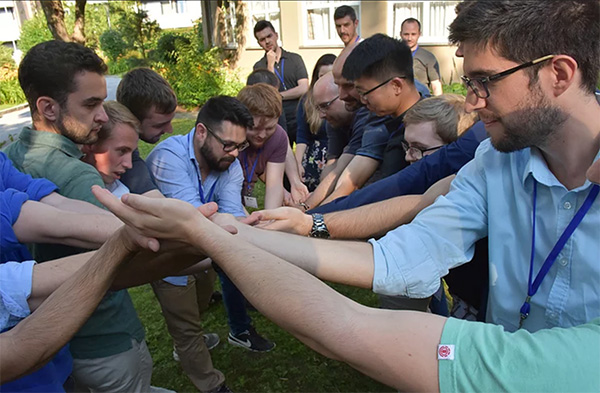
    Registration is now open for the ESA-JRC International Summer School on GNSS 2019. The summer school will take place July 15-26 in Vila Nova de Cerveira, Portugal.

    The program is open to graduate students (with a first university degree), Ph.D. candidates, early-stage researchers and young professionals willing to broaden their knowledge. The 50 available seats will be given on a first-come, first-served basis.

    The mission of the ESA-JRC International Summer School on GNSS is to provide the attendees with a comprehensive overview of satellite navigation. Extensive lab work will provide attendees with hands-on learning opportunities.

    Topics covered include:

    • Basics of satellite navigation
    • Carrier-phase positioning
    • GNSS RF link performance
    • Ionospheric and tropospheric effects on GNSS
    • and more

    The summer school’s objective is to provide attendees with a comprehensive overview on satellite navigation, starting from the GNSS system, its signals, the processing of the observations in a receiver and finally determining the position-navigation-time (PNT) solution.

    Lectures on intellectual property rights (IPR) and patents, as well as on business aspects, will be given. The future of satellite systems will also be discussed.

    The main emphasis will be on the development of a group project using innovative ideas and covering all aspects, from the initial concept, to a business plan, its technical realization and marketing of the product or service.

    Internationally renowned scientists and specialists will give lectures as well as practical exercises and lab work.

    The full program is available here.

  • Raven grows precision ag facility in South Dakota

    Raven Industries has given South Dakota State University (SDSU) $5 million to establish a precision agriculture facility within the College of Agriculture and Biological Sciences on its main campus in Brookings, South Dakota.

    SDSU is the first U.S. land-grant university in the country to offer both a four-year degree and a minor in precision agriculture.

    The facility will be the nexus for innovation and collaboration across several disciplines, including engineering, agronomy, horticulture, mathematics and the decision sciences, according to SDSU President Barry Dunn.

    It will enhance innovation and the development of educational programs that will deliver applications to enable data-driven decisions in precision farming, ranching and conservation, as well as promote collaboration between faculty, students and industry experts.

  • A&M-Corpus Christi institute to provide UN with GIS expertise

    The Conrad Blucher Institute for Surveying and Science (CBI) at Texas A&M University-Corpus Christi has officially joined the United Nations-Global Geospatial Information Management (UN-GGIM) Academic Network. Texas A&M-Corpus Christi is one of three Universities in the nation, including Harvard University and the University of Maine, who are part of this network.

    The primary goal of the UN-GGIM Academic Network is to make accurate, reliable geospatial information readily available in support of national, regional and global development. As a member of the UN-GGIM Academic Network, CBI will work alongside the United Nations to provide research and education expertise to international governments.

    “Blucher’s inclusion in this prestigious academic network is a direct reflection of the quality of our researchers at A&M-Corpus Christi,” said Dr. Kelly Quintanilla, Interim President and CEO of A&M-Corpus Christi.

    To be accepted to the UN-GGIM Academic Network, applicants must meet certain criteria. Requirements included an established track record in Geographic Information Science (GIS), a description of current programs and future GIS education and research plans. Most notably, the CBI was chosen based on their ability to positively impact the UN-GGIM Academic Network.

    “Dr. Richard Smith, CBI Research Scientist, has already assisted the United Nations by providing online geospatial education to UN staff. We are now formally linked in with a worldwide network of academics and scientists to assist the UN take advantage of recent advances in geospatial technologies we are developing here in Corpus Christi,” said Gary Jeffress, R.P.L.S., CBI director and professor of geographic information science.

    According to the Department of Labor, GIS, Geospatial Surveying and Engineering are the fastest growing fields in the United States. Researchers in this scientific discipline study data and computational techniques that are used to capture and analyze geographic information. For example, it’s with this information Google Earth and Bing Maps can function the way they do. Those who can use this system properly and find relationships within the data are in high demand.

    With this in mind, experienced professors at A&M-Corpus Christi help Island University students get hands-on experience with the latest GIS technology. The CBI has been recognized for their Free Online Curriculum for GIS and Geospatial Surveying and has worked together with United Nations staff to expand UN operations involving GIS technology. The CBI offers a Bachelor of Science in Geographic Information Science, a Master of Science in Geospatial Surveying Engineering and a Doctoral Program in Geospatial Computing Sciences.

  • GNSS and the Surveyor: Take Me to School

    The adaptation of GPS for civilian use is the single greatest step taken by  the land surveyor, more specifically the advance to  real-time kinematic networks. Now unmanned aerial vehicles enable data collection in places thought impossible previously, and laser/LiDAR scanners are on the horizon as the next game-changer. But how did we get here? An understanding of our history can be help us prepare for the future.

    The land surveyor has been practicing this occupation since man first claimed rights to physical property. In similar fashion with almost all other professions and trades, forward progress in knowledge and technology has increased educational requirements for even the most mundane of surveying tasks. An environment in which a simple survey is completed by manual measurements and depicted on a hand-drawn plat still exists but will continue to decrease as technological acceptance and governmental requirements become increased. The challenge will be a continual advancement to educate the surveying community as a whole.

    Today, the average age of the professional land surveyor approaches that of a sexagenarian (no worries, it’s just a fancy word for being in your sixties). Here’s a rundown of how we got there:

    Boots on the Ground

    In a previous article, I wrote of my journey to becoming a professional land surveyor (GPS World November 2015) and how it was possible for a high school graduate to be introduced to this wonderful profession with little to no formal training. Even though my introduction into land surveying started in the early 1980’s, it was still during what I refer to the early “high tech” surveying era. While electronics were evolving the surveying industry from the late 1960’s to my beginning days, it didn’t change the career path for the surveyor.

    At the time of my surveying opportunity, an entry level employee didn’t require the knowledge of higher level math, science and geodesy to gain a position as a chainman on a three-man survey crew. At a minimum, the employee was instructed to hold the measuring tape (known as the “chain”) at specific locations as directed by the survey party chief. The employee also was utilized as a pack mule to carry equipment and staking materials, so physical conditioning and stamina were much more important characteristics that knowledge of the profession.

    Over time (and usually through employee attrition), the chainman could learn to run the surveying equipment, which included transits, levels, and theodolites. Total stations with integrated electronic distance meters (EDM) were just becoming mainstream during my early days as an instrument person but little additional knowledge was necessary other than on-the-job training. The benefit of the EDM allowed the survey crew to measure further and faster than previous manual methods.

    An additional benefit of the total station was the digital readout of the horizontal and vertical angles and the elimination of the time-consuming need of reading the angular verniers.  These electronic advancements were great but didn’t affect the procedures for calculating survey figures and boundary analysis; they only increased the productivity of the field crew.

    Once an instrument man became more knowledgeable in the math and processes of land surveys, it was possible to advance further as a party chief. This path included many days on construction sites, hand calculating staking points and alignments, squaring up buildings and running traverses under the direction of a party chief, who in many cases, had become a professional land surveyor by these methods as well.

    Most of the knowledge obtained for career advancement was still on-the-job, but now also included some office tasks to compute boundary calculations and staking calculations through simple geometry/trigonometry means. Not rocket science but still required a good head for math and problem solving; this step also provided a potential career roadblock. This meant an occupational ceiling for some and advancement for others.

    Most of those who continued to advance were the ones with the stronger mathematical aptitude and capability to evolve with the knowledge they were gaining during their experiences as an apprentice land surveyor. The success of these future professional land surveyors depended greatly on successful mentoring capabilities of his/her previous supervisors. For those fortunate enough to learn under a great mentor, many more facets of the profession were introduced to them to gather experience. They were provided with time and care to explain and demonstrate proper methods and procedures for many surveying tasks, along with an example of how paying it forward helps everyone in the process.

    There are those, however, that received limited personal and professional training from their supervisors. These supervisors/managers possessed little experience in formal education or training methods. While these superiors excelled well enough to pass the licensing requirements at the time, the fast-paced movement of the surveying profession has left them in the dust. It is also these individuals who lack the necessary knowledge to successfully train and mentor the next generation of professional land surveyors.

    Old School versus New School

    The point here is that all of this was possible for the “old world” way of surveying. Several of my professional land surveyor contemporaries came up through this pathway of apprenticeship and mentoring with little to no formal education or training, yet have succeeded in business very well for themselves. But I caution you; they are not the norm. This minority of forward thinking professional land surveyors are the ones who remain visible in our business environment and continue to push themselves toward improvement for personal and professional gain.

    Where does this leave everyone else? Like so many other professions that have existed for centuries, the system of learning the craft of land surveying is based upon being self-serving. A historical look at the profession will reveal a long list of generational lines of land surveyors (yours truly included…) and have passed down the occupation somewhat like a family crest. But like so many vocations that get passed down like a family heirloom, if the means and methods of the occupation don’t progress with the times, it will eventually falter.

    The earlier example of the career of the land surveyor was possible until the early 1990’s; that’s when the electronic modernization of our profession picked up steam and the survey equipment manufacturers began revolutionizing our measuring and data collection methods. Couple the hardware enhancements with the boost in drafting capabilities of several drafting packages and that starts us down the road of needing staff with more educational requirements. Because of the advancements in both the field and office tasks of land surveying, we must look at each to understand how technology must be embraced to succeed as a profession.

    Not Your Father’s Transit & Chain (or Theodolite or Total Station…)

    I believe the field portion of the land surveying revolution started in the mid-1990’s with the rapid change in technology. Geodimeter led the conventional instrument innovation with servo-driven theodolites and robotic total stations that increased field productivity along with reducing errors. Along with the advancement of data collectors, these improvements greatly modernized a manual method of locating information. It also gave surveying firms an opportunity to reduce the number of staff members necessary on a field crew and spread their work out to more customers.

    The continuing improvement of the software on the data collector also made it more user friendly but also providing a “dumbing down” of the way the information is collected. While the data collection is now more efficient, the overall calculation process hasn’t changed much. But when this information is incorporated into various datums and coordinate systems, it gets much more complicated. We’ll cover this area more later.

    As stated in my previous articles, it is my opinion that the adaptation of the global positioning system created by the United Stated Department of Defense for civilian use is the single greatest improvement for the land surveyor (GPS World May 2016), more specifically the advancement to the real-time kinematic network. Couple this now with the exploding market of the unmanned aerial vehicle (UAV) with GNSS location capability, the surveying community now can collect data in places though impossible previously.

    The use of GNSS is a big part of that equation (no pun intended) and having the right balance of education and experience with its use will be key to our profession’s success. The continued to use of all facets of GNSS by surveyors worldwide will require the need for more responsible field staff. They will need to have the proper education and experience to comprehend the technology and calculations behind the data.

    I would be remiss if I didn’t mention laser/LiDAR scanners as tools for surveyors. There are companies who utilize these devices on a regular basis but they haven’t become the game changer like other technologies. These will come more into play as technology makes them smaller and the price point for entry into potential purchase is more affordable. The learning curve for processing the field data in point clouds is long and tedious but will evolve like everything else.

    It’s Always Warm and Dry in the Office

    Equally as important requiring proper training, education and mentoring are the land surveying tasks completed by office staff. As I stated in the opening paragraph, the norm used to be hand-drafted maps and plats depicting the results of field surveys from the notes of the party chief. Many drafters came through high school vocational programs and were hired directly after graduation. Simple angles, distances and direct measurements between entities were easy to portray and didn’t take much training. The introduction of the personal computer in the late 1970’s/early 1980’s also brought various platforms of computer-aided drafting (CAD) so another level of training was now necessary to learn both the software and the computer. Early versions were simplistic and mostly line-based but as technology increased the capability, it become more clear that a high school graduate didn’t have enough formal training to keep up with it.

    In addition to the drafting packages, computation software has become increasingly complex. These systems have developed into incredibly capable programs with a multitude of surveying solutions. This category includes aerial photography rectifying systems, point cloud manipulation and control network planning/computation systems that were only available previously on mainframe computers. While they are user friendly, they are well above the general education level of the high school graduate. The requirement to stay pertinent in the surveying environment must be centered around education.

    This Is Supposed to Be about GPS; How Do All These Things Fit In?

    I wrote in my last column regarding geolocation and how relied upon it has become in our society, (GPS World January 2017), and the land surveying community is no exception. The story here becomes about how quickly we can train the entire surveying profession to recognize the importance of location in our vocation or get left in the dust.

    It used to be location only mattered to explorers and mappers. Even with the creation of the latitude/longitude system, it was embraced more for the those who were traveling and giving directions to those planning to do so. Early surveys only related to surrounding properties and didn’t give much mind to specifically where it was located on the face of the earth. The surveys and related legal descriptions relied on physical monuments and avoiding hindrances versus actual measurements. That’s one reason why in the surveyor’s Rule of Construction that monuments carry significantly more weight that distance or direction in a legal description. The early settlers of the American Colonies relied on this system for conveyance of properties.

    It was only when the United States wanted to sell the lands gained from the Revolutionary War and Louisiana Purchase did they come up with a system for dividing the land. The Land Ordinance of 1785 was the beginning of the Public Land Survey System (PLSS) with the Surveyor General sending his staff westward to begin the task of establishing the sectional system.

    Fast forward to the 20th century and the rapid expansion of civilization worldwide. In the post-WW2 timeframe, our world was going places. Highway systems were increasing and the need to map it all was becoming more important on much larger scales. These entities charged with this mapping needed a much bigger method of planning and charting to depict where information was being located. The implementation of state plane coordinate systems was utilized to help with this task but involved high-order surveying along with brain-numbing geodesy. Very few individuals and firms were capable of doing this work but it provided a needed baseline for future endeavors.

    Fast forward to the past 20 years and think of the technological explosion of geolocation in the surveying and engineering fields. What used to be simple plat and plans has become a georeferenced dataset relied upon by clients, contractors, governing bodies and our firms. There are many geographical information systems in place now (from cities/counties/states down to rural utility companies) that all rely on geolocation. It would be easy to sit back and state I’m just a surveyor and this geolocation thing doesn’t come across my radar, but I would be greatly mistaken. Geolocation is an important factor of my profession and must be considered for almost all of my work going forward.

    Education Is the Key

    The professional land surveyor is uniquely qualified to provide accurate measurement for platting and mapping purposes. Our main focus throughout history has been to provide guidance and knowledge on boundary matters worldwide. Our background, knowledge and experience is not only in the physical location of the boundary but of the legal precedent and standing within the court system. Only the professional land surveyor can provide the legal opinion of where a boundary line lies; a judge or jury are not permitted to do that under law. The judge can rule whether to accept your opinion as fact but cannot make the determination themselves. We have an incredible duty and responsibility to the public; now we have the opportunity to instill more trust from them regarding geolocation.

    These statements are not intending to water down the importance of any of the Rules of Construction for surveys. It is intended to bring it in a brighter light so that surveyors see they have another role to fill, and that is the role of providing locations for the world in a spatial context. All of those tasks we provide can now be referenced in another view; data location in relation to the world.

    The professional land surveyor and their use of GNSS provides the basis of all real and potential mapping. Our inherent background in geodesy, technology and analysis of survey data leads the way as promoting our capability as the geolocation experts. While I still believe that conventional instruments will be utilized for a significant portion of our work, it will be the GNSS portion that will further define us as the experts in geolocation.

    All surveyors, both existing and future ones, need to get on board and embrace the future. This means additional education for us old timers along with planting the seeds in the junior high and high school age students who don’t know what a surveyor is or does. It means supporting the programs that train future surveyors; from the Boy Scouts through the collegiate level.

    Here is where the big difference in land surveying from past generations to now lies: education. I was fortunate enough to have started during a generation that allowed me to gain the necessary on-the-job education and training to become a professional land surveyor. I will also be the first to tell you that path is not the proper one for today’s surveying environment. Higher level math, science, and surveying training topics along with specific knowledge of geodesy, GNSS concepts, and environmental conditions are among the necessary tools for becoming a successful professional land surveyor in today’s world.

    Because of the family and financial barriers to formal schooling, there is a movement to roll back the educational requirements for professional land surveyors. I’m here to state for the record that surveying is much harder than when I began my career, so I can’t imagine trying to break into the profession now without the proper formal training. Just as many other occupations have need to adapt to stay current, the surveying profession need to do the same. There is too much at risk to not properly train our staffs to not just operate the equipment and software but to understand the concepts and results that are gained by it.

    While I became interested in land surveying for different reasons, my focus on geolocation as a subset of my boundary knowledge has me more energized for our profession. It is this enthusiasm that I ask that you help me spread to the world but also help provide the education and guidance that will be necessary for these young future professionals. In the end, the professional land surveyor through the use of GNSS can lead the charge with geolocation. All it takes is the proper education, training and guidance; after that, everything is easy.

  • GAO: Most Eighth-Grade Students Not Proficient in Geography

    About three-quarters of eighth grade students — the only grade for which trend data are available — were not “proficient” in geography in 2014, according to a new analysis by the U.S. Government Accountability Office (GAO) of nationally representative data from the Department of Education.

    Specifically, these students had not demonstrated solid competence in the subject, and the proficiency levels of eighth-grade students have shown no improvement since 1994 (see figure).

    USGeography-students


    Geography is generally taught as part of social studies, but data show that more than half of eighth-grade teachers reported spending a small portion (10 percent or less) of their social studies instruction time on geography. Further, according to a study by an academic organization, a majority of states do not require geography courses in middle school or high school.

    A key challenge to providing geography education is the increased focus on other subjects, according to officials in selected states and K-12 teachers GAO interviewed. These officials and teachers said spending time and resources on geography education is difficult due to national and state focus on the tested subjects of reading, math, and science. GAO’s interviews and review of relevant reports identified a range of other challenges, as well, including:

    • misconceptions about what geography education entails;
    • lack of teacher preparation and professional development in geography;
    • poor quality of geography instructional materials; and
    • limited use of geographic technology in the classroom.

    The Department of Education’s role with respect to geography education primarily involves assessing student performance in the subject, and providing data and the results of its analyses to the public. The Department of Education periodically assesses student achievement in geography, and other areas, but not with the same regularity as other subjects it is required by law to assess. Beyond assessments, department officials said that absent funding specifically for geography-focused programs, the agency is hindered in its ability to support geography education.

    GAO conducted the study because geography — the study of places and the relationship between people and their environment — is present across many facets of modern life, from tracking lost cell phones to monitoring disease outbreaks such as Ebola. The growing use of geographic information and location-based technology across multiple sectors of the American economy has prompted questions about whether K-12 students’ skills and exposure to geography are adequate for current and future workforce needs.

    Senate Report 113-71 included a provision for GAO to report on the status of geography education and challenges elementary and secondary schools face in providing geography education with limited resources.

    In this report, GAO examined

    1. the extent that eighth grade students are proficient in geography;
    2. the challenges selected school officials and teachers face in providing geography education; and
    3. the role of the Department of Education with respect to geography education.

    GAO reviewed relevant federal laws; analyzed nationally representative Department of Education  data on student proficiency and instruction time in geography; interviewed education officials in four states selected, in part, for varying K-12 geography requirements; reviewed key studies and research reports, including a 50-state 2013 survey of geography requirements; and interviewed agency officials and researchers. The GAO also leveraged a professional association to identify and interview 10 K-12 teachers.

    View a PDF of the report here.