Tag: GIS

  • Geospatial World Forum looks at Galileo, EGNOS for GIS

    Tim Reynolds
    Tim Reynolds

    By Tim Reynolds
    Contributing Editor for Europe

    The eighth edition of the Geospatial World Forum took place May 23–26 in Rotterdam, The Netherlands, attracting professionals from the surveying and geospatial information system (GIS) sectors. I attended the event on May 24 and took part in a workshop that looked at the benefits of Galileo and EGNOS in geospatial applications in the context of the imminent launch of Galileo initial services.

    An industry survey undertaken by the GSA indicates that already more than 80 percent of GNSS receivers for surveying and mapping use are EGNOS-enabled, while 77 percent of geospatial reference network providers have enough information to upgrade Galileo and will be ready to provide a service by 2017. All good news. On the less positive side, more than 60% of professional surveyors did not know about EGNOS!

    The workshop also talked up the potential for synergies between Galileo GNSS and Copernicus Earth Observation (EO) systems — a topic of immense interest at the European Space Solutions as well. Hans Dufourmont from the European Environment Agency (EEA) highlighted the use of GNSS to track animal species and monitor migration paths when considering development opportunities. He saw a huge potential for synergies between geopositioning and surface imaging going forward.

    Maurice Barbieri, president of the Council of European Geodetic Surveyors (CLGE), also saw a “clear role for Galileo” in the surveying community with its potential ability to meet centimeter accuracy requirements much more than for EGNOS.

    He also speculated about the value of establishing a European Geoinformatic Agency that might coordinate the provision of European GNSS and EO data. He felt the private business community would appreciate such simplification.

  • Spectra Precision MobileMapper 50 combines smartphone design with GNSS capabilities

    Spectra Precision MobileMapper 50 combines smartphone design with GNSS capabilities

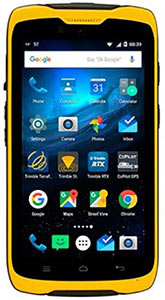
    Spectra Precision has announced its new MobileMapper 50 GNSS handheld device for simple GIS data collection or for use as a data controller for Spectra Precision SP60 and SP80 GNSS receivers. Available with an Android OS, the MobileMapper 50 combines smartphone capabilities with a ruggedized design to improve positioning accuracy.

    The company made the announcement at the 2016 Esri User Conference, being held in San Diego, California, June 27-July 1.

    Together with the MobileMapper 50, Spectra Precision also introduced two new software applications: an Android OS version of MobileMapper Field software for GIS professionals and Spectra Precision Survey Mobile software to control SP60 and SP80 GNSS receivers.

    “In today’s market, GIS and survey professional users are looking for a smartphone device experience, but still require a professional, rugged and waterproof design,” said Olivier Casabianca, general manager of Trimble’s Spectra Precision Division. ”With the MobileMapper 50 we can address all these requirements and more — real-time accuracy, the latest connectivity capabilities and a rugged compact design.”

    The MobileMapper 50 is available in two versions: both with Android OS and Wi-Fi, and with optional 4G LTE cellular module. The rugged, smartphone-like device is IP67 rated, thin (14.6 mm) and lightweight (300 grams or 10.6 ounces).

    It also features a 1.2 GHz quad core processor, 5.3 inch sunlight readable display, large memory (8 or 16 GB, depending on the version) and a high-resolution, built-in camera (8 or 15 MP, depending on the version). As a professional device, the MobileMapper 50 provides accurate GNSS positioning, supporting SABS, GPS, GLONASS and BeiDou constellations as well as post processing for improved accuracy.

  • What the ‘Brexit’ vote means for EU space programmes, Galileo

    What the ‘Brexit’ vote means for EU space programmes, Galileo

    A Kingdom Divided: Whither EU Space Programmes?

    Brexit-WGood grief, it has been a wild week or two. I was hoping that I wouldn’t need to talk about the incredible, excruciating UK referendum on European Union membership, but as the result has gone to the “leave” campaign, I feel obliged to pick over the wreckage.

    What does a UK exit from the EU mean for EU space programmes and Galileo in particular?

    First: UK involvement in the European Space Agency (ESA) should be unaffected by the exit of the UK from the European Union as this is a separate institution. However, one could argue that non-membership of the EU might diminish its voice and could require a higher financial contribution.

    Bids for the next Galileo satellite purchase contracts are due to be submitted in mid-July, and the European Commission has indicated that it will consider them purely on commercial terms. This is good news for the OHB System and Surrey Satellite Technology Limited (SSTL) consortium. And also for the Commission. If I were a betting man, I’d still wager the house on the incumbent consortium winning the contract to provide the remaining satellites required to provide a sustainable, 24/7 operational constellation for 1st generation Galileo. There would, in my opinion, be an unwarranted technical risk in doing anything else.

    However, for the next generation it is open season of course.

    Jewel in the Crown at Risk. But the real worry must be the Public Regulated Service (PRS). This is the unique feature of Galileo that is of great interest to civil and military authorities in Europe and beyond, due to its more robust encrypted signal and its potential anti-jamming and spoofing characteristics. Currently PRS will only available to EU Member States. In fact access to a PRS workshop at the European Space Solutions event (see below) was strictly “EU citizens only.” However, other countries, including the US and Norway, have indicated that they would love to be able to use it as well. No final decision on this has yet been made.

    The loss of the automatic right to access PRS would be damaging to the UK, and potentially to the full Galileo deployment timetable, as the country is currently host to the back-up Galileo Security Monitoring Centre (GSMC) — an essential part of PRS infrastructure — and I cannot see any part of the PRS infrastructure being left in a non EU Member State. PRS has been described as the “jewel in the Galileo crown,” but if the centre must be relocated then deployment of the full service could be delayed.

    In addition, the UK involvement in research and innovation activities around PRS may well be curtailed, even if other work on Galileo projects is not.

    The UK has been a leader in developing PRS applications. For example, Mark Dumville and colleagues at Nottingham Scientific Limited (NSL) have recently provided some very impressive demonstrations of cloud-based PRS applications including the first demonstration of the implementation of PRS authentication for an offender tag that was demonstrated using live Galileo (and GPS) signals. The demonstration provided real-time authentication flag generation, release and delivery to users. A second demonstration used cloud-based PRS in a proof-of-concept remote unattended, timing station where the primary user requirement was 100% confidence for the validity of signal. And a third demonstration illustrated the use of cloud-based PRS on a drone. “For users, demonstration of accreditation is key,” said Dumville when describing these results at the European Space Solutions event.

    Personally as a British citizen, and one who has spent the last 15 years in and out of the Brussels bubble, I see the EU referendum result as a national tragedy of epic proportions; and one that has been a long time in the making. Many global commentators are saying the UK has shot itself in the foot; sadly, in my opinion, it is much, much worse than that.

    United Europe

    The referendum news has certainly put a dampener on what I was hoping to be an optimistic, forward-looking article following the European Space Solution event in The Hague at the end of May. This was the fourth European Space Solutions conference and exhibition, attracting a large, global audience of policy-makers and industry players.

    At a press briefing just before the event kicked off on 30 May, and after an informal EU competitiveness ministerial council, Dutch minister for Economic Affairs Henk Kamp spoke about the ideas behind the forthcoming EU Space Policy. The policy, which should appear in the autumn/ fall, aims to elaborate a single and coherent European space strategy that will be the foundation of space programmes up to 2030.

    The policy will look to achieve three clear objectives:

    • to develop a strategy to ensure Europe maintains a strong and globally competitive space sector both upstream and in terms of use of data from space;
    • ensure independent access for Europe to space;
    • and maintain and upgrade the existing European space infrastructure — namely Galileo and Copernicus.

    Growth Vectors. Elżbieta Bieńkowska, the European Commissioner with responsibility for EU space programmes, indicated that the space policy would provide a “Coherent space vision for decades to come” and would be subject to public consultation. She was looking for “Maximum return on current programmes … and to respond to emerging needs in areas such as climate and security sectors.” The strategy will consider space-enabled solutions to societal challenges and as vectors for growth.

    She mentioned more than once that she is looking for long-term sustainability for the sector: a space sector that is able to adapt to disruptive technologies and maintain its competitive edge. My interpretation of this is that public money (from Europe) may not be as plentiful as previously, and the Commission will be looking for greater leverage of its tax Euros — that is, the private sector will need to invest more.

    Lowri Evans, Director-General for Internal Market, Industry, Entrepreneurship and SMEs, at the European Commission took up this theme. She saw huge opportunities as the cost of entry to the sector diminished, however private investment was still a problem. There was not enough in the EU and this must change. The Commission is aiming to create an environment for successful investment, she claimed.

    Jan Worner, the very positive Director-General of ESA said that “Space was indispensable” as an instrument for economic growth. It was also fascinating and inspiring. He felt it was also important that the different players in the EU space scene are working together for a “United Space in Europe.”

    The conference was also the venue for the official signing of the agreement for the future Galileo Reference Centre (GRC) that is to be established at Noordwijk in The Netherlands. The centre will play a crucial role in independently monitoring and reporting on Galileo’s performance and the quality of the system’s signal in space.

    Dual-Use Debate

    PRS was also a major talking point at the European Space Solution’s panel on ‘Space and Security.’ Despite the fact that Galileo is marketed as a civil controlled GNSS, “dual use” is becoming a potentially divisive area for debate. Marian-Jean Marinescu, MEP said there was a need for a common European defence and security strategy that includes securing all elements of the space value chain.

    Rini Goos from the European Defence Agency (EDA) said that the EU needed space systems to be able to “intervene successfully” and that space strategy needed to support Member State defence capabilities. This meant that the next generation of EU space systems must have dual-use capability. NATO is entrusted with external defence of the EU, but the Commission also needs to be able to provide defence, not just consume it, he concluded.

    Current Chairman of the Galileo Security Accreditation Board is a UK citizen – Jeremy Blyth. He said: “Space and Security, Security and Space. Whichever way we say it what is clear is that the two are inextricably linked together.” He believes that to ensure security it must be there “designed in from the beginning.” Security is an enabler, rather than a barrier, he claimed.

    He also believes that PRS gives the EU a real and competitive edge in secure positioning. However he indicated that there is a need to think deeply and have a rational debate about dual-use systems and in particular about the interface between civil and military use.

    Clearly there is a growing tension with regard to overtly military use of Galileo both now and in future generations of the system. Although a largely philosophical debate, given who in reality will be controlling and using PRS within many Member States, many European and national policy makers will want to retain the “purity” of Galileo as a global positioning system under fully civilian control.

    PRS Workshop

    Security was also a key feature of the PRS workshop organised by the Netherlands EU Presidency towards the end of European Space Solutions. Ger Nieuwpoort, Director of the Netherlands Space Office (NSO) reminded the audience that “For civil authorities, PRS provides the same level of security for Member States as the military in GPS.” While Christoph Kautz from the Commission said that the “Rationale for PRS was threats and user needs: better availability, high continuity, authentication, access control, exclusivity.”

    PRS offers defence in depth with a robust signal in space providing higher protection plus strong encryption on ranging codes, and the navigation and service messages. And the access to the technology is highly restricted.

    However some issues still need to be resolved. Bart Banning of the Netherlands Institute of Navigation asked ‘How will we use PRS?’ In terms of its use for protecting critical infrastructure, what if the owner of the infrastructure was a private company? Should it be granted access to PRS or have to make do with the Galileo Commercial Service aka PRS-lite?

    He also pointed out that PRS was no more protected against jamming than any other GNSS. And, currently, it was “not good for in-building, underground, or underwater.”

    He thought PRS could be a great time provider, but probably also need ground transmission, possibly via legacy radio towers. However, he saw the “killer app” for PRS being asset tracking of, for example, diamonds, VIPs or prisoners. He also agreed that for many EU countries the ministry of defence will be overseeing PRS services. “PRS is a good and unique addition to GNSS — but not the answer to all our needs.”

    Banning also highlighted the issue of commercial companies looking to buy LORAN / e-LORAN sites in Europe to provide a commercial service to back up GNSS. After the recent GPS timing glitch he said that the “timing community” had woken up to the vulnerability of their operations.

    Geospatial

    On a different tack, from 23–26 May the eighth edition of the Geospatial World Forum [www.geospatialworldforum.org] took place in Rotterdam, attracting professionals from the surveying and geoinformatic systems (GIS) sectors. I attended the event on 24 May and took part in a workshop that looked at the benefits of Galileo and EGNOS in geospatial applications in the context of the imminent launch of Galileo initial services.

    An industry survey undertaken by the GSA indicates that already more than 80% of GNSS receivers for surveying and mapping use are EGNOS-enabled, while 77% of geospatial reference network providers have enough information to upgrade Galileo and will be ready to provide a service by 2017. All good news. On the less positive side, more than 60% of professional surveyors did not know about EGNOS!

    The workshop also talked up the potential for synergies between Galileo GNSS and Copernicus Earth Observation (EO) systems — a topic of immense interest at the European Space Solutions as well. Hans Dufourmont from the European Environment Agency (EEA) highlighted the use of GNSS to track animal species and monitor migration paths when considering development opportunities. He saw a huge potential for synergies between geopositioning and surface imaging going forward.

    Maurice Barbieri, President of the Council of European Geodetic Surveyors (CLGE) also saw a “clear role for Galileo” in the surveying community with its potential ability to meet centimetre accuracy requirements much more than for EGNOS. He also speculated about the value of establishing a European Geoinformatic Agency that might coordinate the provision of European GNSS and EO data. He felt the private business community would appreciate such simplification.

    One presentation that caught my eye was from Laura van de Vyvere of M3 Systems in Belgium. She won the first-ever European Young Surveyor Prize with a paper taken from her Master’s thesis. The presentation addressed an innovative use of Galileo’s unique signal in space that is carried on four frequencies in the Open Service. Her work showed that the four frequencies enabled more precise phase measurements than with GPS so cycle slip is easier to detect and positioning data and reliability can be improved especially in harsh ionospheric conditions. The algorithm she developed could enable affordable multi-frequency receivers for mass-market applications, she claimed. An interesting idea.

    A bientôt, as they say in these parts.


  • Trimble unveils TDC100 handheld data collector at Esri UC

    Trimble unveils TDC100 handheld data collector at Esri UC

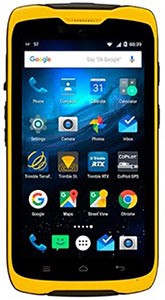
    TDC100 Series Handheld Photo: Trimble
    TDC100 Series Handheld
    Photo: Trimble

    Trimble introduced its Trimble TDC100 handheld data collector at the 2016 Esri User Conference, which is being held July 27 to July 1 in San Diego, California.

    An entry-level GNSS device for a variety of geographic information system (GIS) applications, the Trimble TDC100 combines both smartphone and ruggedized data collection capabilities in a single, mobile device, the company says in a news release.

    The Android-based TDC100 can run commercially available or in-house developed applications on a professional, IP-67 ruggedized platform with a sunlight readable display and user replaceable batteries. The built-in GNSS receiver also provides real-time accuracy.

    The Trimble TDC100 is available in two models — both models are available with an Android operating system and Wi-Fi, with an optional 4G LTE cellular version. It has a high-resolution 5.3-inch display, an 8 MP (Wi-Fi model) or 13 MP (4G LTE model) camera, and lithium-ion batteries in standard or enhanced capacity. It also supports GPS, GLONASS and BeiDou, as well as satellite-based augmentation system (SBAS) capabilities.

    “GIS professionals using GNSS handheld devices for a wide range of data collection applications are expressing a desire for smartphone like capabilities in a built-to-last form factor,” says Ron Bisio, vice president of Trimble’s geospatial division. “We believe the TDC100 will be a workhorse. It has been designed for mobile workers who need a functional field computer that is tougher than a consumer-grade device, while providing easy-to-use features and convenience that people have come to expect. Users can collect and retrieve highly accurate spatial data anytime, and from virtually any place, while remaining in touch with the office — with a single device.”

    Trimble TDC100 is expected to be available through Trimble’s geospatial distribution channel in mid-August 2016.

  • Golden Software releases Strater 5 well log, borehole and cross-section plotting program

    Golden Software LLC, developer of affordable scientific graphics software, announces the release of Strater 5, an intuitive subsurface visualization program designed to display a wide variety of well log, borehole, and cross section data.

    Introduced in 2004, Strater is a leading competitor in subsurface modeling software. Designed for geoscientists and engineers, Strater converts geotechnical, geophysical, environmental, mining, and mud/gas data from a wide variety of file formats into 15 different log types, borehole models, and cross section views.

    Strater offers unsurpassed flexibility in design and layout of the modeled data which can be displayed as a single page, multi-page, or continuous log. Virtually every aspect of Strater’s plot is customizable, allowing users to quickly and easily create publication-quality reports.

    Hydrogeologic Cross-Section
    Hydrogeologic Cross-Section

    The most popular new feature in Strater 5 is raster log support. Users can create both registered and unregistered raster logs. Paper logs can be viewed as digital raster logs, and unregistered raster logs can be depth-registered with the dynamic depth-registration tool. Additionally, raster logs can be used to create cross sections.

    Strater 5 also features enhanced customization options. In addition to the extensive fill styles provided in Strater, users can create and save custom fill styles. Controls have been added for page headers and footers so users can display different information on the first page and subsequent pages of their Strater view. Also new in Strater 5 is the ability to include a water level line or symbol and an end of log line.

    Cross sections have also experienced a number of in demand enhancements. Analyses are now easier to make with the ability to effortlessly add and delete wells in an existing cross section. Additionally, when redrawing cross sections, customized stratigraphic layers can be maintained. Other cross section features include deviated display for line log cross sections, the ability to draw layer lines horizontally across the width of the well track, and the option to flip the horizontal scale bar.

    Additional features include a redesigned user interface, new and improved import and export formats, added flexibility for date/time formats including a new date/time format builder and the automatic recognition of the Windows country/language and date/time settings, and table command enhancements including faster querying speeds and expanded copy/paste controls.

    “Strater 5 is an affordable and versatile program for visualizing subsurface data. The wide variety of import and formats allow users to seamlessly integrate Strater into their daily workflows,” said Golden Software CEO Blakelee Mills. “Strater is a valuable alternative to other visualization solutions.”

    Strater 5 operates in a Microsoft Windows environment with Windows XP SP2, Vista, 7, 8 (excluding RT) and 10. Strater 5 is now available for a retail price of $449 US, with quantity discounts available. Upgrades from any previous version of Strater are available for only $149 US. The full user’s guide can be purchased for just $25 US. Strater 5 includes free maintenance updates and free technical support.

  • SAP debuts Geographical Enablement Framework at Esri UC

    SAP-geo-framework-W

    SAP SE unveiled its SAP Geographical Enablement Framework, powered by SAP HANA, at the 2016 Esri User Conference, which is being held June 27 to July 1 in San Diego, California. SAP Geographical Enablement Framework helps organizations enrich business applications with geographic data from geographic information systems (GIS), such as Esri ArcGIS.

    “In many asset-intensive industries such as energy, transportation and public sector, the ability to visualize business objects on maps is critical to improving efficiency and decision making,” says Irfan Khan, GM and global head, database and data management, SAP. “SAP Geographical Enablement Framework, powered by SAP HANA, can help organizations streamline the processing of both enterprise and spatial data for greater location awareness across business processes.”

    To develop spatially enabled business applications, organizations can use the framework to:

    • Enable smooth integration and bidirectional navigation between SAP applications and Esri ArcGIS. Developers can use application programming interfaces published by GIS to fetch geospatial data. Also, business data augmented with geometric attributes can be published as a service, so that GIS users can access SAP business data from within their GIS tools.
    • Embed a responsive map user interface in a business application to display both business and spatial data simultaneously to provide greater insight.
    • Store the geometry of any SAP business object in the SAP HANA platform and accelerate spatial data processing in memory to deliver real-time insights, enriched with spatial context, to improve decision making.
    • Visualize, filter and search for business objects — such as functional location, equipment, linear assets, notifications or work orders — on a map from within a spatially enabled application. From a desktop or a tablet, users can also drill down through multiple map layers to gain better insight.

    With continued collaboration between SAP and Esri, organizations can gain contextual insight from business and spatial data, enabling business and GIS users to work within the same multiuser access and editing environment, the company says.

    “At EDF Renewable Energy, we have built a truly innovative enterprise business intelligence and data warehouse platform that combines Esri geospatial data along with asset sensor data and ERP transactional data in SAP HANA,” says Devang Shah, manager of database and business intelligence, EDF Renewable Energy. “This provides us with near real-time insights to help us operate more efficiently.”

    As an open platform, SAP HANA is certified with the Open Geospatial Consortium, enabling organizations to easily consume spatial data from third-party spatial solutions that also adhere to the standard. SAP HANA also supports synchronous and asynchronous imports of data from any spatial reference system or coordinate reference system to ease access to local, regional or global geographic entities.

    Native geocoding delivered by SAP HANA smart data quality helps rapidly convert addresses to latitude and longitude within SAP HANA, the company says.

    “Munich Re is one of the leading reinsurance companies in the world,” says Andreas Siebert, head of geospatial solutions at Munich Re. “We use spatial data processing capabilities in SAP HANA, in conjunction with predictive analytics, to assess risk — such as to identify natural hazard profiles for millions of locations around the globe, to efficiently coordinate loss adjustors after a major catastrophe or to calculate how many hospitals, schools and roads may be impacted by an impending hurricane or flood.”

  • Esri, DigitalGlobe partner to expand World Imagery Map

    DigitalGlobe Inc., Earth imagery and information company, today announced an agreement to make more current satellite imagery of the entire world available to users of Esri’s ArcGIS product family.

    The new long-term partnership with Esri will enhance the World Imagery Map and give ArcGIS Online and ArcGIS Data Appliance users access to current and complete high-resolution satellite imagery mosaics. The World Imagery Map is foundational to Esri’s vision of connecting people with maps, data and apps through geographic information systems (GIS).

    The multi-year subscription features DigitalGlobe’s Basemap +Vivid and Basemap +Metro products, which will be refreshed with the latest content throughout the contract term. New imagery will start flowing into the World Imagery Map later this year.

    In addition, the two companies will work together over the coming months to explore new ways to connect Esri’s ArcGIS Online and marketplace to DigitalGlobe’s Geospatial Big Data platform, GBDX, allowing users to perform advanced analytics at scale against a 15-year time-lapse image library to solve complex problems.

    “Esri’s global user base can now create even more powerful and effective products that enable decisions to be made with confidence and improve our collective understanding of the world,” said Jeffrey R. Tarr, DigitalGlobe president and chief executive officer.

    “We have enjoyed collaborating with DigitalGlobe and look forward to a long-term partnership,” said Jack Dangermond, Esri president and founder. “Their superior quality imagery will benefit Esri and our users.”

  • Geospatial Solutions reports live from the 2016 Esri User Conference

    The 2016 Esri User Conference, the mecca of geographic information systems (GIS) in the U.S., takes place June 28 to July 1 in San Diego, California. The conference is designed to give attendees practical advice and hands-on experience with GIS tools from Esri and other companies, as well as share ideas and best practices for improving our world through maps.

    The event encompasses 16,000 GIS users, managers and developers; 300 moderated sessions; 450 hours of technical training; and 300 software vendors.

    GPS World/Geospatial Solutions staff is on site, and we will be posting news, photos and videos live from the show on this page. Also follow us on Twitter at @GSS_NCM and @GPSWorld.

    NEWS

    Spectra Precision MobileMapper 50 combines smartphone design with GNSS capabilities (6/29)

    Golden Software releases Strater 5 well log, borehole and cross-section plotting program (6/28)

    Trimble unveils TDC100 handheld data collector at Esri UC (6/28)

    SAP debuts Geographical Enablement Framework at Esri UC (6/28)

    ArcGIS apps for the field launched at Esri UC (6/27)

    3DR to integrate Site Scan with Esri Drone2Map (6/27)

    CoreLogic expands location-based intelligence with building footprints (6/27)

    Laser Technology shares new time-saving mapping tools at Esri UC (6/24)

    Septentrio to spotlight drone GNSS solutions at Esri UC (6/23)

    PHOTOS

    VIDEO PLAYLIST

    Navigate the Esri UC playlist.

    Media: Geospatial Solutions / GPS World

  • Septentrio to spotlight drone solutions at Esri UC 

    Septentrio-PinPoint-GIS

    Septentrio will showcase its latest GNSS systems and software solutions for GIS professionals at the 2016 Esri User Conference in San Diego, June 28-30, with a special focus on the rapidly growing market for drone-based aerial survey.

    At center stage will be Septentrio’s suite of products designed specifically for aerial surveys. They include the compact AsteRx-m UAS onboard GNSS receiver and GeoTagZ high-accuracy drone positioning software, which is optimized for automatic interface with Esri ARCGis and Drone2Map platforms.

    “Demand for drone imagery is booming in the GIS marketplace as a fast and efficient alternative to ground-based surveys for applications such as mapping, photogrammetry, infrastructure inspection and natural disaster monitoring,” said Neil Vancans, vice president of Septentrio Americas. “To meet that demand, we are bringing to market a range of hardware and software solutions that will make it easier than ever for Esri users to capture, georeference, process and visualize drone-captured imagery.”

    Septentrio is also introducing new firmware for its versatile NR2 GNSS receivers and the PinPoint-GIS utility software for terrestrial applications. NR2 V1.2.0 offers a host of new connectivity features, including direct dial-up, dynamic DNS, base-rover Wi-Fi point-to-point connection and other new features that will streamline field work. PinPoint-GIS has also been enhanced to provide seamless integration with Esri’s Collector for ArcGIS.

    “Septentrio is pioneering the way by which Esri users collect data,” said Gustavo Lopez, product manager at Septentrio. “GeoTagZ and PinPoint-GIS bring more accuracy and flexibility into the field by combining the power of Septentrio’s GNSS products with the user-friendly interface of Collector for ArcGIS. From the air to your own device, you are guaranteed accuracy and reliability in your GNSS positioning by using GeoTagZ to georeference aerial photos and PinPoint-GIS to harness the power of GIS data.”

    Esri User Conference attendees are invited to visit Booth 2633 for a first-hand look at Septentrio’s solutions for the full range of aerial and ground-based GNSS solutions for GIS, including the new-generation APS-3G multi-constellation RTK receiver, which was just introduced to the market.

  • Septentrio to spotlight drone solutions at Esri UC 

    Septentrio-PinPoint-GIS

    Septentrio will showcase its latest GNSS systems and software solutions for GIS professionals at the 2016 Esri User Conference in San Diego, June 28-30, with a special focus on the rapidly growing market for drone-based aerial survey.

    At center stage will be Septentrio’s suite of products designed specifically for aerial surveys. They include the compact AsteRx-m UAS onboard GNSS receiver and GeoTagZ high-accuracy drone positioning software, which is optimized for automatic interface with Esri ARCGis and Drone2Map platforms.

    “Demand for drone imagery is booming in the GIS marketplace as a fast and efficient alternative to ground-based surveys for applications such as mapping, photogrammetry, infrastructure inspection and natural disaster monitoring,” said Neil Vancans, vice president of Septentrio Americas. “To meet that demand, we are bringing to market a range of hardware and software solutions that will make it easier than ever for Esri users to capture, georeference, process and visualize drone-captured imagery.”

    Septentrio is also introducing new firmware for its versatile NR2 GNSS receivers and the PinPoint-GIS utility software for terrestrial applications. NR2 V1.2.0 offers a host of new connectivity features, including direct dial-up, dynamic DNS, base-rover Wi-Fi point-to-point connection and other new features that will streamline field work. PinPoint-GIS has also been enhanced to provide seamless integration with Esri’s Collector for ArcGIS.

    “Septentrio is pioneering the way by which Esri users collect data,” said Gustavo Lopez, product manager at Septentrio. “GeoTagZ and PinPoint-GIS bring more accuracy and flexibility into the field by combining the power of Septentrio’s GNSS products with the user-friendly interface of Collector for ArcGIS. From the air to your own device, you are guaranteed accuracy and reliability in your GNSS positioning by using GeoTagZ to georeference aerial photos and PinPoint-GIS to harness the power of GIS data.”

    Esri User Conference attendees are invited to visit Booth 2633 for a first-hand look at Septentrio’s solutions for the full range of aerial and ground-based GNSS solutions for GIS, including the new-generation APS-3G multi-constellation RTK receiver, which was just introduced to the market.

  • Icaros releases update of OneButton UAS image processing software

    Icaros-merge-W

    Icaros Inc., a provider of aerial imaging software, has released version 4.2.2 of OneButton. The release contains new features and improvements as well as a new flight planning software module. Here are the highlights:

    • Additional parameters have been added to enable users to create enhanced quality output products.
    • Users can now create their own parameter templates to run similar projects repeatedly with the same parameter set.
    • The image stitching algorithm has been enhanced to generate higher quality outputs for projects with high overlap.
    • Projects covering smaller areas can now be solved more accurately by utilizing a higher resolution terrain model of the area.
    • UgCS flight planning software is included free of charge with each installation.

    Current users of OneButton software can download and install the latest version.

    Those new to OneButton software can download a free copy to use until Oct. 31.

    Icaros developed the OneButton family for geospatial end users to easily and automatically generate precise, fully orthorectified 2D maps and 3D models from frame-based aerial imaging systems. Originally engineered for manned aircraft sensors, the OneButton software has been modified to accommodate the unique collection conditions of unmanned aerial systems (UAS).

    OneButton creates a complete image processing workflow for aerial image data and can front-end both GIS and analytics workflows to enable customers to solve challenging problems related to everything from agriculture and forestry to utilities and city planning. It is highly customizable to meet the needs of specific vertical market applications.

    OneButton automatically processes raw raster imagery with onboard GPS/IMU data to stich the individual scenes together into a seamless, color-balanced orthomosaic meeting photogrammetric standards. Outputs include digital elevation models (DEMs), true color 3D point clouds, and multispectral mosaics – all ready for ingest directly into GIS and analytics software environments.

    OneButton is application platform and sensor agnostic, and processes raster image data from small-, medium-, and large-format frame sensors capable of capturing visible RBG, multispectral, near-infrared, and thermal infrared data.

    “This version of OneButton comes with significant improvements, from a more intuitive user interface, to more robust processing and output options. I am very pleased with the update,” said Eric Andelin, president of VERTX.

  • myWorld Inspection & Survey v2 supports iOS, Android and Windows

    UbiSense-MyWorld_Survey-W

    Ubisense Group plc, an enterprise location-intelligence solution company, has released version 2 of myWorld Inspection & Survey. Version 2 of the software offers a host of new features to transform the way utility and telecommunications teams conduct inspections and surveys.

    myWorld Inspection & Survey enables field workers to collect inspection data on any mobile device, eliminating paper-based processes and is a dramatic improvement on first-generation software solutions, Ubisense said. Users now have the flexibility to run the system on iOS, Android or Windows and dynamically push both data and application code updates, significantly reducing IT management costs, UbiSense said.

    Based on discussions with existing customers, Ubisense has also incorporated a range of new workflow and data capture features to make day to day inspections and management even easier.  Users of myWorld Inspection & Survey are now able to:

    • Carry out multiple surveys concurrently, significantly improving productivity.
    • Assign multiple crews or surveyors to a single survey or inspection order, enabling support of a wider range of existing business processes without requiring any product customization.
    • Support for “dual pass” surveys, in which each survey item needs to be visited twice in order for the survey to be regarded as complete.
    • Enhanced map filtering, to allow users to only display items relevant to the survey(s) that they are currently working on.
    • Process checks to automatically turn off surveying when the vehicle speed exceeds a specified value, avoiding accidentally marking something as surveyed incorrectly.

    “We know that our customers want the flexibility to use any device in the field,” said Peter Batty, Geospatial CTO at Ubisense. “We allow them to run iOS, Android or Windows with a single application giving them more flexibility in device selection and future proofing their hardware decisions.”