Tag: GPS World Editorial Advisory Board

  • Editorial Advisory Board PNT Q&A: GNSS diminishing returns?

    As the number of GNSS constellations and satellites in orbit continues to grow,
    will we reach the point of diminishing returns?

    Ellen Hall
    Ellen Hall

    “More satellites equal more data, and redundant constellation systems — through GNSS interoperability — can give us more robust PNT, as restated in the January Memorandum on Space Policy Directive 7. That said, there are always diminishing returns. Treaties place liability on the launching country if something goes wrong, but with tens of thousands of small satellites expected to be launched over the next decade, it will be getting increasingly crowded. Concerns are growing about the necessity of increased maneuvers to keep these satellites from a chain reaction of collisions, which ultimately could cause debris to fall to inhabited areas of Earth.”
    — Ellen Hall / Spirent Federal Systems

    Jean-Marie Sleewaegen
    Jean-Marie Sleewaegen

    “With already more than 130 GNSS satellites in orbit, the benefit of new satellites decreases while the risk of satellites interfering with each other increases. However, this is only considering GNSS as we know it, in the MEO orbit (altitude about 22,000 km). The future of GNSS may well be closer to Earth, in the LEO orbit (<1,000 km), with well-known benefits in terms of convergence time and resilience to jamming. Sooner than later, we can expect constellations of hundreds or thousands of LEO satellites carrying a GNSS-like payload supporting PNT services. No worries, there is still growth potential!”
    — Jean-Marie Sleewaegen / Septentrio

    Headshot: Stuart Riley
    Stuart Riley

    “With the current four GNSS constellations and a typical survey elevation mask of 10˚in North America, we average around 30 visible satellites. Far more are visible in Asia with the addition of the regional systems. In an area with a clear view of the sky, this provides more than enough satellites for precision centimeter positioning. However, most professional GNSS users do not have the luxury of operating exclusively in open areas with ideal conditions. Accessing many satellites across multiple constellations increases the probability of receiving sufficient satellites that produce high-quality measurements in obstructed areas. As the constellations expand, we observe improvement in precision position availability in these locations. The large number of satellites, coupled with independence across the four systems, improves system integrity and continuity while also helping to reduce the converge time in PPP solutions.”
    — Stuart Riley / Trimble

    Bernard Gruber
    Bernard Gruber

    “In a utopian vision of navigation, data gluttons and like-users of GNSS would say that there will never be enough! If capabilities remained static, then yes, I believe we would reach the point of diminishing returns. I would offer that innovation and competition will continue to drive capability improvements via power, signal quality, coverage, integrity and clock/timing accuracy. These innovations, coupled with user equipment flexibility utilizing signals from space, will drive an ever-maturing market balance and increasing return.”
    — Bernard Gruber / Northrop Grumman

  • Editorial Advisory Board PNT Q&A: Autonomous vehicles & GNSS

    How is the completion of Galileo and BeiDou affecting the development of autonomous vehicles?

    Headshot: Ismael Colomina
    Ismael Colomina, chief scientist, Geonumerics

    “GNSS has had a limited impact on the development of AVs because their developers regard it as insufficiently accurate, reliable, and ubiquitous. Only a minority of them are aware of the benefits that the new/modernized constellations bring. More and improved signals and new services— both commercial and public—such as Galileo’s HAS, NMA and CAS will enable and complement visual, lidar and radar sensors for SAE levels of automation 2 and higher and for ASIL D safety levels.”
    Ismael Colomina
    GeoNumerics


    Ellen Hall
    Ellen Hall, Spirent Federal System

    “Safety is critical to the implementation of AVs and this safety relies upon PNT accuracy, availability and robustness. These three requirements all benefit from constellation diversification in terms of multiple signals, frequencies, satellites, and constellation providers. In addition to the four civilian signals available on three frequencies from the GPS constellation, signals from Galileo and BeiDou provide suitably equipped receivers with extra satellites, signals and ground segment diversity.”
    Ellen Hall
    Spirent Federal Systems


    Brad Parkinson
    Brad Parkinson

    “The economic potential of self-driving vehicles is the major driver for their development. Can they be made affordable, safe, dependable, and useful? More operational GNSS constellations may help resolve these issues favorably, but GNSS progress should not significantly influence the large number of developers. My favorite such application is long-haul trucking, which may have some very favorable profit and safety benefits.”
    Bradford W. Parkinson
    Stanford Center for Position, Navigation and Time

  • GPS/GNSS industry recollections and predictions from the GPS World Editorial Advisory Board

    GPS/GNSS industry recollections and predictions from the GPS World Editorial Advisory Board

    Members of the GPS World Editorial Advisory Board share their memories and thoughts about the GPS industry over the past 30 years.

    Find out what they had to say.

    Stuart Riley: GPS: Obscurity to ubiquity
    John Fischer: Modern miracle brings timing to the ‘Information Superhighway’
    Terry Moore: Transiting to GPS and beyond
    Ellen Hall: History of the GNSS industry and milestones ahead
    Jules McNeff: GPS and GNSS: confronting dual-use realities
    Miguel Amor: Four decades of leadership
    Julian Thomas: From racecars to boundless opportunities
    Alison Brown: NAVSYS’ role in WAAS
    Ismael Colomina: Discovering a new GPS journal
    Greg Turetzky: Putting GPS in smartphones
    Clem Driscoll: The evolution of GPS
    Mitch Narins: What it means to be a Gold Standard
    F. Michael Swiek: Behind GPS is the people


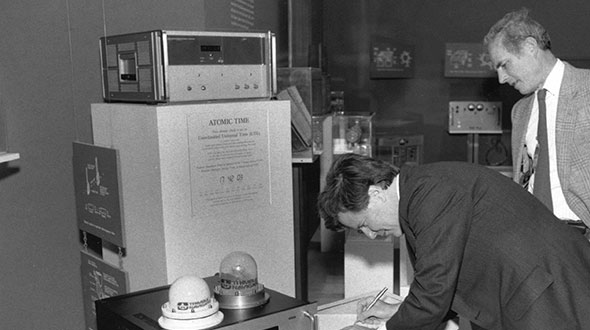
    Feature image: Smithsonian; Charlie Trimble provides the 4000A GPS Locator to the Smithsonian Museum. Introduced in 1984, the Trimble 4000A was the first commercial GPS positioning product.

  • GPS World adds Col. Bernard Gruber to Editorial Advisory Board

    GPS World adds Col. Bernard Gruber to Editorial Advisory Board

    Bernard Gruber
    Bernard Gruber

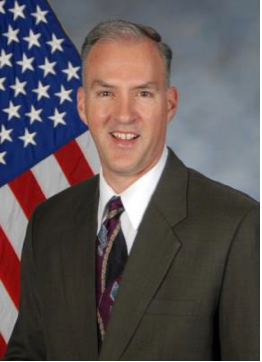
    Bernard Gruber, who previously headed the GPS program for the United States Air Force, has joined the GPS World Editorial Advisory Board.

    Gruber is senior director of Guided Projectiles and Precision Weapons, Innovation Systems, at the Armament Systems Division of Northrop Grumman in Plymouth, Minnesota. In this role, he is responsible for the capture and program execution of multiple U.S. Department of Defense and global programs within five business lanes:

    • Precision Guidance Kits
    • Advanced Weapons
    • Barriers/Area Denial Systems
    • Air Defense/Counter-Unmanned Aircraft Systems (C-UAS)
    • Air-to-Ground Precision Weapons

    Gruber joined Northrop Grumman (then ATK) in September 2013, where he was responsible for winning and managing cost, schedule and technical performance of a significant international co-production program before moving on to deputy for precision weapons and then senior director in 2015.

    Before joining Northrop Grumman, Gruber completed a distinguished 26-year Air Force career and retired as the program director of the Global Positioning System (GPS), Los Angeles Air Force Base. As GPS director,  he was responsible for development, acquisition, fielding and sustainment of all GPS satellites, command and control (ground segment) and military user equipment.

    The $32 billion GPS program, with a $1 billion annual budget and 700 member team, maintained the largest satellite constellation and the largest avionics integration and installation program in the entire DOD.

    Gruber earned his B.S. in mechanical engineering from North Dakota State University and his M.B.A. from Michigan. He is a graduate of Squadron Officer School, Air Command and Staff College, Air War College, Defense Systems Management College and the Joint Forces Staff College; he has commanded at the squadron, group and wing levels.

    Gruber has distinguished himself in a variety of leadership positions within the operations, intelligence, launch, engineering and acquisition disciplines, and had served in key positions at Major Command, Air Staff, Joint Staff, Corporate and Defense Agency levels. He is a National Defense Fellow, life member of the Air Force Association, National Eagle Scout Association, Program Management Institute and sits on the board of directors for AirSpace Minnesota and the Midwest Defense Alliance.

    Northrop Grumman is a global security company providing innovative systems, products and solutions in autonomous systems, cyber, C4ISR, strike and logistics and modernization to customers worldwide.

  • Former GPS World advisor Terence J. McGurn passes away

    Former GPS World advisor Terence J. McGurn passes away

    Terry McGurn
    Terry McGurn

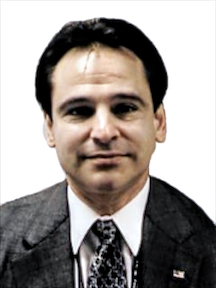
    Terence James (Terry) McGurn, former GPS World Editorial Advisory Board member and long-time CIA analyst, died on Aug. 28 at the age of 84, according to an obituary in the Fairfax (Virginia) County Times.

    After a long career in the CIA and U.S. government, McGurn served as a member of the GPS Independent Assessment Team and its successor, the National Space-Based Position, Navigation and Timing Advisory Board. The board provides independent advice to the National Executive Committee on GPS-related policy, planning, program management, and funding profiles in relation to the current state of national and international satellite navigation services.

    McGurn also served as a member of the Independent Review Team sponsored by NASA, which bridged civil and military communities’ GPS issues. He also served on various ad hoc teams that address the criticality of satellite navigation to the nation’s military and civil infrastructure.

    He was a member of the GPS World Editorial Advisory Board and was an active member of the Institute of Navigation. He served the CIA and the broader U.S. government until days before he passed away.

    McGurn was born in Springfield, Massachusetts on Aug. 24, 1935. He grew up in Jersey City, New Jersey, and he graduated from St. Peter’s Preparatory School in 1953. He moved up his draft and served as a radio operator in the 3rd Armored Cavalry Regiment, and then was discharged as an SP-3 in 1956.

    He earned a bachelor’s and masters’ in electrical engineering from the New Jersey Institute of Technology and was Asst. Professor of Physics at NJIT, 1960-69. He earned his doctorate in Electrical Engineering at Stevens Institute of Technology in 1969.

    Terry spent his career at Central Intelligence Agency. A senior analyst and leader, he was appointed to the Senior Executive Service (originally Senior Intelligence Service) where he advised generations of policy leaders and operational leaders of the capabilities of the navigation and positioning of the U.S .and of adversaries and other nations.

    At the CIA, he developed and implemented methodologies that improved the intelligence community’s ability to assess the performance of foreign weapon systems. He also initiated outreach programs to provide the agency’s unique resources to the departments of Defense, State and Transportation in support of U.S. military, political and economic objectives.

    As an expert on the strategic and tactical weapons systems and navigation, guidance and control technologies deployed by potential adversaries, he was able to provide guidance to policy makers regarding the defense of the homeland and of military installations around the world. He briefed at the SECDEF and National Security Council level for decades.

    He retired in 2000, the recipient of the CIA Career Intelligence Medal, and numerous Exceptional Accomplishment and Exceptional Performance Awards.

    As a consultant, he continued to work with CIA and other agencies in the government, including the DOD, State, the newly established Department of Homeland Security and the Department of Transportation, providing technology and analysis for their diverse missions including security issues related to satellite and terrestrial navigation worldwide.

    A long-time resident of Reston, McGurn passed away peacefully at Reston Hospital. He will be laid to rest at Arlington National Cemetery. Reminiscences, condolences and photographs will be posted on this website in the coming months. Memorial donations can be made to the Leukemia and Lymphoma Society or the Animal Welfare League of Arlington.

  • GPS World welcomes new EAB members

    GPS World welcomes new EAB members

    GPS World magazine is excited to announce two additions to our Editorial Advisory Board.

    Mitch Narins
    Mitch Narins

    Mitch Narins is the principal consultant and owner of Strategic Synergies LLC, a technical and management consulting firm that he formed after retiring following over four decades of U.S. government service. He worked at the Federal Communications Commission as an acquisition engineer for the Field Operation Bureau; supported the U.S. Navy and U.S. Marine Corps as branch chief for Data Terminal Systems and Electronic Warfare Systems; and served more than 26 years at the Federal Aviation Administration as a program manager, systems engineer, and finally as the chief systems engineer for navigation.

    At the FAA, he was integrated into all aspects of aviation sector position, navigation and time systems engineering, standards development, and enterprise architecture efforts in support of the National Airspace System and the Next Generation Air Transportation System (NextGen).

    Narins is a recognized position, navigation, and timing (PNT) expert, who has published numerous articles and delivered many papers at conferences and seminars worldwide. He is a Certified Information Systems Security Professional (CISSP), a Fellow of the Royal Institute of Navigation, an active member of the Institute of Navigation (ION), and a member of RTCA, RTCM, and SAE Standards Committees. He is a recipient of ION’s Norman P. Hays Award and the International Loran Association’s President’s Award and Medal of Merit.

    Stuart Riley
    Stuart Riley

    Stuart Riley is vice president of GNSS technology responsible for GNSS signal processing and products for several Trimble business areas. In this role, he is responsible for the core GNSS technology from signal reception through to the measurement engine that is used in all Trimble GNSS precision products. He oversees GNSS product development for Trimble’s GNSS Real-time Networks, Geospatial, Heavy Civil Construction and InTech OEM Divisions.

    Beginning his career at Trimble in 1995, Stuart has worked on GNSS receiver development in various engineering roles, in addition to holding several management roles. He holds several patents filed and pending in the field of GNSS and is often a guest speaker at international conferences.

    His research interests include improving GNSS performance in harsh environments, and taking measurements from additional sensors along with optimizing the GNSS receiver architecture, especially for the newer GNSS signals BeiDou, Galileo, IRNSS, QZSS and next-generation GPS and GLONASS signals.

    Riley has an electronic engineering Ph.D. in the field of GNSS from the University of Leeds in England. After he graduated, he was a research fellow at the university on a European Space Agency-funded project to develop a prototype GNSS receiver for space applications.