Tag: insurance

  • DNK offers program to protect ships from GNSS interference

    DNK offers program to protect ships from GNSS interference

    Norwegian insurer DNK will provide members with assured positioning, navigation and timing (A-PNT) services using Iridium Communications’ low-Earth orbit satellite network. DNK, Den Norske Krigsforsikring for Skib, specializes in war-risk insurance.

    The new program allows its clients to select systems from specialized technology vendors to protect against GNSS interference while qualifying for insurance premium rebates.

    The framework aligns with DNK’s aim of using digital technologies to safeguard Norwegian-owned or controlled vessels from war, terror, piracy and cyberattacks.

    “Over the past five years, we have seen a sharp increase in GNSS interference, especially in the Black Sea, the Baltic Sea and more recently, in the Persian Gulf and Red Sea,” said Svein Ringbakken, CEO at DNK.

    “GNSS signal interference can not only increase the risk of collision or grounding but also compromise critical safety systems. This program offers our members the opportunity to lower premiums by investing in cost-effective A-PNT solutions to maintain situational awareness, safety and positioning integrity.

    “This program will not only help members lower premiums and ensure the safety of their vessels but help us collect data we can share with owners, managers and other stakeholders operating in known and emerging conflict zones.”

    DNK evaluated alternative positioning frameworks based on Iridium’s global network of 66 low-Earth orbit (LEO) satellites. The vendors participating in the program offer subscription-based hardware systems with a configuration including an Above Deck Unit that transmits jamming and spoofing telemetry back to DNK, alongside an optional Below Deck Unit that provides real-time situational awareness directly to the vessel crew.

    “GNSS jamming and spoofing not only compromise situational awareness, the intentional manipulation of positioning data can also lead vessels into sanctioned or restricted zones,” said Alan Belardinelli, Project Manager at DNK. “After extensive research, DNK found that the Iridium signal, which is 1,000 times more powerful than GNSS signals, is significantly more difficult to disrupt, adding a significant layer of enhanced positioning resilience. Signal attacks can also play havoc with onboard digital systems that rely on GNSS to provide a source of timing, necessary for safe navigation and efficient operations.”

    The project has received formal support from Norwegian authorities, represented by Marianne Sivertsen Næss, Minister of Fisheries and Ocean Policy, alongside the Norwegian Shipowners’ Association, represented by Knut Arild Hareide, Chief Executive Officer.

    “PNT Iridium stands as a powerful and effective complement to GNSS, ensuring continuity for vessels when traditional signals are degraded or denied,” said Rohit Braggs, vice president of PNT at Iridium. “More importantly, it acts as a resilient ‘source of truth’ by providing assured timing and positioning that maritime systems can depend on, whether in open waters or bustling ports.”
  • EUSPA and EIOPA harness Copernicus data to guide disaster response

    EUSPA and EIOPA harness Copernicus data to guide disaster response

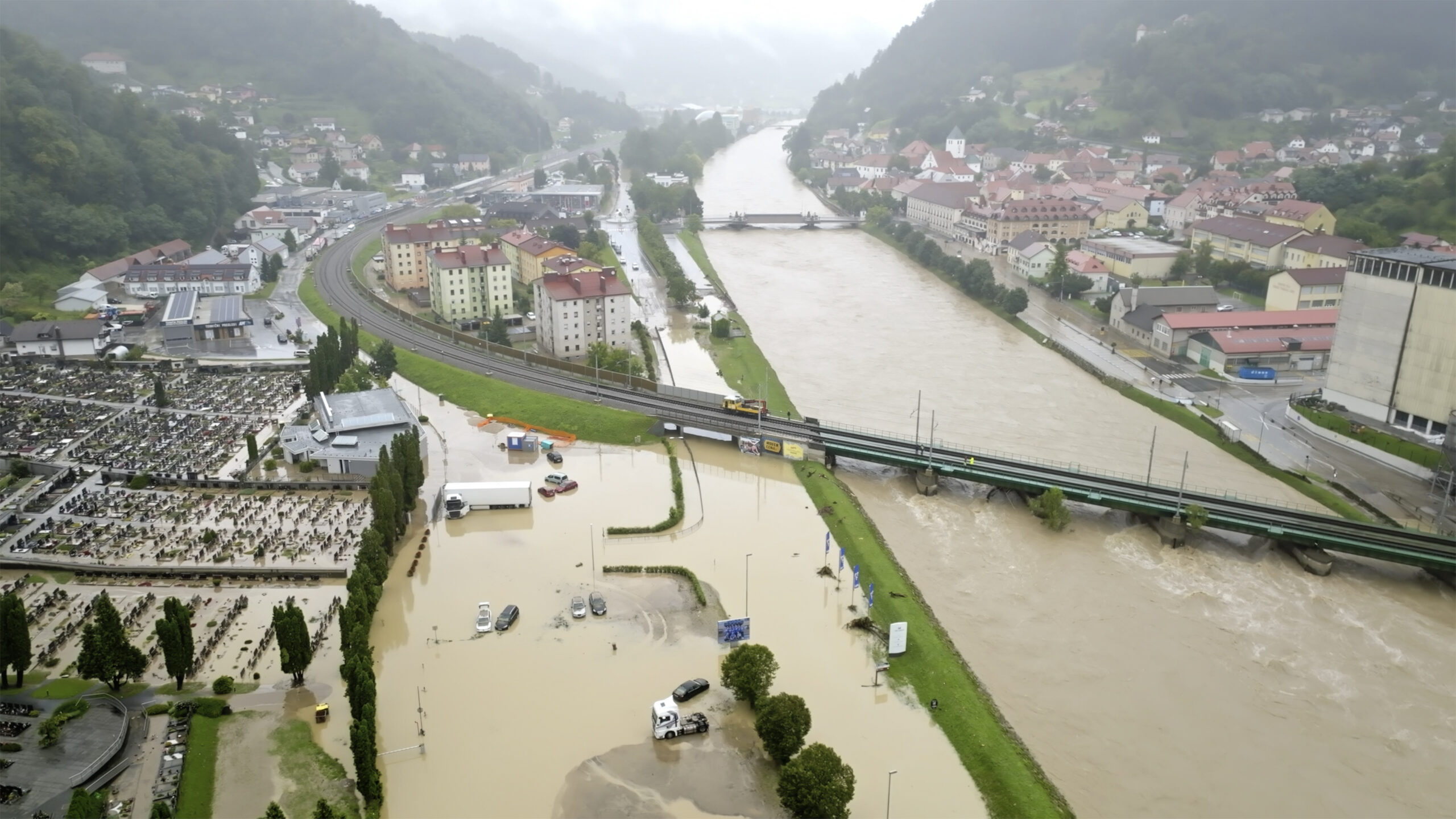
    Using data from satellites to predict and resond to climate-related disasters is considered in a new white paper.

    The EU Agency for the Space Programme (EUSPA) and the European Insurance and Occupational Pensions Authority (EIOPA) published the joint white paper

    It explores how Earth observation (EO) data could be harnessed to enhance the supervision of natural catastrophes and assess the impact of extreme weather events on Europe’s insurance sector.

    As Europe faces escalating climate-related disasters and rising economic losses related to them, the need for more effective risk management and greater resilience against natural catastrophes is paramount — not least through the deployment of innovative solutions.

    The white paper is the result of a joint pilot project between EIOPA and EUSPA — highlights the benefits of using open-access Earth observation data from Copernicus to improve the tracking and management of natural hazards.

    The project demonstrates that satellite-based EO data offers independent, objective and near real-time geospatial insights that can meaningfully improve risk assessment and risk management practices for insurers, communities and supervisors.

    Earth observation technology — especially the open, traceable data that Copernicus provides — can sharpen risk identification, reinforce scenario design and accelerate loss estimates in the aftermath of shocks. Financial supervisors can leverage the technology to:

    • rapidly identify affected areas and exposed insurance undertakings: Satellite imagery makes it possible to map disaster-affected areas (for example, the extent and trajectory of floods) as events unfold. This granular geospatial data can be matched with Solvency II regulatory reporting to estimate the potential impact of natural catastrophe events on individual insurers (micro-prudential perspective);
    • estimate overall loss-magnitudes early on by scaling up the micro-level analysis to the sector as a whole (macro-level perspective); and
    • improve benchmarking, model validation and scenario and stress test design by providing objective, data-driven reference points against which model outputs and reported or calculated losses can be compared.

    The collaboration between EIOPA and EUSPA showcases the value of innovation in addressing the challenges posed by climate-related disasters: when used effectively, Earth observation data can contribute to a more resilient and sustainable insurance sector — one that better protects European citizens and businesses from the damaging effects of a warming climate.

  • Klau Geomatics launches MakeItAccurate GNSS correction service

    Klau Geomatics launches MakeItAccurate GNSS correction service

    Photo:

    Klau Geomatics has launched MakeItAccurate, a global GNSS data correction and processing service.

    MakeItAccurate takes data from any GNSS receiver on drone or survey equipment and makes it accurate. Users can now achieve centimeter (cm)-level accuracy without the need for base stations, real-time kinematic (RTK) links, data from Continuously Operating Reference Station (CORS) or other external inputs.

    MakeItAccurate requires only the raw GNSS data from a drone to produce a highly precise trajectory and turn the traditional autonomous 3-5m GPS accuracy to 3-5 cm anywhere in the world.

    In many parts of the United States, Europe, Japan, Australia and New Zealand, absolute accuracy of 2-3 cm XYZ will be achieved. In these areas, the KlauPPK processing engine applies sophisticated hybrid PPK/PPP algorithms, merging global PPP clock and orbit corrections with many distant CORS stations to achieve this high absolute accuracy.

    The service enables enterprise drone operations to achieve high accuracy across their entire global operations with one repeatable workflow.

    Sectors such as insurance, telecommunications and utilities can scale their operations without additional survey expertise and site-specific data constraints. The same process works for multiple operators on thousands of sites enabling consistent, high accuracy every time, the company said.

    MakeItAccurate supports data from all GNSS manufacturers. Native support for DJI M 210v2 RTK or Phantom 4 RTK drones returns precise camera positions with centimeter-level accuracy. Other drones using external PPK GNSS products also can achieve highly accurate kinematic trajectories and camera coordinates.

    A MakeItAccurate application programming interface (API) is available to push raw GNSS data to the processing engine and return highly accurate coordinates, with full reporting on the accuracy achieved for the entire trajectory or each camera event. GNSS hardware manufacturers can offer a custom service to add value to their products. Software developers offering artificial intelligence technology, photogrammetry processing or other outcomes that benefit from high accuracy can use the MakeItAccurate API.

  • Nearmap introduces roof pitch and area tools for solar and roofing

    Nearmap introduces roof pitch and area tools for solar and roofing

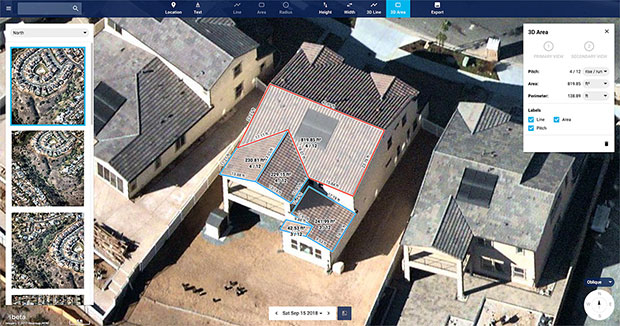
    Nearmap high-resolution aerial image showcasing new toolset in MapBrowser, captured Sept. 15, 2018. (Image: Nearmap)
    Nearmap high-resolution aerial image showcasing new toolset in MapBrowser, captured Sept. 15, 2018. (Image: Nearmap)

    Nearmap has introduced a complete measurement toolset in MapBrowser for the solar, roofing and other rooftop industries.

    The new tools allow users to measure roof-pitch, height, width and area, enabling roofers and solar installers to confidently measure rooftops and structures from high-resolution oblique aerial images, the company said.

    The new MapBrowser helps customers significantly reduce onsite visits during the quoting and planning stages of projects and complements their remote roof/site inspection workflows, giving many small businesses the power of expensive systems that only large companies use.

    “Gone are the days of climbing on roofs to take measurements,” said Tony Agresta, executive vice president of product at Nearmap. “Delivered to the cloud within days of capture, our aerial imagery allows roofers, solar companies and other small businesses to carry out assessments from the comfort of their office. Once the domain of large companies, the new features provide businesses of all shapes and sizes with the tools they need to save time, plan and estimate more accurately at a fraction of the price.”

    Using Nearmap’s new tools, roofers and solar companies will be able to:

    • Prospect more efficiently by viewing and expanding opportunities through aerial maps instead of other, more traditional ways.
    • Process leads more quickly by qualifying prospects prior to visiting a potential job.
      Reduce costs associated with the qualification and proposal stages.
    • Create better proposals using up-to-date, high-resolution photos, giving companies a better chance at winning a client’s business.
    • Close more sales with the most accurate and competitive quotes.
      Increase revenue without adding systems or headcount.

    Businesses in construction, home building, painting, insurance and other industries can also benefit from these new tools to accurately measure areas on properties in three dimensions. Nearmap’s aerial imagery can help users to show context for work being done, and the imagery can be annotated with notes, drawings and measurements that provide details of the plan.

    Nearmap Oblique imagery can be accessed through a standard web browser using Nearmap’s intuitive MapBrowser application. In addition, Nearmap Oblique photos are published at sub-7.5cm ground sampling distance (GSD) — better than satellite imagery — which allows users to see great detail, Nearmap said.

  • PrecisionHawk partners with EagleView, acquires energy experts

    PrecisionHawk partners with EagleView, acquires energy experts

    Drone company PrecisionHawk has announced a partnership with EagleView, a provider of aerial imagery and data analytics for government, insurance and commercial sectors.

    PrecisionHawk also announced that it has purchased both HAZON Inc. and InspecTools Inc., businesses that specialize in the delivery of inspection services and technology for the energy industry.

    Both companies bring demonstrated expertise to enable tighter integration between the collection and the analysis of drone data, PrecisionHawk said. Paul Bingaman, CEO of InspecTools, and David Culler, CEO of HAZON, will join PrecisionHawk’s executive leadership team.

    EagleView partnership for insurance claims

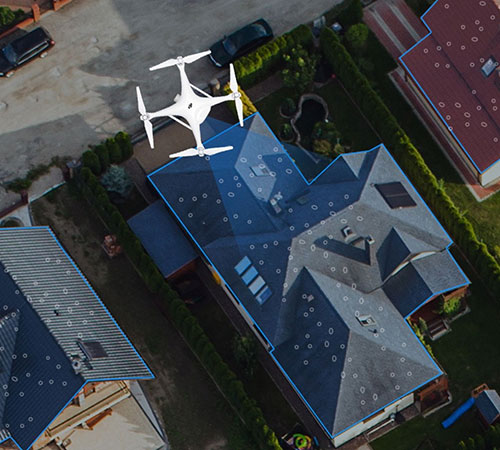
    The EagleView partnership enables drone insurance inspections. (Photo: PrecisionHawk)
    EagleView’s partnership with PrecisionHawk enables drone insurance inspections. (Photo: PrecisionHawk)

    Through the partnership with PrecisionHawk, EagleView will collect at-scale insurance claims imagery via drones by leveraging PrecisionHawk’s global network of drone pilots, Droners.io.

    The addition of PrecisionHawk’s drone pilot network will benefit EagleView OnSite Solutions for remote claims inspection. EagleView OnSite virtual desk adjustment combines imagery from multiple sources, including drones, with a variety of data analytics and reports to enable adjusters to efficiently triage claims, virtually inspect properties from their desk, and ultimately close property and casualty (P&C) claims faster.

    “EagleView OnSite provides insurance customers with all the tools necessary to settle claims without ever going into the field,” said Rishi Daga, CEO of EagleView. “As drones transform the way the insurance industry operates, making inspections safer, easier and more cost effective, EagleView reinforces its commitment to drone technology to digitize manual workflows.”

    Virtual drone inspections for insurance claims address a challenging trend in the P&C insurance industry. Over the past 20 years, the number of experienced insurance adjusters has dropped dramatically, causing labor shortages — especially after major storms hit. The demand for insurance adjusters is high, yet drone pilots add a new, untapped “labor force” to the equation.

    Combining the EagleView OnSite virtual desk adjustment solution with PrecisionHawk will offer the insurance industry thousands of certified, trained drone pilots to perform high-quality insurance inspections at a competitive cost. With more than 25,000 claims processed by EagleView OnSite in the last 18 months, EagleView can help insurance carriers transform their property claim workflows and decrease cycle time by at least 40 percent to best serve their customers after a catastrophic natural disaster.

    Drone technology and analytics for the energy market

    HAZON brings extensive aviation experience, standards-based operating procedures, certified drone flight operations and inspection services, widely regarded as the best in the energy industry, to the PrecisionHawk team. The company has delivered more than 13,000 inspections totaling over 8,000 hours of flight time, with a majority focused in energy markets for Fortune 500 utilities.

    InspecTools brings high-fidelity machine vision software and data analysis tools built for the renewable energy market. Their market-leading software for both solar-panel and wind-turbine inspection is utilized by some of the largest equipment manufacturers and service providers in the world. Customers like Vestas, PG&E and SMA Solar rely on InspecTools’ sophisticated reporting, analytics and machine learning capabilities.

    “We’re very pleased to bring together the established technology and multi-market reputation of HAZON and InspecTools with PrecisionHawk’s experience, team and expanded portfolio,” said Michael Chasen, CEO of PrecisionHawk. “By combining these offerings, our customers will have access to extensive and leading-edge energy products and services, regulatory expertise and a record of safe, secure and compliant operations.”

    Thanks to advances in technology and regulations, the energy market has quickly moved from experimenting with pilot projects to large scale deployment of drone solutions, PrecisionHawk said. Across distribution lines, transmission lines, solar panels, wind turbines, oil and gas and utility infrastructure, and emergency response, energy presents a current global market opportunity of $9.7 billion.

    According to IDC, worldwide spending on robotics and drones will accelerate over the next four years reaching $201.3 billion in 2022. While the value is clear across time, safety improvements and operational efficiency, scaling and managing a drone program can be complex.

    “HAZON is excited to bring our world-class best practices and reputation for standards-based operations and safety to the PrecisionHawk team,” said Culler. “By joining PrecisionHawk, our customers gain access to the next level of technological sophistication for more scalable, predictive and cost-efficient drone solutions that drive better business intelligence.”

    “InspecTools brings years of experience, analytics tools and machine vision software for renewable energy that is an immediate value-add to PrecisionHawk’s software analytics platform,” Bingaman said. “This relationship further enhances the technologies and services that are fundamental to advancing the economic potential of drones in the energy market.”

    The acquisition of HAZON and InspecTools underscores PrecisionHawk’s strategy to operate in high-growth markets and accelerate the adoption of commercial drones.

    The acquisitions, which are subject to customary closing conditions, are expected to close later this month.

  • Drones a valuable tool in hurricane recovery efforts

    Hurricane Harvey is the first major catastrophe in which drones have been used on a large scale by both government and commercial operators, said Ken Long, an analyst at the Freedonia Group.

    UAVs are also likely to find widespread use if Hurricane Irma either directly strikes or skirts the east coast of Florida early next week, as current projections show.

    In addition to helping keep emergency workers safe by allowing them to look for people trapped by floodwaters and inspect damage in high-risk areas, drone use can speed up the recovery process. Drones can be flown over structures such as fuel tanks, power lines and railroad tracks before they can be reached by land, enabling government agencies and utilities to identify what is in most urgent need of repair.

    They also allow insurance adjusters to more quickly process claims, enabling rebuilding efforts to get underway faster. Farmers Insurance reports that an insurance inspector using a drone can complete up to eight times the number of home inspections each day than he or she otherwise would be able to do.

    When Hurricane Harvey first made landfall in Texas on Aug. 25, the Federal Aviation Administration (FAA) set up a temporary but extensive no-fly zone over Houston and nearby areas to help protect first responders in helicopters and other manned aircraft. This flight ban included all drone operations except those specifically approved by the FAA.

    https://youtu.be/XRdUV4WqnDE

    In the 10 days that followed Hurricane Harvey, the FAA issued more than 100 separate authorizations for drone use in the Houston area, according to the Wall Street Journal. Some of the applications for drone use were reviewed and approved by the FAA within hours, an unusually fast turnaround time for an agency that typically takes days or weeks to make decisions.

    With the exception of a handful of flights conducted by media firms, all of the approved operations were for drones used in conjunction with, or on behalf of, government agencies. Drones were used to inspect bridges, roadways and power lines; assess the condition of oil refineries and water plants; and survey coastal damage.

    As the flood waters continued to recede and flight restrictions were eased or lifted, insurance companies — including Allstate, Farmers Insurance, Travelers and USAA — began to use drones to assess property damage and speed claims processing.

    However, drone use by insurance companies and other commercial users is limited by FAA rules that do not allow them to be flown above 400 feet, outside the visual line of sight of the operator, or above people not directly involved in their operation, unless a waiver is granted.

    These regulations could change with a 2018 FAA reauthorization bill being considered by Congress.

    “The demonstrated usefulness of drones in Hurricane Harvey response and recovery efforts could well influence the content of that legislation,” Long said.

    Even if the current FAA regulations remain in place, U.S. commercial drone demand will expand rapidly from what is currently an extremely small market base, according to the Freedonia Group’s Drones (UAVs) study. “Non-military government use of drones will also climb at a robust rate through 2020,” Long said.

    Both commercial and non-military government market gains will be fueled by further improvements in drone designs, making them more capable and easier to operate, customized for use in specific applications and cost-saving.

  • CoreLogic expands location-based intelligence with building footprints

    CoreLogic has expanded its location-based intelligence data with the addition of structure footprint information to its other parcel and property characteristics data offerings.

    CoreLogic is a global property information, analytics and data-enabled services provider. The company made the announcement at the 2016 Esri User Conference, being held in San Diego, California, June 27-July 1.

    CoreLogic Structure Footprint enables accurate roof-top geocoding and identifies the location and outline of relevant structures on a parcel, including all known sub-addresses, to provide a more granular and precise property description.

    Street, parcel and structure geocoding appear on a single map. (IMAGE: CoreLogic)
    Street, parcel and structure geocoding appear on a single map. (IMAGE: CoreLogic)

    CoreLogic residential and commercial structure footprint data covers more than 35 million rural and urban parcels throughout the U.S, including two-thirds of the largest 50 metro areas. When combined with other CoreLogic proprietary property data, including business financial health, natural hazard risks, occupancy information and building characteristics, the added structure footprint data provides a more complete picture of a property than was previously available.

    Accurate location data is a critically important factor for planning and operations in oil and gas, insurance, geo-commerce and other industries that need to understand what type of structures and building characteristics are associated with property addresses.

    The addition of structure footprint data complements the existing CoreLogic property characteristic data, which details attributes in 150 distinct categories that provide location intelligence on everything from zoning and land use to details about roof type and number of bedrooms.

    “The addition of this property data layer, which identifies individual structures within a single parcel, can improve efficiencies and risk segmentation for everything from geo-commerce to insurance,” said Steve Brewer, senior vice president of Insurance and Spatial Solutions at CoreLogic. “It’s exciting to see this level of granularity added to location intelligence that was previously not available — granularity that can be used in a variety of decision-making situations including natural hazard risk assessment, marketing, asset management and claims processing.

  • Insurance and law firms start drone services

    Insurance companies in the U.S. and Canada have jumped on the UAV bandwagon, with many now offering coverage for commercial drone users. The insurance usually covers liability for any damage caused by the drone, with comprehensive options covering damage to the drone itself.

    Unmanned Risk Management, which also insures helicopters and other aircraft, has insured drones in all 50 U.S. states and in other countries, and has insured the seven film operators that received Section 333 exemptions.

    ProSight Specialty Insurance, which operates in the U.S. and UK, was given a Best in Biz Award partly for creating insurance for drone operators. ”It’s so prescient and forward-thinking given the burgeoning use of drones in today’s business world,” said a Best in Biz judge.

    AIG has developed commercial UAV coverage designed for the exposure faced by remotely piloted, semi-autonomous and fully autonomous aircraft.

    In Canada, Intact Insurance’s UAV coverage caters to small and medium-sized businesses that use or plan to use drones in their business operations.

    Meanwhile, a Chicago law firm is now specializing in federal commercial drone law. Antonelli Law became the first law firm in the U.S. to be invited by drone maker DJI to participate in the company’s referral program for commercial drone users to help them receive Section 333 exemptions from the Federal Aviation Administration (FAA). In 2015, Antonelli Law filed more than 50 petitions with the FAA.

    The firm also launched a specialized drone law service for police and fire departments, community colleges, universities and municipalities obtain FAA exemptions.

  • VDOS Global and Cunningham Lindsey partner for drone insurance claims

    Cunningham Lindsey, a global loss adjusting and risk management services company, is partnering with VDOS Global, an unmanned inspection services company, to incorporate drone technology solutions into the insurance market.

    As the first FAA-authorized UAS-inspection company in the United States, VDOS is a provider of unmanned aerial vehicle (UAV) services whose commercial pilots are seasoned and fully licensed with FAA certifications. Cunningham Lindsey and VDOS will work together to achieve improved efficiencies in daily claims scenarios by assisting insurers with the creation of a drone program into their claims process, providing safer pre- and post-loss assessments with aerial flyovers, and customized UAV-training tailored to the needs of field adjusters and additional experts seeking certification.

    The partnership will provide carriers immediate access to aerial data for application efficiencies in the underwriting process as well as catastrophic claims situations for all types of property. When claims occur that require a forensic investigation, VDOS will also work with EFI Global, the forensic division of Cunningham Lindsey, to provide the UAVs needed to expedite the gathering of field data in challenging locations.

    “We are excited to partner with a highly respected and recognizable brand like VDOS to share the benefits of the emerging drone technology with our clients,” said David Repinski, president and chief client officer of Cunningham Lindsey, Americas. “It is undeniable our industry is changing constantly, and the data application possibilities using drone technology are tremendous. This partnership represents the best path forward to help insurers incorporate a UAV strategy to gain a competitive and differential advantage across all channels in the claims and risk assessment process.”

    “Working with VDOS in using UAVs in our forensic evaluations is a natural complement to EFI’s investigation process,” said Jeremy Mele, president of EFI Global. “This type of technology will enhance our technical experts’ investigative reach, and add a level of safety and security in the field when accessing sites with unsafe property conditions.”

    “We are truly excited to partner with such an incredible team at Cunningham Lindsey who understands how drones are changing traditional business models,” said Brian Whiteside, CEO of VDOS stated. “Our enterprise deployment program using UAV technology is the first of its kind, and will accelerate safe and efficient claims services for adjusters through the team’s integrated training and operations structure.”

  • Reyax Technology Develops 3G GNSS Tracking Platform Based on u-blox

    Photo: Reyax Technology

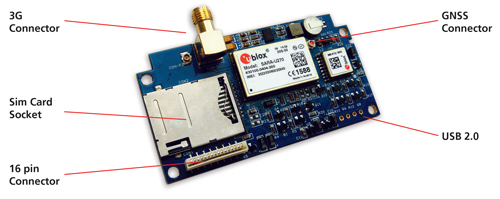
    Reyax Technology, a telematics tracking systems provider for the automotive industry, has developed an industrial high-integration 3G GNSS tracking platform, the Reyax RY277AI, which is fully based on technology from u-blox.

    “Our vehicle tracking platforms are dependent on highly accurate position data to deliver the performance crucial to meet the demands of our customers. u-blox’s highly reliable products as well as a flawless technical support were convincing,” said Ritchie Chang, general manager of Reyax Technology. “u blox’s MAX M8C positioning module and SARA U270 cellular module were the right choice for this new platform,” he added.

    RY277AI is designed for 3G telematics applications, in particular vehicle tracking, fleet management and insurance box. With both MAX-M8C and SARA U270 modules embedded, it also benefits from two of u blox’s GNSS and wireless technology services. With AssistNow, Assisted GNSS (A-GNSS) accelerates the calculation of a position by delivering satellite data to the GNSS receiver via wireless networks or the Internet, also ensuring faster TTFF (time to first fix).

    CellLocate, another of u-blox’s trademarked technologies, matches cellular positioning data with previously successful GNSS fixes in shielded environments such as indoors. This is especially useful in case of jammed GNSS signals and in M2M applications. Additionally, u-blox’s nested design enables hosting of next-generation wireless and positioning modules on the same PCB.

    “We are excited about this co-operation with Reyax Technology, the recognized leader in telematics tracking systems. Reyax-based solutions make full use of u-blox’s advanced positioning and cellular technologies to enhance vehicle tracking. This solution is an answer to the growing encouragements by the Taiwanese government to promote IoT/M2M applications and whose vision we share.” explained Ming Chiang, country manager of u-blox Taiwan.

    RY277AI comes in an LGA package, with a dimension of 70mm x 30mm x 7mm, and an operating temperature of -40~+85° C.

  • CoreLogic Introduces Proprietary Wind Verification Technology

    CoreLogic has introduced wind verification technology that will improve the accuracy and timing of insurance claims related to severe wind damage. The new technology combines proprietary three-dimensional storm models, storm-tracking models and artificial intelligence models with radar data, on-the-ground observations and actual damage reports to analyze wind conditions.

    The scientific and observation-based Wind Speed Maps and Wind Verification Reports from CoreLogic provide updated wind activity analysis at the property level every hour, drawing from data going back as early as 2006. CoreLogic Wind Speed Maps and Wind Verification Reports provide granular wind speed magnitudes that allow insurance professionals to verify if and when severe winds were detected at or near a specific location in order to make more precise damage assessments and, in some cases, avoid an on-site inspection.

    Previously, insurers relied on airport-based and private weather observation station measurements, which can lead to significant ambiguity, as these observations represent a single stationary location and are not representative of activity at the property level. Instant report delivery, as well as custom workflow integration, enhances the ability of insurers to reduce time for claims decisions and processing, CoreLogic said.

    To help adjusters verify what the loss was during a particular policy period and corroborate policyholders’ claims, the Wind Verification Reports provide data on every severe windstorm event dating back to January 2006, including hurricanes, thunderstorms, straight-line winds, Chinooks, Santa Ana winds, coastal lows and “derechos,” which are widespread, long-lived straight-line wind storms. The reports include estimated maximum wind speed magnitudes within one, three and ten miles of a location enabling accurate assessment of when and where severe winds likely impacted properties.

    More timely and accurate wind data, together with the new technology, will help mitigate against fraudulent claims which have traditionally been prevalent with wind-related storms given the broad geographic assessments of wind activity that were previously relied upon.

    “Insurance carriers and adjusters are responsible for making difficult decisions, and it helps to have an objective source to guide the decision-making process, whether it’s for evaluating entire books of business or processing individual wind-related claims,” said Lindene Patton, global head of hazard product development for CoreLogic. “This unique technology provides an element of quality assurance that simply hasn’t been available to the industry before now. Wind verification through scientific observation is going to mean more efficient and effective claims, which will reduce time, mitigate fraud and improve bottom-line results for claims adjusters.”

    Wind and hail claims are one of the largest categories of property damage expenses each year. In fact, $30 out of every $100 collected for a homeowner’s insurance premium goes toward wind and hail claim payments, with the majority of claims involving roof damage. From 2007 to 2011, the average claim was $7,177, according to the Insurance Information Institute.

    “Wind is one of nature’s most difficult hazards to measure, and for the past century, the industry has depended on unreliable sources,” Patton said. “Wind speeds and direction reported from an airport weather vane can be 20-100 miles away from where a specific wind event occurred and do not represent actual conditions and storm impact at the property level. Wind speeds can vary dramatically over very short distances because of variance in topography and land use, so it’s important to evaluative activity at the granular level.”

  • DigitalGlobe’s Geospatial Big Data Platform Enabling New Commercial Solutions

    DigitalGlobe, Inc., has agreed to provide another commercial customer access to its Geospatial Big Data (GBD) platform, paving the way for new analytic products serving the insurance, forestry, oil & gas, and mining industries, the company said.

    Exogenesis is a provider of advanced analytics, algorithm development, and predictive modeling and simulation. The company has subscribed to DigitalGlobe’s GBD service to facilitate new product development enabled by large-scale data analysis.

    The agreement includes access to algorithms, expertise, and petabytes of high-resolution satellite imagery collected over the past 15 years. DigitalGlobe customers Orbital Insight and Cuende have also subscribed to the service and are introducing unique products to their commercial markets.

    DigitalGlobe’s cloud-based GBD offering is a “platform as a service” model that provides access to DigitalGlobe’s vast image library. It is designed to create a new ecosystem in which partners and developers can leverage their expertise and API’s to create new customer solutions without the cost of owning and operating costly IT infrastructure, DigitalGlobe said.

    The GBD platform is one of the strategic initiatives propelling DigitalGlobe toward its vision of becoming the indispensable source of information about the planet, the company said.

    “Exogenesis is thrilled to have the opportunity to work with DigitalGlobe, the biggest name in commercial satellite imagery,” said Sean Anklam, president of Exogenesis. “As an early adopter of DigitalGlobe’s Geospatial Big Data platform, we will be able to provide the most advanced decision support information derived from source imagery of the highest quality.”

    “It’s a privilege to bring our Geospatial Big Data capabilities to the market with an innovative partner like Exogenesis,” said Shay Har-Noy, DigitalGlobe’s Senior Director for GBD. “We are committed to investing in Geospatial Big Data in order to create a living digital inventory of the surface of the earth, enabled by our unmatched satellite constellation, commitment to ecosystem partners, and ability to convert imagery at scale into searchable, analytics-ready information layers.”