Tag: multi-GNSS receiver

  • Honeywell launches UAS navigation system

    Honeywell launches UAS navigation system

    Honeywell has launched Kestrel, a compact navigation solution designed to help uncrewed aerial systems (UAS) operate reliably in contested environments where GPS signals may be degraded, jammed or spoofed.

    Built to support the growing demand for smaller, more affordable and highly efficient platforms, Kestrel combines Honeywell Aerospace’s HG3900 MEMS inertial measurement unit with an M-code receiver and a multi-GNSS receiver. The platform is intended to meet the specific needs of Group 2 and 3 collaborative combat aircraft and loitering munitions platforms. It is also suitable for crewed aircraft where size, weight, power and cost are important considerations.

    “Kestrel reflects the evolving needs of today’s uncrewed operations, where operators are looking for resilient navigation technology that is smaller, lighter and more cost-effective,” said Matt Picchetti, vice president and general manager of Navigation & Sensors at Honeywell Aerospace. “This system helps operators maintain mission objectives in environments where legacy GPS systems are lagging behind.”

    Kestrel is an Embedded GNSS/INS (EGI) system for global defense and commercial operators in need of advanced inertial navigation technology with secure positioning capabilities in a smaller footprint. The system is 40 percent smaller and lighter than similar navigation products while delivering up to an 80 percent improvement in navigation accuracy for uncrewed platforms. It also reduces costs by as much as 50 percent, helping operators efficiently scale deployment across high-volume drone operations. Kestrel’s resiliency reduces UAS attrition by 60 percent, while more than doubling the capacity for mission distances.

    The ability to operate without assured GNSS access is a distinct advantage for any military aircraft operating in contested or GNSS-denied environments because it provides continuous, self-contained position, velocity and attitude estimates independent of external signals.

    Kestrel is designed to support a broad range of defense and commercial applications and will be available in configurations that support international and non-ITAR deployments.

    Honeywell pioneered EGI technology and has produced more than 60,000 units since the mid-1990s to meet customers’ most challenging navigation, pointing, stabilization and flight-control applications.

  • Carlson introduces Vsx7 GNSS receiver for machine control

    Carlson introduces Vsx7 GNSS receiver for machine control

    Photo: Carlson
    Photo: Carlson

    Carlson Machine Control has introduced the Vsx7 multi-frequency position and heading receiver. The Vsx7 is a multi-GNSS receiver designed specifically for machine control and can be installed on excavators, drills, pile drivers and more.

    Paired with the Carlson A45 antennas, the Vsx7 features high-precision positioning in Athena RTK, Atlas L-band and SBAS and heading accuracy of up to .01 degrees. The whole Vsx7 system is designed to operate in harsh conditions from -40 degrees Fahrenheit to 158 degrees Fahrenheit. It can be mounted either by bolts or with magnets depending on the application and external environment.

    The Vsx7 is primarily used in the mining and construction industries but can be adopted into similar industries with its companion software, Carlson Grade. Field data can be collected and viewed in real-time both at the machine with either, the MC8 or MC10 control box as well as in the office with Carlson Command.

    “Our customers are able to operate day after day with complete confidence in their machine guidance,” says Tim Jones, director of Machine Control. “The Vsx7 is a perfect form factor for our customers and to Carlson Grade and Carlson Command as a ruggedized GNSS receiver.”

    Carlson Grade is a machine guidance software solution that can be adapted to any heavy machine for grading, excavating, mining, shoveling, drilling, pile driving and landfill operation. Carlson Grade provides real-time field reporting and allows operators to view where they are in the project and at all times.

    Carlson Command is a site management software solution that provides multiple viewing options of multiple and single machines in real-time. Command allows machine positions to be viewed as well as cut/fill and elevation. Managers can also remote into machines and transmit messages directly to an operator.

  • Orolia’s new aircraft emergency beacon uses Galileo service

    Orolia’s new aircraft emergency beacon uses Galileo service

    Orolia’s Kannad Ultima-S emergency locator uses the Galileo Return Link Service. (Photo: Orolia)
    Orolia’s Kannad Ultima-S emergency locator uses the Galileo Return Link Service. (Photo: Orolia)

    Orolia is introducing a new product for commercial aircraft safety, the Kannad Ultima-S emergency locator transmitter (ELT).

    The Kannad Ultima-S is designed to be installed in the cabin of commercial aircraft or in its life raft. It is capable of notifying the crew about the launch of a search-and-rescue operation via Galileo Return Link Service (RLS).

    For passengers, installation of the Kannad Ultima-S means their flight can located accurately, with rescue following if an aircraft evacuation is needed.

    Orolia’s Kannad Ultima-S ELT was developed under a two-year contract through the European GNSS Agency’s Tauceti Project. Orolia says this is the first beacon to use the Galileo RLS.

    Other key features include:

    • Certified to the new lithium battery regulations to avoid the risk of battery fires.
    • A multi-GNSS receiver to accept multiple signals such as GPS and Galileo to detect the aircraft’s
      location faster and deploy rescue teams sooner than before.
    • Dual activation modes: manually or automatically upon contact with water.
    • An RLS option to notify the crew that the distress signal has been received and help is on the way (available on Galileo).
    • Multiple configurations available to install in aircraft cabins and life rafts. With a rugged, compact, and easy-to-install form factor, both versions can be installed through a carry-off bag or a mounting bracket and require little storage room.

    Orolia’s Kannad Ultima-S meets new and evolving EASA/FAA requirements related to ELTs and non-rechargeable lithium batteries documented under the RTCA DO-227A standard.

    “Orolia is dedicated to making air travel even safer than it is today with resilient positioning and aircraft location technology, featuring automatic, manual and remote activation modes to provide a complete ELT portfolio,” said Christian Belleux, Aviation Product Line director at Orolia. “We are excited to present aircraft operators with an affordable, reliable and state-of-the-art ELT solution for cabin modifications or linefit installations.”

    The new ELT benefits from the proven Cospas Sarsat infrastructure, which is being upgraded to provide highly accurate location data and nearly real-time reporting to search-and-rescue operators through global coverage.

    Kannad Ultima-S survival distress beacons complement Orolia’s Ultima family of next-generation ELTs, following the company announcement of the Global Aeronautical Distress and Safety System (GADSS)-compliant fixed Ultima-DT. Orolia provides aircraft manufacturers and operators with a complete solution for every ELT application.

    Orolia will exhibit at the Paris Air Show June 17-20, Hall 2B booth E32, where both new ELTs will be displayed for the first time.

  • Fujitsu low-power GNSS module aimed at consumer devices

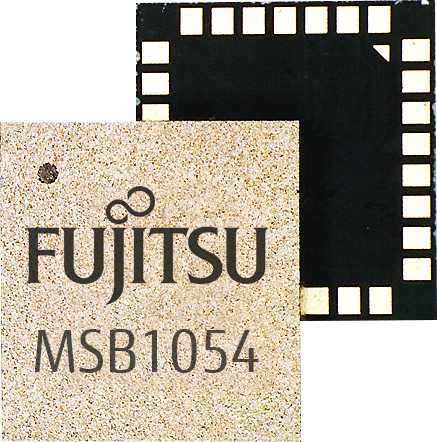
    Fujitsu has introduced a low-power multi-GNSS module for consumer devices and asset tracking. (Graphic: Fujitsu)
    Fujitsu has introduced a low-power multi-GNSS module for consumer devices and asset tracking. (Graphic: Fujitsu)

    The MSB1054 multi-receiver module requires no external components and has built-in Flash memory, meeting needs of smartwatches, fitness trackers, logistics and navigation.

    Fujitsu Electronics Europe (FEEU) is expanding its ultra-low power portfolio to include a multi-receiver GNSS module: the MSB1054. The ability to receive signals from several satellite systems significantly reduces the time to first fix, providing for faster and more accurate positioning, the company said.

    Photo: Fujitsu
    Photo: Fujitsu

    Besides the GNSS device itself, the MSB1054 provides a built-in RF-front end (SAW filter, low-noise amplifier) as well as a temperature compensated crystal oscillator (TCXO), so with the exception of an antenna no external component is required.

    Furthermore, Fujitsu’s GNSS module is equipped with a built-in Flash memory for quick “hot start” to save the navigation data and further optimize performance.

    With its dimensions of 5.8×6.2×1 millimeters and 3.4 mA current in low-power mode (such as for tracking), the MSB1054 is designed for a variety of applications such as smartwatches, fitness trackers and asset tracking, and can navigate indoors or outdoors, the company added.

  • Swift ​​Navigation ​​announces full BeiDou and Galileo support for ​​Piksi Multi

    Swift ​​Navigation ​​announces full BeiDou and Galileo support for ​​Piksi Multi

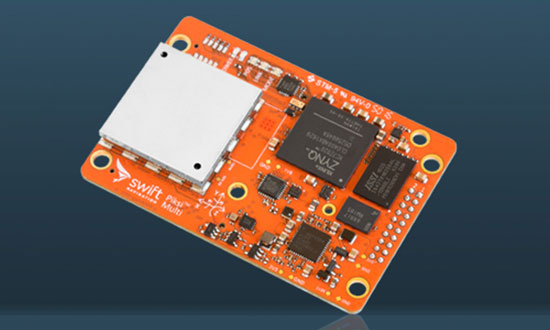
    The Piksi Multi GNSS receiver. (Photo: Swift Navigation)
    The Piksi Multi GNSS receiver. (Photo: Swift Navigation)

    Swift ​​Navigation has upgraded the firmware to ​​its flagship product — the Piksi Multi GNSS ​​receiver. This marks the sixth major release to Piksi Multi since it was launched in February 2017.

    The upgrade is available free of charge to Swift customers. ​​

    The firmware release also enhances Duro, the ruggedized version of the Piksi Multi receiver housed in a military-grade, weatherproof enclosure for long-term outdoor deployments.

    Swift ​​Navigation is a ​​San ​​Francisco-based ​​tech ​​firm building centimeter-accurate ​​GNSS ​​technology and a cloud-based corrections service​​ to ​​power ​​a ​​world ​​of ​​autonomous ​​vehicles, the company said. ​​

    The Duro enclosure. (Photo: Swift Navigation)
    The Duro enclosure. (Photo: Swift Navigation)

    Firmware Release 2.0 for Piksi Multi and Duro supports two additional major satellite constellations — the Chinese constellation (BeiDou B1/B2) which, once completed, will contain 37 satellites and the European Union-based constellation (Galileo E1/E5b), which will eventually consist of 30 satellites.

    Adding to the existing GPS, GLONASS and SBAS constellations already supported by Swift’s GNSS receivers means that users will have more access and visibility from satellite systems across the globe.

    Piksi Multi’s performance will further improve over time as the total of 136 satellites planned for these major constellations are fully deployed.

    The addition of BeiDou and Galileo constellations creates more robust positioning performance in a variety of challenging skyview environments and puts Piksi Multi on par with leading industry receivers costing up to ten times a much.

    With this 2.0 release, Piksi Multi is feature-complete, and Swift’s engineering team has delivered on planned product features on the Piksi Multi Product Summary.

    Firmware ​​Version ​​2.0 ​​Enhanced Receiver Performance Highlights

    MSM Messages 4-7. The ​​new ​​firmware ​​adds support for RTCM 3.2 Multi Signal Messages (MSM). Though Swift devices already support RTCM 3.1, the addition of MSM allows for another flavor of differential corrections supported by BeiDou and Galileo, while also supporting both GPS and GLONASS with MSM new messages. MSM also allows for interoperability with other existing third-party GNSS receivers for all modern signals and constellations.

    Fix Improvements. Firmware 2.0 provides Piksi Multi and Duro improvements on fixing in long base lines in poor atmospheric conditions, making the devices more resilient to Ionospheric effects during periods of high Ionospheric activity.

    Higher Baud Rate Support for UART. New baud rates were added including 460800 and 921600.

    Acquisition Improvements. Enhancements made allow Piksi Multi and Duro to power on to a usable signal more quickly and acquire satellites in start-up mode faster, by several seconds.

    “The growing Swift engineering team has been hard at work developing Piksi Multi to its full potential,” said Samir Kapoor, executive vice president of engineering and product at Swift Navigation. “With support for all modern satellite constellations and multiple performance improvements, Piksi Multi offers unmatched affordability, priced at ten times the savings yet on par with other leading GNSS receivers.”

    “Swift’s vision of making GNSS devices that are centimeter-accurate, with fast RTK convergence times and robust positioning performance all at highly-competitive prices has come to fruition,” Kapoor said. “With Piksi Multi feature complete, we look forward to adding to our line of products with additional offerings later this year.” ​

  • GlobalTop Unveils Tiny Mediatek Multi-GNSS Module

    The GlobalTop Firefly X1 GNSS module.
    The GlobalTop Firefly X1 GNSS module.

    GlobalTop Technology has launched FireFly X1, a tiny Mediatek-based multi-GNSS module. With a compact size of 9.0 x 9.5 x 2.1 millimeters, it’s one of the smallest multi-GNSS modules in the industry, the company said.

    “Compact size and low-power consumption will be the key [unique selling points] for the next generation of M2M Devices,” said Sam Khan, vice CEO of GlobalTop Technology. “After a comprehensive market study, we found that small size was one of the most important factors for companies when it came to GNSS module selection; other key factors included power consumption, TTFF, positioning accuracy, additional interfaces as well as quality and longevity of the module. I am proud to say that FireFly X1 delivers perfectly on all these criteria.”

    According to Khan, the FireFly X1 was designed with “sophisticated engineering and an entirely new set of ultra-compact quality components to reach this miniature size, while adding more features and interfaces at the same time.” It uses the latest MT3333 engine with full support for GPS, QZSS, GLONASS and BeiDou, and is Galileo ready.

    Tracking of up to two constellations simultaneously, and relying on the latest Mediatek firmware, it can provide positioning accuracy of up to 1.8 m CEP. Enabling EASY (self-generated orbit prediction), AGPS (ephermis file injection) and SBAS further enhances position accuracy.

    Despite a smaller size, FireFly X1 incorporates a complete set of high-quality components, including TCXO, RTC Crystal, SMPS, SAW Filter and an additional LNA to provide reliable performance.

    FireFly X1 combines miniature size with flexible multi-interface connectivity options such as SPI and I²C that can simplify a user’s design, and is designed for M2M devices relying on low-cost MCUs that offer limited serial interfaces.

    GlobalTop’s free customization service further expands the capability of FireFly X1 with features such as custom NMEA output sentence, distance calculation, geofencing, magnetic variation and last- position-retention. Advanced users can also customize the basic parameters of the module, including baud rate, update rate, internal logger settings, DGPS mode, 3D Fix, 1 PPS timing, and more.

    All modules are produced at GlobalTop’s in-house ISO 9001:2008 certified manufacturing facility, with 100 percent unit testing and complete quality control, allowing for a consistent annual yield rate of 99.98 percent.

    Samples and Evaluation Kits for FireFly X1 are now available. Please contact us or your local distributor for more information.

  • Trimble’s New OEM Module Combines GNSS with MEMS Inertial

    Trimble’s New OEM Module Combines GNSS with MEMS Inertial

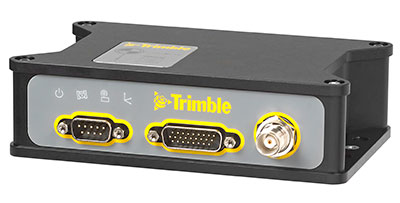
    Trimble BD935-INS module.
    Trimble BD935-INS module.

    Trimble has introduced the Trimble BD935-INS module that features precision GNSS with an integrated 3-D Micro-Electro-Mechanical Systems (MEMS) inertial sensor package. As part of Trimble’s GNSS OEM portfolio, the new compact module augments real-time precise positioning with 3-D orientation.

    The BD935-INS module’s simple connectivity and configuration capabilities allow system integrators and OEMs to easily add GNSS and attitude to specialized or custom hardware solutions, Trimble said in a news release.

    Trimble made the announcement at AUVSI’s Unmanned Systems 2015 Conference and Exhibition.

    “The OEM and system integrator communities demand high performance, reliability and support for their positioning solutions,” said Dale Hermann, general manager of Trimble’s Integrated Technologies Division. “The Trimble BD935-INS delivers the latest GNSS and inertial technology in an easy-to-integrate form factor for demanding conditions and applications such as lightweight robotic or unmanned vehicles. With the BD935-INS module, customers are purchasing a robust navigation solution, extending performance beyond that of a GNSS receiver only.”

    Taking advantage of Trimble’s expertise in both GNSS and inertial technologies, the Trimble BD935-INS module has been designed for applications requiring both RTK and orientation in a compact package. By integrating inertial sensors onto the GNSS module, users can experience more robust performance in a variety of challenging environments, Trimble said.

    The BD935-INS features triple frequency for both GPS and GLONASS constellations, as well as dual frequency for BeiDou and Galileo. The module delivers fast and reliable RTK initialization for 1–2 centimeter positioning. For applications that do not require centimeter accuracy, the BD935-INS integrated GNSS-inertial engine delivers high-accuracy GNSS and DGNSS positions in challenging environments such as urban canyons, tunnels, heavy canopy or other GNSS-denied environments, the company said.

    Trimble also announced the new BX935-INS, which is an environmentally rugged enclosure for OEM or system-level integration. The BX935-INS houses the Trimble BD935-INS module for easy installation and immediate access to high-rate position and attitude data for a variety of applications.

    The Trimble BD935-INS and BX935-INS is expected to be available in the third quarter of 2015 through Trimble’s Integrated Technologies Precision GNSS sales channel.

  • Furuno Receiver Adopted for Use in Parrot Bebop Drone

    Furuno Receiver Adopted for Use in Parrot Bebop Drone

    Parrot's quadcopter Bebop Drone has Furuno inside.
    Parrot’s quadcopter Bebop Drone has Furuno inside.

    Furuno Electric Co.’s latest multi-GNSS receiver module, GN-87, has been adopted for the new quadcopter Bebop Drone, made by Parrot SA. Parrot develops advanced technology wireless products.

    The GN-87 can receive GPS, GLONASS, SBAS, and QZSS concurrently, which significantly improves positioning success rate and robustness against interferences by using different frequency bands, Furuno said.

    Parrot Bebop Drone, equipped with a 14-megapixel fisheye lens camera, takes video and pictures in a 180-degree field. The drone integrates mechanical and digital systems, like shock absorbers that cushion engine vibrations and algorithms for an exclusive 3-axis image stabilization, meaning that the angle of the view remains fixed, without distortion, regardless of the inclination of the drone and movement caused by turbulence. The combination of numerous sensors gives the drone impressive stability and great maneuverability when piloted via Wi-Fi with a smartphone and a tablet, or with its Wi-Fi extender, Parrot Skycontroller.

    Furuno’s GN-87 supports sensing for autonomous flying according to flight routes preset on the map application by user, automatic return to takeoff position, recording flight path data for 3D modeling on Parrot Academy map. According to Parrot, selecting Furuno’s GN-87 multi-GNSS receiver module enabled simple integration with a high-performance GNSS receiver module while guaranteeing high quality and high volume supply availability.

    Below is a video of the Bebop drone in action.

  • BeiDou Precision Nav Will Receive GPS, GLONASS, Galileo Signals

    A senior Chinese government space official on Feb. 5 said precision-navigation user receivers in China will be fitted with chipsets receiving satellite signals from BeiDou, GPS, GLONASS, and Galileo, according to Space News. The move could accelerate the trend among navigation chipset and receiver makers to build gear for multi-constellation reception, and at the same time undermine regional measures to promote one system over others.

    Chen Zhi, deputy chief designer of the China Aerospace Science and Industry Corp., said China’s early deployment of satellite navigation receivers for precision agriculture already feature multi-constellation GPS-Beidou receivers.

    The United States and European Union have signed World Trade Organization agreements for their constellations, GPS and Galileo. China and Russia are not part of the agreements.

  • Out in Front: Yes, We Have No Bananas

    What if the U.S. government stepped in and confiscated all your bananas? Grown foreignly, they lack proper accreditation to enter this country. That they have done so for years is no excuse. They are illegal. Those who consume said bananas engage in unlawful activity. Those who facilitate such consumption — you, in this case, whom we imagine to be a vendor of shakes, smoothies, and fruit juices — are aiding and abetting, colluding, conspiring, something like that.

    Bananas are no more above the law than anyone or anything else. They must fill out the proper forms.

    And the same goes for all you other tropical fruits out there! If you spring from foreign soil, and if you pack exotic flavors unfamiliar and most important, unapproved, in the land of apple pie.

    Today’s bananas are GLONASS signals, and the other fruits, those from other international GNSS. The PNT user community within the United States who use such multi-GNSS signals, other than GPS, technically do so illegally.

    These revelations come via the U.S. Federal Communications Commission (FCC) and the National Telecommunications and Information Administration (NTIA). Some in the industry-user community have been aware of this technicality, and have been patiently awaiting a blanket waiver that would take care of the matter. The waiver will appear, we have been told, any day now.

    We are waiting. Sitting, and waiting. Like good citizens of the republic.

    A spokesperson for the the GPS Innovation Alliance (formerly the U.S. GPS Industry Council) stated that it, too, is very patiently waiting. “The process for securing a waiver of FCC regulations requiring authorization to receive international RNSS satellite signals was identified in an FCC Public Notice released in 2011. This process is initiated by National RNSS System providers, which have the satellite information needed to secure a waiver. GPSIA members remain fully committed to producing  multi-GNSS signal user equipment consistent with U.S. policy, and to working with the FCC and NTIA in considering these requests.”

    To review the FCC/NTIA briefing: “Radio Regulator Spectrum Management Perspectives & Priorities: Emerging Trends in Spectrum-Efficient Technologies,” see www.gps.gov/governance/advisory/meetings/2014-12/.

    The NTIA and FCC perform these functions on our behalf:

    • Allocate spectrum, while promoting new technologies and services.
    • Develop service rules: share spectrum while minimizing interference risks.
    • Assign frequencies, for interference protection among authorized stations.
    • Enforce rules.

    Some of the frequencies used by GLONASS, Galileo, and other foreign PNT systems are not authorized for use in the United States, as they may interfere with other signals. Since they are not authorized or certified, they have no guarantee of protection in the United States. The NTIA and FCC protect users from unauthorized foreign PNT signals.

    The European Union and Galileo have formally asked for a waiver and are completing the necessary paperwork.

    Let’s hope that common sense prevails soon over international gamesmanship, a waiver is granted, and this all goes away. Such a waiver reportedly sits on the desk of the appropriate person. Sits and has sat.

    To our mantra of location, location, location, we must add a corollary.

    Education, education, education.

  • Leica Releases Viva GNSS Unlimited Series

    Leica Releases Viva GNSS Unlimited Series

    Leica_Viva_GS100-W
    Leica Viva GS100

    The Leica Viva GNSS Unlimited Series, available in August, will allow customers to make a safe investment with future-proof GNSS receivers and smart antennas, Leica Geosystems said in announcing the new series. With a flexible design, the Viva GNSS sensors can be upgraded for maximum performance whenever needed.

    The Leica Viva GNSS range fully supports the Chinese BeiDou navigation system. It can even provide BeiDou-only and GLONASS-only high-precision positioning. The unlimited series includes a future upgrade to a GNSS board with more than 500 channels and will serve users’ needs beyond 2020, the company said. Outages of real-time kinematic (RTK) communication links are bridged for up to 10 minutes with SmartLink to increase centimeter position availability in areas where RTK communications links are unstable.

    Leica Viva GS15
    Leica Viva GS15

    The Leica Viva GNSS Unlimited Series can be upgraded to the full range of GNSS signals. The sensors’ future-proof design is equipped for GNSS modernization, providing users with confidence in their investment. The series embraces the future-proof concept by including an upgrade to a GNSS board with more than 500 channels. To fully guarantee future proof GNSS, board exchanges are inevitable because any likely modifications in GNSS signals require a new GNSS ASIC (Application Specific Integrated Circuit).

    Leica SmartTrack technology guarantees accurate signal tracking, while SmartCheck technology evaluates and verifies RTK measurements to ensure reliable results. Both SmartTrack and SmartCheck technologies have been extended to support the BeiDou GNSS. BeiDou reached full operational regional capability in 2012 and has a total of 14 satellites. Leica Viva GNSS also supports features like BeiDou-only and GLONASS-only positioning to accommodate governmental regulations.

    In addition, Leica Geosystems now offers SmartLink, a correction service delivered via satellite for uninterrupted centimeter positioning in areas where RTK communication links are unstable.

    Leica Viva GS14
    Leica Viva GS14

    All Leica Viva GNSS products exceed the toughest environmental specifications, going beyond industrial standards such as IP68. This ensures flawless performance even in the most challenging environments. Applications for the range include construction and field surveying, mining, seismic work in dense forest, desert or mountains, as well as demanding work in extreme heat at 65°C (149 °F) or at extreme latitudes at -30°C (-22 °F). Premium precision and attention to detail ensure that the Leica Viva GNSS products can be trusted throughout the complete product lifetime.

    Leica Viva offers a complete range of unlimited GNSS and TPS solutions made with Swiss precision, combining the highest accuracy with maximum versatility and optimized data flow. Leica Viva solutions include Active Customer Care (ACC) with an expansive organization of knowledgeable professionals to provide valuable support, training and service whenever needed. Combined with innovative services such as online support in the field with Leica Active Assist and an instant data exchange between field and office with Leica Exchange, Leica Viva enables continuous productivity.


    Webinar on Multi-GNSS OEM

    Thursday, June 5
    10 a.m. PT / 1 p.m. ET / 5 p.m. GMT

    GPS World’s upcoming webinar features an expert panel with informed viewpoints from GNSS high-precision and mass-market manufacturing, signal simulation, and alternative PNT providers. Registration is free.

  • GNSS Manufacturing and Purchase Decisions Outlined in Thursday’s Webinar

    GNSS Manufacturing and Purchase Decisions Outlined in Thursday’s Webinar

    The two GLONASS stumbles in May prompted industry leaders to again promote multi-GNSS user equipment and the development of of reliable back-up/redundant positioning, navigation, and timing (PNT) systems to cope with potential drop-outs of space-based services due to jamming, unintentional interference, spoofing, or other disruptions. But neither multi-GNSS nor back-up/alternative PNT fully exists at this time, effectively for all users. When will reliable, robust, consistent, and continuous positioning become a reality?

    The two concepts of multi-GNSS, at both high-precision and mass-market levels, and alternative, non-space-based PNT, will come into widespread availability sometime over the next five to 15 years — that much can be assumed with a degree of confidence. But more precision as to when is completely lacking, and the uncertainty affects product design and life-cycles, and user decisions on equipment purchase.

    Should manufacturers and users rely on whatever technology we currently possess until the perfect system comes available, or should they continuously upgrade at each iterative step along the way?

    I will moderate an expert panel discussion this week, featuring informed viewpoints from GNSS high-precision and mass-market manufacturing, signal simulation, and alternative PNT providers. Visit env-gpsworld-integration.kinsta.cloud/webinars to register for this free, insightful presentation. The webinar takes place Thursday, June 5, at 10 a.m. Pacific time / 1 p.m. Eastern U.S. Time / 5 p.m. Greenwich Mean Time.

    Speakers

    Host/Moderator:

    Alan Cameron

    Alan Cameron, group publisher, GPS World and Geospatial Solutions

    Cameron was recently promoted to publisher of two North Coast Media brands. He was previously editor-in-chief and publisher of GPS World magazine, where he has worked since 2000. He also writes the monthly GNSS System Design & Test e-mail newsletter and the Wide Awake blog, both of which can be found on this site.

    s_aultSteve Ault, Product Manager, NavCom Technologies

    Steve Ault has 13 years of experience in the GNSS market, having previously worked for Magnavox and Leica in the 1990s before joining NavCom in late 2006. He has also worked on a wide variety of radio-based technologies dating back to the early 1980s, which include cellular phone infrastructure, VSAT systems, and military command and control communications systems. Steve holds a B.S. in Business Management and is a six-year veteran out of the U.S. Air Force. He is currently the product manager for NavCom Technologies and oversees all of NavCom’s marketing activities.

    jpottleJohn Pottle, Fellow, Institute of Engineering Technology and Royal Institute of Navigation

    John Pottle is marketing director at Spirent’s Positioning Technology division, based in the UK. Spirent leads the world in enabling its customers to build robust, resilient, positioning, navigation and critical infrastructure systems. Before joining Spirent, Mr. Pottle spent 12 years in satellite communications and broadcasting, first with BT International in London and later with Intelsat in the USA. Mr. Pottle holds a Bachelor of Science degree in Communication Engineering and an MBA. He is a Fellow of the Institution of Engineering Technology and a Fellow of the Royal Institute of Navigation.

    p_mattosPhilip Mattos is an R&D scientist for several GNSS companies.

    Philip Mattos was the chief architect of STMicroelectronics GPS/GNSS chipsets since a software receiver in the 1980s and dedicated silicon from the early ’90s, adding Galileo, GLONASS and BeiDou. He is now a consultant to chip manufacturers and agencies. He holds Masters degrees in electrical engineering from Cambridge and telecomms and computer science from the University of Essex, was awarded an external Ph.D. on his GPS work from Bristol University, where he is a Research Fellow, and is a visiting professor at University of Westminster. He has contributed to the design of the Galileo system for many years, and continues to advise on its future evolution.

    p_benshoofPaul Benshoof, Global Business Development Manager, Locata Corporation

    Paul Benshoof is currently the Global Business Development Manager of Locata Corporation, a company that has invented terrestrial positioning networks which function as local ground-based replicas of GPS, fully capable of providing accurate PNT in user-defined regions. He spent the last 22 years working in GPS with duties that include procuring military GPS receivers, developing assets to support navigation warfare advanced technology demonstrations, supervising international test programs for NATO and allied forces, coordinating guidance and navigation test & evaluation infrastructure improvement programs, and directing GPS Test Center of Expertise.

    Register for the webinar today.