Tag: OEM

  • Rohde & Schwarz Offers Simultaneous Time Domain and Spectrum Analysis

    Rohde & Schwarz has added the R&S RTM-K18 spectrum analysis and spectrogram option to its R&S RTM oscilloscope family, making the R&S RTM the only oscilloscope in its class that can analyze the time domain while simultaneously analyzing the spectrum, logic and serial protocol. Interactions such as those that occur in electronic devices with RF components are quickly analyzed in a single measurement.

    Time and spectrum analyses can be configured completely independently of one another. This means that users can simultaneously analyze signal details that differ in time and frequency, with the optimum settings for each. Separate implementation of the signal paths makes this possible. Like a spectrum analyzer, important parameters such as center frequency and resolution bandwidth can be specifically configured to match each measurement task. The hardware-implemented digital downconverter (DDC) reduces the spectrum to the components relevant for analysis. As a result, the R&S RTM offers a fast, reactive analysis of embedded designs.

    Additional displays for min. hold, max. hold and average, as well as markers for automatic peak value searches, support the user during spectrum analysis. Changes in the spectrum over time or sporadic unwanted signals are immediately visible in the spectrogram display. The amplitudes versus frequency and time are color coded.

    With the R&S RTM-K15 history and segmented memory option, users can load all acquisition components from the 460 MSa deep memory and analyze them with the R&S RTM measurement functions.

    The R&S RTM portfolio, which already consists of models with 200 MHz, 350 MHz and 500 MHz bandwidth, now includes two-channel and four-channel models with 1-GHz bandwidth. The new models exhibit the same analog characteristics, offering true 1mV/div at the full bandwidth and full ADC resolution with exceedingly low 270 µV noise.
  • When in Rome…Check Galileo’s Performance

    Source: GPS world staff
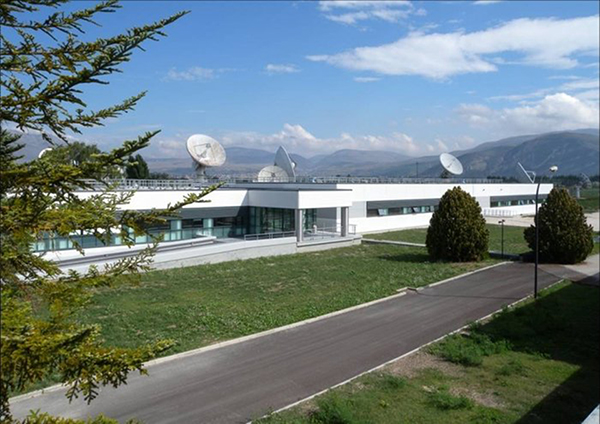
    Galileo’s Ground Mission Segment in the Fucino Control Centre in Italy oversees Galileo navigation services and satellite payload operations.

    News from the European Space Agency

    In Roman times the milestone was the central method of navigation, with all distances fixed from a ‘golden milestone’ in the imperial capital. Today, navigation satellites have become the modern equivalent of milestones — but Rome still has a role to play.

    Source: GPS world staff
    Inside the Galileo System Evaluation Equipment facility, based at Thales Alenia Space in Rome.

    The Thales Alenia Space plant in the eastern suburbs of Rome is home to the Galileo System Evaluation Equipment facility, which provides a troubleshooting platform for the Galileo ground network and an assessment of the performance of Europe’s under-construction satnav constellation.

    Based in the main plant building, it is equipped with a secure data link to the Galileo Control Centre in Fucino, 90 km away, which oversees Galileo navigation services. This link gives it direct access to all the data gathered by the global ground segment, from the sensor station data to the navigation messages uplinked to the satellites, including satellite orbits and onboard clock corrections.

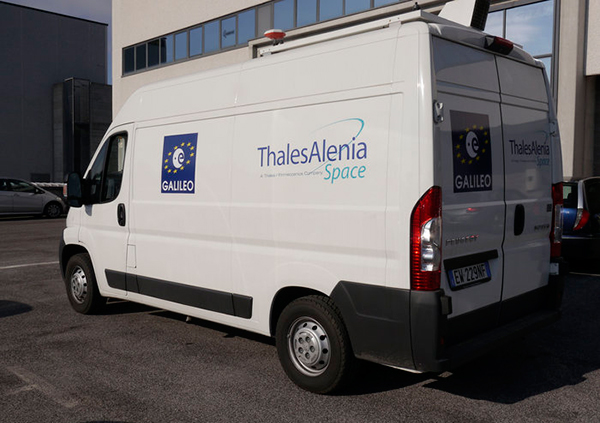
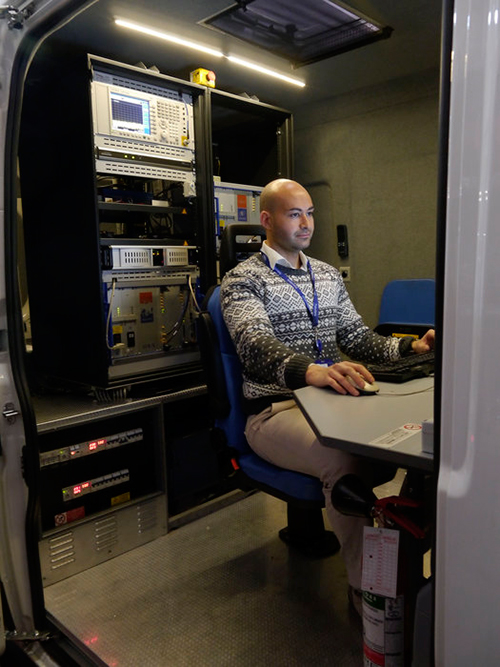
    The facility can then apply separate software to these inputs, rather than that used in the Galileo Mission Segment, to provide a “second opinion” on Galileo performance. In addition, a van measures Galileo performance in the field, gathering data across a range of vehicle and rural environments.

    Source: GPS world staff
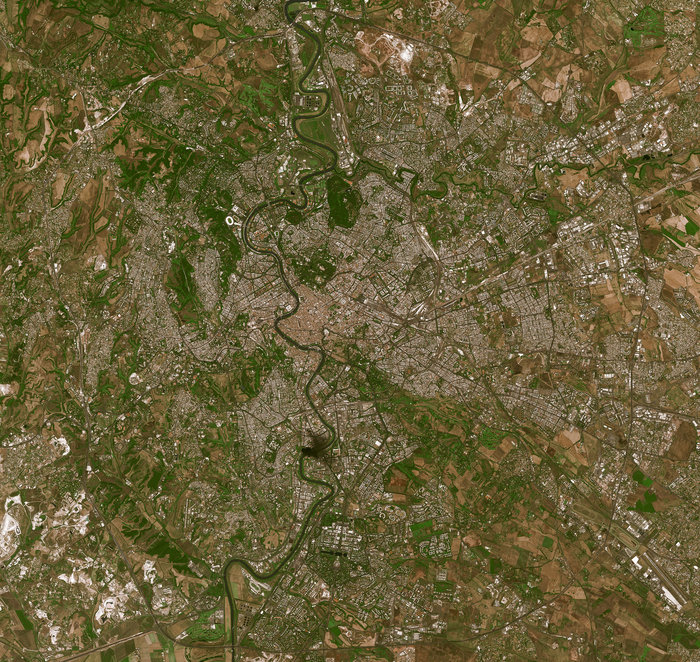
    The River Tiber flows through the historic centre of Rome, seen in high-resolution detail by France’s Spot-5 satellite.

    “The facility is being routinely operated by the Thales Alenia Space team,” explains Enrico Spinelli, overseeing it on the ESA side. “It is being upgraded to automatically process the data received from the Galileo control centres, perform troubleshooting analyses and provide inputs for the monthly Early Service Key Performance Indicators report. These reports are provided in turn to the European Commission’s European Global Navigation Satellite System Agency, as part of Galileo’s Early Services preparatory activities.”

    The facility made the Rome area one of the two main centres of activity during Galileo’s In-Orbit Validation phase, along with the ESA’s ESTEC technical centre in Noordwijk, the Netherlands. In-Orbit Validation was the extensive system testing performed on the ground during late 2012 and early 2013 to ensure the embryonic four-satellite system was performing as designed, including Galileo’s historic first position fix of longitude, latitude and altitude on March 12, 2013.

    Source: GPS world staff
    The Galileo System Evaluation Equipment facility hosted at Thales Alenia Space in Rome is equipped with a van measures Galileo performance in the field, gathering data across a range of vehicle and rural environments.

    “The facility was developed for that phase, but has performed so well that it was decided to keep it in operation during succeeding phases,” adds Enrico. “Along with its intended use in monthly reporting, its direct access and processing of Galileo Control Centre data will make it a powerful tool for system troubleshooting for both Galileo’s upcoming services. It can give us independent analyses of factors such as the availability and quality of data from Galileo Sensor Stations and the Orbit Determination and Time Synchronisation process which keeps the overall Galileo system in sync.

    “It can also allow us to check the accuracy of software models used to compensate for ionospheric delay, the accuracy of almanacs charting satellite orbital positions and to analyze the efficiency of the ground-to-satellite contact plans for the uplink of the navigation message which the satellites rebroadcast, even to verify the navigation message is being broadcast in its correct structure.”

    The improved facility should help to ensure the timely and reliable introduction of initial Galileo services, planned in 2016.

  • Third, Fourth Galileo FOC Satellites Confirmed Fit for Soyuz Launch

    Source: GPS world staff
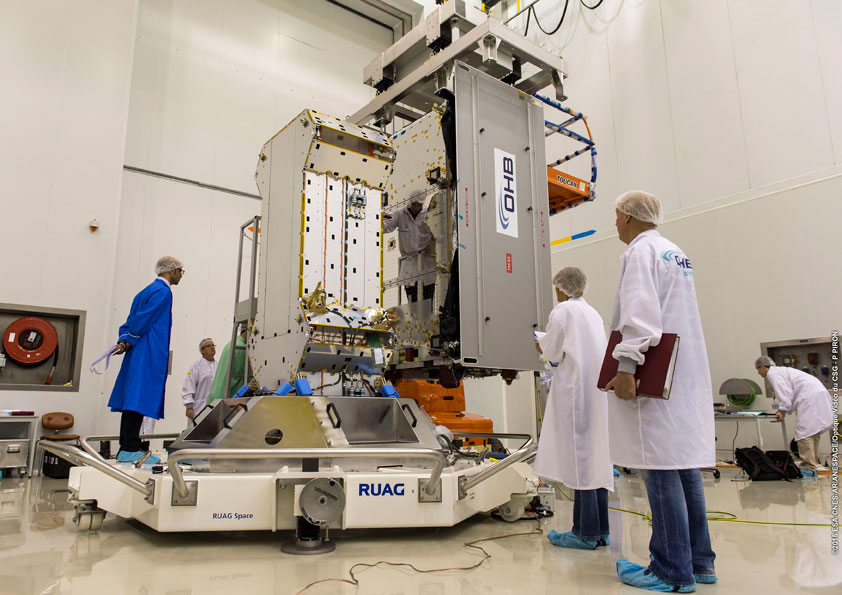
    The Flight Model #3 (FM3) spacecraft is moved for positioning on the payload dispenser. (Photo credit: Arianspace)

    The third and fourth Galileo Full Operational Capability (FOC) satellites are a confirmed “fit” for their Arianespace Soyuz launch March 27, having made initial contact with the mission’s dual-payload dispenser in French Guiana, according to Arianespace.

    The fit check was completed over a two-day period inside the Spaceport’s S1A payload preparation building. The two satellites were installed separately, with the Flight Model #3 (FM3) spacecraft integrated on — and subsequently removed from — the dispenser on Feb. 9. Flight Model #4 (FM4) underwent the same process the following day.

    The payload dispenser for Galileo was developed by RUAG Space Sweden for Arianespace, and carries one satellite on each side. It will deploy the spacecraft during the Soyuz launch by firing a pyrotechnic separation system to release them in opposite directions at the orbital insertion point.

    Source: GPS world staff
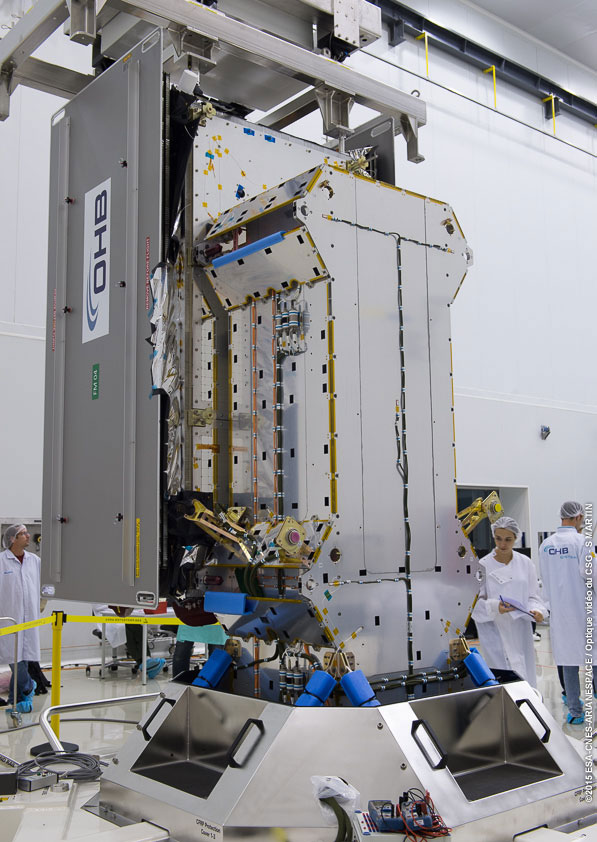
    Flight Model #4 (FM4) after its integration. (Photo credit: Arianspace)

    Final integration on the dispenser is to be performed during upcoming processing at the spaceport, and will be followed by the completed unit’s installation on Soyuz.

    The March 27 mission — designated Flight VS11 in Arianespace’s numbering system — will be the company’s fourth launch carrying spacecraft for the Galileo constellation. FM3 and FM4 were built by OHB System, with Surrey Satellite Technology Ltd. supplying their navigation payloads.

    The Galileo network’s complete operational and ground infrastructure will be deployed during the Full Operational Capability phase, which is managed and funded by the European Commission. The European Space Agency has been delegated as the design and procurement agent on the commission’s behalf.

  • OxTS Launches Lightweight xNAV550 GNSS/INS

    OxTS Launches Lightweight xNAV550 GNSS/INS

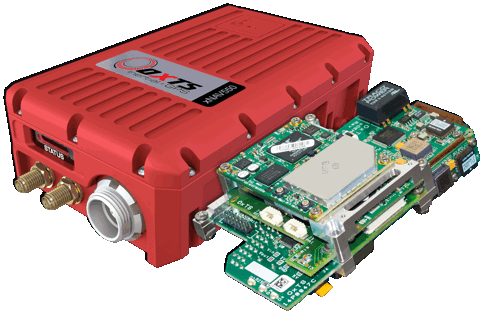
    OxTS now offers the xNAV550 (left), and xOEM550.
    OxTS now offers the xNAV550 (left), and xOEM550.

    OxTS has released the xNAV550, its new compact and lightweight GNSS-aided inertial navigation system, along with an OEM board set version, the xOEM550.

    xNAV550. The xNAV550 is the latest model in the xNAV family and the first to offer a position accuracy of 2 cm, yet remains a compact GNSS-aided inertial navigation system at 425 grams. Suitable for all applications where size and weight as well as performance matter, it is designed for use on UAVs and in other weight-constrained applications.

    Featuring dual GNSS receivers and a custom-built inertial measurement unit, the xNAV550 constantly monitors position, orientation and velocity with high accuracy in real-time. Four gigabytes of on-board storage is available, automatically logging data for an added layer of protection. Data can be downloaded from the system and post-processed using OxTS’s advanced software, which is included as standard at no extra cost.

    Integrating the xNAV550 with cameras, laser scanners or other sensor arrays is easy using the NMEA outputs, OxTS said, with 1-PPS and event input triggers for synchronization and time stamping. These features and the convenience of the one-box solution ensure that the xNAV550 make it quick and easy to acquire accurate data required for direct georeferencing, the company said.

    xOEM550. The xOEM550 is designed for system integrators looking for a high-performance INS to build into a complete scanning and georeferencing system. Weighing 165 grams, it won’t add bulk to a system, and the free and distributable OxTS post-processing software enables system integrators to offer a turnkey solution at a competitive price, the company said.

    OxTS will be exhibiting at ILMF 2015 in Denver, Colo., Feb. 23-25. Stop by Booth #30 to take a look at the xNAV and xOEM systems or contact [email protected] for more information.

  • DoT Hosts Third Workshop on GPS Adjacent Band Compatibility

    The U.S. Department of Transportation will host a third workshop to continue discussions of the GPS Adjacent Band Compatibility Assessment on March 12.

    The workshop will focus on the following topics:

    1. Identification of GPS and GNSS receivers to be considered for testing that are representative of the current categories of user applications
    2. Discussion of a GPS/GNSS receiver test plan.

    Anyone interested in presenting on either or both of the above topics should contact Stephen Mackey by March 2.

    The workshop will be held 8:30 a.m.-3:30 p.m. PDT at Aerospace Corporation, 2310 E. El Segundo Blvd., El Segundo, California.

    For more information, see the full Federal Register notice.

  • GATE Facility Recertified as Galileo Test Bed

    The German Galileo test and development infrastructure GATE has been recertified to serve as a Galileo open‐air test laboratory, for receiver integrity testing (RAIM) for safety‐of‐life (SoL) applications, and for Galileo SIS ICD conformance of signal characteristics and signal quality.

    The GATE facility, in Berchtesgaden, is operated by IFEN GmbH. Certification was conducted by TÜV SÜD, an international service corporation focusing on consulting, testing, certification and training.

    GATE consists of eight transmitting stations that emit Galileo signals in the GATE test area in Berchtesgaden, as well as two monitoring stations that receive and process these signals.

    For application tests, it is essential for GATE to provide constant Galileo specifications for tests, including position accuracy, signal spectrum and navigation data. This is necessary for both test types: tests with the eight “GATE satellites” only and tests with simultaneously usage of the already-existing Galileo satellites in orbit.

    The compliance to the specification was verified by the company NavCert GmbH from Braunschweig, Germany, in a recertification of the GATE test bed. Compared to a full certification, taking place every three years, a recertification only verifies the compliance to the specification by the use of random inspections though tests in GATE.

    The recertification also includes an audit of the operation processes of the operating company IFEN GmbH. Here, the implementation and adherence to process procedures for GATE operation were verified. This includes questions such as whether a sufficiently technical skilled team is available for operating GATE, if the performed application tests are documented in a reproducible way, and how the GATE team handles non‐conformances to the specification and improvements to the system.

    With finalization of the recertification work, the GATE certificate was extended by TÜV SÜD to January 2016. Because of this, GATE customers can rely on the independent verification of the GATE test and development environment for upcoming testing activities, IFEN said.

    As an add‐on, customers of IFEN’s NavX‐NCS GNSS simulator benefit from the recertification by obtaining a confirmation from an independent organization (TÜV Süd), reassuring the functionality of GPS and Galileo signal characteristics and signal quality as per SIS ICD, IFEN said.

  • Russia, China Sign Satellite Navigation Agreement

    012015_china3

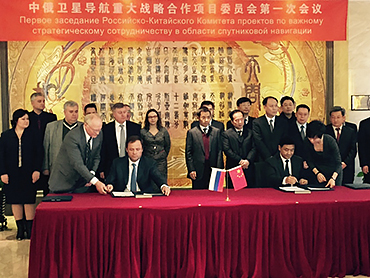
    Russia and China have signed a cooperation agreement on satellite navigation, a Russian Space Agency spokesperson told RIA Novosti on Tuesday.

    Roscosmos chief Igor Komarov met with Xu Dazhe, the leader of China’s National Space Administration, on an official visit in Beijing.

    “The first provision to set up a committee and a protocol were signed during the first working session. Igor Komarov and Xu Dazhe discussed issues of bilateral cooperation in the field of electronic components for rocket construction and building rocket engines,” the spokesperson said.

    A Russian-Chinese committee on satellite navigation was established in October 2014 at the meeting between Russia’s Deputy Prime Minister Dmitry Rogozin and his Chinese counterpart, Wang Yang.

    In November, China North Industries Corporation (NORINCO) and the Russian GLONASS nonprofit partnership agreed to establish a joint venture to promote worldwide services based on GLONASS and BeiDou.

    Russia and China also recently completed joint reconnaissance for the placement of GLONASS differential correction and monitoring stations in the Chinese cities of Urumqi and Changchun. Each country is expected to accommodate three such facilities.
  • Raytheon GPS Ground Program Passes Review

    The ground control system (OCX) that Raytheon is developing for the next-generation GPS program has passed a Pentagon review, reports Reuters. The program will be monitored to ensure it stays on track, a senior Air Force official said on Feb. 6 as reported by the news service.

    Major General Roger Teague, director of space programs for the Air Force acquisition chief, said a review by chief arms buyer Frank Kendall went well, but program officials and the contractor got “tough marching orders” to stick to schedule and cost targets.

    Raytheon’s program manager Matt Gilligan said the review provided the company with “clear direction, the best technology, and appropriate resources to…deliver OCX on a schedule that meets GPS enterprise needs.”

    Kendall had ordered the review after an Air Force restructuring that increased the cost of the program by 80 percent to $1.6 billion.

  • Delta Rocket Moves to Launchpad for March GPS Launch

    The Delta 4 rocket that will launch the next GPS satellite has been rolled out to the launch pad, reports Spaceflight Now. The satellite itself, GPS IIF-9, will be attached to the rocket in March. The United Launch Alliance vehicle is scheduled for launch March 25.

    The launch will be the 371st Delta rocket since 1960 and the 29th Delta 4 since 2002. It also marks the 69th GPS satellite launch and the 55th to use a Delta rocket.

  • BeiDou Precision Nav Will Receive GPS, GLONASS, Galileo Signals

    A senior Chinese government space official on Feb. 5 said precision-navigation user receivers in China will be fitted with chipsets receiving satellite signals from BeiDou, GPS, GLONASS, and Galileo, according to Space News. The move could accelerate the trend among navigation chipset and receiver makers to build gear for multi-constellation reception, and at the same time undermine regional measures to promote one system over others.

    Chen Zhi, deputy chief designer of the China Aerospace Science and Industry Corp., said China’s early deployment of satellite navigation receivers for precision agriculture already feature multi-constellation GPS-Beidou receivers.

    The United States and European Union have signed World Trade Organization agreements for their constellations, GPS and Galileo. China and Russia are not part of the agreements.

  • Judge Rules Against LightSquared in Claims Against GPS Firms

    A U.S. judge dismissed the bulk of two lawsuits by LightSquared and equity owner Harbinger Capital Partners, reports Reuters. The suits accused Trimble, Garmin and Deere & Co. of misleading them about interference concerns and hastening the company’s fall into bankruptcy.

    In an opinion issued Feb. 5 in Manhattan federal court, Judge Richard Berman threw out Harbinger’s lawsuit, and denied nine of 11 claims by LightSquared.

    LightSquared has been in bankruptcy since 2012, when the Federal Communications Commission revoked its license to build a planned wireless network over concerns it could interfere with GPS.

    According to Reuters:

    The lawsuits alleged that Deere, Garmin International , Trimble Navigation Ltd, and a GPS industry group led LightSquared to believe the planned network would not pose an interference risk. It wasn’t until LightSquared had pumped $4 billion into the project, the plaintiffs argued, that the GPS industry voiced their concerns.

    Judge Berman dismissed many claims from both plaintiffs, including breach of contract and civil conspiracy, leaving alive only LightSquared’s claims for negligent misrepresentation and constructive fraud.

    Because the judge did not dismiss all claims, LightSquared could still be able to probe the GPS companies’ books and records during discovery.

  • Latest Galileo Satellites Reach Launch Site

    Latest Galileo Satellites Reach Launch Site

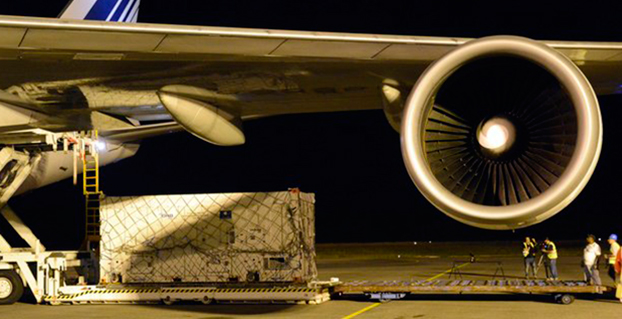
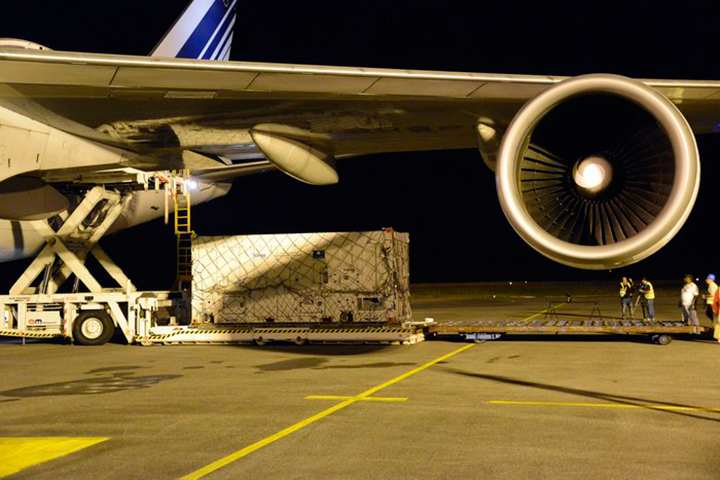
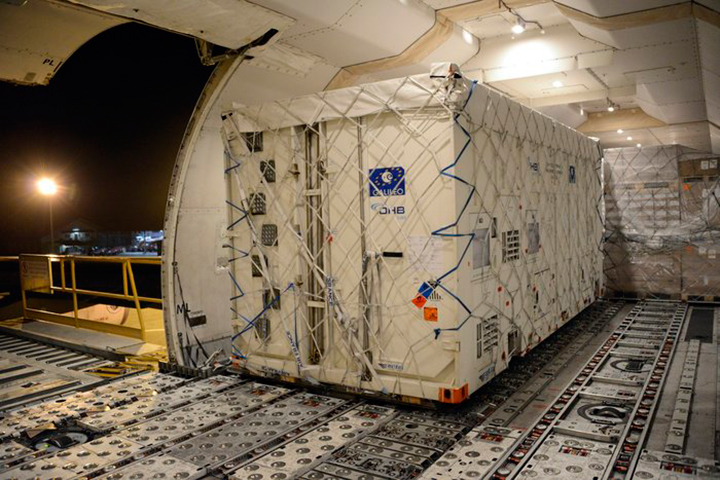
    One of two Galileo satellites, safely in its protective container, is unloaded from an Air France Boeing 747 at Cayenne–Félix Eboué Airport in French Guiana.

    News from the European Space Agency

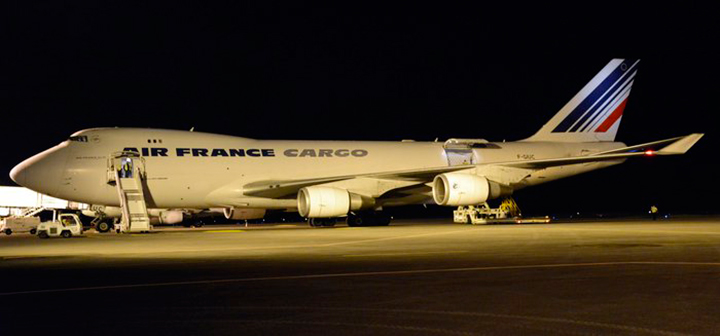
    Another two Galileo satellites have touched down in French Guiana ready to take their place in Europe’s satellite navigation constellation. The pair, safely cocooned inside their air-conditioned containers inside an Air France Boeing 747, landed at Cayenne–Félix Eboué Airport yesterday.

    They were then taken by lorry to be installed in the cleanroom surroundings of Europe’s Spaceport to begin final preparations for launch.

    The seventh and eighth Galileo satellites will be launched together by Soyuz in late March, resuming the interrupted building of the satnav constellation. The previous Soyuz launch saw the satellites released into the wrong orbit.

    Galileo satellite in its protective air-conditioned container, about to be unloaded from the Air France cargo plane.

    The reason for the malfunction has been pinned down to an installation error in the Fregat upper stage that delivers the satellites into their final orbits. A hydrazine fuel line was bracketed next to a liquid helium line, freezing the hydrazine and resulting in Fregat’s faulty orientation.

    Arrival in French Guiana is the final stop in a complex production and test line that snakes back across Europe. The satellites are built by OHB in Bremen, Germany, with their navigation payloads coming from Surrey Satellite Technology Ltd in Guildford, UK, both companies being supplied in turn by subcontractors across much of the continent.

    The complete satellites are then delivered to ESA’s ESTEC technical centre in Noordwijk, the Netherlands, home to Europe’s largest satellite test centre.

    There, a series of tests reproduces every aspect of the space environment, including acoustic noise and thermal vacuum simulations, to ensure their readiness for space.

    Each satellite is also plugged into the entire worldwide Galileo ground network for days on end to check it works as planned.

    Their testing ended with a clean bill of health and they received clearance on Tuesday to travel to French Guiana. Loaded onto lorries on Wednesday, they arrived at Paris Charles de Gaulle Airport later that day, taking off for French Guiana on Thursday.

    These two satellites are planned to be launched during last week of March, following the European Commission’s endorsement of the resumption of Galileo launches.

    The seventh and eighth Galileo satellites were flown on this Air France Boeing 747 from Paris Charles de Gaulle Airport in France to Cayenne–Félix Eboué Airport in French Guiana on Feb. 5