Tag: oil and gas

  • LandWorks Adds Linear Project Routing to Online Property Mapping Service

    LandWorks Inc., a developer of land-management solutions, has added linear project mapping capabilities to its online Web AutoMapper service, which converts land legal descriptions into GIS-ready map polygons. Web AutoMapper clients can now download digital parcel polygons with ownership information for every property crossed by a linear right-of-way project.

    The linear mapping capability in Web AutoMapper facilitates the planning of any linear infrastructure development project – pipelines by energy companies, electric transmission lines by utilities, roads and highways by departments of transportation, and buried fiber networks by telecommunication companies.

    “Web AutoMapper makes it faster and less expensive to map a proposed right-of-way or corridor project,” said LandWorks President Jerry Bramwell. “In minutes, project planners can download all of the digital parcel and land ownership information needed to select the safest and least costly route.”

    To use the service, the client logs onto Web AutoMapper and creates an account. The user then uploads a shapefile of the proposed linear project route from their GIS or mapping software. Web AutoMapper prompts them to enter start and end points for the route. Customers are also given the option of having their route mapped with or without a buffer on either side.

    Within minutes, Web AutoMapper overlays the route onto the nation-wide tax parcel grid developed by Digital Map Products of Irvine, California. Web AutoMapper then provides an onscreen map showing every property crossed by the route or within the user-selected buffer around the route. Paying with credit card or a customer account, the customer downloads the Digital Map Products parcels for only those properties affected by the proposed route. The parcel polygons are delivered in either shapefiles or as a file geodatabase for seamless ingest into the GIS or other mapping software.

    Also included in the Web AutoMapper deliverable is a Line List Report identifying every property crossing in order from the starting to end points of the proposed route. Both the parcel polygons and Line List Report contain important attributes for each property, such as landowner and address details, obtained from county tax records.

    “The linear mapping capability in Web AutoMapper serves as an easy-to-use cost-estimating tool for major infrastructure development projects,” said Bramwell. “The planner receives all of the land ownership information that will be needed to acquire rights-of-way for the project.”

    In many cases, the ownership information in the parcel file will help planners identify certain types of properties — such as hospitals or schools — where rights-of-way may be impractical or simply too costly to acquire, said Bramwell. This allows the planners to look for less expensive alternatives while the project is still in its early phases.

    Some linear projects require the developer to notify land owners within a certain distance of the proposed route. The buffering option in Web AutoMapper enables the planners to easily obtain land ownership information for properties within the regulated proximity to the line.

    LandWorks introduced Web AutoMapper in 2013 as a fast and easy method of processing many types of standard property descriptions and converting them into digital map polygons. The cloud-based application is used extensively by organizations that must manage large tracts of land and keep property records up to date for activities related to oil and gas, renewable energy, mining, banking, utility, pipeline, state/local government, transportation, telecommunications, water and real estate sectors.
  • CartoPac 5.0 Offers Workflow Manager, Windows 8 Optimization

    CartoPac International Inc. has announced a major new release of the CartoPac Mobile Platform. CartoPac 5.0 extends the mobile platform with support for Windows 8 and introduces the CartoPac Workflow Manager, which provides a structured process to manage the use of geospatial data across the enterprise.

    CartoPac will demonstrate the applications and technologies of Version 5.0 in the free CartoPac Mobility Webinar Series beginning on September 30.

    The CartoPac Platform is a configurable suite of field and office tools designed to maximize the productivity of crews as they digitally map, inventory and inspect critical assets using GPS-enabled mobile devices. Seamlessly integrating with the Esri ArcGIS Server, CartoPac is used extensively by oil and gas companies, pipeline operators, electric utilities, state/local governments and environmental engineering firms to populate the enterprise GIS and asset-management systems with captured infrastructure information.

    The new CartoPac Workflow Manager (CWM) in CartoPac 5.0 provides organizations with a structured workflow to view, edit, validate and approve asset data as it moves from the field back into the enterprise. CWM ensures that individuals responsible for data are notified as it comes into the organization so they can incorporate the data into systems related to work-order fulfillment, risk analysis, integrity modeling and other asset management processes.

    CartoPac developed CWM for the management of heavily regulated assets in the field, such as gas pipelines and electric distribution infrastructure. A module within the CartoPac Server, the CWM extension creates an audit trail of all the edits and modifications made to the data sets that represent the monitoring and maintenance of real world assets in the field.

    “CartoPac Workflow Manager fills the gap between data collection and enterprise asset management systems to enable organizations to maximize the value of their data,” said CartoPac CIO Scott Crouch. “CWM enables organizations to show regulators they have a structured process for tracking and responding to the conditions of their critical assets and has proven to be key component for assisting companies with their regulatory compliance and integrity management programs.”

    Further expanding the capabilities of the CartoPac mobile components, version 5.0 has been optimized for the Windows 8 operating system running on standard GPS-enabled laptop computers and tablet devices. This migration means that crews can use CartoPac to collect and manage asset data in the field on the same hardware devices they will use back in the office to run their daily business applications.

    “The attractive cost, integration with GPS and expanded performance of Windows 8 tablets and laptops will enable organizations to put more personnel into the field, ensuring that vital infrastructure is mapped, inventoried and properly managed,” said Crouch “Laptop/tablet-equipped maintenance personnel in the field will now be able to run CartoPac solutions on the hardware they already use for tracking repairs and closing work orders.”

    To demonstrate the advantages of enterprise asset management, CartoPac has launched the CartoPac Mobility Webinar Series, which will feature applications by electric and gas utilities and highlight new mobile technologies. The first webinar, “Applying New Mobile Technologies to Electric Utility Inspections,” will be presented with EDM International Inc., a Colorado electric utility services company.

    The free “Applying New Mobile Technologies to Electric Utility Inspections” webinar will be held on September 30, 2014, at 4:00 pm Eastern Time. To register, click here.

  • OmniEarth Completes Acquisition of IRISmaps

    On August 29, OmniEarth completed its acquisition of IRISmaps, Inc., in a stock-for-stock transaction. IRIS provides customized, cloud-based solutions that integrate Earth imagery with geospatial and business data to enable organizations to access information, analyze it, and take action to solve business problems quickly and effectively. The combined companies will be led by OmniEarth CEO, Lars Dyrud.

    “We’re very excited about bringing IRIS into our team. The capabilities they bring will enable OmniEarth to deliver our value-added data stream to subscribers as soon as our constellation goes live,” Dyrud said. “IRIS also brings a portfolio of off-the-shelf products that provide the customer focused analytics platform that is crucial for turning data into insight.”

    IRIS’ portfolio includes asset and environmental monitoring products that have been deployed at major agriculture and energy companies, and in the public sector. Dyrud sees this as a natural fit for OmniEarth, which is focusing its initial business offerings on underserved markets like agriculture and energy.

    With the IRIS acquisition, OmniEarth will be well-positioned to deliver solutions that will inform all phases of energy exploration and development, Dyrud said. Specifically, the company plans to continue IRIS’ energy portfolio products, such as high-consequence area monitoring and thermal steam cycle analysis, as well as establish new ones that combine the talents of the IRIS software developers with rich data fusion and analytics enabled by the planned OmniEarth constellation.

  • PeopleNet Launches Fleet Solutions for Energy Services Suite


    PeopleNet, a Trimble company and provider of fleet mobility technology that optimizes performance and decision-making management, has launched a mapping and navigation solution for its Energy Services suite, serving U.S. fleets in the upstream and midstream sectors.

    “Our Energy Services suite capitalizes on our proven fleet mobility solutions that increase efficiency, safety and compliance for all oilfield service segments, including producers, oilfield construction and well service companies, as well as haulers of fluid and crude oil. In addition, we’re leveraging our parent and sister companies’ industry-standard lone-worker, mapping and navigation technologies to fast-track development of new services to continue improving operations for Energy Services fleets,” said David Buhl, leader of PeopleNet’s dedicated Energy Services Division.

    PeopleNet’s new Energy Services mapping and navigation solutions are based on exclusive, detailed maps of private and leased oilfield roads that facilitate vehicle navigation to and from well sites, coordination of disparate workforces to promote efficiency, location monitoring of equipment to ensure vehicles are on the correct route for least-cost routing. The Oil and Gas Map Portal is a web-based application used by back-office dispatch personnel to manage the navigation needs of vehicles and includes reporting, dashboards, and scorecards that help manage compliance with producer-landowner road-usage agreements.

    CoPilot Oil and Gas Navigation is an in-cab application that uses oil and gas field mapping for providing turn-by-turn directions to the driver to enable on-time arrivals and scheduling. Location data, including wells, is installed onto the in-cab device and is accessible in the points of interest menu. When a location is selected, the application provides turn-by-turn directions to the driver.

    A growing number of energy services fleets are using PeopleNet technology to promote on-time schedules, enhance service levels and improve safety/compliance, including Gibson,  Missouri Basin Well Service, Nuverra Environmental Solutions, Rockwater, and Tankstar USA.

    These new services are based on reliable two-way messaging and GPS, supported by tri-mode communications (cellular, satellite and Wi-Fi). They are being added to PeopleNet’s current Energy Services offerings, which include: Crude Workflow for improving driver efficiency; eDriverLogs HOS application with oil field regulations; Speed Gauge speed monitoring; and Automated Fuel Tax reporting for eliminating manual trip sheets.

  • Rugged Tablet for Mobile Professionals

    Rugged Tablet for Mobile Professionals

    T7Q-1(B)
    Photo: GammaTech

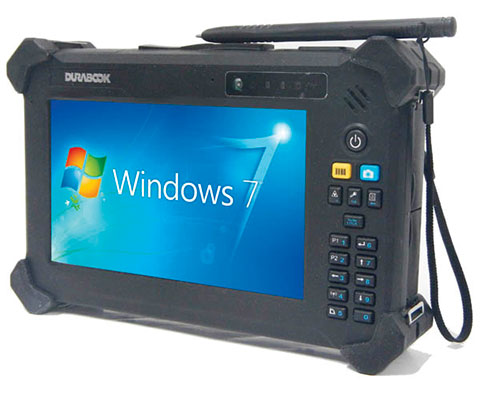
    The DuraBook T7Q by GammaTech is a fully rugged Windows 7 Professional tablet PC designed to meet the demands of mobile professionals in the transportation, field services, utilities, and oil and gas industries. Designed with a magnesium-alloy case, the T7Q DuraBook Rugged Tablet is compliant with MIL-STD 810G and IP65, able to withstand vigorous bumps, knocks and sudden shock under rough handling or on-the-move, resisting dust and water.

    It has a seven-inch thin-film-transistor (TFT) LCD display with resistive touchscreen panel and LED backlighting, an m-SATA SSD drive and Intel Atom Processor, and an integrated 5.0-megapixel camera at the back of the unit. Options include a barcode scanner, RFID reader, GPS receiver, and I/O ports such as USB, RS-232, and RJ-45.

  • Spatial Energy, Geoimage Partner for Australian Energy Industry

    Spatial Energy has signed a partnership agreement with Geoimage, headquartered in Brisbane, Australia. According to Spatial Energy, the partnership will build capacity and expand access to greater spatial content within the oil and gas industry in Australasia, enhancing the capabilities of Australian customers who operate nationally and globally and allowing them to derive more value from their existing and new geospatial datasets.

    Spatial Energy provides, hosts and disseminates spatial imagery and derived content to the oil and gas industry through its online system Spatial on Demand. Geoimage is a provider of satellite imagery and processing services to the mining, oil and gas, and engineering sectors in Australia. Through this partnership, Geoimage augments its existing capabilities by providing Australian customers with the hosting and dissemination technologies that Spatial Energy brings, offering local expertise and services to global customers operating in the Australian region. This will bring new products, capacity and technology to the Australian energy sector, allowing customers to extract even more benefit from their imagery and derived spatial data layers, the companies said.

    “By bringing together two culturally and technically similar organizations to better service the energy market in Australia, Geoimage and Spatial Energy will better meet the needs of both our customers. We are very excited to introduce the Spatial on Demand online hosting and delivery facility to Australian customers,” said Wayne Middleton, CEO of Geoimage Pty Ltd.

    “By offering new technology, services and high value content coverage globally and for Australasia, we see our partnership providing both of our customer bases with better services, and increased content, access and collaboration capabilities to help them solve their exploration and production challenges,” said Michael McCarthy, Vice President Corporate Development of Spatial Energy.

  • GT-1 Tracks Equipment in Remote Locations, Extreme Conditions

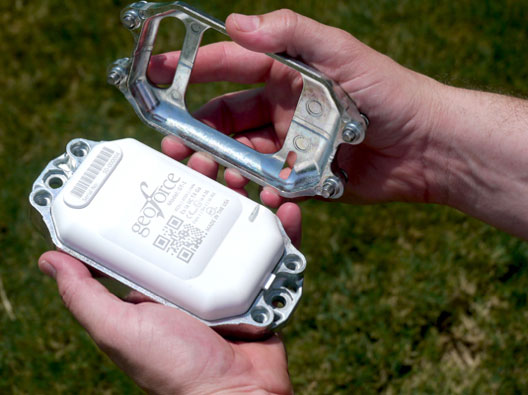
    GT-1 Asset Tracker, the world’s most reliable asset tracker combining GPS, RFID, Bluetooth and Satellite technologies into one compact design. Photo: Geoforce
    GT-1 asset tracker combines GPS, RFID, and Bluetooth technologies. Photo: Geoforce

    Geoforce, Inc. is announcing commercial availability of its GT-1 asset tracking device that can track field equipment in locations and conditions previously too challenging for other devices to function effectively. A globally certified GPS device, the GT-1 enables oil and gas service providers to proactively monitor and share data on vehicles and equipment for more cost effective operations, helping to meet ongoing environmental responsibilities, the company said.

    “We have been waiting a long time for a device like this,” said Michael Rolston, operations manager at Permian Equipment Rentals.  “It’s small, it’s incredibly rugged, it will last years without replacement. It’s also surprisingly low cost — given all its features and capabilities.”

    The GT-1 was previously offered in limited release to several major international service and rental companies beginning in the fourth quarter of 2012. To date, thousands have shipped and are actively tracking oilfield assets around the globe.

  • Out in Front: Welling Up

    oilcover
    September 1992.

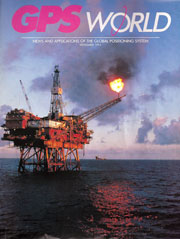
    One of the first industrial uses of GPS came in survey and seismic exploration for offshore oil, as evidenced by the cover story of this magazine’s September 1992 issue. A salient passage from that 18-year-old “Quality Control For Differential GPS in Offshore Oil and Gas Exploration” article:

    “Users are in danger of being mesmerized by the apparent simplicty of the technology and abandoning quality-control principles . . . . The key to routine operations is rigorous real-time quality control.” Eerily, among the companies acknowledged for support of that article was BP Exploration.

    Oil companies early-adopted GPS and private satellite differential correction services, and remain enthusiastic users today, for monitoring of and navigation around deep-sea rigs. The March 2010 cover story shows how this field continues to forge ahead, now as early adopters of multi-GNSS technology.

    Positioning, navigation, and timing had nothing to do with the disaster in the Gulf of Mexico, but some important lessons float there for our learning. They concern engineering principles — principally in not forsaking them.

    The full Deepwater Horizon story has yet to emerge, but it seems abundantly clear that corner-cutting and downright elimination of basic practices led to the disaster. When a natural aberration occurred, it blew right through several weakened backup systems and safety guards, ones that were withdrawn or restricted only days earlier, to shave costs and time.

    Beancounting and other modern business practices have undermined vital enginering principles — rigorous mathematical analysis, based firmly in the laws of physics, situational and historical experience, and what may seem to be overcautious safety margins — not just in the Gulf, but everywhere we look, including our own GNSS backyard. Control of technical programs in both private and public sectors now rests in the hands of non-technical people who owe highest allegiance to the almighty dollar. CPAs trump engineering Ph.D.s. If a disaster hasn’t happened (yet), there’s no need to guard against it, they believe.

    Has anybody here seen my old friend Loran-C?
    Can you tell me where he’s gone?
    He guided ships and airplanes,
    But it seems the budget’s slashing-prone.
    You know, I just looked around, and he’s gone.

  • ABB Selects Intergraph for North African Gas Pipeline Project

    ABB has selected Intergraph for the development of an oil and gas pipeline network and relevant facilities in North Africa. The pipeline network will be built in the El Merk field, a remote, harsh desert location in Algeria.

    According to Intergraph, geospatial-based pipeline infrastructure management solutions will enable ABB to more effectively design, construct and maintain pipelines and assets and demonstrate a comprehensive pipeline integrity program while reducing the cost of maintaining records. By storing records in a central geographic information system (GIS), the solution makes information readily available for a variety of applications, improving record keeping productivity while assuring compliance with regulatory requirements.

    “An accurate, up-to-date view of all critical assets at any given time is a crucial component of any pipeline implementation project,” said Sergio Casati, ABB Project Manager. “Especially in such challenging terrain conditions, we need to keep our pulse on the status of all assets in near real-time. The strength of Intergraph technology and its more than 40 years of experience in the utilities sector, as well as market leadership in enterprise engineering software, were key factors in our decision to partner with the company on this project. Intergraph’s open, flexible technology platform was also desirable for an initiative like the El Merk project, which involves a consortium of multiple vendors.”

    The announcement said that geospatial technology from Intergraph will play a significant role in the design and installation of the pipeline, field gathering stations, gas distribution manifolds, flow and trunk lines and water and gas re-injection facilities in El Merk. The technology will support the Pipeline Open Data Standard (PODS) model, the most widely implemented pipeline data model in the industry, and all data will be stored in an Oracle Spatial database. The implementation will also include a portal component for the seamless distribution of data to all parties, including field and remote users.

    “The collaboration of Intergraph with ABB Italy on this project marks a significant milestone in Intergraph’s involvement in the oil and gas pipeline industry,” said Maximilian Weber, Utilities & Communications manager for Intergraph in EMEA. “Intergraph has worked with leading pipeline providers around the world including Spectra Energy and Northwest Energy in the U.S., E.ON Ruhrgas in Germany and Chongqing Gas in China. Additionally, our Process, Power & Marine division is the world’s leading provider of enterprise engineering software for the design, construction and operation of plants, pipelines, ships and offshore facilities. We are pleased that ABB has recognized our strength in this industry and has chosen us to ensure the accurate, efficient management of assets, as well as play a key role in protecting this infrastructure.”

  • WhiteStar Adds Oil & Gas Pipeline Layer to Basemap Product

    WhiteStar Corp. announced it’s added a new layer of oil and gas pipeline data to its Unlimited Basemap Access (UBA) product. The new WhiteStar Oil & Gas Pipeline Layer will be a nationwide, georeferenced shapefile showing the locations of all lateral and transmission pipelines in the United States.

    The Company said existing subscribers to the WhiteStar UBA product will begin receiving segments of the oil and gas layer at no extra charge with their regular third-quarter UBA update in October. The first segment of the layer will include pipelines in Texas, Oklahoma and the Gulf of Mexico. The layer includes attribute information, such as owner and operator data, for each pipeline.

    WhiteStar said they are creating the new UBA layer primarily from a U.S. Department of Energy (DOE) pipeline map that is available in PDF format on the DOE Energy Information Administration’s website (www.eia.doe.gov). A rich source of pipeline information, this map has frustrated hydrocarbon companies for years because it can be downloaded only in a non-GIS compatible PDF format.

    “We’ve converted the PDF to a shapefile and georeferenced it to align with all of the other cultural-feature layers in the UBA product, which is fully GIS compatible,” said WhiteStar President and CEO Robert White. “This new layer allows UBA clients to easily integrate pipeline maps and attribute details into their digital mapping projects.”

    According to the company, the UBA product is a seamless nationwide digital mosaic of basemap information layers from U.S. Census Bureau TIGER Files (with optional TeleAtlas upgrades). Designed for any geospatial mapping project that requires an accurate digital base map, UBA contains 42 layers of cultural features – such as political boundaries, roads, water bodies, and environmentally sensitive areas – that can be ‘cookie cut’ according to a user-selected area of interest and downloaded into most popular digital mapping package.

    WhiteStar said they developed UBA with an interface that lets the user select layers with a few mouse clicks and then delineate the area of interest by choosing a specific county, outlining the project area onscreen or entering its latitude/longitude corner points. UBA users can then export the data into a variety of popular mapping formats, including ESRI, MapInfo, GeoGraphix, Petra, AutoCAD, SMT Kingdom and Golden software. In addition, the data can be projected in either NAD27 or NAD83 coordinate systems, including all related state planes and UTM zones.

    “Our clients use UBA to populate their maps with cultural features for investor presentations, exploration & production logistics planning, infrastructure siting, and permit submissions,” said White. “The new pipeline layer will enable operators to quickly determine which lateral and transmission lines run near their leases.”

    WhiteStar said they will roll out regional segments of the UBA Oil & Gas Pipeline Layer until the seamless nationwide data set is completed. Following delivery of the Texas, Oklahoma, and Gulf Coast segment, WhiteStar will deliver the region of Ohio, Pennsylvania, and West Virginia that is producing from the Marcellus Shale formation. UBA clients can expect that one to ship in early 2010.
     

  • Sidwell Designing GIS for Oil and Gas Infrastructure Appraiser

    Capitol Appraisal Group Inc. (CAGI) has contracted with the Sidwell Co., asking it to provide a system to inventory, value, and keep track of oil and gas infrastructure and the land parcels on which they are built.

    CAGI provides appraisal and information services to governmental entities primarily for the purpose of property taxation. It contracted with Sidwell after deciding to pursue a geographic information system that would facilitate the collection of field appraisal data.

    This project will be completed in three phases, according to Sidwell and CAGI. The first phase includes review of the typical workflow for field data collection as performed by CAGI technicians, development of a prototype database design, creation of custom forms for ArcPad data capture, and the design and implementation of a system to associate digital camera images directly to records in the ArcPad database.

    Phase Two will consist of refinement of the data capture forms and database design to enhance the data collection workflow, and on-site installation, configuration, testing, and training. Phase Three, the enterprise deployment of the entire system, will include installation and configuration of ESRI’s ArcGIS Server, data loading and tuning, technical consulting, and ArcGIS Server administrator training, according to Sidwell and CAGI.

  • DigitalGlobe Expands Imagery Solutions for Oil and Gas

    DigitalGlobe has unveiled ImageConnect: Oil and Gas, an online imagery service with on-demand access via GIS and Web mapping services to areas of global oil and gas exploration. Built upon DigitalGlobe’s standard ImageConnect solution, ImageConnect Oil and Gas provides imagery of geographic areas important to upstream oil and gas exploration, including oil basins, refineries, pipelines, and geological areas of interest to the oil and gas industry.

    ImageConnect: Oil and Gas provides online access to a 1 million square kilometer global image layer of high-resolution satellite-imaged oil basins. With DigitalGlobe’s content collection strategy for identifying and gathering high-interest areas around the world, ImageConnect Oil and Gas will have new images added regularly from DigitalGlobe’s constellation of highly accurate, sub-meter satellites.

    “Our world imagery solutions affect oil and gas professionals’ view on location decisions, by bringing within their reach, both economically and geographically, premium imagery for monitoring and exploring oil fields and facilities,” said Marc Tremblay, senior vice-president and general manager of DigitalGlobe’s commercial business unit.

    “By accessing our advanced imagery online, oil and gas enterprises can increase their visibility into potential expansion areas, select the best location for infrastructure placement in remote and rugged terrain, and quickly monitor facilities and reclamation areas by reducing the time and operational costs associated with onsite monitoring and surveying.”

    With a subscription to ImageConnect, GIS professionals can connect directly to DigitalGlobe’s global online image library for country- or industry-specific areas of interest through plug-ins for major desktop mapping software applications, including ESRI ArcGIS, MapInfo Professional, Autodesk Map 3D, or any WMS-enabled client.