Tag: smartwatch

  • Researchers demonstrate centimeter-level positioning using smartwatches

    Researchers demonstrate centimeter-level positioning using smartwatches

    University of Otago – Ōtākou Whakaihu Waka researchers have developed algorithms that improve the precision of location tracking in smartwatches.

    Led by Associate Professor Robert Odolinski, a visiting researcher with Google from Otago’s School of Surveying, the research team demonstrated that a smartwatch determined its location with centimeter-level precision over four hours with a stationary setup. The result was achieved by using the Google GnssLogger app and combining precise signals from several GNSSs.

    The research was done in collaboration with Google’s Android Context group and the Chinese Academy of Sciences. Results are published in the scientific journal GPS Solutions.

    For decades, achieving centimeter-level positioning has required industries such as surveying, construction and engineering to invest in expensive GPS equipment.

    “While the use of the so-called carrier-phase signals has long been known to improve the positioning performance, the specialized antenna and receivers needed for this have traditionally come at a cost far beyond the reach of many who would benefit from the technology. This is just the beginning of what wearable high-precision positioning can potentially achieve.”

    GPS was introduced in a wearable watch in 1999, but hardware and power consumption limitations prevented it from tracking the carrier-phase signals needed for high-precision results. Recent advances in smartwatches now make this possible.

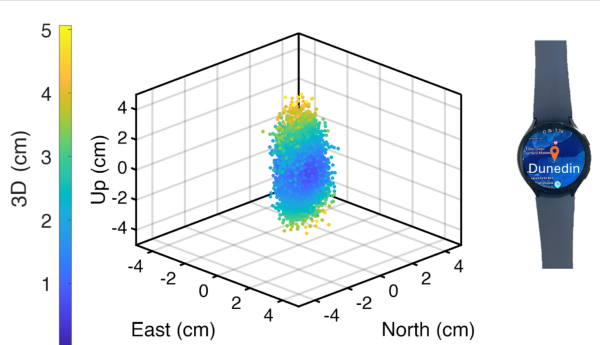
    Precise centimeter-level positioning on a smartwatch during 4 hours of data in Dunedin, New Zealand. The dots show the repeatability of one second of data in comparison to precise benchmark coordinates. The repeatability of the positioning is about 8 cm, at most twice as large as the smartwatch diameter of 4 cm (displayed to scale).

  • L5-based oneNav outperforms Android smartwatch

    L5-based oneNav outperforms Android smartwatch

    OneNav’s pureL5 more accurate in urban testing without sensor augmentation

    Image: OneNav
    Image: OneNav

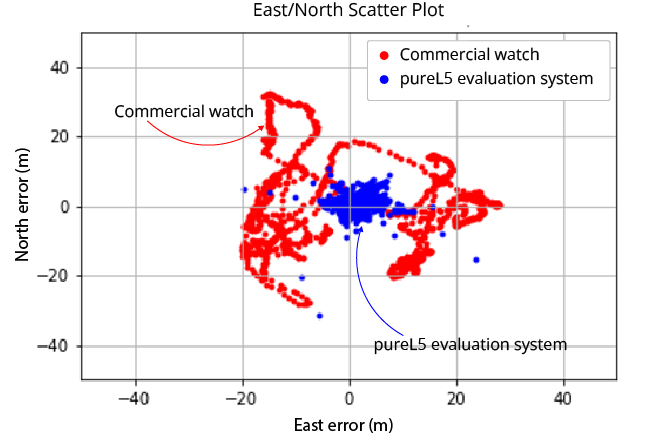
    OneNav is sharing side-by-side test results comparing its pureL5 GNSS receiver customer evaluation system to a leading Android smartwatch.

    OneNav is a Silicon Valley, California-based technology company designed to power high-performance positioning for location-dependent mobile services.

    In a challenging urban environment, oneNav averaged six times better accuracy than the smartwatch. Both units used commercial-wearable antennas for testing. While the oneNav system used only GNSS measurements, the smartwatch GNSS results were augmented by inertial sensors.

    At the 95th percentile, the pureL5 unit reported 8-meter accuracy compared to nearly 29-meter accuracy for the smartwatch; pureL5 accuracy includes artificial intelligence/machine learning algorithms that improve the system over time.

    “The L5 signal is more accurate and reliable than L1, it has higher power and wider bandwidth, and it is less jammable,” said Steve Poizner, co-founder and CEO of oneNav. “We looked at where the market is heading, with the wearables and tracking device markets exploding and the demand for higher accuracy increasing, and we asked, ‘Why keep two bands/two RF chains/two antennas when you can get superior performance with just L5?’”

    The oneNav team comprises top GNSS experts from Qualcomm, Apple, Intel, SnapTrack, SiRF, Trimble and eRide who have decades of GNSS and mobile industry experience. The team has expertise in GNSS system architecture, multipath mitigation, signal processing, ASIC design and AI/machine learning, and collectively has filed more than 300 career GNSS patents.

    Investors include Google Ventures, Norwest Venture Partners and GSR Ventures.

  • Seen & Heard: Space Force recruits with GPS

    Seen & Heard: Space Force recruits with GPS

    “Seen & Heard” is a monthly feature of GPS World magazine, traveling the world to capture interesting and unusual news stories involving the GNSS/PNT industry.


    Photo: nattrass/iStock/Getty Images Plus
    Photo: nattrass/iStock/Getty Images Plus

    SMARTWATCH REVEALS RUNNER’S FATE

    On the morning of July 10, Berkeley resident Philip Kreycik went for a run in Pleasanton, California. That day, temperatures reached 106 degrees, and he didn’t return home. His body was found Aug. 3, reports the San Francisco Chronicle. His Suunto smartwatch stopped tracking movement 4.5 hours after he started his run. GPS data from the watch showed him moving in erratic zigzags and circles before he stopped. Experts concluded he experienced delirium before succumbing to heat exhaustion.


    Photo: SOPHIE-CARON/iStock Unreleased/Getty Images
    Photo: SOPHIE-CARON/iStock Unreleased/Getty Images

    GANGS TARGET FARM DEVICES

    Organized gangs riding e-scooters are stealing high-value GPS/GNSS technology from farms in the United Kingdom, reports BBC News. Insurer NFU Mutual said the cost of replacing the stolen equipment nearly doubled in a year to £2.9 million. The technology, in worldwide demand, has become the “rural thieves’ top target,” the insurer said. GPS/GNSS equipment on tractors can cost up to £10,000 per unit.


    SPACE FORCE RECRUITS WITH GPS

    A 13-minute recruitment commercial from the U.S. Space Force debuted Aug. 24, with GPS as a star. “There’s no such thing as a day without space operations. You just don’t see them,” explains the video, mentioning how GPS is key to the operation of ATMs, cell phones, gas pumps, traffic lights, power grids, guided missiles and more. The commercial states that the Space Force is seeking guardians who will help protect satellites from attack and debris. Current guardians describe the importance of GPS. “We won’t just think outside the box, we’ll think outside the atmosphere, in one of the most challenging environments ever known,” concludes the video. “The sky is not the limit.”


    THIEVES STEAL TRACKERS AND… (GUESS THE REST)

    Two burglars who stole a package from a drop-off box were quickly apprehended — the package was filled with Roambee GPS-based trackers heading to a COVID-19 vaccine maker for use in tracking shipments. The Santa Clara Police Department was ecstatic to learn what the thieves had stolen, reports Roambee, who knew the package had gone missing. Unaware of what was in their trunk, the thieves traveled more than 761 miles around the Bay Area before being arrested 14 days later on July 18.

  • Broadcom launches its lowest power GNSS receiver for mobile, wearables

    Broadcom launches its lowest power GNSS receiver for mobile, wearables

    The BCM4778’s third-generation dual-frequency GNSS receiver features advanced multipath mitigation, L5 acquisition capability, LTE filtering and jamming protection

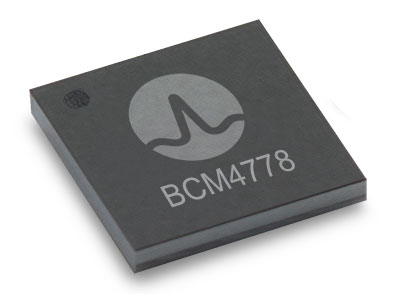
    Broadcom Inc. has launched the BCM4778, its lowest power L1/L5 GNSS receiver chip optimized for mobile and wearable applications. Equipped with the latest GNSS innovations, the third-generation chip is 35% smaller and consumes five times less power than the previous generation.


    Broadcom will be presenting further information on the chip in the Session B5, Panel: GNSS Chipset Technology – Trends, Opportunities and Challenges panel at the ION GNSS+ 2021 on Sept. 24.


    Dual-frequency GNSS continues to be an important location feature for modern mobile and wearable devices, providing greater positioning accuracy for location-based applications. The advanced L5 signal enables sidewalk-level accuracy for pedestrian navigation in urban environments, as well as lane-level accuracy for vehicle navigation.

    Reduction in GNSS power consumption is crucial to extending the battery life of a mobile or wearable device. Compared to GNSS receivers used in integrated platforms, Broadcom’s single-chip BCM4778 delivers significantly lower power consumption and higher performance while offering more advanced GNSS features, such as the next-generation Grid Tracking urban multipath mitigation technology.


    “We are excited to see this impressive power reduction, combined with the L5 Grid Tracking technology in the new Broadcom GNSS chip. This will increase the impact of Google’s 3DMA ray-tracing for urban multipath mitigation,” said Frank van Diggelen, principal software engineer at Google.


    Longer battery life. The BCM4778 increases the GNSS always-on battery life on a smartwatch by 30 hours compared to the previous generation chip operating on a 300-mAh battery. The extended battery life helps drive new experiences in smartwatches and phones, including keeping the GNSS always-on for fitness applications for multiple days on a single battery charge.

    In addition, the BCM4778 features fully integrated LNAs for L1 and L5 bands, which reduces RF front-end BOM costs and footprint requirements, suitable for space-constrained applications. The chip offers increased flexibility to smartwatch and phone designers with its small size. Having the ability to place the BCM4778 closer to the antenna helps improve signal reception and enhances overall GNSS performance.

    The BCM4778 dual-frequency chip is designed for small mobile and wearables. (Photo: Broadcom)
    The BCM4778 dual-frequency chip is designed for small mobile and wearables. (Photo: Broadcom)

    Product Highlights

    • 7nm CMOS technology
    • Typical power consumption
    • 4mW L1 band only
    • 6mW L1+L5 simultaneous
    • FCBGA package
    • New Grid Tracking technology
    • Advanced multipath mitigation
    • Continuously tracks the full L5 channel
    • Capable of L5 acquisition
    • Increased processing capability and throughput
    • Advanced LTE filtering and jamming mitigation
    • Enhanced LTE Band 13 and Band 14 filtering
    • Spoofing and jamming detector
    • Jamming mitigation through multiband and multi constellation
    • Reduced BOM cost and footprint
    • Flexibility in using internal LNAs
    • Optional operation without interstage SAW filters
    • Integrated switching regulator with direct connect to battery

    “With the launch of this third generation dual-frequency GNSS receiver chip, Broadcom continues the tradition of raising the bar for mobile GNSS,” said Vijay Nagarajan, vice president of marketing for the Wireless Communications and Connectivity Division at Broadcom. “Always-on dual frequency GNSS is a key request from mobile and wearable OEMs, and we are thrilled to deliver it.”

    “Consumer electronic companies have been faced with the challenge of managing power consumption versus performance, often having to choose one over the other. Broadcom’s innovative approach to the BCM4778 allows their customers to realize improvements on both fronts,” said Ramon T. Llamas, research director for mobile devices at IDC. “The result: device manufacturers can enable new experiences and run applications over a sustained period of time. In addition, by reducing its BOM cost and its physical footprint, Broadcom is enabling further benefits from cost savings and design configurability.”

    Broadcom is currently sampling the BCM4778 to its early access partners and customers. Please contact your local Broadcom sales representative for samples and pricing.

  • Samsung Introduces 5-nm processor with GNSS for wearables

    Samsung Introduces 5-nm processor with GNSS for wearables

    The Exynos W920 offers high performance, efficiency and LTE connectivity in tiny form factor

    Image: Samsung
    Image: Samsung

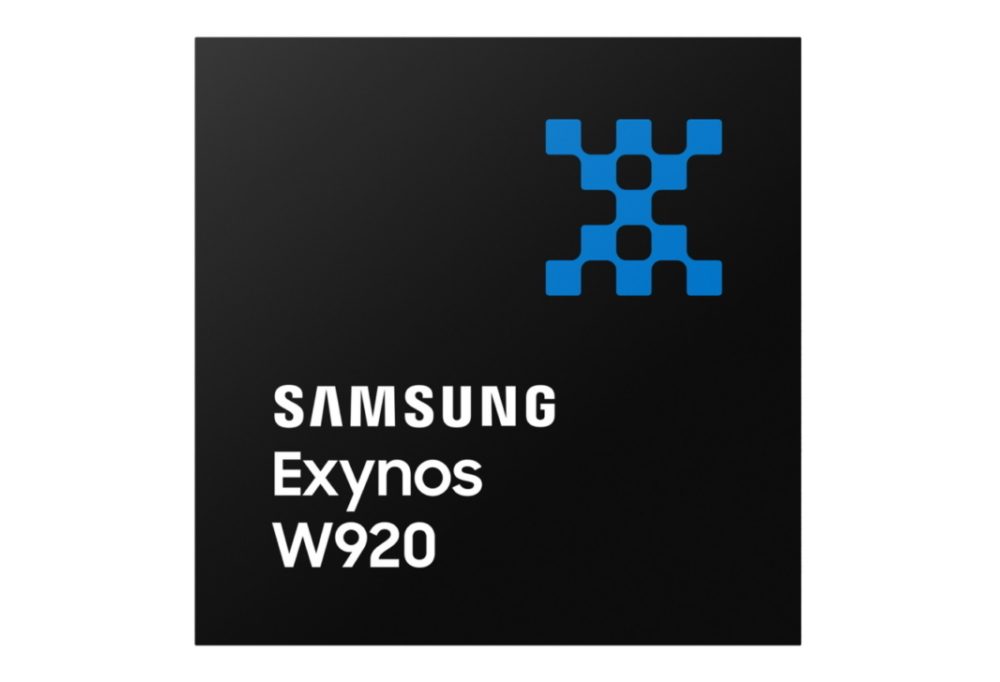
    Samsung Electronics is offering a new processor for wearables, the Exynos W920. The new processor integrates an LTE modem and is built with an advanced 5-nanometer (nm) extreme ultraviolet process node, offering powerful yet efficient performance demanded by next-generation wearable devices.

    The Exynos W920 is embedded with a GNSS L1 receiver (GPS, GLONASS, Beidou, Galileo) for tracking speed, distance and elevation during outdoor activities. It also has a 4G LTE Cat. 4 modem.

    “Wearables like smartwatches are no longer just a cool gadget to have. They’re now a growing part of our lifestyles to keep you fit, safe and alert,” said Harry Cho, vice president of System LSI marketing at Samsung Electronics. “With the Exynos W920, future wearables will be able to run applications with visually appealing user interfaces and more responsive user experiences while keeping you connected on the go with fast LTE.”

    The Exynos W920 has two Arm Cortex-A55 cores for high-performing, power-efficient processing and an Arm Mali-G68 GPU with CPU performance improved by 20 percent and 10 times better graphics performance than its predecessor. With upgraded cores and improved performance, the Exynos W920 enables faster application launches and more interactive, eye-catching 3D graphical user interface (GUI) on a device’s qHD (960×540) display.

    The Exynos W920 comes in a tiny package with Fan-Out Panel Level Packaging (FO-PLP). The technology incorporates the Exynos W920, power management IC and embedded multimedia card. The processor’s compact size allows smartwatches to house larger batteries or have sleeker designs.

    Always-on-display (AOD) for wearables, especially for smartwatches, is a widely adopted feature as it makes it effortless to take a quick look at the time, notifications, missed calls and more without the need to wake the watch up from sleep mode. Rather than powering up the main CPU, the W920 activates a dedicated low-power display processor, the Cortex-M55, reducing display power consumption under AOD mode compared to its previous Exynos model.

    The Exynos W920 supports a new unified wearable platform Samsung built jointly with Google, and will be first applied to the upcoming Galaxy Watch model.

  • No-charge GNSS smartwatch uses u-blox technology

    No-charge GNSS smartwatch uses u-blox technology

    Photo: u-blox
    Photo: u-blox

    U-blox, a global provider of positioning and wireless communication technologies, is partnering with TransSiP and Matrix Industries to create PowerWatch 2, a GPS smartwatch that doesn’t need to be charged.

    The smartwatch features the ultra-small, ultra-low power u-blox ZOE-M8B GNSS receiver to track position, in addition to calories burned, activity level, and sleep, making it an ideal companion for runners, hikers, and swimmers. All this is enabled by TransSiP PI technology which ensures energy harvested is used at maximum efficiency and provides crystal clean power enabling optimum performance.

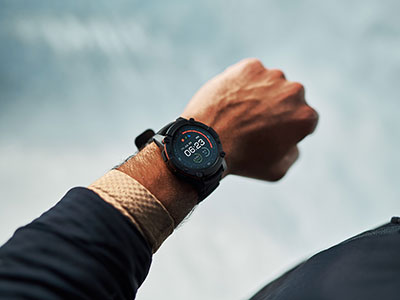
    The PowerWatch 2 does away with cables and external batteries by continually topping up its battery using thermoelectric energy generated from body heat as well as solar energy. The watch also connects to smartphones and displays notifications on your wrist, tracks activities and visualizes them using dedicated iOS and Android apps, as well as with popular third party health and fitness platforms.

    The PowerWatch 2 delivers location tracking using the low-power u-blox ZOE-M8B GNSS receiver module that consumes as low as 12 mW. Packaged as a (System-in-Package), the 4.5 x 4.5 x1.0 mm module helps achieve the watch’s comparatively low 16-mm thickness. And concurrent reception of up to three GNSS constellations means that it delivers high accuracy positioning in challenging situations such as urban or dense forest environments and when swimming.

    Satellite-based positioning is typically the most power-hungry process on a sports watch. Providing highly efficient conversion of harvested energy into a very quiet supply of DC power, TransSiP PI enhances the ability of the ZOE-M8B GNSS receiver module incorporating u-blox Super-E technology, to strike an ideal balance between power and performance. Working on a tight power budget, the watch supports 30 minutes of continuous GNSS tracking per day, with unused time accumulating in the watch’s battery pack, such as powering two hours of location tracking every four days.

    “We put a lot of effort into tailoring the ZOE-M8B to the needs of small battery powered applications. We couldn’t have wished for a better product to showcase our ZOE-M8B’s potential for wearables than the PowerWatch 2,” says Florian Bousquet, principal product manager in Standard Precision GNSS at u-blox.

    Douglas Tham, CTO of Matrix Industries added, “TransSiP PI makes it possible to deliver high performance and high efficiency simultaneously by reducing system noise, eliminating time spent re-acquiring data, and minimizing the need for additional processing. This means power savings across-the-board and enables applications which can be powered solely by energy harvesting.”

    “Not only were size, cost and power constrained in developing the PowerWatch 2, we also had to make sure that it met the high performance demands that athletes expect,” said Akram Boukai, CEO and co-founder of Matrix Industries. “The combination of TransSiP PI and the ZOE-M8B solved all of these pain points for us, enabling the watch to quickly lock in on its position even in weak signal environments.”

    Backers of the project on Indiegogo are expected to receive their orders in June 2019.

  • Antenova ships tiny GNSS active antenna module

    Antenova ships tiny GNSS active antenna module

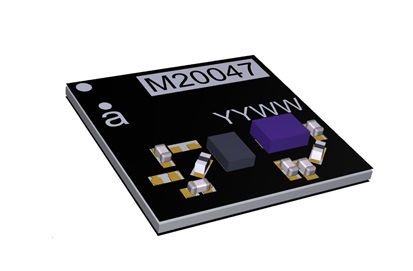
    Antenova is shipping its ultra-small GNSS active antenna module for tiny positioning devices, the RADIONOVA M20047-1. The antenna module includes a low noise amplifier (LNA) and surface acoustic wave (SAW) filter for better positioning from difficult locations.

    Antenova Ltd. is a manufacturer of antennas and RF antenna modules for connected devices and the internet of things.

    The RADIONOVA M20047-1 is designed for small consumer devices such as smartwatches. (Photo: Antenova)
    The RADIONOVA M20047-1 is designed for small consumer devices such as smartwatches. (Photo: Antenova)

    The RADIONOVA M20047-1 is an active antenna module for GNSS applications in the 1559-1609 MHz satellite bands using GPS, GLONASS, Galileo or BeiDou.

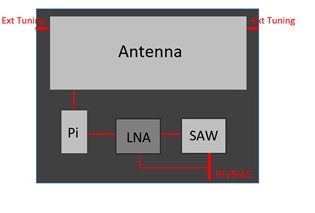
    The M20047-1 antenna module comprises an SMD antenna with built-in active components: an LNA filter and SAW to boost antenna performance — so designers will not need to add these — contained in a compact FR4 part with low power consumption, measuring 7.0 x 7.0 x 0.9 millimeters and weighing less than 2 grams.

    The onboard LNA and SAW filter act to boost the signal to the GNSS processor in environments where there is a restricted view of the sky or where line-of-sight to the horizon is difficult, the company said.

    Architecture of the Antenova antenna. (Image: Antenova)
    Architecture of the Antenova antenna. (Image: Antenova)

    Antenova has also added an external matching feature to compensate for any de-tuning of the antenna caused by proximity to other components, such as a plastic case or a battery.

    The clear-out area required by the antenna module is only 7.0  x 5.0 millimeters. This, with its tiny size, makes the M20047-1 suitable for small positioning devices where space on the PCB is tight, such as wearable devices, asset tracking devices, sports cameras and equipment and smartwatches.

    The M20047-1 is an alternative to Antenova’s Sinica antenna (part no. SR4G008), which Antenova also recommends for accurate positioning.

    The M20047-1 was first announced at the Consumer Electronics Show in Las Vegas in January.

    Antenova’s antennas are specifically designed for easy integration. The datasheet and evaluation kit for the M20047-1 are available from www.antenova.com. Antenova also provides full engineering support, antenna testing, tuning and integration for its customers.

  • Kids’ smartwatch developed with u-blox

    Kids’ smartwatch developed with u-blox

    KIWI PLUS, a Korean software-development company, has launched a new children’s smartwatch developed in collaboration with u-blox.

    LINE Kids Watch is a tiny and colorful wearable with LINE emojis functioning as an Android-based smartwatch and officially distributed by KT Corporation. It enables precise tracking of the whereabouts of children, while also offering educational and interactive content.

    KIWI-PLUS-WLINE Kids Watch uses KIWI PLUS’ own Internet of Things (IoT) platform for wearables, KIWI Edge. Designed with a simple LCD screen for one-touch calling, it also provides real-time accurate location tracking and convenient safety zone setting. An emergency notification can easily be initiated by the child and text messages are sent by speaking into a microphone. Other features include an education quiz and a Cashbee NFC money pocket function.

    “We wanted to offer accurate tracking combined with high quality cellular communication, and u-blox has already demonstrated with leading brands of children’s watches its unique combination of GNSS positioning and wireless communication technologies. And considering the small size, low power consumption and powerful location accuracy of its products as well as the speed with which they helped us solved issues, u‑blox was the right choice,” explained Sangwon Seo, CEO of KIWI PLUS.

    The u-blox cellular module SARA-U270 and u-blox 7 GNSS chip UBX-G7020-KT are embedded in the smartwatch. The SARA-U270 UMTS/HSPA module provides efficient and cost-effective high-speed mobile connectivity in an ultra-small LGA form factor.

    The high performance UBX-G7020 multi-GNSS chip supports GPS, GLONASS, QZSS and SBAS and delivers exceptional sensitivity and acquisition times. It has ultra low-power consumption and a very small solution footprint of 30 square millimeters.

    “It was very exciting to collaborate with KIWI PLUS, as we at u-blox are committed to support our customers by combining technologies for reliable solutions,” explains Shone Kim, Country Manager of u-blox Korea. “We foresee further collaboration with KIWI PLUS in the future, using our LTE technology.”

    Wearables are small portable devices that support our daily life, and deliver on-the-spot services thanks to their wireless connectivity and positioning capability. Low power technologies offer a long battery life, and with outstanding radio capabilities, a robust user experience. The market for this type of high technology integration is growing strongly, so price levels are quickly becoming competitive.

  • New Garmin smartwatch combines GPS, heart-rate monitor

    Garmin will introduce a new GPS smartwatch at Mobile World Congress, being held Feb. 22-25 in Barcelona, Spain. The vívoactive HR includes Garmin Elevate wrist heart-rate technology.

    vivoactiveHR_HR-WThe vívoactive HR helps keep track of active moments throughout the day, counting steps and floors climbed, intensity minutes, monitoring sleep and featuring built-in GPS-enabled sports apps for walking, running, biking, swimming, golfing, paddle boarding, rowing, skiing and snowboarding.

    The smartwatch uses 24/7 wrist-based heart rate data to calculate calories burned information as well as the intensity of fitness activities, providing proper credit for users’ array of workouts. With the Connect IQ store, users can personalize their vívoactive HR with free apps, widgets, watch faces and data fields.

    The smartwatch will be showcased at the Garmin booth #CS 90.

    “The vívoactive HR builds on the incredible versatility and multi-functionality of its predecessor by adding wrist-based heart rate and a barometric altimeter — allowing it to track even more data essential to workouts and day-to-day activity,” said Dan Bartel, Garmin vice president of worldwide sales. “All your efforts to stay active are accounted for from taking the stairs at the office to going on a run or ride.”

    Featuring Elevate wrist heart rate technology1, the vívoactive HR provides 24/7 heart rate monitoring and eliminates the need for a chest strap. Using the heart rate data the vívoactive HR quantifies the intensity of fitness activities and allows users to monitor their progress against aerobic activity goals recommended by leading health organizations like the American Heart Association.

    The vívoactive HR’s always-on, touchscreen, sunlight-readable Garmin Chroma Display lets users track activity and stay connected anytime, anywhere. Its built-in GPS-enabled sports apps include:

    Running – Using a built-in accelerometer and GPS users can track runs either indoors or out. Additional features include Auto Lap, Auto Pause, and vibration alerts for heart rate, pace, run/walk intervals, and more. Post-run summaries include stats such as total mileage, calories, average pace and overall time.

    Cycling – The cycling app measures time, distance, speed and calories. It is compatible with speed and cadence sensors, and the Varia® lights and radar (sensors and radar are sold separately).

    Pool Swimming – In addition to tracking total and interval time, distance, pace, stroke count and stroke type, the swimming app also features easy pausing for rests, complete with rest timers, and can calculate swolf, a measure of swimming efficiency.

    Golfing – Users can view a simplified view of the green, measure shot distance and be pointed in the right direction with PinPointer while golfing on one of the 40,000 course maps worldwide available for download from the Garmin golf course database.

    Stand Up Paddleboarding and Rowing – Users can easily track and view pace, time, distance, stroke count, stroke rate and distance per stroke. When using an indoor rowing machine, users can track time, stroke count and stroke rate.

    Skiing and Snowboarding – The skiing and snowboarding app measures 3-D speed by calculating the speed and distance on an incline versus latitude and longitude. It also provides splits automatically and features Auto Pause, which freezes the timer automatically when users stop or ride the lift.

    The vívoactive HR also includes Garmin Move IQ, a new feature that continuously monitors for periods of sustained activity. With Move IQ, the vívoactive HR automatically recognizes walking, running, biking, swimming and elliptical training. Users can easily track their exercise throughout the day without needing to start a timed activity. Once synced with Garmin Connect, users can review their full day of activity in a convenient Timeline view.

    The vívoactive HR will begin shipping in Q2 for a suggested retail price of $249.99. It will be available in regular and extra-large fit black bands. Accessory bands will be available in black, white, force yellow and lava red for a suggested retail price of $29.99 each.
  • Antenova’s latest modules add GNSS to consumer devices and wearables

    Antenova Ltd., manufacturer of antennas and RF antenna modules for machine-to-machine (M2M) and the Internet of Things, has released two new modules for GPS and GNSS. Both provide an easy drop-in receiver solution — a way to add a location capability to very small consumer devices.

    The two modules are similar, both measuring 9.0 x 9.0 x 1.8 millimeters, with low current consumption, making them suitable for smaller portable devices such as smartwatches, navigation devices, OBD II modules, asset tracking, personal safety, sports cameras and equipment. They are based on a MediaTek processor.

    The M10578-A2 module operates with GPS, with a 1-5 Hz update rate, and the M10578-A3 operates with GPS, GLONASS, BeiDou and Galileo with an update rate of 1-10 Hz.

    Antenova has added two features to enhance performance of the modules. An internal self-generated orbit prediction uses two GNSS systems simultaneously to give a faster time to fix, and a second high-quality low noise amplifier (LNA) boosts low-powered satellite signals.

    The new M10578 modules are the latest in Antenova’s Radionova series of fully optimized RF modules for wireless M2M and embedded devices. Both modules are pin compatible, offering easy integration and upgrade from GPS to GNSS; for the antenna function, Antenova offers the small Sinica SR4G008 GNSS antenna.

    The new modules are built on high-grade FR4 substrates with a high density, multi-layered design that places the critical RF functions in the best position for location finding and performance.

    The M10578-A2 and M10578-A3 are available to order now.

  • CES 2016: 3Plus launches smartwatch, connected wearables

    3Plus, a developer and manufacturer of smart wearable devices, will introduce four new connected products at CES 2016. The huge Consumer Electronics Show (CES) will be held in Las Vegas Jan. 6—9. The new 3Plus wearables line will be on display at CES 2016 in Tech West Sands Expo Booth  no. 72745, and the ShowStoppers press event on Jan. 6.

    From basic activity trackers to advanced smartwatches, all of the new 3Plus wearables track and record daily activity and sleep. They also use Bluetooth 4.0 to provide smartphone notifications such as calls, e-mails and text messages. They are compatible with both iOS and Android platforms and have corresponding mobile apps.

    “Today, a wristwatch is more than just a means to know what time it is and the day’s date,” remarked Jerry Galya, 3Plus vice president of sales. “Digital technology has taken wristwatches in a whole new direction and 3Plus is right at the forefront with many innovative technologies. Our newest wearables are available at a variety of affordable price points depending on what features you are interested in. From the most basic smartphone notifications and fitness tracking, to advanced heart rate monitoring and call answering, 3Plus offers it all.”

    The following 3Plus IoT wearables products will be introduced at CES 2016.

    3Plus Lite: This connected fitness wearable tracks steps taken, calories burned, distance traveled, duration of sleep and sleep cycles. It has daily life reminders such as when to wake up or take medicine. The 3Plus Lite features a power-efficient OLED display and has an IP67 rating, meaning it is totally protected against dust and water immersion up to three feet.

    3Plus Swipe HR: The 3Plus Swipe HR combines smartwatch with an activity tracker. It tracks steps, distance, and calories burned. It also keeps track of daily meals via MyFitnessPal, as well as sleep quality, including periods of deep sleep and restlessness. Other features include a 1.1-inch touchscreen display; heart-rate range alert; and automatic data sync to a smartphone without plugging in or pushing buttons, providing real-time access on a mobile app and notifications on the wrist.

    3Plus Touch Smartwatch: Activity tracking includes steps taken, calories burned, distance traveled, heart rate, quality of sleep, and sleep cycles. It even reminds the wearer when to take their medicine or when to eat. The OLED touchscreen display shows the time and date, and smartphone notifications including the name or number of incoming calls, with a built-in microphone for direct answering. Other features include a lightweight lithium-polymer battery with a two-week standby time.

    3Plus Time: The look of a traditional timepiece is coupled with digital capabilities. The dial of the 3Plus Time smartwatch measures time with big, bold Roman numeral hours, old-school hour and minute hands, and a digital OLED display for text, call and other smartphone notifications. Tracking activities include steps taken, calories burned, distance traveled, duration of sleep and deep-sleep time. It is available with a choice of a leather or stainless steel band.

  • FLYPRO announces smartwatch-controlled XEagle drone

    FLYPRO announces smartwatch-controlled XEagle drone

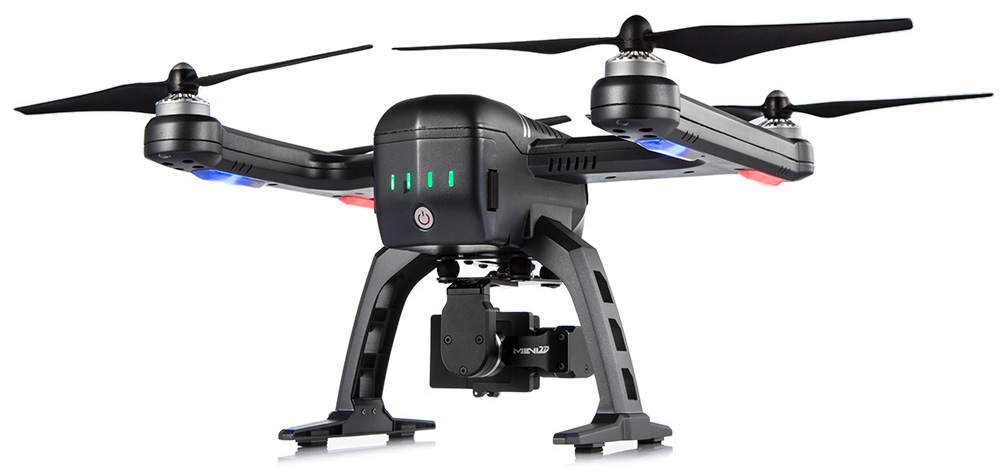
    Shenzhen FLYPRO Aerospace Tech Co. has officially released the XEagle, an unmanned aerial vehicle (UAV) equipped with auto follow and obstacle avoidance functions.

    Photo: FLYPRO Aerospace Tech Co.Unlike other popular self-flying drone models on the market that are taken off by throwing the aircrafts in the air, which increases the risks of crashing the vehicles, XEagle introduces various features including voice control, smartwatch and automatic obstacle avoiding to offer a better user experience. By liberating both hands, users do not need to have any previous knowledge and experience when handling an XEagle.

    Designed for recording sports activities, FLYPRO has replaced traditional UAV remote controllers with XWatch for the new XEagle. XWatch is a smartwatch designed to control XEagle that’s portable and easy to navigate — users can control the devices to take off, land and follow, as well as adjust flight height with just one click on the wrist within 300 meters. The smartwatch design enables users to fly the aerial vehicles to take high-definition pictures and videos while engaging in intense sports such as skiing and mountain bike cycling.

    The voice control feature allows hobbyists to fly the XEagle without moving their hands at all — the built-in intelligent voice recognition system responses fast and accurately to commands in both Chinese and English. Users only need to instruct the XEagle with commands such as “FLYPRO, take off” and “FLYPRO, follow me” to launch the XEagle in the air and have it follow automatically.

    To lower the risk of crashing the UAV in both takeoff time and during flight, XEagle offers a crash prevention solution by installing four layers of protection. With an infrared obstacle avoidance system and built-in photoelectric sensors, the XEagle can calculate precisely and in real time for obstacles to avoid collisions. The detection is effective when the obstacle is at the distance between 0.1 to 15 meters with relative velocity of 12 meters per second. The UAV can dodge obstacles and barriers while flying in the air by changing its flight path automatically.

    As a newcomer in the UAV market, FLYPRO’s technological breakthrough in developing consumer drones not only resolves the safety concerns customers have with other similar UAVs, but also improves user experience through innovative control measures that makes flying the drones as easy as clicking a button, leading the UAV industry with the company’s user-centered philosophy and high product quality standards.

    “Now, customers favor UAV products with lower risks associate with operating the aerial vehicles as well as technological innovations that enable users to perform complex tasks without advanced training. When other companies are looking for ways to make UAV products more accessible to the public, FLYPRO has already achieved that with our innovative functions like smart watch control, auto follow and obstacle avoidance that allow everyone to enjoy flying the UAVs for sports and entertainment,” said Lin Hai, founder and CEO of FLYPRO.