The worldwide wearable device market recorded its eighth consecutive quarter of steady growth in the first quarter of 2015. According to the International Data Corporation (IDC) Worldwide Quarterly Wearable Device Tracker, vendors shipped a total of 11.4 million wearables in the first quarter, a 200 percent increase from the 3.8 million wearables shipped in the first quarter of 2014.
“Bucking the post-holiday decline normally associated with the first quarter is a strong sign for the wearables market,” said Ramon Llamas, research manager, Wearables. “It demonstrates growing end-user interest and the vendors’ ability to deliver a diversity of devices and experiences. In addition, demand from emerging markets is on the rise and vendors are eager to meet these new opportunities.
“What remains to be seen is how Apple’s arrival will change the landscape,” added Llamas. “The Apple Watch will likely become the device that other wearables will be measured against, fairly or not. This will force the competition to up their game in order to stay on the leading edge of the market.” The Apple Watch began shipping April 24.
“As with any young market, price erosion has been quite drastic,” said Jitesh Ubrani, senior research analyst, Worldwide Mobile Device Trackers. “We now see over 40% of the devices priced under $100, and that’s one reason why the top 5 vendors have been able to grow their dominance from two thirds of the market in the first quarter of last year to three quarters this quarter. Despite this price erosion, Apple’s entrance with a product priced at the high end of the spectrum will test consumers’ willingness to pay a premium for a brand or product that is the center of attention.”
Wearable Vendor Highlights
Fitbit started 2015 the same way it ended 2014: as the clear market leader in the worldwide wearable device market. Fitbit’s first quarter shipments were driven by the release of three new devices (the Charge, Charge HR, and the Surge) along with continued demand for its older Flex wristband and One and Zip clip-on models. Separately, these address multiple segments of the market, from casual exerciser to committed athlete, and collectively leverage Fitbit’s behavior change engine to encourage activity.
Xiaomi started off the year by blasting through the one million unit mark with its Mi Band for the first time, a significant feat made all the more impressive considering the device just started shipping during the second half of 2014. Similar to its smartphones, Xiaomi’s Mi Band was delivered primarily within its home country of China, but recent announcements point to more global aspirations for the company.
Garmin’s wearable device portfolio spans multiple areas of health and fitness, including activity tracking, running, hiking, golfing, triathlons, and multi-sport. The majority of Garmin’s devices are GPS-enabled to track location and distance, and some leverage the company’s ConnectIQ third-party applications to record activity, show notifications, and news.
Samsung’s fourth place finish came from worldwide demand for its Gear smartwatches. Since its debut in 2013, the Gear portfolio has diversified to include the Tizen-powered Gear, Gear 2, Gear Fit, Gear 2 Neo, Gear S, and the Android-Wear powered Gear Live. What has limited Samsung, however, is the ability for Gear devices to connect only with select high-end Samsung smartphones.
Jawbone beat Pebble and Sony for fifth place, a result driven by the release of its UP MOVE and continued demand for its nearly year-old UP24. The company will release two new devices in the second quarter of 2015, with the similarly-functioning UP2 and the mobile payments-enabled UP3. The company maintained its design strategy of no displays, but again touted its predictive data engine to encourage healthier lifestyles.
Top Five Wearables Vendors, Shipments, Market Share and Year-Over-Year Growth, Q1 2015 Data (Units in Millions)
Vendor
1Q15 Shipment Volumes
1Q15 Market Share
1Q14 Shipment Volumes
1Q14 Market Share
Year-over-year Change
1. Fitbit
3.9
34.2%
1.7
44.7%
129.4%
2. Xiaomi
2.8
24.6%
0
0.0%
N/A
3. Garmin
0.7
6.1%
0.3
7.9%
133.3%
4. Samsung
0.6
5.3%
0.3
7.9%
100.0%
5. Jawbone
0.5
4.4%
0.2
5.3%
150.0%
Others
2.9
25.4%
1.3
34.2%
123.1%
Total
11.4
100.0%
3.8
100.0%
200.0%
Source: IDC Worldwide Quarterly Wearable Tracker, June 2, 2015
Table Notes:
Data is subject to change.
Vendor shipments are branded device shipments and exclude OEM sales for all vendors.
The “Vendor” represents the current parent company (or holding company) for all brands owned and operated as subsidiary.
Telit Wireless Solutionsand Agnik are collaborating on Internet of Things (IoT) applications and Big Data analytics for connected devices in the auto, home and health industries. Agnik’s solutions expand the quality and quantity of integrated IoT apps and analytics available to customers and ecosystem partners of the industry-leading deviceWISE AEP.
The rapid proliferation of smart devices and products makes it challenging to aggregate and manage all these different data sources and also requires that this trove of data is harnessed and analyzed to extract valuable insights that help companies make more informed business decisions. The Internet of Things is already starting to transform businesses around the world. For example, in the automotive industry Big Data analytics provide a better understanding of vehicle performance, automotive business, automotive risk management, and connect with customers at a deeper level to improve efficiency and brand-loyalty. In the home, Big Data solutions are helping to manage energy consumption, maintain security while allowing entry to repair services while the homeowner is away. Individuals are wearing quasi healthcare devices on their bodies night and day.
Telit and Agnik are providing technology and analytics designed to make it easy for large and small companies to get onboard with the Internet of Things — reducing cost, time-to-market, complexity and risk versus trying to engineer a fragmented solution in house. At the core sits Telit’s Cloud-based deviceWISE, an application enablement platform for data acquisition, data and device management and data integration. In turn, Agnik converts the data from thousands of connected things into actionable business intelligence, delivered on custom web-based and mobile apps, and dashboards.
“We are honored to welcome Agnik as a deviceWISE business partner. Agnik’s leading IoT apps and Big Data Analytics further expand the number of off-the-shelf deviceWISE Ready solutions that are available to customers, MNOs and partners worldwide,” said Gideon Rogovsky, SVP, sales and marketing of deviceWISE platform at Telit. “Telit is creating a growing ecosystem of world-class IoT solution providers — ranging from the device side to applications and analytics.”
“We are pleased to collaborate with Telit and offer Agnik’s analytics-driven ecosystem of products and services to the deviceWISE AEP community,” said Hillol Kargupta, president of Agnik. “Agnik offers a comprehensive analytics platform for connected devices powered by our patented, onboard data-stream mining technology and wide range of distributed cloud-based analytics for consumer and commercial applications in connected environments.”
Agnik’s suite of analytics software products provide a wide range of powerful onboard and cloud-based tools that transform data about vehicle performance and user experience into valuable insights, according to the company. The analytics help companies in the automotive industry connect with car owners at a deeper level.
Agnik has also embarked upon a deep analytics driven path in the connected world of devices and products for industrial environments, home and health. Its collaboration with Telit will blend Agnik’s predictive data analytics capabilities with Telit’s device management infrastructure to develop a patchwork of insights into a holistic quilt of knowledge, from what would appear to be on the surface unrelated sources of information, devices, and products.
Annual revenues from connected healthcare and fitness services will approach $2 billion by 2019, nearly six times the $320 million value estimated for this year, according to a report from Juniper Research.
The report, “Smart Wireless Devices: CE, Enterprise, Fitness, Healthcare, Payments 2015-2019,” says that connected healthcare devices and the data they generate will offer substantial benefits to both stakeholders and consumers, potentially improving preventative healthcare. However, deployments will initially be constrained by inconsistent regulation, alongside continued privacy concerns surrounding the sharing and security of personal data.
‘Quantified Others’ are Key
The research highlights the “quantified others” trend: the use of someone’s data by a professional or concerned party — such as a parent — to provide meaning and/or advice. Companies like GOQii and Filip Technologies are using this to provide services beyond mere data provision.
Although, this has the potential to be undermined by unreliable data. While medical devices have validation standards, fitness devices have no such benchmark. The development of standards would alleviate consumer and medical professionals’ concerns, driving up adoption.
Software to Drive Connected Devices Forward
“Connected fitness and health devices provide a way to collect biometric data, not interaction platforms,” said author James Moar. “People want to interact with the devices at the app level – the draw is the information. Because of this, and the omnipresence of sensors, the importance of the hardware will diminish at a much faster rate than other CE market segments.”
Other Findings from the Report
Other findings were mentioned in a news release from Juniper Research, and are listed below:
“Smart Wireless Devices will permeate the enterprise, with smart glasses in particular having a large impact.”
“Mobile point-of-sale devices are poised to take off in developing markets, with several key players looking to move into Latin America and Asia Pacific in the coming years.”
“Smartwatches will be the most popular consumer electronics connected devices, overtaking more established wearable cameras.”
The white paper, Smart Wireless Devices & the Internet of Me, is available to download from the Juniper website together with details of the full research and the Interactive Forecast Excel (IFxl).
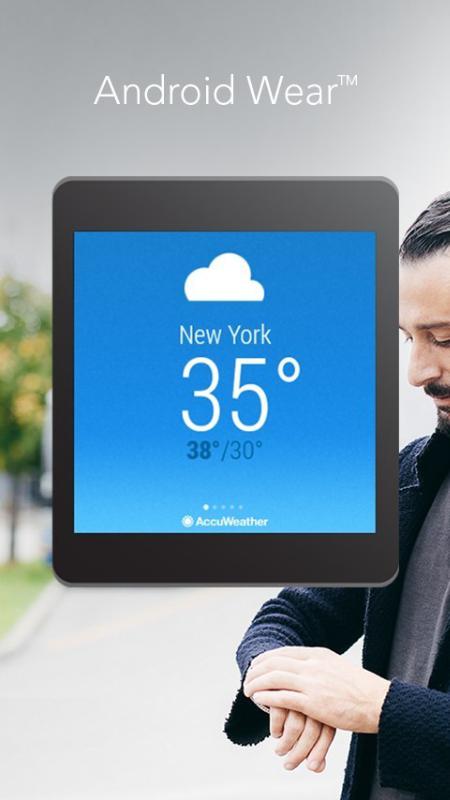
AccuWeather App for Android Wear (PRNewsFoto/AccuWeather)
The AccuWeather app for Android is now available for Android Wear, providing users with up-to-the-minute weather information wherever they go. Android Wear is the Android platform for wearables such as smartwatches. The app is available through the Google Play store.
AccuWeather’s app for Android Wear features AccuWeather MinuteCast, a global minute-by-minute precipitation forecast for a person’s exact street address or GPS location. AccuWeather MinuteCast includes precipitation type and intensity, as well as start and end times for precipitation, and gives users by-the-minute precipitation forecasts for the upcoming two hours. The GPS technology that localizes the weather to the user’s location is protected by patents in the United States and many of the major countries around the world, AccuWeather said.
In addition to AccuWeather MinuteCast, AccuWeather for Android Wear and for Android smartphones and tablets provides users with severe weather alerts, hourly forecasts, and current conditions.
“This is an exciting opportunity for AccuWeather to deliver weather information in innovative new ways to users,” said Steven Smith, chief digital officer of AccuWeather, Inc. “As the global weather leader, we provide weather forecasts wherever, whenever, and however our users most want them. Easy access, hyper localization, ease of use, and the superior accuracy that is the hallmark of our organization, help our audiences everywhere make decisions and improve their lives.”
AccuWeather MinuteCast is available for the contiguous United States, Canada, Japan, Ireland, France, Germany, Belgium, Switzerland, Netherlands, Luxembourg, the United Kingdom, and parts of the Czech Republic, with additional locations to come.
AccuWeather for Android Wear, and for Android smartphones and tablets, is available from Google Play.
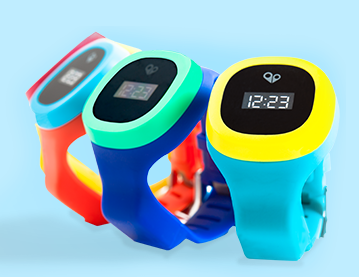
The hereO cellular GPS watch for kids will be officially unveiled at the 2015 International CES, being held in Las Vegas this week. Designed for children ages three and up, the hereO works in sync with a mobile app to provide real-time location sharing, safe-zone alerts, and group messaging, allowing parents to monitor their children’s safety and whereabouts at all times directly on their mobile phones or desktop computers.
The engineers at hereO miniaturized components to make the watch fit children’s wrists, the company said. The watch comes in a variety of bright and colorful water resistant designs to appeal to children. For parents, the hereO Family App for smartphones/tablets (iOS and Android) and desktops provides real-time location information on all family members and loved ones, plus location history, live-updates, panic alerts, safe-zone definition, and more.
“CES is a crucible of amazing minds, emerging ideas, and groundbreaking new technology; it’s the Mecca for today’s most inspired innovators,” said hereO Co-Founder and President Daniel Ivesha. “After three years of developing and perfecting our prototype, we couldn’t think of a better place to debut hereO, the world’s smallest cellular-connected GPS tracking watch for kids, which we believe is not only a game-changer in child safety technology but in the way families stay connected.”
Features include:
hereO LOCATION: Parents can locate their child anytime, anywhere. Historical locations are also available so parents can track where their child have been throughout the day.
Wi-Fi ENABLED: Wi-Fi allows indoor tracking whenever an indoor map is available. When indoor mapping is unavailable, an indoor confirmation will be sent to the parent’s smartphone.
SAFE-ZONE ALERTS: Parents can create Safe Zones for frequently visited areas (kindergarten, office, etc.) and are notified when their child arrives or departs from that location.
PANIC ALERT: In case of an emergency, children can use their hereO watch to send a panic alert that immediately notifies family members of their location.
TAMPER ALERT: Parents receive an alert when any authorized person tries to remove the watch.
EMERGENCY TRACKING: In emergency situations, parents can turn on real-time tracking to facilitate locating the child.
TIME DISPLAY: Time is displayed on a beautiful e-ink display.
USB charger: Built-in USB connector allows portable charging. Simply plug the hereO watch into any USB port to charge and to get firmware updates.
LONG BATTERY LIFE: With our standby mode, the hereO watch can last up to 60 hours.
BUILT-IN SIM: Each hereO watch is equipped with a built-in SIM card that works in over 120 countries, making it the perfect travel companion.
The hereO watch retails for $179, which includes a three-month subscription to the hereO Family App. Thereafter, a monthly fee of $4.95 applies.
At CES, the hereO watch is at booth #74545 (Tech West: Sands Expo at The Venetian).
Record-Breaking Year Ahead: Industry Revenues to Reach All-Time High of $223.2B in 2015
Revenues for the consumer electronics (CE) industry are projected to grow three percent in 2015 and to reach an all-time high of $223.2 billion, according to The U.S. Consumer Electronics Sales and Forecasts, the semi-annual industry report released today by the Consumer Electronics Association (CEA). The total revenues forecast was announced by CEA President and CEO Gary Shapiro during his opening remarks today at the 2015 International CES, running January 6-9 in Las Vegas.
CEA’s consensus forecast reflects U.S. factory sales to dealers and covers more than 100 CE products. The twice-annual report serves as a benchmark for the CE industry, charting the size and growth of underlying categories.
Emerging Technologies
The 2015 forecast projects that revenue for new, emerging product categories is expected to double, growing 108 percent year-over-year in 2015. These new technology categories include unmanned systems (unmanned aerial vehicles, unmanned vehicles and home robots); wearables such as health and fitness devices, smartwatches and smart eyewear; IP cameras; 3D printers; 4K Ultra-High Definition televisions; and connected thermostats.
While the emerging product categories represent less than five percent of the entire CE industry revenue forecast, they are expected to contribute almost $11 billion to overall CE revenue in 2015.
“Our forecast underscores that consumers’ love affair with technology shows no signs of slowing any time soon,” said Shapiro. “Consumer technology is all about continued innovation. In the blink of an eye, consumer demand has taken off for emerging categories such as wearables, unmanned aerial vehicles and 4K Ultra HD — categories that were too small to track just three years ago. Expect to see these burgeoning categories, as well as innovations across the full spectrum of consumer technology, on display this week at the 2015 International CES.”
The Wearable Revolution
The wearable device revolution is a key category to watch in the coming years, and especially in 2015. CEA projects overall wearable unit sales will reach 30.9 million units (a 61 percent increase from last year) and generate $5.1 billion in revenue in 2015 (a 133 percent increase). CEA’s wearables category encompasses fitness activity bands and other health and fitness devices, as well as smartwatches and smart eyewear.
Health and fitness devices: Led by the popularity of activity tracking devices, health and fitness devices will lead unit sales among all wearables in 2015 with a projected 20 million units. Revenue is expected to surpass $1.8 billion in 2015.
Other mobile devices:
Smartphones: As the sales leader of the industry, smartphone unit shipments are projected to reach 169.3 million this year, up six percent from 2014. Additionally, smartphone revenues are expected to generate $51.3 billion in 2015, a five percent increase from last year. Particular growth will be seen in screen sizes between 5.3 inches – 6.5 inches.
Tablets: Unit sales of tablets are projected to reach 80.7 million this year, a three percent increase from 2014. Revenues for tablets will reach $24.9 billion this year, down one percent.
“Mobile connected devices have reached an equilibrium, stabilizing the steep climb these products have experienced in recent years,” said Shawn DuBravac, Ph.D., chief economist, CEA and author of CEA’s soon-to-be released book Digital Destiny: How the New Age of Data Will Transform the Way We Work, Live, and Communicate. “Overall, improving economic conditions, consumer enthusiasm for new features and product categories, competitive manufacturer pricing and several other dynamics now at play should make 2015 an especially significant year for tech.”
Other CE categories expected to enjoy positive growth in 2015 include audio, electronic gaming and laptops. Automotive electronics will see continued growth due to new vehicle sales in 2015, reaching $14 billion in revenue, a 3.3 percent increase.
The U.S. Consumer Electronics Sales and Forecast 2010-2015 (January 2015) is published twice a year, in January and July, reporting U.S. factory sales-to-dealers. It was designed and formulated by CEA to be a comprehensive source of sales data, forecasts, consumer research and historical trends for the consumer electronics industry.
Ultra-Low-Power, High-Accuracy Location for Wearable GNSS Devices: From Host-Based to On-Chip
Photo: Steve Malkos, Manuel del Castillo, and Steve Mole, Broadcom Inc., GNSS Business Unit
As location penetrates smaller and smaller devices that lack memory and computation power, GNSS chips must reacquire the standalone capability that they shed when first going to small form factors such as phones. A new chip with a new architecture demonstrates navigation and tracking and avoids burdening its main processor with heavy software.
By Steve Malkos, Manuel del Castillo, and Steve Mole, Broadcom Inc., GNSS Business Unit
End users first experienced the amazing capabilities of GPS 12 years ago with early mass-market GPS devices. The focus was on navigation applications with specific tracking devices like personal navigation devices and personal digital assistants (PNDs, PDAs). With the advent of smartphones, GPS became a must-have feature. Other constellations were added to improve performance: GLONASS, QZSS, SBAS, and very recently, BeiDou. In the current phase, the focus is shifting to fitness applications and background location. This is not an insignificant change.
Always-on connected applications, high-resolution displays, and other such features do not improve battery life. This article describes new ultra-low-power, high-accuracy location solutions for wearables’ power consumption.
Impact of Always-On Connected Applications
New applications require frequent GNSS updates with regard to user position. Sometimes the application will be open and other times it will not. The chips need to keep working in the background, buffering information and taking predefined actions. The GNSS chips need to be able to cope with these new requirements in a smart way, so that battery life is not impacted. Saving power is now the name of the game.
Furthermore, GNSS is penetrating small devices: the Internet of Things (IoT) and wearables. They do not have the luxury of large resources (memory, computation power) as smartphones do. GNSS chips cannot leverage the resources in those devices; they need to be as standalone as possible. In summary, the new scenario demands chips that:
do not load device’s main processor with heavy software;
use less power while maintaining accuracy;
can be flexibly configured for non-navigation applications.
New GNSS Chip Architectures
The industry is designing chips to meet these requirements by including the following features:
measurement engine (ME) and positioning engine (PE) hosted on the chip;
accelerometer and other sensors directly managed by the chip;
new flexible configurations, duty cycling intervals, GNSS measurement intervals, batching, and so on.
These features require hardware and software architectural changes. The new chips need more RAM than that required for smartphones, as they must now host the ME and PE. Wearables and IoT devices are small, cheap, and power-efficient. They do not have large processors and spare memory to run large software drivers for the GNSS chip. In many cases, the device’s microcontroller unit (MCU) is designed to go into sleep mode if not required, that is, during background applications. Therefore, new GNSS chips with more RAM are much better adapted to this new scenario.
New chips must tightly integrate with sensors. The accelerometer provides extremely valuable information for the position update. It can detect motion, steps, motion patterns, gestures, and more. However, as a general rule, the MCU’s involvement in positioning should be minimized to reduce power consumption. For power efficiency, the new GNSS chips must interface directly with the sensors and host the sensor drivers and the sensor software.
Finally, new chips must adapt to different human activities as they are integrated into wearable devices. This is the opposite approach from past developments where GNSS development was focused on one use case: car navigation. Now they must adapt to walking, running, cycling, trekking, swimming, and so on. All these activities have their particularities that can determine different modes in which new GNSS chips can work. Electronics must now conform to humans instead of the other way around. New wearable-chip GNSS tracking strategies include dynamic duty cycling and buffering, which contribute to the goal of reducing power consumption without compromising accuracy.
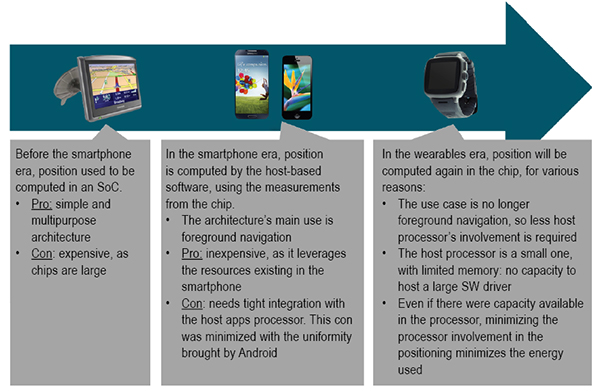
Satellite positioning embedded in devices over the last few years first saw on-chip positioning before the era of smartphones, where you had dedicated SoCs that supported the silicon used to compute the GNSS fix. These expensive chips had lots of processing power and lots of memory. Once GNSS started to be integrated into cellphones, these expensive chips did not make sense. GNSS processing could be offloaded from the expensive SoCs, and part of the GNSS processing was moved onto the smartphone application processor directly.
Since navigation is a foreground type of application, the host-based model was, and is still, a very good fit. But with advances in wearable devices, on-chip positioning will become the new architecture. This is because the host processor is small with very limited resources on wearables; and because energy must be minimized in wearables, reducing the processor involvement when computing GNSS fixes is critical.
Some vendors are taking old stand-alone chips designed for PNDs and repurposing them for wearable devices. This approach is not efficient, as these chips are large, expensive, and use a lot of power.
GNSS Accuracy
While the new fitness and background applications in wearables have forced changes in GNSS chips’ hardware and software architectures, GNSS accuracy cannot be compromised. Customers are used to the accuracy of GNSS; there’s no going backwards in performance in exchange for lower power consumption.
Figure 1. Software architecture for wearables.
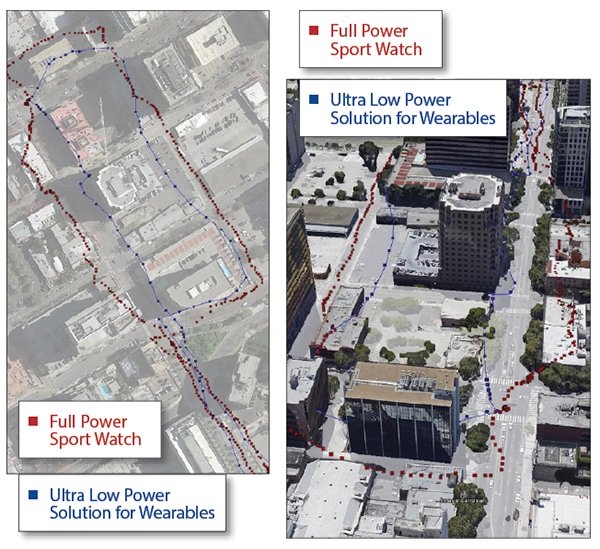
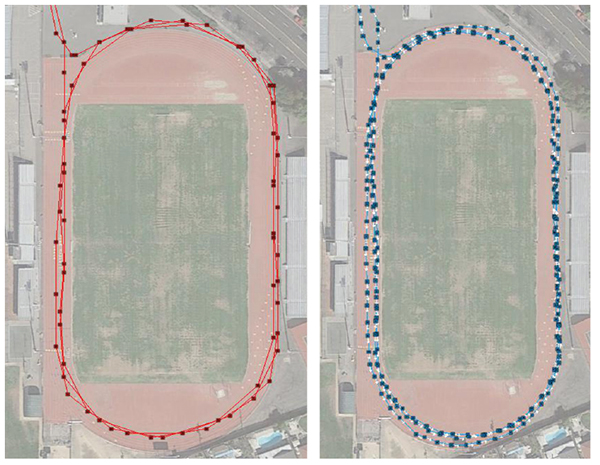
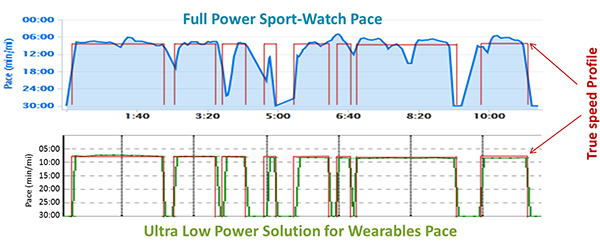
A series of tests shown here demonstrate how a new wearable, ultra-low-power GNSS chip produces a comparable GNSS track to existing devices using repurposed full-power sportwatch chips, while using only a fraction of the power.
Speed Accuracy. Not only does the ultra-low-power solution produce a comparable GNSS track, it actually outperforms existing solutions when it comes to speed and distance, thanks to close integration with sensors and dynamic power saving features (Figures 2 and 3).
Figure 2. Ultra-low-power versus full power.Figure 3. Full-power sportwatch, left, and ultra-low power chip, right, in more accuracy testing.
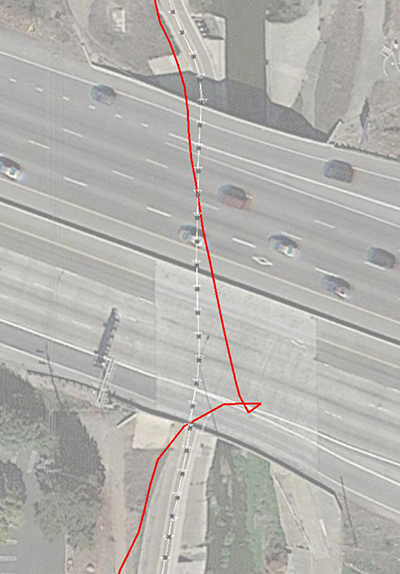
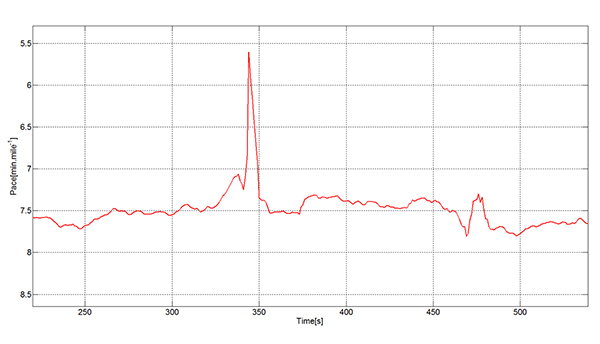
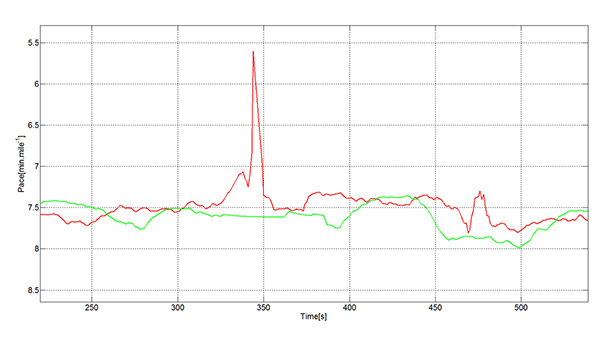
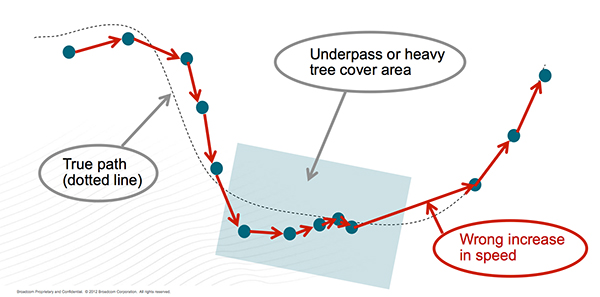
GNSS Reacquisition. GNSS-only wearable devices face a design challenge: to provide complete coverage and to avoid outliers. This is seen most clearly when the user runs or walks under an overpass (Figure 4). Familiar to urban joggers everywhere, the underpass allows the user to cross a busy road without needing to check for traffic, but requires the GNSS to reacquire the signals on the tunnel exit. See the GNSS track in Figure 5: when the device reacquires the signals, the position and speed accuracy suffers.
Figure 4. Position accuracy on reacquisition, emerging from overpass.Figure 5. GNSS speed accuracy on reacquisition.
Using the filtered GNSS and sensors, however (Figure 6), enables smooth tracking of speed and distance through the disturbance.
Figure 6. Sensors provide smooth speed estimate.
Urban Multipath. The pace analysis in Figure 7 shows a user instructed to run at a constant 8-minute/mile pace, stopping to cross the street where necessary. The red line on each plot shows the true pace profile. The commercial GNSS-only sportwatch on top shows frequent multipath artifacts, missing some of the stops and, worse for a runner, incorrectly showing erroneously high pace. The ultra-low-power chip captures all the stops and shows a constant running pace when not stopped.
Figure 7. Urban multipath tests.
It is well known in the community that regular sportwatches give unreliable speed and distance estimates in urban environments — where most organized running races are held! There’s nothing worse, as a runner, than to hear the distance beep from your watch going off earlier than expected: how demoralizing! The major benefit of this solution is that the speed estimate is much more reliable in the presence of multipath. At the same time, battery life can be extended because the GNSS is configured to use significantly less power.
fSpeed in existing solutions is computed in two different ways: indirectly from two consecutive, time-stamped GNSS position estimates, each derived from range measurements to the satellites, and directly from the Doppler frequency offset measurements to the satellites. Both range and frequency measurements are subject to significant error when the direct path to the satellite is blocked and a reflection is acquired.
The effects of multipath mean that the range error may in typical urban environments be hundreds of meters. The frequency error is also a function of the local geometry and is typically constrained by the magnitude of the user’s horizontal speed.
In either case, the GNSS device alone, in the presence of signal multipath, generates a velocity vector that fluctuates significantly, especially when there is a change in the satellites used or signal propagation path between the two consecutive positions. A variety of real-life cases generate this sudden fluctuation in velocity vector:
Running along a street in an urban canyon and turning a 90-degree corner.
Running along a pedestrian lane and taking a short road underpass.
Running under tree cover and suddenly arriving at an open area.
Running under an elevated highway and turning 90 degrees to a wide-open area.
In each case, the chips are using a certain set of satellites, and suddenly other, higher signal-strength satellites become available. A typical situation is for the position to be lagging the true position (while under tree cover, going through an underpass) and needing to catch up with the true position when arriving to the wide-open area. A jump in position is inevitable in that situation. This is not too bad for the GNSS track, but it will mean a noticeable peak in the speed values that is not accurate. Fitness applications save all of the computed speed values and generate a report for each workout. These reports are not accurate, especially the maximum speed values, for the reasons explained above.
Figure 8 describes a typical situation where the actual speed of the runner is approximately constant. GNSS fixes are computed regularly; however, the speed computed from subsequent GNSS fixes have sudden peaks that spoil the workout speed reports.
Figure 8. Sudden peaks spoil workout speed reports.
The new ultra-low-power solutions for wearables solve this problem by deriving speed and accumulated distance from the sensors running in the device. This avoids incorrect speed peaks, while still being responsive to true pace changes by the runner.
In running biomechanics, runners increase pace by increasing step cadence and/or increasing step length. Both methods depend on the runner’s training condition, technique, biomechanics, and so on. As a general rule, both step cadence and step length increase as the running speed increases from a jogging speed to a 1,500-meter race speed.
A runner may use one mechanism more than the other, depending on the moment or on the slope (uphill or downhill). In the case of male runners, the ratio of step length to height at a jogging speed is ~60 percent.The ratio of step length to height in a 1,500 meter race speed is ~100 percent. For female runners, the respective ratios are ~55 percent and ~90 percent.
The ultra-low-power chips take into account both mechanisms to derive the speed values. The sensor algorithms count the number of steps every time interval and translates the number of steps into distance multiplying by the step length. The reaction time of the GNSS chip to speed changes based on a higher cadence is immediate.
Speed changes due to longer steps are also measured by the ultra-low-power chips. The step length is constantly calibrated by the GNSS fixes when the estimated GNSS position error is low. The reaction time of the GNSS chip to speed changes based on longer steps has some delay, as it depends on the estimated error of the GNSS fixes.
Manufacturer
The ultra-low-power, high-accuracy, 40-nanometer single-die BCM4771 chip was designed by Broadcom Corporation. It is now being manufactured in production volumes and is focused on the wearables and IoT markets.It consumes five times less power than conventional GNSS chips (~10 mW) and needs 30 KBytes of memory in the MCU for the software driver. It features tight integration with the accelerometer and innovative GNSS tracking techniques for extremely accurate speed, accumulated distance, and GNSS tracking data.
Steve Malkos is an associate director of program management in the GPS Business Unit at Broadcom, responsible for defining GPS sensor hub and indoor positioning features. He has a B.S. in computer science from Purdue University, and currently holds eight patents,10 more pending, in location.
Manuel del Castillo is an associate director of marketing for Broadcom in the GNSS group. He has an MS in electronic engineering from the Polytechnic Universityand an MBA from the Instituto de Empresa, both in Madrid, Spain. He holds three patents in location with five more pending.
Steve Mole is a manager of software engineering for Broadcom in the GNSS group. He received his bachelor’s degree in physics and astrophysics from the University of Manchester.
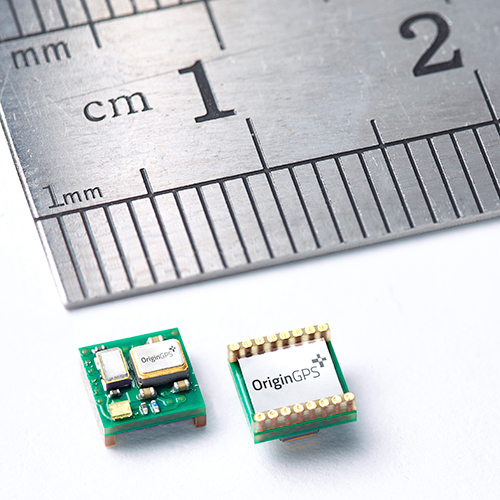
OriginGPS has launched the Nano Spider, a tiny yet fully integrated GPS receiver. The Nano Spider module is designed to support ultra-compact applications where size is at a premium, such as smart watches, wearable devices, trackers and digital cameras.
OriginGPS, which previously introduced the Micro Spider (5.6 x 5.6 mm) module, said the Nano Spider is 47 percent smaller than its previous solutions, measuring 4 x 4 x 2.1 mm. The Nano Spider’s proprietary structure is a multi-level circuit for surface mounting, built to reduce footprint size.
“The wearable technology trend requires components that balance a small size with high-performance and best-in-class power consumption,” said Gal Jacobi, CEO of OriginGPS. “OriginGPS aims to continue to shrink the size of components, while increasing features to make adding location functionality possible for every device.”
OriginGPS’ Nano Spider continuously tracks all GPS satellites in view and provides real-time positioning data in the standard industry format defined by the U.S. National Marine Electronics Association (NMEA). The Nano Spider offers a complete System in Package (SiP) that includes:
Fully integrated features – The Nano Spider includes a low noise amplifier (LNA), surface acoustic wave (SAW) filter, temperature controlled crystal oscillator (TCXO) and real-time clock (RTC) crystal, a power management unit, and radio frequency (RF) shielding.
Superior sensitivity and performance – The Nano Spider module offers accuracy of approximately one meter, and achieves a rapid time to first fix of less than one second and tracking sensitivity of -163 dBm.
Continuous connectivity with minimal power consumption – It achieves a state of near continuous availability by detecting changes in context, temperature and satellite signals by maintaining and opportunistically updating its internal fine time, frequency, and satellite data, while consuming microwatts of battery power.
Improving marginal signal conditions – It includes OriginGPS’ proprietary Noise Free Zone (NFZ) system to increase noise immunity even under marginal signal conditions, such as urban canyons, under dense foliage or a rapidly changing receiver position.
To see a demo of the Nano Spider and Nano Hornet modules, visit OriginGPS’ booth (Hall A4 Booth 271) at Electronica 2014 in Munich, Germany.
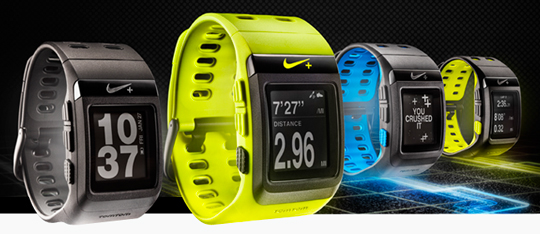
TomTom and Nike today unveil a new range of the Nike+ Sportwatch, coinciding with the launch of a brand new Nike+ website www.nikeplus.com. The range includes several editions and color combinations, and introduces a starter product for those new to running.
Whether they own an original or new edition, all Nike+ Sportwatch users can now access Nike’s intelligent measure of athletic ability, Nikefuel. This converts a runner’s mileage into universal units that measure movements in a wide variety of different sports. As a result, it’s easy for people to compare their performance against that of athletes in other sports, and share their achievements with friends, the companies said.
“Our extended range of products will be very useful to those adding running into their exercise regime. And the new NikeFuel measurement brings added motivation, allowing people to share and compare their performance with friends in other sports,” says Corinne Vigreux, managing director, TomTom.
The new Nike+ Sportwatch colors have been chosen to match Nike’s apparel and shoe ranges. They include black/anthracite, anthracite/blue glow, and high-impact volt green. The anthracite/blue glow edition is available as a starter product, priced at €149.