Orolia has finalized the contracts to supply Rubidium atomic clocks (Rubidium Atomic Frequency Standard, RAFS) and passive hydrogen masers to equip eight satellites for Galileo’s Full Operational Capability Phase II program. The two new contracts, totaling 14.5 million euros, follows the authorization to proceed received in June 2012 for the manufacture of these two types of high-precision clocks.
Orolia brands include Spectratime and Spectracom. The announcement was made through Orolia subsidiary Spectratime.
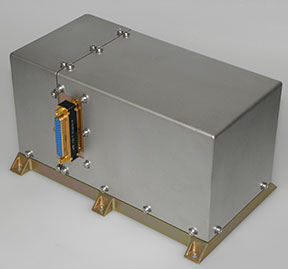
Each Galileo satellite carries two Rubidium atomic clocks and a passive hydrogen maser, the most stable clock in the world, according to Spectratime. Once completed, this new contract, in partnership with Astrium and Selex Galileo, will make Spectratime the leading supplier in the world for active atomic clocks in space, including 72 for the Galileo system.
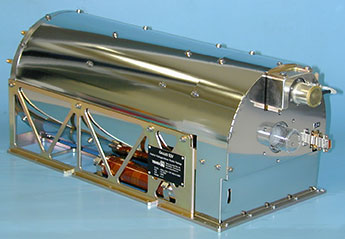
Rubidium atomic clock, or RAF.
Atomic clocks are used in satellite navigation because of their stability, low weight and high reliability. Very accurate time is used to precisely measure the path of radio signals from the satellites to Earth, and by calculation, the distance between the satellites and the Galileo receiver. The stability of these clocks is enough to guarantee geo-location accuracy of one meter with a fully operational ground infrastructure.
Spectratime said it has the expertise and capability in designing advanced maser physics packages for high-performance, high-reliability space applications, where the clocks need protection in the hostile space environment from radiation, magnetic fields, shock, vibration, or thermal variations.
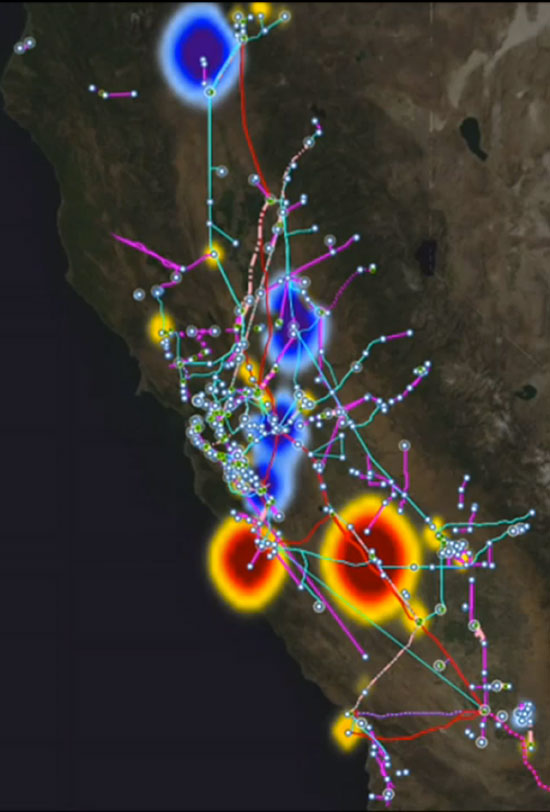
SyncWorld will enable power utilities to react in real time to outages and alert users to contingency plans.
Symmetricom has introduced a new category to its SyncWorld Ecosystem Program dedicated to the power utility industry. Developed to support integration and interoperability among power utility and Symmetricom solutions, the SyncWorld Power Ecosystem aims to facilitate unified deployments of timing and synchronization in substation modernization and synchrophasor applications.
As power utilities shift to the Smart Grid, they gain the ability to monitor in real time, allowing for proactive operations control. Advanced synchronization and timing enable power equipment to operate more efficiently and closer to its operational limits.
For example, one microsecond accuracy is required by the phasor measurement unit (PMU) for real-time network situational awareness and overall operational efficiency. Without accurate time stamps, PMU data has limited value. For power utility companies, that translates into enhanced network utilization rates as well as smarter management and mixing of renewable and traditional power sources.
The introduction of the SyncWorld power segment is expected to drive collaboration and innovation among the industry’s leading power utility vendors. To participate in the program, vendors work with Symmetricom to develop a joint solution, complete successful solution testing, and commit to ongoing technical and business activities to ensure joint success.
Interoperability is a key requirement to join the program. Using various test cases with a defined standard for testing, Symmetricom focuses its assessment on the performance of a product’s IEEE 1588 power profile. During testing, Symmetricom clocks act as the master clocks, switches act as transparent clocks, and IED/PMU products act as slave clocks.
PCTEL, Inc. announced the launch of its next generation multi-band GNSS antennas for global timing and precision tracking applications at the ION GNSS Conference being held this week in Nashville, Tennessee.
The new antennas, which are designed for use with GPS, GLONASS, BeiDou, and Galileo systems, are being showcased along with other PCTEL antennas at the PCTEL booth in the Exhibit Hall, Booth 318/320. All models of the new antennas are available for sale.
Equipment providers for carrier network timing, precision agriculture, and global asset tracking applications need a single antenna solution for global deployment. PCTEL’s new GNSS1-TMG-26N and GPS-LB12GL-MAG antennas address global compatibility issues for two of the industry’s most crucial applications.
For critical timing applications for macro and small cell deployments, PCTEL has developed the GNSS1-TMG-26N antenna. The GNSS1-TMG-26N is a fixed mount network timing antenna covering GPS, GLONASS, Beidou, and Galileo system frequencies in one single unit, making it a true global solution.
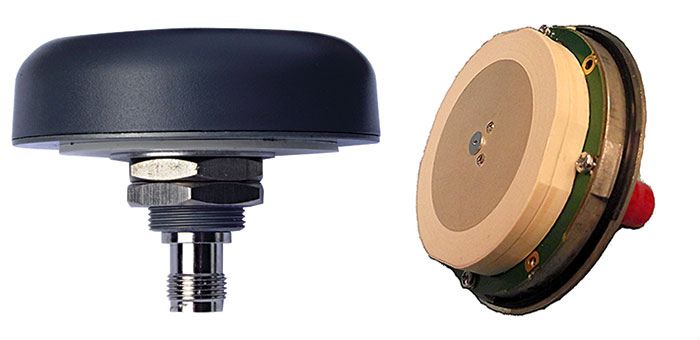
PCTEL’s GPS-LB12GL-MAG antenna is designed for precision agriculture.
For global precision navigation applications, PCTEL has developed the GPS-LB12GL-MAG to cover GPS L1, GPS L2, GLONASS, and L-BAND constellations. The GPS-LB12GL-MAG’s multi-band coverage addresses the precision market in the USA as well as differential correction signals needed across Europe and Asia.
“PCTEL will meet the GNSS market requirements for our global customers while maintaining PCTEL’s high standards for quality and performance,” said Jeff Miller, president of PCTEL Connected Solutions. “We understand that our products need global compatibility to support our customers around the world. We are proud to showcase our design excellence in this highly technical area,” added Miller.
Symmetricom will be participating in a new products panel at ION GNSS+, which will be held September 16-20 in Nashville, Tennessee.
Phil Bourekas, Symmetricom executive vice president of marketing, will take part in “New Products Panel: Legacy and Expertise in GNSS Timing” on Thursday, September 19, 8:30 a.m. to 12:15 p.m. in Grand Ballroom East of the Nashville Convention Center, Nashville, Tennessee.
The presentation will focus on Symmetricom’s suite of GNSS-applicable timing products, ranging from precision time protocols to atomic clocks, and how they can be used by the government, communications, power and enterprise verticals.
Symmetricom is also a sponsor of the exhibitor-hosted reception. In its booth (#619), Symmetricom will exhibit and demonstrate the following products:
GPS Time & Frequency Receivers (XLi and XLi SAASM GB-GRAM models)
Registration is now open for the Institute of Navigation’s (ION) Precise Time and Time Interval Meeting (PTTI) to be held December 2-5, 2013 (Tutorials will be held December 2) at the Hyatt Regency Bellevue, Bellevue, Washington. Registration and program information will be available online only.
PTTI is an annual conference sponsored by ION with a technical program designed to disseminate and coordinate PTTI information at the user level, review present and future PTTI requirements, inform government and industry engineers, technicians, and managers of precise time and frequency technology and its problems, and provide an opportunity for an active exchange of new technology associated with PTTI.
This year’s conference will feature a technical program around important PTTI issues including:
Advanced Atomic Frequency Standards Applications
High Performance Time and Frequency Transfer via Fiber
Next Generation PTTI Applications
Network Synchronization and IEEE 1588, NTP
PTTI in Space
PTTI Time and Frequency Laboratory Activities
State of the Art GNSS Timing Receiver
Metrology and Applications
Time and Frequency Transfer Applications –
Milliseconds to Picoseconds
Time Scales and Algorithms
In addition to a commercial exhibit, this year’s program includes a Panel Discussion on Near-term GNSS deployments and the impact on PTTI Applications and Performance Current and future status of: GPS, GLONASS, Galileo, BeiDou/Compass, QZSS, WAAS, EGNOS and INRISS.
This year’s conference will also feature pre-conference tutorials December 2, including
Introduction to Precise Time and Frequency
Time and Frequency Transfer
Two-Way Satellite Time Transfer (TWSTT)
Global Navigation Satellite Systems (GNSS) I & II
IEEE 1588: The Precision Time Protocol – An Overview
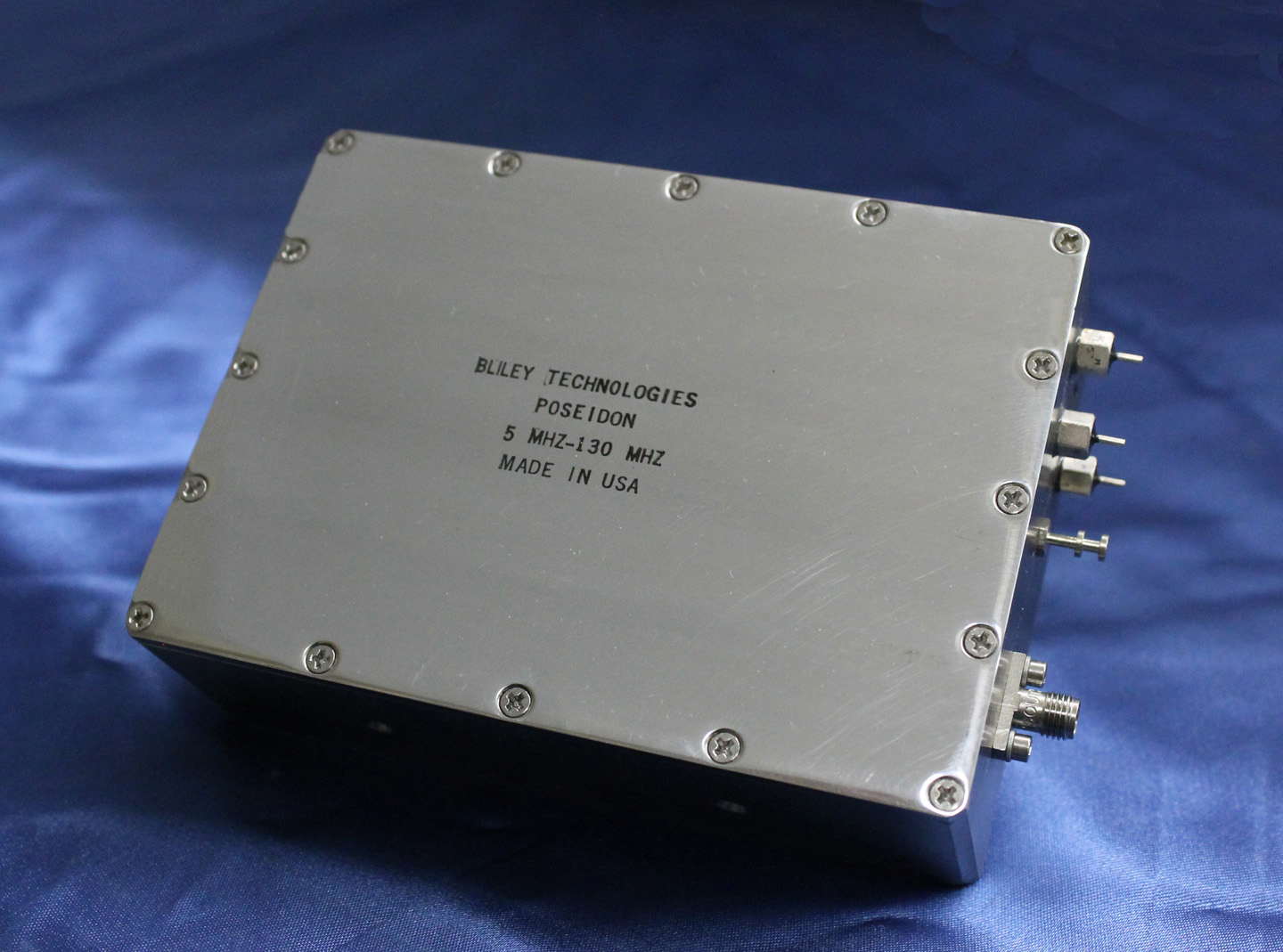
The rugged Poseidon Series of OCXOs by Bliley features unparalleled phase noise performance in a modular type sealed package. It is a customizable frequency range product specifically designed for vibration-prone environments where dynamic phase noise performance is paramount. Applications include ground mobile, airborne, and shipboard environments.
Features include typical acceleration sensitivity of <2e-11/g, excellent FvT performance, frequency range of 5 MHz to 130 MHz, ultra-low static and dynamic phase noise, and excellent long-term aging.
Microsemi Corporation, provider of semiconductor solutions differentiated by power, security, reliability and performance, today announced the highest density family of single-chip timing card devices with support for both Synchronous Ethernet (SyncE) and IEEE 1588-2008 packet networks including 4G and LTE applications. The highly integrated ZL30361, ZL30362 and ZL30363 provide all of the key elements required for wireless network synchronization including support for phase and frequency. The devices are available today and are currently being designed into wireless backhaul products where phase synchronization performance is crucial.
Microsemi’s new timing devices provide the high flexibility, small footprint (13mm x 13mm) and low cost compared to alternative solutions. Key features include the availability of up to four independent timing channels; each channel can be configured to support any electrical or packet mode of operation. This allows for the simultaneous support for GPS, SyncE and IEEE1588-2008 timing. As a result, these devices can be used to enhance or to replace GPS timing in wireless infrastructure at a lower cost.
“Our new SyncE/IEEE1588 solutions provide customers with a highly compelling value proposition and very flexible architecture as evidenced by several product design-ins already in development by leading telecom companies,” said Maamoun Seido, vice president of Microsemi’s Timing Products group. “These offerings are indicative of the innovative products that have made us the No. 1 provider of network timing semiconductor solutions globally, and the new products in our pipeline will help solidify our leadership position.”
SyncE and IEEE 1588-2008 technologies allow carriers to improve synchronization and performance in packet-switching networks including the fast-growing 4G and LTE segment, which, according to a report from market research firm Infonetics, is rising from $8 billion in 2012 to a forecasted $17 billion in 2016.
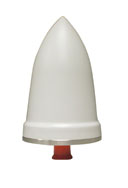
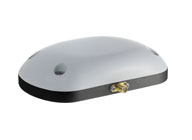
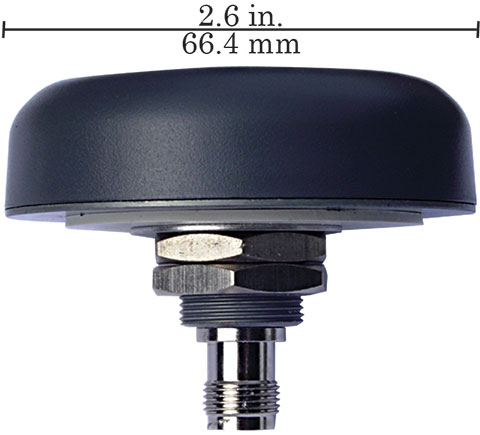
TW3802 Shown with flat radome. Conical radome also available.
Tallysman Wireless Inc. has added the dual-frequency TW3800 series to its high-quality precision line of antenna products.
The TW3800 series antennas feature a circular stacked patch antenna for improved axial ratio, yet are small and light, and have the extended bandwidth required for L1/L2 GPS & G1/G2 GLONASS, the company said. The operating voltage range is from +2.5 to 16 VDC. The antennas have a temperature compensated LNAs and operate from -40 to +85o C to provide reliable performance in most any environment. The TW3800 is packaged in a through hole mount making it suitable for mobile applications.
The TW380x is suited for many applications, including:
Anti-jamming GPS
Mission-critical GPS timing
Military and security
Network timing and synchronization
Precise tracking
High signal availability
The TW3805 is the OEM version of the TW3802, and can be custom tuned to provide optimal performance inside virtually any housing, Tallysman said.
“The circular patch design of the TW380X antennas permits precision custom tuning with excellent axial ratios.” said Gyles Panther, president of Tallysman Wireless. “This flexibility, combined with the very wide operating voltage enables this antenna to work with virtually any receiver on the market.”
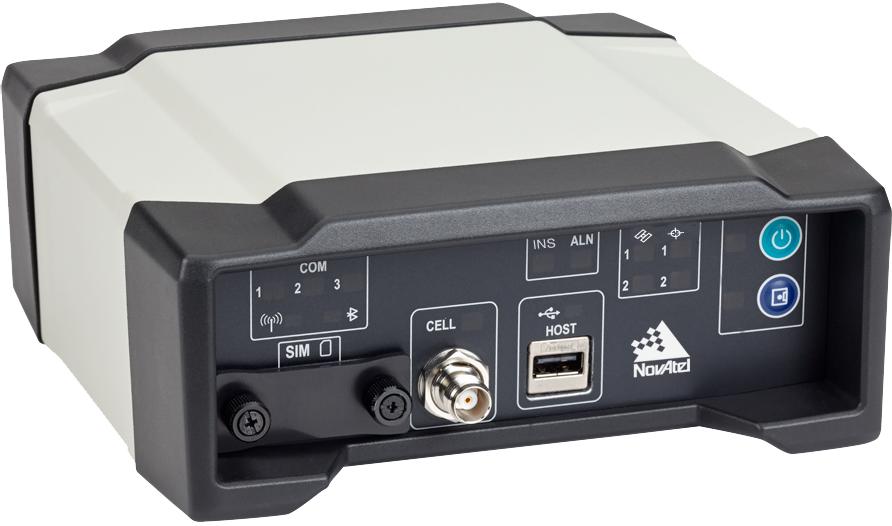
NovAtel has announced two new GNSS receivers: The OEM638 high precision receiver card and the ProPak6 enclosed receiver. The two products incorporate NovAtel’s most advanced GNSS technology, the company said.
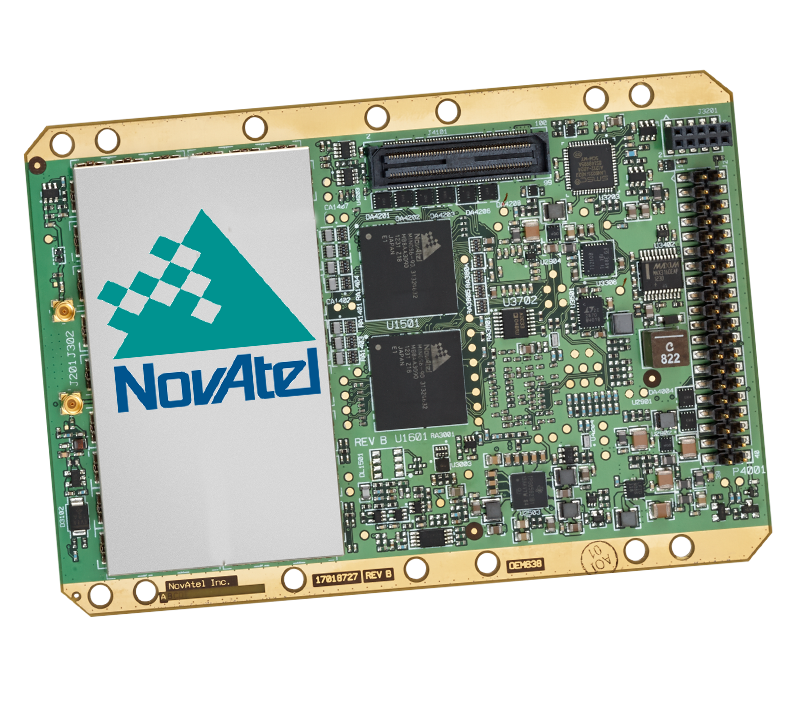
Novatel OEM638. Photo: NovAtel
The most advanced card within NovAtel’s OEM6 GNSS receiver family, the OEM638 tracks all existing and planned constellations including GPS, BeiDou, GLONASS, Galileo and QZSS. By providing flexible positioning options, from standalone meter-level to AdVanceRTK centimeter-level accuracy, the OEM638 offers the flexibility to meet a wide range of positioning requirements. A powerful API, 4-GB on-board data storage, wide input voltage and a host of interface options simplifies integration, decreasing time to market and overall system costs, NovAtel said.
“With the addition of the OEM638 GNSS receiver card, NovAtel’s OEM6 product line offers an even wider range of positioning options on our standardized technology platform. With three compact form factors to choose from, the OEM6 product line gives us the ability to meet the unique size, weight and performance requirements of our customers,” said Jason Hamilton, director of marketing for NovAtel.
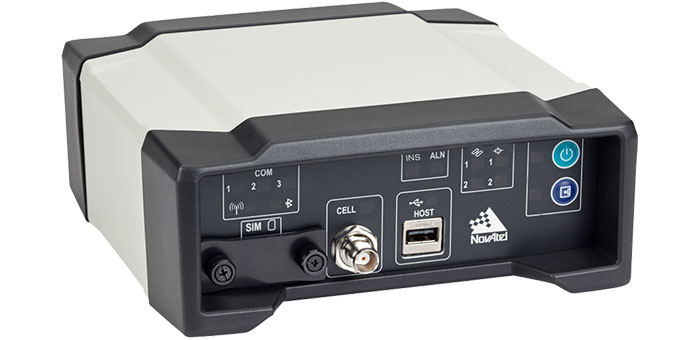
The ProPak6 is NovAtel’s most sophisticated GNSS enclosure product, offering meter-level to centimeter-level positioning in a rugged, water resistant IP67 housing. Standardized software and hardware connections, including multiple RS-232/RS-422 serial ports, CAN Bus, USB host and device, as well as Bluetooth, Wi-Fi, and optional cellular radio, speeds time to market and maximizes user capabilities, the company said. The ProPak6 is designed for reference station, timing, and general position applications.
NovAtel ProPak6. Photo: NovAtel
“Our ProPak6 provides a powerful enclosure option for integrators looking for positioning flexibility, multiple communication options and Ethernet support for remote configuration and access of data logs,” Hamilton said. “It was designed to simplify the integration process, by accelerating time to market and ensuring maximum return on investment. ”
The OEM638 and ProPak6 will be available to order July 26, with shipments beginning in August.
Abstract submissions are now being accepted for the Institute of Navigation’s (ION) Precise Time and Time Interval Meeting (PTTI). The conference will take place December 2-5 (Tutorials December 2) at the Hyatt Regency Bellevue, Bellevue, Washington. The deadline for submitting abstracts is August 2.
Instructions on submitting your abstract can be found at www.ion.org/ptti
PTTI is an annual conference sponsored by ION with a technical program designed to disseminate and coordinate PTTI information at the user level, review present and future PTTI requirements, inform government and industry engineers, technicians, and managers of precise time and frequency technology and its problems, and provide an opportunity for an active exchange of new technology associated with PTTI.
By bouncing eye-safe laser pulses off a mirror on a hillside, researchers at the National Institute of Standards and Technology (NIST) have transferred ultraprecise time signals through open air with unprecedented precision equivalent to the “ticking” of the world’s best next-generation atomic clocks.
Described in the April 28 issue of Nature Photonics, the demonstration shows how next-generation atomic clocks at different locations could be linked wirelessly to improve geodesy (altitude mapping), distribution of time and frequency information, satellite navigation, radar arrays and other applications. Clock signals of this type have previously been transferred by fiber-optic cable, but a wireless channel offers greater flexibility and the eventual possibility of transfer to and from satellites.
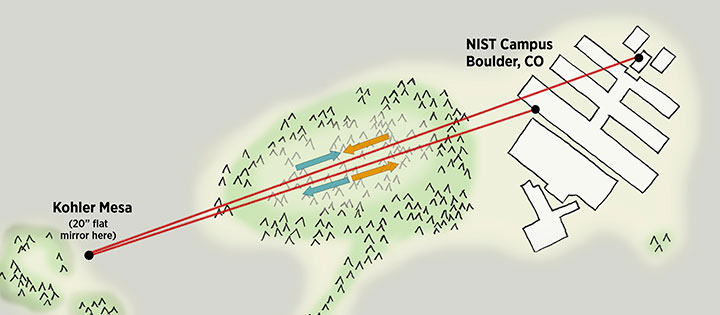
NIST researchers transferred ultraprecise time signals over the air between a laboratory on NIST’s campus in Boulder, Colorado, and nearby Kohler Mesa. Signals were sent in both directions, reflected off a mirror on the mesa, and returned to the lab, a total distrance of approximately two kilometers. The two-way technique overcomes timing distortions on the signals from turbulence in the atmosphere, and shows how next-generation atomic clocks at different locations could be linked wirelessly to improve distribution of time and frequency information and other applications.
The stability of the transferred infrared signal matched that of NIST’s best experimental atomic clock, which operates at optical frequencies. Infrared light is very close to the frequencies used by these clocks, and both are much higher than the microwave frequencies in conventional atomic clocks currently used as national time standards. Operating frequency is one of the most important factors in the precision of optical atomic clocks, which have the potential to provide a 100-fold improvement in the accuracy of future time standards. But the signals need to be distributed with minimal loss of precision and accuracy.
The signal transfer demonstration was performed outdoors over a two-way wireless link using two laser frequency combs. A frequency comb generates a steady stream of ultrashort optical pulses with a spacing that can be synchronized perfectly with the “ticks” of an optical atomic clock. (Click here for more on how frequency combs work.) In the experiment, the two combs were synchronized to the same stable optical cavity, which serves as a stand-in for an optical atomic clock. Each comb pulse was sent from one of two locations on NIST’s campus in Boulder, Colorado, reflected off a mirror on a mesa behind the campus, and returned to the other site, traveling a total distance of two kilometers.
Researchers measured travel times for pulses traveling in opposite directions between the two sites. The cumulative timing differences and frequency instabilities were infinitesimal, just one million-billionths of a second per hour, a performance level sufficient for transferring optical clock signals.
The transfer technique overcomes typical wireless signal problems such as turbulence in the atmosphere—the phenomenon that makes images shimmer when it’s very hot outside. Because turbulence affects both directions equally, it can be cancelled out. The transfer technique can also withstand signal losses due to temporary obstruction of the light path. The method should be able to operate at much longer distances, possibly even over future ground-to-satellite optical communication links as an added timing channel, researchers say.
The combs potentially could be made portable, and the low-power infrared light is safe for eyes. The research is funded in part by the Defense Advanced Research Projects Agency.
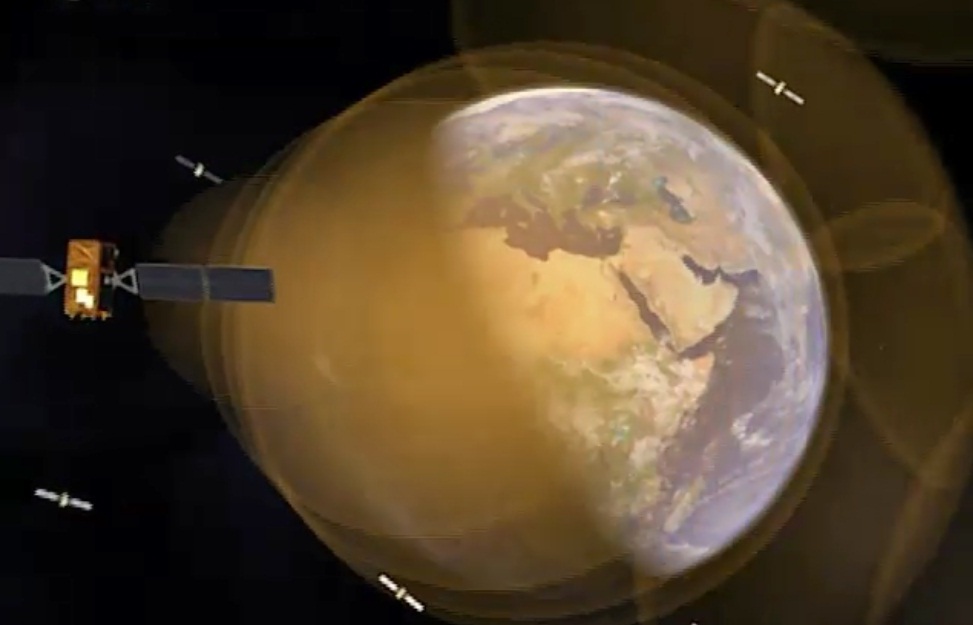
Europe’s four Galileo satellites are now working as clocks accurate to a few billionths of a second, disseminating the exact time through their signals expressed as the UTC Universal Coordinated Time global standard, reports the European Space Agency.
“A billionth of a second equals a nanosecond, a time interval far beyond our own human capacity of appreciation,” explains Marco Falcone, ESA’s Galileo System Manager.
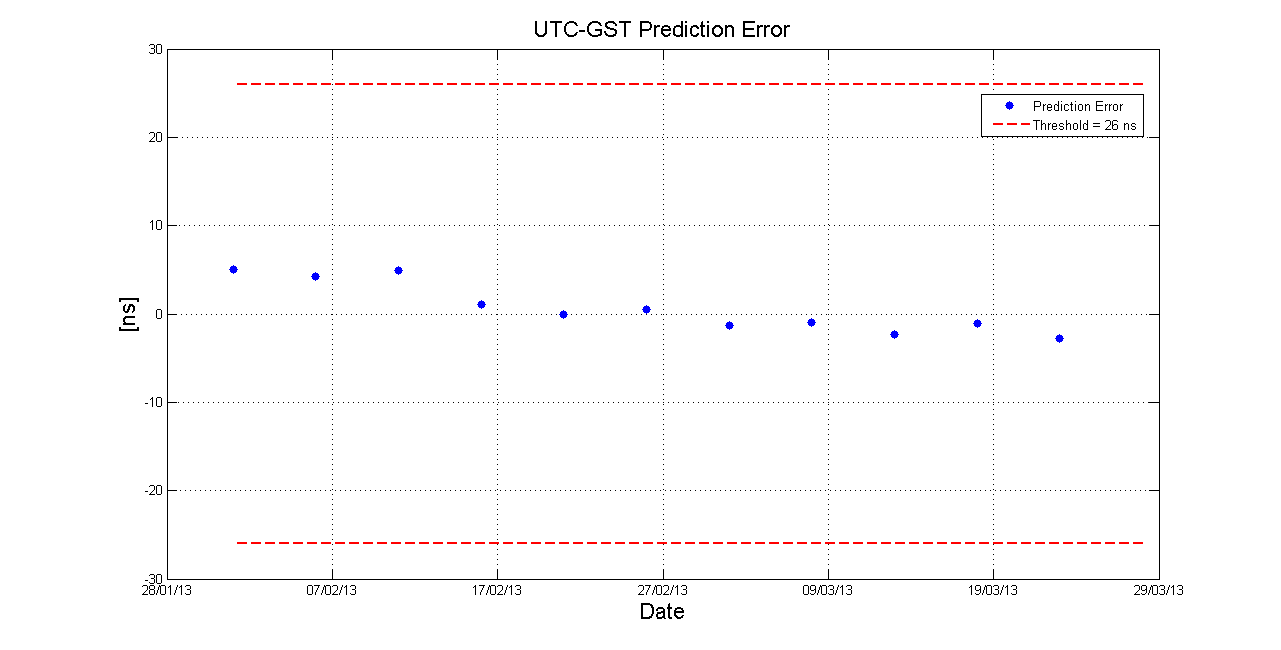
The prediction error for the offset between Galileo System Time and UTC, expressed in nanoseconds. The UTC value available to the user via Galileo is expected to be accurate within 26 nanoseconds, but in spring 2013 it has been even better, with a prediction error in the last two months of less than five nanoseconds.
“A single lightning flash across the sky during a thunderstorm lasts about ten milliseconds, which is already 10 000 000 nanoseconds. But for high-tech applications, as well as navigation services, nanosecond accuracy is essential.”
The replacement for Greenwich Mean Time, UTC is part of all our daily lives: it is the timing used for Internet, banking and aviation standards as well as precise scientific experiments, maintained by the Paris-based Bureau International de Poids et Mesures (BIPM).
The BIPM computes UTC based on inputs from collections of atomic clocks maintained by institutions around the world, including ESA’s ESTEC technical centre in Noordwijk, the Netherlands.
‘Galileo time’ is derived independently of UTC but is being kept close to it, with a precise ‘offset’ between the two values being calculated continuously and then disseminated through Galileo’s navigation message.
Galileo, like all other satellite navigation systems, is based on the highly precise measurement of time. A receiver on the ground pinpoints its position by calculating how long signals from satellites in orbit take to reach it.
Matching the receiver and satellite clocks then multiplying the time taken by the speed of light gives the range between user and satellite, allowing the receiver to fix its own location relative to four or more satellites.
“Each navigation system has its internal reference system time used to synchronise all system clocks and maintain overall coherence,” adds Marco.
Galileo’s navigation message embedded in its signals include precise timings based on Galileo System Time, kept close to global time standard UTC with a precise offset given, accurate to at least 26 nanoseconds.
“Galileo runs on Galileo System Time, GST, which is fixed on the ground at the Galileo Control Centre in Fucino, Italy, by the Precise Timing Facility, based on the average of different atomic clocks.
“Strictly speaking, for navigation purposes alone this internal reference system time does not need to be in agreement with UTC at the highest level of accuracy but with this agreement being the case, it is therefore possible to immediately disseminate UTC to the users to the best accuracy and this is the aim of Galileo.”
The offset between GST and UTC is currently estimated in Turin, Italy, by the Istituto Nazionale di Ricerca Metrologica (INRIM), where time measurements are performed every day with the most precise techniques available to check GST status.
INRIM has been supporting ESA’s Galileo development since the early phases of the project. More recently INRIM has overseen the creation of a ‘Time Validation Facility’ for Galileo in collaboration with five other European time-measurement institutions: the Physikalisch Technische Bundesanstalt in Germany, the National Physics Laboratory in the UK, the Systeme de References Temps Espace/Observatoire de Paris in France, the Real Instituto y Observatorio de la Armada in Spain and Observatoire Royale de Belgique.
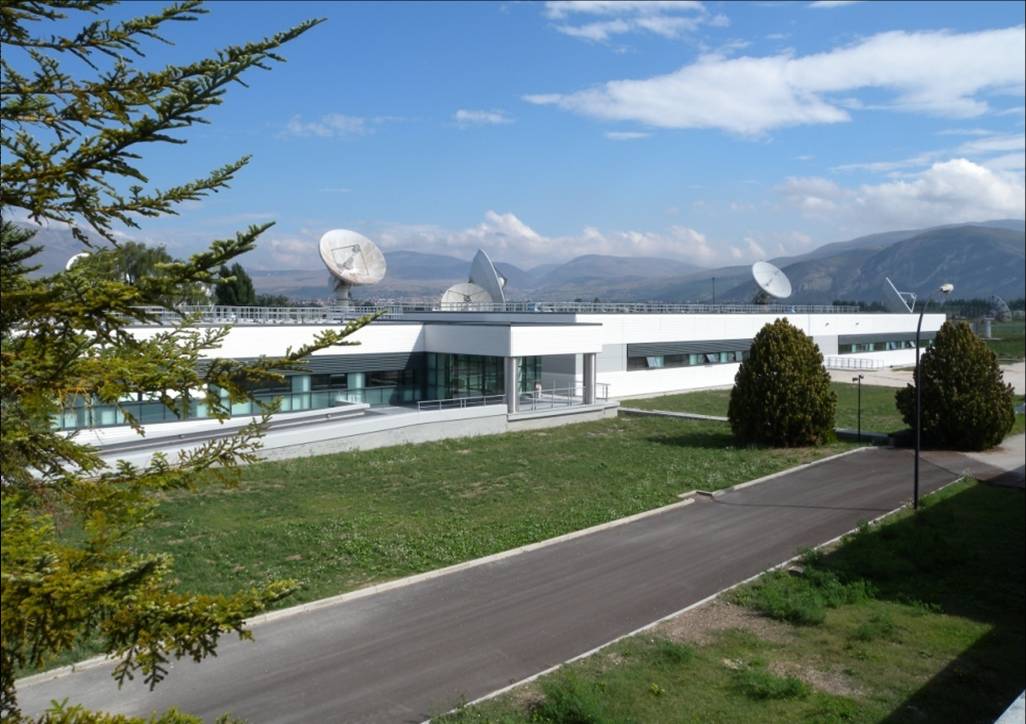
Galileo’s Ground Control Segment (GCS) in the Fucino Control Centre in Italy oversees Galileo navigation services and satellite payload operations.
Each day, the most precise European clocks and national time scales are compared to GST and the offset compared to UTC is estimated and provided to the Galileo Control Centre. This offset is then uploaded to the Galileo satellites for transmission in the navigation message available to users.
As explained by Patrizia Tavella from INRIM, “The UTC value available to the user via Galileo is expected to be accurate within 26 nanoseconds, but in the last two months it was even better, with a prediction error in the last two months of less than five nanoseconds.”