Tag: TomTom

  • TU-Automotive Announces Connected Car Award Finalists

    TU-Automotive has announced finalists in several categories for its 2015 awards. Finalists in the Best Connected Car System Integrator category include chipmakers Qualcomm and u-blox, among others. Nominees in other categories include TomTom, NXP SemiconductorsTelogis and Geotab.

    The finalists represent excellence, innovation and leadership in the connected car industry, TU-Automotive said.

    More than 400 entries were submitted. The winners will be revealed at the TU-Automotive Awards Ceremony on June 2 in Detroit. Here is the full list of finalists:

    Car Maker of the Year 2015

    • Audi
    • BMW of North America, LLC
    • Ford Motor Company
    • Qoros auto
    • Toyota Motor Sales
    • Volvo Car Group

    Commercial Vehicle Maker of the Year

    • Mack Trucks
    • Scania CV AB
    • Volvo AB

    Telematics Service Provider of the Year

    • Airbiquity
    • Ericsson
    • General Motors
    • Jasper
    • Nuance Communications, Inc.
    • Total Traffic and Weather Network
    • Xtime

    Commercial Telematics Service Provider of the Year

    • Inthinc Technology Solutions Inc.
    • Openmatics
    • Teletrac Inc
    • Telogis

    Best Connected Car System Integrator

    • Atos
    • AutonomouStuff LLC
    • HERE, a Nokia company
    • Car Connectivity Consortium
    • Covisint
    • Dash Labs
    • Elektrobit (EB) Automotive
    • Luxoft
    • Movimento
    • Parkopedia
    • Qualcomm Technologies, Inc.
    • Symphony Teleca Corp.
    • u-blox AG
    • Uievolution, Inc.

    Best Commercial Vehicle System Integrator

    • Eyeris
    • Geotab
    • KPIT Technologies Ltd.
    • Navistar
    • Spireon, Inc.
    • Symphony Teleca Corp.
    • TomTom Telematics

    Best Insurance Telematics Product

    • Allstate Insurance Company
    • AXA & MyDrive Solution
    • Codan Insurance (RSA) & The Floow
    • Direct Auto Insurance & DriveFactor
    • Industrielle Alliance, Assurance auto et habitation inc. & Baseline Telematics
    • Progressive Insurance & zubie inc
    • RightTrack® by Liberty Mutual & Octo Telematics North America
    • Suncorp Group & Wunelli, a LexisNexis Company

    Best Telematics Product or Launch in an Emerging Market

    • CarIQ Technologies Private Limited.
    • Discovery Insure
    • iTrans Technologies Pvt Ltd
    • Omnicomm
    • Qoros Auto
    • TATA Motors Ltd, India
    • TechMahindra
    • TOWER Insurance (in partnership w/ DriveFactor Inc.)

    Best Safety or ADAS Solution

    • Argus Cyber Security
    • BrightWay Vision
    • Delphi Automotive PLC
    • Elektrobit (EB) Automotive
    • Eyeris
    • General Motors
    • NXP Semiconductors
    • TomTom
    • Valeo Wiper Systems

    Best Mobility Solution Industry Newcomer

    • Carma
    • County of Santa Clara Roads & Airports Department
    • Dash Labs
    • Hyundai Blue Link Smartwatch app
    • Local Motion
    • moovel GmbH
    • parku – The Parking App
    • QNX Software Systems

    Industry Newcomer

    • ATG Risk Solutions
    • CarKnow LLC
    • CloudCar
    • Dealer-FX
    • Eyeris
    • gestigon
    • MobiWize
    • Nebula Systems Ltd
    • Rivet Radio, Inc.
    • TowerSec

    TU-Automotive Influencer of the Year

    • Andrew Poliak, Global Director Business Development – Automotive, QNX Software Systems
    • Dominikus Hierl, Chief Executive Officer, Telit Automotive Solutions
    • Erica Klampfl, PhD, Future Mobility Manager, Ford Research & Advanced Engineering
    • Jeff Owens, Chief Technology Officer & Executive Vice President, Delphi
    • Matt Jones, Senior Technical Specialist – Infotainment, Jaguar Land Rover
    • Paul Drysch, Global Director – Connected Car, Jasper
    • Paul Stacy, Founding Director of Wunelli, a LexisNexis Company
    • Ricky Hudi, Head of Electrics/Electronics, Audi AG
  • New Report Considers GNSS Market Outlook 2015-2020

    Research and Markets has added the report “Global Navigation Satellite Systems Market Outlook 2020” to its offerings. The global core GNSS market is forecast to grow at a CAGR of 9 percent during 2015-2020.

    In the report, the analysts have identified and deciphered the market dynamics in important GNSS industry segments, highlighting the areas offering promising possibilities for companies to boost their growth, according to Research and Markets. The report studies the market by sectors including location-based services (LBS), transportation (further divided into road navigation, rail navigation, air navigation and marine navigation), surveying and agriculture. The GNSS application market is further studied by region: North America, Europe, Asia-Pacific, and Rest of World.

    The report provides a complete overview of the GNSS market globally. All the current trends and drivers, coupled with potential growth areas of the GNSS industry, have been evaluated in the report. Furthermore, the report provides information on opportunities in the industry for different companies in the chapter titled Opportunity Assessment.

    Additionally, to provide an exhaustive knowledge of the prospects for GNSS players on the geographical front, the report provides comprehensive knowledge of the 10 most worthwhile GNSS markets around the world (U.S., Canada, UK, France, Germany, RussiaJapan, China, South Korea and India). It includes information about the present state and future outlook of the LBS and telematics markets in these countries along with information about their personal navigation systems such as GPS, BeiDou,Galileo, GLONASS, QZSS and IRNSS.

    The report also looks into the competitive landscape covering business overviews, key financials, product analyses, recent developments and strengths and weaknesses of each of the players.

    Key trends considered in the report include:

    • Driverless Car: New GNSS Technology Use
    • Indoor GNSS Positioning Poised for Growth
    • People, Pets and Thing Finder: The Next Attraction
    • GNSS Based Products: A Burgeoning Market Opportunity
    • GNSS Jamming Gaining Attention

    Companies mentioned include:

    • AgJunction
    • CSR
    • Furuno Electric Co Ltd.
    • Garmin Ltd.
    • MiTAC International Corp.
    • Raytheon Company
    • Rockwell Collins
    • TomTom NV
    • Topcon Corporation
    • Trimble Navigation Ltd.


  • Bus-Crash Victims Sue TomTom, Garmin

    Bus-Crash Victims Sue TomTom, Garmin

    Garmin-truck
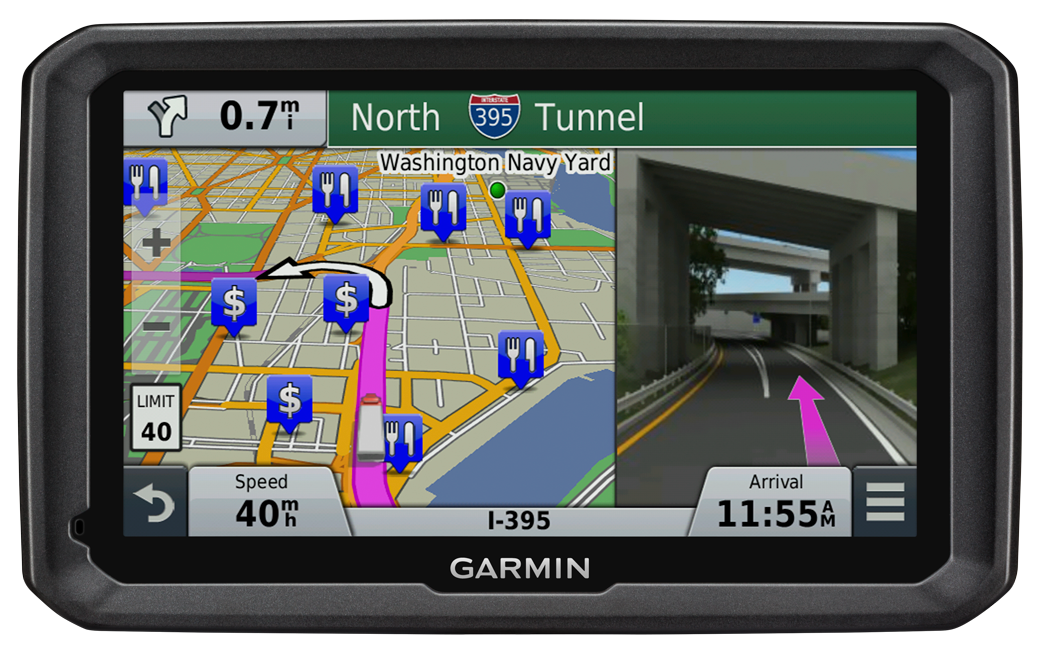
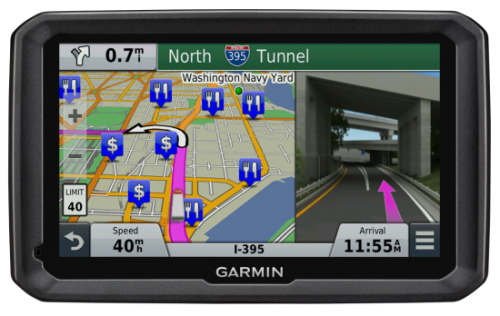
    The Garmin dezl trucking navigator.

    Lawyers for 11 Pennsylvania residents injured in 2013 when their charter bus slammed into an overpass in Boston, Mass., are suing GPS device manufacturers TomTom and Garmin, seeking more than $15 million in damages.

    The bus driver was using both a Garmin and a TomTom satnav, neither of which were intended for use by commercial vehicles, but the lawsuit filed in January claims that the GPS units were at fault for not providing road height restrictions.

    The bus driver, Samuel J. Jackson, told police he drove the 11-foot-high bus onto Soldiers Field Road, which is off-limits to vehicles more than 10 feet high, because he was “following the GPS.” At least one sign warning of this restriction was missing or damaged, and construction on the Harvard Street overpass obstructed other warning signs, the suit said.

    Passengers were injured when the bus roof crushed backwards in the crash dropping the luggage rack and television onto the heads of the passengers, the Boston Globe reports.

    Both TomTom and Garmin manufacture GPS units for professional drivers which feature information on bridge underpass height restrictions.

  • LoJack Showcases TomTom Fleet Solution at NADA 2015

    LoJack Corporation, a vehicle theft recovery and fleet management company, will demonstrate a range of new connected car collaborations and telematics solutions this week at the National Automotive Dealers Association (NADA) Convention & Exposition in San Francisco.

    LoJack Fleet Management powered by TomTom is a comprehensive GPS-based advanced telematics system designed for tracking and managing fleets ranging from five to 5,000 vehicles. The LoJack Fleet Management Dealer Referral Program can help dealers earn referral bonuses from their existing relationships with commercial customers.

    LoJack is introducing at NADA 2015 its Fleet Management Lite offering, a new version of the service designed to be an affordable, turnkey SaaS (software as a service-based) telematics solution. Fleet Management Lite will enable business owners with small- to medium-sized fleets to realize the benefits of an advanced fleet telematics system, LoJack said. The can be quickly deployed, making it a good choice for loaner vehicle fleets in many of today’s dealerships, the company said.

    Another location-based program is LoJack Pre-Install, which enables automotive dealerships to pre-load vehicles in their inventory with the LoJack Stolen Vehicle Recovery System before the vehicle is sold to the customer.

    “Our commitment to LoJack’s dealership network is at the center of who we are as a brand and a company,” said Randy Ortiz, president and CEO of LoJack Corporation. “Through a combination of strategic partnerships and corporate research and development, we’re fully invested in our mission to deliver sophisticated and reliable connected car and telematics solutions to the dealership community. Our goal is that each of these solutions enables dealerships across the country to increase revenue and improve operational efficiencies while effectively serving customers.”

    LoJack is exhibiting in booth #5058W at the 2015 NADA Convention & Expo.

  • TomTom MultiNet-R Speeds Maps to the Market

    TomTom is making available MultiNet-R, a new map format for business customers. MultiNet-R offers TomTom customers accurate and up-to-date maps that can be quickly integrated into their products, the company said.

    “With MultiNet-R, we leverage the strength of our new transactional mapmaking platform to bring customers the next generation in maps: real-time maps,” said Charles Cautley, managing director of TomTom Maps. “TomTom can now deliver high-quality map updates faster than any other mapmaker on the market. This combination of speed and quality ensures the best end user experience.”

    MultiNet-R delivers rich content and coverage in a database model that features stable IDs and seamed content layers for easy compilation, according to TomTom. Additionally, MultiNet-R can power incremental map updates, enabling maps to be kept up-to-date without the need to install a full map update.  The global, full-feature MultiNet-R will be released monthly in 2015 and weekly in 2016.

    TomTom said it has perfected a highly efficient hybrid approach to mapmaking that optimizes professional methods with community input from hundreds of millions of users who actively share map changes, resulting in a map that is accurate and up-to-date.

    For more information, visit www.tomtom.com.

  • Installed Base of Fleet Management Systems to Reach 7.1M in Europe by 2018

    According to a new research report from the analyst firm Berg Insight, the number of active fleet management systems deployed in commercial vehicle fleets in Europe was 3.65 million in Q4-2013. Growing at a compound annual growth rate (CAGR) of 14.2 percent, this number is expected to reach 7.10 million by 2018.

    A group of international aftermarket solution providers have emerged as the leaders on the European fleet management market. Masternaut reported an active installed base of close to 350,000 units in July 2014, mainly in France and the UK. TomTom Telematics was the fastest growing vendor also in 2014 and has now surpassed 400,000 subscribers in August 2014.

    The two companies share the number one spot in terms of active installed base in Europe. Digicore has also joined the exclusive group of fleet management providers in Europe having more than 100,000 active devices in the field. Transics is number one in the heavy trucks segment with an estimated 85,000 active units installed.

    A major trend in the past three years has been the announcements of standard line fitment of fleet management solutions among the HCV manufacturers. Scania, Daimler, Volvo and MAN now experience fast growth of telematics subscribers thanks to these initiatives. FleetBoard by Daimler, Dynafleet by Volvo and Scania Fleet Management are the most sold systems with cumulative shipments of 150,000 units, 135,000 units and 100,000 units respectively as of Q4-2013.

    A recent trend is that LCV manufacturers increasingly work together with aftermarket players to offer fleet management solutions. PSA Peugeot Citroën has for instance launched a new fleet management service on the French market in partnership with Orange Business Services in April 2014. Ford and Telogis recently partnered to deliver fleet management solutions to Ford customers in Europe. Teletrac has moreover for a long time collaborated with OEMs on the UK market, including Citroën and Mercedes Benz.

    M&A activities on this market continued with full force in 2014. “Seven major mergers and acquisitions have so far taken place this year among the vendors of fleet management systems in Europe,” said Johan Fagerberg, Senior Analyst, Berg Insight. At the beginning of 2014, Qualcomm finally divested also the majority of the European arm of its fleet business to Astrata Group, a fleet management company headquartered in Singapore.

    Later in February, WABCO acquired Transics and the transaction valued the company at about €100 million. Lysanda acquired UK-based TRACKER Network in February and plans to establish Tantalum Corporation from the combined business.

    In April, TomTom also acquired the French FM provider DAMS Tracking, adding another 27,000 subscriptions to the installed base. Francisco Partners, moreover, divested Masternaut to Summit Partners and FleetCor in the same month.

    In July 2014, Zucchetti Group acquired a majority share of Macnil from its founders. The latest transaction was done in October 2014 when Finder acquired its Polish competitor Autoguard to form the largest FMS provider in Poland. Fagerberg anticipates that the market consolidation of the still overcrowded industry will continue in 2015.

    Download the report brochure.

  • deCarta Powers POI Search for Major Mobile Handset Maker

    Advanced Search Engine Replaces Google Local Search in 122 Countries

    deCarta, Inc., an independent LBS platform company, is now providing the local search function for a worldwide, top-five mobile handset manufacturer. deCarta has been hosting and running the search service since August 7 using its advanced geosearch engine — L2 — and has replaced the search service previously provided by Google. The service delivers millions of responses per day to this handset manufacturer’s local search and mapping application to users in 122 countries.

    deCarta’s L2 is a high-performance, scalable local search engine with single line input and intuitive user interface. deCarta sources and indexes map and POI (points of interest) content from a wide variety of sources globally but also enables customers to easily index, control and search on their own content. The customer service announced utilizes TomTom map and POI content.

    deCarta’s L2 can be used as a pure geocoder for address search, or for POI search, or simultaneously as a combination of the two mixed in a single-line search query — with the additional ability to tune this behavior at runtime. This gives developers maximum flexibility and creativity in producing their applications. deCarta recently expanded country coverage to enable its customers to offer global services.

    The L2 Search engine is an integral component of deCarta’s LBS platform which provides specialized geospatial technologies for maps, routing, navigation, geocoding, local search and geo-data integration and processing. deCarta provides its white-label LBS platform to companies that wish to offer their own customized, branded LBS services as opposed to utilizing industry standard services such as Bing or Google.

    deCarta has two deployment options for its platform: a hosted LBS Platform Service (PaaS) or, alternatively, customers can self-host either on-premise or in a cloud service such as Amazon’s AWS.  Both approaches utilize deCarta’s REST API architecture and can scale to support billions of maps and searches and millions of users per month.

    “We are quite happy with the market reaction to L2 since its introduction last year,” said J. Kim Fennell, CEO of deCarta. “We’re seeing large mobile, telematics and automotive customers switch to L2 in competition against other local search engines and geocoders such as Google, Bing, Nokia/Here and Pitney Bowes. Customers appreciate L2’s technology advantages, customization capabilities, flexible content offerings, less restrictive license terms and our superior customer service — all of which creates a more satisfied end customer experience.”

    L2 enables deCarta’s customers to offer flexible, advanced local search capabilities that are on par with Google Maps but beyond other search engines. Examples include:

    • Single line entry of POI or address or both
    • Fast typeahead, predictive entry – ideal for mobile devices
    • High tolerance for misspellings and partial entries
    • Random ordering of address parameters
    • Search for a POI near a POI such as “ATMs near AMC Theater” or “Parking near SFO”
    • Search for POI near a specific address, i.e. “Parking near 1234 Main Street”

    Furthermore, L2 can be integrated with deCarta’s patented “Search Along A Route” technology. This combined with the ability to index custom content and boost result rankings gives automotive OEMs and service providers the ability to offer more advanced and helpful “driver-centric” connected car services.

    For more information visit www.decarta.com or go to the demo at http://labs.decarta.com. Developers can find technical details at http://developer.decarta.com.

  • TomTom Launches Speed Cameras Service in Brazil

    TomTom has today announced its speed cameras service is now available in Brazil. Drivers will benefit from up-to-date warnings of nearby fixed and red light cameras, as well as speed enforcement zones.

    Car manufacturers can integrate the service in their in-dash and mobile navigation systems, TomTom said. Backed by OpenLR* technology, TomTom is able to pinpoint more than 17,000 speed cameras across Brazil.

    “Drivers in Brazil are now better equipped to make smarter decisions on every journey, keeping to the designated speed limit and avoiding costly fines,” commented Ralf-Peter Schaefer, VP of Traffic at TomTom. “The launch of this service adds to the real-time information available to Brazilian drivers; TomTom recently launched its world-class traffic information in Brazil, helping drivers avoid frustrating traffic jams and reach their destination faster.”

  • TomTom Integrates Indoor Mapping with Micello Partnership

    TomTom has begun a strategic partnership with indoor-mapping company Micello Inc., extending its range of mapping products to include indoor venues.

    Integrating Micello’s maps and venue content gives TomTom’s business customers access to accurate pedestrian friendly indoor maps with points of interest data in venues worldwide.

    “The indoor mapping functionality means that step-by-step guidance can be integrated into daily life for a wide variety of venues, including shopping malls, airports and retail stores,” said Charles Cautley, managing director, TomTom Maps. “By partnering with Micello our customers can now develop smarter apps and locations-based services helping users navigate with ease in and out of the car.”

    “We’re excited to be partnering with TomTom, the global leader in navigation.” added Ankit Agarwal, CEO of Micello. “Our agreement means that TomTom’s business customers can use our indoor venue maps and incorporate the content into their automotive, online, or mobile solutions.”


  • Google’s $1.1 Billion Purchase of Waze Under FTC Scrutiny

    Google’s $1.1 Billion Purchase of Waze Under FTC Scrutiny

    Kevin Dennehy
    Kevin Dennehy

    In a year of ho-hum location deals, or the lack of any, the recent Google purchase of Waze for more than $1 billion is a big one. In fact, readers of GPS World magazine’s LBS Insider would have to go back to the summer of 2007, when TomTom purchased Tele Atlas and Nokia bought Navteq, to find an industry acquisition as big as this one.

    The Federal Trade Commission is reviewing Google’s $1.1 billion acquisition of Israel-based mapping startup Waze, according to published reports.  The big issue is that while Waze’s revenue was too low to trigger automatic review by the FTC, it may have hundreds of millions of users worldwide.

    The fact that Google’s acquisition of Waze has caught the FTC’s attention is not unusual, said Mike Dobson, TeleMapics president, who authors a location industry blog at www.telemapics.com. “Google, in an attempt to speed the acquisition, declared that the assets of Waze based in the United States are worth less than the $70.9 million that requires an antitrust review. Google maintains, and I agree, that the majority of the [intellectual property] for which they were willing to pay $1 billion was created in Israel, where it is currently located, and in that location it continues to be revised and enhanced,” he said.

    One of the supposed reasons, which were publicized in media reports, is that the deal with Facebook fell through because the social media giant wanted to relocate the Waze development activities to the U.S. and the Israel-based company declined.

    Google’s purchase of Waze ends months of rumors and stops other suitors, including Facebook, Apple and Microsoft, from moving in on the mapping startup. Google has said that its mapping technology will be incorporated into Waze.

    The Waze deal may strengthen Google, but won’t be the deciding factor on whether it has an unfair advantage in the [location] market, said Marc Prioleau, president of Prioleau Advisors. “They will have that regardless of Waze. I am not sure the criteria for the FTC, but I think Waze is just a spark to trigger a look at Google’s mapping position overall,” he said. “The FTC will have a hard time making the case that Google dominates the industry when Google can point to market share for Apple Maps, Nokia/Here [through its own sites as well as Bing, Amazon, Facebook and others] and even MapQuest, which stubbornly hangs on to a high market share with the over-50 demographic.”

    When it comes down to it, it is all about money. “It appears that the FTC’s preliminary interest in the Google acquisition of Waze is in determining if the U.S.-based assets are worth more than $70.9 million, and whether or not Google’s position regarding the Waze IP being located in Israel is justified,” Dobson said. “Many would argue that a considerable portion of the value of the Waze IP affects consumers in the United States, resides on cell phones of users in the United States, and has a functional impact in the United States beyond the $70.9 million that Google is claiming. Functional impact is a difficult issue, but since Waze generates little income, Google is probably in a good position here.”

    Dobson said that other pundits are commenting that the problem here is that Noam Bardin, Waze CEO, described Google as its only competition during a recent press conference. “Oh, how unusual, someone selling their company trying to increase the value of the company,” he said. “Has everyone forgotten about Nokia and TomTom? Does anyone really think they are incapable of competing with Google, Waze or the combination of both companies?”

    Google Made Strategic Decision Not to Buy Tele Atlas and Navteq                          

    Dobson said that, more troubling for the FTC and other antitrust interests, is this:  If Google wanted to monopolize the mapping world, why did it not choose to bid (or counterbid) when Navteq and Tele Atlas were sold in 2007?

    “I think the answer to this question is quite plain. Google did not participate in either acquisition because it had tried both companies’ data and found that the content quality and spatial coverage was not quite what Google had set as goals when developing its strategy for mapping. Instead, Google built its own ‘map machine’ and has managed to out-innovate either of these companies over the last several years,” Dobson said. “In addition, both Nokia and TomTom have fallen on hard times, not because of Google’s success, but because both companies overpaid for the assets they acquired, just before a worldwide economic downturn. Reduced budgets (for research and compilation) at TomTom and Nokia have had a lot to do with Google’s success in the mapping world.”

    The big deal in Google’s interest in Waze lies in the success that the mapping startup has had in capturing traffic information, as well as how it has attracted a large user community willing to contribute traffic data, Dobson said.

    “I doubt that Google will find that the map coverage provided by Waze has data they have not already mapped and mapped more exhaustively than Waze. However, it is somewhat camp to be an ‘anybody but Google’ fan boy and I suspect conspiracy theories about the acquisition will abound,” Dobson said. “I doubt that the FTC will find anything actionable. If Google were to announce next week that it was acquiring Inrix, I suspect that the FTC might have a real case with real antitrust issues.”

    While Waze hasn’t generated much revenue, its real-time maps and traffic information are valuable. This value was magnified last year when Apple tried to replace Google Maps on the iPhone with a not-so-good alternative.

    Analysts are looking around at what other companies are out there as potential acquisition targets — particularly as the smartphone industry becomes even more competitive. The apps on the smartphones will need to be distinguishable, particularly the mapping systems and capability, say several analysts.

    One company that stands out as a potential acquisition target is TomTom, which is the last independent provider of digital maps, now that Navteq was gobbled up by Nokia.

    Send all of your LBS stories to [email protected].

  • TomTom Redesigns GPS Sport Watch

    TomTom Redesigns GPS Sport Watch

    TomTomWatches

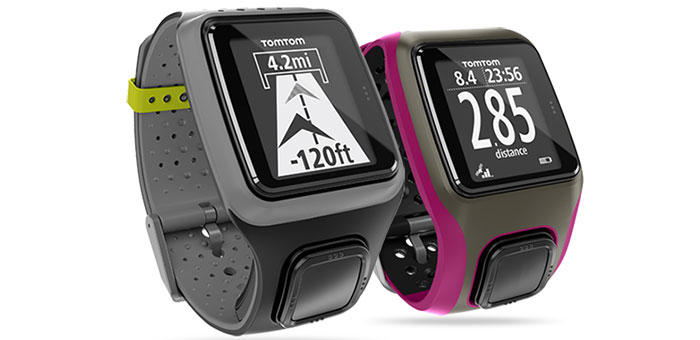
    This summer, TomTom will make available a new range of GPS watches to deliver at-a-glance performance information for runners, cyclists and swimmers. The ultra-slim TomTom Runner and TomTom Multi-Sport GPS sport watches feature an extra-large display, full-screen graphical training tools, and one-button control to make it easier for users to access the information needed to stay motivated and achieve their goals.

    “We know that most GPS watches on the market are too bulky and complicated to use while training,” said Corinne Vigreux, managing director, TomTom Consumer. “Just as we developed easy-to-use navigation products that changed the way that people move from A to B, we have developed a range of ultra-slim GPS sport watches that are far more comfortable to wear and far easier to use. Runners and multi-sport athletes can now view their performance information at-a-glance, making it easier to achieve their fitness goals.”

    The new TomTom watches feature an extra-large, high-resolution and high-contrast display that makes it easy for runners and multi-sport enthusiasts to quickly see their distance, time and pace while they workout even in bright sunshine, TomTom said.

    The new watches feature TomTom’s Graphical Training Partner. Easy-to-read full-screen graphics help users get the most out of their workouts. They can view their real-time performance at-a-glance with three graphical training modes:

    Race: Race against a personal best or most recent run. Quickly track performance with real-time graphics, to continue to improve run-after-run.
    Goal: Set a distance, time or calorie goal and see progress toward that goal with simple, full-screen graphics and alerts.
    Zone: Set a target for pace or heart-rate (with optional heart-rate monitor) and track progress in a simple full-screen graph throughout a workout.

    The new TomTom range includes an intuitive one-button control that enables users to easily navigate up-down-left-right through menus to access key stats and watch features, the company said. Unlike the majority of existing GPS watches on the market that feature multiple small and hard-to-operate buttons, the one-button control is easy to operate while moving and can be easily controlled in all weather conditions and while wearing gloves.

    In addition to their ability to deliver at-a-glance performance information, the TomTom Runner and TomTom Multi-Sport include advanced features designed to address the needs of runners and multi-sport enthusiasts alike:

    Ultra-slim design: At just 11.5mm, the slim design of the watch module comfortably fits men and women, and all wrist sizes.
    Indoor tracker: Accurately track indoor runs using built-in sensors to count strides, so that users can monitor pace and distance even while running on a treadmill.
    QuickGPSFix: Get started faster by using the latest in GPS and GLONASS satellite technology to quickly find their precise location.
    Multi-platform compatibility: Sync, analyze and share stats on popular running sites and community platforms, including the TomTom MySports website, MapMyFitness, RunKeeper, TrainingPeaks and MyFitnessPal.
    Super-tough display: Scratch- and impact-resistant glass stays easy-to-read, workout after workout.
    Weather- and waterproof: Waterproof up to 50 meters/5ATM.
    Long-lasting battery: Up to 10-hour battery life (GPS mode).
    Bluetooth smart: Connect to sensors using the latest wireless technology.
    Heart rate monitor: Use the Bluetooth Smart Heart Rate Monitor to track training zone for weight control, performance or speed.

    TomTom Multi-Sport includes all the features included in TomTom Runner, and also allows multi-sport athletes to track their distance, time, speed and other key metrics when they cycle or swim. The TomTom Multi-Sport is also enhanced with the following features and options:

    Dedicated bike mount: Easily see key stats at-a-glance with the specially designed bike mount.
    Cadence sensor: Track cadence, speed and distance, indoors and out.
    Built-in altimeter: Accurately track elevation, ascent, descent and grade with the built-in barometric altimeter.
    Swimming motion sensor: Check detailed swim metrics such as laps, strokes, time and speed, and calculate a SWOLF score to show swim efficiency.

    The TomTom Runner and TomTom Multi-Sport will be available in Summer 2013.

  • TomTom Redesigns PNDs, Introduces NavKit Engine

    TomTom Redesigns PNDs, Introduces NavKit Engine

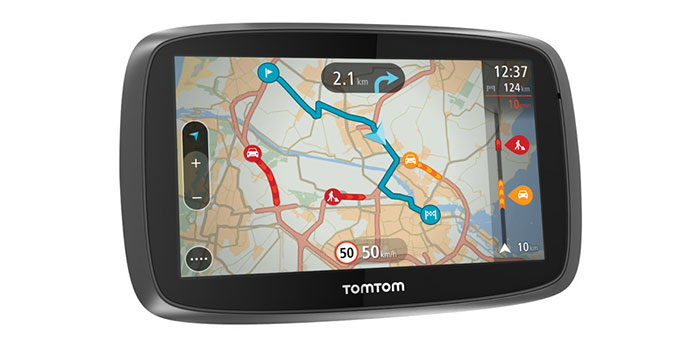
    TomTom has redesigned its personal navigation devices with new TomTom GO. The TomTom GO has new interactive map, lifetime TomTom Traffic and 3D maps that give drivers the ability to know precisely what is going on around them, as well as what lies up ahead, TomTom said.

    TomTom has also launched its new navigation engine, NavKit.

    “Where navigation used to be about getting people to unfamiliar destinations, we are now empowering drivers with easy access to the information they need to make the smartest driving decisions, every day,” said Corinne Vigreux, managing director of TomTom Consumer. “We have completely redesigned the PND to become an essential daily driving tool. By providing easy access to our world class TomTom Traffic and enabling drivers to see more than just the road ahead, drivers will feel on top of their journey like never before.”

    Drivers can easily access the travel information they need via a high-resolution, capacitive touchscreen, TomTom said. A new Interactive Map responds and scales to touch. Drivers can  zoom in and out to find and explore places on the map with their fingertips and tap on the map to get an instant route to a destination.

    New NavKit Engine

    TomTom’s navigation engine, NavKit, will power all future TomTom navigation products and be available for licensing to automotive and enterprise customers. The configurable component architecture has been designed to enable rapid integration. NavKit has programming interfaces for adding a customised user interface, porting to any operating system and integrating navigation services. As a result, the development of a connected navigation system on any device platform becomes far quicker and simpler, TomTom said.

    The new NavKit engine incorporates all the navigation logic of an on-board turn-by-turn navigation application. Every element has been enhanced to deliver an improved user experience including route planning, free text search, 2D map browsing and 3D guidance view, map-matched positioning and real-time guidance, TomTom said.

    “The automotive industry’s next challenge is to create a seamless connected car experience,” said Harold Goddijn, CEO at TomTom. “To help our customers achieve this, we created NavKit, a flexible, future-proof navigation platform. NavKit makes the creation of connected navigation solutions easier and faster than ever before.”

    NavKit’s architecture will allow customers and industry partners to replace components in a modular way. Its new routing engine achieves faster and more accurate dynamic routing, both on TomTom’s maps and on Navigation Data Standard (NDS) maps. Additionally, it provides better routes around traffic and fully supports TomTom Traffic, Version 6.0, including incident duration predictions and jam tail warnings. The new free text search engine provides easier and faster address and POI search. A new map visualization engine greatly improves 2D map browsing and introduces a 3D guidance view.

    TomTom GO Features

    The new TomTom GO series also comes with Lifetime TomTom Traffic. TomTom’s world-class traffic information pinpoints exactly where delays start and end, helping drivers to get to their destinations faster. Drivers can choose to connect to TomTom Traffic in one of two ways, either via Smartphone Connected or Always Connected. Smartphone Connected devices are ready to receive TomTom Traffic by connecting to a smartphone via Bluetooth. Smartphone Connected uses an existing smartphone data plan to access TomTom Traffic, as well as other services like TomTom Speed Cameras.

    Always Connected devices offer the simplest way to receive TomTom Traffic straight out of the box, TomTom said. With connectivity built-in and with no additional costs for roaming, drivers can access TomTom Traffic and other services, including TomTom Speed Cameras.

    3D Maps bring buildings and landmarks to life so that drivers always know exactly where they are.

    The new TomTom GO range has a simplified product line-up. Customers can select their preferred screen size, choosing from a 4.3″, 5″ or 6″ model; then decide how they prefer to receive their TomTom Traffic information, either via Smartphone Connected or Always Connected.

    Additional TomTom GO Features

    Route Bar: Essential traffic and travel information at a glance. The Route Bar shows precise traffic and speed camera information on the road ahead.

    Quick Search: Drivers can find their destination faster with intuitive search results. Quick Search starts finding destinations as soon as the driver starts typing.

    My Places: Drivers can see their favourite locations on the map and personalise their map with My Places. This makes it easier to find and navigate to favourite locations again and again.

    Lifetime Maps: Always drive with the latest map. For the life of the product, drivers can download four or more full updates of the map onto the device, every year. Drivers receive all updates to the road network, addresses and Points of Interest.

    Speed Cameras (three month trial): Drivers can drive in a more relaxed way, receiving alerts for speed cameras ahead. These timely warnings increase drivers’ awareness of local speed limits and help to save money on speeding fines. As part of TomTom’s global driving community, drivers will benefit from an advanced and highly accurate warning service.