Tag: transportation

  • DeepOcean Hires Fugro for Fleet Positioning

    DeepOcean Hires Fugro for Fleet Positioning

    Credit: DeepOcean/Fugro
    Credit: DeepOcean/Fugro

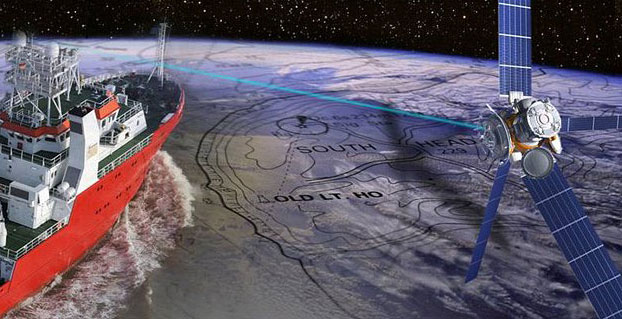
    Fugro has been awarded a contract by subsea contractor DeepOcean for the provision of precise satellite positioning for its fleet.

    The contract is valid for three years and also includes the new vessels in DeepOcean’s expanding fleet. The DeepOcean fleet will be equipped with hardware and software developed by Fugro, providing independent positioning solutions on each vessel.

    Under the contract, Fugro will supply DeepOcean with three independent decimeter-level satellite navigation systems. Also part of the contract delivery are Fugro’s Starfix.G2+ system, which has a 3D accuracy approaching that of GNSS RTK systems, and Fugro’s Starfix.G4 satellite correction service.

    Starfix.G2 is a GPS and GLONASS positioning system based on orbit and clock corrections generated from Fugro’s own expanded network of dual system reference stations. Starfix.G2 is a precise point positioning (PPP) technology, which distinguishes itself from the traditional differential approach as satellite errors are not lumped together but estimated per source, per satellite. The GPS/GLONASS orbit and clock corrections are computed separately, free of ionospheric and tropospheric effects.

    Starfix.G4 is a GPS, GLONASS, Galileo and BeiDou positioning system based on orbit and clock corrections generated from Fugro’s network of reference stations. Like Starfix.G2, Starfix.G4 also uses PPP technology. The GPS/GLONASS/Galileo/BeiDou orbit and clock corrections are computed separately, free of ionospheric and tropospheric effects.

    DeepOcean is an integrated provider of services and technologies for the subsea industry, including offshore services for oil and gas, offshore renewables and electrical power transmission industries, with offices in Norway, UK, Holland, Brazil, Mexico and Singapore.


  • Fleetmatics’ Intelligent Routing Tool Coming This Summer

    Fleetmatics’ Intelligent Routing Tool Coming This Summer

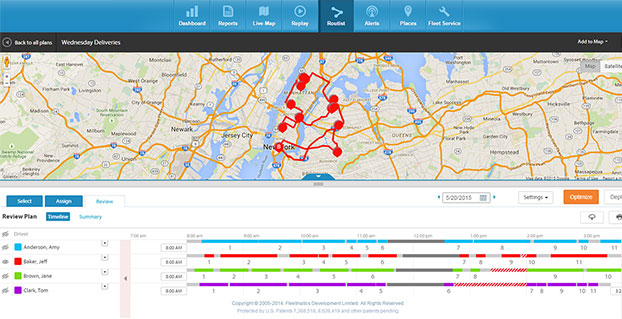
    Fleetmatics_Routist_Screen-O

    A new routing program from Fleetmatics Group is coming this summer. Fleetmatics Routist is an intelligent routing optimization solution that systematically builds the most cost-effective, customer-friendly routes for fleets.

    Fleetmatics Routist seamlessly calculates and deploys route plans to drivers in the field, and features real-time and historical data that gives users the most holistic view into routing performance, the company said.

    Fleetmatics Routist operates by taking locations, vehicles, time windows, technician skills, and costs and capacities into consideration, among other inputs, while remaining simple and intuitive for customers to use. Fleetmatics Routist also incorporates historical traffic data into its algorithm, elevating traffic and routing optimization effectiveness for customers operating in metropolitan areas.

    “Inefficient routing wastes minutes, miles and money, leaving on-time arrivals and important elements of customer satisfaction to chance,” said Jill Ward, president and chief operating officer of Fleetmatics. “Customers that choose Fleetmatics Routist won’t have to worry about manual or time-consuming routing, and we fully expect the benefits will extend to their customers, as well.”

    Fleetmatics Routist’s robust feature set, offered to customers as an add-on module, will integrate into the Fleetmatics REVEAL fleet management solution, helping it to become one of the most effective routing optimization solutions known to be available today. Customers can import work orders from electronic files or integration with their order management software, select the drivers involved in the plan, and get a cost efficient and customer satisfying route, Fleetmatics said.

    Route planners can make adjustments to the plan based on their own business insight, and then deploy to the field. Route plans can be delivered effortlessly to drivers via the Fleetmatics REVEAL Field Application for smartphone and mobile devices, via Garmin integrated devices or simple route sheets printed at the office.

    Once the routes are live, dispatchers and managers stay current on a driver’s progress against route stops in real-time on the Fleetmatics REVEAL live map and can make real-time adjustments as needed. When the day is done, actual versus plan analysis is available to compare the stops made by drivers against the work orders provided, so managers can provide appropriate coaching around route deviations and the impact of field activity on customer satisfaction.

    Register here to receive additional information and notice of Fleetmatics Routist’s availability.

  • Protecting Position in Critical Operations

    Jamming Signals Criminal Activity in Intermodal Ports

    By Logan Scott

    More than 25 million containers pass through U.S. intermodal ports every year, with port operations valued at more than $1 billion per day. Measured in 20-foot equivalent units (TEU), the World Bank reports that worldwide, more than 600 million TEU passed through intermodal ports in 2012: 155 million through Chinese ports, 95 million through the EU ports and 43 million through U.S. ports.

    The Port of Long Beach alone handled 6,820,806 TEU in 2014. GPS is a central component of automated port operations, but because GPS is widely used in asset tracking and monitoring, it has also become a target for denial-of-service attacks. If we look to the history of computer security, the initial attacks were mostly nuisances, but as criminals figured out how to monetize attacks, the attacks became more damaging, more sophisticated and more profitable.

    In January, the U.S. Coast Guard held a public meeting on Maritime Cybersecurity Standards at Department of Transportation headquarters in Washington, D.C. Brett Rouzer, chief of Maritime Critical Infrastructure and Key Resources Protection, Coast Guard Cyber Command, described how a major East Coast intermodal shipping facility was degraded by a GPS disruption for more than seven hours. Two ship-to-shore cranes ceased operation due to loss of position, and two others were degraded. Ports are highly automated; ship-to-shore cranes are just one of the container-handling systems critically reliant on GPS. Fully automated ports providing services for unmanned container ships, trucks and trains lie within the realm of feasibility in the near future.

    Rouzer did not specify the motivates for the disruption, how the attack was mounted, or if the shipping facility was even the intended target of the attack (I suspect it was not). Jamming is not a highly selective process, and it can affect numerous unintended targets.

    In June 2014, I reported to the PNT Advisory Board on how every third or fourth truck on Highway 30B near Portland (Oregon) International Airport was radiating at or near the GPS L1 frequency. This highway leads to several nearby Port of Portland intermodal terminals west of the airport. The Federal Bureau of Investigation recently reported that “In 46 reported incidents, the thieves placed one or more GPS jammers in cargo containers with stolen automobiles” (italics mine). High-end automobiles command premium prices in foreign markets and are stolen and shipped out of the country within hours, usually via intermodal container. Active jammers can affect not only the automobile’s GPS tracker, but also trackers on other containers, ship’s navigation systems, straddle carriers and ship-to-shore cranes. Again, jamming is not selective.

    Of particular note as cited above, criminals are beginning to use multiple jammers. Car theft rings are not unique in this. According to the Pharmaceutical Cargo Security Coalition in July 2014, “a tractor and trailer hauling $2 million worth of pharmaceutical products was stolen from a truck stop in Cartersville, Georgia, with the thieves deploying two separate GSM jammers.” The criminal’s motivation is that tracking devices can be hard to find and disable; just because you found one doesn’t mean that there isn’t another. The use of multiple jammers in criminal enterprise is indicative of a threat escalation where bad actors are seeking higher effect. This could lead to higher jamming powers and so on; and also more collateral damage.

    Response

    What is a correct and measured response to threats against navigation and timing? The key is to be on the lookout for emerging threats and to have a flexible response. Early detection usually yields a more effective and lower cost response; witness Ebola and ISIS. Following a public health model would seem to offer better prospects for protecting access to PNT. To this end, I would argue that situational awareness is the first important step.

    One of the most striking comments that Sarah Mahmood (DHS) made at last June’s PNT Advisory Board meeting was about how backup systems are often not activated or used because the GPS receiver fails to recognize that there is a problem. As we move towards resilient PNT architectures, one of the most critical needs is to be able to distinguish good signals from bad signals and act accordingly.

    Most GNSS receivers already have fairly advanced jamming detection capabilities by virtue of having an automatic gain control. Sudden changes in precorrelation input power levels are not normal and can indicate jamming or RF spoofing. Many GNSS receivers, particularly those that go into embedded mobile applications, also have sophisticated spectrum- and temporal-analysis capabilities, used mainly for diagnostic purposes in looking for interference sources from other components of the device. This same capability can be used in detecting and fingerprinting jammers. We already have the smoke alarms; we must amplify their use and visibility to the wider community of GNSS users and beyond.

    Detection

    One notable aspect of the port incident was the duration: more than seven hours. Rapidly finding and disabling the jammer was clearly a problem in this case. The old adage is that to find a stationary source (jammer) you need to be moving, and to find a moving source, you need to be stationary. Trucks and trains entering or leaving a port all pass through gates that can act as a simple chokepoint for detecting and finding active jammers. Properly hardened ship-to-shore cranes and straddle carriers can also act as a chokepoint. Straddle carriers used in moving containers around the yard and between modes could be very good at finding stationary jammers.

    There are numerous relatively low-cost approaches for finding jammers in support of enforcement actions. One additional point: law enforcement officials need to be better educated as to why they should be interested in jammers; jammers point towards a crime much like smoke points to a fire.

    Given the economic criticality of port operations and the concentration of assets (and asset trackers), we may see increased incidence of GPS disruptions. The situation is not critical yet, but it does bear watching. If jamming events increase or it takes too long to find and disable jammers, improved operational resilience will be needed.

    Inertial measurement units are already used in many critical applications, but they don’t offer long-duration capability. They drift. Using adaptive arrays in critical equipments is another possibility, but they are not a panacea. Adaptive arrays are physically large, and standard null-steering approaches are not compatible with RTK processing. Precise positioning systems based on GNSS require specialized antenna-receiver designs to achieve a high level of jam resistance.

    While I strongly believe eLoran is an urgently needed augmentation for resilient wide area navigation, it is not capable of the centimeter-level precision required for machine control, for example ship-to-shore cranes and straddle carriers.

    High-precision local-area positioning systems based on optical systems, RFID and/or Locata-style systems may be the best approach for creating a defense in depth.

    And then there is the cybersecurity question, which I will leave for another day.


    Note: A video of the Coast Guard meeting is on YouTube. Rouzer’s talk starts at 36:30, with the port jamming incident mentioned at 48:51.


    Logan Scott has 35 years of military and civil GPS systems engineering experience. He is a consultant specializing in radio frequency signal processing and waveform design. At Texas Instruments, he pioneered approaches for building high-performance, jamming-resistant digital receivers. He is a co-founder of Lonestar Aerospace, an advanced decision analytics company in Texas. Logan is a Fellow of the Institute of Navigation and holds 37 U.S. patents.

  • Uber and Decarta: Automated Taxi Tomorrow?

    Uber and Decarta: Automated Taxi Tomorrow?

    Janice Partyka
    Janice Partyka

    The force of mapping was punctuated this month when Uber, the juggernaut taxi service, acquired long-time mapping and navigation company deCarta. Uber and its competitor, Lyft, redefined taxi service with a smartphone app that connects users and drivers. These services have exceled by offering reliable low-cost rides and quick pick-ups, functionality that is enabled by seamless mapping and navigation technologies. Acquisition of a mapping company serves Uber’s high ambitions.

    Following introduction in San Francisco and New York, Uber just rolled out its ride sharing service, UberPool, in my city, Los Angeles. The service allows multiple individual customers going in the same direction to share a ride and lower their fare by as much as half. The potential for reducing traffic in congested cities is large, but how likely is it that UberPool can find matches and people willing to ride with strangers?

    New-Logo-Vertical-Dark-TEffective vehicle routing, navigation and traffic prediction is critical to making UberPool work. First, Uber must find pairs of trips that are similar enough in their timing and pathways to make a pairing attractive to the riders. Then, Uber needs to execute quickly and on time, given the unpredictability of whether the other rider is ready when expected. Coping with these uncertainties will be a huge challenge for Uber. Just 10 percent of work trips in America are by carpool. Can Uber develop the algorithm to make ride sharing attractive? Let’s wait and see.

    It is no surprise that Uber has announced that it will be developing self-driving car technology with the goal of self-driving Uber taxis. This puts it in direct competition with Google, one of Uber’s largest investors. Uber has partnered with Carnegie Mellon University to create a research center for mapping, vehicle safety and autonomy technology. If Uber can someday build cars that drive themselves, they can eliminate the need for a driver. The question for 2015 may well be, who is not pursuing driverless cars? Maybe Macy’s and Martha Stewart will partner on a particularly tasteful automated vehicle? Do you think you’d still have to tip?

    In other news, two former leading location competitors, LocationSmart and Locaid, have merged. Together they have the largest location-as-a-service platform for enterprise location for mission-critical applications in a number of industries including service assistance, proximity marketing, workforce management, emergency alerting, mobile gaming and transaction verification. As far as I know, they are not developing a self-driving vehicle.

  • New Report Considers GNSS Market Outlook 2015-2020

    Research and Markets has added the report “Global Navigation Satellite Systems Market Outlook 2020” to its offerings. The global core GNSS market is forecast to grow at a CAGR of 9 percent during 2015-2020.

    In the report, the analysts have identified and deciphered the market dynamics in important GNSS industry segments, highlighting the areas offering promising possibilities for companies to boost their growth, according to Research and Markets. The report studies the market by sectors including location-based services (LBS), transportation (further divided into road navigation, rail navigation, air navigation and marine navigation), surveying and agriculture. The GNSS application market is further studied by region: North America, Europe, Asia-Pacific, and Rest of World.

    The report provides a complete overview of the GNSS market globally. All the current trends and drivers, coupled with potential growth areas of the GNSS industry, have been evaluated in the report. Furthermore, the report provides information on opportunities in the industry for different companies in the chapter titled Opportunity Assessment.

    Additionally, to provide an exhaustive knowledge of the prospects for GNSS players on the geographical front, the report provides comprehensive knowledge of the 10 most worthwhile GNSS markets around the world (U.S., Canada, UK, France, Germany, RussiaJapan, China, South Korea and India). It includes information about the present state and future outlook of the LBS and telematics markets in these countries along with information about their personal navigation systems such as GPS, BeiDou,Galileo, GLONASS, QZSS and IRNSS.

    The report also looks into the competitive landscape covering business overviews, key financials, product analyses, recent developments and strengths and weaknesses of each of the players.

    Key trends considered in the report include:

    • Driverless Car: New GNSS Technology Use
    • Indoor GNSS Positioning Poised for Growth
    • People, Pets and Thing Finder: The Next Attraction
    • GNSS Based Products: A Burgeoning Market Opportunity
    • GNSS Jamming Gaining Attention

    Companies mentioned include:

    • AgJunction
    • CSR
    • Furuno Electric Co Ltd.
    • Garmin Ltd.
    • MiTAC International Corp.
    • Raytheon Company
    • Rockwell Collins
    • TomTom NV
    • Topcon Corporation
    • Trimble Navigation Ltd.


  • u-blox Rolls Out New Module, Outlines Marketing Strategy

    Thomas Seiler, u-blox CEO, holds a drone with GPS embedded.
    Thomas Seiler, u-blox CEO, holds a drone with GPS embedded.

    Several companies at CTIA Super Mobility Week, held in Las Vegas September 9–11, are attempting to find niche opportunities in the crowded machine-to-machine market — and Switzerland-based u-blox is no exception. The company is focusing on the mobile, industrial and consumer-location markets, said Thomas Seiler, u-blox CEO.

    While Seiler says there is no one dominant market for u-blox, the fleet market has been very good for the company. In addition, asset tracking has been a good market, he said.

    “We are also seeing consumer markets such as e-bikes, golf carts, commercial helicopters and drones growing,” Seiler said.

    While many location companies are fretting about government regulation, u-blox is taking the position that most agency requirements have actually helped build the market. “Regulatory requirements have been driving business for us. The [National Highway Traffic Safety Administration] proposes that vehicles report location, speed and direction,” said Nikolaos Papadopoulos, u-blox America president. “The collision avoidance regulations have helped to create an ecosystem that drives business.”

    The company recently rolled out its ODIN-W160 multi-radio module for automotive, industrial, medical and security applications.

    Nick Papadopoulos, president of u-blox America, tells CTIA Super Mobility Week show-goers what they should see at the u-blox booth.

  • LandWorks Adds Linear Project Routing to Online Property Mapping Service

    LandWorks Inc., a developer of land-management solutions, has added linear project mapping capabilities to its online Web AutoMapper service, which converts land legal descriptions into GIS-ready map polygons. Web AutoMapper clients can now download digital parcel polygons with ownership information for every property crossed by a linear right-of-way project.

    The linear mapping capability in Web AutoMapper facilitates the planning of any linear infrastructure development project – pipelines by energy companies, electric transmission lines by utilities, roads and highways by departments of transportation, and buried fiber networks by telecommunication companies.

    “Web AutoMapper makes it faster and less expensive to map a proposed right-of-way or corridor project,” said LandWorks President Jerry Bramwell. “In minutes, project planners can download all of the digital parcel and land ownership information needed to select the safest and least costly route.”

    To use the service, the client logs onto Web AutoMapper and creates an account. The user then uploads a shapefile of the proposed linear project route from their GIS or mapping software. Web AutoMapper prompts them to enter start and end points for the route. Customers are also given the option of having their route mapped with or without a buffer on either side.

    Within minutes, Web AutoMapper overlays the route onto the nation-wide tax parcel grid developed by Digital Map Products of Irvine, California. Web AutoMapper then provides an onscreen map showing every property crossed by the route or within the user-selected buffer around the route. Paying with credit card or a customer account, the customer downloads the Digital Map Products parcels for only those properties affected by the proposed route. The parcel polygons are delivered in either shapefiles or as a file geodatabase for seamless ingest into the GIS or other mapping software.

    Also included in the Web AutoMapper deliverable is a Line List Report identifying every property crossing in order from the starting to end points of the proposed route. Both the parcel polygons and Line List Report contain important attributes for each property, such as landowner and address details, obtained from county tax records.

    “The linear mapping capability in Web AutoMapper serves as an easy-to-use cost-estimating tool for major infrastructure development projects,” said Bramwell. “The planner receives all of the land ownership information that will be needed to acquire rights-of-way for the project.”

    In many cases, the ownership information in the parcel file will help planners identify certain types of properties — such as hospitals or schools — where rights-of-way may be impractical or simply too costly to acquire, said Bramwell. This allows the planners to look for less expensive alternatives while the project is still in its early phases.

    Some linear projects require the developer to notify land owners within a certain distance of the proposed route. The buffering option in Web AutoMapper enables the planners to easily obtain land ownership information for properties within the regulated proximity to the line.

    LandWorks introduced Web AutoMapper in 2013 as a fast and easy method of processing many types of standard property descriptions and converting them into digital map polygons. The cloud-based application is used extensively by organizations that must manage large tracts of land and keep property records up to date for activities related to oil and gas, renewable energy, mining, banking, utility, pipeline, state/local government, transportation, telecommunications, water and real estate sectors.

  • GIS and Transportation 1930-2011

    By Art Kalinski, GISP

    Looming budget cuts, the uproar against grossly overpaid “public servants” such as in Belle, California, and the growing number of accidents involving elderly drivers have encouraged me to get up on my soapbox in hopes that some of you in the GIS and transportation communities can advance an old idea that may now be right for our time. How are the three events related? They are related to a suggestion I proposed at a planning meeting while serving as a GIS manager at a Metropolitan Planning Organization (MPO) – Jitneys.  To my surprise, I was dressed down for suggesting such a heretical idea. Below it the write up I submitted.

    Jitneys Are a 2-8% Solution to SOVs (Sep 2006)
    Jitney (jit’ne) n.  An operator-owned vehicle that carries one or more passengers for hire, from and to multiple door-to-door locations using the most economical variable route based on the needs of the different passengers and the skill of the driver to meet those needs. The word “Jitney” is an old English slang term for a nickel, which was the cost of a ride when Jitneys became popular in the 1930s. In other countries Jitneys are called: dabas, domus, jeepneys, tap taps, and many other names.

    Pundits say that we are in an environmental crisis, driven by use of single occupant vehicles (SOVs). We want clean air, easy commutes, low taxes with sustainable economic growth. We struggle with encouraging alternatives to SOVs (mass transit, grid road systems, land use mandates, HOV lanes, bike paths) but let’s face facts: The “genie is out of the bottle.” Most cities have evolved into regions shaped by SOVs and nothing short of draconian measures will change that. Perhaps it is time to reconsider an old transportation alternative that could reduce SOV trips 2 to 8 percent — Jitneys.

    Jitneys sprung up in major cities in the 1930s. Typically they were four-door sedans driven by the owner with only the word “JITNEY” painted on the door. Anyone who had a vehicle could become an entrepreneur transporting one or more people for a modest fee. It became a convenient and affordable way for many people to get around. Jitney impact was so significant that special interest groups lobbied to have them outlawed. In 1931 jitneys reduced Los Angeles trolley car use by 25 percent. The trolleys were ultimately displaced by highways and SOVs, which then evolved into the familiar picture of SOV gridlock.

    A major impediment cited by most users to the use of mass transit is getting to and from the transit stop. In high-density locations such as New York City, almost everyone is within two blocks of a transit stop. That is not the case in most other cities, and everyone agrees that it may take decades to change. Most cities have transportation gaps that are being inefficiently filled by SOVs. Low-density communities are not suited for mass transit, and our cul-de-sac and shopping center neighborhoods force the use of SOVs for even the smallest errands. Since most of us have no alternative to SOVs, Jitneys might be able to fill that niche.

    Jitneys could fill the gaps efficiently with no additional taxes needed for new roads or transit. They could solve an Economic Justice (EJ) issue by providing affordable transportation for low wage workers or the elderly. The collective efficiency of jitneys carrying 2-4 passengers (the ultimate car pool) would reduce pollution and the total number of cars on the road. The use of jitneys is a self-correcting system that requires no overarching management system, just natural, local supply and demand. A side employment benefit would be the small business opportunities that would be created for jitney owner/drivers.

    JITNEY SYSTEM PROS

    • No taxes needed for additional mass transit or additional roads.
    • Very efficient since the Jitney system works on supply and demand with a driver who is motivated to minimize wasted seats, mileage, gas, and idle time while maximizing his profit and service to the customer.
    • Should reduce SOV traffic 2 to 8 percent.
    • As a small-scale feeder service, Jitneys may increase the use of mass transit such as commuter rail and bus rapid transit.
    • Should reduce air pollution.
    • Should reduce the need for CBD additional parking.
    • Could eliminate the need for second or third cars in many families, which may have a corresponding effect on mortgage qualification.
    • Would solve some EJ issues, providing convenient transportation that is affordable for low-income workers and empowering those that are most dependent.
    • Jitney drivers become recognized members of their local community by providing personalized service, such as helping the elderly to the car, which fosters a greater sense of “community.”
    • Jitneys already operate successfully in many cities such as San Diego, Miami, the Hispanic community in Atlanta and New York where a jitney (gypsy cab) ride costs $1.
    • Since service is door-to-door there is a greater perception of safety, especially at night.
    • Jitneys provide a safe and convenient transportation alternative for the elderly who at some point should not drive and/or who can’t walk 3-4 blocks to a bus stop.
    • Since jitneys are ideally scaled for neighborhoods and side roads, use of jitneys could free up buses to provide better service on more heavily traveled main routes.
    • Cell phones make contact with the local jitney cheaper, easier, and more efficient than the old mobile radio dispatch system or hand wave flag-down system.
    • Jitneys can respond quickly and organically to changes in demand such a concerts and sports events.
    • Even if jitneys only have a 2 perecnt impact on SOV traffic that would be significant, and there would be little if any financial risk.
    • A network of jitneys could provide quick emergency transportation for large numbers of people in the event of natural disaster or homeland security event

    JITNEY SYSTEM CONS and (ANSWERS)

    • A well-established system of jitneys may compete with mass transit. (Since the percentage of mass transit riders is small, the impact should be minor compared to the impact on SOV users. Jitneys may actually increase the use of mass transit since they are a small-scale feeder service.)
    • Jitneys may not be as safe as a bus. (True, but can we afford to have large buses driving around with four passengers surrounded by dozens of SOVs?  We can’t make life totally risk free and we must ultimately weigh the costs verses the benefits.)
    • Jitneys may reduce pedestrian and bike traffic. (Since the number of walkers and bikers is small, the impact will be minor compared to the impact on SOV users.)
    • Some drivers may be unprofessional. (Licensing could help, but poor drivers would soon develop reputations that would lead to fewer calls and their business would dry up.)
    • Liability and safety issues (Legislation and thinking would have to change permitting jitneys to operate with the understanding that passengers ride at their own peril. This does not mean that there would be zero liability. If a driver drove in a clearly reckless manner or committed a crime he would be liable for damages. To keep insurance at a level that is reasonable, there would have to be some shared risk by the passenger. For instance, a passenger could not sue the driver for injuries sustained in a true traffic accident, or a passenger could not sue for frivolous reasons such as spilling their own hot coffee in their lap.)
    • Sharing a ride with several sweaty strangers may not be comfortable. (This is
      not transportation for everyone; it is an alternate choice for those who have few choices.)
    • Jitneys will take business away from taxi cabs and mass transit. (That could happen but can we afford to “subsidize” systems that are not efficient?  Many believe that jitneys would actually increase mass-transit use by acting as a small scale feeder service.)
    • Jitneys won’t work (It will cost almost nothing to try the concept. There are too many cases where it does work to say that it won’t work without trying it. A big federal program is not needed to solve every problem; give the free market a chance.)
    • Jitneys are flagged down by riders which won’t work in the suburbs (The ubiquitous cell phone changes the model. The driver can be easily called fora pick-up. As for the cost, we already have a working model in our suburbs. Consider the pizza delivery driver using his own vehicle as a jitney for pizzas. The drivers do well financially for the skill level needed.  Just substitute people for pizzas and see how it works.)
    • The term “jitney” sounds low rent, third-worldish. (We can come up with a new name if that’s important to people. Try cellular dispatched cars – CDC, free market transport – FMT, micro van pools – MVP, neighborhood vans, etc.)

    It is folly to think that the American public will fund and then cheerfully switch to mass transit or bikes in significant numbers during the foreseeable future. Jitneys may not be “the” solution but past history shows that they can have a measurable impact reducing the number of SOV trips, perhaps in the range of 2 to  8 percent, and that could buy us some time. Most important – no additional taxes, just permission. With one action we empower our citizens, make them less dependent, reduce SOV traffic, help the elderly, help the poor, create jobs, and create taxpayers.  

    2011 Jitney

    In 2011 there are more jitney-like services springing up under the radar. If we have another gas crisis, I believe the services will explode. I can envision an interesting GIS analysis project mapping jitney tracks compared to SOVs and mass transit while comparing the efficiency and benefits of each. Two organizations are promoting jitneys focused on the needs of the elderly:
    ITN Portland, Maine, is a 10-year-old volunteer organization that has provided transportation alternatives primarily for senior citizens. The organization has a system of vehicles, and paid and volunteer drivers. They have a car donation program and families can set up travel accounts for elderly parents that provide free transportation.

    The Beverly Foundation is a national non-profit that promotes senior transportation and mobility.

    The TRB (Transportation Research Board) has numerous papers and a subcommittee devoted to Jitneys and private cabs. As budgets tighten perhaps jitneys will gain some traction. As a leading-edge member of the baby boomer generation, I hope jitneys will be available when it’s time for me to turn in my license.

    My dressing down was accompanied by an explanation that our job was to get our hands on as much federal funding as possible and this “jitney idea” was a non-starter since it required no federal funding and might actually conflict with the long-range regional transportation plan. Even the chairman of the local Urban League was all for the idea, until he realized that it could compete with the mayor’s goal to build a light rail system.

    As a paid public employee I naively thought our job was to serve the best interests of our citizens. At the risk of sounding Pollyannaish, I gravitated to military service, GIS, and Pictometry because all personified the philosophy of doing the right thing. I also believe in the GISP Code of Ethics and I know that most of you do also. I now believe that the days of wasteful government projects are over and we need to try something different like “Doing the Right Thing.”

    Well, that’s my New Year’s rant. Please contact me regarding your opinion and experience.

    P.S.  I’m going to be at the TRB Visualization Symposium this Summer, date/location TBD.