Tag: transportation

  • Testing for Efficient Transportation in War Zones

    Testing for Efficient Transportation in War Zones

    The demand for efficient transportation systems extends beyond traditional development projects, such as subsea transportation tunnels or deployment scenarios where positioning technology delivers centimeter-level accuracy for fleet vehicles. In active conflict zones, positioning signals are more susceptible to jamming and spoofing, which disrupts civilians’ daily activities. 

    In the northern Israeli city of Haifa, after decades of relying on digital navigation, shopkeepers have started stocking paper maps again. The reason is not nostalgia, but survival in an age of electronic warfare.

    The coastal city has become a testing ground for advanced GNSS technologies, where traditional satellite navigation systems regularly fail due to sophisticated spoofing attacks. These attacks not only disrupt military operations but also affect every smartphone, smartwatch and navigation device that relies on standard GPS signals.

    Dror Meiri, business development and strategy advisor at oneNav, said that in Haifa, “You start driving. Everything is fine. You know that the drive is going to last for 37 minutes or so, and then all of a sudden, you lose your location.”

    Researchers from oneNav conducted a comprehensive GPS resilience test in an active conflict zone near Haifa. The company’s mission was to compare how different navigation technologies perform when under electronic attack.

    The Journey North 

    For the test, four devices were mounted side-by-side on a car dashboard: three leading smartphones and one device equipped with experimental L5-direct receiver technology. All four would make the same journey from south of Haifa toward the city center, passing through zones where GPS spoofing is known to occur.

    The drive began in an area free from interference, where all devices accurately displayed their location in northern Israel. But as the car moved north toward Haifa, it entered what researchers describe as a “spoofed zone” — an area where military defense systems actively jam and spoof GPS signals.

    While still physically driving through Haifa’s streets, the three commercial smartphones suddenly began displaying a location more than 100 km away in Beirut, Lebanon. A fitness smartwatch included in the test showed the same false location. Only the L5-direct enabled device maintained accuracy to within 1 m of the actual position.

    The Technical Challenge 

    OneNav explains the vulnerability stems from the aging L1 GPS signal on which most consumer devices rely. First deployed decades ago, L1 signals are relatively easy to spoof with commercially available equipment. According to U.S. Federal Communications Commission (FCC) documentation, spoofing has become so prevalent that it affects devices across vast geographical areas; in some cases, every smartphone and smartwatch tested was spoofed across distances exceeding 120 km.

    In response to the March 6 FCC inquiry on “Promoting the Development of Positioning, Navigation, and Timing Technologies and Solutions,” oneNav provided technical insights into spoofing vulnerabilities across different satellite navigation bands. The company explained that “spoofing in the L5 band will be much more difficult because the spoofing transmitter must have 10x wider bandwidth and 10x more precise spoofing correlator peaks to capture the L5 receiver. Spoofing transmitter power needs to be 20x higher in the L5 (GPS) band and 40x higher in the E5 band (Galileo) compared to spoofing L1C/A.”

    This technical assessment highlights why the newer L5 signal represents a significant advancement in navigation security. The enhanced signal architecture, with its wider bandwidth and more sophisticated coding structure, creates substantial barriers for potential attackers. The exponentially higher power requirements — 20 times greater for GPS L5 and 40 times greater for Galileo E5 compared to legacy L1 signals — combined with the demanding technical specifications, make widespread L5 spoofing both technically challenging and prohibitively expensive for most threat actors.

    Beyond the Battlefield 

    While Haifa’s situation is tied to regional security concerns, the implications extend far beyond conflict zones and affect autonomous vehicles, ride-sharing services, and logistics networks that have become essential infrastructure in modern cities. 

    “When I want to wait for a bus or public transportation, for gas or something like that, my phone tells me exactly where the bus is and how long it will take to reach the station,” Meiri said. “But the core system for that is the GPS, which is based on the bus, so the bus cannot send the right information to the server.”

    Local businesses are grappling with the unreliable GPS environment. According to oneNav researchers, companies in the region — including one that uses drones to clean windows on Haifa’s skyscrapers — face significant operational challenges when their navigation systems are deceived into believing they are operating in a different country entirely.

    Meiri, who conducted the oneNav test, notes the challenging conditions affecting transportation in Haifa could emerge in other urban areas as spoofing technology becomes more accessible.

    The ground transportation implications are particularly concerning for emergency services. When 911 calls are placed in areas experiencing GPS spoofing, emergency responders may be directed to locations hundreds of kilometers from the actual emergency. This challenge has prompted regulatory discussions about upgrading emergency location accuracy requirements. Current GPS emergency location systems can achieve accuracy within 50 m in ideal conditions, but dense urban environments and electronic warfare zones significantly degrade this performance.

    As spoofing technology proliferates beyond military applications, transportation systems worldwide may face the same navigational chaos currently seen in Haifa. 
  • Transportation: Norway to Build Deepest and Longest Tunnel

    Transportation: Norway to Build Deepest and Longest Tunnel

    Norway’s geography presents persistent transportation challenges. The country’s complex network of fjords, islands and mountainous terrain forces travelers to rely heavily on ferry systems and intricate routes that can significantly extend travel times between major population centers.

    Norway is building an underwater tunnel, one of Europe’s most ambitious engineering projects, which is expected to boost the country’s transport links and infrastructure. Project Rogfast is a 27 km tunnel that will run 392 m below sea level at its deepest point, connecting the cities of Stavanger, Haugesund and Bergen. Upon completion, it will be both the world’s longest and deepest road tunnel. The project is expected to reduce travel times between these major cities by approximately 50%, while eliminating dependence on weather-sensitive ferry connections.

    “Traveling in Norway takes time. Efficient roads like Rogfast are crucial for progress,” said Trond Valeur, vice president of Skanska Norway.

    Skanska serves as the primary contractor and is executing the project’s construction using a dual-approach method. Two separate teams are drilling and blasting from opposite ends of the tunnel route, with the objective of meeting in the center with a tolerance of 5 cm or less.

    When describing the challenge, Rolf Christian Kværnæs, head of Geomatics at Skanska Norway, said, “It’s like two people sitting across from each other, blindfolded, trying to touch fingers.”

    Why Precision Matters

    The financial and environmental costs of measurement errors in tunnel construction are substantial. According to project data, a deviation of just 10 cm in drilling and blasting operations results in one to two additional truckloads of material removal per session.

    “If we are 10 cm out of a lane, it will build up all the way down. It’s not sustainable or economical to do it twice,” said Anne Brit Moen, project manager at Skanska Norway.

    This precision requirement has prompted the use of continuous monitoring systems that track, verify and record each construction phase to reduce rework. The strict accuracy standards for this type of construction pose considerable technical difficulties. Because underground environments block GPS signals, alternative measurement methods are necessary to ensure precision over the extensive length of tunnels.

    Technology Integration in Extreme Environments

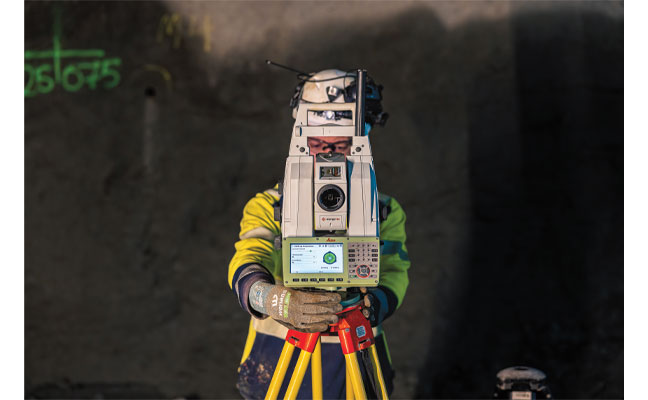
    The surveying team at Skanska depends on Hexagon’s technology daily to ensure precision is up to 5 cm and minimize errors. Hexagon acts as Skanska’s “eyes” underground, without which projects like Rogfast would be impossible.

    “Hexagon’s technology scans, checks and documents everything for us, so we know we don’t have to go back,” Valer said.

    The surveying teams conduct 12 to 18 measurement scans daily using total stations and laser scanners provided by Hexagon. These instruments continuously monitor the tunnel’s alignment and document progress to ensure adherence to design specifications.

    The Skanska team is using several Leica Geosystems surveying instruments, including the Leica TS60 and Leica MS60 MultiStation. The Leica TS60 serves as an accurate total station, specifically designed for demanding precision applications such as underground construction.

    The Leica Nova MS60 MultiStation is a robotic total station that can measure points with an accuracy of 1 mm to 2 mm and capture 3D scans. This dual functionality combines traditional total station capabilities with integrated laser scanning, allowing the same instrument to perform both precise point measurements and comprehensive area documentation.

    In the Rogfast project, these total stations serve as the primary positioning reference system. They establish control networks throughout the tunnel construction, providing fixed reference points from which all other measurements are taken. The robotic capabilities enable automated target tracking and measurement, reducing human error and increasing efficiency in the confined underground environment.

    The hardware components work in conjunction with Hexagon’s data processing software, which manages the massive datasets generated by continuous scanning operations. Hexagon’s Geosystems division provides digital solutions that capture, measure and visualize the physical world, enabling data-driven transformation.

    The software processes raw measurement data into actionable information, comparing actual construction progress against design models and generating reports that identify areas requiring correction. This integration allows project managers to make real-time decisions based on accurate spatial data.

    Project Timeline and Scope

    Project Rogfast represents one of several major infrastructure initiatives designed to improve transportation efficiency across Norway’s challenging terrain. The tunnel’s completion, set for 2033, seeks to establish new technical benchmarks for subsea construction while addressing long-standing regional transportation limitations in Norway.

  • Mapbox product updates designed to enhance location technology

    Mapbox product updates designed to enhance location technology

    Mapbox, a maps and location platform, has created new products and platform updates to aid developers in making more accurate, data-driven decisions and improving overall user experience with advancement in location technology.

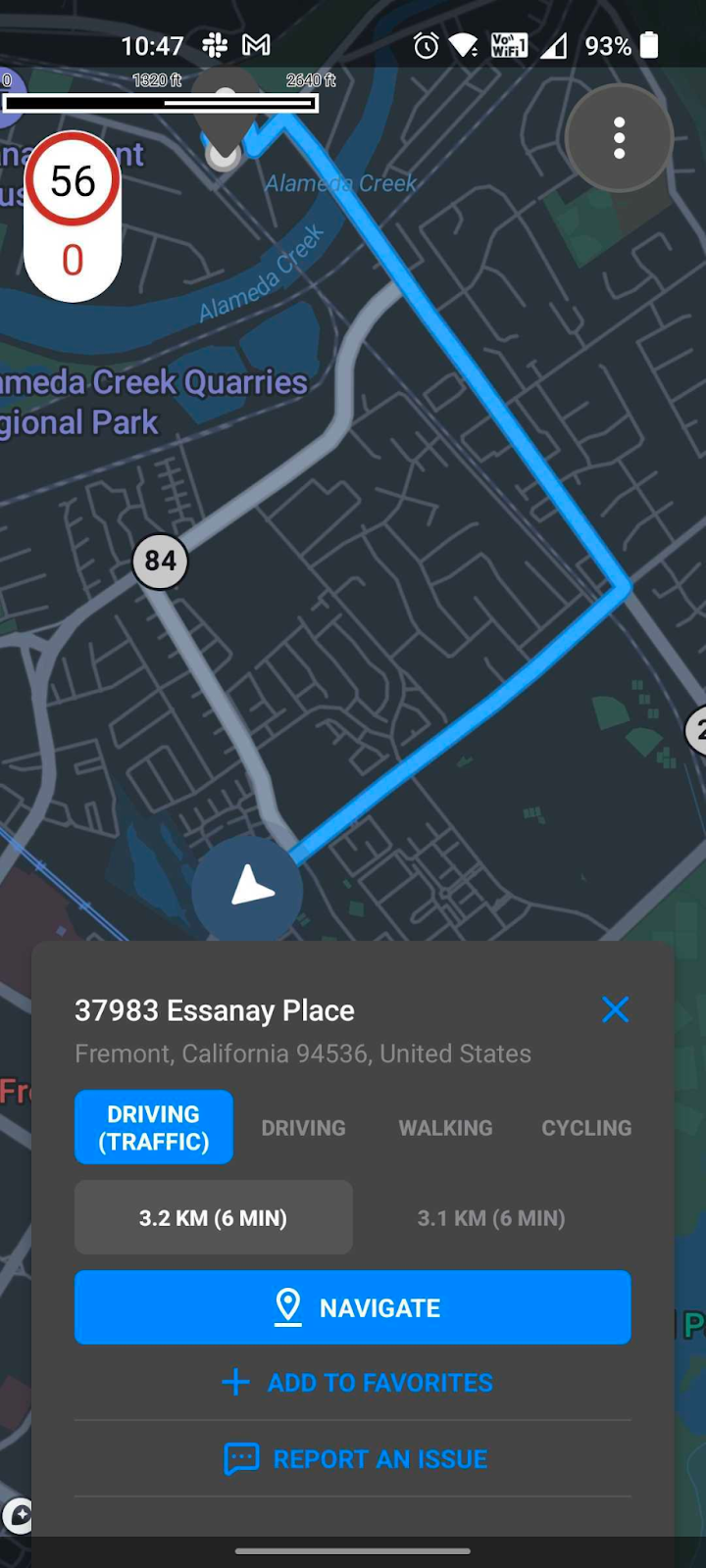
    Navigation SDK v2.9 was introduced to provide pre-built navigation applications, compatible with Android and IOS, which will provide all the primary navigation components across a workflow using lines of code instead of starting from square one. The Drop-in UI is customizable to create applications that reflect a developer’s brand, rather than needing to manually develop a full end-to-end application.

    Photo:
    Image: Mapbox

    Navigation SDK Copilot, a backend analytics tool for CX on navigation applications, was launched and designed by Mapbox to collect trace files of navigation sessions and search analytics data from users. Developers can use this data to gather feedback and collective user data to create touch points with users and improve application experience based on their data-drawn conclusions.

    Mapbox’s platform updates and product innovation also include improvements to its Matrix API, which can now support scheduled departure times and provide optimal driving routes creating a more accurate ETA. This innovative location technology is also designed to enhance fuel efficiency and decrease emissions.

    Photo:
    Image: Mapbox

    As map boundaries are constantly changing, Mapbox has expanded its visualization of map lines to update as frequently as the lines change. The expanded visualization makes updates quicker and improves the ability of Mapbox’s platform to give users the most up-to-date information.

  • RTK From the Sky tech transforms TerraStar-C PRO service with 3-minute global convergence

    RTK From the Sky tech transforms TerraStar-C PRO service with 3-minute global convergence

    TerraStar-C PRO is the first global correction service from Hexagon to incorporate RTK From the Sky technology to achieve RTK-level accuracy in three minutes with 99.999% availability

    In late 2020, Hexagon’s Autonomy & Positioning division announced its technological breakthrough of global RTK From the Sky, demonstrating a future where instantaneous PPP and global RTK-level accuracy is possible.

    Integrating this innovation into the core of TerraStar-C PRO, NovAtel’s corrections service, is the first phase in implementing RTK From the Sky technology into the company’s diverse portfolio of correction services for users worldwide.

    As a result, TerraStar-C PRO has become the fastest global correction service to provide centimeter-level accuracy, not just in open-sky environments but also across challenging conditions created by buildings and foliage, according to Hexagon | NovAtel.

    “RTK From the Sky technology is the foundation that enables our global correction services to be world-leading across agriculture, automotive, defense, survey, marine and autonomous applications,” said Michael Ritter, Autonomy & Positioning division president and CEO. “Our dedication to research culminated in an industry-changing technology; we’ll continue that commitment by providing the best positioning experience in speed, accuracy, availability and reliability anywhere in the world.”

    TerraStar-C PRO now converges in less than three minutes by utilizing quad-band receiver and antenna technology to leverage modernized BeiDou III, GPS III and Galileo E6 signals. The resulting process generates state-of-the-art corrections for all GNSS frequencies.

    Hexagon is a consistent innovator in GNSS, as seen in its role in developing RTK and PPP solutions. With this next-generation modernization of PPP correction generation and algorithm development, the company continues this tradition in providing the highest quality and best performing global positioning experience to users with land- and air-based applications.

    “It’s been a privilege to collaborate across the division to develop RTK From the Sky technology and leverage our collective expertise in correction generation, PPP algorithms and the entire positioning ecosystem,” said Leos Mervart, head of PPP algorithm development at Hexagon’s Autonomy & Positioning division. “I’ve worked with PPP technologies since the beginning of my career and am proud to say that this is a new era of what global positioning can look like.”

    The TerraStar-C PRO improvements are accessible now through the 7.08.10 firmware release for users on OEM7700, OEM719 and OEM729 cards and their associated enclosures for land and air applications.

    Future firmware releases will include global RTK From the Sky technology throughout Hexagon’s correction service portfolios for its global client base, including precision agriculture and marine applications.

    To learn more about TerraStar correction services or to request a free 5-day trial, visit NovAtel.com/TerraStar.

  • Trimble and Microsoft partner on industry cloud for construction

    Trimble and Microsoft partner on industry cloud for construction

    Companies to develop an industry cloud to enable construction organizations to harness digital construction data across the project lifecycle

    Trimble and Microsoft have entered a strategic partnership to advance technology adoption and accelerate the digital transformation of the construction, agriculture and transportation industries.

    By leveraging the Microsoft cloud, Trimble and Microsoft will collaborate to develop, build and deliver industry cloud platforms and solutions that connect people, technology, tasks, data, processes and industry lifecycles. The collaboration represents a significant milestone to advance Trimble’s Connect and Scale 2025 strategy, which centers on building cloud platforms.

    Initially, Trimble and Microsoft will focus on building the Trimble Construction Cloud powered by Microsoft Azure.

    Image: Trimble
    Image: Trimble

    The construction process is fragmented, which can result in lost productivity, rework and a lack of transparency. According to a McKinsey & Company article*, the construction industry is lagging with only 1 percent productivity growth over the last 20 years — significantly lower than the 2.8 percent for the total economy.

    Digitization of products and processes is expected to drive change in the industry. The ability to link technologies, tasks, processes and multiple stakeholders — general contractors, subcontractors, designers, engineers and owners — across the construction project workflow can transform and significantly improve productivity, quality, safety, transparency and sustainability, according to Trimble.

    The partnership expands Trimble and Microsoft’s existing relationship to combine the Microsoft cloud with Trimble’s construction solutions and industry domain knowledge. Trimble’s construction solutions include on-machine and field technology, modeling and collaboration software, project and resource management, and all underlying analytics.

    The Trimble Construction Cloud, expected in 2022, will be fully enabled for 3D constructible models that will reduce risks, drive speed and increase efficiency and accuracy across the construction project lifecycle, including designing, building and operations.

    The companies will also partner on go-to-market strategies and solutions to enable continued support of infrastructure investment cycles, and be used for large-scale projects, on which multiple stakeholders work in parallel to deliver connected construction projects.


    * McKinsey & Company
    The next normal in construction: How disruption is reshaping the world’s largest ecosystem

  • Volvo Group Venture Capital invests in Foretellix

    Volvo Group Venture Capital AB has announced a new investment in a company in the field of measurable safety for driver assistance and autonomous vehicles. Foretellix Ltd was founded in 2018 by a team of verification and validation pioneers whose mission is to make automated driving systems safe and efficient.

    One of the main challenges of autonomous systems is deciding when a product is safe enough to commercialize. This is what Foretellix is tackling with its verification platform.  It uses intelligent automation and big data analytics tools which coordinate and monitor millions of driving scenarios to ensure that the autonomous vehicle behaves correctly under all possible driving conditions, including edge cases.

    In addition to the Volvo Group Venture Capital investment, Volvo Autonomous Solutions formed a closer partnership with Foretellix earlier this year with the aim of jointly creating a coverage-driven verification solution for autonomous driving that operates both on public roads and in restricted areas.

    The role of Volvo Group Venture Capital is to make investments that drive transformation by facilitating the creation of new services and solutions and to support collaborations between start-ups and the Volvo Group.

    Against the background of the trends shaping the future of transportation and the strategic priorities of the Volvo Group, the key areas of investment for Volvo Group Venture Capital are logistics services, site solutions and electrical infrastructure. The organization has a global scope and focuses on Europe and North America.

  • NV5 Geospatial adds lidar system for highway-speed mapping

    NV5 Geospatial adds lidar system for highway-speed mapping

    Photo: Riegl
    Photo: Riegl

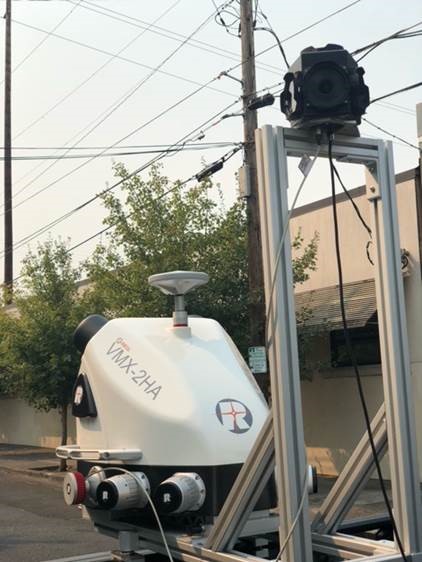
    NV5 Geospatial has acquired the new Riegl VMX-2HA dual-scanner mobile mapping system. The system will initially deploy in utility and transportation projects and enable NV5 Geospatial to collect highly accurate, feature-rich data at highway speeds.

    The flexibility, ease of setup, and smaller footprint will also allow the use of the VMX-2HA on various platforms, including boats, all-terrain vehicles and trains.

    The VMX-2HA delivers mobile point clouds at a resolution of 1,000 to 4,000 points per square meter (pops) and 0.08-foot vertical accuracy in terms of 95% confidence intervals. It also features a high-speed 10 GigE link, which supports reliable data acquisition of up to 2 million measurements per second and image data from all integrated cameras.

    NV5 Geospatial will launch the VMX-2HA as part of a mapping project for a large U.S. utility company and implement it for work being done for the U.S. Department of Transportation.


  • HEAD Aerospace satellite imagery now on UP42 marketplace

    Vatican City satellite image. (Photo: UP42)
    Vatican City satellite image. (Photo: UP42)

    Deal makes data from 40 Chinese satellites available through UP42 now, another 40 by late 2021

    UP42 has signed an agreement with HEAD Aerospace of Beijing to make image data from more than 40 Chinese Earth Observation satellites available on the UP42 marketplace.

    The broad selection of imaging capabilities from the constellations dramatically expands the range of applications in multiple sectors, with the most significant benefits expected in infrastructure, transportation, utilities, agriculture and government.

    The UP42 marketplace contains more than 50 geospatial data sets, including satellite imagery from six international organizations. The newly added satellites’ diverse and often unique imaging capabilities include wide-swath imaging at very high resolution, nighttime acquisitions, frequent intraday revisits, tri-stereo collection and hyperspectral imaging.

    “This partnership is an important milestone for us as a company but, more importantly, for our customers. By diversifying our data sets, we are unlocking a broader spectrum of use cases for our users in multiple sectors. This is the true meaning of ‘democratizing access to Earth insights’,” said UP42 CEO Sean Wiid.

    HEAD Aerospace is an international distributor of satellite imagery collected by commercial Earth Observation missions. The UP42-HEAD agreement includes imagery from multiple constellations, including SuperView, Earthscanner, Gaofen-7, DailyVision, NightVision, Hyperscan, and Tri-Stereo ZY3. These seven constellations will total more than 80 satellites by the end of 2021.

    “Sharing a similar approach facilitating users’ easy access to an agnostic data source by a centralized portal with a wide choice of satellite attributes, we are glad to have partnered with UP42. This partnership represents another new milestone for us in expanding our global network.” said Kammy Brun, managing director of HEAD Aerospace.

    While each satellite constellation was designed with one or more imaging specialties, a remarkable variety of operational capabilities are shared across the constellations to support numerous applications and industries. Examples include:

    • Large-Area Very High-Resolution Mapping – Planning and monitoring critical infrastructure, including utility transmission grids and transportation networks, can be performed for entire states, countries and regions. Up to 40,000 square kilometers can be covered with wide-swath (136 km) imagery captured at a half-meter spatial resolution on a single pass.
    • Intraday and Early Morning Monitoring – The EarlyEye tasking product leverages multiple HEAD Aerospace constellations to deliver early-morning frequent images, an hour earlier than usual commercial offer at 10:30 a.m. Designed for frequent monitoring of critical assets and rapidly changing situations related to energy security, defense/intelligence and infrastructure management, a high-resolution revisit schedule of four times per day is possible, with 15-minute revisit between 09:00 and 13:30 anywhere on Earth to be possible by the end of 2021.
    • High Vertical Accuracy Mapping – Multiple satellites perform stereo imaging at high resolution for high-quality land use and cadastral mapping. One constellation captures single-pass tri-stereo imagery validated with onboard laser altimetry data, generating digital elevation models (DEMs), digital terrain models (DTMs), and other large-scale 3D mapping products with vertical accuracy of 5 meters. Additionally, the SuperView constellation captures daily stereo imagery with vertical accuracy of better than 2 m.
    • Hyperspectral Imaging – Imaging in 25 spectral bands spanning the visible, near-infrared, and mid-infrared portions of the spectrum is designed for regional natural resource management: detecting crop stress and planning pesticide/fertilizer applications, species mapping of forests and vegetative land cover, and protecting environmentally sensitive areas. These data sets can also be used in agriculture monitoring, mineral exploration and water-quality monitoring.
    • Nighttime Imaging – Monitoring and surveillance activities by government entities, energy utilities and security organizations can be carried out around the clock with true-color, high-resolution at 1 m optical and video imaging during daylight and dark of night. Nighttime collection is suitable for surveillance such as illegal camping, border surveillance, change detection (especially in rapidly evolving events), powerline incidents and designing streetlight placement in urban settings. Day and night video can detect vehicle and ship movement.

    UP42 users have a growing selection of satellite imagery to choose from on the geospatial marketplace. UP42 technical experts are available to assist customers in selecting the best data set to meet the needs of specific end-use applications in all industries and sectors. These experts can also help in tasking a satellite for new image acquisition or querying the archive to obtain existing imagery.

  • New HxGN Connect enables seamless, citywide collaboration

    New HxGN Connect enables seamless, citywide collaboration

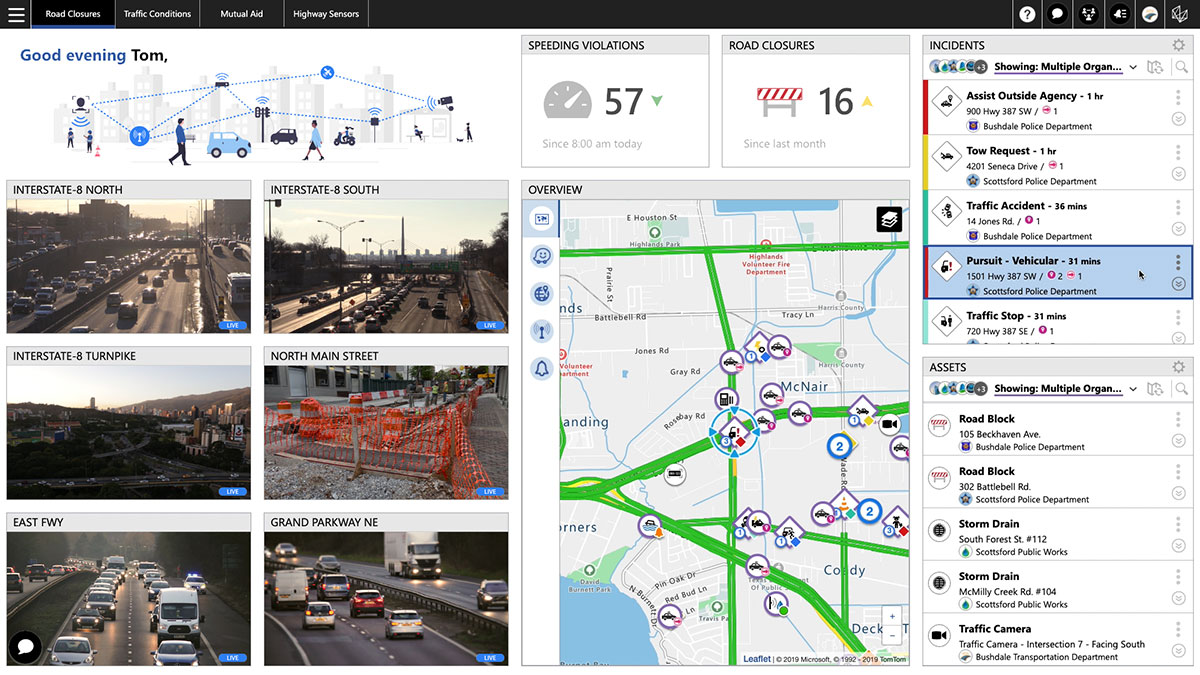
    Hexagon AB has launched HxGN Connect, a software-as-a-service (SaaS) workspace for citywide collaboration enabling government agencies and other organizations to share data and coordinate action for ad-hoc, routine and emergency situations.

    Hosted in Microsoft Azure, HxGN Connect provides a networked workspace and unified view of information within and between entities. Participants can actively collaborate and securely share data as events unfold, overcoming technical and political barriers that result in missed opportunities, conflicting actions, errors and delays.

    With HxGN Connect, organizations can move beyond basic cooperation to true collaboration, where all participants gain mutual value. HxGN Connect is easily implemented and scaled — whether between multiple departments in a single agency or multiple organizations across cities and regions.

    “The future of smart cities lies in connected data communities that enable users to work with people and information irrespective of organizational and geographical affiliations or technology limitations,” said Hexagon President and CEO Ola Rollén. “HxGN Connect reimagines collaboration, breaking down barriers and bridging gaps between vertical sectors, organizational types and operational functions, which means safer cities, more effective services and happier residents.”

    HxGN Connect brings a city’s public safety, transportation, utilities and other related organizations together seamlessly. While users can visualize people, places and activities, and send messages and assign tasks to each other, all participants retain full ownership and control of their own data (nothing is stored in a central repository).

    The HxGN Connect dashboard. (Screenshot: Hexagon AG)
    The HxGN Connect dashboard. (Screenshot: Hexagon AG)

  • GSA publishes High Accuracy Service information update

    GSA publishes High Accuracy Service information update

    Click to download report from the GSA.
    Click to download report from the GSA.

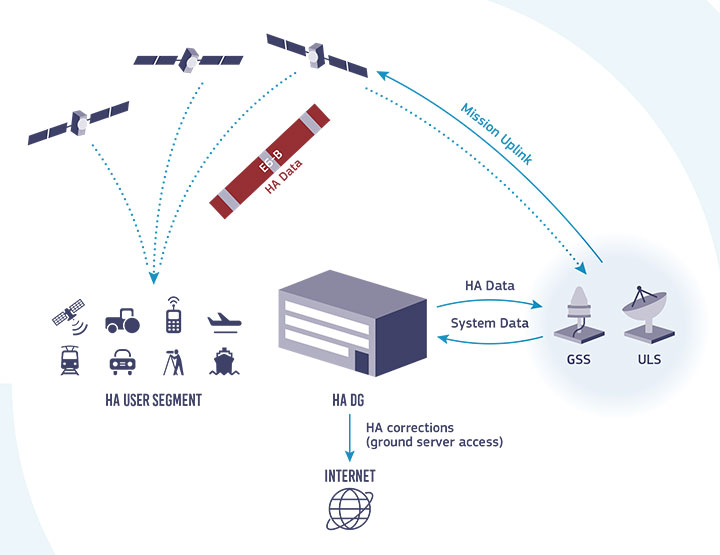
    The European GNSS Agency (GSA), with the European Commission, has published an information note on the Galileo High Accuracy Service (HAS). The 16-page document provides an overview of the main characteristics of the service, information on features such as service levels, target performance, an implementation roadmap, and an overview of the target markets for the service.

    Target markets for Galileo HAS include geomatics, precision agriculture, consumer solutions and the space sector.

    The market for high-accuracy positioning is dynamic, driven by various factors, including

    • emerging applications such as autonomous vehicles and drones;
    • technological advances such as dual-frequency chipsets for the mass-market; and
    • the market situation, with cheap or free-of-charge augmentation services available in some countries.

    These factors are resulting in the democratization of high accuracy, which is becoming a more widespread commodity, rather than the exclusive domain of professional applications.

    With the Galileo HAS, Galileo will pioneer a worldwide, free high-accuracy positioning service aimed at applications that require higher performance than that offered by the Galileo Open Service.

    Benefitting several markets

    Target markets for the HAS include geomatics, agriculture or consumer solutions. Transport is also a major potential target market, with possible applications in aviation, road, rail and maritime and inland waterways.

    In these markets, the HAS will provide high-accuracy precise point positioning corrections for Galileo and GPS free of charge, in the Galileo E6-B data component and by terrestrial means, to achieve real-time improved user positioning performances, with a positioning error of less than two decimetres in nominal conditions.

    “With its High Accuracy Service, Galileo will be the first satellite constellation able to provide a high-accuracy precise point positioning service globally, directly through the Signal in Space,” said GSA Executive Director Rodrigo da Costa. “This will be another key differentiator of the Galileo system, giving it a competitive advantage over other systems and allowing it to foster innovation in both consolidated and emerging markets.”

    Galileo HAS high-level architecture. (Image: GSA)
    Galileo HAS high-level architecture. (Image: GSA)

    HAS Initial Service

    HAS Phase 1 will cover the provision of an initial Galileo HAS resulting from the implementation of a high-accuracy data-generation system that processes Galileo data only.

    Phase 2 will see full provision of the Galileo HAS, meeting its target performance of 20-cm worldwide positioning accuracy after 2024.

    Through the HAS, Galileo will offer a unique service with the transmission of corrections directly via Galileo satellites, allowing free high-accuracy positioning globally, for everyone.

  • Hexagon’s ‘RTK from the Sky’ brings instant GNSS accuracy worldwide

    Hexagon’s ‘RTK from the Sky’ brings instant GNSS accuracy worldwide

    New service provides PPP convergence for centimeter-level accuracy on land, air and marine applications around the world

    Research from Hexagon’s Autonomy & Positioning division has resulted in breakthrough innovations in precise point positioning (PPP) that enable nearly instant global centimeter-level accuracy. These developments pave the way to bring “RTK from the Sky” performance to worldwide users through correction service products and GNSS receivers from Hexagon.

    RTK from the Sky technology provides the quick accuracy of an RTK solution with the high accessibility and availability of PPP. Users will no longer have geographic or regional infrastructure restrictions — they will be free to operate anywhere around the world with the same premium level of positioning performance.

    RTK from the Sky technology removes the traditional PPP barrier of long convergence times as well as internet and radio communication limitations, delivering instantaneous convergence anywhere in the world. This breakthrough establishes the foundation for assured positioning with no downtime in marine, agriculture, and autonomous applications.

    To achieve these results, there must be masterful attention to detail throughout the entire positioning ecosystem: no errors conveniently cancelled and no errors ignored. All errors are carefully estimated and removed from the final GNSS position faster and more reliably than ever before.

    This end-to-end fine-tuning of measurement quality and error mitigation establishes the foundation for RTK from the Sky performance. No matter the location or application, users will be able to rely upon the highest availability and accuracy of corrections anywhere in the world, without the convergence time, Hexagon said.

    “In 2020, PPP has become RTK — without the mobility limitations,” said Sandy Kennedy, VP of Innovation at Hexagon’s Autonomy & Positioning division. “RTK from the Sky has been a very satisfying development. To see this kind of positioning performance available anywhere in the world is the realization of the next step of innovation for GNSS.”

    RTK from the Sky technology will be the foundation for future correction service products and applications from Hexagon built for diverse applications.

    See a white paper on RTK from the Sky.


    Feature photo: Nikada/E+/Getty Images

  • Sept. 17 webinar addresses PNT monitoring of critical infrastructure

    Sept. 17 webinar addresses PNT monitoring of critical infrastructure

    Recent GPS World webinars have focused on a variety of proven, resilient technologies to combat GNSS and positioning, navigation and timing (PNT) vulnerabilities in critical infrastructure.

    Now a Sept. 17 GPS World webinar focuses on how PNT monitoring can further protect critical systems from these vulnerabilities through continuous monitoring and improvement.

    The Orolia-sponsored webinar is free. It is scheduled for 1 p.m. EDT / 10 a.m. PDT / 7 p.m. (1900h) Central European Time. Register here.

    Protecting critical infrastructure is now a national priority for the U.S. and allied countries. Similar to cybersecurity for network systems, effective GNSS and PNT protection involves identifying and monitoring weak entry points, knowing where and when an intrusion occurs, and providing data about new threats to help strengthen the system going forward. Its value applies across all critical infrastructure sectors such as telecom, power grids and data centers.

    Webinar speakers include:

    Photo: Orolia

    John Fischer
    Vice President, Advanced R&D, Orolia

    For more than 15 years, Fischer has been part of Orolia where he works with global navigation satellite systems, wireless, positioning navigation and timing, as well as specialized systems for its customers. Prior to joining Orolia, he specialized in wireless telecom as a founding member of two startups: Aria Wireless in 1990 and Clearwire Technologies in 1997. At Clearwire, he served as chief technology officer in creating wireless broadband equipment for internet connectivity. Early in his career, Fischer worked as a systems engineer in radar, EW, and command and control systems at Sierra Research and Comptek Research. He holds master’s and bachelor’s degrees in electrical engineering and computing engineering from the State University of New York at Buffalo.

    Tim Frost headshot

    Tim Frost
    Strategic Technology Manager, Calnex Solutions

    Tim Frost is a specialist in next-generation synchronisation techniques, having worked with Zarlink Semiconductor, Symmetricom and now Calnex Solutions on packet-based synchronisation technologies. He is an active contributor to the ITU-T, and has also contributed to the AVnu Alliance, Small Cell Forum, Metro Ethernet Forum and IETF. He has a BSc. in Electrical and Electronic Engineering from the University of Leeds, and a MSc. in Computer Systems Engineering from the University of Manchester.

    Francisco Girela headshot

    Francisco Girela
    Americas Tech Responsible, Seven Solutions

    Francisco Girela is the Americas Tech Responsible at Seven Solutions. He holds a Master’s degree in Telecommunications Engineering from the University of Granada. After some time in the private sector, Francisco joined the Timing Keepers group at the same university as a researcher. During his research, he specialized in ultra-accurate time transfer systems and he focused on the development of the White Rabbit technology. He combines his work for Seven Solutions with his studies for a Ph.D. in Telecommunications Engineering. This combination has provided Francisco with a strong technical background on high-accuracy time synchronization and deep knowledge on timing applications in industrial sectors.

    All previous webinars are available on demand and on the GPS World YouTube channel.