Hurricane Matthew, which formed Sept. 28 and dissipated Oct. 10, brought torrential rains to the Carolinas, causing widespread flooding. The above is a screenshot from a drone inspection video.
In the wake of Hurricane Matthew, Verizon used drones for cell-site inspections in North Carolina and South Carolina. The aerial survey shortened cell-site recovery to hours compared to potentially days, based on the severity of flooding.
The quadcopter used was operated by Measure UAS, which conducted the flights with Federal Aviation Administration (FAA) authorization.
Flights used a two-person crew that included a ground pilot for the UAS, and a visual observer of the operation for safe, legal and insured operations, Verizon said.
While Verizon was able to access most hurricane-affected sites quickly to assess damage, some sites were not accessible because of extreme flooding. That’s where the UAS came in.
Streaming in HD
The UAS was able to livestream and record high-definition video and high-resolution photographs of a cell site.
The first flight to a site surrounded by water near Elm City, North Carolina, and the Tar River Reservoir showed engineers that the base-station equipment — which was elevated on stilts — was not underwater and had not suffered visible damage.
After determining the site was safe to access, Verizon’s Network team secured an air boat and refueled the generator, bringing the site back into service within hours.
Verizon completed successful cell site inspection trials earlier this year in New Jersey providing valuable 3D imagery and system performance data via UAS.Now the company has several vendors to aid Verizon’s network maintenance and operations.
airborne service
In October, Verizon conducted the first trial with Verizon’s Airborne LTE Operations during an emergency management and disaster recovery exercise in Cape May, New Jersey.
The exercise simulated how Verizon’s network could provide 4G LTE coverage from a 17-foot wingspan UAS operated by American Aerospace Technologies (AATI) to first responders in an area impacted by a severe weather event where no wireless service is available.
While this is the first simulation in an emergency scenario, AATI and Verizon are conducting trials nationally testing connectivity between manned and unmanned aircraft and Verizon’s 4G LTE network, including in-flight connectivity.
Transaction to accelerate Verizon’s position as a provider of fleet and mobile workforce management solutions, companies say
Verizon Communications Inc. and Fleetmatics Group PLC have entered into a definitive agreement under which Verizon will acquire Fleetmatics, a global provider of fleet and mobile workforce management solutions, for $60 per share in cash — representing a value of approximately $2.4 billion.
In June, Verizon Telematics announced the acquisition of Telogis Inc., a global, cloud-based mobile enterprise management software company based in Aliso Viejo, California. That transaction closed on July 29.
With approximately 1,200 employees, Fleetmatics is headquartered in Dublin, Ireland, with North American headquarters inWaltham, Massachusetts. The company’s web-based solutions provide fleet operators with visibility into vehicle location, fuel usage, speed and mileage, and other insights into their mobile workforce, helping them to reduce operating costs, as well as increase revenue.
Verizon Telematics, a subsidiary of Verizon Communications, operates in more than 40 markets worldwide and offers comprehensive wireless, software and hardware solutions to consumers, enterprises, automakers and dealers to power connected-vehicle products around the world.
“Fleetmatics is a market leader in North America — and increasingly internationally — and they’ve developed a wide-range of compelling SaaS (software as a service)-based products and solutions for small- and medium-sized businesses,” said Andrés Irlando, CEO of Verizon Telematics.
“The powerful combination of products and services, software platforms, robust customer bases, domain expertise and experience, and talented and passionate teams among Fleetmatics, the recently-acquired Telogis, and Verizon Telematics will position the combined companies to become a leading provider of fleet and mobile workforce management solutions globally,” Irlando added.
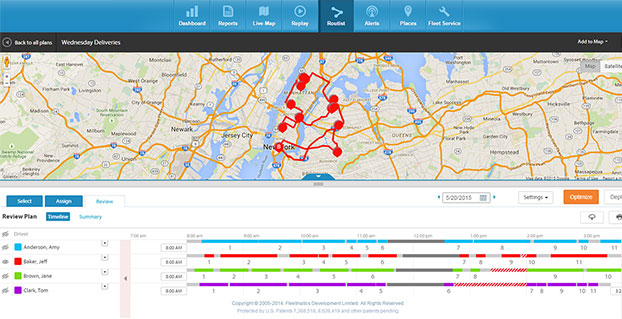
Fleetmatics Routist is an intelligent routing optimization tool for fleet management.
“Verizon and Fleetmatics share a vision that the SaaS-based fleet management solution market is extraordinarily large, lightly penetrated, global and fragmented which can best be attacked together with a world class product offering and the largest distribution channel in the industry,” said Jim Travers, Chairman and CEO of Fleetmatics.
“Fleetmatics brings over 37,000 customers, approximately 737,000 subscribers, a broad portfolio of industry leading products, and a team of 1,200 professionals focused on solving the critical challenges of businesses that deploy mobile workforces. We are excited to partner with Verizon in fulfilling the mission of becoming the largest mobile workforce management company in the world,” Travers added.
The acquisition is subject to customary regulatory approvals and closing conditions, including the approval of Fleetmatics’ shareholders and the sanction of the Irish scheme of arrangement by which Verizon will acquire Fleetmatics by the Irish High Court, and is expected to close in the fourth quarter of 2016.
PJT Partners and Wells Fargo Securities, LLC are acting as financial advisors to Verizon. Cleary Gottlieb Steen & Hamilton LLP, A&L Goodbody and Macfarlanes LLP are acting as legal advisors to Verizon. Morgan Stanley is acting as financial advisor to Fleetmatics. Goodwin Procter LLP and Maples and Calder are acting as legal advisors to Fleetmatics.
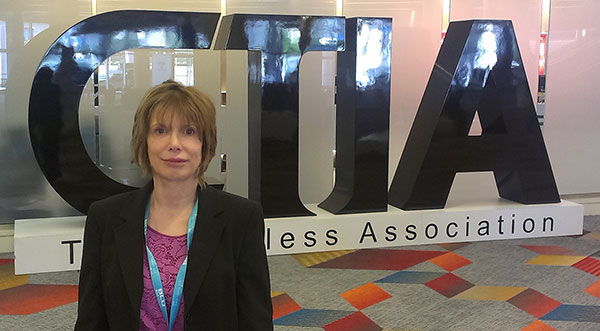
LAS VEGAS — About 30,000 attendees sweltered in Las Vegas for CTIA’s Super Mobility show this past week. Attendance was flat from last year, but the exhibit floor and meeting rooms bustled. The energy of the show focused on M2M and Internet of Things (IoT). In past years, the connected vehicle was a highlight, but not so this year. Wearable technology was scant. Those looking for the big product introductions of the past were disappointed. However, CTIA’s keynote speakers added focus and vision into the show, reminding us of the drive and vigor that built the industry.
In the past, the network operators (we once called them carriers) and device manufacturers owned the CTIA show, where they made their biggest product reveals. This year, AT&T had a flurry of announcements, including a partnership with car manufacturer Jaguar Land Rover North America. AT&T will supply connectivity to the cars for features such as Wi-Fi hotspots, connected navigation and a suite of apps. Customers will be able to share wireless data between phones, tablets and vehicles on its Mobile Share Value plan for an additional 10 dollars per month access fee. AT&T previously signed agreements with Audi, BMW, GM, Ford, Tesla, Nissan, Volvo and Subaru.
AT&T and Telogis announced a collaboration to offer solutions for companies with mobile workforces, a combination of AT&T’s network and Telogis’ telematics, compliance and navigation fleet solutions. AT&T was showing off ZTE Mobley, AT&T’s first plug-in vehicle Wi-Fi hotspot, which has just appeared in stores. Smaller announcements from AT&T included the formation of a dedicated smart city organization and a personal security app that provides live, OnStar-type professional monitoring (video and audio).
Verizon unveiled Go90, a streaming-video, social media service that works across carriers. Go90 is a free, ad-based service accessed only on a mobile phone and focused on short clips, viral videos and a social element, with crowdsourced recommendations and the ability to join groups. Go90 is targeted at Millennials, people younger than 30 years old. Although this seems like a minor announcement, obtaining the loyalty of Millennials and Generation Z (those still in their teens) is critical. With two-thirds of Millennials considering smartphones as their most important device for video, the strategy behind Go90 makes sense.
New Sprint CEO Marcelo Claure is never boring and used his time at the podium to continue trash- talking the competition. With cocky confidence, he pronounced that under his leadership, Sprint will enjoy “one of the biggest turnarounds in telecom history.” In July, Claure used Twitter to declare T-Mobile’s aggressive “uncarrrier” promotion to be “bullshit and a fake show.” He continued his rant at CTIA. “We spent the first year cutting AT&T or Verizon’s bills in half, which was fun. We’ve moved on today to offering all the DirecTV customers the choice to not be stuck with AT&T.”
One of the most pressing industry issues is spectrum. With wireless data forecast to grow ten-fold by the end of 2020, the industry is concerned that the 2016 spectrum auction will not be sufficient. Keynotes appealed for more spectrum to enable the U.S. to lead in 5G, just as it led in 4G. U.S. company-run operating systems are currently on nine out of ten smartphones, worldwide. FCC Chief Tom Wheeler was at CTIA to give assurances that the spectrum auction slated for March 2016 will be successful and occur as scheduled. He countered CTIA’s CEO Meredith Baker’s assertion that the FCC has no added plans beyond this auction for freeing up spectrum.
Freetel mobile products of Japan was one of several international companies participating in CTIA this year.
Location Players, M2M, IoT
TeleCommunication Systems (TCS), a stalwart of location-based services, beefed up its indoor location capabilities with the purchase of Loctronix. The platform, Sensorvision, aggregates and integrates location-positioning technologies, like Bluetooth, beacons and Wi-Fi, as well as content, such as mapping. Sensorvision is currently in beta testing and is aimed at wireless operators. With more stringent rules for 911, including indoor location requirements, TCS is positioned for both public safety and commercial needs. What’s next? In five years, Michael Mathews of TCS predicts, “We’ll be talking about the huge amount of information available from the road and the great impact on apps, including vehicles that are informing other cars of their actions, such as when they initiate traction control or start windshield wipers.”
u-blox, the maker of wireless and positioning modules and chips, announced a portfolio of new LTE low data rate cellular modules for IoT and M2M applications in the industrial and automotive markets. The portfolio consists of multi mode, multi carrier and of LTE only modules specific for large North American carriers. u-blox expects LTE Cat. 1 technology to become the future norm for M2M applications. And when asked about long-term success, Sven Etzold of u-box says, “The challenge for our industry is picking the right partners and being part of successful consortia. We need to partner with the right network operators and play with sensors’ companies.”
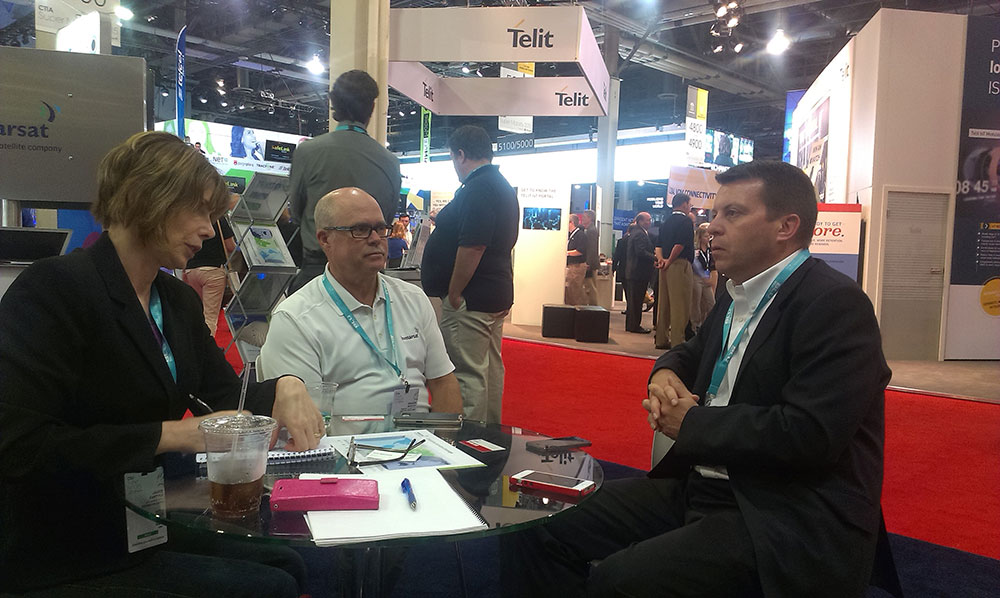
Janice visits with Chuck Moseley (center) and Don Wigglesworth (right) of Inmarsat.
Inmarsat unveiled its new machine-to-machine (M2M) and its IoT strategy, the “Internet of Everywhere.” The company is increasing use of VARs and OEMs to enable solutions that will provide more visibility and control of mobile assets throughout the world. “We are empowering existing and prospective VAR partners to offer unparalleled worldwide connectivity to their M2M and IoT customers through a single network and a single SIM,” said David Wigglesworth of Inmarsat. The company’s dedicated M2M services are IsatData Pro, a low-data-rate messaging service, and BGAN M2M, a two-way IP data service for monitoring and control of assets that require higher bandwidth capabilities.
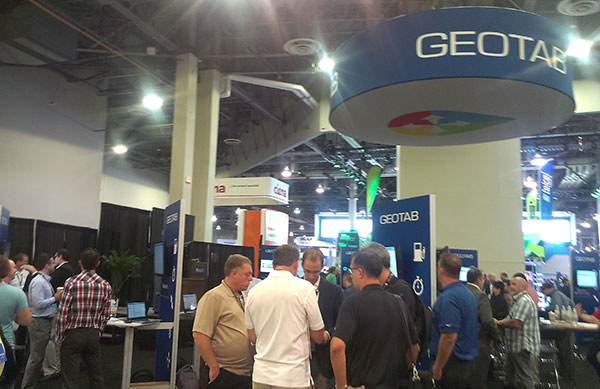
Geotab, with one of the exhibit floor’s most crowded booths, showcased the development platform of a small form-factor GPS tracking device. The Geotab GO7 device plugs directly into a vehicle’s OBDII port. Developers create applications that are available on the Geotab Marketplace. The booth was crammed with developers who offer M2M and IoT solutions.
Geotab’s booth was crowded with developers interested in the Geotab Marketplace for M2M and IoT solutions.
Microsoft’s Start-Up Alley contained interesting ventures from the Microsoft Accelerator. One young company, Parknav, offered an app for finding parking spaces based on predictive modeling, and not sensors. Users are guided to street blocks with the highest probability of available parking spaces. The app uses a number of sources, including number of parking spaces, traffic flow and undisclosed data. Parknav enables searches for free, paid and permit parking in 30 cities in Germany and a few cities in the U.S.
On a charitable note, Jimmy Whales of Wikipedia fame was at CTIA to promote his phone business, a Sprint-based MVNO cellular service. Like Wikipedia, The People’s Operator (TPO) is not a profit driven enterprise. Ten percent of a subscriber’s monthly bill goes to a charity of her choosing, and 25 percent of the company’s profits are donated to non-profits. In talking about Wikipedia, Whales cited China’s current ban of the website. Wikipedia has recently made changes to its website that make it impossible for censors to ban specific Wikipedia pages, although the entire site can be blocked, as it currently is in China.
I have parting advice for the organizers of CTIA. This year’s show was disrupted by competing events that included the iPhone 6 announcement in Cupertino. Shame on Apple, who is a member of the CTIA board. Also, CTIA had organized a virtual co-conferencing with Internationale Funkausstellung Berlin (IFA), one of the largest trade shows for consumer electronics and home appliances. The IFA event was held in Berlin the prior week and stole attention from CTIA. It isn’t all about location. Timing matters.
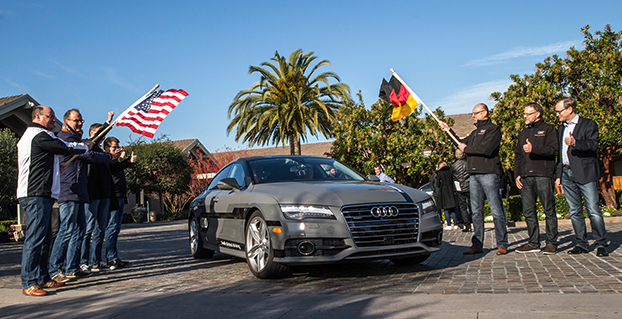
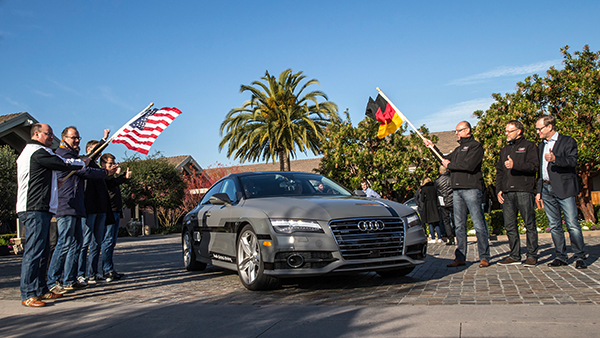
Start of the 550 mile piloted drive from Silicon Valley to Las Vegas: Ricky Hudi, Executive Vice President Electric/Electronic Development, (left) and Ewald Gössmann, Excecutive Director Electronic Research Lab California (ERL), (third from right) drop the flag for the Audi A7 piloted driving concept car. Photo: Audi
In the wake of CES and the North American International Auto Show in Detroit, it’s clear that times are a-changing. Self-driving concept cars filled three football-field-sized areas to show off what lies ahead. Verizon and Ford did a cosmic switcheroo, with Verizon morphing into the auto space and Ford starting a transformation into a mobility company. Automated reality/augmented reality isn’t as big as would be expected, and is suffering from a lack of content. Wearables continue to do remarkable things, notably in the health and fitness sector, and smart watches will become more exciting with interaction to vehicles and home.
Janice Partyka
When Mark Field, current CEO of Ford, announced the Ford Sync from the CES stage in 2007, attendees found the presence of an auto company at CES to be out of place. The auto industry was considered Neanderthals of tech. Today, the most exciting mobile technology is vehicle related, and more exciting developments from the auto industry were seen in Las Vegas, rather than Detroit.
Field was back at CES with a visionary perspective that Ford isn’t going to be just about cars and trucks. He is broadening Ford’s focus to mobility in preparation of the changes in transportation that will occur in response to global megatrends of urbanization, growth of the middle class, air-quality issues and evolving consumer attitudes. To test out new ideas of flexible user-ship and collaborative transportation, Ford is operating 25 experiments around the world to test out solutions for specific mobility challenges. Ford is looking to be a leader and enabler of a market where people may be sharing or swapping vehicles or relying on crowd-based transportation. It is refreshing to see out-of-the-box thinking from Detroit.
Ford Mobility Experiment in London — driving-on-demand with Ford fleet. Photo: Ford
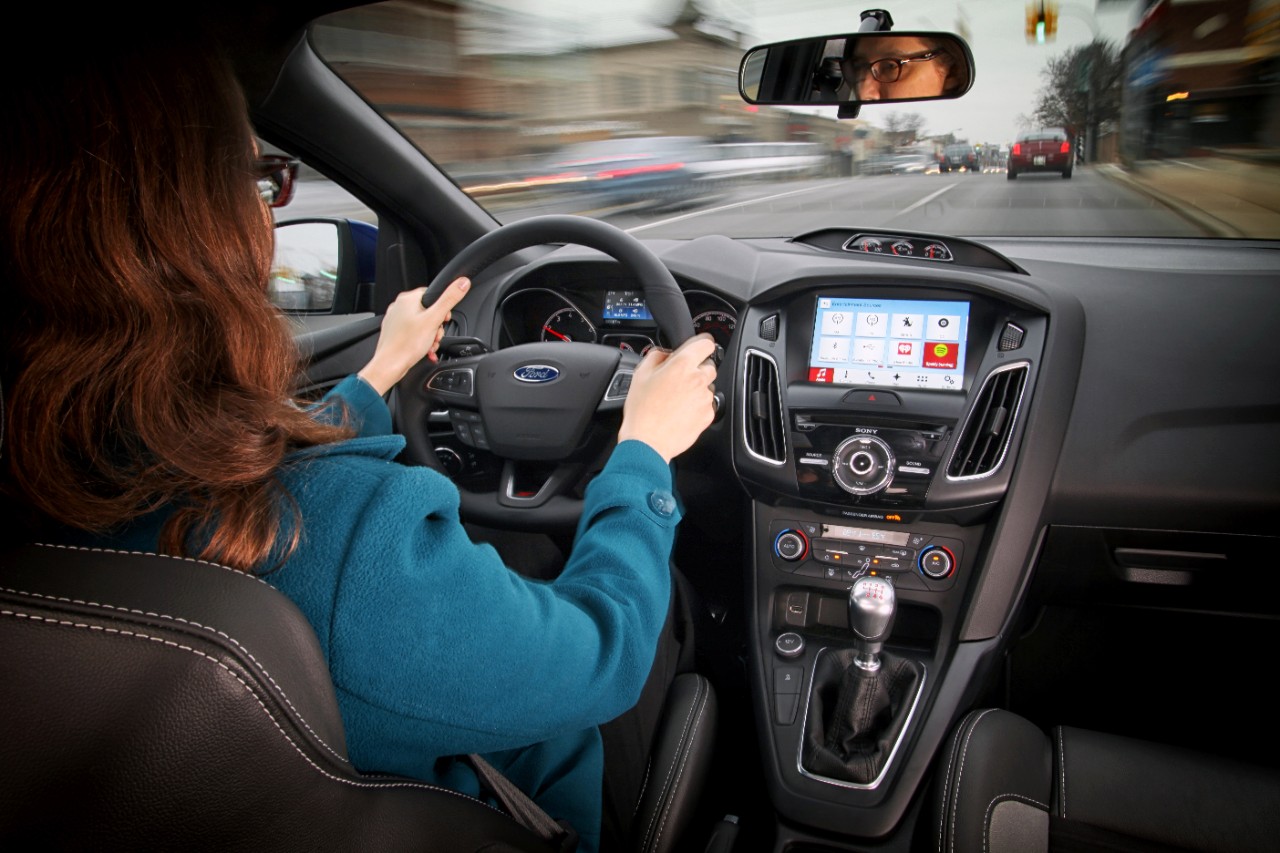
Far from its beginnings in 2007, Ford announced SYNC 3, an updated version of its in-vehicle communication and information system. SYNC technology is already in 10 million vehicles on the road. SYNC 3 will be released in new car models this year and will include more conversational speech recognition, a more smartphone-like experience with a touch screen and easier-to-read graphics. In addition, AppLink 3.0 will roll out and give drivers the ability to access their navigation app — much as they do on a smartphone — on in-vehicle touch screens.
SYNC 3 has been designed to keep the drivers eyes on the road and hands on the wheel, even when controlling their favorite phone apps. Photo: Ford
You may recall that GM had announced OnStar would be dropping Verizon for AT&T communications staring in 2015. The announcement of Verizon Vehicle, a new connected vehicle service that duplicates some of the features of OnStar, must be the impetus. The subscription-based service will be compatible with all vehicle models sold in the U.S. since 1996. The service will include GPS-directed roadside assistance, crash notification, emergency assistance with a live agent, a hotline to connect with mechanics on vehicle issues, maintenance alerts, and stolen vehicle location assistance. Notably, the offering doesn’t include navigation, a mainstay of OnStar, but readily available on smartphones. The service uses an OBD II dongle and a head unit that can attach to a visor and contains a Bluetooth speaker and call buttons.
Mercedes-Benz, Audi and BMW all showed advances in self-driving vehicles. Mercedes-Benz demoed the F015 Luxury in Motion concept car, which is fully autonomous and completely powered by a battery and fuel cell. Audi impressed by having its own concept vehicle drive itself from Palo Alto, California, to Las Vegas. BMW offered demonstrations of its i3 electric car, with ActiveAssist technology, able to prevent collisions at speeds up to 15 mph.
Delphi and Valeo technology suggest that current adaptive cruise-control systems may soon add self-steering. Drivers could allow the car to take over in stop-and-go traffic and on long highway segments. Although unlikely to see production in the short term, Delphi showed the full capabilities of its self-driving technology in an urban environment.
The next big feature to be commercialized during our wait for automated driving is self-parking. As demonstrated by BMW, the driver arrives at a parking garage entrance, gets out of the car, and sends it to find a parking place. When ready to depart, the driver summons the car, which drives itself to a special pickup zone in front of a parking garage. BMW says it will be offering self-parking cars in one to two years.
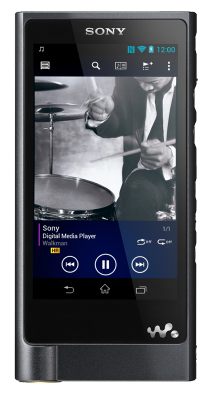
The Sony Walkman, now $1,100. Photo: Sony
Unfortunately, augmented reality hasn’t quite lived up to the hype, but Hyundai is showcasing a production-ready augmented reality heads-up display concept. It’s an easy-to-understand system with animated information and warnings to describe road conditions ahead. For instance, it provides warnings when another car is about to unexpectedly enter the car’s lane, and shows arrows leading to exit ramps, highlighted street signs and one-way street markings. Hyundai has linked the augmented heads-up display to a wearable band that will vibrate with warnings. The band includes a heart-rate monitor that can notify 911 if a driver’s heart rate changes rapidly.
I don’t want to neglect the things in life that don’t change. It is comforting to know that Palm Pilots, record players and Walkmans are back at CES. The new Sony Walkman will set you back $1,100. So things do change.
Verizon will soon be offering Verizon Vehicle to U.S. consumers. The new connected-vehicle service aims to modernize traditional roadside assistance offerings while enhancing driver safety, convenience and savings, according to Verizon. Verizon made the announcement today at the North American International Auto Show in Detroit.
Verizon Vehicle is expected to make its commercial debut in the second quarter of 2015. With Verizon Vehicle, drivers will have easy access to diagnostic technology, live assistance, and roadside assistance with GPS accuracy. The service can connects drivers to live A.S.E. certified mechanics to diagnose potential problems and offer solutions. If drivers need assistance, the built-in GPS identifies their exact location, and a tow truck driver or other help can be dispatched as needed, with precision.
Erik Goldman, president of Verizon Telematics, explained that more than 200 million U.S. vehicles lack connected capabilities, vehicles that could benefit from the new service.
“As one of the largest communications companies in the world, we are dedicated to providing consumers with innovative technology solutions that connect people, solve challenges and inspire change,” Goldman said. “Verizon Vehicle is a unique and truly holistic aftermarket solution available to over 200 million vehicles on the road today. It affords millions of drivers the power of knowing when things aren’t working well, potentially before a breakdown occurs — fostering a safer, smarter and more economical way to drive and maintain a vehicle. And while even the best technology can’t prevent every breakdown, the service modernizes the traditional roadside assistance offerings which, for the most part, haven’t been updated in 50 years.”
Verizon Vehicle is powered by the Verizon Wireless network and is compatible with nearly every vehicle made and sold in the U.S. since 1996 — more than 9,000 makes and models. Verizon Vehicle will launch as a subscription-based service available to drivers regardless of the wireless service provider they use for their mobile devices. Members also receive discounts on travel including hotels and auto services.
The service operates through an OBD reader that can be self-installed in the under-dash diagnostic port, a Bluetooth-enabled speaker attached to the visor and a smartphone app. Members can choose to use the app or elect to set up the service to contact them — by phone, text, push notification or email — if a potential issue is detected with their vehicle. The speaker offers one-button push connection to the member care group, the mechanics hotline and roadside assistance, as well as a second button for SOS emergency situations.
The subscription-based service will include:
GPS-directed pinpoint Roadside Assistance for breakdowns, flat tires, overheating, a dead battery — anything that might require towing or immediate repair. Dispatches are made to the exact location of a disabled vehicle.
Automatic Urgent Incident AlertSystem places a call to the Verizon Vehicle Member Care Center in the event of a suspected accident. Help is immediately dispatched to the location if an accident is confirmed or there is no response from the driver. The time saved can potentially save lives by delivering critical emergency assistance when a person may not be able to call for help.
One-Button SOS Assistance immediately connects the driver to a live agent for emergency aid.
Auto Health System with Predictive Diagnostics translates most “check engine” light occurrences into real terms, including the description and severity of the matter, the probable solutions for the problem — and the appropriate cost for the repairs. The system is also designed to provide early warnings relating to some vehicle functions, even before a warning light comes on, to help keep you off the side of the road.
Mechanic’s Hotline is staffed with A.S.E. Certified Mechanics providing members access to immediate and unbiased information related to their vehicles, and a professional analysis of trouble they may be experiencing.
Parking & Meter Tools help drivers find where they left their vehicle —using the Verizon Vehicle smartphone app — while also keeping track of how much time is left on the meter.
Maintenance Alerts inform vehicle owners when scheduled maintenance is required. No more guesswork as to when to rotate those tires or change the oil.
Stolen Vehicle Location Assistance guides drivers when reporting a theft and helps authorities recover the stolen vehicle.
Travel & Repair Savings — Verizon Vehicle members will be entitled to discounts on hotels, vehicle rentals, auto maintenance, repairs and related travel expenses.
The service is expected to launch nationally this spring with availability thru nationwide retailers late in 2015. Advance consumer orders for the service are being accepted at VerizonVehicle.com and at 800-711-5800.
Azuga Fleet, a cloud-based, rewards-driven GPS fleet tracking and driver behavior solution, is collaborating with Verizon Wireless. Verizon will serve as the official wireless network provider for Azuga Fleet, providing reliable performance and real time updates to fleet managers from the field in order to further increase efficiencies in the fleet industry through machine-to-machine (M2M) technologies.
“We chose Verizon Wireless to make Azuga Fleet’s technology even more accessible, simpler and reliable for fleet managers to utilize,” said Vice President and General Manager of Azuga Fleet, Ananth Rani. “Azuga will be expanding its roadmap to encompass products related to IoT (Internet of Things) 2015 and we look forward to working with Verizon as we develop these and bring them to market.”
“By working together and combining our superior and most reliable network with Azuga Fleet’s unique driver behavior and rewards solution technology we will further increase fleet efficiencies and promote safer driving behaviors,” said Verizon Wireless Region President Lauren Love-Wright. “This new service is a simple and quick solution for any fleet manager to rapidly deploy GPS fleet tracking and driver behavior solutions.”
The teamwork between Verizon Wireless and Azuga Fleet directly benefits customers, especially those who face limited network service in various parts of the country. The bundled solution will provide Verizon Wireless coverage to all existing and future Azuga Fleet customers, giving fleet managers the high-speed reliability they need for accurate, real-time reporting.
Verizon Wireless’ M2M services, including secure mobility, device provisioning and troubleshooting, are designed to provide the highest level of customer support to Azuga’s customers. This, coupled with the cloud-based, rewards-driven, plug-and-play technology, will save Azuga Fleet customers money, increase overall productivity, enhance company cultures, and keep drivers safe at 70 cents per day per vehicle.
Omnilink, a provider of advanced machine-to-machine (M2M) tracking and monitoring solutions, has been named to the Verizon Partner Program as a Silver member.
“U.S. government agencies, businesses, and consumers have depended on Omnilink to monitor the location, safety, and condition of offenders, assets, vehicles, loved ones, fleets, employees, and much more since 2004,” said Steve Hudson, Omnilink’s chief development officer. “We help businesses track and monitor virtually anything on almost any device, and set high standards in reliability, accuracy and ease of use. And now we are excited to make these solutions available to Verizon customers.”
Omnilink FocalPoint Offender Monitoring is an advanced electronic monitoring solution that gives government agencies the ability to reliably track and monitor the location and status of their entire offender caseload across the U.S. on virtually any device. FocalPoint Offender Monitoring combines reliable GPS/AGPS/AFLT/RF hardware, the friendliest software, comprehensive 24/7/365 support services, and state-of-the-art-infrastructure for complete offender supervision.
Omnilink Asset Tracker helps companies better manage their assets with an award-winning asset optimization, theft prevention, and monitoring and safety solution. Asset Tracker is an all-in-one asset tracking system that gives companies the ability to track and monitor the location and condition of all their physical assets—vehicles, trailers, equipment, retail, ATMs, bank bags, goods in transit, and much more — across the U.S. and beyond via their computer, tablet, and smartphone.
The Verizon Partner Program tailors regional and national opportunities for systems integrators, value added resellers, agents and solutions providers to accelerate delivery and adoption of solutions for meeting medium business requirements. In addition, the program features a tiered benefits structure that allows members the flexibility to determine levels of commitment, and also includes simple-to-use tools and clear and consistent engagement processes.
Verizon Enterprise Solutions creates global connections that generate growth, drive business innovation and move society forward. With industry-specific solutions and a full range of global wholesale offerings provided over the company’s secure mobility, cloud, strategic networking and advanced communications platforms, Verizon Enterprise Solutions helps open new opportunities around the world for innovation, investment and business transformation.
Hyundai Motor America has selected Verizon Enterprise Solutions to provide a range of connected services including safety, security, diagnostics and infotainment to Hyundai vehicles starting in 2014.
“We selected Verizon to provide the wireless network service for ‘Next-generation Blue Link’ because both customer opinion and various data sources indicate that Verizon provides the best solution to our customers for both coverage and quality,” said Woo-Young Kwak of Hyundai Motor Group.
Hyundai vehicles are distributed throughout the United States by Hyundai Motor America and are sold and serviced through more than 820 dealerships nationwide. According to Forrester Research, the number of vehicles shipped worldwide with embedded connectivity is expected to grow from 5.4 million in 2012 to 36 million in 2018.
“Our agreement with Hyundai expands our long-standing collaboration with a wide range of auto manufacturers throughout the industry to support network engineering, security, cloud solutions, telematics platform, and program management for millions of vehicles in the U.S. and around the world,” said Mark Bartolomeo of Verizon Enterprise Solutions. “We are thrilled to be working with Hyundai to help enhance the driving experience for their customers. It’s the breadth of our expertise combined with the depth of our technology that allows our clients to launch new services and initiatives faster.”
Verizon Enterprise Solutions today announced the expansion of its asset- tracking capabilities, with the introduction of Verizon Networkfleet Asset Guard. Designed to fit seamlessly on Verizon’s existing Networkfleet vehicle tracking solution, Networkfleet Asset Guard runs on the Verizon Wireless network for fixed and moveable fleets such as trailers, yellow iron machines and generators.
A lightweight device with a built-in wireless antenna that easily attaches to a piece of equipment for wireless tracking, Verizon Networkfleet Asset Guard includes a long-lasting battery that allows for reliable location tracking over multiple years. Using Networkfleet’s online application, business owners can track assets alongside fleet vehicles to determine exact GPS locations. Reports and alerts show if and when an asset has been moved, which asset is closest to a particular location or landmark and when assets are moved outside of a predetermined virtual perimeter, or geofence.
“It is becoming more critical for businesses and other organizations to track all of their vital assets, including equipment and vehicles, to help maintain security and operational efficiency,” said Erik Goldman, group president, Verizon Telematics. “With Networkfleet Asset Guard, businesses and government agencies can easily locate their fleet assets and together with our other Networkfleet solutions make sure they are being used properly and efficiently. The combination of Asset Guard’s long battery life coupled with the variety of reports and alerts will help public- and private-sector organizations improve equipment utilization, better manage fleet operations and control costs.”
XRS Corporation, a mobile trucking intelligence company, has announced that Verizon is the official wireless provider for its new collaboration with Samsung Telecommunications America. The new product — NXT — creates what XRS says is the first integrated mobile device and software package designed specifically for the trucking industry.
The new solution brings together powerful XRS compliance and performance tools with Samsung Mobile’s devices, XRS said. Now, NXT is powered by the Verizon 4G LTE network, which provides the platform with superior performance and speed.
“Technology forces in the trucking industry have long been on converging paths, and our new NXT product — powered by XRS in collaboration with Verizon and Samsung Mobile – is a perfect example of how our industry is harnessing the power of technology to benefit drivers and fleet managers,” said Christian Schenk, senior vice president, XRS Corporation. “An integrated platform is the next evolution of convergence, and we are proud to be working with industry leaders like Samsung Mobile and Verizon to deliver the ultimate trucking intelligence solution.”
NXT allows drivers and fleets to purchase select Samsung Mobile devices with an XRS trucking intelligence software subscription and ready for activation on the Verizon 4G LTE network. The first device available is the Samsung Galaxy Tab 7.0, priced at a $100 discount from its suggested retail value. The data plan and subscription cost is $54 per month, including $39 for the monthly XRS fee and $15 for the monthly wireless data fee. This charge covers all required subscriptions and data, including the Relay onboard hardware component, as well as FLX messaging, hours of service, electronic DVIR, IFTA state mileage reporting and more.
“With the explosive growth of mobile electronic devices in the trucking industry, drivers have come to expect reliable and fast wireless service while they are on the road,” said Michael Toto, director of alternate channels for Verizon Enterprise Solutions. “This solution is one example of how Verizon is investing in the success of our channel partners as we collaborate to bring new innovative solutions to the market.”
NXT also offers integration with many enterprise transportation products. Over time, the platform collaboration will expand to introduce additional components, including MDM and wearable products.
The XRS trucking intelligence platform operates in both over-the-road and private carrier configurations, and is suitable for fleets of all sizes. XRS runs on certified smartphones, tablets and rugged handhelds that transmit vehicle and operator data through the cloud to a fleet management dashboard, helping companies to comply with current regulations and soon the pending Electronic Logging Device (ELD) mandate for electronic recording of a driver’s hours-of-service. Nearly 90 percent of drivers already use mobile devices while on the job.
NXT was developed through the Samsung Solutions Exchange, a newly announced strategic engagement model from Samsung Mobile that delivers a range of end-to-end solutions that address real world business challenges. The program is aimed at achieving shared value across Samsung Mobile’s rapidly growing ecosystem of enterprise customers, sales channels and alliances.
“NXT is a holistic solution for trucking that addresses performance, safety, and compliance challenges unique to the industry,” said Tim Wagner, vice president and general manager, enterprise business unit – Samsung Mobile. “Through the Samsung Solutions Exchange, we have worked closely with XRS and Verizon to enable a solution that leverages our respective strengths – which for us includes our robust suite of enterprise-grade devices.”
Customers can buy the NXT product either directly through Verizon or through XRS.
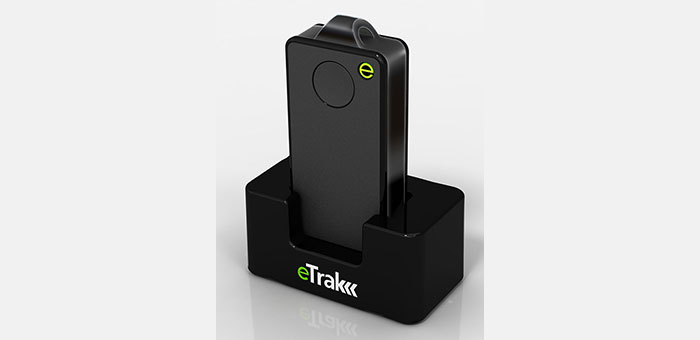
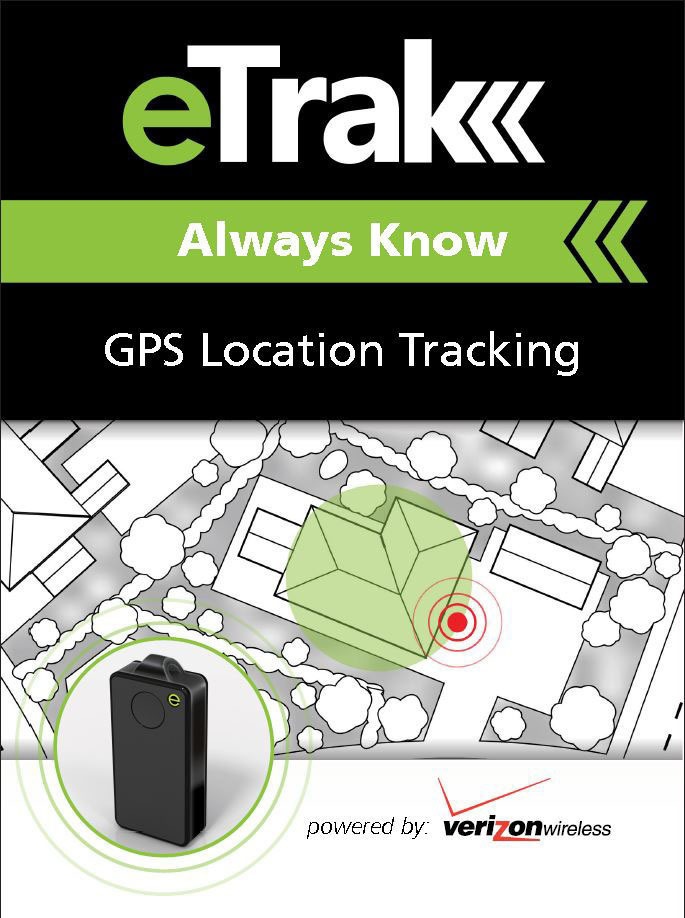
eTrak has released its GPS+ line of consumer and commercial tracking products. GPS+ is eTrak’s patent-pending technology that integrates Wi-Fi, cellular triangulation and GPS to achieve the most accurate positioning possible, both indoors and out, eTrak said.
GPS+ delivers accurate location in real time directly to a smartphone, tablet or computer. eTrak products also contain geofencing capability, which triggers notifications if the device goes beyond preset boundaries. Additionally, the notifications provide a map and address with the location of the device.
“Small and large businesses will benefit from tracking their assets with loss prevention and cost savings,” said eTrak CEO, John Harris. “They will also be able to keep their employees safe and know if they are in danger or need assistance.”
Set-up and the use of eTrak products is simple, the company said. Users can go to eTrak.com and start tracking from any smartphone, tablet or computer and instantly see the location of the eTrak device. The eTrak consumer device is also equipped with an emergency panic button that sends help requests to predetermined recipients in the event of an emergency.
“eTrak is the size of a domino and weighs less than an ounce,” Harris said. “eTrak provides the longest battery life available, and is a low cost personal emergency-response product. And with Verizon’s industry-leading coverage map, it works almost anywhere.”
The eTrak product line encompasses commercial applications, as well as consumer segments including health-impaired, special needs, teens and pets. eTrak also supplies custom design and development services.
Verizon is rolling out Networkfleet on the Verizon Wireless network, the company announced today. Networkfleet is a fleet-management solution that provides a wide variety of monitoring and management capabilities for increased productivity and improved customer service.
The Networkfleet solution — part of Hughes Telematics, which Verizon acquired last year — will be combined with the Verizon Wireless network and will debut in Verizon’s U.S. service fleet for improved monitoring, management and route optimization capabilities.
With this all-Verizon solution as part of the company’s telematics portfolio, Verizon is building on its and Hughes Telematics’ joint capabilities to help fleet, operations and risk managers use technology to improve operations by managing speed, fuel consumption, drivers and vehicles while optimizing vehicle use and routes using vehicle diagnostics to help hold the line on maintenance costs.
“As one of the largest commercial fleet operators in the United States, Verizon recognizes the challenges and opportunities associated with managing fleets, and we continue to shape our offerings to help customers turn rolling assets into a competitive business advantage,” said David Small, senior vice president and chief platform officer for Verizon Enterprise Solutions. “We see the fleet management space as a tremendous opportunity. We will continue to work with our ecosystem to serve this growing market, and we are committed to innovating in the machine-to-machine space.”
The Networkfleet telematics solution combines in-vehicle hardware and a web-based application to store, view and analyze data on specific vehicles as well as overall fleet performance. Vehicles are equipped with a GPS device that sends information to the Networkfleet Data Center over a secure wireless network. Key features include GPS fleet tracking, asset tracking, fleet maps, vehicle diagnostics with alerts, roadside assistance, preventative maintenance and other fleet management tools.
Verizon is deploying Networkfleet to an initial 18,000 company vehicles in its fleet this year to expedite customer service, while increasing productivity and cost efficiencies. The initiative will help Verizon achieve its sustainability goal of decreasing its carbon footprint.
The Networkfleet solution can be used in a wide variety of industries including:
transportation
energy and utilities
government
retail and sistribution
construction
insurance
healthcare
media and entertainment.
The Eastern Municipal Water District in Southern California used Networkfleet to lower fuel costs and increase productivity: