Blog

  • Reader Response on Open Source and Mobile Devices

    I’ve received some great reader response from readers regarding my articles on open source GIS and mobile devices. I’ve included them in this week’s column along with my comments.

    Open Source GIS

    As you can read below, the comments are directed at my statement regarding technical support for open source GIS software. I wrote that, essentially, “you’re on your own” to find solutions to technical problems and implied that open source GIS software support is not as good as commercial GIS software due to the lack of accountability. These readers clearly disagree and are passionate about the responsiveness of the user community and commercial support for open source GIS software.

    By way of background, following are links to two articles I’ve written in the past two months on open source GIS that the readers are referring to:

    May 17, 2012 – Open Source GIS

    May 24, 2012 – Open Source GIS: Part II


    Hi, Eric.

    Thanks for your paper. Please avoid spreading old FUD such as:

    There’s no accountability, no priority tech support, no one to call when you can’t figure out why things aren’t working, etc. You’re on your own, sort of.

    Which is plainly false. e.g., for QGIS, there are a number of companies that provide first class support, of far higher quality (having access to source code) than you can get for proprietary software, at favourable rates.

    By spreading such wrong opinions you actually damage, even if unwillingly, our work, and the open source ecosystem.

    All the best.

    Paolo – Italy


    Hi there, Eric.

    I would just like to mention my own personal experience and view on your statement about being on my own when using Open Source GIS software.

    I am using both commercial and open source in my organization, I pay quite a bit for the commercial support in the form of an annual maintenance fee. I don’t pay anything for support for the open source products I use, not because there aren’t any offerings, but it is more difficult do convince my company´s hierarchy to buy the same kind of annual support contract for open source products.

    Now, even under these circumstances, I get more results from the “unofficial” open source support from mailing lists then from the commercial support contract.

    Let me give you some examples on commercial support:

    1. I discovered, to my surprise, the latest version of the commercial product didn’t support wms services on computers with international settings (comma instead of dot as decimal separator). I waited a year and a half for that)
    2. I have found that the commercial product is 100% slower (half the speed) with a supported database product than the open source equivalent. The support told me that it was the database’s fault (which was aggravating). I had to log the sql statements and prove them wrong. I’m still waiting for a solution. There is no guarantee this will be solved. I was informed an enhancement request was filled but it is not publicly viewable.

    On the other hand, I had some problems with the open source product, without any support contract. I’m seeing a quick release cycle that solves a good portion of known bugs and problems, almost always solving my problem in the process. But the best thing that happened to me is when my particular bug is fixed under 24h and I can immediately download the fixed version. I even had a situation where I needed a new feature and someone developed an initial version in a week. A day later, one of the main developers included a similar feature in the core of the program.

    So, really, stating you are on your own when using open source products is really just not true and really a disservice to your audience when you state that so firmly.

    From my own experience, I am convinced there is a problem with changing our usual procedures. Instead of buying a product that includes one year of some kind of support (many times ineffective), and  then paying a fee annually, we must switch to using a free product, whose cost is that when we change it for the better we contribute that back to the rest of the users. And we can and should buy commercial support when our usage pattern reaches the level when it makes sense to acquire this type of contract.

    Thank you for your article. Other than this particular point, I enjoyed reading it.

    Best regards,

    Duarte – Portugal


    Dear Mr. Gakstatter,

    It’s great to see open source GIS featured in gpsworld.com (env-gpsworld-integration.kinsta.cloud) but I cannot agree with the following statement:

    “there’s limited amount of technical support available to implement and maintain the apps”

    There are both very professional companies (redacted) and enthusiastic communities behind any of the graduated OSgeo projects.

    As you mentioned correctly, one main issue is “market awareness” concerning open source GIS. Another issue is the very limited marketing budgets which makes it difficult to push the message and articles claiming lacking support are unfortunately not encouraging the average user to look into open source.

    I really appreciate that you picked up the topic of open source, I’d just  hope that correct pointers the the many support possibilities would be included.

    Best wishes,

    Anita – Austria


     I just read your article on Open Source GIS, dated May 17, 2012. I agree that it will be interesting to see where FOSS GIS goes in the future, I have to question your view on support.  I have been a user of proprietary GIS and image processing software for 10 years (from ArcView 2 through present day ArcGIS 10.1, ERDAS IMAGINE, ENVI, MapInfo etc…) and I have to say that I have received MUCH better “technical support” the past two years with FOSS products than I ever had with the other proprietary products.  Many of the FOSS packages have excellent document and reference websites (could be because these are built by the developer s and users alike, and added to continuously.)  There are also a large number of blogs and other websites documenting steps in these packages.  Additionally, the email lists are incredible.  I can usually find what I need WITHOUT having to call someone!  In the past, I was a heavy user of ESRI Knowledge Forums, which I thought was great when I started. ESRI staffers did not post as much as you would like. Numerous questions would go months or years without an answer or post by ESRI. The numbers of qualified people posting to the ESRI forums and email lists were far outnumbered by the users and were less responsive when needed. Maybe there is also a factor that is you recived software and support for free, then you’re more willing to help others. As well, being a tech support person myself for many years, I can attest that many ESRI/ArcGIS users do not understand much about GIS and cannot answer may questions posted. There are of course, local user groups, but many are specific to their needs. IT was tough in the ESRi world to get support than in the FOSS world.

    One last comment is the adoption of gvSig. Quantum GIS has really taken off and is the primary FOSS GIS desktop people use. MapWindow also is becoming very popular and used heavily by US federal govt related groups. Both of which feel closer to traditional GIS. gvSig is also a little different in its feel and use.

    John – Delaware USA


    I’d like to thank these folks for taking the time to write about their experiences. I’m going to continue to investigate, understand, and start using open source GIS to gain a feel for it. Initially, my interest in open source GIS was focused on mobile apps, such as gvSig Mobile, but I also see there’s an effort to develop Quantum GIS Mobile for Android, which could be very interesting given the tremendous adoption of Android in mobile devices. Also, the website agenda doesn’t reflect it yet, but I’ve added a keynote speaker on open source GIS to the 2012 Field Technology Conference general plenary. It’s important for the GIS user community to understand what’s available.


    Operating System Wars: Android, iOS or Windows Mobile?

    I also received an email from a reader regarding my series on mobile devices and operating systems. I’ve written a few articles on this subject recently. In fact, an article titled “Expert Advice: Mobile Computing on the Rise” will be in the GPS World print magazine in the July issue, which is what the following reader email is referring to. For more background, refer to the following articles:

    April 27, 2012 – Mobile Device Operating System Wars: Android vs. iOS vs. Windows Mobile

    May 10, 2012 – Thoughts on Mobile Devices, UAVs, and Cheap Data-Collection Software

    July 4, 2012 – Mobile GIS Webinar Follow-up and the New Google Nexus 7 Tablet


    Eric,

    Just read your July 1 article “Expert Advice: Mobile Computing on the Rise.” Seems every time you write on mobile I feel compelled to send you an email follow up. This time’s no exception.
    I too remember the Grid computer days when a tablet’s heft was in tons, handwriting recognition involved mystical templates that helped you shape your letters just so with the stylus, screen visibility outdoors was essentially non-existent and battery life diminished at the same rapid rate as water evaporating in the southwestern desert sun on a 115 degree day. I absolute agree that WinMobile’s future is questionable and even if that OS does manage to avoid emulating dinosaurs it will likely remain relegated to professional uses only with high price points both for hardware to run that OS and for the software that makes owning a device powered by it marginally worthwhile. Ruggedized hardware is the best thing going for WinMobile in my mind and I believe that’s all that can save it from becoming fossilized. But that advantage is beginning to resemble the Garmin/TomTom legacy losing traction nowadays.
    Where we differ, however, is that I’m already willing to go WAY out on the limb and give the trophy for victory in the mobile war to Android devices. Here’s why.
    My first smartphone was an Apple iPhone 3GS and when it came time to move up to a new phone, I wrestled quite a long time between Samsung Android-based offerings and the very new at that time Apple 4s. If you guess that I went for the Android for my second smartphone and that’s why I’m emailing you, you’d be wrong. Although I absolutely hate several limitations of iOS-based phones (no removable battery, throttling back to near non-existence of Bluetooth by Apple, and zero removable storage specifically), I went iOS yet again primarily because of Siri (which I’ve not been that thrilled with) and the fact I already had many iOS apps that I’d paid for and understood how to use.
    But when it came time to buy my first non-Windows (… and I’m not talking WinMobile) tablet, I reversed course totally. I purchased a Toshiba Thrive which I really love. I don’t even bother to pack my Win7 laptop for most business trips nowadays. I have a small twelve inch laptop case with a Bluetooth mouse and keyboard and I just grab the Thrive and the case and I’m good to go. When I first got the Android OS tablet, many of the apps that were readily available in iOS were not there. By that I’m not talking about DropBox or the Weather Channel app … I’m taking specialized category level not there. I was blown away, for example, that I couldn’t find a camera app that geotagged photos taken with the Thrive. Over time, however, that gap has narrowed so it’s far less a factor and I really like the fact that I can take my 128 GB SDXC chip on which I have all my geospatial professional, university teaching and personal files and pop it out of my work Win7 laptop and into the Thrive and head out across the county. QuickOffice lets me read MS Office docs and make changes on the go. Right now, I’d not trade my year and a half old Thrive for a new retina display iPAD even if Apple paid me what the new IPAD costs if I had to give up my Thrive.
    Knowing that just my enthusiasm about someday being able to take a terabyte of geospatial data on an Android tablet with me to the field will probably not convince you to join my declaration of victory, I’ll finally get to the point of this email.
    The fact is that MANY vendors are introducing this summer ruggedized Google-based tablets. Contrast that to the fact that iPADs will always have to be encased in some kind of protective shell. That’s the piece of the story that I think you missed. To me this is a very big deal. A Panasonic Toughbook Android offering compared to the delicate iPAD for use in my geography is a no brainer. I also don’t expect to see too many daylight optimized iPAD screens coming out anytime soon from Apple.  Also MIA in your piece was easy of development.  Friends and I are building a new geospatial apps company and so we’ve been done a bit of development on both Android and iOS. So far we’ve used Flash Builder and created FLEX-based apps just by checking the two appropriate boxes for iOS and Android Mobile. Then it came time to test the apps. I can tell you that the venture capital sized fee required, the CDC DNA sample, TSA full body scan and NSA screening one must endure plus the length of Apple’s approval process to be able to just push a simple test app out to a few devices from iTunes compared to the far more pleasurable experience fielding a test Google app leave me never wanting to write again for iOS. And then there are the UDIDs for every darn iOS device you plan on testing your code on. Developing on iOS is a royal pain compared to Android. Pain of development is the second thing not in your write up.
    Yes I find the lack of being able to create a folder unifying programs of a general type (telecom apps, office apps, etc.) on one of the Thrive’s home screens to be a bit of a pain but I really like being able to switch out my Thrive’s battery when I need a new one or I need one that’s freshly charged to head out into the field.
    So … I predict loudly (because unlike you I have nothing to lose in doing so), Google will win the field mobile race beating Apple as you said but I’m thinking more like three years and I believe ruggedized hardware designed specifically for field use that cost more than a Thrive but far less than a Getac Win7 convertible or a Trimble GeoXT will be a key factor in that victory.  And if ArcPAD for Android or a Trimble GeoXT with Android comes out…best get out of the way ‘cause a Tsunami’s coming.
    Keep up the great articles and I hope you find my thinking interesting,
    Larry – West Virginia USA


    I largely agree with Larry. I think the mobile operating system war will likely be won by Android (market research predictions support this), and Windows Embedded Handheld might end up being the choice for “professional” users. Why? It’s all about the apps. Of course, there are tons of professional apps written for Windows Mobile (Windows Embedded Handheld will run them) and we’re starting to see geospatial apps being written for Android. Yes, there are geospatial apps written for iOS too, but if you look at the potential upside, I keep hearing that Apple just isn’t a developer-friendly environment, and as Larry mentions, Apple will always be focused on the consumer market, so don’t expect a ruggedized version of the iPad anytime soon. However, on the flip side, one Apple developer relayed to me that it’s very helpful that Apple retains strict control over app development for iOS devices:

    “When Apple upgrades IOS, it is pushed out to all devices (pad/pod/phone) and the updates are very well documented in terms of what changed. He said users just agree and they all get it, very rarely does someone say no to the upgrade. So, you have basically one version to program for/test at a time. Long story short, you only have to program the different screens and the rest is standardized. The info is there to tell you what the device is, so it is easy to have one app look diff or add something for a pad w/larger screen than on the phone.

    For android, the OS is open, so every manufacturer and/or provider and every different phone from them can have a different/unique OS. It starts out the same but some add features others don’t and most modify the code to suit their needs. Then, upgrades only happen if the manufacturer and/or provider decide they want to upgrade them and which ones (old phones might not get upgraded for example).  So, lots of Androids out there are not on the same/most current OS. Users can’t just do upgrade themselves, a generic version might not work right on their phone and most people don’t look for upgrades anyway.”

    Over the next six months, it’s going to be really interesting to watch what kid of geospatial apps are introduced for iOS and Android. That will be the main driver behind the adoption of mobile devices based on iOS and Android. It will also be interesting to watch how many new devices are introduced that are running Windows Embedded Handheld/Windows Mobile.


    Again, thanks to the readers for taking time to write and stimulate further discussion on this fascinating subject.


    Thanks, and see you next week.

    Follow me on Twitter at http://twitter.com/GPSGIS_Eric


  • Magellan and Canada’s CCI Entertainment Launch GeoFreakZ GeoTrails Program

    Magellan is partnering with CCI Entertainment, a family programming production and distribution company in Canada. Their first initiative together, in partnership with Groundspeak, Inc. (owners of www.Geocaching.com), is a Canadian geocaching program called GeoFreakZ Geo Trails.

    The GeoFreakZ GeoTrails program enables families visiting participating Parks Canada national parks and historic sites through October 13 to use a Magellan eXplorist GC handheld GPS device, designed exclusively for geocaching, to find hidden geocache containers. Rugged and waterproof with a sunlight-readable color screen, the eXplorist GC comes pre-loaded with a worldwide map and the most popular geocaches for a complete paperless geocaching experience, Magellan said. The Magellan eXplorist GC makes geocaching, an outdoor "treasure hunting" game with location-based technology, easy for families and people of all ages, the company said.

    Participants who take photos of themselves discovering the caches are entered into a drawing to win a Magellan eXplorist GC device. Participants can also log their finds and communicate with other geocachers through Groundspeak's geocaching website, www.geocaching.com.

  • SuperGeo Releases Super GIS Server 3.1 Value Edition

    SuperGeo released SuperGIS Server 3.1, a comprehensive and server-based GIS that enables organizations to create, manage, integrate and publish a variety of spatial data, images and GIS abilities over the Internet and apply to desktop, mobile and web applications. It allows enterprises to build ideal workflow and improve decision making and productivity.

    According to the announcement, the newly updated SuperGIS Server 3.1 Value Edition provides a new SuperGIS Server Manager so that administrators are allowed to publish and manage GIS services through web browsers. Additionally, SuperGIS Server 3.1 Value Edition adds Web Map Tile Service (WMTS).

    To improve the efficiency of spatial data management, SuperGIS Server 3.1 provides users with SuperGIS Server Map Cache Tool to produce cache maps and maintain map services. Meanwhile, SuperGIS Server 3.1 also improves the integration with open GIS resources and can combine the network analysis abilities of SuperGIS Network Server 3, allowing the administrators to have a more flexible server framework.

  • Google Releases Indoor Maps for More than Twenty Museums Including Smithsonian

    Google announced on its official blog that it has released more than twenty popular U.S. museums to its collection of over 10,000 indoor maps that they launched in November: the de Young Museum in San Francisco, the Philadelphia Museum of Art, Cincinnati Museum Center, the Indianapolis Museum of Art, the American Museum of Natural History and 17 Smithsonian museums and a zoo.

    American Museum of Natural History, New York City

    National Air and Space Museum—Smithsonian Institution, Washington, D.C.

    Google reports that to access the floor plans, simply open Google Maps on your Android phone or tablet and zoom in on the museum of interest. To find the museum, either search for it by name using the magnifying glass icon or, if you’re already there, use the “My location” feature to orient yourself. With the “My location” feature enabled you can even get indoor walking directions.

    According to the announcement, more museums are adding their floor plans to Google Maps for Android soon, including the SFMOMA, The Phillips Collection, the Nelson-Atkins Museum of Art and the National WWII Museum in New Orleans. If you’re interested in getting your museum’s floor plan included in Google Maps, visit the Google Maps Floor Plans tool.


  • SSTL Signs €80M Contract with OHB for Second Batch of Galileo Payloads

    Surrey Satellite Technology Ltd (SSTL) Director of Telecommunications & Navigation, John Paffett, has today signed a contract with Ingo Engeln, member of the Executive Board of OHB System AG at the Farnborough International Airshow, for the construction of a further eight navigation payloads for the European Galileo programme.

    Under the contract, worth approximately €80 million, SSTL will construct the navigation payloads for the second batch of Full Operational Capability satellites (Work Order No. 2), continuing a successful cooperation between the two companies to build the first 14 satellites (Work Order No. 1) under the supervision of the European Space Agency (ESA).

    Matt Perkins, CEO of SSTL, commented, “We value our role in the Galileo programme greatly. SSTL is committed to the FOC programme and together with OHB we are making great strides towards the completion of the first satellites — a momentum which we will carry forward with these next eight payloads.”

    "It is a pleasure to witness this signature, it shows OHB and SSTL are preparing at full speed the building of the additional eight satellites ordered at the beginning of 2012 for the GALILEO constellation. These will complement the order of 14 satellites initiated in 2010," said Giuliano Gatti, head of the ESA Galileo Space Segment Procurement Office.

    Today’s contract formalizes arrangements between the two companies following the award of Work Order No. 2 to the OHB-SSTL team by Antonio Tajani, European Commission vice president in February of this year. Work has already begun on the new batch of payloads and the first is due for delivery in early 2014.

    SSTL is responsible for the navigation payloads that will provide all of Galileo’s services. Assembled and tested at SSTL’s Kepler Technical Facility in the UK, the sophisticated payloads are based on European-sourced equipment, including highly accurate atomic clocks, navigation signal generator, high-power traveling wave tube amplifiers, and antennas.

    The SSTL-OHB team is currently integrating the first of the FOC Work Order No. 1 satellites in at OHB’s facilities in Bremen, Germany, which are scheduled for launch next year.

    The Full Operational Capability phase of the Galileo program is managed and fully funded by the European Union. The Commission and ESA have signed a delegation agreement by which ESA acts as design and procurement agent on behalf of the commission.

  • NOAA Planning Changes to Space Weather Alerts


    The National Oceanic and Atmospheric Administration (NOAA) announced that effective Wednesday, July 25, 2012, at 1600 UTC (10:00 AM MDT), the Space Weather Prediction Center (SWPC) will modernize its geomagnetic storm watch products. These products will now be issued relative to the highest expected geomagnetic storm category (NOAA Scale) and will be based on the 3-hour geomagnetic K-index rather than the 24-hour A-index.
     
    According to the announcement, SWPC watch products will still be valid for the entire UTC day, just as they are under the A-based watches today. This change will better align SWPC's geomagnetic watch products with its geomagnetic warning and alert products and NOAA Scale designations. Product Subscription Service customers are not required to take any action regarding this change. The current A-based watches contain expected geomagnetic storm scale (G-level) information so all subscriptions will be automatically transferred to the new G-based watch products.  
     
    For more information, please see the NWS Service Change Notification or contact SWPC Customer Support at [email protected].
  • GeoSpatial Experts Unveils Android Version of GeoJot App

    GeoSpatial Experts released the Android version of its popular GeoJot app for mobile devices. In addition, the GeoJot mobile app and its companion PC-based GPS-Photo Link software have been enhanced to offer automatic wireless data transfer via the cloud, easier attribute collection, and more flexible reporting functions.

    “Used together, GPS-Photo Link and GeoJot comprise an end-to-end system that takes users from field data collection to generating final reports in one seamless process,” said GeoSpatial Experts President Rick Bobbitt.
    According to the announcement, GeoJot apps for Android are available for purchase from the Google Play store. GeoJot for the Apple iPhone and iPad may be purchased from the Apple App Store. GeoSpatial Experts will work with customers directly for larger enterprise licenses of GeoJot and GPS-Photo Link.
    “We are excited to be offering GeoJot for Android, which we created in response to the many Android users who were looking for a simple data collection tool for their field teams,” said Bobbitt.  “Feedback from over 100 beta testers has also helped us to further improve GeoJot on both operating systems making it even more robust and easier to use – particularly for large field teams.”
    In addition to expanding into the Android operating system, GeoSpatial Experts has added to following upgrades GeoJot and GPS-Photo Link:
    • Automatic Data Transfer Using the Cloud — Automatically push photos up to Dropbox as they are taken. Data can then be downloaded on a PC for processing in GPS-Photo Link.
    • Advanced Features for Data Management – New advanced data management features include the ability to select the size of the photos being captured and the ability to create specific storage folders automatically using attributes collected in the field.
    • Barcode/QR Code Reading — Available exclusively for the GeoJot Android version is the ability to scan barcodes and QR codes and save them as attribute values.
    • Attribute List (Form) Creation on the PC– GeoJot users may now compose attribute lists (forms) on their personal computers in GPS-Photo Link rather than on the mobile device. Lists can be locked, specific items can be required, and lists can be emailed to field teams.
    • Review and Improve Data– Through the attribute editor in GPS-Photo Link, QA and QC field data before adding it into spatial and relational database systems.
    • Custom Printed Report Formatting — GPS-Photo Link customers can now further customize the format and presentation of photographs and attributes included in printed reports. Now, one, four or eight photos can be printed on one page with attribute information.
  • SES-5 SBAS Satellite Successfully Launched

    SES-5 SBAS Satellite Successfully Launched

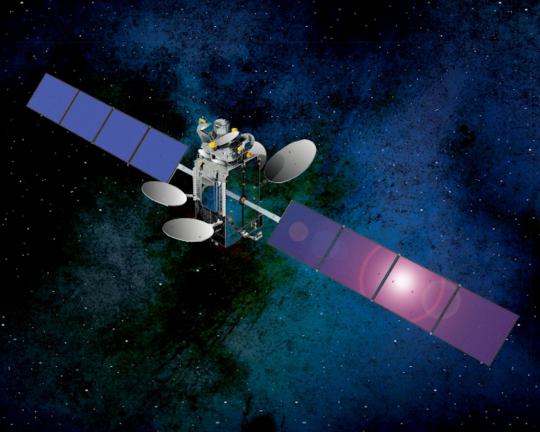
    Artist's rendering of the SES-5. Photo: CANSPACE Listserv
    Artist’s rendering of the SES-5. Photo: CANSPACE Listserv

    News courtesy of CANSPACE Listserv.

    The SES-5 geostationary communications satellite (also known as Sirius 5 and Astra 4B) was launched from the Baikonur Cosmodrome on July 9 at precisely 18:38:29.994 UTC. After a number of manoeuvres by the various rocket stages, the satellite was released from the Breeze-M upper stage into its geostationary transfer orbit (GTO) at 03:50:15.150 UTC on July 10.

    The planned GTO has a perigee height of 4,170 km, an apogee height of 35,786 km, and an orbital inclination of 23.1 degrees. The satellite’s apogee-kick motor should place the satellite into its geostationary Earth orbit (GEO) within the next few days. The GEO sub-satellite point will be at 5 degrees east longitude.

    SES-5 hosts a dual-frequency transponder for the European Geostationary Navigation Overlay Service (EGNOS). The pseudorandom noise codes to be used by the satellite are not yet known.

    “SES-5 is an important addition to our fleet serving both our commercial and government customer with our first L-band payload for EGNOS to augment the GPS system for Europe. This is a great accomplishment by all of the teams who worked on the SES-5 mission — SES, ILS, Khrunichev, and Space Systems/Loral — and we thank them for their dedicated work on the successful launch,” said SES President and CEO, Romain Bausch.

  • Esri Releases ArcGIS for Maritime to Promote Better Chart Production and Data Management

    Esri announced it has released a new solution to support users in port management, maritime transport, coastal management, offshore energy, nautical chart production, and maritime defense. ArcGIS for Maritime: Charting and ArcGIS for Maritime: Bathymetry are part of the ArcGIS system and enable users to create, manage, and share maritime-related data and metadata. Together, these solutions provide a comprehensive geospatial platform for nautical chart production and bathymetric data management.

    “ArcGIS for Maritime will save time and money for organizations that use bathymetric and nautical data,” said Timothy Kearns, maritime program manager, Esri. “In conjunction with Esri partner Quality Positioning Systems [QPS], this solution provides the market with the only end-to-end capability from collecting sensor data to publishing it in the cloud.”

    According to the announcement, ArcGIS for Maritime: Charting (previously Esri Nautical Solution) improves, standardizes, and increases data and workflow management by allowing nautical data to be captured, maintained, and managed in a centralized database. Users can produce electronic, paper, raster, and custom charts as well as integrate their nautical data with other spatial information. Sharing with other groups, including the public, is one of the many advantages of this approach. ArcGIS for Maritime: Charting provides the ability to do the following:

    • Manage data and products in both enterprise and desktop environments
    • Integrate with other spatial information to create custom charts for a variety of industries
    • Publish data and metadata internally or to the public through web services

    ArcGIS for Maritime: Bathymetry solves challenges traditionally found in the hydrographic community such as the creation of nonstandard metadata and data duplication that leads to massive amounts of stored data. Now, bathymetric data and metadata can be indexed, searched, and modeled for more efficient management. ArcGIS for Maritime: Bathymetry allows organizations to do the following:

    • Visualize bathymetric data by querying and filtering entire data holdings on the fly based on metadata and spatial location
    • Compose multiple datasets into a seamless bathymetric surface model in real time without data duplication
    • Harness the power of GIS technology for analysis, production, and sharing
  • TomTom Launches Quarterly Congestion Index

    TomTom launches the first quarterly Congestion Index that accurately identifies and analyses traffic congestion in major cities across Europe. The report, initially covering 31 cities, finds Warsaw the most congested city in Europe.


    On average, journey times in Warsaw are 42% longer than when traffic in the city is flowing freely and 89% longer during morning rush hour. The TomTom Congestion Index, including individual city reports, can be found at www.tomtom.com/congestionindex.

    The TomTom Congestion Index is the world’s most accurate barometer of congestion in urban areas. The Index is uniquely based on real travel time data captured by vehicles driving the entire road network. TomTom’s traffic database contains over five trillion data measurements and is growing by five billion measurements every day. The overall congestion level for all the cities analysed in Europe is 24% – meaning journey times take 24% longer than when traffic is flowing freely.

    The top ten most congested European cities, ranked by overall congestion level, between January and March 2012 were:

    Warsaw, 42%
    Marseille, 41%
    Rome, 34%
    Brussels, 34%
    Paris, 32%
    Dublin, 30%
    Bradford – Leeds, 28%
    London, 27%
    Stockholm, 27%
    Hamburg, 27%
     
    “Over the years, with the help of our customers, we have built the largest and most accurate database of travel times in the world,” said Harold Goddijn; Chief Executive Officer of TomTom. “When we combine this travel database with our detailed real-time traffic information and routing technology, we can not only pin point congestion, but can guide drivers away from congested areas onto faster routes.”

    “Even when only a percentage of drivers use a different and faster route, the available capacity on the entire road network increases, which benefits all drivers,” Goddijn added.

    TomTom’s Congestion Index also compares congestion levels between January and March 2012 with the same period in 2011.  Based on this analysis, Bradford – Leeds in the UK saw the biggest increase in traffic congestion with journey times slowing significantly. Munich, Berlin, Marseille and Vienna all saw increased levels of congestion. Lisbon, Bern, Amsterdam, Milan and Rome all experienced a reduction in congestion levels.

    TomTom also launched the first quarterly Congestion Index that accurately identifies and analyzes traffic congestion in major cities across North America. The report, initially covering 26 major cities, finds Los Angeles to be the most congested city in North America. On average, journey times in Los Angeles take 33% longer than when traffic in the city is flowing freely and 77% longer during evening rush hour. 

    The Congestion Index compares travel time during non-congested periods (free flow) with travel times in peak hours. The difference is expressed as a percentage increase in travel time, representing the congestion level. The top ten most congested North American cities, ranked by overall congestion level, between January and March 2012 were:
     
    Los Angeles, 33%
    Vancouver, 30%
    Miami, 26%
    Seattle, 25%
    Tampa, 25%
    San Francisco, 25%
    Washington, 24%
    Houston, 23%
    Toronto, 22%
    Ottawa, 22%
     
    TomTom’s Congestion Index also compares congestion levels between January and March 2012 with the same period in 2011.  Based on this analysis, Seattle saw the biggest increase in traffic congestion, while Houston, Ottawa and San Francisco also saw increased levels of congestion. Conversely, Edmonton, New York, Boston, Minneapolis and Toronto experienced a reduction in congestion levels.
  • TerraGo Acquires Geosemble Technologies

    TerraGo Technologies Inc. has acquired the complementary software products and technologies of Manhattan Beach, CA-based Geosemble Technologies Inc. Terms between the privately held companies were not disclosed. Both firms are In-Q-Tel portfolio companies.

    According to the announcement, Geosemble’s flagship product, GeoXray automates the process of discovering, geospatially visualizing, monitoring and sharing relevant unstructured information from any source. The software mines and processes content from news, blogs and social media and analyzes data by place, time and topic. GeoXray decreases the amount of time analysts spend sifting through big data and produces more germane information specific to an area of interest. The solution, which is used by a number of intelligence agencies, frees analysts to spend more time on quality analysis and enables better collaboration with peers, decision makers and field personnel.

    TerraGo reports that the strategic acquisition of Geosemble builds on TerraGo’s growing geospatial intelligence applications and reports expertise. The combined companies’ solutions will now enable users to selectively discover relevant spatial content; compose dynamic, interactive geospatial intelligence applications and reports; and collaborate in online and disconnected environments. The new TerraGo suite of solutions will facilitate enhanced situational awareness and actionable intelligence for better planning, improved decision making and faster response.

    Founded in December of 2004, TerraGo reported that Geosemble is a spin-off from the University of Southern California (USC). Its founders are computer science faculty members and originally developed the company’s core artificial intelligence and geospatial data analysis algorithms at USC. The technology has since been strengthened and refined to apply to a range of government and commercial user needs focused on automatically discovering and integrating information into satellite and aerial imagery and maps. The Geosemble business and technical team will be brought into TerraGo as the Geosemble solutions group, and the office in Manhattan Beach will be expanded to accommodate additional engineering staff as well as support resources to serve TerraGo’s growing West Coast customer base. Both firms are In-Q-Tel portfolio companies. 

    “The strategic acquisition of Geosemble will enable our customers to discover, visualize, monitor and share geospatial intelligence relevant to their operations and areas of interest,” said TerraGo Pres. and CEO Rick Cobb. “We warmly welcome our new colleagues to the TerraGo team, which, as always, remains committed to our tradition of product innovation and dedication to customer success.”

    “This union is a perfect fit for Geosemble since TerraGo brings valuable distribution, implementation and customer support capability to Geosemble’s products, in addition to TerraGo’s own valuable suite of complementary technology. The combined resources of our companies will enable us to further develop advanced geospatial intelligence solutions for our existing defense and intelligence customers as well as others in crisis management, public safety and a wide range of commercial businesses,” said Andre Doumitt, former Geosemble CEO and now TerraGo vice president of business development for Geosemble solutions.

  • Esri Acquires Location Analytics Developer GeoIQ

    Esri announced that GeoIQ, a small geo-location company based in Arlington, Virginia, will be joining their organization. The addition of GeoIQ’s team will strengthen Esri’s capabilities in the areas of user experience design, web development and cloud-based applications.

    "We are excited to join the Esri family, integrating our technology and extending the Esri platform,” says Sean Gorman, founder of GeoIQ.  “Esri’s approach to ‘GIS for Everyone’ is transformational in the industry and is very closely aligned with GeoIQ’s vision, so we are extremely excited about working together.” 

    “We believe this will help us supplement our capabilities in delivering simple geospatial solutions for our customers around the world as well as the rapidly growing web developer and content delivery communities,” said Jack Dangermond, president, Esri.

    According to the announcement, GeoIQ staff will join Esri at a new software development center located in Washington, D.C. and extend the ArcGIS platform with special emphasis on federal government clients in the areas of self-service mapping, analytics, big data, content streaming and social media. This center will also support web developers that are focusing on geo-enabling their web solutions with Esri’s geospatial platform. Existing GeoIQ users will continue to be supported.