Blog

  • PRN Codes Assigned to Russian SBAS Satellites


    According to a spokesperson from the Space and Missile Systems Center, GPS Directorate, the Russian Space Agency (RSA) has been assigned L1 pseudorandom noise (PRN) C/A codes for its System of Differential Correction and Monitoring (SDCM) transponders on the Luch series of geostationary relay satellites.

    SDCM is a satellite-based augmentation system that will be compatible with the U.S. Federal Aviation Administration’s Wide Area Augmentation System, the European Geostationary Navigation Overlay Service, and Japan’s MTSAT Satellite-based Augmentation System.

    The SDCM transponders will be hosted on the satellites of the Luch Multifunctional Space Relay System (Mnogofunktsional’noi Kosmicheskoi Sistemy Retranslyatsii). In addition to seven transponders in the Ku-and S-bands to be used to relay communications and telemetry between low-Earth-orbiting spacecraft (such as the Russian segment of the International Space Station) and Russian ground facilities, the satellites will host COSPAS/SARSAT search and rescue transponders, as well as the SDCM transponders.

    The first of the new Luch satellites, Luch-5A, was launched on December 11, 2011. The satellite has passed the initial inspection carried out at its temporary location at about 58.5 degrees east longitude. According to published documents, Luch-5A will eventually be relocated to its designated operational location at 16 degrees west longitude.

    Two more Luch satellites are to be launched: Luch-5B, scheduled for launch around the end of August 2012 into an orbit at 95 degrees east longitude and Luch-5V (“V” is the transliteration of the third letter in the Russian alphabet) in 2014 into an orbit at 167 degrees east longitude (Luch-5V replaces the previously designed Luch-4 satellite).

    The C/A codes assigned to the Luch SDCM transponders are as follows: Luch-5A, PRN 125; Luch-5B, PRN 140; and Luch-5V (Luch-4), PRN 141. Notification of the assignments was sent to the RSA on December 20, 2011.

    No signals from the Luch-5A SDCM transponder have yet been detected by the monitoring stations of the International GNSS Service.

  • Our Man in the Baltic: Report from the European Navigation Conference

    GDANSK, POLAND — Poland has emerged as a regional leader for Eastern Europe. Among all European countries, it ranks fourth in population and ninth in the size of its national economy. This year, the European Navigation Conference (ENC), which rotates each year to a different host country, has convened in Gdansk, Poland — its first time in Eastern Europe.

    Gard Ueland, president/CEO for Kongsberg Seatex and the chairman of Galileo Services, opened his keynote address at the 2012 European Navigation Conference with the statement “GNSS applications and services are the best growth opportunity for Europe.”

    Was anyone from the European Space Agency (ESA) or the European Union’s GNSS Supervisory Agency (GSA) listening? They were not, because neither body bothered to attend this ENC — the first time I can recall either organization absenting themselves from this important, top-level technical conference. ESA and GSA presented themselves in significant numbers and seniority at the Munich SatNav Summit in March, on the stage and in the audience. But then money, influence, and visibility (they may all amount to the same thing) are more in circulation at Munich. The ENC merely gathers the researchers and application developers who are doing the real work that will eventually field users and grow markets.

    Ueland of Galileo Services was careful to differentiate his topic as separate from satellite-system development per se. He focused on developing applications, the downstream segment that will lead, he said, to new business activities, jobs and wealth creation, and a bigger GNSS market share.

    According to a GSA study completed in 2011, the 2010 global GNSS market was 130 billion euros, and of that amount, the European market share in the GNSS sector was 20 percent.  “A little bit less than what Europe is used to,” Ueland remarked; that accustomed share is 1/3 of the market.  Naturally, Ueland called for further public-sector investment in satnav R&D, which has been the rallying cry of Galileo Services.

    In 2020, global GNSS market is estimated to reach 240 billion euros. “Europe will be challenged even to maintain its current share of 20 percent. If we were to succeed in reclaiming the 1/3 share, it would translate into 400,000 jobs in Europe. This is something that Europe needs.”

    A position paper, “Satellite Navigation Applications,” goes into further details and is available at www.Galileo-services.org.

    Ueland concluded that at the EU level there is a need for a dedicated budget line within Horizon 2020 for GNSS application R&D.

    In subsequent talks at the ENC plenary session, Prof. Janusz Zielinski of the Space Research Center of the Polish Academy of Sciences discussed Polish activity in EGNOS and the Galileo program.

    Dr. Heidi Kuusniemi of the Finnish Geodetic Institute gave a presentation on the effects of GNSS Jammers on consumer-grade satnav receivers, showing the initial results from research started this year.  Jammers, though illegal in most countries, are gaining popularity for financial reasons, to avoid road tolling and insurance billing, as well as personal privacy reasons, to avoid tracking and location-based monitoring.

    The Finnish Geodetic Institute analyzed the effects of a $130 L2 and L5 jammer and a $14 L1 jammer on two ublox and two Fastrax consumer-grade reciever, a receiver found inside a Nokia smartphone, and a high-precision professional-grade NovAtel OEM4 L1/L2 receiver.

    Horizontal errors up to 130 meters were observed on the consumer grade receivers, and availability decreased to 16 percent in 24 hours. Effects on the one combined GPS/GLONASS consyumer receiver, from Fastrax, were not as pronounced as on the other consumer-grade receivers. In the professional case, accuracy was degraded up to 80 meters, and availability decreased to around 26 percent over 24 hours.

    After outlining some jamming detection and mitigation solutions, Kuusniemi concluded that in-car jammers are a serious threat, and steps must be taken against the use of jammers.  Future GNSS will have improved resistance to interference, for several reasons.

    Davide Margaria of the Institute Superiore Mario Bella (NavSAS group) presented on research regarding “Acquisition and Tracking of Galileo IOV E5 signals,” which are important for the safety-of-life service planned by Galileo.

    The Galileo satellite system currently consists of GIOVE-A and  B, the two experimental satellites dating from 2005 and 2008, and the two in-orbit validation (IOV) satellites launched in November 2011, the Proto-Flight Model (PFM), and the Flight Model 2 (FM2).

    The FM2 satellite has started transmitting E5 navigation signals in recent weeks. E5 is an alternative binary offset carrier: AltBOC(15,10) modulated signal, multiplexing 4 channels in two adjacent sidebands, E5a and E5b: two data channels and two pilot channels. Each sideband can be separately demodulated as a QPSK-like signal.

    Using a flexible experimental E5a/E5b COTS front end, NavSAS researchers separately received each sideband, with IF samples transferred for real-time processing, and stored for post-processing.  Signals were acquired and tracked for multiple satellite passes of all four satellites.

    In an analysis of the E5b signals, both data and pilot channels, they found estimated C/N0 values to be consistent with the satellite elevation patterns and with expected values from the Galileo ICD specifications.

    The PFM and FM2 signals were received at approximately 3 dB stronger than the GIOVE-A and B signals. The team further found the presence of secondary code chips and successfully decoded the I/NAC navigation message on the data channels. Their future activities include checking the F/NAV data pages transmitted on the E5a band, and setup of a wideband experimental front-end for coherent E5 processing.

    In technical sessions on the first afternoon, I found the following presentations of  salient interest.

    Byung Hyun Lee from Konkuk University in Korea presented “Performance Analysis of Doppler-Aided GPS/QZSS Precise Positioning for Land Vehicles,” designed for which-lane positioning in urban environments.  Using Doppler measurements to compensate for restrictions of carrier-phase measurements, traditional RTK techniques, for precise positioning.  Needed for this application are reliable single-epoch measurements and velocity estimation. Double-differenced Doppler measurements yield this quality enhancement.

    Using NovAtel FlexPack 6 equipment for rover and reference station, the author and colleagues found sufficient accuracy results with GPS-only in a relatively benign environment, with an HDOP of 1.505 and 7 available satellites. In a difficult or “bad” environment, GPS –only had a HDOP of 6.84 and insufficient accuracy for the which-lane requirement.

    However, using GPS and QZSS in the same “bad” situation brought an HDOP of 1.564 and sufficient accuracy for lane-specific car navigation.

    Pawel Kicman of the Warsaw University of Technology presented the TALOS Navigation Research Electric Car using COTS components. The vehicle was developed for land-border surveillance using one autonomous robot to monitor industrial perimeters, and a second robot to intercept intruders. The adapted golf cart has a suite of installed sensors: satellite (NovAtel SPAN for GPS/GLONASS integrated with tactical grade IMU), inertial (low-grade IMUs), magnetic, visual (cameras and laser rangefinders), and odometric.


    The researchers, including a student team, obtained sufficient accuracy for the application, provided hands-on experience, and offers many prospective research projects, leading to development of autonomous driving on the vehicle, since all the sensors and control capabilities are there.

    Robert d’Aystetten from Sprint in Poland (the company is not the same nor is it a subsidiary of the U.W. wireless carrier Sprint) described an eco-driving algorithm for fleet applications to promote safe and efficient driving habits, using car-tracking data from a number of sensors to construct a driver’s profile and detect “overlimits.” The application assigns motivational points to every driver in the company (it has a fleet of nearly 500 vehicles) for eco-driving — efficient acceleration, braking, and cornering — speed, and generated alerts. In addition to maintaining and improving organizational driving standards, the data can be used by insurance companies to prepare better insurance offers based on actual profiles and driver performance.

    The VIZAN SOFIT tracking device employs real-time GPS tracking and positioning; GPRS location data transfer to the server; smart algorithm of data acquisition (time, distance and angle based); acceleration detection (e.g. in case of sudden braking); speed measurement; internal memory for location data storing in case of GSM signal loss; accurate distance counter (independent from track points settings); digital and analogue inputs and outputs (fuel level, door status etc.); 1-Wire iButton for driver identification; voice communication; multiple geofence zones; eco-driving algorithms; and driver’s profile data.

    Ciro Gioai of the Parthenope University of Naples discussed Aided GPS/GLONASS navigation in urban environments.  February 2012 tests of pedestrian subjects carrying a NovAtel FlexPak-G2 with an Antcomm antenna, using least-squared and Kalman-filter techniques, obtained accuracies in the range of 5 to 7 meters in difficult urban environments, and good vertical accuracy as well, with as few as three visible satellites from the combined systems. Future works will incorporate Galileo measurements in addition to GPS and GLONASS.

    Prof. Jacek Januszewski of Gdynia Maritime University rhetorically asked how many Galileo satellites will provide achieve sufficient accuracy and availability for the user? In particular light of the fact now that, according to ESA, 18 satellites on orbit will constitute initial operational capability (FOC) of the system, predicted for 2015.  He also presented results with 22 and 26 satellites.

    The results were disheartening, to say the least.

    He concluded that with 18 satellites, minimum satellite availability cannot be obtained in all geographic zones, in different latitudes, at 10 degree and 5 degree masking. In a 25-degree masking zone, 26 satellites yielded only 3 satellites, not sufficient for positioning; only a 27-satellite constellation proved satisfactory.

    In European latitudes (50 to 60 degrees latitude), distribution of satellite azimuths is practically the same for different numbers of satellites. The percentage of satellite visible above angle H is for all constellations is practically the same for different numbers.

    For 18 satellites, 3D positioning is only available in the zone 80-90 degrees latitude, with a masking of 0 degrees.

    For a 22-satellite constellation, positioning depends on zero masking, 3D position in all zones.  With 5 degree masking, 3D is avaialable in some zones only, 2 dimension positioning in all zones.

    With 26 satellites, if masking is less than or equal to 15 degrees, there is 3D positioning in all zones. If masking is 25 degrees, 3 D in zone 80-90 degrees only.

    With 27 satellites, 3D position is provided in all zones, for up to 25 degree masking.

    In one of the last presentations of the day, Ted Driver of AGI discussed Operational Considerations for Improved Accuracy with an IOC Galileo Constellation.  He told the audience that during Galileo’s IOC phase, the dilution of precision (DOP) will not be ideal and indeed may have severe spikes several times during the day, globally.

    His paper focused on two components of navigation accuracy that the Galileo Control Center can manipulate to improve overall accuracy for users: selectively timing uploads of the orbital ephemeris and clock state predictions.  That is, doing so with great regularity. Ideally, these orbit and clock predictions would be updated continuously, but that cannot be achieved operationally.
  • GeoEye and Rolta Form Strategic Partnership to Develop Geospatial Solutions for Global Markets

    GeoEye, Inc. announced that it has signed a Memorandum of Understanding to partner with Rolta, a global, leading provider of innovative IT solutions. With this new partnership, Rolta gains access to GeoEye’s high-resolution satellite imagery, services and expertise to develop innovative geospatial products and services. Rolta plans to offer these GeoEye-enabled solutions to its customers across high-growth global markets, beginning with India.


    Preetha Pulusani, Rolta’s chief strategy officer, said, “Rolta has been engaged in providing geospatial solutions for over two decades. Imagery plays a critical role – especially for defense and homeland security – to enable users to rapidly analyze change, visualize impacts and make informed decisions in the field in a timely manner. We are pleased to have the opportunity to work with GeoEye to provide our customers with tools and content to meet their most challenging needs.”

    According to the announcement, Rolta also plans to develop intelligent 3-D city solutions for commercial users in urban planning, construction and infrastructure development. Ninety percent of the fastest-growing metropolitan economies are located outside North America and Western Europe and in regions such as Southern Asia. Rolta intends to offer these high-growth global markets financially accessible 3-D model solutions developed from GeoEye satellite imagery.

    Tony Frazier, GeoEye’s senior vice president of Marketing, said, “Geospatial intelligence has become crucial to decision making. We are excited about this partnership and believe that our world-class imagery, information service capabilities and expertise, coupled with Rolta’s product development and IT services track record, will produce innovative geospatial solutions that deliver clear, deep and timely insights to global government and commercial users.”

  • OAG Launches Mapper, a New Network Analysis Mapping Tool

    OAG unveiled its new aviation analysis mapping tool, OAG Mapper. This latest innovation, from the global leader in aviation intelligence, combines a powerful global flight schedule query with advanced mapping software technology to quickly plot route network maps, based on data drawn from OAG’s market leading schedules database of 1,000 airlines and over 3,500 airports. It is ideal for those in commercial, marketing and strategic planning roles across the airlines, airports, tourism, consulting and route network related industry sectors.

    According to the announcement, a web-based tool that eliminates the need to hand-draw network routes onto maps, OAG Mapper allows users to either import IATA Airport codes, or to enter a carrier, airport, equipment type or a combination of these and generate custom network maps in seconds. The user can then highlight key routes by changing the thickness and colour of the lines and label them for easy reference, save the map to their profile and export to jpeg for use in network planning, forecasting, strategy and executive presentations.


    “Aviation professionals who plan, forecast and analyse airline networks have never before had a single system that allows them to bring their network plans and presentations to life in an online format,” said Rob Shaw, OAG Product Director. “The OAG Mapper tool provides users with the ability to easily build an online library of custom-generated aviation route maps. It is a great example of how using OAG data intelligently can lead to the development of new solutions that help streamline our customers’ processes, increasing productivity and saving valuable time.”

  • GPS III Endures Bad Press

    Reports in daily news media such as the Washington Post and Denver Post that “Lockheed Martin will lose its entire fee of about $70 million to defray an 18 percent cost overrun” on GPS III satellites misconstrue the facts.

    Don Jewell, contributing editor for GPS World, said after informal talks with key Lockheed executives, “This is a good story, but it has been sensationalized.” Lockheed Martin’s fee is 5 percent of the target cost, which includes one-time engineering tasks, test equipment and satellite assembly, according to the Air Force.

    The first GPS III satellite remains on schedule to be available for launch in 2014, Lockheed Martin spokesman Michael Friedman said via e-mail. “While we have encountered challenges associated with higher standards for parts testing and first-time technical issues, the program is on firm footing and our cost estimate remains within the original Air Force budget,” Friedman stated, adding that the company doesn’t discuss specifics of fees.

    “In [Lockheed’s] defense,” Jewell reports, “the program was initially identified as stable with no government change request allowed, to keep it on schedule and budget. The recent budget furor has introduced chaos into the requirements process and contributed significantly to the increased costs.”

    Lockheed Martin is using a full-sized prototype to identify and solve many assembly issues “that would have cost more and presented more risk if they had been discovered later in production,” Lockheed’s Friedman said.

    “We have identified tens of millions of dollars in cost savings for the production satellites and in some cases we are seeing 50 to 80 percent reductions in labor costs,” he added.

  • TomTom Launches New Global Geocoding Web Service

    At the Geospatial World Forum, TomTom announced the launch of its high volume batch geocoding web service. The TomTom Global Geocoder enables businesses to process large amounts of data with a single click of a button and return results quickly.

    According to the announcement, geocoding is the process of converting addresses into geographic coordinates to allow location analysis. By combining geographic knowledge with business information, businesses can make smarter decisions that will lead to better products, as well as cost savings and process improvements. For example, insurance companies are relying on geocoding techniques to help set premiums and make underwriting decisions based on the physical locations of the insurance projects.

    “Geocoding is part of TomTom’s DNA. With close to 30 years of experience developing global digital maps, TomTom is known for its expertise in geocoding,” said Dan Adams, Vice President, Location and Live Services at TomTom. “By launching our global batch geocoding web service, we are providing critical spatial data to fuel our customers’ analytic engines.”

    The TomTom Global Geocoder offers the following benefits:

    • High volume results in one easy step, with no usage restrictions
    • International coverage enables one stop for all geocoding needs
    • Highly accurate, address point level matching
    • Fast results delivering hundreds of thousands of records per hour

    Visit TomTom at Geospatial World Forum booth #19 in hall 10 to learn more about the TomTom Global Geocoder, as well as other products.

  • U.S. Army Geospatial Center Introduced the HyDRA Android App

    The U.S. Army Geospatial Center (AGC) and Engineer Research and Development Center introduced the Hydrologic Data Resources Application (HyDRA) – a Web-based data survey and analysis tool created to provide the Dept. of Defense (DoD) logistics and geospatial intelligence-related water communities with information on water resources data collection, visualization and dissemination in a mobile, enterprise-enabled environment.


    According to the announcement, HyDRA allows users to view, collect and edit unclassified water resources features via Android 2.2+ OS smart devices using Google Maps and Google Earth applications. Wells, water tanks, water storage points, dams, treatment plants and other features may be added, queried and edited in “connected” and “disconnected” modes; collected features may also be edited through a Web page using the same functionality. The Web page and app were created to assist U.S. Army engineers and the water community working in infrastructure and reconstruction operations with feature collection and identification. A compass feature is also included to assist the user in finding the nearest water feature and its bearings.

    The mobile application may be downloaded from the AGC’s Web site. An offline version of the mobile application is under development and will allow the user to store collected data locally and sync to the server after an internet connection becomes available.

  • SeaZone Introduces SeaZone HydroSpatial 2

    HydroSpatial announced it has released the first in a new series of marine mapping layers to sit within the new HydroSpatial 2 Product Family. Benefits include an enhanced data model, allowing for intuitive feature filtering; geo-processing and spatial analysis to create customised data outputs and map views using both real world and abstract feature types. Mapping is delivered in themed tiers with improved symbology, and licensed as a complete package, delivering an exceptional user experience in both desktop, and web GIS.

    According to the announcement, SeaZone HydroSpatial Base provides users with a definitive worldwide marine reference map incorporating large-scale, authoritatively sourced, marine geographic datasets. The content is processed to form a continuous vector layer dataset, with a well structured and defined feature and attribute model, providing the best possible marine mapping experience. SeaZone HydroSpatial Base is ideal for use as a marine spatial planning aid and as a primary decision support tool. It has a global reach and is available for regions where content is captured to scales greater than or equal to 1:1,500,000. The feature attribution for SeaZone HydroSpatial Base is comprehensive and serves a wide range use scenarios. For the high end technical user, HydroSpatial Base performs well when interrogated by vigorous and complex geo-processing or spatial analysis in GIS. For less demanding requirements, HydroSpatial Base represents an excellent high-resolution selectable back-drop with flexible filtering and styling.

    SeaZone reports that the HydroSpatial Base provides decision makers with accurate information to make effective decisions in the marine environment. SeaZone HydroSpatial Base was delivered as a result of an extensive consultation with our HydroSpatial customers about how they would like the product to evolve, the improvement content they needed and the prices they would like to pay. SeaZone acknowledges the support of EU Interreg IVB Bringing Land and Sea Together (BLAST) Project in developing and testing the HydroSpatial Base concept.

  • FAA Awards Raytheon Two-year Contract Extension on WAAS

    The Federal Aviation Administration (FAA) has awarded Raytheon Company a two-year contract extension to continue to provide services for the Wide Area Augmentation System (WAAS), a safety system that provides satellite-based navigation in the continental United States, Alaska, Canada and Mexico. The $30.1 million contract extends the period of performance through Sept. 24, 2013.

    “Raytheon has been the FAA’s prime contractor for WAAS since the system was commissioned for operational use in the United States in 2003,” said Michael Prout, vice president of Security and Transportation Systems for Raytheon’s Network Centric Systems business. “The contract marks another milestone in the continuing partnership between Raytheon and the FAA to improve safety and efficiency for pilots.”

    According to the announcement, Raytheon will provide life-cycle support and other services to improve service reliability and availability, and increase the coverage area through system enhancements. WAAS enables GPS to meet air navigation performance and safety requirements for en route, terminal, non-precision approach, and approach with vertical guidance operations.

  • u-blox Acquires 4M Wireless for LTE Technology

    u-blox, fabless provider of positioning and wireless semiconductors, software and solutions, will acquire 4M Wireless, a company that designs and develops software and test solutions for developing fourth-generation (4G) mobile wireless devices based on the latest Long Term Evolution (LTE) standards.

    The acquisition will give u-blox ownership of advanced protocol stacks that are licensed to chipset vendors whose products enable 4G user equipment for applications with needs for high-speed data connectivity such as smartphones, tablet computers, notebooks, and any other high-speed wireless modems, u-blox said. Also a variant of the products is licensed to manufacturers of 4G test equipment. 4M Wireless was founded in 2006 and has headquarters in the UK and operations in Lahore, Pakistan.

    Key terms of the transaction include acquisition of 100% of the shares of 4M Wireless at a price of approximately $9 million US, depending on earn-out; intellectual property and software in the area of LTE wireless technology; and integration of the 4M Wireless business and employees into u-blox’ organization.

    LTE is a unifying technology for almost all mobile operators around the world. All GSM/UMTS operators as well as most CDMA operators have agreed to evolve to LTE. Currently, there are 35 commercially available LTE networks in more than 20 countries, and 48 manufacturers have already announced 197 different LTE end-devices. 300 Million LTE subscribers are expected by 2015.

    The acquisition is subject to customary closing conditions and pending regulatory approval. Closing is expected by September 2012.

  • Zimmerman Tracked with GPS While out on Bond

    GPS tracking devices have been used for several years by law enforcement professionals. In the high-profile case of George Zimmerman, his whereabouts while out on bond are being continuously monitored by the Seminole County Sheriff’s Office, though he has gone into hiding.

    After Zimmerman was released on bond on Monday from a Florida jail, the ankle-bracelet GPS device pinpoints his location and will alert authorities if he drifts even a few feet away from where he is allowed, according to the Associated Press via Yahoo! News. Zimmerman is charged with second-degree murder in the killing of 17-year-old Trayvon Martin. He must pay an $8-a-day fee to use the device, which is often used to track people charged in domestic violence cases.

    Seminole County Sheriff’s officials are offering few details on how Zimmerman will be specifically monitored, other than to say the GPS device he is wearing has the same 24/7 capabilities it uses to track accused domestic violence offenders. Zimmerman may be residing outside of Florida for safety reasons, but the device is capable of monitoring anywhere in the U.S.

    Computer software synced to the device enables “inclusionary zones” to establish where a person can go, AP reported. It also can report whether the user is being compliant with release conditions like curfews. Zimmerman has been asked to observe a curfew between 7 p.m. and 6 a.m.

    The monitoring program has been in use since 2003 in Seminole, according to the sheriff’s office. In 2009, using the devices saved $950,000 by keeping people out of jail, the office said.

  • Taoglas Offers Dominator Antenna with Wider GLONASS Bandwith

    Taoglas Offers Dominator Antenna with Wider GLONASS Bandwith


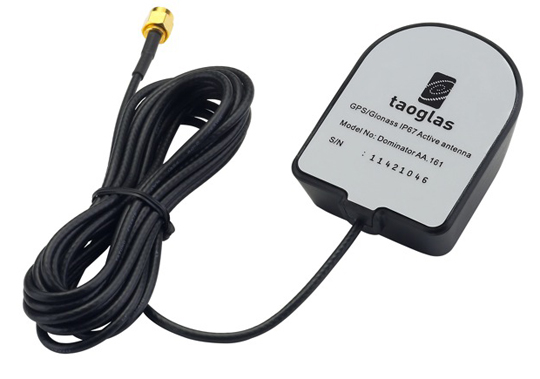
    Photo: Taoglas

    Taoglas is launching the AA.16X Dominator series of antennas, which have a wider bandwidth to cover the GLONASS operating frequencies up to 1610 MHz, a good axial ratio, and a double resonance design for optimum reception at the centre frequencies. The company will showcase its line of antennas at CTIA in New Orleans May 8-10.

    Taoglas’ GPS antennas are being used in the field by many different M2M solution providers including tracking, telematics, and GPS manufacturers, the company said.

    The AA.161 Dominator is a magnetic mount GPS-GLONASS IP67, external antenna incorporating a 35-millimeter ceramic patch. It is a wide-band active patch antenna product with a large integral ground that delivers a gain up to 35 dB. With the Dominator antenna series, Taoglas has a comprehensive range of GPS-GLONASS active embedded antennas (AGGP series) and passive embedded (CGGP) antennas for automotive first-tier TS16949 and after-market applications.

    “In the coming months, for the first time the true availability of GPS and GLONASS satellites along with the latest generation of GNSS receivers are going to dramatically change the performance of M2M location devices,” said Ronan Quinlan, Director Taoglas. “With close to double the amount of satellites to draw from compared to a stand-alone GPS constellation, we are now going to see quicker time to first fixes with accuracy improving from meters to sub one meter. The ability to view and lock on four or more satellites in traditionally difficult reception areas such as urban canyons, city centers or locations with restricted views of the horizon, will give M2M manufacturers the ability to triangulate and pinpoint locations with greater accuracy and with quicker time to first fix.”

    Taoglas’ new Dominator antennas have been rigorously tested and pre-approved by the GNNS receiver companies worldwide and have been shown to display higher and more consistent gain in comparison to competing antennas, the company claimed. Two key components have been engineered from scratch for the Dominator series, a wide-band front-end SAW filter (critical to prevent out of band noise entering on both GPS and GLONASS degrading the signal) and a high-gain 35-mm patch.