Tag: wireless infrastructure

  • GPS Source releases splitters for small cell and distributed antenna systems

    GPS Source releases splitters for small cell and distributed antenna systems

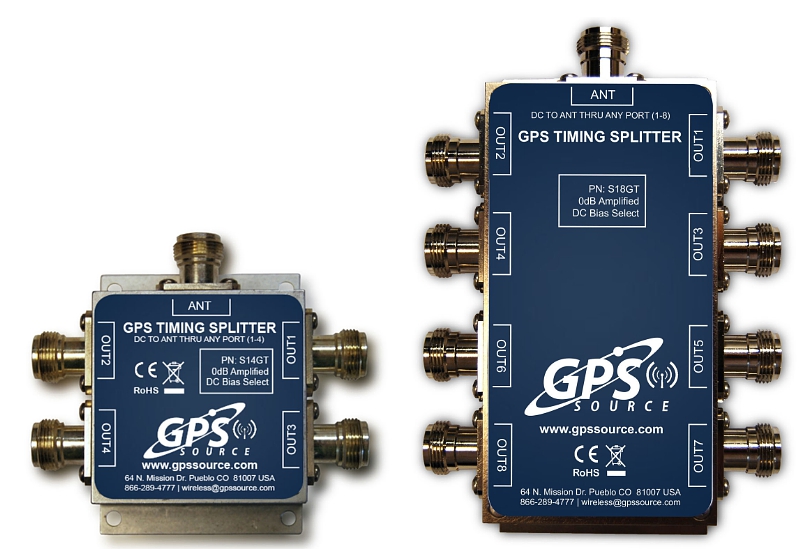
    S14GT & S18GT GPS Splitters for DAS (PRNewsFoto/GPS Source, Inc.)
    GPS Soure is offering the S14GT & S18GT splitters for small cell networks and distributed antenna systems (PRNewsFoto/GPS Source, Inc.)

    GPS Source has released of a line of GPS/GNSS splitters created for the small-cell wireless and distributed antenna system markets. Specifically designed for the L-band frequency, they can eliminate the cost of multiple antennas and long cable runs in wireless installations.

    With four or eight outputs, the new line of GPS/GNSS splitters make it possible to use a single GPS referencing antenna and cable arrangement for multiple synchronized systems. The splitters are available at a low price point and include features such as DC bias select and amplification.

    GPS Source RF signal splitters typically operate in conjunction with an active GPS antenna (a GPS antenna that includes an integrated low noise amplifier). Consequently, a GPS RF signal splitter must have provisions for managing the DC voltage to the active GPS antenna. The S14GT and S18GT will power an external GPS antenna from any of the RF outputs. A “hunt-and-pick” circuit is used to select only one DC input for power should more than one source be connected. Designed for redundancy, if the selected DC bias input should fail, the DC bias will automatically switch to another DC input to ensure an uninterrupted power supply to the active antenna.

    “Distributed antenna systems allow for easy system growth in size and scope of application, whether the system needs to scale to reach new service areas or add bandwidth and capacity,” said Robert Horton of GPS Source. ” This growth has led to a strong demand for cost effective solutions that support GPS synchronization, an area where we are specialists. GPS Source brings leading-edge technologies and addresses major GPS/GNSS challenges faced by carriers and system integrators.”

    The S14GT and S18GT are in production and will be available January 2016. A CE Mark approval from the European Notified Body for these two devices will be available afterward.

  • Telit’s IoT Portal Combines Connectivity Management with App Enabling

    Telit, a global enabler of the Internet of Things (IoT), has announced a new release of the Telit IoT Portal. The portal consolidates a suite of advanced connectivity management functions with the company’s deviceWISE IoT Application Enablement Platform.

    The service enables companies to deploy, configure and manage end-to-end IoT deployments from a single, cloud-based portal, Telit said. The portal is designed to make it easy to “connect thing to apps” by seamlessly integrating any device, production asset or remote sensor with web-based and mobile apps and enterprise systems, across any wireless network.

    The newly added connectivity management addresses all aspects of mobile communication provisioning, including seamless integration with Mobile Network Operators (MNO) and Connected Device Platforms (CDP).  Users can activate or de-activate devices, manage SIM cards, analyze connection quality, and set all provisioning and data plan parameters. This platform function is especially useful in preventing data overage and overall data cost management.  The advanced CDP integration feature aggregates federated data across multiple wireless networks — a valuable capability when operating IoT deployments in different countries and regions around the world.

    From the same portal, users have continuous access to all the comprehensive functions of the deviceWISE IoT Platform, including device onboarding, edge-intelligence, data collection, data transport, data storage, data delivery and application integration. Developers can connect, collect and control anything with a single, standardized API set that is common across device integration, connectivity management and application development.

    “The developer-friendly Telit IoT Portal provides instant and full access to the mature and comprehensive features and all the necessary tools and resources for your IoT project,” said Alon Segal, CTO, Telit IoT Services.  “No upfront investment is required and companies can focus on developing compelling applications that help transform their business, not the engineering of underlying technology infrastructure.”

    The Telit IoT Portal reduces risk, time-to-market, complexity and cost of deploying solutions for monitoring and control, industrial automation, asset tracking and field service operations across all industries and market segments around the world.  Additionally, customers can enjoy professional maintenance and support and ongoing upgrades to new features and capabilities. Access a free trial of the Telit IoT Portal.

    The new release of the Telit IoT Portal will be featured at Telit DevCon, Sept. 8 in Las Vegas, and live demonstrations of will be held at CTIA Super Mobility 2015, booth #5032, which takes place Sept. 9-11 in Las Vegas. Those attending Telit DevCon can learn how industry leaders use the IoT to create new markets, transform their business and achieve measurable return on investment.

  • Expert Advice: Taking Up Positions — Galileo and E112

    Expert Advice: Taking Up Positions — Galileo and E112

    By Andy Proctor

    Sessions on indoor navigation and a keynote from Google at February’s International Navigation Conference (INC15), organised by the Royal Institute of Navigation, addressed the revised E911 positioning requirements in the United States, and flowed over into speculation about E112 emergency calling parameters in Europe’s near future.

    According to the 2014 U.S. Federal Communications Commission report, 75 percent of 911 calls now come from mobile phones, more than half of those originate indoors, and around 1 percent of emergency calls contain no location information from the caller (due to distress, confusion, language issues, illness, and so on). The report estimates 10,000 deaths per year in the United States might have been avoided if a landline had been used instead, since location information for landlines can be provided confidently.

    Discussion in the breaks of INC highlighted a misunderstanding amongst some parties that E911 mandates the use of GPS for position location determination. In fact,  E911 does not mandate any specific technology; it specifies performance criteria in terms of accuracy that must be met. The recently revised performance criteria include indoor performance, and some of the technology discussed at the INC is able to meet these requirements without using GNSS at all.

    This could be troublesome for Europe, which is looking at the imposition of Galileo as part of an A-GNSS technology push for the E112 application. The real problems, discussed during INC and in European consultation processes with safety of life services such as E112, are:

    • the accuracy of the position derived by the device and/or network, and
    • the timeliness of the delivery of that position to the Public Service Answering Point (PSAP).

    The E911 directives address these points directly, and the infrastructure in the cellular networks is in place. Does simply implementing a Galileo capability into a European mobile device solve these problems?

    In many outdoor cases, implementing Galileo can bring benefits, including signal diversity. And of course the E112 proposal is greater than just “adding Galileo.” It does address the second problem of timeliness of delivery and data transfer, but there are significant infrastructure upgrades required across Europe for the provision of this location data to the PSAPs.

    What the E112 processes do not currently do is specify performance criteria for the position location accuracy. This means that the position estimate provided under E112 is likely to be a cell-ID fix, with an accuracy ranging from hundreds of meters to dozens of kilometers.

    Galileo on Mobiles. Further discussion during the conference delved into the realms of the specifics of implementing A-GNSS, including Galileo, onto a mobile device. Conversations centered around if any future E911 or E112 positioning capability would be aligned around a single-chip solution as generally currently deployed on a device, or if some of the functions will be moved up the stack into the operating system (OS) of the device, into software.

    Most opinions were against this latter concept, and a panel at the ION GNSS+ last year in Florida concluded the same thing. However, questions were asked about some ideas relating to identifying the emergency number at the time of dialing and then starting the position location determination functions in readiness for the need to provide the device location. This addresses the first bullet point earlier, the accuracy of the position derived by the device and/or network. If this is carried out in the OS or software layers, vulnerability of the system will be increased overall as the OS of a mobile device is a target for the cyber criminal community.

    A robust software-based solution is, however, being rolled out in the United Kingdom in the form of eSMS, bringing mobile operators, government and handset vendors together to provide location data via SMS to the PSAP. The advantage of this approach is that no new standards or major infrastructure changes are required, and the time to implement is small.

    Further discussions established that future chipsets are likely to use whatever GNSS signals are available, regardless of whether they are GPS, Galileo, GLONASS, Beidou and so on. This, coupled with new signal processing techniques (single-frequency observable for example), increasing sensor clustering on devices, and user demand for services, may make the use of a specific GNSS system above others somewhat redundant. Certainly picking up on a point made by Chandu Thota from Google, GNSS is “not relevant” for their indoor positioning solutions, and technologies they are working on, in both hardware and mapping improvements, are looking at meeting indoor accuracy requirements down to a target requirement of 1 meter, without GNSS.

    Taking these points into account, questions were asked from the floor of the conference about the legal position of the EC mandating Galileo as a positioning method as well as the willingness of the global mobile chipset and device industry to be told what to do. Perhaps specifying strong performance criteria, as in the United States, is the way forward to “reboot” the European E112 system. No one disputes that a properly functioning E112 is a life saver and a good thing to do; however, the points discussed here detail some of the concerns expressed during and after hours at INC15.


    In February 2015, the Royal Institute of Navigation hosted the International Navigation Conference in Manchester, UK. Keynotes at this well-attended conference included Harold Martin, director of the GPS Coordination Office; Gian Gherardo Calini, the head of market development at the European GNSS Agency; Todd Humphreys from the University of Texas; Chandu Thota from Google; and others. The conference covered multiple technology tracks including indoor navigation, autonomy, quantum technology and the resilience of GNSS systems.


    Andy Proctor is lead technologist for satellite navigation at InnovateUK, the UK’s innovation agency. He acknowledges Ramsey Faragher, Cambridge University, for help in the preparation of this article.

  • Connor-Winfield Offers TCXO for Compliance with ITU-T G.8262

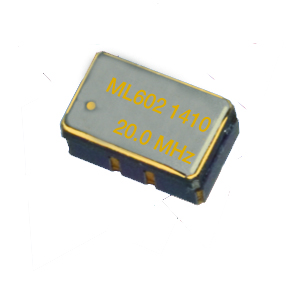
    Connor-ML602-TCXO
    Photo: Connor-Winfield

    Connor-Winfield is offering two new temperature compensated crystal oscillator models. TL602 and ML602 TCXO models are designed for use in conjunction with 0.1-Hz (and higher ) filter bandwidths for compliance with T1-based hierarchy specifications such as ITU-T G.8262 Option 1 and 2 ECC and ITU-T G.813 Option 1 and 2 SEC, Stratum 3 for Sonet, IEEE1588 and Synchronous Ethernet. CW’s TCXO line utilizes analog temperature compensation for excellent short-term stability characteristics, the company said.

    The TL602 and ML602 TCXOs maintain 280-ppb pk-pk frequency stability over the industrial temperature range of -40 to +85C. They are also excellent frequency reference choices for small cell, wireless and instrumentation applications, Connor-Winfield said.

    Features:

    • Available frequencies are 10 MHz, 12.8 MHz, 19.2 MHz, 19.44 MHz, 20 MHz and 24.576 MHz.
    • LVCMOS or clipped sine.
    • Fixed output or Voltage control.
    • Meets MTIE and TDEV masks measured at 0.1-Hz bandwidth.
    • Short term stability 1×10⁻¹⁰ performance.
    • 280-ppb peak-to-peak temperature stability over the full industrial temperature range.
    • Sub-300 ps jitter performance over 12 kHz-20 MHz band.
    • Lifetime accuracy of +/- 4.6 ppm.
    • Full ROHS and REACH compliance.
    • 7×5 mm (TL602) or 5×3.2 mm (ML602) packaging options.
  • MWC 2015: RAD Demonstrates IEEE 1588 Grandmaster

    RAD-grandmaster-MiCLK
    Photo: RAD

    Telecom company RAD will be expanding the timing synchronization capabilities of its Service Assured Access (SAA) solution when it introduces MiCLK, an IEEE 1588 grandmaster clock with a built-in GNSS receiver.The grandmaster clock is SFP-based (small form-factor pluggable).

    RAD is demonstrating the MiCLK at Mobile World Congress 2015, being held this week in Barcelona, Spain.

    “LTE and LTE-A’s stringent synchronization requirements and the growing use of small cells in 4G networks create synchronization challenges in the backhaul segment, but existing solutions are either too expensive or do not provide full network coverage,” said Ulik Broida, RAD’s vice president of marketing and business development. “With the revolutionary MiCLK, RAD makes it easy to upgrade existing backhaul networks to support LTE-A at an affordable price.”

    Many network operators prefer to use IEEE 1588-2008 (also known as Precision Time Protocol, or PTP) and synchronous ethernet to deliver accurate frequency and time throughout 4G backhaul networks. They are reluctant to install GNSS at every cell site because of practical and cost reasons, as well as concern about possible GNSS jamming and spoofing. However, accurate time distribution requires every network element between the time reference — the grandmaster — and the cell site to support IEEE 1588. This could be an expensive and complex endeavor when the grandmaster is located in a central PoP. “MiCLK allows network operators to avoid costly upgrades by bringing the grandmaster to the base station,” said Broida.

    RAD’s patent-pending MiCLK is a miniature pluggable device that responds to the needs of next-generation cellular backhaul networks, the company said. Its SFP design allows simple installation to upgrades any network device with a fully featured IEEE 1588 grandmaster, including a GNSS receiver and various redundancy options to sustain its operation in case of GNSS failure, RAD said.

    “Easily installed with minimal technical intervention, MiCLK is a versatile add-on anywhere in the network,” Broida concludes. “It is a valuable addition to mobile equipment vendor portfolios, and an ideal solution for 4G service providers in search of a quick, cost-effective way to bring accurate synchronization to small cell backhaul.”

    RAD  is exhibiting at Hall 2, Stand 2D50 at Mobile World Congress.


  • AWT Global Introduces Low Noise Amplifier

    Source: GPS world staff
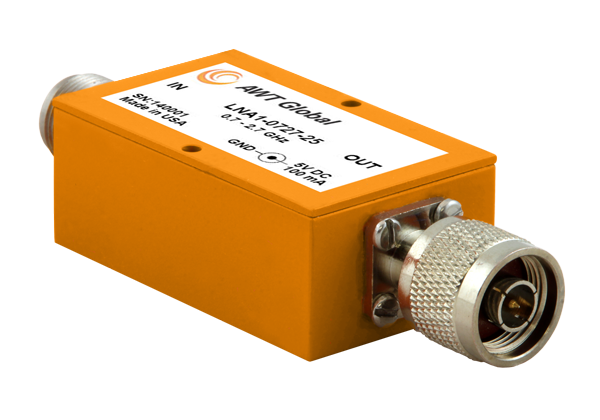
    The LNA1 Series by AWT Global.

    AWT Global has launched a new product line of low noise amplifiers: the LNA1 Series.

    The new compact Low Noise Amplifiers (LNAs) are suited as RF measurement amplifiers and for signal boosting applications. LNA1 amplifiers cover telecommunications frequency bands from 700 to 2700 MHz. High gain of 25dB (+/-3) makes them perfect for applications like interference hunting.

     “Due to its small form factor, LNA1 is well suited for mobile applications,” said Wolfgang Damm, president of AWT Global. ”LNA1 has been designed with power requirements of 5V/100mA, so it can be supplied by any USB port, standard at most portable instruments like spectrum analyzers.”

    LNA1-0727-25 covers a frequency range of 700 to 2700 MHz. Impedance is 50 Ohms and VSWR ratio is 2.2:1. LNA1 features 25 dB (+/-3) of gain and 2.0 dB NF. Size is: 1.5” x 1.0“ x 2.5” ( 38 x 25 x 64 mm). Both, input and output comes standard with N-Type connectors, INP N(f) / OUT N(m). Other connector types are available on request. Power is supplied with a common 5.5 OD, 2.1 ID connector. AWT Global’s LNA1-0727-25 LNAs are available for sales immediately.

  • Telstra, Optus, Vodafone Fight Assisted GPS Patent Infringement Claim

    Three telecommunications companies are joining together to fight patent-infringement claims involving the use of assisted GPS in their mobile networks, reports ZDNET.

    Telstra and Optus are Australian telecommunications and media companies, and Vodafone is based in the United Kingdom.

    The claim by Australian company Voxson alleges that the mobile network operators are infringing on two patents held by Voxson since the 1990s. One patent, Vox 1, deals with how customers’ mobile phones are tracked on mobile networks, and forms the basis for the assisted GPS used by the networks to deliver location information to their customers. The other patent, Vox 2, deals with video streaming.

    The lawsuit was brought against the three companies in 2013, and the allegations cover the 2G, 3G, and 4G networks of all three carriers.

  • u-blox SARA-U260 Module Receives AT&T Approval

    u-blox SARA-U260 Module Receives AT&T Approval

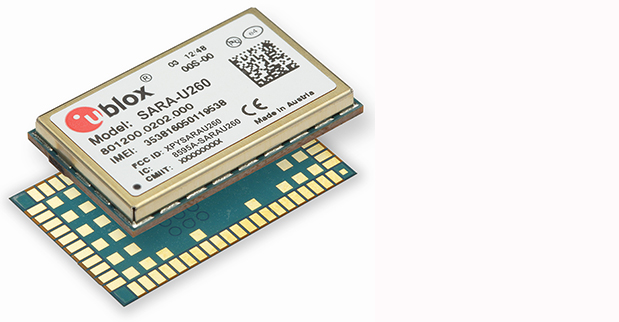
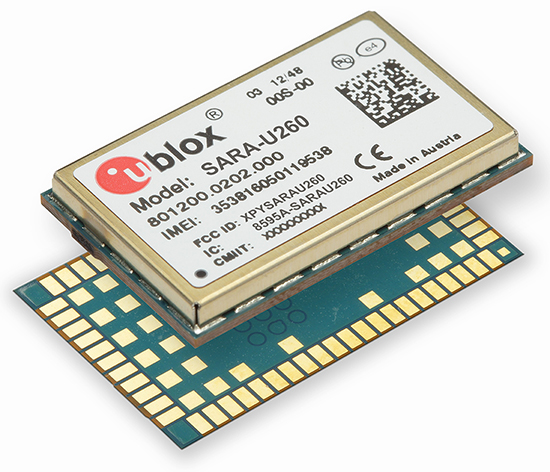
    The u-blox SARA-U260 module.
    The u-blox SARA-U260 module. Photo: Swiss u-box

    Swiss u‑blox says that its SARA-U260 dual-band 3G/2G module has achieved AT&T network compatible status.

    The certification allows customers to design SARA-U260 modems into M2M devices operating over AT&T’s extensive 3G network in the USA. Typical applications include small tracking boxes, usage-based insurance devices, smart metering, wearable electronics, and connected fitness watches.

    SARA-U260 is a complete 3G/2G voice/data module for applications that still require roaming ability with 2G using AT&T’s extensive 3G network coverage. The SARA-U260 provides full voice and data capability as well as a full suite of IP protocol stacks. The module features have been selected to give customers specific features they need for telematics units, handheld devices, communications modules, point-of-sale terminals, vehicle “black boxes,” and utility meters.

    SARA-U260 provides efficient and cost-effective mobile connectivity in a miniature 16 x 26 mm2 LGA form factor. The module is pin-compatible with SARA-G3 GSM/GPRS modules, as well as layout-compatible with LISA-U2 (HSPA) and TOBY-L2LTE modules to support future-proof 4G LTE designs.

    All SARA modules share the same form-factor and footprint and are designed based on u-blox’ “nested design” philosophy. This allows engineers to develop one hardware/software platform to support GSM/GPRS, HSPA, or LTE, depending on their end customer requirements.

    SARA-U260 hosts multiple embedded IP protocols, such as TCP/IP, UDP/IP, HTTP, and FTP. In-band modem support for automotive emergency calls like eCall and ERA/GLONASS are also integrated. With extremely low-power consumption, the SARA-U260 is designed for battery-powered and handheld devices.

    With direct A-GPS support for accelerated positioning and u-blox’ CellLocate hybrid positioning technology, SARA-U260 is designed to match u-blox advanced GNSS positioning capabilities, including indoor positioning.

    “u-blox is proud that AT&T certified our SARA-U260 module for its network,” said Nikolaos Papadopoulos, president of u-blox America. “Our robust voice and data modules deliver powerful 3G connectivity with 2G fallback in the smallest package on the market, at a price that customers recently paid for a 2G module.”

    For Europe and Asia, u-blox also offers the pin- and software compatible certified version SARA-U270.

    RIL software for Android and Embedded Windows is available free of charge from u-blox.

  • Loctronix Advances GNSS Integrity Monitoring with HGX Interference Detection System

    Loctronix Corporation, a provider of positioning, navigation, and timing (PNT) solutions for GNSS-challenged environments, has unveiled the HGX Interference Detection System (IDS) for identifying and monitoring intentional and unintentional interference sources. The IDS is being demonstrated September 10-11 at ION GNSS+ 2014, in Tampa, Florida.

    “The IDS can detect sources of interference ranging between 5 dB and 60 dB GNSS jamming to signal (J/S) ratio. Featuring a novel profiling function, the IDS not only detects, but can identify the type of interference given a database of known/previously recorded profiles,” stated Michael Mathews, Loctronix’ CEO and founder.

    According to Mathews, “The greater dependence of GNSS within critical infrastructure — including, transportation, communications, finance and the growing availability of jammers — requires new tools to respond to potential threats. The IDS is the first tool to combine the powerful capabilities of Loctronix Spectral Compression Positioning (SCP) technology for identification and characterization of signals with traditional GNSS signal processing to provide full situational awareness of GPS/GNSS operations. The IDS system will benefit government, military, and commercial/industrial applications wherever there is a critical dependence upon quality GNSS data.”

    The IDS was developed using the Loctronix HGX hybrid sensor toolkit along with the company’s ASR-2300 ASR Workbench software defined radio platform. The standard implementation supports L1 GNSS bands and measurement rates of 10 measurements per second. Partner-licensed custom/solutions can support multiple bands (such as L2, L5) with greater bandwidths and measurement rates. Multiple sensitivity modes enable monitoring of sub-thermal and high-power interference.

    The HGX toolkit API will be available for specialization of the system for custom/embedded applications and adaptation to other hardware platforms. Visit Loctronix in Booth 422.

  • TEOCO’s AIRCOM Lab Strengthens Carrier Aggregation, LBS Testing

    TEOCO, a provider of assurance, analytics and optimization solutions to communications service providers, has expanded the testing capabilities of its AIRCOM Device Test Lab in Columbia, Maryland, with additional test systems from Rohde & Schwarz. Combined with Rohde & Schwarz’s conformance and carrier test case support, the R&S TS-LBS Location Based Services (LBS) and the R&S CMW-PQA Performance Test Systems enable TEOCO to support new industry and carrier testing requirements for next-generation wireless technologies including carrier aggregation, IMS, VoLTE, RCS, E911 over IMS, LTE A-GNSS, LTE OTDOA and LTE eCID.

    Release 10 and beyond, also referred to as LTE-Advanced, allows for a substantial uplift in the capacity and throughput of LTE, in addition to mobile device performance improvements. In LTE-Advanced, carrier aggregation (CA) is a key feature that allows the combination of multiple carriers to increase bandwidth and ultimately data rates in the network. To meet this need, the R&S CMW-PQA test system performs automated testing of a devices downlink, uplink and bidirectional data performance with or without carrier aggregation under simulated network conditions.

    LBS is already a key technology enabling a myriad of new applications that people depend on every day. LTE and additional satellite constellations are being leveraged to improve availability and performance of location technologies indoors and outdoors. Higher customer expectations are driving the need for more advanced testing methodologies, and the R&S TS-LBS test system supports field-to-lab testing where real-world conditions are captured with high performance 16-bit resolution, and replayed in the lab for more accurate simulation.

    “We are excited to expand our testing capability and capacity for LTE-Advanced and LBS-enabled devices,” said Hemant Minocha, Executive Vice President at TEOCO. “And given the increase in test complexity and costs, we are pleased to be working with a partner such as Rohde & Schwarz whose expertise in conformance and carrier acceptance testing and breadth of test cases helps future-proof our investment while delivering the quality and results our customers have come to expect.”

  • Telit Introduces Cloud-Ready Modules

    Telit Wireless Solutions, a global provider of machine-to-machine (M2M) modules and services, has debuted its first m2mAIR Cloud-ready wireless modules, designed to simplify the development and deployment of comprehensive M2M and Internet of Things (IoT) applications using the m2mAIR Cloud service. Telit said this is an important step toward realizing the company’s vision of the Internet of Things made Plug & Play.

    Telit Cloud-ready modules let developers connect and integrate things-to-cloud with just a few simple clicks in little time. Cloud-ready modules feature embedded APIs that are compatible with the well-known Telit on-board AppZone and Python environments and reduce hundreds of lines of code to 16 simple AT commands to move data automatically between remote devices in the field and relevant applications.  All the necessary developer resources and support are included and an Evaluation Kit is available for rapid prototyping of custom m2m and IoT device solutions.

    The m2mAIR Cloud Platform-as-a-Service, powered by deviceWISE, offers a simple “pay-as-you-grow” usage-based subscription plan — reducing risk, time-to-market, complexity and cost versus building your own point-solution. deviceWISE is an open, developer-friendly, carrier-grade platform, compatible with the TIA TR-50 standard. m2mAIR Cloud features comprehensive management and configuration capabilities to connect, collect, and control anything with bi-directional data transfers between remote devices and the Cloud — from basic entry-level solutions to full-scale enterprise-grade deployments across the globe.

    Interested developers can register for a free trial of the m2mAIR Cloud service. According to Telit, the easy-to-use portal has all the necessary visualization tools and dashboards needed for most remote tracking, monitoring and control applications across all industries and markets, out of the box. m2mAIR Cloud also meets the stringent requirements of global organizations that rely on mission-critical reliability, security, scalability and enterprise-grade performance with built-in business system integration. Furthermore, it includesAPIs that lets developers create their own web-based and mobile applications and dashboards, from simple functions to big data analytics.

    “When we acquired ILS Technology this time last year, we added the final element needed to become a true one stop shop for companies building IoT applications,” said Oozi Cats, CEO of Telit Wireless Solutions. “Today, we are pleased to have completed not only personnel and operational integration, but also the technology integration to realize our ONE STOP. ONE SHOP vision. Connecting your “things” to the cloud has never been easier. We fully intend to populate the Internet of Things with hundreds of millions of m2mAIR Cloud-ready modules in the coming years to drive innovation that makes businesses and industries operate more profitably, and will change the way people live, work and play.”

    The click-to-Cloud simplicity of Cloud-ready Telit modules and the m2mAIR Cloud service will be on display this week in the M2M Zone at CTIA, booth #5628.

  • Europe Weighs Mandate of Galileo Chips in Mobile Phones

    The European Commission is considering a requirement for mobile phones, and perhaps other portable devices such as tablets, to be equipped with Galileo receivers that would automatically send location data as part of any emergency call to 112.

    E112 is a location-enhanced version of the 112 universal European emergency services number via telephone, equivalent to 911 in the United States, in which the telecoms operator receiving the call for help transmits location information to the emergency dispatch center, which has further connection to police, firefighters, medical, and other emergency services.

    A European Union Directive on E112 requires all mobile phone networks to provide emergency services with available information on the location of the caller. Currently this data is the cell id, which is of limited use in localising a call as, for example, in rural areas where the mobile cell may have a radius of two to twenty kilometres — not very helpful for police or medical emergency crews in finding someone in distress.

    Whether the Commission (EC) should mandate Galileo, or take a different option, is currently the subject of consultation.  The EC convoked a public hearing  in Brussels in May to chew over the pros and cons.

    Legal Obligation

    The Commission has a legal obligation to look at potential activities that can maximise the societal benefits of Europe’s huge investment in satellite navigation technologies such as Galileo and EGNOS. It is also tasked to assess how these technologies could reinforce Europe’s economic infrastructure. To me, the E112 mandate is a low-hanging fruit ready to be picked, and the majority of stakeholders who voiced an opinion at the hearing evinced great enthusiasm for the proposal.

    Interestingly, the regulatory route to achieve a mandated use of Galileo for E112 would be via a delegated act; the relevant radio equipment and telecommunication directives are already effectively in place. This means that if the Commission decides to mandate, it can do so without the need for further regulation.

    Mandating a specific GNSS system for a regional service of this type is not a new idea. Russia and China have both done so. As Richard Catmur of Spirent Communications put it: “We are not seeing Galileo being pushed like GLONASS and Beidou in the market. We need input from this forum.”

    Justyna Redelkiewicz of the European GNSS Agency (GSA) outlined some technical reasons for mandating Galileo. Over and above (yet to be fully proved) improved accuracy, availability. and a faster time to first fix, the likely inclusion of signal authentification in the Galileo open service would reduce any impact of spoofing — a very useful characteristic in what is essentially a safety-critical system.

    Johannes Vallesverd, who chairs the group within the European Conference of Postal and Telecommunications Administrations, Electronic Communications Committee tasked with delivering harmonisation of the 112 number across Europe, was also very positive: “We need to talk about how we could be saving lives Europe.” He advocated a proactive and rapid decision.

    This was reinforced by Gary Machado, CEO of the European Emergency Number Association (EENA). He estimated the annual economic cost of the delays induced by inaccurate location data at more than €4 billion across Europe. In contrast, the cost of implementing a system to relay GNSS location from equipped smart phones was of the order of €250 million. Economically, it is a no-brainer.

    Bruno Gagnou from Thales Alenia also thought that GNSS — and specifically Galileo — gives the right answer for E112 positioning. “The technology is reliable and accurate,” he said, “with obvious benefits for society. Lives will be saved, the security of citizens enhanced due to quicker intervention, and European industry will be supported.” He noted that this was also the experience in the United States when the enhanced 911 regulation was introduced.

    Gagnou thought that Galileo should be mandated in order to ensure a harmonised approach across Europe and avoid an anarchic, non-compliant deployment of technologies for E112. “EU emergency services should rely on EU technology,” he concluded. “EU citizens deserve the best E112 emergency service.” Galileo should be favoured, all mobile devices should be addressed, but this will require mandating. It seems to me that the Commission will agree with him.

    Quantum Navigation: Ultra-Cold Alternative to GNSS?

    Some potential future tech! The Quantum Timing, Navigation and Sensing Showcase at the UK’s National Physical Laboratory (NPL) in mid-May highlighted the possible use of quantum technology for highly accurate timekeeping and advanced, GNSS-independent, navigation. This so-called second quantum revolution’\ could make a big impact on the field of Timing, Navigation and Sensing (TNS) through technology based on ultra-cold, laser-cooled atoms.

    The meeting was organised by the UK’s Defence Science and Technology Laboratory (DSTL). It presented a number of research projects including a table-top quantum accelerometer designed to provide ultra-precise, highly reliable positional data for submerged submarines.

    As we know, GNSS does not work well underwater, so submarines navigate using accelerometers to register every twist and turn of the submerged vessel relative to its last surface GNSS fix.

    “Today, if a submarine goes a day without a GPS fix, we’ll have a navigation drift of the order of a kilometre when it surfaces,” said Neil Stansfield of DSTL. “A quantum accelerometer will reduce that to just one metre.”

    Once chilled to an ultra-cold state, the rubidium atoms in the accelerometer achieve a quantum state that is easily perturbed by an outside force. Another laser can then be used to track these perturbations and calculate the size of the outside force, and therefore the relative position.

    At present, such devices are only found in the laboratory, but research is pushing past classical physical limits towards optimal performance, as scientists investigate miniaturisation and the potential use of new materials to reduce costs and increase the practicality of the devices. Following land trials in late 2015, it is anticipated that a sea-going version will be demonstrated in a British sub during 2016.

    ”The defence industry often acts as a pioneer in the development of new technologies. The potential benefits of a future in which we can navigate by inner space rather than outer space will impact both the military and civilian world,” commented Neil Stansfield.

    Bob Cockshott from NPL said: “Whilst the most immediate applications are in the defence field, future quantum navigation technologies could also have significant civilian applications across a wide variety of activities, covering high frequency trading, network synchronisation, robust and ubiquitous navigation, geo-surveying, and mineral prospecting. With the first applications potentially ready for market in five years, now is the critical moment time to consider the opportunities provided by quantum.”

    Cockshott points out that chip-scale atomic clocks using similar principles are here now from Microsemi in the United States —  indeed, they have been integrated with GPS in some U.S. military applications — and can provide low-power, low-cost hold-over for timing applications. He expects to see European designs on the market within five years and a steady improvement in capability thereafter.

    “Cold atom accelerometers may also appear in high-value (probably military) applications within five years. These could form the basis of a quantum compass,” he predicts .

    GPS-like progression. He envisages something like the progression seen in GPS receivers from expensive military equipment to high-value professional users and then mass-market. DSTL and the UK’s Technology Strategy Board are working hard to get industrial suppliers of support equipment and of quantum devices working as quickly as possible to get these technologies to market, and consumer devices are certainly the ultimate aim.

    “I would see these technologies as complements to GNSS, at least in the short and medium term, providing hold-over in poor GNSS environments (such as urban canyons etc) and capability where GNSS will never work — in tunnels, for example,” comments Cockshott.

    Of course companies like Google would like to guide city dwellers through urban underground metro systems, switching seamlessly to GNSS when they step out into the open air. “The quantum compass will not of course provide position fixes, only information about positional changes from a known starting point,” he points out.

    However, in the long term, such gravity sensors combined with detailed maps of the Earth’s gravitational field may be able to provide GNSS-free positioning and navigation. Militaries are interested in this option because there is no known physics that could jam or spoof such sensors. “But it’s hard to see them matching the precision available from GNSS,” he concludes.

    Galileo First Fixers

    The European Space Agency (ESA)  handed out certificates to the first 50 global citizens to determine their position using only the Galileo system. They got responses from around the world.

    While half the applications for certificates came from Galileo’s home continent, Europe, others first-fixers came from Australia to Canada, Egypt to Vietnam.

    The first positioning fix using only Europe’s civil-owned navigation system took place at ESA’s Navigation Laboratory in Noordwijk, the Netherlands, on March 12,2013.

    The Galileo team knew of fixes being performed on an informal basis, so to mark the anniversary of the first positioning fix they decided to issue commemorative certificates to groups who had picked up the signals to perform their own fixes. Teams were asked to include details of the receiver they used, the start and finish of the fixes in Universal Time Coordinated (UTC), and a plot of their latitude/longitude positioning overlaid on a map.

    Italy turned out to be the single best represented country in Europe, with six separate fixes, followed closely by Germany and the UK with five  each. Several groups had achieved fixes on the same day as ESA in 2013.

    Most of the employed receivers were software-based radio systems, with signal processing performed by software on a computer linked to a radio-frequency front end. Professional receivers were also customised for the job.

    “Most of the applications were obtained with static receivers and simple position fixes with Galileo’s Open Service signals,” explains Galileo engineer Gaetano Galluzzo.

    Belgium’s Royal Military Academy performed Galileo’s first position fix at sea, aboard Belgian frigate Leopold-I, while sailing along the Norwegian coast.

    A German telecom company made use of the satellite signals for timing and network synchronisation – one of the most important applications of Galileo will be as a nanosecond-scale time source, enabling the effective synching of financial, power and data networks around the globe.

    Finally

    Talking of fixes – has anyone heard anything from Galileo GSAT0104 recently? According to the European GNSS Service Centre, the fourth IOV satellite is “unavailable until further notice.” The setting of unavailability may be due to in-orbit validation testing, as the website implies may be the case, but no further official statement has appeared, nor active user notifications (NAGUs) at http://www.gsc-europa.eu/system-status/user-notifications.

    There have been a number of NAGUs over the past couple of months concerning outages and, at different times, one or more of the Galileo satellites have been off line while this extended period of testing takes place.

    A bientôt, as they say in these parts.