Author: Marie Emerick

  • Launchpad: Mapping software, MEMS accelerometers

    Launchpad: Mapping software, MEMS accelerometers

    A roundup of recent products in the GNSS and inertial positioning industry from the February 2022 issue of GPS World magazine.


    OEM

    GNSS Receiver

    For tracking, telematics
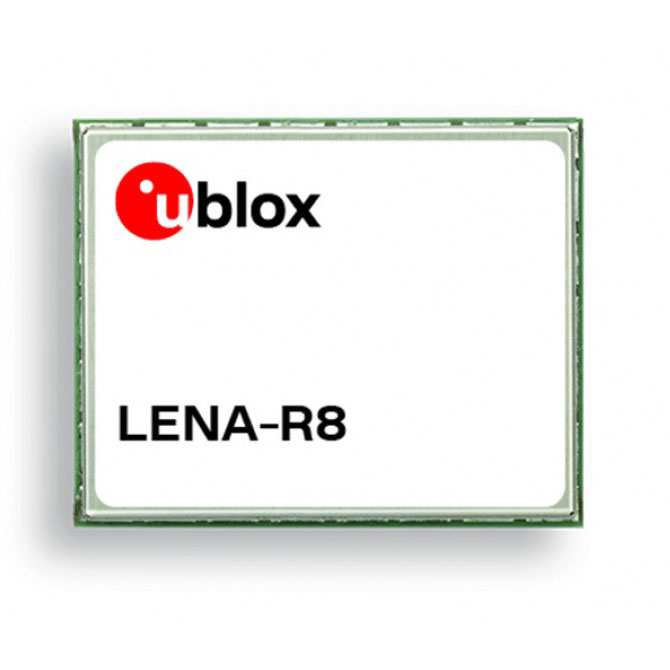
    Photo: u-blox
    Photo: u-blox

    The LENA-R8 GNSS receiver is based on the u-blox M10 platform. The compact module balances cost and performance with a single antenna and primarily targets customer deployments in the Europe, Middle East, Africa, Asia, and South America regions. Designed for tracking and telematics, the module series was designed to minimize material costs and data charges. The LENA-R8 supports a broad range of frequency bands with 2G fallback, providing maximum roaming coverage for global tracking applications using a single stock keeping unit (SKU).

    U-blox, u-blox.com

    Helical Antenna

    For UAVs and other applications
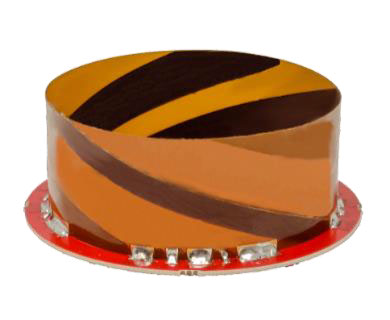
    Photo: Tallysman
    Photo: Tallysman

    The low-profile triple-band HC997EXF embedded helical GNSS antenna features eXtended Filtering (XF). It is designed for precise positioning, covering the GPS/QZSS-L1/L2/L5, GLONASS-G1/G2/G3, Galileo-E1/E5a/E5b, BeiDou-B1/B2/B2a, and NavIC-L5 frequency bands. It also covers regional satellite-based augmentation systems (WAAS, EGNOS, MSAS, GAGAN) and L-band correction services. It is packaged in a light (11 g), compact form factor (60 x 25 mm). Its precision-tuned, high-accuracy helical element provides an excellent axial ratio and operates without a ground plane, making it suitable for lightweight unmanned aerial vehicle (UAV) navigation and a wide variety of precision applications.

    Tallysman Wireless, tallysman.com

    A-PNT Card

    High precision for defense
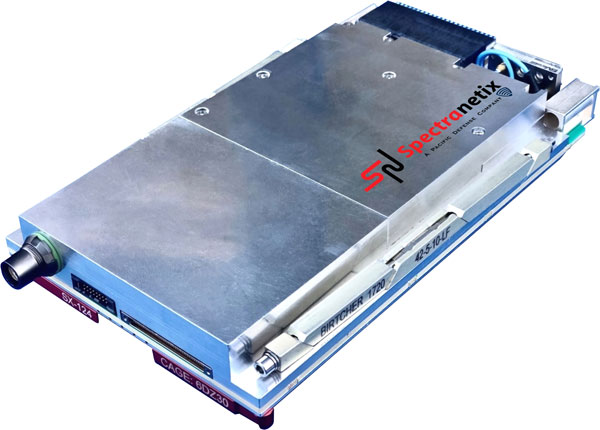
    Photo: Spectranetix
    Photo: Spectranetix

    The SX-124 ruggedized 3U OpenVPX high-performance positioning, navigation and timing (PNT) card can provide timing and positioning information in a GPS-denied environment through sensor fusion. It is designed for highly integrated systems with a requirement for the U.S. Army’s C5ISR Modular Open Suite of Standards (CMOSS) and alignment with the Open Group Sensor Open Systems Architecture (SOSA) technical standard. The SX-124 can accept external sources or use its onboard GNSS receivers as reference inputs for timing and positioning data. The positioning data can be fused with internal and external inertial measurement units.

    Spectranetix, spectranetix.com

    MEMS Accelerometers

    Radiation tested for space
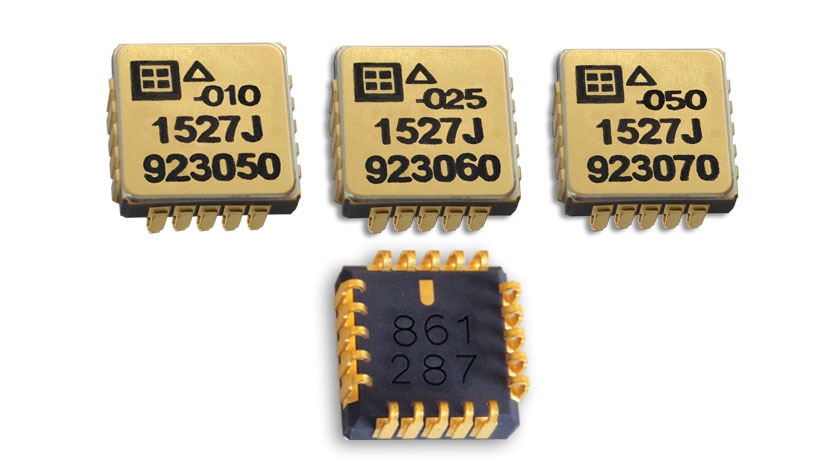
    Photo: Silicon Designs
    Photo: Silicon Designs

    The Model 1527 series is a family of miniature, radiation-tested, tactical-grade micro-electromechanical (MEMS) accelerometers. Offered in three full-scale acceleration ranges — ±10 g, ±25 g and ±50 g — the series is designed to support a variety of critical space electronics testing requirements, including those of spacecraft, satellites and CubeSats. Their small bias and scale-factor temperature coefficients, excellent in-run bias stability and zero cross-coupling make the Model 1527 series particularly well-suited for spacecraft electronics testing applications requiring low power consumption (+5 VDC, 6.5 mA), low noise, long-term measurement stability in –55° C to +125° C environments, and performance reliability under intermittent radiation exposures.

    Silicon Designs, silicondesigns.com

    Automotive Receiver

    Guidance for advanced driver assistance systems
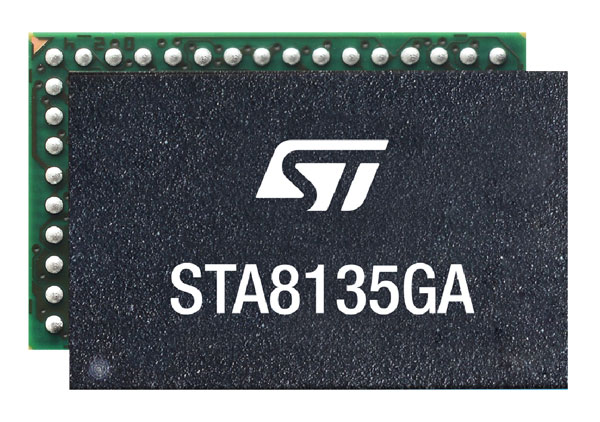
    Photo: STMicroelectronics
    Photo: STMicroelectronics

    The STA8135GA automotive-qualified GNSS receiver is designed to deliver the high-quality position data needed by advanced driving systems. Part of the Teseo V family, the STA8135GA integrates a triple-band positioning measurement engine. It also provides standard multi-band position-velocity-time (PVT) and dead reckoning. The multi-constellation receiver delivers raw information for the host system to run any precise-positioning algorithm, such as PPP/RTK (precise point positioning/real-time kinematic). The receiver can track satellites in the GPS, GLONASS, BeiDou, Galileo, QZSS and NAVIC/IRNSS constellations.

    STMicroelectronics, st.com


    Surveying & Mapping

    Software Upgrade

    Improvements support photos, 2.5D data capture
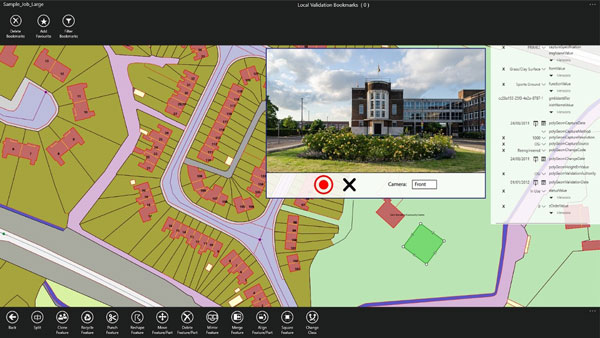
    Photo: 1Spatial
    Photo: 1Spatial

    Survey application 1Edit now has increased support for photos and 2.5D data. 1Edit 3.1 allows users to attach feature photos, including automated geotagging, which enables surveyors to visualize assets and fine tune observations. Also included are new validation functions and improved handling for heights (2.5D data), typically useful for detailed asset and land-management surveys. Enhanced styling, including bitmap fills and dashed lines, make it easier to identify and classify different asset types during surveys. Additional control of editable layers and fields provides protection for non-editable data and protects the data quality. Significant improvements to rendering of thematic mapping enhances the speed and fluidity of the intuitive user interface.

    1Spatial, 1spatial.com

    Mapping Software

    Map-making functionality improved
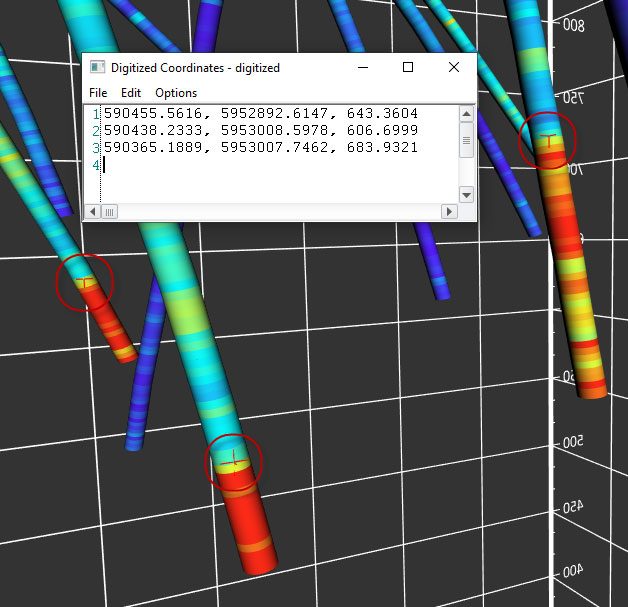
    Photo: Golden Software
    Photo: Golden Software

    The latest version of Surfer surface mapping software has improved map-making functionality and data exporting capabilities. Surfer is used by more than 100,000 people worldwide, many involved in oil and gas exploration, environmental consulting, mining, engineering and geospatial projects. It provides fast and powerful contouring algorithms, enabling users to model data sets, apply an array of advanced analytics tools, and graphically communicate the results. Frames now have outlines and background fill colors to make them easier to read when placed on top of maps and attribute data can now be exported as numeric data.

    Golden Software, goldensoftware.com

    RTK/PPP Device

    Multi-sensor fusion on a single board
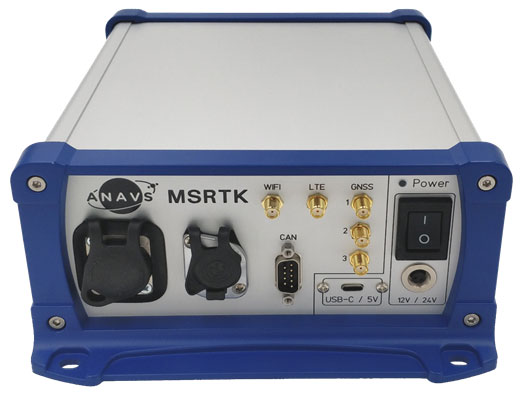
    Photo: ANavS
    Photo: ANavS

    The Multi-Sensor (MS-) RTK/PPP device is a turnkey system easily integrated into surveying applications. The module includes up to three multi-frequency, multi-GNSS (GPS + Galileo + Glonass + BeiDou) receivers, a MEMS IMU, a barometer, a CAN interface for reception of vehicle data (wheel odometry and steering angle), and an LTE module for reception of RTK/PPP corrections. ANavS sensor fusion performs tight coupling of all sensor data with an Extended Kalman Filter (EKF). Various interfaces can connect additional sensors (such as camera or lidar) or output position information.

    ANavS, anavs.com

    Auto Mapping

    Increases lane-level accuracy
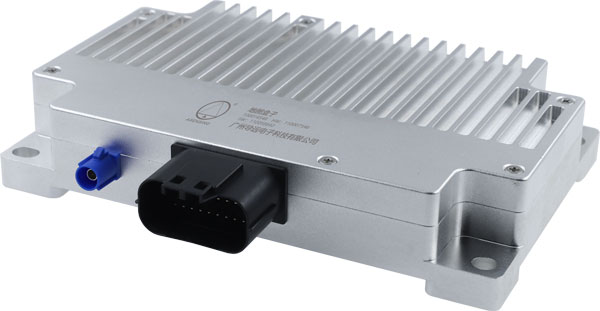
    Photo: Asensing
    Photo: Asensing

    The HD-MapBox integrates high-precision map data based on high-precision positioning. Fusing data from a GNSS receiver, IMU, ADAS camera, vehicle dynamics and HD maps, the HD-MapBox can achieve a lateral error of less than 8 inches (0.2 meters) and a longitudinal error of less than 6.5 feet (2 meters) with a 95% confidence interval, providing an accurate reference for highway pilots and automated valet parking. Even if both GNSS and lane line detection are not available, the HD-MapBox can still enable vehicles to keep inside the lane for at least a quarter mile (400 meters).

    Asensing, asensing.com

    Positioning System

    Adds location data inside buildings
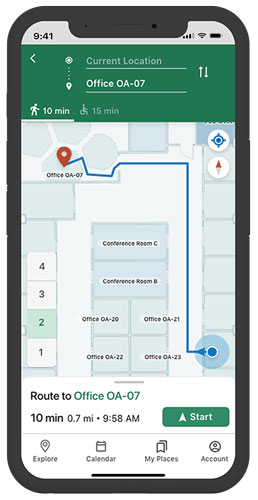
    Photo: Esri
    Photo: Esri

    Esri ArcGIS IPS is an indoor positioning system that adds a blue dot to indoor maps, enabling users to locate their current position inside a building in the same way GPS enables outdoor location indicators. It uses an alternative technology to enable real-time positioning and navigation inside buildings. It also provides live location sharing and tracking, location data capture and analytical insights. ArcGIS IPS is available for users of ArcGIS Indoors, an indoor mapping system for smart building management, and ArcGIS Runtime SDKs, which enable the indoor positioning capability in custom-built apps.

    Esri, esri.com

  • ION GNSS+ 2022 abstract deadline is March 4

    ION GNSS+ 2022 abstract deadline is March 4

    Photo: ION
    Photo: ION

    Abstracts for the ION GNSS+ 2022 show, “GNSS + Other Sensors in Today’s Marketplace,” are due March 4.

    The ION GNSS+ conference will take place September 19-23  at the Hyatt Regency Denver at Colorado Convention Center in Denver. The show will also include a virtual option.

    The 2022 conference will bring together international leaders in GNSS and related positioning, navigation and timing fields to present new research, introduce new technologies, discuss current policy, demonstrate products and exchange ideas.

    The two tracks covered during the conference will be commercial and policy tracks and research tracks.

    The commercial and policy tracks will include high performance and safety critical applications, status and future trends in GNSS, and mass market and commercial applications. The research tracks will include multisensor and autonomous navigation, algorithms and methods, and advanced GNSS technologies.

    Interested parties may submit their abstracts at https://www.ion.org/gnss/call-for-abstracts.cfm.

  • ION opens registration for Pacific PNT Conference

    ION opens registration for Pacific PNT Conference

    Photo: ION
    Photo: ION

    ION’s Pacific PNT Conference is a global cooperative development of Positioning, Navigation and Timing technology and applications where policy and technical leaders from around the world meet to discuss policy updates, receive program status updates and exchange technical information.

    The 2022 conference will be hosted virtually April 11-13 PDT on a complimentary basis for ION members. The conference will include sessions on policy and status updates, performance schedules and plans, plus special challenges affecting Asia-Pacific presented by an elite list of experts representing BeiDou, COSMIC/ FORMOSAT, and QZSS.

    A session will broadcast each day at 9:00 a.m. JST / 5:00 p.m. PDT. Live-stream attendees will have the opportunity to participate in virtual question and answer periods through the portal.

    To register and view the technical program for this conference, visit https://www.ion.org/pnt/index.cfm.

  • Applanix User Group Meeting and Conference registration now open

    Applanix User Group Meeting and Conference registration now open

    Applanix User Group Meeting logo

    Registration has now opened for the Applanix User Group Meeting and Conference, focused on Air and Land solutions, taking place in Fremont, California, Sept. 20-22. Discounted early bird prices will be available until May 22. The conference is also currently accepting speaker proposals.

    This meeting will give you the opportunity to hear the latest news from Applanix, take in-depth product training, meet with product and customer support experts, and network with other industry leaders from around the world.

    The conference will take place over three days and will have four main goals:

    • Deliver an information-filled training experience on all of our software, as well as the APX series of boards, POS products, and the latest developments in the Autonomy field

    • Present the new Land Mobile Mapping line of OEM and plug-and-play products

    • Give customers and partners an opportunity to share their most recent projects and experiences

    • Provide networking opportunities

    To register and purchase tickets for the conference or to submit a proposal, visit Applanix’s website.

  • Registration open for Munich Satellite Navigation Summit

    Registration open for Munich Satellite Navigation Summit

    Photo:

    The Munich Satellite Navigation Summit program is now online and registration for the event is open. The summit will be held online March 7-8.

    The Munich Satellite Navigation Summit focuses on satellite navigation in the present day and future, featuring global speakers and highlighting the latest developments in the field of GNSS. This year’s theme is “AI in GNSS – Intelligence brought to Navigation”.

    The summit will feature 12 sessions from industry experts, including sessions on the following topics:

    • First and Second Generation of the European Satellite Navigation System Galileo
    • Modernization of the US Global Positioning System
    • Status and modernization of the Russian Global Satellite Navigation System GLONASS and the Chinese Beidou System (BDS)
    • Developments of regional systems like the Japanese QZSS and the Indian IRNSS and the Korean Positioning System (KPS)
    • Use of AI within the navigation world and its implications
    • Jamming, spoofing, interference, and countermeasures; understanding secure Galileo services (OSNMA, PRS)
    • GNSS and the new race to the Moon; upcoming space mission related to PNT
    • Advanced technologies for PNT (quantum, optical) even beyond Galileo 2nd Generation

    The summit will also offer a free job market discussion and company pitches prior to the main conference for all attendees.

    To view the Munich Satellite Navigation Summit program and register, visit munich-satellite-navigation-summit.org

  • Trimble Dimensions+ opens 2022 Call for Speakers

    Trimble Dimensions+ opens 2022 Call for Speakers

    Photo: Trimble
    Photo: Trimble

    Trimble has opened its Call for Speakers for the Trimble Dimensions+ 2022 User Conference to be held November 7-9 at the Venetian Resort in Las Vegas.

    The Dimensions+ User Conference will promote a variety of sessions highlighting groundbreaking technology that can be used to transform work and push for a sustainable future. Speakers will have the opportunity to share their industry experiences and insights with peers from around the globe. The conference will also provide an Offsite Experience where attendees can learn how professionals are using the latest technologies to create a safer, greener and more productive work environment.

    Session topics will include autonomy; building design, construction and operation; civil engineering and infrastructure; forensics; forestry; local, state and federal government; land administration; mapping and GIS; marine construction; mobile mapping; monitoring; photogrammetry and remote sensing; scanning; surveying; utilities; sustainability and more.

    Proposals for speakers will be accepted through March 31, 2022 and notifications of acceptance will be made in the following months. Proposals can be submitted here.

    To register for the conference or learn about sponsorship opportunities, visit Trimble’s website.

  • The effects of tectonic plate movement on the modernized 2022 NSRS

    The effects of tectonic plate movement on the modernized 2022 NSRS

    It’s the beginning of 2022 and the new, modernized NSRS is only about three years away. Hopefully, everyone has been reading NGS’s blueprint documents updated during 2021, and participating in NGS’s webinar series. Together, they provide the latest information about the changes from the existing NSRS to the new NSRS.

    My previous columns highlighted many aspects of the new geometric reference frame and geopotential datum. In this month’s column, I will highlight the time-dependent aspect of the modernized NSRS and why it is necessary for the new system.

    As I stated before, NOAA’s National Geodetic Survey (NGS) is developing models and tools for users to be able to transform coordinates between the four national terrestrial reference frames and the International Terrestrial Reference Frame, the Geopotential Datum and the North American Vertical Datum of 1988 (NAVD 88), as well as estimate coordinates at epochs different from the survey observation epoch by accounting for movement.

    What does NGS mean by estimate coordinates at epochs different from the survey epoch, and why is it necessary to account for movement for the new, modernized NSRS? This column will address these issues.

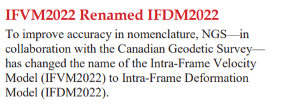
    NGS’s January 2022 (Issue 27) edition of NSRS Modernization News announced a paper about the modernized NSRS and a change in name to the Intra-Frame Velocity Model (IFVM). See the box below. Users can sign up for these newsletters here,  and can obtain access to previous newsletters here.

    The Latest Issue of
    NSRS Modernization News

    Image: From GovDelivery Communications Cloud on behalf of: NOAA's National Ocean Service)
    Image from GovDelivery Communications Cloud on behalf of NOAA’s National Ocean Service.

    The new paper was published in October 2021 and is titled “The Mathematical Relation between IFVM2022 as Expressed in ITRF2020 with IFVM2022 as Expressed in the Four Terrestrial Reference Frames of the Modernized NSRS with Dependence on EPP2022.” It can be downloaded here.

    The paper describes the mathematical relationship between the Intra-Frame Velocity Model (IFVM2022) and the Euler Pole Parameters (EPP2022).

    The NSRS Modernization News announcement states that the IFVM2022 name has been changed to the Intra-Frame Deformation Model (IFDM2022). The latest version of blueprint 1 and the October 2021 (NOS NGS 90) report were published before the name changes, so they refer to IFVM2022 instead of IFDM2022.

    Photo:

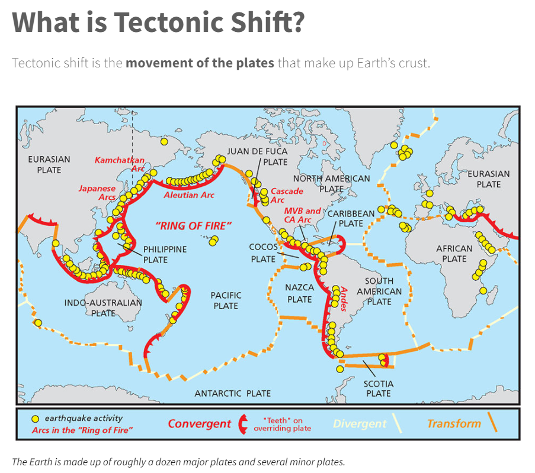
    Why is it necessary to account for movement? Coordinates basically change because the Earth’s surface is moving due to the movement of major tectonic plates. See the box below for information about why it is called plate movement or tectonic shift. NGS understands this and is attempting to manage the changing coordinates by providing a time-dependent component.

    Image: National Ocean Service Website
    Image: National Ocean Service website
    Screenshot: NOAA Website
    Screenshot: NOAA Website

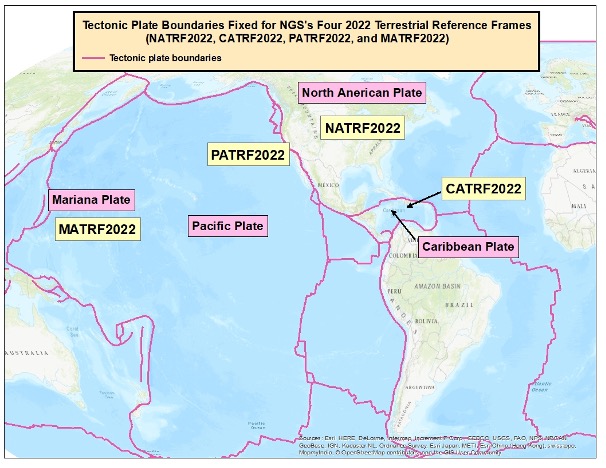
    NGS will be defining the following four geometric terrestrial reference frames that are based on the tectonic plates (see map below):

    • North American Terrestrial Reference Frame of 2022 (NATRF2022)
    • Pacific Terrestrial Reference Frame of 2022 (PATRF2022)
    • Caribbean Terrestrial Reference Frame of 2022 (CATRF2022)
    • Mariana Terrestrial Reference Frame of 2022 (MATRF2022)

    Four Tectonic Plates Part of NGS’s New NSRS

    Image: Dave Zilkoski
    Image: Dave Zilkoski

    As previously stated, NGS is developing models and tools for users to be able to transform coordinates between the four national frames and the International Terrestrial Reference Frame, as well as estimate coordinates at epochs different from the survey observation epoch by accounting for movement. These models are denoted as EPP2022 and IFDM2022.

    So, what are EPP2022 and IFDM2022? And what does this mean to surveyors and mappers?

    EPP stands for Euler pole parameters (a way of describing a plate’s rotation) and IFDM2022 is a way of computing the drift in coordinates.

    Why Euler Pole? See the box titled “Who was Euler?”

    Who was Euler?

    Leonhard Euler was a Swiss who lived in the 1700s. He was one of the greatest mathematicians that ever lived and has been called the greatest mathematician of the 18th century. He founded the studies of graph theory and topology, and made pioneering and influential discoveries in many other branches of mathematics such as infinitesimal calculus. He introduced a lot of modern mathematical terminology and notation, including the notion of a mathematical function. He is also known for his work in mechanics, fluid dynamics, optics, astronomy and music theory.

    The definition of Euler’s fixed point theorem states that any motion of a rigid body on the surface of a sphere may be represented as a rotation about an appropriately chosen rotation pole, called a Euler pole. This theorem has been used by geologists to understand and describe the motions of tectonic plates.

    NGS’s 2021 revised Blueprint 1, NOAA Technical Report NOS NGS 62, Blueprint for the Modernized NSRS, Part 1: Geometric Coordinates and Terrestrial Reference Frames provides an explanation of Euler poles and “plate-fixed” frames. As stated in the “Who was Euler?” box, the definition of Euler’s fixed-point theorem states that any motion of a rigid body on the surface of a sphere may be represented as a rotation about an appropriately chosen rotation pole, called a Euler pole. The following is stated in the NOS NGS 62 report under “Plate-Fixed Frames and Euler Poles,” section 4:

    When considering only the rigid (not deforming) part of a tectonic plate, the horizontal motion of the plate (relative to a global plate-independent reference frame, like the ITRF) can be modeled as a rotation about a geocentric axis passing through a fixed point on Earth’s surface. Although such models must make certain assumptions (such as the rigidity of the plate), the dominant motion of the majority of points on most tectonic plates is the rotation about a fixed point. That point is known as an “Euler pole.”

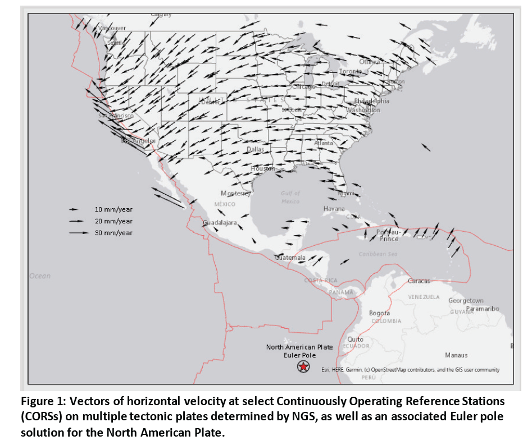
    What is important to know is that the determination of a plate’s Euler pole location and the angular velocity with which the plate rotates can be empirically determined using GNSS observations from a CORS network distributed throughout the plate. Figure 1 from the NOS NGS 62 report provides a plot of the North American plate Euler pole and the vectors of the horizontal velocities at select CORS (see the box titled “Figure 1 from NOS NGS 62”).

    Figure 1 from NOS NGS 62

    Photo: NGS Website
    Photo: NGS website

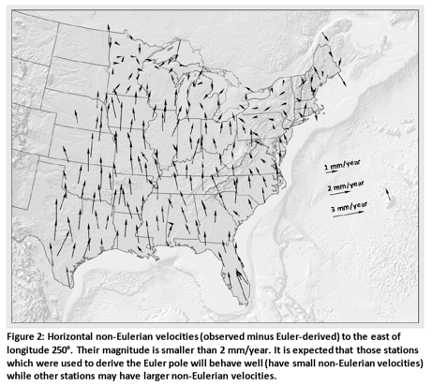
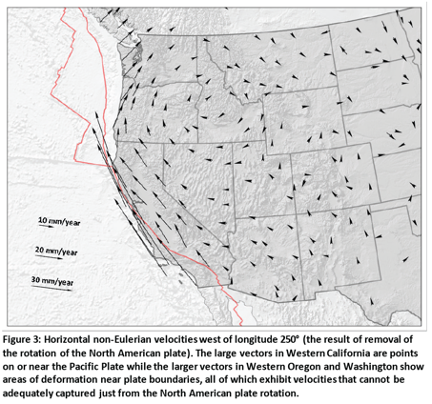
    Every place on Earth is moving. That includes neighboring marks on the same tectonic plate. What this means is that after the Eulerian motions are removed, the remaining motions left over change the relative differences in coordinates of neighboring marks located on the same tectonic plate. Figures 2 and 3 from the NOS NGS 62 report provide plots of estimates of these remaining velocities (see the boxes titled “Figure 2 from NOS NGS 62” and “Figure 3 from NOS NGS 62.”)

    Figure 2 is a plot of the non-Eulerian motions east of 110° west longitudes. As stated in the report, most of the velocities are less than 2 mm/year. The concept is that the EPP2022 and IVDM2022 models will remove the Eulerian and non-Eulerian movement of the marks.

    Figure 2 from NOS NGS 62

    Image: NGS Website
    Image: NGS website

    Figure 3 is a plot of non-Eulerian vectors west of 110° west longitude. As indicated in the plot, the large vectors in Western California, Western Oregon and Western Washington show areas of deformation near plate boundaries that don’t appear to be adequately captured just from the North American plate rotation.

    Figure 3 from NOS NGS 62

    Image: NGS Website
    Image: NGS website

    It should be noted that the size of the vectors on Figures 2 and 3 depict a different magnitude of movement. Figure 2 depicts vectors at 1-3 mm/year and Figure 3 depicts movement at 10-30 mm/year.

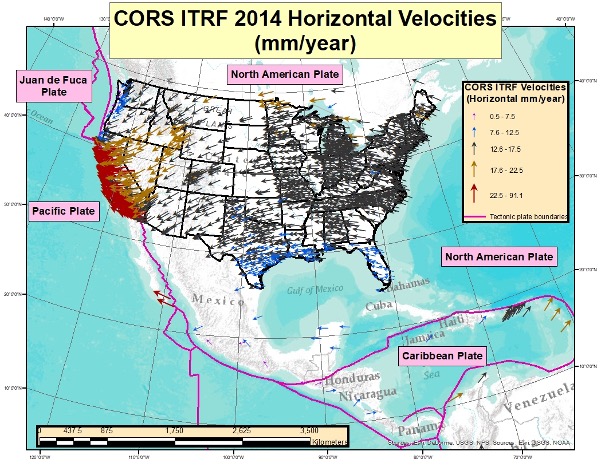
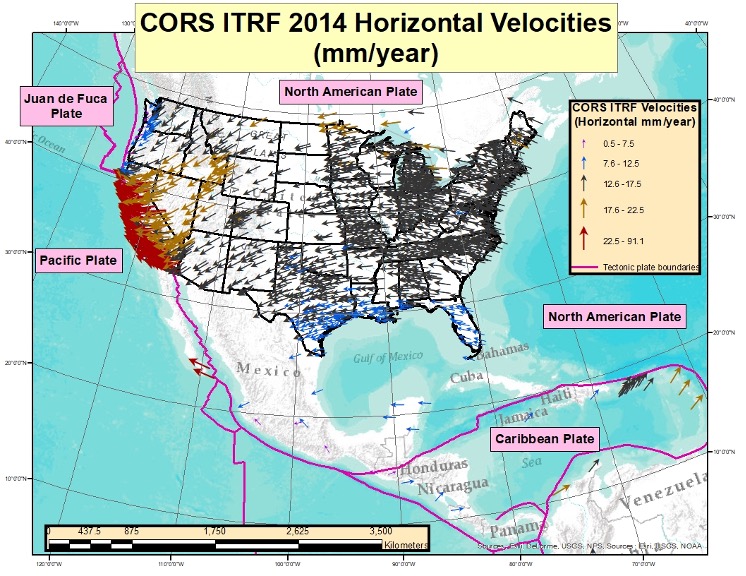
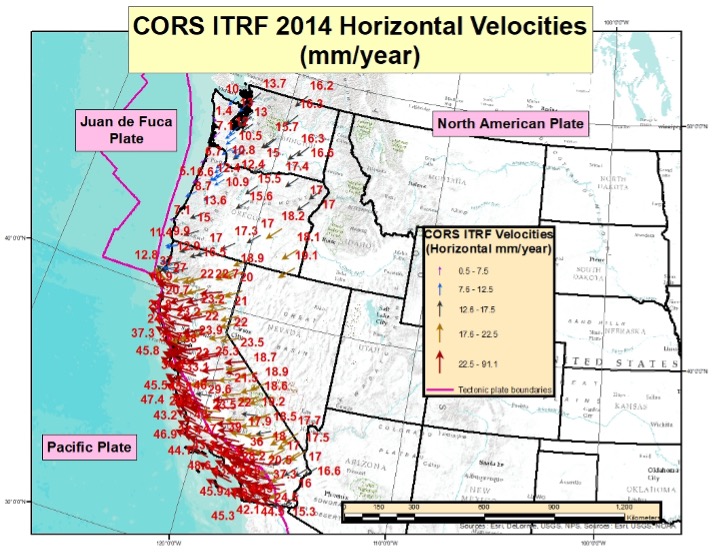
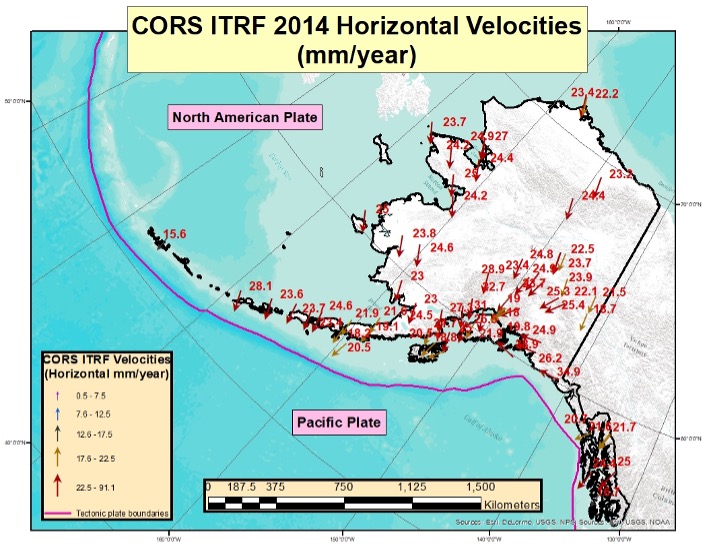
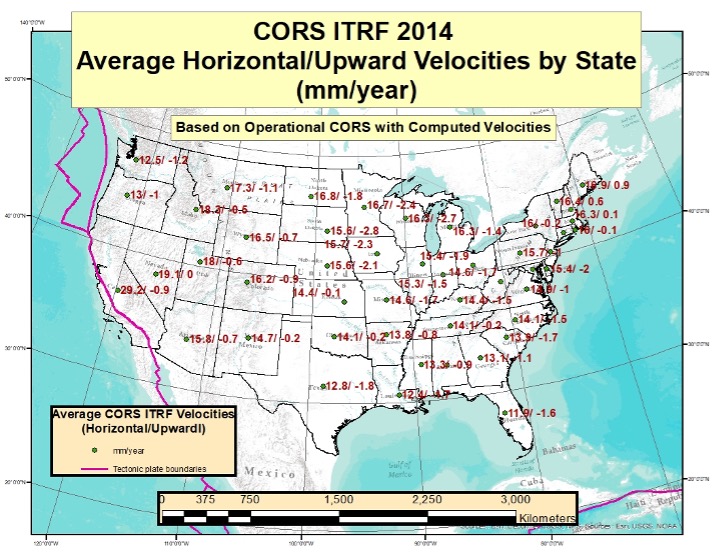
    To better visualize the potential size of the movement, I downloaded the CORS ITRF2014 coordinates and velocities from NGS’s website and compiled the results. See the boxes titled “CORS ITRF 2014 Horizontal Velocities” and “Table of ITRF 2014 Horizontal and Upward Velocities of U.S. CORSs.”

    CORS ITRF 2014 Horizontal Velocities

    Computed Velocities Only (Downloaded Jan. 13, 2022)

    Image: Dave Zilkoski
    Image: Dave Zilkoski

    The box titled “CORS ITRF 2014 Horizontal Velocities” provides the horizontal vectors based on NGS’s file downloaded on Jan.13. Only CORSs designated as operational and computed velocities were included in the plot.

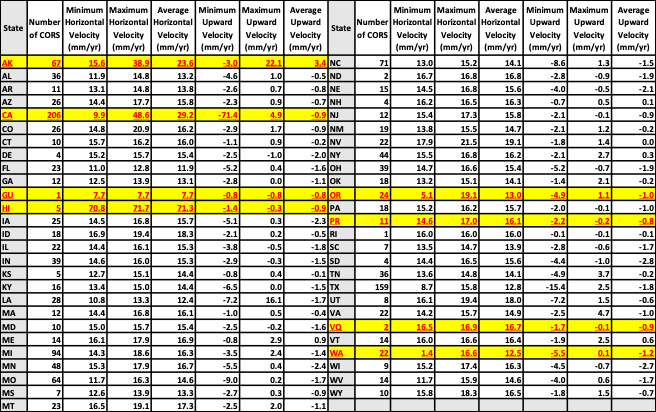
    I have also created a table that includes a summary of the ITRF rates for CORS labeled as part of the United States. The table includes the following information for each State and Territory of the United States:

    1. Number of CORS
    2. Minimum Horizontal Velocity (mm/year)
    3. Maximum Horizontal Velocity (mm/year)
    4. Average Horizontal Velocity (mm/year)
    5. Minimum Upward Velocity (mm/year
    6. Maximum Upward Velocity (mm/year),
    7. Average Upward Velocity (mm/year).

    See the table below.

    Table of ITRF 2014 Horizontal and Upward Velocities of U.S. CORSs

    Computed Velocities Only (Downloaded Jan. 13, 2022)

    Highlighted Territories are not on the North American Plate (GU, HI, PR, and VQ) and higlighted States are partly inside or close to the boundary of the North American Plate and another tectonic plate (AK, CA, OR, WA).
    Highlighted territories are not on the North American plate (GU, HI, PR, and VQ), and highlighted states are partly inside or close to the boundary of the North American plate and another tectonic plate (AK, CA, OR, WA).

    The highlighted territories in the table are not on the North American plate (GU, HI, PR and VQ), and the highlighted states are partly inside or close to the boundary of the North American plate (CA, OR, WA). This is one of the reasons why their minimum and maximum horizontal velocity values are different from most of the other states’ values.

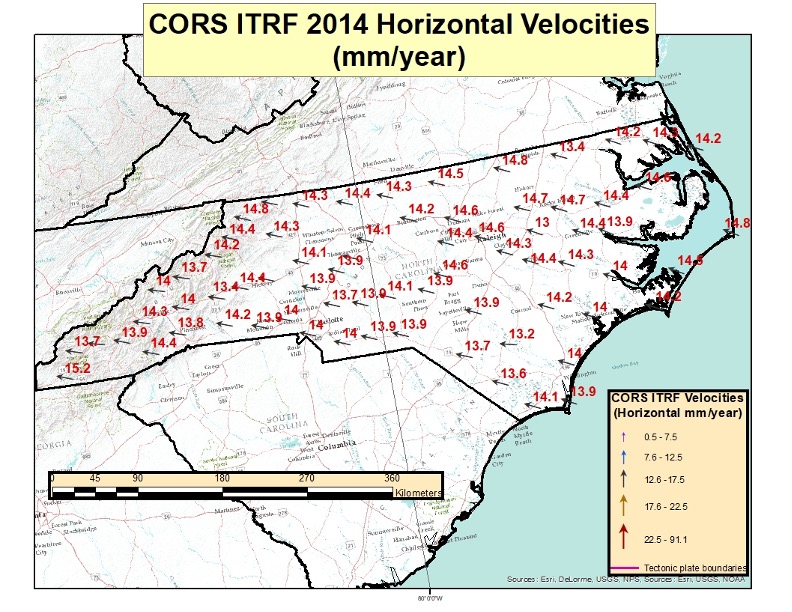
    To visualize the relative differences in horizontal velocities between neighboring CORSs, I plotted the ITRF 2014 Horizontal Velocities for CORSs located in North Carolina (see the box titled “CORS ITRF 2014 Horizontal Velocities in North Carolina”). Looking at the figure, it’s obvious that all of the velocities are around 14 mm/year and moving in the same direction.

    CORS ITRF 2014 Horizontal Velocities in North Carolina

    Computed Velocities Only (Downloaded Jan. 13, 2022)

    Photo: Dave Zilkoski
    Screenshot: Dave Zilkoski

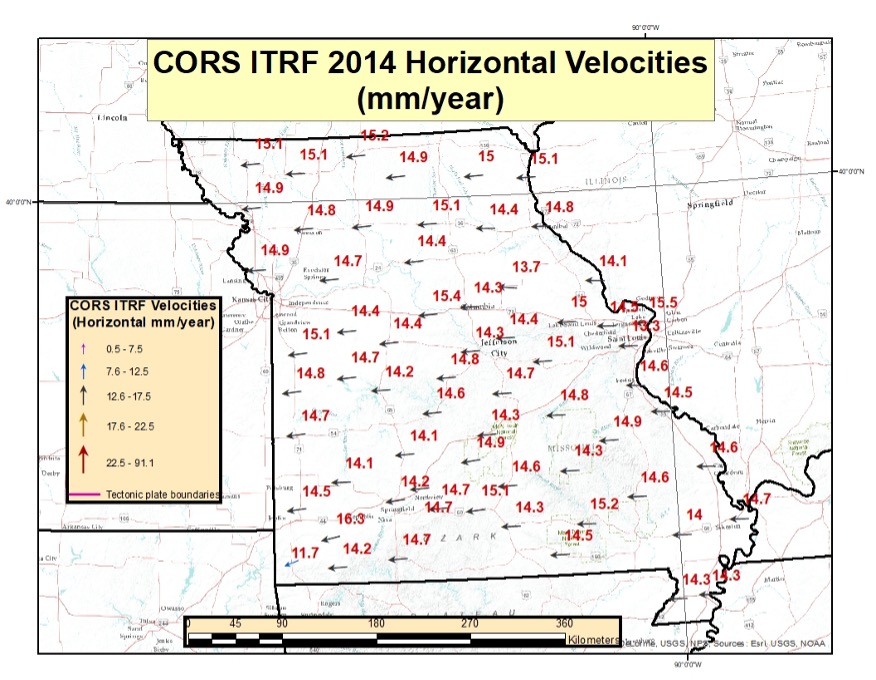
    I plotted the horizontal velocities for Missouri to provide an example of the velocities in the central region of the conterminous United States. The magnitude of the velocities is similar to that for North Carolina, but the direction of the vector is slightly different. North Carolina’s average horizontal velocity is 14.1 mm/year and Missouri’s average horizontal velocity is 14.6 mm/year.

    CORS ITRF 2014 Horizontal Velocities in Missouri

    Computed Velocities Only (Downloaded Jan. 13, 2022)

    Image: Dave Zilkoski
    Image: Dave Zilkoski

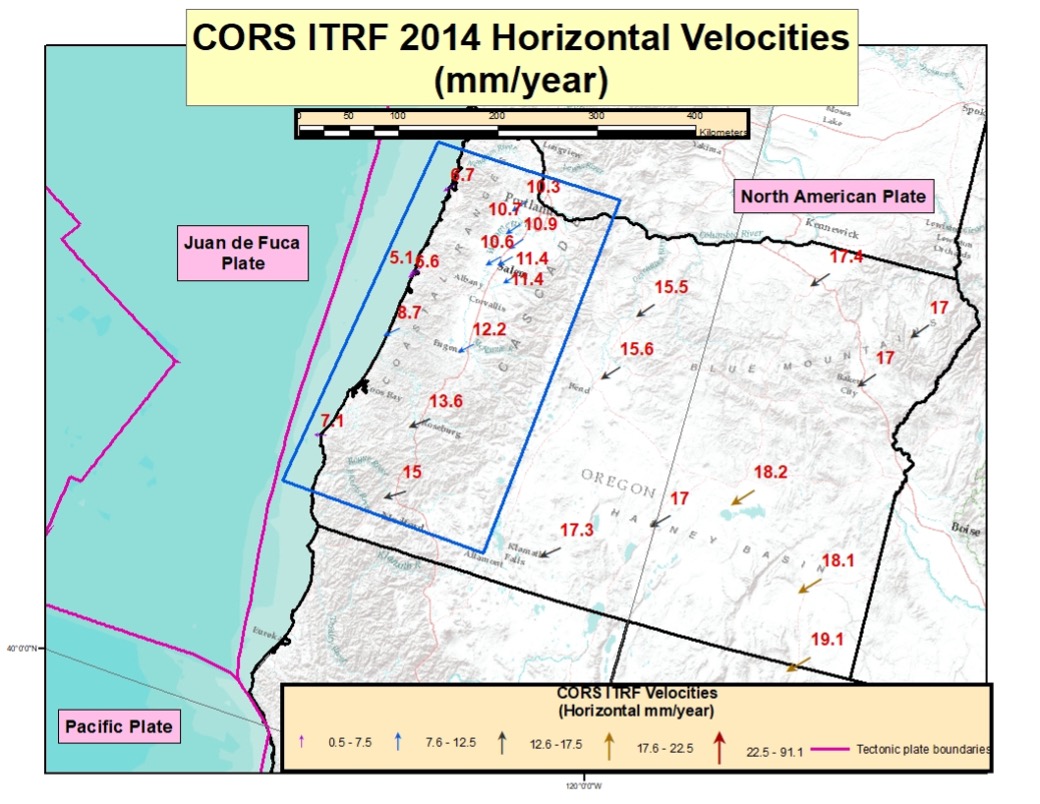
    To emphasize the differences along the boundaries of the tectonic plates, I’ve included a plot of the CORS ITRF 2014 horizontal velocities for the State of Oregon and a plot of the states along the West Coast of the United States. See the boxes titled “CORS ITRF 2014 Horizontal Velocities in Oregon” and “CORS ITRF 2014 Horizontal Velocities Along West Coast of CONUS.” As indicated in the plot, there are significant changes in horizontal velocities near the Oregon coast. The values decreased by about 10 mm/year from the inland CORS to the CORS along the coast.

    CORS ITRF 2014 Horizontal Velocities in Oregon

    Computed Velocities Only (Downloaded Jan. 13, 2022)

    Image: David Zilkoski
    Image: Dave Zilkoski

    The plot of the CORS ITRF 2014 Horizontal Velocities Along West Coast of CONUS clearly indicates the change in magnitude the closer the CORS are to the Pacific and Juan de Fuca plates.

    CORS ITRF 2014 Horizontal Velocities Along West Coast of CONUS

    Computed Velocities Only (Downloaded Jan. 13, 2022)

    Image: David Zilkoski
    Image: Dave Zilkoski

    For completeness, I’ve also included a plot of the horizontal velocities for Alaska.

    CORS ITRF 2014 Horizontal Velocities in Alaska

    Computed Velocities Only (Downloaded Jan. 13, 2022)

    Image: David Zilkoski
    Image: Dave Zilkoski

    To better visualize the horizontal and upward velocities of CORS among states, I plotted the average horizontal and upward velocity value for each state based on that states’ CORS. See the box titled “Average Velocities by State.”

    Average Velocities by State

    Image: David Zilkoski
    Image: Dave Zilkoski

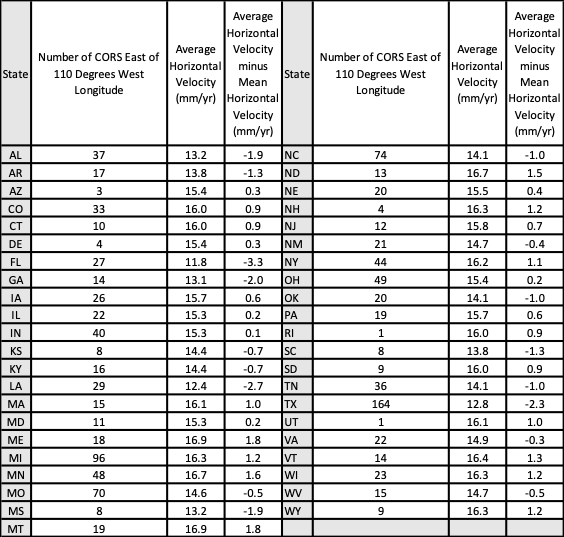
    I also computed an average horizontal velocity value based on CONUS CORS east of 110° west longitude (denoted here as a regional horizontal velocity value). [I used the CORSs east of 110° west longitude to be consistent with NGS’s Figure 2 in NOS NGS 62.]

    The box below summarizes the average horizontal motion for each state. The table provides:

    1. The Number of CORS East of 110° West Longitude
    2. Average Horizontal Velocity (mm/year)
    3. Average Horizontal Velocity minus Regional Horizontal Velocity (mm/year).

    This provides an estimate of the variation of the relative horizontal motion between States.

    Table of ITRF 2014 Horizontal Velocities minus Regional Velocity of U.S. CORS East of 110° West Longitude

    Image: David Zilkoski
    Table only includes CORS East of 110° West Longitude (Image: Dave Zilkoski)

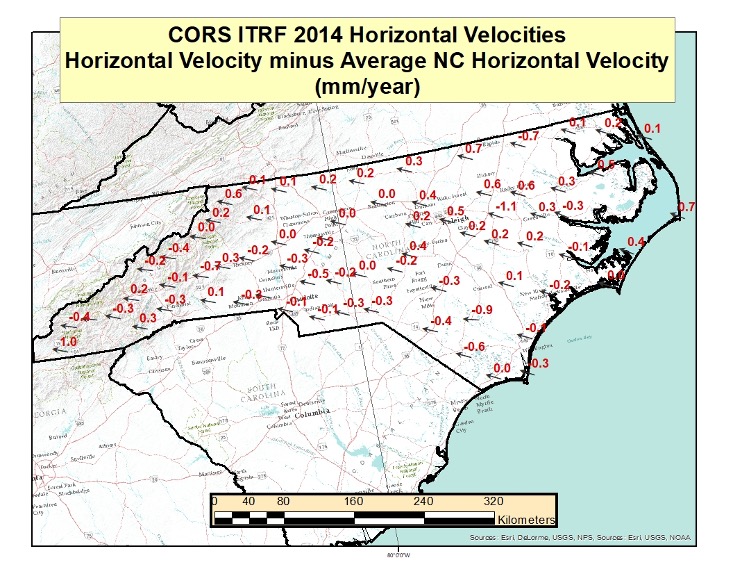
    The box titled “Horizontal Velocities in NC Minus Average Velocity” depicts the resulting horizontal velocities with an average velocity removed (the average velocity was based on NC CORS only) for all CORS in North Carolina. As one can see from the plot, most of the resulting horizontal velocities are less than 1 mm/year, but they are still not zero. Once again, this is only meant to provide an idea of the size of the relative vectors between CORS in North Carolina.

    As indicated in the NOS NGS 62 report, these horizontal velocities will be small, but they will not be zero. Hence the reason that NGS needs to provide models and tools for users to be able to transform coordinates between the four national frames (NATRF, PATRF, CATRF and MATRF) and the International Terrestrial Reference Frame (ITRF), as well as to estimate coordinates at epochs different from the survey observation epoch by accounting for movement within the reference frame. Surveyors in California have been dealing with these types of movements for many years now.

    Horizontal Velocities in NC Minus Average Velocity

    (Downloaded Jan. 13, 2022)

    Image: David Zilkoski
    Image: Dave Zilkoski

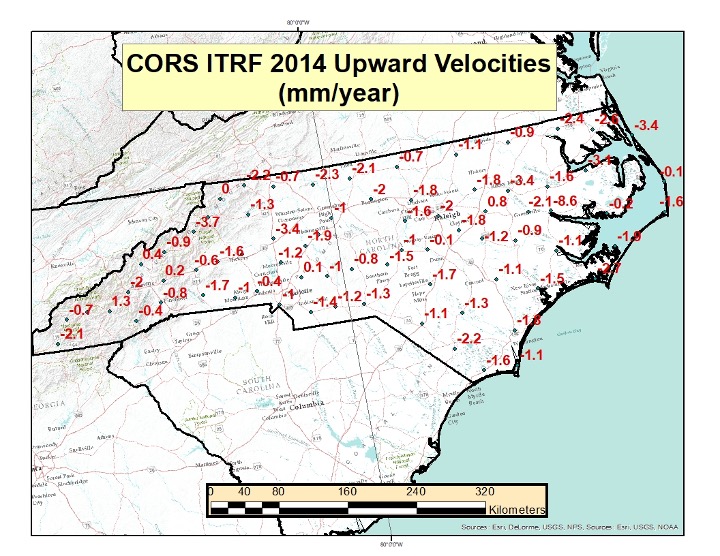
    I plotted the ITRF 2014 upward velocity values of the CORS in North Carolina to depict an estimate of the vertical movement of the CORS in North Carolina. See the box below. The vertical velocities values are much less than the horizontal velocities, but they still are not zero. A future column will address the upward velocities based on the ITRF 2014 rates and crustal movement models.

    CORS ITRF 2014 Upward Velocities in North Carolina

    (Downloaded Jan. 13, 2022)

    Image: Dave Zilkoski
    Image: Dave Zilkoski

    This column explained why it is important to account for movement of marks everywhere and not just in areas influenced by active crustal movement due to earthquakes such as in Southern California. It provided information about the CORS rates of movement based on NGS’s ITRF2014 coordinates and velocity information. It highlighted NGS’s reports that describe models that will facilitate users transferring coordinates between reference frames and dealing with intra-frame movement between marks based on survey performed at different epochs. This is not just a horizontal positioning issue.

    A future column will address estimates of vertical velocities in the new, modernized NSRS.

  • ION ITM/PTTI 2022 virtual meeting portal now live

    ION ITM/PTTI 2022 virtual meeting portal now live

    Photo: ION

    The ION ITM/PTTI 2022 virtual meeting portal is now available at ion.org.

    Register today to attend the ION’s co-located International Technical Meeting (ITM) and the Precise Time and Time Interval (PTTI) Systems and Applications Meeting, being held January 25–27, 2022, at the Hyatt Regency Long Beach in Long Beach, California, with technical presentations available for on-demand viewing at ion.org.

    Plenary and Keynote Sessions

    The ITM/PTTI 2022 keynote addresses, “Traffic Jams, Autonomy, and Lagrangian Control” and “The Future of Industrial Atomic Clocks,” taking place on Tuesday, January 25 will be recorded live and uploaded for on-demand viewing through the ITM/PTTI 2022 virtual meeting portal.

    Technical Sessions

    Individual technical presentations will be pre-recorded and uploaded with slides to the ITM/PTTI 2022 virtual meeting portal for viewing at a time of your choosing, and will remain available for 30 days. Attendees will have the option to submit questions to each presenter. View the full online Technical Program now!

    Exhibit Experience

    ITM/PTTI 2022 features industry partners with expanded exhibitor profiles, that allow attendees to review the latest PNT-related technologies, products, and product demonstration videos.

  • Launchpad: Timing antennas, defense UAS, infrastructure mapping

    Launchpad: Timing antennas, defense UAS, infrastructure mapping

    A roundup of recent products in the GNSS and inertial positioning industry from the January 2022 issue of GPS World magazine.


    Surveying

    Base Station

    Receives all available GNSS signals

    Photo: Trimble
    Photo: Trimble

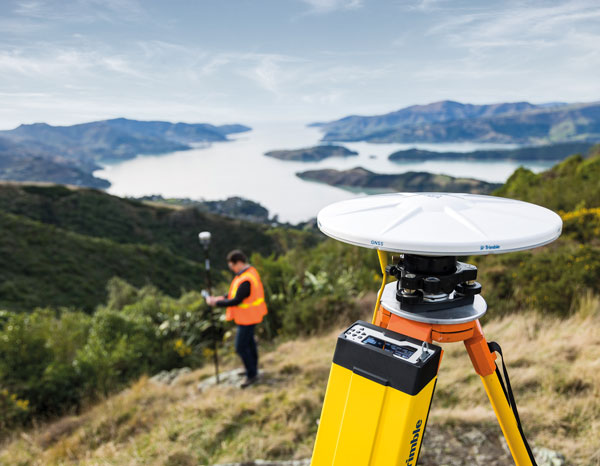
    The Trimble R750 GNSS modular receiver is a connected base station for use in civil construction, geospatial and agricultural applications. The R750 provides high-accuracy base-station performance, giving contractors, surveyors and farmers more reliable and precise positioning in the field. The R750 also can be used to broadcast real-time kinematic (RTK) corrections for a wide range of applications, including seismic surveying, monitoring, civil construction, precision agriculture and more. Access to all available satellite signals provides improved performance and reliability when used with a Trimble ProPoint GNSS rover. ProPoint gives users improved performance in challenging GNSS conditions, with improved signal management.
    Trimble, trimble.com

    Flight Planning

    Updated for safer UAV surveying

    Photo: mdCockpit
    Photo: Microdrones

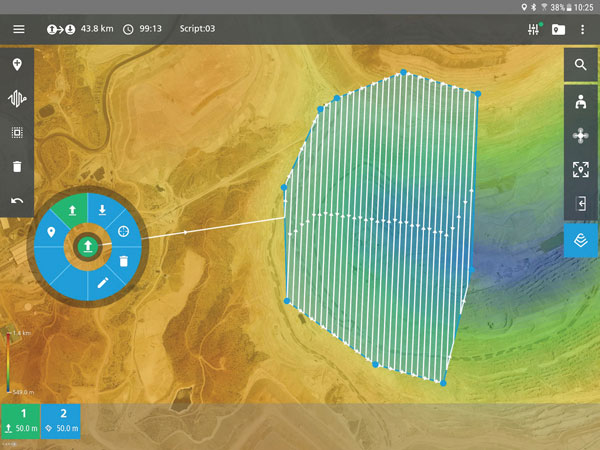
    The mdCockpit app was designed for professional drone users to make it easy to plan, monitor, change and control flights from an Android tablet. The updates in version 2021.3 include features that improve flight safety and give more options for surveying with an aim to deliver a premier solution for planning, monitoring, adjusting, analyzing and controlling professional drone flight missions from a tablet. Updates include an improved flight editor, flight data collection and drone configuration. Drone pilots can download mdCockpit through the Google Play store.
    Microdrones, microdrones.com


    OEM

    LTE Module

    With 2G fallback for Latin America

    Photo: Telit
    Photo: Telit

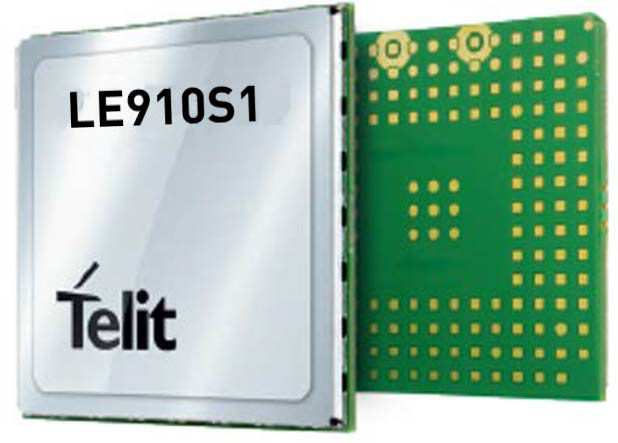
    The LE910S1-ELG LTE Cat 1 module is designed for internet of things (IoT) applications in Latin America that need a combination of performance, affordability and voice support in a compact form factor. It provides 2G fallback, making it suitable for areas that have not upgraded to 4G. With an embedded GNSS receiver, the cost-optimized LE910S1-ELG is suitable for tracking applications such as fleet management, stolen-vehicle tracking and recovery, and other mobile IoT applications that need to maintain a reliable connection when moving around in a country, region or multiple regions. The power-saving embedded GNSS receiver enables the use of GNSS positioning even when the cellular modem is switched off.
    Telit, telit.com

    Flex Power

    Capability now on constellation simulator

    Photo: Spirent
    Photo: Spirent

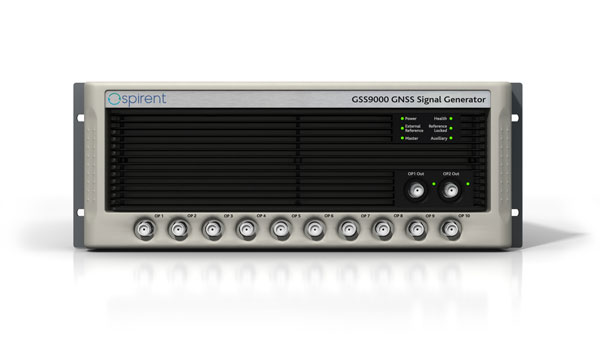
    A new positioning, navigation and timing (PNT) test capability commonly referred to as programmable power — or flex power — is available on the Spirent GSS9000 constellation simulator and can be applied to existing scenarios. Flex power is the reallocation of transmit power among individual signals in GPS satellites, providing a countermeasure against GPS jamming. Spirent simulators fully support programmable power for M-code, Y-code and C/A (coarse acquisition) code.
    Spirent, spirent.com

    GNSS Module

    Automotive qualified with INS and dead reckoning

    Photo:
    Photo: STMicroelectronics

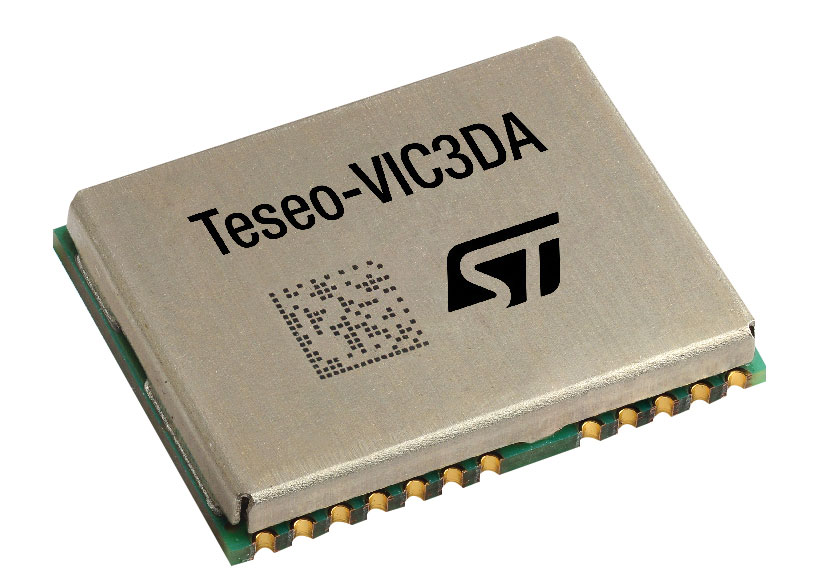
    The Teseo-VIC3DA is the latest member of the Teseo module family, designed for vehicle positioning. It combines the Teseo III GNSS integrated circuit with the 6-axis MEMS inertial measurement unit (IMU) and dead-reckoning software to provide super-high-resolution motion tracking for advanced vehicle navigation and telematics applications. Teseo III offers robust positioning capabilities by simultaneously receiving signals from GPS, Galileo, GLONASS, BeiDou and QZSS constellations. The module enables competitively priced in-car navigation, fleet management and insurance-monitoring applications.
    STMicroelectronics, st.com

    PNT Platform

    Protects critical infrastructure from GNSS vulnerabilities

    Photo: ADVA
    Photo: ADVA

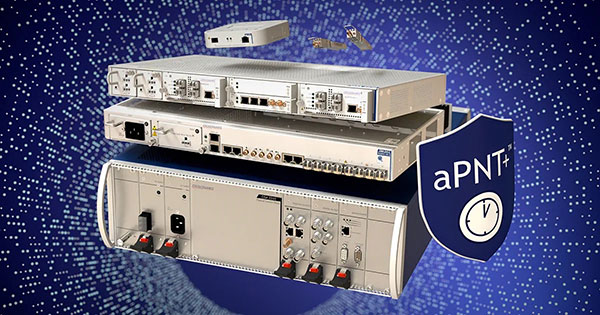
    The scalable aPNT+ platform meets the latest guidelines for resilient positioning, navigation and timing (PNT), providing end-to-end control and timing network visibility for robust protection against the catastrophic risks that PNT disruption poses to national security and essential assets such as power grids. Even without GPS or GNSS timing, the solution provides an intelligent, end-to-end self-recovery system designed around a three-fold framework, integrating multi-layer detection, multi-source backup and multi-level fault-tolerant mitigation.
    ADVA, adva.com

    Timing Antennas

    IP67-compliant for outdoor and marine environments

    Photo: RadioWaves
    Photo: RadioWaves

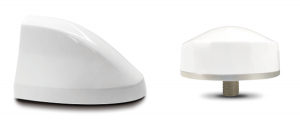
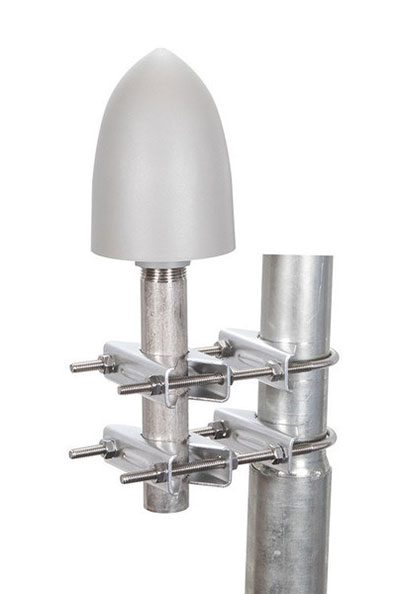
    A new series of GPS/GNSS timing antennas cover the L1 and L5 GPS bands, providing axial ratio and higher accuracy for the reception of satellite timing signals and reference frequencies for enhanced phase synchronization in precision network deployments. Their high gain, low noise figure of 2-dB and high out-of-band rejection allows for use of longer and cost-effective cables for easy and flexible installations. Built-in surge protection supports a wide range of GNSS including GPS, GLONASS, BeiDou and Galileo, as well as Iridium.
    RadioWaves, radiowaves.com


    Mapping

    Imaging System

    Designed for utility and infrastructure mapping

    Photo: Geocue
    Photo: Geocue

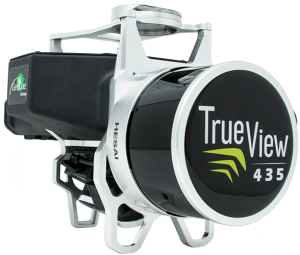
    True View 435 is an economical platform for utility-grade mapping, with superior ground-capturing capabilities for lightly vegetated areas. The next-generation compact 3D imaging system has the sensitivity needed for infrastructure mapping. Its position and orientation system is the Applanix APX-15, achieving accuracy of better than 5 cm RMSE and precision of better than 5 cm at 1 sigma.
    GeoCue, geocue.com

    Long-Range Scanner

    Includes integrated GNSS receiver

    Photo: Riegl
    Photo: Riegl

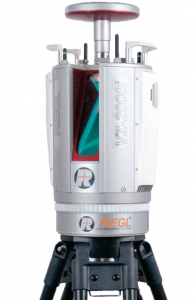
    The VZ-2000i long-range 3D laser scanning system combines user friendliness with fast, accurate data acquisition. The flexible system includes an integrated GNSS unit for a high-accuracy real-time kinematic (RTK) solution. Other peripherals and accessories include a SIM card slot for 3G/4G LTE, WLAN, LAN, USB and other ports. A new processing architecture enables execution of different background tasks onboard in parallel to the simultaneous acquisition of scan data and image data, such as point-cloud registration, georeferencing and orientation via an integrated inertial measurement unit.
    RIEGL, riegl.com


    Transportation

    Vehicle Antennas

    Designed for Intelligent connected cars and trucks

    Photo: Harxon
    Photo: Harxon

    Two new GNSS antennas are designed for vehicles equipped with advanced sensors, controllers, actuators and other devices. They are enabled for intelligent information exchanges between the vehicle and everything (V2X), connecting autos with GNSS, 5G, Wi-Fi, ultra-wideband and more. The integrated antennas support dedicated short-range (DSRC) and cellular vehicle-to-everything (C-V2X) communication, embedding a premium GNSS antenna with high gain for consistent and reliable precise positioning service. They also allow for multiple input and output of data to achieve swift internet download speed in 5G networks.
    Harxon, harxon.com

    NVIDIA AV Support

    Receiver now supported on autonomous platform

    Photo: NovAtel
    Photo: NovAtel

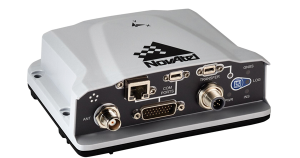
    The PwrPak7-E1 GNSS receiver is now supported on the NVIDIA Drive Hyperion autonomous vehicle (AV) development platform. Selected for its robustness and precise position output, the PwrPak7-E1 will be offered with NVIDIA’s autonomous driving test fleets worldwide. Drive Hyperion is a fully operational, production-validated and open AV platform that reduces the time and cost required to outfit vehicles with autonomous driving and artificial intelligence (AI) features. The PwrPak7-E1 also is now compatible with NVIDIA’s DriveWorks v4 software release.
    Hexagon | NovAtel, novatel.com

    Splitter

    Provides signals to two GNSS receivers

    Photo:Tallysman
    Photo: Tallysman

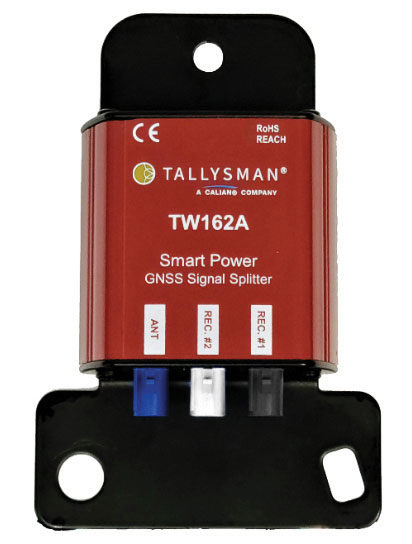
    The TW162A automotive-grade smart power GNSS signal splitter supports the full GNSS spectrum: GPS/QZSS-L1/L2/L5, QZSS-L6, GLONASS-G1/G2/G3, Galileo-E1/E5a/E5b/E6, BeiDou-B1/B2/B2a/B3 and L-band correction service frequency band. It offers fail-over and fault-identification features. The splitter accepts power from all attached GNSS receivers; if one receiver fails, the next attached receiver automatically provides power to the splitter and antenna. If the antenna fails and does not draw current, all connected receivers will sense a current draw lower than 1 mA, indicating an antenna fault. The TW162A offers high performance in terms of noise figure, isolation and linearity.
    Tallysman, tallysman.com

    ADS-B Receiver

    Enhances airport situational awareness

    Photo: uAvionix
    Photo: uAvionix

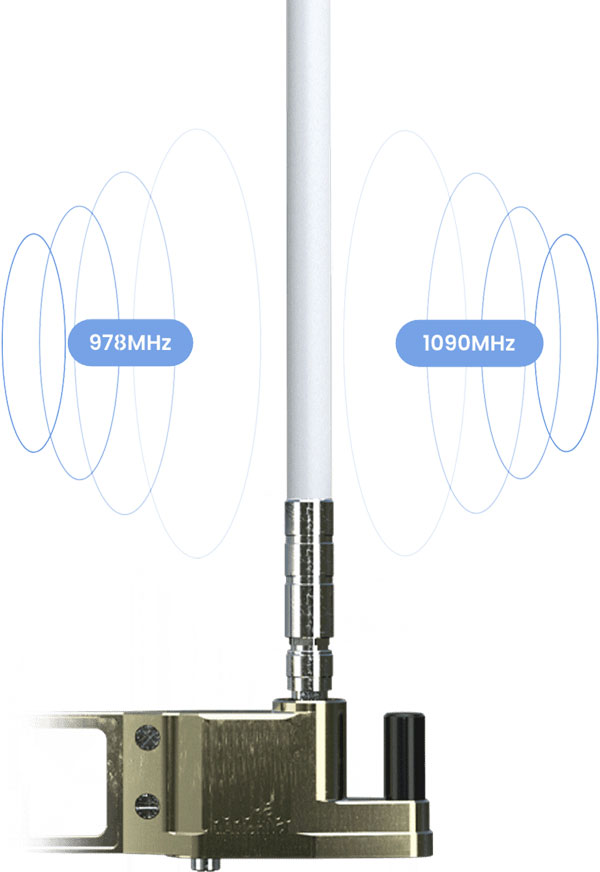
    The pingStation 3 integrates 978 MHz and 1090 MHz ADS-B receivers, a GPS receiver, an antenna and a power-over-Ethernet (POE) interface into an easy-to-install, rugged weatherproof enclosure. With a selection of non-proprietary and industry-standard data interfaces, such as JSON and ASTERIX CAT 021, pingStation 3 is designed to integrate into a multitude of end-user applications, including airport displays, UAS Ground Control Stations (GCS), Unmanned Traffic Management (UTM) Solutions, and Flight Information Displays (FID). When paired with the VTU-20 airport vehicle ADS-B transmitter, pingStation 3 improves the situational awareness of ATCs and the safety of airport operations by reducing the risk of runway incursions.
    uAvionix, uavionix.com


    UAV

    Defense UAS

    Flexible UAV and control software combined

    Photo: Ascent
    Photo: Ascent AeroSystems

    Ascent AeroSystems’ Spirit coaxial unmanned aerial system (UAS) offers a versatile and durable system for mission-critical operations. With a modular, plug-and-play payload design, the Spirit’s open architecture allows operators to add or upgrade software to unlock new operating capabilities without the need to design or develop a new aircraft. Autonodyne’s additive software solution allows the Spirit to perform autonomous tasks either individually or as a team with multiple vehicles, from a single operator and control station.
    Ascent AeroSystems, ascentaerosystems.com
    Autonodyne, autonodyne.com

    Evaluation Kits

    Now include mosaic Septentrio modules

    Photo: ArduSimple
    Photo: ArduSimple

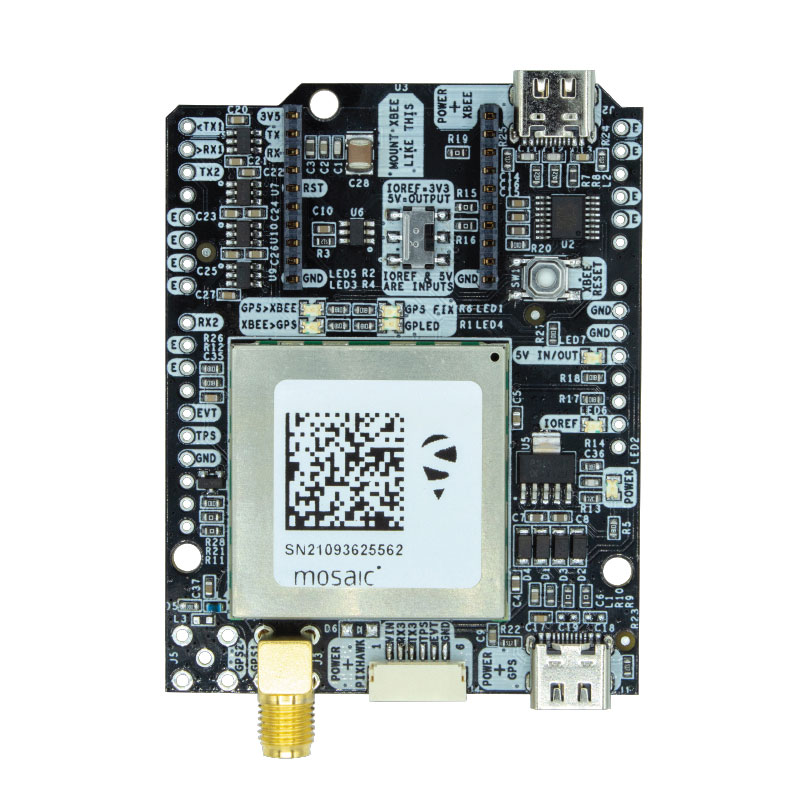
    Two Septentrio modules are being integrated into ArduSimple’s new evaluation kits — the mosaic-X5 GNSS module and the mosaic-H heading module. The new kits make resilient centimeter-level positioning easily accessible for testing and prototyping. ArduSimple’s kits provide triple-band real-time kinematic (RTK) GPS/GNSS as a plug-and-play solution for the most popular development platforms such as Arduino, STM Nucleo, Raspberry Pi, Ardupilot and Nvidia Jetson. It enables developers of robotics, UAVs and autonomous systems to try out mosaic, a unique module offering the latest high-performance GNSS positioning technology.
    Septentrio, septentrio.com; ArduSimple, ardusimple.com

    Geospatial Data

    Drones as a service

    Photo: Beagle
    Photo: Beagle

    A drone network solution offers on-demand imagery to customers in Germany at resolutions up to 50 times higher than available from commercial satellite data providers. The Beagle M drone and sensors can deliver image data at 1-cm per pixel many times faster than satellites and regardless of cloud coverage. The company’s charging hangars enable quick flights. After completing an autonomous inspection flight (up to 200 km on a single charge), the drone returns to its hangar where it charges for its next mission. The drone takes just 90 minutes to become fully charged, and can then advance to its next mission without any physical contact between operator and aircraft.
    Beagle Systems, beaglesystems.com

  • Registration opens for ITM/PTTI 2022 in Long Beach, California

    Registration opens for ITM/PTTI 2022 in Long Beach, California

    Photo: ION

    ION’s winter meeting, the International Technical Meeting (ITM), is a more intimate conference with a technical program related to positioning, navigation and timing and includes the ION Fellows and Annual Awards presentations.

    In 2022, ITM will take place in Long Beach, California, Jan. 25-27, and will be co-located with the Precise Time and Time Interval Systems and Applications Meeting. ITM will house more than 150 in-person and virtual technical presentations, two keynote addresses, six tutorials, and an exhibit hall filled with the latest PNT solutions.

    A commercial exhibit and pre-conference tutorials are held in conjunction with the conference.

    Tutorials will be offered as part of this year’s in-person technical program on January 26 and will be open to all in-person PTTI and ITM attendees. Tutorials cover novel systems for time distribution from space, atomic clocks, Kalman filtering for clock estimation, and specific implementations for time distribution from space.

    The ITM/PTTI plenary session will be recorded and uploaded to the website for on-demand viewing. No other ITM/PTTI sessions (including tutorials) will be recorded for on-demand viewing. All presenters are required to provide a video presentation for on-demand viewing. On-demand presentations will be available through the ITM/PTTI meeting portal for 30 days.

    To view the ITM/PTTI 2022 technical program and to register, go to https://www.ion.org/itm/registration.cfm.

  • Launchpad: Vehicle tracking, camera drones, e-bikes

    Launchpad: Vehicle tracking, camera drones, e-bikes

    A roundup of recent products in the GNSS and inertial positioning industry from the December 2021 issue of GPS World magazine.


    OEM

    Satellite-cell terminal

    With built-in GPS receiver

    Photo: OQ
    Photo: OQ

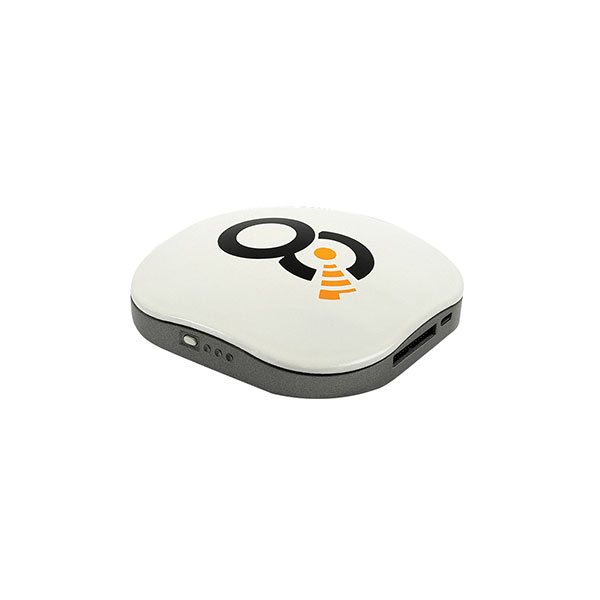
    OQ Technology’s dual-mode satellite-cellular IoT modem and tracker is a plug-and-play, small, low-cost and low-power solution that can collect data from more than 1,000 sensors. It has a built-in GPS receiver and supports 5G NB-IoT, GSM, LTE-M and bi-directional satellite links. The flexible, robust and programmable dual-mode terminal has pre-paid data packages suitable for remotely monitoring and controlling fixed and mobile assets in industries such as transportation, oil and gas, utilities, and maritime.

    OQ Technology, oqtec.space

    Fiber Extension

    Provides mission-critical, extended length GPS over fiber

    Photo: ViaLite
    Photo: ViaLite

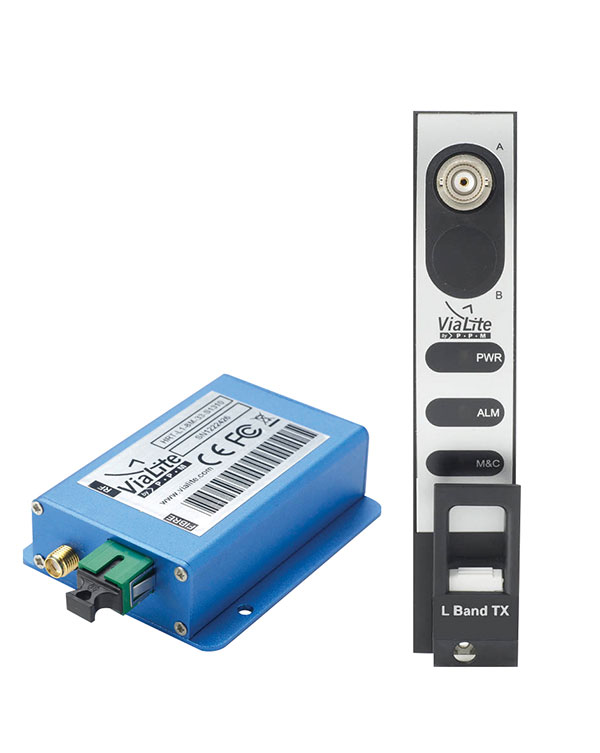
    ViaLite’s GPS over Fiber Extension Kit for Microchip/Microsemi GPS timing servers provides mission-critical GPS timing and synchronization for systems requiring extremely accurate clock signals. Standard transmission distances for the extension kit can be up to 10 km, while solutions are available for distances as long as 50 km. The ViaLite kit was chosen for its unique performance with Microsemi’s S650 timing server. The ViaLite GPS link is designed to provide a remote GPS/GNSS signal or derived timing reference to equipment located where no signal is available, such as inside buildings or tunnels. By using optical fiber instead of traditional coaxial cable, extreme distances are possible with no radio frequency loss and zero introduction of noise.

    ViaLite, vialite.com

    Edge Computing Device

    Acts as a high-performance master clock

    Photo: Soc-e
    Photo: SoC-e

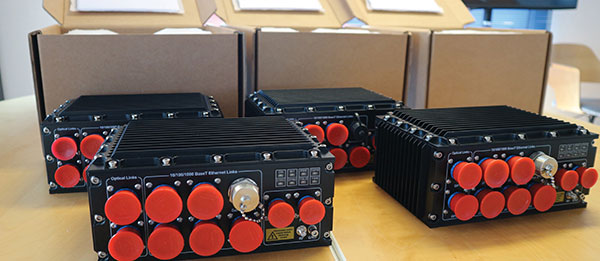
    The RELY-MIL-TIME-SERVER, which complies with MIL-STD-810G and MIL-STD-461G, embeds the latest timing, networking and security technology in a single SWaP platform. The all-in-one rugged edge computing device acts as a high-performance master clock and serves secure accurate timing distribution (PTP, NTP, GNSS). The timing feature is combined with high-bandwidth and high-availability Ethernet switching and L2/L3 cybersecurity services in a unique commercial-off-the-shelf device. At its heart is a Xilinx Ultrascale+ MPSoC device powered by SoC-e hardware IP cores for PTP and high-availability low-latency Ethernet networking.

    Relyum by SoC-e, www.soc-e.com

    IMU

    Provides improved attitude and vibration control

    Photo: Epson
    Photo: Epson

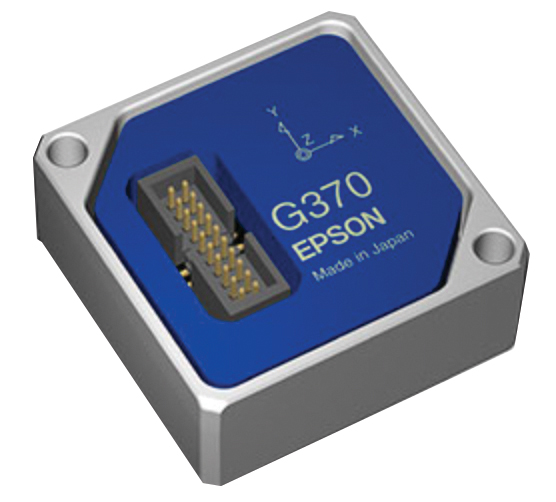
    The M-G370PDS0 inertial measurement unit (IMU) is equipped with a high-performance six-axis sensor. It has an angle random walk (short-term variation in output) of 0.03°/√h, which is half that of its predecessor, and can more accurately detect very slight changes in the attitude of equipment and systems, since they do not get lost in sensor noise. The small size, light weight and low power consumption will help customers make their own products smaller and lighter. It also maintains compatibility with earlier products (the M-G370/365/364/354), making performance upgrades easy.

    Seiko Epson Corp., global.epson.com

    Timing Solution

    Embedded module for third-party hardware

    Image: ADVA
    Image: ADVA

    The OSA 5400 SyncModule enables technology suppliers to integrate precise synchronization into their hardware. Its M.2 form factor can add timing capabilities to switches, routers, open compute servers and other IT devices. The SyncModule provides GNSS, precision time protocol (PTP) and network time protocol (NTP) engines as well as comprehensive PTP and GNSS monitoring and assurance functionality. It can enable assured sub-microsecond timing in public and private networks as well as critical infrastructure. Featuring multiple interface options for easy integration, the OSA 5400 SyncModule comes with an open API. It also can be managed by ADVA’s proven Ensemble Sync Director management system.

    ADVA, adva.com

    Evaluation software

    For u-blox M10 GNSS technology integrators

    Photo: u-blox
    Photo: u-blox

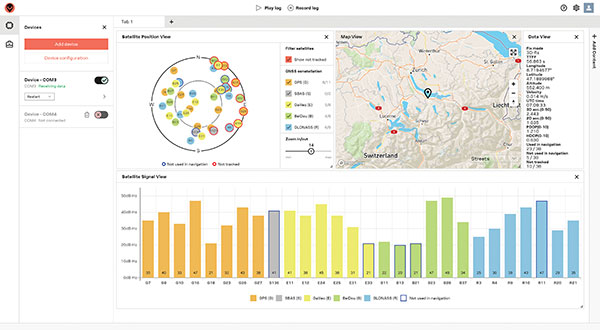
    Running on Microsoft Windows, u-center 2 offers anyone working with 10th-generation (M10) u-blox GNSS technology a highly intuitive interface to configure GNSS products, evaluate their performance, improve the quality of their software, and experience the performance boost achieved using GNSS-related services. The software is the successor to the u-center GNSS evaluation software, which has been used by design engineers for almost two decades to develop GNSS receiver applications. Compatible with u-blox M10 GNSS technology, u-center 2 is designed to offer improved performance over its predecessor. New features in u-center 2 simplify configuration, evaluation and software development of GNSS-based solutions. It is free for download.

    u-blox, www.u-blox.com

    GNSS Antenna

    Low profile for easy installation

    Photo: Maxtena
    Photo: Maxtena

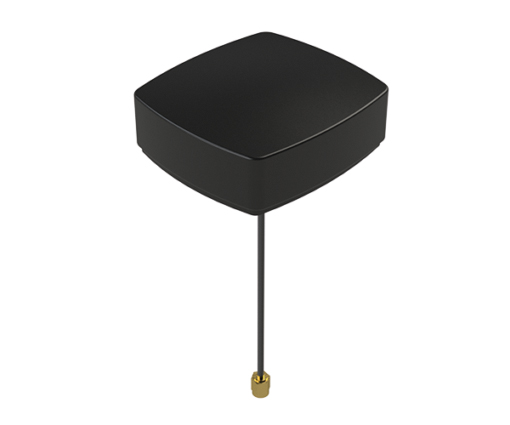
    The MEA-1227-SM is a GNSS/L1 and L2 low-profile screw-mount antenna. It has high performance suitable for maintaining constant network connectivity. The MEA-1227-SM covers all GPS/GLO/BEI/ QZSS/Galileo/SBAS/L1L2 standard frequencies. It is designed for telematics systems, remote surveillance, asset tracking and any internet of things (IoT) system applications. This screw mount antenna is easy to install, with a low profile suitable for challenging installations. It has a IP67-rated housing and anti-rotation mounting.

    Maxtena, maxtena.com


    Transportation

    E-Bike Guidance

    Mapping and navigation for city riders

    Photo:
    Photo: Cowboy

    The Cowboy e-bike solution provides riders with high-performance, real-time GNSS accuracy, enabling them to map their own paths and those of the cities in which they live. It uses smart road-companion applications to ensure riders get precise information, regardless of the route they travel. The positioning component uses Taoglas’ Accura GVLB258.A, a multi-band GNSS L1/L5, high-performance stacked patch antenna, in conjunction with u-blox’s SAM-M8Q GNSS positioning module. The combination allows for extremely low power and high accuracy. The solutions works with “micromobility” services offered by Cowboy, such as Easy Rider for theft detection, bike insurance and crash detection notifications.

    Taoglas, taoglas.com; u-blox, u-blox.com

    Vehicle Tracking

    Instant decimeter-level accuracy with automotive sensors

    Photo: Profound Positioning
    Photo: Profound Positioning

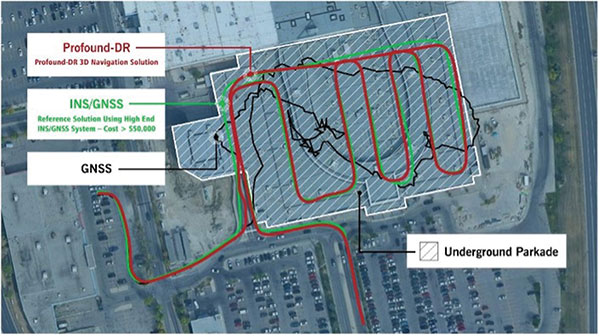
    The Profound-IVT (instant vehicle tracking) provides cost-effective vehicle navigation. Based on a firmware library, and rapidly adaptable to any navigation platform, IVT combines precise point GNSS positioning (PPP), dead reckoning and radar technologies in an integrated solution to provide decimeter-level positioning accuracy plus orientation and velocity. IVT performs in tunnels, dense urban environments, multi-level highway junctions and parking garages. With errors <1% of distance travelled, resolution is extremely rapid. Base stations are not required and there are no operating range limitations. Applications include driver assistance, mobility and taxi, autonomous vehicles, geofencing, fleet tracking, insurance, driving and safety management, and connected driving.

    Profound Positioning Inc., profoundpositioning.com


    Surveying & Mapping

    City Twins

    Off-the-shelf map data through the HxGN Content Program

    Photo: Hexagon
    Photo: Hexagon

    Metro HD city data is a new offering of ultra-high-resolution 2D and 3D digital twins of major cities. Metro HD expands the data stack to include high-definition true orthophotos, obliques, digital terrain models, lidar point clouds, 3D building models (LOD2), 3D meshes and land-use maps. Cities captured in 2021 include Munich, Cologne, Vienna, Milan, Amsterdam, Stockholm, Tokyo, Dallas, New York, Stuttgart and Frankfurt. More cities will be added in early 2022. The program uses a hybrid urban mapping sensor, the Leica CityMapper-2, that concurrently collects lidar and aerial imagery. The derived products, based on the strength of each subsystem, result in superior accuracy and temporal consistency across all three data dimensions.

    Hexagon Geospatial, hexagon.com

    GNSS + Laser

    Workflow for Esri ArcGIS Field Maps

    Photo: Bad Elf
    Photo: Bad Elf

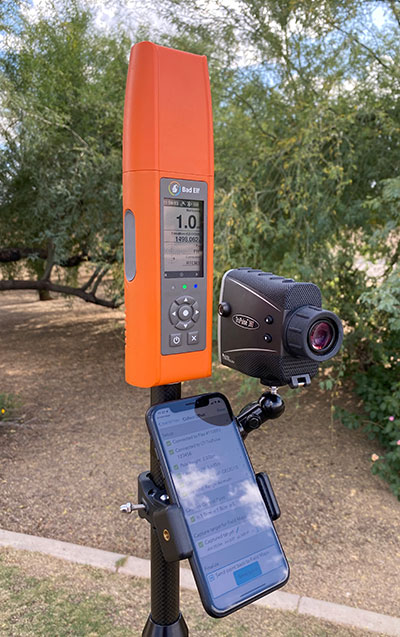
    Bad Elf LLC and Laser Tech are providing an integrated laser offset workflow for acquiring high-accuracy field data in GNSS-challenged environments. The new workflow integrates Bad Elf and LTI hardware in collaboration with ArcGIS technology from Esri. The Bad Elf Flex GNSS receiver connects to any LTI TruPulse rangefinder over a wired or Bluetooth connection to deliver high-accuracy location data to Esri ArcGIS Field Maps. Field workers can now efficiently complete position and height data collection in access-limited situations, saving time, money and effort. The Bad Elf app workflow runs on Android and iOS.

    Bad Elf, bad-elf.com; Laser Tech, www.lasertech.com; Esri, esri.com
    Survey Platform

    Cloud based for collaboration

    Photo:
    Photo: Handheld

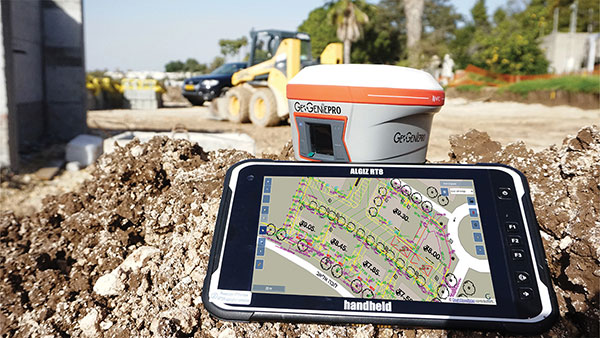
    Geo-genie is a cloud-based collaborative and professional mapping and surveying platform enabling customization and creation of geocentric information systems. Teamed with Handheld’s Algiz RT8 rugged field tablet, it streamlines work and allows non-professionals to perform accurate geodetic mapping, guiding and monitoring of their data collection. The platform enables organizations to have an advanced, professional surveying and GIS platform with customized procedural workflows, management of user hierarchies, and integration with other organizational information systems. Geo-genie can connect with professional surveying equipment, such as GPS and total stations, and integrates data into a cloud-based central database with no restriction for specific data-collection hardware.

    Handheld Group, handheldgroup.com; Geo-genie, Geo-genie.com

    GNSS Amplifier

    Marks forest, urban trees in logbook app

    Photo: Stihl
    Photo: STIHL

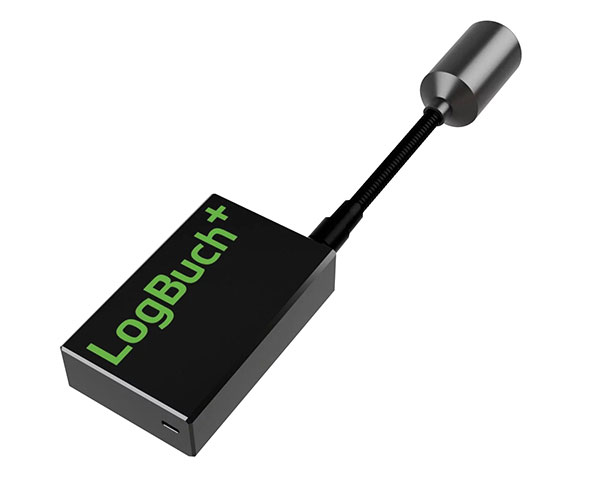
    The wireless GNSS amplifier LogBuch+ increases the accuracy of location data with the cloud-based LogBuch application. The app enables voice-based digital mapping via a smartphone app, such as for the maintenance of trees. The compact device receives satellite signals on several radio frequencies, delivering significantly more precise data than a smartphone alone. Foresters can carry the GNSS amplifier in a pocket and digitally mark trees for felling using the LogBuch app.

    STIHL, stihl.com

    Lidar Unit

    Can be mounted on plane or UAV

    Photo: YellowScan
    Photo: YellowScan

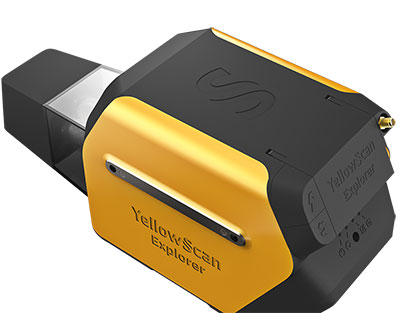
    The YellowScan Explorer lidar can be mounted on a light manned aircraft or helicopter, as well as a UAV platform such as the DJI M300. This versatility allows the end user to tackle a wide range of projects with the same unit. It uses an Applanix APX-20UAV GNSS/inertial solution and has a precision of 2.6 cm and an accuracy of 2.2 cm. Its high-power laser scanner can catch points up to 600 meters away. Flight operation speed is 5–35 m/s; it is capable of above-ground-level altitude up to 300 m. The low-weight unit (2.3 kg without battery) can be combined with YellowScan’s suite of software to extract and process point cloud data for surveying, forestry, environmental research, archaeology, industrial inspection, civil engineering and mining sectors.

    Yellowscan, yellowscan-lidar.com


    UAV

    Folding camera drone

    Designed for aerial photography

    Photo: DJI
    Photo: DJI

    The DJI Mavic 3 improves on its predecessor with better sensors, a dual-camera system, omnidirectional obstacle sensing, smarter flight modes and longer flight times. A powerful positioning algorithm improves hovering precision with signals from GPS, GLONASS and BeiDou satellites, enabling the drone to lock onto multiple satellite signals faster. The increased positioning precision also makes the drone less likely to drift in the air and more stable when shooting long exposures and time lapses. The Advanced Pilot Assistance System (APAS) 5.0 combines inputs from six fish-eye vision sensors and two wide-angle sensors to sense obstacles in all directions and plan safe flight routes.

    DJI, dji.com
    Remote Operations

    Conduct missions, manage fleets and view video feeds

    Photo: SkyGrid
    Photo: SkyGrid

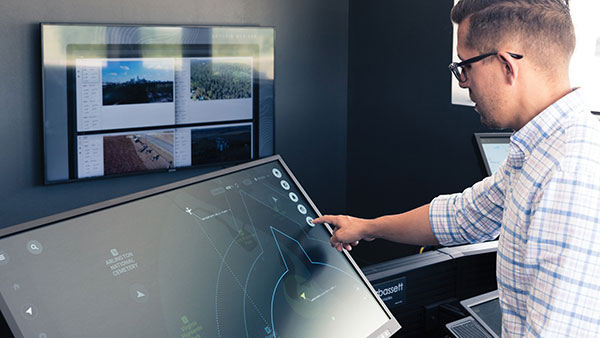
    SkyGrid’s autonomous remote UAV operations solution enables drone operators to remotely conduct missions, control flights, manage fleets and view live video feeds. Using artificial intelligence and airspace-related data feeds, SkyGrid enables safe remote operations, whether conducting routine inspections or generating optimal flight paths. Advanced route generation capabilities create the safest route for each drone based on the flight plan, environmental conditions, the vehicle’s performance, and the mission criteria with minimum on-site support required. SkyGrid Launch allows video feeds from drones to be consolidated to a remote central location, such as a ground station.

    SkyGrid, skygrid.com
    Helicopter

    Ready for the long haul

    Photo: UAS Global Services
    Photo: UAS Global Services

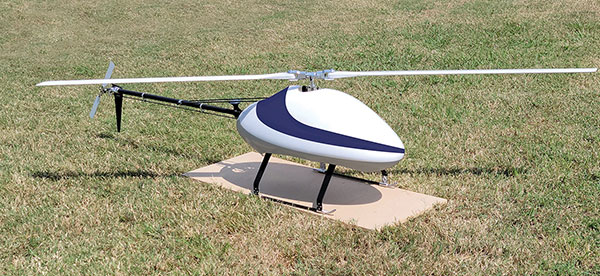
    The Sicura EG-1100 is a heavy-lift, long endurance, single-rotor helicopter. Now in its third generation, the helicopter can haul 15 pounds. It cruises at 55 knots. The EG-1100 is available in both electric and gas engine configurations, with an endurance at 3.5 hours on gasoline and 1 hour on electric power. The new gas engine is the high-performing and efficient Skypower 110, tuned to the craft’s internally developed chassis and rotor blades. It offers stable performance in challenging environmental conditions, exceptionally stable flight and immediate flight response for image capture and lidar operations. Multiple payload sets can be carried in one flight.

    UAS Global Services, uas-gs.com
    Small UAS

    High performance in low weight class

    Photo: Ascent Aerosystems
    Photo: Ascent Aerosystems

    The Spirit dual-rotor coaxial unmanned aerial system (UAS) is a versatile and durable system for mission-critical operations. Combined with a fully modular, plug-and-play payload design, the Spirit’s open architecture allows operators to easily add or upgrade software to unlock new operating capabilities without the need to design or develop a new aircraft. It has an all-weather airframe. With nearly 10 pounds available for batteries and payloads, Spirit sets the new standard for performance in its weight class. Setup is quick and easy, allowing for takeoff from any type of terrain. The highly streamlined all-weather airframe has a top speed of 60 miles per hour and can operate in high winds. Payloads and batteries can be mounted or stacked on the top or bottom point.
    Ascent AeroSystems, ascentaerosystems.com