Author: GPS World Staff

  • Harxon releases rover radio for GNSS/RTK and precise positioning

    Harxon releases rover radio for GNSS/RTK and precise positioning

    Harxon has introduced an advanced, high-speed, Bluetooth-enabled wireless data link designed for GNSS/RTK (real-time kinematic) surveying and precise positioning.

    Photo: HarxonThe HX-DU1603D is a lightweight, ruggedized UHF receiver designed for digital radio communications between 410 and 470 MHz in either 12.5 or 25 kHz channels, which can be widely used in GNSS/RTK surveying and GNSS precise positioning systems.

    ThevHX-DU1603D is equipped with a Bluetooth transceiver for cable-free communications with external devices. It features an internal, rechargeable battery for ease of use and portability that allows long operational hours.

    The HX-DU1603D rover radio easy to operate and use. It is equipped with a display screen, and its buttons can be used to configuration all parameters, such as frequency, protocols, power display, serial port baud rate and air baud rate. By deploying the technology, users can instantly communicate with GNSS precise positioning receivers that share the same protocols throughout the world.

    The rover radio HX-DU1603D joins the line of Harxon products that include 25W base radio HX-DU8602T with simplex and 35W base radio HX-DU8608D with Duplex.
  • Thank you for registering.

    Thank you for registering for the upcoming GPS World webinar, “UAV Design and Applications: Autonomous Relative Navigation and GNSS Robustness for UAV Systems.

    A link to the live event will be sent to you two hours before the event. Your personalized event URL will be automatically generated by the ON24 system. To ensure receipt of the email, please whitelist this email address by adding it to your contacts: [email protected].

    This presentation will begin on Thursday, May 19, 2016, at 1 p.m. EDT.

    Audience members may arrive 15 minutes prior to live time. You may need to download Flash Player in advance. If you have any questions, please contact event producer Allison Barwacz at [email protected].

  • Eos Positioning teams with SST Software for precision agriculture

    Eos Positioning teams with SST Software for precision agriculture

    SST Software and Eos Positioning Systems have announced a technology partnership to deliver in-field mobility solutions to precision agricultural service providers. The offering is now available to Sirrus for iPad users.

    The new pairing allows agronomists and service providers to have reliable geospatial tools when and where they need it, the companies said in a press release.

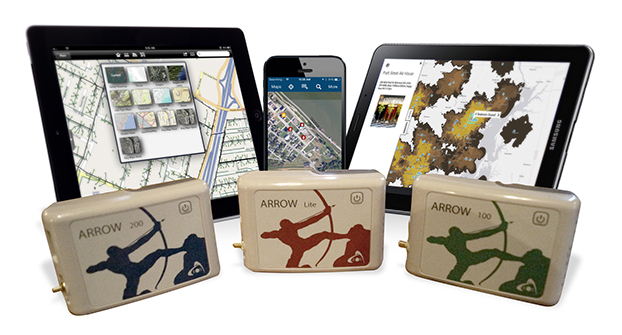
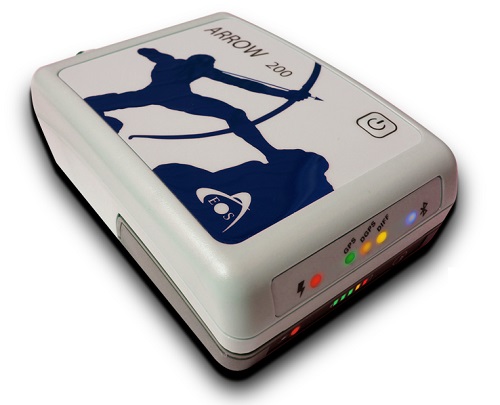
    Eos Positioning's Arrow 200 Bluetooth receiver supports Hemisphere's Atlas correction service.
    Eos Positioning’s Arrow 200 Bluetooth receiver.

    Instead of relying on iOS location updates, Sirrus for iPad users can purchase one of Eos’ Arrow series GNSS products to stay connected anytime, anywhere. This connectivity coupled with real-time kinematic (RTK) or submeter receivers provides the location accuracy and quality needed when creating field boundaries and collecting data. Eos’ Arrow Series real-time positioning creates efficient workflow with universal Bluetooth and multi-frequency capabilities.

    Sirrus for iPad users can connect to Eos Positioning devices by doing the following:

    • Tap the “Tools” at the bottom of the screen
    • Tap “Setup”
    • Tap “GPS Info,” then “GPS”
    • Tap the device to connect.

    “We strive to deliver quality convenience and precise data through Sirrus for iPad,” Drew McMahon, SST Software product manager for Sirrus said. “The technology partnership with Eos Positioning Systems will offer the service reliability and real-time accuracy our users depend on while in the field. Sirrus for iPad users will have the capability to come within an inch of accuracy when creating a field boundary.”

    “We are happy to team with SST Software in bringing high-precision GPS and GNSS receivers into their workflow,” said Jean-Yves Lauture, chief technology officer, Eos Positioning Systems. “The submeter and centimeter positioning from our Arrow receivers turns Sirrus for iPad into a powerful mapping tool on Apple devices.”

    Based in Canada, Eos Positioning Systems specializes in the design and manufacture of high-accuracy GNSS for geographic information system (GIS) mapping and surveying. Eos’ Arrow Series products are waterproof, provide high-accuracy Bluetooth connectivity, advanced real-time accuracy, long battery life and compatibility with all mobile devices.

    SST Software is a privately owned company headquartered in Stillwater, Oklahoma, with branch offices in Oklahoma City, Tulsa, Illinois, Iowa, Brazil and Australia.

  • Fugro awarded contract to provide hydrographic surveys in Canada

    Fugro has been awarded a supply arrangement by the Canadian Hydrographic Service (CHS) to provide vessel-based hydrographic survey services. Under the contract, CHS will procure hydrographic surveys as needed, anywhere in Canada, to enhance its capacity for data acquisition and processing in support of its nautical charting program.

    Hydrographic survey data from ports, harbors, nearshore and offshore regions will be acquired and processed using Fugro’s vessels, equipment and personnel. The resulting data will be used by CHS to update its nautical charts.

    The supply arrangement, together with a supply arrangement for airborne lidar bathymetry (ALB) awarded in 2013, will enable Fugro to support Canada in its plans to implement an integrated multi-platform methodology to hydrographic surveying anywhere in Canada, including the Arctic region.

    Fugro provides International Hydrographic Organization (IHO) compliant survey services to numerous governments throughout the world.

  • European Navigation Conference to focus on innovation

    European Navigation Conference to focus on innovation

    Helsinki Cathedral.
    Helsinki Cathedral.

    The 24th edition of the European Navigation Conference (ENC 2016) will be held May 30 to June 2 at the Finlandia Hall in Helsinki, Finland.

    ENC 2016 is co-sponsored by EUGIN, Nordic Institute of Navigation, IEEE Aerospace and Electronic Systems Society.

    The conference focus will be on innovations in positioning, navigation and timing technologies and applications for land, sea and air.

    Topic areas include GNSS positioning, indoor and urban navigation and position-based applications. Special topics include navigation challenges in the Arctic and positioning solutions using geospatial big data and in intelligent transportation. Furthermore, it promises to be a unique networking event for all participants from academia, the public sector, and industry.

    Welcome keynotes will be presented by Anne Berner, Finland’s minister of Transport and Communications, Matthias Petschke, director for European Satellite Navigation Programmes, European Commission, and Tiina Tuurnala, deputy director general, Finnish Transport Agency.

    Technical keynotes will be given by Jari Syrjärinne, HERE Ltd., and Gérard Lachapelle, University of Calgary. The closing keynote by Prof. John Raquet, Air Force Institute of Technology. The conference will feature also technical presentations, panels, posters and an industry exhibition.

    The social program of ENC 2016 will showcase unique sights that Helsinki has to offer, including the ice-breaker evening onboard the actual ice-breaker vessel Urho and performances by a traditional Finnish Kantele musician.

    The preliminary program is now available, and registration is open. Registration options include fees for the whole conference as well as for individual days.

  • GLONASS-M satellite delivered for launch

    Another GLONASS-M satellite, designed and built by a team of Information Satellite Systems – Reshetnev Company, has been delivered to the Plesetsk cosmodrome.

    Accompanied by the company’s technical team and housed in a dedicated high-technology container, it was shipped to the Yemelyanovo Airport of Krasnoyarsk and then flew to the Plesetsk cosmodrome aboard a cargo aircraft IL-76.

    At the cosmodrome, ISS-Reshetnev technicians will begin preparing the satellite for its launch, which is expected to take place in late May.

  • 70-year-old ‘driver’ panics during Tesla Autopilot ride

    https://www.youtube.com/watch?v=QVU6ANI059M

    A man took a video of his 70-year-old mother’s reaction to a Tesla Model S on Autopilot. Sitting in the driver’s seat, the woman screams, pleading with her son to put her back in control of the vehicle.

  • New name, new version for GAPS software

    New name, new version for GAPS software

    GAPS v6.0.0 is now rebranded as the GNSS Analysis and Positioning Software.

    GAPS software — hosted by the University of New Brunswick, Canada — provides users with accurate satellite positioning using a single GNSS receiver both in static and kinematic mode. Through the use of precise orbit and clock products provided by sources such as the International GNSS Service (IGS) and Natural Resources Canada (NRCan), it is possible to achieve centimeter-level positioning in static mode and decimeter-level positioning in kinematic mode given a sufficient convergence period.

    The newest version provides users with the ability to process various combinations of GPS, Galileo and BeiDou observables as well as several other new processing features for researchers and surveyors.

    Users are invited to submit feedback via email to [email protected].

    GAPS-derived position fixes for a test drive in Fredericton. (Image: UNB)
    GAPS-derived position fixes for a test drive in Fredericton. (Image: UNB)
  • IRNSS constellation nears completion

    India is expected to launch into orbit its seventh and final navigation satellite on April 28, thus completing the Indian Regional Navigation Satellite System (IRNSS).

    IRNSS-1G is expected to launch aboard a Polar Satellite Launch Vehicle (PSLV) rocket from India’s spaceport at Sriharikota in Andhra Pradesh at 12:50 local time.

    To date, India has launched six regional navigational satellites (IRNSS-1A, 1B, 1C, ID, 1E and 1F) as part of a constellation of seven satellites to provide accurate position information service to users across the country and the region, extending up to an area of 1,500 kilometers.

    The full system comprises nine satellites — seven in orbit and two on the ground as stand-by.

    The IRNSS will provide two types of services — standard positioning service and restricted service. The former is provided to all users and the latter is an encrypted service for authorized users.

    Meanwhile, the Indian Space Research Organization (ISRO) is in the process of developing the front-end radio frequency chips for the satellite navigation system. The initial version is expected to be ready this year, ISRO chairman told the New Indian Express.

  • Investigation launched over possible UAV/airplane collision

    Investigation launched over possible UAV/airplane collision

    On Monday, April 18, an unmanned aerial vehicle (UAV) was reported to have struck a British Airways Airbus as it descended into London’s Heathrow Airport, reports BBC News.

    The collision has renewed calls from the Air Line Pilots Association for stricter regulation in the U.S., where more than 150 airliners reported close sightings of drones in the last 18 months, including eight in the last two weeks of January. A drone collision could disable an aircraft if the metal frame and battery of a drone come in contact with an airliner’s engine.

    Authorities in Britain are investigating the incident, and trying to determine who might have been behind it.

    British Airways Flight BA727 from Geneva was approaching Heathrow on Sunday afternoon when what the pilot believed to be a drone struck the front of the aircraft, London Metropolitan Police said. The plane was 1,700 feet in the air at the time.

    The Airbus A320 landed safely, with none of the 132 passengers and five crew members on board injured, British Airways spokesman Michael Johnson said. The plane was fine, and continued with service.

    (Photo: British Airways)
    (Photo: British Airways)
  • EU transport ministers sign agreement on autonomous cars

    EU transport ministers sign agreement on autonomous cars

    European Union (EU) transport ministers have agreed to take action to make autonomous driving a reality across the 28-nation bloc.

    The Amsterdam Declaration was signed by the ministers during an informal meeting of the Transport Council on April 14 in Amsterdam.

    The declaration outlines the steps necessary for the development of self-driving technology in the EU. In the document, the Netherlands, the European Commission, EU member states and the transport industry pledged to draw up rules and regulations that will allow autonomous vehicles to be used on the roads.

    Specifically, they agreed to:

    • promote a consistent legal framework for driverless driving throughout Europe
    • develop a policy to deal with connected and automated-vehicle data
    • work toward an internationally compatible vehicle-to-vehicle and vehicle-to-infrastructure system
    • cooperate to ensure cyber security
    • increase acceptance of connected and automated vehicle technologies

    “Our industry welcomes the Declaration of Amsterdam as an important milestone that promotes much-needed cooperation between automobile manufacturers, national governments and the EU institutions,” said Erik Jonnaert, secretary general of the European Automobile Manufacturers’ Association (ACEA).

    Connected, cooperative and automated driving developments should come together to harvest societal benefits. (Chart from Amsterdam Declaration)
    Connected, cooperative and automated driving developments should come together to harvest societal benefits. (Chart from Amsterdam Declaration)
  • Leica Geosystems launches smart antenna with superior performance

    Photo: Leica GeosystemsLeica Geosystems has launched a new antenna for static, long-term projects requiring a high number of sensors. The Leica GMX910 can also enable dynamic monitoring with up to 10-Hz data streaming and advanced multi-frequency, multi-constellation tracking.

    Starting with the basic GPS single frequency receiver and adding multiple upgradable options, this antenna fits the needs of diverse monitoring projects, the company said. The antenna supports multiple GNSS satellite systems and signals. Tracking up to 555 channels, this antenna anticipates the future and is ready for ongoing changes in GNSS technology.

    The smart antenna is also fully integrated in the Leica GeoMoS deformation monitoring solution and seamlessly connects to Leica GNSS Spider offering high-quality GNSS processing results.

    The highest reliability of data streaming is achieved by plugging a cable into the GMX910. An IP67 rating against dust and water, extended temperature ranges and low power consumption enables installation of the device in remote areas and severe conditions.

    The Leica GMX910 adapts to a wide range of GNSS monitoring applications, from complex man-made to natural structures. The smallest movements of bridges, dams or high-rise buildings are detected in real-time.