Author: GPS World Staff

  • Volvo Construction launches Co-Pilot, and new approach to services

    Volvo Construction Equipment (Volvo CE) launched a new approach to how it offers services and solutions to customers. The new method gives greater clarity on both the range of services and solutions offered, and the value they deliver for customers’ operations and businesses, according to Volvo CE.

    The announcement was made at bauma 2016, a building trade fair being held this week in Munich.

    Volvo CE also unveiled its Volvo Co-Pilot  onboard services display. Co-Pilot is designed for use on machines as diverse as excavators and pavers. It uses a tablet computer to deliver a new generation of intelligent machine services, including  Load Assist, Dig Assist, Compact Assist and Pave Assist.

    Volvo CE has arranged its services into six streams:

    • Uptime Services
    • Efficiency Services
    • Genuine Volvo Parts
    • New Life Services
    • Attachments
    • Financial Services

    This new way of organizing the offering will make it easier for customers to choose the most appropriate cluster of services. Volvo CE dealers will also bundle services into packages as well as offering tailor-made solutions.

    New within Uptime Services is Proactive Monitoring, which utilizes innovative technology that enables Volvo dealers to remotely monitor alarms and fault codes on customers’ machines. Any problems can be diagnosed early and corrective steps taken, often before the customer realizes a problem exists, to maximize machine uptime and reduce repair costs.

    Efficiency Services sees the launch of Fuel Advice and Fuel Report, two new services that are designed to lower operating costs of new and existing Volvo machines by targeting long-term fuel efficiency. The two services allow customers to decide in what way they would like to drive fuel efficiency improvements in their operations.

    Fuel Reports provide customers with tailor-made reports that help customers identify areas of improvement.

    Fuel Advice, meanwhile, leverages the competence of Volvo CE dealers in identifying corrective actions and ensuring fuel efficiency improvements are sustainable.

    Volvo Co-Pilot

    Ruggedized for use in a construction environment, Volvo Co-Pilot and the Assist-functionalities are introduced to the market as part of Efficiency Services, with the ultimate aim of producing higher quality outcomes, in less time and with less effort.

    Dig Assist, Load Assist, Compact Assist and the soon-to-be-launched Pave Assist are the first of a new generation of intelligent machine offerings that increase machine efficiency and uptime.

    Available as either 2D or In Field Design, Dig Assist allows excavators operators to complete digging tasks to a greater accuracy in less time. Safety is also improved, as there is no need to repeatedly get out of the cab and physically check grades or levels.


Load Assist is designed for Volvo wheel loaders L110-L250 and delivers real time accurate load information to the operator. Preventing under-or-overloading (and additional machine wear and even potential fines), the system allows wheel loaders to work to their maximum efficiencies. Fully automatic, the system logs all load information and the data is then displayed on the operator’s in-cab Volvo Co-Pilot display.

    The information can also be accessed remotely, thanks to Volvo’s advanced CareTrack telematics system. This allows complete payload management — giving access to data such as total transported load in tonnes; tonnes transported per liter of fuel and number of cycles.


Compact Assist offers two module options at launch — Intelligent Compaction and Intelligent Compaction with Density Direct. Intelligent Compaction records and displays a pass counter and thermal mapping, while Density Direct cleverly calculates 100% of the surface density.

    Pave Assist is a family of paver-related modules and applications that will automate many of the paving parameters that today have to be recorded manually in order to meet stringent road authority reporting requirements. Providing a powerful set of tools to improve productivity, quality and site safety, Pave Assist combines Thermal Mapping, Weather View, Material Manager and (as a complementary option) Volvo Smartview modules.

  • Vexcel Imaging introduces UltraCam Condor for nationwide mapping

    Vexcel Imaging introduces UltraCam Condor for nationwide mapping

    Photo: VexcelVexcel Imaging has introduced the new camera model, the UltraCam Condor. Designed for high-altitude mapping, the UltraCam Condor frame combines a high-resolution RGB image at 37,800 x 5,200 pixel with a lower resolution PAN data capture for automated DSMOrtho and DTMOrtho image generation that is consistently sharp, geometrically accurate and of superior radiometry.

    Its expansive footprint, along with the camera’s fast frame rate, allows capture of large regions – even continents – in record-time. This all-in-one system is complemented by a NIR channel, making the UltraCam Condor an a solution for agriculture, forestry and land management applications. The UltraCam Condor will be available in autumn 2016.

    Key Benefits

    • 37,800 pixel swath width allow for wide flight lines such as 3.7km @ 10 cm GSD or 9 kilometer @ 25 cm GSD, providing greater coverage in shorter time.
    • Well-balanced field of view of ±41 degree for utmost productivity and full use of the swath width.
    • High-resolution RGB, panchromatic and NIR data all in a single pass.
    • Full resolution in the RGB channel. No pansharpening necessary for high-resolution color imagery.
    • Fast frame rate and mission envelope, along with forward motion compensation through time-delay-integration, allow operation at high aircraft speeds and in jets – rapid collection minimizes mission time and costs.
    • Stable geometry and greater independence from GPS/INS accuracy is ensured by a frame sensor.
    • To eliminate atmospheric effects typical of high-altitude mapping, an uncompressed 14 bit RAW RGB image format and full 16 bit processing workflow allows artifact-free, automated color correction during UltraMap post-processing.
    • For maximum efficiency and productivity, the complete and fully integrated UltraMap workflow solution supports unlimited project sizes.

    “The UltraCam Condor is our response to the growing demand for higher productivity and efficiency in collection of vast areas at rapid flight speeds,” said Alexander Wiechert, CEO of Vexcel Imaging GmbH. “Essentially an ortho-machine, the UltraCam Condor allows customers to fly higher, farther, and faster without making compromises in data quality.”

  • Hemisphere GNSS enters partnership with CPAC Systems AB

    Hemisphere GNSS enters partnership with CPAC Systems AB

    CPAC-Volvo-W

    Hemisphere GNSS is significantly expanding its strategic partnership with CPAC Systems, Gothenburg, Sweden, owned by the Volvo Group. After signing a large contract, Hemisphere will now be the sole source of GNSS positioning and heading systems to CPAC Systems.

    Hemisphere’s technology is being used in the recently announced Co-Pilot series for Volvo Construction Equipment (Volvo CE) as part of Volvo CE’s industry-changing machine control solutions.

    “We were extremely pleased to be chosen by CPAC for use of our GNSS technology,” said Chuck Joseph, Hemisphere GNSS President and CEO. “We are proud of the relationship we have developed with CPAC over the years. It is one of the most innovative companies in the industry and this latest, deeply integrated solution proves how well we collaborate to create value together. It is the very nature of this agreement that defines Hemisphere GNSS as a company, willing to work with and for our strategic partners. We see it as our responsibility to make certain we align ourselves and our business strategy with our OEM and integrator partners like CPAC.”

    Initially offering its GNSS positioning and heading technology to CPAC to be used in marine applications, Hemisphere’s diverse cross-platform technology portfolio allows it to be applied in other areas where high-precision, high-accuracy GNSS is required.

    “Over the years, Hemisphere GNSS has provided our company with top tier innovation, technology, and service,” said Richard Berkling, President of CPAC Systems. “Hemisphere GNSS’ long term strategy and awareness of their value-added contribution to our customer’s solutions are in perfect alignment with ours which is why we chose them as a partner for the GNSS technology. We look forward to executing this next major phase of our partnership with them.”

  • AUVSI releases interactive analysis of FAA UAS exemptions

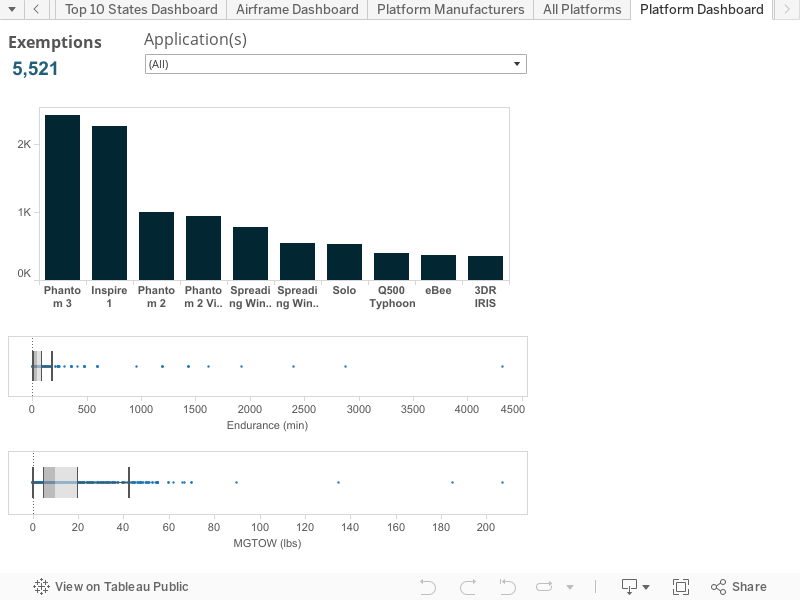
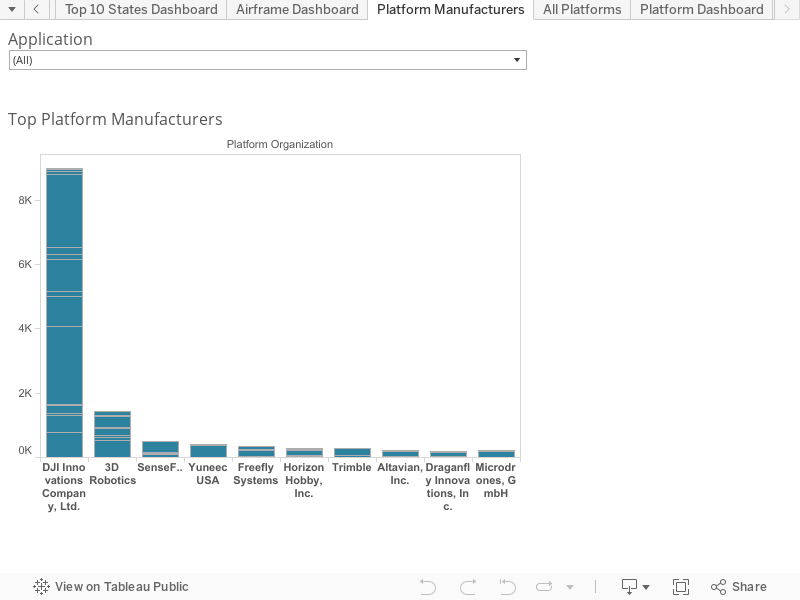
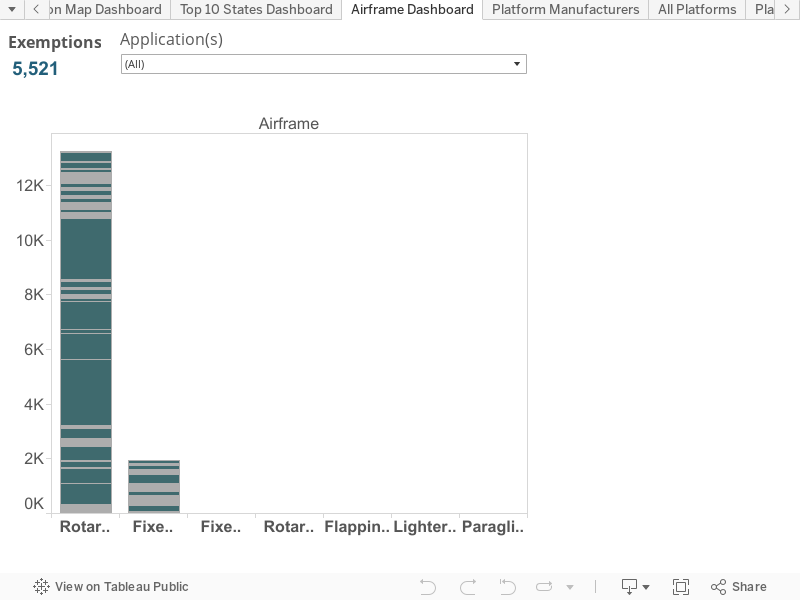
    The Association for Unmanned Aerial Vehicles (AUVSI) unveiled an interactive analysis of U.S. Federal Aviation Administration (FAA) Section 333 unmanned aircraft system (UAS) exemptions.

    The FAA has awarded more than 3,000 Section 333 Exemption Grants since September 2014 to allow individuals, businesses, non-profits and governmental agencies to fly drones.

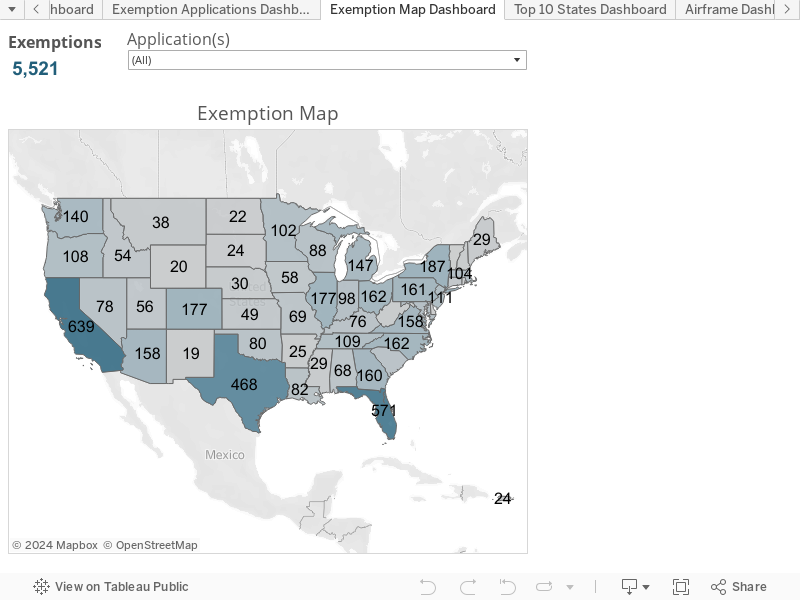
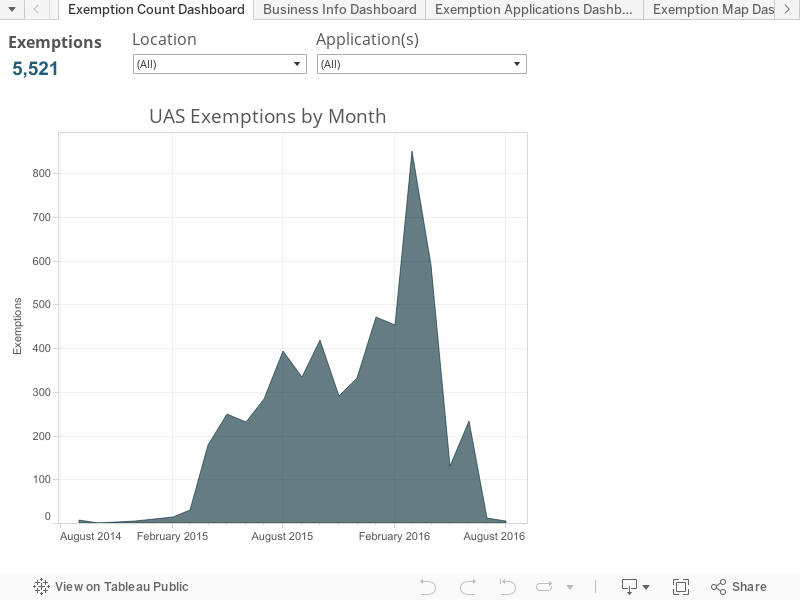
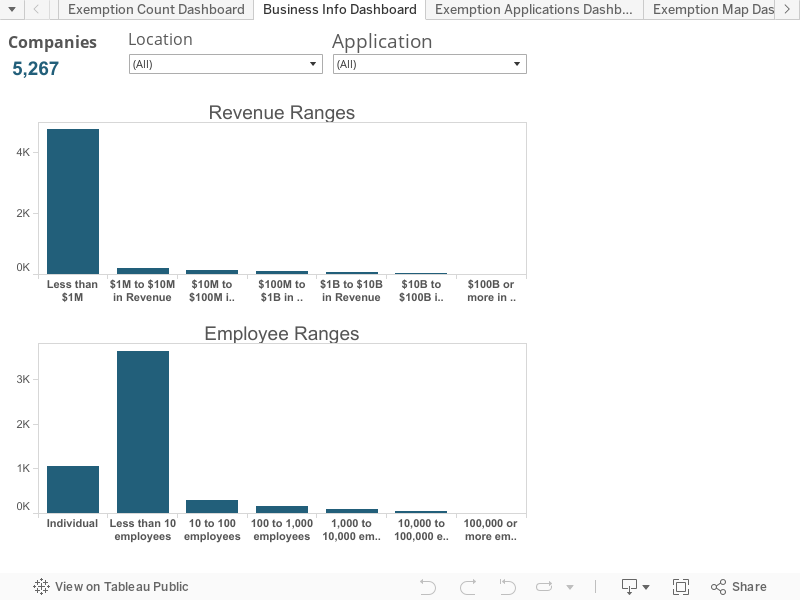
    AUVSI’s Unmanned Systems and Robotics Database provided the data for the analyses, which shows UAS exemptions by state and month, a business analysis revealing revenue and employees, UAV applications, top manufacturers, top drones, airframe and industry.

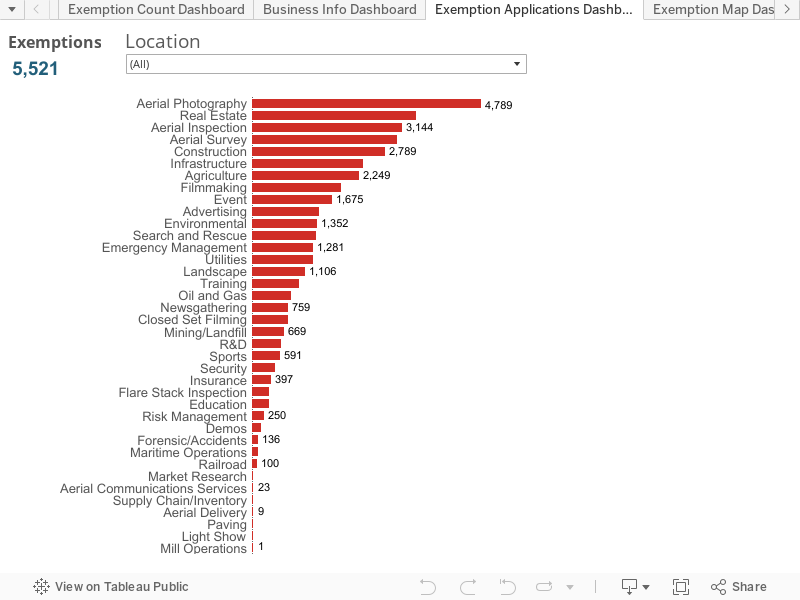
    The report finds that finds 38 types of business operations have been approved by the FAA to fly UAS commercially in the National Airspace System (NAS). Aerial photography received the most, followed by real estate and aerial inspection.

    The report also finds that exemptions have been approved in all 50 states, as well as Puerto Rico.

    “The UAS industry is poised to be one of the fastest growing sectors in the U.S., and these numbers demonstrate that a wide variety of industries are eager to take advantage of this technology,” said Brian Wynne, president and CEO of AUVSI. “From inspecting our nation’s infrastructure to providing farmers with aerial views of their crops, the applications of UAS are virtually limitless. It’s no wonder businesses – small and large – are clamoring to use this technology.”

    Congress also mandated that the FAA develop rules for integration of UAS into the national airspace, however these rules, which would provide anyone who follows the rules access to the airspace, are not expected until at least June 2016.

  • Raytheon, US Air Force complete first GPS OCX qualification test

    Raytheon, US Air Force complete first GPS OCX qualification test

    On March 4, Raytheon successfully passed the first formal qualification test milestone for the U.S. Air Force’s GPS Next Generation Operational Control System (GPS OCX). The new system offers significant improvements to the GPS on which the U.S. military and millions of civilians rely, including enhanced availability, accuracy and security.

    The event was the Configuration Item Qualification Test (CIQT) milestone for the Launch and Checkout System (LCS). The system provides launch and early orbit checkout capabilities for the modernized GPS III satellites and implements 77 percent of the cybersecurity capabilities for the overall OCX program. The testing was successfully conducted in a representative operational environment with a government-provided GPS III satellite simulator.

    “The completion of this test milestone validates the maturity of the OCX launch and checkout system,” said Bill Sullivan, GPS OCX program director for Raytheon. “As a result of strong collaboration with the Air Force, we were able to demonstrate the system’s performance and increase confidence in the program’s path ahead.”

    The LCS CIQT Run-for-Record was completed more than one month ahead of the plan established in mid-2015, clearing the way for LCS to proceed toward the Factory Qualification Test, the next major qualification event. The FQT test will be at the integrated system level and will take place this summer.

    When completed, the U.S. Air Force-led GPS Modernization Program will provide new positioning, navigation, and timing capabilities for both the U.S. military and civilian users around the globe.

    GPS OCX is being developed by Raytheon under contract to the U.S. Air Force Space and Missile Systems Center, which is replacing the current GPS operational control system. The OCX Launch and Checkout System provides an early delivery of a large subset of the overall OCX capability, and will support the GPS III satellite launches.

    The Block 0/Launch and Checkout System infrastructure before being shipped to Schriever Air Force Base and installed. (Photo: Raytheon)
    The Block 0/Launch and Checkout System infrastructure before being shipped to Schriever Air Force Base and installed. (Photo: Raytheon)
  • Telit acquires IP and cellular module products from Novatel Wireless

    Telit Communications PLC, a global enabler of the internet of things (IoT), has agreed to acquire several cellular module product lines, related intellectual property (IP) and related assets from Novatel Wireless, Inc., for an initial cash purchase price of $11 million and conditional earn-out consideration, which Telit expects to be non-material.

    Novatel Wireless is not associated with GNSS receiver maker NovAtel.

    The Telit portfolio includes integrated products and services for end-to-end IoT deployments — including GNSS, cellular communication modules, short-to-long range wireless modules, IoT connectivity plans and IoT platform services.

    As part of the acquisition, Telit acquired specific IP and was granted an exclusive license to other Novatel IP related to the acquired cellular module lines, including subsequent versions in development.

    The acquisition is not expected to have a material impact on the Group’s financial performance.

    “The acquisition of these products and associated IP strengthens Telit’s position in the security market segment, a segment that is expected to be an early adopter of LTE Cat1. The acquisition is part of our strategy to enhance our product offering by both acquisition and our own R&D,” said Oozi Cats, Telit’s chief executive.

  • HRL to develop inertial sensor tech for DARPA

    The Defense Advanced Research Projects Agency (DARPA) has awarded HRL Laboratories $4.3 million to develop vibration- and shock-tolerant inertial sensor technology that enables future system accuracy needs without utilizing GPS.

    While GPS provides sub-meter accuracy in optimal conditions, the signal is often lost or degraded due to natural interference or malicious jamming.

    HRL Laboratories, based in Malibu, California, is a corporate research-and-development laboratory owned by The Boeing Company and General Motors specializing in research into sensors and materials, information and systems sciences, applied electromagnetics and microelectronics.

    “The ATLAS project will deliver a comprehensive approach to breaking performance and cost, size, weight and power barriers in inertial sensor technology that prevent robust, GPS-independent, military positioning, navigation, and guidance,” said Logan Sorenson, principal investigator and research staff member in HRL’s Sensors and Materials Laboratory.

    ATLAS will combine intimate locking of a micro-electro-mechanical systems (MEMS) Coriolis Vibratory Gyroscope (CVG) sensor with an atomically-stable frequency reference in order to exploit the intrinsic accuracy of the atomic hyperfine transition frequency.

    “The engineering challenge lies in developing a system architecture to transfer the stability from the atomic reference to the CVG sensor without introducing unintended noise,” Sorenson said. “We are very excited to explore this novel approach to addressing long-standing precision navigation need faced by the U.S. military.”

  • FAA reviewing micro UAS report

    The Federal Aviation Administration (FAA) is now reviewing the report and recommendations of the Micro Unmanned Aircraft Systems (UAS) Aviation Rulemaking Committee. The agency had tasked the group to develop recommendations for performance-based regulations that would let certain unmanned aircraft operate over people not directly involved in the flight of the aircraft.

    The rulemaking committee, which began meeting March 8, worked under a tight deadline of April 1 to deliver its report. The task force included a diverse set of aviation stakeholders, including UAS manufacturers, UAS operators, consensus standards organizations, researchers and academics.

    “We commend the committee members for their sincere dedication and for producing a comprehensive report in such a short time,” said FAA Administrator Michael Huerta. “This type of collaborative government and industry partnership is exactly what is needed to keep pace with this rapidly changing industry and will serve as a model for future rulemaking advisory tasks.”

    The ARC’s consensus report recommends establishing four small UAS categories, defined primarily by risk of injury to people below the flight path. For each category, the group recommends assigning a potential risk linked to either weight or impact energy. The report also addresses operational restrictions and standards to minimize the risks associated with each category.

    The FAA will use the information in the report to develop a flexible, performance-based proposed rule. The public will have an opportunity to comment on the proposal based on the ARC’s recommendations.

    View a copy of the report.

  • TerraGo Edge delivers GeoPackage to mobile users

    TerraGo Edge delivers GeoPackage to mobile users

    terrago-logo-200TerraGo has released TerraGo Edge 3.9.3, which features full support for OGC GeoPackage, a universal format for sharing maps and geographic data across mobile devices and all platforms.

    TerraGo Edge enables users to import and export OGC GeoPackage as a SQLite database optimized for performance on iOS and Android devices.

    “Because we listened to our customers, we designed TerraGo Edge from the ground up to be an open solution for exchanging field engineering, GIS, GPS and asset management data across vendor platforms and devices,” said John Timar, vice president, Worldwide Sales at TerraGo. “GeoPackage is an important win for customers because it’s a dramatic shift away from proprietary formats and technology. GeoPackage breaks through user dependence based on vendor data lock-in, enables platform-independent data exchange and refocuses customer value on software features and performance.”

    The latest TerraGo Edge 3.9.3 release closes the loop for a complete GeoPackage collaboration workflow by allowing Edge app users to import GeoPackage data from a mobile device, collect location-tagged field data and roundtrip the information back to the GIS or other enterprise systems of record.


    Register now for these upcoming TerraGo webinars:

    TerraGo Edge 3.9.3 Enhances GIS Integration and Optimizes Map Experience
    April 26, 12 to 12:30 p.m. ET.
    Learn about this workflow and the other feature enhancements.

    BYOD GPS Gets Real: Lessons Learned with the New Rules of GPS Data Collection
    Thursday, April 14
    , 1 p.m. ET / 10 a.m. PT
    In this GPS World webinar, join us as we examine how five organizations from five industries (oil & gas, engineering, water utility, transportation and natural resources) made the switch from GPS handhelds to smartphones and tablets for their field data collection needs. Speakers are Michael Gundling and David Basil, TerraGo.


    Version 3.9.3 features these enhancements:

    Advanced GIS Integration

    • Deliver GeoPackage data to any TerraGo Edge mobile app user
    • Create offline map when GeoPackage is embedded in a GeoPDF
    • Simultaneously import GeoPDF and GeoPackage data back to Edge server

    Improved Mapping Experience with EdgeMap Optimizer

    • Automatic detection of best resolution (DPI) for offline maps upon import by mobile user
    • Manually select the optimal resolution upon import

    Data collection enhancements with the New Form Template Selection, including a new search function in form fields to improve user productivity and data integrity.

    Try the TerraGo Edge iOS or Android app for free.

  • State Department issues notice on North Korean jamming

    On April 7, the U.S. Department of State issued a notice about the recent jamming experienced in South Korea.

    Korean Peninsula GPS Jamming Notice

    A continuing series of incidents have been reported in the general location of Incheon, Republic of Korea and the surrounding Gyeonggi and Gangwon provinces out to approximately 100 nautical miles beginning on or about 0000Z31March16.

    The nature of the events appear to be Global Positioning System (GPS) jamming emanating from the Democratic People’s Republic of Korea causing signal disruptions to airplanes, ships, and buoys in the area.

    Exercise caution when transiting this area. If appropriate, further information may be forthcoming. Vessels experiencing disruptions in the area are urged to report them to the point of contact (POC) below.

    The notice was forwarded by the U.S. Coast Guard Navigation Center’s Civil GPS Service Interface Committee (CGSIC).

  • Research Online: Integer ambiguity resolution in GPS/INS, UAV multiple laser-inertial nav

    Illustration of the contemplative real-time (CRT) window measurement timeline. The window contains a prior for the initial state, K GPS measurements, and many IMU measurements between each pair of GPS measurements. IMU measurement times are indicated as dots on the timeline. All of these items yield constraints on the estimated trajectory ˆX during the CRT window.
    Illustration of the contemplative real-time (CRT) window measurement timeline. The window contains a prior for the initial state, K GPS measurements, and many IMU measurements between each pair of GPS measurements. IMU measurement times are indicated as dots on the timeline. All of these items yield constraints on the estimated trajectory ˆX during the CRT window.

    Integer ambiguity resolution in multi-epoch GPS/INS

    A novel integer ambiguity resolution approach over a time window of GPS/IMU data enhances the reliability of obtaining high-accuracy position estimation, using carrier phase measurements, even in challenging environments. The method focuses on reducing computational cost. The achievable savings should be on the order of 104, while 600 has been demonstrated. The theoretical approach shows that the cost function can be decomposed into one part that determines the shape and vicinity of the trajectory, but is insensitive to the carrier phase integers and a position shift vector, and a second part that is sensitive to the carrier phase integer and can be solved to determine the required position shift so that the location of the trajectory is accurately known.

    By Yiming Chen, Sheng Zhao, and Jay A. Farrell, University of California, Riverside.

    Presented at IEEE Transactions on Control Systems Technology 2015.

    UAV multiple laser-inertial nav

    Graphic: By Yiming Chen, Sheng Zhao, and Jay A. Farrell, University of California, Riverside.Indoor Flight Demonstration Results of an Autonomous Multi-copter Using Multiple Laser Inertial Navigation, by Adam Schultz, Russell Gilabert, and Maarten Uijt de Haag, Ohio University.

    This paper discusses aspects of autonomy on a small-size multi-copter UAS for challenging environments, addresses in detail the modified proposed navigation algorithm, its integration with the flight controller for autonomous flight and the actual implementation on the multi-copter platform. The paper includes flight test results of a multi-copter UAS operating in an outdoor/indoor environment and shows some navigation and mapping performance results.

    Presented at ION-ITM 2016.

  • Next two Galileo satellites begin launch prep

    Next two Galileo satellites begin launch prep

    The latest pair of navigation satellites has reached Europe’s Spaceport in French Guiana, according to the European Space Agency (ESA). This starts a new Galileo launch campaign that will culminate in a May 24 launch of  the 13th and 14th satellites in the constellation.

    A second launch is planned for this fall, with four satellites carried aloft on a customized Ariane 5 for the first time, bringing the count to 18 Galileo satellites in orbit by the end of the year.

    The pair of satellites left ESA’s technical centre in Noordwijk, the Netherlands, on April 4, cocooned within protective air-conditioned containers. They were then driven to Luxembourg Airport, where they were loaded aboard a Boeing 747 cargo jet for a dawn takeoff the following morning.

    The satellites touched down at Cayenne – Félix Eboué Airport in French Guiana at 11:15 a.m. local time on Tuesday. Still within their canisters, they were driven to the Guiana Space Centre and unboxed that evening within the cleanroom environment of the centre’s S1A payload preparation building.

    A fit check is scheduled next, to ensure the satellites can be attached to the dispenser.

    After landing in French Guiana, the 13th and 14th Galileo satellites, still within their canisters, were unloaded to be taken by road to the Guiana Space Centre. (Photo: ESA)
    After landing in French Guiana, the 13th and 14th Galileo satellites, still within their canisters, were unloaded to be taken by road to the Guiana Space Centre. (Photo: ESA)
    The 13th and 14th Galileo satellites touched down at Cayenne – Félix Eboué Airport in French Guiana. (Photo: ESA)
    The 13th and 14th Galileo satellites touched down at Cayenne – Félix Eboué Airport in French Guiana. (Photo: ESA)