Author: GPS World Staff

  • GPS World Leadership Awards 2014

    GPS World’s sponsored 2014 Leadership Awards were bestowed in September during ION-GNSS+.  The Leadership Dinner was sponsored by Lockheed Martin, Exelis, Raytheon, and Braxton Technologies.


    SIGNALS

    UAVs Revolutionizing Aviation: Exciting Challenges for the PNT Community

    Sherman Lo, Senior Research Engineer and Associate Investigator (APNT), Stanford University. One of the architects of eLoran and a worldwide thought leader on alternative PNT (accepting Leadership Award from Mark Stewart, Lockheed Martin VP, Navigation Systems).
    Sherman Lo, accepting Leadership Award from Mark Stewart.

    Sherman Lo, Senior Research Engineer and Associate Investigator (APNT), Stanford University. One of the architects of eLoran and a worldwide thought leader on alternative PNT.

    Remarks

    I’m not very good at predicting the future but I know what is exciting to an aviation nerd like me — UAVs. I believe that unmanned autonomous vehicles will revolutionize aviation’s role in society.

    UAVs have expanded the community of participants in aircraft development from solely the realm of large defense firms to individuals. The makers amongst us can fabricate custom parts for custom designs and order electric engines from across the sea. Our students have a class where they design and build sub-100-gram autonomous UAVs. They allow for rapid development and prototyping of technologies. All sorts of new crazy business models will be developed for their use.

    This is significant for the PNT world because the proliferation of UAVs and what we are able to do with them is enabled by GNSS. That being said, for the good of the community, we also need to take steps to allow UAVs to fully realize their benefit to society. UAV navigation is a rich field.

    Navigation improvements can significantly benefit UAV operations. For example:

    • A robust alternative navigation capability would continue to fly in case of GNSS loss.
    • An ability to authenticate the UAV’s location would be useful for delivery confirmation and other services.
    • The ability to range/sense/share information is needed for UAVs to collaboratively and safely use the airspace.

    The solution may come in the form of using existing signals, new signals, inertial, vision, all of the above, or none of the above.

    UAVs comes in all shapes and sizes, from the little one that our kids play with to the 10-kilogram octocopter in our lab, to even larger ones planned for package delivery to the Globalhawks, with wingspans larger than a 757’s, that I was fortunate to come face to face with at Edwards Air Force Base. There is no one-size-fits-all as UAVs are being developed in all shapes and sizes for many varied missions. I think that is a fun, interesting, and exciting challenge for the PNT community.

    Introduced by…

    Mark Stewart, Lockheed Martin VP of Navigation Systems, introduced the Satellite Leadership Award.

    “I’ve been in the space business for 30 years, and I’m very honored to be part of this navigation community. One of our roles as technical leaders, all of us here, is to educate and coach the young engineers to take over this business as we move on.

    “In that context, I reflect back on one of the tests that I had to take to enter college. One of the very simple questions, to start the test, was ‘Where does milk come from? A cow, a carton, a rock, or the moon?’ And I, being raised on a dairy farm in upstate New York, obviously circled cow. When we were graded, all of us received a letter back in the mail from the testing institution. It stated they were going to give credit for two answers, depending on where you came from. If you came from an inner city, in fact milk did come from a carton, so they gave credit for that.

    “As an educator, I felt I wanted to go through my life educating people as to where things really come from. where they originate, and who to thank for those things they bring into our life.

    “So, as a teaching moment here: the next test that comes up, probably in our children’s lives, will be ‘Where does GPS come from?’ One of the answers will be, undoubtedly, ‘a cell phone.’ Why do we need GPS when we have it in our cell phones, right? However, the correct answer is going to be — circle this — ‘All of you.’ We have GPS because of all of you in this room, the leadership you provide to your teams and all those team members we have back at home.

    “So. I want to thank you all for being part of the GPS community and doing what you do so well, for the warfighter and for the civilian population as well. I thank you from the deepest part of my heart for what you do.

    “I also want to thank all the award winners here tonight, and congratulations on their significant accomplishments.”


    SATELLITES

    Galileo’s Top Five for the Future: Accuracy, Robustness, Ephemerides, Time to First Fix, and Authentication
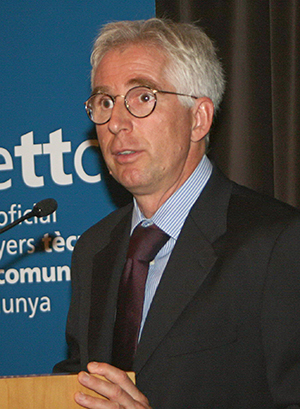
    Javier Benedicto Ruiz, Galileo Project Manager, Directorate of Galileo Programme and Navigation-related Activities, European Space Agency. For directing a program that produced initial signal results better than the design specifications. (Accepted on his behalf by Marco Falcone, ESA’s Galileo System Manager).
    Javier Benedicto Ruiz

    Javier Benedicto Ruiz, Galileo Project Manager, Directorate of Galileo Programme and Navigation-related Activities, European Space Agency. For directing a program that produced initial signal results better than the design specifications. (Accepted on his behalf by Marco Falcone, ESA’s Galileo System Manager).

    Remarks

    On behalf of Javier Benedicto, I would like to thank GPS World for this award. Javier feels really honored by this award you have decided to grant to the Galileo achievements of the last year. We are proud of what has been achieved, despite the difficulties — and believe me, we are very professional in addressing the difficulties in these days — we are fully determined to bring the Galileo system into full deployment, and the diverse services to GNSS users worldwide.

    Javier wants to emphasize that the merit of our achievement is thanks to every single individual of an excellent team we have in the Galileo Project Office at the European Space Agency.

    From a satellite system perspective, I will give a vision of the directions of the future from 2020 onwards. I have for you the Top Five issues that GNSS should address in the future.

    • Ruiz' award was accepted on his behalf by Marco Falcone, ESA’s Galileo System Manager.
      Marco Falcone

      The first one is better ranging accuracy, to a level of 10 to 15 centimeters. This would allow techniques to support more closely PPP instantaneous ambiguity resolution. For that, we need stable clocks and clock ensembles onboard.

    • Second, enhanced robustness and availability to reach PNT solutions everywhere. This can be done through signal-in-space encoding, interleaving, satellite diversity to be implemented not only at the level of the satellite systems, in fact I expect there will also be a lot of work to be done by receiver manufacturers to manage all these types of signals available from the different constellations.
    • Number three, long-term ephemerides with a validity up to one week, even up to 14 days. This is a very important point. How to achieve it? Through stable orbits without station-keeping, reducing station-keeping as much as possible, and highly stable clocks, like the new generation of hydrogen masers that we have onboard Galileo satellites at the moment.
    • Fourth, a faster time to first fix, up to one to two seconds for single/dual frequency users, using navigation message-aided information on top of ephemerides loaded with a duration up to 14 days.
    • Number five was discussed today by many papers in the conference: authentication, at the level of the navigation message, or at the level of ranging, with a clear identification of what will be the requirements of the future.
    • I have a bonus on top of the five: that is timing accuracy to a level of a service of 5 nanoseconds. I believe this is possible. We are already able today to reach up to 7 to 10 nanoseconds. This would allow at the end to have real-time universal time available to all users.

    This is our message for the future. I thank you a lot for this award, for all the members of our great team.

    Introduced by…

    Lori Thompson
    Lori Thompson

    Exelis Geospatial Systems Vice President Lori Thompson helped introduce this year’s GPS World Leadership Award recipients at the dinner honoring engineers and scientists. Prior to the introductions, Thompson discussed the importance of innovation across the field of position, navigation, and timing, and the Exelis commitment to the ongoing advancement of timing and location technologies.

    Exelis is on the Lockheed Martin GPS IIR & IIR-M team, which recently celebrated supporting the U.S. Air Force with 200 years of on-orbit success. Exelis is also supporting Lockheed Martin on the GPS III program, developing a new next-generation navigation payload.

    “We take a great deal of pride in our core role with the Air Force GPS program,” Thompson said. “The Air Force mission is our mission. Ensuring the availability of the GPS signal to support day-to-day activities and critical operations is the reason Exelis continues to innovate in PNT.”

    Thompson talked about the company’s ongoing initiatives to assure the GPS signal, specifically technology called Signal Sentry that helps detect and geolocate sources of interference.


    SERVICES

    High Precision in High Volumes: From a Circuit Card in a Handheld Computer to RTK in Your Mobile Phone

    Eric Gakstatter, Contributing Editor for Survey and Geospatial Solutions, GPS World. For several widely read columns on what it will take to see large-scale consumer adoption of centimeter-accurate positioning.
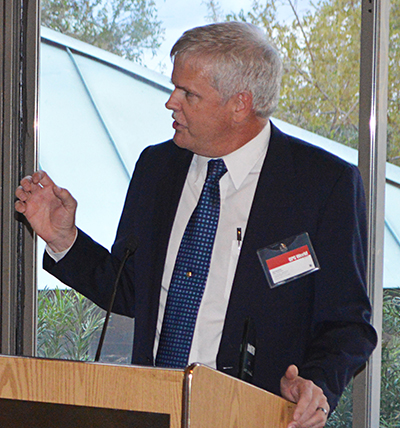
    Eric Gakstatter
    Eric Gakstatter

    Remarks

    I have to say, I’m thoroughly embarrassed and deeply humbled to be up here. I’ve written about all of you or some of you at some time along the way, or at least the work that you’ve done.

    I’d like to talk for a minute about history. I began my GPS career back in 1990. I was a 27-year-old product manager, and my boss came up to me and slapped a copy of GPS World magazine on my desk and said, “We need to do this.” It was a full page advertisement by Magnavox with a six-channel GPS engine, which was just a circuit card. We made handheld computers at that time. So we decided, hey, let’s take one of these boards and engineer it inside one of our handheld computers and make a data collector out of it for surveying and mapping.

    I spent the next two years pretty much living at the office trying to make this happen. We ended up introducing some products, and several more after that. A few points of interest I recall:

    I don’t know if Ron Hatch or Rich Keegan are here, but I remember running down to their office in Torrance and visiting with them about this whole concept; Tom Stansell was there at that time, too. Just to give you an indicator: the cost of that receiver board — I remember we paid $510 for a six-channel receiver, code and carrier, and I tell you the measurements on that receiver were tremendous back then. It’s really the basis, I think, for the WM101, which five years earlier was selling for $50,000 for a four-channel receiver.

    So we get to today. I was listening to a panel this morning about low-cost, high-precision receivers, and a gentleman from China was talking about his prediction that at the year 2020, an RTK GNSS chipset would be about $20, and an RTK GNSS module about $100.

    I tend to agree with him. I think it’s going in that direction. I’ve written a lot about, not necessarily the commoditization of high precision or RTK GNSS, but certainly a much wider audience for it. And if you watched that panel, you noticed that of all the people on that panel, he’s the one who talked about a broad audience: this high-precision GNSS making it, not maybe to the mass market, but certainly in the millions and maybe tens of millions of folks.

    As far as predictions go, I think it’s just a matter of time before this happens. I appreciate what Todd Humphreys said a couple of years ago at this dinner, where he predicted RTK in your mobile phone by the year 2020. I’m onboard with that, and I’ll promote it as much as I can, and I hope that someone brings this to fruition. If it’s 2022 or 2021 or 2019, I think it’s just a matter of time before that happens.

    Last, I’d just like to thank all of you for creating some great content and making it easy for me to write. Thank you.

    Introduced by…

    Matthew Gilligan
    Matthew Gilligan

    Matthew Gilligan, Raytheon Program Manager for the GPS Next Generation Operational Control System, introduced the Services Leadership Award.

    “It is great to be here with men and women who understand the history and power of GPS, and it’s an honor for me to be here to help celebrate the GPS World Leadership Award winners.

    “For the past 30 years, GPS has ensured weapons have found their targets, and ships at sea have returned to port. GPS has enabled the deployment of UAVs and has made sure that military missions of all kinds have been a success. GPS is a life-saving technology, ensuring soldiers come home safely.

    “Today, GPS continues to grow in importance. Embedded sensors, mobile devices, and the interconnected technologies that are defining a new era of technology and our economy through the Internet of things — all enabled by GPS’s positioning, navigation and, so importantly, timing.

    “To everyone in this room today, I want to say thank you for ensuring the mission evolves and continues.

    “I have been asked to speak because I am leading Raytheon’s partnership with the Air Force in modernizing the ground segment — what we like to call the brains of GPS. My program, OCX, is at the core of the Air Force’s GPS modernization initiative. OCX will bring unprecedented new capabilities to GPS users worldwide:

    • enabling operational availability of all new civil and military signals,
    • protecting GPS against current and emerging cyber threats — setting the bar for information assurance at an unprecedented level,
    • improving system accuracy and integrity,
    • securely sharing information with net-connected users, and
    • providing flexibility and evolvability to meet future mission needs.

    “OCX represents new approaches to emerging and even unimaginable changes and threats. And we are glad to recognize so many of you who are making it possible.

    “We are excited to be here tonight with our partners, our customers, and even our competimates as we plan for and look forward to the future.”


    PRODUCTS

    Bringing SatNav Future into View: A Platform for Early Familiarization with New Constellations

    Oliver Montenbruck
    Oliver Montenbruck

    Oliver Montenbruck , Head, GNSS Technology and Navigation Group, DLR, German Space Operations Center. The principal driver behind the IGS Multi-GNSS Experiment project, whose free, real-time products could be a game changer for inexpensive multi-constellation RTK.

    Remarks

    Being selected for this prestigious award fills me with great pride and happiness, as well as deep gratitude. I would foremost like to thank you and GPS World, but also the unknown colleague who nominated me. However, it is the community that participated in the poll and ultimately selected me in this highly competitive contest. Thanks as well to all of you: your trust in my work and your recognition is truly appreciated!

    Unfortunately, I can’t be here today to accept the award and to thank you in person, but have asked my colleague André to do so on my behalf. I’m presently staying in the Southern Hemisphere, which is not a fault of my GPS device, but was already planned some time before I learned about today’s event. Nevertheless, my thoughts are with you in Florida on this memorable evening.

    I would like to elaborate a bit on the IGS Multi-GNSS Experiment, its background and status.

    André Hauschild
    André Hauschild

    The International GNSS Service, IGS, is a volunteer organization with more than 200 participating institutions worldwide. Over the past 20 years it has been the premier source of highest quality GNSS data, products, and related standards and conventions. There is hardly any student, engineer, or scientist in the field of GNSS that has not made use of IGS resources. Through its work, IGS supports a wide range of GNSS-related applications for the benefit of the scientific community and society as a whole.

    The IGS has traditionally focused on GPS and GLONASS, but it is obvious that the world of GNSS is rapidly changing these days. With BeiDou, we already have a third operational satellite navigation system offering an at least regional service. Europe is actively pursuing the build-up of Galileo, which will offer another global navigation system with advanced performance features and new service types. And, last but not least, Japan and India are in good progress to establish QZSS and IRNSS as independent regional systems.

    The new systems come with a multitude of new frequencies and a plethora of new signals. Industry has already done a great job, and nowadays offers a wide range of receivers and antennas for multi-frequency, multi-constellation tracking. However, we are only at the verge of making full use of the capabilities offered by the new GNSSs, and we still have a stony path ahead, before we can arrive at a “system of systems” as Günther Hein once phrased it.

    In view of a rapidly changing GNSS landscape, the IGS decided three years ago to launch the Multi-GNSS Experiment, MGEX, as a platform for early familiarization with the new constellations. Within three years, the MGEX network has grown from zero to more than 100 globally distributed stations and presently supports tracking of all GNSSs with the sole exception of IRNSS. MGEX data have helped to gain experience and to characterize the new signals. They also served as a basis for pioneering work and various discoveries. The GPS L5 signal and CNAV navigation message, the Galileo high-performance hydrogen masers, and the BeiDou triple-frequency signals are just a few highlights that could be investigated in detail thanks to the MGEX network.

    Building up on MGEX observations, a set of core products is now available for Galileo, BeiDou, and QZSS. These include precise orbit and clock solutions, differential code biases, as well as cumulative broadcast ephemerides. More products and a quality-control process will be implemented as we proceed and as we are able to gain new volunteers and workforce. All MGEX data and products are freely available to the community and will certainly form a starting point for excellent research and many Ph.D. theses at universities around the world.

    It is a great honor for me to lead the MGEX project for more than two years now. Numerous achievements have already been made in that period, but we are also determined to make further progress as more and more satellites are launched and as we learn to better understand the “dirty details” of multi-GNSS processing. It has been a great pleasure to lead an experienced and highly motivated team, and it is actually they who should be awarded for their great work. I take this award today as an encouragement to pursue our work and to expand the IGS to a full featured Multi-GNSS Service for everyone’s benefit.

    Thank you once more, and enjoy this fantastic evening.

    Introduced by…

    Ed Baron
    Ed Baron

    Ed Baron, Director, Braxton Technologies, introduced and awarded the Products Leadership trophy.

    “I’d like to thank Alan and his GPS World team for organizing this dinner allowing us to take the time to recognize tonight’s recipients.

    “I have the good fortune to be here representing Braxton, a small business dedicated to delivering innovative capabilities on the GPS Program along with our partners; Lockheed, Exelis, and Raytheon.

    “We are honored to help congratulate the recipients. This is a competitive area, and to be recognized in this field is a tremendous achievement. A strong ‘Well done!’ to every one of you.”


    Read about the after-dinner event Race to Market.

  • The New Wearable? Clothing with GPS, Wi-Fi Woven In

    The New Wearable? Clothing with GPS, Wi-Fi Woven In

    BB.Suit 2.0
    BB.Suit 2.0 Photo: ByBorre

    Dutch textile company ByBorre and its founder, fashion designer Borre Akkersdijk, have created the BB.suit — a wearable Wi-Fi hotspot with GPS, a music library, and an air purifier.

    Version 1.0 of the suit, which has electrical threads woven into the fabric, was showcased at the SXSW music and film tradeshow in March, where a model’s location was shown on Google Maps, allowing anyone to locate the suit using its GPS data, and then upload songs to a 22Tracks platform.

    Version 2.0 introduces an additional tech — an air purification system. Demonstrated at Beijing Design Week in September, the garment purifies the polluted air surrounding the wearer. According to Dezeen, designers Akkersdijk and Eva de Laat collaborated with Martijn ten Bhomer from the Eindhoven University of Technology, Daan Spangenberg Graphics, and StudioFriso to create the one-piece suit, which looks like an adult onesie.

    “The BB.Suit started because everyone was talking about wearable technology, the bracelets, the glasses,” Akkersdijk told Dezeen. “We thought about how we could really integrate the electrical threads and sensors and not just stick them on.”

    The electrical yarns are woven into the body and legs of the outfit, while the long sleeves and a hood are made from standard textiles. The air-quality sensor at chest level is connected to a hidden platform chip that tracks and transmits data counting the particles of carbon monoxide, methane and dust around the body. The chip is wired to a battery and a cold plasma node on the back of the suit.

    You won’t be able to outfit yourself with the garment yet, as it was created as a step towards a connected wearable platform rather than a product to be marketed.

    GPS World’s December cover story, “The Fashion Demands of Always-On,” discusses the chip architecture requirements of wearables. Read it here.

    byborre-03 Photo: ByBorre
    Photo: ByBorre
  • GPS Tracking, Robots Key in Heavy Retail Shopping Season

    GPS Tracking, Robots Key in Heavy Retail Shopping Season

    An Amazon employee picks items in the company's newest generation fulfillment center. (Photo: Business Wire)
    An Amazon employee picks items in the company’s newest generation fulfillment center. (Photo: Business Wire)

    It used to be when you expected a home delivery, you could specify morning or afternoon, and hope you were there when the truck showed up. In today’s high-tech retail experience, van deliveries can be slotted specifically in two hour, or even one hour, windows. This is just one development in the battle for speed, as major retailers turn to technology to help Santa get presents under the tree on time.

    According to a feature at BBC News, automated route planning and GPS tracking of vans has greatly improved deliveries, along with better warehouse scanning technology, such as the intricate robotic system employed by Amazon in its warehouses.

    Last December, Amazon demonstrated its idea of a drone delivery service, but that technology has yet to launch. For now, the increase in speed it taking place on the warehouse floor, which has turned to robots guided by an intricate barcode system. In 10 of Amazon’s U.S. warehouses, an army of 15,000 robots are helping human employees pick, pack, and ship items.

    A Kiva robot moves product in Amazon's eighth generation fulfillment center. (Photo: Business Wire)
    A Kiva robot moves product in Amazon’s eighth generation fulfillment center. (Photo: Business Wire)

    The system uses robotics, Kiva technology, vision systems and almost 20 years’ worth of software and mechanical innovations to fulfill holiday orders. Amazon purchased the system in 2012 and tested it in 2013, but this is its first year for full deployment. Instead of having employees go to the shelves to find the items for an order, robots automatically deliver the items to them, hauling seven-foot-tall shelving units on their backs.

    The robotic system has made picking products go two to three times faster, employees said.

    The need for speed presents is a huge challenge for retailers trying to offer their customers a seamless shopping experience in-store, online and via mobile, the BBC reports. “Speed is the new battleground,” said Craig Sears-Black, UK managing director of Manhattan Associates, a software company specializing in warehouse management systems. “These days orders have to be processed in two hours, not two days. The physical side of selling needs to be optimized.”

    In the UK, MetaPack handles the delivery of online transactions for 80 of the UK’s top 100 retailers, integrating about 240 delivery companies worldwide into its system. “These days competition amongst carriers is giving consumers a lot more choice over when and where their parcels are delivered,” said Patrick Wall, MetaPack founder and chief executive.

    When a customer selects delivery options, MetaPack works out which are available in which location for which goods. MetaPack then decides which carrier represents best value for the retailer and handles all the tracking data so everyone can know exactly where the parcel is on its journey at any time.

    In the U.S., FedEx is using enhanced visibility technology to help customers plan for package deliveries and pickups. At many FedEx ground facilities, high-speed six-sided camera tunnels with real-time package tracking updates scan every side of a package, enhancing the readability of a shipping label and providing visibility to a package’s location at all times.

    That tracking technology, coupled with network-wide improvements, will offer customers increased visibility this season, including clarification as to exactly when a package is available for pickup at FedEx locations, FedEx said. It also will offer increased visibility into a package’s journey, from the time FedEx takes possession of the package to its estimated delivery date.


  • GTX Corp Partners with Life Button 24 on Emergency Response

    GTX Corp Partners with Life Button 24 on Emergency Response

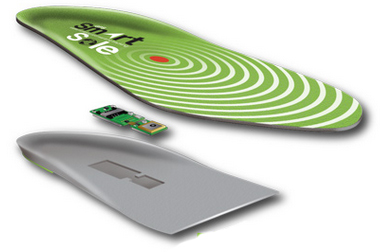
    GPS-Smartsole
    Photo: GTX

    GTX Corp, a personal location wearables company, has entered a strategic partnership with Life Button 24, a division of World Wide Security Group and provider of life safety, dispatch and monitoring services since 1979.

    Under the strategic partnership, GTX Corp will offer Life Button 24 services to its GPS SmartSole customers, providing 24/7 access to live dispatch operators that can assist caregivers when a loved one goes missing. The premium service will be offered through GTX on a monthly subscription basis as an add-on to existing monthly tracking service plans provided by GTX.

    “Our GPS SmartSoles were specifically designed for caregivers to be able to react in real time to find a loved one who has wandered off,” commented Andrew Duncan, director of GTX Corp. “By partnering with Life Button 24, we will now offer our U.S. customers an enhanced level of service and extra layer of protection. The service will be able to provide a caregiver with the ability to contact a live person, who can assist in coordinating the successful search and rescue of the loved one, or assist in notifying the proper authorities if needed. By offering this service, we enable individual caregivers and assisted living staff, among others, with an additional level of 24/7 human response, when critical support is most needed.”

    “Life Button 24 is thrilled to provide 24-hour emergency response services in partnership with the GTX Corp SmartSole GPS system,” said Jeff Katz, director of project development for Life Button 24. “Addressing wandering issues of individuals afflicted with Alzheimer’s and autism is a growing concern for the millions of families and caregivers. Life Button 24 looks forward to being part of a greater solution that delivers peace-of-mind through advanced tracking technology and customized emergency response services, which were designed specifically to support applications such as the GPS SmartSole.”

    “With initial delivery dates for our GPS SmartSoles to consumers being confirmed next week and several pilot agreements with large organizations kicking off this month, the timing of this partnership with Life Button 24 couldn’t be better. “After several months of integrating and testing our platform and services and having socialized this new offering with some of our larger partners in law enforcement and the assisted living community, we are extremely excited to start offering this service and look forward to a successful partnership with the Life Button 24 team.” Commented Patrick Bertagna CEO of GTX Corp.

  • Broadcom Launches Location Hub with Galileo Support for Smartphones

    Broadcom Corporation has announced a GNSS location hub that supports Galileo. Along with Galileo, the Broadcom BCM4774 simultaneously supports GPS, GLONASS, SBAS, QZSS and the BeiDou satellite systems.

    With a planned deployment of up to 30 additional satellites for Galileo, smartphones with built-in support for this new system will experience an even higher level of accuracy and better positioning with faster times to first fix, Broadcom said. The architecture of the location hub enables the main AP on the smartphone to reduce computation load and stay in sleep mode for extended periods of time by offloading data calculations to the BCM4774. In certain modes, Broadcom’s advanced hardware design and increased memory can reduce power consumption by up to 95 percent over traditional architectures, significantly conserving battery life in mobile devices.

    “Today’s announcement represents yet another navigation benchmark for Broadcom with the industry’s first GNSS location hub for smartphones to support the Galileo satellite system,” said Rahul Patel, senior vice president, wireless connectivity. “We are committed to pushing the limits on location technology by delivering premium performance and enhanced device intelligence while consuming minimal power.”

    Additionally, Broadcom’s new solution recognizes various context states, adding more value to the data that is gathered from mobile devices. For example, a smartphone with the BCM4774 can tell the difference between a user that is walking, running or cycling and provides positioning updates that match the identified state for more precise data results. By processing the data directly on the BCM4774 versus the main AP, Broadcom reduces battery drain and creates opportunities for developers and original equipment manufacturers (OEMs) to determine how this information is analyzed and delivered to consumers, the company said.

    Key Features:

    • Additional on-chip memory delivers complex on-chip positioning and sensor hub capabilities.
    • Easy-to-use API allows OEMs to port their specific sensor fusion code onto BCM4774.
    • Additional hardware optimization further increases AP power savings through offloading of sensor fusion, on-chip positioning, geofencing and location batching.
    • Integration of GNSS receiver and sensor hub reduces board area by 30 percent.
    • Ultra-low power on-chip positioning enables background and foreground location using GNSS.
    • On-chip Wi-Fi positioning using a direct connect communication protocol to Broadcom’s family of connectivity combo chips.
    • Enhanced Batching support with the largest batch space in a sensor hub for all devices connected to the location hub, including Wi-Fi, MEMS and GNSS.

  • Directions 2015: BeiDou Belongs to China, and to the World

    GPS-directions-WangBy Li Wang, Director of the International Cooperation Center, China Satellite Navigation Office

    By adhering to the principles of independence, openness, compatibility, and gradualness, China is steadily accelerating the construction and development of the BeiDou Navigation Satellite System.

    The BeiDou System already provides continuous and reliable Full Operational Services to most parts of the Asia-Pacific region. Its positioning, navigation, and timing performance keeps improving, while the deployment for a global constellation is also making progress. The BeiDou System and its products, which are compatible with other navigation satellite systems, have been gradually applied in many sectors and industries related to the national economy and to entering the mass market.

    As one of the four core GNSS service providers, BeiDou has always made unswerving efforts to exchange, coordinate, and cooperate with other organizations, system providers, and users.

    BeiDou has been actively engaged in international affairs on the platform of the United Nations, such as participation in related activities held by the International Committee on Global Navigation Satellite Systems (ICG), and coordinated affairs under the framework of the International Telecommunication Union (ITU). It has also pushed forward the integrated applications of BeiDou and other navigation satellite systems in the fields of civil aviation, maritime traffic, mobile communication, and so on.

    In order to provide better services for global users, the BeiDou system has carried out exchanges and coordination with the other navigation satellite systems. It has established cooperative mechanisms with GPS and GLONASS, and respectively signed the Joint Statement of U.S.-China Civil Global Navigation Satellite Systems (GNSS) Cooperation, as well as the Memorandum of Understanding between China and Russia on Cooperation in the Field of Satellite Navigation. Furthermore, the cooperation between the BeiDou and Galileo systems has also been included into the China-EU 2020 Strategic Agenda for Cooperation.

    Potential areas for cooperation may include compatibility and interoperability, GNSS applications, policies and standards, international GNSS service performance monitoring and assessment, and so on.

    Meanwhile, the BeiDou System continues carrying out the BeiDou/GNSS Application Demonstration & Experience Campaign (BADEC) and has negotiated with related countries to jointly establish BeiDou/GNSS Centers. Those centers will implement BeiDou/GNSS popularization, exhibition, application demonstration, and user experience activities, as well as system performance testing and assessment, academic exchanges, training, and R&D, to jointly promote the compatibility and interoperability among the multiple navigation satellite systems, boost the spread of technologies, and improve satellite navigation applications and industrial development..

    In 2015, China will continue this effort, launching four to five next-generation BeiDou Navigation Satellites (MEO and IGSO) for testing and verification of new technologies. The BeiDou System with global coverage will completely be established by around 2020. This will enable provision of continuous, stable, and reliable satellite navigation services for global users.

    Global navigation satellite systems and related industries are going through an unprecedented revolution. Under such an environment, compatibility and interoperability among systems, and integration of multiple industries, will be the tendencies of future, which will definitely promote wide applications of GNSS in broadening fields. During such a process, the BeiDou System with distinctive characteristics will abide by the objective of “serve the world and benefit mankind,” undertaking the responsibility and obligation to work together with other systems to provide better services for global users.


    Li Wang is the director of the International Cooperation Center, China Satellite Navigation Office.

  • Directions 2015: Galileo Looks Ahead to Early Services

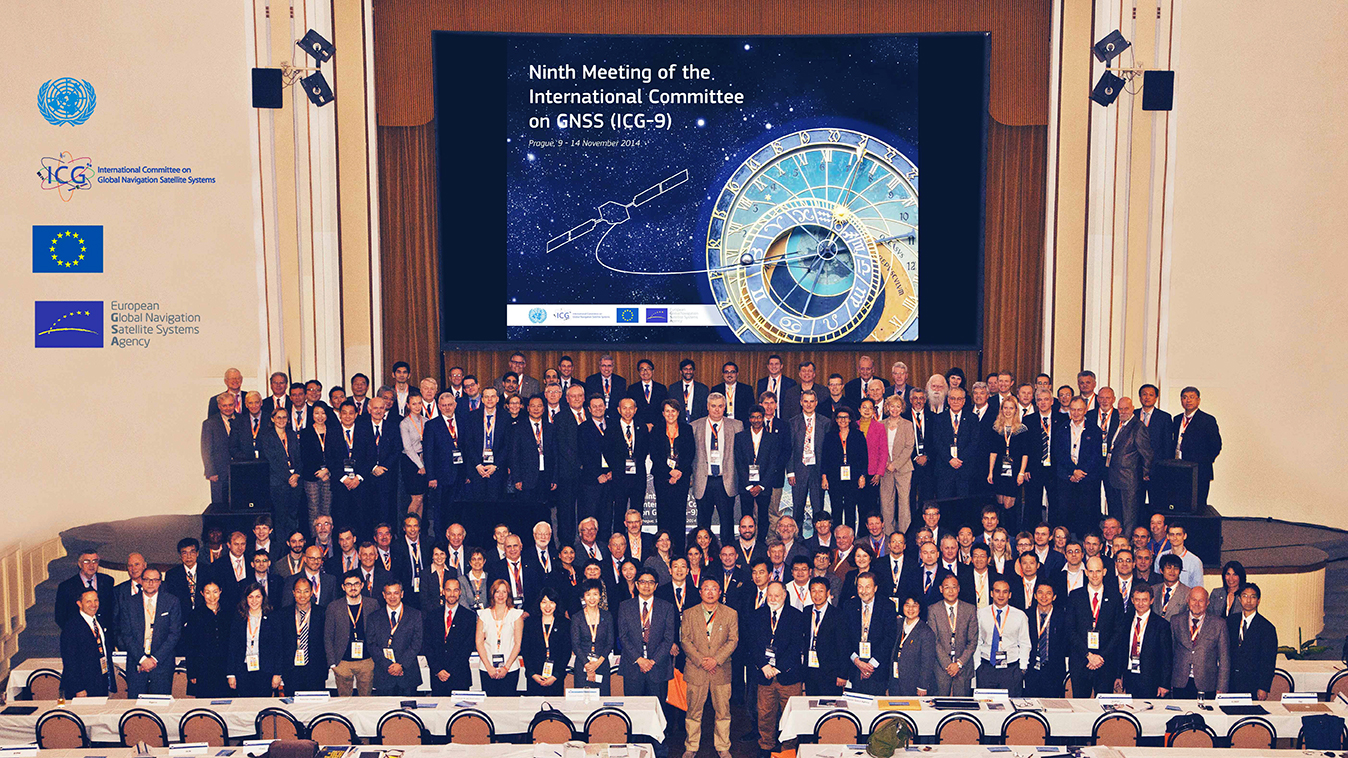
    GPS-directions-GalileoThe European GNSS Agency (GSA) hosted the ninth meeting of the International Committee on Global Navigation Satellite Systems (ICG) in November at its headquarters in Prague, Czech Republic. The event is an opportunity for GNSS providers to present the status and future plans for their systems, and an opportunity for ICG members, associate members, and observers to provide updates on recent developments with regard to GNSS services and applications.

    Representatives from the world’s leading global and regional GNSS programs were invited to provide the assembly with a “state of play” for their respective systems. Joining GPS, GLONASS, BeiDou, IRNSS/GAGAN, and QZSS was Galileo, represented by Christian Siebert, Head of Unit, Galileo and EGNOS: Applications, Security and International Cooperation, DG Enterprise and Industry, European Commission.

    A Secure Foundation

    The key message coming from Prague was that, despite the launch anomaly in August, the Galileo program has a secure foundation for moving forward. For instance, it has been given a stable seven-year perspective, a substantial budget, and a new exploitation-driven governance scheme. In terms of budget, the European Commission has allocated €1.930 billion for deployment and €3 billion for exploitation — with an additional €1.580 billion allocation for European Geostationary Navigation Overlay Service (EGNOS) exploitation.

    The new governance scheme is based on a recently announced agreement between the European Commission and the GSA; the agreement delegates a range of exploitation tasks for Galileo to the GSA. Serving as an initial step towards the full Galileo Exploitation Phase, the GSA’s responsibilities now include:

    • provision and marketing of the services;
    • management, maintenance, continuous improvement, evolution and protection of the space and ground infrastructure;
    • research and development of receiver platforms with innovative features in different application domains;
    • development of future generations of the system;
    • cooperation with other GNSS;
    • all other required activities to ensure the development and smooth running of the system.

    This new budget and governance structure ensures the Galileo program’s stability for the next seven years, according to a GSA press release. The agency will progressively manage exploitation activities as delegated by the European Commission, which serves as the program’s supervisor.

    At the same time, the European Space Agency (ESA) will continue its role for system design and development.

    A Range of Successes

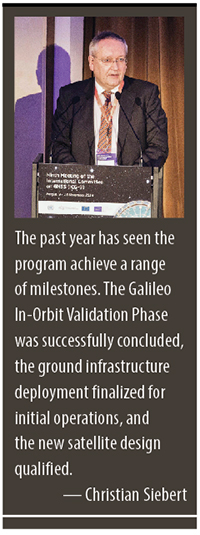
    “The past year has seen the program achieve a range of milestones,” said Siebert. “The Galileo In-Orbit Validation Phase was successfully concluded, the ground infrastructure deployment finalized for initial operations, and the new satellite design qualified.”

    Even with the satellite launch anomaly that left two satellites in the wrong orbit, the ESA just announced that one of these satellites will soon make a series of maneuvers as a prelude to its health being confirmed. The aim is to raise the lowest point of its orbit — its perigee — to reduce the radiation exposure from the Van Allen radiation belts surrounding Earth, as well as put it into a more useful orbit for navigation purposes. If the operation is successful, the second satellite will follow suit.

    As to the cause of the anomaly itself, Siebert said Arianespace has established an inquiry board to investigate, and the European Commission and ESA continue to analyze the best options for recovering the initial mission to the best possible extent. A new launch sequence will be confirmed in the near future.

    That being said, the deployment plan for the Galileo constellation is secured, with 26 satellites ordered (four IOV and 22 FOC) and launcher service contracts for the full constellation signed with Arianespace. As to the new satellite design, production proceeds at a good pace, with full operational capability (FOC) satellites being built by OHB Systems and navigation payloads provided by Surrey Satellite Technology Ltd.

    In terms of services, the Search and Rescue Forward Link Alert Service successfully tested the networked ground segment last April, and positioning accuracy exceeds expectations.

    As to the Commercial Services Demonstrator, the main objective of the demonstrator was to test and characterize the high accuracy and authentication performance obtainable with the Galileo Commercial Service. The first results are extremely promising, with high accuracy already demonstrated through PPP information transmitted via E6B and used to enhance both Galileo and GPS. 

    Siebert noted that the ongoing Receiver Test Campaign supports manufacturers to ensure that Galileo is well implemented in chipsets and receivers. To accomplish this, the program continues to develop dialogs with the user/receiver segment to understand the market situation and follow up adoption of Galileo.

    Looking Ahead

    With this secure foundation, looking towards 2015 and beyond, Galileo is set to deliver a reliable, high-quality service to the world, according to EC and ESA spokespersons presenting at the ICG. “With its substantial budget and exploitation-focused governance scheme, it will continue to evolve and introduce innovative features,” Siebert affirmed.

    Next steps for the program include a gradual introduction of the early phase of service delivery, which will rely heavily on interaction with users. Early services will be run with continued infrastructure deployments. The program will soon conduct a service validation campaign, along with finalizing the Commercial Service definition and developing a long-term service plan. 

    “This service plan will be aligned with the trend of most user communities moving towards service levels based on a multi-constellation approach,” concluded Siebert. “Knowing this, it is crucial to continue to improve signal compatibility and interoperability of the Galileo service with other providers and cooperate on building multi-constellation programs.”

    Group-ICG-2014
    Photo: Galileo
  • Directions 2015: What It Takes to Make a Gold Standard

    Directions 2015: What It Takes to Make a Gold Standard

    GPS-directions-CooleyBy Colonel William T. “Bill” Cooley, U.S. Air Force, Director, Global Positioning System

    Last year in my “Directions” article, I emphasized the commitment made by the U.S. government to ensure GPS signals are available to all users, and I shared some of our excitement in the GPS Directorate regarding the modernized capabilities we are developing and fielding. This year I’d like to share with you progress we’ve made in the past 12 months, provide an update on the modernization initiatives, and challenge civil users and receiver companies to innovate and accelerate these modernized capabilities for users worldwide.

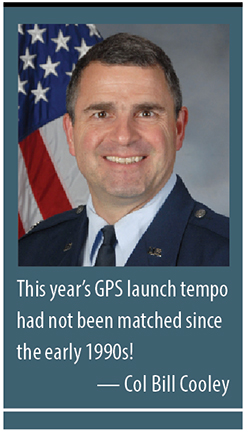
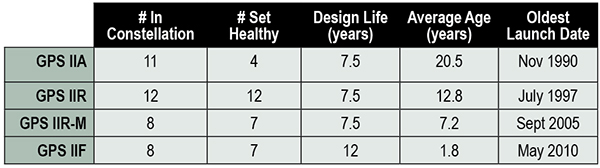
    This past year has been productive for the GPS program. The most visible progress was the addition of four new Boeing-built GPS IIF satellites to the GPS constellation, bringing the total number of available satellites from 36 to 39 (SVN-33 was safely disposed in October 2014, or the number would be 40). These additions also reduced the average age of the satellites on orbit from 11.1 to 10.3 years. This year’s GPS launch tempo had not been matched since the early 1990s! Table 1 lists the current satellites in the constellation by block.

    GPS-table-Directions
    TABLE 1. GPS constellation as of October 31, 2014.

    Perhaps the most exciting aspect of the GPS satellite constellation is the ever-improving performance. As I mentioned last year, the 2008 Standard Positioning Service (SPS) Performance Standard, issued by the Office of the Secretary of Defense, codifies our commitment to civil users. Among other attributes that make GPS the “gold standard” for positioning, navigation, and timing (PNT), the SPS requires a signal-in-space (SIS) user range error (URE) of 4.0 meters or less for every healthy satellite. The SIS URE is the difference between a GPS satellite’s navigation message (for example, ephemeris data and satellite clock correction data) versus the truth (for example, satellite transmit antenna location and satellite clock offset from GPS time). While the commitment of the U.S. government is four meters or less, the actual average performance over the past year has been 0.68 meters and in the past quarter has been an impressive 0.63 meters!

    While this is admirable, continued modernization efforts will allow us even better performance. A significant contributor to the errors experienced by GPS receivers are ionospheric delays that can be eliminated only with knowing the characteristics of the ionosphere (free electron density in the region roughly 100-1,000 kilometers above the Earth’s surface) or by using two signals at different known frequencies. While systems like Federal Aviation Administration Wide Area Augmentation System (WAAS) and the U.S. Coast Guard National Differential GPS (NDGPS) provide a modeled approximation of the ionosphere, the new L2C and L5 civil signals on the GPS IIR-M, GPS IIF, and soon-to-launch GPS III satellites enable GPS receivers to directly measure and eliminate the ionospheric delays altogether — thereby delivering on the GPS modernization program first announced in 1999. These new signals began pre-operational Civil Navigation (CNAV) message broadcast on 28 April 2014 (with the L2C signal set “healthy” and L5 set “unhealthy” until sufficient monitoring capability is established).

    With CNAV now on the air, civil users should take advantage of it. My challenge to commercial receiver companies and innovators is to incorporate the modernized signals in future receivers and continue to improve user experience and GPS performance. Currently 14 L2C-broadcasting satellites are in the constellation, and by early 2016 we expect to have 19 on-orbit and transmitting L2C (7 GPS IIR-Ms and 12 GPS IIFs). GPS modernization is well on its way from a signal-in-space perspective; receiver manufacturers and innovators must bring new, improved products and solutions to users.

    Less visible but real progress modernizing the GPS Enterprise is underway with the next generation of GPS satellites, ground control, and user equipment segments. The first GPS III satellite and the newly developed navigation payload have been delayed approximately two years from the original planned delivery of the completed GPS III satellite of October 2014. But in September of this year, the GPS III navigation payload was shipped from Exelis (the payload subcontractor) in Clifton, New Jersey, to Lockheed Martin’s (GPS III prime contractor) facility in Waterton, Colorado. There, it completed the payload-level thermal vacuum testing at the end of October, a key step toward payload and eventually satellite vehicle delivery. The first GPS III satellite is now 87% complete and the program is making solid progress.

    The GPS Next-Generation Operational Control System (OCX), with Raytheon as the prime contractor, experienced significant challenges in development but can also claim measurable progress this year. Complex cyber-security requirements and their implementation drove a significant number of these challenges, but are essential to provide civil and military GPS users with a secure and resilient command and control system. These and other challenges resulted in significant cost and schedule overruns and a two-year delay to the program, which drove an update to the development plan. The revised OCX plan reflects the complexity of implementing these unique cyber requirements and accounts for planned improvements to Raytheon’s systems engineering and software development approach. The plan establishes a schedule meeting GPS III’s projected first-launch date.

    Despite its challenges, OCX development completed four end-to-end space-to-ground launch readiness exercises with GPS III, as well as entered the formal integration and test phase. The new monitoring station receivers are entering qualification test, and the first production receiver is on track to be delivered in spring of 2015. OCX is on track to provide robust PNT services, improvements in URE accuracy, enable access to new military and civil signals, and provide cyber security for the GPS ground control.

    Our development of Military GPS User Equipment (MGUE) is another area where we have made important strides this past year. We started the year by developing a commercial market-based acquisition approach that will accelerate delivery of MGUE systems by years. In this effort, we want to establish a race to a certified marketplace where the U.S. government serves as the race official while our industry partners set their own pace to deliver capability. Our goal is to increase speed of delivery to the warfighter while capitalizing on industry’s ability to innovate.

    Our MGUE team of government and industry partners (Rockwell Collins, Raytheon, and L3) successfully completed major system design reviews demonstrating a readiness to define the process of security and compatibility certification. Additionally, the team participated in the GYPSY Juliett multi-service, multi-nation PNT demonstration hosted by the U.S. Strategic Command this past summer. While we battled the elements through two hurricanes, the team successfully demonstrated the capability of M-Code receiver cards in an operational demonstration. Our goal is to enable full operational testing with four lead platforms in summer 2016.

    While many risks and challenges to GPS modernization still lie ahead of us, the persistent effort by the GPS team has produced important progress in 2014 across the space, ground, and user equipment segments.

    A civilian GPS user recently thanked me for providing the incredibly useful utility free to everyone around the globe. Although my impulsive response was to say simply, “You’re welcome,” I’d like to provide a more thoughtful and thorough reply that recognizes those responsible for GPS.

    There are two key groups to thank for GPS: the first is the men and women across the United States government and industry who develop, field, and operate the GPS Enterprise. Among this group are satellite factory technicians, software engineers improving the ground segment, receiver designers, program office engineers, and satellite operators continuously monitoring the constellation, updating each GPS satellite’s clock correction and ephemeris data 24/7. This team works with an unwavering passion for this mission that inspires me every day.

    The second group responsible for GPS is the American taxpayer who, through Congress, funds the GPS Enterprise every year.  The U.S. financial commitment to GPS is not just for U.S. security or the well documented positive impact GPS has on the American economy, but for the benefit of the entire world as a global utility. GPS is the gold standard for PNT because American taxpayers continuously provide fiscal support so the GPS Enterprise’s men and women can design, produce, field, and maintain the global utility that we all have come to depend on. 

    Thank you for supporting this enterprise, and know that the GPS team works hard to ensure those resources are spent wisely to provide continuously improving, predictable, and dependable performance from the Global Positioning System.


    Colonel William T. Cooley is director, Global Positioning Systems (GPS) Directorate, Space and Missile Systems Center, Air Force Space Command, Los Angeles Air Force Base, California.

  • The Business — December 2014

    The Business section from the December 2014 issue of GPS World. Download the PDF.

    Includes:

    • Qualcomm to Acquire SiRF Chipmaker CSR
    • OriginGPS Launches Nano Spider for Wearables, Watches
    • Samsung Smart Watch Has GPS + GLONASS
    • Satlab Launches on-the-Pole Survey Receiver
    • Smart Antenna Designed for Urban Canyons
    • Telit GPS Module Helps Migration to Full GNSS
    • Researchers Honored with Water Prize
    • Briefs
  • First Navigation Signal from Galileo 5 Received

    News courtesy of CANSPACE Listserv.

    The first navigation signal transmission from the fifth Galileo satellite, one of two Full Operational Capability satellites launched into wrong orbits on August 22, was received today.

    Stations of the Cooperative Network for GNSS Observation (CONGO) and the International GNSS Service Multi-GNSS Experiment (MGEX) network tracked an E1 signal with a PRN code of E18 this morning. The signal was first tracked at the La Laguna station (LLAG, Tenerife, Canary Islands) at 06:08:00 UTC.

    A few moments later, the satellite was also tracked at the Geodetic Observatory Wettzell (WTZ3, Wettzell, Germany) and at the University of New Brunswick (UNBD, Fredericton, Canada). The receivers at all three stations are JAVAD GNSS Triumph receivers.

    Analysis of current Galileo satellite visibility at various tracking stations confirms that the active satellite is GSAT0201, also known as Galileo FOC-FM1 or Galileo 5, with COSPAR ID 2014-050A and NORAD ID 40128.

    As reported earlier, the perigee of Galileo 5’s orbit was raised in an effort to make the satellite usable for research, at least, and potentially for positioning and navigation.

  • Expert Advice: Managing GPS, Take Two

    John Lavrakas
    John Lavrakas

    By John Lavrakas, Advanced Research Corporation

    What a difference eight years can make! My September 2006 GPS World article “Managing the GPS Constellation for Today’s Needs” dealt with GPS performance issues many high-precision users then faced. Demanding applications of real-time precision positioning, such as precision agriculture and machine control, did not find enough satellites in view to support their needs.

    I posed the question: Is the problem with the number of usable GPS satellites, or with growth in the demands of the user community? The 2006 answer was: a little bit of both.

    Now the issue has pretty much gone away. Users have adapted to incorporating other GNSS signals, initially GLONASS and now BeiDou. Russia’s commitment to operate GLONASS at full capacity developed into today’s operation of its 24-satellite constellation. China’s similar declaration led to deployment of 16 satellites to date toward an eventual constellation of 35. Europe is likewise poised to offer global services with Galileo. GPS’s days as the sole provider of ubiquitous, accessible services appear to be over.

    One of my 2006 recommendations was for GPS decision-making authorities to support an aggressive program to replace aging satellites. This has been done. GPS went from one IIR-M satellite in 2006 to the present seven IIR-M satellites and seven IIFs. They provide a new civil signal on L2C, and the IIF provides a new civil safety-of-life signal on L5. 

    Let’s look at the differences in service between 2006 and 2014 as shown in Table 1. GPS RMS user range error (URE) has been cut in half, and the number of usable GNSS satellites has gone up by 39 percent (44 to 61). 

    Table 1.  Differences in GPS service between 2006 and 2014.
    Table 1. Differences in GPS service between 2006 and 2014.

    Today GPS and GLONASS operate at full capacity. GPS exceeds its marks by providing 31 satellites broadcasting signal-in-space range errors in the half-meter range, even as Block IIF satellites add L2C and L5 signals. GPS high-precision users also employ space-based augmentation systems services such as WAAS, EGNOS, and QZSS. Internet-connected GPS receivers, including those in cellular phones, use Assisted-GPS to provide near instantaneous times to first fix. 

    One drawback to GNSS is its undependability when subjected to blockage, interference, or spoofing. GNSS services should be made more resilient, and PNT users must diversify their positioning sources. We are now moving into a hybrid world, in which PNT services go far beyond “just GPS” to multi-GNSS services augmented by other PNT technologies, including assisted GNSS, inertial sensors, and terrestrial positioning services. Although diversifying PNT sources increases cost, it may not be as much as some might think. At a recent PNT symposium at Stanford University, Greg Turetzky of Intel predicted even consumer-grade receivers used in automobiles, tablets, and smartphones will embrace all GNSS, despite the added cost in chip size and power. 

    Setting aside the larger PNT discussion and considering only GPS, what challenges must GPS address to remain the cornerstone of PNT services? Here is my list of the top issues GPS faces today.

    Signal Vulnerability. Since the issue of GPS vulnerability was raised in the 2001 Volpe Report, this issue has not changed, but the stakes have risen much higher. There is greater dependence on the GPS service than ever before, with over a billion users. It is generally conceded that for many applications, reliance on GPS in its current form is insufficient and even risky. Brad Parkinson espouses the mantra of protect, toughen, and augment GPS, focusing on steps necessary to strengthen its service.

    Numerous methods are being explored and implemented to protect and toughen GPS: increased signal power on modernized satellites, improved antennas, and authentication of the signal against spoofing. The U.S. Department of Transportation is actively seeking ways to protect GPS spectrum through public workshops on GPS adjacent-band compatibility. 

    The GPS civil signal remains open to malignant spoofing by nefarious forces. Various methods are being proposed to counter this threat. It may seem that adding signal authentication is a bit too late, since civil GPS signals have already been defined in interface specifications, but it turns out this may not be the case. At the Stanford Symposium, Col. Matt Smitham of the GPS Directorate stated that now is a good time to play with the civil navigation message implementations to explore features like authentication. “This is the time to do this, change the message types,” he said. Thus, there is an opportunity to counter this threat. 

    Gaps in Service. A low-power service that has limited operation in many settings, GPS does not provide full functionality at the Poles, nor does it work indoors or underwater. This issue is exacerbated by society’s demands for PNT services anywhere. The 2008 National PNT Architecture identified these gaps as a primary concern, encouraging numerous actions to resolve them. 

    Split Leadership. Although the Space-Based PNT Executive Committee and its National Coordination Office provide a mechanism for establishing high-level policy and providing outreach, they fall short of meeting other essential needs for acquiring, operating, and sustaining GPS. Funding for GPS is split between a number of departments and agencies including the DoD, DOT, the FAA, and NASA. The net effect is prioritization decided by individual departments and agencies, but not by the GPS leadership itself. Thus, some programs get funded by Congress, such as satellite and control system acquisition and the FAA’s NextGen program, but others do not. Civil signal monitoring and complementary PNT services to support increased PNT resilience have not been adequately funded. GPS operations experience the tragedy of the commons: GPS civil signal formats are defined but service standards and management protocols are not. 

    How to Manage GPS for Today

    • Resolve GPS vulnerabilities by strengthening the system and augmenting the service. Take the lead in addressing system vulnerabilities, including mitigating jamming and interference, and installing protections against spoofing. Hold forums on authentication means and methods, and fund research demonstrations using pre-operational civil signals.
    • Work to close the gaps in service. Implement reduced-cost-impact, easily accessible complementary technologies to fill GNSS gaps. Implement civil signal monitoring using alternative networks until the Next-Generation Operational Control System incorporates civil signal monitoring requirements.
    • Establish even closer cooperation between military and civilian leadership to provide unified funding, acquisition, and operations. Ensure a unified message to Congress for multi-agency funding needs. Work together to implement new civil signals, including operational protocols. Set dates cooperatively and meet them.

    The GPS program produced a revolution in ubiquitous positioning, navigation, and timing that cannot be stopped. Care must be taken to ensure its services continue to benefit mankind while its vulnerabilities do not cause undesired harm to its users. With thoughtful planning and execution, GPS leaders will succeed.


    John W. Lavrakas is president of Advanced Research Corporation, providing expertise in global positioning systems, having spent the past 34 years in GPS, working in its command and control, user operations, GPS receiver development, and satellite navigation performance analysis. He can be reached at [email protected].

  • GLONASS-K1 Satellite Launched Nov. 30

    GLONASS-K1 Satellite Launched Nov. 30

    News courtesy of CANSPACE Listserv.

    The second of two GLONASS-K1 satellites was launched from the snowy Plesetsk Cosmodrome on November 30 at 21:52 UTC. It joins the first GLONASS-K1 satellite launched on February 26, 2011.

    According to the Roscosmos Information-Analytical Centre, the satellite, with serial number 12, is to be known by its in-orbit name of GLONASS 702. It is destined for orbital slot 9 in Plane 2.

    The satellite will transmit five navigation signals in the L1, L2, and L3 bands. The satellite also carries a COSPAS/SARSAT transponder.

    The satellite was launched on top of a Soyuz 2-1b booster. A statement from Roscosmos confirmed the 2,060-pound navigation satellite separated from the launcher in the correct orbit.

    GLONASS-K satellites are designed to last longer, transmit more navigation signals, and launch on smaller rockets. Like the first Glonass K spacecraft, the second satellite will demonstrate new technologies that Russia plans to incorporate into GLONASS, according to Spaceflight Now.

    Rollout:

    Launch:

    Gallery (photos from the Ministry of Defence of the Russian Federation.)