Author: GPS World Staff

  • How U.S. Air Force 19 SOPS Puts GPS Satellites in Orbit

    How U.S. Air Force 19 SOPS Puts GPS Satellites in Orbit

    GPS-Schriever-team-W
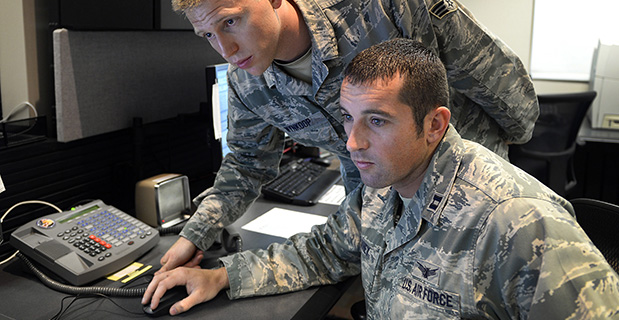
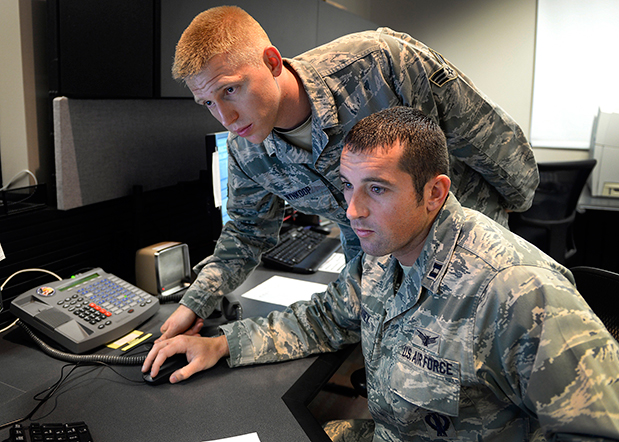
    Capt. Jared Delaney, 19th Space Operations Squadron satellite vehicle operator, right, and Senior Airman Bryan Wynkoop, 19 SOPS satellite system operator, monitor telemetry during the GPS SVN-69 launch Oct. 29, 2014 at Schriever Air Force Base, Colo. (U.S. Air Force photo/Dennis Rogers).

    The following story by Scott Prater appeared in the Schriever Sentinel, a weekly newspaper published by the Colorado Springs Military Newspaper Group. See http://www.schriever.af.mil/units/publicaffairs/ for further information.


    By Scott Prater
    Schriever Sentinel


    11/19/2014 – SCHRIEVER AIR FORCE BASE, Colo. — It’s been a busy year for members of the 19th Space Operations Squadron.  As operators of the GPS launch and early orbit, anomaly-resolution and disposal system, 19 SOPS members executed a historically high number of satellite launches (four), and disposed of a legacy GPS vehicle, all within the past 10 months.

    “The last time we launched four vehicles in one year was 1993,” said Maj. Kimberly Adams, 19 SOPS LADO flight commander. “We’re looking forward to a more normal [operations] tempo, in the coming year.”

    Tensions were high Oct. 29 during the lift-off and early-orbit of SVN-69, a GPS Block IIF vehicle, when a CBS news crew captured film footage of the event on the operations floor here.

    “That was out of the ordinary for sure,” Adams said.  “Compound that anxiety with the knowledge that we had just completed final configuration of a GPS vehicle disposal not 48 hours prior and you can understand the type of month October was for us and our 2nd Space Operations Squadron teammates.”

    Senior Airman Bryan Wynkoop, 19 SOPS satellite system operator, wouldn’t change a thing about the past few months of 2014.

    “It’s exciting,” he said. “This sure beats working a regular job.  The drama and importance of what’s taking place here is exactly what I signed up for.”

    Adams and Wynkoop are Air Force Reservists, as are all 19 SOPS members. The squadron falls under the Air Force’s 310th Space Wing, headquartered at Schriever AFB, and works in partnership with 2 SOPS, the 50th Space Wing unit responsible for commanding and controlling the GPS constellation.

    Adams says 19 SOPS was stood up precisely to conduct GPS launches, manage anomalies and process disposals.

    “We start preparing for launch about 90 days out,” Adams said. “With so many launches so close together, we often began preparations for one launch before the previous one was off the pad.”

    Their partnership with 2 SOPS has proved beneficial for both squadrons.

    “This most recent launch was my seventh and Airman Wynkoop’s sixth,” said Adams, who is in her fifth year at 19 SOPS. “Active-duty Airmen typically reside on station for roughly three years, so oftentimes our 2 SOPS teammates are looking to us to provide continuity and experience.”

    That continuity became crucial during disposal operations for SVN-33.  It had been more than two years since the two squadrons had disposed of a vehicle and Wynkoop was one of the few Airmen at Schriever who was familiar with the operation’s intricacies.

    “These events don’t happen often, so to have played a role in two huge events was something special for all of us who were here,” he said.

    Less than 48 hours after SVN-33 had been fully configured for disposal, SVN-69 was standing on the launch pad at Cape Canaveral, Florida.

    Adams, Wynkoop and their fellow 19 SOPS operators’ day started eight hours prior to the launch.

    “Wynkoop had to set up communications links with our antenna at the Cape so we could get telemetry data from the satellite,” Adams said. “Once the rocket lifted off, I was performing communications checks and verifying that we were meeting all of our requirements.”

    Then they waited.

    Three and half hours after launch, SVN-69 separated from its booster rocket.

    “At that point we obtained an initial state of health from the satellite to ensure everything was OK and then we started commanding,” Adams said.

    Wynkoop explained that though he and his teammates are actually studying telemetry data through their monitors on the operations floor, it’s easy to envision what’s happening in space.

    “The vehicle is spinning once it separates from the booster,” he said.  “We then issue commands to slow the spin and deploy the vehicle’s solar arrays, antennas and other critical components. Later, we get the vehicle in a condition known as sun safe. Shortly after, the vehicle acquires Earth and is in a stable orbit in the GPS slot where it’s supposed to be.”

    Now, it’s up to 2 SOPS to command and control the satellite, one of 39 on orbit. The squadron expects to receive satellite control authority of the spacecraft later this month and the next GPS launch is scheduled for March 2015.

  • Topcon Acquires in-Cab Mounted Console Manufacturer

    Topcon Positioning Group has completed the acquisition of Wachendorff Elektronik GmbH and Wachendorff Electronics Inc. in a private transaction.

    Wachendorff Elektronik GmbH and its U.S. subsidiary Wachendorff Electronics, Inc., are manufacturers of in-cabin mounted consoles for the industrial vehicle market in the agricultural and construction industries.

    “This acquisition is a key ingredient of our global strategy to strengthen our ability to serve original equipment manufacturers (OEM) and establish the foundation for Topcon manufacturing in Europe,” said Ray O’Connor, Topcon Positioning Group president and CEO. “This world-class facility in Germany is second-to-none in its operational quality, employee dedication, and astute leadership — all of the characteristics needed to exceed the high-precision standards required for our industry.”

    “This transaction is an example of our commitment to expand our portfolio of high-quality products and become the world’s leading provider of in-cab consoles for the agricultural and construction OEM markets,” said Albert Zahalka, president of Topcon Precision Agriculture and leader of the acquisition team.

    The Wachendorff family founded Wachendorff Prozesstechnik GmbH & Co KG in Geisenheim, Germany in 1978. Wachendorff Elektronik was founded in 1985.

  • Buddy Launches Platform to Access Connected Device Data

    Buddy Platform, Inc., has launched its new platform that hosts and manages data generated by any connected device, enabling measurement of a device from the moment it’s turned on throughout its entire lifecycle. This data, often referred to as “telemetry data,” conveys information about the performance and usage of the device, and is now accessible from any common BI tool.

    Buddy helps answer the question, “How is this device being used?” and “Is it performing like we designed it to?”. Buddy is live with customers in industries such as aviation, automotive (connected cars), retail, connected home, consumer electronics and embedded silicon.

    While most connected or “Internet of Things” devices have functionality to enable control or monitoring (such as from a mobile app), relatively few are making performance and usage data accessible for analysis. By giving product management, engineering and support teams access to this data, and the insights that are derived from it, organizations can dramatically increase their ability to build better products and support the customers of these products in-market.

    “Now that devices as varied as door locks, light bulbs, kiosks and cars are all becoming connected, there’s a huge amount of data that can give manufacturers exactly the information they need to support and improve their products,” said David McLauchlan, CEO of Buddy Platform. “Device manufacturers are not cloud infrastructure companies. They’ve built technology into their products to control the device, but haven’t built the infrastructure to access and use the device’s telemetry data to improve the product and delight customers. Buddy makes it fast and easy to access those insights and immediately understand more deeply how customers are using these kinds of IoT devices.”

    Adding to the challenge is that the regulatory environment for data storage is becoming more complex. Various countries are enacting legislation that specifies how and where personal data may be stored.

    Buddy works by hosting a series of regionally sandboxed, global BuddyAPI endpoints to which devices can send their raw telemetry data. This data is pushed into a secure storage infrastructure called BuddyVault, whereupon it is then managed, queried and exposed back to the customer in any form they wish with BuddyView. This may take the form of integrations into common business intelligence tools, or as raw APIs that can be plugged into any customer or M2M scenario.

    With the addition of a few lines of code, the Buddy Platform offers a low overhead solution for extracting telemetry data from a device, and can make an unprecedented amount of device performance data broadly accessible to an organization, including:

    • How is this device being used? Is it performing like we designed it to, is it working as expected?
    • What error codes is my device reporting, and how is that affecting the customer experience?
    • How many of my devices are being used?
    • Where are they?
    • When are they used and how often?
    • Are they on or off?
    • How are my devices communicating with one another? If not, what’s not working?
    • How are my devices performing with connected ecosystems like smart homes or industrial infrastructure?

    Buddy uses standard technologies including REST service over HTTPS, which means any device with Internet connectivity can use Buddy. There are no agents, no heavy runtime to install, and the platform offers access managed, queried subsets of the data, which are available via completely customized JSON APIs.

  • CSR Launches SDK for Precise Indoor Location Apps

    CSR Launches SDK for Precise Indoor Location Apps

    SiRFusion SDK brings plug-and-play simplicity to Android app developers. Photo: CSR
    SiRFusion SDK brings plug-and-play simplicity to Android app developers. Photo: CSR

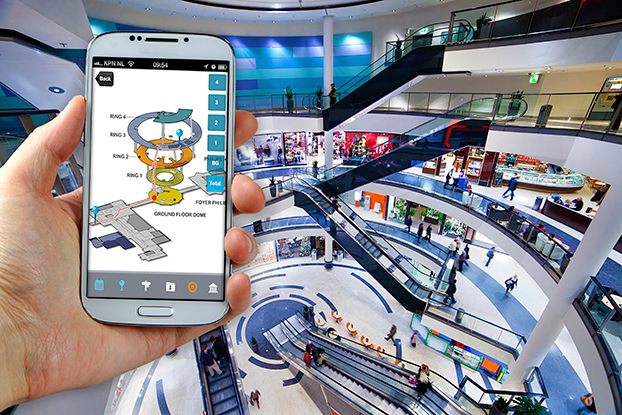
    CSR plc today announced the launch of its SiRFusion Software Development Kit (SDK) for Android application developers. The solution enables indoor positioning for Android developers looking to create next-generation apps.

    Developers can now leverage the SiRFusion library to rapidly integrate new location-based capabilities and services such as indoor location tagging and analytics for social networking applications, indoor navigation, lone worker efficiency and safety capabilities, as well as indoor asset tracking and targeted e-commerce services.

    CSR is being acquired by Qualcomm, with the transaction expected to close by the end of the summer of 2015.

    Mobile applications with integrated SiRFusion can now deliver the ubiquity of outdoor navigation to indoor environments without costly surveys or infrastructure upgrades. SiRFusion combines real-time Wi-Fi signals, satellite positioning information, pedestrian dead reckoning, and the company’s cloud-based CSR Positioning Center to calculate accurate indoor location. SiRFusion technology provides the accurate indoor position fixes needed to make continuous indoor navigation a part of everyday life. The system automatically crowd-sources a venue’s indoor Wi-Fi signatures as consumers walk through the location, and it has also been architected to accommodate future proximity and location technologies such as Bluetooth Smart beacons, Wi-Fi Round Trip Time (RTT), and Indoor Messaging System (IMES).

    “Offering indoor positioning accurate enough to be useful has been a challenge that the industry has been trying to solve for many years,” said Anthony Murray, Senior Vice President, Business Group at CSR. “But with consumers coming to expect anytime-anywhere positioning wherever they are, our customers have continued to express a growing interest for accurate indoor positioning without the need for additional infrastructure. With our SiRFusion Software Development Kit, we have, for the first time, made indoor location a reality for developers who want to deliver innovative location-based products and services without proprietary infrastructure.”

    SiRFusion for Android can be integrated into any app running on Android version 4.4 or later. The SDK will be available for download from www.csr.com in Q1 2015, and will include the SiRFusion library, API descriptions, and a Developer’s Guide. CSR will demonstrate SiRFusion for Android at the Location and Context World conference December 2-3, held at the JW Marriott in San Francisco, and at Consumer Electronics Show (CES) in Las Vegas January 6-9, 2015. To schedule a private briefing and demo at either event, contact [email protected]

  • AT&T, LG to Collaborate on Connected Cars

    Since the AT&T Drive Studio opened in January 2014, twelve companies have joined AT&T there in an effort to collaborate and develop new services for the connected car of the future. The latest company to join is LG Electronics, which signed on November 18.

    AT&T Drive Studio is a connected car center for innovation and research. Its sponsorship agreement with LG allows the companies to collaborate on the AT&T Drive platform to support services on automotive-grade hardware and equipment for tomorrow’s connected vehicles.

    Located in Atlanta, the more than 5,000-square foot AT&T Drive Studio features working garage bays, a speech lab, a full showroom to exhibit the latest innovations, conference facilities, and much more. Drive Studio integrates AT&T solutions across multiple companies and serves as a hub where AT&T can respond to needs of automotive manufacturers and the auto ecosystem at large.

    “At the Drive Studio we work with automakers to make the in-car experience better and safer for the driver and passengers,” said Chris Penrose, senior vice president, Internet of Things Solutions, AT&T. “The spirit of the AT&T Drive Studio is to bring together players in the auto industry ecosystem, like LG, to design the road ahead.”

    “By analysis of customer insights and Car OEM’s requirements, safety, comfort and convenience are key factors in automotive area,” said Jong Rak Lim, vice president and head of LG’s In-Vehicle Infotainment R&D Lab. “As global telematics supplier, we are very pleased to participate in AT&T Drive Studio as a sponsor and hope to bring better Connected Car solutions into the market together.”

    AT&T already provides mobile Internet access in vehicles manufactured by both U.S. and non-U.S. automobile makers. AT&T entered the market with a proprietary, global SIM platform that made it possible for automotive, consumer and M2M equipment makers to work through a single carrier to wirelessly enable and connect products across the globe, and cars are being sold throughout world today with this SIM.

  • Denso Tests Autonomous Cars on Japan Roads

    Denso Tests Autonomous Cars on Japan Roads

    Denso-drive-test-c

    Denso Corp. began testing advanced driving support technology on a public road in Aichi Prefecture, Japan, this past June. Denso is testing automated driving scenarios in a single lane and testing automatic lane changes, as well as other driving maneuvers. Denso’s goal is to develop technologies that reduce driver workload and assist in safe driving.

    Previously, Denso tested this technology on its test course in Japan. Denso’s goal with public road testing is to identify, analyze, and solve real-life problems that don’t occur on the test course.

    Denso is conducting the field tests as part of activities led by the Vehicle Safety Technology Project Team to reduce traffic accidents. The project team is organized by the Aichi prefectural government and involves companies and organizations operating in the prefecture.

    Denso has been developing its advanced driving assistance technology to achieve safer and more reliable driving while the driver remains in control of the vehicle. Development and commercialization of this technology will help prevent traffic accidents and contribute to increasing safety of our automotive society.

    Denso Corporation, headquartered in Kariya, Aichi prefecture, Japan, is a global automotive supplier of advanced technology, systems and components in the areas of thermal, powertrain control, electronics and information and safety. Its customers include all the world’s major carmakers.

    Testing involves automated driving on a single lane.
    Testing involves automated driving on a single lane.
    Automatic lane changes are also being tested.
    Automatic lane changes are also being tested.
  • Spectracom Offers Master Clock/GPS/Inertial Module for Intelligence

    Spectracom Offers Master Clock/GPS/Inertial Module for Intelligence

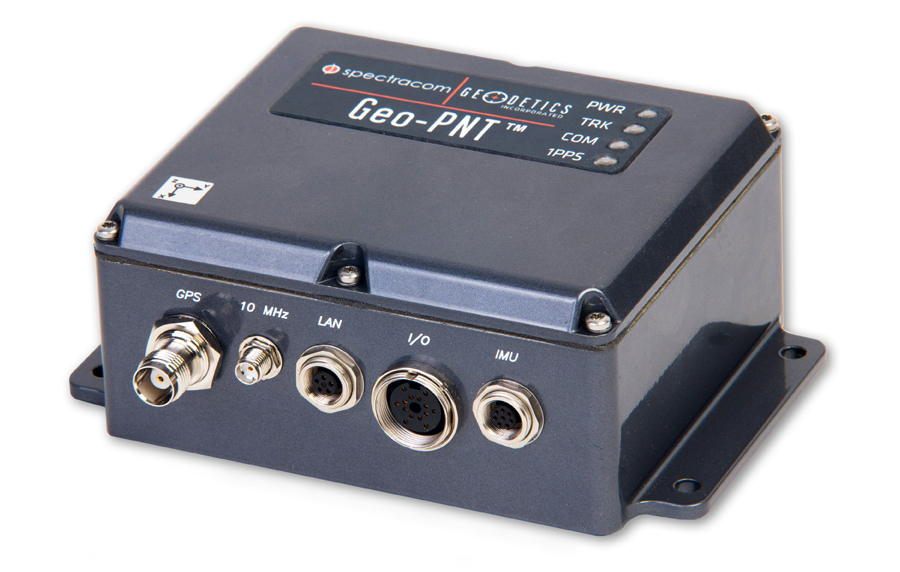
    Spectracom's Geo-PNT Photo: Spectracom
    Spectracom’s Geo-PNT integrates precision references for position, attitude, and timing. Photo: Spectracom

    A new combination master clock and GPS-aided inertial navigation system is now available from Spectracom to reduce redundant subsystems in mobile applications. The Geo-PNT integrates precision references for position, attitude, and timing all in one box. Applications include radar, optoelectronic sensing, electronic warfare, satcom on the move, and mobile test platforms.

    Geo-PNT benefits any mobile intelligence, surveillance, and reconnaissance (ISR) platform because signal/electronic intelligence applications require precision positioning, navigation, and timing references. Electro-optic sensors and other imaging technologies, antenna steering, and encrypted communications always need a combination of precision motion compensation, geolocation, time stamping, and frequency reference.

    The high degree of integration within the Geo-PNT supports the goals of low size, weight and power (SWaP) and cost optimization while achieving a high level of performance for ISR platforms and mobile communications systems. A single subsystem for all PNT functions in a volume of about 40 cubic inches is about three times less than the traditional approach of deploying dedicated devices.

    The Geo-PNT is a highly configurable platform to provide the capabilities needed for the mission:

    • Single-box solution combining precision local oscillator, inertial motion unit (IMU), and GPS receiver.
    • Configurable output interfaces for timing and navigation.
    • Standalone or RTK/differential GPS, commercial (non-ITAR) or SAASM GPS receiver.
    • Choose from a variety of IMUs to meet performance specifications.
    • NTP server, precision 1PPS, 10 MHz with low phase noise.
    • Rugged and tested to MIL-STD-810G.
    • Low SWaP (< 0.7 liters, <0.8 Kg, <10 watts).

    “Our time and frequency technology, combined with geodetics positioning and navigation capability in the same module, provides an opportunity for platform designers to lower SWaP requirements while staying within the limits of today’s demanding system specifications,” said Rohit Braggs, Spectracom’s sales and marketing VP.

    Geo-PNT is the latest example of Spectracom’s flexible configure-to-COTS approach. The use of commercial technology reduces lead time and offers the lowest cost of ownership for both standard and semi-custom configurations. Hardware and software can be adapted to meet the needs of the application.

  • DARPA Seeks Ideas for UAS Aircraft Carrier in the Sky

    The Defense Advanced Research Projects Agency (DARPA) is asking for input on how to launch and recover multiple small unmanned air systems (UAS) from existing large aircraft, such as the C-130. It has issued a Request for Information (RFI) seeking technical, security and business insights on “aircraft carriers in the sky.”

    In DARPA’s “blended approach,” a large aircraft would host a small UAS and facilitate its operations. The agency says it would be more cost-effective for intelligence, surveillance, reconnaissance (ISR) and other missions.

    Safety is another key aspect of the project. While small UAS can reduce putting an aircraft or pilot at risk, DARPA says it may lack the speed, range and endurance of larger aircraft.

    “We want to find ways to make smaller aircraft more effective, and one promising idea is enabling existing large aircraft, with minimal modification, to become ‘aircraft carriers in the sky,’” said Dan Patt, DARPA program manager. “We envision innovative launch and recovery concepts for new UAS designs that would couple with recent advances in small payload design and collaborative technologies.”

    The RFI is calling for short responses — no more than eight pages — that must address the following three areas:

    1. System-level technologies and concepts that would enable low-cost reusable small UAS platforms and airborne launch and recovery systems that would require minimal modification of existing large aircraft types. This area includes modeling and simulation as well as feasibility analysis, including substantiating preliminary data if available.
    2. Potentially high-payoff operational concepts and mission applications for distributed airborne capabilities and architectures, as well as relative capability and affordability compared to conventional approaches (e.g., monolithic aircraft and payloads or missile-based approaches). DARPA hopes to leverage significant investments in the area of precision relative navigation, which seeks to enable extremely coordinated flight activities among aircraft, as well as recent and ongoing development of small payloads (100 pounds or less).
    3. Proposed plans for achieving full-system flight demonstrations within four years, to assist in planning for a potential future DARPA program. DARPA is interested not only in what system functionality such plans could reasonably achieve within that timeframe, but also how to best demonstrate this functionality to potential users and transition partners. These notional plans should include rough order-of-magnitude (ROM) cost and schedule information, as well as interim risk reduction and demonstration events to evaluate program progress and validate system feasibility and interim capabilities.

    According to a news release by DARPA, technology development beyond the three areas will be considered if it supports the RFI’s goals.

    Proposals are due by 4 p.m. ET on Nov. 26, 2014, to [email protected].

  • Yield Monitoring Market Worth $2.51 Billion by 2020

    According to a new market research report published by MarketsandMarkets, the total Yield Monitoring Devices and Services Market is expected to reach $2.51 Billion by 2020, growing at a CAGR of 7.17% from 2014 to 2020.

    The report, “Yield Monitoring Devices and Services Market by Technology (GPS/GNSS, GIS, Remote Sensing), Components (Sensors, GPS/GNSS, Display, Guidance & Steering, and Software & Services), Application (VRA, Field Mapping, Soil Monitoring, and Scouting), and Geography – Global Forecasts to 2020”, is available now. It includes 65 market data tables and 64 figures spread through 208 pages and an in-depth TOC.

    Yield monitoring is considered by farmers to be essential as yield data is recorded automatically while harvesting crops. Yield monitoring and mapping offers many other on-farm and off-farm benefits such as real-time availability of information, creation of a spatial database, and evaluation of whole-field improvements. Yield monitoring devices and services are implemented for site-specific farming, which ensures better efficiency, high yield, and profitability with optimum usage of resources. Yield monitoring techniques have major applications in variable rate application (VRA), soil monitoring, field mapping, and crop scouting.

    Despite the rapid growth of global commerce and the widespread availability of equipment for yield monitoring and VRA, adoption rates appear to differ sharply from one country to another. The increasing demand for food is propelling the growers to adopt yield monitoring techniques and optimize their resources efficiently with minimum wastages.

    The report provides a detailed segmentation by technology, component, and application. The geographic analysis covers all existing and emerging technologies in the yield monitoring devices and services market. The market based on technology is segmented into guidance system and remote sensing. The market based on hardware components and software is segmented into hardware components such as sensors, GPS/GNSS devices, display devices, guidance, and steering; and software services such as yield data management software as well as consulting and training services. The report also covers major applications of yield monitoring techniques such as field mapping, VRA, soil monitoring, and crop scouting with qualitative and quantitative industry insights.

    One of the objectives of the report is to analyze market trends for each of the Yield Monitoring Devices and Services Market segments and their respective growth rates. Apart from market segmentation, the report also covers an in-depth analysis such as Porter’s five force analysis, supply chain with a detailed process flow diagram, and market dynamics such as drivers, restraints, and opportunities for this market.

  • Dark-Matter Detectives: the Clocks Aboard GPS Satellites

    “Networks of correlated atomic clocks, some of them already in existence, such as the Global Positioning System, can be used as a powerful tool to search for topological defect dark matter, thus providing another important fundamental physics application for the ever-improving accuracy of atomic clocks,” write physicists Andrei Derevianko and Maxim Pospelov in the current issue of Nature Physics journal.

    Derevianko teaches at the University of Nevada, Reno, and Pospelov at the University of Victoria and the Perimeter Institute for Theoretical Physics in Canada. Derevianko and Geoff Blewitt, director of the Nevada Geodetic Laboratory at the University of Nevada, Reno are testing this dark-matter detection theory by analyzing clock data from atomic clocks aboard GPS satellites, searching for instances where initially synchronized clocks might have become desynchronized. They expect time discrepancies between spatially separated clocks to exhibit a distinct signature, one that may reveal the nature of spatial dark matter.

    The Geodetic Lab developed and maintains the largest GPS data processing center in the world, according to a University of Nevada statement, able to process information from about 12,000 stations around the globe continuously, 24/7.

    “We know the dark matter must be there,” explains Blewitt, “because it is seen to bend light around galaxies, but we have no evidence as to what it might be made of. If the dark matter were not there, the normal matter that we know about would not be sufficient to bend the light as much as it does. That’s just one of the ways scientists know there is a massive amount of dark matter somewhere out there in the galaxy. One possibility is that the dark matter in this gas might not be made out of particles like normal matter, but of macroscopic imperfections in the fabric of space-time.”


    Blewitt was featured in the May 2009 issue of GPS World as a “GNSS Leader to Watch” and co-authored “The Effect of Weather Fronts on GPS Measurements,” the Innovation column of the May 1998 issue. Blewitt also gave a presentation on the topic at IGS Workshop 2014, held June 23-27 in Pasadena, Calif.

    “Despite solid observational evidence for the existence of dark matter, its nature remains a mystery,” said Derevianko. “Some research programs in particle physics assume that dark matter is composed of heavy-particle-like matter. This assumption may not hold true, and significant interest exists for alternatives.

    “Modern physics and cosmology fail dramatically in that they can only explain 5 percent of mass and energy in the universe in the form of ordinary matter, but the rest is a mystery.”

    Scientific evidence reportedly shows that dark energy constitutes about 68 percent of the mystery mass and energy. The remaining 27 percent may be dark matter, though it has never been detected or measured.

    “Our research pursues the idea that dark matter may be organized as a large gas-like collection of topological defects, or energy cracks,” Derevianko added. “We propose to detect the defects, the dark matter, as they sweep through us with a network of sensitive atomic clocks. The idea is, where the clocks go out of synchronization, we would know that dark matter, the topological defect, has passed by. In fact, we envision using the GPS constellation as the largest human-built dark-matter detector.”

  • Telenav Makes Free Scout App More Intuitive

    Telenav Makes Free Scout App More Intuitive

    Scout_TeleNav Photo: Telenav
    Photo: Telenav

    Location-based services company Telenav has announced new capabilities and updates to its free Scout mobile application that make the process of connecting and getting together easy and fun. Scout users can now manage the details of creating an event, contacting and inviting friends, choosing a location, communicating with the group and navigating, all within the updated Scout application. Scout is powered by OpenStreetMap.

    For iOS devices, the new app experience will offer predictive, intuitive traffic push notifications for users’ everyday trips, eliminating the need to manually check for traffic delays. The newest version of Scout is now available from Google Play for Android and iTunes for iOS.

    The results of a new survey from Telenav underscore the common pain points of planning events, meet-ups and meetings for consumers — especially Millennials — which Telenav is aiming to help alleviate with the updated Scout app. Nearly half (49 percent) of Millennials reported that they would find it useful to have a single solution that enables them to plan an event, communicate with attendees while they’re en route, and see each other’s estimated time of arrival.

    “Mobile users have come to expect more out of their navigation devices and applications,” said Rohan Chandran, president and general manager of Telenav’s mobile division. “Navigation alone is critical, but it is a commoditized utility. We are looking to embrace the things that people really care about — the experiences in real life for which you navigate. Getting together should not be hard work, and we are trying to solve that. Scout is the new way people connect, get together, and go places in real life. It’s the only app that takes you all the way from chatting, to making event plans, to getting together in person, complete with voice-guided GPS along the way and everyone’s whereabouts and ETA pinpointed on the map.”

    Scout’s new in-application features include:

    • Socialized Navigation Experience. In addition to offering invitees voice-guided, turn-by-turn directions to the event destination, Scout offers real-time location and ETA insights so guests are able to view the positioning of other guests on the navigation map. This prevents a barrage of “Where are you?” texts and calls while en route — and eliminates questions about where directionally challenged or perpetually tardy friends are.
    • Easier Meet-Up Invitations. Scout replaces what typically requires multiple applications by conveniently taking care of all the details of getting together, from inviting guests on their contact lists, to picking a day, time and location. “Did I get an invite?” and “what time is the event taking place?” are the last questions that organizers will be asked.
    • Group Chat. For the friend who is always left out, Scout users can now chat with all of the other event attendees directly within the app, allowing them to avoid juggling multiple text and phone conversations, and easily adjust and discuss the details of an event.
    • Predictive, Personalized Traffic Reports (iOS Devices Only). Users can schedule traffic report updates informing them of road conditions for their regular drives, and recommended alternate routes.

  • Russia and China Agree on SatNav Joint Venture

    China North Industries Corporation (NORINCO) and the Russian GLONASS nonprofit partnership agreed to establish a joint venture to promote worldwide services based on GLONASS and BeiDou, according to a report in the Russian daily newspaper izvestia

    The two parties met November 11 in the Chinese city of Zhuhai. Under the agreement, the parties will identify existing technological competence that will be the foundation for the joint venture, and seek government support for joint initiatives to promote abroad.

    Before the establishment of the joint venture, the parties agreed to establish a Russian-Chinese center for the implementation of satellite navigation technologies in the civil sphere. According to the agreement, “The center will be the controlling authority in determining the future direction of the joint venture and will deal with administrative issues related to the establishment of the future joint venture.”

    Another topic at the meeting was the feasibility of establishing an international techno park dedicated navigation topics using GLONASS and BeiDou. China already has two specialized industrial park focused on developing technologies based on BeiDou.

    NORINCO is a Chinese company that manufactures vehicles, machinery, optical-electronic products, oil-field equipment, chemicals, light industrial products, explosives and blast materials, and civil and military firearms and ammunition. NORINCO is also involved in domestic civil construction projects.