Author: GPS World Staff

  • The System: GLONASS Fumbles Forward

    The System: GLONASS Fumbles Forward

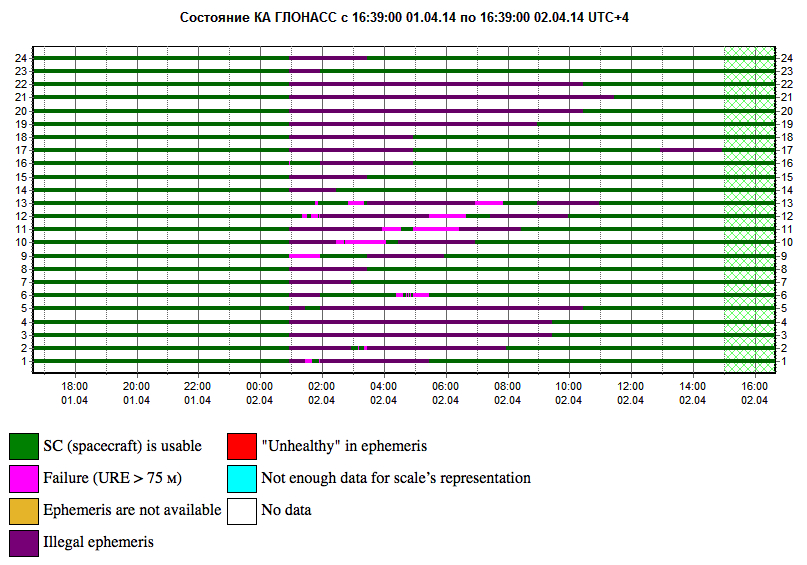
    GLONASS PLOT from the Roscosmos GLONASS Information-Analytical Centre, showing the 12-hour outage, with full service eventually restored on April 2.
    GLONASS PLOT from the Roscosmos GLONASS Information-Analytical Centre, showing the 12-hour outage, with full service eventually restored on April 2.

    Two April Disruptions Furnish Fodder for Multi-GNSS Receivers and Alternative PNT

    In an unprecedented total disruption of a fully operational GNSS constellation, all satellites in the Russian GLONASS broadcast corrupt information for 11 hours, from just past midnight until noon Russian time (UTC+4) on April 2 (or 5 p.m. on April 1 to 4  a.m. April 2, U.S. Eastern time). This rendered the system completely unusable to all worldwide GLONASS receivers. Full service was subsequently restored.

    “Bad ephemerides were uploaded to satellites. Those bad ephemerides became active at 1:00 a.m. Moscow time,” reported one knowledgeable source. GLONASS navigation messages contain, as they do for every GNSS in orbit, ephemeris data used to calculate the position of each satellite in orbit, and information about the time and status of the entire satellite constellation (almanac); user receivers on the ground processed this data to compute their precise position.

    The GLONASS fix could not take effect until each satellite in turn could be reset, during its pass over control stations in Russian territory, in the Northern Hemisphere, thus taking nearly 12 hours.

    During the outage, CEO Neil Vancans of Altus Positioning Systems reported “We are currently experiencing calls from customers all over the world who are experiencing GLONASS ‘outages’ and we have advised customers to switch GLONASS tracking off on our receivers.”

    Such a — possibly human, possibly computer-generated — error could conceivably occur with GPS, Galileo, or BeiDou. “Another reason to have backups,” mused Richard Langley of the University of New Brunswick. “And not just other GNSS.”

    Trouble Chronolog. The constellation suffered a second failure two weeks later. On April 14, eight GLONASS satellites were simultaneously set unhealthy for about half an hour, meaning that most GLONASS or multi-constellation receivers would have ignored those satellites in positioning computations. In addition, one other satellite in the fleet was out of commission undergoing maintenance. This might have left too few healthy satellites to compute GLONASS-only receiver positions in some locations.

    The two blackouts followed two other high-profile disasters: the destruction-upon-launch of three new GLONASS satellites in July 2013, and the Pacific drowning-upon-launch of three satellites in December 2010.

    Internal Dialog. The semi-official Russian news daily Izvestia (“Truth”) reported that the loss of service was inconsequential for Russian users. Loose translation courtesy of Google:

    “Temporary GLONASS failure has not led to tangible consequences for consumers of services because chip manufacturing exclusively with GLONASS for the mass market is practically nil: there are chips that work only with the GPS signals, and there are those that see both GPS and GLONASS.”

    In other words, there are practically no mass-market devices, even in Russia, that use exclusively GLONASS.

    “In any case, the failure of the entire system for a long period is a serious blow to the image of GLONASS, especially in a situation where Russia has made efforts to promote domestic navigation system to external markets. Plus in 2012, the Russian government officially promised to maintain the characteristics of the international community GLONASS at the proper level for 15 years.”

    Industry View, Multi-GNSS. During the first outage, chip company Broadcom was conicidentally conducting multi-constellation receiver tests in Asia. Frank van Diggelen, the company’s chief GNSS scientist, stated, “We have definitive data to show how a multi-constellation receiver survives such an outage. Test data coincident with the GLONASS ephemeris disruption show how a GPS/GLONASS/QZSS/BeiDou receiver survives the complete disruption of one of the constellations.”

    A Broadcom 47531receiver tracking GPS/GLONASS/QZSS/BeiDou signals simultaneously and using logic to analyze redundant measurements to check the validity of all measurements successfully identified and removed the bad GLONASS ephemeris, maintaining position continuity and accuracy. Another receiver under test at the same time, tracking only GPS and GLONASS, wandered significantly in its position reports.

    Industry View, Back Up PNT. Calling it an “unprecedented and deeply worrying total disruption…[that] shook the industry,” Locata Corporation reiterated its call for redundant terrestrial systems to back up GNSS in the wake of the outage.

    Nunzio Gambale, Locata CEO, said “We have been telling the industry for years that you cannot have a critically important capability like GPS without also having a backup! What is Plan B if the satellite systems fail? What replaces the space signal when there is a problem? This event should terrify every nation, government, and company that depends on navigation satellites for their business or, in some cases, their very lives.”

    GNSS navigation and timing functions underpin the world’s banking systems, stock exchanges, digital TV and Internet, cell-phone networks, and, in some cases, the national electricity supply, Locata pointed out. GPS, in particular, plays a crucial role in transportation, shipping, and logistics, serving as the enabling technology for critical functions like air traffic control. Reliability is therefore not just important; it is essential across all applications.

    “We ignore the possibility of these ‘Black Swan’ events at our own peril,” added Chris Rizos of the University of New South Wales.

    eLoran Authorization in Progress

    Russia’s April 1 GLONASS blackout occurred, ironically, only hours after the U.S. House of Representatives passed legislation to preserve infrastructure that could support a backup system for GPS that could be used for critical infrastructure and applications in the event of a similar disaster occurring in the United States.

    The 2014 Coast Guard Authorization Act requires the Department of Homeland Security (DHS) to halt dismantling and disposal of infrastructure that could be used for a terrestrial system during times and in places where GPS is not available.

    DHS had announced in 2008 that it would build such a backup system, but it never did so, and actually began dismantling, destroying, and divesting itself of Loran equipment and properties. The equipment, facilities, and sites could be used to implement a new generation eLoran system for GPS backup, among other applications. Despite strong recommendations to the contrary by its own panel of experts, the Obama administration, DHS, and the Coast Guard moved in 2009 to kill the Loran program.

    Watchdogs. Congress has lately become more visibly concerned about the vulnerability of the nation’s space systems. The 2014 National Defense Authorization Act tasked the administration with reporting on how it was going to provide necessary national security capabilities when space systems were disrupted. More recently, Congressmen Duncan Hunter (Republican, California), chair of the House Coast Guard and Marine Transportation Subcommittee, held a hearing at which he expressed his concern that the nation has no backup for GPS. He also expressed his frustration with the Department of Homeland Security, reporting that “They said they need to do a study about their study.”

    Congressman John Garamendi (Democrat, California), commented “GPS will go down one day. The question is, is there a backup?”

    The legislation passed by the House authorizes DHS to partner with public or private entities to build a system that would not only back up GPS, but also work indoors, underground and underwater — all characteristics of long-wave Loran technology.

    Resilient PNT. Dana Goward, president of the Resilient Navigation and Timing Foundation, said such a project would be relatively inexpensive. “If the existing equipment and infrastructure are preserved and reused, the system could be restored and put into operation for less than half the cost to dispose of it.”

    “It isn’t an issue of money,” Goward continued. “It is a question of the government taking this problem seriously and acting on it.”

    The foundation has as offered to partner with the government to build the system.

    “Our government has known about this issue for a long time,” Goward said. “At least since 2001. And there has been a standing presidential direction to obtain backup capability since 2004. But for some reason, it hasn’t yet happened.”

    The government’s official website about GPS (www.gps.gov) has recently updated its page on eLoran and Loran-C with a tracking log for Coast Guard and Maritime Transportation Act of 2014, which now goes to the Senate.

    IRNSS’s Second of Seven

    India’s Space Research Organisation launched a navigation satellite on April 4. IRNSS-1B is the second of seven that will comprise the first-generation Indian Regional Navigation Satellite System (IRNSS). It joins IRNSS-1A, already in orbit.

    IRNSS will consist of three geostationary satellites and two pairs in inclined geosynchronous orbits. Each IRNSS satellite uses a rubidium-based atomic clock to keep time, transmitting signals on L and S-band frequencies at 1176.45 and 2492.028 megahertz respectively.

    Lag in Recent GPS IIF’s Health Status

    By Richard Langley

    The GPS Block IIF satellite, IIF-5 or SVN64 (PRN30), launched on February 21, had not as of press time been set healthy. Typically, GPS satellites are checked out and made operational within about a month after launch.

    The delay is due to an extended navigation test being performed by the GPS master control station. A navigation upload for SVN64 was performed in March with ephemeris and clock data as usual streching weeks in advance. However, unlike with operational satellites, no further updated uploads have been performed. The aging ephermis and clock data gradually becomes less and less accurate as time goes by, but should degrade gracefully.

    Some observers will have noticed that the received navigation data from SNV64 changes infrequently. Currently, the navigation data changes once per day with an epoch of 13:00 GPS Time, unlike every two hours with operational satellites. And the data fit interval is 26 hours, compared to four hours.

    The test is scheduled to run until mid-May.

     

  • Raven Industries Acquires SBG Innovatie BV and Navtronics BVBA

    Raven Industries, Inc. announces that its Applied Technology Division (ATD) has acquired SBG Innovatie BV and its affiliate, Navtronics BVBA. Headquartered in Middenmeer, Netherlands, SBG manufactures advanced GPS steering systems for a variety of agricultural applications. The acquisition broadens Raven’s guided steering system product line by adding high-accuracy implement steering applications. Additionally, SBG’s headquarters will become the new home office for Raven in Europe, expanding the company’s global presence and reach into key European markets. The purchase is not expected to have a material impact on Raven’s fiscal 2015 results.

    “SBG specializes in very precise, real time kinematic, or RTK, GPS steering systems with a focus on high-value crops. Their highly accurate implement steering technology broadens Raven’s existing product line and integrates well into the Raven product portfolio.” said Matt Burkhart, ATD’s Division Vice President and General Manager. “We are proud to welcome the SBG organization into the Raven family. Our innovative cultures align very well, and SBG’s leading technology and strong team members will be a great compliment to further Raven’s position as a leader in the precision ag market.”

    “Our priorities within ATD are to drive growth through international market expansion, new products and broadening OEM relationships,” said Daniel A. Rykhus, Raven’s president and chief executive officer. “We believe SBG can help further these strategies and position us for success in new markets.”

    “We’re excited to join Raven so that, together, we can expand Raven’s footprint in key geographies and augment their expertise and product line,” said Rik van Bruggen, managing director of SBG.  “In turn, Raven’s scale and resources will allow SBG to realize our dream of growing the business and helping customers increase yields and efficiencies. Raven is a good partner for us because they are committed to increasing their presence in Europe and providing additional opportunities for our team.”

    Effective immediately, SBG’s products will be offered as a part of Raven’s lineup of precision ag products. Sales team members from both companies will be offering the combined product lines.

  • Trimble Irrigate-IQ Solution Now Available in North America

    Trimble is making available the Trimble Irrigate-IQ precision irrigation solution in North America. Along with the North American launch, Trimble also introduced the Connected Farm Irrigate app, which provides farmers with real-time status and control of their pivot irrigation systems using a smartphone or tablet.

    The Irrigate-IQ GPS-controlled solution, which is installed on the pivot, enables farmers to remotely control their irrigators via the Internet, including performing variable rate irrigation, and receive reports about where water or fertilizer has been applied. With the solution, farmers can apply the optimal amount of water, fertigation or effluent where needed, which can improve crop quality and yield, while minimizing nutrient and chemical runoff. The solution enables farmers to conserve water use and improve efficiency, reduce energy costs for fuel and electricity, minimize input costs, comply with environmental regulations, and safely dispose of effluent. In addition, Trimble’s brand-agnostic strategy allows farmers to use the solution with most irrigator makes and models. Irrigate-IQ is also available in New Zealand.

    In addition, Trimble introduced the Connected Farm Irrigate app for use on an iPhone, iPad, Android smartphone or tablet. The app allows farmers to see the status of their pivots, including whether they are operating or not operating, in which direction they are traveling, the heading, pump pressure, pivot voltage and type of material being dispersed (water, fertigation, or effluent). It also gives farmers the ability to remotely start or stop their pivots, choose the direction (forward or reverse), turn the pump on or off or switch the type of material being dispersed. This new functionality comes in addition to farmers’ ability to remotely control their irrigators by accessing the Irrigate-IQ software on a desktop or laptop computer, rugged mobile computer or tablet.

    “Now that Trimble has expanded availability of its Irrigate-IQ solution, and launched the Connected Farm Irrigate app, farmers across North America and New Zealand will be able to monitor and control their irrigators from virtually any location,” said David Fitzpatrick, business area director of Trimble’s Agriculture Division. “Irrigate-IQ allows farmers to be more strategic with their irrigation planning, while the app creates time savings and increased efficiencies by allowing farmers to respond to weather changes or faulty equipment on the fly without being on site.”

    The Irrigate-IQ solution and Connected Farm Irrigate app are both part of Trimble’s Connected Farm solution, which includes a robust suite of recently announced features including soil analysis, rainfall totals, weather forecasts, commodity tracking, and now irrigation monitoring and control.

  • Tracker for Children, Pets Integrates u-blox GNSS, Cellular Technologies

    Tracker for Children, Pets Integrates u-blox GNSS, Cellular Technologies

    The Trax personal tracker for children and pets uses a u-blox receiver.
    The Trax personal tracker for children and pets uses a u-blox receiver.

    Swedish WTS (Wonder Technology Solutions) has launched Trax, a personal tracking device for children and pets. Based on a u-blox GNSS receiver module with integrated antenna and cellular module, the tiny tracker can be located anywhere, anytime via a free Android or iPhone mobile phone app.

    In addition to real time tracking, Trax provides flexible geofence alerts, and can monitor how fast your teenager is driving. It also works indoors, thanks to a proprietary dead-reckoning algorithm that delivers a position even when satellites are out of sight. Accurate down to 1.5 meters, the robust, water resistant device also provides an “augmented reality” mode that helps users locate their trackers using a smartphone’s built-in camera view.

    To achieve the smallest possible size, Trax uses a u-blox’ CAM-M8Q GNSS receiver module with a built-in antenna. CAM-M8Q (chip antenna module) provides both small size (9.6 x 14.0 x 1.95 mm) and multi-GNSS capability. It is based on a u-blox M8 chip and includes an integrated chip antenna plus SAW filter, LNA, TCXO, RTC crystal and passives. The surface-mount module is also extremely low in height making very thin customer designs possible.

    “Trax is the world’s smallest and most versatile personal tracking device available, packed with features designed to provide peace of mind to parents and pet owners almost anywhere in the world,” said Fredrik Danelius, Managing Director at WTS, “By combining the leading GNSS and cellular technologies from u blox, we have designed a tiny, reliable, low-cost device that protects our most valuable family members: children and pets.”

    Trax comes with an integrated SIM-card and two years of free data and roaming in 33 countries. It is charged via USB and typically lasts between two and four days on a full battery. For wireless connectivity, device integrates a u blox SARA-G3 GSM/GPRS module which is footprint compatible with the SARA-U2 UMTS/HSPA module for easy 2G to 3G upgrade.

    “Trax is an elegant and sophisticated example of our embedded GNSS and cellular modules combined to protect people’s loved ones,” said Pasi Alajoki, Area Sales Manager at u-blox, “It is an extremely important application of our mobile communications and global positioning technology where performance, size and power consumption play a critical role. We are proud WTS chose u-blox for Trax.”

  • DeCarta Search Engine for LBS Expands to 120 Countries

    deCarta, Inc., an independent LBS platform company, has expanded coverage of its advanced local search technology, the L2 Geospatial Search Engine, to 120 countries including Europe, North America, and most major countries around the world.

    L2 is a high-performance, scalable local search engine with single line input to enable a more intuitive user interface, the company said. deCarta sources and indexes premium map and POI (Points of Interest) content but also enables customers to index and control their own content using the L2 Index tools.

    deCarta’s L2 has advantages over most other search engines in that it can be used as a pure geocoder for address search, or for POI search….or simultaneously as a combination of the two mixed in a single line search query – with the additional ability to tune this behavior at runtime. This gives developers maximum flexibility and creativity in producing their mobile and desktop applications. The new expanded country coverage now enables deCarta customers to offer truly global services.

    The L2 Search engine is an integral component of deCarta’s LBS platform which provides specialized geospatial technologies for maps, routing, navigation, geocoding, local search and geo-data integration and processing. deCarta offers two deployment models for its LBS platform: a Hosted LBS Platform Service (PaaS) or, alternatively, customers can self-host the platform either on-premise or in a cloud service such as Amazon’s AWS. Both approaches utilize deCarta’s advanced REST API architecture and can scale to support billions of maps and searches and millions of users per month.

    L2 enables deCarta’s customers to offer flexible, advanced local search capabilities that are on par with Google Maps but beyond other search engines, deCarta said. Examples include:

    • Single line entry of POI or address or both
    • Fast typeahead, predictive entry – ideal for mobile devices and web interfaces
    • High tolerance for misspellings and partial entries
    • Random ordering of address parameters
    • Search for a POI near a POI, such as:
      • “Coffee near XYZ company”
      • “Restaurants on Main Street”
      • “ATMs near AMC Theater”
    • Search for POI near a specific address, such as “Parking near 1234 Main Street”

    Furthermore, the ability to integrate L2 with deCarta’s patented “Search Along A Route” technology gives automotive OEMs and Telematics Service Providers the ability to offer more advanced and helpful “driver-centric” connected car services.

    “We are excited by the market reaction to L2 since its introduction last year,” said J. Kim Fennell, CEO of deCarta. “We’re winning business competing with, and in some cases replacing, major local search engines such as Google Maps based on the merits of L2’s technology advantages, customization capabilities, flexible content offerings, less restrictive license terms and our superior customer service – all of which creates a more satisfied customer experience.”

    deCarta offers a “house blend” of premium map and POI content with L2. It works closely with worldwide and regional map data providers including TomTom, Nokia/HERE, OpenStreetMap (OSM), AND, Sensis, IPC, Nav2 and eMapgo; as well as leading POI providers and other content sources (traffic, parking, weather, speed cameras, etc). deCarta integrates and de-duplicates multiple content sources for optimum search results.

    deCarta provides the tools to let companies index and search on their own content for maximum control and commercial advantage. This content can stand alone or be merged with industry map and POI content. Customers can “boost” content and control rankings to suit their needs. These capabilities provide huge benefits for local search companies, Automotive OEMs and telematics service providers seeking to offer their users the best customer care and connected car services.

    For more information on L2, please visit deCarta’s web site at www.decarta.com or go straight to the demo. Developers can find more technical details at deCarta’s DevZone.

  • Expert Advice: The Range of UAVs Across Civil Applications

    Expert Advice: The Range of UAVs Across Civil Applications

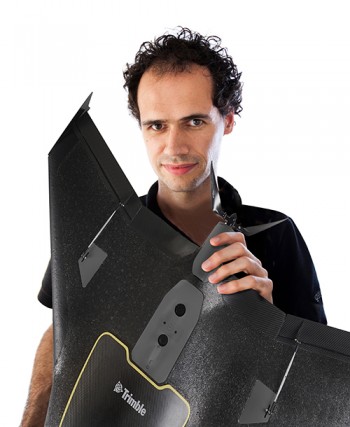
    Peter Cosyn, Trimble
    Peter Cosyn, Trimble

    By Peter Cosyn, Trimble

    Unmanned aerial vehicles (UAVs), or as most civil aviation authorities now call them, unmanned aircraft systems (UASs), are attracting a lot of attention lately from geospatial professionals. Common questions in their minds are:

    • What applications can I use it in?
    • What benefits can it provide to my organization or my clients (or data users)?
    • How do I implement such a system in my organization?

    This article will cover the first two questions, while addressing some of the third as well.

    High-Level System

    Unmanned aircraft are either a fixed-wing (plane) or a multi-rotor (helicopter) design. Typical fixed-wing UAS available today are equipped with wide-angle cameras that fly about 100 meters, more or less, above the ground. Multi-rotors, with their ability to hover, move vertically — and even fly in reverse — may sometimes be operated at lower heights above ground. A greater diversity of sensors are being developed and offered specifically for small UAS platforms. Some of these include near-infrared cameras, miniaturized laser imaging detection and ranging (LiDAR) scanners, and even sensors that enable hyper-spectral or multi-spectral capabilities. The typical system runs on electrical power, and flights last between 30 and 60 minutes, often less for multi-rotors because of the greater amount of energy needed to achieve a mission. Depending on the endurance and speed of fixed-wing aircraft, typical coverage is around 1 to 1.5 square kilometers (100–150 hectares). For multi-rotors the area covered is much less; it could be as little as 10 percent to as much as 30 percent of what can be achieved with a fixed-wing UAS.

    UAS image-processing is usually done using close-range photogrammetric techniques adapted to exposures taken in flight. This allows accurate construction of photogrammetric models that approach the quality achievable with much more sophisticated manned aerial systems flying at much higher altitudes.

    With these technologies, photomosaic, orthophotographs, digital terrain models (DTMs), digital surface models (DSMs), and point clouds can be output. Without ground control, the models have decimeter-level internal consistency in X, Y, and Z. With much sparser ground control than is typically required for conventional photogrammetry, good-quality models with centimeter-level accuracy registered to the ground control can be rapidly generated at much lower costs than most other methods of achieving similar results. That, however, doesn’t make today’s UASs a solution for all aerial surveying and mapping situations; but where their application is appropriate, they bring benefits that are sometimes unique.

    Some of the more common applications of UAS-based mapping appear in the two-part table here, with a limited set of users and data consumers for each type, and special benefits that may be unique to UAS aerial imaging.


    Superior Adaptability. UAS aerial imaging can provide flexibility unsurpassed by other technologies. Portable equipment that can function in a wider variety of adverse weather means that mapping can be done closer to the time of need. Because mobilization and flight cycles are short, flights can be done hourly or more frequently in urgent situations such as floodwater or fire tracking. Cloud cover is rarely a problem as unmanned aircraft typically fly below the clouds.

    In fact, in some parts of the world it is being considered as the only mapping tool for aerial mapping as the weather, availability of aircraft, other equipment and trained personnel rarely coincide to allow opportunities for conventional aerial mapping. When focused areas need to be mapped with timely generation of data products under conditions — weather, hazard limitations, or closely spaced visitations — that test the capabilities of other tools, the selection and successful use of UAS in such situations is only limited by the solution-provider’s creativity.

    Regulatory Framework. Operational issues and working within a nation’s civil aviation regulatory framework must be examined in detail before an organization decides to acquire and fly UAS for geospatial applications. UAS flying is highly process-oriented. It involves much more planning and preparation than the typical use of ground-based technologies involves. Training of flight crews and data processing teams is more than just an up-front investment. It is necessary for flight crews to maintain current skill levels through non-revenue flights if the revenue flight schedule is widely spaced in time.

    The state of regulations vary from country to country, but fliers in any locality must also be aware of the restrictions on flying in the national airspace that may have been imposed by the civil aviation authority that covers sub-sections of the airspace or that restrict how or where an UAS may be flown. This includes restrictions on flights near airports and aircraft routes, flights over populated or urban areas and maximum and minimum flying heights over ground level. A common limitation is to restrict flights to areas that are within visible line-of-sight of the UAS pilot.

    UAS are not a panacea for all mapping problems. Satellites, high-altitude photogrammetry, fixed-ground, mobile terrestrial and manned aircraft LiDAR, and ground-based techniques all have their place, especially when large areas are to be mapped at widely spaced time intervals. But geospatial data managers will be surprised to see how nagging problems — as well as some they didn’t recognize as problems — can be solved with UAS-based mapping.


    Peter Cosyn is site manager and director of research and development of Gatewing, a Trimble company. He is a co-founder of Gatewing, which was launched in 2008. Cosyn earned a Ph.D. in electromechanical engineering from Ghent University. He has more than 10 years of experience in unmanned aircraft system design.

  • Leadership Talks: OEM Perspective on UAV Trends, Challenges

    Leadership Talks: OEM Perspective on UAV Trends, Challenges

    Interview with Graham Purves, Executive Vice President, NovAtel


    Graham Purves, NovAtel
    Graham Purves, NovAtel

    GPS World (GPSW): In the regulatory picture for unmanned autonomous vehicles (UAVs), what are the concerns for the GNSS research, design, and manufacturing community regarding air-space regulation?

    Graham Purves (GP): The main concern is the scope and impact of certification requirements for UAV navigation systems in the National Air Space. Certification places constraints on software complexity, so it is difficult to define solutions if the certification framework is unclear.

    In the context of current avionics for civil aviation, design standards and certification requirements are well defined. In the case of pilot-less aircraft, the navigation systems may make use of additional features and technologies that are not part of the current certification paradigm. Examples are tightly coupled inertial navigation systems (INS) for flight control and redundancy, and real-time kinematic (RTK) and differential GPS for landing and capture. Certification requirements and design assurance levels for these features will have a major impact on the definition and design process, and may even prevent some effective technical solutions from being used, due to the software complexity. Of course, communications and communication standards will also present a significant hurdle.

    GPSW: What are the concerns for the GNSS research, design, and manufacturing community regarding vehicle/road regulation for UGVs?

    GP: Similar answer. The software used in positioning and navigation systems is significantly more complex than the safety-critical software in current automotive systems. Regulation for UGVs may result in restrictive certification requirements that affect or prohibit the use of more complex software. Until we have a clear understanding of the certification framework, it is difficult to define technical solutions.

    GPSW: In looking forward to the Federal Aviation Administration tests at six sites for integrating unmanned aerial vehicles into the commercial airspace safely, what are some of the technical challenges that you (and presumably NovAtel’s partners) are facing?

    GP: We have proven some excellent technical solutions in the non-civil applications and believe the main barrier is not a technical but a regulatory challenge.

    GPSW: What other pieces/technologies do you have to pull into the UAV/UGV integration to make it work? Inertial, certainly. What else?

    GP: The UAV/UGV application is a very interesting arena for other positioning technologies that either augment or complement GNSS. Apart from navigation and auto-pilot functions, we believe the sense-and-avoid functions will require other sensing technologies, like scanning lasers. When you include the mission-related functions that require precise steering, pointing and measuring systems, the UAV/UGV is a very exciting category for companies like NovAtel.

    GPSW: Is UAV/UGV a game-changer for the GNSS industry? Similar to the cellphone/smartphone implementation of GNSS chips, which created a whole new sector?

    GP: It does have two elements that might be considered game-changers:

      1. The movement of GNSS and other positioning technologies into a safety-critical role. It seems inevitable that someday we will live in a world where autonomous vehicles are the norm, and the idea of having a human behind the wheel is both complex and unsafe.
      2. The UAV/UGV is an enabling technology and a platform for innovation. Similar to the wireless revolution, the killer applications may well be things we haven’t yet conceived of.

    Graham Purves has been active in the GNSS industry since 1990, starting in ASIC development and continuing with various technical and business positions within NovAtel over the last 26 years.

  • ESA International Summer School Set for July

    The ESA Summer School is scheduled for July 21-31, at the Campus of the Technical University of Ostrava, Czech Republic. The school provides attendees with a comprehensive overview of satellite navigation, starting from the various GNSS, the signals, the processing of the observations in a receiver, and finally determining the position-navigation-time (PNT) solution.

    Lab work will be carried out to give attendees hands-on experience. In addition, lectures on Intellectual Property Rights (IPR) and Patents, as well as on business aspects will be provided. The future of satellite systems will also be discussed. The main emphasis will be on the development of a group project using innovative ideas and covering all aspects, from the idea, business plan, and technical realization to the marketing of the product or service.

    The program is open to graduate students (with a first university degree), Ph.D. candidates, early-stage researchers and young professional willing to broaden their knowledge. International renowned scientists and specialists will give the lectures as well as the practical exercises and lab work.

    The following participants can register for the ESA Summer School:

    • Graduate students (more than 3 years studies)
    • Ph.D. students and postdoctoral researchers (< 35 years)
    • Young engineers and professionals from industry and agencies (< 35 years)

    The number of participants is limited to 50. Early registration (reduced rate) is recommended (first come, first serve).

    For more information on the detailed program, and to register, visit the event website.

  • Geotab’s Telematics Connect with Mobileye for Collision Prevention

    Geotab, a telematics engineering company, is announcing its J1939 integration launch with Mobileye’s Advanced Driver Assistance System — the Mobileye 560. In combining these two solutions, businesses with heavy-duty fleets will be able to use advanced warning alerts to reduce the likelihood of vehicle crashes from occurring.

    In addition to the reports provided by Mobileye and Geotab that target unsafe driving practices, the solution also provides lane departure warnings, forward collision warnings, pedestrian and bicyclist warnings, distance keeping (headway) warnings, and speeding alerts. The ultimate goal is to give drivers added visibility and insight in the unexpected moments they need it most.

    Edward Kulperger, VP of Business Development for Geotab, commented on the cooperation by explaining that “fleet management technology has evolved to include proactive and dynamic solutions that incorporate real time data in the vehicle and in a fleet’s operations to predict and alert both safety and efficiency elements of fleets.” Isaac Litman, Mobileye Inc.’s CEO, Mobileye Aftermarket, said, “With Geotab, we have provided businesses with an unbeatable driver monitoring and evaluation system. It is the one of the most effective risk management tools available in the marketplace today.” This enthusiasm was also mirrored by Neil Cawse, Geotab’s CEO, “The ease in which businesses can adopt this technology makes it possible for fleet managers to show real savings that make an impact on the bottom line.”

    According to Mobileye, fleets using this collision avoidance technology typically realize a return on their investment in about 6-8 months. The benefits are abundant: Safe driving habits are significantly improved, costs associated with accidents are reduced or completely avoided, smooth driving patterns are reinforced on a continuous basis, and fuel and maintenance costs are minimized. Geotab and Mobileye are working together to bring the solution to the global market.

  • DOD Announces Start of Civil Navigation Message Broadcasting

    The Department of Defense announced that U.S. Air Force Space Command will begin broadcasting Civil Navigation (CNAV) messages on all operational GPS satellites capable of transmitting the L2C and L5 signals. L2C and L5 are the first of several new civil capabilities being added to GPS as part of the GPS modernization program announced in 1999. The L2C signal is designed to meet commercial needs and L5 meets safety-of-life transportation requirements.

    “We have been working in partnership with the U.S. Department of Transportation (USDOT) to enable early delivery of two more civilian frequencies from the GPS satellite constellation,” said Maj. Gen. Robert E. Wheeler, DoD deputy chief information officer, C4 and Information Infrastructure Capabilities. “These new CNAV messages will enable manufacturers to develop and test advanced civil receivers and make for a more robust Position, Navigation and Timing (PNT) solution available to the civilian public. We do not anticipate any GPS satellite outages or legacy degradations as a result of the pre-operational deployment of these frequencies, and those currently using the GPS Standard Positioning Service should not be impacted,” he added.

    The implementation will take place in two phases. First, on April 28, 2014, the initial broadcast of CNAV message-populated L2C and L5 signals will occur at a reduced data accuracy and update frequency compared to the legacy GPS signals in wide use today. Second, in December 2014, CNAV data updates will increase to a daily rate, bringing L2C and L5 signal-in-space accuracy on par with the legacy signals. However, derived position accuracy cannot be guaranteed during the pre-operational deployment of the frequencies. These pre-operational signals are primarily used to test various equipment and should be employed at the users’ own risk; not used for safety-of-life or other critical purposes.

    The Air Force will broadcast L2C messages with the health bit set “healthy,” as was the case during a June 2013 test. L5 messages will be set “unhealthy,” but as greater experience with the L5 broadcast and implementation of signal monitoring is achieved, this status may change upon review. The public will receive ample notification before any decision to set the L5 health bit to “healthy.”

    “The U.S. Department of Transportation is pleased with the collaborative effort and work of the CNAV tiger team, formed between the Office of the Secretary of Defense, Air Force Space Command, and the U.S. Department of Transportation, to address concerns about implementation of a pre-operational CNAV capability on the GPS L2C and L5 signals,” said Greg Winfree, assistant secretary for research and technology at USDOT.

    For additional information about the testing, contact the Air Force Space Command public affairs office at 719-554-3731.

  • Trimble Adds Compaction System for Bulk Earthworks and Landfill Operations

    Trimble has released a new GNSS-based machine control solution to improve efficiency of bulk earthworks and landfill compaction operations. Installed on a four-drum soil or landfill compactor, the Trimble CCS900 Compaction Control System allows a machine operator to make more uniform and efficient passes, report compaction production data in the field, and ensure target compaction is reached with minimal fuel usage and machine wear.

    The announcement was made at WasteExpo 2014, North America’s largest solid waste and recycling tradeshow.

    CCS900 for Bulk Earthworks. The CCS900 system tracks compaction passes in real time with easy-to-read color mapping on the in-cab display. It improves bulk earthworks operations by ensuring fill material is adequately balanced and uniformly compacted from the bottom up.

    CCS900 for Landfills. Landfill operations require contractors to compact the maximum amount of waste into the smallest area of vertical and horizontal cell space. Using CCS900, landfill owners can ensure that cell space is optimized, voids are eliminated and layers are compacted to their target density more efficiently. With real-time mapping on the in-cab display, the operator can avoid unnecessary passes that waste fuel and cause additional wear on the machine. The system also collects as-built layer information for in-field reporting and tracking of daily volumes.

    In-Field Reporting and Printing for Quality Control. For both soil and landfill applications, Trimble CCS900 offers extensive in-field reporting options, including in-cab report generation and printing. This functionality allows compaction production analysis to be carried out in the field instead of waiting until data is transferred back to the office. Compaction progress and problem areas are indicated on the in-cab graphical control box and listed in the in-field report so they can be addressed immediately, instead of at project completion when re-work is more costly. An optional serial printer in the compactor cab also enables supervisors to sign off on the completion of the compaction work in the field.

  • CSR, OriginGPS Accelerate Adoption of Wearables with Tiny GNSS Modules

    CSR plc and OriginGPS have announced a series of high- performance GNSS modules using CSR’s SiRFstarIV and SiRFstarV product lines.

    The new modules are 70% smaller than current solutions and deliver a 30% reduction in Time To First Fix (TTFF), making them ideal for health and fitness trackers, sports watches, medical devices, wearable action cameras, and digital still cameras. All modules, including the newly released 7 x 7 millimeter Multi Spider (ORG4572) solution, integrate the LNA, SAW filter, TCXO, RTC crystal and RF shield.

    “To accelerate market adoption of location technologies in wearable devices and cameras, manufacturers must minimize the embedded GNSS module size without compromising on performance, sensitivity, or power consumption,” said Anthony Murray, senior VP, Business Group at CSR. “By leveraging CSR’s industry-leading GNSS solutions and collaborating with OriginGPS on module development, we have achieved this objective.”

    The OriginGPS modules offer high sensitivity resulting in shorter autonomous and aided TTFF, better navigation stability, and higher accuracy in harsh environmental conditions. In real-life testing of the module in camera applications, TTFF performance improves by over 30 percent compared to other solutions. The module also delivers TTFF results in less than one minute over 90% of the time (cold starts).

    In addition to its small footprint, the GNSS module’s ultra-fast geotagging capability dramatically improves the consumer experience. The GNSS antenna module’s outstanding sensitivity and OriginGPS’ proprietary Noise Free Zone (NFZ) technology for faster position fix and navigation stability provides geo-tagging availability even under challenging satellite signal conditions such as low signal areas, under dense foliage, in urban canyons, and during motion-based activities. Battery life is considerably extended as a result of CSR’s breakthrough low power Push-to-Fix (PtF) technology, which rapidly establishes a valid position fix enabling the module to hibernate for longer periods of time. Push-to-Fix is an intelligent periodic low power mode that adaptively changes power depending on the operating environment and motion conditions. Advanced algorithms and a powerful on-chip DSP processor maintain high accuracy (QoS) while achieving the lowest power level possible for the given environmental and motion conditions.

    “As the wearable technology and action camera markets continue to grow, we must ensure that our solution meets the market’s need for high performance and small form factor GNSS modules,” says Gal Jacobi, CEO of OriginGPS. “It is our privilege to partner with CSR and its excellent engineering team to meet the market’s need. CSR’s leading multifunction semiconductor platforms and OriginGPS’ miniaturized high performance modules create a unique value proposition for customers in these markets.”

    OriginGPS modules are currently in mass production, and additional information can be found at www.origingps.com.