
Author: GPS World Staff

  • NextNav and Broadcom Partner for Indoor Accuracy

    NextNav and Broadcom Partner for Indoor Accuracy

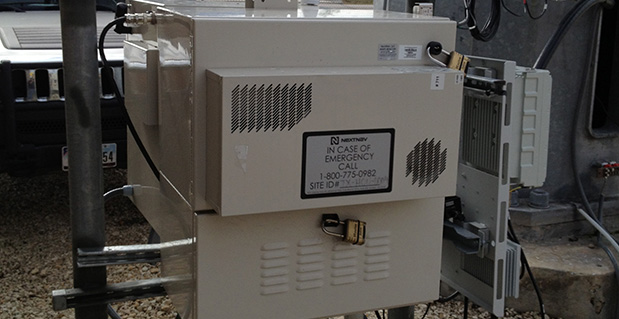
    A NextNav beacon.
    A NextNav beacon.

    On October 2, NextNav announced that Broadcom Corporation acquired a commercial license to NextNav’s Metropolitan Beacon System (MBS) technology, a so-called terrestrial constellation that brings GNSS-like performance to indoor and urban environments where satellite-based positioning is either unavailable or significantly degraded.

    The agreement enables Broadcom to integrate NextNav’s location technology into its mass-market GNSS connectivity and mobility platforms, used primarily in cell phones and tablets.

    NextNav President and Founder Ganesh Pattabiraman characterized the deal in a conversation with GPS World:  “This is a commercial license to a Tier 1 chipset provider, whose products are in a vast number of smart and feature phones in the country. The partnership enables our technology in a low-cost, high-volume form factor. This is important for us since we don’t make chips. We rely on partners such as Broadcom.  This is the first of many such agreements; we’ll have more through the year.”

    Most wireless companies have a mobility group addressing cellular modems, the central clearinghouse for so-called connectivity: the combination of Wi-Fi, Bluetooth, GNSS, and other technologies. Standard assisted GNSS (A-GNSS) packages to date in such cases generally consist of  ephemeris from all GNSS satellite constellations supported by the wireless company’s chips, cell ID and Wi-Fi ID from base-station databases, and additional proprietary assistance mechanisms.

    The NextNav MBS concept shares many operating principles with GNSS satellite constellations, but because the NextNav beacons are installed terrestrially instead of in space, they transmit sufficient signal strength for reliable reception indoors and in urban canyons where a clear view of the sky is unavailable. MBS is deployed much like a cellular network, to provide consistent indoor positioning to every building within a covered metropolitan area. MBS offers both accurate horizontal positioning and highly accurate altitude information, a particularly important capability for emergency responders in urban and indoor areas where GNSS systems tend to be most challenged.

    NextNav built its MBS network across forty large U.S. markets (see list at end of story) with its own Federal Communications Commission (FCC) licensed spectrum. “We bring more a managed network providing consistency and reliability of position information,” continued Pattabiraman. “Also the vertical component that other systems do not provide.” He characterized Wi-Fi, for example, as “an unmanaged network,” subject to frequent changes without a centralized and continually updated source of certified data.

    NextNav location performance was recently highlighted in side-by-side technology tests conducted by the Communications Security, Reliability, and Interoperability Council (CSRIC) of the FCC, and published in March of this year; see reportage and analysis of these tests at The Inner Edge: Who Holds the Key to Indoor Nav?

    The trial compared the performance of location systems across urban, suburban, and rural areas in the San Francisco Bay Area for determining the location of callers during emergency calls (E911), a critical case for mobile-phone users. NextNav was the only technology capable of reporting a valid height or altitude estimate, enabling floor-level positioning. NextNav’s horizontal accuracy results also reduced first-responder “search rings” by 90 percent over its nearest competitor.

    Don Fuchs, director of business development at Broadcom, added “Nextnav is a metropolitan area location system, which is typically a wider area than that covered by Wi-Fi. Wireless emergency assistance calling (E911) needs a wider venue covered. And across 40 metro areas. Nextnav is wide area, while Wi-Fi is essentially local area.”

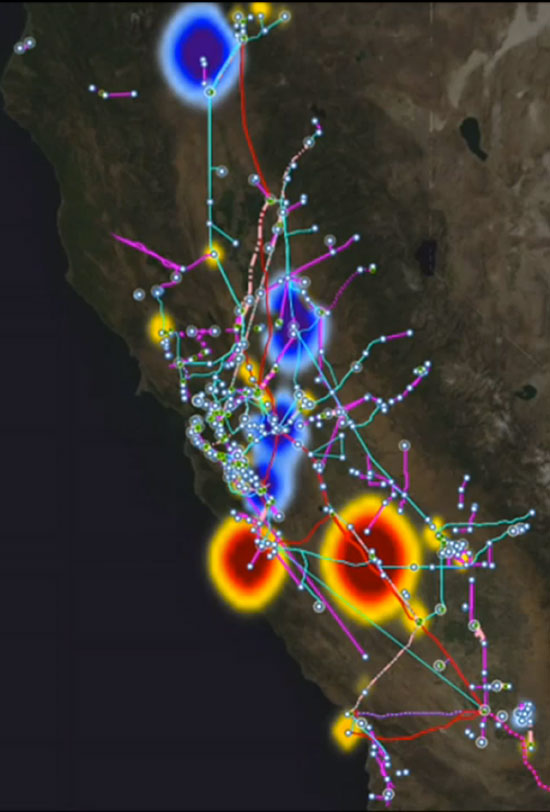
    Pattabiraman said that in a typical metro area, NextNav’s terrestrial constellation of beacons is deployed for maximum coverage and minimum GDOP, and is not constrained by capacity like a cellular network. He stated that the San Francisco Bay area covered by NextNav extends to 900 square miles, from South San Jose into Marin County and East Bay. “With a fraction of the beacons required for cellular coverage in the same area, which would be in the neighborhood of a few thousand antenna installations, our deploy and operating costs are much less. Less than 20 percent of that for a cellular network.”

    In comparison with Locata, another recently rolled out terrestrial constellation designed to fill GNSS gaps, Pattabiraman said,Locata and NextNav are two entirely different systems serving different needs.  We are in the mass-market commercial cell phone wide area use case, filing that gap, providing 5–10 meter accuracy, with vertical as a critical component, and full market coverage. Locata covers centimeter-level precision application in localized environments. The two companies could both eventually get to the other side [of the market-sector spectrum], but currently each of us is focused on the particular requirements of our designated market areas. Also, we operate with licensed spectrum versus the Locata operation in 2.4 GHz unlicensed.”

    “At the highest level, they are both multi-lateration systems.  Time of arrival, time difference of arrival.  We arrive at our core synchronization via GPS, which has its own synchronization, but we’ve got our IP  on top of that to improve it.  Each beacon is autonomous.  You can drop it anywhere with a clear view of the sky, and it is synchronized to the rest of the network, it has its own self-synchronizing mechanisms.  Locata is a synchronized network.

    “Another way of looking at it, they have a replacement for GPS. We do more complementing for GPS, we count on GPS being there.”

    Broadcom’s Fuchs added, “From the perspective of a company designing GPS and GNSS client-side semiconductors, we view NextNav as a terrestrial constellation, no more difficult or challenging than adding support for any new or legacy constellation like BeiDou or GLONASS.  We see this integration as being very straightforward, we have lots of IP in the area of signal processing, these sort of signals, this sort of positioning algorithm. We add NextNav as a secondary technology for challenging urban conditions. We view this as a piece of location technology to develop and integrate as the market demands.

    “In six years at Broadcom and seven before that at Global Locate (acquired by Broadcom in 2007), we have a history of turning support like this, we’ve been able to do this very quickly.  Depending on market demand, in less than a year.  I can’t lay out a roadmap at this point.  We expect to see market demand for this, certainly expect regulatory demand.  We wanted to get to the point where we can react to that in less than a year. That was the motivation to get this agreement into place, and we are now positioned.”

    “We all operate under standard operating environments as specified by the FCC. We’re metro-wide just like paging towers or broadcast TV,” continued Pattabiraman. “We’re not necessarily doing anything different as regards the indoor environment.  We’re not adding anything additional to the noise spectrum or floors. Our maximum transmission is 30 watts, very small compared to cell transmission in kilowatts. It is bits per second by the time it hits the receiver.  Because it’s calibration for navigation, the network design is optimized for location. We take into account GDOP and coverage, maximizing the latter, minimize the former. There is a very low throughput. It’s a tradeoff between power and coding.  We code the heck out of this thing.  We just new a few bits to get our information through, not like cellular that needs to get megabits through.”

    As to any data or issues about the human health impacts of an RF-rich indoor environment, Pattabiraman concluded, “There’s none of this concern about power into your head. We transmit only at the tower, receive only at the user. It is very, very heavily coded, like GPS, and very low-powered.  It’s not even close [to cell transmission power].  We’re a feather, they’re a hammer.”

    List of NextNav Covered Metro Areas

    NextNav characterizes San Francisco as built to “commercial grade” and the other markets as “Initial Builds.”

    • Boston-Worcester-Lawrence, ME
    • Syracuse, NY-PA
    • New York-North New Jersey, NY-NJ
    • Philadelphia-Wilmington-Atlantic City, PA-NJ-DE-MD
    • Washington-Baltimore, DC-MD
    • Greensboro-Winston-Salem-High Point, NC-VA
    • Raleigh-Durham-Chapel Hill, NC
    • Jacksonville, FL-GA
    • Charlotte-Gastonia-Rock Hill, SC
    • Orlando, FL
    • Miami-Fort Lauderdale, FL
    • Tampa-St. Petersburg-Clearwater, FL
    • Atlanta, GA-AL-NC
    • Cincinnati-Hamilton, OH-KY-IN
    • Columbus, OH
    • Pittsburgh, PA-WV
    • Cleveland-Akron, OH-PA
    • Detroit-Ann Arbor-Flint, MI
    • Grand Rapids-Muskegon-Holland, MI
    • Milwaukee-Racine, WI
    • Chicago-Gary-Kenosha, IL-IN-WI
    • Indianapolis, IN-IL
    • Nashville, TN-KY
    • Memphis, TN-AR-MS-KY
    • New Orleans, LA-MS
    • St. Louis, MO-IL
    • Kansas City, MO-KS
    • Oklahoma City, OK
    • Dallas-Fort Worth, TX-AR-OK
    • Houston-Galveston-Brazoria, TX
    • San Antonio, TX
    • Denver-Boulder-Greeley, CO-KS-NE
    • Salt Lake City-Ogden, UT-ID
    • Las Vegas, NV-AZ-UT
    • Phoenix-Mesa, AZ-NM
    • Los Angeles-Riverside-Orange County, CA-AZ
    • San Diego, CA
    • San Francisco-Oakland-San Jose, CA
    • Portland-Salem, OR-WA
    • Seattle-Tacoma-Bremerton, WA


  • Rakon Launches Low Voltage Miniature TCXO

    Rakon Launches Low Voltage Miniature TCXO

    Photo: Rakon
    Photo: Rakon

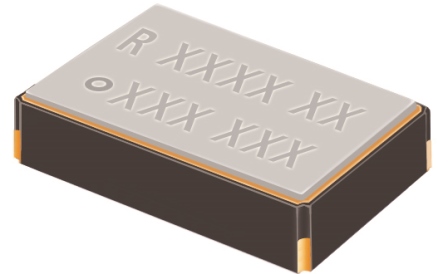
    Rakon has launched the RIT2016C model TCXO for GPS applications. The RIT2016C minimizes power consumption in portable devices to extend the battery life while still delivering performance.

    Operating at a 1.2V supply voltage, the RIT2016C reduces power consumption even further with the additional benefit of the enable-disable mode to deliver better power management, the company said.

    The RIT2016C is available in the small form factor 2.0 x 1.6 millimeters.

    Current available frequencies are 19.2MHz, 26.0MHz and 38.4 MHz; other frequencies are available upon request.

    The RIT2016C also has the following features:

    • Frequency ranges available from 19 to 40 MHz.
    • Frequency versus temperature stability as tight as ±0.5 ppm over -40 to 85°C.
    • Low start-up drift rate.
    • Excellent phase noise performance.
    • Low aging: Long term stability better than ±1ppm/year.
    • Low profile: Height less than 0.8mm.

    The high performance of the RIT2016C establishes it as the perfect solution for applications with stringent battery life requirements. It is suitable for smart meters, personal navigation devices, smartphones, tablets, and fitness watches.

  • Roadnet Releases Proof-of-Delivery App on iOS for Fleet Tracking

    Roadnet Technologies, the Baltimore-based transportation logistics software firm, announced today that the MobileCast Proof-of-Delivery application is now available in Apple’s iTunes App Store. The introduction of the proof-of-delivery application for Roadnet customers using Apple products allows the ability to integrate delivery services into a single mobile platform.

    The MobileCast Proof-of-Delivery app includes:

    • GPS Tracking
    • Manual Arrive/Depart to track accurate service times
    • Text Messaging within the application to streamline communications
    • Dynamic Dispatch of stops to driver’s mobile device
    • In-Field Geocoding to ensure accurate delivery locations
    • Store and Forward so that when a coverage issue is experienced all information will be saved and transmitted later
    • Driver Re-Sequencing of stops to allow control over reordering stops when necessary
    • Order Summary to quickly view what is being delivery
    • Apple Maps integration to provide delivery driving directions (does not include truck restrictions)
    • Apple Voice Navigation provides audible directions to a requested location
    • Apple Live Traffic overlays to provide traffic information for the route
    • On Track, the sales and merchandiser tracking application that accurately records mileage and time spent with a customer, is also available within the MobileCast app.

    The MobileCast phone solution is a proof-of-delivery application. Proof-of-delivery systems not only let management track their vehicles in real time, but they also notify employees in the back office when issues arise that may prohibit a route from being completed as planned. The historical data collected through a proof-of-delivery application can also be used to evaluate trends and determine alternative solutions for route execution.

  • Orolia to Supply Atomic Clocks for Galileo Satellites

    Orolia to Supply Atomic Clocks for Galileo Satellites

    Passive hydrogen maser.
    Passive hydrogen maser.

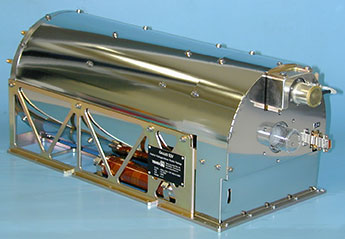
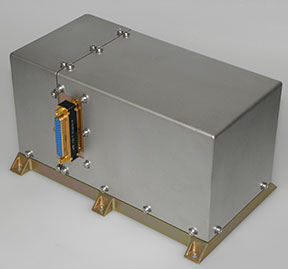
    Orolia has finalized the contracts to supply Rubidium atomic clocks (Rubidium Atomic Frequency Standard, RAFS) and passive hydrogen masers to equip eight satellites for Galileo’s Full Operational Capability Phase II program. The two new contracts, totaling 14.5 million euros, follows the authorization to proceed received in June 2012 for the manufacture of these two types of high-precision clocks.

    Orolia brands include Spectratime and Spectracom. The announcement was made through Orolia subsidiary Spectratime.

    Each Galileo satellite carries two Rubidium atomic clocks and a passive hydrogen maser, the most stable clock in the world, according to Spectratime. Once completed, this new contract, in partnership with Astrium and Selex Galileo, will make Spectratime the leading supplier in the world for active atomic clocks in space, including 72 for the Galileo system.

    Rubidium atomic clock, or RAF.
    Rubidium atomic clock, or RAF.

    Atomic clocks are used in satellite navigation because of their stability, low weight and high reliability. Very accurate time is used to precisely measure the path of radio signals from the satellites to Earth, and by calculation, the distance between the satellites and the Galileo receiver. The stability of these clocks is enough to guarantee geo-location accuracy of one meter with a fully operational ground infrastructure.

    Spectratime said it has the expertise and capability in designing advanced maser physics packages for high-performance, high-reliability space applications, where the clocks need protection in the hostile space environment from radiation, magnetic fields, shock, vibration, or thermal variations.

  • Symmetricom Expands SyncWorld Program to Power Utilities

    Symmetricom Expands SyncWorld Program to Power Utilities

    SyncWorld will enable power utilities to react in real time to outages and alert users to contingency plans.
    SyncWorld will enable power utilities to react in real time to outages and alert users to contingency plans.

    Symmetricom has introduced a new category to its SyncWorld Ecosystem Program dedicated to the power utility industry. Developed to support integration and interoperability among power utility and Symmetricom solutions, the SyncWorld Power Ecosystem aims to facilitate unified deployments of timing and synchronization in substation modernization and synchrophasor applications.

    As power utilities shift to the Smart Grid, they gain the ability to monitor in real time, allowing for proactive operations control. Advanced synchronization and timing enable power equipment to operate more efficiently and closer to its operational limits.

    For example, one microsecond accuracy is required by the phasor measurement unit (PMU) for real-time network situational awareness and overall operational efficiency. Without accurate time stamps, PMU data has limited value. For power utility companies, that translates into enhanced network utilization rates as well as smarter management and mixing of renewable and traditional power sources.

    Symmetricom also introduced the SyncServer SGC-1500 Smart Grid Clock to provide power utility companies accurate, secure and reliable timing.

    The introduction of the SyncWorld power segment is expected to drive collaboration and innovation among the industry’s leading power utility vendors. To participate in the program, vendors work with Symmetricom to develop a joint solution, complete successful solution testing, and commit to ongoing technical and business activities to ensure joint success.

    Interoperability is a key requirement to join the program. Using various test cases with a defined standard for testing, Symmetricom focuses its assessment on the performance of a product’s IEEE 1588 power profile. During testing, Symmetricom clocks act as the master clocks, switches act as transparent clocks, and IED/PMU products act as slave clocks.

    Watch a video about the program here.

  • Topcon Adds Vanguard Technology to GRS-1 Receiver

    Photo: Topcon
    Photo: Topcon

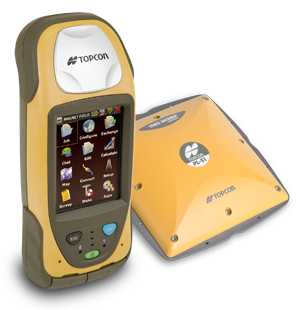
    Topcon Positioning Group has added Vanguard technology to the GRS-1 handheld GNSS receiver and field controller.

    “With the addition of Vanguard technology, the GRS-1 fully integrated, dual-constellation, network-enabled receiver and controller optimizes tracking and performance regardless of job site conditions or location,” Scott Langbein, director of product marketing, said.

    Topcon’s 226-channel Vanguard technology with Universal Tracking allows each individual GNSS channel to be fully optimized to track any of the available satellite signals that are supported in today’s GNSS receivers.

    The GRS-1 can be used in various configurations from handheld to network enabled RTK measurement, and grade management. “The system can be configured to perform at various levels of accuracy that fit any budget and application,” Langbein said. Choices include centimeter level, sub-decimeter and sub-meter, with accuracy upgradeability options available.

    Working with Topcon’s Magnet suite of software products, “the GRS-1 streamlines the workflow for surveyors, contractors, engineers and mapping professionals,” Langbein said.

    The GRS-1 with Vanguard has DGPS capability with the internal single frequency antenna for use in GIS and navigation applications. Add the external antenna and connect a GRS-1 rover to a local GNSS network, or Topcon Magnet Relay, for centimeter accuracy RTK performance. Magnet Relay allows a mobile base receiver to host up to 10 rovers through the Magnet Enterprise “cloud.”

    The GRS-1 has an optional 2MP built-in camera, integrated SD memory card slot, and includes an optional internal GSM or CDMA cellular modem and internal GNSS antenna, plus wireless connectivity via wireless LAN or Bluetooth technology.

  • Averna Emulator Receives Four-Diamond Ranking from Cable Industry

    Averna, developer of test solutions and services for communications and electronics device-makers worldwide, today announced it has received a Broadband Technology Report (BTR) Diamond Technology Review ranking of 4 “Diamonds” for its DOCSIS Channel Emulator (DCE).

    Now in its ninth year, the BTR Diamond Technology Reviews is a renowned industry program that was developed to recognize some of the top products and solutions available to the cable industry as determined by a distinguished panel of cable telecommunications engineering experts. Engineering executives from Boyer Broadband, Time Warner Cable, Bright House Networks, Suddenlink Communications, Comcast, Charter and Cox were among the third-party judges for the 2013 Diamonds. The judges had this to say about Averna’s DCE:

    • “A handy and cost-effective solution for equipment manufacturers to test and validate new DOCSIS products that use bonded channels. MSOs may also have an interest in the product for validating new modem modulation profiles or their own internal product validation efforts.”
    • “Improved DOCSIS performance testing capabilities, at lower cost and with smaller footprint, for equipment manufacturers and network operators.”
    • “A creative way to test DOCSIS networks.”

    Averna’s DOCSIS Channel Emulator (DCE) is a small-footprint channel-emulation platform that helps device makers ensure that their DOCSIS and EuroDOCSIS products deliver optimum performance in the field. It is capable of acquiring, impairing and generating up to 24 downstream (DS) channels in real time.

    The DCE’s flexible FPGA-based design is powered by National Instruments’ vector signal transceiver (VST), which enables Averna to increase the number of supported channels without increasing the DCE’s hardware footprint. The DCE helps users ensure that their equipment meets standards such as the SCTE 40 specifications or MSO-specific configurations. Furthermore, the DCE’s software-based approach and modular architecture protect the client’s investment, allowing them to easily cover both current and future test needs.

    “We are proud to achieve such a high score in the Diamond Technology Reviews,” said Jean-Levy Beaudoin, VP Sales, West USA and Latin America, for Averna. “As the DOCSIS industry moves to high channel counts, the DOCSIS Channel Emulator is the first test instrument specifically developed for this new environment, enabling testing that was not economically and technically possible before. Broadband device makers can now increase test coverage and accelerate testing, improving product quality and time-to-market.”

  • Applanix Adds High-Performance POS Systems to Air and Land Portfolios

    Applanix Adds High-Performance POS Systems to Air and Land Portfolios

    Photo: Applanix
    Photo: Applanix

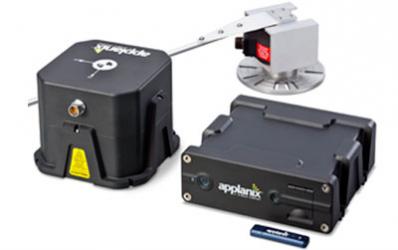
    Applanix, a mobile mapping and positioning company, has introduced new versions of its positioning and orientation systems for airborne and land-based mapping — the POS AV 610 and POS LV 610.  Delivering the same industry-leading performance as previous versions of POS AV and LV, the new systems use next-generation commercial inertial technologies that are offered globally.

    Applanix POS AV and LV products integrate precision GNSS with advanced inertial technology (accelerometers and gyroscopes) to provide uninterrupted measurements of the position, roll, pitch and true heading of moving vehicles.  Geospatial projects using POS can be completed more efficiently, effectively and economically. The POS AV 610 and POS LV 610 offer new advantages to customers:

    • Global availability: commercial technology.
    • Smaller and lighter: achieved by integrating a new state-of-the-art FOG (Fiber Optic Gyro) based Inertial Measurement Unit (IMU).
    • Exceptional performance with Applanix SmartCalTM software:  SmartCal is a new compensation technology designed to achieve unrivalled performance from IMUs manufactured specifically for mobile mapping applications.
    • Cost efficiency: exceptional accuracy, even in demanding conditions, at unprecedented price points.

    POS LV 610 and AV 610 are also available to systems integrators in the form of an OEM board set called the Trimble AP60. The Trimble AP is a series of embedded GNSS-Inertial OEM boards that provide both continuous mobile positioning in poor signal environments and high-accuracy direct georeferencing of imaging sensors.  The AP series is ideal for a variety of commercial mobile positioning and orientation applications including airborne and terrestrial mapping and guidance for unmanned vehicles.

    “The latest versions of POS LV and POS AV take Applanix’ state-of-the-art positioning technologies worldwide for land and air applications,” said Steve Woolven, President of Applanix. “Wherever mobile mappers operate, the new POS technology provides users with  accurate, reliable and robust position and orientation solutions.”

    POS AV 610, POS LV 610 and Trimble AP60 are available now through the Applanix sales network.

  • Altus Positioning Introduces GIS-1 for Data Collection

    Altus Positioning Introduces GIS-1 for Data Collection

    Photo: Altus Positioning Systems
    Photo: Altus Positioning Systems

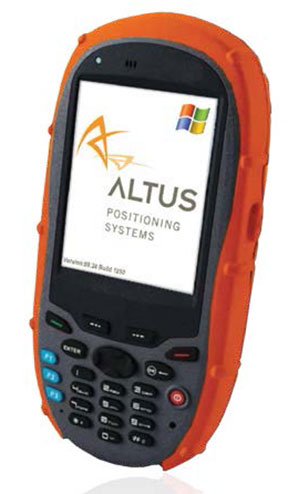
    Altus Positioning Systems is expanding its line of GNSS surveying products with the introduction of the GIS-1, a versatile personal digital assistant (PDA) for data collection and geolocation.

    The GIS-1 is a powerful PDA that integrates modern wireless technologies on a rugged Windows Mobile platform for effective portable computing for mobile survey applications. It can be used as a data collection device with Altus’ APS-series GNSS survey instruments, providing up to eight hours of operation time in the field between charges. In addition, the unit’s built-in L-1 GPS receiver and 3.2 megapixel camera can be used for navigation and GIS applications. It can even be used as a smartphone.

    “The GIS-1 is a versatile tool for surveyors and GIS professionals,” said Neil Vancans, president of Altus Positioning Systems. “With the Windows  Mobile operating system, it supports a wide range of software applications for data collection. By itself, the GIS-1 is a convenient low-cost GPS navigation device with 2.5-meter accuracy.”

    “It’s ideal for GIS work,” Vancans added. “The user can quickly and easily locate assets with 2.5-meter accuracy with the GIS-1, then switch to the APS-3 for more precise RTK work if needed.”

    The GIS-1 supports a wide range of wireless options, including Wi-Fi, Bluetooth and a Tri-Band GSM/GPRS/EDGE/HSPA cellular modem.

  • Installed Base of Fleet Management Systems Will Reach 6.4M in Europe by 2017

    According to a new research report from the analyst firm Berg Insight, the number of active fleet management systems deployed in commercial vehicle fleets in Europe was 3.05 million in Q4-2012. Growing at a compound annual growth rate (CAGR) of 16.0 percent, this number is expected to reach 6.40 million by 2017. A group of international aftermarket solution providers have emerged as the leaders on the European fleet management market. Masternaut is ranked as the largest player overall in terms of installed base with close to 287,000 units deployed today. TomTom Business Solutions was the fastest growing vendor also in the past year and has now surpassed 275,000 subscribers in this region. Digicore and Trimble have also joined the exclusive group of fleet management providers in Europe having more than 100,000 active devices in the field. Transics is number one in the heavy trucks segment with an estimated 80,000 active units installed.

    A major trend in the past two years has been the announcements of standard line fitment of fleet management solutions. Since the end of 2011, Scania is rolling out the Scania Communicator as standard on all European markets and includes a four-year basic service subscription. The new generation of the Actros trucks from Mercedes-Benz contains the FleetBoard vehicle computer as standard in all EU27 countries since October 2011. Volvo is going in the same direction offering Dynafleet as standard in Europe. MAN TeleMatics is since July 2012 standard on the new truck model TGX EfficientLine.

    A second wave of M&A activities started in 2013 after 18 months of lull. “Six major mergers and acquisitions have so far taken place this year among the vendors of fleet management systems in Europe”, said Johan Fagerberg, Senior Analyst, Berg Insight. Danaher Corporation is betting on the fleet management market and acquired Navman Wireless and Trafficmaster from Prairie Capital and Vector Capital respectively. TomTom made its second acquision in the fleet management space when picking up Coordina headquartered in Spain. The latest transaction was done in September 2013 when Oskando and Autolog merged and at the same time launched the new brand EcoFleet. Mr. Fagerberg anticipates that the market consolidation of the still overcrowded industry will continue in 2014.

  • Antenna Module for Embedded LBS Receivers

    Photo: Parsec PTA
    Photo: Parsec PTA

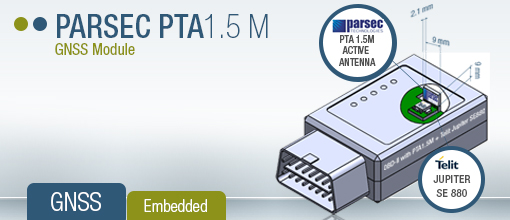
    The Parsec PTA and PT active and passive antenna modules integrate seamlessly with the Telit Jupiter SE880 GPS receiver for market leading location aware applications in performance and miniaturization.

    The PTA/PT family delivers best-in-class linearity in the third-order-intercept point (IP3), the measure of a receiver’s critical ability to differentiate signal from noise. All PTA and PT antenna modules are based on Parsec’s family of low noise amplifier (LNA) integrated circuits (ICs).

    The antennas are designed for embedded LBS receivers requiring good user experience that operate with obstructed view of orbiting satellites. The PTA1.5M improves GNSS receiver sensitivity to offset high path loss, improves immunity to receiver descending caused by close proximity radio transceivers, and mitigate the effects of interference from radio mixing products.

    To learn more, visit the Parsec website.

  • ORBCOMM, Savi Announce Strategic LBS Partnership

    ORBCOMM Inc., and Savi Technology have announced a strategic relationship to provide advanced location-based monitoring solutions to government and commercial markets.

    ORBCOMM is a global provider of machine-to-machine (M2M) solutions, and Savi Technology is a provider of sensor-based analytics and radio-frequency identification (RFID) solutions.

    ORBCOMM and Savi have submitted a proposal in response to the U.S. Army RFID IV project, which will provide both ISO18000-7 RFID tags and a suite of satellite solutions for military logistics support. ORBCOMM’s GlobalTrak division has been a leading player in providing military Enhanced-In-Transit-Visibility (EITV) solutions to the government market since 2008, and Savi has been a market leader in military RFID solutions, enabling it to offer vast market experience with the right blend of technology platforms for this proposal.

    “The combination of ORBCOMM’s satellite expertise and broad network service portfolio with Savi’s state-of-the-art RFID technology offers a full spectrum of innovative monitoring solutions to our collective market base with focus on our government and international customers,” said Marc Eisenberg, Chief Executive Officer of ORBCOMM. “Although RFID and satellite tracking have traditionally been divergent technologies, the synergy of these solutions within a common operating environment creates a seamless transition from infrastructure to wireless-based location services for tracking and monitoring high-value assets.”

    “By bringing two market leaders with highly complementary technologies together, we have created a best-of-breed solution for our customers in both government and commercial markets,” said Bill Clark, chief executive officer of Savi Technology. “This relationship will support Savi’s operational analytics capabilities by providing additional ways to collect critical data and deliver timely and reliable operational intelligence to our customers. We look forward to partnering with ORBCOMM on RFID IV and other global opportunities in the near future.”