Author: GPS World Staff

  • GNSS PPP Workshop Early Registration Extended to May 3

    The International Association of Geodesy, Natural Resources Canada, the International GNSS Service, and York University will be hosting GNSS Precise Point Positioning: Reaching Full Potential in Ottawa, Canada, June 12-14, 2013.

    The primary objective of this workshop is to provide a forum for international experts from academia, government and industry to discuss PPP-related matters, including data processing, error modelling, data products, dissemination, applications, and associated policy.

    The preliminary program is now available on the workshop website, along with details about accommodations and registration. Note that early registration has been extended until May 3, 2013.

    Given recent rapid developments in PPP technology, the objectives of this workshop will be to:

    1. Provide a forum for international experts from academia, government and industry to discuss PPP-related matters, including data processing, error modelling, data products, dissemination, applications, and associated policy.
    2. Define the current state of PPP performance and communicate global PPP activities and applications in all sectors.
    3. Identify and investigate the technical and non-technical issues that need to be addressed to improve the technology.
    4. Suggest PPP performance and utility in the next five to ten years.
  • Pacific PNT: GNSS, SBAS Updates

    The status of world GNSS, and augmentation systems in the Pacific region, highlighted the policy session of the Institute of Navigtion Pacific PNT Conference being held this week in Honolulu, Hawaii. Here are a few highlights:

    BeiDou-Logo-150x142BeiDou. Construction of the second phase of BeiDou has been completed; further launches for the third phase – constellation completion – are on hold until tests of the existing 14-satellite constellation are complete, according to Xiancheng Ding, Senior Advisor, China Satellite Navigation Office. As of December 27, 2012, BeiDou achieved full operational capability for most of the Asia-Pacific region. The full constellation is now expected to be completed by 2020.

    Other accomplishments include releasing the BeiDou Interface Control Document and manufacture of BeiDou chips for end-user applications. By the end of June, some manufacturers will release BeiDou chips in China, Ding said.

    Also in December, BeiDou introduced a new logo (at right).

    Yuanxi Yang (China National Administration of GNSS and Applications) presented statistics showing that BeiDou+GPS provides greater accuracy than GPS alone. For instance, the RMS of BeiDou+GPS kinematic positioning by using differential carrier phase is about 20 percent better than that of GPS alone, Yang said.

    By itself, existing BeiDou constellation system accuracy is better than 10 meters, timing better than 20 nanoseconds, and velocity accuracy is better than 0.2 meters/second.

    In all, BeiDou is composed of 14 satellites: five GEO, five IGSO, and four MEO. The full constellation (by 2020)  will consist of 35 satellites: 5 GEO and 30 non-GEO (a mixture of MEO and IGSO satellites).

    GPS. Keynote speaker David A. Turner (U.S. Department of State) shared his time with surprise GLONASS speaker Sergey Revnivykh (International Committee on GNSS, ICG). In his GNSS Policy and Program Update, Turner provided the dates by which three new civil signals will be on 24 GPS satellites.

    • The L2C signal is a developmental signal broadcasting from 10 GPS Satellites. It began launching in 2005 with GPS Block IIR(M) satellites, and is expected to be available on 24 satellites around 2018.
    • The L5 signal is a developmental signal broadcasting from three GPS satellites. It began launching in 2010 with Block IIF satellites, and is expected to be available on 24 GPS satellites around 2021.
    • The L1C signal begins launching in 2015 with GPS III; available on 24 GPS satellites around 2026.

    “We have an increasing number of signals, increasing capability, and increasing level of service as we continue to evolve the constellation,” Turner said.

    GLONASS. The next GLONASS satellite will be launched this Friday, April 26, Revnivykh said. This will be a GLONASS-M satellite, number 47. The first launch of a new generation GLONASS K satellite is scheduled for 2015.

    Revnivykh stressed GLONASS’ role as a global utility. “We consider international cooperation is essential for all GNSS, and we consider GLONASS an essential part of the international multi-GNSS system,” he said. He stressed the importance of compatibility and interoperability as key to this policy.

    In 2012, GLONASS performed with an average accuracy better than formally required, he said. GLONASS is in worldwide use, and positioning has improved by a factor of 10, from 35 meters to about 3 meters since the first satellites were launched. Using both GPS + GLONASS provides 1.5 times better high-precision measurements, Revnivykh said.

    The new GLONASS program for 2020 for GLONASS sustainment, development, and use includes GLONASS M, K1, and K2 satellites; the positioning accuracy objective is to go from the current 2.8 meters to 0.6 meters.

    Aviation. Chris Hegarty (MITRE) presented an FAA Navigation Programs Overview on behalf of the scheduled speaker Deborah Lawrence (FAA) who was unable to attend. He noted that United Airlines has begun GBAS operations in Houston.

    In answer to a funding question, he said, “The sequestration is not expected to have a positive effect on schedule, but the presented timeline for APNT is the FAA’s current best estimate. Congress has some tough decisions before them, and I wouldn’t want to speculate on potential schedule impacts. In the words of Yogi Berra, predicting is hard, especially when it involves the future.”

    Korean SBAS. Changdon Kee (Seoul National University) shared plans for a Korean SBAS. In South Korea, LPV availability is 49.4% compared to 90.6% in Japan. “Korea needs its own system,” Kee said.

    Phase 3 of the SBAS development could start by the end of September, depending on funding. It will include open service multifunctional GEO satellites interoperable with other SBASs. A pseudolite demonstration system will be completed in 2014, clearing the way for the beginning of Phase 3.

    In all, the system will include five reference stations, two master stations, two ground uplink stations, and two GEO satellites (the main GEO by 2018 and a backup by 2020).

    The Korean SBAS open service system will provide GPS L1 augmentation, begin operation in 2020, and support aviation, land and maritime users. A test operation system will provide GPS L1 and L5 augmentation. The system is expected to be fully operational by 2021, with service available throughout Asia.

    Michibiki-AlanJapan’s QZSS. Hiroyuki Noda (Office of National Space Policy, Japan) said three more satellites for this augmentation system will be launched by the end of the decade, with the service beginning in 2018. In September 2012, the Japan cabinet made the commitment to accelerate development of the system. The first satellite, launched in 2010 (QZS-1, aka Michibiki) is performing as expected.

    QZSS is expected to improve positioning availability from 90% to 99.8% in Japan. QZSS will not only improve positioning in the Asia-Pacific region, but is expected to improve the capacity to respond to natural disasters, Noda said.


  • Houston Airport Marks Arrival of GBAS to Increase Flight Capacity

    Houston’s George Bush Intercontinental Airport (IAH) became fully operational with the first precision approach flown by a United Airlines aircraft using Honeywell’s SmartPath Ground Based Augmentation System (GBAS) on April 22. IAH is one of two airports in the country participating in a pilot program, in partnership with the Federal Aviation Administration (FAA), United Airlines and Honeywell to demonstrate the use of GBAS. This new system delivers a cost-effective solution to increase airport capacity, decrease air traffic noise and reduce weather-related delays.

    “The Houston Airports are among the most innovative and progressive in the nation when it comes to safety and efficiently connecting passengers to destinations around the world,” said Mario Diaz, director of the Houston Airports. “It is imperative that we continue to invest in new technology that enhances the aviation sector.”

    Honeywell’s SmartPath GBAS system augments GPS signals so they can be used for precision navigation in the approach and landing phases of flight. The flexible approaches provided by GBAS may produce a significant reduction in aircraft delays and carbon emissions at airports. The project is a component of the Federal Aviation Administration (FAA) Next Generation Air Transportation System (NextGen). It’s a migration from what is considered to be a ground-based air navigation system to a satellite-based navigation system which uses the same GPS that you use in your cars today.

    “There is a great opportunity for SmartPath to modernize the flight experience for airline passengers,” said Pat Reines, senior manager, SmartPath Ground Based Augmentation Systems at Honeywell Aerospace. “We’re looking forward to helping Houston passengers and visitors’ experience more flights that depart and arrive on time.”

    United Airlines will operate the flights with a Boeing 737 aircraft equipped with global navigation satellite system (GNSS) landing system (GLS) technology to receive the GBAS landing approach data. United was an early leader in NextGen technology, taking delivery of GLS-equipped aircraft since 2009.

    “We believe that GBAS is the air carrier precision landing system of the future,” said Captain Joe Burns, United’s managing director of technology and flight test. “We continue to work closely with the FAA and our industry partners on GBAS and other NextGen initiatives.”

    GBAS can provide aircraft with guidance to as low as 200 feet above the surface of the runway, referred to as a Category I approach. The FAA is currently validating the requirements for a GBAS to support Category II and Category III precision approach operations which would guide an aircraft to the surface of the runway. GBAS represents the only currently feasible satellite-based navigation solution for Category II/III precision approach operations, according to the Houston Airport System.

  • Applanix Introduces POSPac MMS v6.2 Software for Mobile Mapping

    Applanix has introduced POSPac MMS v6.2, its latest generation of software for directly georeferencing mobile mapping sensors using GNSS and inertial technology. Featuring new Applanix IN-Fusion Multi-Single-Base Processing, POSPac MMS V6.2 is designed to improve the productivity and accuracy of mapping from mobile platforms in the air, on land or at sea, the company said.

    IN-Fusion Multi-Single-Base Processing is designed for customers who need the highest level of differential GNSS position accuracy and perform long, linear projects such as power-line corridors, long highways or stretches of coastline. During these projects, a GNSS base station network may not be available, or the geometry of the network so weak that an Applanix SmartBase solution — which uses existing reference stations to achieve high accuracy over longer distances — is not viable. In these cases, IN-Fusion Multi-Single-Base Processing allows base stations to be established along the full length of the travel path and makes optimal use of the nearest base station at all times.

    Customers can now take advantage of robust tightly coupled in-fusion processing without the need to break the project up into multiple segments for each base station to attain the highest accuracy, Applanix said.

    “In addition to IN-Fusion Multi-Single-Base Processing, POSPac MMS V6.2 includes new features designed to increase productivity, efficiency and ease-of-use.  The Coordinate Conversion tool included allows users to choose from a number of local reference frames for inputting base station coordinates,” said Edith Roy, Development Manager of POSPac MMS at Applanix.  “POSPac MMS Version 6.2 demonstrates our commitment to providing customers with not only the most advanced software solutions for mobile mapping applications, but also the easiest to use.”

    POSPac MMS V6.2 can be purchased through Applanix’ global sales network. The software is available as an upgrade to all POSPac users currently under a maintenance contract.

  • Navevo Announces Satnav-Based Truck Cyclist Alert Feature

    Navevo specialists in satellite navigation solutions for heavy-goods vehicles (HGV) drivers, now offers the ProNav HGV Cyclist Alert. Supplied as standard on the new ProNav PNN420 satnav for truck drivers and soon to be rolled out across all current ProNav systems, the safety feature provides junction alerts at high convergence areas of trucks and cyclists and prompts drivers to take extra care.

    The number of cyclists in London is on the rise, along with safety risks that arise when trucks and cyclists both are traversing busy London junctions and interchanges.

    The ProNav HGV Cyclist Alert software was developed in association with Transport for London (TfL) to provide a commercial vehicle driver with an audible and visual alert as he or she approaches a junction (or section of road) that has been determined to be a location where there are  high volumes of HGVs and cyclists. A warning symbol is displayed on the navigation system’s mapping that projects a 50-meter radius “warning zone” around each HGV/Cyclist convergence area. Drivers are also provided with a short audible tone as a reminder, giving the driver plenty of time to check for any cyclists on the road, Navevo said.

    The HGV Cyclist Alert software uses data provided by TfL and the up-to-date Department for Transport HGV and pedal cycle flow figures for London’s road network. The dataset uses this information to identify locations where large numbers of HGVs and cyclists converge. Initially, 100 high-convergence areas across London have been included (alerts at every junction would be counterproductive to drivers). Working with other local authorities both in London and nationally, Navevo plans to increase the level of coverage and will provide free updates when new data becomes available.

    “A navigation system is something a driver is likely to be listening to as they approach a junction, and so it makes perfect sense to also alert the driver of the risk of cyclists, reminding them to be observant and drive safely,” says Navevo CEO, Nick Caesari. “The safety of drivers, cyclists and other users of the road is a concern for everybody, and we are proud to lead the navigation industry by launching this ‘world first’ safety feature, which we believe could significantly contribute in improving road safety and reducing the number of incidents involving HGVs and cyclists.”

    “For many years, London has worked to lead the way in pushing for the adoption of safer lorries and safer lorry driving,”
    Ian Wainwright, head of Freight and Fleet at Transport for London. “The creation of a specific cyclist alert for HGV drivers is another positive step forward and will help to further raise awareness and improve cycle safety across the capital.”

  • Riegl and Applanix Take Flight on UAV


    Riegl Laser Measurement Systems and Applanix Corporation announced today that the Applanix AP50 GNSS-inertial sensor system was successfully integrated with Riegl’s VQ-820-GU topo-bathymetric airborne laser scanner on board the Schiebel Camcopter S-100 UAV. The Riegl VQ-820-GU is specifically designed to survey sea beds and the grounds of rivers or lakes, and is well suited for combined land and hydrographic airborne survey.

    ap50
    Applanix AP50 GNSS-inertial system.

    The Applanix AP50 GNSS-inertial system is a GNSS-inertial sensor plus inertial measurement unit (IMU) in a compact form factor. It features a high-performance precision GNSS receiver and the Applanix IN-Fusion GNSS-inertial integration technology running on a powerful, dedicated inertial engine (IE) board.

    On board an unmanned aerial vehicle (UAV), the system is capable of penetrating areas that may be too dangerous for piloted aircraft or ground patrols. This can provide additional safety and security for its users.

    VQ-820-G_206x200px
    Riegl’s VQ-820-G airborne laser scanner.

    “We really appreciate the professional and amicable cooperation with Applanix, which allows us to offer user-friendly and powerful, fully integrated solutions for dynamic data acquisition to the marketplace,” said Jürgen Nussbaum, Riegl director of international sales.

    In addition, Applanix will be a Gold sponsor at Riegl LIDAR 2013, Riegl’s international user conference taking place in Vienna, Austria, June 25-27.

  • Trimble Offers Improved Version of RealWorks Software

    Trimble RealWorks version 8.0 software will include a new 3D database engine, automated targetless registration and Web viewing capability incorporating RealWorks’ Scan Explorer interface. The new version is due to be released in June.

    The new enhancements will allow surveyors, contractors, engineers and geospatial professionals to rapidly process 3D laser scanning data and expedite the creation of deliverables for their clients, increasing productivity and reducing costs, Trimble said.

    The new 3D database engine in Trimble RealWorks version 8.0 will allow up to five times more data to be visualized and managed, compared to Trimble RealWorks version 7.2. The ability to handle larger data sets greatly increases usability and productivity for customers capturing data with 3D laser scanners such as the Trimble TX5 and Trimble FX.

    The automated targetless registration function, together with additional workflow enhancements, will provide further productivity gains for customers. The automated targetless registration function automatically identifies planar objects in each scan and matches the planes from multiple stations, creating a combined data set. The function enhances productivity in the field by eliminating target placement prior to data capture in applicable environments. Office processing time is also reduced by the fully automated function.

    Sharing of data with clients has been enhanced by the addition of a Publisher function within the Trimble RealWorks software that allows projects to be custom packaged for viewing via Microsoft Internet Explorer. The Scan Explorer interface, embedded inside a HTML web page, allows clients to navigate and explore the scan data as well as take measurements and add notes.

    “Software is an integral part of Trimble’s 3D laser scanning solutions and is essential to extract information from 3D data captured in the field,” said Tim Lemmon, marketing director of Trimble. “The new version of Trimble RealWorks software significantly improves our customers’ productivity in processing field data, extracting information and preparing deliverables for their clients.”

    The announcement was made today at SPAR International 2013, the leading conference for 3D data capture, processing and delivery technologies.

  • GNSS Constellation Update

    Original Broadcast Date: 10/25/12

    Summary: This month, a new GPS satellite was launched, India launched a new SBAS satellite, and two Galileo satellites are scheduled to launch. Last month, China launched two more BeiDou satellites. There’s a lot of activity of the satellite navigation industry. In the webinar, I will discuss what these new developments mean to the surveying/mapping user, as well as other current events.

    Speaker:
    Eric Gakstatter
    Contributing editor for survey and GIS

  • Locata Positioning to Underpin Crash Avoidance Research

    Locata Corporation announced today that the Insurance Institute for Highway Safety (IIHS) plans to install a Locata network as the core positioning technology in a $30 million upgrade soon to be underway at its Vehicle Research Center near Washington, D.C.

    A LocataNet will provide the vitally important high-precision positioning required by the VRC to perform rigorous, consistent and repeatable scientific evaluation of the new vehicle crash avoidance systems, Locata said. VRC crash tests produce the “Top Safety Pick” ratings that have helped consumers make informed decisions about buying safer cars for years. Now research into new technology systems, which allows cars to avoid crashes in the first place, will elevate the value of the institute’s safety ratings, Locata said.

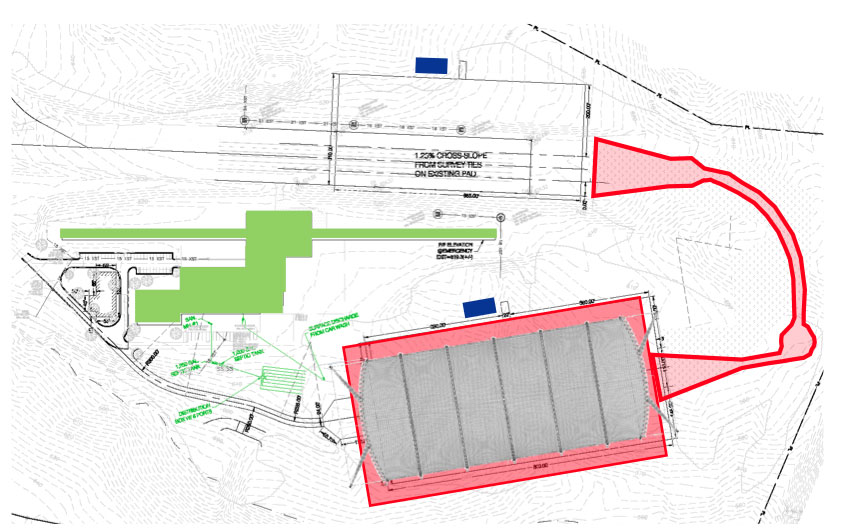
    Carrying out these new tests is not a trivial exercise, Locata said. The VRC will have to research and install new robotic and positioning technology to enable the required level of precision. The LocataNet installation will furnish the IIHS with a locally controlled positioning system that is seamless over all of the VRC test areas, enabling extremely reliable automated positioning of vehicles. The newly expanded facility includes a continuous vehicle test track that traverses not only open-air roadway areas, but also a vast 300- by 700-foot fully covered testing area. Locata’s ability to provide centimeter-accurate, locally controlled positioning across both outdoor and indoor environments gives the IIHS flexibility to design a positioning system to meet their vital test requirements, while also allowing easy upgrade and expansion in the future, Locata said.

    The dramatic video footage from IIHS crash tests draws extensive media coverage, which becomes a powerful public incentive for automakers to improve the safety of their vehicles. The media, auto industry and policymakers look to the IIHS as a leader in highway safety research, and the expanded VRC will enable the IIHS to play a major role in the emerging area of crash avoidance testing, Locata said. IHS’s YouTube channel shows crash tests and dicusses the ratings system.

    “Crash tests and research conducted at the VRC have helped drive life-saving improvements in vehicle designs,” said Adrian Lund, IIHS president. “Our new state-of-the-art facility will allow us to also evaluate emerging vehicle-based systems intended to prevent crashes or lessen their severity, so that we can encourage the entire industry to adopt the most effective ones.”

    To do this new research, it is essential to conduct tests under identical, controlled condition, Locata said. With Locata, IIHS researchers will be able to ensure precise positioning data is available in all of its test areas. In places where GPS signals would be unreliable or unavailable when tests are conducted under cover, Locata seamlessly delivers consistent, reliable and accurate positioning, available everywhere, the company said. It will help IIHS carry out automated, identical testing to allow “apples to apples” comparisons of motor vehicles. This is a critical advancement for testing systems that will save many lives in the future, Locata said.

    The planned Locata-enabled covered test track.
    The planned Locata-enabled covered test track.
    The Locata-enabled covered test track building (artist's concept).
    The Locata-enabled covered test track building (artist’s concept).

    Here is a video tour of the VRC.

    Locata technology provides GPS-style, ground-based positioning covering local areas ranging in size from a parking lot to thousands of square miles. It provides precise positioning either in combination with, or in the total absence of, GPS. It is the first technology that can replicate GPS’s precise positioning capability without using satellites.

    Locata’s current devices have already delivered new positioning capabilities to professional applications in mining, aviation, warehousing, and as “GPS backup systems” for important strategic areas. Locata is being trialed by several government bodies in urban areas as a locally controlled positioning infrastructure in applications for transport, first responders, surveyors, and container port automation. As Locata devices are further miniaturized over the next few years, this technology promises to be a game changer for the positioning capabilities available to indoor, mobile and smartphone applications, Locata said.

    The partners met at the VRC on February 14 to plan out the Locata installation. From left are Robert “Bo” Jones, IIHS engineer; Paul Perrone, president, Perrone Robotics; Geoff Hoekstra, business development, Perrone Robotics; Adrian Lund, president, IIHS; David Zuby, chief research officer, IIHS; Nunzio Gambale, Locata CEO; Jimmy LaMance, Locata. The auto is the result of a crash test conducted that day.
    The partners met at the VRC on February 14 to plan out the Locata installation. From left are Robert “Bo” Jones, IIHS engineer; Paul Perrone, president, Perrone Robotics; Geoff Hoekstra, business development, Perrone Robotics; Adrian Lund, president, IIHS; David Zuby, chief research officer, IIHS; Nunzio Gambale, Locata CEO; Jimmy LaMance, Locata. The auto is the result of a crash test conducted that day.

    “GPS satellites are in a constant state of motion,” said Nunzio Gambale, CEO of Locata Corporation. “In many environments, this makes it impossible to achieve the level of reliable positioning required for meaningful scientific testing. Locata readily steps into these environments to deliver an always-on, unfailing and superbly accurate positioning signal. We are honored to be chosen as the positioning technology that helps the IHS research, test and drive forward the development of life-saving automotive initiatives. This Locata installation at the legendary Vehicle Research Center will be the most publicly visible jewel in our crown to date. Relationships like this confirm the value of years of hard work we put in to invent this amazing and unique technology.”

    “The Locata team is thrilled to see how rapidly our systems are being taken up by the creme-de-la-creme of the positioning industry,” continued Gambale. “We know this VRC testing is world-first, groundbreaking work that has enormous global and social value. It’s wonderful to think that our work may contribute to one day saving my life—or yours.”

  • Comments Sought on Future User Needs for Nationwide DGPS

    The U.S. Department of Transportation’s Research and Innovative Technology Administration (RITA), in partnership with the U.S. Coast Guard, is seeking public comments on  current and future user needs for the Nationwide Differential Global Positioning System (NDGPS).

    The agencies want to know how users use NDGPS, and are seeking ideas for future uses or alternative uses.

    According to the notice in the Federal Register,”The NDGPS was designed to broadcast signals to improve the accuracy and integrity of the Global Positioning System (GPS) derived positions for surface transportation, as well as other civil, commercial, scientific, and homeland security applications. This analysis will be used to support future NDGPS investment decisions by the Department of Homeland Security and the Department of Transportation beyond fiscal year 2016. This notice seeks comments from federal, state, and local agencies, as well as other interested members of the public regarding current and future usage of the NDGPS, the need to retain the NDGPS, the impact if NDGPS signals were not available, alternatives to the NDGPS, and alternative uses for the existing NDGPS infrastructure.”

    NDGPS is a ground-based augmentation system that provides increased accuracy and integrity of GPS information to users on U.S. land and waterways. The system consists of the Maritime Differential GPS System operated by the U.S. Coast Guard and an inland component funded by the Department of Transportation. NDGPS is built to international standards, and similar systems have been implemented by 50 countries around the world. Modernization efforts include the High Accuracy NDGPS (HA-NDGPS) system, currently under development, to enhance the performance and provide 10-15 centimeter accuracy with integrity throughout the coverage area. For more information about NDGPS, visit the following webpages:

    Comments and related material must reach the Docket Management Facility on or before July 15, 2013.

    Comments can be submitted identified by docket number USCG-2013-0054 or RITA-2013-0001 using any one of the following methods:

    1. Federal eRulemaking Portal: http://www.regulations.gov.
    2. Fax: 202-493-2251.
    3. Mail: Docket Management Facility (M-30), U.S. Department of Transportation, West Building Ground Floor, Room W12-140, 1200 New Jersey Avenue SE., Washington, D.C.   20590-0001
    4. Hand delivery: Same as mail address above, between 9 a.m. and 5 p.m., Monday through Friday, except Federal holidays. The telephone number is 202-366-9329.

    All comments received will be posted, without change, to http://www.regulations.gov and will include any personal information provided.

    For more details on submitting comments, see the Federal Register notice.

    More information on the status of the NDGPS can be found on the RITA site and the U.S. Coast Guard site. More information on the HA-NDGPS is at the U.S. Department of Transportation site.

  • Topcon Web Portal Provides Real-Time Job Site Management Tool

    Topcon Positioning Group has launched a new web portal—Sitelink3D.net—designed specifically for general construction and engineering companies.

    In its announcement at the Munich construction trade show Bauma 2013, Topcon focused on the website’s features, which include giving end-users an intuitive way to manage and control every aspect of Topcon 3D machine control systems anywhere in the world.

    The subscription web-based service—accessed via computer, tablet or smartphone—is a user-friendly, real-time visualization and communications tool that allows users to access job site status and create new or update job site parameters, and view movement of machines on the job, Topcon said.

    Features of Sitelink3D include file transfers, messaging, machine tracking, remote support and training, real-time cut/fill mapping, and acquiring and storing real-time survey data.

    “While Sitelink3D is a complete site communications systems providing data control, machine tracking and a reporting system in one solution, Sitelink3D.net gives complete site management power in real time and provides remote information access to and from any piece of enabled equipment regardless of location,” said Richard Jackson, vice president of machine control applications.

    “The web portal provides simple, effective tools for monitoring machine efficiencies and site progress,” Jackson said. Through Sitelink3D.net, “companies can now better manage onsite progress, maintain data integrity, optimize production and minimize downtime. The ability to be able to send and receive job data and make instantaneous decisions or corrections saves time, fuel and money.”

    Most machines currently equipped with a Topcon 3D-MC system can be included in the Sitelink3D network by adding the SL-100 radio modem. New Topcon 3D-MC systems can be ordered with the modem pre-installed. Users of Topcon Pocket3D and 3D Office software can also be included in the Sitelink3D network.

  • DeLorme Launches Next-Generation inReach Satellite Communicator with GPS

    inreachse_m01
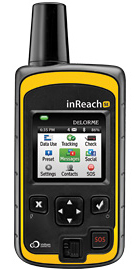
    inReach SE (Screen Edition)

    DeLorme has announced the launch of its newest product, the inReach SE (Screen Edition) satellite communication device. With 90 percent of the world’s surface lacking cell phone coverage, inReach SE is designed  for the traveler or outdoor adventurer to keep them connected and safe anywhere in the world. The expanded standalone capabilities of inReach SE include a color screen, virtual keyboard, slim design and long-lasting internal lithium battery. In standalone mode, inReach SE provides free-form texting capabilities of up to 160 characters to any cell phone number, email address or social media page.

    Using DeLorme’s Earthmate App, inReach SE pairs wirelessly with iPhone, iPad and iPod touch to access topographic maps and NOAA charts and to make text messaging more convenient. inReach SE is also compatible with Android devices.

    With the ability to maintain satellite signal lock even in difficult GPS environments, inReach SE also offers global SOS capabilities, adjustable tracking intervals from 10 minutes to four hours, and remote real-time follow-me/find-me tracking and ping-me locating. In the event of an emergency, the interactive SOS capability of inReach automatically triggers remote tracking and allows users to describe and update their situation so proper resources can be deployed, DeLorme said.

    “Whether you’re deep in the backwoods, floating on a remote lake, or simply traveling abroad, anyone can benefit from the comprehensive functionality of inReach SE,” said Michael

    Heffron, DeLorme CEO. “Over the last two years we have been listening to customer feedback, so the next generation of inReach includes many new features based on their input. The internal rechargeable battery and the on-screen, free-form texting are especially beneficial, making on-the-go communications more convenient and delivering peace of mind to family and friends easier than ever before.”

    inReach operates over the Iridium satellite network, providing global two-way satellite communications, high network reliability and low-latency data links (less than 60 second delivery of messages end-to-end) anywhere on Earth, with no gaps, fringe or weak signal areas, DeLorme said.

    The follow me / find me tracking feature of inReach provides GPS position updates allowing family and friends to follow the user’s trip as it happens. Family and friends can log into a dedicated MapShare page to follow a detailed breadcrumb trail, ping a location, and send messages to the inReach owner. In the event of an emergency, the built-in SOS button can be activated to trigger a distress alert with delivery confirmation and it automatically activates the remote GPS tracking feature. GPS tracking assists search-and-rescue personnel with homing in on the user’s location, whether stationary or on the move.

    Pairing the inReach SE via Bluetooth with the Earthmate App turns a mobile device into a global satellite communicator and navigation tool. Real-time GPS location, tracking and text messages are overlaid on the digital maps for easy navigation and position location. inReach owners get exclusive, unlimited access to DeLorme’s topographic maps and North American NOAA charts, which can be downloaded via an Internet connection prior to departure and remain available in the Earthmate App even when outside cellular coverage.