The report examines the objectives behind Beijing’s decision to develop the system as an alternative to GPS, its efforts to build an industry around the system, and the effects this might have in security, economic and diplomatic terms for the U.S.
“The system’s primary purpose is to end China’s military reliance on GPS, although China’s associated industrial policies will likely affect U.S. firms operating in China’s market. Industry professionals assess there are no inherent risks to products such as smartphones receiving data from BeiDou.”
China’s BeiDou is projected to achieve global coverage by 2020.
The commission was created through a congressional mandate in October 2000, and is responsible for monitoring and investigating national security and trade issues between the United States and People’s Republic of China.
Beidou constellation
Key Findings
China has sought to field its own satellite navigation system in order to (1) address national security requirements by ending military reliance on GPS; (2) build a commercial downstream satellite navigation industry to take advantage of the quickly expanding market; and (3) achieve domestic and international prestige by fielding one of only four such systems yet developed, cementing China’s status as a leading space power and opening the door to international cooperation opportunities.
Industry professionals assess there are no inherent risks to products such as smartphones receiving data from Beidou. While concerns have been raised that malware in devices could allow China’s government to track users, experts (1) are not aware of ways to feasibly transmit malware through a navigation signal and (2) assess that manufacturers will be unlikely to include Beidou’s unique messaging function due to cost factors. Restrictions on technology purchases from China by U.S. government and military users can help guard against malware being physically installed.
Beidou is of foremost importance in allowing China’s military to employ precision-guided conventional strike weapons—a central feature of Beijing’s efforts to counter a U.S. intervention in a potential contingency—if access to GPS is denied.
GPS and Beidou signals are both provided for free and are not in “competition” for market share. Also, the satellite navigation industry is trending toward “multi-constellation” receivers that work with all systems. This means that the U.S. firms that currently dominate the downstream satellite navigation industry will likely be able to incorporate Beidou functionality and continue to compete, although prospects in the China market may narrow.
China plans to expand Beidou coverage to most of the countries covered in its “One Belt, One Road” initiative by 2018, indicating it sees the system as playing a role in its economic diplomacy efforts. China has also sought to incentivize countries in Southeast Asia and the Middle East to begin using Beidou, and seeks to build a network of ground stations throughout Asia to improve the system’s accuracy.
In response to these developments, the United States can consider allowing government and military users to take advantage of multi-constellation devices, while continuing to monitor the industry to assure that security threats do not materialize; promote interoperability to ensure its firms remain competitive; and continue to invest in maintaining its leadership in space.
Current coverage of BeiDou constellation (from report).
Beginning Wednesday, Jan. 25, Air Force Space Command (AFSPC) will conduct a limited-duration test implementing an increase of the Ll C/A power level on the GPS Block IIR-M and llF satellites — a total of 19 satellites.
The C/A power will remain within IS-GPS-200-H specifications, and the power increase is not expected to increase the noise floor by more than 0.3 signal-to-noise ratio in the worst case.
“We assess that there will be no adverse impacts to civil, commercial or military GPS users, but anyone who experiences issues during this test should address them through established reporting channels,” said Gen. John W. Raymond, U. S. Air Force (USAF) commander, in a “Memorandum for Distribution.”
Military users can contact the GPS Operations Center at DSN 560-2541, while civilian users can contact the U.S. Coast Guard Navigation Center at 703-313-5900. In the event of unexpected critical impacts, a process to cease testing operations has been put in place.
The AFSPC point of contact for this test is Maj. Jeffrey Koch, DSN 692-0233, commercial 719-554-0233.
The u-blox ZOE-M8Q is designed for wearables, UAVs and asset trackers. Photo: U-blox
U-blox has launched a new positioning module, the ZOE-M8G. The ZOE-M8G is an ultra-compact GNSS receiver module designed for markets where small size, minimal weight and high location precision are essential.
ZOE-M8G offers exceptionally high location accuracy by concurrently connecting to GPS, Galileo and either GLONASS or BeiDou. It also provides -167 dBm navigation sensitivity, important for wearable devices, unmanned aerial vehicles (UAVs) and asset tracker applications.
The new u-blox ZOE-M8G helps simplify product designs, because it is a fully integrated, complete GNSS solution with built-in SAW-filter and Low Noise Amplifier (LNA). It can be used with passive antennas without the need for additional components, and doesn’t compromise performance.
The ZOE-M8G GNSS module measures 4.5 x 4.5 x 1.0 millimeters. Due to its small size, a complete GNSS design using a ZOE-M8G module takes approximately 30 percent less printed circuit board (PCB) area compared to a conventional discrete chip design with a CSP chip GNSS receiver.
“When you’re designing products such as smart watches, fitness trackers, asset trackers, UBI dongles and even drones, every square millimeter and every gram counts. The u-blox ZOE-M8G makes it significantly easier for product designers to achieve precise location tracking while keeping within their strict form factor and weight restrictions,” said Uffe Pless, product marketing, Positioning Product Center at u-blox.
Samples of the u-blox ZOE-M8G will be available in February 2017, and volume production will start in October 2017.
Caltrans — the California state agency responsible for highway, bridge and rail transportation planning, construction and maintenance — has taken delivery of the new Riegl VMX-1HA mobile mapping system.
The Riegl VMX-1HA dual-scanner mobile mapping system. Photo: Caltrans
The Riegl VMX-1HA is a high-speed, high-performance dual-scanner mobile mapping system. It provides high performance and dense, accurate and feature-rich data at highway speeds.
With two million measurements and five hundred scan lines per second, the turnkey solution is suited for survey-grade mobile mapping applications to meet the standards of departments of transportation nationwide, Riegl said.
The technology of the system comprises two Riegl VUX-1HA high-accuracy waveform lidar sensors and a high-performance INS/GNSS unit, housed in an aerodynamically shaped protective cover. Four 9-megapixel cameras, along with a LadyBug 5 camera, complement the waveform lidar data with precisely georeferenced images.
The Riegl software suite provides seamless workflows for mobile data acquisition, processing, adjustments and deliverables.
Riegl USA was awarded the contract of the Request For Quote (RFQ) on the open market.
TerraGo is partnering with CompassTools, a provider of integrated GIS, GPS and wireless solutions for field data collection across numerous industries, including government, utility, natural resources, transportation, architecture and construction.
“We help our customers build the best bundled solution for their GIS and GPS goals, whatever they may be, and TerraGo’s mobile solutions give us the flexibility we need for the wide spectrum of accuracy, workflow and data collection requirements,” said Andrew Carey, manager of Geospatial Solutions at CompassTools. “TerraGo provides out-of-the-box integration for all the leading platforms, while enabling customizable precision, basemaps, forms and workflows, which fits well with our customer-focused approach.”
“CompassTools helps organizations identify and implement the best combination of GPS receivers, hardware and software to meet their unique requirements,” said John Timar, vice president, Worldwide Sales, TerraGo. “TerraGo Edge and TerraGo Magic were designed from the ground up to support that type of customization; which makes it easy for customers to get the benefit of CompassTools’ expertise to help them deploy a solution tailored to their mission.”
TerraGo is hosting a webinar on Tuesday, Feb. 14, at 12 p.m. ET with a live demonstration of mobile GIS and GPS solutions available from TerraGo and CompassTools.
Q: Why do we need to take integrity seriously in the vehicle environment?
Chris Rizos, Professor, Geodesy and Navigation, University of New South Wales
A: Since the 1980s, surveyors and geodesists have used GPS for high-accuracy positioning. We take for granted centimeter- and even millimeter-level accuracy positioning capability that is faster, more reliable, at a lower cost and with fewer constraints than ever before. However, the demand for “trustworthy positioning” dismisses such achievements, and the mantra is more “availability” and greater “integrity” to support highly automated driving. Our positioning and navigation community must rise to this challenge.
Rod Bryant, Senior Director, Technology, Positioning, u-blox
A: In autonomous vehicles, a GNSS/inertial module will be just one of several sensors used for location. The risk of contributing to accidents and serious injury will be decomposed and allocated between subsystems by the OEM or system designer. Taking aviation as a model, the allocation to GNSS may be in the form of an alarm limit of a few meters with integrity risk less than 10-6/hour. However, multipath and obstructed sky make automotive risk far more difficult than aviation. Carrier-phase techniques will come into play and new approaches to protection limit estimation will be needed.
Sam Pullen, Senior Research Engineer, Stanford University; Consultant, Sam Pullen Consulting
A: Advanced sensor fusion techniques now make it possible to achieve very accurate PVT results by combining multiple dissimilar sensors. Once we rely on these capabilities for autonomous driving, the primary threat to safety will come from confluences of rare events that were not observed or foreseen during system development. Design for integrity focuses attention on the identification and mitigation of potentially hazardous anomalies before they happen, not afterward.
The agriculture robots market is projected to reach US$5.7 billion by 2024, according to a report by Transparency Market Research (TMR).
The diverse nature of the competitive landscape in the global agriculture robots market presents a number of prominent players for each of its key regions, TMR analysts said.
Also, a diverse array of names is appearing as emergent players in the global agriculture robots market within each region, denoting a strong scope of entry for advanced innovations and increased player competition.
Agriculture robots include UAVs, driverless tractors, automated harvesting machines and more.
According to the report, the global agriculture robots market was led by North America until 2015. It was considered to be the base for several of the stronger players in the market and the leading region in terms of technological development and rate of implementation.
In 2015, the global agriculture robots market was dominated by driverless tractors. This segment is likely to hold the leading share in the market in the immediate future, followed by automated harvesting machine. Driverless tractors are currently in very high demand due to factors such as their ability to automatically plough the field, and pick and place articles from one place to another at an extremely consistent rate.
By revenue, the global agriculture robots market is likely to reach US$1.01 billion by the end of 2016. Its revenue generation is expected to continue expanding at a CAGR of 24.1% within a forecast period from 2016 to 2024, and is expected to reach US$5.7 billion by the end of 2024.
Source TMR Analysis, 2016
Urban Migration Pushes Need for Agriculture Robots Globally
“The progress of regions and cultures has primarily driven a growing number of people towards the urban areas and the suburbs. The chance of industrial progress and growth in personal income are key factors attracting more and more people to the city life. This, in turn, has caused a twofold need for the incorporation of agriculture robots in several countries,” said a TMR analyst.
“Firstly, the growing global population — a lot of it being urban — is pressuring countries to increase food production while steadily reducing the hands available for the agriculture industry. Secondly, the overall land slotted for agriculture in nearly all countries is reducing, thanks to the burgeoning industrial sector and residential construction projects. This is creating an additional layer of demand for agriculture robots as they are as close as the industry can get to precision farming,” said the analyst.
Other factors driving the global agriculture robots market include the reduction in the use of chemicals through the efficient performance of jobs such as weeding, spraying, and pick-and-place, and the increasingly accepted modes of corporate farming.
Functionality Still Limited for Multiple Robotic Farming Aspects
It is currently not feasible to aim for constructing robots that are capable of performing multiple functions that constitute running a farm. Between crop management, irrigation, and even livestock rearing, the design of robotic programs and functions can be utterly difficult to accomplish.
This results in the requirement of multiple robot types in a single farm in order to completely automate the process, which is a serious financial burden to consider. The scope of utility in the global agriculture robots market is thus limiting the overall customer pool, which is already thinned out by the heavy investments required in installation and maintenance of single function robots.
“Future opportunities in the global agriculture robots market lie in the adoption of telematics sensors to reduce the complications that are caused by tractor failure and other functions, the use of crop sensors to increase the precision of pesticide use and gauge overall crop health, and the use of robotic farm swarms,” said the analyst.
The information presented in this review is based on a Transparency Market Research report, titled, “Agriculture Robots Market (Products — UAV, Driverless Tractors, Milking Robots and Automated Harvesting Machines; Applications — Field Farming, Dairy Management, Indoor Farming and Horticulture) — Global Industry Analysis, Size, Share, Growth, Trends and Forecast, 2016-2024.”
A PDF research brochure of this report is available.
The European Space Agency (ESA) issued a press release addressing the Galileo clock failures reported Jan. 18. GPS World Innovation editor Richard Langley provided the following summary of the satellites and clocks involved, based on information we have received to date.
5 satellites affected: 3 IOVs, 2 FOCs
Total of 10 failures; 1 fixed; so 9 continuing failures
5 masers on IOV satellites
2 masers on FOC satellites but 1 of these fixed
3 rubidiums on FOC satellites
No satellite currently has fewer than 2 working clocks
The ESA press release provides additional details on the failures and actions being taken to address the problem.
Press Release from the European Space Agency
As first reported November 2016, anomalies have been noted in the atomic clocks serving Europe’s Galileo satellites.
Anomalies have occurred on five out of 18 Galileo satellites in orbit, although all satellites continue to operate well and the provision of Galileo Initial Services has not been affected.
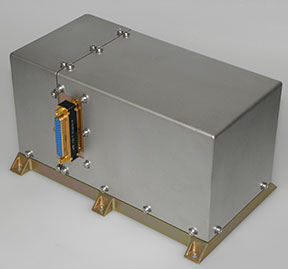
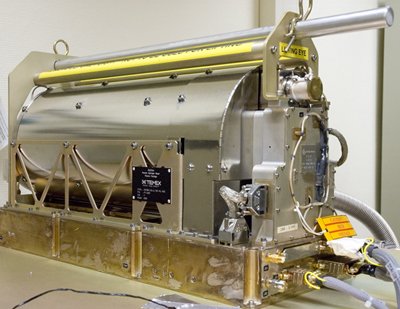
Highly accurate timing is core to satellite navigation. Each Galileo carries four atomic clocks to ensure strong, quadruple redundancy of the timing subsystem: two Rubidium Atomic Frequency Standard (RAFS) clocks and two Passive Hydrogen Maser (PHM) clocks.
The current Galileo constellation consists of 18 satellites in orbit, adding up to a total of 36 RAFS clocks and 36 PHM clocks.
Rubidium atomic clock, or RAF.
RAFS clocks
In recent months, a total of three RAFS clocks unexpectedly failed on Galileo satellites — all on Full Operational Capability (FOC) satellites, the latest Galileo model. These failures all seem to have a consistent signature, linked to probable short circuits, and possibly a particular test procedure performed on the ground, with investigations continuing to identify a root cause.
No RAFS clock failures have occurred aboard the four Galileo In Orbit Validation (IOV) satellites, the original Galileo model. In addition the RAFS clock on ESA’s very first test navigation satellite, GIOVE-A launched in 2005, has been checked, and was reactivated successfully.
Continuing investigations on the ground have identified potential weaknesses in the RAFS clock design, but no root cause has yet been yet established.
PHM Clocks
Passive hydrogen maser atomic clock of the type flown on Galileo, accurate to one second in three million years. (Photo: ESA)
In the past two years, there have been five PHM clock failures on the IOV satellites and one PHM failure on the FOC satellites.
These failures are better understood, linked to two apparent causes. One is a low margin on a particular parameter that leads, on some units, to a failure. The second is related to the fact that when some healthy PHM clocks are turned off for long periods, they do not restart because of a change in clock characteristics in orbit. To date, two PHM clocks have failed owing to the first mechanism, and four to the second.
Corrective Actions
For the remaining 33 RAFS clocks in orbit, the risk of failure is believed to be lower owing to different testing procedures on the ground before launch. In addition, new operational measures have been put in place to further mitigate the risk. All these measures have no effect on Galileo’s overall performance.
While investigations by ESA and its industrial partners are continuing, there is consensus that some refurbishment is required on the remaining RAFS clocks still to be launched on the eight Galileo satellites being constructed or tested, and awaiting launch.
For the remaining 30 PHM clocks working in orbit, operational procedures are being studied to significantly reduce the risk of future failure. These measures are being validated, ahead of their planned introduction in a few weeks.
Looking Forward
Overall, three out of four IOV satellites have experienced clock anomalies, and two out of 14 FOC satellites.
As ESA Director General Jan Woerner commented during his Jan. 18 press briefing, no individual Galileo satellite has experienced more than two clock failures, so the robust quadruple redundancy designed into the system means all 18 members of the constellation remain operational. This includes one satellite that supports only the Open Service for mass-market applications, and two satellites in elliptical orbits that are nevertheless expected to be reintegrated into the full constellation for use from these orbits.
Similarly, Galileo’s Initial Services, which began on Dec. 16, have been unaffected by these anomalies.
The impact of RAFS and PHM clock refurbishment on Galileo’s launch schedule is under study, but ESA is confident that the clock issues will be resolved and remains committed to launch the next four Galileo FOC satellites before the end of this year.
Director General Press Briefing
January 18, 2017
Clock problems are discussed at about the 12-minute mark, and in the Q&A portion started at the 52-minute mark.
Clocks have failed onboard several Galileo satellites in space, reports Phys.org, a web-based science, research and technology news service.
The cause of the failure is being investigated, European Space Agency director general Jan Woerner told journalists in Paris on Wednesday.
Each Galileo satellite has four atomic timekeepers — two rubidium and two hydrogen maser. Three rubidium and six hydrogen maser clocks are not working.
Passive hydrogen maser atomic clock of the type flown on Galileo, accurate to one second in three million years. (Photo: ESA)
The rubidium devices are similar to those used on current GPS satellites. The more precise hydrogen maser instruments were designed to give Galileo superior performance to the American GPS network.
Five of the maser failures have occurred on the satellites that were originally sent into orbit to validate the system, but all three rubidium stoppages are on the spacecraft that were subsequently launched to fill out the network, reports BBC News.
Each orbiter needs one working clock for the satellite navigation to work, with the other three clocks being spares. As of mid-January, 10 Galileo atomic clocks, the key element in a navigation satellite, had failed on four different satellites. One was recently returned to service, leaving nine outages, reports Space Intel Report.
Initial services were launched in December, and the failure of nine clocks out of 72 launched to date has not affected operation, Woerner said.
“If this failure has some systematic reason we have to be careful” not to place more flawed clocks in space, Woerner said. The question now is “should we postpone the next launch until we find the root cause?”
The next four satellites were to have been launched in August-September, but the launch has been postponed for November or December to investigate the clock failures. “You can say we wait until we find the solution, but that means if more clocks are failing then we are reducing the capability of Galileo,” Woener said.
The failures have occurred on two satellite platform designs: one built by Airbus and Thales Alenia Space as part of a four-satellite system validation program, and the other by Galileo prime contractor OHB SE of Germany, reports Space Intel Report. This is complicating the analysis to determine the cause of the failures.
Eighteen orbiters have been launched for the Galileo constellation to date, a number that will ultimately be boosted to 30 operational satellites and two spares.
The TimeSource Enhanced primary reference time clock (TimeSource Enhanced PRTC) is a new system to protect against serious threats associated with GNSS vulnerabilities. It also enables telecommunications and mobile operators to meet the G.8272.1 recommendation from the International Telecommunication Union. The TimeSource Enhanced PRTC “generates time” by producing its own independent time scale aligned with GNSS, while its phase, time and frequency signal outputs remain autonomous, providing a secure infrastructure, reducing dependency on GNSS and enabling network operators to retake control of the timing source used for network synchronization.
Harxon’s next-generation triple-frequency Helix Antenna, HX-CH7603A, has excellent performance and high efficiency in a compact form factor. The new design is capable of GPS L1/L2, GLONASS L1/L2 and BDS B1/B2/B3. Though compact, it provides high peak gain (more than 3.5 dBi) and wide beam width to ensure the signal receiving performance at low elevation angles. HX-CH7603A is equipped with an O-ring and gold-plated SMA (sub-miniature version A) connector that makes the antenna waterproof-grade, reaching IP67 once installed on a mating surface. The antenna is designed for applications requiring minimal integration effort or for retrofitting existing products.
U‑blox components are at the core of two new GNSS golf products. The golf rangefinder wearables were launched by Voice Caddie, an international brand of rangefinders and trackers based in South Korea. The T3 Hybrid Golf GPS Watch uses the compact u‑blox UBX‑G7020‑KT professional‑grade GNSS chip, which links with GPS/QZSS or GLONASS satellite systems. The B1 GPS Band uses the u‑blox UBX‑M8030‑KT professional‑grade GNSS chip, which provides navigation sensitivity and low current consumption. It is compatible with GPS, Galileo, GLONASS and BeiDou satellite systems. The u‑blox GNSS technology enables the T3 Watch and the B1 Band to automatically detect golf courses and holes, and shows the wearer the driving distance and remaining distance to the hole as well as the distance to the front, middle and back of the green. The T3 Watch also measures short distances.
The OSA 5420 series is a family of cost-effective, mid-scale synchronization distribution and assurance devices. Following a toolbox approach, the OSA 5420 series can be used in a variety of network synchronization applications, including IEEE 1588v2 grandmaster, boundary clock, slave clock and assisted partial timing support (APTS). The built-in GNSS receiver and primary reference time clock (PRTC) capability, together with the redundant power supply option, provide reliable synchronization delivery.
with GPS directorate security approval to process Y-code
Photo: Talen
BroadSim is a software-defined GNSS simulator that enables users to model true and spoofed signals, with navigation warfare (NAVWAR) testing in mind. BroadSim supports high dynamics, advanced jamming, spoofing and encrypted military codes. Powered by Skydel’s SDX 1000-Hz software simulator engine, BroadSim can simulate multiple constellations including GPS, GLONASS, Galileo and BeiDou. The hardware includes a generator and controller with two radios, an OctoClock-G with GPS-disciplined oscillator, four channels and a UBX-160 RF daughterboard.
The Evolve drone has a dual-screen remote controller, empowering users with industry-grade features and functionality.The remote controller is a smart pilot system (SPS) that combines all required functions for amateur and professional users’ flying and filming needs under a single interface. Functioning as a 7-inch viewfinder and a 5-inch multi-touch control panel, the foldable dual-screen has minimal buttons and sticks, providing an intuitive experience. Both screens are luminously visible and operable in direct sunlight. The controller features a 64-bit quad-core CPU, a dedicated GPU, 4GB DDR3 RAM and Android OS inside. It comes with a GPS module, inertial measurement unit sensors, Micro-SD card slot, USB port and micro HDMI-out port, allowing comprehensive extendibility such as additional storage, FPV goggles and VR headsets.
Also comes in solar-powered version for extended flight time
Photo: C-ASTRAL Aerospace
The Bramor ppX long-endurance small UAS has an all-composite blended-wing body system capable of flying for 3.5 hours. Also available is the variant Bramor ppX-LRS (long-range solar) version, developed in conjunction with Sunnyvale, California, thin-film solar-cell company Alta Devices. The ppX-LRS can fly up to 5.5 hours. Both versions can carry an array of advanced sensors for remote sensing, aero photogrammetry, surveying and agricultural mapping as well as intelligence, surveillance and reconnaissance missions. The new ppX is complemented with a C3P (command, control, communications and planning) software package for mission planning and flight control, enabling situational awareness and intuitive systems control. It also has an online fleet management and maintenance support system that will enable current users and operators to share technical data and mission profile and performance parameters advice. Sensors available range from visible light to multispectral, hyperspectral and advanced gas laser sensors capable of detecting 0.05 ppm of methane gas in the air above the areas of interest where leaks could develop.
Three companies join to improve the augmented reality experience
Photo: HiScene
HiScene, Inuitive and Heptagon have teamed up on HiScene’s next generation of augmented reality (AR) glasses. HiAR Glasses incorporate Inuitive’s NU3000 computer vision processor and Heptagon’s advanced illumination. The companies worked together to develop a complete solution for advanced 3D depth sensing and AR/VR applications that delivers excellent performance even in changing light conditions and outdoors. The glasses’ AR operating system provides stereoscopic interactivity, 3D gesture perception, intelligent speech recognition, natural image recognition and inertial measurement unit (IMU) displayed with an improved 3D graphical user interface.
Professional image processing embedded in air frame
Photo: DJI
The Inspire 2 improves on the Inspire 1 with a new image-processing system embedded into the airframe, the CineCore 2.0. It records up to 5.2K in CinemaDNG RAW, Apple ProRes and other formats. It flies from 0 to 50 mph (80 kph) in 5 seconds, reaches 58 mph (94 kph) and has a maximum descent speed of 9 m/s. A dual-battery system prolongs the flight time to 27 minutes (with an X4S), while self-heating technology allows it to fly in low temperatures. DJI’s Flight Autonomy provides two directions of obstacle avoidance and sensor redundancy. Increased intelligence adds multiple intelligent flight modes, including Spotlight Pro, giving single pilots the ability to create complex, dramatic shots. An upgraded video-transmission system is capable of dual-signal frequency and dual-channel, streaming video from an onboard first-person-view camera and the main camera simultaneously, for better pilot and camera operator collaboration.
GNSS receiver, datalogger also has barometric sensor
Photo: Bad Elf
The Bad Elf GNSS Surveyor delivers ~1-meter positioning out of the box to the iPad or Android device for use in GIS, mapping, agriculture and survey activities. The GNSS Surveyor can record raw data and produce a RINEX file through the Bad Elf application for post-processing. It also supports differential GPS (DGPS) using RTCM 2.3 correction messages. Surveyors can obtain altitude from GPS or from the built-in barometer, which can be calibrated to a known altitude or pressure.
Annual subscription includes professional use rights
Photo: Avenza
Avenza Maps, Avenza Systems’ mobile mapping app for Android, iOS and Windows, now comes in a Pro version. Avenza Maps Pro is the most powerful version to date of the application. Features of the Pro annual subscription include commercial, government and other professional use rights not available with other versions allowing an unlimited number of maps to be imported as well as Shapefile import and export, data collection and management, and enhanced support. The subscription also allows for enterprise-level management of the Avenza Maps app across mobile devices for organizations, using a new subscription management system.
The TX6 and improved TX8 high-performance 3D laser scanners offer an integrated high-dynamic range camera and Wi-Fi remote control. The high-speed 3D laser scanners combine microsecond time-of-flight distance measurement with advanced onboard signal and 3D data processing, designed to provide range and accuracy in all conditions. The TX6 is a medium-range 3D scanner, while the TX8 is for geospatial professionals that require enhanced versatility and longer ranges to effectively support a variety of applications in urban environments, civil infrastructures and challenging terrains.
Aqua Map is an iOS and Android app for GPS marine navigation, aimed at boaters and fishermen. The app integrates official nautical charts for many areas in the world, including the NOAA, CHS (Canadian Hydrographic Service), British Admiralty and Bundesamt für Seeschifffahrt und Hydrographie as well as S-57 and raster cartography. The app provides users with a clear chart using the full power of the Retina display, intuitive realistic symbols and colors. No experience in water navigation is needed. Most of the functions are accessible with simple gestures on the map, and all are clearly described in the Aqua Map Tutorial and Help.
Galaxy is an airborne laser terrain mapper designed for projects from wide-area mapping to corridor surveys. A universal sensor, it collects ultra-dense data with precision and accuracy. When coupled with Optech’s SwathTRAK and PulseTRAK technologies, collection efficiencies exceeding 70 percent are possible, relative to the traditional fixed field of view dual-beam sensors. The Galaxy can be installed in a tactical UAV, integrated in a helicopter pod for powerline surveying, or gyro-stabilized with an orthometric camera for wide-area mapping. SwathTRAK dynamically modifies the scan field of view during collection to maintain fixed swath widths and even point distribution, even in variable terrain. PulseTRAK enables a continuous operating envelope, solving the multi-pulse challenge of data coverage gaps and density variation in the multi-pulse transition/blind zones. This gives surveyors the ability to use high laserpulse rates and generate high point density in variable terrain, without the need for complex flight planning.
Correlator3D software is a patented end-to-end photogrammetry solution for the generation of high-quality geospatial data from satellite and aerial imagery, including UAVs. Correlator3D performs aerial triangulation and produces dense digital surface models, digital terrain models, point clouds, orthomosaics and vectorized 3D features. Powered by GPU technology and multi-core CPUs, Correlator3D’s processing power supports rapid production of large datasets. Benefits include quick processing of thousands of images through GPU powered and multi-core CPU computing; highly automated processes with intuitive manual editing tools for customer-specific requirements; and modular design that offers clients flexibility with respect to budget and easily integrates into a production workflow.
Receiver designed for car navigation platforms, devices
Photo: Furuno
The GV-86 receiver is used by many automotive customers requiring high quality and reliability. Because of its dead-reckoning function, GV-86 achieves high-accuracy performances in deep urban canyons where the accuracy of GNSS-only positions could be reduced. The GV-86 receiver is being installed in car navigation systems designed for major automotive companies, such as Skypine in China and Clarion in Japan. The GV-86 achieves superior performance with fast time to first fix and highly improved noise tolerance. The software can be upgraded to support concurrent multi-GNSS reception with GPS, Galileo, QZSS and SBAS.
Nikken Lease uses u-blox positioning for trackable pallet
Photo: u-blox
Transeeker is a pallet equipped with u-blox’s cellular and positioning technologies for accurate tracking: u-blox cellular UMTS/HSPA(+) module LISA-U200-62S and u-blox 7 standalone GNSS module, EVA-7M. Made of plastic, the pallets are reusable, making them a good ecological alternative to their wooden counterpart. Embedded in Transeeker, the LISA-U200-62S of the LISA-U2 series is equipped with CellLocate, u-blox’s proprietary hybrid positioning technology enabling stand-alone location estimation based on surrounding GSM/UMTS cell information in conjunction with GPS positioning data.
Nikken Lease, www.nklogi.com;
The government of India has warned domestic airlines of “consequences” if they do not use GAGAN, the state’s GPS-Aided Geo Augmented Navigation system, reports the Mumbai Mirror.
The warning came during a meeting called by the Directorate General of Civil Aviation (DGCA) in December with all stakeholders, including the airlines. Most aircraft registered in India are still not equipped with the technology two years after its launch.
While smaller aircraft such as ATRs and Bombardiers in the Indian carriers’ fleet are already equipped with the GAGAN system, bigger planes need to be retrofitted at the airlines’ expense, including Airbus A320, A330, Boeing 737, B777 and B 787. Eight major domestic carriers — Air India, Air India Express, Jet Airways, JetLite, IndiGo, SpiceJet, GoAir, Vistara and AirAsia — have 427 such planes in service, Mumbai Mirror reports.
The National Civil Aviation Policy, announced by the government in June, makes it mandatory for all aircraft registered in India to be GAGAN-enabled by Jan. 1, 2019.
Jointly developed by Indian Space Research Organisation (ISRO) and Airports Authority of India (AAI), the GAGAN system was officially launched by Civil Aviation Minister Ashok Gajapathi Raju in July 2016. It is said to make airline operations more efficient and cut down costs as it reduces separation between aircraft, increases air safety and fuel efficiency.
GAGAN’s footprint extends from Africa to Australia and has expansion capability for seamless navigation services across the region. The system is inter-operable with other international satellite based tracking systems such as the WAAS (US), EGNOS (Europe) and MSAD (Japan).
Iridium Communications Inc. has successfully launched its first 10 Iridium NEXT satellites, which will support real-time automatic dependent surveillance broadcast (ADS-B) operations in oceanic regions.
Iridium NEXT is the company’s next-generation satellite constellation, replacing and enhancing its existing network of low-Earth orbit satellites spanning the entire globe — the largest commercial satellite constellation in space.
A SpaceX Falcon 9 rocket lifts off from Space Launch Complex 4E at Vandenberg Air Force Base, California, Jan. 14. (Photo: SpaceX)
The satellites were delivered into low-Earth orbit an hour after a SpaceX Falcon 9 rocket lifted off from Vandenberg Air Force Base in California at 9:54:39 a.m. PST on Jan. 14.
The launch is the start of a series of Iridium NEXT launches scheduled over the next 18 months, and marks the beginning of one of the biggest “tech refreshes” in history, completely replacing the only satellite constellation providing 100-percent global communications coverage.
Once fully deployed, Iridium NEXT will enable a new broadband multi-service capability called Iridium CertusSM, while providing the technical flexibility to support innovative new services and technologies from Iridium’s extensive partner network.
Aircraft surveillance
Among those technologies is a unique hosted payload from Iridium’s partner Aireon, which will provide a real-time global aircraft surveillance service, extending aircraft visibility across the planet.
Aireon’s space-based ADS-B receiver network will relay signals from all ADS-B equipped aircraft to controllers worldwide, allowing 100 pecent global air traffic surveillance. (Image: Aireon)
According to Aireon, its space-based ADS-B network will transform air traffic management capabilities, providing air traffic surveillance and flight tracking across 100 percent of the planet. Currently, more than 70 percent of the earth, including oceanic and remote airspace, has no existing air traffic surveillance.
The first 10 Iridium NEXT satellites were delivered to a 625 kilometer (km) temporary parking orbit where they will be tested and exercised by Iridium over the coming weeks. Upon meeting testing and validation requirements, the satellites will then be moved into their 780-km operational orbit and begin providing service to Iridium’s customers.
As part of this testing and validation process, Aireon’s ADS-B receivers, which were manufactured by Harris Corporation, will provide air traffic surveillance data through the Aireon network to the Service Delivery Points (SDPs) at partners NAV CANADA, NATS, ENAV, the Irish Aviation Authority (IAA), as well as the Federal Aviation Administration (FAA) William J. Hughes Technical Center in Atlantic City, New Jersey.
One by one, the new satellites will be positioned near a current generation satellite, each moving at approximately 17,000 miles per hour as testing begins. Iridium’s inter-satellite communication links from nearby satellites will be repositioned to point to the new Iridium NEXT satellite as it prepares to take over service. Existing satellites will eventually be de-boosted and de-orbited.
“Today Iridium launches a new era in the history of our company and a new era in space as we start to deliver the next-generation of satellite communications,” said Matt Desch, chief executive officer of Iridium. “We have been working endless hours for the last eight years to get to this day, and to finally be here with ten Iridium NEXT satellites successfully launched into low-Earth orbit is a fulfilling moment. We are incredibly thankful for all of the hard work from our team, as well as our partners, to help us achieve this milestone.”
Both Thales Alenia Space, System Prime Contractor for the program, and their subcontractor for production, Orbital ATK, have been integral in the development of the Iridium NEXT program, from the design and manufacturing of the Iridium NEXT satellite vehicles to managing an 18-station, state-of-the-art assembly line production system.
“Leading a worldwide team to manufacture, assemble, test and prepare each satellite for this moment has been incredibly exciting,” said Bertrand Maureau, executive vice president of telecommunications at Thales Alenia Space. “We are very proud to have conducted such a unique program, in terms of scale and complexity as well as to have successfully completed the end-to-end whole constellation on-ground validation. The system is fully tested, and the compatibility of Iridium NEXT with the Block-1 operating satellites has been perfectly demonstrated. It has truly been an honor, and we are looking forward to completing the rest of the Iridium NEXT constellation through 2017 and early 2018.”
“We are proud to be a part of this revolutionary satellite program,” said Frank Culbertson, president of Orbital ATK’s Space Systems Group. “Seeing these first ten satellites launch successfully into space is the result of a unique assembly-line process at our satellite manufacturing facility that represents a remarkable achievement. We look forward to seeing the innovative solutions these satellites, which are great examples of leading-edge technology and manufacturability, will enable.”
In addition to partnering with Thales Alenia Space as System Prime Contractor, Iridium has partnered with SpaceX for the launch of 70 Iridium NEXT satellites on its Falcon 9 rocket.
“We are very proud to be chosen as the launch provider for the entire Iridium NEXT program and are excited about today’s successful first launch,” said Gwynne Shotwell, President of SpaceX. “Iridium was one of SpaceX’s first customers, and working alongside them to deliver one of the largest aerospace projects underway is an exciting moment for us at SpaceX.”
Iridium and SpaceX are partnered for a series of seven launches, deploying ten Iridium NEXT satellites at a time. The next major milestone will be the completion of on-orbit testing of these satellites, to validate performance requirements are met.
The second Iridium NEXT launch will be scheduled after testing is completed in April. The entire Iridium NEXT network is scheduled to be completed by mid-2018.