Author: Tracy Cozzens

  • DARPA puts navigation for deep dives to the test

    DARPA puts navigation for deep dives to the test

    Robots, UAVs go head-to-head in DARPA subterranean challenge

    The U.S. Defense Advanced Research Projects Agency (DARPA) is looking for novel approaches to rapidly map, navigate and search underground environments during time-sensitive combat operations or disaster-response scenarios.

    Eight teams have qualified for the DARPA Subterranean (SubT) Challenge Systems Competition Final Event. On Sept. 21–23, the teams’ robots will have to quickly navigate unfamiliar underground environments at the Louisville Mega Cavern in search of common items including backpacks, cell phones, trapped survivors and even invisible gas.

    Those who find and identify the most items will win prizes of $2 million for first place, $1 million for second place and $500,000 for third place. DARPA-funded and self-funded teams have an equal chance to win prize money in the final event, DARPA states.

    An Elios drone from team CERBERUS roams a moulin in an earlier challenge. (Photo: DARPA)
    An Elios drone from team CERBERUS roams a moulin in an earlier challenge. (Photo: DARPA)

    The SubT Challenge has held three preliminary events over the past two years — tunnel, urban and cave circuits. The final event will include elements of all three subdomains.

    • Tunnel systems can extend many kilometers in length with constrained passages, vertical shafts and multiple levels.
    • Urban underground environments can have complex layouts with multiple stories and span several city blocks.
    • Natural cave networks often have irregular geological structures, with both constrained passages and large caverns.

    The SubT Challenge is run by DARPA’s Tactical Technology Office (TTO) to uncover innovative solutions to life-threatening, real-world impediments. “Complex underground settings present significant challenges for military and civilian first responders,” explained DARPA Program Manager Timothy Chung.

    Chung added that the project has already achieved success. “Multimodal sensing developed through collaboration of robots during this project has increased the probability of correctly identifying important targets in real life,” he said. “The SubT Challenge is pushing researchers and startups to move to greater autonomy and has led to huge leaps in capability within subterranean environments while allowing learning from failure in non-critical situations.”

    In addition to the Systems Competition involving physical robots, a Virtual Competition is being held. The teams that qualify for the final virtual competition will be announced later this summer. Teams in the Virtual final event will compete for up to $1.5 million, with additional prizes for self-funded teams in each of the Virtual Circuit events.
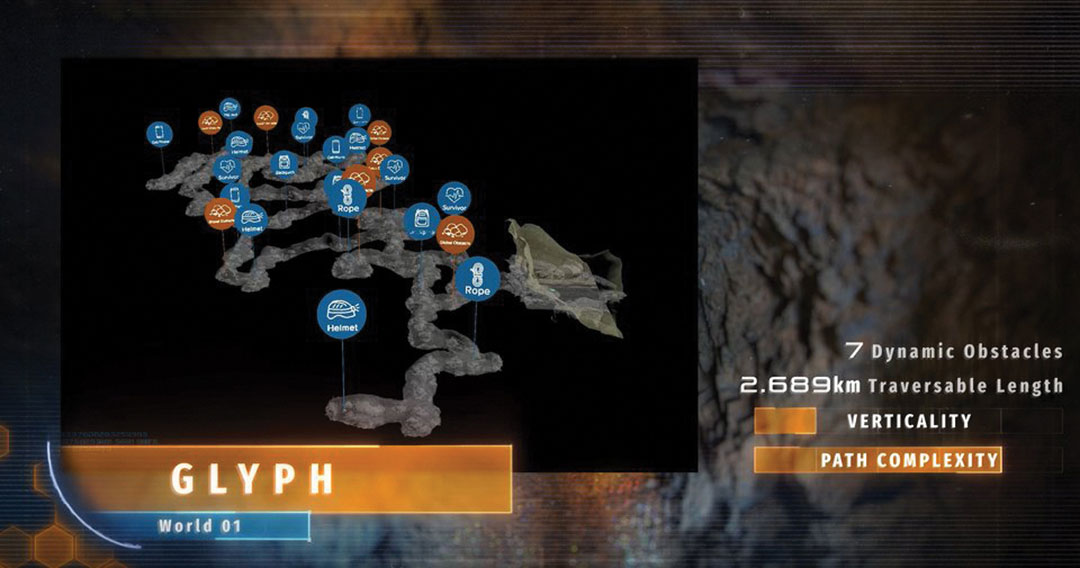
    In the final competition, helmets, rope and even gas must be located. (Photo: DARPA)
    In the final competition, helmets, rope and even gas must be located. (Photo: DARPA)

    FINAL EVENT TEAMS

    DARPA-Funded

    • CERBERUS: CollaborativE walking and flying RoBots for autonomous ExploRation in Underground Settings
    • CoSTAR: Collaborative SubTerranean Autonomous Resilient Robots
    • CSIRO Data61
    • CTU-CRAS-NORLAB: Czech Technical University – Center for Robotics and Autonomous Systems – Northern Robotics Laboratory
    • Explorer
    • MARBLE: Multi-agent Autonomy with Radar-Based Localization for Exploration

    Self-Funded

    • Coordinated Robotics
    • Robotika International (Czech Republic, United States and partners)FINAL EVENT TEAMS
  • Septentrio’s AsteRx SBi3 enables XenomatiX lidar 3D mapping

    Septentrio’s AsteRx SBi3 enables XenomatiX lidar 3D mapping

    AsteRx SBi3 enables highly accurate and reliable 3D mapping solutions based on sensor fusion with lidar

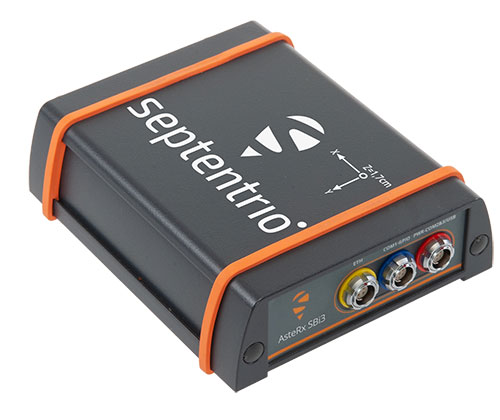
    The AsteRx-i3 Pro+ in a rugged housing. (Photo: Septentrio)
    The AsteRx-SBi3 Pro+ in a rugged housing. (Photo: Septentrio)

    Septentrio, a leader in high-precision GNSS/INS positioning solutions, and XenomatiX, provider of true solid-state lidar technology for autonomous applications and road management solutions, are starting a partnership enabling high-quality lidar solutions.

    XenomatiX will be using the compact and robust GNSS/INS receiver from Septentrio, AsteRx SBi3 Pro+, to provide analysis of pavement conditions geolocated with millimeter accuracy.

    Septentrio’s high-quality GNSS/INS will be a part of Xenomatix’ road lidar XenoTrack, used by road surveyors and road management companies. Septentrio’s AsteRx SBi3, a high-performance RTK GNSS/INS receiver with a dual-antenna setup, ensures centimeter-accurate geotagging of the XenoTrack point-cloud frames for relative and global millimeter accuracy over large distances.

    Moreover, the GNSS/inertial measurement unit (IMU) integration algorithm enables dead reckoning — continuous positioning in environments of low satellite visibility where GNSS outages occur.

    While traditional road scanning based on laser profilers rely solely on extremely accurate GNSS/inertial navigation system (INS) to stitch consecutive profiles together, the XenoTrack captures a 3D topography of an entire area in a single shot. The XenomatiX sensor-fusion algorithms combine visual SLAM techniques with GNSS, IMU and CAN to obtain a seamless map of the road shape.

    Septentrio’s proprietary GNSS+ technology plays a key role in delivering the accuracy and reliability needed for XenoTrack. The company’s AIM+ advanced interference mitigation technology ensures robust positioning even in the presence of jammers, which may be aboard vehicles trying to avoid road tolling. When the sky is obstructed for an extended period, the built-in RAIM+ integrity algorithm serves as an indicator of when it is best to give priority to other sensor inputs to maintain a high-quality solution.

    XenomatiX offers a complete mapping system as well as services including data from the XenoTrack sensor, camera and real-time kinematic GNSS/INS receiver with dual antenna in an easy-to-install solution on a standard vehicle.

  • RUAG Space provides GNSS-equipped computer for space debris removal

    RUAG Space provides GNSS-equipped computer for space debris removal

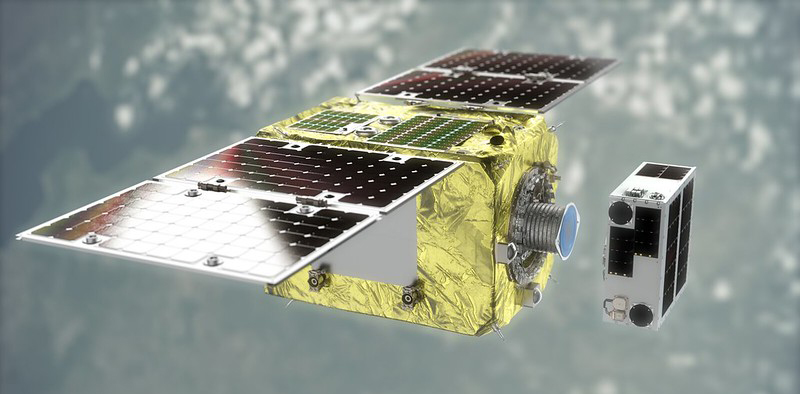
    The ELSA-d satellite servicer and client launched March 2021, the team prepares to demonstrate the servicer’s technology and capability to remove the Client debris from this summer. (Image: Astroscale)
    Launched in March, the ELSA-d satellite will demonstrate space-debris removal this summer. (Image: Astroscale)

    RUAG Space has provided its GNSS-equipped computer to command Astroscale UK‘s ELSA-M Servicer, a spacecraft designed to remove space debris.

    Space debris is a growing concern for the space industry. End-of-life services by Astroscale (ELSA) — a spacecraft decommissioning service for satellite operators — will progress to a commercialization phase this year with the ELSA-M. The M stands for multi-client servicer.

    The Astroscale ELSA-M spacecraft is designed to de-orbit multiple retired satellites in low Earth orbit, which will then burn up on atmospheric re-entry.

    “The ELSA-M servicer will be optimized to remove multiple retired satellites from low-Earth orbit in a single mission,” said John Auburn, managing director of Astroscale UK and group chief commercial officer. The ELSA-M servicer is specifically designed for servicing constellation satellites, such as those launched by GNSS authorities or by the global satellite communications network OneWeb.

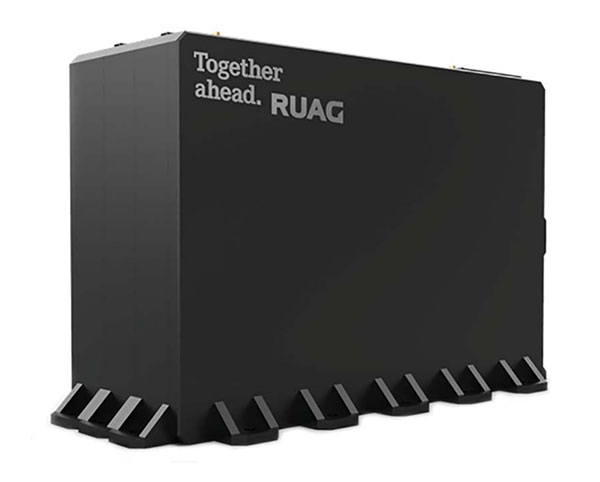
    The computer from RUAG Space will include a GNSS receiver and interface unit. Based on RUAG Space’s constellation On Board Computer (cOBC), the computer controls the ELSA-M spacecraft, enabling repeated multi-debris removal maneuvers and management of equipment, reaction wheels and magnetometers linked to it. The cOBC is designed to be a flexible off-the-shelf computer with high integration and short lead time, enabling high-volume manufacturing.

    The computer system developed in partnership with RUAG Space — with software from Astroscale and hardware from RUAG Space — will support the rendezvous between Astroscale’s servicer spacecraft and the client spacecraft, a retired or defunct satellite.

    The GNSS receiver in the RUAG Space Computer is entirely from RUAG Space, including the NavRIX Integral antenna, which is integrated into the computer. The single-frequency GNSS receiver is capable of processing GPS and Galileo signals and offers several real-time positioning performance options ranging from 20-m 3D rms (root mean square) to better than 1-m 3D rms.

    Photo: RUAG Space
    Photo: RUAG Space

    Specs of the cOBC’s GNSS receiver

    • Tracks GPS L1 C/A or Galileo L1B / L1C signals and provides position, velocity and time
    • Accuracy down to a maximum error of 3.5 m RMS 3D with use of dynamic filtering
    • Pulse per second (PPS) time error < 1 μs RMS
    • Operation with or without external LNA
  • Maxtena adds M9HCT-A-SMA multi-band GNSS antenna to helical family

    Maxtena adds M9HCT-A-SMA multi-band GNSS antenna to helical family

    Advanced multi-frequency antenna shaped for high-precision applications featuring L-band corrections

    Photo: Maxtena
    Photo: Maxtena

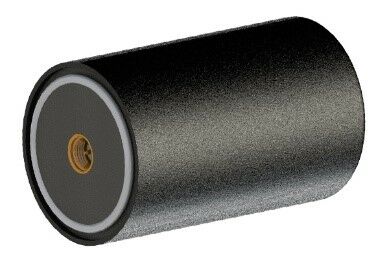
    Maxtena Inc. has introduced an advanced, tiny, patented GNSS antenna for high precision and autonomous multi-frequency applications. The M9HCT-A-SMA antenna is a high accuracy, multi-frequency active helix GNSS antenna + L-band corrections services.

    The design provides simultaneous GNSS reception in a rugged, compact, and ultra-lightweight form factor on:

    • L1: GPS, GLONASS, Galileo, Beidou
    • L2: GPS L2C, Galileo E5B, GLONASS L3OC
    • L5: GPS + L-band corrections

    The M9HCT-A-SMA is suitable for high-precision applications such as the UAV market, where high performance and low weight are driving features in antenna selection.

    The active helix design features Maxtena’s patented compact and lightweight Helicore technology. This technology provides excellent pattern control, polarization purity and high efficiency in a compact form factor.

    The M9HCT-A-SMA is ground-plane independent and offers extremely low power consumption and minimal phase-center variation over azimuth crafted for high-precision applications. The antenna offers superb axial ratio, ensuring multipath error is mitigated.

    For the embedded version, Maxtena provides support for installation and integration of the embedded antenna to offer an exceptional antenna performance. Maxtena can embed the antenna in any housing, then tune the antenna to match the housing’s materials, electronics, and space

    “The M9HCT-A-SMA combines all lower and upper GNSS bands including L1/L2/L5 across all constellations and features L-band corrections,” said Maxtena’s Chief Commercial Officer Vanja Maric. “At the same time, this antenna is the smallest solution with such a performance on the market. The superb axial ratio and multipath rejection allow the antenna to operate in the most RF noisy environments. We see a trend of higher accuracy demand across various industries from autonomous vehicles and robotics to commercial products such as lawn mowers and robotics using our antenna solution.”

  • U-blox releases explorer kits for high-precision indoor positioning

    U-blox releases explorer kits for high-precision indoor positioning

    Leveraging Bluetooth direction finding technology, the solutions demonstrate sub-meter level position accuracy for a variety of industrial and consumer applications

    Photo: U-blox
    Photo: U-blox

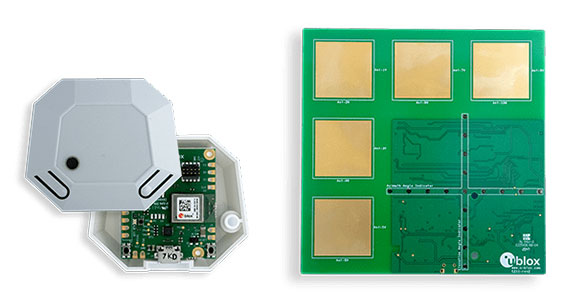
    U-blox has released two explorer kits for product developers to evaluate the potential of Bluetooth direction finding and high-precision indoor positioning. Designed for low power consumption, simple deployment, and low cost of ownership, the u-blox XPLR-AOA-1 and XPLR-AOA-2 explorer kits will test the technology’s capabilities to enable a variety of applications including access control, collision detection, smart appliances, indoor positioning and asset tracking.

    Recognizing the growing demand for more accurate indoor positioning solutions, the Bluetooth special interest group (SIG) released Bluetooth direction finding, offering a major improvement over previous receiver signal strength indicator (RSSI)-based solutions.

    Bluetooth direction finding makes it possible to determine the direction that radio signals travel from a mobile tag to one or several fixed anchor points. Using angle-of-arrival (AoA) technology, anchor points comprising antenna arrays connected to Bluetooth receivers can detect the direction, or angle, to the mobile tag, which transmits a Bluetooth signal. When a constellation of such multi-antenna anchors is deployed, AoA technology can be used to triangulate the precise location of a mobile device or tag.

    The u-blox XPLR-AOA-1 and XPLR-AOA-2 explorer kits showcase one of the first complete Bluetooth-based tracking solutions – from the tag to the cloud – to reliably offer sub-meter-level accuracy in indoor environments.

  • Qualcomm upgrades premium tier with Snapdragon 888+

    Qualcomm upgrades premium tier with Snapdragon 888+

    Upgraded flagship mobile platform to power commercial smartphones from ASUS, Honor, Motorola, vivo and Xiaomi in second half of 2021

    Photo: Qualcomm
    Photo: Qualcomm

    Qualcomm Technologies Inc. announced the Snapdragon 888 Plus 5G Mobile Platform, a follow-on to the flagship Snapdragon 888. These two platforms power more than 130 designs announced or in development. The product was introduced at Mobile World Congress, taking place this week in Barcelona, Spain.

    Satellite systems supported include all four constellations (GPS, Beidou, Galileo, GLONASS) with dual-frequency GNSS. Additional systems supported include NavIC, QZSS and SBAS.

    Snapdragon 888 Plus provides AI-enhanced gameplay, streaming, photography and premium connectivity. Compared to its predecessor, Snapdragon 888 Plus offers an increased Qualcomm Kryo 680 CPU Prime core clock speed at up to 3.0 GHz and the 6th generation Qualcomm AI Engine with up to 32 TOPS AI performance, which is more than 20% improvement.

    “Snapdragon is synonymous with premium Android experiences. Our latest flagship Snapdragon 888 Plus 5G Mobile Platform will help deliver the premium entertainment, connectivity, and gaming experiences users deserve,” said Christopher Patrick, senior vice president and general manager, mobile handset business, Qualcomm. “We’re excited to see OEMs launch with products based on our highest performing platform.”

    Photo: Qualcomm
    Photo: Qualcomm
  • Rx Networks TruePoint.io global PPP corrections now quad-constellation

    Rx Networks TruePoint.io global PPP corrections now quad-constellation

    Logo: Rx NetworksRx Networks TruePoint.io global precise point positioning (PPP) correction service now provides quad-constellation support.

    More mobile devices are integrating multi-constellation GNSS chipsets for better positioning. With quad-constellation expanded multi-constellation support, Rx Networks TruePoint.io global precise point positioning (PPP) correction service unlocks that accuracy, providing global PPP corrections for every major GNSS constellation those chips can track.

    TruePoint.io global PPP originally delivered GPS and GLONASS corrections. Now, it also provides corrections for Galileo and BeiDou. Mass-market multi-constellation GNSS chipsets can now augment all their satellite measurements with accuracy and fully leverage their positioning capabilities with quad-constellation support.

    Consumer devices now have the potential to achieve 50-cm position accuracy when using Rx Networks services for any of the four GNSS constellations. Other internet of things (IoT) and infrastructure applications that do not require real-time positioning can realize 10-cm accuracy in a variety of environments.

    Multi-constellation correction capability ushers in new possibilities and use cases for the connected receiver, according to Rx Networks.

    TruePoint.io remains ubiquitous and as flexible as possible to GNSS chipsets using industry standard formats, and is also receptive to custom integration services for unique usage scenarios. By offering PPP and other high accuracy services in a variety of data standards, TruePoint.io empowers telecom providers with a straightforward approach to integrating high- accuracy services that provide more value to their client devices, and propels the development of exciting new use cases.

    “With this new expansion of TruePoint.io, applications already serviced by Rx Networks can accelerate their market growth objectives with better accuracy and precision using constellations ideal for target regions,” said Vincent Chen, product manager of Truepoint.io. “Being able to deliver global PPP corrections for GPS, GLONASS, Galileo and BeiDou also sets the stage for the addition of more constellations like QZSS. Stay tuned.”

  • Microchip Technology unifies timing for critical infrastructure with firewall

    Microchip Technology unifies timing for critical infrastructure with firewall

    The company’s TimePictra 11 timing infrastructure management system works with its BlueSky GNSS Firewall to create a unified view for a more secure network timing architecture

    Image: Microchip Technology
    Image: Microchip Technology

    Microchip Technology Inc. has integrated its BlueSky GNSS Firewall with its TimePictra 11 synchronization monitoring and management platform to protect 5G networks and other critical timing infrastructure from GPS signal jamming and spoofing while providing single-console visibility across the entire timing architecture.

    The move was made to meet the needs of 5G wireless infrastructure, which has more complex and higher density synchronization needs than previous generation networks. 5G is highly dependent on the integrity of live-sky GNSS timing signals.

    “Microchip’s TimePictra system improves overall situational awareness by managing network timing synchronization as well as our GNSS firewall that improves a network’s resilience through real-time GPS threat detection and mitigation,” said Randy Brudzinski, vice president, Frequency and Time Systems business unit. “Our solution’s scalability is particularly valuable for mobile operators who can use TimePictra to monitor GNSS-based source clocks along with our secure network-based timing distribution solutions to deploy a highly resilient timing architecture for their transition to 5G.”

    In addition to requiring precise timing from GNSS sources, critical infrastructure operators need accurate timing to be distributed across their networks so they can ensure reliable performance and service delivery. TimePictra provides full control and monitoring for resilient timing architectures created with Microchip’s broad product portfolio, including its TimeProvider 4100 grandmasters for 5G network synchronization.

    TimePictra also monitors the health and performance of these networks’ distributed Precision Time Protocol (PTP) client clocks. Integrating BlueSky GNSS Firewall management into the TimePictra console view gives operators a unified picture of the entire timing architecture and all timing sources.

    Beyond supporting 5G deployments, TimePictra provides aviation, railway and maritime ports with a regional, national or global view of GNSS reception. TimePictra with BlueSky GNSS Firewall monitors key GNSS observables to detect live-sky signal anomalies and deliver early alerting so that operators can engage alternate procedures that do not rely on GNSS. These capabilities are increasingly important when public safety depends on position and navigation for daily operations.

    Microchip’s TimePictra timing infrastructure management system with its Blue Sky GNSS Firewall is available today.

  • Juniper Systems launches Cedar rugged tablet with GNSS functionality

    Juniper Systems launches Cedar rugged tablet with GNSS functionality

    Photo: Juniper Systems
    Photo: Juniper Systems

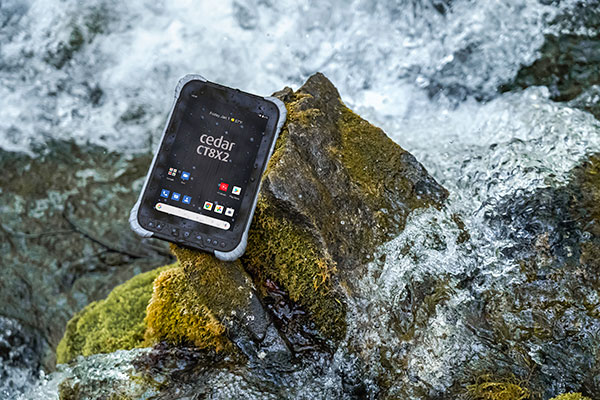
    Juniper Systems is has launched its latest rugged tablet, the Cedar CT8X2. The new tablet offers increased processing power, RAM and storage, running on the Android 10 operating system. Despite these features, the CT8X2 retains the same powerful GNSS functionality of the previous Cedar generation for the same price.

    “The CT8X2 is our best Cedar tablet to date,” said Cody Draper, Cedar product manager. “It exceeds expectations in terms of price, performance and versatility. It is a perfect device for those looking for a mobile data-collection device that offers a much greater degree of ruggedness than a consumer product.”

    Powered by an octa-core Snapdragon CPU from Qualcomm, the CT8X2 allows for larger files compared to the previous Cedar. Greater onboard storage prevents users from needing to offload data frequently and provides sufficient space for applications. With GNSS accuracy of about one meter in open skies and five meters under tree canopy, the CT8X2 offers capable GNSS positioning that far exceeds the accuracy of typical consumer devices. The CT8X2 also has a high-resolution screen.

    “The performance increase of the CT8X2 gives users a very capable device in the field,” Draper said. “We were able to provide these advancements in performance and GNSS accuracy while maintaining our affordable price point.”

    The CT8X2 is now available for purchase.

  • Building a better world: Esri UC announces plenary speakers

    Building a better world: Esri UC announces plenary speakers

    logo

    The 2021 Esri User Conference — taking place virtually July 12-15 — has announced its plenary session theme and speakers.

    “At this year’s plenary session, we’ll explore a vision for building a better world,” said Esri President Jack Dangermond, who will deliver the keynote address. With the theme of GIS—Creating a Sustainable Future, attendees can learn from leaders in human storytelling, racial equity, ocean preservation and climate resilience, as well as discover the latest geospatial innovations.

    Following the keynote, a two-part Plenary Session provides conversations and stories from these speakers:

    • Paul Salopek | Founder, Out of Eden Walk, National Geographic
      A Walk Through the Anthropocene
    • La June Montgomery Tabron | President and CEO, W.K. Kellogg Foundation
      Expanding Racial Equity through Community Action
    • Enric Sala | Explorer in Residence, National Geographic Pristine Seas
      2021–2030: Our Last Best Chance to Protect the Ocean for the Benefit of Humanity
      Protecting the Global Ocean for Biodiversity, Food and Climate
    • Secretary Wade Crowfoot | California Natural Resources Agency
      Nature-Based Solutions in California: Combating Climate Change and Achieving 30×30

    The Esri UC will also provide a look at new GIS technologies in expert-led demonstrations, including ArcGIS Image for ArcGIS Online. Attendees can learn to directly integrate imagery into your workflows by fast-tracking image analysis and easily sharing data to derive and communicate critical insights.

    Registration for the Plenary Session is complimentary. Full event access is available to Esri users current on their maintenance or subscriptions.

    The detailed agenda for the conference is available online.

  • New Eos Bridge makes instruments iOS compatible

    New Eos Bridge makes instruments iOS compatible

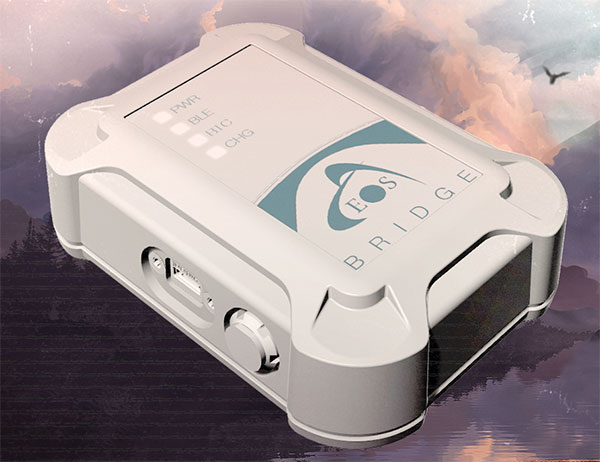
    Eos Positioning Systems, the global manufacturer of Arrow Series GNSS receivers, has released Eos Bridge, which enables almost any instrument to become iOS Bluetooth compatible.

    Photo: Eos Positioning
    Photo: Eos Positioning

    The Eos Bridge is a small, pocket-sized device that connects to instruments via Bluetooth Classic or serial port, and transmits data from them to any Apple iOS device, such as iPhone or iPad, Android device or Windows mobile device.

    The Eos Bridge offers two connectivity methods to virtually hundreds of instruments:

    First Method: Bluetooth Classic to Apple iOS Bluetooth

    Instruments that are equipped with non-iOS Bluetooth are now able to connect to Apple iOS devices using the Eos Bridge, including laser rangefinders and utility-locating instruments.

    Second Method: Serial port to iOS, Android and Windows devices

    With the Eos Bridge, instruments whose only connectivity option is a serial port may now be connected to any iOS, Android or Windows device via Bluetooth. This includes any instrument or sensor with an RS-232 serial port, for example.

    The Eos Bridge is lightweight, at approximately 150 grams (about 5.3 ounces). It can be worn clipped to a belt, stored in a pocket, or mounted to an instrument or sensor. The battery lasts 48 to 72 hours.

    The Eos Bridge expands the potential pairings of legacy instruments and sensors by making them Bluetooth compatible with modern mobile devices and Arrow GNSS receivers. Two immediate applications for current Arrow GNSS users include Eos Laser Mapping for ArcGIS offset data-collection, and Eos Locate for ArcGIS for underground utility mapping. Both solutions are available on iOS.

  • U-blox updates ZED-F9R positioning module for slow-moving vehicles

    U-blox updates ZED-F9R positioning module for slow-moving vehicles

    U-blox has released a firmware update for its ZED-F9R positioning module, bringing robust centimeter-level positioning to slow-moving use cases such as robotic lawnmowers, e-scooters and shared bicycles.

    Based on the ZED-F9R high-precision sensor-fusion module, the u-blox ZED-F9R-02B was designed for use in autonomous and industrial applications that require simple and efficient implementation and where rapid access to highly accurate positioning data is key, even in challenging signal environments such as dense cities.

    The ZED-F9R uses the u-blox F9 multi-band GNSS receiver platform to concurrently track up to four GNSS constellations. Applying real-time kinematic (RTK) techniques, the module can derive positioning data with centimeter-level accuracy.

    The high-precision GNSS measurements are fused with data from the module’s inertial measurement unit (IMU), GNSS correction data, odometry information, and a vehicle dynamics model to provide high-quality positioning accuracy in situations where GNSS alone would fail. The receiver includes dynamic models for robotic lawnmowers, e-scooters and automobiles.

    The ZED-F9R-02B integrates the u-blox GNSS correction data service, broadcast in the highly scalable state-space representation format, making it easier to deliver fast time-to-market precise positioning solutions.

    An autonomous lawn mower trims the grass in a park in Finland. (Photo: Scharfsinn86/iStock/Getty Images Plus/Getty Images)
    An autonomous lawn mower trims the grass in a park in Finland. (Photo: Scharfsinn86/iStock/Getty Images Plus/Getty Images)

    Robotic lawnmowers achieve further improvements in terms of their positioning accuracy from the module’s ability to calibrate its dead-reckoning system even at low speeds. The module’s highly accurate position output lets end users precisely delimit the mowing area using software rather than with boundary wires, and deploy robotic lawnmowers on complex lawn shapes while excluding trees and shrubs. Users can align each pass of the mower with the next more accurately than before, delivering a professional-looking striped lawn.

    According to U-blox, combining these features allows product designers to use the module to create mowing equipment that enables “robotic mowing as a service” capable of operating in complex environments without the upfront cost and commitment of installing boundary wires.

    “Our new ZED-F9R-02B high-precision module is a turnkey dead-reckoning solution that will enable designers to bring products that need dead-reckoning technology to market more quickly than if they had to implement it from scratch,” said Alex Ngi, product manager, Industrial Navigation and Robotics, Product Center Positioning at u-blox. “It will also allow companies working in niche markets to employ dead-reckoning technologies without needing to build and maintain expertise in the subject.”

    The ZED-F9R-02B offers support for a range of correction services, including the SPARTN format, which will make it straightforward to distribute GNSS correction data over large geographical areas.

    iGPSPort cycling computer. In another announcement, U-blox and iGPSPORT, a sports hardware and data service provider operating out of Wuhan, China, have announced the iGS320 cycling computer, which builds on the u-blox M10 positioning platform. The cycling computer leverages the U-blox M10 platform’s ultra-low power consumption, compact size, and its ability to track all four GNSS to offer endurance athletes a superior user experience.

    Adopting the U-blox M10 positioning platform in its iGS320 cycling computer brought iGPSPORT an 80 percent increase the power autonomy to deliver 72 hours of continuous tracking, up from 40 hours in their previous solution. Concurrent reception of up to four GNSS constellations increases coverage and accuracy in otherwise challenging signal environments.