Author: Tracy Cozzens

  • BAE Systems chooses Spirent Federal CRPA test system

    BAE Systems chooses Spirent Federal CRPA test system

    For controlled reception pattern antenna (CRPA) testing and M-code testing for military GPS receivers
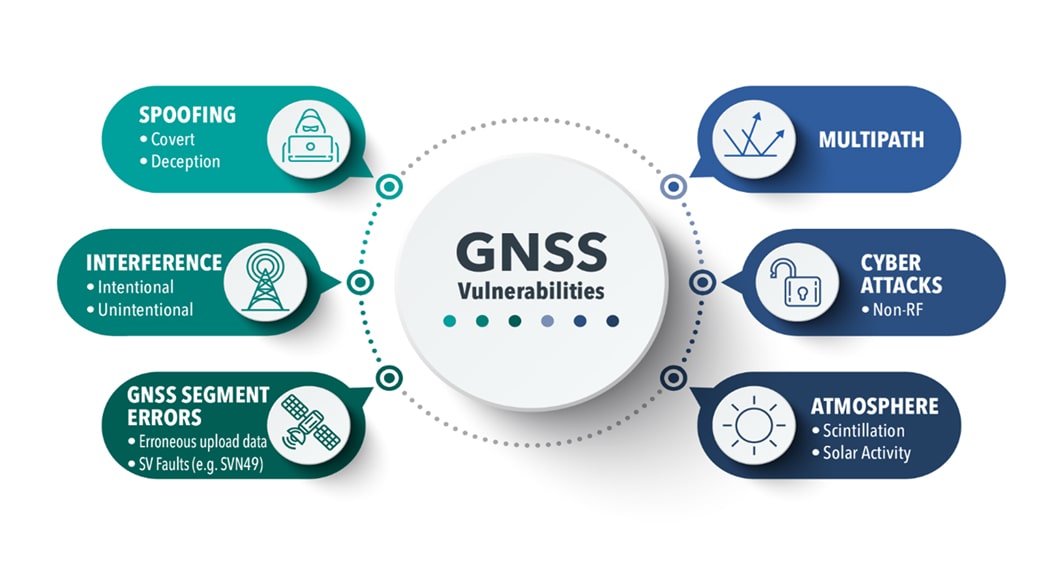
    Image: Spirent Federal
    Image: Spirent Federal

    BAE Systems has selected Spirent Federal Systems to provide a CRPA Test System to support M-code military GPS technology development.

    BAE Systems is developing an advanced military GPS receiver and improving the capabilities of size-constrained and power-constrained military GPS applications, including precision-guided munitions and handheld devices.

    Spirent Federal is qualified to provide essential test equipment and support in the pursuit of resilient, accurate PNT data in GPS-degraded Navigation Warfare (NAVWAR) situations, Spirent stated in a press release.

    The Spirent CRPA Test System is a development of its GSS9000 Series platform. It can test

    • controlled reception pattern antennas (CRPAs)
    • MNSA and AES M-code
    • jamming and spoofing threats and mitigation
    • ultra-high-dynamic vehicle applications
    • inertial navigation systems
    • additional encrypted military signals, Y-code and SAASM
    • and more

    CRPAs provide proven and effective protection against jamming in high-interference environments. The Spirent CRPA Test System can simulate 16+ individual elements with a separate RF output per antenna element.

    For the 16-element test system, concurrent simulation of GNSS signals, signals from spoofers and repeaters, and interference from multiple jammers — including Blue Force Electronic Attack (BFEA) jamming waveforms — results in more than 1,000 simultaneous independent channels and signals simulated across a phase-calibrated precise wavefront.

    “The CRPA Test System is the culmination of over 35 years of R&D and industry leadership and is perfectly positioned to help with next-generation MGUE modernization,” said Ellen Hall, president/CEO of Spirent Federal. “Our robust M-code test capabilities support BAE Systems’ advances in M-code technology.”

    Spirent can provide GNSS and interference signal simulation solutions for every stage in the CRPA design and verification process. To learn more, visit Spirent Federal’s CRPA Test System page.

  • Rohde & Schwarz and Quectel join on Cellular-V2X test case

    Rohde & Schwarz and Quectel join on Cellular-V2X test case

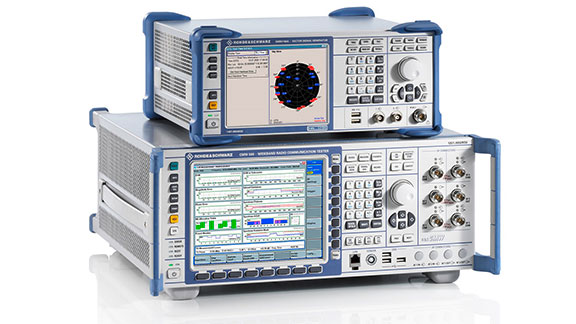
    R&S CMW500 wideband radio communication tester. (Photo: Rohde & Schwarz)
    R&S CMW500 wideband radio communication tester. (Photo: Rohde & Schwarz)

    Rohde & Schwarz, in partnership with Quectel, announces the verification of selected 3GPP test cases based on a system with its R&S CMW500 wideband radio communication tester against a Quectel AG15 C-V2X module.

    The Quectel AG15 is an automotive grade C-V2X module designed and manufactured according to IATF 16949:2016 standards. It has an embedded multi-constellation high-sensitivity GNSS (GPS, GLONASS, BeiDou, Galileo, QZSS) receiver for positioning, which minimizes design and improves positioning speed and accuracy. It is designed for use in extremely harsh environments and provides superior ESD/EMI protection performance.

    Quectel AG15 C-V2X module with GNSS. (Photo: Quectel)
    Quectel AG15 C-V2X module with GNSS. (Photo: Quectel)

    Cellular-V2X (C-V2X) is a key technology that will improve road safety and accelerate autonomous driving in the coming years. Specifically, the C-V2X PC5 interface, operating in the 5.9-GHz frequency enables direct, reliable, low latency communication between vehicles (V2V), vehicles and infrastructure (V2I) and vehicles and pedestrians (V2P). For the automotive industry to deploy this technology in a timely manner, cooperation between suppliers in this industry becomes increasingly important, the companies said.

    The test cases performed by Rohde & Schwarz and Quectel are designed for automotive companies looking to pre-validate 3GPP system performance in an automated and timely manner before entering OMNIAIR or CATARC certification process. The test system provides a high degree of automation and flexible instrument configuration, which meets the requirements of the automotive industry for C-V2X testing.

    A key benefit for customers is the ability to leverage existing investments in Rohde & Schwarz equipment, thereby minimizing additional capital investment.

    “Through C-V2X PC5 direct communications, the AG15 will make traffic smoother and more efficient by paving the way for automated driving and achieving the goal of fully connected traffic,” said Manfred Lindacher, VP Global Sales Automotive International, Quectel Wireless Solutions. “We’re delighted to have collaborated with Rohde & Schwarz to validate these test cases and are looking forward to helping our customers on the road to build a smarter world with our automotive grade C-V2X modules.”

  • Geospatial imagery shows activity at Iranian nuclear facility

    Geospatial imagery shows activity at Iranian nuclear facility

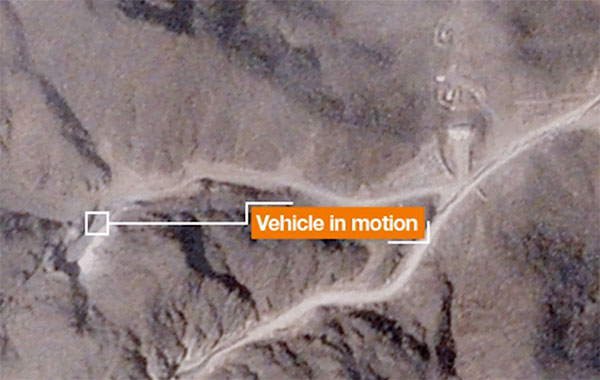
    A team with Stanford University’s Center for International Security and Cooperation (CISAC) used BlackSky’s geospatial imagery and burst collection technology to track and monitor activity at a secretive Iranian nuclear facility in a new intelligence study. The study tracks and monitors activity at the Natanz nuclear facility in Iran.

    Screenshot: Janes.com video/BlueSky
    Screenshot: Janes.com video/BlueSky

    “The BlackSky/CISAC research team demonstrated the power of combining rapid revisit satellite imagery, human domain expertise and AI/ML (artificial intelligence/machine learning) techniques to identify and understand activity at Natanz, which was previously unknown to much of the world,” said Patrick O’Neil, chief data scientist at BlackSky. “Observations that provide real-time, activities-based insights have the potential to change the world.”

    BlackSky’s high-revisit satellite imagery enabled researchers at Stanford University’s Center for International Security and Cooperation (CISAC) to monitor the pattern of life at the Natanz nuclear facility and gain a better understanding of activity and events at the site.

    BlackSky’s satellites provide high, intraday revisit capabilities, allowing CISAC’s research team to receive multiple images a day, throughout the day, rather than just one image collected at roughly the same time each day.

    BlackSky satellites are also capable of capturing a sequence of up to 20 images within a matter of minutes, known as a burst collection, and then splicing them together. Instead of a single picture, burst collections are geospatially normalized and joined together to generate a moving sequence of activity. With BlackSky’s assistance, the research team was able to witness trucks emerging from the facility’s underground tunnels.

    Allison Puccioni, a renowned imagery analyst and BlackSky consultant, assembled a research team at Stanford University, with help from Rose Gottemoeller, diplomat, former NATO deputy secretary, and visiting professor at Stanford. The pair enlisted two principal research assistants in geospatial science to develop a sophisticated situational-intelligence program to monitor the Natanz nuclear facility.

    Natanz is Iran’s primary facility for advanced uranium enrichment and is an active political and military location driven by concerns about the country’s nuclear operations.

  • Fugro SpaceStar positioning service heads into space

    Fugro SpaceStar positioning service heads into space

    Fugro’s SpaceStar GNSS precise point positioning (PPP) service provides high-accuracy positioning in space

    Artist's rendering of Loft Orbital’s YAM-2 small satellite in orbit. The small sat will demo Fugro's PPP service. (Image: Loft Orbital)
    Artist’s rendering of Loft Orbital’s YAM-2 small satellite in orbit. The small sat will demo Fugro’s PPP service. (Image: Loft Orbital)

    Loft Orbital on June 30 launched its YAM-2 satellite, the first satellite equipped with Fugro’s SpaceStar next-generation positioning technology from Cape Canaveral in Florida onboard a SpaceX Falcon 9 rocket. Now in orbit, the satellite will provide an on-orbit demonstration of the new service.

    From its 525-km Sun-synchronous orbit, SpaceStar is using PPP to deliver high-accuracy sub-decimeter onboard positioning in real time during YAM-2’s low Earth orbit (LEO) operations. Fugro’s proprietary positioning software is integrated into YAM-2 and receives precise GNSS real-time orbit and clock corrections from geostationary satellites. Highly accurate positioning in LEO is becoming increasingly important for Earth observation applications, safe constellations management, and space debris collision avoidance.

    “We’re especially excited to demonstrate this new functionality,” said Loft Orbital CTO, Pieter van Duijn. “Fugro’s SpaceStar service is something that can really help not only Loft Orbital’s missions, but also be of interest to the wider application of space situational awareness and safety.”

    “We are extremely proud to be providing our real-time PPP service to the YAM-2 small satellite,” said Daan Scheer, Fugro’s satellite positioning commercial manager. “We’ve been able to bring this innovative product to market thanks to our close cooperation with Loft Orbital, and we’re looking forward to completing a successful in-orbit demonstration mission. The accuracy of our SpaceStar position service is not only contributing to our purpose of a safe and liveable world but, by facilitating safer navigation in space, even beyond.”

  • US Space Force issues ICD revisions for GPS

    US Space Force issues ICD revisions for GPS

    CGSIC logo

    The U.S. Space Force Space and Missile Systems Center (SMC) has issued official, signed Interface Specification (IS) and Interface Control Document (ICD) revisions for GPS. The documents listed are available through the U.S. Coast Guard’s GPS Technical References and at GPS.gov.

    • IS-GPS-200M Navstar GPS Space Segment/Navigation User Interfaces
    • IS-GPS-800H Navstar GPS Space Segment/User Segment L1C Interface
    • IS-GPS-705H Navstar GPS Space Segment/User Segment L5 Interface
    • ICD-GPS-240D Navstar GPS Control Segment to User Support Community Interface

    Past versions of these documents are archived at GPS Technical References and at  GPS.gov Old Versions. Interface Revision Notices (IRN) incorporated into the new documents also can be found on these websites.

    The Space Force is soliciting public comments on the following Proposed Change Notices (PCNs).

    RFC-00467: 2021 Proposed Changes to the Public Documents

    While these PCNs use the August 2020 versions of the ICDs as baseline documents, any approved changes will be incorporated by the next document revisions. Comments are due Aug.24.

    SMC has also announced the date of the next Public Interface Control Working Group meeting. Full details will be provided in an upcoming Federal Register Notice, but advance notice can be found here.

  • U-blox launches PointPerfect GNSS corrections for mass market

    U-blox launches PointPerfect GNSS corrections for mass market

    The GNSS augmentation service provides real-time, verified and scalable high-precision positioning to consumer, industrial and automotive applications.

    logoU-blox has launched its new PointPerfect location service. PointPerfect delivers an advanced GNSS augmentation data service designed from the ground up to be ultra-accurate, ultra-reliable and immediately available.

    The service enables the fast-growing demand for high-precision GNSS solutions including autonomous vehicles such as unmanned aerial vehicles (UAV), service robots, machinery automation, micro-mobility and other advanced navigation applications.

    Emerging automotive applications include automated driving (AD) and advanced driver assistance systems (ADAS), lane-accurate navigation and telematics.

    Delivered via mobile internet or L-band satellite signals, PointPerfect broadcasts on a continental scale with homogeneous coverage in Europe and the contiguous United States, up to 12 nautical miles off coastlines to any number of end-devices, delivering sub-10-centimeter positioning accuracy and convergence of seconds. It uses the SPARTN messaging format with the lightweight, secure MQTT internet of things (IoT) delivery protocol for a real-time, bandwidth-optimized, cost-efficient solution for mass-market applications.

    PointPerfect cooperates smoothly with u-blox positioning and connectivity hardware, providing a one-stop-shop solution from silicon to cloud. Because it is based on the open SPARTN GNSS correction data format, its use is not restricted to a single hardware provider, allowing customers the flexibility to optimize solutions.

    PointPerfect is delivered via the Thingstream IoT service delivery platform, an enterprise-grade cloud platform that supports billions of messages. Thingstream provides a self-serve environment where users can manage their device fleet, optimizing cost and performance through flexible and predictable pricing plans.

    The service is backed by a full warranty, 99.9% uptime availability and 24/7 reliability. In-house development of all the technological building blocks ensures expert technical support while eliminating any external dependencies that could otherwise lead to delays.

    “PointPerfect seamlessly integrates our advanced high accuracy GNSS augmentation service with industry-leading positioning and connectivity hardware,” said Franco de Lorenzo, principal product manager services, u-blox. “Designed for increased flexibility, PointPerfect lowers barriers to adoption and supports scaled-up high precision positioning solutions, even in segments where such solutions would previously have been considered impractical. Moreover, innovative delivery options fully integrated into our easy-to-use Thingstream IoT service delivery platform eliminate complexities and allow users to engage more efficiently, reducing time-to-market.”

  • Trio of HawkEye 360 formation-flying microsatellites launched for RF geolocation

    Trio of HawkEye 360 formation-flying microsatellites launched for RF geolocation

    The HawkEye 360 constellation detects and geolocates RF signals for maritime situational awareness, emergency response, national security and spectrum analysis applications.

    Cluster 3 satellites fly in formation, joining Clusters 1 and 2. (Artist's rendering: Hawkeye 360)
    Cluster 3 satellites fly in formation, joining Clusters 1 and 2. (Artist’s rendering: Hawkeye 360)

    HawkEye 360 Inc. announced the successful launch of its Cluster 3 radio frequency geolocation microsatellites built by Space Flight Laboratory (SFL). Carried aboard the June 30 SpaceX Transporter 2 mission, the Cluster 3 formation-flying microsatellites quickly established communication with the company’s satellite operations center.  They join in orbit the HawkEye 360 Cluster 2 and Cluster 1 Pathfinder satellites.

    The HawkEye 360 Constellation detects and geolocates RF signals for maritime situational awareness, emergency response, national security and spectrum analysis applications. Cluster 3 significantly expands HawkEye 360’s capacity, and is part of its second generation of advanced RF-sensing satellites.

    “With the addition of our second-gen satellites, we’ll offer more frequent, timely and actionable data and insights to our government, commercial and humanitarian partners,” said CEO John Serafini.

    “The increased revisit frequency and capacity Cluster 3 brings to our constellation are essential to detecting, characterizing, and understanding the continuously changing RF activity important to our clients,” said Alex Fox, Executive Vice President for Sales and Marketing.

    Seven more clusters are fully funded and scheduled for launch in 2021 and 2022 to achieve collection revisits as frequent as every 20 minutes, Fox said. “Each cluster will offer new innovations to address a rapidly growing set of requirements needed by our defense, security and commerce clients. We plan on expanding the constellation past the initial 10 clusters to achieve near-persistent monitoring of global RF activity, which will drive even more value and ensure our continued dominance in the industry.”

    HawkEye 360 delivers a layer of intelligence to help understand human activity on Earth. The constellation detects, characterizes and precisely geolocates these RF signals from a broad range of emitters, including VHF marine radios, UHF push-to-talk radios, maritime and land-based radar systems, L-band satellite devices and emergency beacons.

    By processing and analyzing these RF data, the company delivers actionable insights for national, tactical and homeland security operations, maritime domain awareness, environmental protection and new applications in the commercial sector, the company said.

    The HawkEye 360 launch brings to 20 the total number of SFL satellites placed into orbit in less than a year. The Cluster 3 satellites were built on SFL’s 30-kg Defiant microsatellite bus.

    HawkEye 360 selected SFL due to the importance of formation flying by multiple satellites for successful RF geolocation. SFL is the acknowledged leader in developing and implementing high-performance attitude control systems that make it possible for relatively low-cost nanosatellites and microsatellites to fly in stable formations while in orbit.

    The previous HawkEye 360 satellite clusters built by SFL were the Pathfinder launched in 2018 and Cluster 2 in January. Each Cluster is comprised of three satellites.

    Other launches of SFL-built satellites in the past year include missions developed for the Norwegian Space Agency (NOSA) in Norway, the Dubai-based Mohammed Bin Rashid Space Centre (MBRSC) in the United Arab Emirates, GHGSat Inc. of Canada, Space-SI of Slovenia, and a Canada-based telecommunications company.

  • Hexagon’s new HxGN Mass Transit improves public transportation operations

    Hexagon’s new HxGN Mass Transit improves public transportation operations

    System optimizes field operations and monitoring of assets through 3D, AI and mobile capabilities

    Hexagon’s Safety, Infrastructure & Geospatial division has introduced HxGN Mass Transit, a geospatial transportation infrastructure management system with 3D and artificial intelligence (AI) capabilities for visualizing and analyzing transit and rail assets and operations.

    HxGN Mass Transit serves as a single source of truth for infrastructure data, enabling rail-bound and transit operators to easily inspect, validate and share information on the fly.

    HxGN Mass Transit combines asset and spatial data from various business systems into an integrated system, allowing operators to visualize and analyze their entire network and services. It reduces data duplication, provides access to accurate and up-to-date information and delivers greater efficiency for managing data, workflows and transit networks and operations.

    Image: MarcelStrelow/iStock/Getty Images Plus/Getty Images
    Zurich is using HxGN Mass Transit for its trams and buses. (Image: MarcelStrelow/iStock/Getty Images Plus/Getty Images)

    Now in Zurich and Frankfurt

    HxGN Mass Transit is already delivering benefits to public transportation organizations.

    “Every day, we transport more than 900,000 passengers around Zurich on our 510-kilometer network with 75 tram and bus lines,” said Daniel Steger, head of electrical infrastructure, Zurich Public Transport. “Maintaining our infrastructure is vital. HxGN Mass Transit will allow us to monitor rail tracks, overhead cables and the condition of bus stops to ensure we keep the citizens and visitors of Zurich moving.”

    “HxGN Mass Transit is an essential tool for managing our assets,” said Dominik Rabenau, head of data management at VGF Frankfurt’s infrastructure division. “The mobile application provides easy monitoring and the ability to update information of our timetable displays located at all stations, platforms and stops.”

    Typically, transportation agencies must rely on different data sources spread across multiple systems, departments and formats. This prevents viewing data in real time, making it difficult to gain a holistic view of asset conditions and to coordinate maintenance.

    Digital Twin of City Network

    Built on top of Hexagon’s M.App Enterprise, HxGN Mass Transit overcomes these challenges. It goes beyond a simple map, providing an advanced digital twin of a city’s entire public transportation network – from track, stops and switches to construction sites, ticket machines, benches and garbage cans. It offers capabilities and workflows for supervisors, analysts, asset and operations teams and others.

    “Urban population growth, increasing demand for mobility options and a greater focus on sustainability have driven interest and investment in public transportation,” said Steven Cost, president, Hexagon’s Safety, Infrastructure & Geospatial division. “By improving the ability to visualize and understand networks in real-time, HxGN Mass Transit provides a solution to the global demand for more efficient and effective public transportation.”

    HxGN Mass Transit is available worldwide now.

    To see a demo of HxGN Mass Transit and learn best practices for managing data, workflows and transit networks, attend the session “Driving Smart, Real-time Data Through Public Transit Systems” at the HxGN LIVE Resiliency Series, a free virtual event focused on helping critical service providers achieve greater resiliency in operations. Register for the event here.

  • Parrot’s new ANAFI Ai UAV drone is 4G connected

    Parrot’s new ANAFI Ai UAV drone is 4G connected

    Photo: Parrot
    Photo: Parrot

    Drone-maker Parrot has released a new drone for professionals. The ANAFI Ai UAV uses 4G as its main data link between the drone and the operator, so that users will no longer experience transmission limitations.

    The 4G also enables precise control at any distance. For beyond-visual-line-of-sight (BVLOS) flights, it stays connected even behind obstacles.

    For the first time, ANAFI Ai embeds a secure element in the drone and in its Skycontroller 4. The 4G link between the drone and the user’s phone is encrypted. The secure element protects both the integrity of the software and the privacy of data transferred.

    Parrot’s piloting application is open source. Parrot offers developers a software development kit (SDK) to create custom code for the drone to execute during flight. The SDK gives access to all flight sensors, including obstacle-avoidance sensors, occupancy grid and internet access.

    ANAFI Ai’s obstacle-avoidance system detects obstacles in all directions, using stereo cameras to sense objects and automatically avoid them.

    ANAFI Ai incorporates a 48MP main camera and a powerfully stabilized 4K 60-fps/HDR 10 camera to capture finely detailed aerial images and smooth video footage.

    ANAFI Ai will be available in the second half of 2021 through Parrot Drone Enterprise Partners and Enterprise Drone Reseller Network.

  • Charting Hong Kong’s nooks and crannies

    Charting Hong Kong’s nooks and crannies

    Photo: Yongyuan Dai/iStock/Getty Images Plus/Getty Images
    Photo: Yongyuan Dai/iStock/Getty Images Plus/Getty Images

    Team Provides Accurate 3D Maps for Smart City Applications

    The PolyU team's mobile mapping backpack. (Image: The Hong Kong Polytechnic University)
    The PolyU team’s mobile mapping backpack. (Image: The Hong Kong Polytechnic University)

    According to 2019 statistics, more than 10,000 residential buildings in Hong Kong are at least 50 years old. Most of these buildings lack 3D indoor building information models (BIM), which creates challenges when it comes to reconstruction or maintenance.

    In response, a team at Hong Kong Polytechnic University (PolyU) has developed a lightweight and reliable 3D mobile mapping system in a backpack. The system can easily measure cities and obtain 3D maps with centimeter-level accuracy. It can be used to build spatial data infrastructure, which supports smart city applications in many fields.

    The system uses advanced technologies such as simultaneous localization and mapping (SLAM), useful in urban canyons where GNSS signals can be spotty. It can carry out continuous data collection in complex indoor and outdoor environments, and is particularly suitable for high-density and complex urban environments, such as those in Hong Kong.

    The mapper is providing a special boon to modular integrated construction (MIC) in the city. With MIC, free-standing integrated modules are prefabricated and then transported to the site for installation in a building. However, the trucks hauling the large components can’t always maneuver through narrow streets in Hong Kong’s urban areas.

    One of many narrow streets mapped in downtown Hong Kong. (Image: The Hong Kong Polytechnic University
    One of many narrow streets mapped in downtown Hong Kong. (Image: The Hong Kong Polytechnic University

    To address the issue, the PolyU team collaborated with the Hong Kong Construction Industry Council, providing its mobile-mapping backpack to conduct 3D measurement of critical road sections. The project identified and mapped obstacles, and optimized the route for transporting oversized components to avoid narrow passages.

    Mobile-mapping backpacks also can be used to create detailed indoor 3D models to support firefighting and provide evacuation routes for personnel at the fire scene.

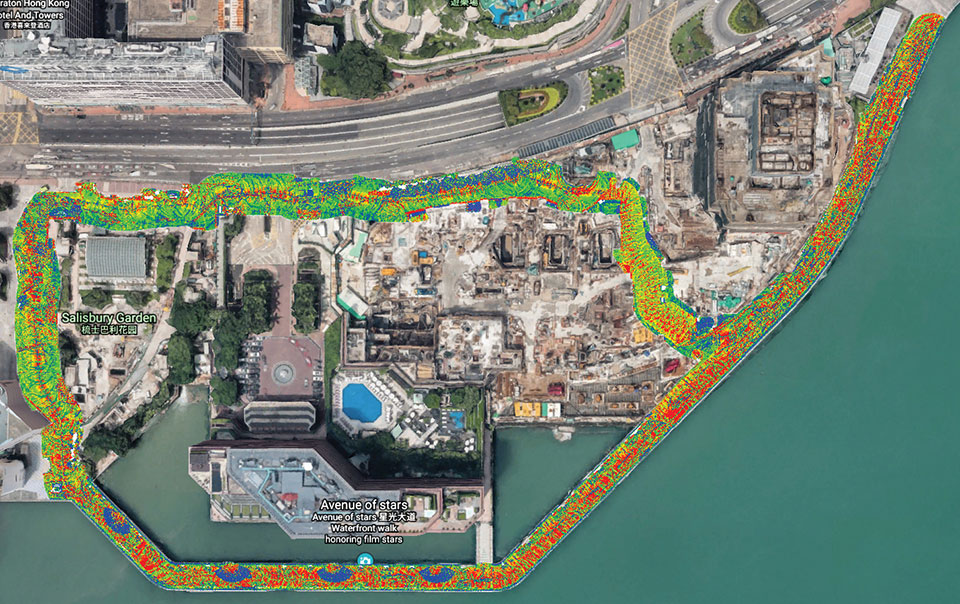
    The route taken by the mobile mapping backpack carrier in the harbor area. (Image: The Hong Kong Polytechnic University)
    The route taken by the mobile mapping backpack carrier in the harbor area. (Image: The Hong Kong Polytechnic University)
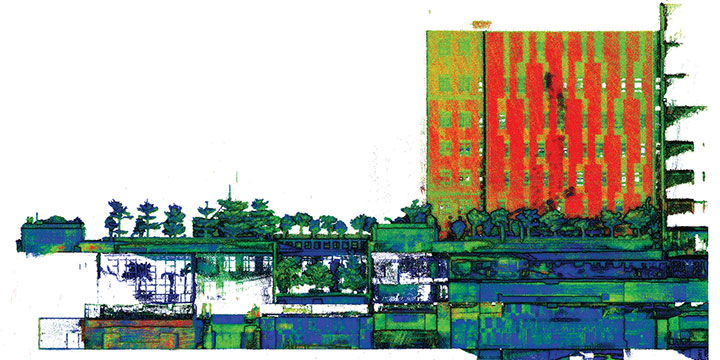
    A sample point cloud from the mobile mapper. (Image: The Hong Kong Polytechnic University)
    A sample point cloud from the mobile mapper. (Image: The Hong Kong Polytechnic University)

    The mobile mapper is one of the technologies developed by PolyU’s Smart Cities Research Institute, established in 2020 to help address social issues and provide solutions for smart city development. In March, the institute’s projects received a gold medal at 2021 Inventions Geneva Evaluation Days.


  • GPSPatron seeks to protect critical infrastructure

    GPSPatron seeks to protect critical infrastructure

    Screenshot: GPSPatron
    Screenshot: GPSPatron

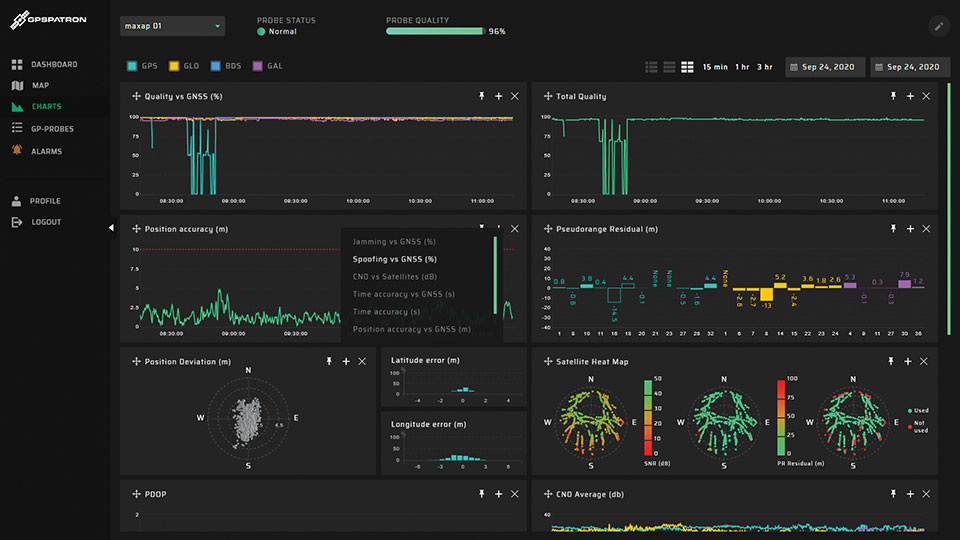
    GPSPatron is offering products and services to protect equipment, particularly GNSS-dependent critical infrastructure. Its GP-Probe TGE2 is designed to protect time servers against threats including spoofing, jamming, ionospheric scintillation and system errors. An embedded PPS phase-error measurement function enables reliable monitoring of the time server’s health by measuring the time offset between internal and external PPS.

    The GP-Probe, in conjunction with GP-Cloud, allows development of robust, resilient clock-synchronization systems. GP-Cloud is a web application for monitoring the quality of the GNSS signal and detecting anomalies in RAW GNSS data.

    Every second, the three-channel GP-Probe measures several signal parameters of all perceptible GPS, GLONASS, BeiDou and Galileo satellites and sends them to GP-Cloud for real-time processing. GP-Cloud allows users to investigate GNSS signal parameters, recognize attack scenarios, and improve resiliency to current and future GNSS threats.

    GPSPatron also provides laboratory testing services of GNSS equipment to identify vulnerabilities. It uses its own GP-Simulator to simulate spoofing attacks. Typical test objects are RTK base stations and time servers. Testing can help uncover possible attack scenarios.

    GPSPatron offers its solutions as a service, providing monitoring without investments in new hardware and software, as well as leasing of equipment.

    GP-PROBE TGE2 FEATURES

    • Three RF channels enable spatial signal analysis to detect coherent spoofing
    • 60 MHz RF signal analyzer for spectrum monitoring with FPGA-powered correlative peak analysis for non-coherent spoofing detection and interference classification
    • Optional GP-Blocker with an embedded noise generator suppresses the most powerful counterfeit RF signals
    • Authenticated PPS output for synchronization of external equipment
    • PPS input for checking time server health and monitoring the entire synchronization system
    • Optional GP-divider enables use of one GNSS antenna for two receivers
    • Form factor of 19-inch rack, half-size
    • Double power module: 110 – 220 AC, 18 – 75 DC
    • Active/passive GNSS antenna support
    • 4G modem and 100BASE-TX Ethernet for data transferring to GP-Cloud
    • Web interface for configuration (HTTP or HTTPS)
  • Editorial Advisory Board PNT Q&A: Promising alternatives to GNSS

    What is the most promising development or project in alternative PNT?

    Photo: Orolia
    John Fischer.

    “PNT from LEO (low-Earth orbit) satellites offers the most immediate alternative to GNSS because the signals are ~30 dB or more stronger, reducing jamming vulnerability. With these new constellations being launched to improve communications, PNT services can ‘piggyback’ on the secure two-way links and avoid spoofing attacks as well. Geometric dilution of precision (GDOP) will not be a problem in these large second-generation constellations with dozens of satellites in view. Wide bandwidth links should yield accuracies to rival GNSS. There may be subscription fees to get this added resiliency, but nothing worthwhile is ever free.”

    John Fischer,
    Orolia


    Bernard Gruber
    Bernard Gruber

    “It depends on the application. I believe that alternative PNT, and specifically systems that complement GPS/GNSS, will continue to drive forward at a very rapid pace. Quite frankly, the ‘affordability of GPS’ from a commercial and military user business case was impossible to ignore for years. Today, the threat to GNSS signals is very real. History illustrates that ‘alternative’ systems that employ environmental data (magnetic, celestial), radio navigation (Loran, VOR), sensors (gyros, accelerometers), seekers (SAL, EO/IR) and IMUs all have new and promising developments today.”
    Bernard Gruber,
    Northrop Grumman


    Thibault Bonnevie, SBG Systems
    Thibault Bonnevie

    “Inertially aided GNSS solutions are now mature and provide excellent navigation performance in many challenging conditions. On the research side, there are many exciting alternative PNT projects ongoing. RF-based solutions, such as Bluetooth/Wi-Fi or LEO satellite ranging, give promising results but are still subject to jamming or spoofing. Just like GNSS. Vision-based SLAM is probably the most exciting technology as it enables navigation in a wide range of situations and does not rely on any kind of infrastructure. It only requires low-cost sensors to be operated.”
    Thibault Bonnevie,
    SBG Systems


    Headshot: Ismael Colomina
    Ismael Colomina

    “We all know that predictions are hazardous, especially about the future. This said, I confess that I am particularly interested in the technical, regulatory and commercial development of the LEO-based PNT technology with either dedicated constellations, like XONA’s Pulsar, or broader scope ones such as Iridium Next, Starlink or Kuiper. While GNSS has progressed tremendously in recent times — it plays a large role in the navigation of autonomous vehicles — it is still vulnerable to intentional or unintentional jamming. Integration of LEO-based PNT with current GNSS and other motion sensors appears to be a fascinating field ahead of us..”
    Ismael Colomina,
    GeoNumerics