Author: Tracy Cozzens

  • EAB Q&A: How should we secure PNT resilience?

    EAB Q&A: How should we secure PNT resilience?

    Two decades ago, the Volpe National Transportation System Center released its landmark report on the vulnerability of GPS. Have this study and its many successors helped move us to the necessary levels of PNT resilience? Have we done enough? What is left to be done?

    Bernard Gruber
    Bernard Gruber

    “This study and others underscore that safety must be maintained in the event of GPS loss. Among the many recommendations, I maintain that ‘systems and procedures to monitor, report, and locate unintentional [and intentional] interference should be implemented.’ Similar to GPS integrity monitoring, awareness of signal vulnerability ‘hot spots’ may allow an understanding of the RF landscape, and thus users may employ tactics, tools and techniques to combat against it. This ‘issue’ will not be solved with a singular solution; rather, continued education and urgency will produce innovative solutions over time. I just hope that a large ‘trigger event’ is not needed to do so.”
    — Bernard Gruber, Northrop Grumman

    Photo: Orolia
    John Fischer

    “We have widespread awareness now, but not enough implementation of safeguards. There is no one simple solution – a single alternative system to GPS is not the answer. Rather, the integration of several diverse alternative PNT sources will provide the necessary resiliency. DHS and NIST have taken the proper initial steps to set standards for resiliency, but the next step is implementation. Twenty years without a major incident has only reinforced complacency, but we can’t keep betting our luck will continue. We have everything we need now — the technology, the standards, the exec orders — let’s implement!”
    — John Fischer, Orolia

    Ellen Hall
    Ellen Hall

    “This study was instrumental in getting the U.S. government to face the fact that GPS is vulnerable on many fronts. It seems that the first response was to focus on making signals more robust and therefore less vulnerable. The backup systems, alternatives, or simply additional sensors have come onto the scene very slowly due to factors that include funding, politics, and difficulty in deployment on all platforms, where the costs could be astronomical. I hope that it doesn’t take a catastrophic event to force all factions to come together to find best solutions, but that is sadly often the case.”
    — Ellen Hall, Spirent Federal Systems

    GPS World Editorial Advisory Board

    Tony Agresta
    Nearmap

    Miguel Amor
    Hexagon Positioning Intelligence

    Thibault Bonnevie
    SBG Systems

    Alison Brown
    NAVSYS Corporation

    Ismael Colomina
    GeoNumerics

    Clem Driscoll
    C.J. Driscoll & Associates

    John Fischer
    Orolia

    Bernard Gruber
    Northrop Grumman

    Ellen Hall
    Spirent Federal Systems

    Jules McNeff
    Overlook Systems Technologies

    Terry Moore
    University of Nottingham

    Mitch Narins
    Consultant

    Bradford W. Parkinson
    Stanford Center for Position,
    Navigation and Time

    Stuart Riley
    Trimble

    Jean-Marie Sleewaegen
    Septentrio

    Michael Swiek
    GPS Alliance

    Julian Thomas
    Racelogic Ltd.

    Greg Turetzky
    Consultant
  • Orolia wins €70M in Galileo atomic clock contracts

    Orolia wins €70M in Galileo atomic clock contracts

    Orolia has been awarded €70 million in two contracts to provide atomic clocks for the first 12 satellites of the Galileo Second Generation System (G2S). The first was from the European Space Agency (ESA) and the second from Leonardo.

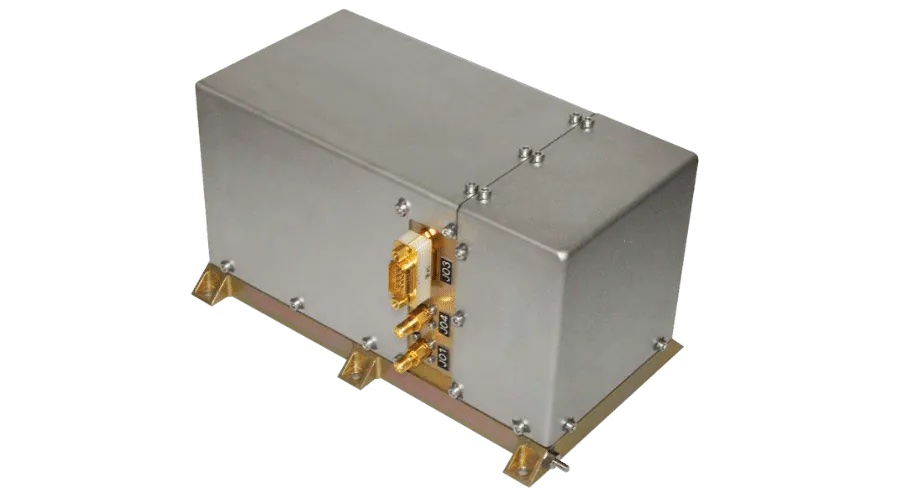
    Each of the new G2S satellites, designed to provide unprecedented accuracy worldwide, will contain three Orolia Rubidium Atomic Frequency Standards (RAFS) and two Orolia atomic clock physics packages integrated with Leonardo’s Passive Hydrogen Masers (PHM).

    “We are truly honored to be selected by the European Commission, ESA and Leonardo to continue to supply our advanced space atomic clocks for the next generation of Galileo,” said Jean-Yves Courtois, CEO of Orolia. “Our dedication, hard work and innovative design for all the clocks in the current Galileo constellation have contributed to the most accurate GNSS system in service today. We look forward to continuing to support the Galileo program with the most advanced GNSS timing technology available in the world.”

    Orolia’s RAFS is an ultra-stable rubidium atomic clock able to deliver a frequency stability of about 2 x 10-14 over averaging intervals of 10,000 seconds. The Leonardo PHM, with its excellent frequency stability performance, is the master clock for the Galileo satellite payload. The maser technology embedded on Galileo offers superior stability compared to all other types of clocks onboard navigation satellites, according to Orolia.

    The RAFS Flight Model atomic clock will fly aboard the second generation Galileo satellites. (Photo: Orolia)
    The RAFS Flight Model atomic clock will fly aboard the second generation Galileo satellites. (Photo: Orolia)

    Orolia has delivered more than 140 RAFS Flight Models worldwide, with 114 flying on GNSS satellites. In addition, 100 PHM Flight Models have been delivered worldwide, and 56 are flying on the current Galileo constellation.

    According to ESA, the G2S satellites will revolutionize the Galileo constellation, joining the 26 first-generation satellites currently in orbit. They will be much larger than the existing Galileo satellites, use electric propulsion for the first time, and feature a more powerful navigation antenna. The G2S constellation should achieve decimeter-scale positioning precision.

    In May, the European Commission and ESA announced the selection of Orolia to provide its Skydel GNSS signal simulation core engine for the G2S radiofrequency constellation simulator.

    The Galileo program is managed and funded by the European Union. The European Commission, ESA and EUSPA have signed an agreement by which ESA acts as design authority and system development prime on behalf of the commission and EUSPA as the exploitation and operation manager of Galileo.

  • Hesai announces partnership with Lidar USA

    Hesai announces partnership with Lidar USA

    Under a new agreement, Lidar USA — a developer of geomatics solutions — will include Hesai Technology Co. Ltd., 3D lidar sensors in its product lineup. Hesai Technology announced the agreement at the Commercial UAV Expo 2021 in Las Vegas, Sept. 7-9.

    The Pandar128 lidar unit. (Photo: Hesai)
    The Pandar128 lidar unit. (Photo: Hesai)

    Under the terms of the agreement, Lidar USA will leverage its marketing and sales expertise to distribute Hesai sensors across the United States, Canada and Mexico.

    “Hesai’s product portfolio has the sensors we have all long awaited — bridging the gap between sensors made for automotive navigation and those made for precision measurement,” said Lidar USA CEO Jeff Fagerman. “Users will enjoy the affordability of the former and results of the latter.”

    Hesai’s lidar units offer superior performance and reliability to ensure robust detection under different operating and environmental conditions, the company stated in a press release. Hesai’s XT sensors, embedded with proprietary lidar application-specific integrated circuits (ASICs), deliver performance advantages while maintaining a compact form factor and low cost.

    The XT sensors are lightweight and draw less power, enabling longer operation for airborne applications. The XT’s precision and accuracy allows for fine detail capture.

    PandarQT, a short-range sensor for blindspot detection, has a large vertical field-of-view of 104.2°. The Pandar series lidars — Pandar128, Pandar64 and Pandar40P — deliver long detection range, high resolution and high point density for optimized perception results.

    “Lidars are increasingly being adopted for different end markets and applications,” said David Li, Hesai’s CEO. “We’re excited to partner with an industry leader like Lidar USA, whose strong foothold in North America will help expand access to sensors across different segments.”

  • YellowScan launches long-range, multi-platform lidar Explorer

    YellowScan launches long-range, multi-platform lidar Explorer

    New flagship offering can be mounted on a light manned aircraft or switched to different types of UAV platforms

    Photo: YellowScan
    Photo: YellowScan

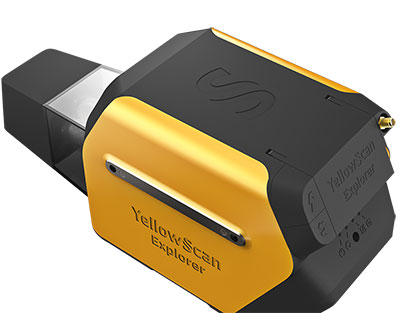
    YellowScan, a designer of UAV lidar solutions, has launched the YellowScan Explorer. The Explorer can be mounted on a light manned aircraft or switched to different types of UAV platforms. The compact, versatile, long-range platform allows users to tackle a wide range of projects and mission profiles.

    The Explorer’s high-power laser scanner can catch points up to 600 meters away, yet its low weight (2.3 Kg without battery) provides users with an integratable system. Combining Explorer with YellowScan’s full suite of software solutions to extract and process point cloud data provides users with a highly accurate set of tools for surveying, forestry, environmental research, archaeology, industrial inspection, civil engineering and mining.

    The Explorer comes with an Applanix APX-20 UAV GNSS/inertial solution, precision of 2.6 cm and accuracy of 2.2 cm. Flight operation speed is 5 m/s to 35 m/s and it is capable of above-ground-level (AGL) altitude up to 300 m. Designed to be mounted on fixed-wing UAV, multi-rotor UAV or manned aircraft (light plane and helicopter), Explorer can enable a large variety of mission profiles.

    YellowScan launched the Explorer during Commercial UAV Expo 2021 in Las Vegas, Sept. 7-9.

    “We have been working on Explorer for the last three years, building on everything we have learned and achieved to date from a hardware, software and component integration perspective,” said Nassim Doukkali, R&D project manager, YellowScan. “One of the elements we are most proud of is the laser scanner, which has been designed according our specific specifications. With a maximum range of 600 m, the Explorer has exceeded YellowScan’s initial expectations.”

    In 2017, YellowScan took part in a research project called FRELON (“French long range lidar”), funded by the European Regional Development Fund. The goal was to develop a new standard for long-range lidar by bringing together innovative specialists like YellowScan to collaborate directly with Airbus Defense and Space, Delair, M3 Systems and utility end-users EDF, RTE, Enedis and SNCF to develop the next-generation solution to meet their requirements.

    “We are proud to finally release Explorer,” said Tristan Allouis, CTO, YellowScan. “This is our answer to the market’s need for a single long-range, yet compact, lidar unit that can be mounted on light manned aircraft and various UAV platforms.”

  • Septentrio introduces Mowi open-source board for IoT

    Septentrio introduces Mowi open-source board for IoT

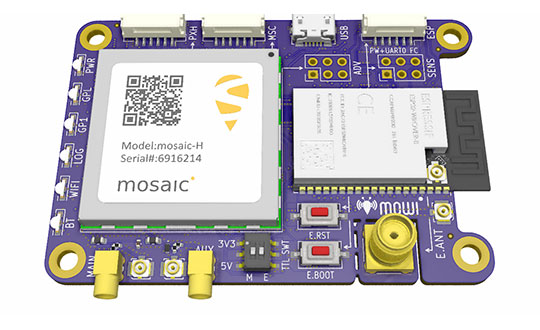
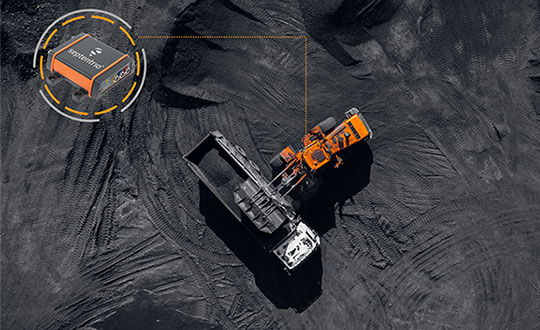
    Mowi is an open-source reference design for Septentrio’s highly accurate GNSS module mosaic. It offers Wi-Fi and Bluetooth communication, which can easily be programmed for custom applications.

    Septentrio, a manufacturer of high-precision GNSS positioning solutions, has added to its open-source resources for GPS/GNSS module receivers with mosaic wireless, which it calls mowi.

    Mowi combines the Septentrio mosaic-X5 or mosaic-H module receiver with a dual-mode Bluetooth and integrated Wi-Fi from the well-known ESP32-WROVER programmable module by Espressif Systems. It is an addition to the already existing mosaicHAT board, designed on the Raspberry Pi platform.

    “We are excited about the mowi project being part of the GitHub and prototyping community,” said Gustavo Lopez, market access manager at Septentrio. “The project is available as open-source, thus empowering the community to easily fit autonomous or robotic systems with communication and highly accurate and reliable GNSS positioning technology. Mowi empowers the native Ethernet features of the mosaic module, the perfect tool for fast prototyping and developing proof-of-concept projects in a simple and connected way.”

    The mowi project facilitates accurate and reliable GNSS positioning for robotic and autonomous devices, on a hardware level. Numerous engineers today use the ESP32 and the multiple libraries available for internet-of-things (IoT) prototyping. The mowi board is an easy way for integrators to get started with Septentrio’s mosaic-X5 or mosaic-H heading module receivers.

    The mowi board can be used on its own or plugged into a mobile computer such as Raspberry Pi or Arduino to deliver high-accuracy positioning with high update rates, suitable for machine navigation, monitoring or control. The internet connection via Wi-Fi or Bluetooth enables numerous industrial IoT applications, simplifying the connectivity to mobile data for the delivery of GNSS corrections needed for centimeter-level RTK positioning.

    On top of the wireless communication, the 47.5 x 70 mm board can host IoT applications in its internal memory. It has onboard logging and exposes interfaces such as USB, serial communication and general-purpose pins. The schematic’s reference design, PCB layout and documentation are openly available for prototyping or further customization.

    The mowi open-source project is available to the community on the Septentrio GitHub repository.

    Photo: Septentrio
    Photo: Septentrio
  • Segway introduces autonomous lawnmower Navimow

    Segway introduces autonomous lawnmower Navimow

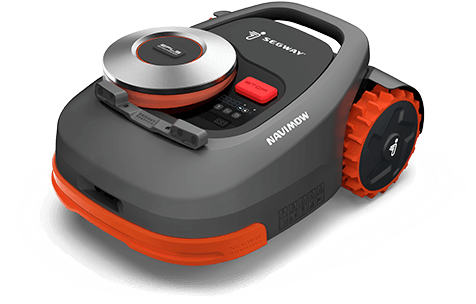
    Navimow model H3000E. (Photo: Segway)
    Navimow model H3000E. (Photo: Segway)

    Segway has launched a smart lawn mower, the Navimow. The autonomous mower uses GNSS to navigate and stay inside the programmed perimeter, set in an accompanying smartphone app.

    According to Segway, Navimow uses a GNSS-based “Extra Fusion Locating System” that help the mower achieve centimeter-level positioning accuracy while mapping out a working perimeter. Rather than using a perimeter wire to prevent the lower from leaving grid, Navimow combines multi-sensory data to create a virtual map while cutting grass in addition to using GNSS.

    The company has introduced four models, for lawns ranging from 500 square meters to 3,000 square meters. All cut lawns from 30-60 millimeters on a maximum slope of 45 degrees.

    During its runtime, the robot uses its smart navigation system and intricately plans the most effective cutting route. When necessary, it can make changes in direction to create a systematic pattern.

  • Velodyne showcases lidar and software for transportation

    Velodyne showcases lidar and software for transportation

    Photo: Velodyne
    Photo: Velodyne

    Velodyne Lidar will display its lidar sensors and software at the IAA Mobility trade show, which takes place Sep. 7-12 in Munich.

    Showcased are:

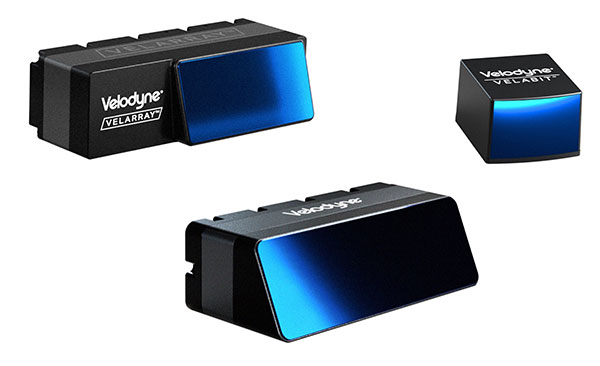
    • Velarray H800, a solid-state lidar sensor architected for automotive grade performance. With combined long-range perception and a broad field of view, the sensor is designed for safe navigation and collision avoidance in ADAS and autonomous mobility applications.
    • Velarray M1600, a solid-state lidar sensor designed to serve mobile robotic applications, enables touchless mobile and last-mile delivery robots to operate autonomously and safely, without human intervention.
    • Velabit, Velodyne’s smallest sensor, designed for versatility and affordability to 3D lidar perception.

    Velodyne Lidar’s Intelligent Infrastructure Solution addresses the pressing need for smart city systems that can help improve road safety and prevent traffic accidents. The solution creates a real-time 3D map of roads and intersections, providing precise traffic monitoring and analytics that is not possible with other types of sensors like cameras or radar.

    Partners Using Velodyne

    NI, developer of automated test and automated measurement systems, is co-exhibiting at the Velodyne booth. NI is showing simulations optimized for Velodyne’s lidar sensors that can be used in developing and testing advanced driver assistance systems (ADAS) and autonomous vehicle (AV) capabilities.

    NI will demonstrate how its monoDrive AV simulation software is using Velodyne’s lidar technology to create digital twins and is providing validated physics-based sensor models for Velodyne lidar sensors.

    Seoul Robotics, an Automated with Velodyne partner, is demonstrating at the Velodyne booth its AI perception engine for Velodyne’s lidar sensors. The engine provides real-time object detection, classification, tracking and prediction for autonomous systems.

    The AI engine can power self-driving cars as well as smart-city applications and advanced parameter monitoring systems for facilities. Seoul Robotics’ SENSR perception software includes an AI engine that is fully optimized to utilize Velodyne’s portfolio of lidar sensors, including the Puck, Ultra Puck and Alpha Prime.

  • Bathymetric surveys dip into Dead Sea

    Bathymetric surveys dip into Dead Sea

    Photo: SPH Engineering
    A drone equipped with an echo sounder surveys the Dead Sea. (Photo: SPH Engineering)

    Israeli drone service provider ERELIS has conducted a number of pilot projects using a drone equipped with a single-beam echo sounder in the Mediterranean Sea and the Dead Sea. The data was validated by authorized local surveyors and reports from previous surveys of the same areas by the Michmoret Campus, Faculty of Marine Science.

    The reference bathymetric data was collected using a manned boat and multi-beam and single-beam echo sounders and demonstrated a good match between the results of new drone-based and traditional methods.

    The bathymetric system consisted of a standard commercial DJI drone (UgCS SkyHub onboard computer and terrain-following system with radar altimeter) and Echologger ECT400 single-beam echo sounder provided by SPH Engineering, Latvia. For data processing, the Eye4Software Hydromagic software package was employed.

    “I was surprised by the maneuverability of the system and how easy it is to conduct bathymetric surveys using a UAV equipped with an echo sounder,” said Roman Kirsanov, CEO of ERELIS. “Some of our survey areas were 400 to 500 meters away from take-off and landing positions, and that means that remote sensing comes to the world of hydrography and becomes available to any drone service companies.”

    Screenshot: SPH Engineering
    Screenshot: SPH Engineering

    “It was good to see that applicability of our system with a single-beam echo sounder validated in conditions outside of its initial focus on small-scale surveys of inland water bodies,” said Alexey Dobrovolskiy, CTO of SPH Engineering. “We can now recommend our system for small-scale surveys in coastal areas and virtually in any liquids. The density of water in the Dead Sea is 1.24 kg/l.”

    In May, SPH Engineering launched a UAV integrated with an echo sounder, as a new product for bathymetric surveys of inland and coastal waters. This data-collection method has since been used in Denmark and the UAE, and is suitable for mapping, measuring and inspections, as well as environmental monitoring.

  • Septentrio’s AsteRx SB3 GNSS receiver launched in rugged enclosure

    Septentrio’s AsteRx SB3 GNSS receiver launched in rugged enclosure

    Septentrio, a leader in high-precision GNSS positioning solutions, has launched the AsteRx SB3 receiver family, enclosed in an IP68 housing. The receiver offers superior availability of RTK high-accuracy positioning because of its ability to track a wide variety of signals from all currently operating GNSS (GPS, GLONASS, Galileo and BeiDou).

    Even in dual-antenna mode, AsteRx SB3 uses triple-frequency tracking to maximize robustness and availability of its heading angles.

    “The AsteRx SB3 brings state-of-the-art GNSS positioning and heading performance in a very compact and rugged enclosure that is fully certified and ready to use,” said Silviu Taujan, product manager at Septentrio. “Its simplicity and ease of use make it a truly plug-and-play device, allowing customers to have a fully operational system within minutes.”

    The new line includes two types of receivers, both offering unique triple-band sub-degree GNSS heading.

    • AsteRx SB3 Pro is a high-performance rover receiver featuring the latest core GNSS+ algorithms for maximal reliability and availability in challenging environments, such as near high structures or under foliage.
    • AsteRx SB3 Pro+ adds value to the Pro version with base station functionality and internal logging. It also offers higher update rates and ultra-low latency, both important factors for fast-moving vehicles or mechanical components in automation or guidance systems.

    AsteRx SB3 products are pin-to-pin compatible with Septentrio’s AsteRx SB ProDirect receiver and with the recently released AsteRx SBi3 GNSS/INS system, making it simple to change receivers.

    The Septentrio AsteRx SB3 Pro is ruggedized for tough environments. (Image: Septentrio)
    The Septentrio AsteRx SB3 Pro is ruggedized for tough environments. (Image: Septentrio)
  • UgCS updated for UAV-based lidar mapping

    UgCS updated for UAV-based lidar mapping

    Image: SPH Engineering
    Image: SPH Engineering

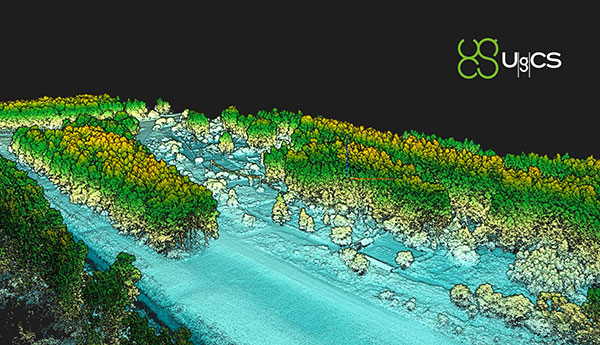
    SPH Engineering has released a lidar toolset update to UgCS — the company’s UAV mission planning and flight control software. The lidar toolset is designed to eliminate human error in remote sensing.

    Features include precise calibration, flight patterns for route planning, anti-shake turns, and constant line spacing and buffer.

    The UgCS lidar toolset allows users to optimize time and cost-effectiveness at all stages of data collection and processing. At the flight planning stage, time is saved on mission planning, with flight patterns and turns designed specifically for lidar surveys.

    At the flight stage, users can acquire high-quality laser data with preset inertial measurement unit (IMU) initialization patterns and anti-shake lidar turns. During post-flight data analysis, the high accuracy of the acquired data ensures the desired results with a single trip to the field

    “We have received various requests from lidar producers and end-users to improve the accuracy of laser data collected with a UAV,” said lexei Yankelevich, head of software development at SPH Engineering. “We have invested in UgCS R&D to focus mainly on automated IMU calibration commands, automatic calculation of required line spacing and overlap, and prevention of sensor shaking. Trial flights over SPH Engineering’s in-house test range have confirmed UgCS lidar toolset capacity to support main lidar market players.”

    Application areas include power line inspections, road inspections, construction, mining, archaeology and forestry.

  • European project researches automated map creation for cars

    European project researches automated map creation for cars

    Image: DedMityay/iStock/Getty Images Plus/Getty Images
    Image: DedMityay/iStock/Getty Images Plus/Getty Images

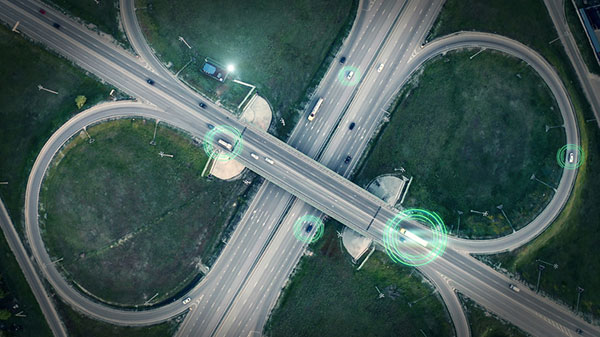
    A new European project is researching automated collection of geodata and production of high-definition maps.

    The GAMMS project is funded by the European Union Agency for the Space Programme (EUSPA), and will take place until the end of 2023. Galileo will be the main enabler of GAMMS, given its precise, multipath-resistant measurements and its upcoming high-accuracy service (HAS).

    A European consortium, led by the French map service provider GEOSAT, will investigate how the combination of self-driving mapping cars (autonomous mobile-mapping systems) and artificial intelligence-based mapping software can automate the production of high-definition maps.

    These maps are used by driverless vehicles and need to be provably accurate, complete and up to date. Fast, sustainable production of trustworthy maps is the goal.

    Consortium members include:

    • GEOSAT — map-making and machine learning
    • GeoNumerics — multi-sensor fusion and accurate navigation
    • Sensible4 — robotics and autonomous driving
    • DEIMOS Engenharia — GNSS and Galileo receiver development
    • EPFL — sensor and vehicle dynamic modelling
    • Solid Potato — multi-spectral laser scanning
    • PILDO Labs — regulatory specialists
    • ENIDE — communication specialists

    “It is as challenging as interesting to bring together the geodetic estimation methods with the navigation ones in multi-sensor systems powered by EGNSS and its differentiators, VDMs (vehicle data management systems) and visual features,” said Marta Blázquez, responsible for GAMMS at GeoNumerics. “GAMMS will boost the development of NEXA, our trajectory determination platform, and GENA, our adjustment platform for dynamic networks, in the direction of trustworthy navigation.”

    GeoNumerics is responsible for computing the mapping vehicle trajectory (a time series of position, velocity and attitude coordinates) by integrating the manifold of sensors available in a mapping vehicle.

    Measurements of inertial units and atomic clocks will be fused with measurements of all available navigation satellites (GPS, GLONASS, Galileo and BeiDou), odometers, cameras and laser scanners. For this purpose, GeoNumerics’ GENA and NEXA systems will be further developed to include new sensor mathematical models and to improve its robust estimation methods.

  • UAVs speed surveying and construction projects in United Kingdom

    UAVs speed surveying and construction projects in United Kingdom

    Screenshot: Propeller
    Screenshot: Propeller

    For a major project, surveying with traditional GPS equipment would normally take many days, Learn how Trimble and Propeller helped speed progress.

    Wills Bros, a family-run contractor based in the UK and Ireland, has begun work on the £29 million (USD $40 million) Maybole Bypass project in Scotland. The 6-km (~ 3.75-mi) project involves 900,000 cubic meters of earth removal and a further 15,000 cubes of rock that needs to be excavated and removed. In addition, Wills Bros is responsible for the construction of 10 culverts to deal with water flow in the area.

    For a project this size, surveying the entire site with traditional, ground-based GPS equipment would normally take six days, estimates Jonathan Wills, who was instrumental in the company’s recent investment in Trimble and Propeller equipment. But considering the increased accuracy tolerance required for some of the structural elements involving the culverts, getting useful survey data from the ground would actually take weeks for this project.

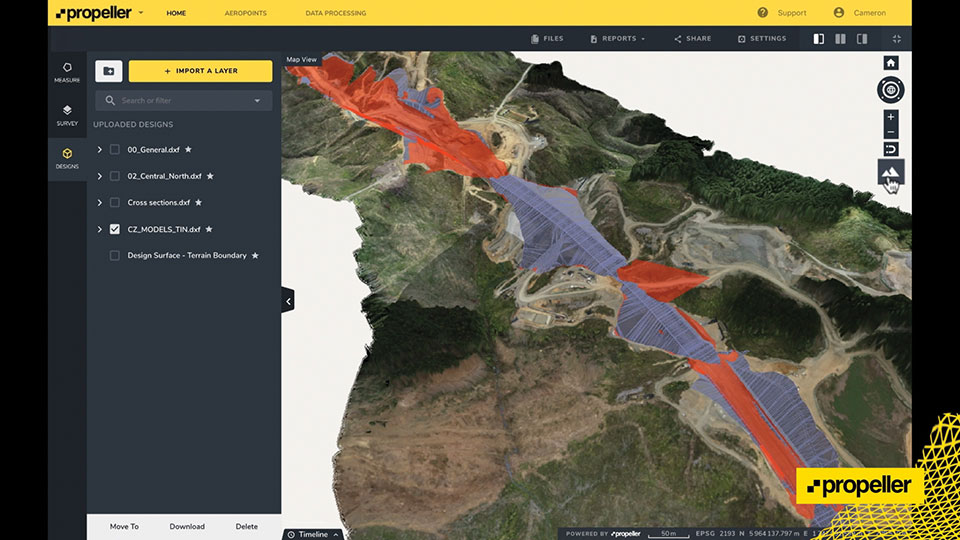
    As an alternative, Wills Bros is using Propeller PPK, a drone surveying workflow that combines DJI’s Phantom 4 RTK drone; AeroPoints’ “smart” ground-control points; offloaded data processing; and the Propeller Platform software that allows measuring of the site using 3D models generated from drone images. Wills Bros also is using Trimble Stratus for cloud-based drone survey processing, visualization and analytics with Propeller Platform.

    Wills Bros was able to collect an initial earthwork takeoff of the Maybole project area in a fraction of the time.

    “Savings on labor costs alone have been considerable given the fact that on so many occasions we can now obtain detailed project data within a second rather than sending a man on site to survey for information,” Wills said. “The drone comes in a backpack and is up in the air doing its thing within minutes. From the outset, the time savings are immense.”

    Once the drone and ground-control data are uploaded, Propeller transforms them into a 3D terrain model that can be measured in the cloud-based Propeller Platform.