Category: Mobile

  • Placecast Unveils PlaceAd Mobile Advertising Platform

    Placecast Unveils PlaceAd Mobile Advertising Platform

    placecast_logoPlacecast has launched PlaceAd to enable media buyers to target and reach mobile audiences based on their location. In addition to location, advertisers can target and optimize messaging across criteria including age, gender, interests, device type and operating system, time of day, and weather.

    PlaceAd is a demand-side platform (DSP) built to maximize the value of location-based inventory on mobile. PlaceAd’s programmatic buying tools, analytics and included dynamic rich media engine are optimized for location-based campaigns. Placecast’s decision engine automatically optimizes campaign performance.  PlaceAd can manage geotargeted campaigns based on the quality of the location data across billions of impressions with integrated reporting and store-level analytics.

    Placecast is also announcing partnerships with some of the largest ad exchanges and supply side platforms (SSPs), including MoPub, PubMatic, and Smaato. With these key partnerships in place, Placecast can provide substantial reach for brands across thousands of mobile publishers and billions of monthly impressions.

    “Mobile advertising, location and real-time bidding are the key ways to reach consumers today, and ad agencies can’t get enough of them,” says Karsten Weide of IDC. “PlaceAd is hitting a sweet-spot in the advertiser market and provides a timely solution for the pain points in reaching mobile audiences locally.”

    Besides access to many different sources of ad inventory, media buyers also get comprehensive location-based reporting down to the most granular level, including heatmaps that provide a visual illustration of the intensity of impressions and engagement by targeted locations.

    Key features of PlaceAd include:

    • Reach across thousands of safe mobile publishers for location-based mobile display inventory: Via partnerships with MoPub, PubMatic, and Smaato
    • Transparency on publishers where campaigns run
    • Real-time bidding: The ability to price and deliver on a per-impression basis in real-time; IAB OpenRTB 2.1 spec compliant
    • Machine Learning and Optimization: Placecast’s decision engine optimizes campaign performance based on activity across placements and publishers to maximize performance.
    • Dynamic Creative: Clients can change elements in the ad based on location, time of day, or other info on the consumer
    • Store-level analytics and reporting: Consolidated campaign reporting shows deliveries, clicks, and other actions across different inventory down to the individual store location. Heatmaps can be used to see campaign activity near targeted areas.
    • Geotargeting using both proximity geofencing and metro-level data.
    • Audience targeting though a number of methods:
      • Contextual targeting based on content
      • Place profiles
      • Third-party audience data
    • Third-Party Ad Serving Support: Agencies can track their campaign data in DoubleClick for Advertisers or Atlas

    “PlaceAd is the latest addition in our toolset that makes it easier for advertisers and agencies to buy location-based mobile campaigns,” said Alistair Goodman of Placecast. “This new offering combines years of geofence marketing expertise with great tools and analytics that together reduce the friction in buying location-based mobile advertising campaigns at scale.”
  • Rx Networks Announces Zed, a Precise Indoor Vertical Location Service for Mobile Devices

    Rx Networks, Inc., a mobile location technology and services company, today announced a new z-axis determination capability called Zed. This new solution, comprised of a client software library and associated cloud-based data services, is targeted at chipset vendors, device OEMs and application developers seeking to integrate reliable floor-level detection. The announcement came at ION GNSS 2013 in Nashville, Tennessee.

    Whether for emergency or consumer applications, the determination of a mobile device’s vertical position while indoors presents unique challenges. Given the environment, even when a GNSS receiver attains a fix, a mobile device cannot reliably use the reported altitude. Beacon-based techniques, such as those derived from Wi-Fi or Bluetooth, remain challenging as they often rely on GNSS-based crowd sourcing or costly venue characterization. The built-in barometric pressure sensors in recent  smartphones bring a new ability to estimate altitude, but they have  unique and variable characteristics that prevent floor-level accuracy without further assistance.

    Rx Networks’ new Zed solution combines accurate geo-reference barometric pressure data (from Custom Weather, a global provider of real-time weather information), automatic device characterization, and pressure crowdsourcing along with existing location services to determine a device’s altitude within 1 to 3 meters.

    The Zed solution will be commercially available at the start of 2014 and will be available either on its own, or as an optional feature alongside Rx Networks’ GPStream Assisted-GNSS and XYBRID hybrid location solutions.

    For more information a demonstration of Zed, visit Rx Networks booth at ION GNSS+ 2013.

  • PCTEL Launches Antennas for GPS, GLONASS, BeiDou, and Galileo Apps

    PCTEL's new timing antenna, the GNSS1-TMG-26N.
    PCTEL’s new timing antenna, the GNSS1-TMG-26N.

    PCTEL, Inc. announced the launch of its next generation multi-band GNSS antennas for global timing and precision tracking applications at the ION GNSS Conference being held this week in Nashville, Tennessee.

    The new antennas, which are designed for use with GPS, GLONASS, BeiDou, and Galileo systems, are being showcased along with other PCTEL antennas at the PCTEL booth in the Exhibit Hall, Booth 318/320. All models of the new antennas are available for sale.

    Equipment providers for carrier network timing, precision agriculture, and global asset tracking applications need a single antenna solution for global deployment. PCTEL’s new GNSS1-TMG-26N and GPS-LB12GL-MAG antennas address global compatibility issues for two of the industry’s most crucial applications.

    For critical timing applications for macro and small cell deployments, PCTEL has developed the GNSS1-TMG-26N antenna. The GNSS1-TMG-26N is a fixed mount network timing antenna covering GPS, GLONASS, Beidou, and Galileo system frequencies in one single unit, making it a true global solution.

    PCTEL's  GPS-LB12GL-MAG antenna is designed for precision agriculture.
    PCTEL’s GPS-LB12GL-MAG antenna is designed for precision agriculture.

    For global precision navigation applications, PCTEL has developed the GPS-LB12GL-MAG to cover GPS L1, GPS L2, GLONASS, and L-BAND constellations. The GPS-LB12GL-MAG’s multi-band coverage addresses the precision market in the USA as well as differential correction signals needed across Europe and Asia.

    “PCTEL will meet the GNSS market requirements for our global customers while maintaining PCTEL’s high standards for quality and performance,” said Jeff Miller, president of PCTEL Connected Solutions. “We understand that our products need global compatibility to support our customers around the world. We are proud to showcase our design excellence in this highly technical area,” added Miller.

  • Garmin’s New Sports Watches Feature Color Display

    Garmin’s New Sports Watches Feature Color Display

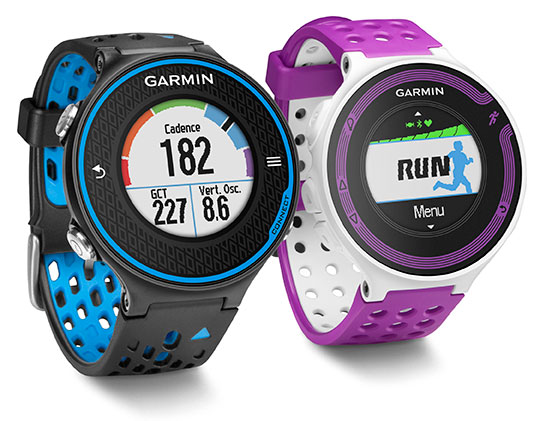
    Photo: Garmin International Inc
    Photo: Garmin International Inc

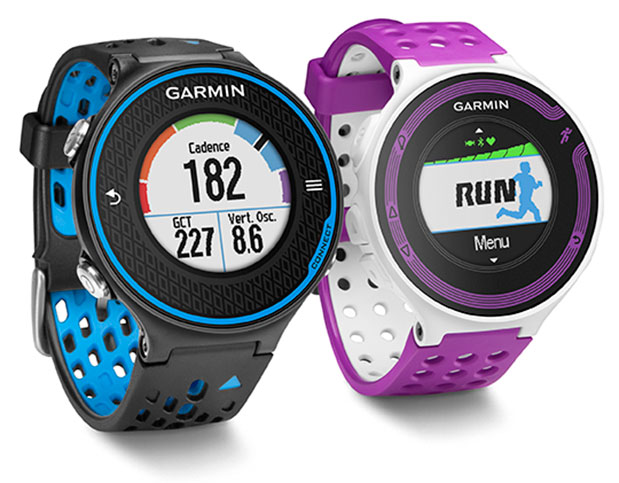
    Garmin International Inc., a unit of Garmin Ltd., the global leader in satellite navigation, is now offering the Forerunner 620 and Forerunner 220 GPS running watches, both of which have color displays. The Forerunner 620 offers advanced features like recovery advisor, race predictor and VO2 max (maximal oxygen uptake) estimate to help runners train and achieve race goals. When used with the new HRM-Run (heart rate) monitor, the 620 also provides feedback on running form.

    For indoor training, such as on a treadmill, the 620 and 220’s built-in accelerometer tracks distance and pace, so runners don’t need a separate sensor. Both models boast Garmin’s unique one-inch Chroma color display to easily interpret data.

    “Whether running indoors or out, Forerunner 620 and 220 will change the way runners look at training,” said Dan Bartel, Garmin vice president of worldwide sales. “Advanced features in the 620 such as recovery advisor, VO2 max estimate, race predictor and stats on running economy, combined with connected features and training plan options found in both the 620 and 220, make these watches must haves for runners of all levels. To keep runners motivated the watches also notice if runners hit any personal records on that run, like their fastest mile, 5k, 10k, half or full marathon or their longest run to date.”

    Regardless of a runner’s experience, motivation, or how far or fast they go, they likely want to know how they can improve and objectively measure their fitness. Forerunner 620 does just that by estimating runners’ VO2 max, which is a good indicator of athletic capability. Previously, the only way to accurately obtain VO2 max was by paying for a lab test.

    When used with a heart rate monitor, the 620 incorporates several pieces of data, like running speed, beats per minute and heart rate variability, into an advanced algorithm to estimate runners’ VO2 max. The number itself indicates the maximum volume of oxygen a runner can consume per minute, per kilogram of body weight at their max performance. Theoretically, the more oxygen runners can use during high-level exercise, the more energy they can produce. A color gauge on the watch display shows how a runner’s VO2 max data compares to other individuals of their gender and age range. Based on the VO2 max estimate, the 620 can predict a runner’s race time for several distances. This can give runners a time target for their next race, assuming they’ve completed proper training.

    When wearing HRM-Run, Forerunner 620’s recovery advisor and recovery check take the guesswork out when it comes to planning recovery time between hard workouts. Just like a coach, it learns the runner and their physiology based on heart rate data, so it factors this against their last workout and then shows how much time before they are fully recovered and ready for their next hard running workout. Color-coding on the high-resolution Chroma display gauge makes it easy to interpret — green means they are good to go. When runners see red on the display and a recovery time of more than three days, they might consider taking a rest day or just doing a light recovery run.

    HRM-Run also has an accelerometer in the module that measures torso movement in order to calculate 3 different running metrics:

    • Cadence — the number of steps per minute. It displays the total steps (right and left combined)
    • Vertical oscillation — the bounce in runners’ running motion. It displays the vertical motion of a runners’ torso, measured in centimeters.
    • Ground contact time — the amount of time in each step that you spend on the ground while running, measured in milliseconds.

    Thanks to their Bluetooth Smart wireless upload capabilities, Forerunner 620 and 220 can send runners’ run data to the Garmin online community, Garmin Connect, without being connected to a computer. It can transfer the data through the Garmin Connect Mobile app on their compatible smartphone. Additional connected features include live tracking, which allows runners’ friends and fans to follow along and see their stats in real-time. Runners must have their phone paired with their 620 or 220 throughout the run to use the LiveTrack feature. Victories, goals achieved and successes can be shared on runners’ social media sites by posting updates through the Garmin Connect Mobile app.

    With the growing popularity of the run/walk training method in the distance running community (example: a runner runs for five minutes, walks for one minute and repeats for the duration of the course), Garmin has included a run/walk alert. This alert allows Forerunner 620 and 220’s other features, such as, Auto Lap and Auto Pause, to remain active during a run/walk session.

    Both Forerunner 620 and 220 are water-resistant to 50m and can stand up to much more than rain, sweat and splashes. The Forerunner 620 has a touchscreen display responsive enough that it can be operated with running gloves, while the 220 is operated with easy to push buttons. Both models have rechargeable batteries lasting up to six weeks in watch mode and up to 10 hours in training mode.

  • Symmetricom to Participate in New Products Panel Session at ION GNSS+

    Symmetricom_logoSymmetricom will be participating in a new products panel at ION GNSS+, which will be held September 16-20 in Nashville, Tennessee.

    Phil Bourekas, Symmetricom executive vice president of marketing, will take part in “New Products Panel: Legacy and Expertise in GNSS Timing” on Thursday, September 19, 8:30 a.m. to 12:15 p.m. in Grand Ballroom East of the Nashville Convention Center, Nashville, Tennessee.

    The presentation will focus on Symmetricom’s suite of GNSS-applicable timing products, ranging from precision time protocols to atomic clocks, and how they can be used by the government, communications, power and enterprise verticals.

    Symmetricom is also a sponsor of the exhibitor-hosted reception. In its booth (#619), Symmetricom will exhibit and demonstrate the following products:

    • GPS Time & Frequency Receivers (XLi and XLi SAASM GB-GRAM models)
    • Cesium Frequency Standard 5071A
    • Rubidium Frequency Standard 8040C
    • Ruggedized Rubidium Oscillator 8200LN
    • SA.45s Chip-Scale Atomic Clock (CSAC)
    • Ovenized Quartz Master Oscillator 9500
    • GPS Disciplined Oscillator GPSDO 300
  • Loctronix Offers Software-Defined Radio Module

    Loctronix Offers Software-Defined Radio Module

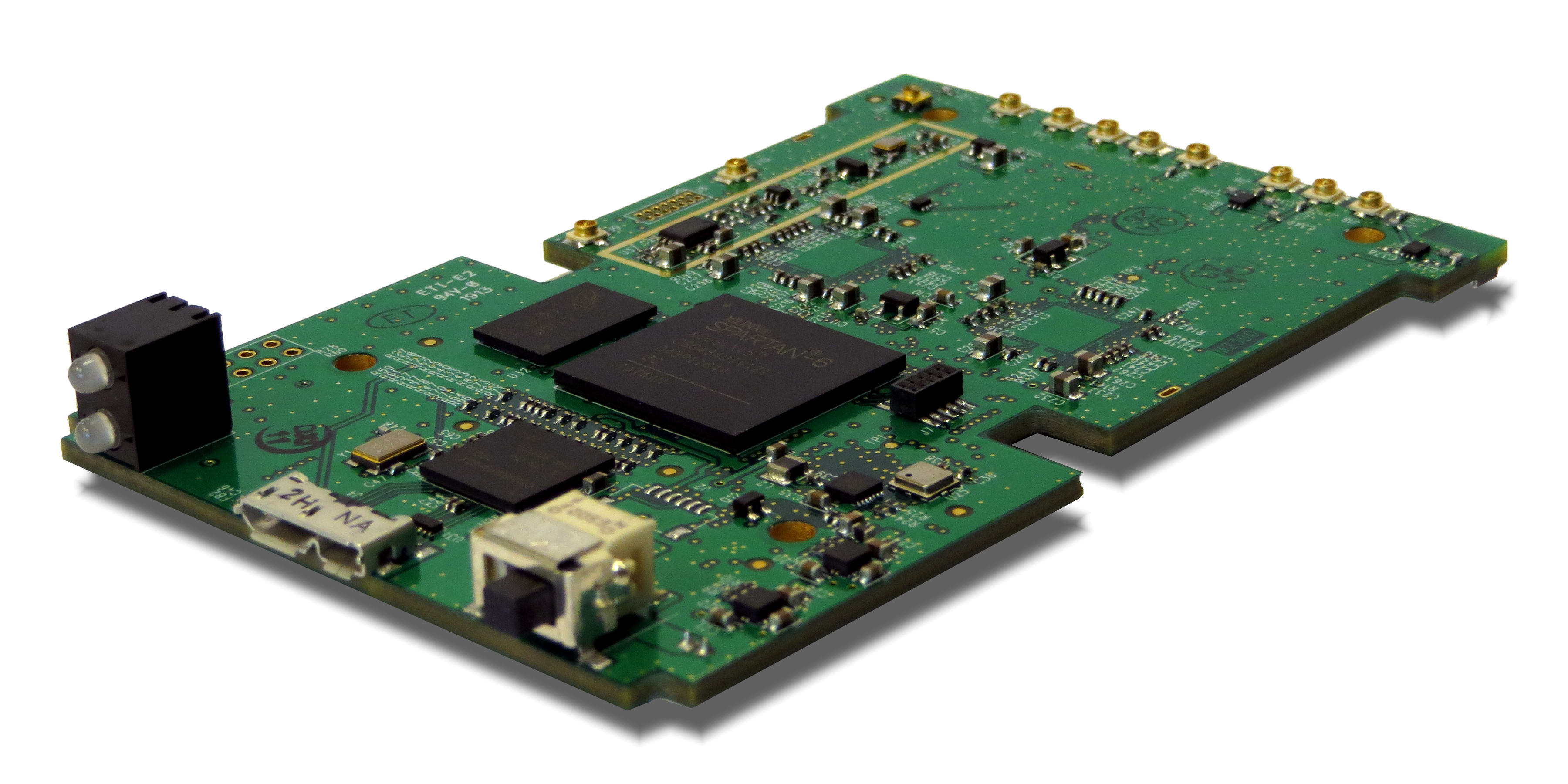
    Loctronix ASR-2300
    Loctronix ASR-2300

    Loctronix Corporation, a provider of unified positioning solutions for GNSS-challenged environments, is making available its new software-defined radio (SDR) module, the ASR-2300, for developing high-performance positioning, navigation and timing, and communication applications.

    The ASR-2300 will be on display September 16-19 at the Institute of Navigation annual meeting, ION GNSS+ 2013, in Nashville, Tennessee.

    “The ASR-2300 delivers advanced SDR capabilities in a small, mobile form-factor enabling developers to readily create and field complex SDR-based solutions. The module moves SDR out of the lab and into production, providing the critical piece for tapping advanced, multi-sensor/signals of opportunity for high-performance PNT,” stated Michael Mathews, Loctronix’ CEO and founder.

    According to Mathews, “The ASR-2300 is unique amongst the growing number of SDRs, having multiple, fully-integrated RF paths supporting reception of GNSS, cellular, ISM band, and UHF signals of opportunity. The ASR-2300 will benefit SDR developers working on demanding scientific, military, aerospace and commercial/industrial applications.”

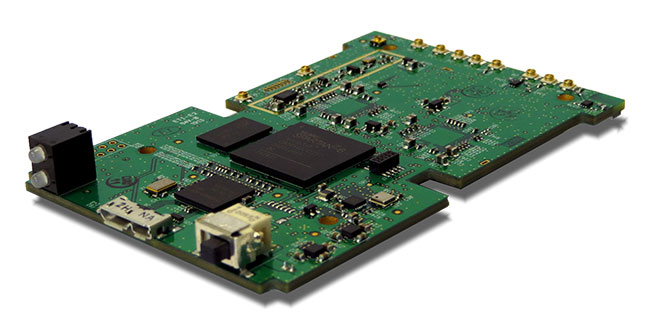
    The ASR-2300 is a multiple-input and multiple-output (MIMO) transceiver module incorporating two wideband Field Programmable RF (FPRF) transceivers (300 MHz to 3.8 GHz) from Lime Microsystems, 10-axis accelerometer/gyro/compass/barometer sensors, and a large programmable FPGA capable of over 300 MiB/sec sustained communications with a host processor via USB 3.0 interface.  The module’s nine integrated RF path options and low size, weight, and power characteristics contribute to ease of integration and portability. Accommodating both internal 1 PPM TCXO or external frequency reference, multiple ASR-2300s can be inter-connected via an expansion port and/or UART interface, supporting real-time reception / transmission of 4, 6, 8 or more signals without the need for significant additional hardware.

    With on-board flash for storing developer customizable firmware and FPGA logic, the ASR-2300 can be configured to operate in a variety of different power profiles, maximizing battery life without requiring a host processor.  The modules will be factory-programmed with only the RF receiver capabilities enabled.  Developers can enable transmit functionality by modifying the firmware and waveforms.

    The A2300 Open Source Project at Myriad RF

    To encourage innovation in PNT and communications applications, Loctronix has partnered with Lime Microsystems to provide the source materials for the ASR-2300 module under open source licensing at the Myriad RF project.

    “The broad utility of the ASR-2300 makes it an ideal platform for prototyping and developing advanced applications in the communications and PNT markets. Developers can make their own boards using the documents and design database contained in the A2300 project and/or purchase hardware, development kits, support services, and licensed waveforms directly from Loctronix,” Mathews said.

    “Encouraging collaboration between the open source community and industry is a natural way to promote innovation and accelerate growth of SDR technology. We are delighted to partner with Loctronix to make their innovative ASR-2300 SDR design available to open source developers for creating advanced SDR applications,” said Lime Microsystems CEO Ebrahim Bushehri, Ph.D.

    The open-source software package includes basic drivers for Linux and Windows environments enabling both GNU Radio and embedded C/C++ developers to interface with the ASR-2300 module.  Developers can obtain source code and design documents for modifying the ASR-2300 to suit their own applications.

    The ASR-2300 will be available from Loctronix this November. Adaptors, antennas, and a housing kit will also be available that provide a variety of configuration options supporting bench-top testing to wearable, battery-operated field demonstrations.

  • AirPatrol Quantum Leaps Into Location-Based Services

    Moving to stake a claim in the burgeoning location-based services and applications market, mobile systems developer AirPatrol Corporation has announced a pair of new offerings designed to let organizations and 3rd software developers enable app and information delivery to mobile devices in zones as small as six feet across.

    The first product, ZoneAware, is a locationing and delivery platform made up of passive sensors and a software-based locationing engine that gives organizations the ability to identify both 802.11 Wi-Fi and 2G/3G/4G cellular devices and enable different applications, information delivery, and mobile services as the device moves through monitored zones within a facility. AirPatrol’s other new offering is third-party access to its AirPatrol Zone Engine, which will allow software developers to leverage AirPatrol’s device locationing technologies to enable mobile apps and information delivery based on zones up to 30 times more precise than other locationing tools.

    “We’re heading into a post-PC world where smartphones, tablets and wearable computing will be changing their behavior and the information they provide based on where the user is and what she is doing at the time,” said Cleve Adams, CEO of AirPatrol. “Most locationing technologies can provide a general area of where a device is — within 100 to 1,000 feet — which is fine for generalized activities like finding restaurants within a mile of you, but it’s not particularly useful when you want real precision. AirPatrol’s Zone technologies can notify the maître d’ to prepare a table when a VIP steps into the restaurant, tell an emergency responder exactly what floor and room an E911 caller is in, even securely deliver patient records to a doctor’s tablet when he enters the patient’s hospital room.”

    Key to AirPatrol’s Zone technologies are a combination of passive sensors that detect and identify radio signals emanating from devices on both cellular and WiFi networks, and a software platform that does the heavy work of measuring those signals and adjusting for obstructions like wood, metal, stone and glass, to deliver pinpoint locationing and the triggers to apps and information based on the zone through which the device is traveling.

    “The ability to provide precision locationing in all building types using cellular/Wi-Fi detection and not just WiFi is a major benefit of AirPatrol’s technology,” Adams said. “Wi-Fi coverage is notoriously difficult in indoor locations with lots of obstructions such as walls. Many people are also simply turning mobile’s Wi-Fi off to reduce security risks and, increasingly, because 4G cellular is faster and more reliable. Because we use both, AirPatrol’s Zone technology can provide far more consistent and accurate locationing no matter whether the device is moving or stationary, indoors or outdoors. In short, we’re detecting the other half of the cellular users no other Wi-Fi-only solution can see,” he said.

    AirPatrol’s locationing technologies were originally developed for government and military security applications where precision locationing and forensic tracking of all mobile devices was a requirement. In 2012, the company released an enterprise version of its ZoneDefense mobile security platform which augmented the device monitoring features with the ability to connect to and trigger 3rd party mobile device and application management tools (MDM/MAM), policy managers, network and endpoint security tools based on location. It was the 3rd party connectors that spawned AirPatrol’s new offerings.

    “The moment companies realized we could add a location-based component to all of the mobile apps and tools they were using we started getting inquiries about connecting healthcare applications, retail services, marketing tools, and a whole list of other non-security-related systems to our ZoneDefense platform,” Adams said. “Given how much people use and depend on their mobile devices for work, home and entertainment these days, it only made sense to open the platform up to other applications and developers.”

    AirPatrol’s ZoneAware platform will be available in early Q4 of 2013. Application developers, information providers and other third parties who would like to connect their products to the AirPatrol Zone Engine can apply to join the AirPatrol developer partners program via the AirPatrol website.

  • Garmin Updates Astro GPS Dog Tracking System with the DC 50 Collar


    Garmin International Inc. now offers the DC 50 – a new and improved GPS dog tracking collar that’s even more robust and reliable than previous models.

    “From more reliable satellite reception to a more rugged design, the new DC 50 gives sporting dog owners what they’ve been asking for,” said Dan Bartel, Garmin’s vice president of worldwide sales. “The new DC 50 has the features that will bring the benefits of GPS tracking to first-time users, and will convince existing Astro customers to upgrade.”

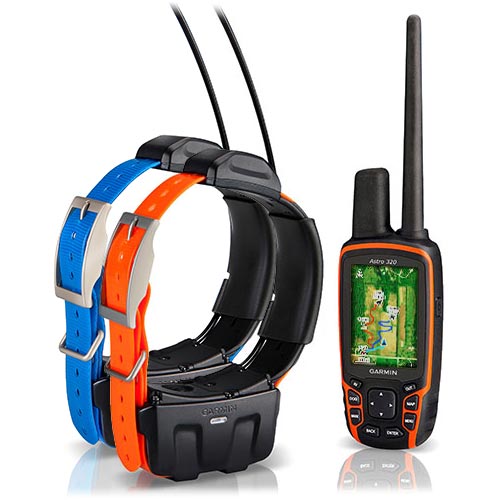
    The DC 50’s main housing sits below the dog’s neck while a low-profile, high-sensitivity GPS antenna is now positioned atop the dog’s neck, providing a clearer view of satellites.  In addition to tracking GPS satellites, the DC 50 can also utilize the GLONASS system. When using GLONASS satellites, acquisition time is (on average) approximately 20 percent faster than using GPS.  And when using both GPS and GLONASS together, the receiver has the ability to lock on to 24 more satellites than when using GPS alone. In practical terms, that means sporting dog owners will spend less time waiting for the collar to acquire satellites before the hunt, and the collar will better maintain its location even in heavy cover and deep canyons during the hunt.

    The Garmin Astro 320 GPS tracking device with two DC-50 collars.
    The Garmin Astro 320 GPS tracking device
    with two DC-50 collars.

    The newly redesigned 22.5-inch long VHF antenna is made of braided steel that’s built to take any punishment that hard-charging dogs can deliver.  Hunters can track their dogs up to nine miles in flat, unobstructed ground as often as every five seconds.  A shorter 18.5-inch antenna is also included.

    The battery life of the DC 50 has improved over previous generations, too.  At a five second update rate, the DC 50 will get approximately 26 hours of battery life when fully charged.  By slowing the update rate down to once every two minutes, the DC 50 collar can get up to 54 hours of use.   As a safety feature, the DC 50 also has a selectable Dog Rescue mode, which automatically switches the DC 50 to a two minute update rate when the battery is less than 25 percent charged – making it easier to recover a lost dog.

    For houndsmen, the DC 50 also features built-in Bark Detection, which alerts a hunter when their dog is barking frequently, even out of earshot.  Users can customize the Bark Detection feature to adjust the frequency of barking and the manner in which the user is notified (visual, tone, vibration, or a combination of each).

    The DC 50 features a standard one inch coated polyurethane collar strap that can be swapped out for a different color to easily distinguish between multiple dogs.  The collar transmitter is waterproof to 10 meters (33 feet).  Shipped alone, the DC 50 features a blue collar, and when purchased in conjunction with an Astro 320, the collar strap is orange.

    When paired with the Astro 320, the system can track up to ten dogs per receiver at once, and will indicate the dog’s distance, direction, and status (sitting, running, pointing, or treeing).  The Astro 320 features a full color, sunlight readable display with a pre-installed basemap.  In addition to the pre-installed basemap, the Astro can be loaded with optional 100k Topo or 24k Topo maps or photorealistic BirdsEye Satellite Imagery.  Many third-party specially-designed hunting maps are also available.

    The DC 50 is compatible with Astro 320 handhelds that are currently in service, but users must download a free software update to their handheld before pairing the new collar, by visiting www.garmin.com/webupdater.  The DC 50 is not compatible with the Astro 220 handheld or the Alpha Track and Train system.

    Purchased alone, the DC 50 has a minimum retail price of $229.99, and the DC 50 bundled with the Astro 320 system has an MRP of $599.99.

  • Leica Camera Integrates u-blox GPS into M-System Series

    Swiss-based u-blox has been chosen by Leica Camera as provider of GPS technology for its premium M-System camera and accessory series.

    Leica, which makes high-end and professional cameras, has integrated u-blox’ NEO GPS module into its new Multifunctional Handgrip M. The geotagging feature injects location data directly into each photo’s Exif header (Exchangeable image file format), allowing photos to be filed and retrieved according to where they were taken. The accessory is compatible with the new flagship Leica-M rangefinder digital camera series.

    The Multifunction Handgrip M connects directly to a computer via an integrated USB socket, allowing full remote control of the camera and image access using the Leica Image Shuttle software package. The handgrip also facilitates the safe and steady handling of the camera, particularly when shooting with heavier telephoto lenses.

    The handgrip’s features include a supplementary flash connector, a socket for an external power supply, and a sync socket for studio flash systems. An optional supplementary power source is also available.

    “Leica focuses on providing the highest quality photographic equipment on the market,” said Stefan Daniel, director of product management at Leica Camera.“When a customer purchases a Leica, they realize they are making an investment in a robust, high-performance camera that delivers outstanding results. To meet these expectations, we design with only the best mechanics, optics and electronics. For global positioning, we chose u-blox.”

    “We are proud to have been selected for our GPS technology by such a prestigious brand as Leica,” said Jochen Steinhauer, u-blox sales manager. “When you pick up a Leica camera, you immediately see and feel the high quality of every component. It is designed for perfection, a philosophy that u-blox also follows in our design of the world’s highest-quality global positioning modules.”


  • Registration Opens for ION PTTI 2013 Conference

    Registration is now open for the Institute of Navigation’s (ION) Precise Time and Time Interval Meeting (PTTI) to be held December 2-5, 2013 (Tutorials will be held December 2) at the Hyatt Regency Bellevue, Bellevue, Washington. Registration and program information will be available online only.

    PTTI is an annual conference sponsored by ION with a technical program designed to disseminate and coordinate PTTI information at the user level, review present and future PTTI requirements, inform government and industry engineers, technicians, and managers of precise time and frequency technology and its problems, and provide an opportunity for an active exchange of new technology associated with PTTI.

    This year’s conference will feature a technical program around important PTTI issues including:

    • Advanced Atomic Frequency Standards Applications
    • High Performance Time and Frequency Transfer via Fiber
    • Next Generation PTTI Applications
    • Network Synchronization and IEEE 1588, NTP
    • PTTI in Space
    • PTTI Time and Frequency Laboratory Activities
    • State of the Art GNSS Timing Receiver
    • Metrology and Applications
    • Time and Frequency Transfer Applications –
    • Milliseconds to Picoseconds
    • Time Scales and Algorithms

    In addition to a commercial exhibit, this year’s program includes a Panel Discussion on Near-term GNSS deployments and the impact on PTTI Applications and Performance Current and future status of: GPS, GLONASS, Galileo, BeiDou/Compass, QZSS, WAAS, EGNOS and INRISS.

    This year’s conference will also feature pre-conference tutorials December 2, including

    • Introduction to Precise Time and Frequency
    • Time and Frequency Transfer
    • Two-Way Satellite Time Transfer (TWSTT)
    • Global Navigation Satellite Systems (GNSS) I & II
    • IEEE 1588: The Precision Time Protocol – An Overview
    • Introduction to Atomic Clocks


  • Garmin Launches GPS Devices Designed For Navigating By Bike

    Garmin Launches GPS Devices Designed For Navigating By Bike

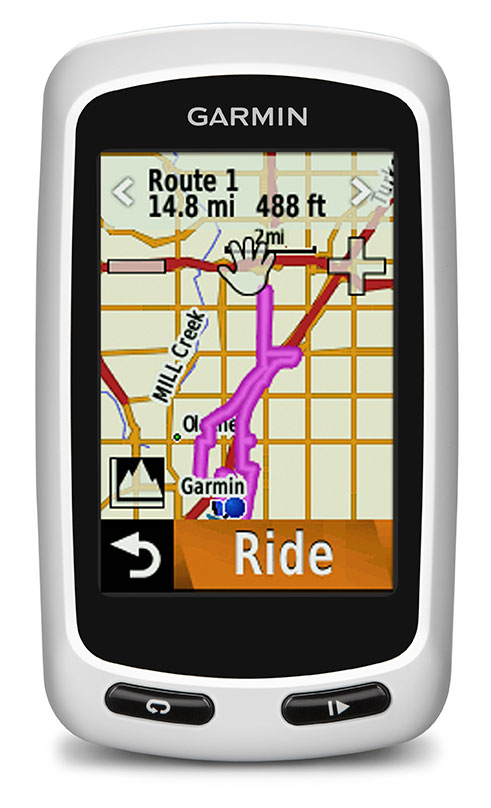
    Garmin International IncGarmin International Inc., a unit of Garmin Ltd., today announced the Edge Touring and Edge Touring Plus GPS navigators designed for touring cyclists, commuters, mountain bikers and those seeking navigation on their handle bars. Edge Touring and Edge Touring Plus work like a GPS navigator for a car, yet with bike-specific features, preloaded maps and points of interest to help cyclists to find their way. They provide both on-road and off-road navigation and can provide round-trip ride options based on a set distance.

    The Edge Touring and Edge Touring Plus will debut at the Eurobike exhibition August 28-31 in Friedrichshafen, Germany (Hall A5, booth 201) and at Interbike in Las Vegas, Nevada (booth 11058), September 18-20, where they will be prominently displayed.

    “The new Edge Touring and Edge Touring Plus are perfect for those whose bikes mean adventure, freedom, exploration and a way of life,” said Dan Bartel, Garmin vice president of worldwide sales. “Easy to set up, easy to use and preloaded with bike-specific maps, they will let riders navigate safely and securely to their destinations.”

    Edge Touring comes preloaded with bike-specific maps that make it easy for cyclists to stay on the route and find their way back again. Whether cyclists are riding from A to B, asking Edge Touring to provide a round trip route, or following a ride that they have planned or downloaded from Garmin Connector Garmin Adventures, Edge Touring will guide them on their ride with clear turn-by-turn visual instructions. Cyclists can choose between Cycling, Tour Cycling and Mountain Bike modes to calculate the most appropriate route. Edge Touring will then guide cyclists on suitable roads or bike-paths to their destination. With the new round trip routing feature, cyclists need only to input the distance they want to ride and Edge Touring will do the rest. It will calculate up to three routes to choose from, including their distance and elevation profiles. Cyclists can compare the routes, choose the one to follow and are one tap of the screen away from turn-by-turn directions the entire way.

    This Garmin video shows Edge Touring and Touring Plus in action:

    Edge Touring is robust and water resistant and has a 2.6’-inch touchscreen that works in the wet and with gloves. It weighs less than 100g and fits  on the stem or on the bars. The rechargeable battery will last up to 17 hours, and it is also compatible with optional solar external battery pack, which will give an additional 20 hours of ride time.  Edge Touring displays key ride data such as time, speed, average speed, max speed, distance and much more. Cyclists can view from 1 to 10 fields on a clear customizable screen. Edge Touring comes with a quarter-turn bike mount and can be easily transferred between bikes.

    Edge Touring records how far, how fast and where cyclists ride so users can replay, relive and share each ride in detail once it has been uploaded to Garmin Connect. Cyclists can share their own rides or search for ones others have completed in Garmin Connect or look for Adventures in Garmin’s free Basecampsoftware. Cyclists can also create custom courses within Garmin Connect and send them directly to their Edge Touring.

    Edge Touring Plus provides all bike-specific features of Edge Touring, in addition to compatibility with ANT+heart rate monitors to help cyclists know how hard they are working, and will even display key data such as range or remaining charge from ANT+ compatible eBikes. It also includes a barometric altimeter for accurate elevation, gradient, ascent and descent data.

    Edge Touring and Touring Plus are expected to ship fall 2013 and have a suggested retail price of $249.99 and $299.99 respectively.

  • SiriusXM to Acquire Connected Vehicle Unit of Agero

    Sirius XM Radio has entered into a definitive agreement to acquire the connected vehicle services business of Agero, Inc. for $530 million in cash.

    The connected vehicle unit of Agero is a leading provider of innovative telematics services, according to Sirius, offering safety, security and convenience services for drivers and end-to-end, turnkey solutions for automakers. Following the acquisition, SiriusXM will provide connected vehicle services to numerous automotive manufacturers, including Acura, BMW, Honda, Hyundai, Infiniti, Lexus, Nissan, and Toyota.


    Webinar: The Connected Vehicle

    All major international car-makers are installing telematics units, sending a signal that wireless information and connectivity is here to stay in the vehicle, and location will be a big part of the growth. To learn more about the rapid changes in the connected vehicle field, tune in to our September 19 webinar, hosted by Wireless LBS editor Janice Partyka. Registration is free.


    SiriusXM offers “unparalleled audio entertainment and data services available in more than 50 million vehicles,” the company said in a statement. “Telematics and connected vehicle solutions are key elements in the future of the auto industry. The acquisition of the connected vehicle business of Agero establishes SiriusXM as the leading provider for services in this growing industry.”

    “The acquisition of Agero’s connected vehicle business is a natural fit for Sirius XM,” said Jim Meyer, Chief Executive Officer, SiriusXM. “As the world’s leading provider of in-vehicle subscription services, SiriusXM is uniquely positioned to offer world-class end-to-end telematics services.”

    Meyer said the transaction accelerates SiriusXM’s development in architecture supporting connected vehicle services, as well as the ability to provide services over both satellite and cellular networks. “Agero’s connected vehicle team is known for their experience, innovation and technology, and we look forward to welcoming them to SiriusXM as we work to capture the significant growth opportunities in connected vehicle services.”

    The transaction is subject to the expiration or early termination of the Hart-Scott-Rodino antitrust waiting period and other customary closing conditions. The transaction is expected to close in the fourth quarter of 2013. Morgan Stanley acted as financial advisor to SiriusXM in connection with this transaction.