Category: Mobile

  • Report Looks at Market Factors for Indoor Positioning

    In recent years, there has been a substantial demand for indoor positioning and navigation equipment in the marketplace across verticals. Research and Markets has released a new report that indicates that there are multiple factors shaping the future of the indoor location market.

    One such factor is the increasing number of applications that are addressing the expressed market need. Another is that the need to deploy cost control measures is being fulfilled by the indoor location apps. Even though the adoption of this technology is relatively slow, due to indoor environment challenges and performance requirements, these solutions are expected to grow steadily and shall have a pervasive existence across all the major verticals. Improved customer experience, on a real-time basis, will be the major pull factor, according to the report.

    The indoor location research report analyzes global adoption trends, drivers and evolving platforms in this rapidly emerging market. The report aims at identifying and evaluating the current market size and the future market opportunities.  Some of the major vendors of indoor location are Apple Inc., Google, Microsoft, Broadcom and Cisco. Many small innovative companies have also surfaced and are forthcoming as the solution providers for the indoor location market.

    The research report, “Indoor Location Market: Global Advancements, Market Forecasts and Analysis (2013 – 2018),”  categorizes the global market for indoor location into the following sub-markets:

    Hardware devices: This segment shows the hardware technological trend and its inevitable effect on indoor location market.

    • Handheld devices: This segment gives unit shipments for smartphones, 3D enabled smartphone, tablets and 3D enabled tablets in this segment.
    • Network devices: This segment covers Wi-Fi integrated chips and Bluetooth integrated chips with their expected unit shipments over the period.
    • Proximity devices: In this segment, we cover expected global unit shipments for sensors.

    Software: This segment refers to indoor maps and navigation software packages which can be downloaded into the hand-held devices for indoor location purposes. It also covers indoor location-based analytical tools to monitor patterns of pedestrian/ customers at various venues. Revenue generated from proximity engine is also included in this segment.

    For more information, visit the Research and Markets website.

  • Hybrid Indoor Location to Dominate Billion Unit Smartphone Market

    ​Apple’s acquisition of WiFiSLAM has brought smartphone indoor location technologies to the fore. With more than 1 billion new smartphones forecast to use indoor location technologies in 2018, there are still significant opportunities for companies with the right technologies and strategies, according to a report by ABI Research.

    In ABI Research’s latest Location Technology report, “Smartphone Indoor Location Technologies,” it has forecast the adoption of different indoor location technologies, and the companies that are best placed to be successful. “We see a significant trend towards hybridization, with Wi-Fi, BLE and sensor fusion vital,” said senior analyst, Patrick Connolly.  “By 2014, hybrid solutions will have already surpassed standalone indoor location technologies on smartphones, with Wi-Fi and sensor fusion hybrid solutions reaching over 900 million units in 2018. Longer term, technologies around optical light, object recognition and LTE-direct are all forecast to offer differentiation.”

    “We are already seeing start-ups pivot out of this space, but there is still huge opportunity for partnerships and acquisitions with major Android handset vendors, carriers and large application developers,” said practice director Dominique Bonte. “Clearly Google is developing its own Wi-Fi indoor location solution; however, it may well open up its indoor location framework, enabling the market to expand much more rapidly. For IC vendors, with access to the hardware abstraction layer, indoor location innovation is vital for future socket wins.”

    These findings are part of ABI Research’s Location Technologies Research Service, which includes research analyses, market data, insights, and competitive assessments focused on the indoor location market.

  • Bliley Offers Oven-Controlled Crystal Oscillators

    Bliley Offers Oven-Controlled Crystal Oscillators

    Photo: Bliley

    The rugged Poseidon Series of OCXOs by Bliley features unparalleled phase noise performance in a modular type sealed package. It is a customizable frequency range product specifically designed for vibration-prone environments where dynamic phase noise performance is paramount. Applications include ground mobile, airborne, and shipboard environments.

    Features include typical acceleration sensitivity of <2e-11/g, excellent FvT performance, frequency range of 5 MHz to 130 MHz, ultra-low static and dynamic phase noise, and excellent long-term aging.

  • Panasonic Offers Durable Antennas for Wireless

    Panasonic Offers Durable Antennas for Wireless

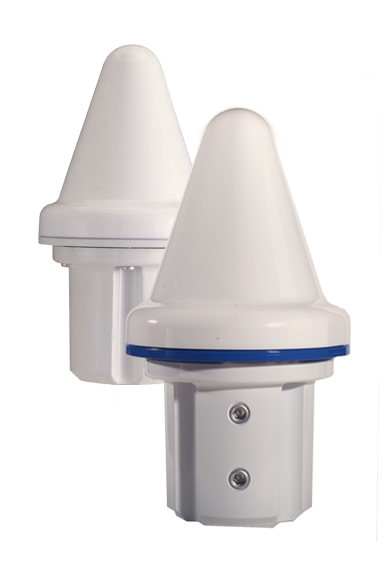
    The VIC100 Series antenna by Panasonic

    The VIC100 Series antenna by Panasonic is an active L1 GPS antenna designed for timing and synchronization. It offers immunity to noise and interference, and secure performance by attenuating noise and interference near the GPS L1 frequency through triple-filtering design.

    The VIC100 Series is housed in a waterproof enclosure designed for excellent performance under severe environmental conditions. Its shape prevents accumulation of snow and ice, eliminating problems with bird perching and enhanced immunity to lightning surge.

  • Microsemi Unveils Timing Devices for Wireless Infrastructure

    Microsemi Corporation, provider of semiconductor solutions differentiated by power, security, reliability and performance, today announced the highest density family of single-chip timing card devices with support for both Synchronous Ethernet (SyncE) and IEEE 1588-2008 packet networks including 4G and LTE applications. The highly integrated ZL30361, ZL30362 and ZL30363 provide all of the key elements required for wireless network synchronization including support for phase and frequency. The devices are available today and are currently being designed into wireless backhaul products where phase synchronization performance is crucial.

    Microsemi’s new timing devices provide the high flexibility, small footprint (13mm x 13mm) and low cost compared to alternative solutions. Key features include the availability of up to four independent timing channels; each channel can be configured to support any electrical or packet mode of operation. This allows for the simultaneous support for GPS, SyncE and IEEE1588-2008 timing. As a result, these devices can be used to enhance or to replace GPS timing in wireless infrastructure at a lower cost.

    “Our new SyncE/IEEE1588 solutions provide customers with a highly compelling value proposition and very flexible architecture as evidenced by several product design-ins already in development by leading telecom companies,” said Maamoun Seido, vice president of Microsemi’s Timing Products group. “These offerings are indicative of the innovative products that have made us the No. 1 provider of network timing semiconductor solutions globally, and the new products in our pipeline will help solidify our leadership position.”

    SyncE and IEEE 1588-2008 technologies allow carriers to improve synchronization and performance in packet-switching networks including the fast-growing 4G and LTE segment, which, according to a report from market research firm Infonetics, is rising from $8 billion in 2012 to a forecasted $17 billion in 2016.

  • GTX Corp to Develop Wearable GPS SmartSoles

    GTX Corp to Develop Wearable GPS SmartSoles

    Photo: GTX Corp

    GTX Corp, which specializes in putting GPS technology in consumer products, and Atlantic Footcare have signed a manufacturing and distribution agreement to develop and launch GPS embedded insoles. Under the agreement, Atlantic Footcare will be making an investment of $200,000 to advance the development of the new GPS SmartSoles.

    Atlantic Footcare, headquartered in Rhode Island, has been a designer and manufacturer of insoles for more than twenty years and supplies many of the major athletic and shoe companies, national retail chains, and the U.S military with high-quality and comfort insoles. Atlantic Footcare has experience in embedding electronics inside insoles through other partnerships and alliances and has completed the first prototypes of the GPS SmartSoles, which are undergoing testing.

    “This relationship and investment with GTX is a great opportunity to couple technology with an insole, enabling us to produce a truly innovative and cost effective solution to meet today’s growing personal tracking needs. We are very excited at the opportunity to be at the forefront of wearable GPS tracking technology,” said Charlie Sipes, Atlantic Footcare president.

    GTX Corp had been researching ways to further miniaturize its GPS module to penetrate new markets and expand current ones. “Compared to our existing module, this next gen is approximately 30 percent smaller, thinner, and lighter; 20 percent less expensive; and has 200 percent more battery life. It is equipped with a motion sensor and advanced A-GPS technology for pinpoint accuracy and rapid time to first fix,” said GTX Corp CEO Patrick Bertagna. “The opportunity to partner with Atlantic Footcare opened up and with this latest next generation device, embedding the module inside an insole was a natural next step.”

  • Rocky Mountain Tracking Adds CDMA Products and Services

    Rocky Mountain Tracking has added new GPS tracking devices that utilize CDMA cellular data networks in addition to its existing GSM-based devices.

    CDMA coverage has steadily grown within North America during the last decade and is sometimes available in places where GSM networks don’t currently provide coverage. “Adding support for CDMA based devices allows us to offer our customers a choice of cellular provider based on their operational needs,” said Brad Borst, the company’s president.

    “We’ve worked with our existing manufacturing and cellular service partners with the goal of being able to let our customers mix and match GSM and CDMA based devices into their fleet tracking strategy.  The new CDMA devices look the same and function almost identically to their GSM counterparts,” says Borst.  “CDMA devices will appeal to our customers operating in more remote locations within the United States while GSM continues to be a good option in metro areas and abroad.”

    Rocky Mountain Tracking is a national GPS tracking device supplier and service provider.

  • Google Disappoints with Mobile Ad Revenue, Apple Shines

    Janice Partyka
    Janice Partyka

    It has been a busy month. Apple is getting help turning around its embarrassing mapping debacle with an acquisition of HopStop and Locationary. Latitude, which enables location sharing and check-ins, is being sunsetted by Google, as it adds that functionality to Google Plus. Twitter acquired Spindle to enable real-time location recommendations. Nokia, leading the charge in augmented reality, added LiveSight sight recognition into apps. And mobile advertising, the life blood of many location apps, is exceeding expectations for social media, but is disappointing with mobile search.

    In a week when Facebook’ mobile advertising revenue far exceeded analyst expectations and garnered 41 percent of the company’s revenue, Google’s advertising woes are particularly interesting. Second-quarter revenue results from Google indicate that mobile devices are depressing its online advertising prices at a rate greater than expected. Search-ad prices have been declining since late 2011, but Google’s numbers are still surprising low. The average cost-per-click rate, the price Google gets paid by advertisers, is down 6 percent from a year ago. This was double the drop expected by analysts. The decline is due in part from the lower cost-per-click on sites that are accessed from mobile devices than those seen from PCs.

    Earlier this year, I wrote about Google’s move to accelerate advertisers’ shift to mobile. The company overhauled its AdWords platform in February in an attempt to reach consumers across all device screens. This required advertisers to pay for mobile ads, even if they only wish to reach consumers via the desktop. Google saw this as a way to more revenue and insisted that an integrated platform would also benefit advertisers. The results have been disappointing and the switch to a mobile world may not be entirely good for Google.

    Whatever it Takes. Apple is hard at work overhauling its mapping. Apple has confirmed its acquisition of Locationary and HopStop. Locationary solves the problem of out-of-date points of interest and business data with a platform that collects and verifies crowd-sourced and other data. It also checks the actual physical location of businesses and other places. HopStop offers a door-to-door navigation app that includes transit, walking, biking, and taxi directions in more than 500 cities worldwide.

    Tweeting Spindle. Twitter has acquired Spindle, whose mobile search application leverages the social graph to deliver real-time local recommendations. The app harvests social media activity, including location and time of day, and identifies nearby restaurants, retail and other places in the vicinity. In March, Spindle added push notifications based on user preferences. Twitter has closed down the Spindle offering and is certain to repurpose it.

    Airport Trip Timing. Traffic is only one of the delays that can be encountered on a trip. Not knowing the expected wait time at airport security frustrates travelers. TripAdvisor has acquired GateGuru to provide security-time estimates, gate locations, and real-time flight status. The company collects information from a mix of user-generated content and data from airports. The offering also includes weather forecasts, detailed maps, and information on terminal amenities.

    Augmented Reality at Nokia. Augmented reality (AR) is a leap forward for mapping and is beginning to leave the realm of emerging technology and entering mainstream. Adding AR to maps creates an innate experience in which one can “see” a place with text or a superimposed image. Nokia, a leader in augmented reality, has added LiveSight, an integrated sight recognition technology into the Here suite of apps for some Window phones. Users can enter LiveSight mode, which will scan the surrounding area and pull up relevant information about nearby locations, like addresses, phone numbers, and ratings.Virtual signs are attached to buildings as viewed through the camera display. This can all be accessed off-line.

    Augmented Job Searching. One novel app is Nokia’s JobLens, which adds augmented reality to job hunting. Users can visually see jobs around them through the phone’s camera lens. A number of search filters help narrow down jobs, including filtering jobs that have a connection with one’s social networks. JobLens is integrated with LinkedIn, Facebook, Twitter, and Windows Live. Data is provided by partners that include LinkedIn, Indeed, Salary.com and Zillow. When a user finds a job that she wants to apply for, the application will then walk her through the application process and keep track of her progress. Will the job pay in fictitious currency?

  • Satelles Announces Patent and Technology License Agreement with Boeing

    Satelles, a division of iKare Corporation, has entered into a patent and technology license agreement with The Boeing Company. This license allows Satelles to provide timing and location solutions to commercial markets delivered over the Iridium constellation of 66 low-Earth-orbiting satellites.

    The timing and location signals are available anywhere on Earth, without the need for local infrastructure, making the system perfect for augmenting GPS and other location-based technologies, Satelles said. Unlike standard GPS, the high-power signals can reach into many building structures. The signal-in-space provides a location-specific signature that can reliably prove (or authenticate) the location of a mobile device or other equipment, while being virtually impervious to spoofing and other attacks, Satelles said.

    Gregory Gutt, CEO of iKare Corporation, stated, “After working closely with Boeing for years to create a global indoor-positioning solution, we are thrilled to be entering this license agreement, which includes over 30 issued and pending patents.”

    Michael O’Connor, CEO of the Satelles business, agreed. “We see tremendous dual use potential for the technology going forward. Indoor location is an exciting area, and we are seeing keen commercial interest in a solution that delivers trusted location for secure network communication or network transaction security.”

    Satelles is headquartered in Silicon Valley, in Redwood City, California, with an office in Ashburn, Virginia.

  • Apple Maps Another Foray, Still Needs Google

    Kevin Dennehy
    Kevin Dennehy

    By Kevin Dennehy

    Trying to shake off last year’s mapping debacle, Apple recently bought two companies, HopStop and Locationary.  The purchases, whose financial details were not disclosed, get Apple rooted once more in the location business; how firmly those roots prove to be, and how well they serve the company against arch-rival Google, time will tell.

    Apple has been stockpiling companies and mapping software since last year’s introduction of Apple Maps on iOS devices, which turned out to be a big fiasco. GPS World’s LBS Insider reported extensively on the problems Apple encountered with its mapping software. Some of these problems included sending drivers to a wrong location and direction.

    After the mapping software problems were made public, Apple CEO Tim Cook apologized for the mapping software’s problems and even suggested that users go to such competitors as Waze, MapQuest and Microsoft’s Bing. The fallout from the Maps debacle was swift.  Apple fired Richard Williamson, who oversaw the company’s Maps team, according to Bloomberg.  The company put pressure on Apple partner TomTom to update mapping data and consulting with third-party mapping experts.

    The fiasco proved how important maps and navigation are to users of mobile phones.  Industry experts noted two further points:

    • Maps are extremely hard to do, and
    • Maps are really important for a major platform to own, rather than rent from Google.

    Hopping Forward. The HopStop app provides directions to users in 600 urban areas, with an emphasis on mass transit — real-time transit maps and schedules —  as well as pedestrian- and bicycle-oriented guidance.

    HopStop’s purchase may be Apple’s answer to Google’s recent purchase of Waze.  HopStop traffic data, like Waze, is based on updates from people using the application; that is, crowd-sourced data.

    Staying With It. The Locationary acquisition constitutes a further measure to keep current, going beyond the pressure Apple put on partner TomTom.  Locationary checks on and seeks to eliminate out-of-date points of interest and business data with a platform that collects and verifies crowd-sourced and other data. It also checks the actual physical location of businesses and other places.

    Coming Inside. To top off the company’s location awareness, Apple is even getting into the hotly-contested indoor positioning and navigation space, spending $20 million for Silicon Valley start-up WiFiSLAM in late March. According to published reports, WiFiSLAM can pinpoint a user’s indoor location to within 8 feet, using Wi-Fi. Apple rival Google already has been in the indoor positioning and navigation market, mapping shopping malls, airports and sports venues in several countries.

    Google Maps Now Major Apple Feature

    Speaking of the strange bedfellows, Google recently rolled out an iOS version of Google Maps for use on the iPad. For the last nine months, iPad users who wanted to use Google Maps have been required to use one designed for the iPhone, according to published reports.  Google also updated the iPhone version of Google Maps.

    Both the iPhone and iPad mapping software feature live traffic updates during turn-by-turn navigation.  The app includes live incident reports, road closure information, construction sites, accident reports and other features.  Apparently, Apple users won’t get the rerouting capability that Android folks will get, according to published reports.

    Real Power. The cool factor, and one that industry experts believe is the real power of location-based services, is an “explore” function that both Apple and Android have with Google Maps. This proximity feature allows users to find nearby restaurants, shopping areas, gasoline and other sites. Google also introduced a rating system for the iOS application that allows users to rate restaurants and other businesses.

    The Google Maps for iOS also has turn-by-turn directions for bicyclists, featuring more than 330,000 miles of bike paths and trails worldwide.

    Previous versions of Google Maps, which were designed for the iPad, were removed by Apple last September.  Apple, to replace the version, brought out the infamous mapping software that featured many errors.


  • Clarion Selects Averna for Testing In-Vehicle Infotainment Systems

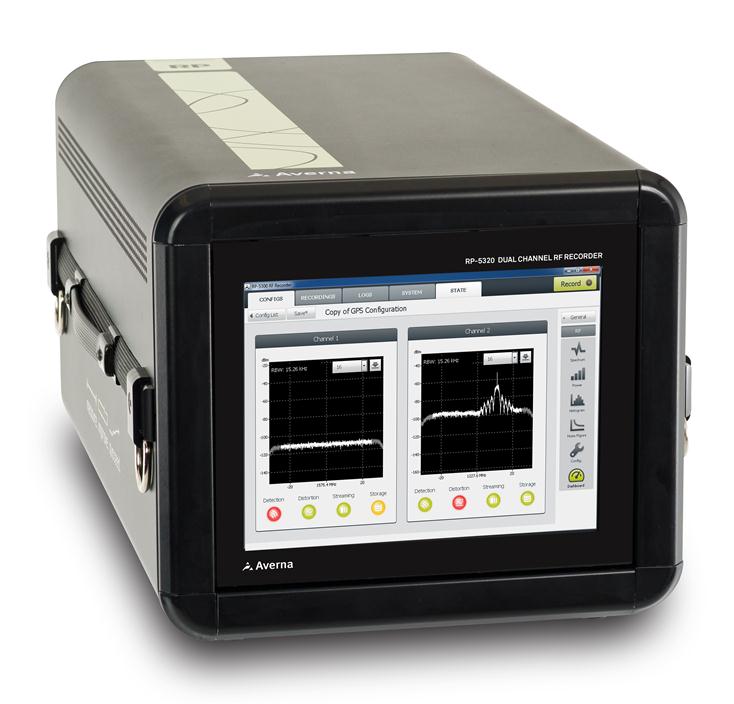
    Averna’s Record & Playback platform.
    Averna’s Record & Playback platform. Photo: Averna

    Averna, a developer of test solutions and services for communications and electronics device makers, announced today that Clarion has selected Averna’s Record & Playback solution to validate upcoming in-vehicle entertainment systems and certify that the devices perform well in real-world conditions. Clarion is a global manufacturer and seller of car navigation systems and in-vehicle equipment with a focus on car audio systems.

    The R&D Division, Experiment and Evaluation Team at Clarion will use Averna’s R&P platform to record radio signals such as AM, FM, HD Radio, and DAB from key locations around the world and replay them in the Tokyo-based lab where the design team is located.

    The R&P platform selected by Clarion features:

    • RP-5100, a compact 2-channel RF recorder designed to record live RF signals in the field
    • URT-5000, a software-defined RF Player and Signal Generator
    • RF Studio, high-performance RF record-and-playback software for RF product designers and researchers to facilitate recording, analysis and storage of RF signals
    • DriveView plug-in for synchronized recording/viewing of video, audio, and GPS positioning data

    The Averna RP-5100 RF Recorder is specifically designed to capture real-world RF signals, with impairments, for navigation as well as broadcast radio and video receiver validation, testing and support. The system has two 20-MHz wide channels that can be tuned on any frequencies from 250 kHz to 2.65 GHz. To address the challenges of validating the RF response with the physical environment, Averna has developed DriveView, a plug-in for the proprietary RF Studio software, offering visual verification by video-recording drive tests.

    “Clarion needed a platform to record live RF environments and reproduce them in a repeatable manner in their lab. Our R&P solution allows them to go through all the different use cases without having to go back in the field at each testing phase,” said Etienne Frenette, VP of Sales, Asia for Averna. “As receivers become more complex, it is imperative that real-world signals and conditions be recreated for thorough validation and testing in order to help enhance the user experience.”

    “We recognize and appreciate Averna’s unique expertise and advanced solutions in device performance testing,” commented the R&D Division, Experiment and Evaluation Team at Clarion. “Clarion is dedicated to delivering better products reaching the market faster and Averna is helping us achieve this goal.”

  • Telit Chosen as Representative of Italian Tech Industry for Galileo

    Telit Wireless Solutions has been selected among various applicant members of the Italian Technology Industry as one of the nation’s key representatives in the global roll-out of Europe’s Galileo satellite positioning system. The selection reflects the high degree of credibility demonstrated by the Italian government in the strategic plan proposed by Telit to accelerate global adoption of the Galileo technology, Telit said.

    Telit is a global enabler of machine-to-machine (M2M) communications providing cellular, short range and positioning module products. Telit’s positioning technology R&D center is an integral part of the company’s R&D function headquartered in Trieste, Italy.

    Telit also received a grant to execute its proposed strategic plan. The grant offers Telit the opportunity to accelerate its activities in development of projects for the positioning technology market. It bolsters human and financial resources required to enable Telit to quickly advance in this market area and achieve leadership in product performance with services to match. This achievement is likely not only to enhance the company’s competitiveness but is also provide measurable boost for the Italian economy, concretely contributing tangible progress in the strategic and very high growth segment of m2m.

    The inclusion of positioning expertise stems from the company’s mergers and acquisitions over the past few years, which have made it a leading designer and manufacturer of innovative GNSS solutions for OEM applications, from personal and asset tracking to automotive solutions. Telit has sold millions of high-performance GPS modules sold worldwide.

    Galileo is Europe’s global navigation satellite system, designed to provide a highly accurate, guaranteed global positioning service under civilian control. It is inter-operable with GPS and GLONASS, the U.S. and Russian global satellite navigation systems. By offering dual frequencies as standard, Galileo delivers real-time positioning accuracy down to the meter range. It ensures availability of the service under all but the most extreme circumstances and informs users within seconds of any satellite failure, making it suitable for safety-critical applications such as guiding cars, running trains and landing aircraft. A range of services will be extended as the system is built up from initial operational capacity (IOC) to reach the Full Operational Capability (FOC) by this decade’s end. The fully deployed Galileo system consists of 30 satellites (27 operational + 3 active spares), positioned in three circular Medium Earth Orbit (MEO) planes at 23 222 km altitude above the Earth, and at an inclination of the orbital planes of 56 degrees to the equator.

    “Achievement of a leading position in now in Galileo technology not only boosts Telit’s global stance and strength, and consequently that of the Italian technology industry but also extends the reach of our leadership in positioning which already includes two decades of pioneering work in GPS in the United States,” said Dominikus Hierl, chief marketing officer at Telit Wireless Solutions. “The planned work-force expansions in support of this new effort will create extraordinary value-add, not only in terms of project acceleration but also in innovation, vision and new relationships for Telit.”