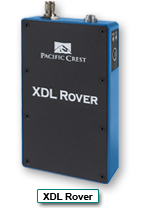
Pacific Crest has introduced the XDL Rover, an advanced, high-speed, wireless data link built to withstand the rigors of GNSS/RTK surveying and precise positioning.
The XDL Rover is a lightweight, ruggedized UHF receiver designed for digital radio communications between 403 and 473 MHz in either 12.5 or 25 kHz channels. It uses Pacific Crest’s latest generation XDL modem technology while remaining backward compatible with existing Pacific Crest products. Users can instantly communicate with GNSS precise positioning receivers that share the same protocols throughout the world.
“The XDL Rover is an ideal high-speed radio receiver for products that require a one-way communications link,” said Dale Hermann, director of marketing and sales for Pacific Crest. “Its interoperability with existing equipment and greater functionality will allow customers to rapidly integrate and cost-effectively deploy the XDL Rover with their products and solutions.”
The XDL Rover joins the rapidly growing line of XDL products that includes the XDL Micro, a transceiver OEM board. The XDL Micro is a 0.5 Watt UHF transceiver designed for integration into products that require either a one- or two-way radio communication link that is configurable for operation between 403 and 473 MHz. The XDL radio line is based upon the successful ADL products from Pacific Crest.
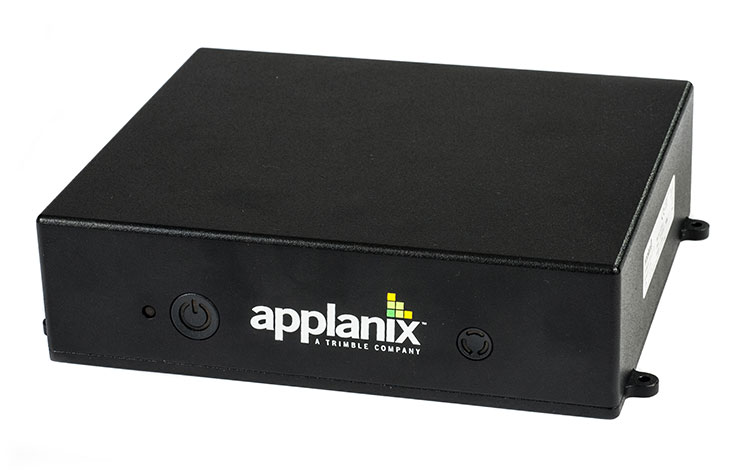
Applanix has introduced the POS LV 120, the latest version of its positioning and orientation systems for land vehicles. Using commercial Micro-Electro-Mechanical (MEMS) inertial measurement unit (IMU) technology, the Applanix POS LV 120 is a small, lightweight system and provides an economical solution for any continuous positioning and orientation application.
POS LV 120 is a fully integrated, turnkey position and orientation system, using integrated inertial technology to generate stable, reliable and repeatable positioning solutions for land-based vehicle applications, Applanix said. Redesigned to be smaller and lighter, it maintains identical data interfaces and software compatibility with the established POS LV line of products.
“With a MEMS IMU and a 220 channel, dual-antenna GNSS receiver integrated into a single enclosure, the POS LV 120 is a cost-effective GNSS-Inertial solution designed to support many types of land-based mobile mapping projects,” said Kevin Andrews, product manager for Land Products at Applanix. “The integrated system is smaller than the standard POS LV computer system (PCS), making it ideal for use in lightweight applications such as robotics, autonomous vehicles, centerline mapping, asset mapping and short-range direct georeferencing.”
POS LV 120 is available now through the Applanix sales network.
myTaxi, a taxi booking smartphone application, today launched in Washington, D.C., its first introduction into the U.S. marketplace. The announcement was made during a live-streaming press conference given directly in a moving taxi.
myTaxi was first launched in Germany in June 2009. It connects 2.3 million users to more than 18,000 taxis worldwide. Today marked the first time consumers in the U.S. will have access to the app. myTaxi’s services offer consumers a personal, transparent and convenient way to travel with features such as:
Peer-to-peer connection between driver and passenger, including driver photos, information and phone numbers.
A ratings system for selecting and reviewing your taxi driver and a favorites list to save your favorite drivers for future pickups.
Live tracking of taxi approach on display including arrival time, fare calculator, distance and automatic positioning via GPS.
View of every myTaxi in the area on the taxi radar.
myTaxi Payment – a direct billing process in the taxi via smartphone.
“Americans took more than 10 billion trips on public transportation last year,” said Niclaus Mewes, co-founder and CEO, myTaxi. “Smartphones can have an immense impact on urban mobility. At myTaxi we want to rethink and reshape how taxi trips are taken. Passengers and drivers want something convenient, transparent and tailored to their needs. We want to deliver on that.”
Every driver using myTaxi has the ability to become a contractor and build their own client base by consistently providing passengers with good service and earning high customer ratings. myTaxi offers a driver-side version of its app allowing taxi drivers to efficiently monitor the locations of customers and receive basic information on each customer once an order is placed.
“The DC Taxicab Commission welcomes any electronic reservation company such as myTaxi, bringing technological advancements to the District of Columbia,” said Ron Linton, DC Taxicab Commission Chairperson. “We are delighted that passengers using DC public vehicles-for-hire will enjoy the enhanced quality of service.”
During its press conference, myTaxi outlined a voucher system that will be provided to the app’s early adopters. The voucher campaign is one of the many programs and features myTaxi will continue to roll out in the D.C. marketplace. myTaxi will also bring new payment facility into the D.C. taxi market. The implemented feature “myTaxi Payment” provides users with the ability for cashless, card-less payments on all myTaxi rides by registering a credit card to their account. The myTaxi application is available in stores for free download to iOS and Android devices.
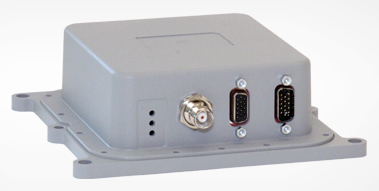
Today at Intergeo, NovAtel Inc., NovAtel announced the addition of a new commercially exportable single-enclosure SPAN MEMS receiver to its line of SPAN GNSS/INS products. Available in the first quarter of 2013, the low-power, lightweight SPAN MEMS enclosure incorporates a diminutive Micro Electromechanical Systems (MEMS) Inertial Measurement Unit (IMU) and a NovAtel high-precision OEM615 GNSS/INS SPAN receiver to provide continuously available position, velocity and attitude (roll, pitch and yaw) in a small, single-unit form factor, the company announced.
“This product ensures we meet crucial price/performance and size/weight requirements for our customers,” Jason Hamilton, director of Marketing at NovAtel, said. He added, “By integrating this IMU with our powerful OEM6 GNSS/INS SPAN engine, which provides many advanced positioning options such as AdVance RTK, ALIGN heading technology and RAIM, we are able to offer a GNSS/INS solution for a wide range of applications.”
The lightweight SPAN MEMS enclosure provides a rugged housing for demanding applications. Serial and USB communication interfaces plus several I/O options support additional peripherals. An embedded wheel sensor interface is also available to enhance GNSS outage bridging capabilities. Tight coupling of the GNSS and inertial technologies enables continuous, robust positioning in difficult environments where satellite signals are unreliable or unavailable for short periods of time.
This product will be available as an integrated single-enclosure SPAN solution, enclosed standalone IMU for use with external SPAN-enabled receivers, and as an OEM component.
Shipments of the new receiver start Q1 2013 with OEM availability Q4 2012. A limited supply of enclosure evaluation units will be available in Q4 for integrators looking to get a head start on their projects.
It had to happen sometime. I just thought or hoped it might take a few more years.
But I guess I should not be surprised since I experienced a wonderful 30-year U.S. Air Force (USAF) career and that has been over for more than a decade. I have been working GPS issues since 1978. So I guess it should not have come as a surprise when just a couple of weeks ago a wet-behind-the-ears USAF 2nd Lieutenant actually inquired of me, in a public GPS-related forum no less, “So, what did you do in the war, granddad?”
Several irreverent and potentially satisfying responses immediately came to mind:
I am not your granddad.
Where do you get off asking me a question in that tone of voice?
Frankly, it is none of your business.
Instead, I simply inquired, “Which one?” This obviously unexpected response necessitated a long pause while the offender, a now obviously-easily-confused 2nd Lieutenant, ruminated about which war(s) to inquire. For my part I was ready to hit him over the head with my cane if he responded with WWII. Of course I would probably have been accused of child abuse, so he saved the day and a possible court date when he replied in a questioning falsetto, “Vietnam?”
I won’t bore you with my response. However, since that unfortunate “age discrimination” incident (from both parties), it has occurred to me that many of us who were privileged to experience GPS in its infancy are certainly not spring chickens. Indeed, many (Dr. Ivan Getting for one) have passed on to their great reward. Remember, Professor (Colonel) USAF Ret. Bradford Parkinson, who created and ran the NAVSTAR GPS Joint Program Office from 1972 to 1978, was a full colonel in 1972. However, that says nothing about commitment or expertise. Most of us, Brad included, are still as engaged and passionate about the future of GPS as we ever were. Consider that the first satellite in the system, Navstar 1, was launched February 22, 1978. In just a few months the GPS operational constellation will be 35 years old, and Air Force Space Command is celebrating its 30th anniversary this year. My point being that few operational space systems, if any, engender this type of lifelong loyalty, passion and dedication. Plus, those of us who count ourselves among the original sojourners on this amazing journey, especially those who are graying and threatening to beat impertinent whippersnappers with canes, are actually very proud of the fact that we are still engaged, and even more amazed and heartened that there’s a generation of young USAF and other military personnel, engineers, scientists, inventors, and everyday believers to follow in our footsteps. I highlight the USAF personnel because they are the official stewards of GPS.
Indeed, at the recent ION GNSS Conference held it Nashville, Tennessee, it was apparent that many of the youngsters (many of whom are Ph.D.s) are just as engaged as we are. They see a future for GPS and PNT (position, navigation and timing) systems that we may never have imagined. As prescient as many of us “seniors” claim to be, I have no doubt, indeed I fervently hope, that the young men and women following in our footsteps will achieve feats with GPS and PNT systems of which we never dared dream.
ION GNSS 2012 – Nashville
I state here without equivocation or worry of being challenged that the plenary at this year’s event, which was titled “GNSS Revolution, the Catalyst of the New Information Age,” was the best I have ever encountered at any ION event in the past twenty years. Dr. Jade Morton from Miami University was an excellent moderator and kept the program moving along, but it was the presenters, their evident, extensible passion for their subjects and their excellent presentations (see list below) that made the night unforgettable:
1.
High Precision Agriculture: Tony Thelen, Director of Intelligent Solutions Group, John Deere
2.
Crime, Punishment, and the Global Positioning System: Professor David Last, Crime Consultant Engineer and Professor Emeritus, University of Bangor, UK
3.
Precision Navigation Sensors Based on Atom Interferometry: Professor Mark Kasevich, Applied Physics, Stanford Universit
GPS and Agriculture
Tony Thelen, the first presenter from John Deere — yes, the people who make green farm and lawn tractors among other things — actually made GPS and agriculture sound interesting. His presentation was top notch. It certainly kept my interest, and he left me wanting to know more about GPS and agriculture! Of course, I am being a bit disingenuous, since one of my most requested columns, titled “The Farmer in Finland,” concerns the unparalleled John Deere StarFire system, which probably deserves another column soon. Conversations with plenary attendees after his excellent presentation indicate that Tony managed to ignite that spark and interest again for many in the audience. The effect that GPS and companies like John Deere have had on agriculture is simply amazing, and the quantifiable benefits almost beyond belief. Plus, according to Tony Thelen, there is good reason to believe we will continue to be astounded at what the future holds for GPS and agriculture. I encourage you to visit the ION website and review not only Tony’s excellent presentation, but all the ION GNSS 2012 Plenary presentations.
GPS Forensics
When you have three excellent and inspiring speakers lined up for an evening of edification, you always face the conundrum of order. Should the featured or most entertaining speaker be in the middle, or should you risk losing some of your audience early and build toward a climax? With this audience Dr. Jade Morton made the wise decision, and put the most anticipated speaker in the middle of the lineup. There is always great expectation on my part, and I expect from most of the audience, when Professor David Last is scheduled to speak. At Nashville, he certainly did not disappoint. Only the infamous tonal chimes from “Law and Order” could have made his presentation any more dramatic.
For my part, I kept expecting to hear those infamous tones whenever David transitioned to a new slide. David’s presentation was a perfect combination of “Law and Order” combined with “The World of Stupid Criminals.” With material like that, how could it have not been a roaring success? Add the dulcet British Public School accent and perfect comic timing and delivery and you can’t fail. Indeed, anyone listening outside the auditorium that night would have thought they had stumbled upon a standup comic convention instead of a bunch of staid scientists and engineers listening to a presentation on GPS forensics.
David is always interesting, but that night he was competing for and in my book won the ION GNSS Emmy. If you ever have the chance to hear Professor David Last speak publicly, don’t miss it. And criminals in the UK should just surrender — they don’t stand a chance in court against a consulting engineer and expert witness like Professor Last. I dare say even Sherlock Holmes, the famous consulting detective, would be proud of Professor Last.
Cold Atom Interferometry
None of this lessens the impact or obvious passion for his subject displayed by Professor Mark Kasevich from Stanford University. It is not that I don’t have a passion for cold atom interferometry, it’s just that two weeks later I am still trying to figure out what he said and how it applies. I have no doubt that you can, excuse me, that Professor Mark Kasevich can, construct a cold atom interferometer that can be used to determine a position or a fix; I am just trying to figure out how that 10-cubic-foot rack is going to fit into anything remotely mobile. But, of course, even the optimistic Professor Kasevich admitted that mobile or handheld atom interferometers of this caliber are probably 10 years in the future.
So, at this years’ ION GNSS Plenary event, the audience was treated to a down-to-earth and yet exciting look at the future of GPS and agriculture: the comedic and yet brilliant GPS forensic expertise of a passionate John Cleese wannabee, a caped crusader who is feared by criminals everywhere, and the futuristic “Star Trek” look at cold atoms and interferometry. What more could you ask for? This was an evening that for me elucidates the best ION GNSS Plenary ever. My hat is off to ION Executive Director Lisa Beaty and Plenary Program Director Dr. Jade Morton for an excellent program, but mostly I applaud all three speakers for a wonderfully educational and entertaining evening. How often do you get to combine those adjectives?
GPS World Leadership Dinner and Annual Awards Ceremony
However, for myself and many others the highlight of the ION GNSS event for the past several years has been the annual GPS World Gala and Dinner, now known as the annual GPS World Leadership Dinner and Awards Ceremony. This wonderful and prestigious event is the brainchild of Alan Cameron, our beloved editor-in-chief and now publisher of GPS World. Every year the event just gets better and better. The venues are always palatial, and this year was no exception as we held the event at the beautiful Nashville Hermitage Hotel. The stained-glass ceiling in the lobby was astounding.
I won’t say much more since Alan wrote a complete review of the evenings events, except to caution you that invitations to this wonderful event are extremely hard to come by, and if you are nice to me, who knows? You might receive an invitation next year. It reminds me of the admonition from my daughter, a PsyD in Psychology and a practicing clinical psychologist, when she says: “You should always be nice to me Dad. Remember, I get to pick your nursing home!”
Kudos and Final Thoughts on ION GNSS 2012
I can’t complete my comments on ION GNSS this year without pointing out that the venue, Nashville or Music City, and the Renaissance Hotel by Marriott were both outstanding. The ambience of the entire event was professional yet also warm and friendly, and the ION staff as well as the staff at the Renaissance could not do enough to make my stay more memorable. The Renaissance staff was extremely professional and attentive, working hard to make the event a success. I am already looking forward to next year’s conference, which will be held at the same location September 16-20, 2013. Book early and arrive early for reasons I elucidate next.
Lest we forget, while the ION GNSS is the main performance, the center ring if you will, it is historically preceded by the Civil GPS Service Interface Committee (CGSIC) meeting, which is co-chaired by the United States Coast Guard (USCG) NAVCEN/CC. The CGSIC has been around for 52 years, and was outstanding this year. Yes, the title sounds incredibly dry and boring, but CGSIC meetings are actually very informative, down to earth, informal and even occasionally entertaining. The new USCG NAVCEN commander, Captain William Burns, and his NAVCEN team did an excellent job putting the event together. So, again, I highly recommend arriving a couple of days early for next year’s ION GNSS in Nashville, so you too can attend the CGSIC. You will find it worthwhile.
LightSquared
As much as I hate to close my column on a downer I must unfortunately inform you that the amnesiacs at LightSquared (LSQ) are at it again. Not exactly the same amnesiacs, of course, as their CEO resigned in February, and Philip Falcone from Harbinger, whose solipsistic behavior resulted in a federal security SEC indictment for fraud, joined the LightSquared board recently. The U.S. Securities and Exchange Commission recently filed securities fraud charges against Falcone and Harbinger Capital Partners. However, this has not slowed LSQ as it subsequently on Septembert 28 submitted two proposed spectrum sharing filings with the FCC, proposing to utilize the lower 5 MHz of LSQ’s non-existent broadband network in a form that was not initially sanctioned or envisioned and, according to the filings, will not interfere with GPS signals. LSQ did not submit any evidence or test data to prove the lack of interference, just conjecture. These filings, of course, are in addition to LSQ’s recent filing for Chapter 11, better known as a bankruptcy filing. Plus, Philip Falcone has publicly alerted the FCC that LightSquared will not go away!
Where have you heard this song and dance before? I have read both filings very carefully, and they are filled with the same flawed technology and total refusal to adhere to the laws of physics as their previous filings. LSQ fails to understand that you cannot abrogate the laws of physics merely because they are inconvenient and interfere with your grand scheme. Previous test results have determined that transmitters as powerful as the ones proposed by LSQ will interfere with GPS signals no matter what portion of the immediately adjacent spectrum bands are proposed.
The latest filings clearly seem to be a last-gasp effort of a dying company that is attempting to snatch victory from the jaws of defeat. LSQ must think the U.S. government has an incredibly short attention span. In my humble opinion, if the FCC were to approve either of the proposed filings, pilots, airlines and passengers at Ronald Reagan National Airport and other major airports on the East Coast would be unable to use GPS to fly out of or navigate to the airports. LSQ continues to think it is more important to be able to tweet, “I just saw Elvis” than it is to navigate safely to your destination. However, as improbable as the acceptance of these LSQ filings may be, in a recent memo I warned my GPS/PNT colleagues, via notable quotes you may recognize, “…unfortunately this is not over, ‘prepare for boarders’ and remember ‘we have not yet begun to fight’.”
GPS II-F 3
Fortunately, I won’t end on a down note after all. As I write this, the third GPS IIF satellite, designated SVN-65, is on orbit being checked out by the 19th SOPS (Space Operations Squadron) with LADO (Launch, Anomaly, and Disposal Operations) software developed by Braxton Technologies. My hat is off to AFSPC (Air Force Space Command), SMC (Space & Missile Systems Center), Boeing, ULA (United Launch Alliance), the 50th Space Wing, and Braxton Technologies for a successful launch and hopefully a quick and flawless checkout. It has been a long 15 months since the last IIF launch, and this is the only launch in calendar and FY12. Plus, technically the satellite on orbit is actually satellite vehicle (SV) four, as SV three is undergoing some necessary changes. Most experts expect a minimum 30-day checkout. However, my sources tell me it could be as long as 90 days. Wouldn’t it be great if it were sooner? We will just have to wait and see. Stay tuned to GPS World for the latest news on GPS IIF-3. The good news is we have another GPS IIF on orbit.
Until next time, happy navigating, and remember all of us at GPS World now have new email addresses in the following format. If you wish to email me please do so at [email protected]. I look forward to your comments.
The uproar caused by glitches in turn-by-turn and other features from Apple’s new Maps feature has forced CEO Tim Cook to make a public apology. It also has made some in the industry wonder why Apple decided to drop Google Maps in the first place — though many say it was the smart thing to do in the long run. In the meantime, indoor positioning technology and markets seem to be shaping, if not slowly, for serious commercial success in the near future. Some still have concerns about indoor positioning’s technical limitations, privacy concerns and consumer acceptance.
Apple recently told its customers to try competing map services while it improves its new mapping program. A recent uproar by iPhone users, who found that Apple’s new mobile maps gave them wrong directions right after the release of iPhone 5, has been dubbed “mapplegate” by some bloggers.
In a letter to customers, Tim Cook, Apple’s chief executive officer, said that iPhone customers try mapping services from Bing, MapQuest, Google and Waze through its apps store.
Cook, in his letter, apologized for the frustration caused by its mapping platform. He said that more than 100 million iOS devices use the new Apple Maps.
“We launched Maps initially with the first version of iOS. As time progressed, we wanted to provide our customers with even better Maps, including features such as turn-by-turn directions, voice integration, Flyover and vector-based maps. In order to do this, we had to create a new version of Maps from the ground up,” Cook said. “Everything we do at Apple is aimed at making our products the best in the world. We know that you expect that from us, and we will keep working non-stop until Maps lives up to the same incredibly high standard.”
TomTom, which provides the map data for the new application, has been tight-lipped about the fiasco. In addition, the move to TomTom has some questioning Apple’s move away from Google Maps.
One thing is for sure in this whole mess: the importance of location and mapping to consumers, something pundits have downplayed in recent years. A recent New York Times article said the Maps outcry “shows how map services, which Apple treated as an afterthought when it built the first iPhone, have become critical tools for millions of people.”
The Times article goes as far as saying that Apple executives were surprised by the popularity of the map function, but began to concern the brass there about how much iPhone behavior data was flowing back to Google.
Between this recent glitch and its decision not to join standards consortiums for indoor positioning, one wonders if Apple, or Google for that matter, really believes in the power and promise of location technology.
Aisle411 Says It Has 10,000 Indoor Maps
The mainstream media is touting indoor location as the next big thing for consumers. One company, aisle411, now with 10,000 indoor maps, says the future is now. The “so what” for consumers is the ability to easily search for products, says Kris Kolodziej, new aisle411 vice president of location services.
“Consumers want less stress when shopping; they want to be informed, and also have fun [and] be engaged,” said Kolodziej, who most recently was associate director at Verizon Wireless.
Aisle411’s product enables product search, indoor/store map, indoor location (around 5 meter/aisle level) and product recommendation through an ad engine. “Users can search for products. We then display the products on a store map, down to the aisle level,” Kolodziej said. “We also recommend products based on search and indoor location by displaying coupons and offers.”
Kolodziej says, as part of its 10,000 indoor maps, all 8,000 Walgreens stores are mapped. “You can find these maps inside the Walgreens app and inside the aisle411 app. Even Google does not have this,” he said.
Like all new technology, including GPS, standardization of maps and technology help to grow new markets. Some believe it is the Wild West for indoor positioning, which Kolodziej contends may be overblown. “Aisle411 figured out the technical issues related to scaling indoor maps and indoor location. Aisle411 generates the indoor maps and offers them in an XML format via our SDK and APIs,” he said. “Developers can access the product data and store maps via our SDK and APIs.
Big box retailers and other chains are showing big interest in indoor positioning, but the concern is will privacy and other issues slow it? “This Walgreens deployment is helping to educate the market, and other retailers, that this technology is what consumers want. Specific to indoor location, consumers are more open to sharing their location with their store/retailer vs. Google or anyone else,” Kolodziej said. “Since the store already knows you are there to shop, users are not afraid to share their location inside the store.”
Aisle411 recently purchased WiLocate’s technology assets — and a few patents pending as part of the deal. WiLocate’s positioning product, which allows access to mobile devices, leverages existing Wi-Fi infrastructure and sensor information, along with gyroscope and compass.
Google continues to be a dominant player in indoor mapping. It recently said that Galeries Lafeyette and supermarket chain Carrefour in Paris are now mapped. This includes information about ATMs, escalators, restrooms, what products are in different aisles, and walking directions.
Google has been mapping airports, museums and malls for some time. In addition to France, the company brought indoor maps to the United Kingdom and Switzerland last summer. In the United States, Google has mapped such places as Atlanta Hartsfield — Jackson International Airport; San Francisco International Airport; Mall of America, Bloomington, Minnesota; Caesars Entertainment, Bally’s Las Vegas; MGM Resorts, Monte Carlo Resort & Casino, Las Vegas; and Vallco Shopping Mall in Cupertino, California.
Google has also mapped such big-box stores as Home Depot, IKEA, Macy’s and Bloomingdale’s — though it remains to be seen when a Wal-Mart or Target will be included.
Analysts contend that the big indoor positioning players are Google, Microsoft, Research in Motion, Nokia and Qualcomm.
Septentrio announces the full support of TERRASTAR wide-area differential and Precise Point Positioning (PPP) capabilities in some of its receivers. The Septentrio AsteRx2eL is an all-in-view dual-frequency GPS/GLONASS receiver, featuring an integrated L-band modem to receive TERRASTAR data transmitted by satellite and field-proven dm-accurate positioning using this data. AsteRx2eL also features GNSS+ technology, a unique combination of industrial grade performance algorithms, to better serve high-precision positioning needs even in the most severe conditions, Septentrio said.
Support of TERRASTAR-M and TERRASTAR-D allows precise position calculation anywhere on the globe, Septentrio said. TERRASTAR services achieve accuracy levels down to 10 cm without the use of extra communication such as radio or mobile. Powered by TERRASTAR services, AsteRx2eL provides a high level of flexibility for consistent dm-level accuracy everywhere on earth and cm-level where local RTK corrections are available. Septentrio multi-constellation receivers will provide position accuracy and high-availability independently of local infrastructure for the various applications in any of the markets that they traditionally serve:
Land and aerial survey and mapping
Machine control for agriculture, construction and mining
Precise navigation for land, sea and air
‘The introduction of support for TERRASTAR offers our customers an important additional option for accurate positioning, notably in the absence of local infrastructure,” Peter Grognard, founder and CEO of Septentrio Satellite Navigation, said. “It has been a pleasure for us at Septentrio to closely collaborate with the great team at TERRASTAR to develop and deliver a strong new value proposition with robust industrial performance everywhere on the globe.”
Handheld Group, a manufacturer of rugged mobile computers and smartphones, today announced the launch of its new rugged mobile device for field professionals, the Algiz 10X rugged tablet PC. The Algiz 10X can withstand tough weather elements and harsh handling. It has a large, 10.1-inch touchscreen.
“The new Algiz 10X is perfectly suited for field professionals who need a rugged tablet computer that is lightweight and built to withstand the harsh conditions that come with all kinds of industry fieldwork, and that can display detailed maps and other visuals even in bright sunlight,” said Jerker Hellström, CEO of Handheld.
The Algiz 10X is IP65-rated and meets stringent MIL-STD-810G military standards for protecting against dust, water, vibrations, drops, extreme temperatures and varying altitudes. It is lightweight at 1.3 kg (2.9 lbs), and 32 mm (1.2″) thick.
The Algiz 10X’s brilliant display features the latest generation of MaxView technology. The tablet also comes with a u-blox GPS receiver and WAAS/EGNOS/MSAS capability, plus Bluetooth 4.0, WLAN 802.11 b/g/n and it is WWAN Gobi 3000-ready with fully integrated modem and antennas for wireless connectivity. It has a built-in 5-megapixel camera with LED flash, and several connectivity opportunities, including waterproof USB 2.0, VGA and RS232 ports. The Algiz 10X operates on a powerful Intel Atom N2800 dual-core processor with 4 GB of DDR3 RAM, offering top-of-the-line computing capability, and the SSD disk is expandable via microSD for massive storage capacity. The Algiz 10X runs Windows 7 Ultimate, and is ready for Windows 8.
“With the Algiz 10X, we are expanding the popular product family that includes our Algiz 7, which is the preferred choice today for field professionals worldwide. The Algiz 10X comes with increased processing power and storage plus a larger display — something that the market has been asking for,” said Hellström.
Like all of Handheld’s lineup of rugged PDAs, smartphones and mobile computers, the Algiz 10X is specifically developed for field workers in industries such as geomatics, logistics, forestry, public transportation, utilities, construction, maintenance, mining, military and security.
The Algiz 10X rugged tablet PC is being showcased at INTERGEO in Hanover, Germany, on October 9-11, and will be shown Mobility for Business in Paris, France, on October 10-11, plus several shows throughout the fall.
The Algiz 10X will be available in January 2013. Orders can be placed immediately.
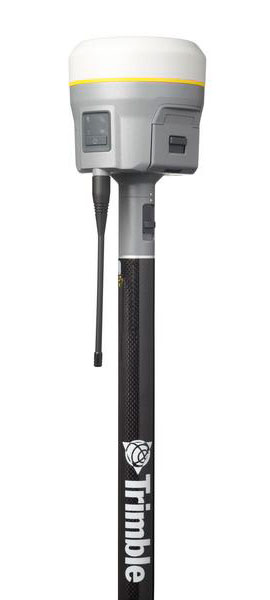
Trimble introduced today its next-generation GNSS surveying solution — the Trimble R10 — at the INTERGEO 2012 conference on geodesy, geoinformatics and land management.
As the smallest and lightest receiver in its class, the Trimble R10 combines powerful features and groundbreaking technologies including Trimble HD-GNSS, Trimble SurePoint, Trimble 360, and Trimble xFill to provide surveyors increased productivity, the company said. User-friendly features such as a quick-release adaptor and the ability to configure the receiver from a smartphone make it easy to deploy and use as a base station or rover, Trimble said.
Trimble also released new versions of its field and office software — Trimble Access 2012.20 and Trimble Business Center 2.80 — to extend Trimble’s Connected Site survey solution, which enables surveyors to collect and process reliable data more efficiently.
“Faster results, better reliability and improved overall performance are what our customers have come to expect,” said Anders Rhodin, general manager of Trimble’s Survey Division. “With the introduction of the Trimble R10, Trimble is delivering next-generation capabilities in a smaller, lighter and feature-packed system that is unmatched in the industry today.”
The Trimble HD-GNSS processing engine integrated in the Trimble R10 is a new generation of core positioning technology, Trimble said. Trimble HD-GNSS surpasses traditional fixed/float techniques to provide a more accurate assessment of error estimates than traditional GNSS processing engines. Measurements collected with Trimble HD-GNSS are precision-based so surveyors can confidently collect data in challenging environments where they may have been unable to collect data before. Reduced convergence times and instantaneous point measurements allow surveyors to start measuring sooner and up to 60 percent faster.
Supporting 440 channels with two built-in Trimble Maxwell 6 chips, the Trimble R10’s integrated Trimble 360 technology allows consistent and reliable tracking of available GNSS satellite signals for existing and currently planned GNSS constellations and augmentations.
Trimble has extended its Trimble SurePoint technology, a cornerstone of the S-Series total stations, to the new GNSS surveying system. The incorporation of this technology simplifies the survey data collection workflow by providing faster measurements, increased accuracy and greater quality control. The Trimble R10 includes an electronic bubble that appears on the controller display so that all measurement information is displayed in one place. Trimble SurePoint constantly monitors the pole tilt and protects surveyors from collecting erroneous data by only allowing data to be stored when the survey pole is plumb. Simultaneously, pole tilt angle values are stored for every point collected to ensure data traceability.
Powered by Trimble RTX technology, new Trimble xFill leverages a worldwide network of Trimble GNSS reference stations to deliver position information via geostationary satellites. xFill seamlessly “fills in” for RTK or VRS corrections in the event of a temporary connection outage such as a radio black spot so users experience less downtime in the field.
Designed for ease of use and durability, the Trimble R10 offers the ruggedness and reliability. Additional features include multiple connectivity capabilities such as Wi-Fi and 3G cellular connectivity, a lithium-ion battery, an integrated GNSS antenna, 4 GB internal memory, and an internal 2 Watt radio.
Trimble Access is a field solution that enables wireless connectivity between the project team members to expedite data collection, processing, analysis, and project information delivery through improved workflows, collaboration and control. The complete solution speeds both typical and specialized surveying tasks, and enables easy and fast two-way information sharing between the field survey crew and the office. Surveys can be completed faster with less time spent traveling back and forth to the office. Management and field crews can closely collaborate by viewing the same information in near real-time.
Trimble Access version 2012.20 offers new functionality compatible with the Trimble R10, including:
Tilt auto-measure: Topo point or Rapid point measurements can now be automatically started when the pole is plumbed to within a predefined tilt tolerance. Coupled with auto store, hundreds of points can be measured with only one tap on Measure.
Tilt warnings: Users are now notified if the pole moves outside a predefined tilt tolerance during point measurement.
Tilt distances: Measurements collected with the Trimble R10 can now have an associated tilt distance providing additional quality control information. Use the QC Graph for a quick visual check to see the range of tilt distance errors for any particular job.
eBubble display: An electronic bubble can be used instead of a traditional pole bubble. The eBubble enables a clearer, easier and more accessible display of the bubble providing the surveyor just one place to focus when leveling and measuring.
In the Office – Trimble Business Center 2.80
Trimble Business Center office software is a complete surveying office suite designed to manage, analyze and process all field survey data, including data from optical instruments (total stations and levels), GPS/GNSS and spatial stations (imaging and 3D scanning data).
Version 2.80 advances the capabilities of surveying offices with key new functionality, including:
Trimble R10 support: Users can import RTK and PPK tilt magnitude and quality data from a Trimble Access Job or JobXML file and also export this data using the Custom Exporter. The new version also has the capability to Import Trimble Access Job or Job XML files containing xFill observations.
Ribbon menu layout: A new ribbon menu layout and quick access toolbar help users quickly locate commands required to complete a task for an improved user experience.
Microsoft Windows 8 support: Version 2.80 is compatible with the Microsoft Windows 8 Operating System.
Station View field-of-vision indicator: Users can view which Station Views are open and in which direction they are facing. The indicators improve workflows for measuring points photogrammetrically with images from Trimble VISION instruments.
The Trimble R10 GNSS System can be ordered beginning mid October 2012. Shipping is expected to begin during the latter part of the fourth quarter in 2012. Trimble Access software version 2012.20 and Trimble Business Center Software version 2.80 are available now through Trimble’s Survey Distribution Channel.
Trimble’s Connected Site solutions for surveyors create seamless working relationships among Trimble products, technologies and services. Through the Connected Site, Trimble is focused on providing solutions that address the customers’ full work processes. By carefully combining technology innovation with a deep understanding of the users’ workflows, data integration and maintenance across the lifecycle of projects, Trimble helps surveyors reach new levels of productivity for their businesses.
The enormous importance of geoinformation for the energy revolution, cloud computing, open data and enterprise applications based on Microsoft Bing Maps — these are just some of the many fascinating issues that will take center stage at INTERGEO in Hanover, Germany, October 9-11. Host DVW e.V. — the German Society for Geodesy, Geoinformation and Land Management — is pooling issues relevant to its specialist areas at the trade fair and conference and is set to welcome some 16,000 visitors, including 1,200 conference delegates. The international meeting takes place in a different German city each year, with about 520 international companies, 40 percent of which are based outside Germany.
GPS World’s Editor-in-Chief Alan Cameron, International Account Executive Chris Litton, and Contributing Editor for Survey/GIS Eric Gakstatter are in attendance.
On the first day of the fair, Cornelia Rogall-Grothe, state secretary at the German Federal Ministry of the Interior, is launching the first national INSPIRE Conference with a speech on “INSPIRE: the driving force behind the national geodata infrastructure.”
This year, for the first time, INTERGEO will incorporate the conference of the Council of European Geodetic Surveyors (CLGE), which will take place Thursday. The third conference of its type brings together surveyors from 36 member countries in Hanover.
The Navigation Conference is also being held as part of INTERGEO for the second time. Once again, the event will seek to utilize synergies between navigation, IT and geoinformation.
The conference is focusing on the latest topics and many technical solutions for capturing up-to-date geoinformation. Cutting-edge sensor technology will be presented along with the latest systems solutions.
Rand McNally unveiled its HD 100 device — which provides electronic Hours of Service (HOS) recording, text- and dispatch-integrated messaging plus driver performance monitoring capabilities — at the American Trucking Association Management Conference and Exhibition.
The HD 100 will be commercially available in April 2013 for use with Android tablets and the Rand McNally IntelliRoute TND 720 truck GPS device. Later in the year, the HD 100 will integrate with other platforms including Android smart phones and iOS tablets and smart phones.
Designed to work seamlessly with a variety of mobile devices, the HD 100’s Hours of Service recorder qualifies as a compliant electronic driver log. The HD 100 plugs into a truck’s on-board diagnostics port and records the truck’s GPS position along with critical vehicle-specific information such as engine diagnostics and driving behavior. The device — 3 ½ inches by 5 inches — can be installed in less than 10 minutes.
Drivers interact with the HD 100’s HOS and messaging functions through an application that they download and run on their mobile device or Rand McNally’s IntelliRoute TND 720.
“With the HD 100, Rand McNally now provides a wide range of options for compliance, communication, and electronic Hours of Service. Our product line offers large fleets and smaller operators unparalleled flexibility with features and pricing options,” said Dave Muscatel, CEO of Rand McNally. “Our goal is to be hardware agnostic in order to provide a cost-effective EOBR (electronic on-board recording) solution for owner operators who already own a smart phone, tablet, or one of our GPS devices and the HD 100 accomplishes this objective. The HD 100 will help fleets and drivers alike with meeting the upcoming EOBR implementation mandated by MAP 21.”
Just as with the company’s premier enterprise solution, TPC 7600, and the robust cost-effective single-box device, the TND 760, the HD 100 allows data integration with more than 20 third-party dispatch and fuel tax applications via Rand McNally Connect software.
The Indian Space Research Organization has announced that the orbit-raising maneuvers of GSAT-10 satellite have been successfully completed from ISRO’s Master Control Facility, Hassan. GSAT-10 was launched September 30. The third and final orbit-raising maneuvers was performed October 3 to place the GSAT-10 in an orbit with 35,734 km apogee (farthest point to earth), 35,585 km perigee (nearest point to earth), and an inclination of 0.172 degree with respect to the equator. Currently, the orbital period of GSAT-10 is 23 hours 50 minutes.
According to the announcement from the Indian Space Research Organization, the two solar panels and the two dual gridded reflector antennas were also deployed later in the day. Currently, the satellite is in final orbital configuration at 70.18 degree East longitude. In the coming days, the satellite will be moved towards its designated location of 83 degree East and in-orbit testing of its communication and navigations payloads will be performed.
As is often the case, NORAD/JSpOC has temporarily “lost” the satellite following one of its orbital maneuvers. The last published two-line orbital element set for the satellite is dated September 30.