Blue Marble Geographics announced the release of Global Mapper version 13.2. This release features updated DigitalGlobe premium imagery with improved access to new DigitalGlobe servers.
SCALGO announced that at the recent Florida Floodplain Managers Association Annual Conference, the engineering and environmental sciences consulting firm Jones Edmunds & Associates presented an evaluation of the SCALGO Flash Flood Mapping product.
According to the announcement, using a detailed terrain model, SCALGO Flash Flood Mapping can be used to rapidly assess flood risk during extreme rain events on a local, regional or even national scale. Jones Edmunds compared SCALGO Flash Flood Mapping with the results of a recently completed Jones Edmunds flood study in Marion County, Florida, based on an advanced dynamic model (ICPR) used by the Florida authorities and listed by Federal Emergency Management Agency (FEMA) as a nationally accepted hydraulic model. They found that despite a cost of under 5% and a significantly reduced production time, the Flash Flood Mapping results were close to the results of the advanced modelling and the same time significantly more detailed. Another main conclusion was that SCALGO Flash Flood Mapping is a very cost efficient way of screening large areas for high flood-risk areas where very detailed dynamic modelling is justified.
SCALGO reports that its Flash Flood Mapping software can show how much rain has to fall during an extreme rain event before any given cell of a detailed (LiDAR based) raster terrain model is below water. Consequently, the mapping can be easily used to compute what part of each depression is below water after a given amount of rain, and thus effectively shows how water collects in depressions for all possible amounts of rain. The SCALGO Flash Flood Mapping product is being offered as a computation service. Based on the service and its national LIDAR-based terrain model, the major Danish engineering, environmental science and economics consulting company COWI has already successfully launched a new flash flood map product in Denmark, which is being used by several local governments as well as one of the five regional governments in Denmark (covering approximately 13.000 km²).
On the coattails of last week’s Geospatial Solutions newsletter outlining the United Nations’ five- to ten-year vision on geospatial information management, and my column on the mobile device operating system war, here are some more thoughts on those subjects.
As the cost of GIS data collection devices (handheld, tablet) has plummeted in the past two years and smartphones have proliferated, the quest for inexpensive GIS data-collection software has intensified. It makes sense. When people were used to paying thousands of dollars for a GIS data-collection device, another US$800-$1,000 for GIS data collection software seemed reasonable. It might have added 15-25% to the total price of the system. With today’s inexpensive devices, sometimes data collection software ends up costing more than the device itself, thus pushing the demand for cheaper software. On top of that, as I discussed a couple of weeks ago, we are in the middle of a mobile device operating system war. Whereas it used to be a no-brainer that Windows Mobile (or some derivative of it) was going to be the dominant operating system and supported by software developers, that’s not the case any longer. Windows Embedded is going to be around, but it’s clearly not the dominant mobile device operating system it once was.
Interestingly enough, GIS data collection software for iOS and Andoird have followed the iOS and Android price trends. The mobile devices running iOS and Android are inexpensive, sometimes free. You don’t see any iOS or Android GIS data collection software packages costing thousands of dollars. On the other hand, many Windows Mobile-based geospatial softwares cost upwards of US$2,000. Of course, you can make the argument that the Windows Mobile-based softwares are mature and feature rich. That’s true, as most of the iOS and Android-based softwares have a fraction of the capability, but I’d venture to say that most users don’t need many of the features they are paying for. I also agree with one of the trends outlined in the UN document in that I think open source might be where things are headed.
Ironically, open source GIS data collection software has been around for years. However, you probably don’t know about it because no organization is actively marketing it (if there’s no revenue, there’s no marketing budget). Software like gvSIG Mobile is a reasonably powerful GIS data collection product. A little quirky? Perhaps. But, if your budget is depleted and your requirements exceed the capabilities of the typical free or inexpensive software in the iTunes or Google Market, you might tolerate the quirkiness.

The UN also predicts that geospatial data will trend toward open source.
Trimble’s acquisition of Gatewing just last month supports this trend as well as the Obama administration’s accelerating the use of civilian UAVs back in February of this year via the National Defense Authorization Act of 2012.
Cost-effective mapping UAVs are starting to emerge. In just this past week, Event 38 announced a small mapping UAV for under US$1,000.

As does the UN vision, I think augmented reality has a bright future for both commercial users and consumers.
For professional geospatial users, the situational awareness possibilities are tremendous. Imagine the backhoe operator being able to “see” the underground infrastructure in order to avoid it. Imagine the park superintendent being able to “see” all of the underground irrigation and drainage lines by simply positioning a tablet computer towards the area of interest.
Thanks, and see you next week.
Follow me on Twitter at http://twitter.com/GPSGIS_Eric
Event 38 announced its first major product, model E382, a ready-to-fly mapping UAV. Based on the Ardupilot Mega 2.0 autopilot, the E382 is designed to take aerial photos quickly and easily.
According to the announcement, equipped with a small point and shoot camera, the E382 can make five centimeter resolution maps from individual pictures stitched together. Digital elevation models and georeferenced orthorectified maps can be made using online services like DroneMapper.com.
Event 38 reports that the E382 is capable of flying for just under an hour and can cover over 200 acres at a time on one charge. For larger areas, replacing the battery is quick and can be done in the field. Weighing in at under five pounds and made of soft, durable foam, the airframe is resistant to damage and can’t significantly damage anything on the ground. The 66″ wings come apart for easy transport to and from the job site.
The basic kit consists of a ready to fly airframe with autopilot, motor and servos installed. Options are available to add on for those without any R/C gear like a controller, batteries and a suitable point and shoot camera. If you’re starting without any gear, a full system costs about $1,050. Training and on-site setup are available as well.
This is an interesting look at the five and ten year vision of geospatial information management from the United Nations, a collection and summary of industry expert opinions. According to its website, “the UN initiative on Global Geospatial Information Management (GGIM) aims at playing a leading role in setting the agenda for the development of global geospatial information and to promote its use to address key global challenges. It provides a forum to liaise and coordinate among Member States, and between Member States and international organizations.”
Legal and policy developments
The role of the private sector and voluntary sector
Thanks, and see you next week.
CMT Release iCMTGIS II App for the Apple iPAD, one of a series of apps the company is presenting to the iPAD and iPhone users in 2012. iCMTGIS II provides a host of powerful and user-friendly functions to facilitate GPS/GIS data collection and mapping for a variety of applications, such as forestry, land management, utility pole data collection, wildlife management and archaeology.
OAG unveiled its new aviation analysis mapping tool, OAG Mapper. This latest innovation, from the global leader in aviation intelligence, combines a powerful global flight schedule query with advanced mapping software technology to quickly plot route network maps, based on data drawn from OAG’s market leading schedules database of 1,000 airlines and over 3,500 airports. It is ideal for those in commercial, marketing and strategic planning roles across the airlines, airports, tourism, consulting and route network related industry sectors.
According to the announcement, a web-based tool that eliminates the need to hand-draw network routes onto maps, OAG Mapper allows users to either import IATA Airport codes, or to enter a carrier, airport, equipment type or a combination of these and generate custom network maps in seconds. The user can then highlight key routes by changing the thickness and colour of the lines and label them for easy reference, save the map to their profile and export to jpeg for use in network planning, forecasting, strategy and executive presentations.
“Aviation professionals who plan, forecast and analyse airline networks have never before had a single system that allows them to bring their network plans and presentations to life in an online format,” said Rob Shaw, OAG Product Director. “The OAG Mapper tool provides users with the ability to easily build an online library of custom-generated aviation route maps. It is a great example of how using OAG data intelligently can lead to the development of new solutions that help streamline our customers’ processes, increasing productivity and saving valuable time.”
HydroSpatial announced it has released the first in a new series of marine mapping layers to sit within the new HydroSpatial 2 Product Family. Benefits include an enhanced data model, allowing for intuitive feature filtering; geo-processing and spatial analysis to create customised data outputs and map views using both real world and abstract feature types. Mapping is delivered in themed tiers with improved symbology, and licensed as a complete package, delivering an exceptional user experience in both desktop, and web GIS.
According to the announcement, SeaZone HydroSpatial Base provides users with a definitive worldwide marine reference map incorporating large-scale, authoritatively sourced, marine geographic datasets. The content is processed to form a continuous vector layer dataset, with a well structured and defined feature and attribute model, providing the best possible marine mapping experience. SeaZone HydroSpatial Base is ideal for use as a marine spatial planning aid and as a primary decision support tool. It has a global reach and is available for regions where content is captured to scales greater than or equal to 1:1,500,000. The feature attribution for SeaZone HydroSpatial Base is comprehensive and serves a wide range use scenarios. For the high end technical user, HydroSpatial Base performs well when interrogated by vigorous and complex geo-processing or spatial analysis in GIS. For less demanding requirements, HydroSpatial Base represents an excellent high-resolution selectable back-drop with flexible filtering and styling.
SeaZone reports that the HydroSpatial Base provides decision makers with accurate information to make effective decisions in the marine environment. SeaZone HydroSpatial Base was delivered as a result of an extensive consultation with our HydroSpatial customers about how they would like the product to evolve, the improvement content they needed and the prices they would like to pay. SeaZone acknowledges the support of EU Interreg IVB Bringing Land and Sea Together (BLAST) Project in developing and testing the HydroSpatial Base concept.
Geosoft announced the availability of its 2012 Software Release, including updates to Oasis montaj, Target, Target for ArcGIS and GM-SYS Modelling software, and the new release of Geosoft VOXI Earth Modelling, a geophysical inversion software service that generates 3D voxel models from airborne or ground gravity and magnetic data. The 2012 release includes major 2D and 3D workflow enhancements and new capabilities that deliver greater efficiency and flexibility for resource explorers and earth scientists exploring the earth’s subsurface.
“Each year Geosoft has continued to make improvements in developing our software technology to support explorers challenged to visualize and analyze more complex structures, deeper under cover, within integrated interpretations,” says Louis Racic, Geosoft Product Director. “The 2D to 3D workflow is an important one to get right, and a particular challenge for geoscientists working across GIS and exploration software platforms. Bridging the gap between 2D and 3D is a key improvement area within our 2012 Software Release.”
Release highlights
According to the announcement, new capabilities and workflow improvements in the Geosoft 2012 Software Release help save time and provide greater flexibility when visualizing multidisciplinary geoscience data in 2D and 3D.
Improved 2D to 3D workflows in Target for ArcGIS: The 2D to 3D workflow enhancements, include new display capabilities, and new section import and export options. Layers, such as interpretation layers from sections or plans can now be easily displayed in their correct geospatial orientation within your 3D view. 2D section interpretations can be exported to a 3D georeferenced file, such as shapefiles or DXF files, to be shared with other 3D applications. 3D vector files, such as open pit outlines, and wire frames can now be easily imported to multiple section and plan maps.
3D Viewer improvements: Geosoft 3D gridding methods have been expanded to include IDW and direct gridding; these new methods better support the 3D gridding of a broad range of data types. Angled clipping of objects in 3D views provides the ability to clip parallel or perpendicular to dataset orientation or geological strike. Geoscientists can set a clipping plane that aligns with any direction chosen.
Expanded GM-SYS 3D density model support: Voxels can be used to define the 3D density variation within GM-SYS 3D model layers. This provides more direct integration with 3D seismic data as the generated density cubes may be used directly in the GM-SYS model.
BING Maps imagery: Geoscientists can now add satellite imagery to their basemaps by connecting to the Bing Maps online data source. This is a useful, additional data layer which provides geographic context to maps.
VOXI Earth Modelling
Geosoft VOXI Earth Modelling is a new geophysical inversion software service that generates 3D voxel models from airborne, ground gravity and magnetic data. VOXI Earth Modelling is accessiblewithin Geosoft Oasis montaj and uses the power of cloud computing to rapidly invert large exploration datasets. More information on VOXI Earth Modelling is available at www.geosoft.com/voxi.
Release availability
Online installation of the Geosoft 2012 Software Releaseis available within Geosoft software and from the Downloads page within the Geosoft online support centre. Information on how to request an update DVD is available in the Geosoft Support Knowledge Base.
After a long investigation, the FCC hit Google with a resoundingly soft penalty for stonewalling the FCC inquiry into its controversial street-mapping program. Google was picking up a payload of sensitive information from home wireless networks from 2007 through 2010. This included emails, passwords, and Internet usage history. The FCC declared that the data collection was technically legal because the information gathered was unencrypted. However, the FCC stated that, “for many months Google deliberately impeded and delayed the bureau’s investigation” and fined Google a paltry $25,000 for their behavior. After initially denying any wrongdoing, Google admitted in a blog entry in 2010 that it had made a mistake by collecting the data.
Google and foursquare shared a panel at the GPS-Wireless conference, an interesting pairing given foursquare’s recent announcement that it is betting on the future of open source map data. New API pricing of Google Maps has a number of solution providers shopping for mapping alternatives. Google says that only the top .35 percent of Google map users is affected by the pricing (under 25,000 map views a day are still free). foursquare was among them, and re-launched its web maps using MapBox based on OpenStreetMap data. “These maps are adequate,” said Holger Luedorf of foursquare. “This helps the open street community and it felt like it was right thing to do. Google is very good and we will continue to use their products elsewhere.”
Interesting tidbits. Heard at the “O’Reilly Where” and “GPS-Wireless” conferences this month:
“People will pay for apps for family and safety. There is real monetization in this realm. When was the last time that people put an alarm on their house and paid for it with ads?”
“I see nothing to augmented reality. I don’t think it will go anywhere. It feels like I’m looking through a toy camera viewer.”
“Any location technology that has tried to compete against GPS has failed. They are useful but can’t compete head on against GPS. They now have a second life as a technology that supplements core location, which is GPS.”
“Consumers are willing to share location if you can give them something in exchange of value. Not every company does that.”
What’s happening to the vehicle aftermarket? It used to be that the vehicle aftermarket would lead innovation and benefited from a significant time-to-market advantage. The traditional aftermarket is currently struggling to find its special niche. The world has changed and the aftermarket is having a tough time rivaling connected vehicles. In the past, the aftermarket also offered consumers more value, but OEMS have gotten lighter on their feet. The aftermarket is now the consumer market, such as smartphones.
Who will capture the indoor location frontier? Companies are lining up to get a shot at the indoor location market. Companies like Meridian, Google, aisle411, Point Inside, and Micello, and many others, have found their own niches. Meridian has staked out a niche for indoor navigation and mapping that is managed by the customer. “We aim to be the WordPress of indoor location,” says Jeff Hardison of Meridian. Meridian uses Wi-Fi when available and provides interactive mapping and navigation for various types of indoor venues including the American Museum of Natural History. For retail, the system can be tied into inventory systems to pinpoint items on shelves. One store has added advertisements for books on the indoor navigation system and reports 33 percent of users are clicking on the ads.
Search rules location-based mobile ads. Locally targeted ads that accompany mobile search results are much more potent than locally targeted display ads. xAd, a mobile local ad network, reports significantly greater click-through rates for targeted local search (7 percent) compared to targeted local display ads ( 0.6 percent). Clicks alone don’t fully satisfy advertisers who want to see measured outcome. xAd self-reports secondary action rates of targeted local search ads of 37 percent and targeted local display ads of only five percent. Secondary actions include calls and requests for driving directions.
It’s a race. Local and nationally targeted mobile advertising is currently neck and neck. This year, mobile local ad revenues have caught up with nationally targeted mobile ads, for a combined $2.7 billion in revenue, says BIA/Kelsey Group. This is an increase from last year, in which local ads were estimated to be 45 percent of total mobile ad revenues. According to projections by BIA/Kelsey Group, local mobile ads will exceed national ads in 2016 and total $5 billion of the estimated $7.7 billion in mobile ad revenues.
Not everyone is convinced. “The financials for mobile advertising aren’t there for us. We won’t do it until our customers are asking for it,” says Bryan Trussel of Glympse at the GPS-Wireless show. “We tried it and got advertisements for toe fungus and Playtex on our screen. It wasn’t worth it. We don’t want generic banner ads. We’ll wait.”

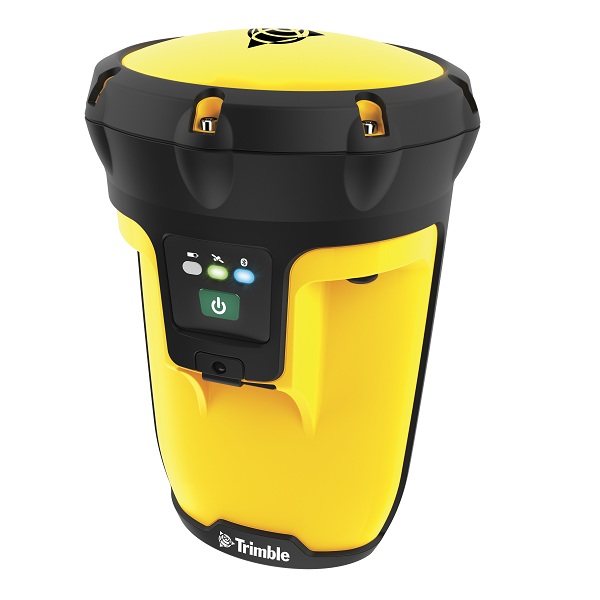
Trimble introduced today the next-generation of its Trimble GPS Pathfinder family — the Trimble Pro 6H and Pro 6T receivers for GIS and mobile mapping. The Trimble Pro series with advanced features allows mobile workers to configure a solution for a wide range of applications, delivering flexibility in professional GIS data collection, Trimble said. The series offers a new streamlined form-factor and dramatic productivity improvements in difficult GNSS environments with Trimble Floodlight technology.
The modular Trimble Pro series receiver gives users the flexibility to choose their setup configurations:
With the availability of the new Pro series receivers, data collection professionals now have access to the productivity-enhancements of Floodlight technology in both integrated and modular configurations,” said Daniel Wallace, general manager of Trimble’s GIS Data Collection Division. “While some prefer the convenience of an integrated, all-in-one handheld, others will appreciate the Pro series’ flexibility to choose from a range of data collection devices such as a high-resolution tablet or lightweight Trimble Juno.”
Trimble Floodlight technology allows users to collect decimeter accuracy data in tough GNSS environments, Trimble said. Buildings and trees can cause satellite shadow and limit the environments where high-accuracy GNSS data collection can be performed. Trimble Floodlight technology combines a range of techniques to increase the availability of positions and boost accuracy in areas affected by satellite shadow. Using Floodlight technology, the Pro series can keep teams productive without compromising on accuracy. Users can work with fewer disruptions and ensure better data, faster data collection and higher field efficiency.
Trimble Pro series receivers are rugged and built to withstand the rigors of long hours in tough outdoor conditions, yet optimized for high-accuracy GIS data collection workflows, Trimble said. For applications such as utilities inspections and timber stand valuations, Trimble Pro receivers provide long battery life and tough construction for dependable service over the course of rigorous data-collection projects.
With its IP65 rating, the receivers offer reliable operation, even after prolonged exposure to water and dust, Trimble said. An integrated antenna reduces the complexity of the system for fast setup and swift data collection campaigns. Field workers can be up and running with minimal training, saving time and money. Combined with a Trimble handheld solution and Trimble TerraSync software, the complete system provides dedicated field workflows to simplify data collection and improve integration with the GIS for total workflow improvements.
The new Trimble Pro 6H and 6T receivers are available from Trimble’s worldwide Mapping & GIS authorized distribution channel.