Category: Mapping

  • Topcon and Agisoft sign partnership agreement for UAS photogrammetric software

    Topcon Positioning Group announces a new partnership with digital photogrammetric solution provider Agisoft LLC. The agreement is designed to further expand the Topcon solutions portfolio for mass data collection (MDC).

    Topcon_Agisoft-WAgisoft is a world leader in the processing of digital imagery in order to generate high-accuracy 3D spatial data using photogrammetric and computer vision techniques, and has been developing imaging solutions for nearly 10 years. Topcon will provide the Agisoft Photogrammetric Kit for Topcon — Professional Edition software for post-processing of data collected using the Falcon 8 and Sirius Pro unmanned aerial systems (UAS).

    Features include photogrammetric triangulation, dense point-cloud editing and classification, digital terrain or surface model export to a variety of formats including georeferenced orthomosiac production (including GeoTIFF and KML export), multi-spectral imagery processing, 3D model generation and texturing, as well as full measurement analysis tools.

    “We are very excited to be able to offer the combination of our Sirius Pro and Falcon 8 UAS devices and Agisoft Photogrammetric Kit Professional software. The solution provides an integrated workflow for reaching high-accuracy survey results using unmanned aerial systems with minimal field work,” said Eduardo Falcon, executive vice president and general manager for the Topcon GeoPositioning Solutions Group. “For example, when using the Sirius Pro, absolute accuracies down to 1.6 cm (0.6 in.) in plan and 2.7 cm (1 in.) in height are possible without the need for any ground control.”

    The photogrammetric kit solution is now available.

  • Jane Goodall launches Tapestry of Hope interactive map

    TapestryofHope-Goodall

    Jane Goodall and the Jane Goodall Institute have launched the Tapestry of Hope, an interactive online tool to visualize the thousands of projects led by young people around the globe who are protecting the environment.

    As world leaders struggle to make progress in Paris for the 21st Conference of the Parties to the United Nations Framework Convention on Climate Change, Goodall, spreading her message of hope for our world, is calling on each of us to take action ourselves to protect our natural world.

    Founder of the Jane Goodall Institute and UN Messenger of Peace, Goodall, through her Roots & Shoots program, has inspired hundreds of thousands of people around the globe to take action to make the world a better place for people, animals and the environment. Together, these individual actions weave together a story of impact — a narrative of change for what Goodall has come to call the Tapestry of Hope.

    The launch of Tapestry of Hope reflects a snapshot of the projects young leaders have led in the past several years through Roots & Shoots,” said Erin Viera, associate vice­ president of Roots & Shoots. “Moving forward, the map will be a critical tool to document, manage, visualize and share the actions and impacts of Roots & Shoots projects that are making a positive difference for the environment, animals and people. The map will continue to grow and populate with the launch of each new Roots & Shoots community project that young people continue to pioneer around the world.”

    “Esri and the Jane Goodall Institute have collaborated on conservation programs across Africa for more than 10 years now. These projects have included applications ranging from using geospatial technologies for chimpanzee behavior research in Gombe to supporting the development and implementation of conservation action plans and improving village land use using geodesign and community mapping across East Africa and Congo basin,” said Lilian Pintea, the Jane Goodall Institute’s vice­president of conservation science.

    Esri technology that powers the mapping behind JGI’s conservation work forms the basis of the Tapestry of Hope. The map connects the work of young people around the world with other young people who are passionately making the world we all share a better place through local projects.

    In addition to documenting and visualizing the work of young people around the world, the Tapestry of Hope map serves to further Goodall’s message of hope. It brings together the critical observations, creative ideas and clever solutions of thousands of passionate young minds all working to make a difference in the world. It is designed to represent and inspire a global movement of change showing that young people care about the future of the world they are inheriting, and are taking action.

  • Sanborn Maps Glacier and Yellowstone Parks for Road Repair

    Sanborn collected this high-resolution mobile lidar image of a corridor in Glacier National Park. (PRNewsFoto/The Sanborn Map Company, Inc.)
    Sanborn collected this high-resolution mobile lidar image of a corridor in Glacier National Park. (PRNewsFoto/The Sanborn Map Company, Inc.)

    The Sanborn Map Company Inc. has completed mobile lidar data collection for two corridors in Glacier National Park and one corridor in Yellowstone National Park totaling 40 linear miles.

    Sanborn was selected for the project to provide data that could be used to determine the level of effort and cost to resurface the roads, which are in dire need of repair. In Yellowstone alone, about 185 miles of main roads are in a structurally deficient state, with poor quality road bases failing under the weight, speed and volume of modern traffic, for which they were not designed. Harsh winter weather and short construction seasons in both parks provide additional challenges.

    During the 2015 fall season, Sanborn acquired the lidar point clouds, which were particularly dense with 300-500 points per square meter, along with accompanying georeferenced imagery. The firm’s post-acquisition approach involved auto-filtering the point clouds in the ground and non-ground classes. The points in the ground class were used to derive road centerlines and edges of pavement, and the non-ground points were used to derive guardrails in vector format.

    “This project was particularly rewarding because both of these parks truly are national treasures,” notes Arjan Mooij, Sanborn program manager. “There’s no doubt that the quality data we provided will help streamline the process for their much-needed road repairs.”

    Sanborn’s mobile mapping system combines lidar with high-resolution video, delivering better than 5-centimeter accuracy and image resolution as fine as 1 centimeter with efficient data capture at vehicle speeds of up to 60 mph.

  • Story map navigates cause and effects of climate change

    Climate-Change-O

    Esri has released an interactive map illustrating the earth’s natural and human systems and how they have changed — and will change — over time. With the Atlas for a Changing Planet story map, scientists, policy makers, planners and activists can examine detailed spatial information that is critical for adapting to a warmer future.

    “Mitigating the effects of climate change is a global, geographic challenge,” said Jack Dangermond, president of Esri. “Understanding how the earth’s systems interact and transform is an essential first step in measuring the threat of climate change and making informed decisions to reduce it.”

    Atlas for a Changing Planet explores a sample of maps, imagery and data from Esri ArcGIS Online. The story map covers five themes: understanding natural systems, mapping human systems, mapping ocean impacts, predicting the future, and international cooperation.

    Complex issues, processes, and concepts — such as biomass and ocean acidification — are clearly and succinctly explained with maps and multimedia, Esri said. For example, users visualize the density of carbon stored in living plants (biomass) with an explanation of how this information is key to estimating how land-use change affects the climate. Interactive maps illustrate which areas will be severely affected by rising sea levels, the changes in sea ice extents in the Arctic Ocean, and population growth in urban cities around the world.

    The story map also models data from the National Center for Atmospheric Research (NCAR) in three scenarios. With this data, users navigate the story map to see projected changes in temperature and precipitation based on the level at which greenhouse gas emissions increase or decrease over time.

    Esri created the story map in time for the Nov. 30 start of the United Nations 21st Conference of the Parties (COP21). World leaders are gathering at the annual meeting to negotiate an international agreement with the goal of keeping global warming’s increase below 2 degrees Celsius.

  • Field Technology Conference: The forest and the fish

    PORTLAND, Ore. — Two weeks ago, I attended (and hosted) the Field Technology Conference here in Portland, Oregon. This is the fifth year of the conference. In years past, it’s had a forestry emphasis primary because the Western Forestry and Conservation Association has been a major partner in organizing it.

    This year, the Pacific States Marine Fisheries Commission and Pacific Northwest Aquatic Monitoring Partnership joined the organizing committee. The result was a 50-percent increase in attendance and a more diverse audience.

    Another newcomer to the conference was a Civil GPS Service Interface Committee (CGSIC) U.S. State and Local Government Subcommittee meeting, which was co-located with the Field Technology Conference, offering a direct connection between civil GPS users and U.S. government representatives who are involved in GPS.

    The conference was a two-day event comprised of three technology tracks: a track for general field technology and two tracks for industry-specific (forestry and fisheries) subjects, hands-on technology demonstrations and a field trip. Although forestry and fisheries professionals were the featured user groups, nearly all of the subject matters — GPS, UAVs, smartphones, tablets, laser rangefinders, lidar, photogrammetry, and field data-collection software — is applicable for a wide range of natural resource users involved with GIS (geographic information systems) technology.

    As one of the hosts of the conference, I started out moderating the general session with all of the attendees in one room. This year, my general session topics include geospatial awareness and growth, GPS/GNSS technology, mobile devices (smartphones and tablets) and UAVs.

    Something new I tried this year, which worked out really well, was using audience response “clickers.” These small handheld devices were given to each audience member and allowed them to answer multiple choice questions that I posed in my Powerpoint presentation. I’ve always been a fan of audience input, and started polling the audience during webinars I conducted many years ago. For this conference, I used an audience polling system from Turning Technologies. I’d like to share with you the questions I asked the audience and the responses that I received.

    Question #1: Are you here?


    Comment: This was a test question to see if the audience response system was working properly. I’m still not sure if the audience just had a great sense of humor or a technical problem. I think the former was true. ☺

    Question #2: Have you attended this conference before?


    Comment: This was great news that the conference is attracting new attendees. It’s an annual event held in November, so keep your eyes on it for next year!

    Question #3: After a brief discussion about the availability of higher accuracy geospatial data (eg. GNSS, UAVs, etc.), I was curious about the level of accuracy the audience required in their typical tasks.

    What geospatial data accuracy do your typical tasks require?

    Microsoft PowerPoint - FTCGeneralPlenary2015 [Compatibility Mode

    Comment: I wasn’t sure what to expect with this question, but since I’ve polled a fisheries audience before, I had a feeling accuracy requirements would vary, and they did. Previously, a fisheries audience had told me that they were satisfied with 5-meter accuracy.

    Question #4: The last question leads to this one. I wondered if the audience accuracy requirement was driven by requirement or by availability.

    Are you satisfied with the accuracy of the geospatial data you use?

    Microsoft PowerPoint - FTCGeneralPlenary2015 [Compatibility Mode


    Comment: The answer is clear that, generally speaking, the audience would use higher accuracy geospatial data if it was available.

    Question #5: The next question was a pure technology one. In the day of BYOD (Bring Your Own Device), I’ve been very interested in monitoring the trends in mobile devices. The question about operating systems is relevant because it determines which data collection software you can use. For example, if a specific data-collection software is written only for Windows, it will not run on an Android or Apple (iOS) device.

    Which operating system do you use on your mobile device(s)?

    Microsoft PowerPoint - FTCGeneralPlenary2015 [Compatibility Mode

    Comment: These responses surprised me a bit. They certainly don’t match the global market share figures that I’ve read. Following are the latest mobile device operating system market share numbers reported by IDC and Statista.

    Microsoft PowerPoint - FTCGeneralPlenary2015 [Compatibility Mode


    Microsoft PowerPoint - FTCGeneralPlenary2015 [Compatibility Mode

    Question #6: The next part of my presentation discussed unmanned aerial vehicle (UAV, also known as UAS or drone) technology. UAVs were a significant part of the conference this year. We had many presentations and some static demonstrations on UAV technology. On this subject, I had several questions for the audience.

    Do you currently use a UAS?

    Microsoft PowerPoint - FTCGeneralPlenary2015 [Compatibility Mode

    Comment: These answers were not surprising. Flying UAVs commercially in the U.S. requires a special permission from the Federal Aviation Administration (FAA). To date, the FAA has only issued about 2,000 such exemptions.

    Question #7: Do you anticipate using a UAS?

    Microsoft PowerPoint - FTCGeneralPlenary2015 [Compatibility Mode

    Comment: These answers surprised me a bit. I had no idea the audience would be so interested in personally flying a UAV. This has me thinking about this the same way I think about GPS receivers — just another tool in the toolbox.

    Question #8: How much are you willing to spend on a UAS?

    Microsoft PowerPoint - FTCGeneralPlenary2015 [Compatibility Mode

    Comment: These responses don’t surprise me, although I polled another audience at a different venue that was more engineering-oriented, and the answers were a bit different. The engineering-oriented audience was willing to spend more for a UAV.

    Furthermore, in speaking with various attendees during the conference, there was quite a bit of interest in attaching different sensors to UAVs for various requirements. For example, lidar, multi-spectral and thermal (temperature) sensors were commonly mentioned as payloads they would like to see. The challenge is that the cost of a UAV rises sharply when these types of payloads are accommodated, and conflicts with the audience’s response about how much they are willing to pay for a UAV.

    UAV-tablet-W

    In next month’s column, I’ll post links to the papers presented at the Field Technology Conference as well as videos of papers presented by the CGSIC folks.

    See you next month.

    Follow me on Twitter at https://twitter.com/GPSGIS_Eric

    Source: FTC

  • Proteus Strengthens Satellite Imagery Procurement Service

    Proteus, a provider of satellite derived mapping, bathymetry and geospatial products, said it has strengthened its Professional Satellite Imagery Procurement Service by signing up as a reseller with international satellite imagery provider Airbus Defence and Space. Proteus is now an official reseller of Airbus’s satellite imagery data and value-added products.

    “We are very excited to formalise our relationship with Airbus Defence and Space,” said Proteus CEO David Critchley. “We are currently providing our clients with a successful Satellite Imagery Procurement Service, adding the large product portfolio of Airbus Defence and Space to our current catalogue of data provides our customers with even more choice of high quality product and satellite tasking services.”

    Proteus has been delivering geospatial solutions for mapping and classification projects using multispectral satellite imagery since 2011 and their experienced staff have all been working in the geospatial industry for over 15 years. Proteus’s satellite imagery projects have been delivered for environmental consultancies, oil and gas, engineering and other coastal zone applications in Europe, USA, the Middle East and Caribbean.

  • USGS completes triennial update to US Topo maps

    This graphic represents the planned US Topo map production schedule for the next three- year revision cycle. The US Topo project repackages data from national GIS (geographic Information system) databases as traditional maps, primarily for the benefit of non-GIS users. Unlike traditional topographic maps, US Topo maps are mass-produced from secondary sources, on a programmed refresh cycle, using the best available data at the time of production.
    This graphic represents the planned US Topo map production schedule for the next three- year revision cycle. The US Topo project repackages data from national GIS (geographic Information system) databases as traditional maps, primarily for the benefit of non-GIS users. Unlike traditional topographic maps, US Topo maps are mass-produced from secondary sources, on a programmed refresh cycle, using the best available data at the time of production.

    With the release of new US Topo maps for Illinois and South Dakota, the USGS has completed the second, three-year cycle of revising and updating electronic US Topo quadrangles. Since the project’s inception in late 2009, the USGS has updated nearly every map in the conterminous U.S. twice.

    “The USGS and NGP are proud of our history and legacy of topographic mapping in the U.S.,” said Mike Tischler, director of the USGS National Geospatial Program. “This latest cycle of US Topo production is a testament to the professionalism and capability of our staff and keeps that legacy alive. We’ve revised more than 110,000 maps in the last six years to include higher quality data across the country, and have been able to deliver those maps in an easy to use format to suit the diverse needs of our users. While reaching the end of the second cycle is an important achievement, we look forward to the next cycle of US Topo production, and investigating emerging technologies to better serve the needs of the country.”

    In the past year the production staff of the NGP has updated, revised and uploaded 18,767 US Topo quads covering 18 states, most recently for Illinois and South Dakota. Its staff created more than 635 new 1:24,000-scale maps for Alaska as part of the Alaska Mapping Initiative. All of the new US Topo maps are digital and offered for free download, as the USGS no longer prints topographic maps using traditional printing technologies.

    Other improvements to the state maps in the second cycle include the inclusion of National Scenic Trails, “crowdsourced” trail data from the International Mountain Bike Association, increased parcel land data (PLSS) and trail data from the U.S. Forest Service.

    The complete new map sets for Illinois and South Dakota join Maine, Alabama, Arizona, Nebraska, Nevada, Missouri, California, Louisiana, Mississippi, New Hampshire, Vermont, Connecticut, Massachusetts, Rhode Island, Wyoming and Florida as revised states for fiscal year 2015.

    All of these new US Topo maps replace the first edition US Topo maps and are available for download from The National Map, the USGS Map Locator & Downloader website and several other USGS applications.

    The first three-year production cycle ended in September 2012, and the second cycle ended in September 2015.

    To compare change over time scans of legacy USGS topo maps, some dating back to the late 1800s, can be downloaded from the USGS Historical Topographic Map Collection.

  • CyberCity 3D interactive maps help cities visualize the future

    A 3D rendering of London. (Image: CyberCity 3D)_
    A 3D rendering of London. (Image: CyberCity 3D)_

    CyberCity 3D has developed a 3D Smart Cities mapping platform to help municipal authorities and planners visualize their towns and cities in 3D. Existing and future city plans, proposed developments and schemes, can all be visualized together with relevant data using a simple, out-of-the-box solution, with streaming to any web connected device.

    The CyberCity 3D Smart City maps can be used for a host of applications including planning, transport, environment and tourism. The models are fully interoperable and will perform on most proprietary software applications such as GIS and 3D design packages and can be streamed via the web. The live streaming uses Cesium open architecture, a cross-platform virtual globe designed for dynamic-data visualization, allowing the 3D models to be viewed on tablets, phones, desktops and laptops.

    CyberCity 3D employs patented 3D modeling process to generate high resolution building models from stereo imagery. The smart buildings automatically contain valuable measurement data, such as height and roof slope, with up to 12.5 cm accuracy. Cities across the world have employed CyberCity 3D technology to support work such as urban planning, economic development, flood risk assessment, transportation planning and line-of-sight studies.

    In the UK, CyberCity 3D has teamed up with aerial mapping company Bluesky, which provides a huge data library covering 150,000 sq km of digital aerial photography, allowing CyberCity 3D to gain access to urban centers across the UK for 3D modeling. CyberCity 3D also has access to Bluesky’s National Tree Map, a digital map detailing more than 300 million trees across the UK, which adds a useful dimension to the 3D Smart City projects, the company said.

    CyberCity 3D has a large smart 3D GIS building library, covering more than 80 cities around the world. Applications include master planning and proposed construction maps, stakeholder, management, engagement and communication, flood analysis visualization, leisure and tourism. CyberCity 3D data is also used in applications such as 3D gaming and augmented reality.

  • Mapping with Bluetooth

    Mapping with Bluetooth

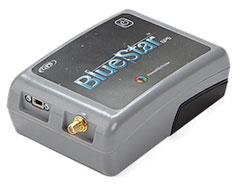
    BlueStarGPS BlueStarGPS offers both GPS and GNSS options in a rugged, lightweight package. The BlueStarGPS device was designed to meet sub-meter mapping and data collection needs in the pipeline and utility industries. It provides sub-meter precision without post-processing, and maintains accurate positioning when the SBAS signal is obstructed. This means it can function under trees, around buildings and in rugged terrain where other receivers can fail.

    The BlueStarGPS is designed specifically for use with Android mobile devices, such as smartphones, tablets or notebook computers, as well as cable and pipe “locating” tools with a connectivity range of up to 1 kilometer.

  • FAA grants Sentera exemption for commercial UAV use

    Sentera LLC, a designer of sensors, software, and unmanned aerial vehicles (UAVs), has been granted a Section 333 exemption from the Federal Aviation Administration (FAA) to operate multiple types of commercially available UAVs. Applications for these systems include crop survey, infrastructure inspection, geospatial mapping and other aerial imaging missions.

    “We are excited to receive the exemption,” said Sentera CEO, Eric Taipale. “While most exemption holders focus on providing revenue-generating flight services, Sentera flies primarily to demonstrate our products to customers and to gather and analyze aerial data which helps us enhance our OnTop Platform, a data management system designed specifically to support the thousands of images collected during a typical UAV flight.”

    Sentera’s exemption for both fixed-wing and quadcopter UAVs ensures the company can capture a wide range of data types that are relevant to customer applications, including very high-resolution visual, multispectral, and thermal imagery, as well as specialized non-image information. Customers use Sentera input data to perform many tasks, such as developing planting and crop management advice for growers, building 3D models of buildings, structures, and terrain for asset owners, and monitoring environmental regulatory compliance for public agencies.

    Comprehensive data management solutions are crucial to successful UAV inspections, asset audits, safety inspections, agriculture data collections, and point-cloud collection activities.

    “Clients use a myriad of UAV-captured data types to increase safety, assess crop health, and boost ROI (return on investment),” explained Taipale. “Sentera already provides some of the most precise sensors and leading UAV solutions in the industry. Our Section 333 exemption allows us advance our OnTop Platform more rapidly, which ultimately helps our customers manage all of this data most efficiently.”

    The FAA authorization allows Sentera to fly UAV platforms built by Lockheed Martin, DJI and Sentera.

  • USGS releases geo-referenced field photos to public

    landcover_USGS_screenshot

    The U.S. Geological Survey has made part of a huge national repository of geographically referenced USGS field photographs publicly available. USGS geographers developed a mapping portal called the Land Cover Trends Field Photo Map.

    The entire collection contains more than 33,000 geo-referenced field photos with associated keywords describing the land-use and land-cover change processes taking place. Initially, nearly 13,000 photos from across the continental U.S. will be available to the public, yet the online collection will grow as more processed photos become available.

    “This is a treasure trove of royalty and copyright-free photography collected using consistent procedures,” said Chris Soulard, project leader and USGS research geographer. “We envision that these photos will captivate general audiences and fulfill a myriad of scientific needs.”

    Sharing these field photos provides a resource for the scientific community with potential to develop future research, such as future repeat photography projects or applications where photos may validate remote sensing classifications.

    “The benefit of these photos being hosted by the USGS is equal access to all without copyright concerns and quality control,” said Jason Sherba, USGS geographer and project web developer.

    The photography was collected as part the USGS National Land Cover Trends Project, a research effort that spanned over ten years and represented one of USGS’ largest cross-center research efforts. The project employed Landsat imagery between 1973-2000 to derive rates, causes and consequences of contemporary land-use and land-cover change. Photos were collected between 1999 and 2007.

    The map viewer was developed to present photographs within a land use/land cover change mapping context, yet photos may also be found on the USGS Earth Explorer website.

  • USGS releases geo-referenced field photos to public

    landcover_USGS_screenshot

    The U.S. Geological Survey has made part of a huge national repository of geographically referenced USGS field photographs publicly available. USGS geographers developed a mapping portal called the Land Cover Trends Field Photo Map.

    The entire collection contains more than 33,000 geo-referenced field photos with associated keywords describing the land-use and land-cover change processes taking place. Initially, nearly 13,000 photos from across the continental U.S. will be available to the public, yet the online collection will grow as more processed photos become available.

    “This is a treasure trove of royalty and copyright-free photography collected using consistent procedures,” said Chris Soulard, project leader and USGS research geographer. “We envision that these photos will captivate general audiences and fulfill a myriad of scientific needs.”

    Sharing these field photos provides a resource for the scientific community with potential to develop future research, such as future repeat photography projects or applications where photos may validate remote sensing classifications.

    “The benefit of these photos being hosted by the USGS is equal access to all without copyright concerns and quality control,” said Jason Sherba, USGS geographer and project web developer.

    The photography was collected as part the USGS National Land Cover Trends Project, a research effort that spanned over ten years and represented one of USGS’ largest cross-center research efforts. The project employed Landsat imagery between 1973-2000 to derive rates, causes and consequences of contemporary land-use and land-cover change. Photos were collected between 1999 and 2007.

    The map viewer was developed to present photographs within a land use/land cover change mapping context, yet photos may also be found on the USGS Earth Explorer website.