Category: Receivers

  • Iridium hybrid IoT module now commercially available

    Iridium hybrid IoT module now commercially available

    The Iridium 9604 module and development kit streamline global IoT development with integrated satellite, cellular and GNSS connectivity

    Iridium Communications has announced commercial availability of the Iridium 9604 module and Development Kit, giving developers, OEMs and solution providers a faster path to build and scale connected IoT solutions worldwide.

    Combining GNSS positioning, Iridium short burst data satellite connectivity, and LTE-M cellular, the Iridium 9604 module delivers a compact, integrated solution for global IoT deployments.
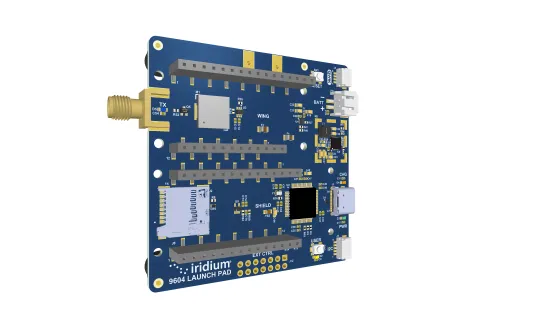
    The Iridium 9604 Development Kin, back side. (Credit: Iridium)
    The Iridium 9604 Development Kit, back side. (Credit: Iridium)

    Alongside the Iridium 9604 Development Kit, developers can rapidly prototype, test and validate hybrid satellite, cellular, and GNSS applications with resources that simplify integration and streamline deployment workflows.

    Built on the u-blox SARA-R5 platform, the Iridium 9604 is designed to reduce hardware complexity, lower integration costs, and accelerate time to market for connected solutions operating across industrial, infrastructure, transportation, mobility, utilities, maritime and remote-monitoring applications. The integrated design helps reduce board space requirements by 60 percent or more while simplifying RF routing, power architecture, and firmware development, Iridium said.

    Early developers and beta participants reported significant operational and economic benefits from the platform’s integrated architecture.

    “The Iridium 9604 has enabled us to develop a truly global asset tracking solution without relying on terrestrial network infrastructure. Its reliable coverage, compact form factor, and straightforward integration have significantly accelerated our development process and allowed us to focus on optimizing the end-user experience,” said Askar Gabit, CEO, GPSOne. “For applications in remote and challenging environments, the Iridium network provides the confidence that critical data can be delivered when it matters most.”

    The Iridium 9604 gives developers independent control over satellite, LTE-M and GNSS subsystems, enabling flexible implementation of failover logic, location-aware connectivity decisions, and application-specific routing strategies. A unified AT command set and comprehensive SDK resources further simplify development and integration.

    Built for scalable and power-sensitive IoT applications, the Iridium 9604 features a compact 16 x 26 x 2.4 mm form factor optimized for deployments where size, resiliency and efficiency are critical. The platform supports GPS, GLONASS, Galileo and BeiDou GNSS services alongside LTE-M (Cat-M1) and Iridium’s 100% global L-band satellite network.

    The Iridium 9604 represents the next evolution of Iridium’s broader IoT strategy, expanding beyond traditional satellite-only hardware to support unified, multi-mode connectivity architectures. The Iridium network now supports multiple IoT pathways, including dedicated Iridium SBD modules, Iridium NTN Direct standards-based direct-to-device capabilities, and larger payload connectivity through the Iridium Certus 9704 module.

    Operating on a global mobile satellite network, the Iridium 9604 delivers reliable connectivity across remote land areas, oceans, airways and polar regions where other networks are unavailable or unreliable.


  • With EUSPA support, Qualinx integrates Galileo OSNMA to receiver

    With EUSPA support, Qualinx integrates Galileo OSNMA to receiver

    The QLX3Gx chip makes secure, authenticated positioning a standard feature

    Qualinx has integrated support for the Galileo OSNMA (Open Service Navigation Message Authentication) on its QLX3Gx Series ultra-low-power GNSS receiver.

    Developed with the support of the European Union Agency for the Space Programme (EUSPA), the integration makes the QLX3Gx a GNSS receiver purpose-built for ultra-low-power markets to deliver hardware-native OSNMA support as a standard feature across the entire product family.

    Qualinx has embedded OSNMA support directly into the QLX3Gx hardware architecture from the ground up, enabling a fully optimized design with zero trade-offs in power consumption, cost or performance. 

    “Authenticated positioning has for too long been out of reach for the devices that need it most,” said Qualinx CEO Tom Trill. “By building OSNMA support into the QLX3Gx at the hardware level from day one, we’re making trusted positioning the default — not a premium option — for the wearables, asset trackers and IoT devices that make up the bulk of the GNSS market.” 

    The partnership with EUSPA reflects a shared commitment to disseminating Galileo’s advanced security capabilities across the widest possible range of applications and markets. EUSPA identifies OSNMA as a strategic priority for improving resilience against spoofing and signal manipulation

    According to the EU Space Market Report 2026, global GNSS revenues are projected to grow from €300 billion in 2024 to €580 billion by 2034 with mass-market devices accounting for the largest share of shipments and representing the greatest growth potential.

    Through Qualinx’s digital radio-frequency technology, the QLX3Gx delivers up to 10× lower power consumption than conventional GNSS solutions. By integrating OSNMA natively in hardware, the chip eliminates the processing overhead typically associated with authentication, ensuring security adds no meaningful cost to the power budget.

    The chip’s reconfigurable digital RF architecture enables capabilities to be updated over time without hardware replacement — extending device lifecycles, cutting electronic waste, and lowering overall energy consumption. The result is a platform that makes connected devices more secure and sustainable. 

    The QLX3Gx chip is available for sampling, with mass production planned for the second half of this year. Developers and OEMs can register interest in the Qualinx QLX3Gx Evaluation Kit to secure hands-on evaluation of the QLX3Gx for upcoming consumer, industrial and mobility applications. Contact [email protected] to register interest and request a sample, or learn more at Qualinx.io

  • Roke launches low-cost anti-jam system for contested environments

    Roke launches low-cost anti-jam system for contested environments

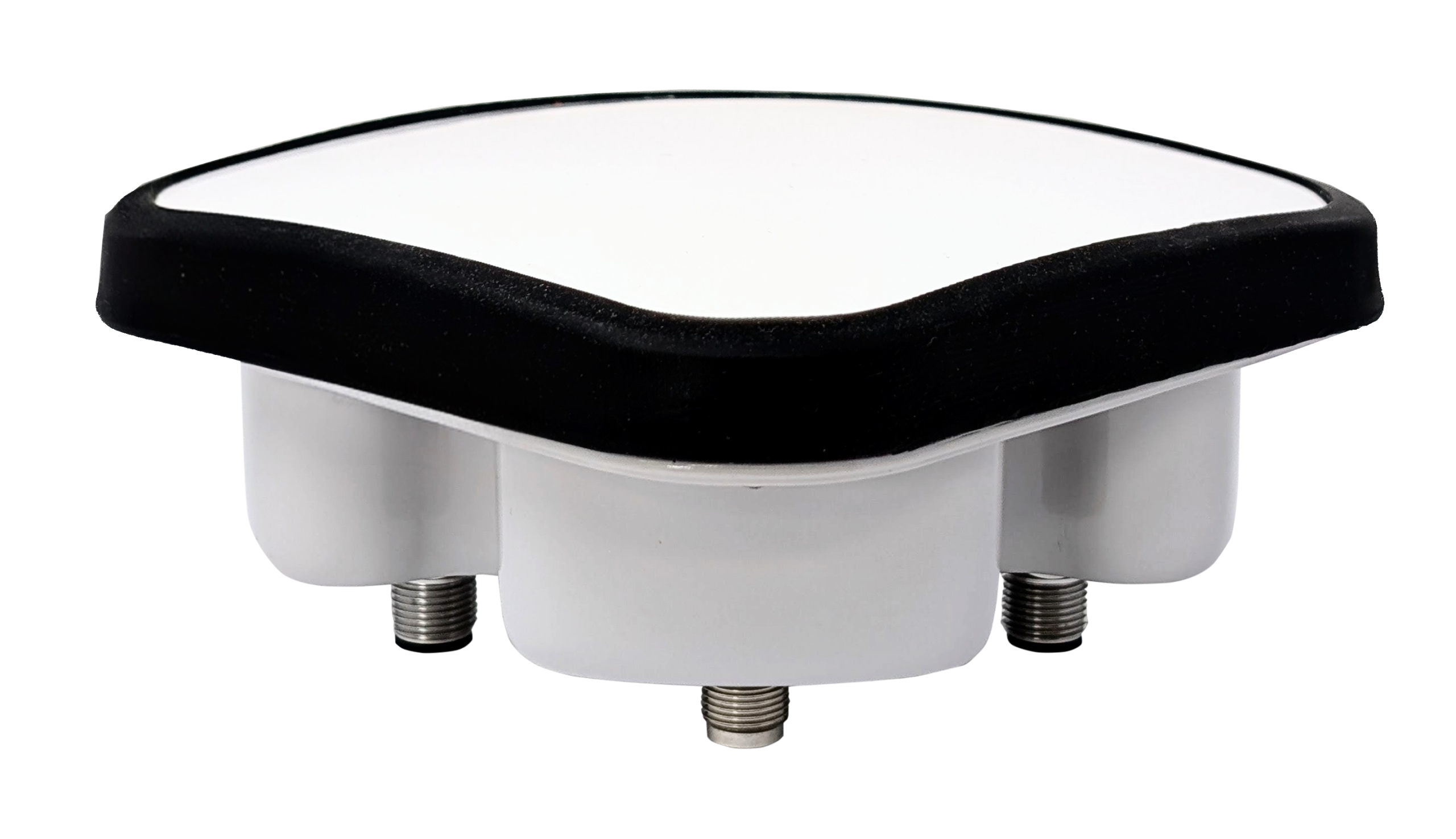
    Roke has launched Nav-Sync Armour, a controlled reception pattern antenna (CRPA) system enabling resilient GNSS navigation in globally contested environments. In Ukraine, the Baltics and the Middle East, ships, aircraft and critical infrastructure are regularly disrupted by low-cost, ground-based interference that degrades or denies navigation.

    Nav-Sync Armour is designed to counter such jamming threats and support the growth of autonomous platforms. It is a multi-element CRPA that actively protects GNSS signals in contested environments.

    Unlike conventional antennas, which receive signals uniformly from all directions, Nav-Sync Armour uses multiple receiver channels and advanced digital processing to distinguish between genuine satellite signals and interference. Meaning it suppresses jamming sources in real time while maintaining the integrity of authentic signals.

    The system can mitigate multiple concurrent in-band jammers across L1 or L2 frequencies, delivering a stable and trusted GNSS output that enables continued operation under active interference, the company said.

    “CRPAs have long been the gold standard for resilient navigation, but not always a cost-effective offering for some platforms,” explained Marc Overton, managing director, Roke. “As a result, a large proportion of assets have been left either exposed to attack or reliant on solutions that struggle to perform in contested environments. For decades, effective GNSS protection has been concentrated on high-cost platforms, with many systems operating without meaningful resilience. Nav-Sync Armour addresses that imbalance by delivering the performance of high-end CRPA systems in a compact, low-SWaP solution that is affordable for all platforms.”

    Mission success increasingly depends on autonomy. These air, maritime or ground platforms require the persistence and scale that modern operations demand, yet they are often the least protected. Nav-Sync Armour enables resilient navigation where it has previously been impractical or unaffordable.

    In today’s battlespace, resilience means ensuring enough systems can continue to operate to deliver mission success, Roke said.

    Nav-Sync Armour shifts the balance back in favour of the platform, removing traditional barriers of cost, complexity and restriction to make high-performance protection available at the scale modern operations require.

    Designed as a direct replacement for existing GNSS antennas, Nav-Sync Armour connects directly to existing GNSS receivers via standard RF interfaces, simplifying integration and retrofit. It provides a straightforward route to upgrading resilience without significant platform redesign.

    Its compact form factor and low power consumption make it suitable for a wide range of installations, while its UK sovereign design ensures it is free from ITAR constraints, reducing supply chain friction and enabling broader adoption.  Roke has worked with other UK partners to create an onshore supply chain capable of manufacturing in the thousands.

  • Telit Cinterion launches GNSS Module in a legacy-compatible footprint

    Telit Cinterion launches GNSS Module in a legacy-compatible footprint

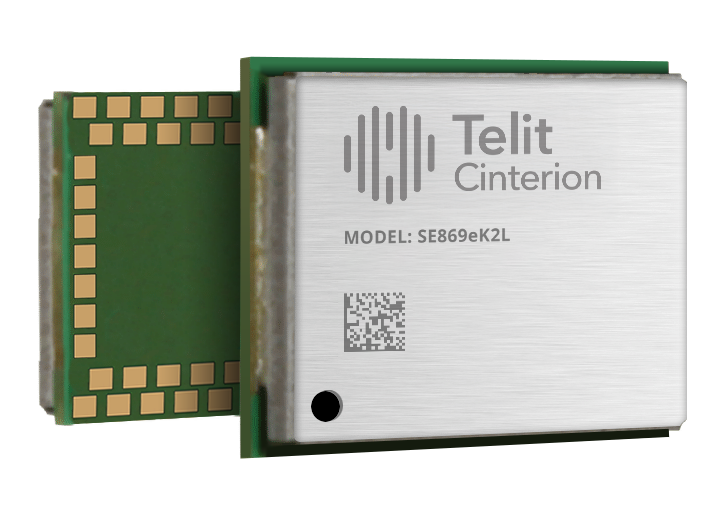
    Telit Cinterion has launched the SE869eK2L, a single-frequency L1 GNSS module designed to help device manufacturers upgrade legacy positioning designs with improved performance and cost efficiency, while preserving design continuity.

    Built on the Airoha AG3352 platform, the SE869eK2L supports GPS, GLONASS, Galileo, BeiDou and QZSS for reliable multiconstellation positioning. With approximately 1.5-meter accuracy and update rates of up to 10 Hz, it is well-suited for connected devices that require dependable positioning without the cost or complexity of higher-end GNSS architectures.

    For OEMs managing product refresh cycles, the SE869eK2L provides a straightforward migration path from Telit Cinterion’s SL869L-V2 and legacy xL869 modules. Its 12.2 x 16 mm footprint maintains pin-to-pin compatibility with the industry-standard form factor, so OEMs can extend existing designs while gaining updated performance and supply flexibility. The footprint includes reserved pins for future use.

    The module is designed for a broad range of IoT and industrial use cases, including:

    • Asset tracking
    • Fleet management
    • Smart infrastructure
    • Cell-tower synchronization
    • Industrial equipment
    • Wi-Fi 6E / 7 routers

    The SE869eK2L also supports connected devices that require reliable L1 positioning.

    Two hardware variants are available: a 3.3 V option and a 1.8 V option, allowing designers to align the module with their system architecture and power requirements.

    Dedicated firmware variants provide Windows Location Services compatibility and enable precise timing functionality, delivering synchronization output with ±7 ns jitter.

    The module also supports Wi‑Fi navigation mode, enabling compliance with Automated Frequency Coordination (AFC) requirements for Wi‑Fi 6E and Wi‑Fi 7 routers.

    Device manufacturers building connected products can pair the SE869eK2L with Telit Cinterion cellular modules — including those without embedded GNSS — simplifying sourcing, integration and support through a single supplier.

    Samples of the SE869eK2L are expected to be available soon, with mass production planned for the fourth quarter of 2026.

    Telit Cinterion will exhibit at Hardware Pioneers Max, Stand G4, where attendees can learn more about the company’s GNSS, cellular IoT and industrial connectivity portfolio.

  • Chipmakers demonstrate European-only manufacture of security-critical GNSS chip

    Chipmakers demonstrate European-only manufacture of security-critical GNSS chip

    A sophisticated GNSS system-on-chip design for secure positioning, navigation and timing (PNT) applications is the first fully European-based, end-to-end semiconductor manufacturing flow.

    Its manufacture demonstrates that security-critical chips for aerospace, defense and critical infrastructure can be designed, manufactured and delivered entirely within Europe.

    The QLX3xx design targets sovereign GNSS-based PNT solutions for aerospace, defense and critical infrastructures — such as resilient timing and synchronization networks and highly integrated, ultra-low-power GNSS receivers at the connected edge.

    In a partnership co-funded by the European Chips Act, GlobalFoundries’ Dresden site is establishing its European sovereign manufacturing flow, consolidating every step of the production process — from design intake and mask services to wafer manufacturing — within the European Union. No sensitive design data or physical materials leave Europe, meeting the strict regulatory and security requirements of European governments, defense agencies, system integrators and critical infrastructure operators. Qualinx served as the launch customer.

    The tape‑out realized with Qualinx represents the first operational milestone on the path toward a fully automated, trusted European flow, which GlobalFoundries aims to establish in Dresden by the end of 2026.

    Starting in 2027, aerospace and defense, as well as critical infrastructure customers, will be able to use this automated flow as part of regular foundry engagements, including the integration of European IP partners, mask houses and OSAT service providers to ensure a consistent, European-anchored value chain.

    A number of European system and module manufacturers from aerospace and defense, as well as operators of critical infrastructure, are in discussions with GlobalFoundries to map upcoming product generations onto GlobalFoundries’s sovereign manufacturing flow. The successful start with Qualinx serves as a strong proof point and reduces both technical and regulatory risks for subsequent programs.

    GlobalFoundries is also working with European connectivity and cloud providers to secure data flows across the entire semiconductor value chain. In a joint project with Deutsche Telekom, GlobalFoundries is assessing how production-related data from design and tape-out through manufacturing, test and quality can be processed, transported and stored entirely within Europe on European networks, cloud infrastructures and data centers.

    The resulting practices in secure data routing, encryption and access management for highly sensitive A&D and critical infrastructure workloads will feed directly into the scaling of GlobalFoundries’ European sovereign manufacturing model.

  • SyncIoT introduces GNSS module family for IoT, defense and critical infrastructure

    SyncIoT introduces GNSS module family for IoT, defense and critical infrastructure

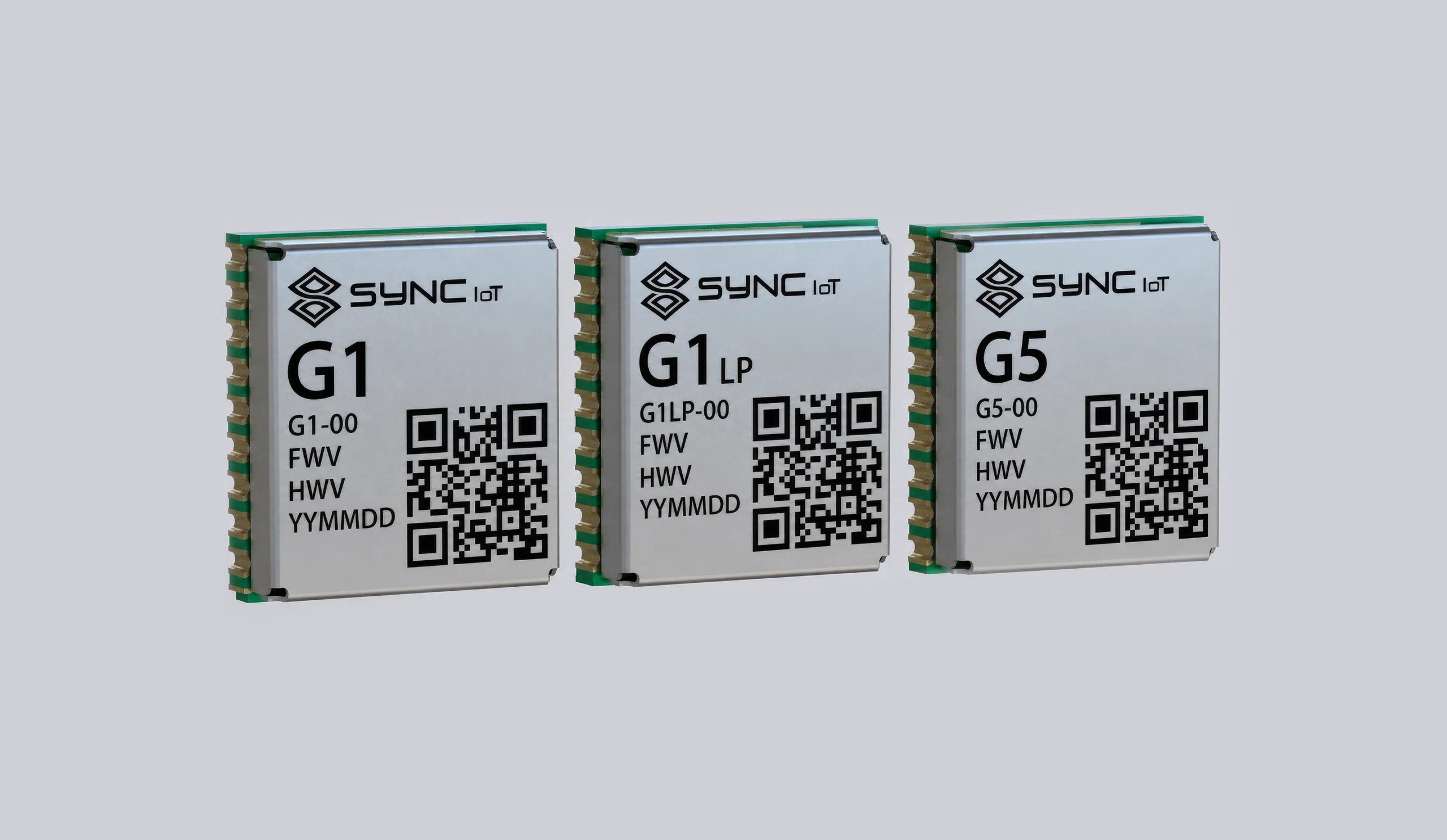
    SyncIoT, a division of SyncWise Inc., has introduced its G1 and G5 families of GNSS receiver modules for applications in the Internet of Things (IoT), defense and critical infrastructure sectors.

    According to the company, the modules are designed and manufactured outside China and contain no Chinese hardware or software components. The products are intended for organizations seeking secure supply chains and compliance with U.S. procurement requirements, including those related to the National Defense Authorization Act (NDAA).

    The G1 family is designed for applications requiring a balance of positioning performance, power consumption and cost. The L1 receivers support concurrent tracking of up to four GNSS constellations, enabling access to more satellites and improving positioning availability in challenging environments. A low-power version, the G1LP, is aimed at battery-powered applications.

    The G5 module supports both L1 and L5 GNSS signals and is designed for higher-precision positioning applications. SyncIoT said the module can provide sub-meter accuracy while tracking up to four satellite constellations simultaneously. The use of L5 signals can help mitigate multipath effects, which can degrade positioning accuracy in urban and other signal-challenged environments.

    Additional features of the G5 include raw carrier-phase measurements, a one-pulse-per-second (1PPS) timing output, anti-jamming and anti-spoofing capabilities, inertial measurement unit (IMU) data pass-through and an integrated surface acoustic wave (SAW) filter and low-noise amplifier (LNA).

    “The release of the G1 and G5 families was initiated at the request of our top customers, who require U.S.-based solutions and greater security across their supply chains,” said Mark Murray, Head of IoT Modules at SyncWise. “The G1 and G5 families are only the beginning. Stay tuned for announcements regarding future products and partnerships.”

    Samples and development kits for both product families are currently available here.

  • Finnish Skyfora raises €6.5M to turn GNSS telecom into real-time weather sensors

    Finnish Skyfora raises €6.5M to turn GNSS telecom into real-time weather sensors

    Skyfora, a Finnish weather data company building a new global data layer for weather and AI, has raised €6.5 million to transform GNSS telecom infrastructure into a real-time atmospheric sensing network.

    The funding comes as demand for high-resolution weather data surges, driven by AI forecasting models, climate volatility, and the growing need for weather-resilient operations.

    GNSS metrology system

    Traditional weather forecasting relies on sparse networks of expensive ground stations, weather balloons, and radar systems — methods that leave vast gaps in coverage, particularly in urban areas and developing regions. Instead, Skyfora combines atmospheric physics, advanced signal processing, and artificial intelligence to extract weather intelligence from GNSS data.

    GNSS meteorology turns every GNSS receiver into a weather sensor. The more receivers in an area, the higher the resolution of atmospheric data achievable.

    GNSS signals traveling through the atmosphere are delayed by water vapor. By measuring these delays from multiple satellites and ground stations, Skyfora can create detailed 3D maps of atmospheric moisture — a critical input for weather forecasting.

    Once the atmospheric data is captured and reconstructed, the system uses AI and high-performance computing to turn it into accurate, actionable forecasts.

    Using existing GNSS receivers

    Skyfora’s core technology uses GNSS receivers already installed in telecom networks, complemented by StreamGNSS hardware where telecom GNSS is not available, to measure atmospheric humidity with high precision and frequency. The GNSS signal delays are processed into real-time weather data streams that power next-generation AI weather models and forecasting systems, enabling more accurate, earlier, and hyperlocal predictions.

    The company’s approach addresses a structural bottleneck in weather forecasting: most of the world’s atmosphere remains underobserved, and existing observation infrastructure cannot provide the data coverage and resolution required by modern AI models. Skyfora’s solution scales using existing infrastructure, requiring no new hardware at telecom sites.

    Skyfora operates active deployments across multiple countries, working with telecom operators, meteorological institutions, forecasting partners and weather-affected industries to build out real-time atmospheric sensing on a global scale.

    Latest capital round partners

    The new capital will be used to accelerate the commercial scale-up of Skyfora’s software platform and atmospheric data products, expand partnerships with telecom operators, forecasting providers, meteorological institutions and weather-affected industries, and grow the team. The primary focus is on scaling deployment and market adoption: bringing Skyfora’s real-time data, API and atmospheric intelligence dashboard to market.

    The round includes equity participation from Eviny Ventures, Ugly Duckling Ventures, Lumo Labs and the European Innovation Council (EIC) Fund, alongside non-dilutive funding from Business Finland.

    The company is actively working to deploy datasets and customer opportunities across several countries in Europe, the United States, Africa and the Middle East.

  • U-blox GNSS tech powers telescope array searching for alien life

    U-blox GNSS tech powers telescope array searching for alien life

    The PANOSETI project achieves sub-nanosecond synchronization without fiber infrastructure using u-blox ZED-F9T 

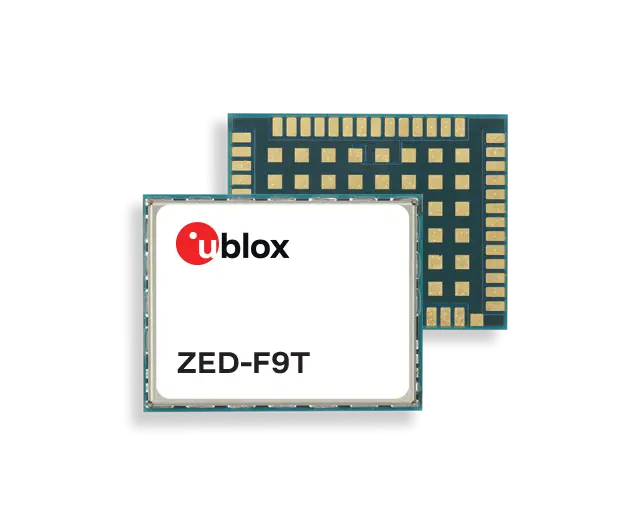
    The u-blox ZED-F9T high-precision GNSS receiver is enabling sub-nanosecond synchronization in an advanced telescope array used in optical Search for Extraterrestrial Intelligence (SETI) research. 

    The results have been achieved for the SETI program called PANOSETI (Pulsed All-sky Near-infrared Optical SETI), a multi-institutional scientific initiative where precise time synchronization across distributed telescope arrays is critical. Institutions involved include the University of California Berkeley, UC San Diego, Harvard and Caltech.

    Discovery at unprecedented scale

    PANOSETI is designed to detect fast-transient optical and near-infrared signals across the entire observable sky, with the goal of identifying potential technological signatures or astrophysical phenomena. Achieving this requires extremely precise time synchronization between widely distributed telescope nodes.

    Traditionally, such synchronization depends on fiber-based systems such as White Rabbit, which can be costly and impractical to deploy in remote observatory locations.

    By leveraging GNSS-based differential timing with the u-blox ZED-F9T, the PANOSETI team demonstrated:

    • ~0.7 nanosecond standard deviation between 1PPS signals over a 1 km baseline 
    • Improved performance down to ~200 picoseconds using filtering techniques 

    This level of accuracy meets, and in some cases exceeds, the requirements for next-generation distributed sensing systems.

    Precision timing without constraints

    Credit: U-blox
    Credit: U-blox

    The results highlight a key benefit of GNSS-based timing: high-precision timing can be achieved in environments where fiber infrastructure is unavailable, impractical or excessively costly.

    These results show the capabilities that GNSS timing offers, not only for scientific research, but also for a range of other emerging applications, such as distributed sensor networks, remote timing systems and resilience of critical infrastructure, also in remote locations.

    Collaboration driving innovation

    “Achieving this level of synchronization without fiber is a significant step forward for distributed instrumentation,” said Dan Werthimer, chief scientist of the PANOSETI project at UC Berkeley. “It allows us to achieve the timing precision we need for our telescope array in locations where traditional fiber-based systems are not feasible.”

    “At u-blox, we are excited to support PANOSETI in their search for extraterrestrial intelligence,” said Samuli Pietilä, Director of Product Line Management, Timing and Infrastructure. “GNSS timing is used across many industries, but none quite like the advanced optical telescopes that PANOSETI is deploying.”

    The ability to move from physically-based precision synchronization to resilient GNSS solutions unlocks the potential for distributed sensor networks.

  • Point One, ST showcase combo autonomous solution at AutoSens 2026

    Point One, ST showcase combo autonomous solution at AutoSens 2026

    Point One Navigation is showcasing an ongoing collaboration with STMicroelectronics, a relationship that has made its real-time kinematic (RTK) and positioning engine solutions accessible to ST customers developing autonomous vehicles, robotics, and precision navigation applications.

    AutoSens 2026, taking place in Detroit, Michigan, June 9-11, will bring together experts in the field of automotive sensing technology.

    Point One Navigation’s software platform integrates seamlessly with ST’s new Teseo6 family of GNSS receiver chipset and module solutions to deliver a complete, off-the-shelf precise positioning system.

    By combining ST’s GNSS receiver and measurement engine with Point One’s RTK correction service and advanced dead-reckoning algorithms, customers can achieve centimeter-level accuracy for their navigation solutions without the complexity of developing these capabilities in-house.

    At AutoSens 2026, Point One and ST are collaborating to showcase an integrated solution that highlights the power of their joint technology. The demonstration features live precision location data and real-time performance analytics, illustrating the effectiveness of the Teseo6 automotive-grade solutions paired with Point One’s advanced dead-reckoning and corrections services in a variety of automotive and autonomous driving scenarios.

    “Through our strong collaboration with STMicroelectronics, we are able to deliver proven precision positioning technology to ST’s global customer base,” said Aaron Nathan, CEO, Point One Navigation. “Our RTK and dead-reckoning software, combined with ST’s Teseo6 GNSS receiver, provides developers with a ready-to-integrate solution that matches or exceeds competing systems while accelerating time-to-market for robots, autonomous vehicles, and other applications requiring centimeter-accurate navigation.”

    “The key to precise navigation is feeding the application a trusted position, that maximizes integrity and minimizes error,” said Mike Slade, GNSS product marketing manager, STMicroelectronics. “The collaboration between ST’s Teseo6 GNSS receiver and Point One’s complementary dead-reckoning and RTK correction services ensures high signal availability and the centimeter-accurate positioning needed for consistent and predictable operation.”

  • HRL Laboratories offers small, rugged IMU

    HRL Laboratories offers small, rugged IMU

    HRL Laboratories has introduced a new inertial measurement unit (IMU) that provides near navigation-grade accuracy in a palm-sized package.

    Smaller and lighter than grade-equivalent conventional sensors, HRL’s AXI-R100 delivers range-extending accuracy for GPS-contested navigation. The product is now ready for pre-production orders.

    Using silicon microelectro-mechanical systems (MEMS) technology, HRL’s gyros exceeds the performance of many tactical-grade IMUs in the same or smaller package size, and is manufactured in high volumes at wafer-scale. This near navigation-grade performance is available at a tactical-grade price.

    The new IMU is suitable for use in defense, aerospace and automotive applications, including missile-guidance systems and drone navigation, as well as for commercial automotive applications with higher levels of autonomy. The product is ready for integration as it has been designed and tested against challenging vibration, shock and thermal conditions representative of those applications.

    HRL will present product specifications at the 2026 Joint Navigation Conference, taking place this week in Cincinnati, Ohio, and is exhibiting in booth 129.

      By leveraging high volume design automotive methodologies, HRL designed AXI-R100 navigation sensors to scale for high-volume automotive demand while maintaining performance superiority over traditional tactical-grade sensors. The result is a gyroscope compatible with foundry fabrication processes for high volume applications.

      “Our gyroscopes and inertial sensors support navigation, pointing and stabilization systems for autonomous vehicles, aircraft and guided missile and munition applications,” said Jeff Dickman, director, Precision Sensing, HRL Laboratories. “We leveraged our extensive microelectronics legacy along with innovations in micromechanical and manufacturing processes to pave the way for AXI-R100 to address the urgent needs from our industrial base.”

    • Calian announces two new pole mount controlled reception pattern antennas

      Calian announces two new pole mount controlled reception pattern antennas

      Calian has introduced two pole mount variants of its controlled reception pattern antenna (CRPA) line. The new models support L1/E1 + L2/E5b (CR8894PXF+) and L1/E1 + L5/E5a (CR8854PXF+), giving customers expanded deployment and frequency support options for resilient GNSS applications.

      The new architecture increases installation flexibility across critical infrastructure, timing, marine and defense environments while maintaining Calian’s CRPA and extended filtering plus (XF+) interference mitigation performance.

      Flexible deployment

      The pole-mount design integrates into fixed and marine installations such as communications towers, vessels, monitoring stations and critical infrastructure, supporting rapid setup and optimal antenna placement.

      With dual-band options, the platform aligns with modern multi-frequency GNSS architectures, improving accuracy, robustness, interference rejection and compatibility with current and next-generation receivers.

      Advanced anti-jamming features include:

      • GPS and Galileo support
      • Operation across L1/E1 and L2/E5b or L5/E5a
      • Mitigation of three jamming sources per band
      • Integrated XF+ filtering for superior out-of-band rejection and cross-band isolation
      • Real-time situational awareness messaging.

      Visit Calian during ION’s Joint Navigation Conference 2026, booth 207, Northern Kentucky Convention Center, June 2–3.

    • Septentrio unveils mosaic-G5 P8, ultra-resilient GNSS module

      Septentrio unveils mosaic-G5 P8, ultra-resilient GNSS module

      Septentrio, part of Hexagon, has announced the launch of the mosaic-G5 P8 receiver. The multi-frequency module, measuring 23 mm by 16 mm and weighing 2.2 grams, enables accurate and resilient positioning without any performance compromises for mission-critical devices, UAVs, marine vessels, and rail applications.

      Built for reliable operation in contested GNSS environments,  AIM+ Ultimate technology protects the receiver from powerful and sophisticated GNSS jamming and spoofing attacks. It delivers comprehensive situational awareness, combining timely interference and spoofing indicators with detailed power and frequency data, which can help localize jammers.  

      “The mosaic-G5 P8 is in a class of its own: uncompromised GNSS resilience in a secure, ultra‑compact, all‑in‑one design,” said Yasmine Hunter, product manager at Septentrio.

      The newly released module features an integrity-focused design that ensures truthful positioning and reporting, enabling the system to quickly switch to other sensors during GNSS disruptions in heavily compromised environments. Secure communication with input and output authentication prevents unauthorized access and data interception. mosaic-G5 P8 also offers high update rate with low latency, supporting reliable navigation and control in highly dynamic applications.

      The module is compatible with widely used, open-source autopilots like PX4 and ArduPilot, simplifying drone integration. The mosaic-G5 P8 evaluation kit, featuring direct autopilot connections, is available for testing and prototyping, and the RxTools user interface streamlines setup and evaluation.

      Meet Septentrio’s GNSS experts and mosaic-G5 P8 during SOF Week in Tampa, Florida, May 18–21, in booth #609.