Category: Inertial

  • Expert Opinions: Integrity in the vehicle environment

    Expert Opinions: Integrity in the vehicle environment

    Q: Why do we need to take integrity seriously in the vehicle environment?


    Chris Rizos, Professor, Geodesy and Navigation, University of New South Wales
    Chris Rizos, Professor, Geodesy and Navigation,
    University of New South Wales

    A: Since the 1980s, surveyors and geodesists have used GPS for high-accuracy positioning. We take for granted centimeter- and even millimeter-level accuracy positioning capability that is faster, more reliable, at a lower cost and with fewer constraints than ever before. However, the demand for “trustworthy positioning” dismisses such achievements, and the mantra is more “availability” and greater “integrity” to support highly automated driving. Our positioning and navigation community must rise to this challenge.


    Rod Bryant, Senior Director, Technology, Positioning, u-blox
    Rod Bryant, Senior Director, Technology, Positioning, u-blox

    A: In autonomous vehicles, a GNSS/inertial module will be just one of several sensors used for location. The risk of contributing to accidents and serious injury will be decomposed and allocated between subsystems by the OEM or system designer. Taking aviation as a model, the allocation to GNSS may be in the form of an alarm limit of a few meters with integrity risk less than 10-6/hour. However, multipath and obstructed sky make automotive risk far more difficult than aviation. Carrier-phase techniques will come into play and new approaches to protection limit estimation will be needed.


    Sam Pullen, Senior Research Engineer, Stanford University; Consultant, Sam Pullen Consulting
    Sam Pullen, Senior Research Engineer, Stanford University;
    Consultant, Sam Pullen Consulting

    A: Advanced sensor fusion techniques now make it possible to achieve very accurate PVT results by combining multiple dissimilar sensors. Once we rely on these capabilities for autonomous driving, the primary threat to safety will come from confluences of rare events that were not observed or foreseen during system development. Design for integrity focuses attention on the identification and mitigation of potentially hazardous anomalies before they happen, not afterward.

  • HRL Labs to develop inertial sensor tech for DARPA

    The U.S. Defense Advanced Research Projects Agency (DARPA) has awarded HRL Laboratories LLC $4.3 million to develop vibration- and shock-tolerant inertial sensor technology that enables future system accuracy needs without using GPS.

    Positioning, navigation and timing are key to ensuring the location accuracy critical to the success of modern military missions. Today’s military systems typically rely on GPS to ensure position accuracy. While GPS provides sub-meter accuracy in optimal conditions, the signal is often lost or degraded due to natural interference or malicious jamming.

    “The ATLAS project will deliver a comprehensive approach to breaking performance and cost, size, weight and power barriers in inertial sensor technology that prevent robust, GPS-independent, military positioning, navigation and guidance,” said Logan Sorenson, principal investigator and research staff member in HRL’s Sensors and Materials Laboratory.

    ATLAS will combine intimate locking of a micro-electro-mechanical systems (MEMS) Coriolis Vibratory Gyroscope (CVG) sensor with an atomically stable frequency reference in order to exploit the intrinsic accuracy of the atomic hyperfine transition frequency.

    “The engineering challenge lies in developing a system architecture to transfer the stability from the atomic reference to the CVG sensor without introducing unintended noise,” Sorenson said. “We are very excited to explore this novel approach to addressing long-standing precision navigation need faced by the U.S. military.”

    HRL Laboratories is located in Malibu, California. It is a corporate research-and-development laboratory owned by The Boeing Company and General Motors specializing in research into sensors and materials, information and systems sciences, applied electromagnetics, and microelectronics. HRL provides custom research and development and performs additional R&D contract services for its LLC member companies, the U.S. government, and other commercial companies.

  • When inertial can help with GNSS solutions

    When inertial can help with GNSS solutions

    A number of organizations are focusing on how inertial can help GNSS receivers to provide more stable, reliable position outputs when signals are hard to receive. Papers presented in September at the ION GNSS+ 2016 conference in Portland, Oregon, demonstrate that there is indeed a lot of focused effort in this area.

    The conference showcased several integrated inertial GNSS solutions from a range of companies. For example, NovAtel is developing a novel way to make better use of lower precision MEMS inertial for certain land applications. Qualcomm is moving forward with a low-cost visual inertial to advance autonomous vehicle developments. And researchers in Germany from a university spin-off company are studying a multi-sensor solution.

    Inertial integration aiding

    Many people have heard about the NovAtel SPAN inertial/GNSS system. SPAN inertial-integration-aiding software has now been available integrated on NovAtel GNSS engines for a number of years. Combined with various external inertial packages providing real-time inertial aiding data, this system enables positioning outputs over a wider range of more difficult signal environments where GNSS alone might be too stressed to perform well.

    According to the website, NovAtel currently offers SPAN with MEMS inertial products including various models from Honeywell, Litef, Analog Devices and Sensonor, along with a number of fiber-optic and high-precision tactical grade inertial measurement units (IMUs).

    Recent SPAN development efforts have been focused on improving the performance of combined GNSS/SPAN/MEMS IMUs. The premise of the work is that in land-vehicle applications, a “land profile” can be applied that constrains velocity based on a range of acceptable vehicle dynamics. This includes applying limits to the cross track and vertical velocities of the vehicle.

    In testing this land model, with equipment mounted in the NovAtel test van, three types on IMU were run through three different test scenarios. The IMUs were:

    • Epson G320 — Low power, small size MEMS IMU
    • Litef μIMU-IC — Larger tactical-grade performance IMU still based on MEMS sensors
    • Litef ISA-100C — Near-navigation-grade IMU using fiber optic gyros (FOG).

    The three test scenarios involved environments with clear sky, partially obstructed sky view (downtown urban canyon) and a parking garage with no view of the sky and no satellite signal reception.

    The Epson MEMS IMU appeared to be at a disadvantage from the beginning, given the higher performance units to which it was being compared. But NovAtel’s objective was to demonstrate that even this lower end device, when combined with GNSS, SPAN and the land profile, enables pretty good positioning results.

    The tests indicated that positioning with integrated higher performance units did not benefit to the same extent as when coupled with the low-end MEMS units in land-profile mode. Acceptable positioning was indeed possible with the Epson MEMS and when the constraints of land profile were able to limit position excursions when GNSS was lost, as in the parkade tests at Calgary airport shown in the figure above.

    Ryan Dixon and Michael Bobye from NovAtel Inc. wrote this ION GNSS+ paper, “Performance Differentiation in a Tightly Coupled GNSS/INS Solution.” Ryan Dixon is the chief engineer of the NovAtel Synchronized Position Attitude Navigation (SPAN) GNSS/INS products, and Mike Bobye is a principal geomatics engineer at NovAtel Inc.

    Visual inertial odometry

    Qualcomm also presented some interesting results for the integration of visual inertial odometry (VIO) with GNSS. VIO measurements are constructed from a stream of camera frames combined with inertial measurements and can provide high-accuracy relative positioning. In experiments in a not-too-severe urban-canyon environment, this approach has been seen to reduce 95 percent horizontal error by two-thirds compared to GPS alone.

    For applications such as autonomous vehicles and advanced driver assistance systems (ADAS), 50-meter errors, which can be typical for stand-alone GPS in urban canyons, just won’t cut the mustard. So Qualcomm has been looking for another source of aiding that would help reduce errors significantly.

    The test set-up used a Sony Xperia Z3 phone as the source for the camera data and separate VIO processing, along with a single-frequency CSR SiRFstarIV GPS module on a custom hardware board for raw pseudorange and Doppler range-rate measurements. A high-precision NovAtel OEM6 GNSS/IMU SPAN-CPT module was used as ground-truth for position measurements.

    Two scenarios were used to evaluate the proposed approach. The first scenario is an 870-meter drive in downtown Somerville, New Jersey, with a duration of 261 epochs. This represents a mild urban-canyon environment with loss of signal errors of a few tens of meters.

    (Left) Part of the trajectory for the drive testing; (right) walk through building with no GPS coverage.
    (Left) Part of the trajectory for the drive testing; (right) walkthrough building with no GPS coverage.

    Results from the drive testing include several large GPS errors that the GPS+VIO solution is able to significantly reduce, while the walkthrough building tests appear to demonstrate a continuous GPS+VIO position solution.

    “Robust Positioning from Visual-Inertial and GPS Measurements” was written by Urs Niesen, Venkatesan N. Ekambaram, Jubin Jose, Lionel Garin, and Xinzhou Wu, all of Qualcomm Research.

    Multiple sensors

    Finally, researchers at the Technical University of Munich (TUM) in Germany have focused on bringing outputs from as many sensors as economically feasible into an integrated GNSS solution. A precise model for multipath is included that applies amplitude, code delay, phase shift and Doppler shift for each reflected signal. The magnetometer measurements provide rough attitude information, which enables robust GNSS attitude ambiguity fixing.

    This research has led to the release of an integrated product by a European Space Agency (ESA) incubator company, Advanced Navigation Solutions (ANavS).

    The ANavS module integrates a multi-constellation u-blox GNSS receiver with a Sensonor 3D accelerometer/gyroscope/magnetometer, a Bosch barometer/thermometer and a built-in dual-band Taoglas GPS/GLONASS antenna. Real-time kinematic (RTK) positioning was tested by TUM students using the measurements from the multi-sensor module and a virtual reference station (VRS). A second multi-sensor module placed on the rear of the vehicle enabled attitude determination.

    “Reliable RTK Positioning with Tight Coupling of 6 Low-Cost Sensors” was authored by Patrick Henkel, Technische Universität München, and Houcem Hentati, Advanced Navigation Solutions, Munich, Germany.

    All of these options are providing GNSS with the support it needs in tight signal situations.

  • Firmware update for inertial Ekinox and Apogee sensors

    SBG Systems displays their full range of MEMS-based inertial sensors at InterGeo 2016, with a major firmware update for its Ekinox and Apogee product lines. The key improvements in the update include a 15% improvement on orientation and navigation data and better robustness under harsh environments. This firmware is a complete rework of existing functionalities with the addition of new features and improved configuration interface to ease device configuration.

    Performance. Up to 15% inertial navigation system (INS) performance improvement from a reworked data fusion algorithms; and improved performance using NMEA GNSS aiding.

    Ease of use. Alignment and new status flags have been added to ensure the unit reaches optimal accuracy. The unit can now compute and output on each port a full deported navigation and ship motion data. A completely reworked web interface with 3D views eases mechanical installation. Stability and reliability improvements are reported, especially while using two GNSS at the same time

    Various input and output protocols have been added. See SBG Systems website for further information.

  • Inertial, gyroscope take to space

    Inertial, gyroscope take to space

    nea-scout-1-piece-sailSensonor AS of Norway has partnered with the U.S. National Aeronautics and Space Administration (NASA) to supply current and future low- and near-Earth orbit space missions with inertial and gyroscope modules.

    The Norway-based company first began supplying its standard inertial measurement unit (IMU) and gyroscope modules for low Earth orbit (LEO) space applications in 2012, Sensonor’s STIM300 and STIM210 inertial products now fly aboard several NASA spacecraft. Current projects using STIM inertial systems include the Raven technology demonstration and Near Earth Asteroid (NEA) Scout.

    Raven, which launched to the International Space Station in September, will test key elements of an autonomous relative navigation system. Its technologies may one day help future robotic spacecraft autonomously and seamlessly rendezvous with other objects in motion, such as a satellite in need of fuel or a tumbling asteroid.

    The NEA Scout is a robotic reconnaissance mission that will be deployed to fly by and return data from an asteroid representative of NEAs.

    The STIM gyroscope modules are often used in combination with GPS or a Star Tracker and Kalman Filter to orient and stabilize the satellite, as well as to provide feedback on satellite motion induced by its reaction wheels. In some applications, the gyroscopes are used to stabilize satellite-to-satellite communications.

  • Xsens launches knowledge BASE for inertial tracking, wearable motion capture

    Xsens launches knowledge BASE for inertial tracking, wearable motion capture

    xsens-base-w

    Xsens has launched BASE, an online technology platform with a community forum and a knowledge base on 3D motion tracking technology and products.

    On BASE.xsens.com, the knowledge base contains inside information about micro-electro-mechanical system (MEMS) sensors, inertial measurement units (IMU), sensor fusion algorithms, body-motion tracking and motion capture.

    It also provides best practices, tips and tricks for the use of Xsens’ successful products the MTi series, the MTw and the MVN wearable motion capture solutions. A second section of BASE is the community forum with direct access to Xsens’ engineers and other Xsens users.

    The knowledge base and community forum make it easier to integrate the MTi or MTw and to get the most out of MVN. If a question is not answered in the knowledge base, it is straightforward to ask a question to the community. With short response times from either other Xsens users or the entire Xsens engineering team, the user community is a quick way to continue development, Xsens said.

    BASE is a next step by Xsens to support the growing community and interest in inertial technology. It further enhances the interaction between users and Xsens.

    “Although Xsens makes it easy to use inertial technology in their applications, the underlying technology is complex and there are many features for specific applications,” said Remco Sikkema, Xsens marketing manager. “Understanding the technology makes it easier to integrate the products and be successful with Xsens.”

    With BASE, engineers and engineering teams in the Xsens community can come closer together. The primary goal is to make Xsens customers more successful by providing a platform to exchange information.

    There is no need to register for BASE to access the community forum and the knowledge base. To ask questions or comment on articles, registration is possible via SSO or email.

  • New engineering team at NovAtel to deliver safe positioning technology for autonomous vehicles

    New engineering team at NovAtel to deliver safe positioning technology for autonomous vehicles

    NovAtel Inc. announced a new initiative and engineering team to develop functionally safe GNSS positioning technology for fully autonomous applications. The company leverages its extensive experience developing safety-critical systems for the aviation industry to meet the future safety thresholds required for driverless cars and autonomous applications in agriculture, mining, and other government, military and commercial markets.

    In early 2015, NovAtel formed a specialized Safety Critical Systems Group of engineers with backgrounds in functional safety as well as all aspects of GNSS and inertial navigation systems (INS) technology. The Safety Critical Systems Group is focused on creating positioning products that will meet the exceptional performance and safety requirements of autonomous vehicles at the necessary production volumes and at the required price point.

    The company has extensive background working within safety critical requirements. Michael Ritter, president & CEO stated, “Aviation in North America relies on NovAtel technology to ensure safe navigation and landing.” Ritter added, “The Federal Aviation Administration’s WAAS, and other global Space Based Augmentation Systems (SBAS), have relied on certified NovAtel GNSS receivers for many years as the foundation of their systems. With full GNSS signal and constellation support needed to solve the performance criteria of autonomous driving, NovAtel is uniquely qualified to deliver the optimal solution that will keep us all safe as we drive the autonomous highways of the future.”

    Jonathan Auld, Novatel's director of Safety Critical Systems.
    Jonathan Auld, Novatel’s director of Safety Critical Systems.

    NovAtel manufactures high-precision GNSS receivers, antennas and subsystems, with expertise in sensor integration, specifically that of GNSS and INS. Through its TerraStar correction service, NovAtel also offers a global Precise Point Positioning (PPP) correction solution that is already designed for safety-of-life applications.

    With work underway for more than a year, NovAtel plans to achieve ISO/TS 16949 compliance by the end of 2016. This is an early key milestone in the Safety Critical Systems Group’s path, to be followed by an ISO 26262 compliant product.

    Jonathan Auld is director of Safety Critical Systems at NovAtel. He first joined the company in 2000 and has held positions as a GNSS test engineer, test group manager, director of technology development, and director of portfolio management.

  • PNT Roundup: Inertial market outlook, 3D grows lidar, RoboParachute drops

    Intertial

    Inertial effort underway for MGUE

    The U.S. Air Force’s Joint Service Systems Management Office (JSSMO) has awarded Northrop Grumman Corporation an order to support embedded GPS/inertial navigation system (INS) pre-Phase 1 modernization efforts.

    Integration of inertial technology with GPS systems across all military platforms — some, such as munitions, are already so equipped — could have far-reaching effects. The move reflects the military’s concern over GPS vulnerabilities in challenged environments.

    The Military GPS User Equipment (MGUE) program is developing M-code-capable GPS receivers, which are mandated by Congress after fiscal year 2017 and will help to ensure the secure transmission of accurate military signals.

    Under the $4.8 million order, Northrop Grumman will perform trade studies, assess the state of development of MGUE for upcoming applications, and contribute to architecture development for next-generation GPS/inertial navigation systems.

    The JSSMO is responsible, among other things, for a GPS lab in the Department of Defense that helps develop and test software for GPS systems used throughout the military.

    One of the systems it maintains is the Blue Force Tracker (BFT), which is used by all military branches and can track friendly units regardless of their location. Not only can the system see where the unit is located, it can also determine whether or not a unit is moving and what form of transportation it is using.

    Aviation Use. The updated GPS/inertial navigation system will also comply with the Federal Aviation Administration’s NextGen air traffic control requirements that aircraft flying at higher altitudes be equipped with Automatic Dependence Surveillance-Broadcast (ADS-B) Out by January 2020. ADS-B Out transmits information about an aircraft’s altitude, speed and location to ground stations and to other equipped aircraft in the vicinity. The modernized system is expected to be available for platform integration starting in 2018.

    Inertial market to top $8.9 billion by 2020

    The inertial navigation system (INS) market is projected to grow from $4.64 billion in 2015 to $8.87 billion by 2020, according to a January 2016 reported from research firm ReportLinker. Factors driving the global INS market include the increasing number of aircraft, technological advancements in navigation systems, increasing demand for accuracy in navigation, and availability of smaller components at lower cost.

    “Commercial platform application segment to witness the highest growth during the forecast period,” says the report.

    Key applications considered in the market study are naval, airborne, land and commercial platforms. The overall INS market is dominated by the naval platform segment. However, the commercial platform segment is projected to grow at a comparatively higher CAGR during the forecast period of 2015 to 2020, primarily driven by the demand for new aircraft in response to the burgeoning rise in air travel and congestion of airspace.

    Recent advances in inertial technology have replaced the mechanical components with electronic ones, particularly micro-electro-mechanical sensors (MEMS). Overall focus has remained on increasing the accuracy and reducing weight of the INS.

    The major companies profiled in the report include Northrop Grumman Corporation (U.S.), Honeywell International Inc. (U.S.), Sagem (France), Rockwell Collins (U.S.) and Thales SA (France), among others.

    Lidar

    Lidar market grows with 3D

    Anew market report on light detection and ranging (lidar) technology says that the demand for lidar is increasing in line with an increase in the demand for 3D scanning and 3D imagery.

    According to the report, the global lidar market is anticipated to expand at 15 percent annually from 2014 to 2020, growing from a value of $225 million in 2013 to $605 million in 2020.

    Lidar enables direct measurement of 3D structures and underlying terrain with high resolution and high data accuracy. The adoption of lidar technology is slowly penetrating in various government sectors such as roadways, railways and forestry management, among others.

    However, the lidar market faces challenge related to the complexity in interpreting the output data, because of the lack of data-set standardization.

    The 80-page research study is titled LiDAR Market: Global Industry Analysis, Size, Share, Growth, Trends and Forecast 2014–2020, available for sale from Transparency Market Research.

    The lidar market can be segmented based on types into airborne and terrestrial lidar and based on applications into coastal, forestry, transportation, infrastructure, defense and aerospace, transmission lines and flood mapping, among others.

    Geographically, the lidar market is dominated by North America owing to high adoption of advanced 3D imagery technologies by the U.S. government. Europe follows with a minimal difference in the market share. A large number of key players are based in Europe and are involved in making innovations to meet the requirements of consumers in different applications.

    The report has been segmented by type, application and geography. It also includes the drivers, restraints, opportunities and value chain of the global lidar market.

    Imagery

    RoboParachute drops

    The U.S. Army’s Joint Precision Airdrop System (JPADS) has developed a new capability exploiting a navigation alternative to GPS. In recent tests, JPADS were dropped from planes, and immediately determined their location using optical sensors to compare local terrain with commercial satellite imagery. The new system demonstrated navigation to its intended point, using nothing but imagery to guide it. The new JPADS also works with little knowledge of the aircraft’s location at the drop point.

    JPADS, largely guided by GPS, has already proven its importance in supplying troops with necessary materials and equipment, relying less on vulnerable convoys.

    Contractor Draper will continue developing the system to eliminate current obstacles, such as cloud cover that degrades the vision-aided navigation system’s ability to compare vision sensor inputs with satellite imagery. These imagery-data analysis technologies could be used to help guide military freefall paratroopers and autonomous aerial vehicles.

  • PNT Roundup: STOIC technology to augment or substitute for GPS

    PNT Roundup: STOIC technology to augment or substitute for GPS

    RANGING

    The X-47B unmanned combat aircraft receives fuel from an Omega K-707 tanker on April 22 while operating in the Atlantic Test Ranges over the Chesapeake Bay. This test marked the first time an unmanned aircraft refueled in flight. The X-47B is a tailless, jet-powered, blended-wing-body aircraft capable of semi-autonomous operation and aerial refueling.
    The X-47B unmanned combat aircraft receives fuel from an Omega K-707 tanker on April 22 while operating in the Atlantic Test Ranges over the Chesapeake Bay. This test marked the first time an unmanned aircraft refueled in flight. The X-47B is a tailless, jet-powered, blended-wing-body aircraft capable of semi-autonomous operation and aerial refueling.

    STOIC Technology to Augment or Substitute for GPS

    The Defense Advanced Research Projects Agency (DARPA) selected Rockwell Collins to develop technologies that could serve as a backup to GPS. The research, being conducted as part of DARPA’s Spatial, Temporal and Orientation Information in Contested Environments (STOIC) program, aims to reduce warfighter dependence on GPS for modern military operations.

    Rockwell Collins will develop new architectures and techniques to enable communication systems that will support time transfer and positioning between moving platforms independent of GPS, with no impact on primary communications functionality.

    “STOIC technology could augment GPS, or it may act as a substitute for GPS in contested environments where GPS is degraded or denied,” said John Borghese, vice president of the Rockwell Collins Advanced Technology Center. “The time-transfer and ranging capabilities we are developing seek to enable distributed platforms to cooperatively locate targets, employ jamming in a surgical fashion, and serve as a backup to GPS for relative navigation.”

    Borghese added that the goal of the STOIC program is to develop positioning, navigation and timing (PNT) systems that provide GPS-independent PNT, achieving timing that surpasses GPS levels of performance. The program is comprised of three primary elements that, when integrated, have the potential to provide global PNT independent of GPS, including long-range robust reference signals, ultra-stable tactical clocks, and multifunctional systems that provide PNT information among cooperative users in contested environments.

    For this third technical element, Rockwell Collins is tasked with developing multifunction communication system solutions that yield DARPA STOIC objective picosecond-accurate time transfer and enable GPS levels of relative positioning accuracy in contested environments.

    “Future applications of STOIC technology could include a variety of precision relative navigation operations, such as autonomous aerial refueling and cooperative navigation and collision avoidance within unmanned aerial vehicle swarms,” Borghese said. “It also could support precise time transfer for networking operations in contested environments.” 

    ELORAN

    Wildwood eLoran Tests Continue

    The Wildwood, N.J., eLoran 100-kHz transmitter continuously broadcast a signal from 0900 (EDT) on Oct. 20 through 1800 on Oct. 22, with plans to transmit further eLoran test signals from 0900 (EST) on Nov. 3 until 1200 on Nov. 6, and again from 0900 on Nov. 9 until  1500 on Nov. 13.

    The purpose of these tests is to gather data on differential Loran performance in the Boston Metro and D.C. Metro areas. “Besides fixed eLoran receivers at our N. Billerica, Mass., and Leesburg, Va., offices, we also have additional fixed eLoran receivers located at the USNO and at the Harris Corporation offices in Herndon, Va.,” stated UrsaNav. The company also plans to gather temporal and spatial decorrelation data in both Metro areas. Note that these signals are for test purposes only and should not be used for any other purpose.

    In May, Exelis, UrsaNav, the Department of Homeland Security’s Science and Technology Directorate (DHS S&T) and the U.S. Coast Guard entered into a cooperative research and development agreement (CRADA) for testing and demonstration at former Loran-C sites, including Wildwood. The team will evaluate eLoran as a potential complementary system to GPS.

    The sites are the legacy ground-based radio navigation infrastructure of the decommissioned Loran-C service that could be retained and upgraded to provide eLoran low-frequency service.The broadcasts will provide a usable signal at a range up to 1,000 miles. 

    INERTIAL

    MEMS Perspective on SatNav Gathering

    By Alissa M. Fitzgerald

    In September, I attended the Institute of Navigation GNSS+ 2015 conference, where I chaired a technical session on commercial
    micro-electro-mechanical sensors (MEMS). As the founder of a MEMS product development firm, I was eager to gain perspective from the world’s largest technical meeting and showcase of satnav technology, products and services.

    Overall, the navigation community is enthusiastic about integrating MEMS into navigation systems. They like the idea of getting more data from small, relatively low-cost sensors. Recently, U.S. Secretary of Defense Ashton Carter declared his wish that we move to MEMS-based position, navigation and timing (PNT) information.

    What navigators want from MEMS depends on who they are.

    The “high integrity” navigators — the people whose systems land airplanes or steer self-driving cars — would like MEMS sensors with enough performance to enable accurate inertial navigation without GPS for at least 10 minutes. If a GPS receiver can’t see at least four satellites in the sky, it can’t produce accurate navigation data. High integrity navigators are the original developers of sensor fusion systems; they know that no one sensor is perfect, so they design systems to detect loss of a reliable signal, and then adeptly switch between sensor data streams as needed to maintain accurate navigation information. Ten minutes of GPS-independent inertial navigation buys you enough time to get to higher altitudes, out of a tunnel or around a skyscraper, to a position that improves your view of the sky.

    The “consumer” navigators — the people who want you to help them find the nearest Starbucks in downtown San Francisco — would like better low-cost MEMS gyroscopes and magnetometers, specifically with improved stability, to improve pedestrian inertial navigation. Although pedestrians are relatively slow-moving compared to vehicles, a key challenge to their accurate navigation is maintaining inertial position fixes while their smartphones unexpectedly change orientation: waving about in a person’s hand or sliding around in a purse or pants pocket.

    It’s clear we MEMS people need to spend more time with these end-users, to first understand how MEMS will integrate with their other sensors and GNSS, and then to derive the essential MEMS sensor specifications for each specific navigation system and use case. The quest for seamless navigation has been and will continue to be an exercise in sensor fusion.   


    Alissa Fitzgerald is managing member, A.M. Fitzgerald & Associates, a MEMS consulting firm serving diverse industries.

  • Applanix Offers Entry-Level Georeferencing Solution for Airborne Mapping

    Applanix Offers Entry-Level Georeferencing Solution for Airborne Mapping

    POS-LVX_AVX_2-W
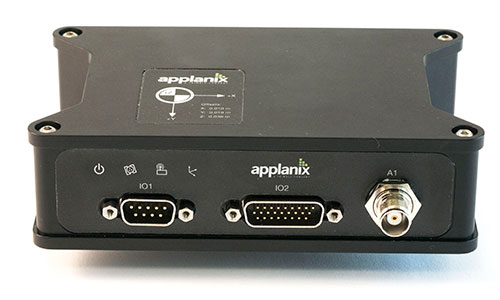
    The POS-AVX 210 by Applanix.

    Applanix Corporation has announced the POS AVX 210, the latest addition to its airborne position and orientation portfolio for direct georeferencing of airborne mapping sensors. Using Applanix’ GNSS and inertial technology, the POS AVX 210 enables airborne surveyors to achieve gains in accuracy, efficiency and productivity for low-altitude or small form factor sensors, when compared to GNSS-only point-matching or aerial triangulation techniques.

    The announcement was made at the INTERGEO 2015 conference and exhibition in Stuttgart, where Applanix is exhibiting in Hall 8, Booth C8.047.

    For photogrammetric applications, the POS AVX 210 delivers highly accurate exterior orientation solutions — reducing the requirement for ground control in assisted aerial triangulation of digital single lens reflex (DSLR) or medium-format photogrammetric imagery. For low-altitude lidar applications, the POS AVX 210 provides the required precision and accuracy of direct georeferencing to enable users to generate point clouds for further refinement in adjustment software.

    The POS AVX 210 is fully compatible with, and supported by, POSPac MMS, Applanix’ post-mission software for direct georeferencing of airborne mapping sensors. It is also features a seamless integration with the NanoTrack system from Track’Air, a leading commercial flight management system designed for highly efficient survey flight operations. Aircraft equipped with the POS AVX 210 and NanoTrack will be able to fly missions with reduced sidelap between flightlines, and a greatly reduced requirement for ground control points. These benefits can reduce costs and improve the efficiency of both data collection and the production of finished data sets for end users.

    “With POS AVX 210, Applanix has answered a need in the marketplace for a small, compact system that enables efficient data gathering from low-cost yet highly effective sensors. These include DSLR and Medium format cameras, low-altitude lidar systems, and other systems,” said Joe Hutton, director of Inertial Technology and Airborne Products at Applanix.

    POS AVX 210 consists of a single rugged enclosure containing a precision GNSS receiver and micro-electro-mechanical-system (MEMS) inertial sensors calibrated with the Applanix SmartCal technology, coupled with on-board data logging capability and interfaces for mapping sensors and flight management systems. POSPac MMS, available as an option with POS AVX 210, is a powerful GNSS-inertial processing software package that includes proprietary advanced capabilities such as the Applanix SmartBase virtual reference station, Applanix InFusion algorithms for increased productivity, and CalQC, a suite of data optimization and quality management tools.

    “POS AVX 210 builds on the technological foundation of our established POS AV portfolio for large format sensors, and brings into play the innovations developed for our unmanned solutions. This combination of experience and innovation enables us to deliver a package that strikes the optimal balance between price and performance for this segment,” Hutton said.

    POS AVX 210 is expected to be available in the first quarter of 2016 through Applanix’ airborne sales channels.