Category: Survey

  • Hexagon to Acquire Russia’s NAVGEOCOM

    Hexagon has entered into a definitive agreement to acquire all outstanding shares in Russia-based Navgeocom. The company is the largest distributor for Leica Geosystems, a Hexagon brand, in the Russian Federation.

    Founded in 1997, Navgeocom has grown into one of the top-tier distributors of surveying and mapping products in Russia. The acquisition marks another step in Hexagon’s global distribution strategy, which aims to establish a strong direct presence in all key markets.

    “Strategically, the acquisition of Navgeocom is a great fit for Hexagon and yet another step toward expanding our presence in Russia and Central Asia. Furthermore, Russia is entering into a phase of significant investment in transport infrastructure,” said Hexagon AB President and CEO Ola Rollén. “In addition to Russian highways, it includes significantly increasing the size of Moscow and surrounding its perimeter with a motorway, an expressway and high-speed rail system between Moscow and St. Petersburg, and an international transport passage programme between Europe and West China. Coupled with the acquisition, these projects provide substantial growth opportunities across Hexagon and improve our ability to serve customers in the Russian Federation.”

    The transaction is subject to regulatory approval and customary closing conditions. The transaction is expected to close as of end of February 2013 and will contribute to Hexagon’s earnings. Excluding intercompany revenue, the company’s turnover for 2012 amounted to approximately 10 MEUR.

  • From LightSquared to Narrowbanding: What’s Coming in 2013

    After a four-month sabbatical and the GPS World servers back in order, I’m back writing on a regular basis. I’ve been super busy on different GPS/GNSS-related products, conferences and various GPS/GNSS applications.

    Let’s take a look at some of the technologies and events that were significant in 2012 and some that will be significant in 2013 for high-precision GNSS users.

    LightSquared

    House Representative Anna Eshoo, ranking member on the House Subcommittee on Communications and Technology, who in September 2011 wrote to the NTIA’s Larry Strickland asking Strickland to find a way for LightSquared and GPS to coexist, said it best a year later (November 2012):

    “What happened to LightSquared is disappointing, but unfortunately that ship has sailed.”

    Now all that’s left are negotiations regarding GNSS receiver standards and/or a frequency guard band around GPS L1, both of which are moving at a snail’s pace. Regardless, you can bet that GNSS receiver designers are taking this experience to heart and tightening up their filtering as much as possible. The more difficult problem to solve is the augmentation services offered in the MSS band (such as Trimble’s OmniSTAR, Deere’s Starfire and just-introduced Terrastar), all of which broadcast their correction signals in the MSS band at low-power satcom power levels (as opposed to high-power terrestrial power levels).

    You can pretty much dismiss the LightSquared-proposed spectrum sharing proposal from last fall. It’s just another desperate move from a desperate company. If you have a few minutes, you can listen to the NSPS (formerly ASCM) Radio Hour show I participated in on October 8, 2012, where we discuss this issue.

    FCC UHF/VHF Narrowbanding Rule

    Hidden behind the LightSquared issue over the past two years has been the FCC narrow-banding ruling that took effect on January 1, 2013. Initially adopted in 1995, the narrowbanding ruling has been around for a number of years. In fact, equipment suppliers have been required to offer narrowbanded (12.5kHz vs. 25kHz spacing) radios since 1997. In 2004, the FCC set the January 1, 2013 deadline for users to comply.

    The FCC’s webpage on the narrowbanding ruling shed some light on the rationale behind it, but narrowbanding doesn’t specifically target RTK users so there’s not any RTK-specific information contained in the FCC documents. The bottom line is that the FCC is trying to allow more users in the same spectrum, similar to trying to fit more cars on a highway by splitting lanes in two. The problem with this, from a user standpoint, is that some vehicles won’t fit in the new, narrower lanes and therefore aren’t legal to use any longer. That’s the case with most UHF/VHF RTK base stations.

    To be clear, the narrowbanding ruling doesn’t affect UHF/VHF radios on your rover (receiving radio) GPS/GNSS receiver. I’m talking about the base station UHF/VHF radio. The ruling states that your UHF/VHF base station radio must be able to broadcast at 12.5kHz vs. 25kHz, essentially utilizing half the spectrum. Your UHF/VHF base radio can still broadcast at 25kHz if it broadcasts at 19,200 baud. Since January 1, 2013, it is illegal to broadcast at 4,800 or 9,600 using 25kHz spacing. The reality is that it becomes complicated when trying to broadcast at 19,200 baud at 25kHz spacing. Radio range is reduced and communication protocols (compatibility) become an issue. The reality is that you’ll likely need to replace your UHF/VHF base radio in order to stay compliant with the FCC rules.

    Just a few weeks ago (January 7, 2013), I was a guest on the NSPS Radio Hour to discuss the FCC narrowbanding rule. I invited Charlie Branch from Pacific Crest Corporation, a major supplier of VHF/UHF radios for RTK users, and Mark Silver from IGAGE Corp, a Pacific Crest dealer, to discuss their thoughts on the FCC narrowbanding rule and their experience with equipment compatibility. It is a great discussion on the subject and well worth listening to if you’re interested in learning more about the narrowbanding rule and how it affects RTK users.

    Lastly, you might also be interested in this presentation from Charlie Branch on the FCC narrowbanding rule.

    S-20203-P-Navigating-the-FCC's-Narrowbanding-Requirement-1-W

    Low-Cost RTK Receivers

    At the GPS World dinner during the Institute of Navigation GNSS conference last September, Dr. Todd Humphreys predicted that RTK GNSS would be available in mobile phones by the year 2020. As I’ve written before, the challenge with this is not really the quality of the GPS receiver used in mobile phones (some of the key engineers at Broadcomm, who supply the GNSS chip to Apple, used to design RTK receivers at Ashtech), but rather the poor quality antennas that mobile phone designers choose to use. Instead of RTK inside the mobile phone, I think small RTK “pucks,” a few inches in diameter, are more practical and realistic and will become common and easily interfaced to mobile phones (or other mobile devices) via Bluetooth. I think you will start seeing these within the next three years.

    Galileo

    With four Galileo IOV (in-orbit validation) test satellites in orbit that will be converted to operational satellites, Europe’s Galileo is on its way to becoming a viable satellite navigation system for high-precision apps. Launch of production satellites is scheduled to begin later this year and scheduled to occur every three months, launching in pairs. With an aggressive launch schedule, 18 satellites are predicted to be in orbit by the end of 2015, a little more than two years from now.

    I’m very bullish on Galileo because, like GPS, it supports the new L5 signal, which will lead to less expensive dual-frequency, dual-constellation receivers. It’s clear that the European Union is committed to Galileo, and it would be difficult for them to shut down the project after advancing as far as they have.

    GPS Modernization

    Modernizing GPS, on the other hand, is moving very slowly. Galileo already has more L5-capable satellites in orbit than GPS. My 2010 prediction that 18 Galileo satellites and 12 GPS satellites would provide the high-precision user community with a full 30-satellite constellation broadcasting L1/L5 signals by 2015 may not materialize. However, the weak link might end up being delays with the GPS program rather than a lack of commitment from the European Union with its Galileo program.

    Last August at a CGSIC (Civil GPS Service Interface Committee) meeting, I heard rumblings of three GPS launches this year (2013). Sadly, I don’t think this is going to materialize. I think we’re on pace for a single launch this year, again. Budget, launch pad scheduling and a healthy GPS constellation continue to be the culprits.

    There’s also a bit of second-guessing happening with respect to GPS signals. Earlier this month, Don Jewell wrote a piece entitled “2C or not 2C: An Important Signal Question.” While the delay in launching next-generation GPS satellites may have saved the U.S. government some money, I think it has put the L2C signal in peril. There were high hopes for L2C, as the second civil GPS signal, when it was conceived in the 1990s. But it’s been seven long years since the signal was deployed on the first GPS II-RM satellite in 2005, and there are only a total of 10 GPS satellites broadcasting L2C today. That’s not enough, and it’s hard for receiver manufacturers and the civilian user community to take L2C seriously when it appears the U.S. government is not taking it seriously.

    Some sort of positive traction with L2C must happen soon, or it will risk being ignored as it is overtaken by the new L5 signal that is supported by up-and-coming GNSS like Galileo and Compass/BeiDou.

    UAVs (Unmanned Aerial Vehicles)

    The United States is the last major geographic region (that I’m aware of) where UAVs are illegal to use by commercial entities. Service companies in other countries are going crazy with UAVs in offering mapping services (for instance, in mining and agriculture). The Federal Aviation Administration (FAA) is working on establishing rules by 2015 that will allow commercial entities to utilize UAVs in the U.S. This will turn the market for digital mapping imagery upside down. It will become very easy and inexpensive for people to obtain quick-n-dirty imagery for mapping purposes with a very quick turnaround.

    Thanks, and see you next month.

    Follow me on Twitter at https://twitter.com/GPSGIS_Eric

  • Leica Geosystems Introduces Viva GS14 GNSS Receiver

    Leica Viva SmartStation GS14

    Leica Geosystems has announced the release of the Leica Viva GS14 GNSS receiver. The GS14 is designed to be the best-price performance GNSS receiver in its class. The built-in GSM and UHF radio, internal memory and IP68 protection fully equips a user for nearly any measuring task, providing a reliable, revenue-generating production unit, the company said.

    When combined with the Leica Viva GNSS RTK, the GS14 creates a tightly integrated GNSS system ensuring the highest degree of flexibility, quality and reliability, Leica Geosystems said.

    The compact Leica Viva GS14 offers comfort in the field and a variety of setups and operating options, the company said. The Viva GS14 can be used as a light-weight rover and as a base station. The Leica Viva GS14 further enhances the Leica Viva series by offering a complete range of GNSS and total station solutions combining precision with maximum versatility. Users gain speed and efficiency by reducing the number of setups and control points with the unique SmartStation, and the versatile SmartPole allows instant switching between GNSS and TPS with a simple icon tap, Leica Geosystems said. The system exceeds specifications going beyond industrial standards. Moreover, the temperature range from -40°C to +65 °C ensures a flawless performance even in most challenging working environments.

    With  Leica Geosystems’ SmartTrack and SmartCheck technology integrated, the Leica Viva GS14 tracks signals with the highest quality and constantly evaluates and verifies the RTK solution to ensure the most reliable RTK positions. Together with the innovative Leica xRTK technology, positions are delivered in difficult GNSS environments. The Leica Viva GS14 also is ready for future satellite signals.

    The Leica Viva GS14 is available this month. Ordering information can be obtained from authorized Leica Geosystems representative.

  • Leica Geosystems Opens Online Store

    Leica Geosystems Inc. has announced the launch of the e-commerce site for Leica Geosystems Solutions Centers. The grand opening of the Leica Geosystems Solutions Center is marked by an unprecedented online-only promotion.

    Providing 24/7 personalized access to the products essential to the surveying, engineering, and construction industries, the site is a resource for more than purchases. It also enables customers to compare thousands of products based on features, shipping options and availability, and to create wish lists.

    The Leica Geosystems Solutions Centers e-commerce site offers a range of supplies, accessories and rentals, from paint and flagging, safety supplies, total stations and GPS systems for surveying, construction lasers and building layout systems. Relevant products and pricing are presented based on each customer’s unique profile, and subscription and quick-order capabilities make it easy to reorder frequently needed products.

    “We are committed to continually delivering value to our customers, and it is exciting to respond to customer needs by bringing this e-commerce site to the market,” said Mike Strom, general manager, Solutions Centers for Leica Geosystems. “Our customers are busy, and they often need to place orders outside of standard business hours. Our new e-commerce website provides customers a more convenient way to buy from us, and we will be offering online-only promotions on a regular basis — similar to the tremendous grand opening deals — so it’s easier than ever for customers to begin reaping the benefits of Leica Geosystems solutions.”

    The Leica Geosystems Solutions Center is factory-owned and operated, which guarantees that customers will receive the quality products and service expected from Leica Geosystems, the company said. Additionally, because support is critical at every step of the way, even during the purchase process, the site features multiple avenues to online support: customers get answers from factory-trained experts.

  • Leica, Sigma Seven Partner for GIS Market in UK, Ireland

    Leica Geosystems Ltd. has signed a formal agreement with Sigma Seven Ltd. to provide improved value data collection and workforce management solutions to the GIS asset collection and management market. The strategic partnership combines GeoField software from Sigma Seven with the Leica Zeno CS25 GNSS tablet computer, allowing high-accuracy satellite position data to be collected with richly attributed data in one system, the companies said.

    “Many organizations are demanding the need for better, more reliable information to improve the on-going management and maintenance of their assets,” said Nathan Ward, market segment manager. “This partnership with Sigma Seven with their industry renowned geospatial and work management software will provide a fantastic integrated solution to enable field and office staff to work more efficiently and enhance the quality and effectiveness of their corporate data. A combination of proven capabilities, experience and a long and highly regarded heritage in the geospatial sector, will mean that this partnership will further enhance the solutions in Leica Geosystems’ Asset Collection and Management market.”

    Andrew Coleman, Sigma Seven Director adds, “Leica Geosystems is one of the premier manufacturers in the asset collection and GIS industry and they continue to innovate in spatial and measurement technology. By working together I believe we have a unique field mobile proposition, backed up by a shared quality and customer service ethos, that will accelerate the delivery of cost, performance, service and accuracy benefits to our customers.”

    Since 2000, Sigma Seven has helped some of the largest utility companies in the UK and developed a range of systems for utilities, government, environmental and engineering customers. GeoField is a powerful mobile data and work management system that enables field workers to access enterprise data at the point of action, Sigma Seven said. An intuitive map-based interface is supported by comprehensive imaging, red-lining, structured workflow, data capture and field reporting facilities.

    The Leica Zeno GIS series has been designed and optimized to capture accurate GNSS positions and richly attributed data quickly, even in the most demanding of environments, the company said.

    Andrew Coleman, Sigma Seven Director, and Nathan Ward, Market Segment Manager for Leica Geosystems.
  • First Forge Echo Handheld Released for Foresters

    Forge Echo by F4 Devices

    F4 Devices has released the Forge Echo for forestry professionals.

    “Shipping the first product out this week is a great milestone for us,” said Mark Milligan, president of F4 Tech. “We have been working for years to produce a rugged handheld specifically made by and for foresters and professionals who work in the natural resource community. Seeing the first product come out of manufacturing and into the hands of the customer is a dream come true.”

    The Forge Echo offers high-accuracy GPS; high-performance ability under heavy tree canopy; and the capacity to measure distance and height through rugged terrain.

    The Forge Echo series combines the most precise GPS technology with an integrated clinometer tool that measures slope and vertical angles. Paired with groundbreaking, patent-pending echolocation technology, the Forge Echo enables users to measure accurate data on elevation changes, distance and tree heights.

    The Forge series of products has a fully ruggedized classification of IP67, and is shock-proof, dust-proof and waterproof. It comes standard with a Win Mobile 6.5 classic operating system, 3.5” display, 800-MHz processor, 512-MB SDRAM memory, 8-GB onboard storage, Bluetooth, Wi-Fi, 5 megapixel camera and an up to 32 GB micro SD expansion slot.

    The first units shipped December 4, 2012.

  • Nokia To Acquire earthmine 3D Imaging Company


    earthmine, Inc., announced today that it is has entered into an agreement to be acquired by Nokia. earthmine, based in Berkeley, California, is a privately owned company that develops a powerful end-to-end 3D street level imaging solution — from collection hardware to processing workflows, cloud hosting and client software.

    The earthmine team is expected to join the Nokia location and commerce business, and Berkeley will become a key site for the development of 3D reality capture technology. “We are very excited to be joining Nokia, a company with a huge presence and vision in mapping,” said John Ristevski, co-CEO of earthmine Inc. “We could not hope for a better place to fulfill and accelerate our mission of indexing the world in 3D.”

    The transaction is expected to close by the end of 2012. The terms of the transaction are confidential.

    earthmine, Inc., provides 3D street-level imagery, delivering an end-to-end solution including 3D mobile mapping systems, automated data-processing pipelines, cloud-based hosting services and server software, desktop software, client-side developer tools, and direct integration with GIS software. earthmine technology is being used in local search, mobile, mapping, GIS, safety, and security markets in the United States, Mexico, Brazil, Canada, France, Australia, Japan, Malaysia, Singapore, Korea, Saudi Arabia, as well as other countries around the world.

  • How Do You Topcon? Contest Launched


    Topcon Positioning Systems has launched the second annual “How do you Topcon?” video contest with the slogan, “However and whenever you Topcon, we want to see it!”

    The contest includes four categories:

    • Most innovative or creative use of Topcon equipment;
    • Funniest video or infomercial;
    • Best testimonial or “on-the-job” story;
    • The “wow” Factor.

    The contest will run through December 15, 2012.

    Participants will upload a short video (maximum length of three minutes) showing how they use Topcon products and services. Any use of Topcon equipment across all business segments — construction, survey, emerging business and agriculture — will be eligible. Prizes for the contest range from a preselected Topcon product, iPad or gift cards from $50 to $750.

    “We want to engage our customers in a fun way through a social media forum and are finding that the video contest, and the recent ‘Topcon is Everywhere’ and ‘Spirit of Agriculture’ photo contests are excellent ways for everyone to get involved, from first-time-users of Topcon equipment to those who rely on it heavily for extensive projects,” Scott Langbein, director of product marketing said.

    Official rules and information on how to enter are available at www.howdoyoutopcon.com.

  • ArcGIS for Windows Mobile Simplifies Field Data Collection

    Esri has released ArcGIS for Windows Mobile 3.1, coinciding with the release of Trimble Positions field collection software. The Trimble Positions software suite extends the ArcGIS for Windows Mobile application and software developer kit (SDK) with support for high-accuracy GNSS mobile GIS data collection.

    The Trimble Positions software suite is designed for users who require high-accuracy data collection workflows using Esri’s ArcGIS for Windows Mobile technology. The latest version of ArcGIS for Windows Mobile, combined with Trimble Positions software, simplifies field collection activities and requires little to no GNSS or GIS data collection experience, Esri said. ArcGIS for Windows Mobile and Trimble Positions support both real-time and postprocessing workflows, streamlining the process of collecting GPS data.

    With ArcGIS for Windows Mobile, data collected with Trimble Positions can be automatically synced to an enterprise server when Trimble Positions Desktop is used to manage data from incoming field crews. Office administrators can easily check for new sessions, differentially correct the data, and verify that it meets accuracy requirements before updating the enterprise database at the touch of a button, Esri said.

  • Trimble Makes RTX Coverage Announcement at Trimble Dimensions

    Trimble has expanded coverage of its satellite-delivered Trimble RTX technology for surveyors to most of the world. Trimble has also introduced post-processing capability for its CenterPoint RTX positioning service for farmers. Both announcements were made at the Trimble Dimensions 2012 conference being held in Las Vegas this week.

    RTX technology enables Trimble xFill, a new technique in RTK and VRS surveying that allows surveyors to continue working in the event the primary RTK or VRS correction stream is not available.

    Trimble RTX technology, first introduced in 2011, combines real-time data and positioning algorithms to deliver centimeter accuracy around the world. While RTX technology is available worldwide via IP and cellular delivery methods, Trimble RTX has been available via satellite L-Band only in North and South America. Now, the expanded satellite coverage includes most of Europe, Russia, and the Commonwealth of Independent States (CIS), Africa, Asia, and Australasia.

    Powered by Trimble RTX technology, Trimble xFill, a feature integrated into the new Trimble R10 GNSS Receiver, enables a new and innovative technique in RTK surveying, according to Trimble. It seamlessly “fills in” for RTK or VRS corrections for up to five minutes in the event of a temporary connection outage with the primary correction source. Minimizing downtime, Trimble xFill enables higher productivity for field survey crews, allowing them to continue working until radio or cellular connectivity is restored, Trimble said.

    “The expanded coverage of satellite-delivered Trimble RTX technology further extends our commitment to providing different ways of realizing high accuracy positioning solutions,” said Patricia Boothe, general manager of Trimble’s Positioning Services Division. “The power of RTX is proven. Trimble RTX is the backbone of Trimble’s latest positioning innovations including the Trimble CenterPoint RTX service for farmers, the Trimble Pivot RTX App, and Trimble Pivot RTX-PP App infrastructure solutions and now, the Trimble xFill feature for surveyors.”

    Trimble xFill feature allows satellite corrections to be delivered directly to the receiver with no need for additional equipment such as radios and antennas. With its built-in capability, the Trimble R10 automatically tracks these corrections and will use them when needed. Trimble xFill across the expanded satellite coverage area is expected to be available by late November 2012.

    CenterPoint RTX Positioning Services. Enabled by Trimble RTX technology, CenterPoint RTX provides centimeter level positions in real time via satellite L-band and IP/cellular. The new post-processing capability delivers better than one-centimeter accuracy and is available worldwide.

    Trimble CenterPoint RTX post-processing is a cloud-based service accessed through www.TrimbleRTX.com, allowing users around the globe to upload static GNSS observation data and receive positioning corrections calculated in the well-defined ITRF 2008 reference frame. The post-processed solution can be transformed to a variety of regional reference frames by selecting a coordinate system and tectonic plate.

    “With the introduction of post-processing capability to the CenterPoint RTX portfolio, we continue to extend the breadth of the service,” said Patricia Boothe, general manager of Trimble’s Positioning Services Division. “CenterPoint RTX post-processing gives geospatial professionals another tool for their toolbox, utilizing Trimble’s globally available RTX technology to enable higher-accuracy positioning solutions.”

    The open service allows any user to post process 10 data sessions per month.

  • Trimble’s Yuma 2 Rugged Tablet Provides Full Office Capabilities

    Logo: Trimble
    Logo: Trimble

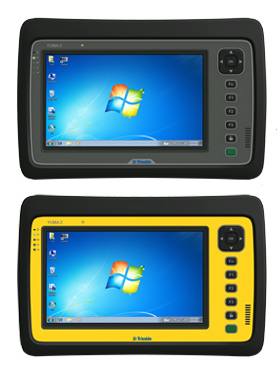
    Trimble introduced today the Yuma 2 rugged tablet computer, which it says is a powerful mobile computing solution that provides full office capabilities in the field for construction, transportation, public safety, field service, forestry, utilities, mapping, insurance and any other outdoor or service-related industry.

    The Yuma 2 offers a seven-inch capacitive multi-touchscreen in an easy-to-hold form factor that measures 6.3 x 9.6 inches, and weighs less than three pounds. Featuring new display technology for clearer readability in direct sunlight, the Yuma 2 can be used by mobile workers in the brightest outdoor conditions. The 3.75G dual-mode cellular data capability enables connectivity anywhere GSM or CDMA cellular networks are available.

    Featuring the Microsoft Windows 7 Professional operating system, the Yuma 2 is a fully functional field computer with a 1.6-GHz Intel Atom dual-core processor, 4 GB of DDR3 DRAM, a 64-GB solid state drive (SSD), and a dual battery with eight hours of typical run-time. Optional features include a 128-GB SSD, 3.75G cellular data connectivity and an extended battery set that provides up to 16 hours of operation.

    With the multi-touch capacitive touchscreen, users can type with fingers, stylus, or capacitive gloves and can control the size of the keyboard on the display for ease of use. Controlled zoom can optimize the user experience with maps and detailed information. The display supports use in landscape or portrait mode and is configurable to hold the orientation or to alter it in response to the accelerometer. The 5-megapixel camera provides video and photo capture with geotagging. The GPS receiver provides 2 to 4 meter accuracy, and is designed for data collection in applications such as distributed asset management, work order management, fleet logistics and more.

    “Ruggedness and connectivity in the field are vital for mobile workers — and Trimble has a history of providing innovative computing solutions to the market,” said Jim Sheldon, general manager of Trimble’s Mobile Computing Solutions Division. “Today, users demand solutions that are even tougher, faster, more reliable and easier to use, so they can be more efficient and productive. With new features and functionality, the Yuma 2 is an ideal solution that provides even more computing power to mobile professionals — more memory, computing speed, drive capacity, connectivity options and better display readability.”

    As with other Trimble rugged mobile computers, the Yuma 2 meets stringent MIL-STD-810G military standards for drops, vibration and humidity; and with an IP65 rating, it is protected against dust and water.

    Four different configurations are available to provide the tablet that meets the right need at the right price. Options include a larger SSD and 3.75G GSM and CDMA cellular data capability, as well as three different color schemes.

    The Trimble Yuma 2 tablet computer is expected to be available early in the fourth quarter of 2012.

  • Leica CS25 Tablet Offers Integrated GNSS for Asset Management

    Leica Geosystems has launched the Leica Zeno CS25 GNSS, a tablet computer with GNSS functionality and a large screen. The CS25 GNSS doesn’t require a backpack or a pole mount or additional batteries. A compact L1/L2 antenna is attached, but for high-accuracy data collection, it can connect with an external GNSS antenna mounted on a pole.

    The rugged Leica CS25 GNSS integrates an upgradable GNSS board and an attachable helix antenna. The new handheld rover is designed to combine the power of high-accuracy GNSS with the benefit of a large-screen tablet and the Windows 7 environment. With its large seven-inch display, the Leica CS25 GNSS is designed to make it easy to read and operate, even in brightest sunlight. The CS25 GNSS provides accurate and reliable results to deliver higher productivity for field crews.

    “Our customers can scale the CS25 GNSS to fit any accuracy needs, by offering a range of options, including meter, sub-meter or sub-decimeter accuracy all through a simple license model,” said GIS Business Development Manager Mauricio Jaimes. “They can also connect an external antenna to the CS25 GNSS to achieve centimeter accuracy. This flexibility, combined with the choice of Leica Zeno Field, Leica MobileMatriX or 3rd party partner software, offers versatile solutions to provide the right fit for any GIS data collection job.”

    The direct integration of GNSS into a tablet computer gives users full flexibility for efficient field data capture and benefits including:

    • Tablet computer, GNSS, and modem in one device that is light enough to carry in one hand
    • Large screen tablet with integrated GNSS RTK receiver, no backpack or pole required
    • One single charging unit for batteries, tablet computer and GNSS receiver
    • No external mobile phones are required to receive RTK corrections
    • User upgradable accuracy levels
      • Differential GNSS (GPS and optionally GLONASS): 50-cm accuracy
      • L1/L2 GNSS (GPS and optionally GLONASS) extension: <10-cm accuracy, with external antenna up to cm-accuracy
    • DGNSS, Real-time or post-processed GIS workflows, fully integrated into ArcGIS from Esri
    • Open support of third-party software applications via Leica Zeno Connect
    • Reliable components that have been engineered to operate in the most demanding work environments

    The CS25 GNSS provides an all-day battery life and IP65 rating, to ensure reliable operation, even after continued work in extreme environments with continuous exposure to water and dust. It is designed to be easily held in one hand and provides the largest GNSS data collection screen on the market.

    Mauricio Jaimes states, ”Shortly after the release of the entry-level GPS handheld Zeno 5 and the GG03 SmartAntenna, the CS25 GNSS is another unique product making the Zeno GIS series the most versatile product basket available for the GIS data collection.”

    The new Leica CS25 GNSS is expected to be available from late October 2012 onwards.