Category: Transportation

  • Swift travels across US with Skylark lane-level positioning

    Swift travels across US with Skylark lane-level positioning

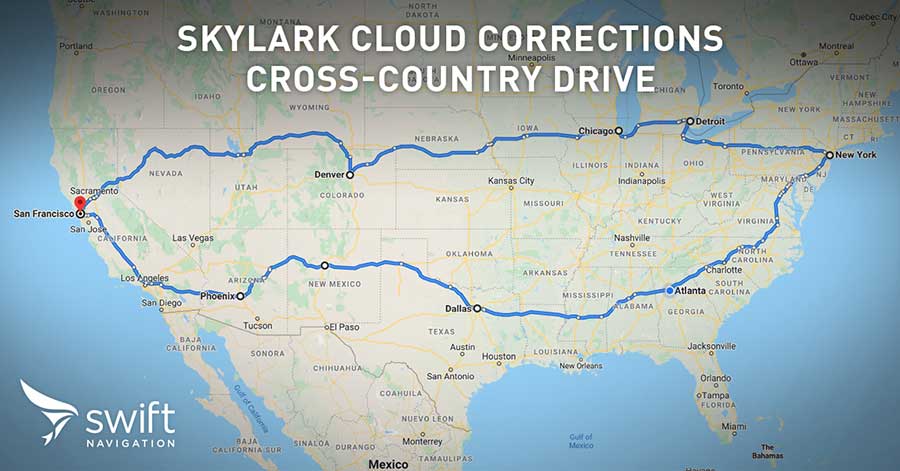
    Swift’s first-of-its-kind, cross-continental drive demonstrates the performance of Skylark. (Image: Swift Navigation)
    Swift’s first-of-its-kind, cross-continental drive demonstrates the performance of Skylark. (Image: Swift Navigation)

    Swift’s first-of-its-kind, cross-continental drive demonstrates the performance of Skylark.

    Swift ​​Navigation​, ​​a San Francisco-based tech firm redefining GNSS and precise positioning technology for autonomous vehicles, has completed a cross-country drive test.

    The goal of this first-of-its-kind drive, from San Francisco to New York and back, was to measure the efficacy of Swift’s recently expanded Skylark cloud corrections service and to demonstrate true nationwide lane-level GNSS correction coverage at the accuracy, reliability and availability levels required by Swift customers.

    The drive took the Swift team across 26 states and Washington, D.C., with 6,614.7 miles (10,645.4 km) driven over 116 hours and 14 minutes logged. A Swift vehicle was equipped with 20 different GNSS devices, tested using six unique chipsets that included: Swift’s Piksi Multi, Duro and multiple leading GNSS silicon providers.

    The results of the drive confirmed that Swift’s precise positioning solution — composed of Skylark and the Starling positioning engine — delivers consistent lane-level accuracy at continental level. Skylark delivered 100% availability, with sub-decimeter accuracy, over the entire United States, wherever cellular coverage was available.

    Performance highlights from the drive:

    • +Sub-meter horizontal accuracy (2-sigma) achieved across all environments
    • 100% Skylark availability
    • Highly repeatable results with Starling + Skylark across variety of dual-frequency GNSS chipsets

    “This is the longest continuous GNSS-based precise positioning drive test of its kind and we are proud of the engineering team at Swift for undertaking this ambitious task,” said Anthony Cole, executive vice president of engineering. “The results show that Skylark performs as intended and expected in both open sky and urban environments and demonstrate that Skylark is truly a cross-continental corrections network delivering the high integrity and high availability required by automotive OEMs, last-mile applications, rail, mobile and micro-mobility companies.”

    In addition to full contiguous U.S. (CONUS) coverage, the Skylark corrections service is now available in Europe and is being built out to support autonomous applications across the globe.

    Download a complete write-up of the cross-country drive test at www.swiftnav.com.

  • NovAtel delivers OEM driver built on Robot Operating System

    NovAtel delivers OEM driver built on Robot Operating System

    Hexagon | NovAtel has released its first purpose-built driver, powered by Robot Operating System (ROS), to support its OEM7 family of GNSS receivers.

    The driver, developed by NovAtel engineers, provides an optimized interface enabling users to accelerate autonomous development projects by quickly incorporating NovAtel OEM7 receivers into custom applications.

    The driver is available for immediate download through the new NovAtel GitHub repository or as a ROS Binary Package for direct installation.

    With the release of a NovAtel-developed OEM7 driver built on ROS, developers can now confidently access the critical data needed to build autonomy algorithms for academic investigations, ride-share programs, and other applications.

    Data from numerous sensors can be combined to help move projects into higher levels of autonomy faster without the need to adapt community-developed drivers. Tested using the Hexagon | AutonomouStuff platform, the driver ensures that the data received accurately reflects the output provided by the receiver, while also giving users the ability to record raw data for post-processing.

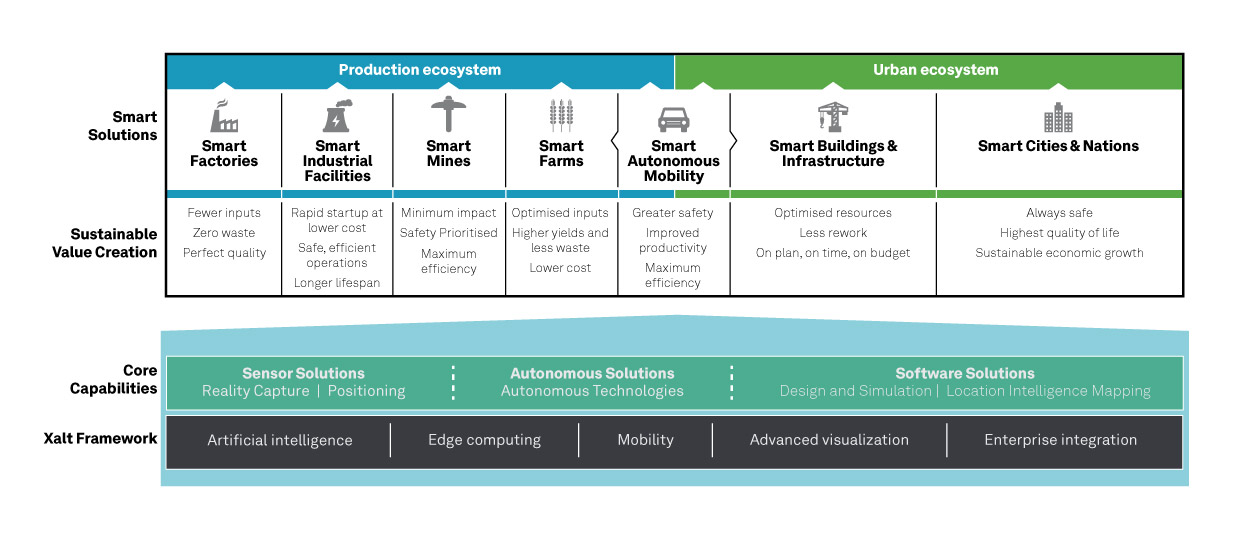
    “We are excited to introduce our first purpose-built driver powered by ROS to the GitHub community. Its development is a result of collaboration between NovAtel and AutonomouStuff in support of Hexagon’s Smart Autonomous Mobility (SAM) initiative, unveiled at CES 2020 in Las Vegas,” said Miguel Amor, chief marketing officer, Hexagon’s Autonomy & Positioning division. “The SAM portfolio is a comprehensive solutions platform that brings together all the necessary sensors, software and services to make autonomous driving possible.”

    The new driver is available for download on the NovAtel GitHub repository.

    ROS is a trademark of Open Robotics.

    Hexagon's Smart Solutions portfolio. (Image: Hexagon)
    Hexagon’s Smart Solutions portfolio. (Image: Hexagon)
  • Seven petitions call on FCC to reverse Ligado order

    Seven petitions call on FCC to reverse Ligado order

    Dozens of parties cite evidence of harmful interference and vast economic harm that FCC ignored in favor of dubious 5G marketing claims

    Dozens of private-sector interests will file Petitions for Reconsideration of the Federal Communications Commission’s (FCC) recent order to allow Ligado Networks to rezone its satellite spectrum holdings for terrestrial mobile use and “flip” them for a profit, according to the Washington, D.C.-based communications firm Glen Echo Group.

    Petitioners will ask the FCC to reconsider its decision, which has generated widespread opposition within the administration, on Capitol Hill and from other aviation and satellite spectrum users. Petitioners include:

    • Airline Pilots Association
    • Association of Equipment Manufacturers
    • Aviation interests (including the Cargo Airline Association, the International Air Transport Association and Airlines for America)
    • Iridium Communications
    • Lockheed Martin
    • Trimble
    • RNT Foundation

    The petitioners argue the FCC’s Order ignored or improperly disregarded the great majority of evidence, including technical analyses submitted by parties showing harmful interference, and relied instead on “easily disproven claims that Ligado will provide a so-called 5G service,” the Glen Echo Group stated in a press release.

    “The L-band is not included in any internationally recognized 5G standard, the spectrum is not harmonized regionally or globally for 5G, FCC’s 5G FAST Plan does not include Ligado or L-Band spectrum nor does the company have enough contiguous spectrum,” the release stated.

    Airlines for America. “Airlines for America (A4A) strongly supports a broad industry coalition that has led at least 32 U.S. Senators from both sides of the aisle to urge the FCC to stay and reconsider granting Ligado Networks’ petition to repurpose critical frequency spectrum for ‘5G’ terrestrial communications services. The FCC’s rushed order in April ignored testing protocols intended to protect critical users likely to be impacted, including aviation uses of Global Positioning Systems (GPS) for navigation, and satellite communications. Beyond industry opposition, the U.S. Department of Defense also strongly opposed the FCC’s action.

    “A4A is joining other industry constituents in directly petitioning the FCC to reverse its course, the effects of which could impact the safety of the flying public and impact operations, especially harmful outcomes in the recovery period following the COVID-19 pandemic.”

    Aerospace Industries Association. The association represents more than 300 companies.
    “Uninterrupted access to GPS is essential not only for our industry, but also for the American people, our national security, and the strength of the U.S. economy. This access is now threatened by the FCC’s decision to grant Ligado Networks’ application, despite years of evidence and the concerns outlined by several federal agencies about potential interference. With this motion, we are banding together to urge the FCC to reconsider this decision and allow safety and data to drive their decision-making on spectrum.”

    The International Air Transport Association (IATA), which represents some 290 airlines or 82% of global traffic said, “Approving Ligado’s spectrum for 5G poses a strong risk of interference with GPS signals, including the potential interruption of GPS signals at low altitudes. The FCC should reverse this decision.”

    Air Line Pilots Association (ALPA). President Capt. Joe DePete said, “Throughout its report and order, the FCC uses words like ‘possible’ and ‘feasible’ when talking about whether Ligado can operate. These are not the words you would want to hear your Captain use when talking about successfully completing your flight the next time you are sitting in the cabin. Aviation requires certainty and guaranteed performance from its systems. The FCC’s hasty, arbitrary, and incorrect decision will set a disastrous precedent that will impede ongoing work on spectrum sharing. The Ligado decision must be reversed immediately.”

    Aviation Spectrum Resources Inc. “In jointly filing a petition for reconsideration of the FCC’s recent decision on Ligado Networks’ proposal, ASRI joins the wider aviation community in expressing our view that the decision is based on a fundamentally flawed interpretation of the data that have been presented to the Commission. Among other deficiencies, the FCC’s decision ignores the FAA’s reservations cited by the Department of Transportation, having implications for many low-level aircraft operators including helicopters and UAVs. The FCC Order also seems to acknowledge the mounting evidence that aviation safety satellite communications will receive interference, but it relies on the completion of private negotiations to resolve these questions while giving Ligado a green light to proceed, rather than requiring specific mitigations itself. ASRI believes the FCC should revisit its decision in conjunction with aviation experts to ensure the safety of air transport, medivac and other essential aviation operators are not affected by this decision.”

    Iridium Communications. CEO Matt Desch said, “The FCC’s Ligado action prioritizes economic windfalls to a few speculators over safety of life, national security and important private sector companies whose customers would be most upended by their harmful interference.”

    RNT Foundation. President and Director Dana A. Goward said, “The FCC treated this like a commercial communications issue instead of a decision about safety-of-life navigation. They didn’t even consider the overall cost to the public in lost lives and property.”

    In addition to private sector interests, 14 federal agencies and numerous Republican and Democratic members of Congress oppose the FCC’s decision in favor of Ligado.


    Feature image: A-Digit/DigitalVision Vectors/Getty Images
  • Tracking system by Particle supports IoT deployments

    Tracking system by Particle supports IoT deployments

    Particle logoParticle — an edge-to-cloud internet of things (IoT) platform — is offering a new tracking system that allows organizations to track the locations of a wide variety of mobile assets.

    Particle’s Tracker SOM (system-on-module) builds on its tracking services foundation. It provides a powerful GNSS, microcontroller and advanced peripherals in a compact form factor. Tracker SoM serves as an accelerated starting point for organizations that require a tailored tracking solution for sophisticated applications as well as a fully certified foundation for OEMs developing commercial products.

    All of the company’s tracking solutions come with a high-gain GNSS antenna accurate to 1.8 meters.

    A forthcoming study from Particle surveyed more than 1,000 IoT engineers and industry experts. Asset tracking was ranked as one of the top three most in-demand applications for IoT technology.

    The asset tracking system is built on the Particle platform, spanning integrated internet-of-things (IoT) hardware, edge software, connectivity and cloud-based management software. The field-ready solution is configurable.

    With it, customers can track the real-time location of critical assets and capture additional intelligence via sensor data including temperature and acceleration as well as remotely control mobile equipment and vehicles.

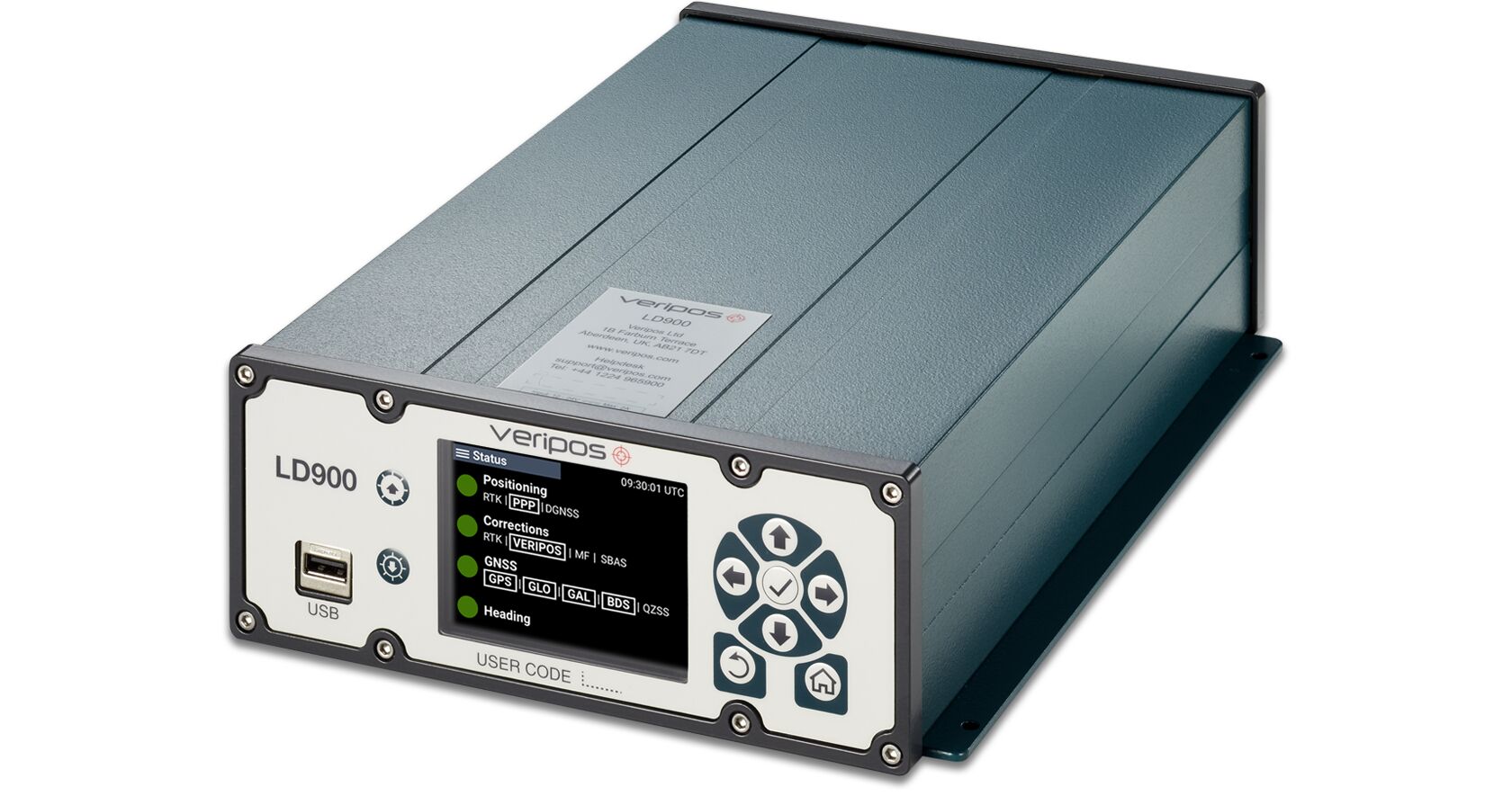
  • Veripos offers LD900 quad-band GNSS receiver for marine environments

    Veripos offers LD900 quad-band GNSS receiver for marine environments

    Photo: Veripos
    Photo: Veripos

    Veripos has released the LD900, a quad-band GNSS receiver capable of tracking GPS, GLONASS, BeiDou, Galileo and QZSS constellations to provide reliable and accurate positioning. Access to multiple GNSS signals allow for better satellite availability and reduce the impact of satellite masking or blockage, which can affect positioning.

    LD900 also receives L-band signals on multiple channels, providing access to the worldwide independent correction links and services provided by Veripos. With correction data available simultaneously from up to three correction satellites, the impact of satellite masking can be minimized to ensure reliable reception of correction data. Using the independent L-band RF input on the LD900 allows the connection of a dedicated L-band antenna ensuring optimal reception of correction services, especially at high latitudes, the company said.

    Veripos provides accurate and reliable positioning for all marine applications via their redundant positioning and multi-frequency precise point positioning (PPP) Apex and Ultra services.

    The Apex5 correction service utilizes all GNSS constellations delivering 5cm positioning accuracy for use in the most demanding offshore applications. Real-time kinematic (RTK) corrections can be utilized by the LD900 for applications where this service is required.

    The intuitive color display and navigation menu makes setup, configuration and system status monitoring simple. The display also helps troubleshoot issues with the LD900 allowing faults to be quickly diagnosed and resolved. The LD900 can also be configured remotely through the Veripos Quantum software.

    Features and Benefits

    • Supports decimeter-level multi-constellation positioning with Veripos Apex and Ultra PPP correction services
    • Multi-channel L-band allows simultaneous tracking of 3 Veripos correction service satellites
    • Independent L-band RF input
    • Easy-to-use, intuitive, color display for simple configuration and monitoring
    • Advanced signal filtering mitigates the effects of interference from other transmitters
    • Optional ALIGN GNSS heading solution
    • Optional MSK Beacon receives corrections from IALA marine radio beacon network
    • Automatic 72-hour rolling data log for incident support
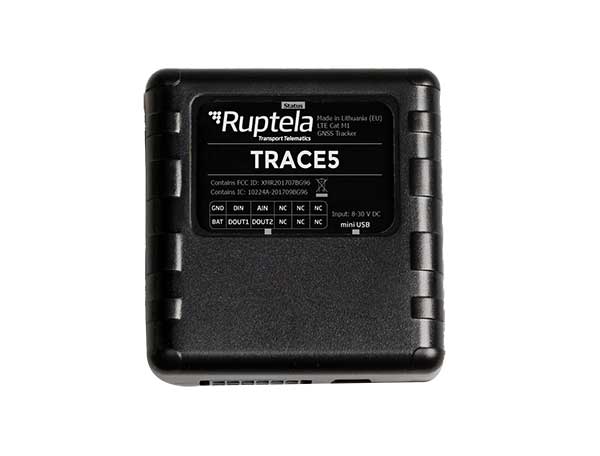
  • Ruptela expands to US with new telematics tracker, platform

    Ruptela expands to US with new telematics tracker, platform

    Photo: Ruptela
    Photo: Ruptela

    Fast-growing European transport telematics company Ruptela has expanded its global presence to the United States with a tailored ready-to-use telematics solution, the Trace 5 GPS tracker and multifunctional fleet management platform TrustTrack.

    The Trace 5 plug-and-play GPS-based automatic vehicle location (AVL) tracker has LTE Cat M1 (4G) connectivity and an integrated battery. It is fully certified according to North American requirements and has a two-year warranty.

    TrustTrack is an advanced telematics platform that helps businesses manage their transport resources more efficiently. It connects dispatchers and drivers and enables real-time monitoring and drivers’ management. It also generates trip reports.

    To create the North American solutions, Ruptela’s research and development team analyzed the needs of prospective clients and ran product tests on various roads in the United States.

    Andrius Rupsys, founder and CEO of Ruptela, calls the release of a telematics solution tailored to the U.S. market a significant milestone in the further expansion of the company. “We are entering the U.S. market confident about our solution for businesses eager to improve their efficiency, whether these are delivery, service fleets, vehicle leasing and financing (BHPH) or car rental companies.

    “As a customer-centric company, we always seek to reduce our clients’ efforts by accelerating ease of use, prediction and automation. We believe that with the right measures, less effort can lead to more growth,” Rupsys said.

    “Beyond that, our goal is to provide clients with solutions to the issues they are not even aware of yet. To do so, we offer the full solution including hardware and software manufactured and developed in the European Union, which is completed by cellular connectivity and the highest European quality support valued by Ruptela’s clients across the globe,” Rupsys said.

    Ruptela also offers individual onboarding (covering software and hardware) and free technical support, which ensures that clients can start using the product instantly. Depending on the expressed need, their manufactured hardware can be bought separately.

    For a limited time, first-time users are entitled to a special offer saving them software activation fee and gifting valuable extras.

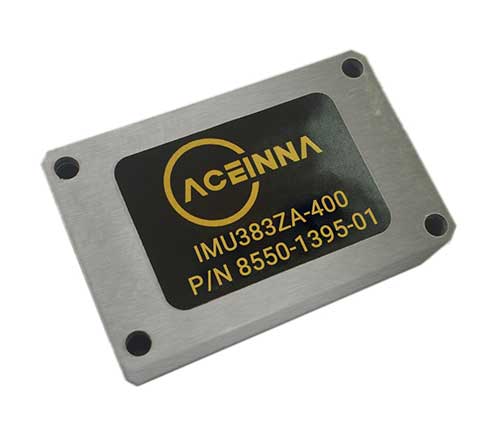
  • Aceinna launches 1.3°/hr automotive IMU sensor

    Aceinna launches 1.3°/hr automotive IMU sensor

    New sensor provides easy-to-integrate, cost-effective, triple-redundant IMU hardware and software for guidance and navigation solutions in autonomous machines and vehicles

    Photo: Aceinna
    Photo: Aceinna

    Aceinna has launched a new high-accuracy inertial measurement unit (IMU), the IMU383ZA. The sensor integrates triple-redundant, 3-axis micro-electromechanical system (MEMS) accelerometer and gyroscope sensors.

    The IMU383ZA is an improved, pin-compatible version of Aceinna’s IMU381ZA. It offers high performance (1.3 deg/hr, 0.08 deg/root-hr) and a triple-redundant sensor architecture for ultra-high reliability.

    The miniature module is factory-calibrated over the -40° C to +85° C industrial temperature range to provide consistent performance through extreme operating environments for a wide variety of applications.

    Applications include automotive advanced driver-assistance systems (ADAS), autonomous systems, drones, robotics, agricultural, construction and other industrial machines.

    The IMU383ZA provides a standard SPI bus for cost-effective board-to-board communications. Other features include advanced synchronization and a bootloader for field upgradeability.

    Measuring 24 x 37 x 9.5 millimeters, the IMU383ZA integrates a triple-redundant architecture that — combined with the small, low-cost packaging — meet the challenging performance, reliability and cost requirements of the automotive market including the areas of autonomous vehicles, self-driving taxis/delivery vehicles, ADAS systems, electronic stability control and lane-keep assist applications.

    The triple-redundant sensor architecture consists of three independent, 3-axis accelerometer and 3-axis gyros for excellent accuracy and reliability. By embedding a triple-redundant sensor array, the IMU383ZA uses Aceinna’s proprietary voting scheme to utilize only valid sensor data. Any defective sensor output or errant dataset will be ignored or de-rated in importance.

  • Estonian Railways selects Hexagon to automate and digitize operations

    Estonian Railways selects Hexagon to automate and digitize operations

    Railway solutions power asset management and infrastructure maintenance

    Estonian Railways Ltd., a state-owned company responsible for Estonia’s railway administration, has selected Hexagon’s Geospatial division to implement a transportation system that will automate and digitize the railway’s infrastructure maintenance, construction and traffic management processes.

    The combined asset management system and geographic information system (GIS) platform will help the company’s 700-plus employees efficiently manage assets and workflows.

    Powered by Hexagon’s GeoTrAMS, a web-based system for tram and light-rail infrastructure, and GeoMedia, a flexible GIS management platform, Estonia Railway will be able to visualize assets on a map while integrating with other companies and external systems.

    Hexagon’s state-of-the-art registry will serve multiple information systems and users at the same time, centralizing the use of asset and spatial data while avoiding data duplication and ensuring that users have access to the most up-to-date information.

    “As a company, we are in a unique situation of simultaneously implementing Hexagon-specific spatial data modules for rail infrastructure management and Microsoft’s ERP for asset management, gathering and digitizing different fragmented data, unifying different workflows and applying new data management principles,” said Maia Sokk, innovation manager at Estonian Railways. “Based on our strategic goals for the next four years, we are significantly modernizing our traffic management systems. Implementing Hexagon’s technologies is an important link in this ambitious plan.”

    Prior to selecting Hexagon, Estonian Railways used a fragmented system of disparate software applications to manage assets and infrastructure across its 750 miles of railroad, 129 platforms and 60 stations. With the new solution in place, Estonia Railway will be able to improve operational efficiency and transparency, better control expenses connected to the infrastructure and streamline administrative tasks.

    “Estonian Railways is forward-thinking in its use of location intelligence for managing infrastructure and operations,” said Mladen Stojic, president of Hexagon’s Geospatial division. “We are excited to deliver an integrated solution that will help the railway effectively monitor and maintain its assets while also ensuring successful management of rail traffic, construction projects and services.”

    Estonian Railways has been responsible for ensuring the smooth operation, management and maintenance of the country’s railway infrastructure since 1870.

    Learn more about how Hexagon helps organizations close the gap between the geospatial and operational worlds with its transportation solutions.

    Photo: joyt / iStock / Getty Images Plus / Getty Images
    Photo: joyt /iStock / Getty Images Plus/ Getty Images
  • Traxens offers smart-container tracking to manage COVID-19 supplies

    Traxens offers smart-container tracking to manage COVID-19 supplies

    Photo:Traxens has introduced new pricing for its smart containers tracking system to help global partners manage the challenges presented by the COVID-19 pandemic.

    “The COVID-19 pandemic is affecting supply chains across the globe. In a volatile market, supply chains must be resilient and able to adjust quickly and efficiently. Changes to global trade agreements and other factors always create some degree of uncertainty in supply chains,” Traxens stated in a press release. “This year however, COVID-19 has taken supply chain uncertainty to a whole new level.”

    Traxens’ smart-container solutions provide real-time visibility into global shipments. Its smart containers and data services give customers key data insights about when, where and why disruptions or delays occur. With accurate insights provided, customers can make quick decisions and collaborate with partners and customers to minimize costs, delays and backlogs.

    “If everyone across the supply chain has access to these vital insights, the industry will be better placed to return to normal once the pandemic has been brought under control.”

  • TomTom expands mapping deal with Verizon, providing APIs and SDKs

    TomTom expands mapping deal with Verizon, providing APIs and SDKs

    Photo: TomTom
    Photo: TomTom

    Verizon will integrate TomTom’s Maps application programming interfaces (API) and software development kits (SDK) into its location-services offering, making it easier for the developer community to build upon and integrate the platform. The developers’ portal is available at developer.tomtom.com. More information from

    The agreement is an expansion of the existing TomTom and Verizon agreement, where TomTom provides location-based services to enhance Verizon’s current suite of location-based data, navigation, and intelligence.

    “We look forward to continuing to build upon and evolve our product suite with TomTom’s technology,” said Jeff Frantz, executive director, Verizon Location Services. “By expanding our agreement, we are furthering our commitment to providing best-in-breed location technology for Verizon and our customers.”

    “We’re determined to make it as easy as possible for developers to have access to our Maps APIs and SDKs so we’re delighted that Verizon is offering TomTom products to their location-services customers,” said Anders Truelsen, managing director, TomTom Enterprise.

    5G and HD Maps. In the last quarter of 2019, the companies also announced an innovation project using Verizon 5G Ultra Wideband and TomTom HD Maps to help make intersections safer for emergency vehicles.

  • Martek Marine launches COVID-19 tests for crew changes

    Martek Marine launches COVID-19 tests for crew changes

    Martek Marine logoNew tests instituted to stop COVID-19 infection at crew change in response to new European Union and and International Maritime Organization (IMO) guidelines

    The European Union and International Maritime Organization (IMO) have issued new guidelines requiring ship operators to implement pre-boarding screening of seafarers.

    To assist ship operators comply with these important new guidelines and help protect their vessels from an outbreak of COVID-19, Martek Marine has launched the CoronaSafe finger prick antibody screening test.

    From a single drop of blood, CoronaSafe will detect IgM antibodies within 5-7 days of infection. It is particularly useful for detecting infections among subjects who show no symptoms and would otherwise embark undetected.

    A study into the COVID-19 outbreak on the cruise ship Diamond Princess estimated that 20.6%-39.9% of cases were asymptomatic, while a study published in the British Medical Journal concluded that up to four-fifths of cases are asymptomatic.

    The CoronaSafe test is approved and certified by the European Union as meeting the safety, quality and performance requirements of Standard IVDD 98/79/EC — the highest standard applicable for these devices. It is also in wide-scale use by authorities and corporations in Japan, China, Germany, Poland and Indonesia, and is formally certified by CFDA, Philippines FDA and Singapore Health Sciences Authority.

    “Screening crew before boarding is a critical step to prevent avoidable transmission from an asymptomatic crew member,” said Martek CEO Paul Luen. “It’s also an important diagnostic tool for re-screening after leaving or if someone shows symptoms. The effect of an outbreak on a ship could be catastrophic in both business and human terms.”

    Major corporations worldwide are rushing to adopt these occupational screening tests to help control the spread of this deadly virus, with demand rising rapidly as the crisis deepens.

    Martek, which has limited supply of the tests, are urging shipowners to act quickly to define their policy for crew screening, to maintain the health of their employees and ensure continuation of their shipping operations.

  • Radius Telematics sees spike in vehicle theft during coronavirus crisis

    Radius Telematics sees spike in vehicle theft during coronavirus crisis

    Photo: Radius Telematics
    Photo: Radius Telematics

    Radius Telematics has seen a big increase in the thefts of commercial vehicles since the coronavirus lockdown. With many offices, factories and construction sites unattended, thieves appear to be taking advantage of unattended locations.

    According to Radius, vehicles and plant not equipped with GPS security devices that detect and track unauthorized movement are especially vulnerable as the thefts may go unreported for many days or even weeks.

    Radius Telematics acquired two companies in 2019 that had a substantial proportion of their business in vehicle and plant security — both are reporting significant spikes in thefts.

    Radius Telematics encompasses telematics brands Kinesis, UK Telematic, Plant-I, Sure-Track, CyntrX and Key Telematics. Altogether, Radius companies track more than 250,000 vehicles across the globe, with security devices fitted to 27,000 assets ranging from generators to vans, mini-diggers and earth moving trucks.

    Many are equipped with Theft Recovery Trackers, small covert wireless devices with movement and tamper alarms. Once activated, the asset is automatically tracked to ensure that stolen assets are recovered quickly and efficiently.

    “From security tracker alerts, we have seen a doubling in plant and van theft since the lockdown began,” said said Greville Coe, managing director of Radius Telematics. “It’s incredible that when we are all self-isolating and worrying about a deadly virus, crime is being committed while people and organizations are so vulnerable.”

    Photo: Radius Telematics
    Photo: Radius Telematics

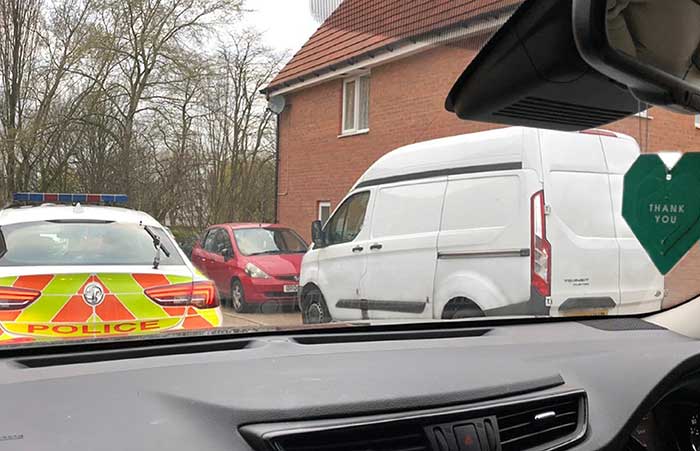
    One particularly disturbing theft was of a van stolen from a hospice for the terminally ill. The incident in Coventry, UK, saw a property belonging to a hospice ransacked and the theft of a hospice van. Fortunately, the vehicle was fitted with a Sure-Track tracker previously donated by Radius Telematics and the vehicle was safely recovered after three days. The Wireless Theft Recovery Tracker allowed the Radius nationwide finder network to accurately track the movements and whereabouts of the stolen vehicle.

    “It’s shocking that thieves would target a charity caring for the terminally ill in what is an exceptionally difficult time,” Coe said. “Radius Telematics tracking services remain fully operational irrespective of the travel and business restrictions imposed due to the Coronavirus crisis. We hope we can help to ensure that essential services can be delivered with minimal disruption.”

    Radius Telematics is a newly branded group formed within Radius Payment Solutions. The new telematics division incorporates a number of telematics-related businesses including their own Kinesis-branded vehicle tracking and previous acquisitions including Plant-i, UK Telematics and Sure-Track.