Category: Transportation

  • Launchpad: Autonomous vehicle software, GNSS avionics, more

    Launchpad: Autonomous vehicle software, GNSS avionics, more

    A roundup of recent products in the GNSS and inertial positioning industry from the February 2019 issue of GPS World magazine.

    New survey & mapping products

    OEM

    Dead-reckoning module

    For industrial and automotive
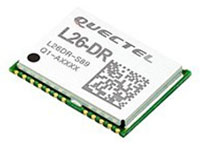
    Photo: Quectel
    Photo: Quectel

    The L26-DR dead-reckoning GNSS module is a multi-GNSS receiver embedded with a dead-reckoning solution to greatly improve positioning accuracy and speed while simplifying customer designs. The dead-reckoning capability ensures the module delivers the highest performance positioning solution available, even when GNSS signals are absent or compromised. Equipped with six-axis sensor MEMs and a powerful GNSS core, the module provides high sensitivity, fast GNSS signal acquisition and tracking with low system integration effort. The L26-DR can acquire and track any mix of GPS, GLONASS, BeiDou, Galileo and QZSS signals.

    Quectel Wireless Solutions, quectel.com

    Tracker

    Offers a long battery life

    Photo: Arvento/u-blox
    Photo: Arvento/u-blox

    The Arvento Treyki Mini is a compact people and asset tracking device with eight operating modes, including special settings for tracking children (with geofencing) and senior citizens (with an integrated fall sensor). It is also suitable for use in sports, racing and asset management and can be used as an emergency beacon. It has an onboard positioning receiver, and reports its location using an internal GSM/GRPS modem. It can operate for up to seven days from its 900mAh LiPo rechargeable battery before it needs to be recharged. It uses the u-blox ZOE-M8Q concurrent multi-GNSS module, which is able to receive 72 channels simultaneously.

    u-blox, www.ublox.comArvento Mobile Systems, www.arvento.com

    Small device antenna

    Pinpoints location to within centimeters
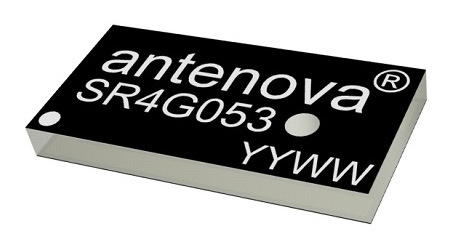
    Photo: Antenova
    Photo: Antenova

    The new Antenova Raptor achieves high accuracy using the L2 1200-MHz GNSS bands. The L2 band combines multi-band satellite signal reception and GNSS correction data, helping to mitigate position errors. The antenna is the latest addition to Antenova’s lamiiANT range of rigid FR4 antennas designed for easy insertion onto a printed circuit board (PCB). It is a GPS single-feed antenna in surface mount (SMD) form, measuring 16.0 x 8.0 x 1.6 millimeters, suitable for small PCBs within all kinds of small electronic devices. Raptor is supplied in tape and reel for ease in high-volume manufacturing applications.

    Antenova, www.antenova.com

    GNSS receiver

    Miniaturized anti-spoofing module
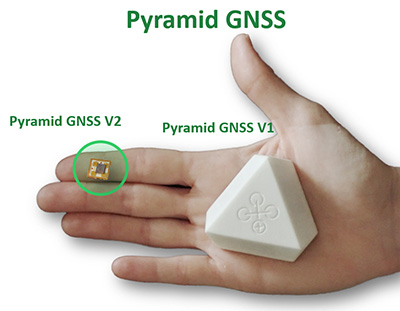
    Photo: Regulus
    Photo: Regulus

    The Regulus Pyramid is a fully functional GNSS receiver fortified with spoofing detection capability. The receiver contains patented technology that enables it to differentiate between real GNSS signals and fake ones generated by an attacker. It is availble both as a fortified GNSS receiver (v1), capable of detecting spoofing attacks, and at the chip level (v2), allowing mobile phones, cars and internet of things (IoT) devices to receive GNSS spoofing protection. A Pyramid GNSS Add-On can be integrated with another satellite receiver to enable spoofing detection capabilities for any GNSS board.

    Regulus Cyber, www.regulus.com

    GNSS antennas

    For high-precision positioning
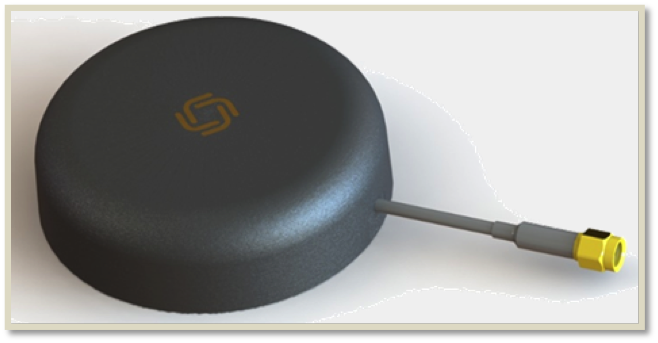
    The AGR6302/6303 antenna. (Photo : Allystar)
    The AGR6302/6303 antenna. (Photo : Allystar)

    The AGR6302 and AGR6303 GNSS patch antennas are designed for precision dual-frequency positioning. The AGR6302 is capable of receiving L1/L2 bands, and the AGR6303 is capable of receiving L1/L5 bands. They are designed for UAVs, precision agriculture, autonomous vehicles and other applications where precision matters. The AGR6302/AGR6303 active antenna is designed to cover GPS, BDS, Galileo, GLONASS, IRNSS and the QZSS system. It employs a stack four-feeds architecture with hybrid to achieve the multi-band operation, lower axial ratio, wider half-power beamwidth and excellent right-hand circular polarization. It is housed in a compact, industrial-grade waterproof and magnet mount enclosure.

    Allystar Technology, www.allystar.com


    UAV

    Multi-rotor drone

    Lifts 20-lb payload 12–15 minutes
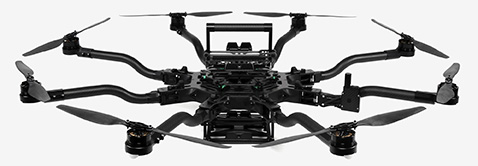
    Photo: FreeFly
    Photo: FreeFly

    The Alta 8 Pro multi-rotor drone includes waypoint technology to allow preprogrammed movements and autopilot functionality. The Alta Pro flight controller runs open PX4 flight stack for quick and powerful interfacing. The Alta 8 Pro fuses readings from accelerometers, barometer, and GPS to create high-bandwidth height control flight mode. By fusing GPS data with an IMU and barometer, the drone is able to hold position even in difficult weather conditions.

    FreeFly, FreeFly.com

    Post-processing

    Third-party GNSS use enabled
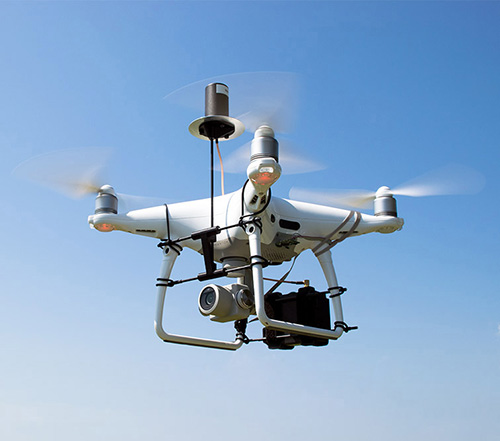
    DJI Phantom 4 Pro with Loki PPK system. (Photo: GeoCue)
    DJI Phantom 4 Pro with Loki PPK system. (Photo: GeoCue)

    The DJI Phantom 4 Pro RTK (P4R) drone is now integrated into the AirGon Sensor Processing Suite (ASPSuite). ASPSuite is a post-processing solution for GeoCue’s Loki direct geopositioning system for DJI and other drones. The ASPSuite enables integration of the P4R with third-party L1/L2 GNSS base stations such as systems from Septentrio, Leica, Trimble, Topcon, CHC and others in a high-accuracy PPK workflow. It includes support for engineering-grade survey options such as vertical transforms, creation of and transformation between collection datums and local coordinate systems, application of antenna static and dynamic lever-arm corrections, and full support for Loki direct geopositioning systems.

    GeoCue Group, geocue.com

    360-degree UAV camera

    11K eight-lens VR cinema camera
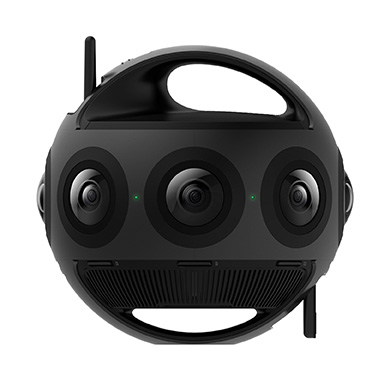
    Photo: Insta360
    Photo: Insta360

    The Insta360 Titan is an eight-lens cinematic virtual reality (VR) camera that captures 360-degree photos and video at up to 11K resolution. The Titan uses eight micro four thirds (MFT) sensors, the largest sensors available in any Insta360 standalone VR camera. It has a GPS signal antenna and a Wi-Fi signal antenna. The sensors maximize image quality, dynamic range, low-light performance and color depth, increasing realism in high-end professional VR capture.

    Insta360, www.insta360.com


    SURVEY & MAPPING

    Integrated receiver

    For diverse RTK applications
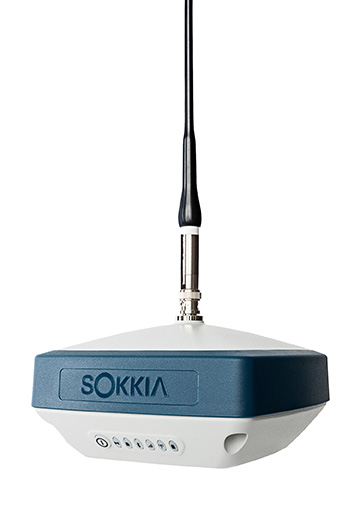
    Photo: Sokkia
    Photo: Sokkia

    The GRX3 is designed to provide a smaller, lighter and fully integrated GNSS solution to Sokkia’s GNSS receiver line. Its compact and lightweight housing has been tested to meet IP67 certification for protection against harsh weather. The receiver features Sokkia Tilt technology, which includes a nine-axis inertial measurement unit (IMU) and compact eCompass designed to compensate for misleveled field measurements by as much as 15 degrees. UTC technology automatically tracks signals from all available and planned constellations, including GPS, GLONASS, Galileo, Beidou, IRNSS, QZSS and SBAS.

    Sokkia, www.sokkia.com

    Airborne 3D scanning

    Designed to gather large area data
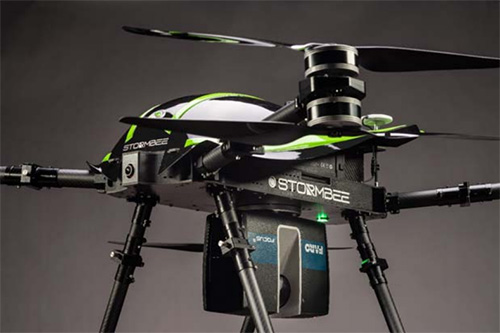
    The Faro Focus scanner attached to a Stormbee UAV. (Photo: Stormbee)
    The Faro Focus scanner attached to a Stormbee UAV. (Photo: Stormbee)

    The Faro–Stormbee airborne solution includes the Faro Focus laser scanner, the Stormbee S series UAV and the Beeflex software suite. It enables wide-area scanning missions such as highways, train infrastructure and buildings. It allows users to capture complex environments traditionally inaccessible to ground-based scanning. It has no need for control points. Users can create centimeter-level accurate point clouds directly from the in-flight data.

    Faro, faro.com; Stormbee, stormbee.com

    Documentary Series

    Experts discuss value of automation and new technology

    Screenshot: Topcon
    Screenshot: Topcon

    The new Infrastructure and Technology series of documentary videos is designed to foster awareness of growing global infrastructure demands and the technology that can help meet them. Experts interviewed include representatives from Intel, SAP, Industry Consultants, Constructech, Solar City and Topcon. They discuss how, by adopting technology, the construction and agriculture industries can increase productivity and help address infrastructure needs now and in the future.The series was filmed globally in the U.S., the Netherlands, the United Kingdom and Germany.

    Topcon Positioning Group, topconpositioning.com

    Project software

    Updated to latest intellicad technology consortium release

    Photo: Carlson Software
    Photo: Carlson Software

    The specialized drafting package Carlson iCAD 2019 allows technicians to supplement the finished product in their project deliverables. New additions and functions to the iCAD 2019 release are new tool palettes, new 3D solid commands, additional DGN support, and new express tools. iCAD features Google Earth import and export KML/KMZ, standard CAD entities and the drawing inspector tool.Carlson iCAD 2019 has been built with and updated to the IntelliCAD 9.0 engine from the previous IntelliCAD Technology Consortium 8.3 release. IntelliCAD 9.0 supports direct read of DGN files, allowing users to make edits without converting drawing formats, and features a CUI interface for custom workspaces, toolbars and ribbons.

    Carlson Software, www.carlsonsw.com
    IntelliCAD Technology Consortium, www.intellicad.org

    Geographic calculator

    Includes geocalc geodetic registry
    Screenshot: Blue Marble
    Screenshot: Blue Marble

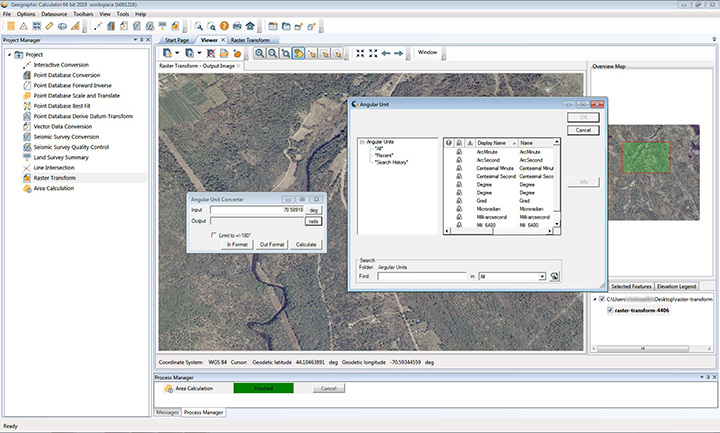
    The 2019 Geographic Calculator features a universal copy and paste function, a new angular unit conversion tool, support for NADCON 5.0 and updated seismic survey conversion functionality. The foundation of the calculator’s geodetic data-processing functionality is the embedded GeoCalc datasource, which is continually revised and improved with updates through the online GeoCalc Geodetic Registry. The datasource included in the 2019 release mirrors the most current EPSG database definitions. The calculator’s copy and paste function can be used to quickly capture data for use in a third-party application or to insert new coordinate values in an existing job.

    Blue Marble Geographics, www.bluemarblegeo.com


    TRANSPORTATION

    Positioning software

    For autonomous vehicles

    Photo: Shutterstock.com/Allies Interactive
    Photo: Shutterstock.com/Allies Interactive

    The InvenSense Coursa Drive software is an inertial-aided positioning solution for autonomous vehicle platform developers. It is a high-performance extension of the InvenSense Positioning Library (IPL), which has provided sensor-aided positioning to more than 50 million devices worldwide. Coursa Drive enhances inertial-only vehicle positioning to <0.2 percent of distance traveled, accuracy critical to maintaining decimeter lane-level vehicle positioning in challenging GNSS/perception system environments. Coursa Drive’s inertial navigation system (INS) calibrates using absolute position inputs from either high-accuracy GNSS receivers or from perception-based systems (camera, radar, lidar) with high-definition (HD) maps. In real time, Coursa Drive provides high-rate, 100-Hz delta positions and orientation to the autonomous vehicle system, complementing the lower rate position references from GNSS and perception systems. For non-real-time applications such as HD map creation and maintenance, Coursa Drive’s offline mode reprocesses INS data at two to three times higher accuracy than real-time mode, providing HD map companies alternative position references to verify HD map accuracy, even without GNSS, for up to 60 seconds.

    TDK Corporation, www.invensense.com

    Video surveillance

    Mobile Network Video Recorder (NVR)
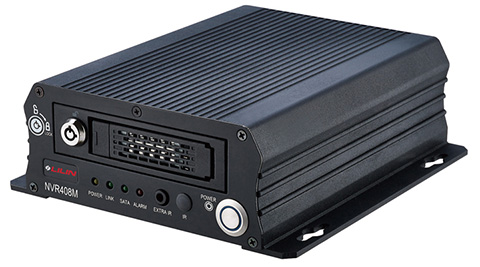
    Photo: Lillin
    Photo: Lillin

    The mobile NVR408M with GPS navigation is designed for use in moving vehicles, remote locations or rugged environments. The rugged compact design works in harsh and demanding conditions to deliver quality video surveillance. Typical applications are in law enforcement or public transportation, using vehicles such as trains, buses, trucks, cars, airplanes and ships. NVR408M is an EN50155-certified product, able to withstand severe vibration and shock and making it suitable for railway applications.

    Lilin, www.meritlilin.com

    Car2X/V2X Interface

    Accesses IEEE 802.11 and CAN networks
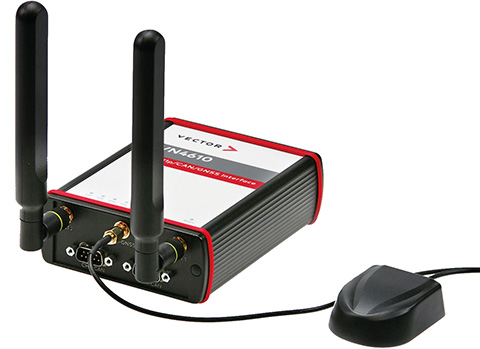
    Photo: Vector
    Photo: Vector

    The VN4610 is a powerful interface for accessing IEEE 802.11p and CAN (FD) networks for Car2X/V2X communication using a USB PC connection. The VN4610 provides precise position, time and speed information that can be used by the application as test stimulus or for documentation. The absolute GNSS timestamps can be used to synchronize recordings of distributed measurements for subsequent analysis. The u-blox NEO-M8U supports GPS, GLONASS, Beidou and Galileo — up to three systems simultaneously. The IEEE 802.11p-based dedicated short-range communication (DSRC) communicates in the 5.9-GHz range. The VN4610 supports the unfiltered receiving and sending of IEEE 802.11p frames used for the implementation of Car2X/V2X applications. The received IEEE 802.11p radio-signal-based frames are transferred to the application synchronously to the CAN (FD) messages.

    Vector, www.vector.com

    FAA-certified avionics

    With enhanced ADS-B, SBAS and georeferenced charts

    Photo: Collins Aerospace
    Photo: Collins Aerospace

    The Pro Line Fusion avionics upgrade for Pro Line 4-equipped Bombardier Challenger 604 series aircraft has been certified by the U.S. Federal Aviation Administration (FAA). The all-in-one upgrade complies with pending mandates while modernizing the flight experience for pilots. The upgrade includes ADS-B mandate compliance, SBAS-capable GNSS, localizer performance with vertical guidance (LPV) approaches, radius-to-fix (RF) legs, geo-referenced electronic navigation charts, widescreen LCD screens and synthetic vision.

    Collins Aerospace, www.collinsaerospace.com
  • Garmin’s GPS 3000 enables ADS-B and WAAS/SBAS operational capability

    Garmin’s GPS 3000 enables ADS-B and WAAS/SBAS operational capability

    Photo: Garmin
    Photo: Garmin

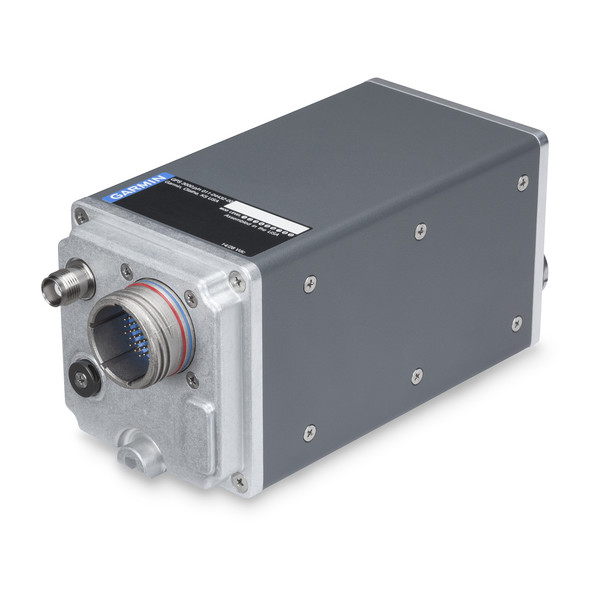
    Garmin International Inc., a unit of Garmin Ltd., has launched the GPS 3000, a high-integrity GPS position sensor that interfaces to existing avionics to help meet Automatic Dependent Surveillance-Broadcast (ADS-B) Out requirements.

    Also, targeting the air transport and defense markets, the GPS 3000 is designed as a WAAS/SBAS position source for select Flight Management Systems (FMS).

    Aircraft that are eligible to utilize the GPS 3000 as an ADS-B position source include the Embraer E135/E145 and the Legacy 600/650. Supplemental Type Certification (STC) for the GPS 3000 in these aircraft is currently available from FTI Engineering, in cooperation with Atlas Air Service in Germany, and can be installed throughout the entire Garmin dealer network.

    “Garmin continues to lead the industry with the most fielded ADS-B solutions that span all segments of aviation, including a wide-range of commercial, defense, regional and business aircraft,” said Carl Wolf, vice president of aviation sales and marketing. “We are thrilled to provide these aircraft with a solution that is cost-effective and is an easy to install alternative to the existing avionics manufacturer’s service bulletin.”

    A rugged, stand-alone and certified Wide Area Augmentation System (WAAS)/Satellite-Based Augmentation System (SBAS) GPS, the GPS 3000 meets DO-160 and DO-178B standards and is designed specifically for the harsh environmental conditions encountered by commercial aircraft.

    This compact and remote-mount solution utilizes enhanced WAAS/SBAS GPS satellite signals to provide precise position data through a standard interface. It also meets applicable high-integrity ADS-B position source standards, including TSO-C145d Class 3, the company said.

    The GPS 3000 is also designed to interface with select FMS to support GPS guidance throughout terminal, enroute and approach navigation. When configured appropriately, the GPS 3000 is capable of providing position information to an existing FMS to meet requirements for Required Navigation Performance (RNP) and can support GPS-based vertical approach navigation, such as Localizer Performance with Vertical (LPV) approach guidance.

    European Aviation Safety Agency (EASA) STC of the GPS 3000 in the Embraer E135/E145 and Legacy 600/650 is available from FTI Engineering, in cooperation with Atlas Air Service, as well as Garmin dealers. FAA validation of the STC is pending.

  • Tesla granted US patent for positioning tech

    Tesla granted US patent for positioning tech

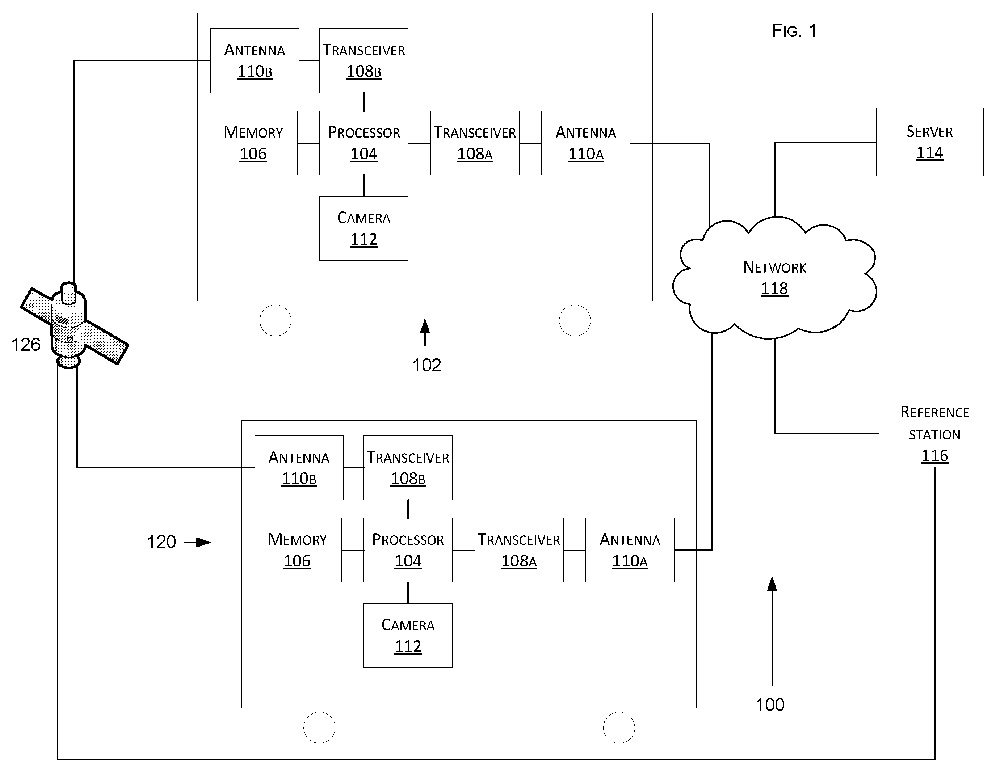
    Tesla has developed a technology aimed at providing more accurate positioning for autonomous cars by sharing data between vehicles, according to a U.S. patent application.

    The patent, “Technologies for vehicle positioning,” was filed in 2017 and made public in December 2018.

    Solutions include cameras detecting matching locations and using other vehicles in its fleet as “cooperative reference stations” to share raw GNSS data and make positioning corrections.

    Tesla describes in the patent, “The inventions increase such positioning accuracy via determining and applying offsets (corrections) in various ways, or via sharing of raw positioning data between a plurality of devices, where at least one knows its location sufficiently accurately, for use in differential algorithms.”

    Techniques include:

    • a reference station sharing a positional offset with an automobile,
    • a reference station calculating and sharing a set of parameters (offsets and corrections) for various error components including atmospheric, orbital and clock,
    • a reference station sharing its raw GNSS data so that vehicles can remove errors through differencing or other calculations.

    Tesla also would correct GPS data by matching camera data with vision maps to detect the exact location of a vehicle. With this vision-map matching localization approach, “a location estimate is varied until the location estimate makes a camera-reported lane boundary coincide with a map-reported lane boundaries,” the patent reads.

    Schematic of Tesla’s system shows two vehicles (102, 120) feeding data to a network, a server and a reference station. (Image: Tesla)
    Schematic of Tesla’s system shows two vehicles (102, 120) feeding data to a network, a server and a reference station. (Image: Tesla)
  • InvenSense provides auto motion sensors for positioning

    InvenSense (TDK Corporation) has introduced a line of automotive high-accuracy devices: the IAM-20680, IAM-20680HP, IAM-20380 and IAM-20381.

    According to the company, they are designed to enhance the absolute position of a vehicle in GNSS- and GPS-denied environments.

    The IAM-20680 is a 6-axis qualified sensor that features 16-bit accelerometers and 16-bit gyroscopes.

    The IAM-20680HP is a high-performance version of the IAM-20680 that features high gyroscope and offset thermal stability.

    The IAM-20380 gyroscope is compatible with a 3-axis automotive accelerometer and an automotive-qualified 6-axis device.

    The IAM-20381 is a 3-axis accelerometer compatible with a 3-axis automotive gyroscope and an automotive-qualified 6-axis device.

    The IAM-20680HP and IAM-20680 can be used to improve estimates of position, direction and speed when GNSS is denied, as well as improve quality of the position estimation when the satellite signal is strong.

    Customers can design with the IAM-20680 and can use the IAM-20680HP when navigating in high temperature environments or for systems where cooling is weak or unavailable.

  • Inertial Sense releases RTK-INS for consumer applications

    Inertial Sense releases RTK-INS for consumer applications

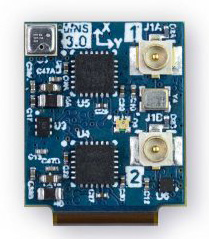
    Dime-sized INS with RTK paves the way for high accuracy in mass-market consumer applications.

    Photo: Inertial Sense
    Photo: Inertial Sense

    Inertial Sense has released a new micro-sized inertial navigation system (INS) with precise real-time-kinematic (RTK)-level accuracy. The company says the new solution paves the way for high accuracy in mass-market consumer applications.

    The new micro INS with RTK solution offers an accuracy of 2-3 centimeters using GPS positioning in combination with inertial sensors (including on-board sensor fusion).

    Inertial Sense designs and manufactures precision INS+RTK GPS sensors that deliver fast, accurate and reliable altitude, velocity and position for a wide range of autonomous vehicle applications, the company said.

    The new micro INS with RTK provides a high degree of precision for orientation and GPS in a tiny package. Standard INS/GPS sensors offer accuracy in the range of 1.5 to 2 meters. Inertial Sense’s micro INS with RTK offers accuracy of 2-3 centimeters.

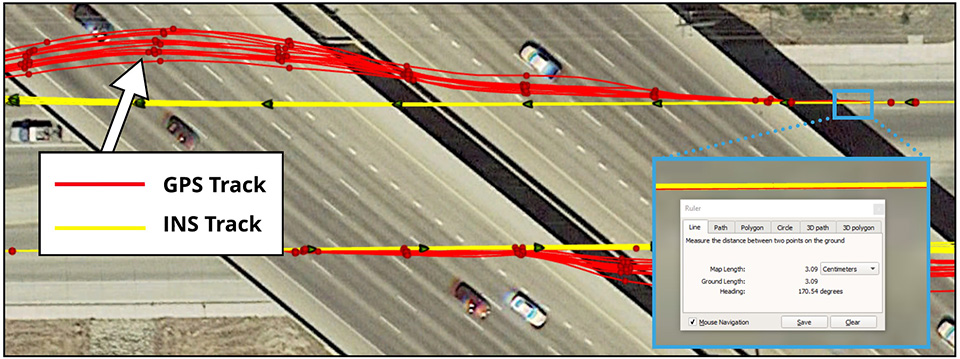
    In the image above, a vehicle travels under an overpass. The 3-cm accurate RTK-inertial navigation track holds true to the vehicle’s position while the standard GPS signal is lost. (Image: Inertial Sense)
    In the image above, a vehicle travels under an overpass. The 3-cm accurate RTK-inertial navigation track holds true to the vehicle’s position while the standard GPS signal is lost. (Image: Inertial Sense)

    “The incredibly small size of our new micro INS with RTK sensor, in combination with its extremely affordable price point, will make this type of highly sophisticated technology accessible for general consumer applications for the very first time,” said Walt Johnson, founder and CTO, Inertial Sense. “We are offering RTK at a size, accuracy and price point that the market has never seen before.”

    By optimizing the manufacturing processes for high volume applications, the micro INS with RTK sensor is as small and lightweight as a dime, and is available at a low price point.

    Sensor fusion. Sensor data from MEMs gyros, accelerometers, magnetometers, barometric pressure and u-blox GPS/GNSS are fused to provide optimal position estimation. Data out includes angular rate, linear acceleration, magnetic field, barometric altitude and GPS time.

    The miniature module provides orientation, velocity and position. Base station corrections data can be applied to achieve centimeter-level precision.

    Autonomous vehicles. The sensor will enable the navigation of all types of autonomous vehicles with a very high degree of precision, Inertial Sense said.

    Inertial Sense patented modules are currently being sold worldwide at volume for a broad variety of applications including:

    • Autonomous navigation: Drones, ground robotics, precision ag, automobiles
    • Aerial surveys: UAV Payloads for 3D mapping, photogrammetry, orthomosaics
    • Gimbal stabilization and antenna pointing
    • 3D motion capture and personnel tracking

    Evaluation kits. Inertial Sense has bundled evaluation kits it says are simple to use and contain everything needed to begin logging RTK-accurate data. The evaluation boards can be utilized in both rover and base station configurations and include 900-mhz radios with onboard logging capabilities.

  • Aceinna launches INS1000 for guiding autonomous vehicles

    Aceinna launches INS1000 for guiding autonomous vehicles

    Centimeter-accurate, multi-constellation, multi-band, dual-antenna, RTK and affordable GNSS/INS solution

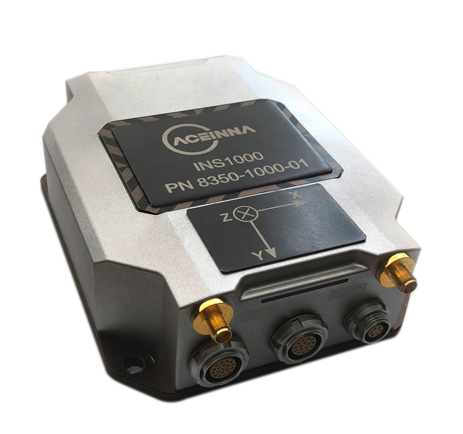
    Aceinna is offering the INS1000 high-performance dual-band real-time kinematic inertial navigation system (RTK INS) with built-in inertial sensors for construction, agriculture and automotive applications.

    Aceinna has also launched an OpenIMU package for autonomous vehicle guidance and navigation.

    INS1o00

    Photo: Aceinna
    Photo: Aceinna

    The INS1000 embeds Aceinna’s nine-degree-of-freedom inertial sensor technology to achieve automotive dead-reckoning performance in GNSS-challenged environments like urban canyons, heavily tree-lined roads, tunnels, underpasses and bridges.

    The dual-frequency RTK and tight coupling between GNSS and inertial sensors provide centimeter-level accuracy, enhanced reliability, and superior performance during GNSS outages, the company said.

    “Without access to satellite delivered guidance and localization information, autonomous vehicles can quickly get off track,” says Mike Horton, CTO of Aceinna. “The INS1000 delivers the essential detailed position and heading accuracy at a price point that is suitable for startups as well as fleet-wide vehicle deployment. As the leading supplier to the precision agriculture autosteer market, Aceinna is focused on driving the cost and complexity out of GNSS/INS solutions to enable widespread adoption in automotive ADAS applications.”

    INS1000 is an integrated navigation system consisting of an inertial measurement unit (IMU) and other sensors. It provides the position, velocity and attitude information of the vehicle. A dual-frequency (L1/L2), dual-antenna GNSS receiver is used as the primary aiding sensor. Also supported is a distance measurement indicator (DMI) which can be attached to a wheel of the vehicle/robot to measure the rotation rate of the wheel. Integration of a DMI would give an improved solution in challenging environments: urban canyons, tunnels, warehouses and indoor facilities and campuses.

    With horizontal position accuracy of 2cm (RTK), vertical position accuracy of 3cm (RTK), and velocity accuracies of 0.01m/s and 0.02m/s (horizontal and vertical, respectively), the INS1000 provides the precision navigation capabilities required for the automotive autonomous, automotive track testing, precision agriculture, and construction markets.

    The INS1000 is compatible with all major global satellite systems (GPS, GLONASS, Beidou, Galileo, SBAS); it supports USB, Ethernet, CAN and RS-232 interfaces; and it supports dual GNSS antennas for accurate heading in static and dynamic scenarios, and difficult magnetic environments.

    The easy-to-use embedded software allows extensive configuration and diagnostic capabilities. For optimal flexibility, the tools enable configuration of the output position, initialization of heading, IMU transformation matrix, GNSS antenna lever-arms, and NTRIP client. The control software can log and decode output data from the system or use the web application to plot results on a map.

    Open IMU Package

    Aceinna also offers an OpenIMU package. Its three key parts are:

    • a family of IMUs (three high-accuracy accelerometers, three high-accuracy gyros, and a powerful ARM Coretex);
    • an OpenSource tool chain and reference code for programming the IMU, with everything from basic download and debug to reference implementations of loosely coupled GPS/INS
    • a full developer site and tools with charting, graphing and algorithm simulation.

  • PTC railroad projects receive $46M in grants

    PTC railroad projects receive $46M in grants

    The Federal Railroad Administration (FRA) has awarded $46,301,702 in grant funding for 11 projects in 10 states to assist with deploying positive train control (PTC) systems.

    This marks the second selection of PTC systems deployment projects under the Fiscal Year (FY) 2018 Consolidated Appropriations Act and via the Consolidated Rail Infrastructure and Safety Improvements (CRISI) Program, collectively totaling $250 million in funding.

    Photo: gabriel12/Shutterstock.com
    Photo: gabriel12/Shutterstock.com

    “These $46 million in grants will speed up the deployment of positive train control systems, a key element in strengthening safety for both passenger and freight railroads,” U.S. Transportation Secretary Elaine L. Chao said. “Each recipient will be held accountable for achieving specific, measurable outcomes.”

    The CRISI Program was authorized by the Fixing America’s Surface Transportation (FAST) Act to provide funding to improve the safety, efficiency, and reliability of intercity passenger rail and freight rail transportation systems. The FY 2018 Consolidated Appropriations Act provided $592,547,000 for the CRISI Program, with $250,000,000 to be made available for PTC system deployment. On August 24, 2018, FRA announced $203.7 million in grant awards for PTC implementation to 28 projects in 15 states.

    “These grants not only help railroads continue to make progress implementing positive train control, but they also show that we’re steadfast in our commitment to make investments in passenger rail and rural communities,” said FRA Administrator Ronald L. Batory.

    In this second round of FY 2018 PTC CRISI grants, 100 percent of the funds will benefit passenger rail, with about 31 percent — or $14 million — benefiting rural projects. The CRISI grant program directs much-needed critical investment — at least 25 percent of available funds — to rural America.

    The awards will fund many aspects of PTC system implementation for intercity passenger or commuter rail and freight rail transportation, including back office PTC systems; wayside, communications, and onboard PTC system equipment; personnel training; PTC system testing; and interoperability.

    In 2008, Congress mandated implementation of PTC systems on the main lines of Class I railroads and entities providing regularly scheduled intercity or commuter rail passenger transportation over which hazardous materials are transported, or over which intercity or commuter rail passenger transportation is regularly provided.

    In October 2015, Congress extended the original PTC system implementation deadline from Dec. 31, 2015, to Dec. 31, 2018. In addition, Congress requires FRA to approve a railroad’s request for an “alternative schedule” with a deadline for full implementation beyond Dec. 31, 2018, but not later than Dec. 31, 2020, if the railroad demonstrates it has met the congressionally mandated criteria for an alternative schedule.

    FRA awarded grants in the approximate amounts below to the following programs and entities:

    AK – GPS Precision Upgrade for PTC (Up to $2,530,618)
    Alaska Railroad Corporation (ARRC)

    For this rural project, ARRC will procure a platform with software to improve the accuracy and functionality of the global positioning system (GPS) in ARRC’s locomotives and on-track equipment, and implement the vital functions for its Interoperable Electronic Train Management System (I-ETMS).

    CA – PTC Configuration Management and Office Segment Failover (Up to $3,976,560)
    Peninsula Corridor Joint Powers Board (Caltrain)

    To implement Caltrain’s I-ETMS PTC system, this grant will fund the completion of a Caltrain PTC Configuration Management (CM) Plan and PTC Data Management Procedure; development of a CM tool that generates an audit trail for changes to configuration data and CM training on the configuration control and CM process; completion of the backup central control facility (BCCF) and Central Control Facility Failover Design and Test Plan; and completion of the design, test results, and as-built system for an Emergency Operation Center at the existing BCCF in Menlo Park, Calif.

    CA – Leveraging PTC to Increase Capacity and Reduce Headways and Alternative Vendor Analysis (Up to $3,150,000)
    Southern California Regional Rail Authority (SCRRA or Metrolink)

    This project will include a study for leveraging PTC to increase capacity and reduce headways, software development, PTC component upgrades, and/or corridor infrastructure upgrades to support the future implementation of Higher Reliability and Capacity Train Control (HRCTC) along Metrolink’s congested Orange County Line from Los Angeles Union Station to Oceanside, Calif.

    CO – PTC Installation for the Amtrak Southwest Chief on BNSF Railway Through Colorado and Kansas (Up to $9,157,600)
    Colorado Department of Transportation (CDOT)

    This rural project from CDOT, in collaboration with the Kansas Department of Transportation (KDOT) and BNSF, includes the design, installation, and testing of I-ETMS PTC wayside technology on approximately 179 miles of a predominantly single-track route between Dodge City, Kan., and Las Animas, Colo.

    IL – PTC Kits and Spare Parts for 24 Additional Locomotives at Metra (Up to $2,058,163)
    Commuter Rail Division of the Regional Transportation Authority (Metra)

    The project includes purchasing and installing onboard I-ETMS PTC equipment on Metra’s 24 recently purchased locomotives.

    MA – MBTA PTC Implementation (Up to $7,548,335)
    Massachusetts Bay Transportation Authority (MBTA)

    This project on the Needham Branch, Franklin Branch, and Worcester Line, includes two components: 1) Testing of Automatic Train Control (ATC), where the previously installed PTC/ATC equipment on each line is already wired, and the software is loaded, connected to the signal system, and activated. The testing is intended to confirm the equipment functions as designed and is ready for testing with a test train. 2) “Completion of Commissioning for the ATC Lines,” where final acceptance testing is performed, including interoperability and ATC system testing.

    NC – NCDOT Rolling Stock PTC Commissioning (Up to $584,080)
    North Carolina Department of Transportation (NCDOT)

    The project includes installing, testing, commissioning, and certifying I-ETMS PTC onboard technology on three NCDOT locomotives for operation in the Piedmont intercity passenger rail service, which operates between Raleigh and Charlotte, N.C.

    NJ – PTC Installation on Multi-level Cab Cars (Up to $6,542,353)
    New Jersey Transit Corporation (NJT)

    This project will install and test Advanced Speed Enforcement System II (ASES II) PTC onboard equipment on 33 new NJT multilevel cab cars for deployment along the Northeast Corridor, Montclair-Boonton, and Morris & Essex Lines in New Jersey.

    NM – New Mexico Rail Runner Express PTC/Wi-Fi Integration Project (Up to $2,496,842)
    Rio Metro Regional Transit District (Rio Metro)

    This rural project will restore the New Mexico Rail Runner Express (NMRX) system’s Wi-Fi network from an end-of-life, proprietary WiMAX system to a cross-compatible Long-Term Evolution (LTE) system, providing a redundant path of communication for its I-ETMS PTC system. The project will install 26 towers along the 96 miles of the NMRX system between Belen, N.M. and Santa Fe, N.M., including approximately 74 miles of the Albuquerque Subdivision and 22 miles of the Santa Fe Subdivision. Nine NMRX cab cars, 13 coach cars, and 15 NMRX stations will be equipped with the Wi-Fi technology necessary for its PTC system.

    NY – MTA Metro-North Railroad PTC Communications Testing (Up to $2,300,000)
    NY Metropolitan Transportation Authority (MTA)

    This project will involve PTC system testing to measure communications system performance to predict, identify, and replicate communications issues affecting MTA’s Metro-North Railroad’s operations, as well as develop and validate mitigation approaches to address communications challenges along the Northeast Corridor.

    TX – Capital Metro E-ATC PTC Wayside Installation Project (Up to $5,957,151)
    Capital Metropolitan Transportation Authority (Capital Metro)

    This project includes the design, installation, and verification of the Enhanced Automatic Train Control PTC wayside system on the new tracks along Capital Metro’s Red Line in the cities of Austin, Cedar Park, Leander, and the surrounding Texas communities. The new project spans a 21-mile section along the Red Line on Capital Metro’s commuter rail corridor.

    More information about PTC systems can be found at the following links: https://www.fra.dot.gov/Page/P0358 and https://www.fra.dot.gov/ptc.

  • Collins Aerospace Bombardier upgrade given FAA certification

    Photo: Collins Aerospace
    Photo: Collins Aerospace

    Features include enhanced ADS-B, SBAS and georeferenced charts.

    Collins Aerospace’s Pro Line Fusion avionics upgrade for Pro Line 4-equipped Bombardier Challenger 604 series aircraft has been certified by the U.S. Federal Aviation Administration (FAA).

    Working closely with Bombardier as the original aircraft manufacturer and Nextant Aerospace as the installation design certification lead, this sole all-in-one solution complies with pending mandates while modernizing the flight experience for pilots.

    The Pro Line Fusion upgrade enhances the operational capabilities of the Challenger 604 aircraft to a similar level as that of the Challenger 605 and Challenger 650 jets equipped with Collins Pro Line 21 Advanced, while providing Challenger 604 operators with a solution to meet future regulatory requirements.

    Among these enhancements, the upgrade replaces the factory-installed CRT displays with three 14.1-inch widescreen LCD displays with configurable windows. Features designed to improve situational awareness and reduce pilot workload for Bombardier Challenger 604 aircraft owners include:

    • A fully loaded package of baseline equipment for operation in modernizing global airspace — beyond ADS-B mandate compliance, offering SBAS-capable GNSS, localizer performance with vertical guidance (LPV) approaches, radius-to-fix (RF) legs and more
    • Geo-referenced electronic navigation charts that display own-ship aircraft position
    • Synthetic vision as a standard feature
    • Optional FANS 1/A technology providing more preferred, wind efficient transatlantic routing

    The Challenger 604 Pro Line Fusion retrofit solution, which is already available for several Beechcraft King Air and Cessna Citation CJ aircraft, is part of our ongoing effort to provide owners with modern technology, enhanced situational awareness and compliance with airspace mandates,” said Christophe Blanc, vice president and general manager, business and regional systems for Collins Aerospace. “The Challenger 604 business jet is a highly-valued, long-haul aircraft that will be able to continue flying well into the future with this upgrade.”

    The upgrade is available exclusively throughout Bombardier’s extensive network of service centers and Nextant Aerospace.

  • Bell Helicopter unveils full-scale air taxi at CES 2019

    Bell Helicopter unveiled a full-scale vertical-takeoff-and-landing (VTOL) air taxi vehicle during CES 2019, held in Las Vegas.

    The air taxi, named Bell Nexus, is powered by a hybrid-electric propulsion system and features Bell’s signature powered lift concept incorporating six tilting ducted fans designed to safely and efficiently carry passengers.

    Bell Nexus means the nexus of transport and technology and of comfort and convenience. Nexus captures the long-sought-after vision of quick air travel with a unique in-flight experience, keeping passengers connected to their lives and saving valuable time.

    The Nexus team consists of Bell, Safran, EPS, Thales, Moog and Garmin, who are collaborating on Bell’s VTOL aircraft and on-demand mobility solutions. Bell is leading the design, development and production of the VTOL systems; Safran is providing the hybrid propulsion and drive systems; EPS is providing the energy storage systems; Thales is providing the Flight Control Computer (FCC) hardware and software; Moog is developing the flight control actuation systems; and Garmin is integrating the avionics and the vehicle management computer (VMC).

    Autonomous Pod Transport (APT). Alongside the debut of Bell Nexus, Bell will feature the Autonomous Pod Transport (APT). The APT family varies in payload capability that can serve many mission sets such as medical, law enforcement, offshore missions and on-demand delivery services. Bell is expanding into a new industry to show the full spectrum of our capabilities and the real-world challenges APT will address, Bell said in a press release.

    Future Flight Controls. Bell’s Future Flight Controls simulator was a new experience for CES participants this year. Bell is actively collecting data to help shape the future flight controls of aviation. Data from the simulators will be used to determine what actions and interfaces are intuitive to the average potential operator and what prior experiences and abilities contribute to these opinions.

    Urban air travel is coming closer to the masses through recent advancements in technology and software. The critical last step is designing a flight-control ecosystem that allows individuals to safely and efficiently operate urban air vehicles.

    In 2018, Bell provided the world a glimpse into the air-taxi passenger experience, and this year, attendees could see the full vision.

  • Sprint launches Curiosity IoT precision mapping system with Mapbox

    Sprint launches Curiosity IoT precision mapping system with Mapbox

    Advanced AI, robotics and autonomous vehicle services on Sprint’s dedicated IoT network will adapt to the real world using highly accurate, detailed and constantly refreshed maps.

    Sprint and Mapbox are launching precision mapping technology with Curiosity IoT, allowing automated services that run on Sprint’s dedicated internet of things (IoT) network to move around the ever-changing world with pinpoint accuracy.

    Smart machines, from drones to autonomous delivery carts, will be able to make fast location and routing decisions using highly detailed, accurate maps that are updated as the environment changes.

    Sprint made the announcement this week at the Consumer Electronics Show being held in Las Vegas.

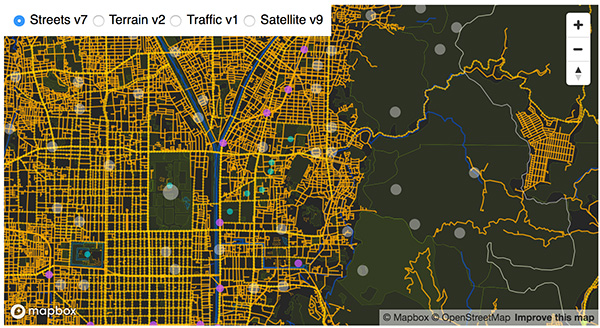
    High Accuracy and Precise Detail with Live Maps. Mapbox offers what it calls a “live map”, a map built not from traditional data surveys months or years before, but from data collected from hundreds of millions of location-enabled sensors that feed back information about the world in real time.

    Mapbox uses artificial intelligence (AI) to turn those massive data flows into a picture of real time transit paths that can be used for precise, up-to-date routing.

    Image: Mapbox
    Image: Mapbox

    Through its relationship with Sprint, Mapbox will leverage the inherent advantages of Curiosity IoT with 5G to take mapping to the next level. The network’s extreme bandwidth and low latency will allow Mapbox to collect higher volumes of richer data from the sensors, including high resolution video.

    That data can be processed to identify and detect changes in the physical environment. Those changes are then incorporated into updated maps which can be distributed at scale to a wide variety of smart machines. The result is more accurate, more up-to-date maps that reflect the world in real time.

    “Smart machine-based services need to be able to make immediate mobility decisions similar to the way a driver might react to construction, traffic or other obstacles on a street,” said Ivo Rook, senior vice president, IoT and product development at Sprint. “The launch of Mapbox’s precision mapping technology allows all intelligent machines to move at a level of precision never seen before. Our fully dedicated Curiosity IoT network and operating system — soon to be powered by Sprint’s mobile 5G connectivity makes this possible. From autonomous vehicles to advanced AI-based machines, precision mapping is a big step forward in making smart service models a reality for the immediate economy.”

    “As maps guide new smart machines on IoT networks, you remove the human in the middle that used to compensate for differences between the map and the real world. Precision mapping services need to reflect the world as it is, at that precise moment so that those smart machines can travel safely and efficiently,” said Eric Gundersen, CEO of Mapbox. “Sprint’s Curiosity IoT network with mobile 5G provides platform services that make that real with high bandwidth, edge computing for object detection and data processing and super low latency.”

    Curiosity IoT with 5G. Sprint 5G and Curiosity will create the new standard in IoT which features device data intelligence, over-the-air device management and chip-to-cloud security, the companies said.

    When coupled with Sprint mobile 5G technology, Curiosity IoT’s dedicated, distributed and virtualized IoT core network is capable of supporting artificial intelligence, robotics, edge computing, autonomous vehicles and other IoT systems requiring extreme low-latency and high-bandwidth.

  • Taoglas acquires commercial vehicle antenna maker ThinkWireless

    Taoglas acquires commercial vehicle antenna maker ThinkWireless

    Image: Taoglas

    Taoglas, a provider of internet of things (IoT) and automotive antenna and RF solutions, completed its acquisition of ThinkWireless Inc., an antenna provider that specializes in the design, development and production of combination antenna systems for the commercial vehicle market.

    The ThinkWireless brand will become ThinkWireless, a Taoglas company. ThinkWireless Founder and Chief Executive Officer Argy Petros and Director of RF Technology Pierre Wassom will remain.

    “Think Wireless has made a name for itself as a designer and developer of high-quality combination antenna systems with deep roots in the commercial trucking industry, where infotainment services, including good quality of service from satellite and AM/FM radio, weather band and GNSS are crucial,” said Ronan Quinlan, Co-CEO, Taoglas.

    “As we continue to explore potential acquisitions to strengthen the Taoglas brand, we were struck by how similar Think Wireless’ approach to antenna design and manufacturing is to our own commitment to excellence,” Quinlan said. “This is a great acquisition for the Taoglas Group as we look to further expand into new, synergistic markets such as the commercial vehicle industry.”

    ThinkWireless, headquartered in Coconut Creek, Florida, specializes in the design, development and production of combination antenna systems that incorporate two or more frequency bands, including those for SiriusXM satellite radio, GPS, AM/FM, weather band, DAB, HDTV, Wi-Fi, Bluetooth and LTE.

    The ThinkWireless facilities will become Taoglas’ ninth design and development center globally, and the third in the U.S., alongside centers in San Diego and Minneapolis.

    “Taoglas is well-known as a global brand that delivers the highest-quality antennas and RF solutions to the automotive, IoT and other markets,” Petros said. “Taoglas’ global scale and sales channels are unparalleled and will help grow the reach of ThinkWireless’ solutions in the trucking and commercial vehicle industry around the world.”

    The ThinkWireless antennas will be available for purchase on the Taoglas website, through key distribution partners and through Taoglas’ Antenna Builder e-commerce marketplace for custom antennas and cable assemblies.