Category: Uncategorized

  • High-resolution Earth observation satellites ready for launch

    Space Systems Loral (SSL), a provider of satellites and spacecraft systems, built the six high-resolution small satellites for Planet for its SkySat Earth observation constellation — a fleet Planet gained through the acquisition of the Terra Bella business from Google in April 2017.

    Six SSL-built small satellites for Planet's Earth observation constellation have arrived at Vandenberg AFB for launch. (Photo: SSL)
    Six SSL-built small satellites for Planet’s Earth observation constellation have arrived at Vandenberg AFB for launch. (Photo: SSL)

    The satellites will double Planet’s high-resolution imaging capabilities and help provide information about the physical world.

    The satellites, called SkySat 8 through 13, are each about 60 x 60 x 95 centimeters, weigh about 100 kilograms, and capture sub-meter color imagery and up to 90-second clips of HD video with 30 frames per second.

    “Small satellites and Earth observation satellites are a growing focus for SSL,” said Dario Zamarian, group president of SSL. “SSL is known for working very collaboratively with our customers and it has been a great pleasure for our team to work together with Planet. For these satellites we have taken a fresh approach to manufacturing, learning from our GEO experience but also looking for new and more efficient processes that in turn also inform our large satellite manufacturing.”

    Working together with the seven SkySats already on orbit, the new satellites will dramatically increase Planet’s high-resolution imaging capabilities, enabling multiple imaging passes in a single day. These capabilities, combined with Planet’s more than 170 Dove satellites and their advanced software analytics platform, make it possible to derive timely insights from any location in the world.

    The Planet constellation provides a broad range of data, tools, and analytical services that help leaders in business and humanitarian sectors solve complex problems.

    “These SkySats double the amount of high-resolution data that we can capture and serve to users, and will power insights, inform smart decisions, and most importantly, help make the world a better and safer place,” said Will Marshall, co-founder and chief executive Sofficer of Planet. “The highly experienced team at SSL has been helpful and responsive as we work together to get the satellites prepared for launch.”

    SSL has deep experience in building and integrating some of the world’s most powerful and comprehensive solutions for services such as communications, Earth observation, in-orbit servicing, space robotics, and exploration.

    Four SkySats built by SSL were launched in September 2016, and SSL is currently building an additional eight LEOs for Planet in its SmallSat manufacturing facility in Palo Alto, California, where the company takes an innovative approach to satellite design, assembly and test.

  • Can artificial intelligence fly a drone? Researchers are finding out

    Can artificial intelligence fly a drone? Can a drone catch thermals the way birds do?

    Microsoft researchers are partnering with the Nevada Governor’s Office of Economic Development (GOED) and the Nevada Institute for Autonomous Systems (NIAS) to find out.

    The artificially intelligent UAS being tested at the Nevada UAS Test Site is a 16 ½ -foot, 12 ½- pound sailplane. The sailplane relies on a battery to run onboard computational equipment and controls such as the rudder, plus radios to communicate with the ground.

    It also has a motor so that a pilot can take over manual operation when necessary.

    But once it’s up in the air, the UAS demonstrated its ability to operate on its own, finding and using thermals to travel without the aid of the motor or a person.

    Simple and complex UAS testing was conducted at the Hawthorne Advanced Drone Multiplex (HADM) Test Range located at Hawthorne, Nevada. HADM is a 230-square mile area where a variety of UAS applications can be tested, including artificial intelligence (AI).

    NIAS manages the FAA-designated Nevada UAS Test Site, which includes HADM and other UAS test ranges across Nevada.

    The Microsoft operation was based at the Hawthorne Industrial Airport where preliminary tests were made. Subsequent tests were conducted at an area east of Walker Lake around six miles from the airport.

    The team flew three different sailplanes that reached an altitude of approximately 1,700 feet flying almost two dozen Nevada UAS Test Site Certification of Authorization (COA) flights Aug. 7-11.

    “Innovative AI technology like what Microsoft tested with NIAS is clearly where the most dramatic global UAS Industry disruptions will occur,” said Chris Walach, test site director. “When you think of artificial intelligence or AI, there are many perspectives on the value-add to the UAS industry. Very evident to me, developing and testing AI, or machine learning technology, is going to have multiple applications that will significantly benefit the UAS Industry and the American way of life. This is one of the most exciting developments I have seen over the past several years in Nevada and globally.”

    “Microsoft researchers have created a system that uses artificial intelligence to keep the sailplane in the air without using a motor, by autonomously finding and catching rides on naturally occurring thermals, like how wild birds stay aloft,” said Ashish Kapoor, a principal Microsoft researcher. “Birds do this seamlessly, and all they’re doing is harnessing nature and they do it with a peanut-sized brain.”

    “Nevada wholeheartedly supports the growth of the Unmanned Aerial System industry, and teaming with global technology leader Microsoft to perform these Nevada-based tests speaks to our leadership role with the global community,” said Tom Wilczek, industry specialist for the Nevada Aerospace and Defense Industry for the Governor’s Office of Economic Development. “Governor Sandoval and our Legislature expect us to engage in the growth of transformative technologies and I am grateful for the opportunity afforded by Microsoft to team and to do just that.”


  • Harnessing scan-to-BIM technology on historic sites

    Attucks School in Kansas City.
    Attucks School in Kansas City. (Image: GeoSLAM)

    When it comes to renovating a building, unforeseen structural problems or lack of knowledge about the materials used can result in costly delays. Detailed site surveys help to highlight these issues before work begins — and digital technology is playing an increasingly important role in identifying them.

    The GeoSLAM ZEB REVO.  (Image: GeoSLAM)
    The GeoSLAM ZEB-REVO. (Image: GeoSLAM)

    A project undertaken at a 112-year-old school highlights the advantages of using 3D mobile indoor mapping for rapid and simple site surveys.

    “The beauty of scanning an historic building is that you find yourself delving into the stories behind its life,” said Stuart Cadge, sales and marketing coordinator at GeoSLAM. “As you peel back the layers you discover how the building has been used and altered over many decades of use.”

    This was certainly the case at the Attucks school in Kansas City, Cadge said. The distinctive red-brick building was designed by local architect Charles A. Smith and built in 1905. It is known for its colonial revival influences and also played a key role in the educational history of the African-American community.

    Two decades later, the school was suffering from over-crowding, and Smith was asked to extend it with a two-storey wing that connected to the east façade of the building. While the 1905 building had been symmetrical, the extension changed the floor plans considerably. Nevertheless, Smith delivered a sympathetic design that incorporated some of the original architectural details, ensuring the new wing was in keeping with the building’s aesthetic.

    While details of the school’s building history are available on national and state registers, it would not have been possible to uncover problems in its structural condition without an accurate survey.

    A Unique Challenge

    Redeveloping and retrofitting a building like Attucks requires careful planning to uncover any existing conditions in its infrastructure. Civil engineering firm BHC RHODES was tasked with providing a 3D Revit building information model (BIM) of the building. The firm decided to use lidar 3D mobile mapping technology provided by GeoSLAM to achieve this.

    The extremely rapid and efficient workflow of the GeoSLAM solution meant that possible setbacks in the project, caused by weakness in the structure, could be identified in advance, helping to speed up delivery time and reduce the overall project spend.

    At Attucks, there were visible signs of deterioration to the wooden flooring, as well as concerns about ceiling collapses and air quality — specifically, asbestos.

    The Value of Technology

    “The process of mapping a historic building can expose site personnel to a number of risks, so BHC RHODES wanted to ensure they spent as little time on-site as possible,” Cadge explained.

    As well as entering the Attucks building, personnel were required to move across the site safely, climb stairs and go into places that a trolley scanner could not.

    On this basis, the firm chose the GeoSLAM ZEB-REVO, a handheld, lightweight, mobile mapping scanner, which employs 3D Simultaneous Localization And Mapping (SLAM) technology. In this case, it was seen as a much more time- and cost-effective alternative to terrestrial, static or trolley-based systems.

    The complete 3D scan of the building comprises four separate scans and over 160 million data points. (Image: GeoSLAM)
    The complete 3D scan of the building comprises four separate scans and over 160 million data points. (Image: GeoSLAM)

    “The ZEB-REVO is an incredibly useful tool for indoor mobile mapping, particularly in buildings with multiple storeys,” Cadge said. “It enables users to simply ‘walk and scan’ the building, in order to generate building footprints, 2D plans, area measurements for real estate and facility management, 3D BIM models — the list goes on.”

    In the case of Attucks, just four-and-and-half hours were needed to scan the whole building, with the ZEB-REVO recording more than 43,000 measurement points per second. This was helped by the fact that operation of the device requires minimal staff training.

    Results

    Data from the ZEB-REVO and a trolley-based scanner were registered with Cyclone 9.1.4 to a common coordinate system before being exported to Autodesk ReCap as a .pts file format. From this, data was divided into 10-GB files to be used in ReCap and Revit 2014, where a level 200 BIM model was generated. The smooth and hassle-free workflow resulted in the entire building model being completed two weeks earlier than predicted.

    The Jazz District Redevelopment Corporation (JDRC) in Kansas City has plans to transform Attucks into a new community performing arts facility, with office space, paying tribute to its African-American history. By supplying the JDRC with the geospatial data, the organization was better able to understand the structural condition of the building and consider how the space could be used.

    The 3D point data was used to build a level 200 BIM model in Recap and Revit 2014. (Image: GeoSLAM)
    The 3D point data was used to build a level 200 BIM model in Recap and Revit 2014. (Image: GeoSLAM)

    The development will form an integral part of the 18th and Vine historic district in Kansas City, known as the Jazz District. The area is recognized as one of the cradles of jazz music in the 1920s and 1940s, and a historic hub of African-American businesses.

    To secure approval on the plans for Attucks, JDRC must produce detailed drawings that show what materials will be used, as well as full dimension drawings, floor plans, site drawings and elevations. In addition, it must provide details, both graphically and in written form, on what parts of the building will remain and what renovation techniques will be used.

    All this might present a number of challenges, but the scans produced by GeoSLAM’s ZEB-REVO show that the existing buildings are of exceptional quality. When the project does proceed, it will be able to do so quickly and efficiently thanks in part to the speed, simplicity and ease of use of the ZEB-REVO.

  • Seeing the Great American Eclipse

    Photo: 2017 Eclipse/NASA
    Photo: 2017 Eclipse/NASA


    A total solar eclipse will cross the United States from coast to coast on Monday, Aug. 21 — the first solar eclipse in nearly 40 years.

    Not only is this is the first eclipse in the age of social media, it is the first with a path of totality crossing the Pacific and Atlantic coasts of the U.S. since 1918.

    Also, its path of totality makes landfall exclusively within the United States, making it the first such eclipse since the country’s independence in 1776.

    An interactive story map from Esri, Seeing the Great American Eclipse, features a collection of eclipse data such as the amount of exposure per location, traffic analytics and more.

    An estimated 1.85 to 7.4 million people will be traveling to the path of totality. The rapid population influx presents a unique challenge for national public safety agencies as well as state and local governments across the cities and towns where eclipse enthusiasts are expected to gather.

    Aside from potential record-breaking traffic jams, many are anticipating a significant strain on emergency resources and infrastructure (both physical and digital).

    Oregon in the Hot Seat. As the first state to experience the eclipse, Oregon is in the hot seat. It is not only one of the most populous states in the path of totality, but is expected to receive the most out-of-state visitors as well.

    During this unprecedented event, government agencies are going to need real-time situational awareness of personnel; resources; and infrastructures, such as freeways, in highly populated areas. Knowing who and what are at risk is critical, but knowing where when it matters most enables a cohesive response to any situation that might arise.

    In recognition of those needs, Oregon has developed the RAPTOR app (Real-time Assessment and Planning Tool for Oregon). Leveraging Esri technology, the online government resource adds the path of totality and other eclipse event layers to its situational awareness data.

    RAPTOR also allows users to quickly and easily digitize information from these events and put them onto maps, providing agencies with up-to-the-moment info on everything from traffic to weather.

  • Joint NASA-Brazil CubeSat mission will unlock equatorial phenomena that affect GPS

    NASA and a team of Brazilian space researchers have announced a joint CubeSat mission to study phenomena in Earth’s upper atmosphere — a region of charged particles called the ionosphere — capable of disrupting communications and navigation systems on the ground and potentially impacting satellites and human explorers in space.

    Two phenomena in the ionosphere — equatorial plasma bubbles and scintillation — have impacted GPS signals, radio communication systems and satellite technologies for decades, said Jim Spann, chief scientist for the Science and Technology Directorate at NASA’s Marshall Space Flight Center in Huntsville, Alabama.

    Equatorial plasma bubbles are regions of comparatively low density which may elongate into towering plumes during high-intensity periods.

    Scintillation is a unique type of atmospheric fluctuation that can interrupt radio frequencies, much like the “twinkling” effect seen in starlight when optical frequencies are disrupted.

    The Scintillation Prediction Observations Research Task (SPORT) mission, funded by NASA’s Science Mission Directorate in Washington, will observe these peculiar structures in order to understand what causes them, determine how to predict their behavior and assess ways to mitigate their effects.

    The joint U.S.-Brazilian team, led by Spann as principal investigator, will design and launch SPORT as a CubeSat, a compact satellite about the size of two loaves of bread. It will be launched in 2019 to an Earth orbit 217-248 miles high (350-400 km). Its operational phase is expected to last at least a year.

    “Degraded communications and GPS signals are known to be closely linked to these phenomena,” Spann said. It’s his goal to shed new light on these phenomena and inspire new operational solutions to contend with the disturbed conditions.

    Protecting Brazil’s aviation, agriculture

    The Brazilian SPORT team seeks targeted solutions as well. Otavio Durão, project manager for the team at Instituto Nacional de Pesquisas Espaciais (INPE) in São Jose dos Campos, a São Paulo municipality, said ionospheric responses to a space phenomenon called the South Atlantic Anomaly or the South American Magnetic Anomaly — where space radiation dips close to Earth — negatively impacts Brazil’s busy airports.

    “Our country is interested in refining GPS signal processing, making takeoffs and landings safer and more precise,” he said. “Because so many international flights come to and through Brazil, this should be a matter of concern for all countries.”

    Brazil’s strong agricultural industry also is concerned about the anomaly’s effects on GPS, said Durão’s colleague Luís Loures, the SPORT spacecraft manager at the Instituto Tecnológico da Aeronáutica in São Jose dos Campos.

    “Our agribusiness is always trying to increase crop productivity,” he said. “One way to accomplish this is by using automated tools. But being able to precisely position those automated tractors and field sprayers, without disruption from solar phenomena, is crucial.”

    “As society becomes more dependent every day on space-based technology — cell phones, self-driving cars, secure military communications — it’s critically important we first understand the environment in which our technology resides, then learn how to operate through and preserve it from potentially disruptive or damaging interference,” Spann said.

    Understanding the phenomena

    Building on decades of previous ground-based studies of plasma bubbles over equatorial regions, especially intensive research in Brazil and Peru, SPORT will help researchers determine what’s happening in the ionosphere to stir up the bubbles, why they form along the equator and what causes them to appear at night.

    Plasma bubbles and scintillation are global equatorial and mid-latitude phenomena, made worse by the South American Magnetic Anomaly, where Earth’s magnetic equator dips close to Earth.

    “Many of the discoveries to date have been confined to a limited number of longitudinal sectors,” Spann said. “SPORT will make a systematic study of the ionosphere at all longitudes around the planet, documenting the conditions that trigger formation of the bubbles, with particular focus on the South American sector.”

    As multiple instruments on the ground also record data, Spann said, SPORT will probe the ionosphere from above. During subsequent passes, it will study specific sectors to identify conditions favorable for developing plasma bubbles and ionospheric scintillations.

    These simultaneous satellite and ground-based studies will help researchers identify how the observations are related, providing a better understanding of the results at all longitudes.

    The team is confident the findings will enable researchers to use physics-based models to determine the physics of plasma bubble triggers, and thus identify the resulting scintillation of radio signals that propagate throughout the turbulent region.

    More about SPORT

    SPORT science mission data will be distributed from and archived at the EMBRACE space-weather forecasting center in Brazil’s National Institute for Space Research (INPE) and mirrored at the Space Physics Data Facility at NASA’s Goddard Space Flight Center in Greenbelt, Maryland.

    The SPORT mission management team is led by Marshall alongside its international partners, the Brazilian Space Agency in Brasília, and the National Institute for Space Research and Technical Aeronautics Institute, both in São Jose dos Campos, São Paulo.

    Spann’s team, which oversees the mission science, flight instruments and the CubeSat launch, includes researchers at Marshall; Goddard; Utah State University in Logan, Utah; The Aerospace Corporation in El Segundo, California; the University of Texas at Dallas; and the University of Alabama in Huntsville.

    NASA’s Brazilian partners are overseeing the development of the spacecraft; integration and testing; mission operations; data management and dissemination; and the ground observation network. The science analysis will be conducted by the entire team.

    SPORT is part of NASA’s Heliophysics Technology and Instrument Development for Science program. NASA’s heliophysics mission includes research into the effects of the sun on Earth, its atmosphere and the planets of our solar system.

  • HxIP announces updates to 2017 airborne imagery collection plans

    Latest imagery collection covers U.S., Canada, Europe; plans include territories, cities

    The Hexagon Imagery Program (HxIP) has updated its 2017 airborne imagery collection plans of Wide Area Coverage (WAC) at 30-centimeter accuracy and Urban Area Coverage (UAC) at 15-cm accuracy in North America and Europe.

    By the end of 2017, the HxIP will update its content for more than 3.9 million km² in North America. This includes a refresh of 18 previously captured U.S. states and completes the full coverage of the continental United States, Hawaii, Puerto Rico, the U.S. and British Virgin Islands, and select areas of Alaska.

    The HxIP announces updates to 2017 airborne imagery collection plans of Wide Area Coverage (WAC) at 30-centimetre accuracy and Urban Area Coverage (UAC) at 15 cm accuracy in North America and Europe.
    The HxIP announces updates to 2017 airborne imagery collection plans of Wide Area Coverage (WAC) at 30-centimetre accuracy and Urban Area Coverage (UAC) at 15 cm accuracy in North America and Europe.

    In addition to the 30-cm program, the HxIP expands its 15-cm collection by 100 cities for a total of 347 U.S. urban areas covering more than 492,000 km². The HxIP also includes 23 Canadian cities at 30 cm with efforts underway to refresh and expand the Canadian library.

    This year will see the addition of approximately 650,000 km² in Europe bringing, the Western European coverage to more than 2.2 million km². Including countries such as Italy, Germany, Spain, France and Poland, this coverage expands the HxIP on the global stage, making it one of the most comprehensive, imagery programs in the world.

    Hexagon-Europe-W

    “Over the last three years since we launched the program, we have been extensively growing our coverage through adding new imagery acquisition partners and increasing our resources to support the program,” said John Welter, Hexagon Geosystems Content and Engineering Services president. “We are well on track to meet our 2017 goals, and we are continuously improving our offerings to better support our users, including completing coverage and reducing the time it takes to refresh our content.”

    Quality control by experts. Launched in June 2014, the HxIP provides valuable geospatial content and delivers professional-grade airborne images captured with Leica Geosystems’ airborne sensors, including enhanced-resolution, four-band orthos, rasterized point clouds, and stereo imagery.

    Captured by a network of Leica Geosystems airborne users, the data is processed by experienced photogrammetry professionals who ortho rectify, and correct colors and seam lines. Using the latest processing technology, these experts clean the data to be used in various applications, such as corridor mapping, real estate assessments and flood planning.

  • Intergeo preview: Photogrammetry heads for new markets

    We’ve entered a new golden age for photogrammetry, powered by the ease of digitizing images and their ubiquitous availability.

    Photogrammetry is the science of making measurements from photographs. While science drives the process, business is driving a wealth of associated applications.

    “Photogrammetry is ahead of its time because everything is already fully digital in this discipline,” said Heinz-Jürgen Przybilla, professor of Geodesy at Bochum University of Applied Sciences.

    UAVs, digital cameras and image sensors on the Internet of Things, in aircraft or on satellites are opening up applications that only the world of science was predicting a few years ago.

    Intergeo Show. The developments that photogrammetry is setting in motion will be on display at Intergeo 2017, Sept. 26–28 in Berlin.

    The art of using photographs for surveying, which laid the foundation for present-day photogrammetry, dates back 150 years and involves developing processes to derive information from images that go far beyond simply viewing them. In recent years, the discipline has made huge progress, with businesses discovering new application areas.

    The high level of automation makes it possible to interpret huge volumes of data from sources such as large-scale satellite imagery. The process also works in real time — a prerequisite in applications such as autonomous navigation.

    “Automation in image evaluation makes people incredibly flexible. We’re no longer restricted to viewing the world from our own height,” said Christian Heipke, president of the International Society for Photogrammetry and Remote Sensing (ISPRS).

    Photogrammetry applications are moving into numerous sectors and tackling a host of challenges. Global change is being documented using images from space. Image data is being used to forecast crop sizes. Inaccessible structures are being monitored with the help of images from UAVs.

    As Przybilla said, image evaluations from UAVs are already being used for high-precision land register surveys. What took days manually can now be accomplished in minutes.

    Disaster Prevention. Other applications include disaster prevention and monitoring refugee movements. In many cases, drones provide a rapid overview, while satellites offer the large-scale basis for evaluating a situation.

    In architecture, 3D models from aerial images complement computer-aided design (CAD) plans.  In conjunction with virtual reality, 3D models enable design variants for a building to be depicted in the actual environment.

    Information is also being shared with disciplines such as computer vision and robotics, with “seeing robots” increasingly recording and mapping their surroundings.

    Industrial site in 3D: A digital elevation model from a series of overlapping photos taken from a UAV at 300 feet above ground level.
    Industrial site in 3D: A digital elevation model from a series of overlapping photos taken from a UAV at 300 feet above ground level. (Image: Eric Gakstatter)

    More and more, the processes and algorithms on which image evaluations are based are becoming like a “black box” for users — hard to understand from the outside. While the black box is getting bigger, scientists are refining their methods.

    “We’re increasingly combining existing data and this will leverage a huge amount of new potential,” explained Heipke. The black box for photogrammetry will be discussed at Intergeo.

    Once the process of image content recognition is automated, applications are limitless.

    Several sessions organized by the German Society for Photogrammetry, Remote Sensing and Geoinformation (DGPF) at Intergeo will be looking at topical issues in photogrammetry. The contents of the presentations range from new sensors and remote sensing to “engineering geodesy meets photogrammetry.” Numerous companies will also be showcasing their image-evaluation solutions at Intergeo’s specialist exhibition.

  • PNT Roundup: Resilient PNT for the maritime sector

    PNT Roundup: Resilient PNT for the maritime sector

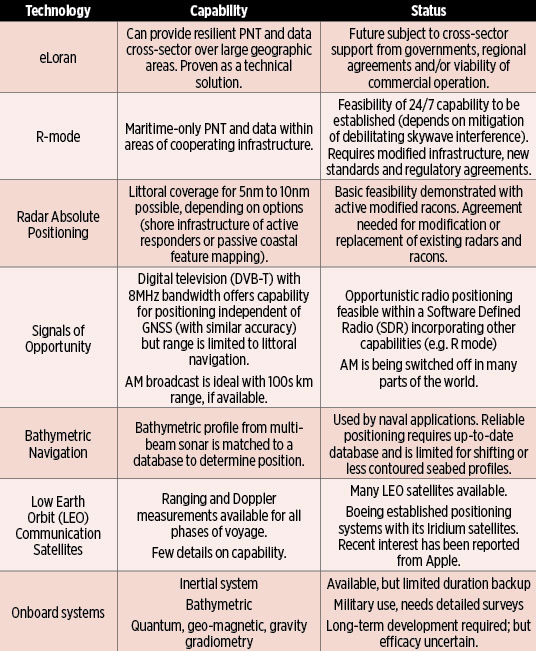
    Table 1. Capability and status of complementary positioning technologies. (Chart: GLA)
    Table 1. Capability and status of complementary positioning technologies. (Chart: GLA)

    The General Lighthouse Authorities of the U.K. and Ireland (GLA) reached Initial Operational Capability for eLoran on the East coast of the U.K. Although it was shown to work well technically, it has not been possible to implement the system in Europe on a regional basis.

    The GLA have also been involved in the potential development of other, non-satellite based, alternative systems. These may now form the basis of positioning resiliency either individually, or as a tapestry of systems serving the maritime navigator in Europe, unless current plans for commercial operation of eLoran come to fruition.

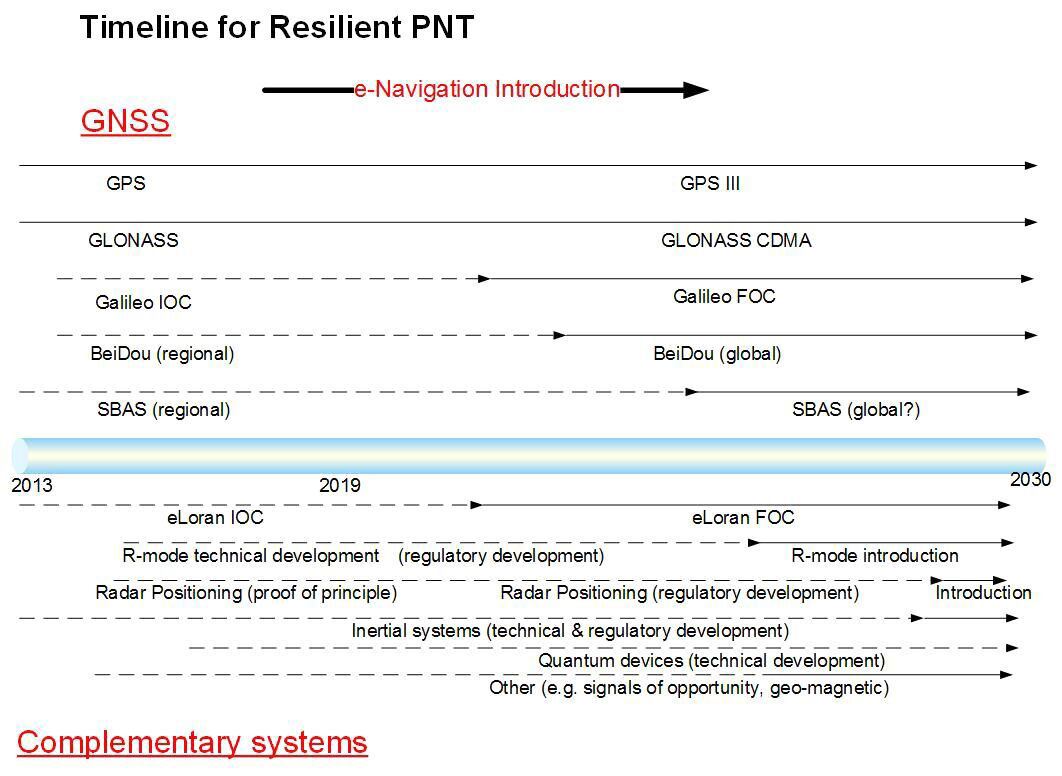
    Here we consider the technical and regulatory status of eLoran in comparison with the other options, and explore necessary steps to protect the maritime navigator in the face of increasing GNSS outages. Several alternative backup technologies could be considered complementary to GNSS for future introduction into ships’ Integrated Navigation Systems. They have varying capabilities, and different limitations and levels of maturity, summarized in Table 1. Figure 1 shows estimated timescales for development and implementation.

    Figure 1. Timeline for resilient PNT. (Image: GLA)
    Figure 1. Timeline for resilient PNT. (Image: GLA)

    Conclusions

    ■ eLoran is the only complementary backup system that can be implemented within the timescale envisaged for the introduction of e-navigation; however, there are political obstacles to implementation, at least in Europe.

    ■ R-mode and possibly radar positioning could be introduced by about 2030; however, both have inherent coverage limitations. Feasibility studies are needed to assess their economic viability.

    ■ Other options, such as inertial systems and signals of opportunity, might emerge as viable alternatives by 2030, but there are large uncertainties about technical and regulatory matters.

    ■ Quantum devices and options such as bathymetric and geomagnetic positioning can only be considered as longer term and uncertain possibilities.

    ■ A multi-system solution may offer the best approach. The IMO concept of the Integrated Navigation System aboard vessels, incorporating a multi-system receiver, provides flexibility for the inclusion of the above positioning technologies, if and when they become available, at an affordable cost.

  • Measure acquires Pilatus Unmanned to expand one-stop drone service

    Measure, a U.S. provider of drone solutions for enterprise customers, is expanding its drone engineering and equipment sales capabilities with the acquisition of Pilatus Unmanned.

    Josh Kornoff, Pilatus Unmanned CEO and a pioneer in the commercial drone industry, will head Measure’s engineering team.

    The acquisition marks the latest chapter in Measure’s rapid growth, highlighted by the recent introduction of new solutions and toolkits for the solar and broadcast news industries.

    Pilatus Unmanned (previously known as Allied Drones) specialized in drone customization for commercial customers, leveraging Kornoff’s years of experience in designing and fabricating custom drone and payload solutions. Pilatus Unmanned was one of the first enterprise value-added resellers for commercial drone maker DJI.

    “Measure is at the forefront of the emerging drone-as-a-service industry and is fundamentally changing the way businesses gather information critical to their operations,” said Kornoff, whose career also includes 15 years as a Hollywood special effects and pyrotechnics supervisor for nearly 1,000 commercials, music videos, television shows and films. “I’m excited to continue pushing the envelope in using drone technology to solve business challenges.”

    Kornoff will lead Measure’s drone engineering team out of its new office in Huntington Beach, California, which includes an industrial facility equipped with the machinery, tooling, parts and components for drone customizations.

    Kornoff will also serve as Measure’s lead technical advisor and will oversee support programs for toolkit customers.

    “This acquisition will accelerate growth and allow us to continue to create groundbreaking solutions for our customers in energy, construction, telecommunications and media,” said Measure CEO and co-founder Brandon Torres Declet. “Expanding our engineering capacity and our ability to provide one-stop shopping for equipment and toolkits will help ensure that we can offer our customers solutions that are truly comprehensive.”

  • Draper equips UAVs with vision for GPS-denied navigation

    Draper equips UAVs with vision for GPS-denied navigation

    A team from Draper and the Massachusetts Institute of Technology (MIT) has developed advanced vision-aided navigation techniques for UAVs that do not rely on external infrastructure, such as GPS, detailed maps of the environment or motion capture systems.

    When a firefighter, first responder or soldier operates a small, lightweight flight vehicle inside a building, in urban canyons, underground or under the forest canopy, the GPS-denied environment presents unique navigation challenges.

    In many cases, loss of GPS signals can cause these vehicles to become inoperable and, in the worst case, unstable, potentially putting operators, bystanders and property in danger.

    Attempts have been made to close this information gap and give UAVs alternative ways to navigate their environments without GPS. But those attempts have resulted in further information gaps, especially on UAVs whose speeds can outpace the capabilities of their onboard technologies.

    For instance, scanning lidar routinely fails to achieve its location-matching with accuracy when the UAV is flying through environments that lack buildings, trees and other orienting structures.

    Finding a Solution

    DARPA awarded contracts to Draper and two other industry teams to create UAVs that autonomously sense and maneuver through unknown environments without external communications or GPS under the Fast Lightweight Autonomy (FLA) program. (Photo: Draper)

    Working together under a contract with the Defense Advanced Research Projects Agency (DARPA), Draper and MIT created a UAV that can autonomously sense and maneuver through unknown environments without external communications or GPS under the Fast Lightweight Autonomy (FLA) program.

    The team developed and implemented unique sensor and algorithm configurations, and has conducted time-trials and performance evaluations in indoor and outdoor venues.

    “The biggest challenge with unmanned aerial vehicles is balancing power, flight time and capability due to the weight of the technology required to power the UAVs,” said Robert Truax, senior member of technical staff at Draper. “What makes the Draper and MIT team’s approach so valuable is finding the sweet spot of a small size, weight and power for an air vehicle with limited onboard computing power to perform a complex mission completely autonomously.”

    Draper and MIT’s sensor- and camera-loaded UAV was tested in a number of environments ranging between cluttered warehouses and mixed open and tree filled outdoor environments with speeds up to 10 m/s in cluttered areas and 20 m/s in open areas.

    The UAV’s missions were composed of many challenging elements, including tree dodging followed by building entry and exit and long traverses to find a building entry point, all while maintaining precise position estimates.

    “A faster, more agile and autonomous UAV means that you’re able to quickly navigate a labyrinth of rooms, stairways and corridors or other obstacle-filled environments without a remote pilot,” said Ted Steiner, senior member of Draper’s technical staff. “Our sensing and algorithm configurations and unique monocular camera with IMU-centric navigation gives the vehicle agile maneuvering and improved reliability and safety — the capabilities most in demand by first responders, commercial users, military personnel and anyone designing and building UAVs.”

    Draper’s contribution to the DARPA FLA program — documented in a recent research paper for the 2017 IEE Aerospace Conference — was a novel approach to state estimation (the vehicle’s position, orientation and velocity) called SAMWISE — Smoothing And Mapping With Inertial State Estimation.

    SAMWISE is a fused vision and inertial navigation system that combines the advantages of both sensing approaches and accumulates error more slowly over time than either technique on its own, producing a full position, attitude and velocity state estimate throughout the vehicle trajectory.

    The result is a navigation solution that enables a UAV to retain all six degrees of freedom and allows it to fly autonomously without the use of GPS or any communication with vehicle speeds of up to 45 miles per hour.

    The team’s focus on the FLA program has been on UAVs, but advances made through the program could potentially be applied to ground, marine and underwater systems, which could be especially useful in GPS-degraded or denied environments.

    In developing the UAV, the team leveraged Draper and MIT’s expertise in autonomous path planning, machine vision, GPS-denied navigation and dynamic flight controls.

  • GeoCue’s GNSS kit for drones provides survey-level accuracy

    GeoCue’s GNSS kit for drones provides survey-level accuracy

    GeoCue Group has released a GNSS positioning system that will allow users of DJI Phantom 4 Pros and Inspire 2 drones, as well as most drones using higher end cameras, to achieve survey-level accuracy with minimum ground control.

    Loki, GeoCue’s new direct geopositioning system for small unmanned aerial systems, solves the two fundamental problems associated with this technology:

    • Positioning Accuracy. Loki uses the new AsteRx-m2 multi-frequency, multi-constellation GNSS engine from Septentrio, which has 448 hardware channels.
    • Camera Events. GeoCue has invented a patent-pending method of detecting camera events from Phantoms/Inspires and synchronizing those events to GNSS positioning. No modifications to the drone are necessary; the adapter cable is “plug and play.”
    GeoCue’s Loki positioning kit uses the Septentrio AsteRx-m2 GNSS engine.

    Loki is a self-contained kit that provides all of the hardware and software needed to equip a drone with a post-processed kinematic (PPK) multifrequency, multi-constellation, differential, carrier-phase GNSS.

    Using a local base station (not included), Loki provides centimeter-level positioning with minimal, and in some cases, no ground-control points (though GCPs are always recommended for quality assurance).

    “GeoCue has been a long-time Septentrio OEM development partner,” said Neil Vancans, vice president of Septentrio Americas. “They have offered our previous generation sUAS board on their high-end AV-900, achieving remarkable results in both accuracy and reliability. By solving the problem of connecting the virtual camera trigger on DJI drones to our AsteRx-m2 GNSS engine, they can achieve professional mapping accuracies with consumer-grade UAVs.”

    DroneDeploy of San Francisco has become a leader in cloud-based processing for DJI, as well as other drones. DroneDeploy has enabled users of Phantom and Inspire drones to easily upload drone images, work online with analytics, and download point clouds and orthophotos to desktops for advanced processing.

    Without Loki, achieving acceptable network accuracy requires the time-consuming placement of ground-control targets throughout the mapping site.

    GeoCue and DroneDeploy have been working together to ensure a smooth Loki-DroneDeploy workflow from field to finish.

    “The GeoCue Loki system is an exciting product for anyone using drones to make maps with high accuracy,” said Mike Winn, CEO and co-founder of DroneDeploy. “The Loki’s combination of high-end GNSS positioning and DJI camera synchronization enables survey-grade accuracy with the simplest workflow that we’ve seen — making the Loki a great fit for the DroneDeploy platform.”

    “I am very excited to be working with industry leaders such as DroneDeploy on our Loki project,” said Lewis Graham, president and CTO of GeoCue Group. “Loki provides high accuracy positional data to downstream processing solutions. More significantly, it does this for DJI Phantom 4 Pro and Inspire 2 drones. Combining DJI, Loki and cloud processing solutions such as DroneDeploy provides a very streamlined and cost effective solution for high accuracy site surveys.”

    The Loki kit includes:

    • Loki PPK Controller using the Septentrio AsteRx-m2 GNSS engine (GPS L1, L2, L5 and GLONASS L1, L2, L3, 448 hardware channels).
    • Maxtena M1227HCT-A2-SMA high performance, active, multiband GNSS antenna
    • Antenna ground plane with mounting kit
    • Antenna to controller cable
    • USB cable for data transfer and Loki controller charging
    • Personality cable (user selects either DJI or DSLR)
    • AirGon ASP software suite
    • Mounting kits for DJI Inspire 2 and Phantom 4 Pro
    • 1 year of maintenance and technical support

    Loki requires a local multifrequency base station (not included but available from GeoCue). Loki is shipping to early adopter customers in August 2017. It will be available for the general market in September 2017.

    It will release with direct support for DroneDeploy and AirGon’s Bring Your Own Drone (BYOD) Mapping Kit. Loki’s introductory price will be USD $4,995. GeoCue is currently accepting preorders.

    Loki will be on display September 6-8 at the InterDrone 2017 conference in Las Vegas and at Commercial UAV Expo, also in Las Vegas, October 24-26. A workshop dedicated to high accuracy mapping with DJI drones using Loki is being held in conjunction with the Commercial UAV Expo. Register at www.expouav.com.

  • NOAA picks Black Swift sUAS for fire observation

    NOAA picks Black Swift sUAS for fire observation

    Aircraft to Provide Wildfire Measurements in Support of NOAA Fire Weather Forecasting

    The U.S. National Oceanic and Atmospheric Administration (NOAA) has selected a small unmanned aircraft system (sUAS) for wildfire measurements and observations in support of its FIREX field mission and the fire weather forecasting initiative.

    Black Swift Technologies will deliver to NOAA a tightly integrated system consisting of an airframe, avionics and multiple sensors capable of research-quality measurements of CO2, CO, aerosol, RH, p and T in wildfire plumes, as well as multispectral high-resolution maps of wildfires.

    The SuperSwift sUAS will be operated by the University of Colorado’s Integrated Remote & In Situ Sensing Program (IRISS) in close collaboration with NOAA.

    “One of the purposes of IRISS is to work with the science community to develop and deploy platforms which make primarily in situ measurements,” said Brian Argrow, IRISS director. “This naturally lead us to partnerships with NOAA on the science perspective, and to Black Swift Technologies for their sUAS technology and expertise. It’s a partnership that looks like a three-legged stool with the science interest of NOAA, the technology and engineering expertise of IRISS, and the unique sUAS platform designed by Black Swift Technologies, as the corresponding legs.”

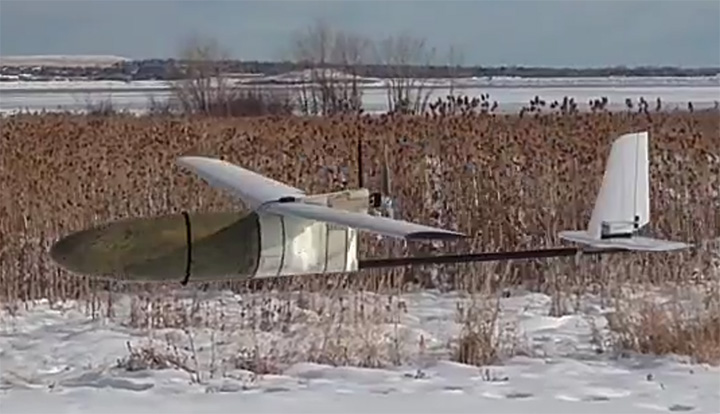
    The FireFOX sUAS is based on Black Swift’s commercially available SuperSwift airframe and SwiftCore Flight Management System — designed to be cost-effective, powerful and easy to operate in the field.

    The SuperSwift is specifically engineered to meet the demands of high-altitude flights through strong winds and damaging airborne particulates typical of nomadic scientific field campaigns in harsh environments.

    The SuperSwift sUAS has a forward-located, spacious, interchangeable nose-cone payload bay. (Photo: Black Swift)

    “While there are many sUAS manufacturers for agencies like NOAA to consider, most are simply not suitable for scientific atmospheric measurements,” said Jack Elston, CEO of Black Swift Technologies.

    The SuperSwift addresses NOAA’s requirements for endurance and operational radius (> 2 hours and between 30 to 60 km) sufficient for fire observations, its payload capability (up to 5 pounds), and its unique forward-facing payload bay, “ideal for atmospheric sampling and for easy instrument package swapping,” Elston said.

    The ultimate goal of NightFOX is to perform nighttime in situ measurements of wildfire plumes and remote measurements of wildfire properties, with the measurement data used to improve fire weather forecasting.

    Because of safety concerns and dangers associated with nighttime operations, manned aircraft flights are limited to daytime operations. Ground observations using a mobile laboratory provide detailed chemical information on fire plumes, but lack information on plume spatial distribution to put the point measurements in context.

    UAS observations are the only technology capable of this task. sUAS observations can provide useful information for firefighting efforts by accurately detecting fire perimeter and identifying fire hotspots, but have not attempted to make measurements relevant to studying fire emissions or incorporate observations into fire forecast models.

    “Our proposed work, if successful, will significantly advance the integration of UAS-based observations of wildfires into fire-weather modeling and forecasting,” said Ru-Shan Gao, principal investigator, Chemical Sciences Division, Earth Systems Research Laboratory, NOAA.

    The collected data will also provide otherwise missing data for studying the impact of North American wildfires on the atmosphere and human health. It will ultimately support better land-management decisions and practices, contributing to NOAA’s core mission to advance understanding and prediction of the Earth system to enhance society’s ability to make effective decisions.

    IRISS, a pillar of the CU Boulder Grand Challenge, is a multi-disciplinary team that leads the design, development and deployment of novel remote and in-situ sensing systems to exploit mobility enabled by aerospace systems to enhance data collection from the ground, in the atmosphere and from
    space.

    With its partners, IRISS explores commercial opportunities and fosters discussions on the ethical, legal, and social policy implications of new technologies and big-data collection.

    The existence of a sUAS capable of carrying the necessary instruments routinely through harsh environments adds an invaluable contribution to the calibration and validation of data collected from ground- and satellite-based methods.

    The innovations of the SuperSwift, including the total sensor suite, can be used for scientific research by federal and state public agencies and other state-funded laboratories to collect data on coherent atmospheric structures such as smog, volcano plumes, wildfire smoke, chemical fires, forest humidity, and studying oil and gas field flares for calibration/validation of satellite measurements.

    “NOAA is interested in a UAS observational system (UASOS) that can use be used for fire-related measurements, and so in a sense what we want to know is when and where does the fire flow and ultimately what kind of fire and air quality will result regionally,” Gao said. “We want to monitor the fire and incorporate the remote and in situ measurements into a fire forecast model so ultimately we’ll be able to do better fire forecasts that will help firefighters better fight the fire and keep human and property losses to a minimum.”