The afternoon festival included races and demonstrations of the unmanned aerial vehicles (UAVs). In a cage topped by a 100-meter-long net, drones competed in races, going as fast as 100 kilometers per hour as drone operators guided their UAVs through a brightly colored obstacle course.
The festival had an educational goal, reports phys.org, with displays on the regulations, the drone’s various uses, and workshops on piloting them.
The festival also was an occasion for the postal service to demonstrate its delivery drone, which weighs 3.7 kilos (eight pounds) and can carry three kilos of mail over 20 kilometers (12 miles).
Behind the security gates, 150,000 attended, and 30,000 watched the live stream.
NTP attacks on time servers and other vital topics will be explored in GPS World‘s Sept. 22 “GPS/GNSS and Cybersecurity” webinar, sponsored by Microsemi. Sign up now for free attendance and participation in the free-form Q&A that will follow the four expert presentations.
In its most general form, spoofing can be conducted using RF as well as cyber attacks. Cyber attacks can be in the form of malicious software, falsified maps, man in the middle attacks, signing location with stolen credentials, reference station manipulation, lying — and more!
The role of timing in cybersecurity.
Log-file time-stamp accuracy and client/server time synchronization.
New protection technologies: meeting accuracy, reliability & security imperatives.
GPS jamming effect on time servers: analogous to unplugging the GPS antenna
Network attacks on NTP time servers: Synchronizing to “free time” is risky practice.
Why you need a security-hardened NTP reflector: resistant to nearly all kinds of network attacks.
Four-level protection against malicious signals: pre-correlation, correlation, measurement and solution level defenses, their pros and cons.
Benefits of sensor fusion for secure receiver design.
Example implementation: deep GNSS/Inertial integration for jamming suppression and spoofing mitigation.
DT Research has released the DT395CR and DT395GS rugged tablets. While designed for field professionals, the tablets cost less than consumer-grade tablets over the lifetime of the product, DT Research said.
The DT395GS rugged tablet by DT Research.
Both DT395 tablets are highly durable to withstand extreme environments, designed with fully integrated options to eliminate easily broken attachments in mission-critical scenarios, and include security, privacy and productivity settings.
The DT395GS tablet is designed for field applications with a high-accuracy GNSS module that is compatible with existing GIS software for mapping applications and brings together the advanced workflow for GIS data capture, accurate positioning and data transmission. The u-blox M8 GNSS module is capable of concurrent reception of GPS and GLONASS for up to 2-meter accuracy.
“Many businesses have adopted mobile tablets with the goal of increasing productivity by leveraging the versatile tablet form-factor,” said Daw Tsai, president of DT Research. “But companies within construction, field service, logistics, manufacturing and warehousing have found that consumer-grade tablets are too fragile for their environment — requiring costly repairs and replacements that introduce expensive downtime. Our new DT395 rugged tablets give vertical industries exactly what they need with high reliability and lower TCO (total cost of ownership) over the lifetime of the product.”
According to a VDC Research study, the average annual TCO of a ruggedized tablet is 22 percent lower than the average annual TCO of a non-rugged tablet. The study found average failure rates for non-rugged tablets is 15.2 percent compared to 6.9 percent for rugged tablets. Lost productivity, as a result of mobile device failure, was a leading contributor to higher TCO for non-rugged tablets. Mobile workers lost an average of 52-80 minutes of productivity when their mobile device failed. (Source: VDC Research, “Total Cost of Ownership Models for Mobile Computing and Wireless Platforms,” Third Edition.)
Unlike consumer-grade tablets, the DT395CR and DT395GS ruggedized tablets are designed to be used in a variety of indoor and outdoor environments with full HD anti-reflection outdoor viewable displays. The tablets are IP65 and MIL-STD-810G rated to withstand 4-foot drops and extreme temperatures (-4° F to 140° F), and resist water, dust and humidity.
“We tried iPads, but they were not suited for our environment,” said Marty Phillips, director of engineering at Murray Equipment, Inc. “Our customers do millions of dollars of fertilizer loading within an eight-week window in a broad range of weather conditions. If a remote control tablet is down for even an hour, it’s a significant revenue loss. We have used DT Research rugged tablets in our automated liquid-handling facilities across the U.S. for more than three years with no downtime or repair/replacement costs. The reliability of DT Research’s rugged tablets is unmatched.”
Both the DT395CR and DT395GS have an 8.9-inch display with 1920 x 1200 resolution and capacitive touch, and weigh 2.87 pounds. The tablets run on an Intel Atom Quad Core CPU with 4GB RAM running Microsoft Windows 10 IoT Enterprise OS.
Security, privacy and productivity settings
“Security, privacy and productivity are a growing concern in many organizations,” Helen Fanucci, GM of Americas Device IoT Experience, Microsoft. “We are pleased to see DT Research utilize the Windows 10 IoT Enterprise-grade security to support mission-critical rugged tablets for customers and deliver a safer device experience, which enhances productivity for a variety of mobile scenarios in manufacturing, field service, logistics and other industries.”
The DT395 tablets leverage advanced Windows 10 IoT Enterprise OS security including Device Guard, combining hardware and software security to lock down a device so that it can only run trusted applications. The DT395 also includes lock-down features to protect against malicious users while providing a custom-defined user experience.
Bluetooth, Wi-Fi, and RFID can pose a security issue when using consumer-grade tablets within a business environment. DT Research DT395 rugged tablets can be purpose-built with a camera privacy mode and
preconfigured with Bluetooth, RFID and Wi-Fi disable functions. The DT395 rugged tablets can also eliminate access to internet or social media applications to address productivity challenges.
Customizable options
DT Research offers customizable options for the DT395CR and DT395GS including an optimized OS and BIOS. Customers can choose to have the options below fully-integrated.
3G WWAN or 4G LTE
2D Barcode Scanner
Class 1 Bluetooth (1000 feet)
Camera (5 Megapixel back camera)
GNSS Module (u-blox M8)
HF/RFID 13.56MHz reader
HDMI-in and Ethernet port
Six-pin push/pull connector for EIA/RS-232/485/422, USB port and Ethernet port
Microsemi Corporation has announced its new thermally improved chip-scale atomic clock (CSAC) components with full operating and storage temperature. The new devices offer low-power holdover atomic clock technology without compromising size, weight and power (SWaP) while operating at a wide temperature range.
Microsemi is exhibiting this week at ION GNSS+, being held in Portland, Oregon.
With an operating temperature range of -10 to 70 degrees Celsius, Microsemi’s new CSAC components are highly reliable, with improved product design, process enhancements and robust product verification/validation, the company said.
The revolutionary technology enables new applications and missions not possible in the past with traditional OCXO and Rubidium clocks, offering the low SWaP clock technology at 17 cubic centimeters (cc) in size, 35 grams of weight and only 120 milliwatts of power. Microsemi’s CSAC product offers ±5.0E-11 accuracy at shipment and a typical ≤ 9.0E-10/month aging rate, which makes it suitable for many low-power atomic clock holdover applications.
“The enhancements to our CSAC product offering focus on providing the highest reliability without compromising performance for our customers, particularly in mission critical applications where every milliwatt matters,” said Ramki Ramakrishnan, director of product line management, at Microsemi. “These devices utilize an innovative approach to the component level atomic clock that will help Microsemi access the entire oscillator industry, along with miniature atomic clocks (MAC), and capitalize on the revenue growth potential within the defense, communications, industrial and test and measurement markets.”
According to the “Crystal Oscillator Market—Global Forecast & Analysts” report posted by Markets & Markets, the total available market (TAM) for the overall oscillator market is estimated to be $2.4 billion in 2016, with OCXO markets targeted by CSAC estimated to have a serviceable addressable market (SAM) of $260 million in 2016.
Microsemi’s thermally improved CSAC products support the company’s strategic presence in the defense and security markets, targeting applications such as low-power holdover against GPS vulnerabilities for position, navigation and timing security. They are also suitable for holdover in underwater (ocean bottom nodal) applications and atomic frequency reference in test and measurement applications.
“Leveraging the unique attributes of Microsemi’s CSAC technology, our company is able to offer an unprecedented combination of holdover, g-sensitivity, low power consumption and warm-up performance, while reducing the footprint to less than the critical 0.6 inches height — allowing retrofitting of legacy equipment,” explained Said Jackson, president of Jackson Labs Technologies, Inc. “The CSAC combined with our battle- and theater-proven software algorithms and support hardware enables vastly extended mission times while providing critical backup performance for GPS-denied environments when even the optional integrated Selective Availability Anti-spoofing Module (SAASM) GPS technology is jammed.”
Microsemi’s thermally remediated CSAC components are sampling now, with full production in October. For more information, visit the website or contact [email protected].
Lockheed Martin is set to launch the WorldView-4 high-resolution imaging satellite for DigitalGlobe aboard a United Launch Alliance Atlas V rocket on Sept. 16. WorldView-4, also built by Lockheed Martin, will capture photos and data about Earth.
With the WorldView-4 satellite, DigitalGlobe more than doubles its ability to deliver images of Earth at 30-centimeter resolution — sharp enough to identify the make of an automobile. WorldView-4 will orbit the Earth every 90 minutes, capturing 600,000 square miles of imagery everyday.
Artist’s rendering of the DigitalGlobe WorldView-4 satellite in orbit. (Image: Lockheed Martin)
Rocket/Payload: Atlas V 401 flying the WorldView-4 mission for customer DigitalGlobe.
Location: Space Launch Complex 3 East at Vandenberg Air Force Base, California.
Date/Time: Friday, Sept. 16, 2016
Launch Time: The launch window opens at 11:30 a.m. PDT and closes at 11:44 a.m. PDT. Separation occurs approximately 20 minutes after liftoff.
Mission Description: This mission will deliver the WorldView-4 satellite into a 617 km, sun-synchronous orbit for DigitalGlobe, the global leader in earth imagery and information about our changing planet.
By leveraging DigitalGlobe’s advanced constellation scheduling system to operate in concert with WorldView-3, WorldView-4 will more than double DigitalGlobe’s coverage of the world’s highest-resolution 30 cm commercial satellite imagery.
Once launched, the satellite will orbit earth every 90 minutes, traveling 17,000 miles per hour and capturing as much as 680,000 square kilometers of the Earth’s surface daily (18 terabytes) – the equivalent of the land area of Texas.
Also aboard the launch will be seven U.S. Government-owned CubeSats that will be deployed after separation of the WorldView-4 satellite.
Launch Provider: Lockheed Martin Commercial Launch Services is the exclusive provider of Atlas V rockets to all non-U.S. government customers. With dedicated launch sites and unparalleled orbital insertion accuracy, Atlas V is unmatched for performance, reliability and schedule assurance.
Updates: To keep up-to-speed with updates to the launch and learn more about the WorldView-4 mission visit www.lockheedmartin.com/worldview4.
Rx Networks Inc., a mobile location technology and services company, announced test and development access to upcoming SBAS and QZSS services at ION GNSS+, where the company is exhibiting.
ION GNSS+ is being held in Portland, Oregon, Sept. 12-16.
The addition of QZSS and SBAS to its location.io service platform enables Rx Networks to provide regional correction data and additional satellites for improved positioning accuracy.
The location.io real-time GNSS assistance service includes a new streaming delivery method so customers can easily access SBAS correction data (available for testing). QZSS and SBAS support will be added to location.io’s Real-Time GNSS ephemeris HTTP interface in Q4 of 2016.
Location service providers, GNSS chipset vendors and device OEMs can benefit from the additional corrections and assistance data for better accuracy and higher availability of GNSS location fixes.
“The addition of SBAS and QZSS to location.io marks an exciting step as we expand our services to support high accuracy solutions,” commented John Carley, Director of Product Management, location.io.
The Replicator by IP Solutions is a multi-frequency, multi-system GNSS simulator for advanced research and development, equipment testing and education. It can also function as a recording, playback and signal analysis instrument.
IP Solutions is exhibiting this week at ION GNSS+, in Portland, Oregon.
The Replicator is the result of a collaboration with the Japan Aerospace Exploration Agency (JAXA).
Components include the Simceiver hardware device, the ReGen control software for real-time simulation, Streamer control software for recording and playback, and ARAMIS software receiver for signal analysis.
The 24-channel Replicator provides real-time generation of GNSS signals, recording and playback of dual-frequency GNSS RF signals, and GNSS RF signal analysis with JAXA COSMODE ionospheric scintillation monitor.
The Replicator offers real-time simulation of dual-frequency GPS, GLONASS, BeiDou or GPS+GLONASS, GPS+BeiDou, GPS+Galileo signals.
Comprehensive simulation models include atmosphere, multipath, and more. Also available is signal analysis based on JAXA COSMODE ionospheric scintillation monitor.
Two or more units can be used to simulate, record and playback more signals at the same time. Simulated and recorded signals can be stored in digitized format, analyzed by a MATLAB software receiver and played back as RF at any time.
Replicator Advantages
User defined models with ANSI C API
Real-time simulation
Record and playback
GNSS signal analysis
Upgradable to more features , signals and frequencies for the difference in price.
LabSat 3 by Racelogic is a lightweight and portable system for GNSS testing, capable of recording and replaying the raw radio signals including GPS L1, GLONASS L1, Galileo E1, BeiDou B1, QZSS and SBAS. LabSat 3 records real-world data, reproducing all GNSS artefacts on the laboratory bench, including multipath, ionospheric effects and signal dropouts. There is no limit to the number of satellites that can be logged.
The ION GNSS+ 2016 Exhibition will include the launch of the new LabSat 3 Wideband system, which offers significantly higher bandwidth and enhanced frequency range. With three RF channels and up to 50 MHz bandwidth per channel, LabSat 3 Wideband will record and replay most current GNSS signals including GPS L1, L2 and L5, all in one file.
Features include RF data recording up to 3-bit quantization together with bandwidth up to 50 MHz. A removable battery pack offers more than two hours of record time. All of the fetures come in a compact, lightweight package weighing under 1.2 kilograms.
One-touch control, data capture to removable media, dual CAN, RS232 and Digital I/O record and replay capability ensures that the LabSat 3 range is a convenient system for any developer who requires realistic testing at a competitive price.
Also available is SatGen, the simulation software that allows for the creation of user-generated scenarios to be replayed through the LabSat. SatGen has recently been upgraded so that not only can it provide GPS, GLONASS and BeiDou signals, it now includes a real-time capability. This allows for GNSS RF signals to be created with a current time stamp. SatGen is a powerful tool for those wishing to test new GNSS devices with any dynamics, location or time.
A link to the live event will be sent to you two hours before the event. Your personalized event URL will be automatically generated by the ON24 system. To ensure receipt of the email, please whitelist this email address by adding it to your contacts: [email protected].
This presentation will begin on at 1 p.m. EDT on Thursday, September 22, 2016.
Audience members may arrive 15 minutes prior to live time. You may need to download Flash Player in advance. If you have any questions, please contact event producer Joelle Harms at [email protected].
Septentrio has received a contract to supply 35 high-precision GNSS receivers to the Jet Propulsion Laboratory (JPL) for use in the NASA Global GNSS network (GGN).
The NASA GGN is one of the world’s largest global GNSS tracking networks with nearly a hundred reference receivers deployed worldwide and is a participant in the International GNSS Service (IGS). The GGN is also the core tracking network of JPL’s Global Differential GPS (GDGPS) System, a highly available and reliable service providing mission-critical position, navigation and timing data, as well as environmental monitoring for industry and government operations.
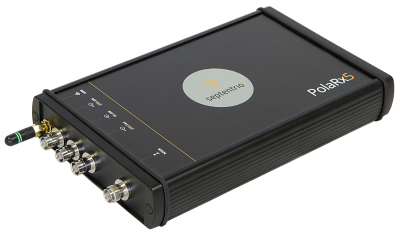
The Septentrio PolaRx5 GNSS receiver.
Under the contract, Septentrio will supply 35 of its new-generation PolaRx5 GNSS receivers, including 25 reference stations and 10 timing instruments. Deliveries began in August and will be completed in September.
The PolaRx5 incorporates Septentrio’s most advanced multi-frequency GNSS engine, which tracks all major satellite signals including GPS, GLONASS, Galileo and BeiDou, as well as the regional QZSS and IRNSS satellite systems. It provides measurement quality and interference mitigation, and operates on less than two Watts when receiving GPS and GLONASS satellite signals.
“This major contract with JPL — a widely recognized industry leader in GPS and GNSS technology — is an important validation of Septentrio’s position as the number one preferred supplier of highly accurate GNSS receivers for scientific applications, and recognition of the superior performance of our next-generation GNSS receivers,” said Neil Vancans, vice president of Septentrio Americas.
NovAtel launched its new OEM7 family at ION GNSS+ 2016, which is being held Sept. 12-16 in Portland, Oregon. OEM7 expands the receiver options open to system integrators.
Five GNSS receiver cards are available, including the new OEM7600, the smallest, lightest dual-frequency receiver card ever developed by the company.
All cards have 555 available channels, are multi-constellation and multi-frequency and provide new advanced interference awareness and mitigation capabilities. Additionally, every OEM7 card can receive satellite-based TerraStar correction signals, making centimeter-level positioning globally available even in difficult operating environments. A new compact enclosure, the PwrPak7 houses OEM7 receiver technology, plus offers 16-GB of onboard data storage, built-in Wi-Fi and serial, USB, CAN and Ethernet for ease of integration.
A cornerstone of the OEM7 platform is the Interference Toolkit. The Interference Toolkit is used to detect sources of interference and intentional and unintentional jamming, and then mitigates such occurrences using proprietary NovAtel filters. Integrators can take advantage of a spectrum analysis function that identifies which GNSS frequency is experiencing the interference. Further, it can also detect electromagnetic interference caused by other components in an integration project, allowing developers to implement the filter and eliminate the problem.
NovAtel’s SPAN GNSS + Inertial technology delivers continuous 3D position, velocity and attitude (roll, pitch, yaw), and now is available on every OEM7 receiver.
OEM 7 Features
Multi-constellation and multi-frequency with 555 channels.
Advanced interference awareness and mitigation with an Interference Toolkit for integrators.
TerraStar corrections for centimeter positioning.
SPAN GNSS + Inertial technology.
PwrPak 7 enclosure with 16-GB of onboard storage.
Built-in Wi-Fi, plus serial, USB, CAN and Ethernet.
Topcon Positioning Group announces the release of two new mapping kits for its Sirius Pro fixed-wing unmanned aerial system (UAS). The kits are designed to produce the most accurate solutions for automated mapping of construction sites, building facades, mines, quarries, disaster areas — and more without regard to terrain.
Both systems include an enhanced MAVinci Desktop Flight Planning software upgrade.
The first new package — Sirius UAS City Mapping Kit — includes a Fuji X-M1 8 mm lens designed to better capture urban surroundings.
“It allows the image capture of vertical facades such as buildings, infrastructure and construction sites,” said Charles Rihner, vice president of the Topcon GeoPositioning Solutions Group. “The upgraded flight planning software optimizes the planning, preparation and processing to automatically produce a textured 3D model. Additionally, the kit allows the acquisition of 3D models and orthophotos when flying below 50 m altitude,” he said.
The second new package — the Sirius UAS High Resolution Mapping Kit — comes with a Fuji X-M1 27-millimeter lens. “This package allows the collection of images at the highest possible resolution for applications such as construction site monitoring, survey and mapping topography,” Rihner said. “It allows operators to obtain higher resolution images at the same altitude as compared with a standard lens.”