Tag: autonomous vehicles

  • Israeli companies defeat drones with new technology

    Drones have become a serious threat, able to penetrate airspace for surveillance or with an explosive payload.

    The Islamic State has used weaponized drones against both Syrian and Iraqi forces; groups like Hezbollah and Hamas have sent drones into Israel and are said to be working on upgrading their UAVs for use in both intelligence gathering and offensive operations.

    On April 27, Israel used a Patriot missile to take down a drone entering Israeli Airspace from Syria. At $3 million per missile, the Patriot system is an expensive way to down a device that may only be worth $200. Israel has also intercepted drones with fighter jets.

    Systems developed by two Israeli companies provide less expensive — and quickly reactive — solutions.

    The Drone Dome system uses Laser, RF and Radar. (Photo: Rafael)
    The Drone Dome system uses Laser, RF and Radar. (Photo: Rafael)

    Drone Dome. Rafael Advanced Defense Systems Ltd. has developed a radar and laser-beam system for detecting and destroying drones, with the company adapting its existing laser systems to handle the threat.

    Once the system’s radar identifies targets, its laser system destroys them.

    Drone Dome also features a jamming system for disrupting communications between the drone and its operator. Drone Dome’s range reaches several miles, but causes minimal interruptions to other systems in nearby urban areas.

    The standard Drone Dome system comprises a RADA RPS-42 S-band multi-mission hemispheric radar, a Controp MEOS electro-optical (EO)/infrared surveillance suite, a communications package, and the C-Guard RD jamming and NetSense Wideband detection sensor systems developed by Netline. The UAV threat is neutralized by activation of directional GPS/GNSS and radio-frequency inhibitor/jammer devices.

    The RPS-42 is a four-panel tactical air surveillance system delivering 360-degree coverage in azimuth and 90 degrees in elevation, with a detection range of 30 kilometers — including the detection of a minimum target size of 0.002 meters square at a range of 3.2 kilometers — at altitudes from 30 to 30,000 feet. The RPS-42 is designed to detect, track and classify all classes of UAV.

    DROM Defense. ORAD’s DROM Drone Defense System can detect an approaching drone at more than 3.5 kilometers away and take command, neutralizing it and landing it far from the operator.

    With a weight of 38 kilograms, ORAD’s DROM system comes pre-engineered and pre-assembled. It is mobile and easily deployed on land or at sea in any weather conditions and has an effective coverage range of 3.5 kilometers. It has a 2-kilometer neutralization capability.

    Once intercepted, the system can land a hostile a UAV in a pre-defined location, keeping any intelligence it gathered out of enemy hands. It can also identify the location of the operator.

    The system’s RF detection unit analyzes signal channels and radio transmissions to spot drones. Once detected, an alarm alerts the system operator.

    ORAD has sold the system to clients in several countries including Portugal, Spain and Thailand. The company is in talks with Israeli agencies interested in purchasing the system.

  • Launchpad: OEM, survey and mapping, transportation, UAVs

    Launchpad: OEM, survey and mapping, transportation, UAVs

    OEM

    Narrowband cellular chipset

    With integrated GNSS

    The ALT1250 narrowband CAT-M1 and NB1 (NB-IoT) chipset includes GNSS functionality. Its extreme level of integration eliminates the need for most external components required to design a cellular Internet of Things (IoT) module. Less than 100 x 100 square millimeters, the ALT1250 module features support for both Release 13 standards — CAT-M1 and NB1. It includes a wideband RF front end supporting unlimited combinations of LTE bands within a single hardware design; a multi-layered and hardware-based security framework; an internal application MCU subsystem; and packaging that enables standard, low-cost printed circuit board (PCB) manufacturing.

    Altair Semiconductor, www.altair-semi.com

    Grandmaster clock

    Carrier-grade, packet-based timing and synchronization

    Hardware on the TimeProvider 5000 IEEE 1588 Precision Time Protocol (PTP) grandmaster clock has been updated to support Internet Protocol version 6 (IPv6) and multi-GNSS constellations to ensure better reception and higher security in a wide variety of telecommunications network applications. Looking forward to mobile infrastructure with LTE-Advanced (LTE-A) and 5G services, support for IPv6 and alternate GNSS constellations is rising in importance for deploying a robust, secure and future-proof synchronization network. The device offers multiple constellations in accordance with the directives in certain countries to remove sole dependency on GPS. Support for GLONASS and Galileo also makes systems more robust and secure to certain GNSS vulnerabilities. The TimeProvider 5000 provides redundant hardware, user-configurable PTP profiles and Synchronous Ethernet (SyncE) support with optical small form-factor pluggable (SFP) modules.

    Microsemi Corporation, www.microsemi.com

    Post-processing board

    Designed for effective data collection, management

    The Precis-BX316R is a GNSS Post-Processing Kinematic (PPK) board for accurate positioning. It supports raw measurement output from two antennas: GPS L1/L2, GLONASS G1/G2 and BeiDou B1/B2 from the primary antenna and GPS L1/L2 from the second antenna. The SD card on board (up to 32 GB) makes it convenient for users to collect data for post processing. Working with GNSS antennas, it can output stable measurement in challenging conditions. Integrated with versatile interfaces and connectors, Precis-BX316R aims to facilitate applications such as precision navigation, precision agriculture, surveying and UAV, and enforcing effective GNSS data management.

    Tersus GNSS, www.tersus-gnss.com

    GNSS module

    Integrated module eases embedded designs

    The u-blox SAM-M8Q GNSS receiver with integrated antenna is housed in a 15.5 x 15.5 x 6.3 millimeter package. It can be embedded in small devices that require location information, such as asset tracking and telematics systems, and generic automotive after-market applications. The module offers simultaneous reception of GPS, GLONASS and Galileo. The combination of an integrated wide-band antenna along with the module’s SAW filter and low-noise amplifier (LNA) architecture ensures that the SAM-M8Q receiver delivers robust performance in the presence of high-frequency signals from other electronic equipment that can cause interference, such as cellular modems.

    u-blox, www.u-blox.com

    Dual-band antenna

    Tight pre-filter protects against high-level cell signals

    The TW3892 is a through-hole mount dual-band plus L-band GNSS antenna. It employs Tallysman’s Accutenna technology and is capable of receiving GPS L1/L2, GLONASS G1/G2, BeiDou B1, Galileo E1 plus L-band correction services (1213MHz to 1261MHz + 1525MHz to 1610MHz). The TW3892 is a precisely tuned antenna with a tight pre-filter to protect against intermodulation and saturation caused by high-level cellular 700 MHz and other signals.

    Tallysman, www.tallysman.com

    Multi-constellation board

    Protection against jamming interference

    The credit-card sized AsteRx-m2 offers all-in-view multi-frequency, multi-constellation tracking and centimeter-level real-time kinematic (RTK) position accuracy for low power. It can receive TerraStar satellite-based correction signals for precise point positioning (PPP). The board features Septentrio’s AIM+ interference mitigation system that can suppress a wide variety of interferers, from simple continuous narrowband signals to complex wideband and pulsed jammers. The RF spectrum can be viewed in real time in both time and frequency domains.

    Septentrio, www.septentrio.com

    Test suite

    For in-vehicle and V2V connectivity

    Spirent’s TTsuite-WAVE-DSRC (Wireless Access in Vehicular Environments – Dedicated Short-Range Communications) conformance test solution includes a set of tests required for U.S. Department of Transportation (USDOT) certification. TTsuite-WAVE-DSRC consists of four different protocol conformance test suites as per the USDOT Certification Operating Council (COC) conformance test specifications. It enables full test automation, includes frameworks for individual adaptation, and it is extensible with many plug-ins to meet constantly changing development requirements. TTsuite-WAVE-DSRC is targeted at companies supplying or testing WAVE-DSRC ITS technology.

    Spirent Communications, www.spirent.com

    Survey & Mapping

    GNSS receiver

    Multi-frequency, multi-application and multi-use

    The SP90m GNSS receiver is a powerful, highly versatile, ultra-rugged and reliable GNSS positioning solution for a wide variety of real-time and post-processing applications. Integrated communications options include Bluetooth, Wi-Fi, UHF radio and cellular modem as well as two MSS L-band channels to receive Trimble RTX correction services. The SP90m can be used as a base station, campaign receiver, continuously operating reference station (CORS), real-time kinematic (RTK) or Trimble RTX rover, or be integrated on-board a machine. The receiver uses all available GNSS signals to deliver fast and reliable positions in real time, and allows the connection of two GNSS antennas for precise heading or relative positioning determination without a secondary GNSS receiver. It features an internal removable battery, internal memory and optional accessory kits for specific applications.

    Spectra Precision, www.spectraprecision.com

    Field-to-office software

    For total stations, robotics and GNSS rover systems

    GeoPro Field provides a graphical user interface designed to collect field measurements for land surveying and construction activities. GeoPro Field is a tool to collect and import measurement data into design and drafting software, increasing productivity with CAD functionality in the field. It is compatible with various software workflows, and point files are easily exported to third-party software. Sokkia GeoPro Office is the office-processing complement to the field software — designed to clean, process, and analyze field data into its easiest-to-use form. The office software can also be expanded with an optional 3D and road design module, for further versatility to design roads with the processed field measurements.

    Sokkia, www.sokkia.com

    RTK base and rover

    Ready for highway and site construction

    Hemisphere GNSS’ C321 GNSS Smart Antenna is designed for heavy highway and site construction. When paired with SiteMetrix Site Management software, the multi-frequency, multi-GNSS C321 antenna can be used as an all-in-one construction base and rover site controller. The C321 combines the Athena GNSS engine and Atlas L-band correction technologies. The ruggedized antenna is designed for the most challenging environments and meets IP67-standard requirements. Powered by Athena GNSS engine, the C321 provides best-in-class, centimeter-level RTK. Athena excels in virtually every environment where high-accuracy GNSS receivers can be used. Tested and proven, Athena performs with long baselines in open-sky environments, under heavy canopy, and in geographic locations experiencing significant scintillation. The C321 ships pre-configured to test-drive corrections from Hemisphere’s Atlas L-band corrections service. C321 also uses Hemisphere’s aRTK technology, powered by Atlas. This feature allows the receiver to operate with RTK accuracies when RTK corrections fail. If the C321 is Atlas-subscribed, it will continue to operate at the subscribed service level until RTK is restored.

    Hemisphere GNSS, www.hemispheregnss.com

    RTK GNSS tablet

    Centimeter-level positioning

    Toughpad is Panasonic’s newest professional-grade notebook, specifically designed for precision agriculture, machine control and robotic guidance applications in harsh environments and conditions. Embedded in the tablet is a u-blox NEO-M8 GNSS receiver module delivering high integrity and precision in demanding applications worldwide. First tested for collecting snow in Hokkaido, Japan, the Toughpad tablet uses Panasonic’s own satellite positioning technology combining a satellite radio receiver module, wireless WAN, and a single-band real-time kinematic (RTK) GNSS receiver connected to an external antenna. The system enables high-precision positioning down to centimeter level in open-sky conditions.

    Panasonic, www.panasonic.com
    u-blox, www.u-blox.com

    Mobile app

    Aids in understanding the oceans

    Esri has released an Ecological Marine Units (EMU) app for mobile devices. The app provides a new way to measure marine environments on a 3D interactive map for more cost-effective fishery planning and informed conservation. It is a resource for scientists, educators, governments and industries seeking accessible information and imagery about the ocean’s long-term physical and nutrient properties. The EMU app puts data such as temperature, salinity and dissolved oxygen from 52 million locations throughout the world’s oceans at any user’s fingertips. This data informs how livable marine environments are for ocean-dwelling species as well as the overall health of the ecosystem. The app is free from the App Store and Google Play.

    Esri, www.esri.com

    Post-processing software

    Delivers CAD drawings from ground-penetrating radar data

    DX Office Vision is a utility post-processing software for mapping ground-penetrating radar (GPR) data from the field into a CAD drawing. It allows even non-experienced users to obtain professional 3D CAD drawings and visualize the detected underground utilities in a simple way. The intuitive interface enables users to filter, select, identify and make annotations of the located targets. With DX Office Vision, post-processing for all ground-penetrating data requires no add-on or third-party software.

    Leica Geosystems, www.leica-geosystems.com

    Transportation

    Infotainment testing

    For the connected-car market

    Averna has entered a strategic partnership with M3 Systems to distribute their StellaNGC GNSS Simulator on VST NI platforms for the infotainment segment of the automotive market. M3 Systems’ GNSS simulator, based on National Instruments’ Vector Signal Transceiver (NI VST), will now be available as part of Averna’s AST-1000 platform, extending its capability to navigation and GNSS testing. Launched in July 2016, the AST-1000 is an RF solution designed for radio, navigation, video and connectivity testing. Also based on the NI VST, the software-defined AST-1000 supports infotainment RF signals, including AM/FM, DAB, RDS, HD Radio and Sirius/XM as well as GNSS navigation. The combination provides a comprehensive solution and enables applications for testing infotainment systems.

    Averna, www.averna.com

    LTE automotive-grade module

    Optimized for connected cars

    The LE940A9 automotive-grade module is designed to support LTE Advanced Category 9 (Cat 9) networks. The series offers three multi-band, multi-mode variants — including voice-over-LTE (VoLTE) — and is optimized for automobile manufacturers to deploy next-generation connected-car technology in world markets. The LE940A9 delivers 450 Mbps download and 50 Mbps upload speeds with extremely low latency and advanced security. The xE940A9 40×40 mm LGA form factor nests with the 34x40mm Telit xE920 automotive module family, offering flexibility for the OEM or tier-one integrator. It powers the entire connected-car platform, supporting current needs while including advanced features that enable future integration of upcoming services. The module can run in-vehicle applications inside a secure processing environment from the built-in application processor, storage and memory. Automotive application programs can run entirely and securely on the module itself, protected by advanced cyber-security capabilities.

    Telit, www.telit.com

    Reference design

    Nine antennas including four LTE, two Wi-Fi, GNSS, SDARS and DSRC

    The Axiom is a reference design for a low-profile, compact multiple-antenna solution for the next generation of connected cars. The Axiom reference design helps automobile manufacturers more quickly advance antenna configurations that work for their particular make and model. As many as 18 antennas are needed to power the next-generation connected car, including multiple cellular antennas for network connectivity; Wi-Fi for hotspot connectivity; GNSS for navigation, emergency call systems and other location-based technologies; satellite radio (SDARS); AM/FM antennas; radar antennas for object detection; Bluetooth antennas for smartphones and other devices, and dedicated short-range communications (DSRC) antennas for vehicle-to-vehicle/infrastructure applications.

    Taoglas, www.taoglas.com

    Ground robotics

    Ruggedized module based on military design principles

    The Duro is a ruggedized version of Swift Navigation’s Piksi Multi dual-frequency RTK GNSS receiver. Built for outdoor operations, Duro combines a rugged enclosure with centimeter-accurate positioning. Leveraging design principles typically used in military hardware, the GNSS sensor is protected against weather, moisture, vibration, dust, water immersion and unexpected circumstances that can occur in outdoor long-term deployments. It is ready to connect out of the box. Primary industries for this product include robotics, precision agriculture, mapping, military, outdoor industrial and maritime.

    Swift Navigation, www.swiftnav.com
    Carnegie Robotics, www.carnegierobotics.com

    UAV

    GPS-INS for drones

    Now in beta mode for summer release

    The μINS is a precision miniature GPS-aided inertial navigation system (GPS-INS) designed to provide high-quality direction, position and velocity data for drones and robotic applications. It uses a u-blox L1 GPS receiver. Advanced algorithms fuse output from micro-electro-mechanical system (MEMS) inertial sensors, magnetometers, barometric pressure, and a high-sensitivity GPS (GNSS) receiver to deliver fast, accurate and reliable attitude, velocity and position even in the most dynamic environments. Sensor calibration, standard on all units, minimizes undesirable effects of manufactured variation and maximizes sensor performance. Features include GPS UTC time synchronization; an inertial measurement unit with comprehensive calibration for bias, scale factor and cross-axis alignment; –40°C to 85°C temperature compensation; a measurement of 15.6 x 12.5 x 6.3 millimeters; and a weight of 2 grams.

    Inertial Sense, www.inertialsense.com

    UAV helicopter

    Designed for high-altitude flight

    The Scout B-330 UAV helicopter is built with a payload capacity of up to 50 kg. (110 pounds), flight endurance of at least three hours, and the capability of flying at high altitudes (up to 3,000 meters above sea level) in a typical mission scenario. This includes a full autonomous take-off sequence, a mission flight at variable speed, and a landing sequence. The Scout B-330 is specifically designed for lidar-based powerline mapping missions. It pairs with Riegl airborne and unmanned lidar sensors such as the Riegl VP-1 Helicopter Pod, the Riegl VUX-1UAV lightweight UAV laser scanner, and the Riegl VUX-1LR lightweight, long-range airborne laser scanner.

    Aeroscout, www.aeroscout.ch

    Situational awareness

    Certifiable application for unmanned traffic management

    The IRIS UAS Airspace Situational Awareness application meets the requirements of the DO-278A Assurance standard for Air Traffic Management systems, providing a certifiable option to monitor drones and airspace. By anticipating the regulatory requirements for airspace visualization with Unmanned Traffic Management or UTM, the IRIS display will be a regulatory-approved component increasing the safety of commercial drone flight operations — especially when operating beyond visual line of sight (BVLOS). The application had its genesis in supporting military UAV flight operations and was developed to help operators safely pilot UAVs in BVLOS operations. It was also used by regional airspace UTM managers to monitor the operations of multiple drones simultaneously. The DO-278A standard is used by certification authorities such as FAA, EASA and Transport Canada.

    Kongsberg Geospatial, www.kongsberggeospatial.com

    Precision pointing gimbal

    Better than 0.3-degree accuracy, plug-and-play

    The miniature Epsilon series of gyro-stabilized gimbals now have a precision geo-pointing feature. The feature, Precision Geo-Lock, combines a GPS-aided inertial navigation system (GPS/INS) with dedicated software algorithms and payload operator software. Precision Geo-Lock provides the user with highly accurate target geo-location, range-to-target, as well as Geo-Lock functionality and moving map user interface. It incorporates VectorNav’s VN-200, which offers a high-level of performance in a form factor small enough to be integrated directly into the optical bench of the gimbal. Precision Geo-Lock provides better than 0.3-degree accuracy and is plug-and-play, so the customer can install the Epsilon gimbal and get accurate results on any platform and in a high-vibration environment.

    Octopus ISR Systems, www.octopus.uavfactory.com
    VectorNav Technologies, www.vectornav.com

  • NOAA picks Black Swift sUAS for fire observation

    NOAA picks Black Swift sUAS for fire observation

    Aircraft to Provide Wildfire Measurements in Support of NOAA Fire Weather Forecasting

    The U.S. National Oceanic and Atmospheric Administration (NOAA) has selected a small unmanned aircraft system (sUAS) for wildfire measurements and observations in support of its FIREX field mission and the fire weather forecasting initiative.

    Black Swift Technologies will deliver to NOAA a tightly integrated system consisting of an airframe, avionics and multiple sensors capable of research-quality measurements of CO2, CO, aerosol, RH, p and T in wildfire plumes, as well as multispectral high-resolution maps of wildfires.

    The SuperSwift sUAS will be operated by the University of Colorado’s Integrated Remote & In Situ Sensing Program (IRISS) in close collaboration with NOAA.

    “One of the purposes of IRISS is to work with the science community to develop and deploy platforms which make primarily in situ measurements,” said Brian Argrow, IRISS director. “This naturally lead us to partnerships with NOAA on the science perspective, and to Black Swift Technologies for their sUAS technology and expertise. It’s a partnership that looks like a three-legged stool with the science interest of NOAA, the technology and engineering expertise of IRISS, and the unique sUAS platform designed by Black Swift Technologies, as the corresponding legs.”

    The FireFOX sUAS is based on Black Swift’s commercially available SuperSwift airframe and SwiftCore Flight Management System — designed to be cost-effective, powerful and easy to operate in the field.

    The SuperSwift is specifically engineered to meet the demands of high-altitude flights through strong winds and damaging airborne particulates typical of nomadic scientific field campaigns in harsh environments.

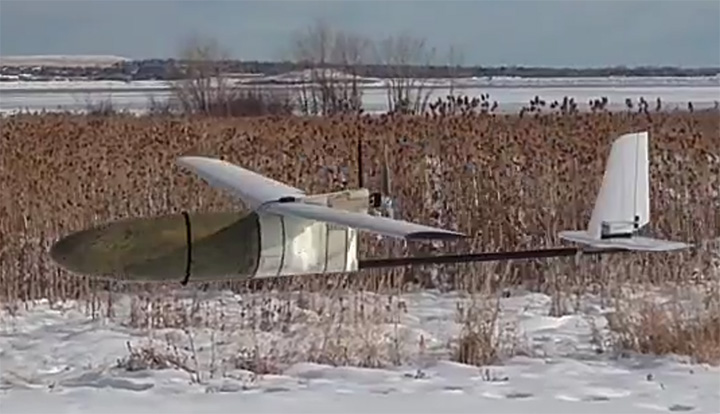
    The SuperSwift sUAS has a forward-located, spacious, interchangeable nose-cone payload bay. (Photo: Black Swift)

    “While there are many sUAS manufacturers for agencies like NOAA to consider, most are simply not suitable for scientific atmospheric measurements,” said Jack Elston, CEO of Black Swift Technologies.

    The SuperSwift addresses NOAA’s requirements for endurance and operational radius (> 2 hours and between 30 to 60 km) sufficient for fire observations, its payload capability (up to 5 pounds), and its unique forward-facing payload bay, “ideal for atmospheric sampling and for easy instrument package swapping,” Elston said.

    The ultimate goal of NightFOX is to perform nighttime in situ measurements of wildfire plumes and remote measurements of wildfire properties, with the measurement data used to improve fire weather forecasting.

    Because of safety concerns and dangers associated with nighttime operations, manned aircraft flights are limited to daytime operations. Ground observations using a mobile laboratory provide detailed chemical information on fire plumes, but lack information on plume spatial distribution to put the point measurements in context.

    UAS observations are the only technology capable of this task. sUAS observations can provide useful information for firefighting efforts by accurately detecting fire perimeter and identifying fire hotspots, but have not attempted to make measurements relevant to studying fire emissions or incorporate observations into fire forecast models.

    “Our proposed work, if successful, will significantly advance the integration of UAS-based observations of wildfires into fire-weather modeling and forecasting,” said Ru-Shan Gao, principal investigator, Chemical Sciences Division, Earth Systems Research Laboratory, NOAA.

    The collected data will also provide otherwise missing data for studying the impact of North American wildfires on the atmosphere and human health. It will ultimately support better land-management decisions and practices, contributing to NOAA’s core mission to advance understanding and prediction of the Earth system to enhance society’s ability to make effective decisions.

    IRISS, a pillar of the CU Boulder Grand Challenge, is a multi-disciplinary team that leads the design, development and deployment of novel remote and in-situ sensing systems to exploit mobility enabled by aerospace systems to enhance data collection from the ground, in the atmosphere and from
    space.

    With its partners, IRISS explores commercial opportunities and fosters discussions on the ethical, legal, and social policy implications of new technologies and big-data collection.

    The existence of a sUAS capable of carrying the necessary instruments routinely through harsh environments adds an invaluable contribution to the calibration and validation of data collected from ground- and satellite-based methods.

    The innovations of the SuperSwift, including the total sensor suite, can be used for scientific research by federal and state public agencies and other state-funded laboratories to collect data on coherent atmospheric structures such as smog, volcano plumes, wildfire smoke, chemical fires, forest humidity, and studying oil and gas field flares for calibration/validation of satellite measurements.

    “NOAA is interested in a UAS observational system (UASOS) that can use be used for fire-related measurements, and so in a sense what we want to know is when and where does the fire flow and ultimately what kind of fire and air quality will result regionally,” Gao said. “We want to monitor the fire and incorporate the remote and in situ measurements into a fire forecast model so ultimately we’ll be able to do better fire forecasts that will help firefighters better fight the fire and keep human and property losses to a minimum.”

  • Martek deploys Centrik aviation management for BVLOS UAVs

    Martek Marine has deployed the Centrik system to manage its UAS operation, the same system used by major airlines.

    Centrik is a cloud-based aviation management software solution specifically tailored for RPAS/UAS operations. It encompasses all aspects of operations: safety, quality, compliance and risk management, while providing comprehensive reporting functions, the company said.

    Centrik gives visibility of every single electronic flight bag and enables sharing of audit information direct with the Civil Aviation Authority or any interested third parties.

    It maintains a complete training record for every single member of staff, allowing us to see instantly who has which qualification and who needs to renew their training.

    It also compiles all assessment results, delivers alerts management when training certificates are about to expire and provides handy checklists of core competencies.

    Martek UAS.

    Pushing UAS capabilities to enable a multitude of compelling use cases can only happen with the approval of the relevant Aviation Authorities who are requiring us to demonstrate the highest level of operational standards and business oversight.

    “Thinking that you can manage a major UAS operation with old fashioned spreadsheets, folders and emails is fundamentally flawed — akin to putting cartwheels on a Tesla,” said Paul Forster, head of UAS Operations. “Investing in Centrik is another statement of our intent to be the world-leader in UAS operations, to compliment our well documented $multi-million investments so far in the world’s best maritime UAS/RPAS.”

  • Indoor drone inspections made safer and faster

    A manufacturer of refinery infrastructure was about to finish the assembly of a radiant box when a thumbnail-size notch was noticed in one of the pipes just before it was to be installed. The radiant box facility is used in the process of refining hydrogen under very high temperature (1,300 to 2,000°F) and pressure (45 to 360 psi).

    The Elios by Flyability is a collision tolerant drone.

    The notch was noticed near the end of the assembly process of the 144 40-foot-high vertical pipes composing the radiant box. The refinery owner insisted that each of the installed pipes be inspected thoroughly before moving to the final stages of testing and firing up the radiant box.

    The refinery manufacturer faced a difficult problem. Made of a particular heat-resistant alloy containing 30 percent chrome, the pipes need careful treatment — contact with another alloy could damage them, which made use of scaffolding impractical. Instead, the customer turned to Industrial SkyWorks and its indoor inspection drone, Elios by Flyability.

    The complexity of the location, the large number of pipes, and the fact that they could easily be mixed up required a meticulous work approach by Industrial SkyWorks. The two-man UAV crew set up a charging station just outside the building. Four flights were needed per pipe to ensure complete coverage. Using the onboard lights of the Elios, the UAV flew to the top of each pipe and descended slowly, recording video.

    The Elios drone flew continuously for nearly five days in a dry and dusty environment, imaging both sides of each pipe. Once finished, the crew presented high-resolution video of each pipe to the satisfied client.
    Resulting savings are estimated at 75 percent for cost and 85 percent for time, the company said. For instance, using a UAV avoided the need for workers to work at height with the associated safety procedures.

    Photo courtesy of Flyability.
  • BVLOS UAVs tested in flight

    BVLOS UAVs tested in flight

    A Delair drone inspects powerlines in France.

    NASA’s UTM. On May 25, the Federal Aviation Administration (FAA)-designated Nevada UAS Test Site and its NASA partners flew five different unmanned aerial vehicles (UAVs) to test NASA’s Unmanned Aircraft System Traffic Management (UTM).

    The flights demonstrated multiple operational scenarios, including parachute-initiated emergency supply deliveries and aerial survey operations.

    The UAVs were flown beyond the pilot’s visual line of sight (BVLOS) using strategically placed visual observers and sophisticated command and control, communication and detect-and-avoid technologies.

    The test is part of a three-week national campaign, which NASA is leading in close collaboration with the FAA and industry partners on a more complex version of its UTM technologies at six different UAS Test Sites around the nation.

    Demonstration in France. In France, Delair-Tech flew a UAV for 30 miles, simulating powerline inspection. Delair used a regular, commercial 3G cellphone network to control the drone for the test — an innovative demonstration that long-distance drone operations can be safe and simple to achieve.

    Canadian Deliveries. Drone Delivery Canada Corp. (DDC) hit a pivotal milestone toward commercializing its drone logistics platform after achieving BVLOS in test flights. Systems tested include DDC’s FLYTE management system, avoidance technology and communications platform.

    During flights in Alberta, DDC’s Mission Control Centre in Toronto, 2,500 kilometers away, successfully monitored and record telemetry in real time. DDC could become the first drone logistics-compliant operator approved by Transport Canada.

  • Australia funds ‘trusted autonomous systems’ for defense

    The government of Australia has launched the first $50 million Defence Cooperative Research Centre (CRC), announced July 6 by the minister for Defence Industry, the Hon Christopher Pyne MP.

    The Defence CRC is a collaborative program that brings together academia, publicly funded research agencies and industry (particularly small to medium enterprises) to create an interlocking research and innovation capability focused on driving a Defence outcome.

    The first Defence CRC will focus on Trusted Autonomous Systems to deliver game-changing unmanned platforms that ensure reliable and effective cooperation between people and machines during dynamic military operations.

    “Existing autonomous and robotic systems that operate in the manufacturing and mining sector are effective in controlled environments, but not suitable for the uncertain situations in which Defence operates,” Pyne said.

    “To be effective, Defence needs autonomous systems to be highly trusted, robust and resilient and this initiative will bring together the best researchers from industry and universities to develop the intelligent military platforms of the future.”

    The CRC for Trusted Autonomous Systems will receive annual funding of $8 million with a maximum of $50 million over a seven-year period.

    The CRC will be chaired by Jim McDowell, a businessman who has had an extensive career in the defence industry, and most recently at the University of South Australia.

    “As Chair, Mr. McDowell will be responsible for leading the development of the research program and business plan and work with industry on transitioning the research results into capability outcomes,” Pyne said.

    This is the first of several CRCs that the Australian government is announcing. Further CRCs will be established on projects also aligned with priorities in the country’s Next Generation Technologies Fund.

    Defence will be a member of each CRC along with universities, research agencies and industry. Participating members will be selected on the basis of their research excellence and technology expertise.

    “The CRC environment offers excellent synergies for Defence, industry and universities to collaborate closely on Defence innovation,” Pyne said.

    The CRC is an initiative of the Next Generation Technologies Fund which complements the Defence Innovation Hub as the two core initiatives of the new Defence Innovation System outlined in the Government’s Defence Industry Policy Statement. These two signature innovation research and development programs, together with the Centre for Defence Industry Capability, deliver on the Government‘s $1.6 billion commitment to grow Australia’s defence industry and innovation sector.

    For more information, visit www.business.gov.au/cdic.

  • LizardTech optimizes Portfolio 2017 for geospatial data

    LizardTech optimizes Portfolio 2017 for geospatial data

    Image: LizardTech

    LizardTech and Extensis have launched Portfolio 2017, a digital asset management (DAM) solution now optimized for geospatial data. Portfolio 2017 enables users to organize, access and share geospatial datasets – including compressed MrSID files – along with associated graphics and documents.

    Divisions of Celartem Inc., LizardTech and Extensis collaborated in adding geospatial data management capabilities to the new version. The DAM solution indexes and catalogs photographs, videos, maps, audio files, Adobe Creative Cloud applications and Microsoft Office documents.

    “In laying out the vision for Portfolio 2017, we saw a unique opportunity to marry the value of LizardTech and Extensis products and extend the value of DAM to new industries, particularly geospatial,” said Toby Martin, vice president of development and strategy at Extensis and LizardTech. “For geospatial users, having a centralized repository for managing digital files will significantly reduce the time spent looking for datasets and essentially eliminate costly replacement of files that have been misplaced.”

    Portfolio 2017 gives users instant access to imagery, lidar and video data captured by satellite, aircraft and unamanned aerial vehile (UAV) platforms. Geospatial files that have been compressed and saved in MrSID formats with the LizardTech GeoExpress solution can be loaded and viewed into Portfolio without any further data conversion, the companies said.

    The new version extracts embedded metadata from compressed imagery and lidar files saved in MrSID formats – as well as GeoTIFF, JPEG 2000, NITF and LAS. Geospatial data can be indexed and stored alongside associated non-geospatial photographs and documents.

    “Portfolio multiplies the value of geospatial assets by making them easier to share with many end users throughout the organization as well as external partners,” Martin said in a news release.

    Data can be retrieved by geographic coordinates or the metadata tag, such as a name, acquisition date or sensor platform. Users can also search by defining an area of interest on a map interface.

  • UAV solutions to be showcased at Intergeo

    UAV solutions to be showcased at Intergeo

    Contributing Editor Tony Murfin is on vacation this month. In place of his column, we bring you an advance look at an important UAV show as applied to surveying and mapping, and a story about drone use in surveillance.

    In the zone

    Legal issues, international market analyses and best practices will take center stage at the Interaerial Solutions Expo (IASEXPO), which will take place Sept. 26–28 in conjunction with Intergeo 2017 in Berlin, Germany.

    At IASEXPO, the international UAV sector will be demonstrating the potential for civil and commercial UAV applications. IASEXPO will consist of an exhibition, forum and the FlightZone for UAV demonstrations. About 150 providers from 25 countries are expected to represent the young drone market at the IASEXPO.

    IASEXPO’s practical forum will cover the latest topics with renowned experts. Visitors don’t have to walk far to switch between market overviews and expert presentations. The aim is to efficiently combine the trade fair and talks.

    IASEXPO Forum 2016.

    Regulations. As Germany’s drone regulations come into force this year, the legal aspects of using and operating UAVs is a key focus of the practical forum. Multicopters and drones weighing more than two kilograms can now only be flown in Germany by someone who holds a “drone driving license.” Pilots will be able to take the drone license test at the trade fair.

    Frank Wichert from project management company procow will detail the requirements and reveal the precise procedure that pilots must follow. Speaker Ulrich Dieckert is a lawyer and expert on the approval process; he specializes in exceptions to operating bans that hinder drone work.

    Market prospects. Kay Wackwitz, CEO of Drone Industry Insights, will present economic analyses of application opportunities and limits for UAVs, and discuss market developments and collaborations.
    UAV Issue Manager Ralf Heidger from German traffic control (DFS) will discuss how DFS tackles the challenge of drones in the air space and tracking them within the air-traffic-management system.

    Best practices.
    First-hand reports will provid examples of best practices in using drones for surveying and inspecting buildings and industrial complexes. Friedrich Wilhelm Bauer from Hannover University of Applied Sciences and Arts will highlight use of thermal-imaging technology for inspections. Benjamin Federmann from Aibotix-Leica will discuss the economic benefits of using drones in surveying and construction.

    The German Association of Copter Pilots will weigh the question of whether to “make or buy” needed drones and services. Answers come from success stories in niche segments such as 3D modeling and smart framing. Maik Neuser from Westnetz and Carlo Zgraggen from Aeroscout will discuss inspections in the energy sector.

    Other topics will be the use of drones in agriculture, forestry and disaster relief. Antoine Cottin from Carbomap and Bobby Vick from Precisionmapper will speak to the practical forum on drones used for surveying forests.


    Drones on patrol

    UAVs will soon be a common sight over border zones, crime hotspots and city streets in South Africa, as public safety and security officials and police departments discover the cost saving and efficiencies offered by drone patrol “armies,” according to Airborne Drones, a South African-based manufacturer of enterprise-grade drones.

    Airborne Drones Vanguard 35-km long range surveillance drone ready to take flight. (PRNewsfoto/Airborne Drones)

    Drones provide a solution to the limitations of other surveillance methods such as GPS tracking, CCTV camera observation, biometric surveillance and ground patrols. Aerial surveillance is increasingly being harnessed for security monitoring — traditionally, with costly helicopters. Drone surveillance present an faster and cheaper method of data collection.

    Specialized security drones can enter narrow and confined spaces, produce minimal noise, and can be equipped with night-vision cameras and thermal sensors, allowing them to provide imagery that the human eye is unable to detect. In addition, UAVs can quickly cover large and difficult-to-reach areas, reducing staff numbers and costs, and don’t require much space for operators.

    Autonomous, long-range security drones are at the vanguard of new policing methods, accoring to Airborne Drones. “Offering live video feeds to ground control stations, these drones can range autonomously over pre-programmed flight paths for extended periods of time, allowing for ongoing routine patrols across wide areas such as borders, maritime regions and high security installations.

    Should an incident be detected, ground crews can then follow objects or intruders from a safe distance, providing visual support to safety and security teams. UAVs can provide detailed visual documentation of sites, enabling effective analysis, risk management and security planning.”

    Around the world. Numerous countries are rolling out security drones to support public safety and defense initiatives”, says Airborne Drones. Israel has long harnessed advanced drones for military surveillance, and recently sold a fleet of “spy drones” to the Irish army.

    The U.S. FBI has used drones for surveillance and tracking for several years. In Australia, the new $50 million Defence Cooperative Research Centre will develop long-range drones, automated vehicles and robots to help Australian soldiers fight the wars of the future. India is looking to military-grade UAVs for maritime and other surveillance and intelligence gathering.

    In June, Brazil’s São Paulo became the first Latin American city to use drones for public security surveillance, and in July, Hamburg, Germany, deployed surveillance drones for the estimated 100,000 demonstrators at the G20 summit. In Australia’s New South Wales, the authorities are using helicopter and drone surveillance along the coast to protect holiday-goers from rip currents and sharks.

    UAVs are also instrumental in managing transport infrastructure safety and security and event security, from event security infrastructure to spectator and crowd control and safety, to overall health and safety planning.

  • Applanix, Waterloo U collaborate on autonomous vehicle tech

    Applanix, Waterloo U collaborate on autonomous vehicle tech

    Applanix is collaborating on advanced research for autonomous vehicle guidance and control systems with the University of Waterloo Centre for Automotive Research (WatCAR) in Ontario, Canada. Applanix is a Trimble company.

    Applanix will provide WatCAR with its positioning and orientation system for testing autonomous guidance and control systems in real-world conditions. Applanix will also provide the Trimble GNSS-inertial board set for integration with car systems and sensors to enable precise positioning.

    The Applanix POS LV is a robust, reliable and repeatable positioning solution for on- and off-road vehicles. Applanix technology will be used by WatCAR to assess the performance of the guidance and control systems on board their autonomous vehicles.

    The testing will take place in challenging weather conditions and environments including on roads under repair, with lane reductions and closures, are wet or covered in snow, and where there is poor visibility.

    An SUV in an anechoic chamber at WatCAR.

    Applanix will also provide WatCAR with Trimble on-board GNSS-inertial board set designed for high-performance, high-volume original equipment manufacturer applications. These products, currently used in a variety of autonomous vehicle programs, include the Trimble AP GNSS-inertial board set that includes a high-precision inertial measurement unit.

    Small, rugged and low powered, the AP board sets provide the precise positioning needed for autonomous vehicle applications as they navigate their environment. Designed for use on all sizes and types of vehicles, the AP boards feature Trimble’s high-performance precision GNSS receivers and Applanix’ IN-Fusion GNSS-inertial integrated technology that produces uninterrupted position, roll, pitch and true heading measurements of moving platforms. Integrating easily with vehicle sensors, the AP board sets provide precise vehicle control when interacting with a constantly changing environment.

    The relationship with WatCAR will aid in improving the core technologies that deliver high-end systems capabilities for a variety of Trimble markets.

    The Waterloo Centre for Automotive Research in Canada conducts advanced research to further automotive innovation and competitiveness. From active safety to automated driving through lightweighting and advanced powertrains, 130 faculty researchers comprise the largest university-based automotive activity in the country. Leading-edge studies for industry partners around the world enhance vehicles, components and their materials with new approaches and integration of innovative technologies.

    “We are excited to collaborate with the University of Waterloo and WatCAR on this leading research in autonomous vehicle technology,” said Louis Nastro, director of land products at Applanix. “Applanix has been committed to meeting the needs of autonomous vehicle manufacturers for more than a decade, as first demonstrated in the early days of the DARPA Grand Challenge. And today, we are also part of many autonomous vehicle programs deployed worldwide in commercial applications.”

    “The Trimble AP products, first introduced in 2009, are designed for use in small, mass market vehicles where size, weight and cost factors are important,” Nastro said. “They have also been designed to easily integrate with the industry’s leading sensors, making them an ideal solution for autonomous vehicle navigation systems and sub-systems.”

    “We welcome the opportunity to work with Applanix, a leader in reference systems. Their technology identifies, with very high accuracy, the exact location of our vehicle at all times,” said Ross McKenzie, managing director at WatCAR. “Applanix is a valued industry partner and their team is great to work with. Going forward we anticipate a solution that will enable autonomous vehicles to traverse the real world reliably and safely.”

  • UAV update: GPS jamming, tethered drones, NASA UTM and space planes

    Drones and Interference

    Most UAVs now come with GNSS as the principle sensor for guidance, often with inertial aiding. And high-precision GNSS on a drone enables much quicker high-precision surveying — unless signal interference disrupts things and spoils your day.

    Septentrio is now fielding two high-precision receivers that can overcome a good proportion of most common interference. AsteRx4 and AsteRx-m2 receivers, equipped with AIM+, can not only overcome common (but illegal) chirp jammers (which can virtually blot out L1 GNSS signals), but also have a spectrum plotting capability. This spectrum plot can visualize potential onboard interference sources during integration, and help identify onboard jammers.

    GoPro Hero 2 camera pick-up monitored by an AsteRx4 receiver

    The GPS L1-band spectrum above has been disturbed by a GoPro camera installed without sufficient shielding on a quadcopter close to the GNSS antenna. The three peaks indicate harmonics of 24 MHz — the typical frequency for a MMC/SD logging interface. This problem was fixed in the lab by adding a shielded enclosure for the camera.

    Although chirp jammers only transmit at around 10 mW, they are powerful enough to block GNSS signals over several hundred meters on the ground. A UAV is much more vulnerable in the air as jamming signals travel further, without line-of-sight blockage from trees, buildings or other obstacles.

    The figure above illustrates how a 10-mW chirp jammer disrupts RTK positioning 1 km away in a high-end receiver. Even a low-end, less accurate and less sensitive consumer-grade L1 receiver loses positioning over several hundred meters. But with AIM+ activated, the AsteRx4 maintains an RTK fix throughout the (simulated) flight and shows no degradation in position.

    So, there are two benefits to using these Septentrio receivers on a drone — less likelihood of losing positioning capability from intentional jamming while airborne, and a built-in spectrum plotter.

    Tethered Drones

    We ran an article recently relating that the U.S. military was interested in tethered drone systems, presumably for short-range reconnaissance. Hard to understand why you might want to intentionally limit the operating range of a drone, but with power supplied from the ground, much longer mission endurance may also have advantages for certain civilian applications too. For instance, inspection of power plants, refinery stacks, on-shore and off-shore oil rigs and other such fixed-location critical installations may benefit from long duration capability, while tethered flight should still allow travel over the whole inspection area.

    Well, these same guys — Drone Aviation — just figured out how to adapt DJI Inspire drones to add a tether system. With a massive share of the commercial small drone market, DJI drones are the most common sUAV used in many civilian applications.

    So now realtors wanting detailed listing videos, news media, maintenance and insurance people inspecting tall buildings or bridges, and many others in the oil and gas industry, no longer need to worry about losing power during lengthy visual data collection. Maybe in exchange, management of how the tether locates during an inspection may become a concern, but the longer endurance trade-off may also be worthwhile for a lot of applications.

    FUSE system.

    The Drone Aviation FUSE system comes with a customized power pack and an “automated smart tension control winch case” with 200 feet of tether, and uses 110-volt ground power — which works well when supplied by a portable field generator.

    NASA Tests UAV Traffic Management

    In the meantime as small drone use increases, including overnight shipping companies who continue to pursue ways to make package delivery by drones in ways acceptable to the FAA, the looming crisis in UAV airspace traffic management (UTM) is getting a lot of attention.

    NASA has been cooperating with FAA for some time to investigate potential systems for low altitude drone traffic management, and recently concluded field tests at six FAA test sites across the U.S.

    The three-week campaign, known as the Technology Capability Level 2 (TCL2) National Campaign, has focused on flying small drones well beyond the pilot’s visual line of sight over sparsely populated areas at these test sites. Operational test scenarios have included simulation of package deliveries, agricultural surveys, search and rescue, railway inspections and video surveillance operations.

    NASA has signed up over 100 industry, academic and government partners for this UTM effort, who are collaborating together, sharing data and using their own resources for this investigation. Companies who are participating and who may have significant interest in the outcome of these tests are planning to fly drones in the national airspace for package and food deliveries, bridge, power line and rail inspections, and agricultural purposes — these include Amazon, Google, Intel, Flirtey, Drone America, Carbon Autonomous and NUAIR.

    NASA is currently assessing the data gathered during these recent tests, but plans are already in place for the next phase of tests — flying drones in denser traffic over more populated areas and also determining UAV/UTM responses to larger manned aircraft.

    And in related activities elsewhere, at AUVSI XPONENTIAL in Dallas last month the International Civil Aviation Organization (ICAO), an agency of the United Nations that coordinates aircraft operations between member countries around the world, announced a Request for Information (RFI) on UTM systems. The intent of the RFI is to advance international progress towards worldwide UTM adoption by first gathering the best ideas from governments and industry.

    BVLOS Demonstration in France

    In an effort to demonstrate practical, readily implemented Beyond Visual Line Of Sight (BVLOS) drone operations in France, Delair-Tech recently flew a UAV for 30 miles, simulating powerline inspection. Delair used a regular, commercial 3G cell-phone network to control the drone for this test – an innovative demonstration that long-distance drone operations can be safe and simple to achieve.

    Delair drone inspects powerlines in France.

    Delair-Tech acquired Gatewing — which was previously owned by Trimble — in 2016 and has also signed strategical distribution agreements with Trimble. The business not only includes the manufacture, turn-key operation and support of drones, but also includes data analysis and reporting. And in a sign that commercial drone operations are becoming more commonplace in France, and that there is likely a preference for local suppliers, the purchasing conduit for government agencies across the country has selected the Delair DT18 and DT26X as the choice for French government agencies purchasing fixed-wing unmanned aerial vehicles.

    Unmanned Space Plane?

    DARPA recently selected Boeing to complete advanced design work for the Experimental Spaceplane (XS-1) program — a new class of hypersonic aircraft aimed at rapid turn-round, low-cost access to space.

    Artist’s concept of the space-plane.

    The XS-1 program is expected to create a reusable unmanned aircraft, around the size of a business jet, which would take off vertically like a rocket and fly at hypersonic speeds. The vehicle would fly to a high suborbital altitude and release an expendable upper stage, deploying a 3,000-pound satellite to polar orbit. The reusable space plane would then return and land horizontally and — this is a key requirement for the program — be prepared for the next flight within hours or a few days.

    The XS-1 technology demonstration will therefore aim to fly 10 times in 10 days, with the final flight carrying the upper-stage payload delivery system. Its hoped the program will promote a commercially offered service with costs as low as $5 million or less per launch — a small fraction of the cost of today’s launch systems. The XS-1 technology demonstrator’s propulsion system will be an Aerojet Rocketdyne AR-22 engine, a version of the Space Shuttle’s main engine, which would be fired on the ground 10 times in 10 days to demonstrate propulsion readiness for flight tests.

    Phase 3 objectives include 12 to 15 flight tests, currently scheduled for 2020. After multiple shakedown flights to reduce risk, the XS-1 will to fly 10 times over 10 consecutive days, at first without payloads at speeds as fast as Mach 5. Subsequent flights are planned to fly as fast as Mach 10, and deliver 900lb to 3,000lb payloads into low Earth orbit.

    So, high-end receivers to help deal with both external and internal jamming, tethers for DJI drones enabling longer inspection flight capability, NASA testing and industry collaboration towards an air traffic system for drones, long-range drone operations using 3G cellular networks in France, and even a research program to develop an unmanned space plane — nothing ever stands still in the ever-evolving world of unmanned aircraft.

    Tony Murfin

    GNSS Aerospace

  • Septentrio bestows Ecochallenge Award on Leuven University team

    Septentrio bestows Ecochallenge Award on Leuven University team

    Septentrio, a designer and manufacturer of GNSS solutions, has awarded the Katholieke Universiteit Leuven (KU Leuven) Ecochallenge team — the winners of the Galileo Masters (Flanders Challenge) of the European Satellite Navigation Competition (ESNC) — with an AsteRx-m UAS receiver for its proposal to use high-precision high-reliability Galileo receivers to modernize inland waterway transport by introducing autonomous technology for the vessels.

    The judging panel were impressed with the proposal from the KU Leuven Ecochallenge team to use high-quality Galileo receivers to improve the safety and efficiency on autonomous and existing vessels, which can be retrofitted with the solution.

    The ambitious proposal offers a pragmatic step towards rejuvenating inland waterways as a viable ecological alternative for freight transportation, Septentrio said in a news release.

    The KU Leuven team also participated in Ecorace Challenge organized by the Flemish Waterways Agency and was both the overall winner in the cargo category as well as being voted the most innovative vessel in 2016.

    The AsteRx-m receiver board won by KU Leuven Ecochallenge team is a GNSS solution for applications in autonomous and unmanned vehicles, such as drones. The AsteRx-m UAS offers centimeter-level accuracy at 700 mW using L1/L2 GPS and GLONASS RTK.

    The AsteRx-m OEM Board by Septentrio.

    “As traffic continues to increase, exploiting inland waterways has been identified as a critical development for easing the pressure on road networks,”  said Jan van Hees, director of business development at Septentrio. “High-precision high-reliability positioning technology using GNSS is an essential element of the development. The KU Leuven team have demonstrated an innovative autonomous small vessel prototype already to move cargo safely and efficiently on the Flemish waterways, and we look forward to continued collaboration as they further develop this technology for bigger ships.”

    “The team is very pleased with their performance winning the Septentrio Prize and the Ecorace Challenge together in the same year,” said Geert Waeyenbergh of KU Leuven, who mentored the KU Leuven Ecochallenge team. “The received AsteRx-m will further help research and development of better ships going into the future.”