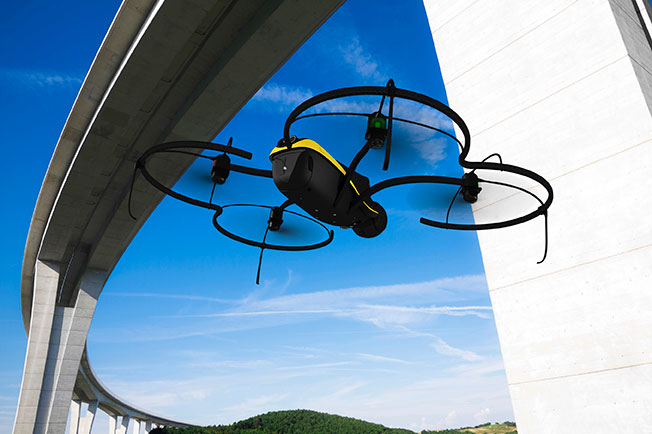
The workshop is scheduled for 1:30 p.m. to 5:30 p.m. CDT on May 8. It will bring the AUVSI and AIAA professional communities together to focus on the current civilian applications of UAS, to look at lessons learned during the Public Decade (2008-2017), and to look forward to defining the Civil Decade (2017-2026).
Key questions that will be addressed include:
What is the current state of civilian applications of UAS?
What are lessons learned from the Public Decade to be applied in the Civil Decade?
What are the critical technologies and regulatory environment that must be in place in 5 years, 10 years?
What are the roles of stakeholders in the industry, agency and academic communities to ensure U.S. leadership in the Civil Decade and beyond?
Stakeholder feedback will be collected during the half-day event to help UAS manufacturers, operators, policy makers and regulators begin to shape the Civil Decade.
The workshop is one of several events co-located with AUVSI XPONENTIAL. “XPONENTIAL’s co-located events shine a light on the technology developments, policy issues and business opportunities that will drive revenue in the unmanned systems industry, and help accelerate its evolution,” said Brian Wynne, president and CEO of AUVSI. “This year’s agenda features forward-looking leaders who can share critical insights and best practices for maintaining a competitive edge in our rapidly-changing industry.”
More than 7,000 industry leaders and professionals from 55 countries are expected to attend XPONENTIAL 2017. The exhibit hall will showcase more than 650 cutting-edge companies, representing more than 20 industries.
Assessing the health of an entire industry is not an easy task, but talking with industry leaders and looking for examples of growth and investment can help.
Our “State of the UAS/UAV Industry” inquiries have lead to discussions with General Atomics, Association for Unmanned Vehicle Systems International (AUVSI), Aeryon Labs and SensoFusion. SensoFusion might be a little well less known that the others, but we felt the need to include the views of an anti-drone system supplier to counterbalance the industry’s perception of itself.
Discussions included questions around the following issues:
The level of maturity of common technologies in use on UAV platforms and systems?
The level of maturity of integration of those technologies?
A sketch portrait of the industry?
Rough numbers or percentage of small players versus large ones?
The rate of consolidation of companies (has it happened or has it yet to happen?)
The financial underpinnings of the market — does it have real “legs” or will it be like the first Internet boom/bust?
If we start with a top-level overview of the industry, as a whole we find that on the commercial side it’s an industry trying to figure out what it is and who its customers might be. But there is also a well-established military part of the industry that is quite mature. A large number of multi-rotor UAV suppliers use simple handheld controllers, all aimed at different applications where they are seeking a niche. The FAA’s release of regulations last year for use of small unmanned vehicle systems (sUAS) has provided a real boost to many more commercial pay-for-service ways these vehicles are now being used.
Multi-rotor UAVs are being put to use in surveying, filmmaking, newsgathering, real estate, crop and pipeline inspection, firefighting, law enforcement, security, search and rescue, and disaster monitoring and relief, just to mention a few applications. And, of course, home/hobby flying your own drone in your backyard or open areas has fueled the Chinese DJI drone manufacturers’ growth significantly. While the FAA requires registration of these private drones, it has not prevented an increase in commercial passenger aircraft pilot reports of UAV incursions into controlled airspace, which appear to be on the increase.
Then there are small, medium and large fixed-wing UAVs that appear to have been mostly developed for and used by the military. Hand-launched surveillance drones for small groups of ground troops; mid-sized, longer range surveillance drones finding applications in commercial inspection; and the bigger General Atomics Predator type aircraft which have become the U.S. military’s search and destroy long-range vehicle, which can carry significant ordinance. At the top end, we have UAVs like Global Hawk which are used for very high altitude, long-endurance surveillance. Not forgetting target drones like the Northrup Grumman BQM-74E, which earns its living pretending to be an enemy anti-ship cruise missile for the U.S. Navy.
Global Hawk (Photo: USAF)
BQM-74E target drone.
Commercial Growth Anticipated
Brian Wynne, president and CEO of the Association for Unmanned Vehicle Systems International (AUVSI), believes for the commercial segment that, “The UAS industry is primed for incredible growth. UAS are being used in all 50 states by industries like real estate, agriculture and the oil and gas industry for more than 40 different types of business applications, including aerial photography, emergency management and utility inspection.”
More than 500,000 people have registered their UAVs with the FAA in the U.S., and around 20,000 of those are looking to start commercial operations. AUVSI expects more than 100,000 jobs will be created when UAS are integrated into and allowed to operate in the U.S. National Airspace System (NAS).
However, Wynne went on to comment, “This this can only happen if the government puts in place a true, holistic plan for full UAS integration that includes flights over people, as well as beyond line-of-sight operations, access to higher altitudes and platforms above 55 pounds.” AUVSI estimates that in the first decade after full UAS integration into the NAS, these commercial operations could generate more than $82 billion is economic impact.
Even before the FAA’s release of formal regulations (known as Part 107) for use of sUAS in June last year, more than 5,500 businesses received approval to fly for commercial purposes. AUVSI published a report that analyzed these applications — the analysis provides an overview of the developing commercial UAS industry in the U.S.
AUVSI analysis of initial UAS applications.
Over 90 percent of these businesses make less than $1 million in annual revenue and have fewer than 10 employees. This also provides an indication that the engine behind this growth comes from small, independent business.
Nevertheless, big organizations such as CNN are also exploring visual line-of-sight operations over people and safely using UAS for newsgathering in populated areas. PrecisionHawk is testing extended visual line-of-sight operations in rural areas, aimed at precision agriculture, and BNSF Railway is testing beyond visual line-of-sight (BVLOS) operations, in rural and isolated areas, for the inspection of rail system infrastructure. These tests are being conducted as part of the FAA’s Pathfinder Program.
More recently, anti-drone systems have joined the party to help defend against unwanted UAV incursions into secure areas already protected by conventional systems like radar, acoustic and optical detection systems. Secure areas include such places as prisons, government buildings/facilities, utility companies (including nuclear power stations) and airports. Sensofusion in Finland is one such company, with its Airfence anti-drone system — one of three anti-drone systems tested last November by the FAA at Denver airport. The other systems were supplied by CACI International and Liteye Systems.
Kaveh Mahdavi, VP of Operations for Sensofusion, thinks that, relatively speaking, the UAV industry is quite mature — what’s still being developed are systems to enable autonomous drone flight. The regulations published so far only address ground-pilot-controlled operations, even though BVLOS testing is progressing well.
Anti-Drone Systems
On the other hand, the maturity level of anti-drone systems range from proven to embryonic. As many as 50 companies with different technical solutions are vying to succeed in this new segment. But as the UAV segment continues to grow, so does the need for detection and prevention of drone incursions.
These systems employ three basic technologies: radar, optical and RF. Radar and optical need direct line of sight and cannot see “over the horizon.” That makes them quite short-range, and detection and defense has to be exceptionally quick to prevent unwanted UAV flying visits. Whereas, the Airfence RF system is omnidirectional and can even detect UAS preparing for take off up to six miles away, as demonstrated at the Denver airport.
So, intrusion warnings at a geo-fence distance of, say, 3-4 miles can be generated, and automatic defense/prevention is readily achieved. For instance, some utility companies want to have detection, warnings and control of intruder drones within a mile of their facilities.
Mahdavi went on to describe how Airfence uses a library of drone control RF signatures for all known UAS, with new signatures being added on a regular basis. They can detect, intercept and directly take control of the offending vehicle. During the Denver tests, Airfence initially only detected one third of the target UAVs, but the RF signatures of all targets were acquired. Then, using remote engineering updates to the library, by day three all were detected. With lower prices, consumer drones are becoming a real threat for these sensitive areas.
The anti-drone industry will no doubt face considerable consolidation over the next couple of years, but Mahdavi feels that Sensofusion is well placed with significant military and government business, which is funding their growth without external investment. “Securing the right contracts with the right customers,” as he says, has well positioned the company for now and the future.
General Atomics Aeronautical Systems Inc. (GA-ASI), makers of the well-known Predator, Reaper and other Medium-Altitude Long-Endurance (MALE) drone systems, has been in this business for almost 25 years. GA considers its products to be proven, mature and resilient for the military and government markets that demand them to be so. The company uses “best of breed” in-house products and technology across the range of air and ground systems that make up its highly successful drone systems.
In an effort to align with European customer interest, GA-ASI has been investing in a “certifiable” version of the Predator-B, recently named SkyGuardian. A derivative for marine applications will be known as the SeaGuardian.
SeaGuardian.
SkyGuardian.
Just as military transport aircraft want to transit through civilian airspace and, in order to do so, have been equipping with certified navigation systems for a number of years, military drone operators want to be compatible with Europe’s high-density commercial flight regulations and to operate within existing air-traffic control corridors. To arrive in time for these European programs, GA-ASI has invested to get ahead of the market. This has entailed assessment of all on-board and ground components, and has led to upgrades and re-designs where necessary.
“Nevertheless, on existing product lines, there is a large degree of commonality across common systems on multiple platforms,” said Mike Cannon, VP of international programs. Common systems include datalinks, power avionics, de-icing systems, and some airframe components.
GA-ASI has developed and integrated its own flight control system in its aircraft for more than 20 years. This has proven to be a key element of the success for the Predator family of products. Because all these systems have been flying for so long, they have been proven and become very reliable, dependable elements of the company’s unmanned systems.
Having said that, Hughes Network Systems has just announced that its Defense and Intelligence and Systems Division (DISD) has been selected by GA-ASI to provide satellite communications on the “Type-Certifiable” Predator B Remotely Piloted Aircraft (RPA) system. Working with GA-ASI, Hughes will customize the aircraft’s satellite communications system with modified Hughes HM series modems. The advanced modems will enable a significant increase in data transfer rates, using an enhanced waveform that ensures resilient and secure communications when operating in challenging environments.
So, its very difficult for new start-up companies to enter this top level segment of the UAV market — its very expensive to develop, demonstrate and prove large airframes, control systems and avionics that customers can rely on. GA-ASI has a unique position alongside major suppliers such as Boeing, Northrup Grumman, Israel Aerospace Industries (IAI), and Lockheed Martin — however, Chinese UAS are beginning to show up in the marketplace, apparently as a result of significant, focused investment.
Nevertheless, with an enviable position as a major supplier of platforms used in multiple applications, with sufficient internal resources to fund their initial vehicle developments, GA-ASI has secured a large number of programs with multiple follow-on orders and funding for increasingly more capable derivative UAS. As the company now looks towards the “certifiable” segment using another internally funded product launch, it is again reinforcing its leadership position in its chosen unmanned market segment.
Small UAS by Aeryon Labs
Meanwhile, the world of small unmanned air vehicles (sUAS) continues to thrive, given the release of FAA regulations last year, and many commercial applications are blossoming, using increasingly capable small multi-rotor drones. David Kroetsch, CEO and co-founder of Aeryon Labs in Ontario, Canada, thinks that the sUAS segment is maturing from an early adoption phase into providing utility to a growing number of organizations. Aeryon is an established player in the sUAS market and has been around for more than 10 years, so it has also had time to prove its platforms and internal systems. Aeryon also built its own flight-control hardware and software, which enables the company to gain substantial power savings and get longer endurance from how it automatically manages rotor speeds.
“The quad platform has been around since 1938, so the concept is hardly new; however, over the last decade, Aeryon Labs has substantially matured and ruggedized our platform, the Aeryon SkyRanger sUAS,” said Kroetsch. Their focus is on not only on the UAV platform, but also on supplying complete systems that meet the various needs of their customers. With electro-optical and thermal-imaging camera payloads and an on-board georeferencing data collection/processing system, Aeryon provides integrated solutions for customers, such as AeryonLive Video and Telemetry and AeryonLive Fleet Management using real-time software tools.
Aeryon SkyRanger sUAV.
AeryonLive tools.
For the oil and gas industry, providing compatibility for off-line flight planning software inputs and importing compatible aerial imagery into existing GIS systems is a significant feature for these customers. The SkyRanger UAS has benefited from many years of use in the field, and has been designed with modularity and ease of use with snap-on/off parts that make operating in bad weather a lot easier.
Aeryon’s business is currently 50%military, 25% oil and gas and 25% public safety (such as rapid traffic accident data gathering). Other entrants to these segments might find it easy to put together an unmanned system from parts bought on the internet; what comes considerably harder is proving reliability and interoperability with existing customer systems. Actually, to develop an industrial-grade UAV takes lots of investment and requires experience gathered over many years. Customers have learned how to differentiate between those dabbling in the market and those with serious capabilities.
Consolidation is inevitable in this market segment — perhaps within the next six months, certainly over the next two years — just because there are so many companies trying. Investment is getting harder to find for these start-ups and it may be too late for most, as the leaders are already well established.
“It’s essential to pick a niche within the increasingly competitive UAV industry,” Kroetsch said. “This is why Aeryon chose early on to focus on enterprise-level offerings in commercial, public safety and military.”
Recall what happened to 3D Robotics. Even though 3D Robotics raised many millions in funding, its Solo quadrotor fell from grace, perhaps due to continuing design issues and being higher priced compared to rapidly declining DJI Phantom 3 prices. “‘Competition and consolidation look to be very similar to that which happened with digital cameras,” Kroetsch said.
For Aeryon, being Canadian appears to be an advantage right now, as U.S. export regulations seem to be handicapping U.S. drone manufacturers. Aeryon sells in 35-40 countries because its product does not contain military-restricted components and only uses commercial parts. Canadian regulations for drone system exports do not prohibit world–wide sales for such products, while U.S. regulations can be difficult for U.S. suppliers to negotiate.
Nevertheless, unexpected hurdles to adoption still exist, such as company policies related to health and safety, union restrictions, and potential internal clashes on responsibility for implementation. But with 100% test, and a hardened design for tough environments, Aeryon sees itself well positioned to grow in its chosen industrial sector.
Conclusion
This has been a brief and incomplete overview of the UAV/UAS industry — a first try, if you will. Nevertheless, it’s a summary that we can use a benchmark for where we are right now, and a departure point for future growth.
We have quite mature capability in both large and small UAS, with integration focused on flight-control and navigation systems. The larger UAS enjoy a relatively mature market with established suppliers of lower numbers of expensive systems, while the sUAS segment is larger, younger and less expensive, with not as many barriers to entry.
Nevertheless, there are mature industrial segments with harder, more integrated requirements that make it hard for new entrants to climb the steps into more difficult commercial operations. The recreational segment is dominated by DJI, and it remains strong with well-performing, easy-to-operate drones.
Because of the ease of access to smaller drones, despite FAA and other countries’ regulations, people seem to want to penetrate secure facilities such as utilities, airports, military bases, prisons and other government locations. Therefore, anti-drone systems using optical, radar and RF are becoming available, and facilities are being equipped to prevent unwanted drone incursions.
AUVSI xPONENTIAL
I’ll be roving the show floor at the upcoming AUVSI xPONENTIAL show in Dallas, and I welcome your added insight, from all corners of the UAV industry, for a continuation of this assessment in an upcoming Professional OEM & UAV e-newsletter column (subscribe free at gpsworld.com/subscribe).
The workshop, “Drones and the Wireless Industry: Information, Insights and Actionable Tools to Utilize UAS in Your Business,” will take place in the Sands Expo exhibit hall’s Enterprise and Industrial IoT Zone in booth No. 6037.
The wireless industry has adopted UAS technology for a number of applications, including tower inspections and optimizing networks for special events, AUVSI says. With the recent implementation of the Federal Aviation Administration’s (FAA’s) Part 107 small unmanned aerial systems (UAWS) rule, more commercial operators than ever are expected to explore the benefits of UAS. Wynne’s workshop will review how these new regulations will impact the wireless industry, as well as the vast potential that UAS have for wireless companies.
Workshop participants include Marke “Hoot” Gibson, senior advisor for UAS Integration at the FAA; Sean Cushing, president, COO and co-founder of HAZON Solutions; Thomas Haun, vice president of Strategy and Globalization for PrecisionHawk; Christopher Moccia, executive vice president of Infrastructure for Measure; Anil Nanduri, vice President of the New Technology Group at Intel; and Art Pregler, director of National Mobility Systems for AT&T.
Wynne also will participate in a panel discussion on UAS and 4G wireless networks, which will take place following the workshop from 4-5 p.m. PDT in room Veronese 2401.
An economic impact study by AUVSI found the UAS industry is projected to create more than 100,000 jobs and provide more than $82 billion in economic impact in the first decade following UAS integration into the national airspace, according to AUVSI.
Today, the Federal Aviation Administration (FAA) has finalized the first operational rules for routine commercial use of small unmanned aircraft systems (UAS), opening pathways towards fully integrating UAS into the nation’s airspace.
These new regulations work to harness new innovations safely, to spur job growth, advance critical scientific research and save lives, the FAA said in a press release.
“We are part of a new era in aviation, and the potential for unmanned aircraft will make it safer and easier to do certain jobs, gather information, and deploy disaster relief,” said U.S. Transportation Secretary Anthony Foxx. “We look forward to working with the aviation community to support innovation, while maintaining our standards as the safest and most complex airspace in the world.”
According to industry estimates, the rule could generate more than $82 billion for the U.S. economy and create more than 100,000 new jobs over the next 10 years.
The new rule, which takes effect in late August, offers safety regulations for unmanned aircraft drones weighing less than 55 pounds that are conducting non-hobbyist operations.
The rule’s provisions are designed to minimize risks to other aircraft and people and property on the ground. The regulations require pilots to keep an unmanned aircraft within visual line of sight. Operations are allowed during daylight and during twilight if the drone has anti-collision lights. The new regulations also address height and speed restrictions and other operational limits, such as prohibiting flights over unprotected people on the ground who aren’t directly participating in the UAS operation.
The FAA is offering a process to waive some restrictions if an operator proves the proposed flight will be conducted safely under a waiver. The FAA will make an online portal available to apply for these waivers in the months ahead.
“With this new rule, we are taking a careful and deliberate approach that balances the need to deploy this new technology with the FAA’s mission to protect public safety,” said FAA Administrator Michael Huerta. “But this is just our first step. We’re already working on additional rules that will expand the range of operations.”
Under the final rule, the person actually flying a drone must be at least 16 years old and have a remote pilot certificate with a small UAS rating, or be directly supervised by someone with such a certificate. To qualify for a remote pilot certificate, an individual must either pass an initial aeronautical knowledge test at an FAA-approved knowledge testing center or have an existing non-student Part 61 pilot certificate. If qualifying under the latter provision, a pilot must have completed a flight review in the previous 24 months and must take a UAS online training course provided by the FAA. The TSA will conduct a security background check of all remote pilot applications prior to issuance of a certificate.
Operators are responsible for ensuring a drone is safe before flying, but the FAA is not requiring small UAS to comply with current agency airworthiness standards or aircraft certification. Instead, the remote pilot will simply have to perform a preflight visual and operational check of the small UAS to ensure that safety-pertinent systems are functioning property. This includes checking the communications link between the control station and the UAS.
Although the new rule does not specifically deal with privacy issues in the use of drones, and the FAA does not regulate how UAS gather data on people or property, the FAA is acting to address privacy considerations in this area. The FAA strongly encourages all UAS pilots to check local and state laws before gathering information through remote sensing technology or photography.
As part of a privacy education campaign, the agency will provide all drone users with recommended privacy guidelines as part of the UAS registration process and through the FAA’s B4UFly mobile app. The FAA also will educate all commercial drone pilots on privacy during their pilot certification process; and will issue new guidance to local and state governments on drone privacy issues. The FAA’s effort builds on the privacy “best practices” the National Telecommunications and Information Administration published last month as the result of a year-long outreach initiative with privacy advocates and industry.
Part 107 will not apply to model aircraft. Model aircraft operators must continue to satisfy all the criteria specified in Section 336 of Public Law 112-95 (which will now be codified in Part 101), including the stipulation they be operated only for hobby or recreational purposes.
Brian Wynne, president and CEO of the Association for Unmanned Vehicle Systems International (AUVSI), issued the following statement:
“Today’s release of the final small UAS rule by the FAA is a critical milestone in the integration process, and a long-awaited victory for American businesses and innovators. It establishes a clear regulatory framework and helps to reduce many barriers to civil and commercial operations, allowing anyone who follows the rules to fly in the national airspace.
“Accelerating civil and commercial UAS operations will not only help businesses harness tremendous potential of UAS, it will also help unlock the economic impact and job creation potential of the technology. Once UAS are fully integrated into the national airspace and become more widely used, the industry will continue to grow as a job creator and generate significant economic impact.
“Our economic report projects that the expansion of UAS technology will create more than 100,000 jobs and generate more than $82 billion to the economy in the first decade following integration. Whether it’s aiding search and rescue missions, advancing scientific research, responding to natural disasters, or helping farmers care for their crops, UAS are capable of saving time, saving money and most importantly, saving lives.
“The final rule allows for many uses of small UAS and a streamlined waiver process to expand applications. We are looking forward to additional rulemaking which has already begun with AUVSI’s support, to enable more complex operations. We need to make sure we are doing all we can to support the UAS industry’s growth and development; otherwise we risk stunting a still-nascent industry and restricting the many beneficial uses of this technology.”
National Association of Realtors (NAR) President Tom Salomone called the rules a win for the industry.
“We’ve worked hard to strike a responsible balance that protects the safety and privacy of individuals, while also ensuring Realtors can put drones to good use,” said Salomone, broker-owner of Real Estate II Inc. in Coral Springs, Florida. “That effort just took another big step forward. The rules unveiled today will help more real estate professionals take flight, making the efficiency and innovation that drones have to offer available to a much broader base of operators.”
The FAA’s announcement marks a long-fought victory for Realtors. Since early 2014, NAR has worked with the FAA and industry partners to integrate drones into the national airspace for commercial use. NAR wrote to the FAA on numerous occasions to weigh in on the final Small UAS Rule, and testified before Congress to support the use of drones in real estate.
Despite eliminating the requirement that operators hold a pilot’s license, anyone looking to fly drones commercially will still have to comply with strict requirements designed to protect people on the ground.
Drones are useful in a number of real estate-related applications, including marketing properties, assisting with appraisals, facilitating insurance claims and overseeing utility work. While many real estate professionals with pilot’s licenses have already put drones to use in these arenas, the new rules are expected to open the door for additional operators to do the same.
Despite the significant progress made in the FAA’s final rule, NAR’s work on this issue will continue. NAR is calling for eased restrictions on a “micro” category of drones; drones in this category weigh less than four pounds and present a much smaller safety risk than certain drones in the under-55 pound category covered by the rule released today.
NAR also believes there is an ongoing need for a drone strategy that allows for “beyond visual line-of-sight” flights, or those where the operator cannot physically see the drone throughout the entire operation. These flights are particularly important for aerial photography across large buildings or tracts of land.
Salomone praised the FAA for their efforts in crafting the rule.
“Getting here wasn’t easy, and the FAA is to be commended for listening to the concerns of real estate professionals throughout the rulemaking process,” he said. “We’re entering a new stage of drone use in real estate, and no doubt there will be additional questions and challenges ahead. NAR will continue educating its members on issues important to the safe, responsible use of drones so they can grow their business and better serve their clients.”
The National Association of Realtors, “The Voice for Real Estate,” is America’s largest trade association, representing more than 1.1 million members involved in all aspects of the residential and commercial real estate industries.
Cobham‘s Sunita Shah discusses the company’s AESA (actively electronically scanned array) antenna system at the Association for Unmanned Vehicle Systems International’s Xponential show, held May 2-5 in new Orleans.
Trackimo, a U.S.-based IoT (Internet of Things) solution provider enabling worldwide connectivity for M2M (Machine to Machine) devices, showcases its tracking devices at the Association for Unmanned Vehicles Systems International’s Xponential show, held May 2-5 in New Orleans.
Trackimo’s technology integrates GPS, GSM, an accelerometer and sensors that provide smart data. Cellular network signaling manages the devices and dispatches information to systems and apps.
Trackimo covers both consumer and businesses sectors including fleet tracking and logistics management solutions, customizable and scalable IoT platform, remote gateways and consumer tracking devices.
David Hoyh of Systron Donner Inertial talks about the company’s SDI500 tactical grade MEMS IMU at the Association of Unmanned Vehicles International‘s Xpontential 2016 show, held May 2-5 in New Orleans. The company also featured its INS/GPS SDN500 for use in GPS-denied situations.
The sensor offers real-time data, 360-degree scanning, 3D distance and calibrated reflectivity measurements for the mapping, automotive, UAV, security and robotics markets.
Paul Crampton, senior systems engineer for Spirent Federal Systems, highlights the company’s GSS9000 Constellation Simulator and GSS6425 GNSS Record and Playback Test System at the Association for Unmanned Vehicles International‘s Xponential show, which is being held May 2-5 in New Orleans.
GPS World‘s Tony Murfin sits down with Jakub Maslikowski, director of sales and marketing for VectorNav Technologies, at the Association of Unmanned Vehicles International’s Xponential 2016 show, held May 2-5 in New Orleans. The company highlights its tactical series line of IMU/AHRS systems, GPS/INS systems and GPS compass systems.