Cobham exhibited its series of multi-axis gimbal systems at the Association for Unmanned Vehicle Systems International‘s Xponential 2016 show, held May 2-5 in New Orleans. Cobham’s Alex Doig explains that the system can be stabilized for ground, air or shipboard platforms.
Tag: AUVSI
-
KVH highlights line of IMUs for unmanned systems at AUVSI’s Xponential 2016
Sean McCormack, director of FOG/OEM sales for KVH Industries, talks with GPS World Contributing Editor Tony Murfin about the company’s line of inertial measurement units (IMUs) during the Association for Unmanned Systems International‘s Xponential show, held May 3-5 in New Orleans.
-
Live from AUVSI’s Xponential 2016
 The GPS World and Geospatial Solutions staff is reporting live from the Association for Unmanned Vehicle Systems International‘s (AUVSI’s) Xponential 2016 May 2-5 in New Orleans. The event convenes the global community of commercial and defense leaders in intelligent robotics, drones and unmanned systems.
More than 8,000 industry leaders and professionals from more than 55 countries are discussing the latest innovations in the unmanned systems market this week. Hundreds of educational sessions are providing information about the future of unmanned systems policy, regulations and technology. Also, the show’s Startup Showdown has $15,000 in cash prizes and mentorship opportunities for start-up companies.
Award-winning journalist Miles O’Brien, the science correspondent for PBS NewsHour, is hosting the event. Keynote speakers include Michael P. Huerta, administrator of the Federal Aviation Administration (FAA); Gen. David G. Perkins, commander of the U.S. Army Training and Doctrine Command; Gur Kimchi, co-founder and vice president of Amazon Prime Air; and John Chambers, executive chairman of the board of Cisco Systems.
A panel of industry thought leaders, moderated by AUVSI’s president and CEO Brian Wynne, are discussing the future of unmanned systems: U.S. Rep. Frank LoBiondo, chairman of the House aviation subcommittee; Frank Kelley, deputy assistant secretary of the U.S. Navy for Unmanned Systems; Marke Gibson, senior advisor for UAS integration at the FAA; and John Cavolowsky, Ph.D., director of NASA’s Airspace Systems Program.
Check back throughout the week for event updates, including news, photos, videos, tweets and more.
NEWS
Trimble offers GNSS module for system integrators (5/5)
FAA establishing advisory committee on UAV integration (5/4)
DJI, PrecisionHawk partner on UAV remote sensing for agriculture (5/3)
SOAR Oregon backs UAS FutureFarm for digital agriculture (5/3)
IMSAR sells UAV detect-and-avoid radar tech to Fortem (5/3)
FLIR launches radiometric thermal camera for commercial drones (5/3)
VectorNav launches tactical series of IMUs at AUVSI show (5/3)
Commercial drone services could reach $8.7 billion annually by 2025 (5/2)
Quanergy announces new lidar sensor at Xponential (5/2)
Echodyne offers detect and avoid radar for small UAS (5/2)
Arcturus VTOL UAS deployed with the Mexican Navy (5/2)
uAvionix debuts pingRX receiver for small drone collision avoidance (5/2)
Insitu to focus on new commercial division at Xponential 2016 (5/2)
VIDEO PLAYLIST
-

Arcturus VTOL UAS deployed with the Mexican Navy
 Arcturus UAV reports the Mexican Navy has deployed its T-20 Jump fixed-wing vertical take-off and landing (VTOL) UAV for unspecified operations in Mexico. The customer took delivery of the VTOL system in March.
The announcement was made at AUVSI’s Xponential 2016.
The T-20 Jump is a VTOL variant of Arcturus UAV’s catapult launched T-20 platform. It operates without any special launch or recovery equipment. Gross payload capacity is 60 pounds.
The Mexican Navy configuration with an electro-optics and infrared (EO/IR) sensor has approximately 15 hours of endurance and a 75-mile data-link range. An EO/IR and EW capable version offers 11 hours of endurance. Mexico has operated a fleet of catapult launch T-20s since 2014.
Arcturus has proposed the T-20 Jump VTOL platform for MEUAS III, the United States Special Operations Command‘s (USSOCOM’s) worldwide UAS services contract. Arcturus has also proposed a heavy fuel version of the T-20 Jump for the Royal Australian Navy’s Tactical Unmanned Aircraft Program.
-
Insitu to focus on new commercial division at Xponential 2016
Insitu is showcasing its new commercial business unit and platform of professional aviation products and services at the Association for Unmanned Vehicle Systems International’ Xponential 2016 May 3-5 in New Orleans.
In booth 2213 in Hall 2, the company will highlight:
- canEagle and RQ-21A Blackjack air vehicles.
- Inexa | Control, a ITAR-free ground control station that gives operators professional aviation tools to safely operate unmanned systems while staying compliant with emerging Federal Aviation Administration (FAA) regulation.
- FLARES, Insitu’s new Flying Launch and Recovery System that launches ScanEagle from the air and captures without ground equipment, expanding the environments where unmanned operations are possible to include jungles, courtyards and other small or restricted spaces.
- The Insitu-Orbital Engine, an internal combustion propulsion system to be engineered from the ground up for small unmanned aerospace application. The engine is designed and tested to the FAA’s airworthiness standards for manned aircraft engines. In March, Insitu received a Commodity Jurisdiction from the U.S. Department of State placing its Multi-Fuel Direct Injection Engine under the export control purview of the U.S. Department of Commerce, Bureau of Industry and Security.
- Microsoft HoloLens demonstrations. Microsoft’s high-definition hologram technology is integrated with Insitu’s Inexa | Control software to offer a new view of how decision makers and operators might manage unmanned systems in complex environments in the future.
Insitu is a wholly owned subsidiary of The Boeing Company.
-
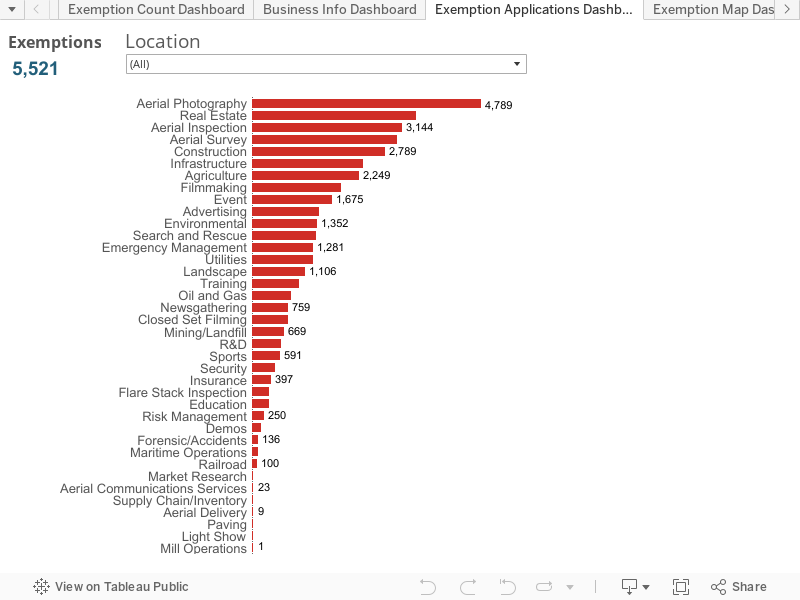
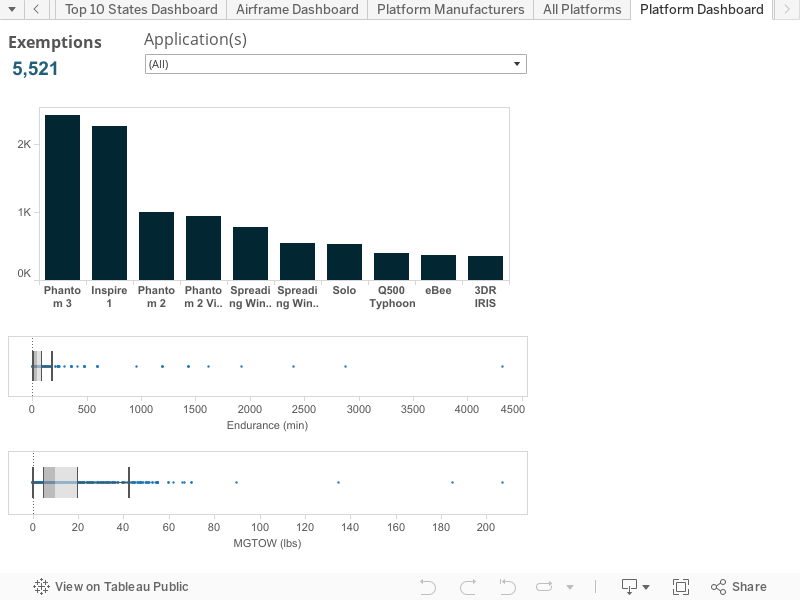
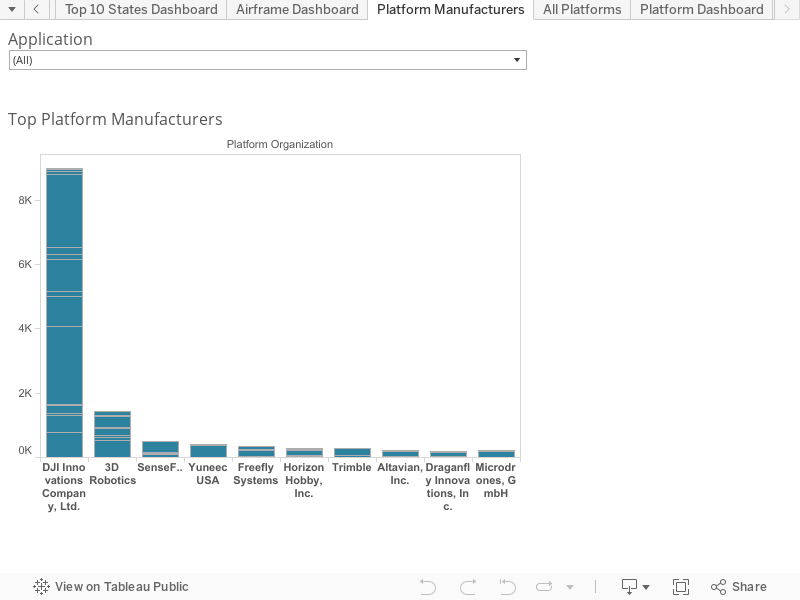
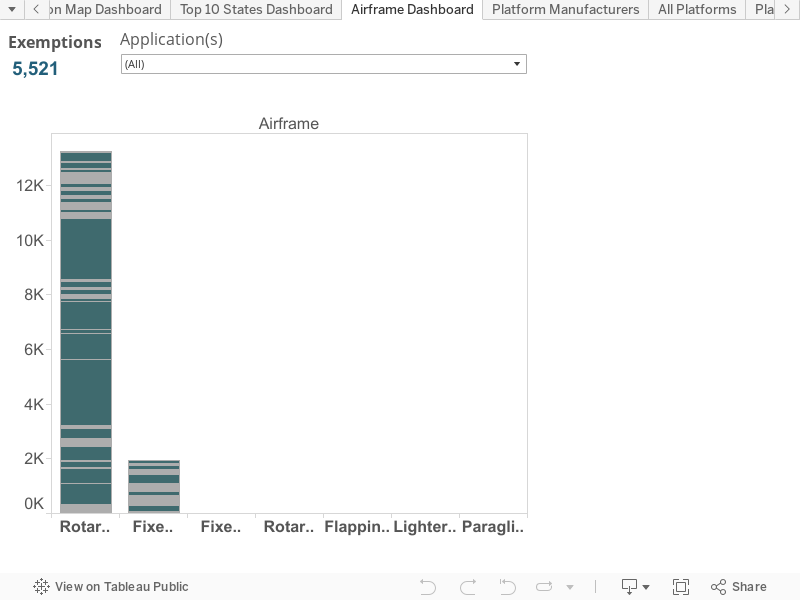
AUVSI releases interactive analysis of FAA UAS exemptions
The Association for Unmanned Aerial Vehicles (AUVSI) unveiled an interactive analysis of U.S. Federal Aviation Administration (FAA) Section 333 unmanned aircraft system (UAS) exemptions.
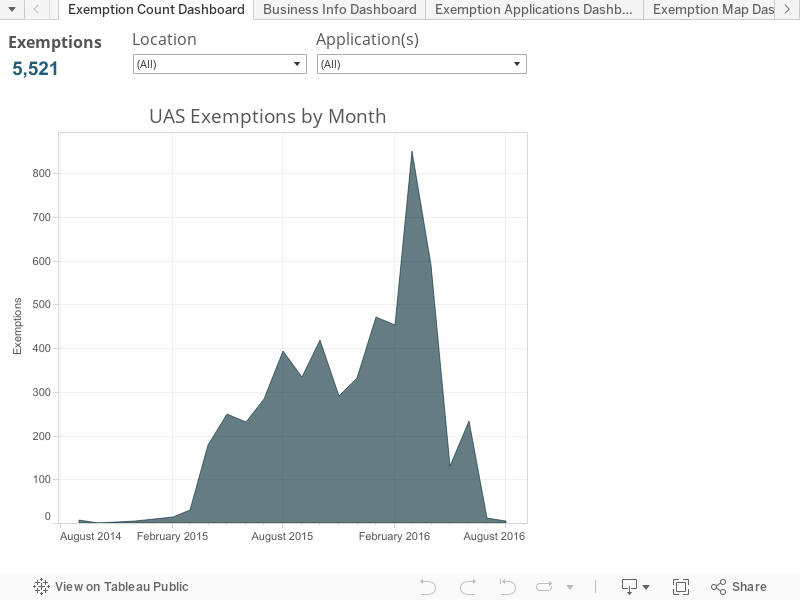
The FAA has awarded more than 3,000 Section 333 Exemption Grants since September 2014 to allow individuals, businesses, non-profits and governmental agencies to fly drones.
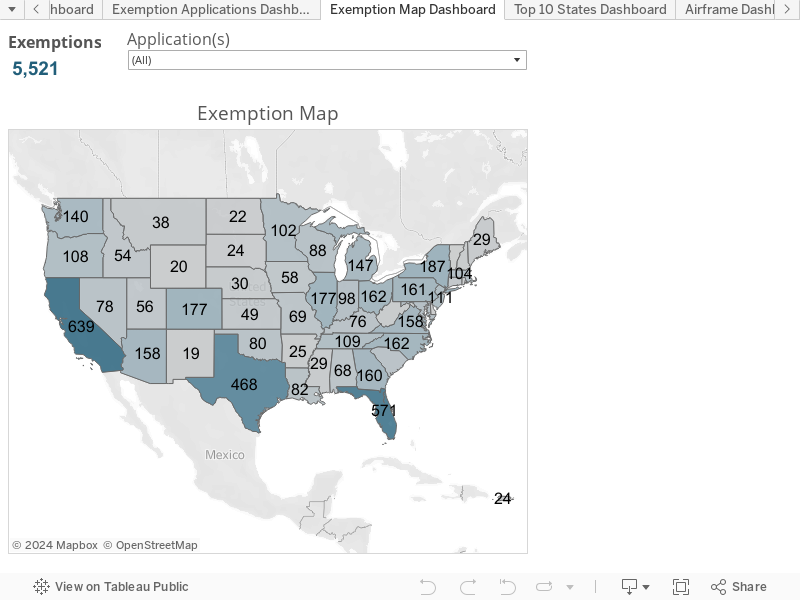
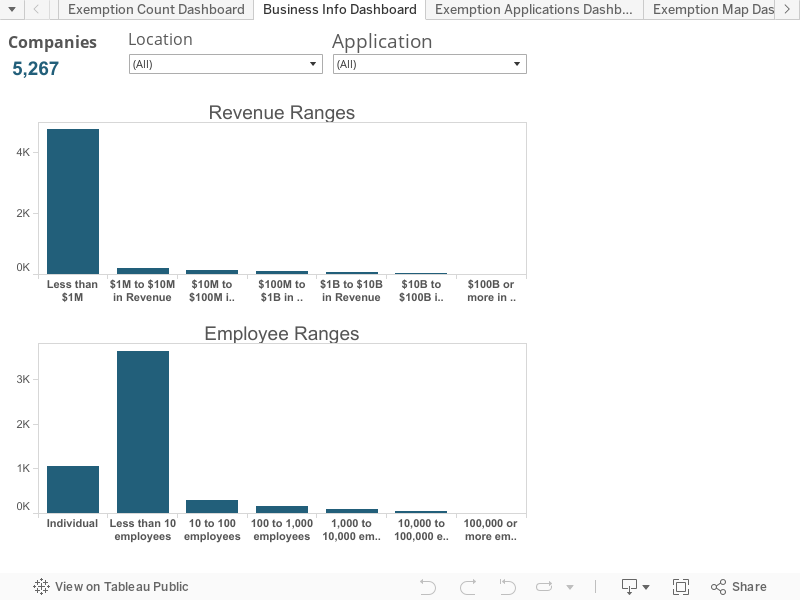
AUVSI’s Unmanned Systems and Robotics Database provided the data for the analyses, which shows UAS exemptions by state and month, a business analysis revealing revenue and employees, UAV applications, top manufacturers, top drones, airframe and industry.
The report finds that finds 38 types of business operations have been approved by the FAA to fly UAS commercially in the National Airspace System (NAS). Aerial photography received the most, followed by real estate and aerial inspection.
The report also finds that exemptions have been approved in all 50 states, as well as Puerto Rico.
“The UAS industry is poised to be one of the fastest growing sectors in the U.S., and these numbers demonstrate that a wide variety of industries are eager to take advantage of this technology,” said Brian Wynne, president and CEO of AUVSI. “From inspecting our nation’s infrastructure to providing farmers with aerial views of their crops, the applications of UAS are virtually limitless. It’s no wonder businesses – small and large – are clamoring to use this technology.”
Congress also mandated that the FAA develop rules for integration of UAS into the national airspace, however these rules, which would provide anyone who follows the rules access to the airspace, are not expected until at least June 2016.
-

FAA doubles ‘blanket’ altitude for many UAS flights
After a comprehensive risk analysis, the U.S. Federal Aviation Administration (FAA) has raised the unmanned aircraft (UAS) “blanket” altitude authorization for Section 333 exemption holders and government aircraft operators to 400 feet. Previously, the agency had put in place a nationwide Certificate of Waiver or Authorization (COA) for such flights up to 200 feet.
The new COA policy allows small unmanned aircraft — operated as other than model aircraft (i.e. commercial use) — to fly up to 400 feet anywhere in the country except restricted airspace and other areas, such as major cities, where the agency prohibits UAS operations.
“This is another milestone in our effort to change the traditional speed of government,” said FAA Administrator Michael Huerta. “Expanding the authorized airspace for these operations means government and industry can carry out unmanned aircraft missions more quickly and with less red tape.”
The FAA expects the move will reduce the workload for COA applications for industry UAS operators, government agencies and the FAA’s Air Traffic Organization. The agency also estimates the move will lessen the need for individual COAs by 30 to 40 percent. Other provisions of an FAA authorization, such as registering the UAS and making sure pilots have the proper certification, still apply.
Under the blanket COA, the FAA will permit flights at or below 400 feet for UAS operators with a Section 333 exemption for aircraft weighing less than 55 pounds and for government UAS operations. Operators must fly under daytime Visual Flight Rules, keep the UAS within visual line of sight of the pilot and stay certain distances away from airports or heliports:
- Five nautical miles (NM) from an airport having an operational control tower; or
- Three NM from an airport with a published instrument flight procedure, but not an operational tower; or
- Two NM from an airport without a published instrument flight procedure or an operational tower; or
- Two NM from a heliport with a published instrument flight procedure.
AUVSI releases statement
“The FAA’s decision to raise the operating altitude of the blanket COA from 200 feet to 400 feet provides greater flexibility to those receiving FAA exemptions and makes it easier for more commercial UAS operators to access the skies,” said Brian Wynne, president and CEO of the Association for Unmanned Vehicle Systems International (AUVSI), in a statement. “While regulation by exemption is not a long-term solution for the many industries waiting to operate UAS for commercial purposes, this is another positive step toward the overall integration of UAS into the NAS.
“However, the FAA still needs to finalize its small UAS rule as quickly as possible to allow anyone who follows the rule to fly. The new blanket COA altitude remains lower than the operating ceiling of 500 feet proposed in the small UAS rule. In addition, other requirements for UAS operators under the Section 333 exemption process are more onerous than those contemplated in the proposed rule.
“The UAS industry is poised to be one of the fastest-growing in American history, and we urge the FAA to finalize the small UAS rule without further delay so this technology can truly take off.”
In May 2014, the FAA announced it would consider granting exemptions for certain low-risk commercial UAS applications under Section 333 of the FAA Modernization and Reform Act of 2012. The agency began granting exemptions in September 2014. To date, the FAA has granted more than 4,200 exemptions.
According to AUVSI’s report on the first 1,000 exemptions, businesses in more than 25 industries representing more than 600,000 jobs and $500 billion in economic impact now are using UAS technology. The full report can be found here.
Cover of the AUVSI report on UAV exemptions. -
AUVSI provides interactive map of UAS legislation
As the 2016 legislative session kicked off this month, the Association for Unmanned Vehicles Systems International (AUVSI) has been tracking all active legislation pertaining to unmanned systems. This year, to provide the best information to its members, legislators, regulators and the media, AUVSI has organized data on all unmanned systems-related state legislation into a sortable, interactive map with details that include a summary of each bill.
Included are bills that place restrictions on police, recreational or commercial unmanned aircraft systems; legislation that forms unmanned systems or autonomous vehicle commissions and task forces; bills that try to treat unmanned technology differently than other information-gathering devices; and bills that place operating limitations on unmanned aerial systems (UAS) in specific scenarios such as preventing all UAS from flying over prisons or from interfering with hunting and fishing.
To date, more than 150 active bills in more than 30 states have either carried over from 2015 or been introduced this year.
See the map below.
-
AUVSI to host massive trade show, works with US UAV regulators
The Association for Unmanned Vehicle Systems International (AUVSI) has renamed its major annual conference — XPONENTIAL — and the 2016 edition will be held in New Orleans at the Morial Convention Center on the west bank of the Mississippi, May 2–5. The huge convention center is hosting the event across two large halls, with more than 350,000 square feet of space for up to 600 exhibits.
With 370 exhibitors already signed up, you might want to decide who to put on your visit list if you’ve never been to one of these AUVSI exhibitions. Because just roaming the show floor without a plan can lead to frustration and exhaustion — the show is huge, not only in square feet, but also in the number and size of the exhibits. Full-size helicopters, Humvee-type vehicles and drones — lots and lots of different types of unmanned air vehicles (UAVs) or drones for any and all applications.
There is everything a drone manufacturer might need to develop and integrate into the latest small (sUAV), medium or large quadcopter, hexcopter, octocopter, fixed wing or STOL (short take-off and landing) air vehicle. Plus, you’ll find ground vehicles and surface and underwater vehicles of all shapes and sizes.
Propellers, engines, payloads of all sorts including cameras, radars, IR and lasers, plus connectors and electrical, mechanical and electro-mechanical components and systems, manufacturing systems, 3D printing, modeling, designing, developing — all in all, too much stuff to even mention everything that goes into, onto and processes/tools for manufacturing a UAV.
But, of course, our interest might be more readily captured by the booths exhibiting flight-control systems, sensors, antennas, autopilots, inertial, satellite and terrestrial radios and services, computing, GNSS and other guidance systems — and even avionics for drones. UAV ground control systems (UAV + ground control system = unmanned air system or UAS) are also present in force, along with all their constituent pieces. A ground control system can be more complex than a larger UAV, or sometimes as simple as an app on a tablet.
Applications are also featured in exhibit groupings for survey and mapping, air and start-up. Also, a large number of U.S. states and related academic, research, test and development organizations are represented this year, along with dedicated Chinese, French, Canadian and UK exhibit areas.
There also seems to be some presence for insurance, legal, certification and training organizations aiming to support the emerging commercial opportunities that Federal Aviation Administration (FAA) Section 333 approvals have enabled. The FAA continues to grant Section 333 exemptions, which have allowed commercial, research and agency drones to fly in the U.S. National Airspace System (NAS) on a trial and operational basis.
The FAA issued a fact sheet in mid-December that outlined safety reasons for federal oversight of aviation and airspace, and explained federal responsibility in this area. The object appears to be to let states know that the FAA has federal jurisdiction, and is therefore in charge of regulating access to and operations in the U.S. NAS. The fact sheet perhaps also aims to slow down recent state and city efforts — such as those in Miami, Albany County and New Jersey — to publish their own ordinances and laws related to UAV activity.
Meanwhile, the FAA’s recent UAV registration requirements for anything unmanned that takes to the air in the U.S. have met with mixed reactions. U.S. drone operators have indeed already complied and registered more than 181,000 UAVs, but one individual has filed a suit against the FAA alleging Section 333 does not allow the FAA to make any new rules or regulations regarding model aircraft if they’re flown for hobby or recreational purposes. We’ll have to see how this all turns out — AUVSI, which represents a good portion of the UAS industry, has already come out supporting the FAA’s UAV registration program.
AUVSI continues to call for the FAA to publish regulations that would allow small UAVs to operate in the U.S. NAS. These small UAV regulations have been in the works for several years and have yet to be formally released or implemented by the FAA. AUVSI argues that if these regulations were to be released, the commercial UAV industry would really take off and produce billions in revenue and create thousands of jobs.
In order to help move UAV integration forward, NASA has been working on traffic management concepts for UAS. The first section of this system was tested in August, looking mostly at topics such as geofencing so drones automatically avoid certain restricted areas, and also trajectory planning.
Google and Amazon have also been looking into UAS Traffic Management (UTM) systems. Amazon has proposed a high-speed UAS transit corridor between 200 and 400 feet, with slower vehicles flying below, and larger ones above it. Verizon has also been exploring how cellular networks could be used to enhance drone safety in the future. The FAA’s Pathfinder Programs also aim to investigate areas, such as beyond-visual-line-of-sight flights, that may assist in the development of UTM.
So, XPONENTIAL 2016 is a great UAV show to put in your calendar (May 2-5 in New Orleans) if you have interest in learning more about UAV/UAS, or in moving further into the growing business of UAVs, plus lots of related activity promising growth for actual UAV commercial operations in the U.S. There is always a lot going on nowadays in the world of unmanned vehicles.
Tony Murfin
GNSS Aerospace -
Air Line Pilots Association Joins Know Before You Fly Program
Air Line Pilots Association, Int’l (ALPA) is the newest supporter of the Know Before You Fly campaign, an initiative to promote the safe and responsible use of unmanned aircraft systems (UAS).
“Over the course of ALPA’s history, we have been a part of nearly every significant safety improvement in the airline industry, and have helped to make airline travel the safest mode of transportation in human history,” said Captain Tim Canoll, president of ALPA. “As a strong supporter of this UAS safety campaign, we will continue to promote and champion all aspects of aviation safety.”
The Know Before You Fly campaign was created by the Association for Unmanned Vehicle Systems International (AUVSI) and the Academy of Model Aeronautics (AMA). The campaign was launched in December 2014 in partnership with the Federal Aviation Administration (FAA) to provide UAS users with the information and guidance they need to fly safely and responsibly.
“ALPA’s support is significant and demonstrates how the airline pilot and unmanned aviation communities can work together to make the airspace safer for all users,” said Brian Wynne, president and CEO of AUVSI. “AUVSI’s members and ALPA’s members share a common commitment to the principles of airmanship that help foster a culture of safety.”
AMA President Bob Brown added, “The ties between model aviation and commercial aviation run deep. Model aviation has been a stepping stone to successful aviation careers. Many airline pilots report being influenced by model aviation early in life. Today, safety is a core principle shared within the aviation community.”
ALPA joins 23 other organizations that support Know Before You Fly, which include retailers, manufacturers, and distributors of UAS as well as several organizations representing the manned aviation community. For information, visit KnowBeforeYouFly.org or follow @FlyResponsibly on Twitter.
-
Aerial Photography, Surveying Top FAA-Approved Business Uses for UAS
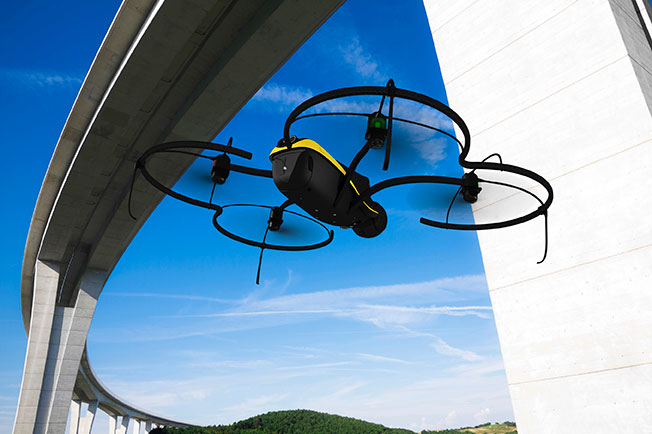
A Sensefly eXom UAV inspects a structure. The Association for Unmanned Vehicle Systems International (AUVSI) today released a report that finds more than 25 types of business operations have been approved by the Federal Aviation Administration (FAA) to fly unmanned aircraft systems commercially in the National Airspace System (NAS). According to the report, aerial photography received the most exemptions followed by real estate and aerial surveying. The report also finds that exemptions have been approved in 49 states.
“These figures show that businesses across every industry sector have been waiting to use UAS for years and are excited to finally get this technology off the ground,” said Brian Wynne, president and CEO of AUVSI. “From inspecting bridges and power lines to filming movies and supporting emergency services, the applications of UAS are virtually limitless and enable researchers, public agencies and businesses to do things that were previously considered to be impossible.”
In May 2014, the FAA announced it would consider granting exemptions for certain low-risk commercial UAS applications under Section 333 of the FAA Modernization and Reform Act of 2012. Since then, the agency has received more than 2,700 requests and approved more than 1,400 petitions.
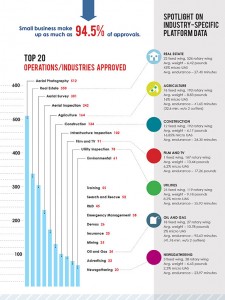 AUVSI analyzed the first 1,000 exemptions approved by the FAA. Specifically, the report finds:
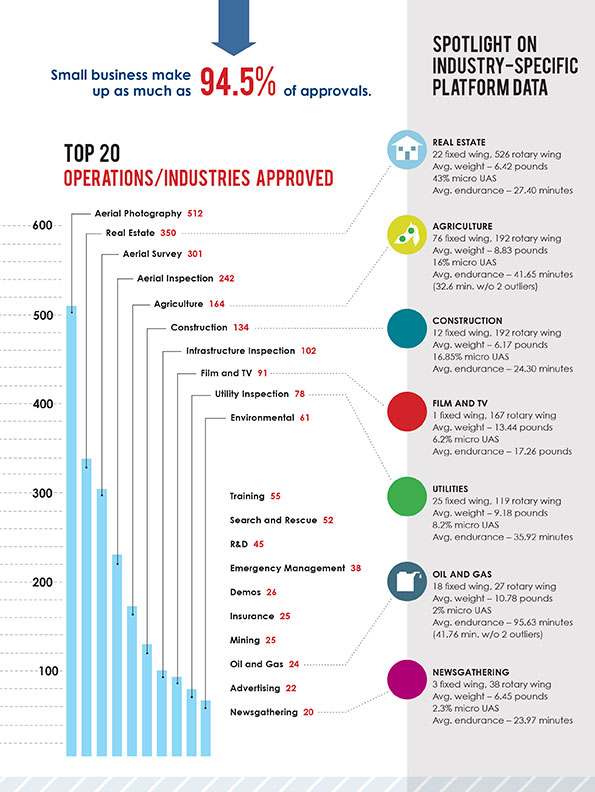
- The approved exemptions cover more than 25 types of business operations, with aerial photography receiving the most approvals with 512. Real estate followed with 350 exemptions and general aerial surveying with 301 exemptions.
- Exemptions were approved for operators from 49 states. California received the most with 114, followed by Florida with 97 and Texas with 82.
- California companies also manufactured the most platforms mentioned in the approvals, totaling 140. Florida followed with 19. In all, 22 states house manufacturers of platforms approved in the first 1,000 exemptions.
- More than 90 percent of the first 1,000 exemptions were granted to small businesses.
- Companies that received exemptions generate at least $500 billion to the U.S. economy annually and represent more than 600,000 jobs.
While the Section 333 process has continued to unlock the potential of UAS technology, AUVSI emphasized that regulating by exemption is no substitute for finalized rules.
“For the full potential of the UAS commercial market to be realized in the U.S., the FAA needs to finalize its small UAS rule as quickly as possible,” Wynne said. “Once this happens, we will have an established framework for UAS operations allowing anyone who follows the rule to fly. The positive effects of the regulation will be felt across the whole country.”
An economic impact study released by AUVSI in 2013 found the UAS industry will create more than 100,000 new jobs and more than $82 billion in economic impact within the first ten years following UAS integration.
The complete study, including state-by-state data, is available.