Tag: construction

  • Applanix Introduces POS LV 120 for Improving Land Mobile Mapping Productivity

    Photo: Applanix
    Photo: Applanix

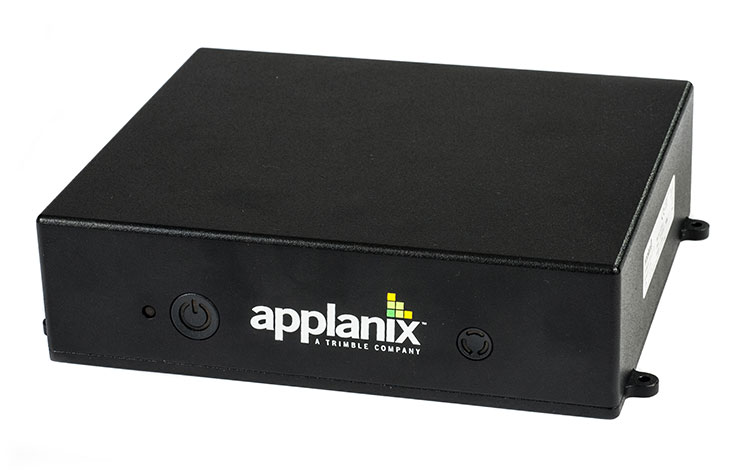
    Applanix has introduced the POS LV 120, the latest version of its positioning and orientation systems for land vehicles. Using commercial Micro-Electro-Mechanical (MEMS) inertial measurement unit (IMU) technology, the Applanix POS LV 120 is a small, lightweight system and provides an economical solution for any continuous positioning and orientation application.

    POS LV 120 is a fully integrated, turnkey position and orientation system, using integrated inertial technology to generate stable, reliable and repeatable positioning solutions for land-based vehicle applications, Applanix said. Redesigned to be smaller and lighter, it maintains identical data interfaces and software compatibility with the established POS LV line of products.

    “With a MEMS IMU and a 220 channel, dual-antenna GNSS receiver integrated into a single enclosure, the POS LV 120 is a cost-effective GNSS-Inertial solution designed to support many types of land-based mobile mapping projects,” said Kevin Andrews, product manager for Land Products at Applanix.  “The integrated system is smaller than the standard POS LV computer system (PCS), making it ideal for use in lightweight applications such as robotics, autonomous vehicles, centerline mapping, asset mapping and short-range direct georeferencing.”

    POS LV 120 is available now through the Applanix sales network.

  • Hemisphere GPS Offers Vector Compass Products for Marine Applications

    Photo: Hemisphere
    Photo: Hemisphere

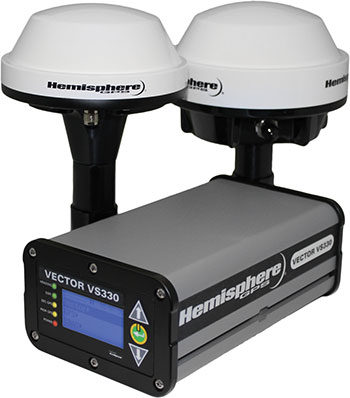
    Today, Hemisphere GPS introduces the Vector VS330 and Vector VS131 GPS compass products that provide high performance heading, position, heave, and attitude data. The new Vector products are designed for professional marine applications such as hydrographic and bathymetric surveys, dredging, oil platform positioning, and buoys that demand a high level of 3D positioning accuracies.

    Based on Hemisphere GPS’ Eclipse GNSS technology, Vector VS330 uses the most accurate differential corrections including RTK, L-band, SBAS, and beacon. The smart intelligence from our MFA firmware  provides differential solutions by automatically switching to the next best differential source if the original source is no longer available, Hemisphere GPS said.

    Vector VS330 is Hemisphere GPS’ flagship receiver and computes heading information with better than 0.01 degrees accuracy when using a 10-meter antenna separation. Positioning accuracy is better than one centimeter in RTK mode or four centimeters when using OmniSTAR HP corrections. Vector VS330 also provides five-centimeter RTK heave and 0.01 degree pitch and roll accuracies.

    Combining Hemisphere GPS’ Crescent Vector and LX-2 receivers with two separate antennas, the Vector VS131 computes heading information with better than 0.03 degrees accuracy when using a five-meter antenna separation and better than 50 centimeter position accuracy when using L-band, SBAS, or beacon corrections. Vector VS131 accepts most differential correction signals for unparalleled flexibility to obtain sub-meter positioning in all regions.

    The ruggedness of the new Vector enclosure also makes it suitable for more harsh environment installations like machine-control applications, including agriculture, heavy construction equipment, mining equipment, unmanned vehicles, cranes, and other machinery or industries that require very accurate heading and positioning solutions. The Vector’s versatility for providing heading, position, heave, and motion makes it directly compatible with the most popular hydrographic and side scan survey packages. Vector VS330 and VS131 include an intuitive and easy-to-follow user interface to facilitate fast installations.

    “Vector VS330 and Vector VS131 are premium additions to Hemisphere GPS’ Vector series product line,” said Phil Gabriel, vice president and general manager, Precision Products, for Hemisphere GPS. “As the demand for more rugged and precise GPS equipment increases, we are meeting this demand by exceeding the accuracy of competitors’ products while being significantly more affordable.”

    Vector VS330 and Vector VS131 will be featured by Hemisphere GPS in hall 9, stand B.62 at the INTERGEO Conference and Trade Fair in Hanover, Germany, from October 9-11. Both products will be available for shipping in November through the Hemisphere GPS Precision Products global dealer network.

  • Hemisphere GPS Announces RTK Network-Compatible S320 Survey System


    Today, Hemisphere GPS announced the new S320 network rover and XF2 handheld data collector. With support for network RTK corrections, the S320 network rover is an integrated solution that simplifies land surveying applications by eliminating the need for a base station and radio modem, the company said.

    A variety of public and private organizations post RTK network corrections on the Internet. The S320 GSM cellular communication connects users to Internet-based corrections and processes the data to achieve centimeter-level positioning performance. As a result, users do not need to purchase and operate their own RTK base station and radio modem connection. Users also have the option of using satellite-based L-band corrections for high-precision mapping jobs.

    Hemisphere GPS’ XF2 next-generation data collector combined with Carlson SurvCE software provides a familiar and proven interface to the S320. The two products communicate through a Bluetooth wireless connection and attach to a standard survey pole making the system portable and simple to operate, Hemisphere GPS said.

    “Hemisphere GPS’ S320 network rover and new XF2 provide a very powerful and cost-effective surveying and mapping solution,” says Phil Gabriel, vice president and general manager of Precision Products for Hemisphere GPS. “The rugged design and versatile performance of our S320 makes it a great fit for a variety of applications.”

    Launched one year ago, S320 combines the advanced GNSS receiver performance of Hemisphere GPS’ Eclipse technology, precise geodetic antenna, wireless communication and batteries in a portable, rugged unit. Compatible with a variety of existing surveying equipment, S320 is a  multi-GNSS positioning system designed for applications in GIS, mining, construction, mapping, land, and marine surveying.

    The S320 network rover and XF2 will be featured by Hemisphere GPS in hall 9, stand B62 at the INTERGEO Conference and Trade Fair in Hanover, Germany from October 9-11. The products are available through the Hemisphere GPS Precision Products global dealer network.

  • New Version of Trimble GCSFlex Offers GPS Machine Guidance via Wi-Fi

    Trimble has announced that the Trimble GCSFlex Grade Control System for Excavators now offers highly accurate GPS machine guidance via Wi-Fi. By serving GPS corrections over a Wi-Fi connection from a local base station, Trimble has eliminated the need for a radio network on the construction site and made it easier than ever to deploy GPS for a broad range of excavation work, the company said.

    Trimble introduced GCSFlex Grade Control System for Excavators in 2011 as an affordable, easy-to-use machine control system for owner operators and small to mid-sized contractors who want to increase their productivity and competitiveness. With several system configuration options available, contractors can select the sensor options that fit their job site needs at a price point that fits their budget.

    The new configuration of GCSFlex is deployed with the innovative Trimble SPS985 GNSS Smart Antenna as a local base station for transmitting GPS corrections to the excavator. The operator needs only to position the Trimble SPS985 base station and power it on to automatically establish a Wi-Fi connection and begin broadcasting corrections to the machine. With simplified daily setup and operation, Trimble has made the highly powerful GCSFlex system easy to deploy and use, even for excavator operators with little or no experience with machine control.

    GCSFlex with GPS Guidance also offers the benefit of using in-field design templates created directly from the cab on the Trimble CB450 Control Box. This allows the excavator operator to very accurately dig to a desired depth, slope or alignment without creating a digital design in the office.

  • Webb Simpson Wins the 2012 U.S. Open on Putting Surfaces Built with Topcon Precision Measurement Technology

    Last Sunday, when 156 of the world’s best golfers gathered together at The Olympic Club Lake course in San Francisco, California, to compete in the 2012 Men’s U.S. Open golf tournament, it signaled the culmination of years of work at The Olympic Club Lake course that included the complete tear-down and reconstruction of all 18 green complexes using Topcon’s precision measurement technology. Webb Simpson took the title, the first major for the Charlotte, North Carolina, resident.

    Over the course of many months in 2008 and 2009, all 18 green complexes were completely torn down and rebuilt in preparation for the 2012 U.S. Open. Roundworms were eating away at the greens and drainage needed to be fine-tuned. The challenge was issued: members at the privately held Olympic Club were happy with the slopes and contours of fourteen of the eighteen greens at the Lake course. That meant fourteen greens had to be torn down and rebuilt exactly the same. Every contour, every slope and every shape had to be precisely recreated in order for a golf ball to roll the same.

    The Lake Course superintendent Brian Koffler said “the membership washappy with those 14 surfaces. The club was very adamant about putting the exact contours back on those putting surfaces, exactly as-is.”

    In order to precisely rebuild the greens, high-precision construction equipment capable of vertical and horizontal measurement precision within six millimeters was required.

    Golf course builder Frontier Golf of Jones Mills, Pennsylvania was selected as the contractor to perform the work. Frontier’s support team included Topcon sales consultant Dave Krautz of Productivity Products and Services, Inc (PPS). Krautz recommended Topcon’s high-precision GPS/GNSS receiver technology as well as Topcon’s patented Millimeter GPS laser leveling technology. Krautz recommended Topcon’s Millimeter GPS technology because it improves vertical precision up to 300 percent over existing GPS-based systems.

    “The whole process moved much quicker than we originally had planned”, said superintendent Koffler. He said other contractors who had expressed interest in the project were forecasting two to three times the manpower to complete the project than what Frontier accomplished with Topcon equipment.

    With the success at the Olympic Club's Lake course, Topcon's Millimeter GPS technology left Nicholas Scigliano, president and CEO of Frontier Golf, suitably impressed. "On our next greens restoration project, I'm going to turn to (Topcon’s) Millimeter GPS right out of the gate. The vertical accuracy is right on," he said. "It's pretty neat stuff," he said of the Lake Course project. "We are doing stuff here that’s unique in our field."

    In addition to rebuilding 14 greens, Topcon’s Millimeter GPS technology was used to reshape the 18th green at the Olympic Club Lake course that was the source of controversy at the end of the 1998 U.S. Open. With the pin placed on a ridge at No. 18, a number of putts were rolling well past the pin. As a result, the green was flattened in 2000, but as Koffler explained, Olympic Club members felt it had become a little too flat; it had gone from perhaps too challenging to not challenging enough – they could two-putt from anywhere on the green, so the Olympic Club decided to return some of the challenge on the 18th green.

  • Trimble Introduces Ultra Rugged GNSS Smart Antenna for Heavy Civil Construction

    Trimble Introduces Ultra Rugged GNSS Smart Antenna for Heavy Civil Construction

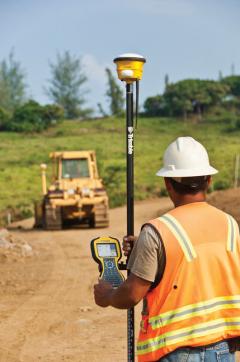
    Photo: TrimbleTrimble has introduced the ultra-rugged Trimble SPS985 GNSS Smart Antenna for performing high-accuracy construction site measurements. The new smart antenna is made of a specially developed alloy that combines unprecedented strength and durability into a compact form to withstand the daily abuse of construction work, Trimble said.

    With its enhanced internal shock isolation, the SPS985 is suited for high-vibration use on an all-terrain vehicle (ATV) or supervisor truck. User-friendly features such as a quick release connector and smartphone configuration make it easy to deploy and use as a base station or rover, mounted on a range pole or truck roof, Trimble said. Advanced communications including Wi-Fi, Bluetooth, and optional wideband radio integrate the receiver into the connected construction site.

    “The Trimble SPS985 was engineered to be the toughest, smallest and easiest to use GNSS receiver we’ve ever built,” said Chuck Maniscalco, director of engineering for Trimble. “We listened to customer feedback and built the housing 50 percent stronger than any previous Trimble antenna, because we wanted it to perform ideally under extreme conditions — such as being dropped, tossed in a truck bed, rained on and otherwise abused in the construction setting. Contractors will likely never treat their SPS985 antennas as harshly as the Trimble engineering team has, but we intended to take rugged GNSS to the next level and we certainly achieved that.”

    When used as a rover, the SPS985 allows for maximum flexibility for use on a wide variety of site measurement tasks. For initial site reconnaissance, it can be deployed with satellite-delivered GNSS corrections without a base station. For higher accuracy site measurements, it can receive Real-Time Kinematic (RTK) corrections via the internal wideband radio, Wi-Fi or the Internet.

    An SPS985 unit can be easily moved from carrying case to range pole, tripod, t-bar, or vehicle with a single click — making it faster to begin working and allowing for more flexibility of operation techniques. For example, a grade checker can mount the SPS985 to an ATV and easily conduct site topos, check as-builts and verify road centerlines where it is not easy or safe to walk with a range pole. Extending its productivity, the same unit can then be mounted on the roof of a supervisor’s truck roof to collect and manage progress data.

    As a base station, the SPS985 incorporates Wi-Fi communications for small site projects and optional wideband radio for long-range operations on large projects. Designed for ease of use, it will automatically establish a radio or Wi-Fi connection and transmit RTK corrections to another rover or machine control system, Trimble said. Construction crews can spend more time doing the work and less time setting up and maintaining the equipment.

    As a component of the Trimble Connected Site solutions portfolio, the SPS985 also offers connectivity features that save administrative time and increase working productivity. When used with a Connected Controller such as the Trimble TSC3 or Trimble Tablet, job crews can connect to a mobile hotspot in the site trailer or supervisor’s truck and receive GNSS corrections via VRS network or Trimble Internet Base Station (IBSS). They can also save considerable time by wirelessly synchronizing progress data and as-built information to the job supervisor or head office and receiving updated design information back without ever leaving the job site.

    Quick start technology and the ability to set up and configure the receiver using a smartphone increases flexibility and eliminates the need to use a more expensive controller for daily setup. The Trimble Web UI is optimized for small screen devices, allowing a GNSS manager to monitor base station performance, availability and configuration without visiting the job site to set up each day.

    The new Trimble SPS985 GNSS Smart Antenna is available now through Trimble’s worldwide SITECH Technology Dealer Channel.

  • Trimble GCSFlex Offers GPS Guidance for Flexibility in Excavation

    Trimble today introduced a new system configuration for its GCSFlex Grade Control System. The addition of GPS guidance extends the system’s functionality and allows a contractor to work faster and with more freedom than other traditional laser-referenced grade control systems for excavators, Trimble said. With the benefit of GPS guidance and in-field design templates created directly from the cab on the Trimble CB450 Control Box, an excavator operator can accurately dig to a desired depth, slope or alignment without creating a digital design in the office, Trimble said. There’s little prep work before the job and no grade checking after.

    The new GCSFlex system with GPS guidance allows users to create in-field designs in the cab and take advantage of GPS guidance in 2D mode rather than 3D. This capability adds more flexibility to the system without adding additional complexity in its use. Where traditional excavator grade-control systems have used a laser plane as a reference for these tasks, the new GCSFlex replaces the laser plane with GPS guidance for position and orientation of the excavator. This configuration gives the operator maximum freedom to move the machine without being tethered to a bench point on the ground or a laser transmitter with range limits, Trimble said.

    The latest system configuration comprises a CB450 Control Box in the cab; angle sensors on the boom, stick and bucket; a MS972 GNSS Smart Antenna on the cab roof; and a Trimble SNM940 Connected Site Gateway for receiving GPS corrections. Subscription services such as Trimble VRS Now Service or Trimble Internet Base Station Service (IBSS) communicate GPS corrections via a cellular connection to the SNM940 and eliminate the need for a base station.

    User-friendly menus on the CB450 Control Box allow the operator to create an in-field template for a particular excavation task and begin working on that project immediately, Trimble said. The display software provides step-by-step instructions to create an in-field design template for excavating to a fixed depth, a depth with slope, an alignment or a profile. For operators with little to no experience with machine control, it is an easy way to create an alignment similar to traditional methods that use staking and stringlines, Trimble said.

    Trimble introduced GCSFlex for excavators in 2011 as an affordable, easy-to-use machine control system for owner operators and small- to mid-sized contractors who want to increase their productivity and become more competitive. With several flexible system configuration options available, contractors can select the sensor options that fit their job site needs at a price point that fits their budget.

    The new Trimble GCSFlex Grade Control System is expected to be available in the second quarter of 2012 through Trimble’s worldwide SITECH Technology Dealer Channel.

  • F4Devices Announces Flint Rugged Handheld

    FlintF4Devices, a subsidiary of F4 Tech and strategic partner with BAP Precisions, Taiwan, has introduced a new generation of high-precision GNSS devices for GIS field applications, the Flint rugged handheld. With the new Flint handheld, field workers requiring a rugged mobile handheld device have a unit that is lightweight, compact, rugged, and cost-effective, the company said. The Flint fits well into GIS field data collection markets such as municipalities, oil and gas and forestry, F4Devices said.

    The Flint handheld offers a unique, one-of-a-kind combination of flexible GPS configurations, ranging from 1 to 3 meters to sub-meter accuracies, while supporting geotagging with the 5 megapixel autofocus camera as well as Wi-Fi, Bluetooth, and 3G data. There are two versions to choose from, the S812H (includes GPS, Bluetooth, Wi-Fi and 5 MP camera) and the S852H (includes GPS, Bluetooth, Wi-Fi, 5 MP camera and 3G data).

    “The new Flint handheld impresses, from the first moment you see it. The ruggedness of the device, IP65, in this small of a package while achieving the GPS accuracies we have been able to achieve is something to acknowledge as a leader in its class,” said Brian Holley, director of Distribution for F4Devices. “Add in its high-resolution, sunlight-readable VGA screen, extendable data storage and Microsoft Office Mobile standard on all units, this makes it even more impressive.”

    The Flint handheld is specifically designed for field professionals looking for a rugged, dependable feature-rich device, said F4Devices. The camera button is located as if the user was holding a camera. Combined with the GPS, it provides a powerful solution for precise geotagging.  In tough environments, whether it is extreme weather or high multi-path, the Flint handheld is up to the challenge, the company said.

    The F4Devices Flint is shock-proof, dust-proof, and waterproof. The battery supports the field users’ needs with at least 10 hours of performance.

    F4Devices, along with BAP Precisions, is focused on supporting solutions providers by working with them directly to integrate their applications with the Flint handheld. Any feature or application in the Flint handheld is accessible to software engineers for full and complete integration, allowing a fully developed solution to be offered to their clients, the company said. API’s are available for solutions providers to access and communicate with the features they require.

    The 3G data modem in the Flint handheld allows field users to stay in touch remotely, increasing productivity. This also allows real-time communications with the office for critical information upload. This also provides a level of safety for field users by easily staying in touch with supervisors or persons in charge.

    The Flint handheld is available now.

  • Position: 20 Kilometers, Heavy Construction

    World’s Longest Immersed Tunnel, 40 Meters Underwater

    By Anna Jensen, Dirk Hermsmeyer, Bastian Huck, Jürgen Rüffer, and Peter Skjellerup

    The Fehmarnbelt Positioning System between Denmark and Germany includes a geodetic basis, four permanent GNSS stations, and a real-time kinematic (RTK) service for construction of a road and rail causeway between the islands of Fehmarn, Germany, and Lolland, Denmark, across the Fehmarnbelt, a 20-kilometer stretch of open water in the Baltic Sea. This homogeneous, consistent, coherent, highly accurate GNSS-based positioning system exemplifies comparable systems and services that can be established for any major construction site or infrastructure project. Now in use for environmental, geotechnical, and geophysical investigations, it provides cost-efficient operations and facilitates the precise navigation of large, costly offshore equipment.


    A fixed road-and-rail link across the Fehmarnbelt body of water in the Baltic Sea will by 2020 connect the German island of Fehmarn and the Danish island of Lolland. It will provide a critical time- and cost-efficient trade and traffic link between north-central Europe and Scandinavia.

    Geophysical and geotechnical pre-investigations have been completed as well as an environmental assessment of the fixed link. Initially proposed as either a bridge or a tunnel (Figure 1), an immersed tunnel is now the preferred solution. It will be placed in a trench excavated on the sea floor, and covered with a layer of stones. It will be the longest immersed tunnel in the world at 17.6 kilometers, excluding peninsulas on both sides to be constructed for easier entrance to the tunnel. The strait is 20 kilometers wide at the site. The immersed depth is up to 40 meters.

    During planning and construction of the fixed link, it is very important to be able to perform reliable positioning with high accuracy. This requires a well defined geodetic basis — a 3D reference system and a reference frame for GNSS positioning, a height system and a geoid model for working with heights, and a map projection for plane maps and drawings. The ability to determine positions with high accuracy in real time within the project area is also very important. Therefore a carrier phase-based GNSS positioning service, a real-time kinematic (RTK) service, has been established.

    Altogether, we refer to the geodetic basis and the RTK service as the Fehmarnbelt Positioning System (FBPS), and the geodetic basis as the Fehmarnbelt Coordinate System (FCS). In this article we describe the geodetic basis and the RTK service, including four new permanent GNSS stations established for the purpose.

    Geodetic Reference Frame

    The reference system for the FCS is the International Terrestrial Reference System, realized by the ITRF2005, the newest and to date most accurate realization of the ITRS.

    Four permanent GNSS stations were established around Fehmarnbelt during the autumn and winter of 2009/2010: two on Fehmarn and two on Lolland (Figure 2).

    After establishment of the GNSS stations, seven days of GNSS data were collected in February 2010. Coordinates for the stations were determined by the National Survey and Cadastre-Denmark, using the Bernese GPS software. Data from six GNSS stations of the network of the International GNSS Service (IGS) was included in the data processing, and these stations with coordinates in the ITRF2005 were used as reference stations. Hereby, the ITRF2005 was introduced in the Fehmarnbelt area, and a reference frame for positioning in three dimensions has been established.

    Height System and Map Projection

    The height difference between Germany and Denmark is known from a 1987 hydrostatic levelling between Puttgarden and Rødbyhavn. For the Fehmarnbelt Fixed Link, precise levelling has been carried out between the connecting points of the hydrostatic levelling and stable point groups further inland. Levelling points with a large displacement since 1987 were eliminated, and the hydrostatic levelling was then used for transfer of the height difference between Germany and Denmark.

    The next step was determination of present mean sea level (MSL) in the Fehmarnbelt and establishment of a project-specific height system with the zero-level as close as possible to the actual MSL of Fehmarnbelt. In this area of the Baltic Sea, a slow rise of MSL relative to the neighboring land is taking place, and therefore water-level data from Heiligenhafen on the German mainland, and from Puttgarden and Rødbyhavn, was analyzed in cooperation with the Danish National Survey and Cadastre and the Danish National Space Institute.

    Analyses of the last 20 years of water-level data show an increase in the water level of approximately 2 millimeters per year at Rødbyhavn. Data from Heiligenhafen was also analyzed; as Heiligenhafen is not directly adjacent to the site, the time series was not used directly for establishing the MSL datum but instead used as an independent control.

    Water-level data was used for estimation of the present MSL in Fehmarnbelt, and the zero level for the FCS Vertical Reference 2010 (FCSVR10) coincides with MSL at Rødbyhavn in 2010. The zero level of FCSVR10 thus deviates from both the German and the Danish height systems.

    The Danish National Survey and Cadastre conducted precise levelling to determine FCSVR10 heights to the four new permanent GNSS stations, and determined FCSVR10 heights to a number of existing height benchmarks on Fehmarn and Lolland. Local land uplift on Fehmarn and Lolland causes differences between the FCSVR10, the national German DHHN92 height system, and the national Danish Vertical Reference 1990 height system. Differences between the height systems are not constant values but vary within the area, so it is very important to use the geoid models when converting heights for high-accuracy applications.

    To determine heights relative to MSL with GNSS it is necessary to utilize a geoid model. The Danish National Space Institute performed new gravity readings to supplement the existing gravity database. Then all existing gravity data from the area was used for development of a local geoid model for the Fehmarnbelt. The geoid model is fitted to the height system FCSVR10 and to the ITRF2005 by the four new permanent GNSS stations, and the model can be used for conversion between MSL heights and ellipsoidal heights.

    The last item of the geodetic basis is the definition of a map projection, using a transverse Mercator projection. The projection is fitted to the area to obtain a scale factor as small as possible within the construction area. Also, a false Easting value was chosen to provide FCS Easting values within the construction area which are different from Easting values of the ITM, UTM, or Gauss-Krüger projections used in Germany and Denmark. Table 1 gives the defining parameters for the map projection.


    Permanent GNSS Stations

    The four permanent GNSS stations are established as geodetic-grade stations, as shown in the photo. Individually calibrated GNSS choke ring antennae are mounted on 3-meter tall concrete pillars, with foundations 3 meters into the ground at stations 1, 2, and 4, with predominantly silty glacial till of stiff consistency at about 0.70 (stations 1 and 2) and 1.70 meters (station 4) below soil surface. At station 3, foundations for the antenna monument are built 9 meters into the ground. Soil conditions are sandy at this location to about 7 meters below soil surface, where stiff glacial till is met. In geotechnical investigations and analyses carried out before establishment of the GNSS stations, the glacial till at the station locations was rated as a good to very good foundation ground, with little tendency to settlement.

    The concrete antenna monuments are surrounded with about 0.30 meters of styrofoam for thermal insulation. The monument head is bevelled with an angle of 30° from vertical, reflecting GNSS satellite signals striking the monument head underneath the antenna away from it, to further minimize signal multipath effects.

    The GNSS reference station receivers are capable of processing GPS and GLONASS L1 and L2, GPS L5, and Galileo E1, E5a, E5b, and Alt-BOC frequency band signals. Galileo signals can be processed when Galileo satellites are available; a firmware update on the receivers will be required. In view of the long-term demand for the FBPS (until 2020 or longer), its compatibility with Galileo signals in particular makes the system future-proof.

    GNSS reference station receivers, access points to power grids, and uninterruptible power supply are mounted in cabinets adjacent to the antenna pillars. Additional equipment in each cabinet comprises an industrial PC, Internet router, GSM/UMTS router, satellite communication equipment, transmitting and receiving radio modems, and a heat exchanger to cool the in-cabin room if required.

    At each station, a radio mast of about 10 meters height carries a satellite dish for wireless Internet access, and a Yagi antenna to broadcast GNSS correction data into the proposed construction area in the Fehmarnbelt. Radio masts are located directly north of the GNSS antennae.

    RTK Service

    To ensure accurate GNSS positioning, an RTK GNSS service has been established, based on GNSS data from the four new permanent GNSS stations (primary stations) as well as four GNSS stations located further away in Germany and Denmark (secondary stations), which existed previous to our work. Figure 3 shows the locations of the eight stations used for the RTK service. The stations relay GNSS data to the control center, which derives and transmits RTK correction data to surveyors in the project area with RTK rovers.

    The RTK service has been developed with focus on robustness, with two control centers at different addresses in Germany. Three different communication carriers provide data communication between the GNSS stations and the control centers, and RTK correction data is distributed to users in two different ways, via ultra-high frequency (UHF) radio and mobile Internet. Figure 4 shows the communication lines of the RTK service.

    FBPS RTK users who wish to receive RTK corrections via UHF radio require a UHF radio modem and antenna, in addition to an RTK rover. The four primary GNSS stations broadcast RTK correction data on four separate radio frequencies. By switching their radio modem to one of the frequencies, users receive the correction signal from the control center via the respective station. RTK corrections via UHF radio can be used where radio signals from one of the four primary GNSS stations can be received.

    From the users’ point of view an advantage of using UHF radio over using a mobile Internet connection is that the UHF connection is free-of-charge and can be collected from four different sources.

    Users who wish to receive RTK corrections via mobile Internet must connect via General Packet Radio Service (GPRS) and require a GPRS modem, antenna, and a subscriber identity module (SIM-card) in addition to their RTK rover. GPRS connections will be charged according to tariffs of the respective mobile phone network provider.

    Figure 5 shows areas of signal coverage. Areas 1 and 2 are covered by UHF radio and mobile Internet. Area 3 is covered by mobile Internet.

    The FBPS RTK service generates and broadcasts RTK corrections in two different modes: master-auxiliary corrections (MAX) mode, and virtual reference station (VRS) mode. MAX and VRS are two different calculation methods to generate RTK corrections in a standard format defined by the Radio Technical Commission for Maritime Services (the RTCM format). The version used for the FBPS RTK service is the RTCM version 3.1.

    With MAX corrections, the RTK rover does not send its position to the reference network software. The GNSMART reference network software calculates and sends MAX corrections to the rover. These contain the measurements from a master station and correction data from the auxiliary reference stations. The rover individualizes the corrections for its position, which means it determines the best suitable RTK corrections. RTK data in MAX mode can be received by users of RTK rovers via both possible types of connection, UHF radio and GPRS.

    With the VRS concept, the user’s RTK rover transmits its approximate position to the control centre, which returns to the rover observations or corrections of an individual VRS near the user’s position. Data is transmitted back and forth between the RTK rover and the control center. Therefore a two-way communication link must be established with VRS. Because the UHF radio connection is one-way, GNSS correction data in VRS mode can be received via digital cellular phone (GPRS) only. For data transmission via GPRS, the FBPS RTK service uses the networked transport of RTCM via Internet protocol (NTRIP).

    Multiple RTK rovers (that is, multiple users) can receive RTK corrections from the FBPS simultaneously with any of the connections described above, while every user may select his or her favourite connection type. The RTK service can be used with any commercially available geodetic GNSS receiver that is capable of processing RTK data.

    System Test and Results

    The RTK service was established during the spring of 2010 and was run in test mode May 12–July 31 to test system accuracy, signal coverage area, and signal availability.

    Accuracy. An error budget of the RTK service is provided including all known error sources and latencies in the system, and a description of how these errors are handled. The accuracy obtainable by end users is better than 1.0 centimeters in the horizontal and better than 1.8 centimeters in the vertical. Values are provided as one sigma, and are valid during normal ionospheric activity. Applying an RTK rover and RTK corrections received from the FBPS RTK service, users inside the coverage area can determine the coordinates of a marked survey point repeatedly with these accuracies.

    System inspection is carried out monthly. Part of monthly inspection is the visit of marked control points with an RTK rover. ISO 17123-8:2007 (ANSI, 2007) standard procedures are applied to determine control point coordinates.

    Coverage Area. The RTK service coverage area shown in Figure 5 is defined as the geographic area where the described accuracy can be obtained for end users at any time. Test measurements of UHF radio signal strengths from the four primary GNSS stations have been carried out onshore Lolland and Fehmarn, as well as offshore across the Fehmarnbelt (see photo). Modelled UHF radio signal broadcasting areas are closely verified during these tests.

    Availability. The positioning system and the RTK service are designed using necessary technology, redundancy, and back-up to ensure that the system is operational and available in the entire coverage area for more than 99 percent of the time. Availability is defined as the time where all elements of the positioning system are available for end users and where the described accuracy can be obtained for all users within the coverage area. Availability is evaluated in percent of time per day: the system must be available for at least 23 hours and 45 minutes per day. During the first year of operation it is accepted that RTK correction data from the system are available to end users for 97 percent of the time or more per day.

    A control segment has been established to constantly monitor RTK service accuracy and the availability of the system. The control segment is installed in such a way that all relevant output and data streams from the GNSS stations are available through the system’s website.

    Evaluation of availability is carried out automatically by the control segment, and an overall evaluation of availability is performed every month. Results from evaluation of availability during the test operation are listed in Table 2. During test operation, the required availability of 97 percent per day during the first year of operation was reached on all days. Availability only fell below 99 percent, as is the required availability during following years, for 5 out of 81 days (5.6 percent) of the test period.

    Conclusions and Outlook

    System tests results regarding accuracy, coverage area, and availability show that the positioning system and the RTK service fulfil all specifiecation requirements.The first RTK user was registered in July 2010, and the complete system is now being used for environmental, geotechnical, and geophysical investigations.

    User benefits of the FBPS include:

    • ensured consistent and uniform geodetic reference throughout the planning, construction and operation phases of the Fehmarnbelt Fixed Link, available to all stakeholders at any time;
    • seamless, real-time data flow from the point measurement at the construction site into computer-aided design (CAD) or geographic information systems (GIS);
    • simplified geodata transfer across interfaces between project stakeholders and project phases;
    • cost efficiency, reducing costs in both surveying and data management, particularly in precise operation of large, expensive offshore equipment, including during critical procedures in the construction phase.

    The positioning system for the Fehmarnbelt Fixed Link is an example of a homogeneous, consistent, coherent, and highly accurate GNSS-based positioning system. Comparable systems and services can be established and used for any major construction site or infrastructure project.

    Acknowledgments

    This work is funded by Femern A/S. The authors acknowledge contributions from the National Survey and Cadastre, Denmark, Danish National Space Institute, Land Survey Office of Schleswig-Holstein in Germany, German Federal Agency for Cartography and Geodesy, Richter Deformationsmesstechnik GmbH, Günther Steimann, and Ohms Nachtigall Engineering GbR. Also Mr. and Ms. Thomsen, Stadt Fehmarn, Mr. Henriksen, and Mr. Boserup for permitting establishment of FBPS GNSS stations on their property.

    Establishment, operation and maintenance of the GNSS stations and RTK service was entrusted by Femern A/S to AXIO-NET GmbH, with ALLSAT as subcontractor for implementation of the four GNSS stations (both companies in Hannover, Germany). Ramboll Arup JV was entrusted by Femern A/S with project coordination and geodetic consultancy, using AJ Geomatics as subcontractor. More information about the fixed link is available, and more on the RTK service.

    Manufacturers

    The RTK service is based on GNSMART software (GEO++ GmbH). The permanent GNSS stations are equipped with Leica Geosystems AR25 antennas and GRX1200+ receivers.


    Anna Jensen is owner and CEO of AJ Geomatics in Denmark. She holds a Ph.D. in geodesy and has worked with research and development within GNSS and geodesy for more than 15 years.

    Dirk Hermsmeyer holds a Ph.D. from the University of Hannover, and is a project management professional. He previously worked at ALLSAT and is now with the Chamber of Commerce in Lübeck, Germany.

    Bastian Huck is head of operations and quality management with AXIO-NET. He is a university-level geodesist and certificated project management practitioner with 10 years of experience in RTK projects.

    Jürgen Rüffer is co-owner and CEO of ALLSAT and AXIO-NET. He is a university-level geodesist, a publicly certified expert for GNSS positioning at the chamber of engineers in Germany, working with GPS and GNSS since 1977.

    Peter Skjellerup is chief advisor on geotechnology with Ramboll Denmark. He has worked with ground engineering for many years, and holds a M.Sc. in physics-geophysics from the University of Copenhagen.


    Note from author Anna Jensen (2/27/13):

    “Since publication of the article, the opening year for the Fehmarnbelt tunnel has been changed to 2021.”
  • Iraq on the Map: Installing Reference Stations for Accurate Engineering

    By Anas Malkawi

    Edge-HARNS-installation
    The team installs a HARNS in the southern province of Basra. Since 2005, Iraqi engineers have attempted to recover HARNS, but many were destroyed by locals who thought they indicated buried treasure.

    As a geodetic surveyor, I served in the U.S Army for 10 years. During that time, my team and I developed a nationwide GPS infrastructure system called the Iraqi Geospatial Reference System (IGRS). We installed Continuously Operating Reference Stations (CORS) and High Accuracy Reference Network Stations (HARNS), the first Iraqi owned and maintained system of its type.

    As a native Arabic speaker, my role was to train the Iraqi engineers to install additional CORS, as well as update and maintain the IGRS as a part of the International GNSS Service (IGS) network to sustain the accuracy of engineering and mapping projects. The IGRS was critical to other major infrastructure projects in the effort of rebuilding the battered nation, such as telecommunications, public works, and natural resource management to name a few.

    Some of the CORS we installed have Virtual Reference System (VRS) capability, a technology newly developed to establish real-time corrections in the field by using CORS as a base station for real-time kinematic (RTK) data collection.

    Key coordinators for the installation included Wisam Al-Hassani of the Iraq Ministry of Water Resources, Paul McKenzie of the Canadian Army, Linda Allen of the U.S. State Department, and myself, representing the U.S. Army, in addition to representatives from National Geodetic Survey (NGS), National Geospatial-Intelligence Agency (NGA), and Trimble Navigation.

    In addition to developing the IGRS, we performed several critical projects to assist in the rebuilding efforts as well as providing force protection, navigation, and mapping. My topographic engineering unit was responsible for providing coalition forces with GIS analysis, map production, and geodetic surveys.

    Edge-GPS-in-Haditha-Dam
    GPS equipment collecting data on a reference benchmark used to monitor the deformation of the Haditha Dam.

    For my second tour in Iraq (2007–2008), I was the platoon sergeant, which is equivalent to a project manager in a surveying firm. During the 15-month deployment, my team performed various survey projects including: 10 airport obstruction surveys, a dam deformation survey, more than 30 artillery and target-acquisition radar surveys, base-camp designs, site layouts, and ground-truth data collection for photogrammetry and remote sensing projects. We also established a nationwide database of all survey control stations in Iraq. The CORS was installed using Trimble NetRS receivers and Zephyr geodetic antennas. Trimble GPSNet and GPSBase software were used to process the continuous satellite data, for inclusion in the worldwide CORS network for public use. Field survey operations were conducted using Trimble 5700 GPS equipment.

    Traveling in Iraq was a major obstacle for survey operations. We had a choice: either fly on helicopters or drive military vehicles. Flying in helicopters with survey equipment was a challenge because we could never fit all our personnel and equipment. However, it was much safer than ground transportation through the dangerous roads of Iraq. In one incident, we were building a bridge in Baiji to help Iraqis and coalition forces cross the Tigris River after the original bridge was destroyed during the 2003 invasion. Our vehicle hit an improvised explosive device (IED). Some of the survey equipment was damaged, but we went back the next day and eventually built the bridge.


    Anas Malkawi served 10 years in the Army as a geodetic surveyor and senior technical engineer. He is currently enrolled in Old Dominion University’s Civil Engineering program while working at Transocean International Corporation as the Iraq program manager.

    Edge-IGRS-plan-map
    The initial plan of IGRS and placement of CORS/HARN through the Southern provinces.
    Edge-Airport
    Soldiers establish geodetic control for an airport aeronautical survey.
    Edge-Navaid-Survey
    Soldiers survey airport navigational aids that require high geodetic accuracy.
    Edge-IGRS-new-CORS-plan-meeting
    Malkawi discusses installation of Iraqi operated and maintained CORS with Al-Hassani.
    Edge-crash
    The result of traveling in military vehicles over roads infested with IED.
    CORS-coordination-team
    Key coordinators for the installation of the first Iraqi owned and maintained Continuously Operating Reference Station (CORS.) From left are Hussein, Malkawi, McKenzie, and Allen.
    Edge-Grp
    The 2005 U.S./British IGRS Team. Despite the difficulties, the soldiers I am honored to have served with stayed motivated and performed exceptionally every day by providing accurate data that saved lives.


  • How Flat Can You Incline?

    The field at Commonwealth Stadium in Edmonton, Alberta, recently received a CDN $2 million renovation. The old natural-grass field had become expensive to maintain properly, and the Grey Cup game, Canada’s Super Bowl, will be played at Commonwealth Stadium this year. The stage needed to be re-set.

    Renovation required total removal of the existing medium and subgrade materials to a 1.2-meter depth. Wilco Contractors Northwest replaced the subgrade to a planarity or flatness tolerance of 3 millimeters over a 3-meter length. To achieve this precision, Wilco used a machine automation system on a Volvo G-960 motor grader fitted with a GPS receiver, and base station nearby. A second grader carried a robotic total station.

    “We probably have a quarter-million dollars invested in this,” said Wilco President Art Maat. “The machine-control equipment pays for itself on an annual basis. It enables us to construct projects to tolerances that other contractors cannot match, even though they have the same big iron capabilities we do.”

    Work began with removal of existing soil mixes, drainage rock, and subgrade clay. A bulldozer and the two motorgraders graded the subgrade to a 0.5 percent slope on both sides of the field’s center spine. The work included the D-shaped zone behind each goal post, created by a running track encircling the field. In all areas, the slope must be constant. “The problem is, how do you grade that half-circle?” said Maat. “Grader operators and surveyors want to work in straight lines or on rectangular grids. We use the geo-tracker, or robotic total station, to control the grader blade three-dimensionally. It is one step more accurate than a GPS system.”

    Using the robotic total station involves entering a digital terrain model, called a TIN-file, into the grader’s onboard computer. The grader is fitted with a mast and prism, which has a fixed relation to the grader blade. The robotic total station can see the prism, read its 3D location, and communicate it back to the grader. The computer processes the differences between the actual blade location and the digital terrain model to control the blade.

    The GPS-equipped grader did the rough grading at 20-millimeter accuracy, and the prism-equipped grader handled the fine grading at sub-centimeter accuracy. With final subgrade complete, Wilco dug trenches to install a drainage system, covered with a geotextile. Working in four lifts of 300 millimeters each, Wilco filled the excavation with coal bottom ash, a gritty product like playground sand. “We took the TIN file and offset the elevation by 300 millimeters at a time.”

    Savings. The machine-control equipment saved Wilco $15,000–$20,000 on surveying, for 100 hours or more at $150 an hour for a crew. “The systems make our equipment 25 percent more efficient on low-tolerance sites such as fields and running tracks where grades are critical,” Maat added.

    To test planarity, Wilco stretched a stringline over a 3-meter distance at many points on the field and measured with a Canadian dollar coin, a looney. If they could fit a couple of loonies under the string, they had found a low spot. If they could fit only one, the 3-millimeter tolerance had been met. “Our feedback from the consultants was that they had never seen a field prepared this well, with very little adjustment required. The slope of the field had to be 0.25 percent from the centerline spine to the sides. And the slope of the D-shaped areas behind the goal posts was exactly the same.”

    Manufacturers

    Wilco uses a Leica PowerGrade GPS/GNSS receiver, Leica Redline base station, Redline Power Tracker robotic total station, and Geo-Tracker.


    Dan Brown is a freelance technical journalist.


  • ABB Selects Intergraph for North African Gas Pipeline Project

    ABB has selected Intergraph for the development of an oil and gas pipeline network and relevant facilities in North Africa. The pipeline network will be built in the El Merk field, a remote, harsh desert location in Algeria.

    According to Intergraph, geospatial-based pipeline infrastructure management solutions will enable ABB to more effectively design, construct and maintain pipelines and assets and demonstrate a comprehensive pipeline integrity program while reducing the cost of maintaining records. By storing records in a central geographic information system (GIS), the solution makes information readily available for a variety of applications, improving record keeping productivity while assuring compliance with regulatory requirements.

    “An accurate, up-to-date view of all critical assets at any given time is a crucial component of any pipeline implementation project,” said Sergio Casati, ABB Project Manager. “Especially in such challenging terrain conditions, we need to keep our pulse on the status of all assets in near real-time. The strength of Intergraph technology and its more than 40 years of experience in the utilities sector, as well as market leadership in enterprise engineering software, were key factors in our decision to partner with the company on this project. Intergraph’s open, flexible technology platform was also desirable for an initiative like the El Merk project, which involves a consortium of multiple vendors.”

    The announcement said that geospatial technology from Intergraph will play a significant role in the design and installation of the pipeline, field gathering stations, gas distribution manifolds, flow and trunk lines and water and gas re-injection facilities in El Merk. The technology will support the Pipeline Open Data Standard (PODS) model, the most widely implemented pipeline data model in the industry, and all data will be stored in an Oracle Spatial database. The implementation will also include a portal component for the seamless distribution of data to all parties, including field and remote users.

    “The collaboration of Intergraph with ABB Italy on this project marks a significant milestone in Intergraph’s involvement in the oil and gas pipeline industry,” said Maximilian Weber, Utilities & Communications manager for Intergraph in EMEA. “Intergraph has worked with leading pipeline providers around the world including Spectra Energy and Northwest Energy in the U.S., E.ON Ruhrgas in Germany and Chongqing Gas in China. Additionally, our Process, Power & Marine division is the world’s leading provider of enterprise engineering software for the design, construction and operation of plants, pipelines, ships and offshore facilities. We are pleased that ABB has recognized our strength in this industry and has chosen us to ensure the accurate, efficient management of assets, as well as play a key role in protecting this infrastructure.”