Tag: construction

  • Trimble Offers Software Data Integration for Construction Project Management

    Trimble is offering data integration capabilities between a variety of its planning, estimating and management software applications. The new capabilities are designed to boost the ease, accuracy and transparency of conceptual or detailed time- and cost-modeling estimates for general contractors and capital construction project owners.

    At their core, the five new software versions within the Trimble Buildings’ Design-Build-Operate (DBO) portfolio provide a synchronized way to plan, track, and capture cost and work parameters before, during and after construction projects.

    The new software versions include:

    WinEst 15.0: database-driven software that uses a highly flexible spreadsheet for creating, adjusting and presenting cost estimates.
    Modelogix 3.2: software for collecting and analyzing past-project data and generating comprehensive cost models for future projects.
    Prolog 9.6.1: project-management and cost-control software for general contractors (GCs) and construction managers, streamlining project workflows and providing access to information from anywhere.
    Proliance 5.5: Office Application Pack – Microsoft Office extensions for Proliance software, combining capital planning and program and project management capabilities.
    Vico Office 4.2: virtual construction software, augmenting 3D models with constructability analysis and coordination, location-based quantity takeoff, 4D (time) scheduling and production control, and 5D (cost) estimating.

    “With cost and productivity pressures facing the construction industry today, the ability to generate accurate estimates is vital — as is the need to integrate 3D models to time and cost,” said Mark Sawyer, general manager of Trimble Buildings’ General Contractor Division. “The updates to a variety of the core solutions in our DBO portfolio can help keep projects on track, on schedule, and within budget.”

    At the earliest planning stage, when an owner proposes a new project and asks for a feasibility budget, the GC can use Modelogix to create a new project, and then push the cost model from Modelogix to WinEst to create a detailed estimate. Once the GC has been awarded the project, the WinEst estimate can be moved to Prolog as the official project budget for tracking and reconciliation of costs throughout the project lifecycle. At the project’s close, the reconciled budget can be sent back to Modelogix so that completed project data can be used to generate accurate parameter-driven cost models for future projects of similar scope. This “integrated cycle” can repeat with increasing accuracy over time and across projects as more types of estimates and budgets are created.

    For building owners, the new Office Application Pack in Proliance software delivers similar benefits. Integration enables owners to develop detailed budget estimates directly from WinEst or conceptual budget estimates from Modelogix.  Proliance also provides a new contingency-analysis tool, which uses statistical methods for recommending contingency amounts, based on the project risk profile represented in the Modelogix cost model. This structure provides a powerful way for project and building owners to build a library of detailed and conceptual estimates across a broad project portfolio.

    For GCs and construction management firms working on building information modeling (BIM) projects, new integration between Vico Office 4.2 and Tekla Structures BIM software also improves project accuracy, with Vico Office 4.2 able to address the unique requirements of models generated in Tekla Structures.

    With an increasing number of GCs using their own labor force to work with concrete or steel, the new Tekla model activation options in Vico Office 4.2 offer precisely tuned, location-based quantity takeoffs to improve the accuracy of scheduling and estimating created from today’s increasingly large and complex models. Tekla Structures users can also take advantage of Tekla’s Model Organizer to label model content so it is seamlessly registered as an element type (e.g., walls, slabs, beam profiles, rectangular columns, stairs, etc.) within Vico Office. These element types have specific quantity-calculation parameters, which help drive more precise quantity takeoffs.

    “Tekla Structures provides enormous benefits as a modeling platform for GCs and Engineers. Our goal with the new publisher in Vico Office is to harness modeling specificity for construction-caliber quantity takeoffs, which in turn power estimates and schedules,” said Jon Fingland, business unit director of Trimble Buildings’ General Contractor Division. “This improved workflow from Trimble Buildings is yet one more way we are delivering critical project data when and where our customers need it.”

    The new versions of WinEst, Modelogix, Prolog, Proliance and Vico Office are available now. Additional information on WinEst, Modelogix, Prolog, Proliance are available at www.meridiansystems.com. Information on Vico Office can be found at www.vicosoftware.com.

  • Trimble Expands Mobile Spatial Imaging Portfolio

    Trimble-MX2-Spatial-Imaging-System[1].jpg Photo: Trimble
    Photo: Trimble
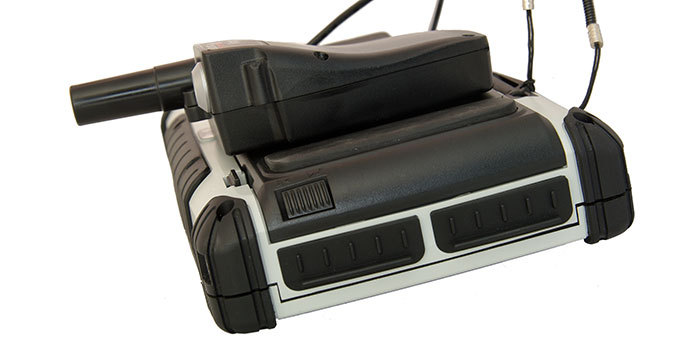
    Trimble has introduced the Trimble MX2 mobile spatial imaging data capture system. The MX2 extends the capabilities of geospatial professionals, allowing them to safely and effectively address complex projects by collecting spatial data from a mobile scanning platform, the company said. The Trimble MX2 provides a versatile and complimentary addition to Trimble’s family of mobile data capture systems.

    Designed for mapping, surveying and engineering environments, the MX2 is rugged, lightweight and portable. It is also easily deployed and redeployed on projects similar to conventional surveying equipment. A precise laser scanner, along with an embedded Trimble-Applanix GNSS/Inertial positioning system, allows geospatial professionals to create the point cloud accuracies necessary for many spatial imaging projects. Accompanied by Trimble Trident software to capture, process and analyze point data, the MX2 offers a ready-to-use workflow for surveyors and professionals in mapping, engineering, planning, oil and gas, utilities, mining, environmental, public safety and more. The system is available in single and dual-laser versions.

    In conjunction with the MX2 system, Trimble also announced new features for its Trident Software 6.0. The software developed for rapid transformation of point clouds and imagery into geospatial intelligence has been significantly enhanced to provide a scalable software suite for a wide range of users. Additions include the incorporation of direct trajectory import and the Trimble Coordinate System Manager. The Trimble Trident software suite is ideal for the analysis of mobile laser scanner data and geo-referenced imagery.

    “The Trimble MX2 provides survey companies with the opportunity to enter the world of mobile scanning at a time when it is becoming a desired service within their solution portfolios,” said Katherine Sandford, general manager of Trimble’s Imaging Division. “The MX2 offers a simple and highly productive mobile data collection capability and a 3D point cloud workflow for a wide range of users.”

  • Septentrio, Esri BeLux Bring Centimeter Accuracy to Mobile GIS Apps

    Septentrio, Esri BeLux Bring Centimeter Accuracy to Mobile GIS Apps

    Septentrio-geopod-W
    Photo: Septentrio

    Septentrio NV, the Belgian manufacturer of high-end GNSS receivers, and Esri BeLux, the regional distributor of Esri software, have joined forces to offer a user-friendly mobile solution that is accurate up to 1 centimeter. The combination of Esri software and the AsteRx-m GeoPod operates seamlessly using standard, open interfaces on any professional tablet. Used today by a major utility company, the new bundled solution allows anyone in the organization to accurately locate field assets and record geo-referenced data on the spot, Septentrio said.

    The AsteRx-m GeoPod upgrades professional tablet PCs with a high accuracy GNSS receiver, giving the user access to sub-meter, or even centimeter, accurate positions without needing specialized equipment. Using a standard USB connection, the AsteRx-m GeoPod can be connected to any professional tablet, giving the user free choice to select a device.

    The receiver uses satellites from the GPS and GLONASS constellations to increase the availability of a high-quality position solution, even in areas with bad satellite visibility. In addition, the receiver offers innovative tracking and positioning algorithms designed for demanding professional environments.

    The included RxAssitant software takes care of configuring the receiver and connecting to NTRIP-capable RTK or DGNSS networks, allowing a seamless integration with existing software applications like esri ArcGIS for mobile.

    Applications for the AsteRx-m GeoPod include construction, field service, utility mapping, highway maintenance, government mapping and emergency services.

  • Hemisphere GNSS Announces New Crescent Vector GNSS Compass Module

    H200-W
    Photo: Hemisphere GNSS

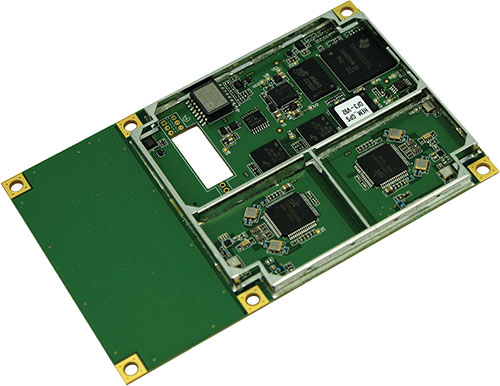
    Hemisphere GNSS has launched its new Crescent Vector H200 GNSS compass module, a high-performance receiver for heading, positioning, heave, and attitude. Vector H200 is designed for professional marine, navigation, and land applications in challenging and dynamic environments.

    Vector H200 processes L1 GPS and GLONASS signals to deliver precise heading, greater positioning reliability, and better performance in challenging environments, Hemisphere GNSS said. Through using two separate antennas, Hemisphere GNSS’ patented Vector technology computes the heading and pitch or roll angle while stationary or in motion. Vector H200 can compute heading accuracy to 0.02 degrees using a 5-meter antenna separation. A variety of differential correction methods also make it possible for Vector H200 to provide sub-meter to centimeter position accuracy.

    Marine industry developers can maximize performance by integrating Vector H200 into their systems for hydrographic and bathymetric surveys, auto-pilots, dredging, and buoys. For land applications, Vector H200 is ideal for aligning cameras, antennas and projectiles, and for machine control applications in agriculture, construction, and mining.

    “System integrators have a lot to gain from Vector H200’s powerful combination of navigation and machine control orientation capabilities,” said Ron Ramsaran, Sr. Product Marketing Manager at Hemisphere GNSS. “They will appreciate the performance and value from such a small board package.”

    Vector H200 supports SBAS, L-Band and RTK differential positioning solutions and features our exclusive SureTrack technology optimizing the use of GPS and GLONASS signals. Hemisphere GNSS offers precise GNSS antennas to fit a variety of Vector H200 applications.

  • GeoGathering 2013: Have You Developed Your Geospatial Data Strategy?

    GeoGathering logo NO_YEARThe conference GeoGathering: GIS for Gathering and Production Lines will be held Colorado Springs at the Cheyenne Mountain Resort on August 21-22, 2013. With the theme of “Developing a Data Strategy: Data Collection and Sharing,” the conference focuses on how operators collect and share information about their assets to increase operational safety and improve pipeline decision-making.

    “Today, acquisitions and fast growth in the gathering industry are forcing operators to develop a data strategy and look deeper at all aspects of their pipeline asset data – from how it is collected, to making it available to decision makers,” said Victoria Skogman, is the conference manager. “Currently, gathering systems are unregulated, but trends in the industry show this is likely to change in the future. Preparing for this impending change is crucial, hence the theme of the conference.”

    The goal of the GeoGathering Conference is to provide valuable information to gathering system and upstream operators who want to create efficient, accurate, and collaborative data strategies that work for their organizations. Presenters will demonstrate how GIS technology allows attendees to collect and share data between the field and the office, enabling their organization to make well-informed decisions. The versatile agenda focuses on real-world experiences — everything from integrity management and data requirements to data security and making GIS technology more accessible to stakeholders, Skogman said.

    The GeoGathering Conference committee estimates that close to 150 GIS professionals and top-level management from leading oil and gas companies will attend this year. Attendees will be able to attend sessions that include:

    • Developing a Data Strategy
    • Data Collection Methods to Meet Requirements
    • Data Security and the Cloud
    • Data Sharing: GIS as an Enterprise
    • Organizing Data for Decision-Makers
    • PHMSA MAOP Strategies
    • Web-enabled Data Sharing Technologies & Portals
    • Collecting & Sharing Data to Enhance Safety

    This year, attendees will experience the new, audience-focused format that offers two simultaneous tracks giving attendees the chance to tailor their own conference schedule. Plus, two of the biggest improvements are the addition of “structured networking” sessions and a “GIS Think Tank.”

    Structured Networking facilitates a small group setting, in which attendees have the opportunity to meet people with common interests, share practical ideas, and network with individuals who might possibly help your organization. When attendees leave the networking session, they will have a solid list of new business contacts, Skogman said. The networking sessions are strategically placed at the beginning of the conference to help you build new relationships over the duration of the conference.

    The GIS Think Tank session is also a unique addition to the agenda. It will feature five to seven GIS managers from a variety of gathering operators around the country. This is not a typical Q&A panel session; instead, it will allow the participating GIS managers to converse among themselves as the audience listens in. This will be mostly an unstructured session so that managers can spend more or less time on topics as they choose, Skogman said. It will be facilitated with questions from the audience. The purpose is to lead an informal discussion on some of the successes that each manager has had along with their opinions on pressing issues that gathering operators are facing.

    This year’s conference has a seven-person steering committee with pipeline gathering background. Members include Trisha Menasco of DCP Midstream, Tom Coolidge of Esri, Ellen Nodwell of Hess, Cameron Collins of Williams, Rob McElroy of McElroy Consulting, Ron Brush of New Century Software and Victoria Skogman of New Century Software.

    “The conference topics are very timely,” said Menasco. “Just when I thought I had all the data requirements figured out, it feels like we are starting over. I look forward to helping build an agenda that will be useful to the gathering community.”

    Early bird registration is open. The conference committee welcomes senior management, project managers, integrity management specialists, GIS professionals, field operations managers, regulatory compliance personnel, and engineers.

  • Applanix Introduces POSPac MMS v6.2 Software for Mobile Mapping

    Applanix has introduced POSPac MMS v6.2, its latest generation of software for directly georeferencing mobile mapping sensors using GNSS and inertial technology. Featuring new Applanix IN-Fusion Multi-Single-Base Processing, POSPac MMS V6.2 is designed to improve the productivity and accuracy of mapping from mobile platforms in the air, on land or at sea, the company said.

    IN-Fusion Multi-Single-Base Processing is designed for customers who need the highest level of differential GNSS position accuracy and perform long, linear projects such as power-line corridors, long highways or stretches of coastline. During these projects, a GNSS base station network may not be available, or the geometry of the network so weak that an Applanix SmartBase solution — which uses existing reference stations to achieve high accuracy over longer distances — is not viable. In these cases, IN-Fusion Multi-Single-Base Processing allows base stations to be established along the full length of the travel path and makes optimal use of the nearest base station at all times.

    Customers can now take advantage of robust tightly coupled in-fusion processing without the need to break the project up into multiple segments for each base station to attain the highest accuracy, Applanix said.

    “In addition to IN-Fusion Multi-Single-Base Processing, POSPac MMS V6.2 includes new features designed to increase productivity, efficiency and ease-of-use.  The Coordinate Conversion tool included allows users to choose from a number of local reference frames for inputting base station coordinates,” said Edith Roy, Development Manager of POSPac MMS at Applanix.  “POSPac MMS Version 6.2 demonstrates our commitment to providing customers with not only the most advanced software solutions for mobile mapping applications, but also the easiest to use.”

    POSPac MMS V6.2 can be purchased through Applanix’ global sales network. The software is available as an upgrade to all POSPac users currently under a maintenance contract.

  • Topcon Web Portal Provides Real-Time Job Site Management Tool

    Topcon Positioning Group has launched a new web portal—Sitelink3D.net—designed specifically for general construction and engineering companies.

    In its announcement at the Munich construction trade show Bauma 2013, Topcon focused on the website’s features, which include giving end-users an intuitive way to manage and control every aspect of Topcon 3D machine control systems anywhere in the world.

    The subscription web-based service—accessed via computer, tablet or smartphone—is a user-friendly, real-time visualization and communications tool that allows users to access job site status and create new or update job site parameters, and view movement of machines on the job, Topcon said.

    Features of Sitelink3D include file transfers, messaging, machine tracking, remote support and training, real-time cut/fill mapping, and acquiring and storing real-time survey data.

    “While Sitelink3D is a complete site communications systems providing data control, machine tracking and a reporting system in one solution, Sitelink3D.net gives complete site management power in real time and provides remote information access to and from any piece of enabled equipment regardless of location,” said Richard Jackson, vice president of machine control applications.

    “The web portal provides simple, effective tools for monitoring machine efficiencies and site progress,” Jackson said. Through Sitelink3D.net, “companies can now better manage onsite progress, maintain data integrity, optimize production and minimize downtime. The ability to be able to send and receive job data and make instantaneous decisions or corrections saves time, fuel and money.”

    Most machines currently equipped with a Topcon 3D-MC system can be included in the Sitelink3D network by adding the SL-100 radio modem. New Topcon 3D-MC systems can be ordered with the modem pre-installed. Users of Topcon Pocket3D and 3D Office software can also be included in the Sitelink3D network.

  • Trimble Introduces All-In-One Device for Mobile Communications and Surveying Data Collection

    Trimble Slate Controller.
    Trimble Slate Controller.

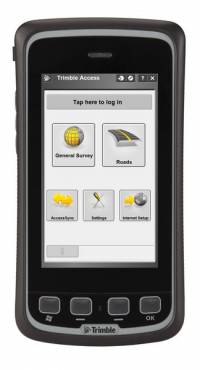
    Trimble has introduced an all-in-one device for mobile communications and surveying data collection — the Trimble Slate Controller. The Trimble Slate Controller combines the convenience and ease-of-use of a smartphone with rugged durability. Optimized for Trimble Access field software and the Trimble R4 GNSS receiver, the Trimble Slate Controller supports a surveyor’s everyday workflows.

    “Surveyors require mobile, rugged solutions that can readily withstand and perform in the toughest of conditions,” said Erik Arvesen, vice president of Trimble’s Survey Division. “With the introduction of the Trimble Slate Controller, we are providing a rugged handheld device designed to run survey workflows while also delivering the capabilities and convenience of a smartphone.”

    Offering voice, SMS text, and 3.75G cellular data transfer capabilities on GSM cellular networks worldwide, the rugged Trimble Slate Controller enables enhanced connectivity in the field. Its wireless communication capabilities keep surveyors connected to the office. An integrated 8-megapixel camera offers enhanced job documentation and point attribution by providing geotagged, high-quality digital photos. 

    The Trimble Slate Controller’s slim, ergonomic design is easy to hold while its screen provides superior sunlight readability enabling all-day use by survey professionals. Designed to withstand even tough conditions, a 4.3-inch capacitive touch Gorilla glass display covers the entire front surface, increasing readability without sacrificing durability.

    Trimble Access field software available on the Trimble Slate Controller offers a variety of features and capabilities to streamline topographic, stakeout, control and other surveying applications. Partnered with Trimble Access and the Trimble R4 GNSS receiver, the Trimble Slate Controller provides a dedicated GNSS solution that is effective for both real time and post-processed GNSS surveys, Trimble said.


  • Handheld’s Ruggedized Computers and Smartphones Have u-blox GPS Inside

    Swedish-based Handheld, maker of mobile computers designed for extreme environments, has integrated u-blox’ GPS modules in four of its most popular products: the Algiz 7 and Algiz 10X tablets, Algiz XRW notebook, and Nautiz X1 smartphone. These tough computers are designed for and used in demanding environments such as polar expeditions, marine exploration, and rescue operations, as well as outdoor industrial applications such as utility maintenance and logistics. The devices depend on u‑blox’ LEA, NEO, and AMY families of compact, high-performance GPS modules to provide reliable navigation and positioning in challenging conditions.

    “Handheld is proud to have achieved an industry-leading position for dependable, ruggedized mobile computers that can be trusted to work in the most hostile environments” said Jerker Hellström, CEO Handheld Group, “To achieve this extremely high-level of performance, we only select components with the highest reliability on the  market. GPS positioning is one of the most important functionalities of our products. For this mission-critical feature, we chose u-blox.”

    Handheld’s lineup of rugged PDAs and mobile computers is specifically developed for use in tough environments in industries such as geomatics, logistics, forestry, public transportation, construction, mining, field service, utilities, maintenance, public safety, military and security.

  • Topcon HiPer SR and Pocket 3D Provide Help to Construction Sites

    HiPer SR_construction_Topcon
    Topcon HiPer SR and Pocket 3D in the field.

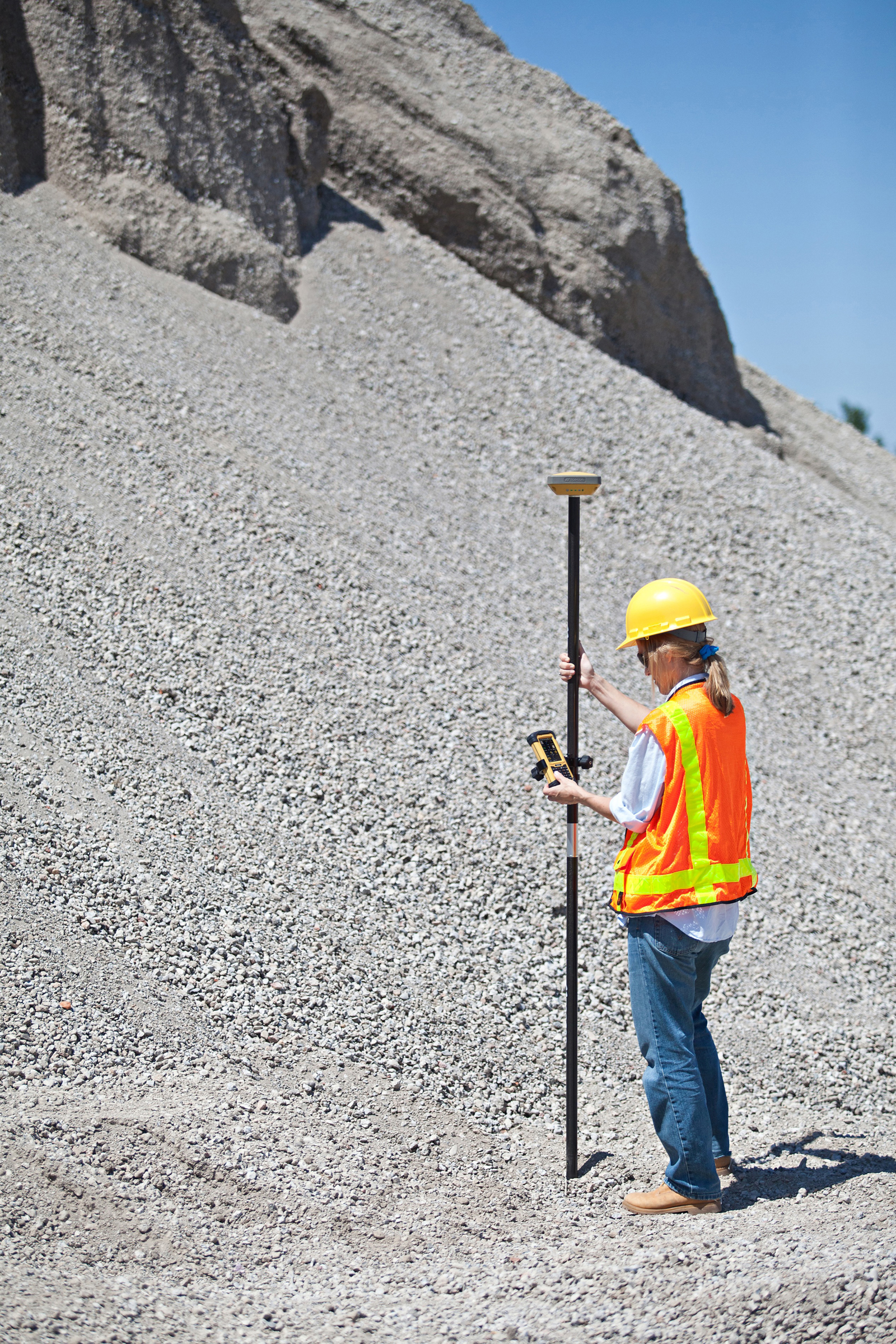
    With the introduction of a new version of Pocket 3D software for its HiPer SR GNSS receiver, Topcon Positioning Systems is expanding the delivery of high-accuracy 3D positioning technology to contractors needing a low-cost, one-man layout and measurement system.

    Pocket 3D is powerful, easy-to-use data collection and control software for grade checking and other measurement applications on a job site. Version 10.0.2 makes it fully functional with the HiPer SR receiver, introduced in August.

    The new receiver is not only “perfect for contractors, but also for other non-traditional GNSS users such as landscape architects, law enforcement forensics projects or any others requiring high-accuracy 3D positioning,” said Tony Vanneman, Topcon construction products marketing manager.

    Its field-rugged and fully-integrated design delivers a 1,000-foot working radius through Topcon’s new LongLink technology. “This innovative wireless data link was developed specifically for the HiPer SR, and provides reliable and interference-free base-to-rover communications that don’t require an FCC license to operate,” Vanneman said.

    “We took the best signal tracking technologies and packaged them in a small, energy-efficient design,” he said.  “Anyone looking for a rugged, easy-to-use, low-cost 3D GPS system will find what they need in the HiPer SR.”

    Additional key features of the HiPer SR include:

    • Shock-resistant magnesium alloy housing – allowing the HiPer SR to take a 6 ft. (2m) pole drop onto concrete;
    • Weighs 1.8 pounds (0.8kg);
    • 226-channel Vanguard technology, featuring Universal Tracking Channel technology, supports all satellite constellations;
    • Fence antenna technology;
    • Quartz lock loop technology for superior GNSS tracking in high-vibration environments, such as on a four wheeler;
    • Capable of simultaneous LongLink operation with multiple rovers;
    • Sealed battery pack provides more than 15 hours of operation.
  • Leica Geosystems Opens Online Store

    Leica Geosystems Inc. has announced the launch of the e-commerce site for Leica Geosystems Solutions Centers. The grand opening of the Leica Geosystems Solutions Center is marked by an unprecedented online-only promotion.

    Providing 24/7 personalized access to the products essential to the surveying, engineering, and construction industries, the site is a resource for more than purchases. It also enables customers to compare thousands of products based on features, shipping options and availability, and to create wish lists.

    The Leica Geosystems Solutions Centers e-commerce site offers a range of supplies, accessories and rentals, from paint and flagging, safety supplies, total stations and GPS systems for surveying, construction lasers and building layout systems. Relevant products and pricing are presented based on each customer’s unique profile, and subscription and quick-order capabilities make it easy to reorder frequently needed products.

    “We are committed to continually delivering value to our customers, and it is exciting to respond to customer needs by bringing this e-commerce site to the market,” said Mike Strom, general manager, Solutions Centers for Leica Geosystems. “Our customers are busy, and they often need to place orders outside of standard business hours. Our new e-commerce website provides customers a more convenient way to buy from us, and we will be offering online-only promotions on a regular basis — similar to the tremendous grand opening deals — so it’s easier than ever for customers to begin reaping the benefits of Leica Geosystems solutions.”

    The Leica Geosystems Solutions Center is factory-owned and operated, which guarantees that customers will receive the quality products and service expected from Leica Geosystems, the company said. Additionally, because support is critical at every step of the way, even during the purchase process, the site features multiple avenues to online support: customers get answers from factory-trained experts.

  • Trimble’s Yuma 2 Rugged Tablet Provides Full Office Capabilities

    Logo: Trimble
    Logo: Trimble

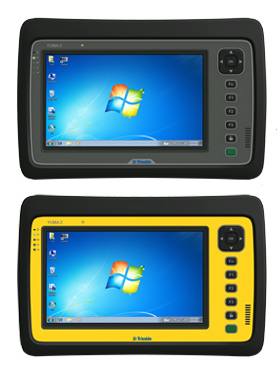
    Trimble introduced today the Yuma 2 rugged tablet computer, which it says is a powerful mobile computing solution that provides full office capabilities in the field for construction, transportation, public safety, field service, forestry, utilities, mapping, insurance and any other outdoor or service-related industry.

    The Yuma 2 offers a seven-inch capacitive multi-touchscreen in an easy-to-hold form factor that measures 6.3 x 9.6 inches, and weighs less than three pounds. Featuring new display technology for clearer readability in direct sunlight, the Yuma 2 can be used by mobile workers in the brightest outdoor conditions. The 3.75G dual-mode cellular data capability enables connectivity anywhere GSM or CDMA cellular networks are available.

    Featuring the Microsoft Windows 7 Professional operating system, the Yuma 2 is a fully functional field computer with a 1.6-GHz Intel Atom dual-core processor, 4 GB of DDR3 DRAM, a 64-GB solid state drive (SSD), and a dual battery with eight hours of typical run-time. Optional features include a 128-GB SSD, 3.75G cellular data connectivity and an extended battery set that provides up to 16 hours of operation.

    With the multi-touch capacitive touchscreen, users can type with fingers, stylus, or capacitive gloves and can control the size of the keyboard on the display for ease of use. Controlled zoom can optimize the user experience with maps and detailed information. The display supports use in landscape or portrait mode and is configurable to hold the orientation or to alter it in response to the accelerometer. The 5-megapixel camera provides video and photo capture with geotagging. The GPS receiver provides 2 to 4 meter accuracy, and is designed for data collection in applications such as distributed asset management, work order management, fleet logistics and more.

    “Ruggedness and connectivity in the field are vital for mobile workers — and Trimble has a history of providing innovative computing solutions to the market,” said Jim Sheldon, general manager of Trimble’s Mobile Computing Solutions Division. “Today, users demand solutions that are even tougher, faster, more reliable and easier to use, so they can be more efficient and productive. With new features and functionality, the Yuma 2 is an ideal solution that provides even more computing power to mobile professionals — more memory, computing speed, drive capacity, connectivity options and better display readability.”

    As with other Trimble rugged mobile computers, the Yuma 2 meets stringent MIL-STD-810G military standards for drops, vibration and humidity; and with an IP65 rating, it is protected against dust and water.

    Four different configurations are available to provide the tablet that meets the right need at the right price. Options include a larger SSD and 3.75G GSM and CDMA cellular data capability, as well as three different color schemes.

    The Trimble Yuma 2 tablet computer is expected to be available early in the fourth quarter of 2012.