Tag: Europe

  • Telit’s latest GNSS IoT module aimed at European market

    Telit’s latest GNSS IoT module aimed at European market

    Telit GE310-GNSS IoT Module fills European demand for GSM/GPRS compact form factors, and is part of Telit’s migration-support program that helps customers leverage 2G’s low cost and broad coverage while preparing for 4G and 5G.
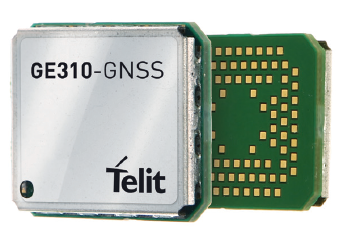
    The GE310-GNSS module. (Image: Telit)
    The GE310-GNSS module. (Image: Telit)

    Telit has released the GE310-GNSS, an internet of things (IoT) module with GSM/GPRS, multi-constellation satellite positioning and Bluetooth functionality in a 270-millimeter-squared form factor.

    The GE310-GNSS enables original equipment manufacturers (OEMs) and system integrators in application areas such as asset management, utilities and telematics, meet strong demand for low-cost, highly compact devices without tradeoffs in performance, reliability and functionality, particularly in regional markets such as Europe, where 2G is forecast to remain in strong growth in number of IoT connections for many years.

    The GE310-GNSS features a miniature form factor packaged in an LGA 94-round-pad format. It is designed to meet the robust demand in Europe, Latin America and other regional markets for compact devices such as health and wellness monitors, smart residential and commercial thermostats, commercial fleets and IoT-connected grid equipment for smart utilities.

    With support for Europe’s Galileo as well as other satellite positioning constellations, the GE310-GNSS is suitable for IoT applications that require location awareness throughout Europe and the rest of the world. The module’s Bluetooth 4.0 capability makes it easy for OEMs to add connectivity to proximal area network devices, Telit said.

    The GE310-GNSS is part of Telit’s future-proofing program, which helps customers leverage 2G’s low cost and gapless European coverage immediately while retaining absolute control of when they switch to a compatible 4G module in the Telit family lineup.

    The lineup includes multiple roadmap paths to upgrade to 4G and later to 5G based on the customer business strategies and specific market conditions.

    Research firm ABI Research estimated in its “ABI IoT Market Tracker – Worldwide – October 2018” that 2G cellular IoT connections will continue to grow in Europe from 100 million in 2018, reaching a peak of 148 million connected devices in 2022 before slowly dropping to about 89 million in 2026.

    “The GE310-GNSS is the newest in our lineup of updated 2G modules for markets like Europe and Latin America which still show a sustained pull for over half a decade,” said Yossi Moscovitz, president products and solutions, Telit. “This svelte module combines proven, reliable 2G connectivity with the latest satellite positioning and Bluetooth technologies, all backed by Telit’s decades-enduring migration-support program. Telit has helped thousands of customers through cellular generational transitions and is now helping 2G customers in Europe, Latin America and other regions develop business-enhancing roadmaps to 4G and 5G.”

    For more information about the GE310-GNSS and other Telit IoT solutions, visit booth A.b80 at European Utility Week, Nov. 6-8 in Vienna, Austria.

  • Copernicus Sentinel-3B delivers first images

    News from the European Space Agency

    Less than two weeks after it was launched, the Copernicus Sentinel-3B satellite has delivered its first images of Earth. Exceeding expectations, this first set of images include the sunset over Antarctica, sea ice in the Arctic and a view of northern Europe.

    One of the Copernicus Sentinel-3B’s first images featured Greenland. Captured on May 7, 2018, at 13:20 GMT (15:20 CEST), the image shows sea ice swirled into eddies caused by the wind and ocean currents.  The image was taken by the satellite’s ocean and land colour Instrument, which features 21 distinct bands, a resolution of 300 m and a swath width of 1270 km. The instrument can be used to monitor aquatic biological productivity and marine pollution, and over land it can be used to monitor the health of vegetation. (Image: ESA)
    One of the Copernicus Sentinel-3B’s first images featured Greenland. Captured on May 7, 2018, at 13:20 GMT (15:20 CEST), the image shows sea ice swirled into eddies caused by the wind and ocean currents. The image was taken by the satellite’s ocean and land colour Instrument, which features 21 distinct bands, a resolution of 300 m and a swath width of 1270 km. The instrument can be used to monitor aquatic biological productivity and marine pollution, and over land it can be used to monitor the health of vegetation. (Image: ESA)

    The very first image, captured on May 7 at 10:33 GMT (12:33 CEST), shows the transition between day and night over the Weddell Sea in Antarctica. The satellite also captured swirls of sea ice off Greenland on the same day. Another in this first set of images offers a rare cloud-free view of northern Europe.

    They were taken by the satellite’s ocean and land colour instrument, which features 21 distinct bands, a resolution of 300 m and a swath width of 1270 km. The instrument can be used to monitor aquatic biological productivity and marine pollution, and over land it can be used to monitor the health of vegetation.

    Josef Aschbacher, ESA’s Director of Earth Observation Programmes, said, “The launch of Sentinel-3B completed the first batch of Sentinels that we are delivering for Copernicus.

    “We finished the launch and early orbit phase in a record time and we are now getting on with the task of commissioning the satellite for service.

    “These first images from the ocean and land colour instrument already show how the satellite is set to play its role in providing a stream of high-quality environmental data to improve lives, boost the economy and protect our world.”

    The Copernicus Sentinel-3B satellite captured this rare cloud-free view of Northern Europe on May 8, 2018, at 09:33 GMT (11:33 CEST). Features over land and water can been seen clearly such as different types of land cover, snow and also a plume of phytoplankton in the North Sea. The image was taken by the satellite’s ocean and land color Instrument. (Image: ESA)
    The Copernicus Sentinel-3B satellite captured this rare cloud-free view of Northern Europe on May 8, 2018, at 09:33 GMT (11:33 CEST). Features over land and water can been seen clearly such as different types of land cover, snow and also a plume of phytoplankton in the North Sea. The image was taken by the satellite’s ocean and land color Instrument. (Image: ESA)

    The Sentinel-3B satellite lifted off from Russia on 25 April and joins it identical twin, Sentinel-3A, in orbit. This pairing of satellites increases coverage and data delivery for the European Union’s Copernicus environment programme.

    As the workhorse mission for Copernicus, the two satellites carry the same suite of instruments to systematically measure Earth’s oceans, land, ice and atmosphere.

    Over oceans, it measures the temperature, colour and height of the sea surface as well as the thickness of sea ice. These measurements are used, for example, to monitor changes in Earth’s climate and for more hands-on applications such as for monitoring marine pollution.

    Over land, this innovative mission monitors wildfires, maps the way land is used, checks vegetation health and measures the height of rivers and lakes.

    European Commissioner for Internal Market, Industry, Entrepreneurship and SMEs Elzbieta Bienkowska, said, “This new satellite will deliver valuable images of how our oceans and land are changing.

    “This will not only speed up the response to natural disasters, but also create new business opportunities. Earth observation is a larger market than you would think – a driver for research discoveries, a provider of highly skilled jobs and a developer of innovative services and applications.”

    One of the Copernicus Sentinel-3B’s first images featured Greenland. Captured on May 7, 2018, at 13:20 GMT (15:20 CEST), the image shows sea ice swirled into eddies caused by the wind and ocean currents, and was taken by the satellite’s ocean and land color Instrument. (Image: ESA)
    One of the Copernicus Sentinel-3B’s first images featured Greenland. Captured on May 7, 2018, at 13:20 GMT (15:20 CEST), the image shows sea ice swirled into eddies caused by the wind and ocean currents, and was taken by the satellite’s ocean and land color Instrument. (Image: ESA)

    Bruno Berruti, ESA’s Sentinel-3 Project Manager, said, “We are extremely pleased to see these first images, which show that the satellite is in good health.

    “ESA will spend the next five months carefully calibrating the instruments and commissioning the satellite for service before it is handed over to Eumetsat for routine operations.”

    During this commission phase the two Sentinel-3 satellites will be flown in a tandem formation, separated by about 30 seconds.

    Sentinel-3B will then be phased to reach its final position – flying in the same orbit, but adjusted to be separated by 140° with respect to Sentinel-3A.

    Once commissioned, ESA will hand over satellite operations to Eumetsat. It will then be managed jointly, with ESA generating the land products and Eumetsat the marine products for application through the Copernicus services.

    Alain Ratier, Director-General of Eumetsat, added, “The Sentinel-3 constellation establishes the European backbone of a space-based, global ocean-monitoring system.

    “These first images are the first demonstration that Sentinel-3B will deliver on its promise to usher in a new era for operational oceanography and flow-on benefits for human safety, businesses and industry.

    “They will amplify the benefits of the Sentinel 3 mission for ocean forecasting and the blue economy.”

    Sentinel-3B is the seventh Sentinel satellite launched for Copernicus. Each mission carries different state-of-the-art technology to deliver a stream of complementary imagery and data to monitor the environment.

  • ESA selects Airbus for SBAS using both GPS and Galileo

    EGNOS V3 will offer improved and secure Civil Aviation Safety of Life services for the next decade over Europe. The program will ensure a full continuity of service and will be the first operational SBAS using both GPS and Galileo.

    Airbus has been selected by the European Space Agency (ESA) as the prime contractor to develop EGNOS V3, the next generation of the European Satellite Based Augmentation System (SBAS) planned to provide the civil aviation community with advanced safety-of-life services and new services to maritime and land users.

    Developed by ESA on behalf of the European Commission and the European GNSS Agency (GSA), EGNOS V3 (European Geostationary Navigation Overlay Service) will provide augmented operational safety-of-life services over Europe that improve the accuracy and availability of user positioning services from existing GNSS (Galileo and GPS).

    EGNOS also provides crucial integrity messages to EGNOS users with alerts within a few seconds in case of system degradation, consolidating EGNOS’ position as one of the leading edge GNSS systems in the future.

    Besides improved safety-of-life services, EGNOS V3 will improve robustness against increasing security risk, in particular cyber-security risks.

    EGNOS V3 will ensure a full continuity of service for the next decade and will be the first operational SBAS implementing the dual-frequency and multi-constellation world standard, with both GPS and Galileo, replacing EGNOS V2 which has been in operation since 2011.

    “This programme is strategic for Airbus to strengthen our position in the Navigation field. The signature of this contract is the result of more than 5 years of intense team work and investment,” said Nicolas Chamussy, head of Space Systems at Airbus. “With our consortium, we bring a large pool of resources and experience in Europe covering the successful development of critical and secure ground segment. I am confident that we will make EGNOS V3 a success story.”

    As prime contractor, Airbus will be leading a consortium with partners from France, Germany, Spain and Switzerland. Airbus will be responsible for the development, integration, deployment and preparation of EGNOS V3 operations, the overall performance of the system and the Central Processing Facility, which is the heart of the real-time navigation algorithms.

    During the 6.5-year contract, around 100 people and 20 subcontractors will work on delivering the EGNOS V3 system. In 2023, the single-frequency version will be available to replace the current operational version and, 18 months later, the final version in dual frequency will be delivered.

    EGNOS is composed of a large network of about 50 ground stations deployed over Europe, Africa and North America, two master control centers near Rome and Madrid, and a System Operation Support Centre in Toulouse. EGNOS will also use geostationary satellite navigation payloads.

  • Trimble expands CenterPoint RTX FAST in North America and Europe

    Trimble has expanded its CenterPoint RTX Fast correction service in North America and Europe.

    RTX Fast reduces the convergence time — the duration needed to reach full precision accuracy — by up to 98 percent faster than other satellite-delivered correction services, Trimble said.

    The service allows customers to realize horizontal positioning accuracy of better than 4 centimeters (1.5 inches) in as fast as one minute. With RTX Fast, farmers, surveyors, geographic information system (GIS) professionals and construction contractors can work faster, improve productivity, minimize input costs and reduce worker fatigue, Trimble added.

    New RTX Fast services have recently launched in Switzerland, Slovakia, Northern Italy, Eastern Poland and the Southern regions of Saskatchewan and Manitoba.

    In addition, Trimble has a 60 percent larger footprint in the Central U.S., including new coverage in Kentucky and Tennessee.

    As the requirement for real-time, absolute positioning grows, Trimble is expanding its RTX Fast coverage to meet the demand both geographically and for the markets it serves, including new emerging applications in vehicle autonomy and location-based services.

    The demand for real-time absolute positioning in driving applications continues to rise as Advanced Driver Assistance Systems mature and accuracy requirements become more stringent. RTX Fast provides the network enhancement necessary to deliver fast, high-accuracy RTX corrections for real-time positioning while on the road.

    “Trimble RTX technology has been adding value to our core markets since its introduction in 2011. And, now we are demonstrating its capability in new applications such as autonomous driving solutions,” said Patricia Boothe, vice president of Trimble’s Advanced Positioning Division. “We are committed to expanding the reach, use and accessibility of Trimble RTX technology, reinforcing its position as a leading solution for improving GNSS performance.”

  • HxIP announces updates to 2017 airborne imagery collection plans

    Latest imagery collection covers U.S., Canada, Europe; plans include territories, cities

    The Hexagon Imagery Program (HxIP) has updated its 2017 airborne imagery collection plans of Wide Area Coverage (WAC) at 30-centimeter accuracy and Urban Area Coverage (UAC) at 15-cm accuracy in North America and Europe.

    By the end of 2017, the HxIP will update its content for more than 3.9 million km² in North America. This includes a refresh of 18 previously captured U.S. states and completes the full coverage of the continental United States, Hawaii, Puerto Rico, the U.S. and British Virgin Islands, and select areas of Alaska.

    The HxIP announces updates to 2017 airborne imagery collection plans of Wide Area Coverage (WAC) at 30-centimetre accuracy and Urban Area Coverage (UAC) at 15 cm accuracy in North America and Europe.
    The HxIP announces updates to 2017 airborne imagery collection plans of Wide Area Coverage (WAC) at 30-centimetre accuracy and Urban Area Coverage (UAC) at 15 cm accuracy in North America and Europe.

    In addition to the 30-cm program, the HxIP expands its 15-cm collection by 100 cities for a total of 347 U.S. urban areas covering more than 492,000 km². The HxIP also includes 23 Canadian cities at 30 cm with efforts underway to refresh and expand the Canadian library.

    This year will see the addition of approximately 650,000 km² in Europe bringing, the Western European coverage to more than 2.2 million km². Including countries such as Italy, Germany, Spain, France and Poland, this coverage expands the HxIP on the global stage, making it one of the most comprehensive, imagery programs in the world.

    Hexagon-Europe-W

    “Over the last three years since we launched the program, we have been extensively growing our coverage through adding new imagery acquisition partners and increasing our resources to support the program,” said John Welter, Hexagon Geosystems Content and Engineering Services president. “We are well on track to meet our 2017 goals, and we are continuously improving our offerings to better support our users, including completing coverage and reducing the time it takes to refresh our content.”

    Quality control by experts. Launched in June 2014, the HxIP provides valuable geospatial content and delivers professional-grade airborne images captured with Leica Geosystems’ airborne sensors, including enhanced-resolution, four-band orthos, rasterized point clouds, and stereo imagery.

    Captured by a network of Leica Geosystems airborne users, the data is processed by experienced photogrammetry professionals who ortho rectify, and correct colors and seam lines. Using the latest processing technology, these experts clean the data to be used in various applications, such as corridor mapping, real estate assessments and flood planning.

  • Project to advance multi-GNSS development uses Spirent test systems

    Project to advance multi-GNSS development uses Spirent test systems

    Spirent Communications’ testing systems are being used by the European Union TREASURE project (Training, REsearch and Applications network to Support the Ultimate Real-time high-accuracy EGNSS).

    The aim of the four-year project is to provide instantaneous and high-accuracy positioning anywhere in the world, exploiting different satellite systems operating together to provide users with positional accuracy of a few centimeters.

    Spirent’s GSS7000 test system.

    By 2020 Galileo, the European GNSS system (EGNSS), will be fully operational and provide positioning data of unprecedented accuracy. Galileo’s integration with other satellite systems through the TREASURE project is key to increasing Europe’s competitiveness in the field, which has been mainly based on the GPS system in the past 20 years.

    Higher accuracy services will not only assist safety-critical industries such as air and maritime navigation services, but also help industries such as the global agri-tech market, autonomous vehicles and capital-intensive sectors.

    Kimon Voutsis, Robust PNT Solutions Architect, works on a professional services project for a client.

    For example, more accurate real-time positioning data can assist farmers in maximizing food production, reducing costs and minimizing the environmental impact. Equally, a deep-sea drilling platform that experiences any temporary degradation in positioning accuracy could lead to significant financial losses.

    “Spirent is proud to support multi-national initiatives that advance our industry and provide better end user performance,” said Martin Foulger, general manager of Spirent’s positioning business unit. “More systems are using GNSS data, and users always want better accuracy, so TREASURE will help to provide this.”

    TREASURE is an EU-funded project under the H2020-Marie Skłodowska-Curie Innovative Training Network. It is coordinated by the University of Nottingham, and Spirent is the partner providing GNSS simulation systems.

    For more information on Spirent’s GNSS testing solutions, visit the website. To learn more about how to test receivers of GPS, Galileo and other GNSS, download Spirent’s eBook.

    To learn more about TREASURE, contact Marcio Aquino, Nottingham Geospatial Institute.

  • Skydel teams with Noffz to increase presence in Europe

    Skydel teams with Noffz to increase presence in Europe

    Skydel, a GNSS test solutions company, has partnered with Germany-based Noffz to deliver SDX GNSS simulation to clients in Europe.

    Noffz creates test systems and solutions in the area of the Internet of Things (IoT) — especially in automotive RF-test applications around eCall, network access devices, telematics control units, infotainment/multimedia units and automotive radar.

    With nearly 30 years of experience, Noffz delivers worldwide turnkey solutions and PC-based measurement, as well as automation systems.

    “With their broad expertise in test solutions, Noffz is well positioned to bring Skydel’s SDX GNSS simulation solutions to clients located in Europe and beyond,” Skydel said in a blog.

    “Technology is constantly evolving,” reads the blog. “With the advent of new satellite constellations, such as Galileo, expanding needs for position and navigation in the transportation industry, and the growing threats of RF interferences, GNSS simulation is more than ever a key component in the arsenal needed to design and validate new products.

    “Skydel SDX delivers a new paradigm in GNSS simulation, featuring an exclusive mix of performance, flexibility and unique capabilities. With the addition of Noffz’s know-how covering multiple industries, we now have an outstanding team that’s ready to tackle today and tomorrow’s technological integration challenges.”

    Galileot will reach Full Operational Capability (FOC) in 2019. Simulation of the complete Galileo constellation is possible with Skydel's SDX GNSS simulator.
    Galileot will reach Full Operational Capability (FOC) in 2019. Simulation of the complete Galileo constellation is possible with Skydel’s SDX GNSS simulator.
  • OGC seeks data and services for Testbed 13's mass migration scenario

    As part of the Open Geospatial Consortium’s (OGC) Testbed 13, the OGC is requesting information to identify, assess and gather the current state and available geospatial data and services in the Europe and Middle East regions that may be used to support the development, testing and demonstration of OGC standards and technologies advanced during Testbed 13.

    OGC Testbed 13 participants will implement services, access data, and demonstrate capabilities using the services and data identified during this request for information (RFI).

    The overarching theme for Testbed 13 is mass population migration. The Testbed aims to understand and document how information sharing and safeguarding tools and practices — including open geospatial standards — can enable cross-domain interoperability on an international level for structured communication exchange and border surveillance to assist law enforcement and humanitarian aid operations.

    The demonstration scenario for Testbed 13 will focus on addressing challenges related to the coordination of multi-regional/national operations arising from the current exodus of people from the Middle East to Europe. This includes any messaging related to the displacement and mass movement of populations in response to conflict.

    As an OGC Innovation Program initiative, Testbed 13 will investigate and develop new or enhanced OGC web service or encoding specifications over a wide variety of technology work areas. These technologies will be tested and demonstrated in an architecture and a deployed environment in support of the mass migration theme, as shown in the following diagram:


    OCG-Testbed13-W


    A wide variety of source data or data provider services available for public use are needed to support the scenarios and use cases associated with this testbed. As such, OGC is looking for your help in providing us with information on the availability of these data and services.

    The following is a partial list of types of source data or services, required over the area of interest, that could support the development of, and testing in, Testbed 13:

    • Map data and/or services
    • Feature data and/or services, such as road networks, rivers, water bodies or water sources, jurisdictional boundaries, etc.
    • Satellite imagery and/or services
    • Predictive model related data, such as base and ancillary data as well as outputs of predictive models
    • Medical and Health facilities and locations (or could be part of other feature data sources or services)

    Recommendations for additional source data or services that provide data of various types across the region of interest, are available for public use, and could support the scenario, development, and testing in Testbed 13, are welcome and encouraged.

    For more information on Testbed 13, view the Call for Participation. The RFI is available for download. Instructions on how to submit responses to, or questions concerning, the RFI are available in the download.

    Responses to the RFI are due by 15 March 2017.

  • Google rolls out emergency service

    With more than 70 percent of calls to emergency services coming from mobile phones, getting necessary help — fast — to the caller can be challenging if they don’t know where they are or can’t communicate for any number or reasons related to the emergency. Current emergency solutions rely on cell-tower location, with a location radius of up to several kilometers, or assisted GPS, subject to errors indoors and unable to establish a floor level in tall buildings.

    The U.S Federal Communications Commission estimates “improved location accuracy which results in reducing wireless E911 response time by one minute can result in saving over 10,000 lives annually.”

    Google has created and rolled out in two European countries the Emergency Location Service in Android, with other regions to follow. The feature, when supported by the caller’s network, sends location from phone to emergency services when an emergency number is dialed. The feature is solely for the use of emergency service providers, and the caller’s precise location is never seen or handled by phone apps, integrating Wi-Fi, GPS, and cell towers to produce a more reliable emergency location indoors and outdoors.

    Emergency Location Service is supported by more than 99 percent of existing Android devices (version 2.3 out and upwards) through Google Play services. The service activates when supported by the mobile network operator or emergency infrastructure provider.

    The new geographical location system can identify the source of a mobile phone emergency call to typically within 0.003 square kilometers (less than half the size of a football field) instead of an average of around 12 square kilometers.

    According to a British telecomm communiqué, “We see 84 percent being less than 50 m radius, with 16 percent up to 9 meters, 27 percent between 10 and 19 meters’ radius and 41 percent with 20–49 meter radius.”

    When an emergency call is made with an enabled Android smartphone, the phone automatically activates its location service and sends its position by text message to the 999 service. This usually takes less than 20 seconds. This text message is not visible on the handset and is not charged for.

    The text is automatically matched to the voice call and compared to the network’s cell-based information to ensure it is valid. The location is then made available to the appropriate emergency service, supplementing the cell-based information.
    Because Google has tweaked its core Android Play Services software, it no longer needs each handset manufacturer to modify their handsets. Instead they can all be enabled as part of Google’s regular updates to its Android mobile operating system. This means the service will reach more handsets much more quickly.

  • Trimble acquires Axio-Net GmbH to reinforce European presence

    Trimble acquires Axio-Net GmbH to reinforce European presence

    Trimble has acquired Axio-Net GmbH from Airbus Defence and Space. Based in Hannover, Germany, Axio-Net is a provider of GNSS corrections and professional data services serving Germany, the United Kingdom and Benelux. Financial terms of the transaction were not disclosed.

    AXIO-NET_logoAxio-Net, founded in 2008, delivers both real-time and post-processed network real-time kinematic (RTK) solutions to a broad range of users including surveyors, GIS professionals and farmers. In addition to traditional correction services, Axio-Net performs a variety of data-based professional services for the geospatial market, including coordinate transformation services as well as network set-up, configuration and operations consulting.

    “Our philosophies are highly complementary and together, we will extend Trimble’s position as a global leader of GNSS corrections,” said Patricia Boothe, general manager of Trimble’s Advanced Positioning Division. “We are committed to supporting Axio-Net’s brand-agnostic position, while we leverage their experience with professional services, not only in traditional markets such as geospatial and agriculture, but in emerging high-accuracy GNSS markets such as automotive.”


  • Geospatial World Forum looks at Galileo, EGNOS for GIS

    Tim Reynolds
    Tim Reynolds

    By Tim Reynolds
    Contributing Editor for Europe

    The eighth edition of the Geospatial World Forum took place May 23–26 in Rotterdam, The Netherlands, attracting professionals from the surveying and geospatial information system (GIS) sectors. I attended the event on May 24 and took part in a workshop that looked at the benefits of Galileo and EGNOS in geospatial applications in the context of the imminent launch of Galileo initial services.

    An industry survey undertaken by the GSA indicates that already more than 80 percent of GNSS receivers for surveying and mapping use are EGNOS-enabled, while 77 percent of geospatial reference network providers have enough information to upgrade Galileo and will be ready to provide a service by 2017. All good news. On the less positive side, more than 60% of professional surveyors did not know about EGNOS!

    The workshop also talked up the potential for synergies between Galileo GNSS and Copernicus Earth Observation (EO) systems — a topic of immense interest at the European Space Solutions as well. Hans Dufourmont from the European Environment Agency (EEA) highlighted the use of GNSS to track animal species and monitor migration paths when considering development opportunities. He saw a huge potential for synergies between geopositioning and surface imaging going forward.

    Maurice Barbieri, president of the Council of European Geodetic Surveyors (CLGE), also saw a “clear role for Galileo” in the surveying community with its potential ability to meet centimeter accuracy requirements much more than for EGNOS.

    He also speculated about the value of establishing a European Geoinformatic Agency that might coordinate the provision of European GNSS and EO data. He felt the private business community would appreciate such simplification.

  • Galileo program governance: New chair of GSA Administrative Board named

    Galileo program governance: New chair of GSA Administrative Board named

    Jean-Yves Le Gall
    Jean-Yves Le Gall (Photo: Liberation)

    Meeting on Thursday, June 23, at its headquarters in Prague, the Administrative Board of the European Global Navigation Satellite Systems Agency (GSA) elected its new chair: Jean-Yves Le Gall, Centre National d’Etudes Spatiales (CNES, the French space agency) president and France’s interministerial coordinator for European satellite navigation programmes.

    Le Gall succeeds Sabine Dannelke, German federal minister of Transport and Digital Infrastructures.

    Headquartered in Prague, GSA is in charge of managing operations of satellite navigation systems on behalf of the European Union since 2014 for the European Geostationary Navigation Overlay Service (EGNOS) and from 2017 for Galileo. Carlo des Dorides is GSA’s executive director.

    Commenting on his election, Jean-Yves Le Gall said: “I am most honoured to have been elected Chair today of the GSA Administrative Board, with Galileo now poised to enter its operational phase.

    “My election recognizes France’s key role in satellite navigation, reflected in the commitment of the members of the Interministerial Working Group (GTI) and CNES’s historic expertise in this domain, for which it has shown unwavering support for the EGNOS and Galileo programmes since their inception.

    “This election and that as Deputy Chair of Mark Bacon, representing the United Kingdom, also confirms EU member states’ desire to join forces through Europe’s Space Team on the cusp of a period that is set to prove most prolific for GSA, since it will be moving Galileo towards full operational capability.

    “I would like to thank Sabine Dannelke for her decisive action over the last few years as Chair of the Board, and I very much look forward to working hand in hand with Executive Director Carlo des Dorides and everyone at GSA, whom I know, like and respect.”